Meeting sets stage for more contact between China, US #SootinClaimon.Com

#SootinClaimon.Com : ขอบคุณแหล่งข้อมูล : หนังสือพิมพ์ The Nation.

https://www.nationthailand.com/international/40007215


Washington urged during talks in Zurich to repair ties with Beijing
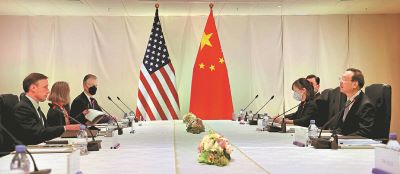
Beijing and Washington, during a meeting in Zurich, have agreed to further realize their top leaders’ recent consensus, boost strategic contacts, manage differences, avoid conflict and confrontation, advance cooperation and bring their ties back on track.

Although senior US officials have tried to tone down hostility in recent talks, experts said more practical, coolheaded US actions are needed to remove attempts to suppress China, repair the chilly ties and set the stage for further high-level interactions.

The meeting involving senior diplomats from China and the United States took place in Zurich, Switzerland, on Wednesday.

The delegations were respectively led by Yang Jiechi, a member of the Political Bureau of the Communist Party of China Central Committee and director of the Office of the Foreign Affairs Commission of the CPC Central Committee, and US National Security Advisor Jake Sullivan.

They exchanged views on China-US ties as well as global and regional issues of common concern, such as climate change.

The two sides agreed to maintain frequent talks and communication on important issues.

The Chinese Foreign Ministry called the meeting “extensive, candid and in-depth”, and said it was “constructive and conducive to improving mutual understanding”.

ADVERTISEMENT

At the meeting, Beijing stated its clear objection to using the word “competition” to define their relations.

Wang Dong, a professor and executive director of Peking University’s Institute for Global Cooperation and Understanding, noted that US officials vowed to ensure “responsible competition” with China at the meeting.

Wang said the administration of President Joe Biden is continuing the negative legacy of former president Donald Trump’s administration-one of suppression and misjudgment of China.

“The meeting on Wednesday was helpful for breaking Washington’s illusion. Damage control on the ties and pragmatism are critical for the US at the moment,” Wang said.

Following China-US diplomatic meetings in Anchorage and in Tianjin earlier this year, “it has dawned on Washington that arbitrarily pressuring China and speaking in a haughty tone will not help achieve its strategic goals”, said Su Xiaohui, deputy director of the Department of American Studies at the China Institute of International Studies.

In statements released after the Wednesday meeting, both countries underscored that the meeting followed up on the phone conversation between President Xi Jinping and President Biden on Sept 10.

Su noted that Yang mentioned Biden’s recent positive comments on China-US relations, that the US has no intention of curtailing China’s development or waging a “new Cold War”.

“Since Biden said so, we should check whether Washington can honor the president’s commitment with actions,” she said.

During the meeting, Yang said that whether the two countries handle their ties well has a bearing on the fundamental interests of both countries and their peoples as well as the future and destiny of the world.

China-US cooperation will benefit the two countries as well as the world, while confrontation will only inflict serious damage, Yang said.

He also said he hoped the US would adopt a rational and pragmatic policy toward China and work with China to respect each other’s core interests and major concerns.

Diao Daming, an associate professor of US studies at Renmin University of China, said, “As led by the two presidents, the two sides are steadily pressing ahead their contacts at working levels and higher.”

A proper perception of China is not enough and “should be accompanied by tangible actions in order to create a necessary, enabling environment for further China-US high-level interaction”, Diao said.

“It is both possible and necessary for the two countries to deepen dialogue in areas such as trade, militaries, regional security, culture, COVID-19 response and global governance,” Diao added.

During the meeting, Yang elaborated China’s position on Taiwan, Hong Kong, Xinjiang and Tibet autonomous regions, maritime domain, human rights and other issues.

He said the US should earnestly respect China’s sovereignty, security and development interests and stop using these issues to interfere in China’s domestic affairs.

The US side said it upholds the one-China policy.

Cheng Li, director of the John L. Thornton China Center at the Brookings Institution, said the meeting on Wednesday was a positive step forward following the two presidents’ phone talk, and the Biden administration has realized that its allies do not want to choose sides between the US and China.

However, Li said he does not believe this will be a turning point in the strained relationship, as many of the problems are structural and have been complicated by fractured US domestic politics.

Published : October 08, 2021

By : China Daily
Singapore, US working on vaccinated travel lane: Gan Kim Yong #SootinClaimon.Com

#SootinClaimon.Com : ขอบคุณแหล่งข้อมูล : หนังสือพิมพ์ The Nation.

https://www.nationthailand.com/international/40007214


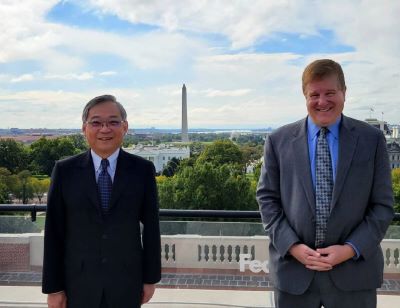
WASHINGTON – Singapore is working on establishing a Vaccinated Travel Lane (VTL) with the United States and wants to conclude it as soon as possible, certainly before the end of the year, said Minister for Trade and Industry Gan Kim Yong.

He was speaking to an audience at the US Chamber of Commerce in Washington on Thursday (Oct 7).

This follows successful VTL pilots with Germany and Brunei, he said.

“We are also continuing to facilitate the arrival and return of American work pass holders from the US to Singapore, so that your companies can operate at full strength,” he added.

Mr Gan is on a four-day trip to the US, during which he will also be in New York.

He told the audience at the US Chamber event that Singapore recognises the need to strike a balance between saving lives and protecting livelihoods.

Close to 85 per cent of Singapore’s population is fully vaccinated, with a majority of new Covid-19 cases experiencing mild or no symptoms, he said. The death rate remains low.

Singapore is also offering booster shots to seniors; and encouraging widespread testing and making available self-administered test kits for early detection, he said.

“With these measures in place, we plan to safely open our borders in a calibrated and concerted manner,” Mr Gan said.

“As a hub for business and travel, it is important for us to remain connected to the rest of the world.”

The VTL scheme was launched in Singapore on Sept 8 with Brunei and Germany taking part for a start.

Fully vaccinated travellers under the scheme will take up to four Covid-19 polymerase chain reaction tests in lieu of serving a stay-home notice.

They must also have stayed in Brunei, Germany and/or Singapore for the last 21 days prior to embarking on a journey.

While in Washington, the minister is due to meet, among others, US Secretary of Commerce Gina Raimondo and US Trade Representative Katherine Tai.

ADVERTISEMENT

He will be signing a Partnership for Growth and Innovation with Secretary Raimondo.

“Under that initiative, the digital economy is one of four key pillars…that we will work on together,” Mr Gan said in a speech at the Chamber.

On the broader economic front, Mr Gan said Singapore and the US can cooperate in three key areas – supply chain resilience, the digital economy, and the climate crisis.

Covid-19 exposed the vulnerabilities of global supply chains, with lockdowns disrupting production and cutting off supply sources, leading to global shipping delays and freight price increases.

“We must not only keep supply chains open, but also ensure that they can withstand future disruptions, from pandemics or other crises,” Mr Gan said. “To achieve this, global cooperation is essential.”

Even at the height of the pandemic, Singapore was one of the few countries which maintained free flow of goods and services and did not impose export controls, including on masks and PPE, to the US.

Singapore can play a strategic role in maintaining diverse and adaptable supply chains, he added. Its strong global connectivity makes it a resilient hub for countries and companies to anchor their supply chains.

“Singapore and the US will hold a high-level bilateral dialogue on supply chain resilience…to continue this important conversation,” said Mr Gan.

He noted that the pandemic had accelerated the transformation of the digital economy.

South-east Asia’s digital economy is projected to triple in size to US$300 billion (S$408 billion) by 2025, he said.

“Singapore is investing in digital infrastructure to enhance our capabilities in the digital economy, and encouraging our businesses and people to adopt new digital solutions and skills,” he added.

“We are also collaborating with like-minded international partners through Digital Economy Agreements, to create a conducive, secure, and enabling environment for our businesses and workers to access opportunities.

“Growing the digital economy would help guard against the digital divide, enabling growth for services trade, and benefiting companies of all sizes, especially small and medium sized companies.”

On the threat of climate change, Singapore was also a strong supporter of multilateral action, and saw opportunities for businesses to reinvent themselves and stay relevant, he said.

“Those who can quickly embrace sustainability will in fact reap first-mover advantages,” he said. “We… want to work with partners to shape a sustainable future together through Green Economy Agreements.”

“We are keen to partner the US in this effort,” he said.

“Singapore and the US have shared a robust and enduring friendship… underpinned by shared values, especially the importance of global stability and a rules-based international order which enable countries to prosper together” Mr Gan added.

“Today, the US is Singapore’s largest foreign investor and third largest goods trading partner,” he said. Singapore is the US’ second largest investor from Asia “Singapore’s imports and investments account for over a quarter of a million jobs in the US,” Mr Gan said.

US businesses should support free trade and economic integration in the region, he said.

“Opportunities abound, but we must work fast and work together to seize them, especially when the benefits of free trade and economic integration are now being questioned.”

Published : October 08, 2021

By : The Straits Times

India to grant tourist visa to foreigners coming by chartered flights from Oct 15 #SootinClaimon.Com

#SootinClaimon.Com : ขอบคุณแหล่งข้อมูล : หนังสือพิมพ์ The Nation.

https://www.nationthailand.com/international/40007212


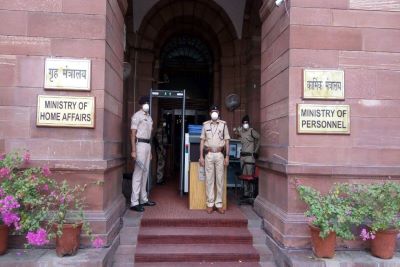
The Ministry of Home Affairs (MHA) will grant fresh tourist visas to foreigners coming to India by chartered flights from October 15.

The ministry also said that foreigners travelling to India by flights other than chartered aircraft will get the facility with effect from November 15.

The ministry said that all due protocols and norms relating to Covid-19, as notified by the Union Health Ministry from time to time, shall be adhered to by the foreign tourists, the carriers bringing them to India and all other stakeholders at the landing stations.

With this, the restrictions placed on visa and international travel stand further eased given the present overall Covid situation.

A Home Ministry official said that the government had been receiving representations from several state governments as well as various stakeholders in the tourism sector to start issuing tourist visas in order to allow foreign tourists to come to India.

“The Home Ministry took the decision after consulting all the major stakeholders, including the Ministries of Health, External Affairs, Civil Aviation, Tourism and various state governments where foreign tourists are expected to arrive,” an official said.

ADVERTISEMENT

As of now, India has air bubble arrangements with other countries, but the scheduled international flights are still suspended.

Due to the pandemic, all visas granted to foreigners were suspended last year. Various other restrictions were also imposed on international travel by the Central government to arrest the spread of the pandemic.

After considering the evolving Covid situation, foreigners were later allowed to avail any kind of Indian visa other than tourist visa for entry and stay in the country.

Published : October 08, 2021

By : The Statesman

Initiatives to cement HK’s global financial hub status #SootinClaimon.Com

#SootinClaimon.Com : ขอบคุณแหล่งข้อมูล : หนังสือพิมพ์ The Nation.

https://www.nationthailand.com/international/40007160


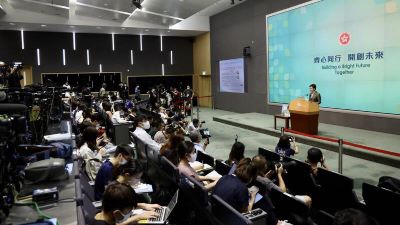
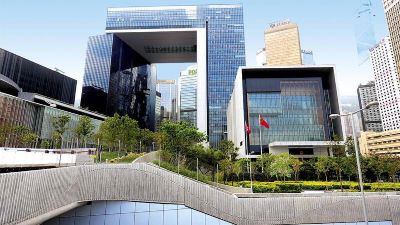
Hong Kong is set to boost its financial prowess and endeavors in integrating with the nation’s economic development by leveraging the central government’s supportive policies and the Chinese mainland’s vast market, Chief Executive Carrie Lam Cheng Yuet-ngor said in her Policy Address on Wednesday.

The initiatives listed under the segment “New Impetus to the Economy: Integration into the National Development” in her speech reflect the Hong Kong Special Administrative Region Government’s resolve to strengthen the region’s status as an international financial center. They’re also in line with the central government’s expectations of Hong Kong as outlined in the 14th Five-Year Plan (2021-25) for National Economic and Social Development.

Lam said the SAR government will support Hong Kong Exchanges and Clearing in amplifying the bourse operator’s listing regime and its plan to allow special purpose acquisition companies to float in the city after public consultations, which are due to end on Oct 31.

ADVERTISEMENT

The SPACs listing framework is a well-thought-out initiative as it will provide a more flexible and attractive avenue for mainland startups, as well as unicorns from Southeast Asia, to go public in Hong Kong, said Bruce Pang, head of macro and strategy research at China Renaissance Securities (Hong Kong).

“It will tremendously diversify listed companies and investors in Hong Kong and sharpen our edge in company listings and trading,” he said.

The SPACs proposal has been widely discussed, and the Stock Exchange of Hong Kong published a consultation paper on Sept 17 to collect market feedback. A SPAC is a type of shell company that raises funds through a listing with the aim of acquiring a business within a pre-defined time frame after it has gone public.

As an alternative to making a traditional initial public offering, a SPAC would face lower listing requirements and costs, streamlining the listing procedure with greater flexibility as favored by uninitiated innovation companies, said Pang. “When startups from the mainland and Southeast Asia list in Hong Kong for the first time, the synergy effect in the financial market will attract more companies to follow suit. It’ll further cement the city’s position as a competitive global financial hub.”

Lam also pledged to expand the channels for the two‑way flow of cross-border renminbi funds and develop offshore renminbi products and tools.

The SAR government will look into specific measures to increase demand for the issuance and trading of renminbi securities and allow stocks traded via the southbound trading link under the Stock Connect to be denominated in the renminbi, Lam said.

Pang said such a policy will allow Hong Kong to cater to the demands of investors abroad for high-quality renminbi and equity products. This will not only beef up Hong Kong’s role as an international financial center, but also facilitate renminbi internalization, and clear the way for cross-border investments in financial products, he said.

Terence Chong Tai-leung, executive director of the Lau Chor Tak Institute of Global Economics and Finance at the Chinese University of Hong Kong, believes the policy will lure more wealthy investors from the mainland as it would reduce the risk of losing a fortune due to foreign exchange fluctuations in the process.

Lam also said the government will promote cross‑border financial technologies and actively explore the formation of a one‑stop sandbox network with the mainland to facilitate financial institutions and information and technology companies from Guangdong, Hong Kong and Macao to test cross‑border fintech applications.

A one-stop sandbox network requires a strong economy and technology sophistication, and the Guangdong-Hong Kong-Macao Greater Bay Area is well positioned to experiment with the concept, Pang said.

“If a one-stop sandbox network is set up in the Greater Bay Area, it will mark a step closer to achieving fintech integration in the region,” Chong said.

Published : October 07, 2021

By : China Daily

Korean Air’s Asiana acquisition: What is happening? #SootinClaimon.Com

#SootinClaimon.Com : ขอบคุณแหล่งข้อมูล : หนังสือพิมพ์ The Nation.

https://www.nationthailand.com/international/40007158


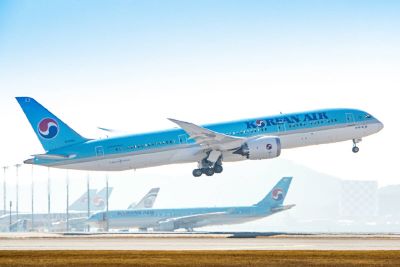
Korean Air’s plan to acquire financially-troubled rival Asiana Airlines is facing a bumpy road as the deadline for the 1.8 trillion won ($1.6 billion) deal has been pushed to the end of this year.

The takeover plan was first announced in November last year, making headlines that the two South Korean full service carriers would merge, giving birth to one of the world’s ten biggest airlines.

In recent months, however, slow progress for the deal — which was initially set to be complete by the end of June — has been met with frustration and concern from those involved in the process including airline staff and the Korea Development Bank, Asiana’s main creditor.

Once seen as Korean Air’s rival, Asiana has short-term liabilities worth over 5 trillion won set to mature within a year.

“As the review of the merger has been delayed, there is a sense of unrest and concern among Asiana staff over unstable management. They want the process to wrap up swiftly for financial stabilization,” one industry official, who wished to stay anonymous, said.

In a press conference last month, Lee Dong-gull, the chairman of the state-run bank said integration of Korean Air and Asiana Airlines is “inevitable” and “essential” for the Korean airline industry to survive and gain competitiveness in the global market. He also said it was “regretful” that the approval process has been slow.

“I hope the (local authority) will approve the deal as soon as possible,” he said.

ADVERTISEMENT

Where does the deal stand now?

The deal has to receive approval from a total of nine antitrust bodies around the world including South Korea, the US and EU and China. So far, three have given the green light – Turkey, Taiwan and Thailand.

On Tuesday, South Korea’s Fair Trade Commission said in a report to the National Assembly that its review of the acquisition will be complete within this year. The process looks into the deal’s economic impact on the public.

During an annual parliamentary review later on the same day, FTC Chairperson Joh Sung-wook told lawmakers that experts had concluded that integration of the two airlines could limit competition and that certain measures are “inevitable.”

She also said the regulatory body has agreed to start talks with the transport ministry on the matter.

What is causing the delay?

The acquisition plan was first delayed by three months as the FTC’s reviewing process took longer than expected.

Last month, it was delayed again by another three months.

It has been 10 months since the airline first submitted requests to antitrust watchdogs for approval.

Though the airline seeks approval from multiple countries, Hurr Hee-young, a professor at Korea Aerospace University, said getting the go-ahead from the antitrust watchdog at home will speed up the process.

“It seems the antitrust bodies (in other countries) are watching what the South Korean government is doing. With the idea of one flag carrier per country being prevalent in many other countries, anticompetitive concerns cannot be used against the deal,” he said.

Professor Hurr disagrees with comparing Korean Air ‘s takeover of Asiana to other cases such as the recent alliance between American Airlines and JetBlue Airways, which has faced attempts to block the partnership over concerns that it could eliminate competition. Instead, the FTC might be looking at low cost carriers which heavily rely on domestic flights.

“When three of their low cost carriers are integrated and we are left with Jeju Air and T‘way Air (as competitors), the question then will be whether it will lead to an airfare hike,“ he pointed out.

Korean Air and Asiana operate a total of three low-cost carriers – Jin Air, Air Busan and Air Seoul. Last year, the KDB said gradually combining these three low-cost airlines and operating them as one is an option being considered.

By Yim Hyun-su

Published : October 07, 2021

By : The Korea Herald

ADVERTISEMENT

Hanoi plans to start economic recovery while living safely with COVID-19 #SootinClaimon.Com

#SootinClaimon.Com : ขอบคุณแหล่งข้อมูล : หนังสือพิมพ์ The Nation.

https://www.nationthailand.com/international/40007157


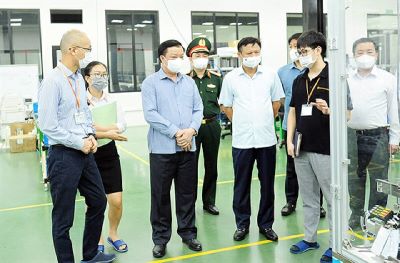
HÀ NỘI – Hà Nội will work towards a safe and flexible living situation with COVID-19, in a bid to begin the capitals economic recovery, the city’s leader has said.

Secretary of the city’s Party Committee Đinh Tiến Dũng said Hà Nội had gradually resumed a number of activities since September 16.

But he warned that the risk of infection in the city remained high, so asked for caution as the capital puts plans in place to live in the ‘new normal’ situation.

Hà Nội has experienced a long period of strict social distancing after the COVID-19 outbreak worsened with a number of new clusters and unknown infection sources.

Back in July, the city reported 53 new cases with 32 locally transmitted and many without an identified infection source. At that time only a fraction of the population had been vaccinated with around 26.5 per cent of adults receiving just one shot.

ADVERTISEMENT

Hà Nội was on high alert and at an urgent meeting held on July 23, the Standing Committee of the City Party Committee imposed a two-week social distancing period to begin the next day.

Under Directive 16, people were told they could not gather in groups of more than two in public places, and only leave home for emergencies to buy food and medicine.

Although strict, the regulations began to see results and by the beginning of September, the pandemic was under control and the city eased restrictions.

Dũng said the 60 days of strict social distancing was the toughest of times for the capital, causing great economic losses.

Due to the top priority of protecting the health and safety of people, the city halted most of its business and production activities, which led to a drop of 7.02 per cent in GRDP in the third quarter.

But more and more people were vaccinated, with most adults receiving their first dose. At the same time, medical treatment capacity greatly improved.

Since the fourth wave began, there has been a total of 4,273 cases in the capital, accounting for just 0.4 per cent of the country’s tally.

However, Dũng said the city had maintained essential supplies of goods with stable prices.

The city’s GRDP in the second quarter still increased by 6.61 per cent, contributing to boosting the overall growth in six months to 5.91 per cent and 1.28 per cent over the first nine months of the year.

The city provided aid to other localities, sending 5,000 tonnes of rice worth VNĐ75 billion to HCM City, Bình Dương Province 1,000 tonnes of rice and 18 southern cities and provinces VNĐ3 billion worth of rice each.

Dũng said economic recovery would be the priority as the year ends, but the city would carefully determine the steps to ensure safe co-existence with the virus.

Currently, the percentage of fully vaccinated citizens remains low – about 23 per cent of the city’s adult population and those under 18 remained unvaccinated.

There were still potential risks of new outbreaks, particularly following the emergence of a cluster at the Việt Nam-Germany Friendship Hospital, which to date had seen 41 new cases, he said.

Dũng said the city planned to accelerate the recovery of socio-economic development, focusing on three important tasks, including accelerating the progress of the disbursement rate of capital construction investment; implementing budget revenue and expenditure management effectively; and stepping up administrative reform while easing difficulties for businesses.

To be able to do that, the city would propose the Government and the Ministry of Health allocate enough vaccine doses to give second doses to all citizens by the end of this month.

VNĐ500 billion ($21.9 million) from the city’s budget had been allocated to help businesses get loans and resume their production activities.

It had set up scenarios to react to the pandemic at different levels while ensuring economic growth.

For new outbreaks such as the Việt Nam-Germany Friendship Hospital, the city had focused on zoning and tracing to minimise the spread of the virus, he said. VNS

Published : October 07, 2021

By : Vietnam News

PM confirms Laos-China railway to open on December 2 #SootinClaimon.Com

#SootinClaimon.Com : ขอบคุณแหล่งข้อมูล : หนังสือพิมพ์ The Nation.

https://www.nationthailand.com/international/40007156


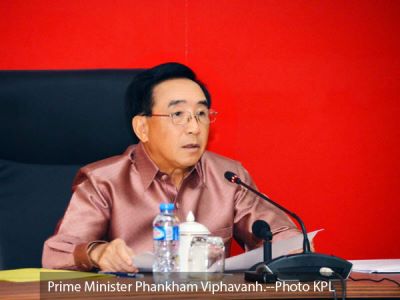
Prime Minister Phankham Viphavanh said on Wednesday that the Laos-China Railway will open on December 2 – the day when the Lao PDR will celebrate its 46th anniversary.

The premier confirmed the opening of the railway amid growing concerns that the escalating Covid-19 outbreak might affect the planned start of railway services.


Currently, many provinces and Vientiane are under lockdowns that restrict people’s movements.

PM Phankham confirmed that the government will go ahead with the opening as planned, telling reporters both online and off-line “(I) confirm that the railway will surely open on December 2.”

ADVERTISEMENT

The government is drawing up plans for the opening and operation of the railway under conditions that comply with Covid control measures, to ensure the safety of everyone concerned.

The plan will address “How we can open services for tourism,” he said.

Authorities are working out measures to be introduced at the Laos-China border for the inspection of goods and passengers prior to entry and exit.

Initially, railway operations will focus on freight transport. Services for tourists will be offered later depending on the circumstances in which traveller safety can be assured with respect to Covid.

When it is able to operate normally, the prime minister said the railway will greatly benefit Laos given its significant role in bolstering tourism and the transport of goods.

It is expected that the 422.4-km railway will cut the cost of transport through Laos by 30-40 percent compared to travel by road, thus giving a boost to trade and investment.

The developer of the Thanaleng Dry Port and Vientiane Logistics Park said the railway would be a significant force in enabling Laos to be part of a new global supply chain.

Mr Chanthone Sitthixay, Chairman of Vientiane Logistics Park Co., Ltd. – the developer of the dry port and logistics park – said the transport of goods from Southeast Asia to Europe via the railway would take just over 10 days.

This is much shorter that using the sea route, which takes about 45 days for goods to reach Europe, and he predicted that countries in the region would choose to ship their containers via the railway.  

Initially, at least 300,000 containers from Laos, mainly from the Thanaleng Dry Port, are expected to be shipped via the Laos-China railway to Europe through China each year. Later, shipments are estimated to rise further to between 1.2 and 1.8 million containers a year, according to the Chairman.

Published : October 07, 2021

By : Vientiane Times

Rohingya Relocation to Bhasan Char: UN set to be on board with govt’s plan #SootinClaimon.Com

#SootinClaimon.Com : ขอบคุณแหล่งข้อมูล : หนังสือพิมพ์ The Nation.

https://www.nationthailand.com/international/40007153


The United Nations is finally set to get engaged in humanitarian activities for Rohingyas in Bhasan Char.

The UNHCR and the Bangladesh government will sign a memorandum of understanding on UN involvement in the humanitarian activities Saturday, officials of the disaster management and relief ministry said.

“In Bhasan Char they [UN] will do the jobs what they are doing now in Cox’s Bazar for the Rohingyas. After the signing of the MoU, they will get engaged in the activities in Bhasan Char as early as possible,” Secretary Md Mohsin of the ministry told The Daily Star yesterday.

The development comes following an impasse of more than a year between the government and the UN regarding the global body’s technical assessment of the housing facility for Rohingyas in the island.

The MoU will be signed at the secretariat around noon Saturday in presence of top officials from both the sides. The deal will be inked by the secretary from the Bangladesh side while the UNHCR country representative will sign it on behalf of the UN side.

ADVERTISEMENT

Mohsin said the government was planning to start relocating another 80,000 Rohingyas to the char from the camps in Cox’s Bazar late this month.

“We expect that UN agencies will engage themselves in the humanitarian activities in Bhasan Char before the relocation,” he said.

Earlier in the day yesterday, Foreign Minister AK Abdul Momen told journalists that the issue regarding the UN engagement in Bhasan Char was settled and that the UN could go to the island any time.

A UN team visited the island on 17-20 March this year. Later, it said the UN was grateful to the government for facilitating the visit. It also said the UN looked forward to continuing dialogue in this regard.

Former United Nations General Assembly (UNGA) president Volkan Bozkir  during his visit to Bangladesh in May highly appreciated the country’s efforts for the Rohingyas in Bhasan Char. He said Bangladesh, by building the housing facilities, once again showed the world how a refugee crisis needs to be handled.

Bozkir hoped that this would work well for the Rohingya people, giving them a better living condition in Bhasan Char.

The government has already relocated some 18,000 Rohingyas to Bhasan Char from Cox’s Bazar in phases since December last year.

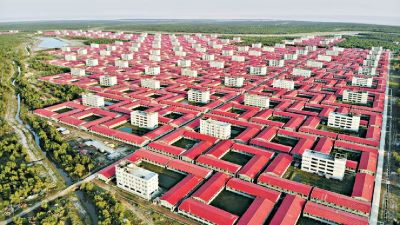
Bangladesh Navy implemented the Tk 3,100 crore housing project after some 7,50,000 Rohingyas had fled a military crackdown in Myanmar’s Rakhine state in 2017 and took shelter in camps in Teknaf and Ukhia.

The UN had raised concerns over risks of tidal surge and cyclone at the remote island, but the government said with 120 brick-built cluster villages and 120 cyclone shelters, flood protection embankments, facilities for education, farming and fishing, hospitals and playgrounds, the char is a much better living place than the Cox’s Bazar camps.

The government also undertook projects to train 100,000 out of the nearly one million Rohingyas.

In the absence of the UN in Bhasan Char, Bangladeshi non-governmental organisations began providing humanitarian assistance to the Rohingyas in December last year from their own fund. Since then, the government has repeatedly been urging the UN to begin its operations there.

Bhasan Char officials said separate buildings for the UN and other international aid agencies have also been constructed on the island.

Published : October 07, 2021

By : The Daily Star

SAR govt to request removal of HK from EU tax watch list #SootinClaimon.Com

#SootinClaimon.Com : ขอบคุณแหล่งข้อมูล : หนังสือพิมพ์ The Nation.

https://www.nationthailand.com/international/40007105


HONG KONG – The Hong Kong Special Administrative Region’s government said it would request the European Union to swiftly remove Hong Kong from the watch list on tax cooperation after amending the relevant tax arrangements.

The EU on Tuesday announced the inclusion of Hong Kong in its watch list on tax cooperation as it considered that the non-taxation of certain foreign-sourced passive income in Hong Kong might lead to situations of “double non-taxation”.

In a statement issued on the same day, a spokesperson for the HKSAR government noted that Hong Kong has, over the years, adopted the territorial source principle of taxation, whereby offshore profits are generally not subject to profits tax in Hong Kong.

“As an international financial center, Hong Kong has all along been actively participating in and supportive of international tax cooperation,” the spokesperson added.

“The EU is concerned that corporates with no substantial economic activity in Hong Kong are not subject to tax in respect of certain offshore passive income (such as interest and royalties), hence leading to circumstances of ‘double non-taxation’,” the spokesperson said.

ADVERTISEMENT

Under the premise of supporting the combating of cross-border tax evasion, the HKSAR government said it has agreed to cooperate with the EU to amend the Inland Revenue Ordinance (Chapter 112 of the Hong Kong laws) by the end of 2022 and implement relevant measures in 2023, the spokesperson said.

“The proposed legislative amendments will merely target corporations, particularly those with no substantial economic activity in Hong Kong, that make use of passive income to evade tax across a border,” the spokesperson said, adding that individual taxpayers would not be affected.

“As to financial institutions, their offshore interest income is already subject to profits tax under the Inland Revenue Ordinance at present, and hence the legislative amendments will not increase their tax burden,” the spokesperson said.

The spokesperson stressed that Hong Kong enterprises will not be subject to defensive tax measures imposed by the EU as a result of being included in the watch list on tax cooperation, adding that Hong Kong will continue to adopt the territorial source principle of taxation.

“The government will endeavor to uphold our simple, certain and low-tax regime with a view to maintaining the competitiveness of Hong Kong’s business environment.”

The government will consult the stakeholders on the specific contents of the legislative amendments to minimize the compliance burden of corporates, according to the spokesperson.

The EU published the guidance on the foreign-sourced income exemption regime in October 2019 and commenced corresponding assessment on the tax arrangements of a number of tax jurisdictions, including Hong Kong).

The focus of the assessment is to address situations where offshore shell companies obtain tax benefits through “double non-taxation”.

Published : October 06, 2021

By : China Daily

Phone market to grow slowly amid parts shortages #SootinClaimon.Com

#SootinClaimon.Com : ขอบคุณแหล่งข้อมูล : หนังสือพิมพ์ The Nation.

https://www.nationthailand.com/international/40007103


Despite recent releases from Samsung Electronics and Apple featuring the most advanced technologies so far, the global smartphone market is forecast to grow slowly as phone vendors struggle to secure components, including semiconductors, amid ongoing shortages worldwide.

According to a recent report from market researcher Counterpoint Research, the total shipment volume of smartphones for 2021 is expected to grow 6 percent to 1.41 billion units.

The growth forecast was lowered from the researcher’s previous estimate of 9 percent as some phone manufacturers are reporting shortages of key components, the institution said.

“Some smartphone OEMs and vendors are reporting they had only received 80 percent of their requested volumes on key components during the second quarter of 2021, and the situation seems to be getting worse as we move through the third quarter,” the report said. “Some smartphone makers are now saying they are only receiving 70 percent of their requests, creating multiple problems.”

Counterpoint Research believes as much as 90 percent of the smartphone industry is hit by the shortage. If so, this would impact shipment volume in the second half of the year.

“The semiconductor shortage seems to affect all brands in the ecosystems,” said Tom Kang, a research director at Counterpoint Research. “Samsung, Oppo, Xiaomi have all been affected and we are lowering our forecasts. But Apple seems to be the most resilient and least affected by the AP shortage situation.”

The latest phones from Samsung and Apple, the Galaxy Z Flip 3 and the iPhone13, have become scarce, with consumers waiting more than a month to get the new devices in their hands.

Apple Korea told customers who made reservations for iPhone 13 devices last week that their products would be delivered in November.

The new iPhone 13 edition was available for sale Oct. 1 at midnight, but the initial inventory ran out in a few minutes.

Smartphone vendors had experienced shortages of multiple components since the fourth quarter of 2020, including display driver ICs, power management ICs, application processors and camera sensors.

ADVERTISEMENT

Due to the protracted COVID-19 pandemic, the production of multilayer ceramic capacitors, essential parts in electronics, was affected in Malaysia last month too.

In the case of application processors, among the most crucial elements in smartphones, the shortage was triggered by low yield rates in newly established fab lines, according to the report.

“With the situation seeming to persist it caused a chain reaction throughout the industry,” it said. “AP vendors like Qualcomm and Mediatek rely on these foundries and manufacturing problems result in fewer processors supplied, which in turn affects smartphone OEMs.”

The shortages of smartphone components may lead to hikes in prices, too.

A report from Strategy Analytics showed that smartphones’ wholesale prices would increase by 11 percent from $279 last year to $310 this year.

By Song Su-hyun

Published : October 06, 2021

By : The Korea Herald