KUALA LUMPUR: AirAsia Group Bhd (AAGB) has received the approval from Danajamin Nasional Bhd for an 80% guaranteed loan of up to RM500mil, which will help put the low-cost carrier in a firmer position to boost its operations.
In a statement yesterday, AAGB said the loan was under the Danajamin Prihatin guarantee scheme, which is part of Malaysia’s economic stimulus package following the unprecedented outbreak of Covid-19.
“The loan has been approved by AAGB’s lenders under a club deal term financing (Club Facility), with the aforementioned guarantee to be provided for the Club Facility by Danajamin via Syarikat Jaminan Pembiayaan Perniagaan, a wholly-owned entity of the Finance Ministry,” it said.
AAGB said the loan is a strong signal of support for the group, as it gears up to ensure it is in a robust position to once again serve the nation and the communities it operates to.
AAGB also said the loan will allow it to play a key role in rebuilding the economy as the country emerges from the Covid-19 pandemic.“The financing under the Club Facility is earmarked for working capital purposes which will support staff costs and key operating expenses such as aircraft maintenance, as AAGB prepares to ramp up its operations leading up to the re-opening of interstate and international borders in the near future.”
In the same statement, AAGB executive chairman Datuk Kamarudin Meranun said the low-cost carrier has been a major contributor to the Malaysian economy by providing connectivity to facilitate tourism, trade and investment activities.
ADVERTISEMENT
“We have also been pivotal in generating a significant number of job opportunities and empowering local small and medium-sized enterprises, especially through our digital ventures.
“This approval from the Malaysian government is a strong endorsement of AirAsia Group’s ability to recover fast and provides a welcome boost to our overall fundraising strategy as we prepare to return to the skies in all of our key markets.”
Kamarudin noted that countries around the world, including those in the region, have begun to reopen international borders amid promising progress in vaccination rates.
“Malaysia’s adult vaccination rate is close to 90% and domestic interstate movements will be allowed once we reach that milestone.”
Kamarudin added that the Langkawi travel bubble has been a huge success, with overwhelming demand since AAGB launched up to 90 services a week from Sept 16.
“In Thailand, Indonesia and the Philippines, we are seeing pleasing progress as services have gradually started to resume.
“As countries in the region continue to discuss and implement travel bubbles and to gradually reopen international borders, we are confident that we will be able to recover and rebound strongly in the near future.”
AAGB’s net loss in its second quarter ended June 30, 2021 narrowed by almost 42% to RM580.06mil year-on-year, mainly due to increased revenue from a low base as well as reduced operating expenses.
Revenue more than doubled year-on-year to RM370.61mil from RM142.09mil in the second quarter of the previous financial year.
Cumulatively, for the first six-months period ended June 30, 2021, AAGB reported a net loss of RM1.35bil. Revenue fell 72.4% year-on-year to RM686.82mil from RM2.49bil.
Indian Navy and Japan Maritime Self-Defence Force will take part in the fifth edition of bilateral maritime exercise – JIMEX- in Arabian Sea begining 8-9 October.
Indigenously built guided missile stealth destroyer Kochi and Guided Missile Frigate Teg, under the command of Rear Admiral Ajay Kochhar, Flag Officer Commanding Western Fleet, will represent the Indian Navy.
From Japan, Japanese Maritime Self-Defence Force will be represented by JMSDF ships Kaga, an Izumo Class Helicopter Carrier and Murasame, a Guided Missile Destroyer, led by Rear Admiral IkeuchiIzuru, Commander Escort Flotilla – 3 (CCF-3).
Besides ships, P8I Long Range Maritime Patrol Aircraft, Dornier Maritime Patrol Aircraft, integral helicopters and MiG 29K fighter aircraft will also take part in the exercise, according to a Ministry of Defence note here.
The objective of the JIMEX-21 is to develop a common understanding of operational procedures and enhance interoperability through conduct of a multitude of advanced exercises, across the entire spectrum of maritime operations. Multi-faceted tactical exercises involving weapon firings, cross-deck helicopter operations and complex surface, anti-submarine and air warfare drills will consolidate coordination developed by the two navies, the ministry note further added.
Naval cooperation between India and Japan has increased in scope and complexity over the years. JIMEX-21 will further enhance the cooperation and mutual confidence between the two navies and fortify the long-standing bond of friendship between the two countries, the ministry note pointed out.
ADVERTISEMENT
JIMEX series of exercises began in January 2012 with focus on maritime security cooperation. The last edition of JIMEX was conducted in September 2020.
New Prime Minister Fumio Kishida said his government would draw up large-scale measures to revive the pandemic-battered Japanese economy, at his first press conference following the inauguration of his Cabinet on Monday.
“The battle against the coronavirus is still going on,” Kishida told reporters. “We will take all possible measures against the virus, which is the top priority.”
Kishida also said the government would enhance its income redistribution policy for the creation of a “new capitalism.” As an immediate measure, the prime minister said the government “will consider providing cash relief for those who are suffering financially due to the pandemic” and that it would start discussing the matter with the ruling parties.
Kishida further told the press conference that he would dissolve the House of Representatives at the end of the extraordinary Diet session on Oct. 14 and hold a lower house election Oct. 31, with official campaigning for the general election to kick off on Oct. 19.
ADVERTISEMENT
Initially the schedule was for official campaigning to start Oct. 26, with voting and ballot counting on Nov. 7.
Asked why the election was being moved forward, Kishida said: “We want to quickly implement drastic measures to control COVID-19 and boost the economy. To that end, I want [the public] to judge if Kishida can be trusted enough to take up the job, and steer the nation with the trust of the people.”
He also said the changed schedule was aimed at reducing the political vacuum as much as possible.
■ Revising Abenomics
The Kishida Cabinet is steering toward revising the Abenomics economic policy package implemented by former Prime Minister Shinzo Abe.
“My goal is to realize a new capitalism,” Kishida said. “The concept is for a virtuous cycle of growth and distribution [of wealth] and the development of a new post-pandemic society.”
By revising Abenomics, the Kishida government is seeking to increase the middle-class population and stimulate consumption and corporate investment.
The government will also discuss the post-pandemic economy and society.
Specifically, it plans to increase support for education and housing costs for families with small children, raise the incomes of nurses, care workers and childcare workers, and heighten surveillance of the “bullying” of subcontractors, in which large companies use their strong position to impose burdens on their suppliers.
Kishida has demonstrated a willingness to raise the income tax on capital gains and dividends in a bid to rectify disparities in income and assets among individuals. The new government will give weight to the distribution of wealth and narrow the gap between the rich and the poor, between large enterprises and small and midsize companies, and between urban and rural areas.
■ Income stagnation
Kishida’s ambitions for the distribution of wealth stem from his awareness that trickle-down economics — a theory that argues benefits for major corporations and the wealthy will “trickle down” to small and midsize companies and low-income earners — did not yield significant results under Abenomics.
Monetary easing and flexible fiscal stimulus helped corporate earnings recover, leading to a rise in share values and an increase in employment. Since the launch of the second Abe Cabinet in December 2012, Japan’s real gross domestic product has grown from (an annualized amount of) about ¥515 trillion in the October-December quarter of 2012 to about ¥558 trillion in the pre-pandemic July-September quarter of 2019.
Wages, however, have stagnated. The Abe administration launched such policies as “the promotion of dynamic engagement of all citizens” and “work style reform.” Wage increases have exceeded 2% for seven straight years since 2014, when the government took the initiative to prod companies to increase pay in so-called government-led shunto spring labor-management negotiations. However, real wages — with price fluctuations added — were lower in many years than in the previous year.
Distribution of wealth requires capital. According to the Cabinet Office, the potential growth rate, which indicates the strength of Japan’s economy, remains below 1%.
Like previous prime ministers, Kishida has proposed a growth strategy including such elements as the establishment of a ¥10 trillion university fund; research and development of semiconductors and artificial intelligence; development of domestic vaccines and pharmaceuticals; and strengthened production systems.
His strategy, which also includes the promotion of digitization, follows the same direction as those of Abe and former Prime Minister Yoshihide Suga.
But Kishida needs to take further steps to make it grow.
YANGON- Rapid depreciation of the kyat huge caused significant price hikes, shuttered many local businesses, and has led to shortages. Price of essential foods, medicines, and fuel have increased substantially over the past few weeks.
The value of one US dollar in Myanmar kyat in local foreign exchange market increased from Ks1,331 in January 2021 to Ks1,750 in September 2021. Currency depreciation has exacerbated in recent days, reaching a record high of around Ks2,700 on September 28th. In local market, some were even trading with nearly Ks3,000 per dollar.
However, the value decreased to around Ks2,400 per dollar on September 30 as the US dollar index reached around 94 points.
In 2021, the Myanmar kyat against US dollar was valued at around Ks1,300 per dollar in January. But the value of the kyat has depreciated significantly since March reaching a record high of Ks2,700 on September 28.
However, this rate stabilized to Ks2,400 on September 30th and Ks2,430 on October 1st.
When it comes to local gold prices in Myanmar, the academy gold price jumped to Ks2,250,000 on September 28. Meanwhile, local fuel prices rocketed to over Ks1,500 per letre in all kinds seeing an increase of 100% to 130%.
The unstable foreign exchange market, fluctuating gold prices and high fuel prices have greatly impacted local consumer goods market and public consumers. Consequently, many of local businesses have stopped their operation.
ADVERTISEMENT
“Businesses have closed one after another. Small shops have closed one after another. It sounds as though we were in a mud. The more we move, the more we get stuck in the mud,” a local businessman murmured.
A lot of bakeries announced on their Facebook pages that they would suspend their operation at the end of September as they ran out of raw materials.
Some entrepreneurs say that it is better for the importers and businesses dependent upon foreign exchange to stop their operations and sit idle if they want to avoid losses.
“I made a profit of Ks50,000 when I sold a kind of medicine yesterday. But I made a loss of Ks100,000 today when I bought it to resell. I am watching the market situation while selling the remaining stock. But now, I am closing my shop temporarily,” said a drug store owner in Thingangyun Township, Yangon.
The rise and fall of foreign exchange rate affects demand and supply of foreign currency. The main factors are foreign exchange market situation, national trade volume, national economic growth rate, budget situation and prices of goods and services.
Rising dollar exchange rate has triggered hikes in the prices of imported goods, especially fuels, medicines and food.
In September, prices of rice and cooking oil in food categories increased, but onion prices in kitchen crops did not increase significantly, according to Bayint Naung Wholesale Center in Yangon.
“Prices of almost all goods are increasing. A 5-litre container of sunflower cooking oil was priced at Ks19,000 last month. But I have bought it for Ks22,000 now. All prices have increased including meat and vegetables,” said a Yangon housewife.
A poultry seller said the wholesale price of CP chicken was now Ks4,500 per viss although it was previously sold for Ks2,000 to 2,500. And the duck price was Ks7,500 per viss now, but stock was scarce these days, he commented.
A taxi driver also said: “I have never seen such skyrocketing prices of fuels. The taxi fare for a route worth Ks2,000 has increased to Ks2,500 or 3,000. Still, we have to struggle to get the enough amount of money for our owners.”
A local businessman, Dr Soe Tun, said it was not fair to say that dollar price hikes do not concern prices of locally-produced goods because cost of production also includes imported items.
“For example, watercress and rice are locally grown. But agricultural inputs such as fertilizers and pesticides have to be imported. So, cost of production also increases. We also need to consider other costs such as transport charges,” he said.
Most of the consumer goods in Myanmar are imported. They include medicines, edible oil and fuels.
In order to reduce foreign exchange rate and keep foreign exchange reserves, the Central Bank of Myanmar is running a foreign exchange auction market. In September alone, the bank sold US$63 million in five rounds including the latest sale of US$15 million on September 27. However, dollar exchange rate in local market is still around Ks2,400. The country is in a crisis of currency depreciation.
“First, the Myanmar kyat value against one dollar increased to Ks1,600 or 1,700. The Central Bank sold its earnings while selling bucks at reduced prices through eight money changers. At that time, the value decreased to around Ks1,400. This time also, they are doing so. A lot of things emerged. Rumours spread about new banknote circulations and the demonetization of the 5,000-kyat notes and 10,000-kyat notes. Export is also scarce. For dollar sales due to export deficit, the Central Bank is right. But, people want to buy bucks which should extensively be sold at the money changers. To reduce prices, the bank is selling dollars as a fixed price of Ks1,750 per dollar. But it is supposed to have sold its dollars to only three or four fuel importers. Then they are asked to sell their products at reduced prices. These are my personal views. I don’t know if I am right or not,” Dr So Tun said.
“According to the nature of market economy, we don’t need to sell at reduced prices. We should sell at ongoing market prices. But, sales must be shared with all those who can afford. If possible, we must consider retail sales. Public trust will increase. Now, it is losing. We cannot sell our things to three or four customers only. There are hundreds of thousands of buyers. If we sell our products only to three people, they will get them all secretly. Others have to pay more as they didn’t have the chance to buy. Their system is a bit wrong. The bank has sold a lot of dollars. But the price has not decreased,” he added.
Some businesspeople have said they are facing lots of difficulties such as instable currency market, bank restrictions on cash withdrawals and outside cash withdrawals through brokers.
“The dire situation we are facing is that we cannot withdraw our cash from the banks on an unlimited basis and that we cannot make bank payments. Unless the banking system and currency problems could be solved, our businesses will never be recovered,” said a local businessman.
Banking and monetary systems are built with public trust. Only if the unnecessary restrictions are eased, will the banking system and businesses be able to revive.
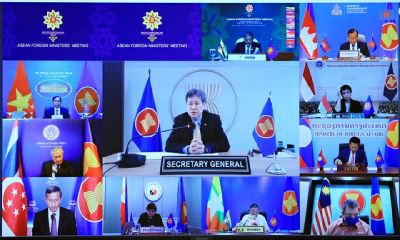
HÀ NỘI — Vietnamese foreign minister Bùi Thanh Sơn said growing strategic competition between major powers has left huge implications on the region, and ASEAN needs to be watchful of developments and strengthen its unity and central role.
He made the statement as he was addressing the ASEAN Foreign Ministers Meeting (AMM) held virtually on Monday under the chair of Brunei, with issues like COVID-19 response, South China Sea, and Myanmar topping the agenda.
The Vietnamese foreign minister said he appreciated the efforts of Brunei as ASEAN chair this year in maintaining regional cooperation through these challenging times, reaffirming Việt Nam’s active participation and coordination to help successfully hold the upcoming ASEAN Summits slated to be held virtually on October 26-28.
Discussing the COVID-19 pandemic, Sơn said Việt Nam is among the three ASEAN countries trying to produce a locally developed vaccine, urging ASEAN to enhance its vaccine resilience through building up its capacity as a vaccine supplier for the region.
Việt Nam said it will coordinate with other countries to promote the early establishment and operation of the ASEAN Centre for Response to Public Health Emergencies and Emerging Diseases (ACPHEED). Sơn underlined that ASEAN needs to focus efforts on supporting groups of people and regions affected by the COVID-19 pandemic, including sub-regions, as well as providing relief for specific sectors for them to quickly recover.
Việt Nam also used the occasion to announce its plans to hold an ASEAN forum on sub-regional cooperation for sustainable development and inclusive growth on November 30, 2021 in Hà Nội.
ADVERTISEMENT
Minister Sơn said that increasingly fierce and profound strategic competition between world powers are “causing major implications” to the region, stressing that ASEAN needs to closely follow the developments, maintain the bloc’s unity, resilience, centrality and independence.
Việt Nam also suggested ASEAN maintain a ‘harmonious approach’ that both upholds its principled stances in matters affecting regional peace and security, while encouraging partners to actively participate in ASEAN-led mechanisms to help boost dialogues and confidence, and together address issues of mutual concerns.
Regarding the South China Sea (known in Việt Nam as the East Sea) issue, Minister Sơn reaffirmed the importance of promoting trust and confidence, exercising restraint, and peacefully settling disputes in accordance with international law, including the 1982 United Nations Convention on the Law of the Sea (UNCLOS).
At the same time, ASEAN should continue to closely coordinate with China to ensure the full and effective implementation of the Declaration on the Conduct of Parties in the South China Sea (DOC) and the building of an effective, substantive Code of Conduct (COC) that is consistent with international law, especially the 1982 UNCLOS, and one that is welcomed by the international community.
Talking about the situation in Myanmar, the Minister of Foreign Affairs of Brunei, ASEAN Chair’s Special Envoy on Myanmar updated the participants on the progress of the mission.
ASEAN countries agreed to step up humanitarian support for Myanmar in the face of the severe impact of COVID-19 and welcomed the first humanitarian assistance trip including medical equipment worth US$1.1 million that was transferred to the Myanmar Red Cross Society on September 15; requested Myanmar to coordinate and facilitate the Special Envoy’s activities, including supporting relevant parties in holding dialogues and find solutions to help stabilise the situation here.
The Vietnamese diplomat welcomed the first humanitarian assistance trip to Myanmar as an encouraging development to support the people in Myanmar. He also expressed support for the efforts of the ASEAN Chair as well as the ASEAN Chair’s Special Envoy to Myanmar to soon implement the task and hope that Myanmar will create favourable conditions for the Special Envoy to successfully render their services.
The AMM also discussed the process of building the ASEAN Community, cooperation with partners, and discussed a number of regional and international issues. Maintaining ASEAN solidarity and unity is considered unanimously a key factor to ensure the success of the Community building process and promote ASEAN’s central role in the region.
The meeting also discussed and agreed on the mode of cooperation between ASEAN and the United Kingdom, the newest ASEAN Dialogue Partner. Accordingly, the two sides will establish the mechanism of ASEAN-UK Joint Cooperation Committee, Senior Officials Meeting and Foreign Ministers Meeting, and Brunei will be the country to take the role of coordinating ASEAN-UK relations in 2021-24. — VNS
In congratulatory message to Kishida, he calls for enhancing cooperation
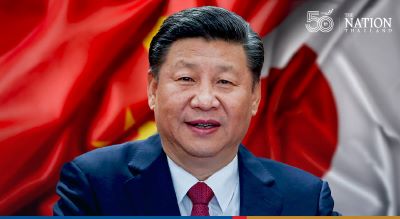
President Xi Jinping sent a message to Fumio Kishida on Monday, congratulating him for his success in being elected Japan’s 100th prime minister.
Xi said that, as China and Japan are close neighbors, advancing their good-neighborly, friendly and cooperative relations serves the crucial interests of the two countries and their peoples and is also conducive to the peace, stability and prosperity of Asia and the world.
China and Japan should stay true to the principles set out in the four landmark China-Japan political documents, Xi said.
The two countries should strengthen dialogue and communication, enhance mutual trust and cooperation, and strive to build China-Japan ties that meet the needs of the new era, he added.
Also on Monday, Premier Li Keqiang sent a message congratulating Kishida on his election victory in parliament.
Li said the two sides should champion their political consensus, strengthen exchanges and cooperation, and advance bilateral relations in a healthy and steady manner to stay on the right track.
ADVERTISEMENT
As bilateral diplomatic ties were normalized in 1972, Li added that the two countries should jointly embrace the upcoming 50th anniversary of the normalization of relations.
Kishida took office as Japan’s 100th prime minister on Monday, replacing all but two of the 20 Cabinet posts under his predecessor, Yoshihide Suga, and eyeing a general election for the country’s lower house of parliament on Oct 31.
With the Liberal Democratic Party-led ruling coalition holding a majority in both chambers of Japan’s parliament, Kishida, who became the LDP’s new president last week, won the premiership by a comfortable margin against Yukio Edano, head of the Constitutional Democratic Party, the largest opposition party.
The 64-year-old former foreign minister garnered 311 votes in the 465-seat lower chamber, the House of Representatives, and 141 of 241 votes in the upper chamber, the House of Councillors.
“This is the real starting point. I will go forth with a strong sense of determination, with a strong resolution,” Kishida said.
Following his appointment, Kishida announced the members of his Cabinet, with 13 of them being posted to ministerial level for the first time.
Suga’s Cabinet members had resigned en masse earlier on Monday, but they continued to serve as acting ministers until the new Cabinet was appointed.
In a move to show the continuity of Japan’s diplomacy and security policies, Kishida kept Toshimitsu Motegi as foreign minister and Nobuo Kishi, who is former prime minister Shinzo Abe’s younger brother, as defense minister.
Former finance minister Taro Aso was replaced by his 68-year-old brother-in-law, Shunichi Suzuki, and 46-year-old Takayuki Kobayashi was introduced to a new Cabinet post in charge of Japan’s economic security.
Three women-Noriko Horiuchi, Karen Makishima and Seiko Noda-have joined Kishida’s Cabinet. Horiuchi will be vaccination minister, replacing Taro Kono, the runner-up in the party’s leadership race.
Kishida, the first prime minister from the LDP’s Kochikai faction in around 30 years, said during a news conference on Monday that he plans to dissolve the lower house on Oct 14 to hold elections on Oct 31. Local media said the move would take advantage of the honeymoon period usually accorded to new governments.
Yu Qiang, a researcher of Japan studies at the University of International Relations in Beijing, said: “First, he could use the fresh image of his party and Cabinet to rally support. Second, the current number of coronavirus infections in Japan guarantees him a good atmosphere.”
Japan has experienced a sharp decline in COVID-19 cases in recent weeks, with over 60 percent of the country’s population fully vaccinated.
On Monday, Tokyo confirmed 87 new cases, marking the first time since November last year that the count has fallen below 100.
A poll published on Sunday by Japanese newspaper Yomiuri Shimbun found that 64 percent of respondents wanted the LDP to stay in power.
Kishida, who served as Japan’s foreign minister from 2012 to 2017 under Abe, gained an image during that time as a dovish moderate good at building consensus.
In 2016, he helped arrange the visit to Hiroshima by then United States President Barack Obama, the first time a sitting US president had visited the site of the World War II atomic bombing.
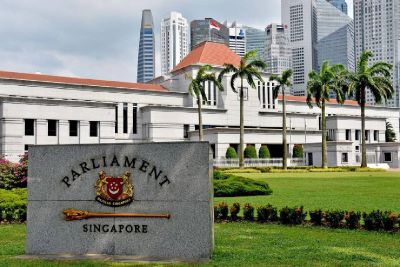
SINGAPORE – A law against foreign interference was on Monday (Oct 4) passed by Singapores Parliament after a 10-hour airing in the House, three years after it was first raised and three weeks after the extensive, hotly debated legislation was tabled.
“This Bill is intended to address a serious threat that concerns our national security and sovereignty,” said Law and Home Affairs Minister K. Shanmugam.
“And these are important to ensure that Singaporeans continue to make our own choices on how we should govern our country and live our lives.”
The Foreign Interference (Countermeasures) Act, or Fica, aims to tackle foreign meddling in domestic politics conducted through hostile information campaigns and the use of local proxies.
During the debate, 16 MPs from both sides of the aisle surfaced criticisms and concerns raised by lawyers, experts and civil society activists in recent days, including over the law’s broad language and lack of judicial oversight.
These resulted in a parliamentary petition to delay its passage put forward by Non-Constituency MP Leong Mun Wai, a raft of proposed changes tabled by the Workers’ Party (WP), and recorded dissent from opposition MPs at the final vote – but the ruling People’s Action Party’s supermajority meant Fica’s passage was a given.
At around 11.15pm, the Bill was passed with 75 MPs saying “yes”, 11 from the WP and Progress Singapore Party objecting, and two Nominated MPs abstaining.
WP chief Pritam Singh had called for a division in which each MP’s vote is recorded.
Some proposed amendments to the Bill by the WP were accepted by the Government, including to expand the list of defined politically significant persons to include a member of the executive committee or similar governing body of a political party.
Another accepted modification was to make it obligatory to publicise the designations of these persons, as well as some stepped-up countermeasures against them.
The party had also suggested additional provisions allowing appeals to the court and a public registry of politically significant persons among other changes, which it said would lower the likelihood of abuse of power and lead to greater transparency.
ADVERTISEMENT
Other MPs had also suggested for greater checks and balances to be incorporated into the law, citing “extensive” discretion granted to the authorities.
Mr Shanmugam offered a biting response, noting that “rhetoric alone doesn’t solve problems”.
“Parliament is not just a forum for reading out speeches with an intent of putting it out in social media eventually… without offering real suggestions. We need to engage on the issues,” he said.
Mr Shanmugam agreed that while executive powers must be subject to checks and balances, the questions are in what form and what are the appropriate and best solutions for Singapore’s context.
Earlier, in a speech running more than two hours long to kick off the debate, Mr Shanmugam said Singapore’s interracial and inter-religious mix was easily exploitable by foreign actors, who have been steadily building up covert, clever narratives to try an condition Singaporeans’ thinking.
“In my view, this is one of the most serious threats we face, and our population and I think most MPs are not really aware of this,” he said.
While international media regularly identifies Russia, China, Iran and North Korea as perpetrators, the United States and other Western countries have similar, or in the case of the US, even superior capabilities, added the minister.
He also said foreign interference and the need for legislation have been extensively discussed and debated for more than three years now, dating back to 2018, when a select committee set up to study the issue of fake news gathered detailed evidence on the seriousness of the threat.
Mr Shanmugam also described Fica as offering a more calibrated approach for the Internet age in contrast to blunter levers in other laws, and argued that the risk of rogue foreign interference was far greater than the risk of a rogue government abusing its power.
He also noted that the scope of Fica was narrower than that of laws in America and Australia on political activity by foreign persons or entities, and rejected suggestions by the WP to classify senior civil servants as politically significant persons.
And to protect sensitive information, appeals against directions issued should be heard by an independent reviewing tribunal instead of the courts, he said.
Mr Shanmugam also addressed the law’s impact on trust in public institutions.
“Let’s get real… Trust doesn’t depend on putting in a series of legislation, just copying other (jurisdictions) whose trust levels are abysmally low.”
High trust levels in Singapore can be attributed to its performance, probity, leaders’ behaviour and exercise of powers, he said, adding that trust would also dissipate quickly in the face of abuse and corruption – particularly in a small place like the Republic.
The minister admitted that in the process of drafting Fica with his officers, there were parts he wished had turned out differently.
“But the threat we face is people armed with bazookas, and I describe this legislation as a toy gun,” he said.
“Singapore believes in the law, so we give ourselves legal powers. But in reality the kind of threats we face, the kind of adversaries and the resources they have in terms of manpower, are far greater than what we have.
“Our people haven’t even begun to realise what the problem is, and the nature of the problem.”
Prime Minister Imran Khan has set up a “high-level cell” to investigate the Pakistani individuals named in the “Pandora Papers” — a release of millions of documents detailing how leaders around the world have used offshore tax havens to stash assets worth hundreds of millions of dollars, Information Minister Fawad Chaudhry announced on Monday.
In a tweet, he said the investigation cell, formed under the Prime Minister’s Inspection Commission, will “question all individuals that are part of Pandora Leaks and facts will be placed before the nation”.
Minister of State for Information and Broadcasting Farrukh Habib said that the cell will determine whether public office holders had declared their foreign assets.
“If not, a corruption case will be referred to the National Accountability Bureau. In case of money laundering, the case will go to the Federal Investigation Agency,” he said.
He said that for non-public office holders, a tax evasion case will be forwarded to the Federal Board of Revenue.
Released by the International Consortium of Investigative Journalists (ICIJ) on Sunday, the exposé revealed that key members of Prime Minister Imran’s inner circle, including cabinet members, their families, political allies and major financial backers, have secretly owned an array of offshore companies and trusts holding millions of dollars of hidden wealth.
The documents contain no suggestion that Imran Khan himself owns offshore companies, according to the ICIJ.
Under the law, setting up an offshore company is not an offence or crime if the company is not involved in any illegal activity. However, those who have not declared these companies in their returns as assets can face legal action.
ADVERTISEMENT
Among those whose holdings have been exposed are Finance Minister Shaukat Tarin and his family, Minister for Water Resources Moonis Elahi, former federal minister Faisal Vawda, and the son of PM’s former adviser for finance and revenue Waqar Masood Khan. The family of Minister for Industries and Production Khusro Bakhtiyar, PTI leader Abdul Aleem Khan, PPP’s Sharjeel Memon and PML-N’s Ishaq Dar’s son Ali Dar are also mentioned in the papers.
Some retired army officers, businessmen including Axact CEO Shoaib Sheikh, and owners of media houses have been named in the papers. The records also reveal the offshore dealings of a top PTI donor, Arif Naqvi, who is facing fraud charges in the United States.
In another tweet on Monday, Chaudhry said it was “very unfortunate” that the names of the owners of all of Pakistan’s major media houses were in the Pandora Papers “and some have been accused of money laundering [in the past]”.
“The information ministry is commencing a transparent investigation in this regard and Pemra is being asked to seek answers [from the media moguls],” he said.
Minutes after the exposé was made public on Sunday, Prime Minister Imran had announced that his government would investigate all citizens named in the report.
“We welcome the Pandora Papers exposing the ill-gotten wealth of elites, accumulated through tax evasion & corruption & laundered out to financial ‘havens’,” the premier tweeted.
“My government will investigate all our citizens mentioned in the Pandora Papers and if any wrongdoing is established we will take appropriate action. I call on the international community to treat this grave injustice as similar to the climate change crisis.”
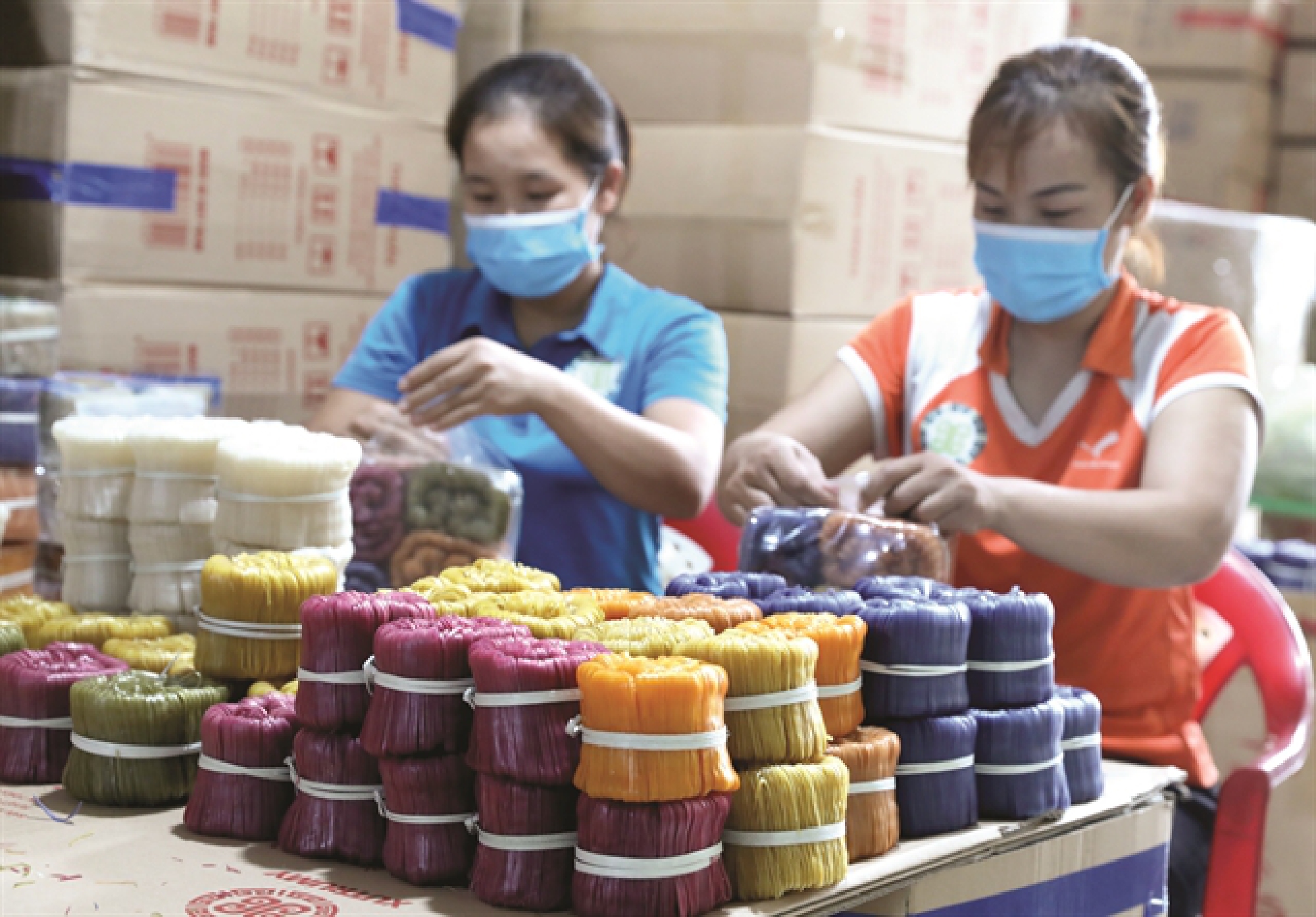
Mỳ Chũ (chũ rice noodles) is a specialty of the northern province of Bắc Giang that is not only popular in the domestic market but also exported to many countries like mainland China, Laos, Cambodia, Thailand, South Korea and Japan.
According to Phạm Xuân Trường, chairman of Xuân Trường Cooperative in Thủ Dương Village, the noodles are made purely from bao thai hồng, a local-grown type of rice that is famous for its unique aroma, texture and stickiness.
“The quality of rice is very important in making good noodles. Using good quality rice will not only make the noodles tastier, but will also increase the quantity,” he said.
ADVERTISEMENT
Chũ noodles have been granted a safe food certificate by the Bắc Giang’s Department of Industry and Trade. It was recognised as a “symbolic industrial product” of the northern region in 2014, and as one of the most trusted products nationwide in 2013.
The ingredients of Chũ noodles are also mixed with various kinds of vegetables to improve nutrition and meet market demand. — VNA/VNS Photo Danh Lam
The impact of the COVID-19 pandemic has caused difficulties in the consumption of the noodles in the past two years. To adapt to the new condition and seek more customers, many noodle production enterprises in Bắc Giang Province have introduced their products on e-commerce platforms like Shopee or Lazada. — VNS
As the rapid development of information technology has changed, utterly, the way people acquire information or buy goods, publishers in China have to face challenges in creating and distributing products.
Gu Zhen, 33, editor at Shanghai Translation Publishing House, joined his colleagues recently at the studio that had been set up for selling books on the livestreaming platform of online shopping website jd.com.
The livestreaming lasts about three hours, covering the 103 books the publishing house has published this year. Gu’s part started from 6:30 pm and ended at 8 pm.
ADVERTISEMENT
He mainly introduced books he edited and was familiar with, including the translation versions of new volumes of Judge Dee Mysteries series by Robert van Gulik, The Wind in the Willows by Kenneth Grahame, Required Writing: Miscellaneous Pieces 1955-1982 by Philip Larkin, and Moby Dick by Herman Melville.
When he left, there were about 2,100 people watching.
“Many people watch the livestreaming not only to know about the books but for the coupons,” Gu says.
The coupons allow people to buy books cheaper online with a discount of 50 percent or even higher, in addition to the perennial discounts that the online shopping platforms of jd.com and dangdang.com offer.
“It’s one of the problems that publishers have been facing in the last decade due to the everlasting discounts online,” says Shen Yu, 35, a former editor in Shanghai who worked in the industry for 10 years.
According to statistics by Beijing Openbook, a publishing industry consulting company, released at the 28th Beijing Book Fair, discounts offered by online shopping platforms have kept climbing, from 40 percent in 2020 to 43 percent in the first eight months of 2021, even higher than the 41 percent of 2019.
Publishing sees start of novel chapter
“For book buyers in China, it’s natural to expect high discounts, not only on the special days of shopping carnivals, but almost every day as online platforms often need to create new reasons to attract consumers, like school season at the start of September. The prices are so low that publishers can only see very small profits, and as a result publishers are forced to improve book prices,” Shen says.
On average, a book’s price in the mainland has grown from 15.9 yuan ($2.46) in 2000 to 48 yuan in 2020, according to Beijing Openbook.
In the last two decades, sales in China’s publishing industry have been growing by more than 10 percent, according to Beijing Openbook. The sales of the first half year grew by more than 11 percent compared to that of 2020, however, compared with the first six months in 2019, the figure only rose by a little over 1 percent.
“It means that the demand in the market has changed. It is not high growth anymore,” said Yang Lei, vice-president of Beijing Openbook, at the book fair.
“The growth is driven by the rising book price, rather than copies sold,” he said.
Due to the COVID-19 pandemic, the general reading atmosphere has changed, says Gu.
“It’s hard to promote new writers, especially in the category of fiction. It takes time to learn about new writers, so readers are reluctant to do that,” he says.
Statistics verified the change. Despite the stable growth of books sold every year, the number of new books has been declining in recent years, Yang said.
In 2020, there were a little over 170,000 new book titles sold in the market, accounting for about 7.9 percent of the total 2.14 million. In the first eight months in 2021, the proportion of new book titles dropped to 6.3 percent, according to Beijing Openbook.
“Every publisher has a similar structure of products, the best, the worst and the middle. It’s impossible for us to give every book the first print run of five to six thousand copies and an overprint of three thousand copies like before, because the books in the middle are more susceptible to the market change,” he said.
Publishers like STPH and Social Sciences Academic Press set up readers’ clubs on WeChat. When there are new books coming out, they issue forecasts in the WeChat groups as well as other online platforms such as WeChat official accounts and Weibo, the Chinese counterpart of Twitter, especially for the special binding editions, so that they will know how many copies they need to make, Shen says.
The marketing of Moby Dick adopted such a creative approach to create exquisitely decorated editions, Gu says, that it was sold at a higher price together with cultural creative products.
“But it’s a marketing approach that has been copied by many other publishers,” he says.
Taking a look at the bestsellers in the first half of the year in the mainland, one can find that they are often publicized on short-video platforms by key opinion leaders (KOLs) or are books by established writers like Yu Hua, the author of To Live and The Chronicle of a Blood Merchant, or Mai Jia, the writer of Decode and The Message.
One of the bestsellers for this year is the Chinese translation of Counseling for Toads: A Psychological Adventure, with more than 2 million sold, mainly through TikTok, Gu says.
Wang Fang, one of the KOLs in the section of education and books, registered her TikTok account in 2020 and in six months she sold 15 million copies. At the Beijing Book Fair in April, the revenues gained from her livestreaming on TikTok surpassed 8 million yuan.
According to the research report on the development of China’s internet audio and video industry released in June, the number of internet audio and video users in China hit 944 million as of December last year, a yearly increase of 43.21 million, covering 95.4 percent of all internet users in the country.
The numbers of users on short video and livestreaming reached 873 million and 617 million, accounting for 88.3 percent and 62.4 percent of all internet users.
As a result, publishers are working hard on publicizing products on online platforms that usually combine the functions of livestreaming and short-video posting.
On April 22, the day before World Reading Day, jd.com, a traditional online shopping platform, officially launched the livestreaming section for books to compete with the similarly traditional tmall.com and dangdang.com, and the rising Tik-Tok and Kuaishou.
Publishing sees start of novel chapter
Joined by well-known writers Yang Hongying and Zhi An, publishers such as Children’s Fun Publishing, New Star Press and Tomorrow Publishing House took part in the 12-hour livestreaming, which increased sales by more than 650 percent, according to a report by China Publishing & Media Journal. This type of activity is held on a monthly basis.
Besides, in the first half year of 2021, jd.com organized livestreaming training for sellers every month and more than 100 publishers participated each time to learn how to improve their sales through livestreaming, according to the report.
Apart from distribution, the new marketing environment has also made editors’ work more complicated and demanding.
In the past, the main work of a book editor was to improve content, and help designers and marketing team better understand the book’s style and selling points.
Editors used to do their jobs anonymously, but now they need to face readers directly in livestreaming.
Besides, editors need to prepare a lot of marketing content, and consider how to improve the look of books so that they can be better presented in publicity shots.
In the past, if it is a good book, it will sell well ultimately with its reputation, but now in such an old marketing way, books cannot reach readers very quickly, Gu says.
“Five years ago, I couldn’t imagine that we are now selling books on TikTok and Little Red Book. Time has changed beyond our expectation. For me, the first thing for publishers is to survive. We can’t resist the current prevailing online platforms, rather, we need to study them,” he says.
“But we need to find a way that can best match the disposition of our publisher,” he says.
“However, I still believe that the books themselves must be of good quality. If the books that I edit will be read not only in the first few months after being published, but after one or two years, if they can stand the test of time, they are successful and valuable even if they are not bestsellers,” he says.







 The ingredients of Chũ noodles are also mixed with various kinds of vegetables to improve nutrition and meet market demand. — VNA/VNS Photo Danh Lam
 Publishing sees start of novel chapter
 Publishing sees start of novel chapter
