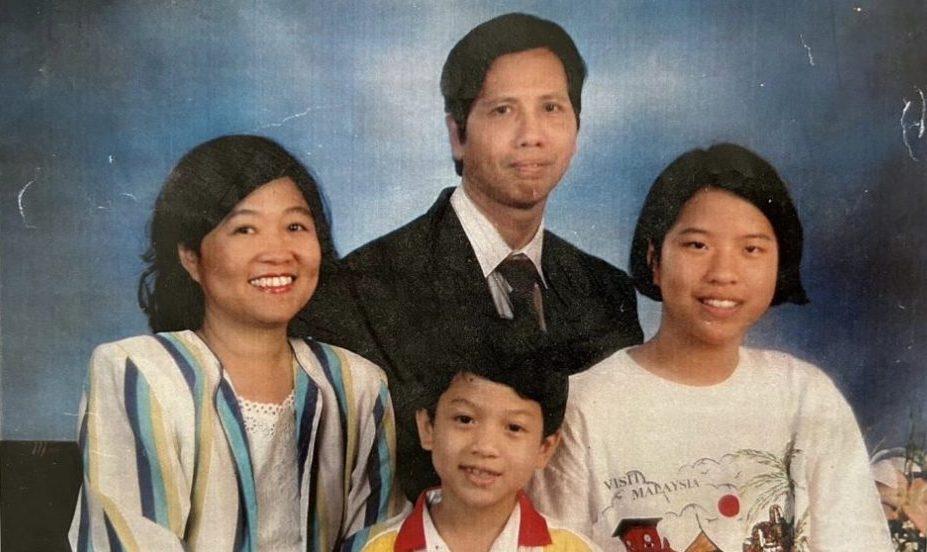
Master ceramist protects Khmer pottery traditions as lifetime legacy #SootinClaimon.Com

#SootinClaimon.Com : ขอบคุณแหล่งข้อมูล : หนังสือพิมพ์ The Nation.

https://www.nationthailand.com/international/40006969


Like many who survived the nightmare years living under Pol Pot’s Khmer Rouge regime, Yary Livan emerged from the experience secretly carrying with him some portion of the Khmer culture’s traditional knowledge and skills that Cambodia’s new leaders were trying to violently erase in order to reset society so they could implement their version of totalitarian communism.
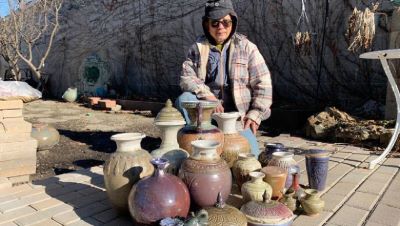
The most important cultural knowledge that Livan was safeguarding personally turned out to be his expertise with traditional Khmer ceramic designs and pottery, something that was already a rarity back in 1971 when he began attending the Royal University of Fine Arts (RUFA) as a ceramics major.

Then the Khmer Rouge seized power in 1975 and Year Zero was proclaimed. Everything old had to be discarded or destroyed in order to force everyone into accepting the Khmer Rouge’s mad plans to remake Cambodia as fait accompli.

ADVERTISEMENT

“Back then, if we told [the Khmer Rouge] that we were college students – absolutely – we would have been killed. But if we could convince them that we were blue-collar and worked as a plumber or carpenter – as long as it wasn’t school related – they would let us go.

“I decided to tell them that I’d just learned to draw. My father was a teacher but we said he was a machinist. My mom was luckier – she got to keep her profession – because she actually was a very good tailor. She made really great hats. That was how we survived until 1979, when the regime ended and I was finally able to continue my studies,” Livan tells The Post.

Livan graduated from university and got married in 1984. His family was just a few people out of the hundreds of thousands of Cambodians turned into refugees who ended up living in camps along the border with Thailand after fleeing from the brutality of the Khmer Rouge or the violence of war when Vietnam invaded Cambodia and swept them from power.

“We moved to the refugee camp at Chonburi in Thailand until everything settled down and then we moved back to Cambodia in 1988. Upon returning, I had no job prospects secured at all and I just worked here and there, sometimes for NGOs and sometimes drawing portraits at the pagoda to earn a little money. It wasn’t until later on – 2001 – that I moved to the US,” Livan says.

The veteran ceramist says he felt very welcome in Lowell, Massachusetts, which has one of the largest Cambodian communities in the US. About 13 per cent of Lowell’s residents are Cambodian-Americans.

Livan has the sad distinction of being the only master Khmer ceramist in the US and some experts believe he was one of just three Khmer potters good enough to be considered masters who survived the genocide.

Livan’s talents with ceramics are considerable – they won him a scholarship in ceramics at Harvard University after he immigrated to the US and today he’s a ceramics professor on the faculty at two schools: University of Massachusetts – Lowell and Middlesex Community College.

Back in 2015, Livan was awarded a National Endowment for the Arts (NEA) Heritage Fellowship, which is the “highest honor the US government awards in the folk and traditional arts.” The NEA is a US federal government agency established in 1965 to support and fund projects in the arts.

According to the NEA, the heritage fellowships are “awarded to those artists who work to preserve their traditions within the larger American culture, creating bold, new hybrids of artistic forms while maintaining the traditions that make the art form significant.”

Livan used the NEA grant money to fund the training of apprentices in Khmer ceramic arts to continue the mission forced on him by circumstance back in 1975 – but it hasn’t been easy to find students with his level of passion for pottery.

“Kids nowadays are impatient. They’re more into computers or digital art rather than things that are solid and directly handmade that old people like me prefer. I’ve trained a few Khmer students, but so far none of them have been sufficiently committed – other than my sons, who have turned out to be my best apprentices,” Livan says.

Livan feels he must be cautious about the style of ceramics he produces because of the role he has protecting Khmer pottery and ceramics traditions. He says it is easy for even advanced ceramics students to confuse Khmer and Thai styles of pottery, which are similar to each other – but not the same.

“I would hate it if our Khmer arts turned into something that couldn’t be identified or if it lost its authenticity. I want to maintain what is distinct about the real ancient Khmer ceramics traditions. That is why the American government values and supports my work after all – because I am helping to preserve ancient Khmer arts and culture,” Livan says.

The ceramics professor says he’s thankful for every moment of life he has been blessed with given how easily it all could have come to an abrupt end back in the 1970’s as was the fate of so many of his friends, family and fellow students at RUFA.

“Every time I complete any of my ceramics pieces it brings a smile to my face because it feels like something that was lost has now been found again. A little piece of the past gets resurrected,” Livan says.

He says that he’s had plenty of opportunities to showcase his artwork and on the occasions that he’s put items up for auction or sale he’s been very proud to see the high prices collectors have paid for his work, but it’s sometimes tough for him to let go of his creations.

“Honestly – if I were a millionaire, I would not sell any of them. But I arrived in America empty-handed and I have to earn money to provide for my family so I do sell them and I ease my regrets by reminding myself that these people are buying them and paying good money because they love ceramics in the same way that I do and I’m getting to share that with them.

“… But some things I’m still just not willing to ever sell,” Livan says with a laugh.

After 40 years as a ceramist he can say for certain that anyone who is looking to make money should try a different career path because the traditional arts find their value mostly in people’s love and appreciation for them rather than in cold hard cash. At this point he lives a comfortable life and money is not his concern, rather his legacy and the continuation of Khmer ceramics is what’s on his mind.
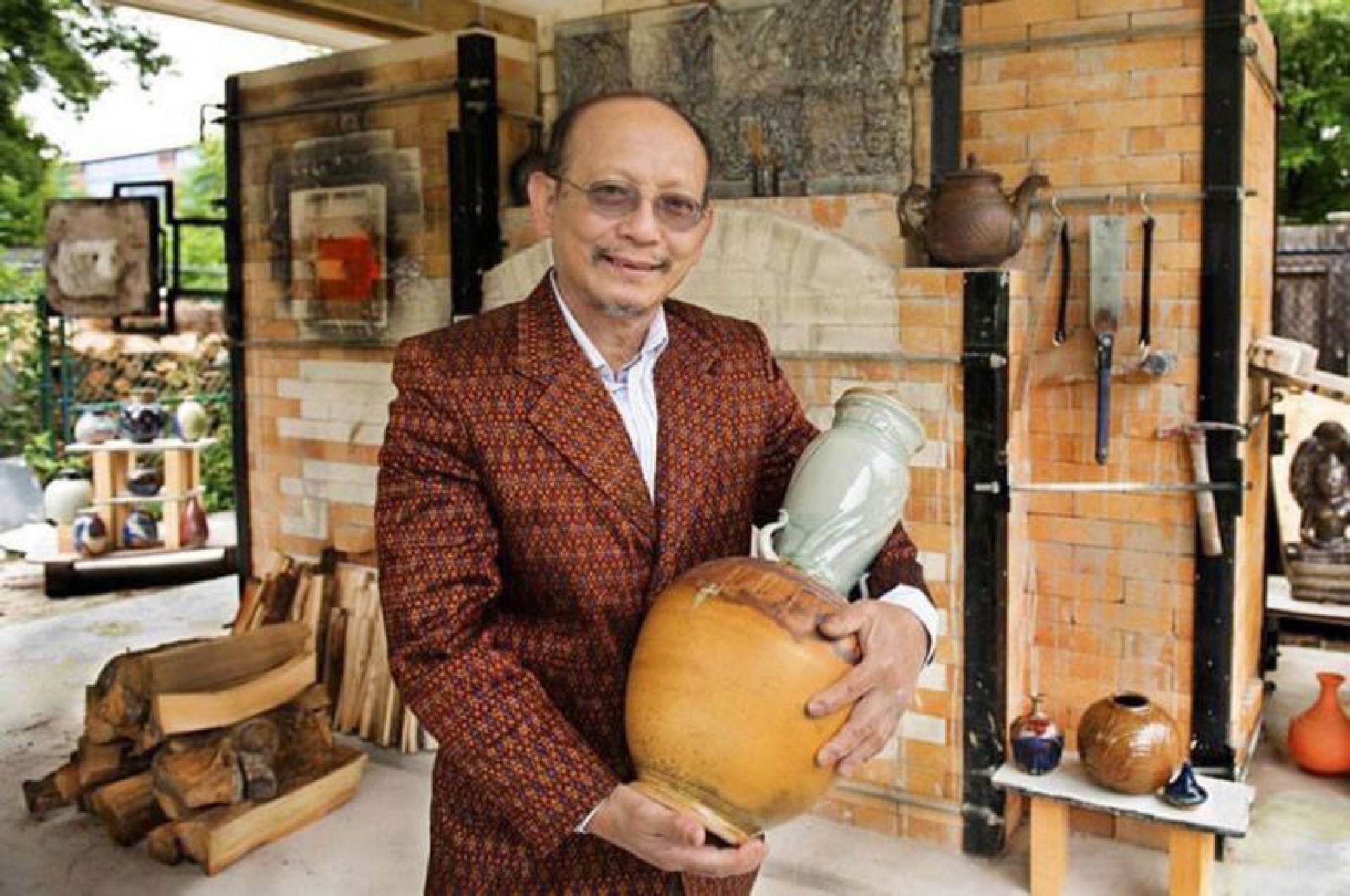
One of just three known master potters to survive the Khmer Rouge genocide, Livan was honoured with an NEA Heritage Fellowship in 2015 for his life’s work. SUPPLIEDOne of just three known master potters to survive the Khmer Rouge genocide, Livan was honoured with an NEA Heritage Fellowship in 2015 for his life’s work. SUPPLIED

“Now, in America, as far as I know I’m the only Cambodian potter with enough skill to be regarded as a master because I can produce anything to a high standard of quality and I understand what I’m doing well-enough to teach it to others. However, I’m already in my sixties and I’m really afraid that if something happens to me there will be no heir to my knowledge and skills,” says Livan.

All is not lost quite yet, though, because Livan still lives – and so do his sons, who continue to learn more each day.

They’ve come up with a plan to hold a Khmer ceramics and pottery exhibition to promote the art form and that aspect of Khmer cultural heritage to Cambodians and the rest of the world.

Right now the exhibition is in the early planning stages and he’s looking for individuals or institutions to finance it as well as other Khmer ceramists to participate, ideally. He plans to first hold the exhibition in the US and then bring it to Cambodia.

Livan says that it won’t take long to put the whole project together and he expects it will take definite shape over the next year and be held within the next two years.

He is confident that it will happen because he’s had a lot of experience with past exhibitions and he has the serious establishment-approved credibility as an academic and an artist that will enable him to enlist the support of the larger arts organizations and backers in the US.

“I can’t give you an exact time frame, but rest assured – it will definitely happen. I love America because people here are always very supportive of other people’s grand ideas and if you put enough effort into something you’ll always find some way to promote it and get the necessary financing.

“It’s sad to say, but honestly [the US government] seems to value and support the preservation of Khmer culture more than some Cambodians do. But I’d like to help change that and I think an exhibition to celebrate the beauty of Khmer ceramics and pottery hosted by Cambodia is a good first step,” Livan says

For more information Yary Livan can be contacted via his Facebook page web.facebook.com/yary.livan

Published : October 03, 2021
Exit Afghanistan #SootinClaimon.Com

#SootinClaimon.Com : ขอบคุณแหล่งข้อมูล : หนังสือพิมพ์ The Nation.

https://www.nationthailand.com/international/40006968


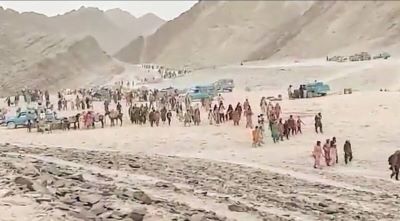
Although the Taliban takeover in Afghanistan has not resulted, so far, in the kind of massive refugee influx that Pakistan feared, thousands of refugees are still willing to brave harsh uncertainties in Balochistan’s remote lands to find their way, eventually, to safety in Iran or Europe. But what do they hope awaits them on the other side?

As the sun goes down and the evening sets in, the guests staying at a khwaabgah (rest house) in Mashkhel tehsil of Washuk prepare for maghrib prayers. Children being children, run around in the old haveli in the desert that has been converted to a rest house. They seem to be blissfully unaware of how their life has been upended by the fall of the government in Afghanistan.

Several Afghan families, illegal refugee women and children are temporarily staying at the khwaabgah. The migrants say their namaz and many say a silent prayer for a more certain future.

ADVERTISEMENT

Hayatullah is one of the temporary residents here, unaware of what the future might hold for him and his family. Not too long ago, he was a policeman working with the Afghan National Police. Today, he is one of the thousands who have fled Afghanistan and entered Pakistan within the past month.

Although Hayatullah is not Pakhtun, he has dressed like a Pakhtun man. He is wearing a cap and a weskit over shalwar qameez. He clearly wants to avoid drawing attention to himself. Initially, he even tries to hide his previous professional identity while speaking to Eos, but cannot help but reveal it when he gets into the flow of conversation.

As part of a police force that, eventually, had to lay down its arms, Hayatullah saw the Taliban take control of his country from the frontlines. “Within the past two decades, the Taliban’s popularity has risen, and they have emerged victorious after incorporating all the ethnic groups in Afghanistan,” he says, adding that all this was made possible by bad governance by those previously in office, and rampant corruption.

Hayatullah has arrived in Pakistan along with his wife, two children and very little else. He regrets that the life he had built over the past 20 years has been left behind. He and his family aren’t even at the point of starting over yet. At the moment, they are simply on the run.

“We are on the run, because it is crystal clear that the Taliban’s amnesty scheme is a farce,” he says, adding that the “evidence” of this is the thousands of Afghans abandoning their homes to save their lives and seek peaceful places to stay. According to the United Nations High Commissioner for Refugees’ (UNHCR) data, over 9,000 Afghan refugees have entered Pakistan since the fall of the Afghan government in August.

Hayatullah left his country over four days ago and, like other Afghans, has been at the mercy of human smugglers to slip into Pakistan. From Pakistan, he plans to move forward and seek refuge in Iran.

“We have an understanding with the human smugglers,” he says while sitting at the khwaabgah with his children and wife. “In case anything goes wrong, they won’t be paid. That is the only assurance we could take.”

THE AFGHAN EXODUS

There is no end in sight for the Afghan exodus, which has continued over the last four decades. Background interviews with human smugglers suggest that illegal migration has also continued for decades, with many Afghans moving to Iran via Balochistan. While security threats have remained a pertinent concern in the region, it is said that Afghans have also been migrating for economic reasons. With the UNDP estimating that up to 97 percent of Afghanistan’s population might slip below the poverty line by 2022, this issue is only likely to grow.

Due to its geographic proximity and other ethnic and cultural similarities, Pakistan has housed Afghan refugees for decades. According to the UNHCR, at the end of 2020, over 1.4 million registered Afghan refugees were living in Pakistan. As per government estimates, the country currently houses some 3.5 million Afghan refugees.

In 2017, Pakistan started fencing the Durand Line, its 2,634-kilometre-long border with Afghanistan, and the fence is reportedly nearly complete. Among other reasons, Pakistan fenced its border to stop illegal Afghan refugees, who have been entering the country for decades.

But, despite the fact that officially Afghan refugees are not allowed to enter Pakistani territory, they have continued to do so. Most, including Hayatullah’s family and others quoted in this story, enter courtesy of human smugglers, often risking their lives in the process.

A DIFFICULT JOURNEY

The journey taken by most Afghan refugees is a difficult one, that no one would embark on unless they absolutely had to. Over the years, the journey has also ended for some of these refugees in death by starvation.

After arriving in Pakistan, the human smugglers take the illegal immigrants to one of two routes. They are either taken to Rajay in the Chaghi district or Mashkhel in the Washuk district (where Hayatullah and his family are temporarily staying). Rajay, which borders Iran, was the more popular route. But this route is now completely fenced. So the refugees have to head to Mashkhel and from there onwards to Jodar to cross into Iran.

One of the drivers Yousaf* claims that he earns 12,000 rupees a day doing double shifts. Attaullah*, another human smuggler who transports immigrants by motorbike to far flung areas that border Iran, has an even bigger payday. He transports Afghan immigrants on his motorbike and, because other vehicles cannot go near the border unnoticed, the immigrants, including women and children, have no choice but to take the ride. Attaullah, who charges 1,000 rupees per person for the approximately five-kilometre-long ride, has been doing good business with the surge of Afghan immigrants. The young man is saving the money for his upcoming wedding ceremony.

Most people he leaves at the border are hoping to eventually land up in Europe, he says.

Aasiyah is travelling with her two younger brothers and mother. She had to leave her father behind in Afghanistan and does not know where he might be.

But the journey is dangerous and not everyone makes it. Saeed Zehri, a former tehsildar posted in Naukundi town, which borders Afghanistan and Iran, once shared that three bodies of Afghan immigrants were found in the region. The immigrants had died due to thirst and hunger.

Not too long ago, a pick-up truck loaded with Afghan immigrants that was en route to Iran, was captured by robbers. The Frontier Corps got it released after a shoot-out.

Recently, there have also been cases of Punjabi immigrants reportedly dying of thirst and starvation in the same border region, after being left in the lurch by the human smugglers.

WOMEN ON THE RUN

Many families from Afghanistan are forced to take this uncertain journey without the men in their family. Aasiyah’s* is one such family, temporarily staying at another khwaabgah. She is travelling with her two younger brothers and mother. She had to leave her father behind in Afghanistan and does not know where he might be.

Aasiyah used to teach English and work with a non-governmental organisation (NGO) in Afghanistan. She fears that her work may have led to her father’s disappearance. “My father did not return home and we fear that he was picked up by the Taliban due to my work,” she says, adding that she fears for her father’s life more than the journey ahead.

At the NGO, Aasiyah would help conduct surveys with the Americans. She says that her father was a shopkeeper who had nothing to do with her work. After going into hiding following her father’s mysterious disappearance, Aasiyah felt she had to rely on human smugglers and escape Afghanistan.

The NGO paid her 40,000 Afghanis (about PKR 79,000 at current rates) monthly. She would use the money to attend university herself and had recently started taking shabba (evening) classes. “Everything is ruined now,” she says, as her voice cracks. “I thought I would have a brighter future after completing my studies. Instead, I have become the cause of my father’s abduction for daring to venture out and work with a foreign NGO.”

Yasmeen*, another Afghan woman in her 30s, is also travelling with her elderly mother and three sisters. Her brother, who was a part of the Afghan National Army, was killed in fighting with the Taliban in the Ghazni province of Afghanistan. “He was the main breadwinner of our family of four sisters, one brother and a mother… While I used to earn a little income by running a beauty parlour,” she says while sobbing. “The Ashraf Ghani government did not pay us even a penny for his martyrdom.”

When the Afghan government fell, Yasmeen and her family decided it was time to leave. Soon, photographs of defaced hoardings outside beauty parlours in Kabul began appearing in the media.

Yasmeen and her sisters say that they are left with nothing. “We are homeless and countryless,” Yasmeen says, while wiping her tears with her black dupatta.

As fears regarding the Taliban rule’s impact on women’s rights in Afghanistan mount, it is no surprise that more and more women are trying to flee.

A LONG HISTORY

Hailing from Balochistan, anthropologist Dr Hafeez Jamali has spent a considerable amount of time with Afghan immigrants and human smugglers in the border region, and understands the nuances and ground realities better than most.

“Afghanistan has been in a war-like situation since 1979,” he says, adding that, in times of crisis, people temporarily move to different places, only to return home once the conflict is over. However, he adds, if such situations persist over generations, as is the case in Afghanistan, then permanent moves become more common.

He says that when a sufficient number of people from a region or ethnic group migrate because of a conflict, a certain kinship network develops between the migrants in other countries. This network also facilitates their movement in other places. And it motivates others to move to places where they may find peace during war time in their own home country.

“Contrary to the US perception, Afghanistan was not a peaceful country under the US occupation,” Dr Jamali says, adding that during the so-called ‘war on terror’, Afghans had good reason to move out of the country. “Similarly,” he adds, “now that the Taliban have taken over, the number of Afghans leaving the country has increased.”

AN UNCERTAIN FUTURE

As more Afghan refugees make their way towards Pakistan, National Security Adviser Dr Moeed Yusuf has maintained that, while Pakistan will do whatever is possible to help the Afghans, the country is in “no condition to accept more refugees.”

But not all refugees are embarking on this journey to settle in Pakistan.

Sultan Afridi, a retired assistant director of the Federal Investigation Agency (FIA), tells Eos that Europe is the destination for most Afghan immigrants.

Afridi has headed the FIA’s anti-human smuggling operations a number of times. In 2009, he and his team arrested human smugglers after at least 46 Afghan immigrants died and 60 became unconscious in a locked container in the Hazarganji area of Quetta. All of the victims were trying to enter Iran through unfrequented routes of Balochistan.

Background interviews with officials suggest that they believe the movement of immigrants will come to an end after the completion of the fence with Afghanistan and Iran.

But not everyone is convinced. Dr Jamali cites the example of the US-Mexico border to point out that these fences alone cannot stop movement. “It is heavily patrolled, guarded and surveilled. Despite all this, people cross it,” says Dr Jamali.

He gives the example of patches on the US-Mexico border, in parts of Arizona and Texas, that are so hot that they are deserted. Yet, bones of migrants are sometimes found here. “They perish but they do not give up,” he adds.

Nonetheless, the number of Afghans entering the country is lesser than what was initially expected by many when the Taliban took control of Afghanistan. The fence and more stringent controls on the borders may have contributed to this.

Nonetheless, people such as Hayatullah, Aasiyah and Yasmeen, ready to leave everything behind to escape a conflicted-ridden homeland, will continue to embark on dangerous journeys.

The migrants are fully aware of the possible dangers and the uncertainty ahead, and that a brighter future may not be waiting for them on the other side. Hayatullah sums it up best by saying, “We are headed to a mirage.”

Published : October 03, 2021

Malaysia-born actor Christopher Lee wins second Golden Bell Award for HBO Asias Workers #SootinClaimon.Com

#SootinClaimon.Com : ขอบคุณแหล่งข้อมูล : หนังสือพิมพ์ The Nation.

https://www.nationthailand.com/international/40006967


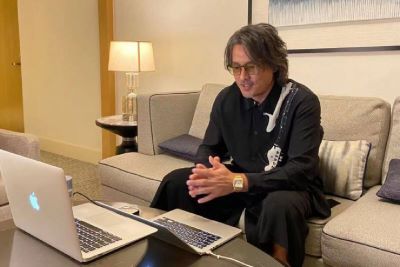
SINGAPORE – Home-grown actor Christopher Lee took home the Best Actor in a Mini-series or Television Film trophy at the Golden Bell Awards held in Taipei on Saturday (Oct 2) for his performance in last years series Workers.

Lee, 50, dialled into the prestigious television awards show – Taiwan’s equivalent of the Emmys – from Singapore when his category was announced.

“Ah, I’m so happy,” he exclaimed via video from the Marina Bay Sands hotel.

In an emotional acceptance speech, he thanked his family – actress wife Fann Wong and their seven-year-old son.

ADVERTISEMENT

“I want to thank my wife, Fann, and my son, Zed. In particular, I’m really thankful to my wife. It is because of your dedication and your unconditional support that I feel at ease acting and filming dramas outside.”

Lee was a hot favourite in his category going into the night. He thanked the cast and crew of the HBO Asia drama and said the win was special as it is the first drama he has filmed speaking largely in Taiyu, the Southern Min dialect. The series revolves around a group of happy-go-lucky blue-collar labourers.

This is Lee’s second Golden Bell Award. He won Best Actor in a Drama Series in 2014 for family drama A Good Wife. In an Instagram story posted by his management Catwalk Asia, Lee can be seen popping champagne after his win.

Workers was a big winner in the mini-series category, bagging the Best Mini-series Award. Lee’s co-star Simon Hsueh also picked up an award – for Best Supporting Actor in a Mini-series or Television Film category.

But that was not Hsueh’s biggest win of the night – the former rapper of Taiwanese band Da Mouth also picked up Best Actor in a Drama Series for period drama Born Into Loving Hands. This marks a memorable entry into the Golden Bell Awards for Hsueh.

The Best Actress award in the same category went to Chung Hsin-ling for her role in the family dramedy U Motherbaker. The same series also won Best Supporting Actor for Darren Chiu.

Meanwhile, The Magician On The Skywalk (2021) won Best Drama Series, Best Director for a Drama Series as well as Best Newcomer for its 12-year-old lead Lee Yi-chiao. It also took three more awards for lighting, cinematography and art and design. Its six trophies made it the biggest winner of the night.

The fantastical drama is set in a now-demolished Taiwan shopping mall and tells the story of children living in the 1980s.

In his speech before he presented the final award, famed Taiwanese director of Seqalu: Formosa 1867 (2021)  and head of this year’s judging committee Tsao Jui-yuan said: “There are people who left, to go over to the mainland but we are here and we are working hard. I’ll like to tell our government to start considering really responding to our film and television industry so that those who decided to stay can see hope.”

The Golden Bell Awards was broadcast live on Hub E City (StarHub TV Channel 825) on Saturday. It will also be available to stream through StarHub TV+ from Oct 5.

Published : October 03, 2021

Who will speak for the Rohingya refugees now? #SootinClaimon.Com

#SootinClaimon.Com : ขอบคุณแหล่งข้อมูล : หนังสือพิมพ์ The Nation.

https://www.nationthailand.com/international/40006966


Mohib Ullah and his family walked for eight days before they could reach Bangladesh. The former Rakhine state schoolteacher lived, lived amidst constant death threats for a week, when the Tatmadaw unleashed their scorched-earth campaign to wipe out the existence of the Rohingya from Myanmar in 2017.

Once in Bangladesh, Mohib and his family might have heaved a sigh of relief at having escaped the Myanmar military crackdown. Unfortunately, the sense of relief was not meant to last long. Mohib was brutally murdered in the Rohingya camp in Kutupalong, Cox’s Bazar, on the evening of September 29, 2021. Assassins shot at Mohib at close range as he spoke with people in front of his office.      

Mohib’s family suspect the Arakan Rohingya Salvation Army (ARSA) for his murder. Mohib’s brother informed the media that he had received multiple death threats recently—from many unknown phone numbers—and he suspects that ARSA committed this atrocious act. But what made Mohib a target for ARSA?

ADVERTISEMENT

Mohib was a leader who had played a proactive role to promote the cause of his community. Over the last few years, he emerged….one of the few from the Rohingya refugee community—to have boldly raised the concerns of the Rohingya community and worked towards ensuring a safer and respectable life for them. Mohib spoke on international platforms, including the UN Human Rights meeting in Geneva, and met the US president, to highlight the cause of the Rohingya refugees.

Mohib also established the Arakan Rohingya Society for Peace and Human Rights (ARSPH), a rights group, which unearthed and documented the sufferings of the Rohingya refugees at the hands of the Myanmar military.

However, it was Mohib’s unfailing commitment towards a peaceful resolution to the Rohingya refugee crisis that might have made him a potential target for the ARSA. The Arakan Rohingya Salvation Army is known for its ruthless terrorist activities. Fortify Rights earlier suspected the militant group to be behind the abduction and torture of at least five Rohingya refugees. And Mohib’s resolve to take a peaceful path to promote the Rohingya cause angered the ARSA who threatened him even earlier this month. Nur Khan Liton, a Rohingya rights activist told the AFP, “His [Mohib’s] peaceful activism angered ARSA.” ARSA might as well have acted on their threats.

However, Mohib was a threat to many more. Mohib was also known for his activism against any kind of repatriation of Rohingya refugees to Myanmar, until a conducive environment for their return was ensured. Mohib led a peaceful protest in 2019 when a repatriation process was announced. This also made him an enemy of the quarters—even within the Rohingya community—who were and still are pushing for a so-called repatriation of the refugees.

And there are many other players in the Rohingya camps who could have been behind Mohib’s murder. Violence is a common scenario in the Rohingya camps. One might remember the October 2020 gang violence that erupted in the Rohingya camps as different factions tried to establish their dominance in drug trafficking that led to the killing of seven people and left many families without shelter. There are also speculations that people within Mohib’s own organisation might have been behind this, due to differing opinions. Or even the other factions who felt threatened by Mohib’s rising popularity and greater acceptability among the refugees. 

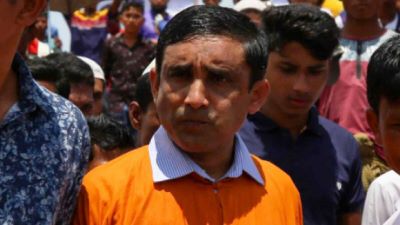
Police have arrested a suspect—a man named Mohammad Selim alias Lomba Selim, was arrested from Ukhiya on October 2. “They fired five rounds of bullets and fled immediately. Our search mission is on to arrest the killers,” deputy police chief in Cox’s Bazar, Rafiqul Islam, was quoted by Reuters. However, the killing of Mohib has raised multiple questions about the security situation in the Rohingya camps. If ARSA indeed has committed this crime, that too in full public view, then the possibility of their active presence and operations in the camps cannot be ruled out. If this turns out to be the case, then it is high time the government revisit its security strategy in the Rohingya camps in Cox’s Bazar. ARSA’s presence in the Rohingya camps is not just a threat to the security of the Rohingya, it is a security threat for the country and the region.

Even if any other quarter has carried out the assassination attack on Mohib, this incident has nonetheless exposed the security lapse in the camps. How can murderers just kill a man in public and get away with it? 

As of writing this column, the police informed the media that they were investigating the murder. The bullet shells are being scrutinised to trace them back to the killers. Witnesses are being interviewed. The police initially suggested that the witnesses saw four to five men shooting at Mohib before fleeing the scene. Given the tight security that is supposed to be in place at the Rohingya camps, how could this have happened?

The current state of security affairs in the Rohingya camps reflects poorly on the living conditions in the camps. While human trafficking, drug trafficking and sex trafficking have remained constant threats in the Rohingya camps, the murders of various individuals at the camps over the years have exposed the security loopholes in the area. Unfortunately, not much has been done it seems to rectify the situation. As a result, an honest man, a father of nine, an activist, died for supporting the right cause. According to a Reuters report, in view of the threats, Mohib had earlier sought security support from the Bangladesh authorities and the United Nations. But he was provided with none it seems. Why?

Rafiqul Islam suggested that Mohib did not file any official complaint. “If he did, we could have considered that,” Islam was quoted as saying by Reuters.

In the Rohingya refugee crisis, Myanmar looks after its own interests and thus they are unwilling to take the refugees back. While Bangladesh is trying its best to accommodate the refugees, it cannot continue to host them in Cox’s Bazar for long. And even if the refugees are shifted to Bhashan Char, this will not be a sustainable solution. Unfortunately, Bangladesh has not been able to secure international support to force Myanmar into taking back its people amidst peaceful conditions. And the international community—due to the various economic and political interests in Myanmar of many influential countries—are not helping the cause of the Rohingya refugees either. For them, economic and political gains perhaps come before human rights. 

So, the refugees are caught in a limbo. They have nowhere to go, and they do not have a voice of their own. As Mohib was once quoted by The Guardian as saying, “Imagine you have no identity, no ethnicity, no country. Nobody wants you. How would you feel? This is how we feel today as Rohingya.” Today the Rohingya are an unwanted people, and their only voice was Mohib. And now that voice has been taken away from them.

Who will now speak for the Rohingya refugees? Who will be their voice?

Mohib was more than just another Rohingya refugee. Mohib was an influencer and he could have played a constructive role in aligning and promoting the concerns of the Rohingya in the coming years as well. He could have also played an instrumental role in the safe repatriation of the refugees.

“For decades we faced a systematic genocide in Myanmar. They took our citizenship. They took our land. They destroyed our mosques. No travel, no higher education, no healthcare, no jobs… We are not stateless. Stop calling us that. We have a state. It is Myanmar,” Mohib had said. And at the end of the day he wanted to go back to his state, provided the conditions were right for his people.

The killing of Mohib is not just a major loss for the Rohingya community, but also for the Bangladesh government as it lost the one person who could have been helpful in mobilising support for safe Rohingya repatriation. While Mohib’s assassination has left a void in the leadership space for the Rohingya, it has also sent …a very alarming message to those who are working to support the cause  of the refugees through peaceful means.

While the void cannot be filled so easily, the killers of Mohib should be immediately apprehended and brought to justice. The security situation in the camps needs to be reassessed. Further bloodshed at the Rohingya camps must be avoided at all costs.

Tasneem Tayeb is a columnist for The Daily Star. Her Twitter handle is @tasneem_tayeb

Published : October 03, 2021

Myanmar’s 2008 Constitution cannot be abolished, can only be amended: Senior General Min Aung Hlaing #SootinClaimon.Com

#SootinClaimon.Com : ขอบคุณแหล่งข้อมูล : หนังสือพิมพ์ The Nation.

https://www.nationthailand.com/international/40006965


Myanmar’s 2008 Constitution cannot be abolished as it was approved after holding people’s referendum, but matters or issues that are not suitable with the modern day can be amended, according to SAC Chairman, Senior General Min Aung Hlaing. 

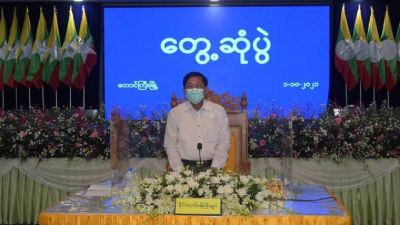
Senior General Min Aung Hlaing made these remarks at the meeting in Taunggyi, Shan State on October 1st with members of the Shan Regional government, authorities of special administrative zones, departmental officers, district administrators, and other administrators.

“Elections are very important for a democratic country so misconduct and errors cannot be accepted. In the 2020 General Election, many instances of voter fraud occurred. 

I had frequently sent reminders prior to the general election to hold a free and fair election,” says Senior General Min Aung Hlaing. 

ADVERTISEMENT

He adds that “the country is on the path of democracy because it is desired by the people.  However, Myanmar’s 2008 Constitution couldn’t be abolished because it was approved by holding a public referendum, but he accepts that things which are not suitable for the modern day can be amended.”

“Systematic arrangements are needed to rehold the election acceptably and in an honest way,” the Senior General continued. The Senior General also added that he is working for peace in the country through the practice and understanding of a democratic, federal system.

Published : October 03, 2021

S. Korea’s hope for normalization boosted with positive trial results from Merck #SootinClaimon.Com

#SootinClaimon.Com : ขอบคุณแหล่งข้อมูล : หนังสือพิมพ์ The Nation.

https://www.nationthailand.com/international/40006964


South Korea’s plan to step into a phased recovery back to normal life in November is gaining support with positive clinical test results of an experimental COVID-19 oral medication overseas.

Leading global drugmaker Merck & Co announced Friday that its experimental antiviral pill dubbed molnupiravir was shown to halve the chances of hospitalization or death for those infected with COVID-19.
 

Merck and its partner Ridgeback Biotherapeutics reported that 7.3 percent of patients who received molnupiravir died or were either hospitalized by 29 days after receiving the oral antiviral medicine, as opposed to 14.1 percent for placebo-administered patients.

No COVID-19 patient died after taking molnupiravir, compared to 8 deaths reported from the placebo group, the firms added.

The pill works by blocking the virus from replicating, as does some Acquired Immune Deficiency Syndrome drugs by inhibiting the replication of human immunodeficiency virus. If approved, it would be the first oral antiviral treatment against COVID-19 on the market.
 

ADVERTISEMENT

Merck is preparing to file for emergency use authorization from the US Food and Drug Administration as soon as possible as its first step of gaining regulatory approvals from the global market.

The positive trial results from Merck champions Korean authorities’ plan to ease COVID-19 restrictions starting November and treat COVID-19 more like seasonal influenza.

Continued struggles of small business owners and declining consumer sentiment from restrictive social distancing rules have caused authorities to discuss easing anti-virus measures and “live with the coronavirus.”

The government announced earlier the new scheme will kick off when around 80 percent of adults are fully vaccinated. As of Friday’s end, 51.8 percent of South Korea’s population have been fully vaccinated, and 77.1 percent have received their first shots of COVID-19 vaccines.

As experts have pointed out securing effective, easily accessible COVID-19 treatment is key to normalization, the government has been looking to sign a deal with Merck to buy its oral treatment for 18,000 people. The government also plans to set aside a portion of its next year’s budget to buy enough doses for 20,000 people in 2022.

The Korea Disease Control and Prevention Agency is given 41.7 billion won to buy COVID-19 treatments next year, and it was known that Merck’s treatment costs about 900,000 won per person.

Yet experts have voiced concerns that the Korean government is purchasing far too fewer doses of COVID-19 treatments even though they will be critical in carrying out normalization efforts. They forecast that competition to buy COVID-19 treatments will get more intense later on, which is why Korea should stay upfront and purchase as many as possible in the early stage.

Merck said while announcing the clinical trial results that it plans to manufacture enough doses for 10 million people by the end of this year, 1.7 million of which already contracted to be provided to the US government.

Published : October 03, 2021

Kishida to dissolve lower house on Oct. 14 #SootinClaimon.Com

#SootinClaimon.Com : ขอบคุณแหล่งข้อมูล : หนังสือพิมพ์ The Nation.

https://www.nationthailand.com/international/40006963


Ruling Liberal Democratic Party President Fumio Kishida intends to dissolve the House of Representatives on Oct. 14 after taking office as prime minister at an extraordinary Diet session to be convened on Monday, according to sources.

Kishida to dissolve lower house on Oct. 14

Regarding the lower house election, Kishida plans to set Oct. 26 as the official start of the election campaign with voting and ballot counting on Nov. 7.

Kishida will launch his Cabinet on Monday and make a policy speech at the Diet on Friday. He will answer questions about his policy speech from representatives of each party on Oct. 11-13, and then dissolve the lower house.

ADVERTISEMENT

Kishida is considering calling for the drafting of economic measures worth several tens of trillions of yen, and facing the general election with the economic measures as an LDP election pledge.

Arrangements are being made for him to attend a summit meeting of the Group of 20 major economies in Rome on Oct. 30, with an eye toward meeting U.S. President Joe Biden separately there. If he goes, it will be an extraordinary case of a prime minister traveling abroad immediately after the start of an election campaign.

In relation to this, LDP Diet Affairs Committee Chairperson Hiroshi Moriyama met with his Constitutional Democratic Party of Japan counterpart Jun Azumi on Friday and agreed to set the extraordinary Diet session for 11 days until Oct. 14. The CDPJ is the largest opposition party.

Meanwhile, as for the posts in a new Cabinet under Kishida, current Foreign Minister Toshimitsu Motegi will retain his post, the sources said.

It was unofficially decided that Hirokazu Matsuno, a former education, culture, sports, science and technology minister, will take the post of the chief cabinet secretary, and Shunichi Suzuki, a former LDP General Council chairperson, will assume the post of the finance minister.

Published : October 03, 2021

Duterte ‘retiring,’ Go runs for VP – but eyes still on Sara #SootinClaimon.Com

#SootinClaimon.Com : ขอบคุณแหล่งข้อมูล : หนังสือพิมพ์ The Nation.

https://www.nationthailand.com/international/40006962


MANILA, Philippines — In a surprise move, President Rodrigo Duterte announced on Saturday that he was retiring from politics, and his longtime aide, Sen. Bong Go, took his place as the administration’s vice presidential candidate in next year’s elections.

“The overwhelming sentiment of the Filipino is that I am not qualified and it would be a violation of the Constitution to circumvent the law, the spirit of the Constitution,” Duterte said after Go submitted a certificate of candidacy (COC) for vice president.

“And so, in obedience to the will of the people, who after all placed me in the presidency many years ago, I now say to my countrymen, I will follow your wish, and today, I announce my retirement from politics,” the president said.

ADVERTISEMENT

His announcement, however, was met with skepticism.

House Deputy Minority Leader Carlos Isagani Zarate, a Bayan Muna party-list representative, urged Filipinos not to be hoodwinked by the president.

“In September 2015, he also announced that he was retiring from politics; yet he did not. Instead, the people and the country were then taken for a ride with a last-minute candidacy switched,” Zarate told reporters.

“People should no longer take this latest retirement statement seriously; it is clearly part of the Duterte clique’s dubious scheme to hoodwink the electorate once again,” he added.

Duterte said he would not run for president in 2016 but withdrew his candidacy for reelection as Davao City mayor and joined the presidential race as a last-minute substitute for Martin Diño, who was the standard-bearer of the Partido Demokratiko Pilipino-Lakas ng Bayan (PDP-Laban).

Presidential spokesperson Harry Roque said Duterte would now focus on seeing to the country’s recovery from the pandemic and on campaigning for his candidates.

“The chief executive would spend the remainder of his term guiding the country toward post-COVID-19 recovery,” Roque said.

“Moreover, to ensure the legacy of his programs and projects and the continuity of his reform initiatives, the president would proactively campaign for his candidates and make sure that the conduct of the coming 2022 elections would be free, honest, peaceful, and credible,” he added.

Roque did not say who would get Duterte’s support for president in the May 2022 polls.

Same-day move by Sara

While there was skepticism, the president’s “retirement” also fueled speculation that it would clear the way for his daughter, Sara Duterte, to run for either president or vice president in the May 2022 elections even though she filed, also on Saturday, her COC for a third and final term as mayor of Davao City.

Duterte had said that if his daughter would run for president, neither he nor Go would run in next year’s polls.

In an Aug. 25 interview, Roque quoted the president as saying: “Should Sara decide to run, Bong Go is out. For my part, out of ‘delicadeza,’ it won’t do for the two of us to be there. If she runs, I’m out, too.”

On Sept. 9, when there was no indication that the president would withdraw his candidacy for the vice presidency, Mayor Duterte told reporters: “I am not running for a national position as we both agreed only one of us would run for a national position in 2022.”On Saturday, as her name was being posted on the Commission on Elections (Comelec) billboard in Davao, the mayor released a statement on Facebook thanking her supporters, including those who did not know her—a reference to people outside of Davao, or the rest of the country.

Substitution

“I have been honored with the gift of trust and respect of many of our fellow Filipinos,” she said. “Like the other millions of Filipinos, I share with you the same goal of living a peaceful and prosperous life in our country, today and in the many years to come. I call on everyone to work together for an honest, orderly, and credible election in May 2022.”

Peter Tiu Laviña, a spokesperson for Duterte’s 2016 presidential campaign, said the filing of her COC did not remove the possibility that she would eventually run for president.

Laviña said Mayor Duterte — who is taking a leave for a medical trip abroad from Oct. 5 to 8 — could still withdraw her candidacy and run for president.

The Comelec’s deadline for substitution of candidates is on Nov. 15.

Comelec spokesperson James Jimenez earlier said that a candidate could still substitute for someone running for a national post as long as he or she belonged to the same political party as the candidate to be replaced. He also said a substituting candidate would still qualify for substitution even if he or she had just taken an oath to the same party.

Go said Duterte withdrew his acceptance of his nomination as the vice presidential candidate of the PDP-Laban faction led by Energy Secretary Alfonso Cusi.

The senator was previously the group’s nominee for president.

A recent Social Weather Stations survey showed that the majority of Filipinos believed Duterte’s vice presidential bid was against the Constitution.

Malacañang has been defending Duterte’s candidacy for vice president, saying that the Constitution did not specifically prohibit an incumbent president to run for that position.

Critics said, however, that the move would give Duterte a backdoor to return to the presidency, which would be contrary to the intent of the 1987 Constitution that was crafted as a response to the Marcos dictatorship.

Duterte had said that he planned to run for vice president so that he would be immune from suit, but legal experts quickly pointed out that the position enjoyed no such privilege.

In explaining his decision to run for vice president, Go said he would want to continue and improve on the programs and changes made by Duterte.

He said he would pursue the campaign against illegal drugs, the centerpiece program of the Duterte administration that has earned condemnation for the thousands killed in the antinarcotics campaign.

Go said he would continue fighting corruption and crime, and pursue the “Build, Build, Build” infrastructure program,

“I will not be just a spare tire or a reserve. I will fulfill my duty not just in word, but also in deed,” he said.

“I don’t want to be remembered as just another senator or vice president. I want to be remembered as a public servant who ordinary people can approach and who will wholeheartedly work for the betterment of the country,” the senator said.

Published : October 03, 2021

Nepal reopens border to overland visitors from India #SootinClaimon.Com

#SootinClaimon.Com : ขอบคุณแหล่งข้อมูล : หนังสือพิมพ์ The Nation.

https://www.nationthailand.com/international/40006961


Nepal sealed the border with India in March 2020 with the coronavirus in full rampage, only allowing trucks carrying vital supplies to pass.

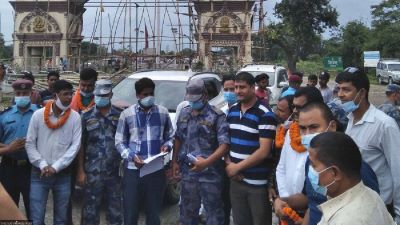
The first overland Indian tourists in one and a half years crossed into Nepal at the Raxaul-Birgunj border on Friday, as the country cautiously reopened to foreign visitors after the pandemic appeared to recede.

Nepal sealed the border with India in March 2020 with the coronavirus in full rampage, only allowing trucks carrying vital supplies to pass.

ADVERTISEMENT

Local authorities unlocked the gates to vehicles bearing Indian number plates on Friday, permitting free movement of Indian tourists. Nepal and India share a 1,800-kilometre-long porous border.

The opening up followed a September 21 cabinet decision to allow cross-border tourism activities and trade.

Subsequently, on September 23, Nepal implemented a new travel protocol which eliminated the seven-day quarantine requirement and resumed issuing on-arrival visas to all vaccinated foreign travellers in a bid to bring its virus-ravaged tourism industry back to life.

Visitors should have received their last dose of the Covid-19 vaccine at least 14 full days prior to entering Nepal. Those who are not vaccinated or partially vaccinated will not get on-arrival visas. They have to get their entry permits from Nepali diplomatic missions, and also spend 10 days in quarantine in government-listed hotels.

The government has revised the travel protocol removing the mandatory provision for all travellers to undergo mandatory antigen or rapid antigen tests at immigration entry points.

On Friday, tourism entrepreneurs in Birgunj welcomed the first vehicle carrying Indian tourists.

“We have planned our holiday trip up to Hetauda,” said Anuj Sinha, one of the group of four sightseers who were the first to enter Nepal on Friday. He said they were thrilled by the warm welcome at the border.

Mayor of Birgunj Metropolitan City Vijay Kumar Sarawagi said he expected Indian tourist arrivals to increase since the restriction on vehicle movement has been removed.

“It will also reduce the difficulties of people of both countries who were prevented from travelling due to the Covid-19 pandemic.”

Travel trade entrepreneurs had been urging local authorities to reopen the border for Indian tourists for a long time.

“Indian tourists are a big contributor to Nepal’s tourism,” said Hari Panta, president of the Hotel and Tourism Entrepreneurs Association in Birgunj.

“Until we make it easier for Indian tourists to visit Nepal, the industry will not recover. After prolonged pressure, the administration has finally given permission for Indian vehicles to enter Nepal. This is a welcome move.”

Harihar Poudel, chief of the Birgunj Customs Office, said they had allowed Indian passenger vehicles to enter Nepal following the cabinet decision. “The tourists, however, need to follow all health safety protocols as stated in the travel protocol.”

Indian nationals arriving in Nepal through land border points need to submit a Covid-19 negative report (RT-PCR, Gene Expert, True NAAT or WHO accredited test) obtained within 72 hours of departure from the first port of embarkation or within 72 hours if entering Nepal by land.

They are required to produce a printed copy of the international traveller online arrival form, obtained after online registration at http://www.ccmc.gov.np, to ensure arrival permission.

Travel and tourism businesses, which accounted for around 8 percent of the country’s gross domestic product and provided more than 1.05 million jobs directly and indirectly in pre-Covid times, were the hardest hit after travel restrictions came into force in late March last year.

Nepal received 33,680 Indian tourists by air in the first eight months of 2021, according to the Department of Tourism. There is no data of Indians crossing land border points. According to the statistics, Indian arrivals started to recover from January and February when 4,028 and 4,763 visitors respectively entered the country.

The figure jumped to 7,658 in March as the government reopened the country to foreign travellers in spring in the hope of lifting up the economy and employment by reviving tourism.

As a result, a sharp growth in arrivals was observed in April with 13,202 Indian visitors entering Nepal.

After the second Covid-19 wave hit Nepal in April, the country slid into a devastating crisis with the authorities enforcing strict lockdown measures. Nepal imposed a second lockdown on April 29. Consequently, the number of Indian visitors plummeted to 580 in May and 359 in June.

About two months later, the restrictions were relaxed gradually, and since September 1, almost everything has been allowed to reopen.

India is Nepal’s top tourist source market. Nepal received 1.17 million tourists via air and land routes in 2019, with Indians accounting for 209,611 arrivals.

Published : October 03, 2021

Myanmar govt. temporarily suspends vehicles’ import to reduce the use of foreign currency #SootinClaimon.Com

#SootinClaimon.Com : ขอบคุณแหล่งข้อมูล : หนังสือพิมพ์ The Nation.

https://www.nationthailand.com/international/40006924


The import of vehicles will be temporarily suspended from October 1 to reduce the use of foreign currency, announced Directorate of Trade.

The statement said that the import of passenger vehicles will be suspended from October 1 in order to reduce the use of foreign currency in connection with the import of goods due to the country’s declining exports and the aftermath of the COVID-19 outbreak which has led to business delays.

Imports from motor vehicle sales centers and showrooms, and the issuance of individual import car permits for individual employees who have been approved by the relevant departments for those, who have been awarded the good civil servant badge, good military service badge and good police service badge, are temporarily suspended.

The statement also said that the opening of a new car sales center has also been suspended from October 1.

Published : October 02, 2021