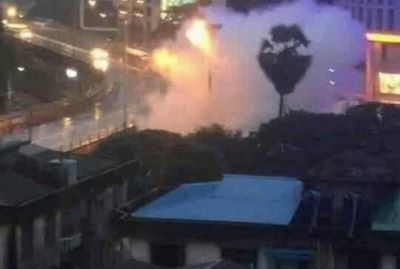
Explosions occurred in some places of Yangon city such as Hledan, Insein, North Oakkala, South Oakkalapa and Yankin on the morning of August 30.
Local residents said they started to hear a series of explosions near the North Oakkala Roundabout at about 5.15 am.
A blast occurred under Hledan Overpass in Kamayut Township at about 5.40 am, locals said.
“In early morning, I heard a loud explosion and saw smoke billowing up,” said a resident.
Moreover, explosions were heard near Yankin Post Office and in South Oakkala Township.
Local residents in Insein Township also said they heard about five explosions between 4.42 am and 5.27 am.
“The explosions were very loud. I even felt the earth shaking,” a resident in the township said.
In Insein Township, explosions were reported at the traffic police office at Pauktawwa traffic lights, another office at Japan Street traffic lights, near Insein Railway Station and at the traffic police office at the BOC traffic lights.
China tightens measures to curb minors online gaming addiction
BEIJING – Chinas National Press and Publication Administration has released a notice on preventing minors from becoming addicted to online games.
Online game providers can only offer one-hour services to minors from 8 pm to 9 pm on Fridays, Saturdays and Sundays, as well as on official holidays, according to the document made public on Monday.
The administration also urged the strict implementation of real-name registration and logins, saying that online game providers must not provide any form of game service to users who fail to register and log in using their real identifications.
Press and publication administrations at all levels have been asked to supervise the implementation of related measures and deal with companies that fail to put measures in place.
Minors’ addiction to online games has drawn much attention from the society, an official with NPPA said, adding that the newly-released notice was meant for minors who are still in the developmental stage physically and mentally, and have poor self-control.
A limited amount of gaming time for minors is understandable and acceptable as some online games can play an active role in their development, like sports, programming or chess, the official told Xinhua.
The official said that parents and minors can decide themselves how long the children will play other games that are conducive to minors’ growth, except online games.
In 2020, over10,000 games had been checked by the NPPA, and more than 50 companies have been admonished and handled .
The NPPA has pledged to carry out a special campaign in primary and middle schools, and efforts will be made to strengthen communication among the online gaming industry, parents, teachers and schools to create a better environment for the healthy development of minors.
Tokyo vaccine lottery leaves young people waiting, fuming
A lottery system for COVID-19 vaccinations in Tokyo failed to placate young people’s demand for inoculations, despite the metropolitan government’s move to make the system fairer.
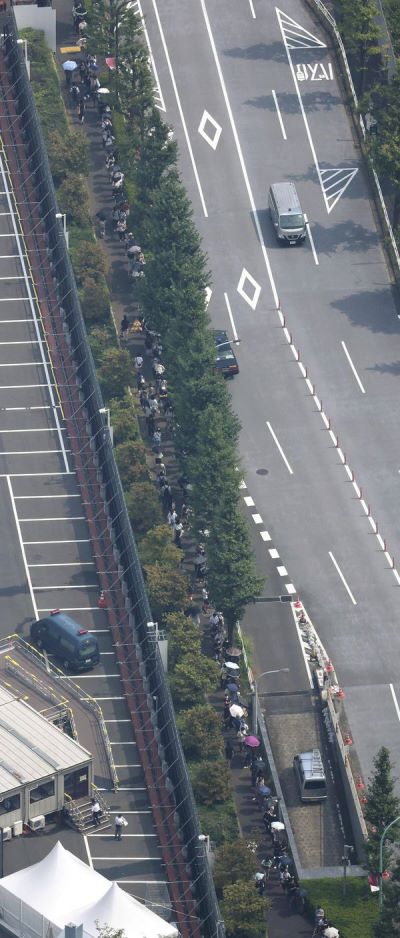
Tokyo’s new reservation-free COVID-19 vaccination center for young people in Shibuya Ward saw lines Saturday reaching at one point as far as Harajuku Station about a kilometer away. Lots were distributed to 2,226 people and about one-sixth of them, or 354, won the right to receive the vaccination the same day. Their second shot will also be available at the same location.
When this vaccination center opened at Workers’ Welfare Hall on Friday, the system was first come, first served. As only around 300 doses can be given each day, it was changed to a lottery system.
“It’s hard to get the vaccination whether by lottery or appointment,” said a 33-year-old part-time worker who waited for nearly three hours and was unsuccessful in the lottery. “Isn’t it the same in the end?”
ADVERTISEMENTx
A 17-year-old female student in her second year of high school who won the lottery said she wanted to have a normal high school life as time for her club and other activities had been cut short.
Tokyo continued with the lottery system on Sunday while also providing information about reservation-only vaccination venues at the north and south observatories at the Tokyo metropolitan government building and in the Nogizaka area of Minato Ward.
[India] Afghan situation forced every country to rethink strategies: Rajnath
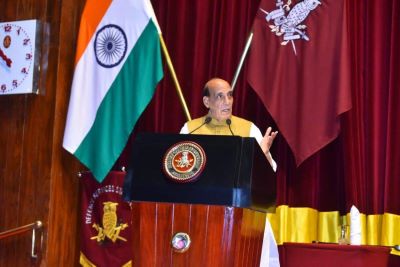
The ongoing situation in Afghanistan has forced the entire world to rethink their strategies, Defence Minister Rajnath Singh said on Sunday.
With the fundamentalist Islamist group Taliban taking over Kabul on August 15, Afghanistan has plunged into a humanitarian crisis. Pakistan is seen as having played a major role in bringing Taliban back to power.
In an address at the Defence Service Staff College, Rajnath Singh said: “With the change in the global order and national security paradigm, we have not only made immediate change in our policies but also taken decision on our futuristic reforms.”
He noted that looking at the ongoing situation in Afghanistan, every country is forced to rethink its strategy. “Quad was established keeping in mind these situations,” he said. Quad, or officially the Quadrilateral Security Dialogue, brings together the US, Australia, India, and Japan.
Citing the threats from China and Pakistan, he said that India has got challenges in legacy since Independence.
About Pakistan, without naming it, he said: “The foreign enemies have tried to destabilise the country since it got Independence. If we look at 75 years of history, it seems like we have got challenges in legacy. One of our neighbouring countries initiated proxy war and made terrorism as an integral part of state policy. The country started providing arms, money and training to the terrorists to target India.”
About China, he said that that in the northern sector, there was an effort to change the status quo unilaterally, but India changed its previous response and faced the adversary with new dynamism.
“Even after lots of challenges on our borders, the common man has faith in the government that it would never compromise on the national security issues. They know that India will counter-terror activities on its land and if needed, it can also cross the boundary,” he said.
ADVERTISEMENTx
Amid a change in the global order necessitating futuristic reforms, Rajnath Singh said that the objective is to enhance the Army’s teeth to tail ratio, bring decentralisation in the decision-making process, and make a future-oriented leaner force.
About Integrated Battle Groups (IBGs), he said that his ministry is seriously considering it. “You all are aware, quick decision-making is an important factor during wartime. There would be more lethal, brigade-size and self-reliant fighters formation.”
He also lauded ‘Tour of Duty’ proposal and termed it as a game-changing reform. “With this, the average age could be reduced and be made more agile.”
On theatre commands, the Defence Minister said the discussions on its implementation have been fast-tracked.
The Department of Military Affairs under Chief of Defence Staff General Bipin Rawat is working towards the creation of Joint Military Commands for better synergy and utilisation of resources.
The minister also talked about increasing women’s role in the defence forces. “History tells us that our women warriors have always played an important role when faced with any challenges,” he said.
Korea, Singapore discuss mutual recognition of vaccine certificates
Assembly speakers share views on quarantine exemption, digital partnership, Korean Peninsula
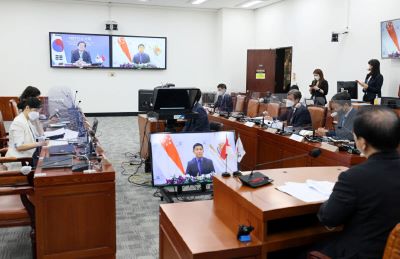
National Assembly Speaker Park Byeong-seug and his Singaporean counterpart Tan Chuan-Jin agreed on the need to mutually recognize COVID-19 vaccination certificates and to resume a reciprocal quarantine exemption arrangement at a virtual meeting held on Friday, officials said Sunday.
They also shared views on the Korea-Singapore Digital Partnership Agreement and the Korean Peninsula.
Park said, “We are keenly interested in the efforts of Singapore to strike the right balance between infection control, the economy and the people’s normal daily life.”
He expressed his hope “for swift progress in consultations for the mutual recognition of vaccination certificates and the early resumption of the reciprocal green lane.”
In September last year, Korea and Singapore agreed to establish the reciprocal green lane, which facilitates short-term essential business and official travel between the two countries.
Some 770 Koreans including business people benefited from the arrangement. But the resurgence of the coronavirus around the world led the Singaporean government to decide to suspend the mechanism in February this year. The Korean government has temporarily stopped issuing quarantine exemption certificates to Singaporeans based on the principle of reciprocity.
Expressing expectations for a resumption of the fast lane, Tan said that a review is underway for the mutual recognition of vaccination certificates. He added that “the Singaporean authorities have been reviewing which vaccines to recognize.”
ADVERTISEMENTx
With regard to the Korea-Singapore Digital Partnership Agreement, Park said, “Bilateral cooperation in the financial technology and startup sectors will lead to win-win outcomes for both countries.”
The KSDPA is designed to lay a foundation for cooperation in the innovation and digital sectors by applying nondiscriminatory and transparent regulations to the trade of digital products and services. The two countries launched negotiations in June last year with the aim to sign an agreement by the end of this year.
Regarding issues on the Korean Peninsula, Park expressed his appreciation to Singapore for their contribution to the historic summit between the US and North Korea in June 2018.
Park said he had proposed through his public speeches to hold an inter-Korean parliamentary meeting anytime, anywhere, without any preconditions. While Seoul has been waiting for a response from North Korean authorities, he added that “it would make another successful case if it could take place in Singapore.”
Park sought the continued attention and support of Singapore as a leading country in ASEAN so that ASEAN member states could speak with one voice on inter-Korean issues.
In response, Tan said though Singapore is a small country, it is “ready and willing to contribute to peace and stability in the region.” He added that Singapore would be “happy to offer support in any way possible for peace on the Korean Peninsula.”
Separately, Park also invited his counterpart to attend the 29th Annual Meeting of the Asia Pacific Parliamentary Forum to be held in Korea in December this year.
[Vietnam] License for emergency use of home-grown vaccine to be considered
HÀ NỘI — Experts will consider licensing the emergency use of the locally-made Nano Covax vaccine at a meeting scheduled for tomorrow.
The National Committee for Ethics in Biomedicine Research under the Ministry of Health announced the news in a press release issued Saturday.
The ethics committee agreed to submit the results from Nano Covax’s phase 3a clinical trials to the Advisory Council for the Registration of Circulation of Drugs and Medicinal Ingredients to consider issuing a licence for use with conditions for Nano Covax.
The Nano Covax vaccine meets the short-term safety requirements based on the data of the mid-term results of the phase 3a clinical trials, according to the release.
The committee requested Nanogen Biopharmaceuticals and the research team finalise the report, taking into account experts’ feedback, including adding more information to ensure the reliability of research results such as the range of test results and sample size of each test.
They are also required to update results of clinical trials for both the committee and the advisory council for evaluation.
If Nano Covax is licensed for use, it can only be used with conditions approved by the health ministry.
The safety of people being vaccinated needs to be followed as closely as it was during the phase 3b trial.
The ethics committee and advisory council will specify conditions of continuing or halting the circulation of vaccines when data on the safety and efficiency of the vaccine is available.
Nanogen is still conducting phase 3 trials with a total of 13,000 adult volunteers, but according to the latest guidelines from the health ministry, the vaccine could be given the emergency licence once the ethics committee approved the mid-term report.
ADVERTISEMENTx
Deputy minister of health Trần Văn Thuấn has said in the past that the issue of licence for use must be based on objective, transparent and scientific evidence reviewed and evaluated by the National Committee for Ethics in Biomedicine Research and the Advisory Council for the Registration of Circulation of Drugs and Medicinal Ingredients.
The health ministry will review licence for use for the drugs and vaccines that are approved by the independent agencies.
Vaccines are a special product that affects not only a person but the whole community, so it needs to be carefully considered, with consultation with reputable scientists and organisations such as the World Health Organization (WHO) and the US Center for Disease Control and Prevention (USCDC), according to Thuấn.
It was important to take careful steps to assess the safety (both short-term and long-term), stability and persistence of immunogenicity, especially the protective efficiency, the deputy minister said. — VNS
US virus origin-tracing report dismissed as scapegoating
Officials and experts are saying Beijings recent pushback has been “necessary and helpful” to frustrate Washingtons attempt to scapegoat China, after the US intelligence community unveiled a vaguely worded, inconclusive summary of the COVID-19 origin-tracing report submitted to President Joe Biden.
Politicizing origin tracing will further backfire and “lead nowhere”, and Washington should “return to a science-based, cooperation-driven global response”, they said.
In May, Biden directed the US intelligence community to produce a report on COVID-19’s origin within 90 days. The two-page, unclassified summary of the report was released on Friday by the US Office of the Director of National Intelligence.
The summary states that US investigators “judge the virus was not developed as a biological weapon”, but they do not rule out natural exposure to the virus, nor a laboratory accident as the origin of the novel coronavirus pandemic.
ADVERTISEMENTx
By Friday, the US had reported at least 38.1 million confirmed cases of COVID-19 and more than 628,400 deaths, the highest number of infections and death toll of any country, according to World Health Organization updates.
“Justice will prevail, and injustice is doomed to fail,” Vice-Foreign Minister Ma Zhaoxu said on Saturday in a statement, noting that Beijing has made serious protests to Washington over the report.
Washington has failed to respond to global concerns and the calls for a complete investigation of over 200 US bio-labs located across the globe, he said.
In so doing, the US “attempts to cover up facts and shirk its responsibilities”, and it should “face up to the global community with a clear response”, he said.
Su Xiaohui, deputy director of the Department of American Studies at the China Institute of International Studies, said, “China’s recent pushbacks against the US report have been powerful enough to convince Washington that it has neither overwhelmed Beijing nor reached its goal of dealing a heavy blow to China with the tracing issue.”
The 90-day review came “in like a lion, (and went) out like a lamb”, and Washington has been fixating on the tracing with a grandiose gesture, but the report summary fails to be conclusive and seems like a flailing in the air, she said.
“Behind the review was a dual-purpose strategy: courting the conservative, right-wing political forces in the US and, at the same time, hijacking China for political bargaining and pressuring for benefits regarding other issues,” Su said.
But the outcome is that Republicans have criticized the Biden administration for failing to meet their expectations, she said.
A subsequent statement by the White House purported that China is trying to hold back international investigation and rejects calls for transparency. The statement urges like-minded partners to exert pressure on China.
Ma, the vice-foreign minister, said that the US campaign of politicizing the tracing issue has been unpopular and has drawn widespread criticism around the world.
Washington should “immediately cease poisoning the atmosphere for global cooperation on tracing, stop undermining the global joint COVID-19 response”, he said.
Zeng Yixin, deputy head of the National Health Commission, said in a China Central Television interview released on Sunday that mobilizing intelligence agencies to work on tracing in itself yields more ironclad proof that the US is politicizing the tracing issue.
The US is urged to “encourage scientists from all countries to work in concert” and to “support scientists in carrying out in-depth origin tracing research in multiple countries and locations around the world, including the US”, Zeng said.
It was around this time 76 years ago that saw the beginnings of a popular movement known as the Bình dân học vụ (Mass Education Movement).
It was initiated by President Hồ Chí Minh who, at the first cabinet meeting after the Democratic Republic of Việt Nam was proclaimed, said: “An ignorant nation is a weak nation.”
The campaign to educate and improve the intellect of the people was launched soon after as illiteracy was considered an enemy as dangerous as foreign aggression and famine, in a country that was then 90 per cent illiterate.
It encouraged people of all ages to volunteer to teach others to read and write, and basically helped eradicate illiteracy in Democratic Republic of Việt Nam controlled areas after seven years, despite the ongoing war.
Now amid the war against the coronavirus, another campaign is needed to develop society, even as we are struggling to provide disadvantaged people essential support including food and basic daily needs.
This time we must work to close the digital divide, which has become more apparent during the pandemic.
With social distancing enforced in many cities and provinces, clearly those who can work or study online from home have an advantage over the rest.
While over 70 per cent of individuals in Việt Nam are using the internet, according to the Ministry of Information and Communications, this does not mean they can all use the internet for work or study, or earn a living from it.
ADVERTISEMENTx
The workable internet environment must be through high-speed cables or strong wifi connections, which are not available and affordable everywhere, especially in rural or remote regions.
Even though fixed broadband subscriptions approached 16.7 million and mobile broadband subscribers reached 78 million among the population of nearly 100 million last year, we do not need to second guess to know that those subscribers mainly concentrate in urban areas.
Mobile broadband, despite reportedly covering most of the country, is hardly workable in many areas. Many people struggle with unstable communication even in the centre of Hà Nội, and I have heard complaints regarding this from colleagues who have to help their children with online studying.
According to the Vietnam Institute for Economic and Policy Research’s Annual Economic Report 2021, although the country saw a boom in e-commerce with nearly two-thirds of businesses using digital platforms last year, facilitated by improving e-government, conditions for digital transformation (e.g. digital infrastructure, connectivity, digital payments, progress in technology absorption) remain limited in comparison with some ASEAN countries.
On August 2, telecommunications businesses announced a support package worth nearly VNĐ10 trillion (US$435 million), valuable and timely assistance during the pandemic but only meaningful for those who can afford it.
It is high time the State considered an investment to provide universal workable broadband service to all citizens and allocate free data packages to meet their basic needs. The allocation could be managed using the newly granted citizen IDs. Those who want higher speeds or more data should pay the extra.
Free workable broadband access means more equal access to basic services: healthcare, aid, insurance, food, education, and more job, social, economic and political opportunities.
A universal service also means establishing a huge client/user base, and more efficient management, especially for emerging needs such as public health surveillance.
This is fertile ground for business, trade, education, digital finance, and many other services exploiting big data. It will be a big market for home-grown apps and innovation.
Competitiveness will still be high as users will use their quotas voting for the better service providers. Businesses will have more incentives creating new and quality digital services and making money out of them.
Universal workable broadband service therefore will also lay the foundation for the digital elite to prosper.
Now that the Government is increasing investment in infrastructure to boost the economy, which is heavily affected by the pandemic, this should be part of the package as investment in this will create wealth, improving the knowledge of the population and create conditions for a knowledge economy.
Of course technocrats have many things to do, but to make full use of the infrastructure we need to address a fundamental condition, that is digital literacy among the population.
According to the American Library Association’s digital-literacy task force, digital literacy is the ability to use information and communication technologies to find, evaluate, create, and communicate information, requiring both cognitive and technical skills.
This is where a mass education campaign to improve digital literacy, similar in type and scale of the Bình dân học vụ, is needed. The State should set the skills standards and create a mechanism to encourage broad participation by multiple sectors of society in the campaign.
Witnessing the abundance of charitable and community spirit during the fight against the pandemic, it is clear it is not too difficult to mobilise capable people and organisations, especially when the Government has appropriate policies to channel their energy.
With the help of modern and creative communication tools their efforts will be multiplied compared to what our predecessors did many decades ago.
If people find opportunities in the new environment, they will make efforts to master new skills to join it.
While we still have to fight the coronavirus and try to control the pandemic with whatever tools we have, we have to accept that we may have to live with it forever and just strive to minimise its destructive effects on our lives.
But just like previous generations who successfully strived to eradicate illiteracy while struggling against famine and foreign aggression, we should together make effort to create a comfortable environment to live and work for all, whatever the adversities. – VNS
US, UK embassies issued biased statements on Kinma village incident: SAC Information Team
Nay Pyi Taw- Leader of the information team of the State Administration Council (SAC) Maj-General Zaw Min Tun said that embassies of the United States of America and United Kingdom issued biased statements concerning Kinma village without investigation at a press conference held at the Ministry of Information in Nay Pyi Taw on August 27. It was attended by representatives from Asean countries, ambassadors from China and Russia.
“Although we issued timely news releases and the true incident of what had taken place in Kinma village in Pauk Township, Magway Region, the American and British embassies issued statements with lop-sided accusations,” said Maj-General Zaw Min Tun. He added that they issued these statements the same time when the United Nations’ General Assembly and Security Council held meetings on June 18.
“Ambassadors, and representatives from foreign countries, observed with care the government’s official statements. We have issued true news about the prevailing situations in our country. Without investigating the true incident, they issued biased statements. We have to ask questions on their statements. They are still persisting what they want to say till now. We formally issued true news and locals’ saying on the incident. Today, he wanted to show with evidence on how the destructionist media instigate Myanmar domestic affairs and statements of some embassies caused disunity among the public and misunderstanding by sharing various false news and information about the village,” he added.
ADVERTISEMENTx
Later, he showed the video clip of three people arrested in Kinma village case.
The American embassy on June 17 issued a statement concerning Kinma village case like this.
“Myanmar security forces burned an entire village in Magway to the ground and at least two elderly residents were killed. These horrific acts are consistent with past atrocities committed by the military against people of all ethnicities and religions. The military continues to demonstrate a complete disregard for human life,” the statement said.
The British Embassy also published a statement on June 16 concerning Kinma village like this.
“Reports that the junta has burned down an entire village in Magway, killing elderly residents, demonstrate once again that the military continues to commit terrible crimes and has no regard for the people of Myanmar,” it said.
“The true case was that while policemen patrolled in the area in Pauk Township, Kinma village on June 15. A group of armed men attacked them from a village hill top when they reached the Kinma village signboard. They exchanged fire and while clearing the area, another clashes occurred. At the same time, Kinma village with 100 households was on fire. With the reinforced security forces, they entered the village and put out the fire. They rescued two 80-year-old women. The fire started when 40 people started to burn down the house of a villager who didn’t support terrorist acts. An illegal media in Myanmar wrote the case as burning the whole village and so CNN and Reuters news agencies made similar statements, explained Maj-General Zaw Min Tun.
Philippines hits record high new 19,441 COVID-19 cases — DOH
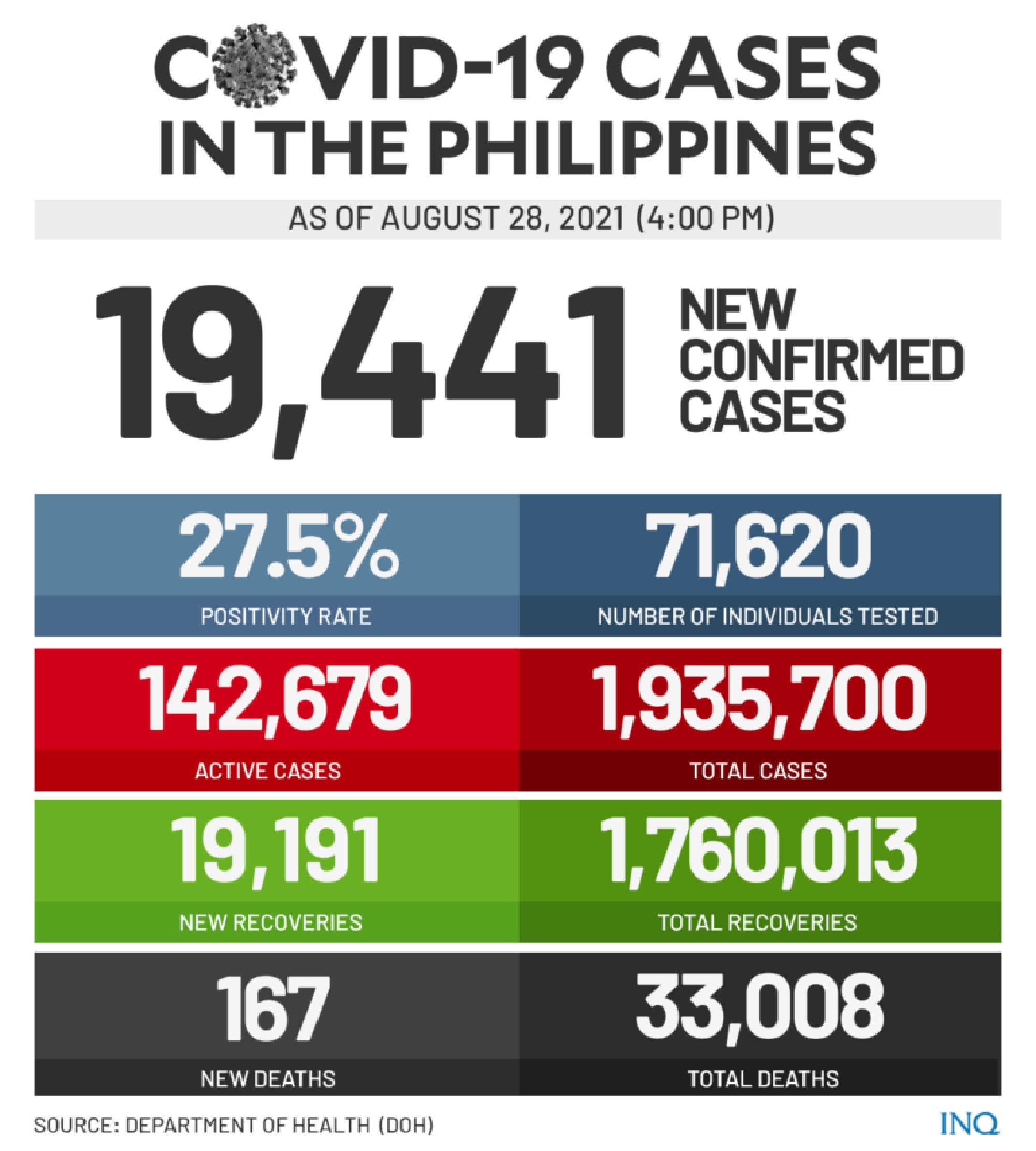
MANILA, Philippines — The Department of Health (DOH) on Saturday reported 19,441 new COVID-19 cases to bring the country’s caseload to 1,935,700.
This is the highest number of cases after the 18,332 cases reported last August 23.
Of the total cases, 142,679 or 7.4 percent were tagged as “active cases,” with most having mild or no symptoms at 97.3 percent.
The total number of recoveries is now at 1,760,013 after 19,191 patients recovered.
The country’s COVID-19 death toll meanwhile is now at 33,008 with 167 new deaths reported.
“Moreover, 76 cases that were previously tagged as recoveries were reclassified as deaths after final validation,” the DOH said.
ADVERTISEMENTx
Philippines hits record high new 19,441 COVID-19 cases — DOH
The latest data from the Johns Hopkins University COVID-19 tracker reported that the Philippines is only behind Indonesia in terms of COVID-19 cases in Southeast Asia with 4,056,354 cases.
As of posting, the COVID-19 global case count is now at 215.4 million including 4.4 million deaths, according to the tracker.




 Philippines hits record high new 19,441 COVID-19 cases — DOH
