LGBT athletes shine at Tokyo Games, set sterling example for more inclusive society #SootinClaimon.Com

#SootinClaimon.Com : ขอบคุณแหล่งข้อมูล : หนังสือพิมพ์ The Nation.

https://www.nationthailand.com/international/40004126

LGBT athletes shine at Tokyo Games, set sterling example for more inclusive society


A record number of athletes who openly identify as LGBT are competing at the Tokyo Games, which are being conducted under the banner of “diversity and harmony.”

Their inspiring showing at the Games has supporters cheering not only their athletic achievements, but also their contributions toward eliminating discrimination and prejudice against sexual minorities in a wider society that has been slower to embrace such individuals outside of the sporting arena.

■ Empowering example

“I feel incredibly proud to say that I’m a gay man and also an Olympic champion,” said Thomas Daley, 27, during a press conference after winning gold for Great Britain in the synchronized 10-meter platform dive on July 26.

Daley is married to a U.S. playwright. The couple has a 3-year-old son, who Daley has called “my biggest support.”

Olivier Fabre, a 54-year-old French journalist residing in Japan, was among many encouraged by Daley’s remarks. Fabre also works at “Pride House Tokyo Legacy,” a project launched in Shinjuku Ward, Tokyo, last October, with the aim of springboarding off the Tokyo Olympic and Paralympic Games to spread information on the intersection of sports and the LGBT community.

Fabre, who has lived in Japan since childhood, felt unable to come out as gay when he was younger. It was not until he was nearly 30 that he felt at last ready to come out to those close to him, after encountering greater diversity in the world, when traveling back and forth between Japan and overseas on business.

“I was deeply moved to see that times have changed and gold medalists can now proudly articulate these things on a public stage,” said Fabre. “I think that it will give an encouraging boost to those who are still suffering silently.”

■ 179 athletes

According to “Outsports,” an online news platform focusing on LGBT issues, at least 179 openly LGBTQ athletes were competing in the Tokyo Games as of Sunday — triple the 56 known to have competed in the Rio de Janeiro Games in 2016. Most of the out athletes are from North America and Europe.

The Tokyo Games are also the first to field an openly transgender athlete.

Weightlifter Laurel Hubbard, 43, made history as the first Olympian to compete in an event under a different gender from the sex they were assigned at birth. After formerly competing in men’s weightlifting, Hubbard underwent sex reassignment surgery at the mid-30s age, and represented New Zealand in the women’s 87-kilogram category on Monday night.

Kyoko Raita, a professor at Chukyo University who researches sports and gender, said the International Olympic Committee revised its guidelines in 2004 to allow transgender athletes to compete, on the condition that they have undergone sex reassignment surgery and satisfy hormone eligibility requirements.

In 2015, the surgery clause was removed, said Raita, who also serves on the executive board of the Tokyo Organizing Committee of the Olympic and Paralympic Games.

However, few athletes in Japan openly identify as LGBT.

Fumino Sugiyama, 39, a former member of Japan’s national women’s fencing team, came out as a transgender man only after retiring from the sport. Sugiyama recalled, “I worried whether the team and fencing association would be able to understand my being a sexual minority.”

■ Lasting legacy

The success of such athletes has larger ramifications for the LGBT community outside the sporting world. In a Lifenet Insurance Co. survey of about 10,000 sexual minorities conducted by Yasuharu Hidaka, a professor at Takarazuka University who specializes in social health, half of the teenage respondents reported experiencing bullying.

The survey also found that nearly 80% of the adults surveyed have been the target of discriminatory remarks at the workplace.

At Pride House Tokyo Legacy, messages from athletes and allies are on display as staff members offer consultations to members of the LGBT community on issues related to their careers and health.

“People have been saying they have nowhere to turn for advice, especially now that there are fewer opportunities for people to meet up and talk amid the pandemic,” said Gon Matsunaka, 45, head of Pride House Tokyo. “We would like to continue our activities even after the Games have ended, so that our society can become more understanding of LGBT issues.”

Published : August 03, 2021

By : Rei Sasaki/The Japan News/ANN
Six Japan prefectures now under state of emergency through August 31 #SootinClaimon.Com

#SootinClaimon.Com : ขอบคุณแหล่งข้อมูล : หนังสือพิมพ์ The Nation.

https://www.nationthailand.com/international/40004125

Six Japan prefectures now under state of emergency through August 31


The government declared a state of emergency on Monday for the prefectures of Saitama, Chiba, Kanagawa and Osaka, expanding to six the number of prefectures where such measures are currently in effect.

Also on the day, emergency-level COVID-19 priority measures were put into effect for Hokkaido, Ishikawa, Kyoto, Hyogo and Fukuoka prefectures.

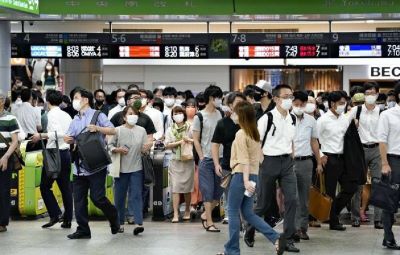
All these measures are effective until Aug. 31. The central government is calling for the public to refrain from nonessential outings and to work from home, but the flow of commuters appeared mostly unchanged Monday morning at major stations in the four newly added prefectures.

On Sunday at the Prime Minister’s Office, senior Health, Labor and Welfare Ministry officials reported to Prime Minister Yoshihide Suga on Japan’s current situation related to coronavirus infections.

In Chiba, Saitama and Osaka prefectures, restaurants that serve alcoholic beverages or offer karaoke are being asked to suspend operations, while other restaurants are requested to shorten business hours and close by 8 p.m.

Kanagawa Prefecture, which has implemented its own COVID-19 controls, will expand its measures throughout the prefecture, asking shops to shorten business hours and stop serving alcoholic beverages.

In areas under the priority measures, shops and restaurants must move up their closing times to 8 p.m. and stop serving alcoholic beverages in principle. Restaurants that meet certain requirements, such as implementing proper infection control measures, are allowed to serve alcohol until 7 p.m. at the discretion of their prefectural governor if infections in that prefecture are on a downward trend.

The prefectural governments will step up their monitoring of restaurants and call for the public not to drink on streets or in parks.

The central government is aiming for 40% of the population to receive a second dose of vaccine by the end of this month, and is encouraging young people to get vaccinated.

■ Foot traffic

Mobile phone data from NTT Docomo, Inc. showed that foot traffic at 7 a.m. Monday decreased by 4.3% at Umeda Station in Osaka and 3.8% at Chiba Station, compared to a week ago on July 26. The percentage increased by 0.9% at Yokohama Station and slightly at Omiya Station.

At Yokohama Station, a steady flow of commuters passed through the ticket gates on Monday morning.

“The number of people has not decreased at all even after the state of emergency,” said a 23 year-old company employee from Tokyo’s Minato Ward whose office is near the station. “I think the state of emergency has become less effective.”

A 53-year-old company employee from Kawasaki said: “The orders in the past were not effective enough. Once issued, a state of emergency should be continued until infections are significantly reduced. I want the government to put efforts into developing curative drugs, too.”

Osaka Station was also crowded with commuters.

“I got on the train after 10 a.m. using staggered work hours, but it was packed with commuters,” said a 69-year-old company employee from Toyonaka, Osaka Prefecture.

A 40-year-old nurse from Naniwa Ward, Osaka, said: “I think many people no longer feel like refraining from going out. The medical system is in trouble. I hope the government will take measures that are more effective.”

People seeking to telework came to a hotel near Omiya Station on Monday morning. Reservations for a plan to stay at the hotel for up to 11 hours have increased in line with the spread of infections, with 120 people using the service in July.

The hotel had received five such reservations by 10 a.m. Monday. A hotel spokesperson said, “Now that a state of emergency has been declared, we’ll have more guests. We’ll provide rooms with thorough infection control.”

A restaurant near Chiba Station planned to stop its nighttime operations from Monday night and operate only during lunchtime.

“We have no choice but to keep labor costs down and operate frugally,” the restaurant’s owner said.

Published : August 03, 2021

By : The Japan News/ANN

Politicizing virus-tracing jointly opposed #SootinClaimon.Com

#SootinClaimon.Com : ขอบคุณแหล่งข้อมูล : หนังสือพิมพ์ The Nation.

https://www.nationthailand.com/international/40004124

Politicizing virus-tracing jointly opposed


More international voices call for fair, objective COVID origin investigation

More than 300 political parties, organizations and think tanks from over 100 countries and regions submitted a joint statement on Monday to the World Health Organization Secretariat, rejecting the politicization of the COVID-19 origin study and calling for an objective, fair investigation.

Humanity lives in a community with a shared future and no country can survive major crises by itself, they said, calling for solidarity from the international community to fight the virus, which knows no boundaries or races.

However, they pointed out in the joint statement that the plan proposed by the WHO for the second phase of the origin-tracing investigation will not help to advance global cooperation on tracing the virus origins, as it is inconsistent with the resolution of the 73rd World Health Assembly, did not involve full consultation with member states, and failed to reflect the latest global research outcomes.

They called on the WHO Secretariat to carry out cooperation with member states, give full consideration to new scientific evidence and fully adopt suggestions made by the WHO-China joint report.

They also expressed support for medical experts and researchers conducting virus origin-tracing work in various countries and regions across the world in order to gain experience for preventing the next possible pandemic.

The joint statement also praised China and some other countries for actively providing vaccines to developing countries and called for capable countries to avoid restrictions on vaccine exports or hoarding.

ADVERTISEMENTx

The joint statement was issued after nearly 70 countries expressed opposition to politicization of origin-tracing by writing letters to WHO Director-General Tedros Adhanom Ghebreyesus, issuing statements and sending notes.

Politicians and experts in many countries also have expressed their rejection of attempts by certain countries, including the United States, to politicize COVID-19 origin-tracing, emphasizing that the study of the origin must be based on evidence and science.

Despite the WHO-China joint report issued in March that said a “lab leak” hypothesis was “extremely unlikely”, US politicians, including Secretary of State Antony Blinken, have still insisted on carrying out a virus origin probe in China.

In a statement issued on Friday, the African National Congress, South Africa’s ruling party, said that it supports science-based inquiries in tracing the virus’ origin of the coronavirus that causes COVID-19, calls for global cooperation and decries politicization of such inquiries.

“Only when we unite can we truly defeat the virus,” it said.

Speaking at a virtual news briefing on Friday, Philippine Health Secretary Francisco Duque III said that the government shuns politicization of anything related to COVID-19.

“Whatever is being politicized by certain leaders, by certain politicians, we leave it to them,” he was quoted by the Philippine News Agency as saying.

Usman Sarki, the former Nigerian deputy representative to the United Nations, told China Central Television on Friday that the US government is using the China card to address the domestic problems it faces amid the pandemic, instead of truly being interested in finding out the origin of the virus.

Published : August 03, 2021

By : MO JINGXI/China Daily/ANN

Indian Navy task force in South China Sea, West Pacific for 2 months #SootinClaimon.Com

#SootinClaimon.Com : ขอบคุณแหล่งข้อมูล : หนังสือพิมพ์ The Nation.

https://www.nationthailand.com/international/40004123

Indian Navy task force in South China Sea, West Pacific for 2 months


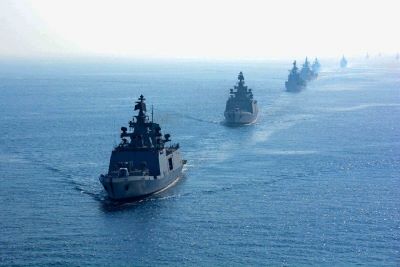
A Task Force of the Indian Navy’s Eastern Fleet will proceed on over two months overseas deployment to Southeast Asia, the South China Sea, and the Western Pacific from early August.

The deployment of the Indian Navy ships seeks to underscore the operational reach, peaceful presence and solidarity with friendly countries towards ensuring good order in the maritime domain and to strengthen existing bonds between India and countries of the Indo-Pacific, a Navy statement said.

The deployment is in pursuit of India’s ‘Act East’ policy and to enhance military cooperation with friendly countries, it said.

The Indian Task Force comprises Guided Missile Destroyer Ranvijay, Guided Missile Frigate Shivalik, Anti-Submarine Corvette Kadmatt, and Guided Missile Corvette Kora.

The latter three ships are indigenously designed and are equipped with a versatile array of weapons and sensors, and are Made in India by defence shipyards.

During the deployment in the Indo Pacific, the ships are scheduled to participate in bilateral exercises with the Vietnamese Peoples’ Navy, the Republic of Philippines Navy, Republic of Singapore Navy (SIMBEX), and the Indonesian Navy (Samudra Shakti) and Royal Australian Navy (AUS-INDEX).

Further, they would also participate in multilateral exercise MALABAR-21 alongside the Japanese Maritime Self Defence Force, the Royal Australian Navy and the United States Navy in Western Pacific.

The Indian Navy undertakes regular deployments to friendly foreign countries and Indian and the Pacific Ocean regions in furtherance of the Prime Minister’s initiative of ‘Security and Growth for All in the Region – SAGAR’, the statement said.

Further, such engagements build ‘Bridges of Friendship’ and strengthen international cooperation, it said, adding that these maritime initiatives enhance synergy and coordination between the Indian Navy and friendly countries, based on common maritime interests and commitment towards Freedom of Navigation at sea.

Besides regular port calls, the task group will operate in conjunction with friendly navies, to build military relations and develop interoperability in the conduct of maritime operations.

Published : August 03, 2021

By : The Statesman/ANN

Singapore to contribute $135,000 to Asean efforts to aid Myanmar #SootinClaimon.Com

#SootinClaimon.Com : ขอบคุณแหล่งข้อมูล : หนังสือพิมพ์ The Nation.

https://www.nationthailand.com/international/40004122

Singapore to contribute $135,000 to Asean efforts to aid Myanmar


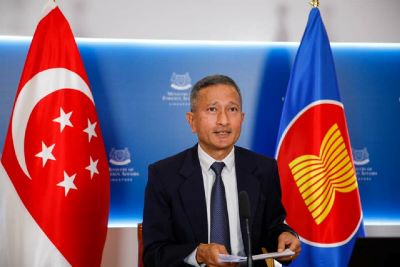
BANGKOK – Singapore will contribute US$100,000 (S$135,000) to Aseans humanitarian assistance unit as it begins preparations to provide aid to Myanmar, Singapores Foreign Minister Vivian Balakrishnan said on Monday (Aug 2) after meeting his counterparts from the region.

“We discussed the situation in Myanmar, which remains of grave concern,” he wrote on Facebook after the virtual Asean Foreign Ministers’ Meeting. “We urged the swift and effective implementation of the Five-Point Consensus agreed at the Asean Leaders’ Meeting on 24 April 2021.”

He added that Asean needed to harness its Covid-19 response fund to buy vaccines for its people.

By Monday evening though, there was still no word on who had been picked as Asean’s special envoy to help facilitate dialogue among Myanmar’s political stakeholders. This had been a key feature of the consensus to tackle the crisis triggered by Myanmar’s Feb 1 military coup.

According to a transcript of remarks given to the media, Indonesian Foreign Minister Retno Marsudi had urged Myanmar to immediately approve Asean’s proposal on the special envoy.

While she did not reveal the name of the envoy proposed, she stressed at the meeting that the envoy should be able to start work immediately, and be guaranteed access to the relevant parties within Myanmar.

She also said that if the meeting failed to result in any concrete steps to take the consensus forward, Indonesia would propose the matter be put before Asean leaders again for further action.

The other points in the consensus calls for the immediate cessation of violence, constructive dialogue among all concerned, for the special envoy to visit Myanmar to meet all stakeholders, and for Asean to provide humanitarian assistance.

Asean’s foreign ministers will also hold virtual meetings with their counterparts across the world until Friday.

The choice of envoy has been a contentious issue. While Asean has not officially recognised the junta as the government of Myanmar, its representatives have represented the country in Asean meetings. Without the junta’s nod, the envoy would unlikely be able to enter the country.

In a speech televised on Sunday, Senior General Min Aung Hlaing said his administration was agreeable to having former Thai deputy foreign minister Virasakdi Futrakul fill the role.

Other nominees are reported to be Indonesia’s ex-foreign minister Hassan Wirajuda, Brunei’s second foreign affairs minister Erywan Yusof and veteran Malaysian diplomat Razali Ismail.

Gen Min Aung Hlaing claims Myanmar’s election in November last year was fraudulent and has vowed to hold fresh elections and build a “discipline-flourishing democracy”. On Sunday, the junta renamed itself as the “caretaker government”, with the general as “prime minister”.

Political violence has not ceased in Myanmar despite Asean’s consensus. The Assistance Association for Political Prisoners has said at least 940 people have been killed by the junta since coup.

In northern Kani township where locals have put up a strong resistance to the junta, several bodies bearing signs of torture were uncovered last week, reported Myanmar Now media outlet.

A raging Covid-19 pandemic in Myanmar has also left growing numbers gasping for air in their homes. With the understaffed hospitals full, the junta has tried to restrict the sale of oxygen to the private sector. It has not let up its persecution of medics deemed to be resisting the regime and has also confiscated their equipment.

ADVERTISEMENTx

The National Unity Government (NUG), formed by ousted lawmakers and their allies, says it is working with over 700 doctors and nurses to provide medical consultation. It is also giving oxygen supplies and body bags to households, said NUG’s foreign minister Zin Mar Aung in an online discussion organised by the Asia News Network on Monday.

Asked if the NUG would work with the junta to combat Covid-19, Ms Zin Mar Aung said the political conditions made that impossible. But NUG is willing to work with a third party to deliver urgent medical aid to Myanmar people.

“We are willing to cooperate and engage with the world as well as Asean countries,” she said.

Additional reporting by Wahyudi Soeriaatmadja

Published : August 03, 2021

By : Tan Hui Yee/The Straits Times/ANN

China mulls booster shots to step up herd immunity #SootinClaimon.Com

#SootinClaimon.Com : ขอบคุณแหล่งข้อมูล : หนังสือพิมพ์ The Nation.

https://www.nationthailand.com/international/40004065

China mulls booster shots to step up herd immunity


Although there isnt enough evidence now to support delivering COVID-19 booster shots to the general public, China is studying whether it is necessary to give additional doses to vulnerable groups and high-risk workers in order to boost immunity, health experts said.

Shao Yiming, a researcher at the Chinese Center for Disease Control and Prevention, said that based on initial observation, people with weak immune systems, such as the elderly and those suffering chronic illnesses, as well as workers at higher risk of contracting the virus or people planning to travel to high-risk areas, might need a booster dose six to 12 months after initial immunization.

“Whether this is necessary and when a booster shot should be rolled out are being researched,” he said during a news briefing on Saturday.

Shao said immunity triggered by any COVID-19 vaccines in use appears to decline to some extent as time goes by, but immunological memory is locked in, preparing bodies to swiftly generate strong antibodies when encountering the virus.

“For the general population who have been vaccinated within a year, there is no need to obtain a booster shot for now,” he said.

China’s mass immunization program is progressing smoothly, with over 1.65 billion doses administered as of Saturday, according to the National Health Commission.

The program had covered 150 million people age 60 and above and 12.48 million youths age 12 to 17 as of Wednesday, said He Qinghua, an official at the commission’s Bureau of Disease Prevention and Control.

However, questions on vaccines’ effectiveness and the necessity of a booster shot have been raised as the Delta variant, a highly contagious strain, has caused a local outbreak that was first detected in Nanjing, Jiangsu province, on July 20 and has spread to at least 14 provincial-level regions in the country.

Mi Feng, a spokesman for the commission, said on Saturday that China had reported 328 confirmed domestic infections in July, roughly equivalent to the total number of local cases from February to June.

“The main strain in circulation is the Delta variant, which poses a greater challenge to virus prevention and control work,” he said.

Feng Zijian, a researcher at the China CDC, said the transmissibility of the Delta variant is estimated to be nearly double that of the original strain, and it spreads much faster and likely increases the risk of developing severe symptoms.

“Available findings suggest that the Delta variant might diminish protection from COVID-19 vaccines, but current shots can still have good preventive and protective effects against the strain,” he said.

Shao added that breakthrough infections-people who contract the virus at least 14 days after being fully vaccinated-are relatively rare.

“No vaccine can provide 100 percent protection against viral infections. But on the whole, various COVID-19 variants can be controlled with existing vaccines,” he said, adding that studies also show that domestic COVID-19 vaccines can effectively reduce rates of hospitalization, severe cases and deaths.

Shao noted that many developed countries, despite their high vaccination coverage rates, are grappling with a resurgence of outbreaks due to a rush to relax anti-virus policies, such as wearing masks and maintaining social distancing.

“This shows that inoculation must be used in conjunction with strict disease control measures,” he said, calling on the public to continue practicing personal protective protocols.

Wang Huaqing, chief expert on immunization planning at the China CDC, said that it is not recommended at the moment to mix vaccines. He also urged the public to finish full immunization with multiple-dose vaccines on time.

Although the Delta variant is considered more transmissible and dangerous, He, from the commission, said the tried-and-tested virus control approach, including targeted lockdowns, rapid mass testing and isolation, is still effective at containing the virus.

However, he emphasized that implementation should be faster and more rigorous, and cooperation across different government departments and localities should be stepped up.

Published : August 02, 2021

By : WANG XIAOYU/China Daily/ANN

July exports best-ever in Korea’s history #SootinClaimon.Com
#SootinClaimon.Com : ขอบคุณแหล่งข้อมูล : หนังสือพิมพ์ The Nation.

https://www.nationthailand.com/international/40004063

July exports best-ever in Korea’s history

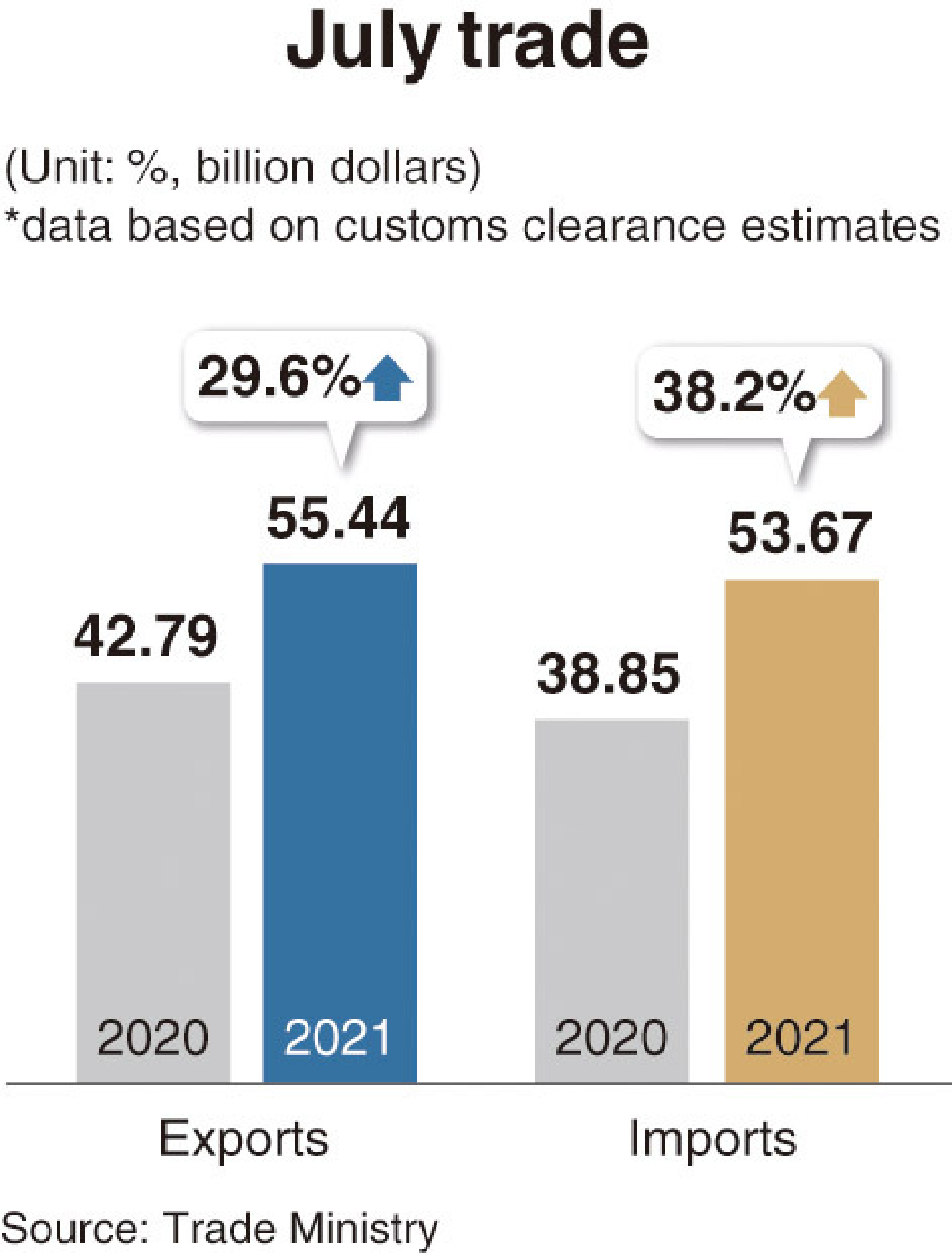
South Korea’s exports in July surged 29.6 percent to $55.4 billion on-year, a record monthly figure since the nation began compiling the data in 1956, according to the Trade Ministry Sunday.

In the first seven months of this year, Korea’s accumulated exports were worth $358.7 billion, setting another record. Also, this is the first time in 10 years that the country saw double digit growths for four consecutive months in 10 years — 41.2 percent in April, 45.6 percent in May, 39.8 percent in 29.8 percent and 29.6 percent in July. 

July exports best-ever in Korea’s historyJuly exports best-ever in Korea’s history

“For two straight months from June to July, exports of the nation’s 15 core products all increased, 13 of them witnessing double-digit growths. Also, for four consecutive months, Korea’s exports grew in all nine major markets,” a Trade Ministry official said.

Private and public experts, including those at the Korea Institute for Industrial Economics and Trade and the Bank of Korea, estimate the nation’s exports this year at between $601.7 billion and $610.5 billion, while its trade volume is projected at $1.15 trillion to $1.19 trillion.

The record performance was propelled by robust exports in both conventional and new sectors.

Overseas sales of chips, fueled by global server demands, spiked 39.6 percent to reach $11 billion in July on-year, surpassing $10.4 billion in July 2018 when the world was enjoying a chip “super cycle.”

In January, RAMeXchange, a research division of market tracker TrendForce, set the average contract price of an 8-gigabyte DRAM at $3.25, $3.50 and $3.75 in the second, third and fourth quarters this year, respectively. In June, RAMeXchange raised the figures to $3.80, $4.09 and $4.23. The price hike is expected to give a further boost to Korea’s chip industry.

Thanks to surging demand in packaging and quarantine products, exports of petrochemical products jumped 59.5 percent to $4.7 billion, while those of automobiles surged 12.3 percent to $4.1 billion buoyed by the global demand for eco-friendly vehicles.

Among emerging industries, exports of rechargeable batteries enjoyed a stellar 31.3 percent growth to $790 million.

Published : August 02, 2021

By : Kim Byung-wook/The Korea Herald/ANN

Semiconductor shortage buffets Japanese companies #SootinClaimon.Com

#SootinClaimon.Com : ขอบคุณแหล่งข้อมูล : หนังสือพิมพ์ The Nation.

https://www.nationthailand.com/international/40004062

Semiconductor shortage buffets Japanese companies


Amid the increasingly serious global shortage of semiconductors, automakers have been forced to reduce their output or postpone the release of new models. The repercussions are being felt amid a wide range of products, including home appliances, computers and telecommunication devices.

As if preying on companies’ fears, counterfeit semiconductors have been appearing more and more on the market.

■ Counterfeit chips

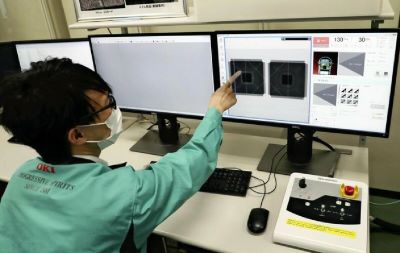
Oki Engineering Co., based in Nerima Ward, Tokyo, launched a service in early June to check whether semiconductors are genuine. It now receives inquiries every month about whether client companies can trust certain products.

Semiconductors have been brought to the firm, mainly by electronic machinery makers, sometimes numbering in the thousands in just one batch.

Oki Engineering staff pick up the semiconductors, which measure one to three millimeters on each side, using sucker-like devices designed exclusively for this purpose, and closely examine them under a microscope.

They confirm whether there are suspicious elements in the corporate logos and serial numbers on the surface, and also check circuit patterns inside them with X-ray machines, comparing them with legitimate semiconductors.

About 30% of the semiconductors they have checked have proved to be of poor quality. They included old models deemed to have been produced more than 10 years ago, and secondhand ones that were likely removed from discarded home appliances.

According to Oki Engineering, a sizable number of the faulty products were counterfeit. For example, some had proper casings but were empty inside, while others used major manufacturers’ logos without permission.

Counterfeit or poor-quality semiconductor chips are not a new phenomenon, but the problem rapidly became pronounced as the semiconductor shortage intensified.

The semiconductors in question are believed to mainly come from China, South Korea and Southeast Asia, and they are mainly traded on the internet. In many cases, they are bought and delivered by trading companies that received orders for semiconductors from client manufacturers but were unable to procure proper ones.

Problematic semiconductors are directly installed in such consumer products as drive recorders in cars, facial massagers and electronic cigarettes. After being sold, some of these products have failed to work from the outset.

There are also rare situations in which problematic chips could cause products to catch fire.

■ Race to obtain goods

Large electronics stores in Tokyo feature many signs these days telling customers that they will have to wait for the delivery of such products as telephones, cameras and printers. Unable to procure semiconductors, makers have reduced their output of such products, hence the delays.

In early August, Honda Motor Co. suspended the production of fully assembled cars at its Suzuka Factory in Mie Prefecture for five days. Nissan Motor Co. postponed the release of its new electric vehicle Ariya from the middle of this year to winter 2021.

In China, where consumer spending recovered early among major economies, cars fresh off production lines are in short supply because of the shortage of semiconductors. As a result, the number of cars sold there in June fell 12.4% from a year ago.

Reduced output of cars and home appliances also affects material manufacturing industries, such as steelmakers and nonferrous metal makers.

In a composite index (CI) of business conditions in May, which the Cabinet Office announced on July 7, the coinciding index indicating the current economic situation fell 2.6 points to 92.7, the first decline in three months. The CI is calculated with a base of 100 in 2015.

Demand for semiconductors has grown rapidly and in tandem with the spread of teleworking amid the novel coronavirus crisis. Since autumn last year, new car sales in North America and other major markets have rapidly recovered.

As a result, companies in a wide range of business sectors are waging a fierce battle to obtain semiconductors.

In March this year, Renesas Electronics Corp., a major semiconductor manufacturer, had a fire break out at its Naka Factory in Ibaraki Prefecture, and it took about four months for factory operations to fully resume. This further exacerbated the shortage of semiconductor products at home and abroad.

Even if a manufacturer aims to increase its output, it takes about a year from when the construction of a new factory is green-lit to when it starts production. There are several hundred manufacturing processes involved in making semiconductors, and it takes several months from receiving an order to delivering it.

Kazuhiro Sugiyama, a consultant with Omdia Japan, said: “Some major semiconductor manufacturers are fully booked with orders through 2022, and they have little room to increase output. It seems the shortage will be resolved only in or after autumn 2022.”

■ Domestic production

Semiconductors have been called “industry’s rice,” likening them to the staple food of Japan, because they are the core parts of a wide range of products. Many countries, especially the United States and China, have been strengthening their efforts to secure semiconductor-related companies and technologies for their own needs.

In December 2020, China enacted a law to control imports and introduced restrictions on the products related to cyber-security. Similarly in 2010, when tensions rose between Japan and China over the Senkaku Islands, Beijing started restricting exports of rare earths to Japan.

There are fears that China will heighten diplomatic pressure by using the supply of semiconductors for political leverage.

To cope with this possibility, the U.S. government shifted to a policy of increasing domestic production of semiconductors. In June this year, it announced a plan to provide at least $50 billion (about ¥5.5 trillion) in aid for production and research into such products.

Intel Corp. of the United States and Taiwan Semiconductor Manufacturing Co. (TSMC), among other companies, will invest the equivalent of trillions of yen for this purpose in Arizona.

European countries, Taiwan and South Korea have announced aid measures for companies that produce or develop technologies inside their bloc or nation, seeking to avoid excessive reliance on imports of semiconductors.

Published : August 02, 2021

By : Chihiro Nakajima and Yo Nakanishi/The Japan News/ANN

Border controls in Metro Manila meant to stop exodus to provinces – Año #SootinClaimon.Com

#SootinClaimon.Com : ขอบคุณแหล่งข้อมูล : หนังสือพิมพ์ The Nation.

https://www.nationthailand.com/international/40004061

Border controls in Metro Manila meant to stop exodus to provinces – Año


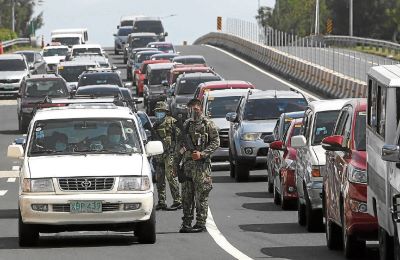
MANILA, Philippines — Checkpoints were activated at 12 a.m. on Sunday at the borders of the National Capital Region (NCR) and the neighboring provinces of Bulacan, Rizal, Laguna, and Cavite — collectively called the NCR Plus — to stop the exodus of people in the capital region to other nearby provinces, Interior Secretary Eduardo Año said.

Anew lockdown or enhanced community quarantine (ECQ) will take effect in NCR from Aug. 6 to 20. The OCTA Research Group had been urging this restriction to help contain the spread of the more transmissible Delta variant of the novel coronavirus.

Meanwhile, Marikina Rep. Stella Quimbo called for the establishment of business and transportation “bubbles” to keep the economy running, as she warned that the country could lose as much as P18 billion a day because of the lockdown.

Año said in a statement that the checkpoints, or quarantine control points (QCPs), were set up at the borders of Bulacan with Pampanga and Nueva Ecija, Rizal with Quezon, Laguna with Batangas and Quezon, and Cavite with Batangas.

“At the moment, the QCPs are at the borders of Bulacan, Rizal, Laguna, and Cavite with adjoining provinces, but once we move to ECQ starting Aug. 6, checkpoints will be located inside Metro Manila,” he said.

‘Hard lockdown’

In a radio interview, Año noted that people in NCR will likely take advantage of the period before the lockdown, which takes effect on Aug. 6, to move out of that area.

“If we don’t do this, people will leave the NCR, even those with the Delta variant who will go to different places and spread it,” he told dzBB.

“First we have to shut down the mobility of people to break the chain of transmission. So the virus would die naturally wherever it is incubating,” Año said.

“No country in the Southeast Asian region has stopped the Delta variant without resorting to a hard lockdown on major cities. Delta variant is really scary,” he added.

But Año said persons who need to travel may present at the QCPs identification cards issued last year by the Inter-Agency Task Force for the Management of Emerging Infectious Diseases or any valid ID or document proving that their travel is essential.

ADVERTISEMENTx

Public transportation

In an interview also with dzBB on Sunday, National Task Force Against COVID-19 spokesperson Restituto Padilla Jr. said public transportation will be allowed during ECQ to complement the government’s vaccination drive but will be limited for that purpose and other essential needs.

The government aims to ramp up vaccination during the lockdown.

PNP chief Gen. Guillermo Eleazar said he had placed a medical reserve force “on standby in case they will be tapped in the vaccination process during the two-week ECQ.”

The Lawyers for Commuters Safety and Protection, a group of commuter advocates, said public transportation was still vital during the lockdown.

ADVERTISEMENT

“Land public transport is very needed for the mobility of Filipinos who are permitted to go out [under ECQ], especially for doctors going to hospitals, those buying essential goods, or are in emergency situations,” the group said in its statement.

“Total suspension of public transport is not needed. Public transport must be allowed depending on the reduced capacity and health protocols agreed upon by national government agencies,” it added.

‘Bubbles’

Quimbo proposed that the government allow “business bubbles” to operate even under ECQ now that millions of Filipinos have been fully vaccinated and testing has become routinary in many places.

“By creating these bubbles to promote micro-herd immunity and safe spaces, it is entirely possible that we will not incur the same devastating economic losses we suffered during the previous ECQs,” she said in her statement.

ADVERTISEMENT

“Through being vaccinated and implementing these business bubbles, people will then have increased mobility,” she added.

An economist, Quimbo said the ECQ this month could lead to a loss of P18 billion a day using national income data—higher than the P12.9 billion a day during the ECQ enforced in March amid a new surge in COVID-19 cases at that time, she said.

“As we have repeatedly argued before, health and economic concerns are not mutually exclusive. We can work for the recovery of both fronts simultaneously,” Quimbo said.

She renewed her call for the Duterte administration to pass the Bayanihan 3 stimulus package to fast-track the procurement and rollout of vaccines.

In his statement, Bayan Muna Rep. Carlos Isagani Zarate said Bayanihan 3 “should not be included in the 2022 budget proposal because our affected people need the ‘ayuda’ (aid) now.”

He said funds could be tapped from a variety of sources, including the government’s savings and the allotments for intelligence.

—REPORTS FROM JEANNETTE I. ANDRADE, NESTOR A. CORRALES, MEG ADONIS AND JANE BAUTISTA

Published : August 02, 2021

By : Philippine Daily Inquirer/ANN

Myanmar junta chief names himself prime minister, says will cooperate with Asean #SootinClaimon.Com

#SootinClaimon.Com : ขอบคุณแหล่งข้อมูล : หนังสือพิมพ์ The Nation.

https://www.nationthailand.com/international/40004060

Myanmar junta chief names himself prime minister, says will cooperate with Asean


BANGKOK – Myanmars military junta on Sunday (Aug 1) declared itself caretaker government of the embattled country, with chief Min Aung Hlaing named as prime minister.

Myanmar junta chief names himself prime minister, says will cooperate with Asean

The announcement will likely raise the stakes as Asean foreign ministers hold a virtual meeting on Monday to find the way forward in Myanmar’s six-month-old political and humanitarian crisis.

Although Asean has not officially recognised the junta, its representatives have been taking part in official Asean meetings. Similar access has not been given to leaders of the rival National Unity Government which includes elected lawmakers ousted by the Feb 1 military coup.

In a 50-minute speech broadcast over state media on Sunday, Senior General Min Aung Hlaing – dressed in a traditional jacket instead of a military uniform – promised to hold a “free and fair” election and lift the current state of emergency by August 2023. He claims the November 2020 election that re-elected the National League for Democracy (NLD) government was fraudulent.

The military chief also said: “Myanmar is ready to work on Asean cooperation within the Asean framework, including the dialogue with the special Asean envoy of Myanmar.”

Earlier, he appeared to have dismissed a five-point consensus on the Myanmar crisis hammered out by Asean leaders in April. The junta said it would cooperate with Asean only if the steps proposed complemented its road map.

ADVERTISEMENTx

Since April, Asean has struggled to pick a special envoy to facilitate a dialogue among Myanmar’s political stakeholders.

Gen Min Aung Hlaing said on Sunday that his administration had chosen former Thai deputy foreign minister Virasakdi Futrakul, one of the nominees for the role, “but for various reasons the new proposals were released and we could not keep moving onward”.

Other nominees were reportedly former Indonesian foreign minister Hassan Wirajuda, Brunei’s second foreign affairs minister Erywan Yusof and veteran Malaysian diplomat Razali Ismail.

Myanmar’s healthcare system, already debilitated by medical workers’ strikes and military reprisals on dissidents, has been overwhelmed by the Covid-19 pandemic. Officially, the country logged 4,725 new cases on Saturday. But its death toll reached 392 – triple that of neighbouring Thailand, which is logging four times as many new infections.

Given the severe constraints on the testing capacities within Myanmar, medical experts said the country’s real Covid-19 caseload is far higher. Many patients are being treated at home by volunteer doctors and charity workers, who told The Straits Times they have to work discreetly to evade arrest.

Meanwhile, violent military crackdowns on people opposing the coup have spawned “people’s defence forces” which are waging localised insurgencies against the junta. According to the Assistance Association for Political Prisoners, at least 940 people have been killed by the junta since the coup.

The numbers are disputed by Gen Min Aung Hlaing, who blamed “NLD extremists” on Sunday for inciting healthcare workers to turn against the state. He alleged that people were committing “bioterrorism” by spreading fake news about Covid-19.

The Special Advisory Council for Myanmar, comprising a group of international experts working on human rights in the country, has called for international humanitarian intervention in Myanmar.

“The makeshift efforts to ease the plight of people crossing into Thailand and India are far from being able to roll back the epicentre of the pandemic within the country, which needs to be the primary strategic objective of massive regional and international action,” said council member Marzuki Darusman in a statement released on July 22.

Published : August 02, 2021

By : Tan Hui Yee/The Straits Times/ANN