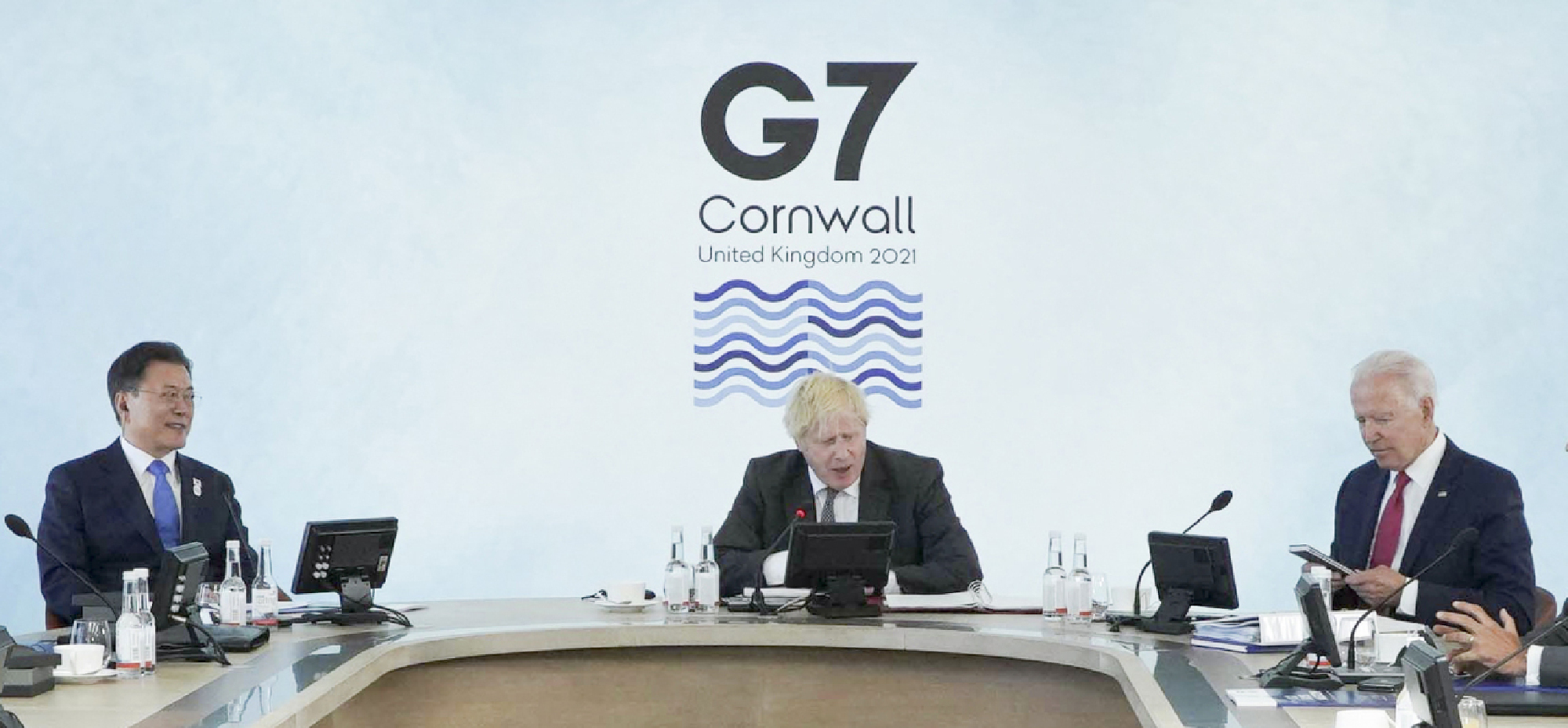
Delhi: Hundreds of people turned away as vaccines don’t arrive at Govt vaccination centres
Hundreds of prospective beneficiaries of Covid-19 vaccines were turned away from government-run vaccination centres governed by Central Delhi since the shots did not arrive there on Monday.
Scores of people thronged upon municipal corporation-run Hindu Rao Hospital in North Delhi and Delhi government’s Guru Nanak Eye Centre which is attached to Lok Nayak Hospital in Central Delhi, after either booking their slots on the Co-WIN portal or availing the walk-in immunisation option.
However, much to their dismay, they were asked to leave since the shots remained unavailable at both sites for the whole day.
50-year-old Vaibhav Sagar, who had come along with his 81-year old father from Najafgarh, said that it took him half a day of leave and much counselling to his hesitant father to reach the vaccination centre, only to realise that his efforts went to vain.
“I’m in sales. My job requires me to be on the field and sensing the exposure, I pestered my old father to come along since he is among the most vulnerable group,” said Vaibhav who works as a territory sales officer at a private firm while speaking to The Statesman.
“However, I regret going there. Business is anyway dwindling and my half a day leave affected it further. Apart from that, my father who was unwilling to go for inoculation and agreed after much counselling is now back to his scepticism,” he added.
Similar was the case of 48-year-old Premvati Narayan who took a day off today so that she can avail of vaccination. She regretted not going to a private vaccination centre.
“I have just joined a new company after sitting idle for months. I’m not in a position to take another leave or buy my shot at a private facility. That’s why I chose a government site. However, after their mismanagement, I think I should have gone to a private hospital. I don’t know If I would get leave for vaccination again,” Narayan said.
Beneficiaries include both from the categories of 18-44 years and 45+.
Officials told The Statesman that the paucity of vaccines forced the Central Delhi annexed centres to not conduct the vaccination drive. However, the vaccination will resume from Tuesday as the shots arrived by the end of the day.
“We have directed the District Immunisation Officer (DIO) in this regard,” a senior government official from Health & Family Welfare department said.
Meanwhile, Mayor of North MCD, Jai Prakash informed that he is aware of the situation and have communicated to the government as well. “It was very unfortunate that people were denied vaccines despite calling them in a probable exposure environment. The Delhi government must ensure such incidents are not repeated,” he said.
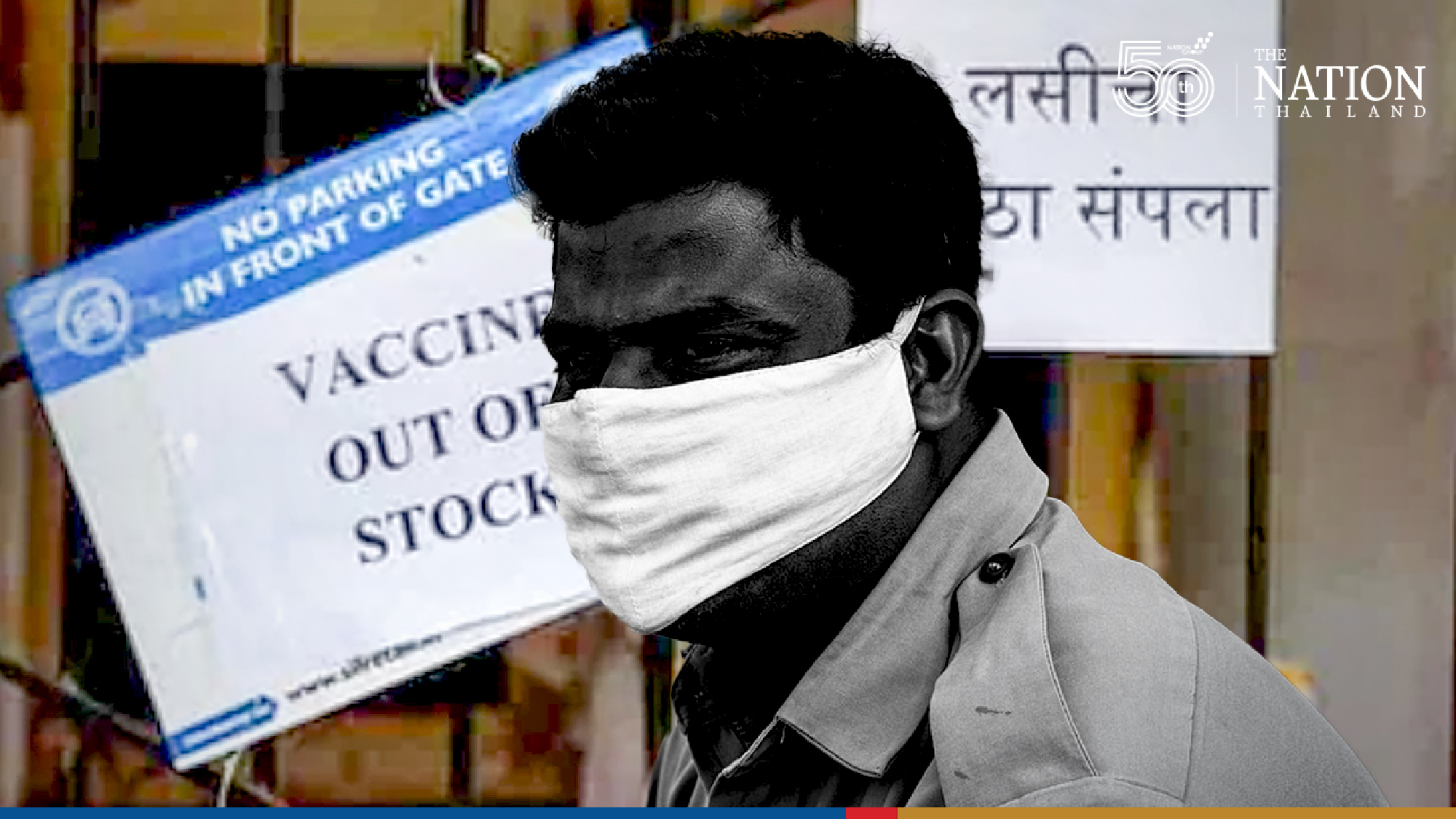
Panasonic set to recalibrate aging business structure
Electronics giant Panasonic is set to reform its business structure by replacing its president and implementing a large-scale organizational realignment. Panasonic plans to change its president for the first time in nine years in late June, and implement a major reorganization in April 2022 in line with its shift to a holding company structure. In this series, The Yomiuri Shimbun will take a closer look at the current situation of the struggling mega company.
■Restructuring plan
Since the beginning of this year, there have been heated debates at Panasonic over the drastic downsizing of its television business. Meetings attended by executives have seen contrasting statements such as “Televisions should be sold only in Japan” and “We need Europe to maintain our brand power.”
In reality, Panasonic’s Viera television line has been vulnerable to sales offensives by Chinese and South Korean manufacturers for years.
According to the British research firm Omdia, Panasonic’s global market share was 1.8% in 2020, a significant drop from 7.9% in 2010. The annual sales volume for the Viera line, which once peaked at more than 20 million units, has fallen to a quarter of that — about 5 million units — over the past 10 years.
“The value of making televisions, which cannot be a core business, is diminishing,” said Panasonic President Kazuhiro Tsuga, 64, who intended to push through a radical overhaul of the company’s former moneymaker.
Panasonic discussed such ideas as withdrawing from the production and sales of televisions in its main market, Europe, and continuing to sell TVs only in a limited number of markets, including Japan, where sales are strong.
A thorough restructuring plan was formulated by Tsuga’s executive assistant, who proposed closing “all production bases except for Malaysia.”
Immediately after Tsuga took office in 2012, he took a decisive action to withdraw from the plasma TV business, which had fallen into a sales slump due to the rise of LCD panels.
Tsuga proceeded to streamline operations while posting a final loss of more than ¥700 billion for the second year in a row, and stopped TV production and sales in North America and China.
■ Negative impact
Yet the details of the structural reform of its TV business announced on May 10 this year differed greatly from the initial plan.
According to the structural reform plan, the company will cease production at three factories in Tochigi Prefecture, India and Vietnam, but will retain four factories in the Czech Republic and other countries as television production bases.
The firm will outsource production to TCL of China, mainly for low-priced small and midsize televisions, while it will continue to produce high-end models in-house and continue to sell them in Europe, according to the plan.
The change of course comes with strong resistance from Appliances Company, an internal unit in charge of Panasonic’s consumer electronics business.
An Appliance executive claimed that the initially planned drastic reform would have a negative impact on sales of other consumer electronics, given that Panasonic’s image as a television manufacturer was firmly established.
Appliance pushed back on the initial plan after it brought Panasonic’s television business into the black in fiscal 2020 by reducing labor and other costs.
Televisions have been called the “king of home appliances.” However, Japanese-made televisions, which had been marketed as high-quality and high-performance, were losing ground in the price war with overseas competitors, and thus Japan’s electronics giants have decided to downsize or withdraw from the TV marketplace.
Hitachi Ltd. ended domestic production of televisions in 2012, and stopped selling Hitachi brand products in Japan in 2018. Toshiba Corp. sold its television business to a Chinese manufacturer in 2018.
Sony Group, for its part, has remained profitable since fiscal 2014 by focusing on the production and sales of high-priced models such as 4K televisions.
The reality is that Panasonic’s efforts are “one lap behind,” an analyst said.
The speed of the reform is reflected in the difference in business performance. Sony, which is focusing on music distribution and games, achieved record sales of ¥8.9 trillion in fiscal 2020. Meanwhile, Panasonic’s sales fell below ¥7 trillion for the first time in 25 years. Panasonic’s operating profit rate was only 3.9%, compared with Sony’s 10.8%.
It will be apparent soon whether the planned reforms are sufficiently effective.
■ Shift to holding company
Panasonic has already decided to sell off its semiconductor business, and withdraw from the production of LCD panels and solar batteries — which are what Tsuga labeled as “structurally deficit businesses.”
Panasonic has stopped losing money to some extent by carrying out the TV business reform. The transition to a holding company system is expected to be the finishing touch to its turnaround offensive.
The holding company system differs from the conventional in-house company system, in which a firm strictly requires firms under its umbrella to maintain profitability independently.
Businesses that cannot generate sufficient profits are forced to sell or withdraw from the business under the holding company system.
Tsuga will step down as president to become chairman without the right to represent the company as of June 24 in the new management lineup, leaving the task of reforming the firm in the hands of Yuki Kusumi, 56, who has served as head of the automotive business division.
“In the past, Panasonic has given extra consideration to each division, and has failed to concentrate on select businesses. The next president should have the courage to take unpopular positions,” said Takahito Osada, a specially appointed professor of business administration at the University of Marketing and Distribution Sciences.
Kusumi, together with Tsuga, led the withdrawal from the plasma television market, and has been downsizing unprofitable operations even in conflict with the firm’s clients.
Kusumi has said he likes the phrase coined by Panasonic founder Konosuke Matsushita, “It is a crime to run a deficit.”
At a press conference held after the firm decided to appoint him as president, Kusumi said, “A company also needs to make hardheaded and swift decisions to remove businesses that do not have strength.”
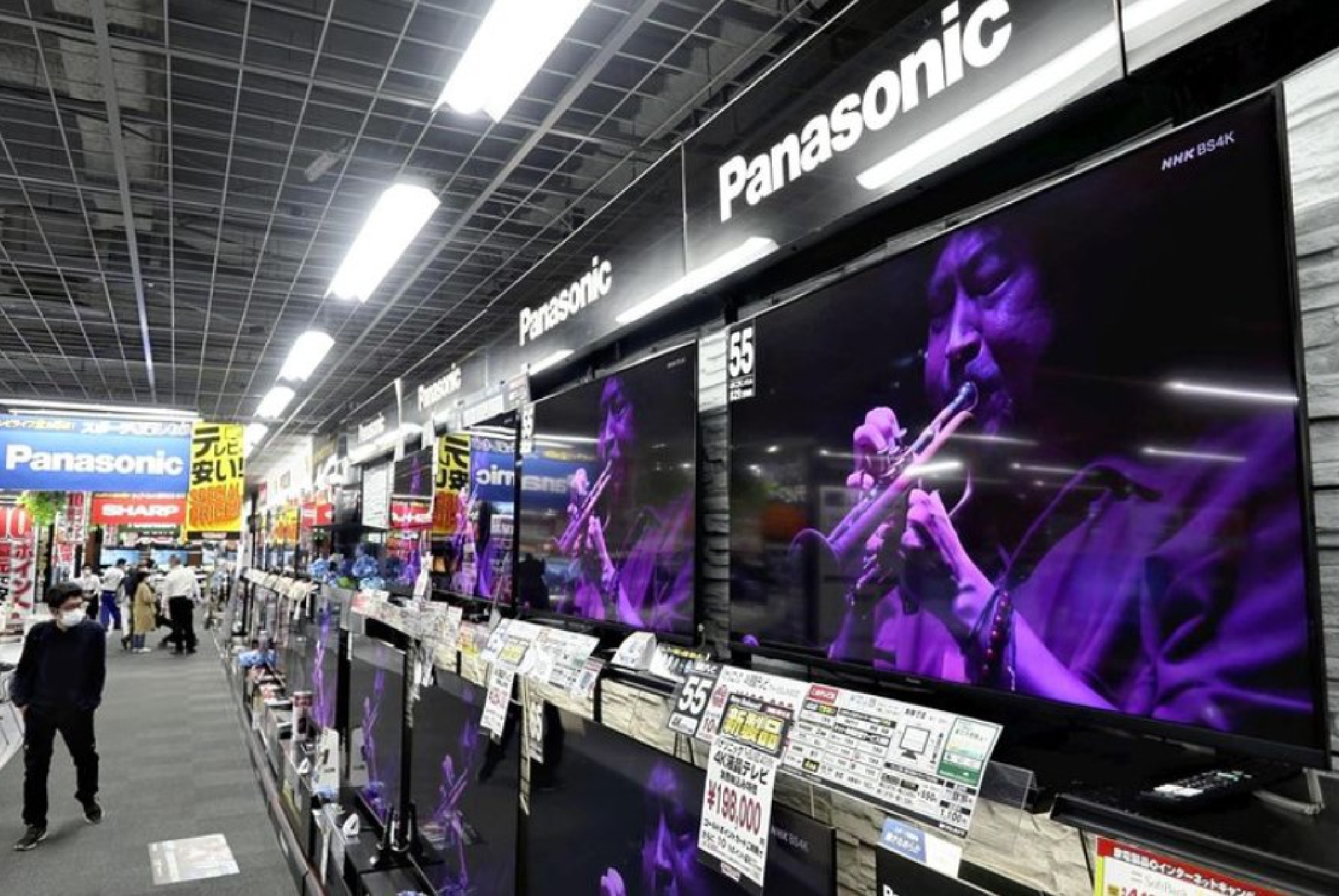
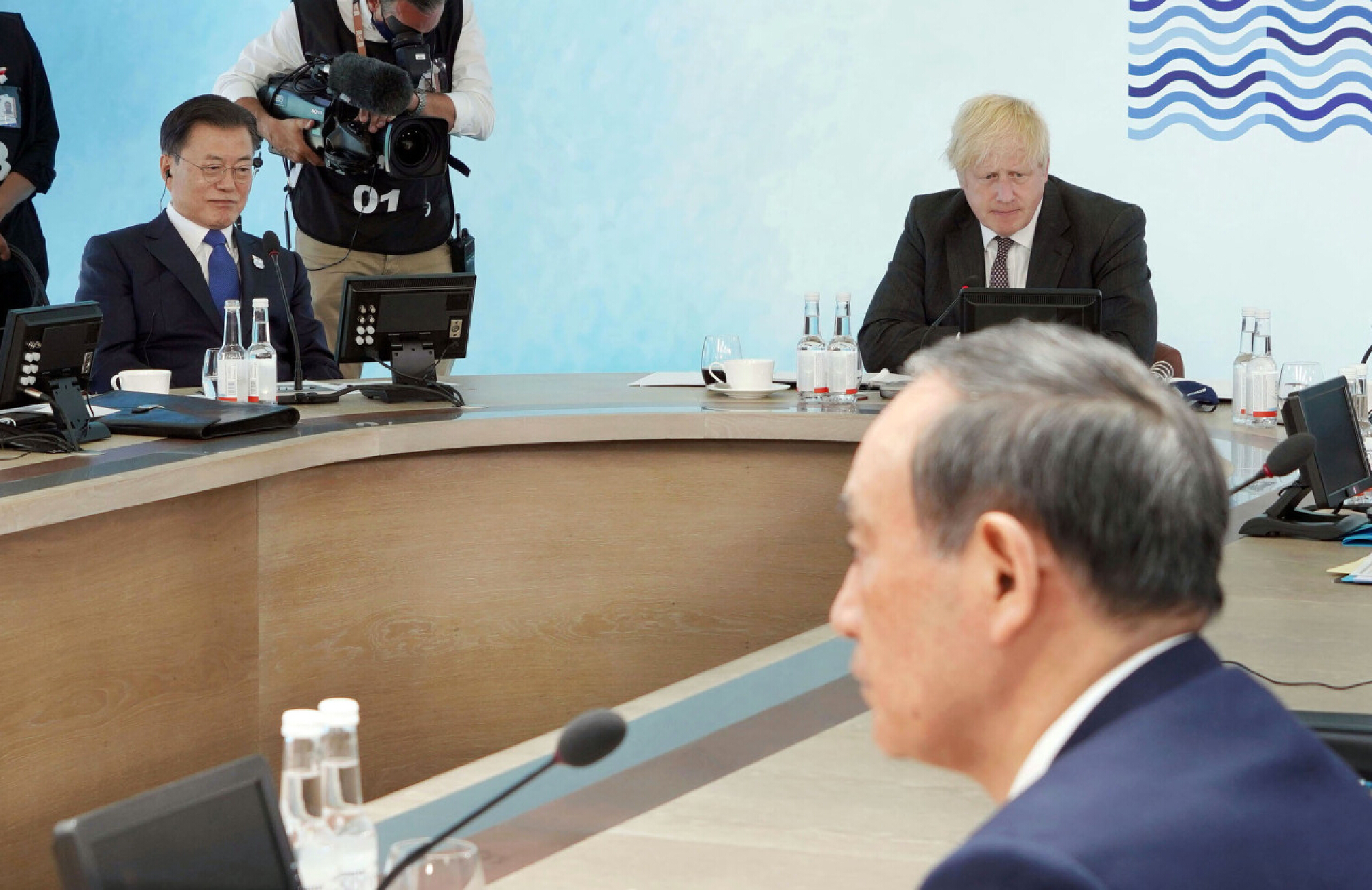
Japan unilaterally broke plan for Moon-Suga meeting at G-7
South Korean President Moon Jae-in and Japanese Prime Minister Yoshihide Suga had agreed to hold talks on the sidelines of the G-7 summit in England, but Japan unilaterally called the meeting off, citing the Dokdo issue, according to the Foreign Ministry on Monday.
The two countries had tentatively decided for Moon and Suga to have a pull-aside meeting on the fringes of the summit, which was held Friday through Sunday at Carbis Bay Hotel and Estate in Cornwall, southwestern England, according to a ministry official. South Korea was invited as a guest to this year’s Group of Seven wealthy democracies gathering, along with Australia, India and South Africa.
The official added that it was regrettable that Japan had not responded to the pull-aside plan, despite the fact that the two sides had agreed on it earlier at the working level. Japan called off the meeting to protest South Korea’s annual military drills on and around its easternmost islets of Dokdo in the East Sea, which are at the center of a decadeslong territorial dispute between the two countries.
The feud over Dokdo escalated recently after Japan identified the islets as part of Japan’s territory on the torch relay route map for the Tokyo Olympics, drawing heavy backlash from Seoul. South Korea has been in effective control of the islets since 1954, but Japan — which calls the islets Takeshima — insists they are Japanese territory.
South Korea plans to stage the annual drill this week. This could irk Tokyo further and strain bilateral relations, which are already at their lowest point in decades over economic and wartime history disputes.
Seoul has been seeking to defuse diplomatic tensions with Tokyo, which are rooted in Japan’s 1910-45 colonial rule of the Korean Peninsula and have morphed into an ongoing economic feud. This comes as the Biden administration pushes for tighter trilateral cooperation with its two Northeast Asian allies in the face of an assertive China and a defiant North Korea.
Moon has expressed willingness to meet Suga, and many observers saw the G-7 summit as a suitable occasion for the two leaders to meet at last. The two have not met in person since Suga assumed leadership last September, reflecting strained bilateral relations.
During the three-day summit, Moon and Suga “exchanged greetings” just before the start of an expanded session of the summit, according to Cheong Wa Dae. Moon and first lady Kim Jung-sook also talked for about a minute with their Japanese counterparts, Suga and his wife, Mariko Suga, at a reception hosted by UK Prime Minister Boris Johnson. These short encounters were about it, with no official meeting or trilateral session with US President Joe Biden.
The two leaders also showed stark contrast in their reactions to the unfulfilled promise of talks.
Moon said on social media that his first face-to-face encounter with Suga had been a “precious occasion” that could serve as a new start for relations between South Korea and Japan. But he also said it was a shame that their exchange had not led to a follow-up meeting.
On the other hand, Suga was firm that no meeting with Moon would happen until the outstanding issues between the two countries were settled. According to Japanese media outlets, Suga stressed that South Korea needs to take steps to improve soured bilateral relations, adding that the dispute over compensation for victims of wartime forced labor and sexual slavery had not been resolved.
In regards to his moment with Moon, Suga said Moon had approached him at the venue and he had reciprocated as a diplomatic courtesy.
Covid-19 cases in Jakarta surged 50% in past week amid rise in Delta variant
JAKARTA – Jakarta governor Anies Baswedan has warned that the Indonesian capital may return to a strict restriction regime as coronavirus cases surged 50 per cent in the past week amid a rise of infections of the Delta variant.
Active cases in Jakarta rose to 17,400 cases on Sunday (June 13) from 11,500 on June 6.
“The capital is in a state that needs extra attention. If the current situation gets out of hand, we would enter an emergency phase, and if that happened, we would have to take drastic steps like we did in September and February. We do not want that to recur,” Mr Anies said in a statement on Monday morning.
The Delta variant, first detected in India, has started to dominate cases in Indonesian cities, with Health Minister Budi Gunadi Sadikin confirming that Covid-19 cases in Jakarta, Kudus (Central Java province), and Bangkalan (East Java province) are dominated by the Delta variant, based on genome sequencing tests.
Bed occupancy rate for isolation wards in Jakarta reserved to treat Covid-19 patients also increased to 75 per cent on Sunday, from 45 per cent a week ago.
One out of four Covid-19 patients in Jakarta, however comes from outside the city, mostly the surrounding satellite towns.
Mr Anies urged residents to strictly comply with health protocols in order to avoid another round of strict social distancing restrictions.
Currently, dining in eateries is allowed with limited capacity, and non-essential staff are partially required to work from home.
The governor also stressed that the positivity rate in Jakarta increased to 17 per cent on Sunday, from 9 per cent the previous week.
The positivity rate indicates the percentage of positive Covid-19 cases detected out of the total tests conducted.
The threshold set by the World Health Organisation (WHO) for adequate testing is a 5 per cent positivity rate.
Mr Anies pointed out that the testing rate in Jakarta rose to eight times what the World Health Organisation recommended, from four times in the previous week.
He ordered all his personnel on Sunday night to take stricter measures and to step up enforcement of the health protocols on individuals as well as in places.
To ensure that residents comply with the strict health protocols, President Joko Widodo on Monday decided to beef up the deployment of military and police officers across 7,000 sub-regencies in the country.
Indonesia’s 34 provinces are made up of more than 500 regencies and cities, which in turn consist of 7,000 sub-regencies.
Mr Widodo also decided to speed up daily vaccination rate from the current 500,000 doses a day to 700,000 later this month and then one million next month.
ADVERTISEMENT
People living in Covid-19 red zones – places with hospital bed occupancy ratio exceeding 60 per cent – will get priority in vaccination, said Mr Budi, following a meeting with the president. In addition, places of worship in the Covid-19 red zones will be closed for the next two weeks.
Duterte extends suspension of VFA termination anew
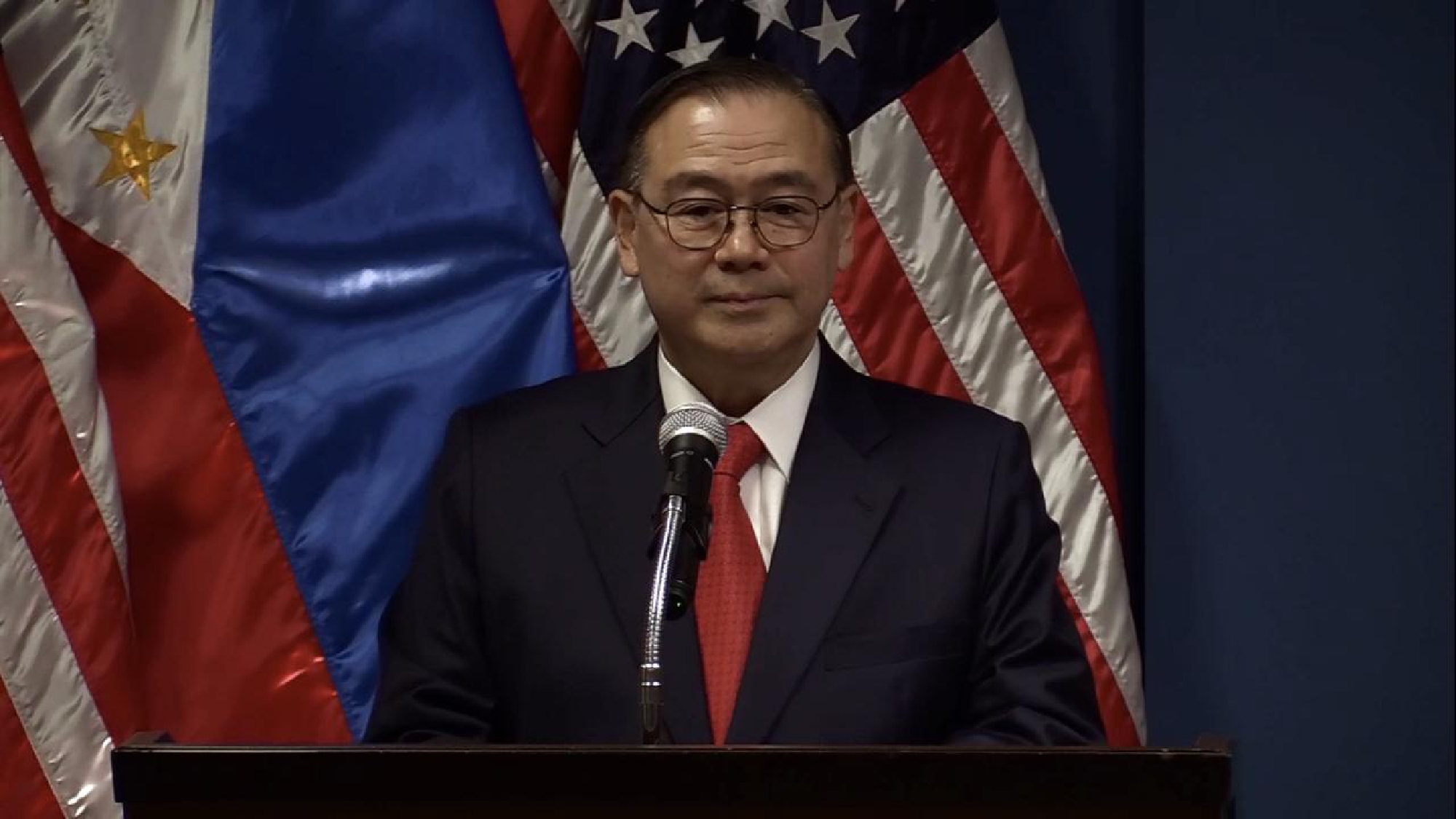
MANILA, Philippines — President Rodrigo Duterte has extended the suspension of the termination of the Visiting Forces Agreement (VFA) between the Philippines and the United States for another six months, Foreign Affairs Secretary Teodoro Locsin Jr. announced on Monday.
“The president conveyed to us his decision to extend the suspension of the abrogation of the VFA by another six months while he studies and both sides further address his concerns regarding particular aspects of the agreement,” Locsin said in a video message posted by the Department of Foreign Affairs (DFA).
The foreign affairs chief made the announcement after emerging from a meeting with Duterte and Philippine Ambassador to the United States Jose Romualdez.
Officials from the Philippines and the US began discussions to iron out the two countries’ differences over the VFA last February. Romualdez earlier expressed hopes that the President will back the continuation of the defense pact.
The VFA, which took effect in 1999, provides a mechanism for visiting American soldiers and serves as the foundation for military exercises and humanitarian work.
Duterte pulled out from the VFA in February last year. The process of the VFA termination, however, has been held off twice, first in June 2020 and a second time in November 2020.
India to require 400k charging stations for 2 mn EVs by 2026: Report
India needs about 400,000 charging stations to meet the requirement for two million Electric Vehicles (EV) that could potentially ply on its roads by 2026, said a report on Saturday.
The Grant Thornton Bharat-Ficci report said for India to reach its vision of 100 per cent EVs by 2030, factors such as increasing government support, decreasing cost of technology, and distressing pollution levels, would be key to accelerate this transition.
As per EV industry body – Society of Manufacturers of Electric Vehicles – there are 1,800 charging stations in India as of March 2021 for approximately 16,200 electric cars, including the fleet segment.
“Overall, the EV infrastructure is tightly coupled with the EV and charging station characteristics, battery technologies, and electricity markets,” the report said.
“More than half of the stakeholders, as part of a survey in the report, have also recommended involvement of discoms in Electric Vehicle Supply Equipment (EVSE) deployment and classification of EV charging infrastructure as corporate social responsibility.”
Besides, the survey suggested design simplifications, partnership during transition, and optimisation of urban mobility as effective cost reduction levers for bringing down EV costs in India.
“Global manufacturers have spent millions to improve the availability and efficacy of EV chargers, and as a result the fastest ones today take no more than 15 minutes to recharge a vehicle.”
“The global sales of EVs in 2020 increased by 39 per cent y-o-y to 3.1 million units, whereas the total passenger car market declined 14 per cent.”
In addition, the report mentioned about the impact of the pandemic on emergence of a new consumer who is eager to be healthy, breathe clean air and build a better, more resilient world for the next generation.
“The year 2020 has presented a great responsibility and opportunity to fast track the development of electrification and electric vehicles (EV) by utilising the strengths available globally through a collaborative and integrated effort,” said Saket Mehra, Partner, Grant Thornton.
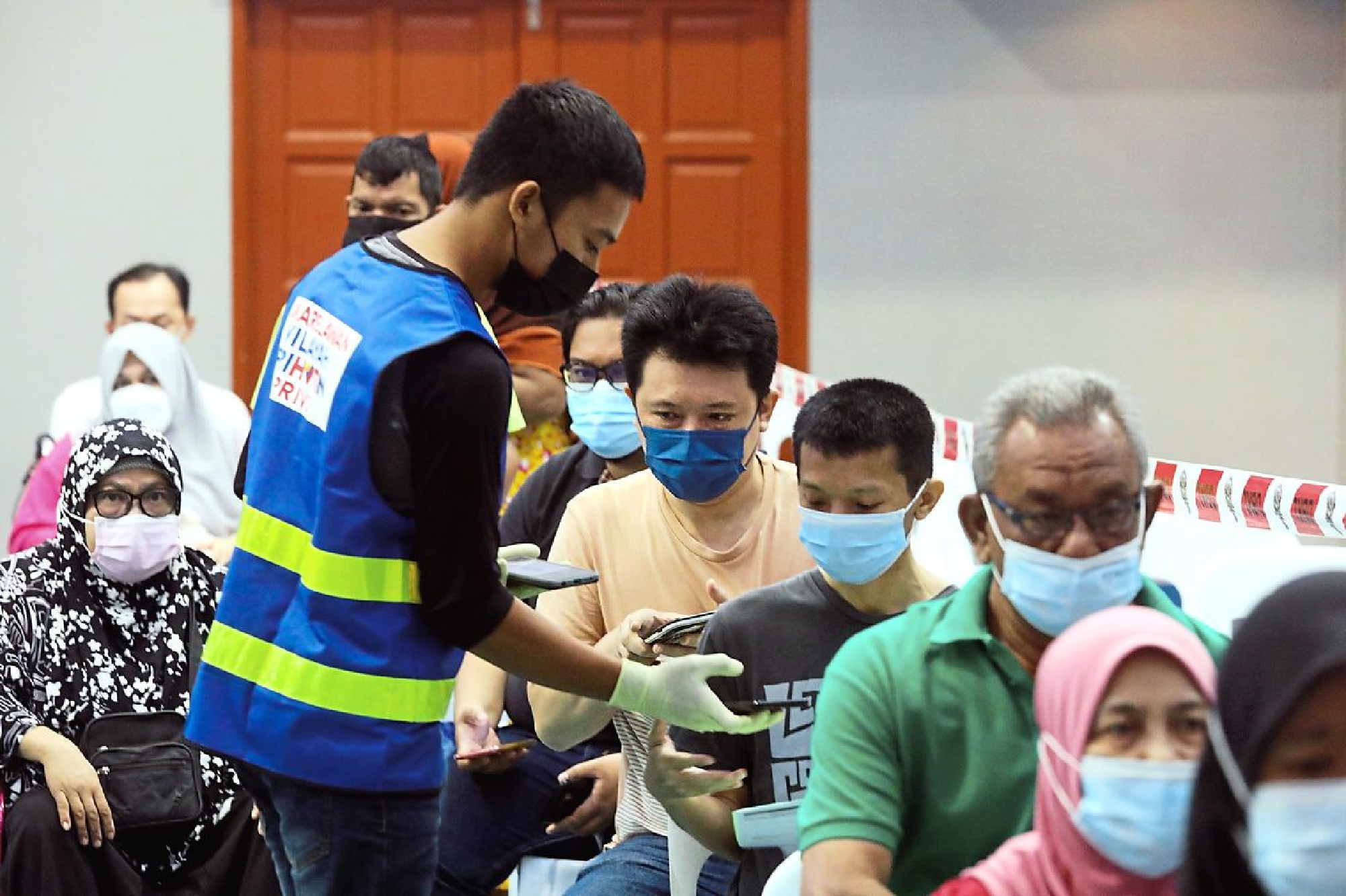
PETALING JAYA: The authorities will ensure that employers do not make workers absorb the vaccination costs under the Program Imunisasi Industri Covid-19 Kerjasama Awam-Swasta (Pikas), says Senior Minister Datuk Seri Azmin Ali.
He said the Pikas offer to essential industries comes with strict guidelines to employers that all costs must be borne by employers and must not in any way be passed on to their workers.
“The announcement of Pikas comes with a stern warning to employers. Not only are they not allowed to transfer the costs to employees because government policy is free to all, employers also must complete the whole cycle – two doses to every employee.
“In fact this has been agreed by the industry associations.
“They have agreed to absorb the administrative costs to ensure a smooth running of the vaccination plan for their employees,” said Azmin, who is International Trade and Industry Minister, when contacted.
He said he would be visiting the three states – Selangor, Johor and Penang – involved in Pikas when the pilot phase takes off on Wednesday.
He also pointed out that the Pikas offer was at RM90 per worker.
On Saturay, the International Trade and Industry Ministry (Miti) stated that Pikas, which involves voluntary immunisation for employees in the manufacturing sector, would be launched as Phase Four of the National Covid-19 Immunisation Programme.
Companies taking part can get their staff vaccinated at selected vaccination centres or choose on-site vaccination at designated factories and industrial locations.
Miti said companies in critical manufacturing sub-sectors including electrical and electronics, food processing, iron and steel, medical devices, personal protective equipment (PPE), oil and gas and rubber products, including medical glove manufacturing sub-sectors, would be prioritised.
It said it would be coordinating the immunisation for employees in the manufacturing sector while other ministries would be responsible for vaccination of employees in their respective sectors.
To date, Miti said 500 companies with a total of 106,591 workers had applied to take part in Pikas.
Federation of Malaysian Manufacturers president Tan Sri Soh Thian Lai said Pikas stemmed from suggestions from employers who wanted to speed up vaccination of the 2.4 million workers in the manufacturing sector.
“We hope with the vaccination of workers, the capacity of workers working on-site can be increased from the current 60%.
“We also ask that Pikas be offered to non-essential industries as soon as possible so that they too can operate as they form part of the chain for essential industries,” he said.
Industries Unite (IU), a coalition of SMEs and small businesses, said that it was timely for a mass vaccination of workers.
IU group coordinator Datuk Irwin Cheong said they hoped the government could further reduce the costs, as it could take a toll on small businesses.
“This is something we have been pushing for. We are grateful our request has been viewed favourably by the government,” said Chong.
[Myanmar] 109 bomb, 65 arson and 168 other attacks since schools reopened: SAC
According to State Administration Council spokesperson Brig-Gen Zaw Min Tun at a press conference on June 12, there have been a total of 109 bomb blasts, 65 arson and 168 other hinderances were committed since schools reopened.
He claims that as of June 10, 88 percent of a total of 42080 scools have reopened with 3216960 that came to school.
“The NLD and its supporting terrorists carried out a total of 109 mine and bomb attacks, 65 arson attacks and 168 other general hinderances,” said Zaw Min Tun.
There are over 25000 primary schools, 15000 middle schools and over 6100 highschools that had reopened.
Brig-Gen Zaw Min Tun claims that “The decision to go to school is for parents and students to decide. The acts of violence are hindering their rights. Terrorists are asking young children to put on their uniform to attack the school.”
In Rakhine State, the Brig-Gen says that there were 96 percent with 82 percent attendance rate.
Moon pledges $200 million to tackle global COVID-19 vaccine shortage
SEOUL/CORNWALL, England — South Korea will provide $200 million in aid through next year to ensure equitable access to COVID-19 vaccines in lower-income countries, President Moon Jae-in said Saturday.
During a plenary session on health during a Group of Seven summit, Moon vowed to offer $100 million in grants this year, according to a statement from the presidential office.
Another $100 million will be provided next year through the COVAX Advance Market Commitment, a financing framework established to make COVID-19 vaccines affordable in more than 90 developing countries.
The remarks were made during Moon’s visit to Britain for this year’s G-7 summit, which started Friday. Moon was invited to attend the summit as a guest alongside his counterparts from Australia, India and South Africa.
Moon attended the plenary session with other guests, joining the G-7 leaders as well as chiefs of the World Health Organization, the World Trade Organization, the International Monetary Fund and the World Bank.
The presidential office said the commitment would spur Korea’s role as a global vaccine hub while it seeks partnerships with the G-7 nations.
Participants, including Moon, also discussed ways to cooperate on global public health governance and ways to increase support for equitable medical access for all nations to prepare for future public health threats, Moon’s office added.
During his visit Moon also met with Pascal Soriot, executive director and CEO of the Britain-based AstraZeneca, to reaffirm the importance of continued cooperation in the global production and supplying of COVID-19 vaccines.
In the 27-minute meeting, Moon pledged to actively cooperate with the international community to ensure that enough COVID-19 vaccines are provided globally, according to the presidential office.
Cheong Wae Dae said Moon thanked Soriot for his company’s active role in the COVID-19 situation, saying its vaccine was an important part of Korea’s vaccination campaign, which kicked off in February. Korea aims to complete the vaccination of 14 million people by the end of this month.
“AstraZeneca’s vaccine is unique for us in that it was the first (COVID-19) vaccine inoculated in South Korea and is the most used vaccine,” Moon was quoted as saying.
“Koreans could receive the vaccine with relief as it was produced locally with SK’s technology transfer. This has also played an important first step for Korea to become a global vaccine production hub.”
More than 60 percent of those who have received their first jabs here got the vaccine developed by the British pharmaceutical firm.
As of Saturday’s end, close to 8 million people in Korea had gotten their first COVID-19 shots from AstraZeneca and 3.26 million had gotten shots from Pfizer. SK Group subsidiary SK Bioscience produces AstraZeneca’s vaccine domestically through a contract manufacturing deal.
Moon also asked Soriot to provide continued support so as to ensure a steady supply of its vaccines for the latter half of the year, Moon’s office said.
The AstraZeneca CEO also expressed appreciation for Korea’s role in the COVAX program, as vaccines produced in the country have been provided to 75 nations within the coalition, the office added.
Embassy says days when G7 dictates to the world are over
Chinas embassy in the United Kingdom said that international decisions can no longer be dictated by a small cadre of global elites, after leaders at the meeting of the G7 group of wealthy nations, which concluded on Sunday, unveiled a new infrastructure plan intended to compete with Chinas cross-border development plan the Belt and Road Initiative.
The embassy made its remarks on Saturday, ahead of the conclusion of the G7 Summit taking place in Cornwall in the UK, attended by leaders from the UK, Canada, France, Germany, Italy, Japan, and the United States. The infrastructure plan, which is called Build Back Better World, or B3W, is being spearheaded by US President Joe Biden, who identified the summit as an opportunity to “discuss strategic competition with China”, according to a White House statement.
“The days when global decisions were dictated by a small group of countries are long gone,” a spokesman from the Chinese Embassy in the UK said. “We always believe that countries, big or small, strong or weak, poor or rich, are equals, and that world affairs should be handled through consultation by all countries.”
The embassy criticized the clique-based politics of the Western countries, saying that there should be “only one system and one order in the world, that is, the international system with the United Nations at the core and the international order based on international law, not the so-called system and order advocated by a handful of countries”.
The White House said the B3W plan will “help narrow the $40 trillion infrastructure need in the developing world”.
But few details have been provided as to how the plan will be implemented and no investment figures were given either.
A senior official in Biden’s administration said that the plan is “not just about confronting or taking on China”.
Christopher Bovis, a professor of international business law at Hull University, said that the B3W is a strategic play to increase the influence of the G7 on the international stage and compete with the Belt and Road Initiative, which has gathered pace since it was introduced in 2013 with over 130 countries now formally affiliated.
“The intention of G7 economies to offer developing nations an infrastructure plan, referred to as the B3W initiative, is certainly seen as an attempt to counter China’s growing influence and success of the Belt and Road Initiative,” Bovis told China Daily.
“Furthermore, the B3W, if implemented, is expected to act as a conveyor belt of Western values, standards and the way of doing business, an outcome which will likely be seen as a post-colonial attempt to integrate economically developing economies,” Bovis said.
Bovis questioned if the G7 was the suitable group to spearhead such an initiative.
Paul Rogers, a professor of peace studies at Bradford University in the UK, suggested that the G7 may in fact have become outmoded in an increasingly interconnected world with a growing list of shared threats.
“While the G7 is an important meeting, the G20 is far more significant, because it is more representative of the global community,” Rogers told China Daily.



![[Myanmar] 109 bomb, 65 arson and 168 other attacks since schools reopened: SAC](https://media.nationthailand.com/uploads/images/md/2021/06/uSvpWzurlJqxRFQOA6d6.jpg?x-image-process=style/lg)