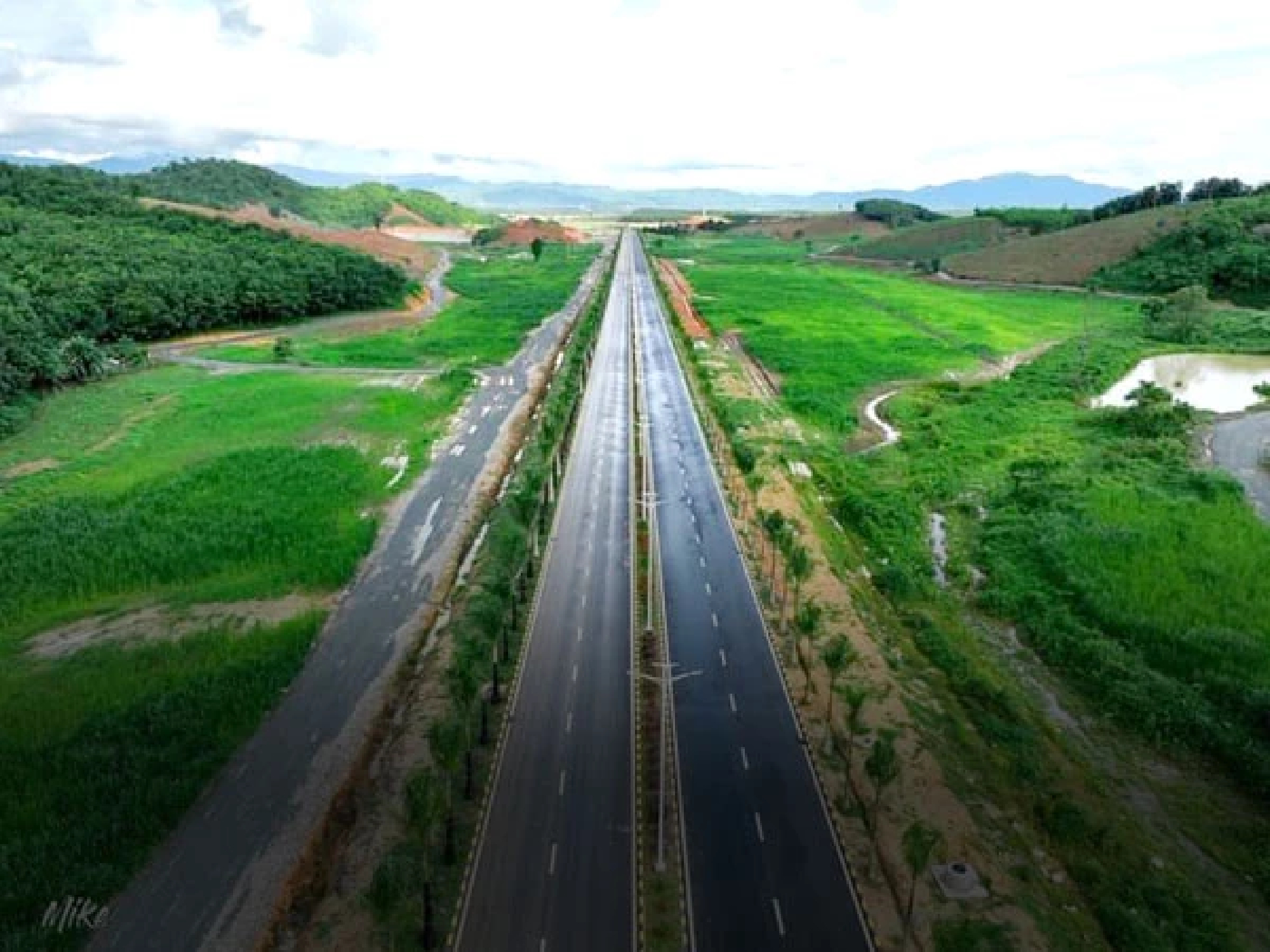
Laos has constructed a 5-kilometre four-lane road to connect the Golden Triangle Special Economic Zone to Bokeo International Airport, making access to the zone much easier. The road is now open to the public, according to the Golden Triangle Special Economic Zone.
The construction cost of over US$50 million and was funded by the Dok Ngiew Kham Group.
The road is now the main thoroughfare connecting the provincial capital to the airport.
As well as providing a fast and convenient connection to the airport, the road will facilitate operations in the economic zone, in terms of investment, business and infrastructure, as well as the overall development of the Golden Triangle Special Economic Zone.
The road has streetlights down the centre, while the planting of trees and shrubs will make it one of the most attractive roads in the Golden Triangle Special Economic Zone.
Meanwhile, construction of an additional international airport in Bokeo’s Tonpheung district is now 75 per cent complete, with the facility expected to open for domestic use by the end of this year and for international travel soon afterwards.
The new airport open is situated 5 kilometres from the Golden Triangle Special Economic Zone and its upgrade to an international facility is set to bolster economic development in Bokeo province.
The new airport is being built to handle an anticipated surge in the number of tourists visiting the area, especially people travelling to the Golden Triangle Special Economic Zone, which features hotels and casino attractions.
The new airport is located close to the Golden Triangle Special Economic Zone and covers 300 hectares. It will be the second airport in Bokeo province, in addition to the existing airport located in Huayxai district, the provincial capital.
This airport is being enlarged to meet the growing demand for air travel in the region.
Vientiane Times
Asia News Network
Asia News Network: The Nation (Thailand), The Korea Herald, The Straits Times (Singapore), China Daily, Jakarta Post, The Star and Sin Chew Daily (Malaysia), The Statesman (India), Philippine Daily Inquirer, Yomiuri Shimbun and The Japan News, Gogo Mongolia, Dawn (Pakistan), The Island (Sri Lanka), Kuensel (Bhutan), Kathmandu Post (Nepal), Daily Star (Bangladesh), Eleven Media (Myanmar), The Phnom Penh Post and Rasmei Kampuchea (Cambodia), The Borneo Bulletin (Brunei), Vietnam News, and Vientiane Times (Laos).
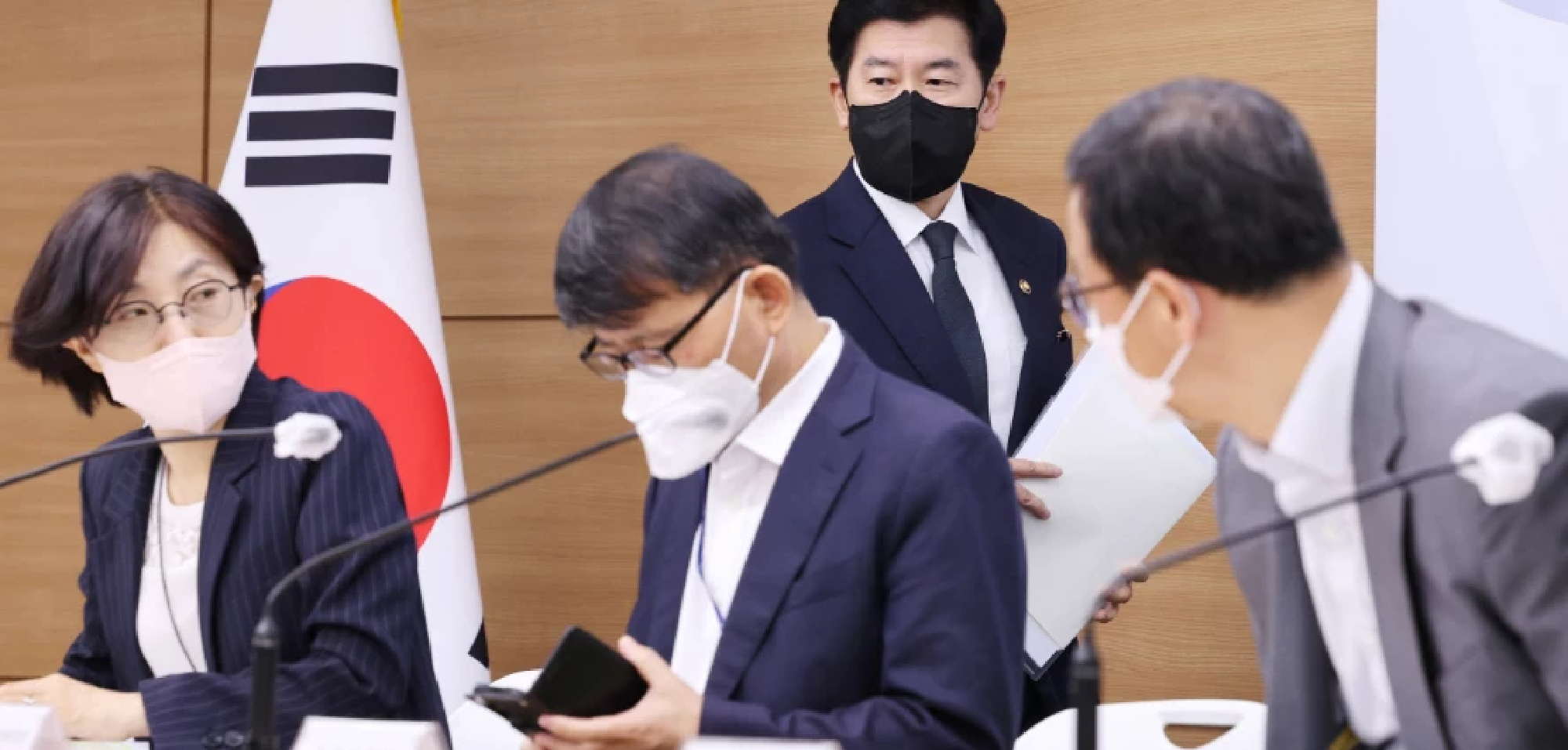
South Korea will redirect 3.6 trillion won (US$2.8 billion/100.8 billion baht) from its budget for childhood education to higher and lifelong education, such as nurturing semiconductor talent, the government said on Thursday.
The revamped education plans were put forward “in consideration of the changing education environment”.
The extra budget will be used to strengthen research and training at universities, offer lifelong education and support universities outside of Seoul, the Education Ministry said, adding that nurturing future talent for the semiconductor industry is one of the main tasks of the reform.
South Korea has been rushing to step up efforts to nurture next-generation talent for the semiconductor industry after President Yoon Suk-yeol called for special measures to boost the industry last month.
The 3.6 trillion won that is to be redistributed for nurturing semiconductor experts is part of a 68.9 trillion won budget for early childhood, elementary and secondary education. Another 12.2 trillion won has been designated for higher and lifelong education in 2022.
“The level of investment for higher education is relatively low compared to the OECD average,” an official from the ministry said. “We should put much more resources into higher education to strengthen the nation’s competitiveness.”
The reallocated funds will also be used “to ease the limit on the university student quota for departments related to high-tech fields” in response to Yoon’s earlier remarks that the quota made it difficult for institutions to train a sufficient number of graduates in the semiconductor industry.
It also promised to support universities to nurture talents to meet the demand of industries and the community.
The ministry added that while the budget for local education has increased by almost four times over the past 20 years, the school-age population (6-17) has decreased by 34 per cent, resulting in an imbalance between the support for early childhood, elementary, secondary education and higher, lifelong education.
The Korea Federation of Teachers Association also issued a statement criticising the decision.
“To reallocate the subsidy without explanation on why the budget for education should decrease when the number of students goes down is to give up on the improvement of the early education environment,” the statement read.
“We cannot ensure the health and safety of children from infectious diseases, let alone provide them with individualised education targeted at each one’s need or guarantee a certain level of basic scholastic ability.”
The Korea Herald
Asia News Network
Asia News Network: The Nation (Thailand), The Korea Herald, The Straits Times (Singapore), China Daily, Jakarta Post, The Star and Sin Chew Daily (Malaysia), The Statesman (India), Philippine Daily Inquirer, Yomiuri Shimbun and The Japan News, Gogo Mongolia, Dawn (Pakistan), The Island (Sri Lanka), Kuensel (Bhutan), Kathmandu Post (Nepal), Daily Star (Bangladesh), Eleven Media (Myanmar), The Phnom Penh Post and Rasmei Kampuchea (Cambodia), The Borneo Bulletin (Brunei), Vietnam News, and Vientiane Times (Laos).
Information sharing on medicine by social media influencers is unwittingly leading Malaysians to hoard medications, and worsening the medicine shortage, pharmacists say.
Apharmacist in Hulu Kelang who wishes to remain anonymous said viral videos on social media had caused an increase in demand for certain brands of paracetamol.
“Before this, some brands were selling slow, but when influencers promoted certain brands on TikTok, it was sold out,” she said.
All Day Pharmacy’s Leow Fui Woon shared the same concern, adding that some buyers would insist on buying a particular brand as promoted by these influencers.
“Some customers blindly follow and ask for a certain type of medicine that these influencers claim can treat Covid-19.
“They buy just to keep, some even panic buy. When asked for whom the medicines are for and how young the patient is, they said they’re only buying to stock up,” she said, adding that the market has enough supplies of cough syrup, as long as customers don’t insist on a particular brand.
The buyers, Leow added, also refused to listen to pharmacists’ explanations and insisted on following the influencers’ recommendations.
“The power of influencers is unimaginable … sometimes it is hard for us to even explain to buyers about the medications because they only listen to the influencers.
“Medicine can only help to ease the symptoms, so customers shouldn’t have the wrong mindset, be rational and understand the uses of the medicine instead of following the influencers’ recommendations blindly,” she said.
She added that medicine for flu-like symptoms, especially of certain brands such as Difflam and Panadol, have been on low supply since January.
Leow said that recent increase in cases of Covid-19, HFMD and influenza has also caused demand for medicine to increase, adding that supplies are slowly coming back.
“Supplies are slowly improving in many pharmacies nationwide, but the amount is still not as many as before.
“If Covid-19 lingers, it is possible for the shortage to last longer, especially if there are no policies or measures to ease the shortage, and improve the availability of raw materials and logistics,” she said.
The Star
Asia News Network
Asia News Network: The Nation (Thailand), The Korea Herald, The Straits Times (Singapore), China Daily, Jakarta Post, The Star and Sin Chew Daily (Malaysia), The Statesman (India), Philippine Daily Inquirer, Yomiuri Shimbun and The Japan News, Gogo Mongolia, Dawn (Pakistan), The Island (Sri Lanka), Kuensel (Bhutan), Kathmandu Post (Nepal), Daily Star (Bangladesh), Eleven Media (Myanmar), The Phnom Penh Post and Rasmei Kampuchea (Cambodia), The Borneo Bulletin (Brunei), Vietnam News, and Vientiane Times (Laos).
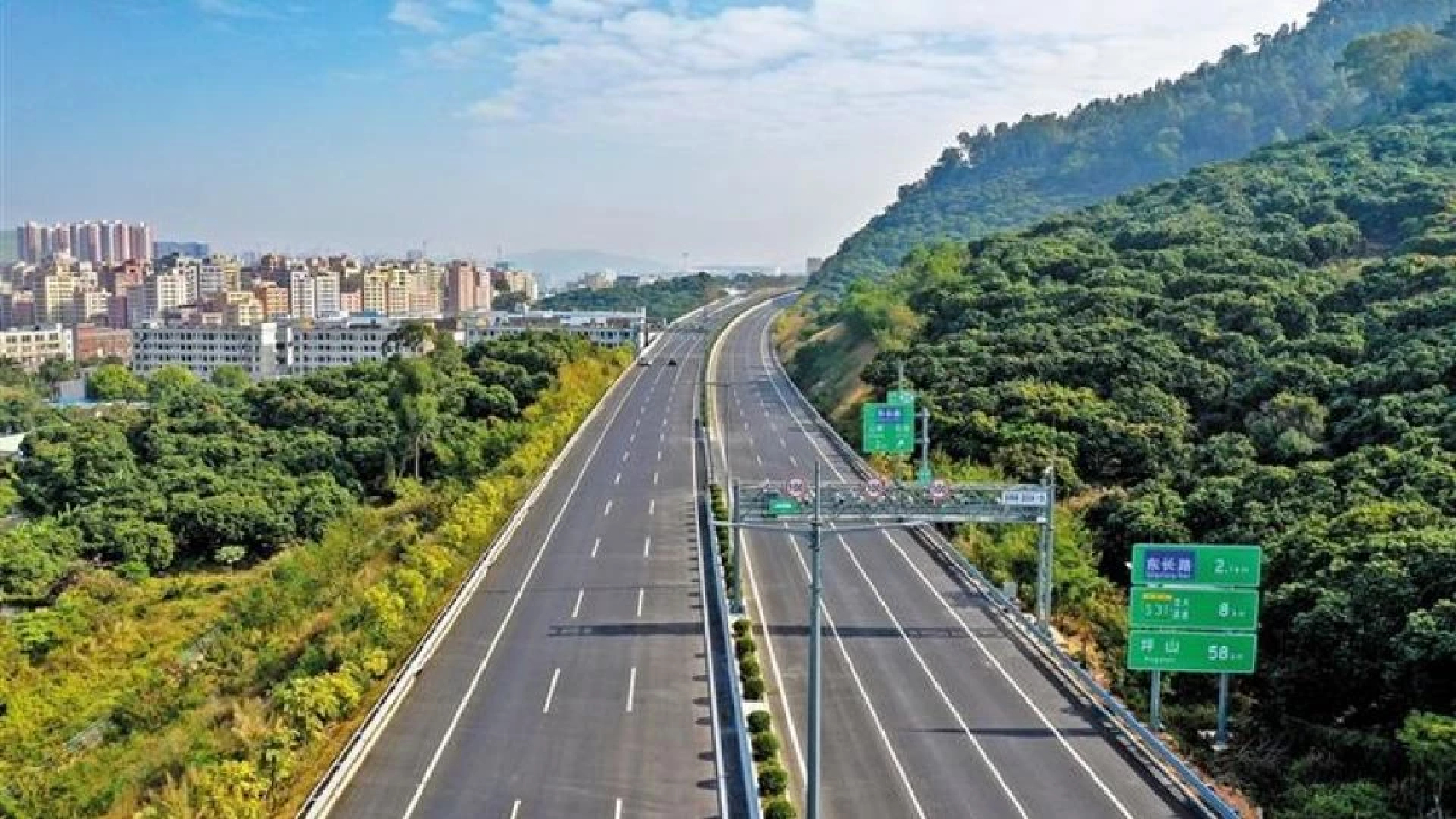
Shenzhen, a city that pioneered reform and opening-up in China, will allow fully autonomous vehicles to run on certain roads, as the city in Guangdong province unveiled the nation’s first regulation tailored for smart and internet-connected vehicles.
The new regulation, scheduled to come into force on Aug 1, also clarified rules for liability in car accidents that involve autonomous driving, helping to fill the legal gap in China’s smart car industry.
Shenzhen is giving self-driving cars a legal “identity card”, a key move in accelerating the commercialization of autonomous vehicles, experts said, adding that more legal measures and more testing experience are needed before widening such trials.
The new regulation said automakers don’t necessarily have to equip fully autonomous vehicles with human driving modes and equipment, nor must they have human drivers.
But such fully automated vehicles can only run on certain roads and sections designated by Shenzhen’s traffic management department, according to the regulation, which was published on the official website of Shenzhen Municipal People’s Congress on Tuesday.
Gu Dasong, executive director of the transportation and development research center at Southeast University, said the regulation did not specify what human driving modes and equipment are required. “But traditionally, such equipment could include steering wheels, accelerators and brake pedals used by human drivers.”
Removing steering wheels is one of the ultimate goals of autonomous driving, but it differs significantly from traditional car designs and it remains to be seen how will Shenzhen specify local standards, Gu said.
The US National Highway Traffic Safety Administration issued rules in March eliminating the requirement that automated vehicle manufacturers equip fully autonomous vehicles with manual driving controls such as steering wheels, Reuters reported.
Chang Zhenting, secretary-general of the Autonomous Driving Industry Alliance for the Guangdong-Hong Kong-Macao Greater Bay Area, said by including self-driving cars in legislation, Shenzhen is pioneering legal efforts in China to accelerate the commercialization of autonomous vehicles, while ensuring public safety.
Shenzhen is improving its legal framework for the research and development, production, purchasing and sale of autonomous vehicles, Chang said, adding that better vehicle-road coordination and more testing experience are needed before expanding this to other areas.
The new regulation classified autonomous vehicles into three types: conditionally autonomous driving, highly autonomous driving and fully autonomous driving.
The former two types of vehicles must have human control equipment and drivers, the regulation added.
China Daily
Asia News Network
The regulation also clarified rules for liability in car accidents that involve autonomous driving. For autonomous driving vehicles with a driver, the driver is held responsible for accidents and compensation.
For fully autonomous vehicles without a driver, the owner or the user of the vehicle is held responsible for accidents and compensation.
In a traffic accident, if the damage is caused by the defects of a vehicle, the driver, the owner or the user of the vehicle, after paying for the bill, can request compensation from the manufacturer or seller of the car in accordance with laws, the regulation said.
Yu Qian, CEO and founder of QCraft, a Chinese self-driving startup, said, “China’s autonomous driving industry is entering a golden development period, with policies becoming increasingly clear and open, and technologies and algorithms becoming more powerful.”
China Daily
Asia News Network
Asia News Network: The Nation (Thailand), The Korea Herald, The Straits Times (Singapore), China Daily, Jakarta Post, The Star and Sin Chew Daily (Malaysia), The Statesman (India), Philippine Daily Inquirer, Yomiuri Shimbun and The Japan News, Gogo Mongolia, Dawn (Pakistan), The Island (Sri Lanka), Kuensel (Bhutan), Kathmandu Post (Nepal), Daily Star (Bangladesh), Eleven Media (Myanmar), The Phnom Penh Post and Rasmei Kampuchea (Cambodia), The Borneo Bulletin (Brunei), Vietnam News, and Vientiane Times (Laos).
Singapore’s Ministry of Health has confirmed the first local case of monkeypox infection in the country. The patient is a 45-year-old male Malaysian national who resides in Singapore. He tested positive for monkeypox on July 6.
He is currently hospitalised at the National Centre for Infectious Diseases (NCID) and his condition is stable.
“He is not linked to the imported case announced on June 21,” said the ministry.
The ministry added that the man first developed lower abdomen skin lesions on June 30, and subsequently experienced fatigue and swollen lymph nodes on July 2.
He developed fever and a sore throat on July 4 and sought medical attention where initial tests for other possible medical conditions were done.
When these tests returned negative, he was sent on July 6 to the NCID, where he was isolated for further assessment.
The ministry added that three close contacts have been identified as of Wednesday, including two housemates and one social contact.
All close contacts will be placed on quarantine for 21 days from their last contact with the case. Contact tracing is ongoing.
“Monkeypox is typically a self-limiting illness where patients recover within two to four weeks. A small percentage of those infected can fall seriously ill or even die. Those particularly vulnerable to complications are young children, pregnant women or immunocompromised individuals,” the ministry said.
It added that risk to the general public remains low, given that transmission requires close physical or prolonged contact.
The ministry added that it would continue to monitor the monkeypox situation closely and calibrate its preparedness and response measures as needed.
It encouraged the public to exercise personal responsibility by monitoring their personal health and maintaining good hygiene, especially during travel.
The public should also avoid close contact with other individuals known or suspected to be ill with monkeypox infection, it said.
The first local case detected in Singapore follows an announcement by World Health Organization chief Tedros Adhanom Ghebreyesus on Wednesday that it would reconvene its monkeypox experts to decide if the worsening outbreak now constitutes a global public health emergency.
“Europe is the current epicentre of the outbreak, recording more than 80 per cent of monkeypox cases globally,” he said. Tedros also said that he would reconvene the experts in the week of July 18, or sooner if needed.
Most monkeypox infections so far have been observed in men who have sex with men, of young age and chiefly in urban areas, according to the WHO.
The Straits Times
Asia News Network
Asia News Network: The Nation (Thailand), The Korea Herald, The Straits Times (Singapore), China Daily, Jakarta Post, The Star and Sin Chew Daily (Malaysia), The Statesman (India), Philippine Daily Inquirer, Yomiuri Shimbun and The Japan News, Gogo Mongolia, Dawn (Pakistan), The Island (Sri Lanka), Kuensel (Bhutan), Kathmandu Post (Nepal), Daily Star (Bangladesh), Eleven Media (Myanmar), The Phnom Penh Post and Rasmei Kampuchea (Cambodia), The Borneo Bulletin (Brunei), Vietnam News, and Vientiane Times (Laos)
Electricite du Laos (EDL), a monopoly company which should generate a significant amount of revenue from its dominance in the energy market, has been operating at a loss for many years and has accumulated huge debts.
While debating the government’s move to reform state-owned enterprises at the ongoing National Assembly session, EDL’s managing director Chanthaboun Soukaloun outlined the main reasons for EDL’s continuing losses and the kind of reforms needed to turn things around.
“In theory, if a company has a monopoly in a market, that company should make a profit because it can determine the price at which it sells its products. But EDL is a core business for the socio-economic development of Laos so the company cannot raise the price of electricity arbitrarily,” he said.
Chanthaboun, who is a National Assembly member for Champassak province, told members of parliament that the money earned by EDL from the sale of electricity is in kip, the Lao currency.
But a large segment of the company’s expenses must be paid in foreign currencies, except the salaries paid to company staff. The recent depreciation of the kip has had drastic consequences for EDL, resulting in additional loss of income.
Chanthaboun said that although many hydropower plants have been built in Laos, as part of the government’s strategy to turn Laos into the “battery of Southeast Asia”, most of the dams are owned by investors, not the Lao government.
This means that EDL has to buy energy from various hydropower projects and then sell it to consumers.
For years, the government has set the price of electricity below the production cost, because the government realises that many Lao people can’t afford to pay more, Chanthaboun said.
This is one of the main reasons why EDL is operating at a loss.
In addition, it is government policy to ensure that more people, especially those in remote areas, can access the electricity grid.
To achieve this, large sums of money have been borrowed to build transmission lines and electricity stations to carry power to rural areas.
Chanthaboun said all of these issues must be taken into account when implementing reforms at EDL.
It is essential to determine whether the state-owned business is operating at a loss because of poor management or mechanisms that hinder sound business operation.
In April this year, the government set up a committee to overhaul the operations of EDL as part of efforts to strengthen business operations across all state enterprises.
The committee will recommend measures that will enable EDL to earn more revenue and pay off the debts it has accumulated.
The state owns 178 enterprises, nearly all of which have recorded losses over many years.
Prime Minister Phankham Viphavanh told the National Assembly recently that embezzlement by executives and staff, combined with poor management, are the main reasons for the chronic losses suffered by state enterprises. Nepotism is also rife, which further hinders efficient business operation.
Vientiane Times
Asia News Network
Asia News Network: The Nation (Thailand), The Korea Herald, The Straits Times (Singapore), China Daily, Jakarta Post, The Star and Sin Chew Daily (Malaysia), The Statesman (India), Philippine Daily Inquirer, Yomiuri Shimbun and The Japan News, Gogo Mongolia, Dawn (Pakistan), The Island (Sri Lanka), Kuensel (Bhutan), Kathmandu Post (Nepal), Daily Star (Bangladesh), Eleven Media (Myanmar), The Phnom Penh Post and Rasmei Kampuchea (Cambodia), The Borneo Bulletin (Brunei), Vietnam News, and Vientiane Times (Laos).
Ice-cream lovers in China are fuming over the their high prices. The unusually high price of ice creams has become a hot topic for discussion on social networking sites this summer. Under fire are some premium ice-cream brands.
Social networking sites also erupted when someone recently posted a video showing an ice cream of the Zhong Xue Gao brand remaining rock solid even after being left at room temperature (31 degrees Celsius) for an hour. Yet another video showed an ice cream of the same brand not melting even after being exposed to the flame of a lighter, triggering concerns about how safe it was for consumption.
In a statement issued on Sina Weibo on July 6, the company said that its salt coconut flavour ice cream, which is at the centre of attention because of the viral videos, consists of 35.8 per cent milk, 19.2 per cent light cream, 11.2 per cent coconut milk, 7.4 per cent condensed milk and 6 per cent whole milk powder. Therefore, more than 40 per cent of it is solid matter, 20 per cent higher than the national standard.
Regarding carrageenan, the company reiterated what is common knowledge, that it is a natural extract from red algae and widely used as a thickening agent in ice creams and beverages.
From the time it was established, China-based Zhong Xue Gao has been dubbed the “Hermes of ice cream” and holds a prime market position. However, it was twice fined by Shanghai’s market watchdog in 2019 for making false claims in its advertisements — such as labelling ordinary raisins as premium level, claiming it uses Japanese tea leaves when it actually uses domestic ones and wrongly claiming its popsicle sticks meet infant use standards.
Many ice-cream manufacturers employ marketing gimmicks such as collaborating with other brands and the entertainment industry — things that appeal to the younger generation — to make their products more appealing. However, if it is these publicity stunts and not the raw materials used or production and labour costs that are driving up ice cream costs, then consumers have a right to know the truth before they spend a dime.
Asia News Network: The Nation (Thailand), The Korea Herald, The Straits Times (Singapore), China Daily, Jakarta Post, The Star and Sin Chew Daily (Malaysia), The Statesman (India), Philippine Daily Inquirer, Yomiuri Shimbun and The Japan News, Gogo Mongolia, Dawn (Pakistan), The Island (Sri Lanka), Kuensel (Bhutan), Kathmandu Post (Nepal), Daily Star (Bangladesh), Eleven Media (Myanmar), The Phnom Penh Post and Rasmei Kampuchea (Cambodia), The Borneo Bulletin (Brunei), Vietnam News, and Vientiane Times (Laos).
Following June 29-July 3 visits, Cambodian Minister of Foreign Affairs Prak Sokhonn, in his capacity as the Asean special envoy on Myanmar, said his second trip to the crisis-hit country was “somewhat fruitful” while cautioning that he has no “divine medicine” for Myanmar’s crisis.
Sokhonn made the remarks following his visit, which was capped off by the separate Mekong-Lancang Cooperation (MLC) Foreign Ministers’ Meeting, held there on July 4.
Sokhonn briefed an audience of journalists and foreign diplomats upon his return to Phnom Penh on July 6 regarding the results of his second trip, which he said had been “somewhat fruitful”.
Sokhonn said leaders of Myanmar’s ruling State Administration Council (SAC) had hinted that they may be willing to accept some opposition members if they were to cease fighting, but only under certain conditions.
“The SAC’s main condition is that the opposition groups have to change their mindsets and that consists of three elements. First, they can’t continue to attempt to destroy the government if they are going to join it. Second, they aren’t going to be replacing the government. And third is that the 2008 constitution must be the basis for peace talks,” Sokhonn said, adding that these conditions were set by SAC chairman Senior General Min Aung Hlaing, whom he met for over two hours on this trip.
“Although there are conditions attached, I think that at least we have paved the way for the start of negotiations. The wheels are back on for peace talks so now they can roll forward. But whatever is possible will depend on all of the sides in the conflict in Myanmar. But at least the door is open – whether they want to enter or not, it depends on them, as we said earlier,” he said.
Sokhonnn elaborated on various aspects of his visit, including the issue of humanitarian assistance to Myanmar, which he reiterated should be provided to all of the people there without discrimination.
He said he was told that his latest request to meet with former civilian leader Aung San Suu Kyi was denied by the SAC, who cited “judicial procedures” as their reason.
Sokhonn also mentioned that his request to meet with another opposition figure – Su Su Lwin, former Myanmar First Lady and founding member of the now-dissolved National League for Democracy (NLD) previously led by Suu Kyi – was also denied, with the SAC, in this case, saying it was due to her poor health.
“The SAC has shown me reports of violence being committed by armed groups made up of former civilians, such as beheadings and the amputation of limbs, along with other killings, bombings and murders. If this continues, it will just create a circle of revenge and threats without end,” he said, citing SAC’s claims of extreme violence by their opponents including the burning of entire villages.
“I also condemn the killing of teachers committed by the ‘civilian army’ to show the opposition movement’s defiance towards the SAC – that is, if such cases have really happened as I was told,” he said, in reference to the fact that the incidents described by the SAC have not been independently confirmed or widely reported on to date.
He said that following his meetings with opposition leaders and foreign diplomats stationed there, he concluded that the rival groups – especially the armed civilian insurgents – are at least partly responsible for the ongoing violence, including the destruction of public property and the killings of civil servants such as teachers and health officials who were working voluntarily to respond to the public’s needs in the middle of a crisis by educating children and helping fight Covid-19.
He said that the cessation of violence can only be achieved through the participation of all stakeholders in the conflict. All the groups he met had said they were concerned about the violence, threats and fear which is haunting all of the non-combatants in the regions they control.
One basic principle that all of the stakeholders could agree on was the urgent need for further assistance to Myanmar to find peace, preferably through a process of inclusive dialogue, he noted.
“Although I was moved by these frank requests and I personally feel motivated to act, nevertheless I have to accept that such expectations are beyond the mandate of the Asean special envoy.
“I told the armed groups that Asean is just a coordinator or facilitator and cannot be a director or further involved as a party to the Myanmar conflict, which can only be solved by Myanmar through Myanmar-owned and Myanmar-led strategies.
“I have fewer than six months left in my mandate and I should say that I don’t have a divine medicine to resolve the Myanmar crisis. I am not a magician. To be honest, what Asean and myself can accomplish is to facilitate the peace process by promoting inclusive dialogue acceptable by all sides.
“What we can do is to help stop the violence and remind all sides not to push their country further to the brink by fanning the flames of civil war, which could trigger regional security and stability crises, but would especially be a tragedy for Myanmar’s people,” he said.
Sokhonn said Asean will try its best to help Myanmar as long as the bloc maintains its solidarity in doing so – a prospect he was optimistic about given the depth of commitment shown by Asean member states so far, no matter how much pressure has been brought to bear on them.
The Phnom Penh Post
Asia News Network
Asia News Network: The Nation (Thailand), The Korea Herald, The Straits Times (Singapore), China Daily, Jakarta Post, The Star and Sin Chew Daily (Malaysia), The Statesman (India), Philippine Daily Inquirer, Yomiuri Shimbun and The Japan News, Gogo Mongolia, Dawn (Pakistan), The Island (Sri Lanka), Kuensel (Bhutan), Kathmandu Post (Nepal), Daily Star (Bangladesh), Eleven Media (Myanmar), The Phnom Penh Post and Rasmei Kampuchea (Cambodia), The Borneo Bulletin (Brunei), Vietnam News, and Vientiane Times (Laos).
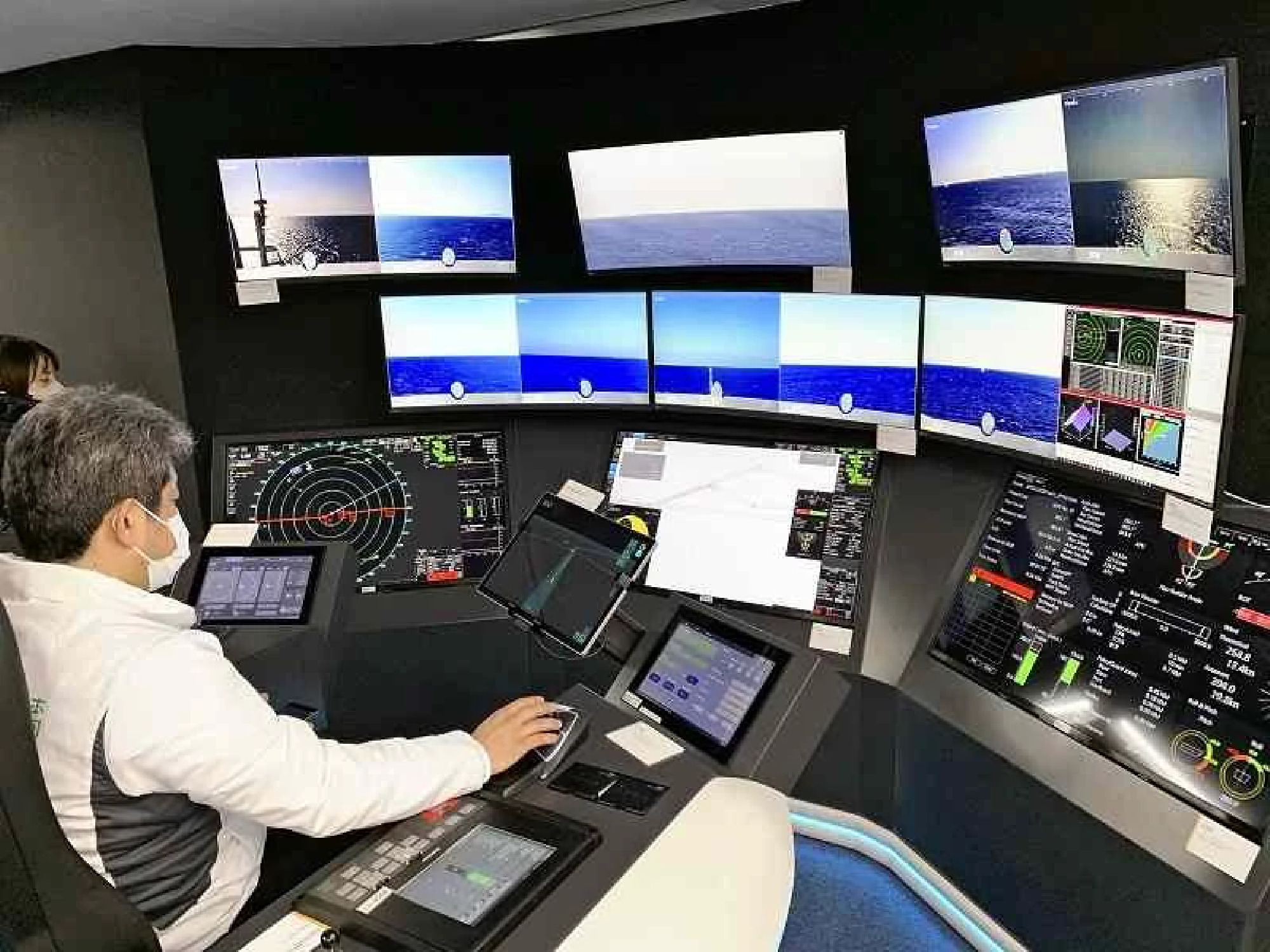
The shipping and shipbuilding industries are focusing their efforts on automated navigation systems, aiming to resolve such issues as the ageing of seafarers and chronic staff shortages. An ongoing government-supported project is expected to be put into practical use by 2025.
Test trials were conducted for the project led by the Nippon Foundation between February and March this year. The 749-ton container ship Suzaku made a round trip between Tokyo Port and Tsumatsusaka Port in Mie Prefecture in four days, using an automated navigation system.
In automatic navigation systems, artificial intelligence analyzes the surrounding vessels and obstacles seen by onboard cameras and then selects the best route for the vessel to navigate unmanned.
In the test trials, the captain and four other crew members were on board in case an unexpected situation occurred, and the vessel was constantly monitored via satellite from the onshore support centre in Chiba City. Should it be deemed necessary, the vessel could be controlled remotely from the centre.
In the end, however, 97% of the 790-kilometre voyage was operated by the automated system.
Tokyo Bay, the departure point, and Ise Bay, where Tsumatsusaka Port is located, are considered to be among the world’s busiest waters.
“We were able to achieve results in difficult channels. This could help Japan to lead the world in the field of unmanned vessels,” said Yohei Sasakawa, chairman of the Nippon Foundation.
Total costs for the project stand at about ¥8.8 billion, and some 50 firms have participated. The goal is to achieve a certain level of automated navigation by 2025 and to realize completely unmanned navigation by 2040.
Tests for high-speed navigation, as well as departure and docking, have also been conducted on small tour boats and large car ferries.
Hopes for fewer accidents
In December 2020, the Land, Infrastructure, Transport and Tourism Ministry created safety guidelines for the development and design of vessels equipped with automated navigation systems.
The guidelines set out basic principles that “the division of roles between humans and systems should be clarified” and “the crew should be able to activate or deactivate the system at will.”
Apart from the Nippon Foundation project, test trials have been conducted in three fields: operation, departure and docking, and remote operation.
Behind the joint effort of the public and private sectors is a sense of urgency in the industry arising from a labour shortage.
Among seafarers engaged in the domestic marine transport of cargo and passengers, nearly half are 50 or older, and over 20% are 60 or older.
The total number of seafarers has remained flat at around 28,000 for the past 10 years. However, the job-to-applicants ratio for cargo ships has stood at a little over 2 to 1 since 2017, indicating a chronic labour shortage.
About 80% of cargo ship collisions occur because of human error in operation and watchkeeping. “Automation could contribute greatly to improving the work environment and reducing the number of accidents,” a transport ministry official said.
Chance to lead the world
The effort also could help the shipbuilding industry regain its footing.
Japan had the largest share of the global shipbuilding market until the 1990s. Now the market has been overtaken by China, which controls 40% of the market, and South Korea, which controls 31%. Japan’s share stands at 22%.
Being the global front-runner in the field of automated navigation technology could lead to the revitalization of the shipbuilding industry.
“This could bring in new business opportunities, such as ocean transportation to remote islands,” said an official at Mitsui O.S.K. Lines, Ltd., a transport company taking part in the Nippon Foundation project.
Efforts have begun to create international rules on the practical application of this technology.
The International Maritime Organization has been holding discussions on such issues as a liability in the event of an accident and qualifications for operating such ships remotely.
“Substantial progress has been made to put automated navigation technology into practical use,” said Keiji Habara, a visiting professor at Kobe University and an expert on maritime risk management. “For Japan to take the initiative in creating international standards for both technology and systems, across-the-board and continued efforts are necessary. This is a crucial time.”
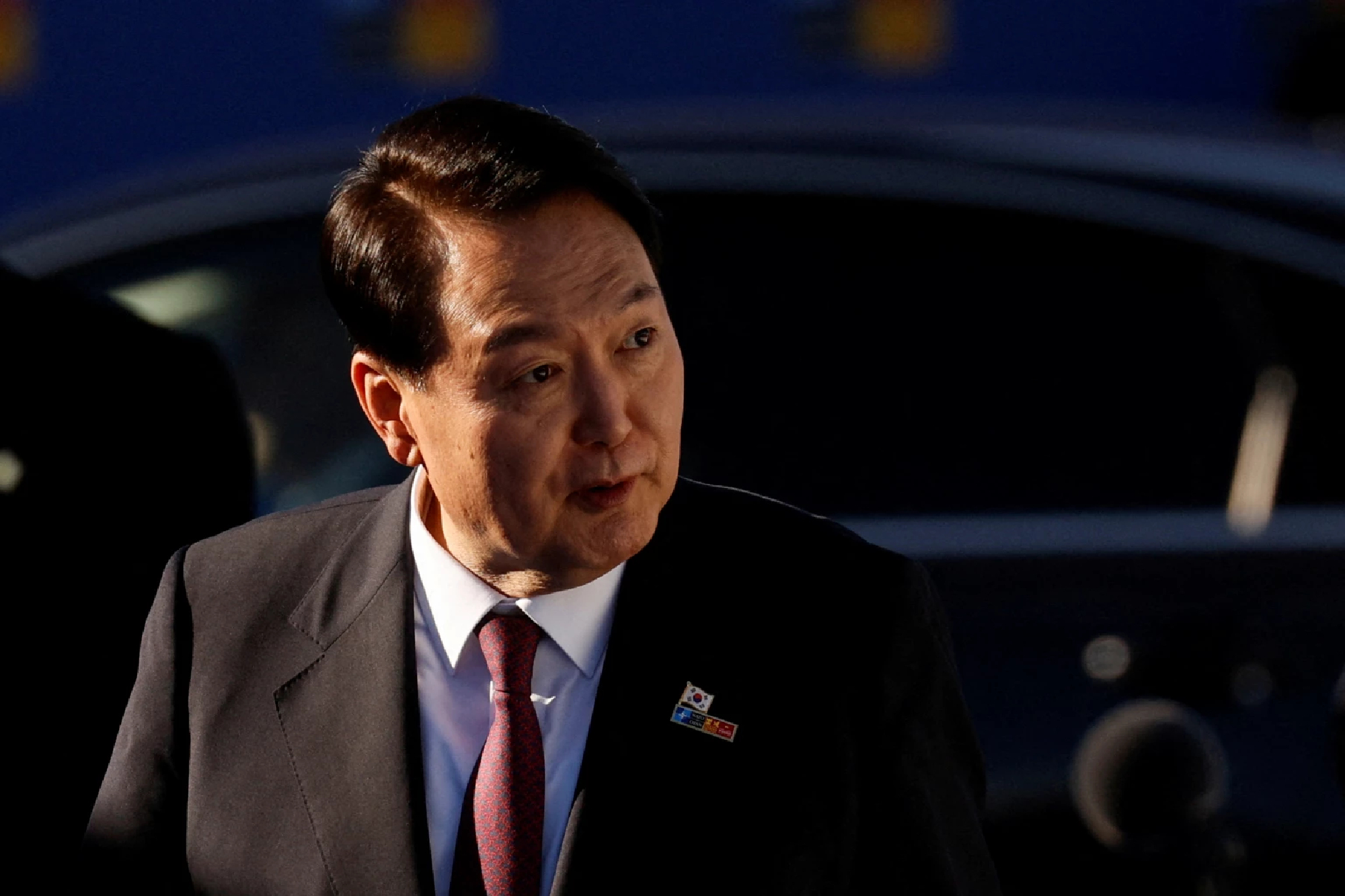
South Korea’s cabinet on Tuesday approved the administration’s energy policy direction, which is aimed at raising the share of nuclear energy in the nation’s total power generation from the current level of 27.4 per cent.
According to the Ministry of Trade, Industry and Energy, the administration has set the goal of raising the share of nuclear power generation to 30 per cent or more by 2030.
The Yoon Suk-yeol administration’s energy policy direction invalidates that of the previous Moon Jae-in administration in October 2017, which supported a decade-long project for nuclear power phaseout, the ministry said in a statement.
It said the target of 30 per cent or more of nuclear energy’s share means formalisation of the new administration’s policy, which aims to attain both stable energy security and carbon neutrality.
The energy security policy indicates that the government will take countermeasures against the ongoing glitch in global energy supply in the wake of sharply growing demand during the process of normalisation from the Covid-19 pandemic.
The protracted war between Ukraine and Russia is another core factor, which has sparked keen competition between major economies to secure energy resources.
The ministry forecast that “the ratio of dependency upon fossil fuels will decline from 81.8 per cent in 2021 to the 60 per cent range in 2030 if the administration successfully implements the harmonised operation of nuclear energy, renewable energy and hydrogen energy.”
With regards to the employment sector, the number of innovative, energy-related venture startups is projected to reach 5,000 by 2030, which could create about 100,000 jobs, the ministry said.
For overseas business, the administration has a goal of exporting 10 reactors to countries, including the Czech Republic and Poland.
Under the previous administration, the nuclear energy industry’s sales dropped from 5.5 trillion won ($4.2 billion) in 2016 to 4.1 trillion won in 2020, with manpower numbers declining from 22,000 to 19,000.
As an initial step to revitalise the sector, the Industry Ministry plans to entrust nuclear power generation businesses with projects worth 1 trillion won by 2025.
In the energy policy direction, the government has also decided to push for legislation of a special law on resource security. The special law will establish a control tower for national resource security, and systems for pre-emptive alarm bells in case of an energy crisis.
For stable domestic supply, the government will expand strategic stockpiles and diversify import routes for minerals such as manganese and cobalt.
“Policymakers also plan to resolve the monopolistic power sales structure, held by the Korea Electric Power Corp on a gradual basis,” said the Industry Ministry. “Independence of the board that determines electric charges will also be enhanced.”
For renewable energy, the government has decided to revise the optimal ratio of resources such as solar and wind power in total power generation in the fourth quarter of the year.






 SootinClaimon.Com