Vietnamese tech firms urged to expand cooperation

#SootinClaimon.Com : ขอบคุณแหล่งข้อมูล : หนังสือพิมพ์ The Nation.

https://www.nationthailand.com/international/40017435


Vietnamese tech firms should expand cooperation in research and development (R&D) and technology transfer to be able to make electronics, information technology and telecommunications (ITC) products branded “Made in Vietnam”, experts said at a conference on Tuesday in Ho Chi Minh City.

Vietnamese tech firms urged to expand cooperation

Speaking at a conference on the research, design and manufacture of electronic and ITC products “Made in Vietnam”, Ho Quynh Hung, chairman of the board of Dien Quang Joint Stock Co, said that Vietnam’s electronics and ITC industries remained dependent on imports due to lack of high-tech production capability.

The industries also lack design and R&D capacity, he added.

“This was evident during the Covid-19 pandemic when most businesses were affected by supply chain disruptions. Many of the businesses faced a lack of chips and electronic components for production of electronic and ITC products,” he said.

The number of Vietnamese companies making chips and electronic components for production of electronic and ITC products remains modest and more foreign companies are opening factories in Vietnam to produce chips and electronic components, he added.

Nguyen Ai Huu, chairman of XeLex Technology Joint Stock Co, said most Vietnamese-branded products are made with imported components and assembled domestically with software and hardware that are dependent on foreign partners, resulting in a risk of installing malware without the businesses’ awareness.

“Vietnamese tech firms need to master both hardware and software technology to ensure security,” he said.

He added that Vietnam’s ITC industry needs huge investment and high-quality human resources, especially experts and technicians with solid professional qualifications.

Experts said the continued relocation of the global supply chain and supply diversification is a great opportunity for Vietnam to develop its electronics and ITC industries.

According to the Ministry of Information and Communications, the total revenue of the ITC industry in 2020 reached US$120 billion (432 billion baht) in 2020. Of that number, the hardware industry accounted for over $107 billion, the software industry over $5 billion and the digital industry over $900 million.

In the first six months of 2021, total revenue reached nearly $65 billion, up 22 per cent year on year, of which, revenue from the hardware and electronics industries reached about $57.6 billion, accounting for nearly 90 per cent of total revenue of the ICT industry.

Exports of hardware and electronic products were estimated at $50.5 billion in the period, accounting for 31.6 per cent of the country’s total exports with a trade surplus of $7.7 billion.

According to the Industrial Planning department, by 2030 the annual growth of the electronics industry would reach 19-21 per cent, from 17-18 per cent in 2016-2020.

At the event, Dien Quang and XeLex signed an agreement to research, design and produce electronics, ITC and 5G equipment “Made in Vietnam”.

Under the agreement, Dien Quang will provide components used to make tablets, laptops, servers and other products of electronics and ITC by XeLex.

The signing of the agreement is expected to open up opportunities for Vietnam’s electronics and ITC industries.

Under the government’s “Made in Vietnam” strategy, Vietnam aims to produce chipsets for the 5G network and Internet of Things equipment. The government will also offer preferential policies for the production, as it is a high-tech area.

Under the strategy, Vietnam is also focused on the digital economy, which is expected to contribute 7 per cent to its GDP by 2025 and 7.5 per cent by 2030.

The conference was organised by Dien Quang and XeLex Technology.

Viet Nam News

Asia News Network

Published : July 06, 2022

By : Vietnam News

Japan wary of provocations amid intrusions by Chinese, Russian vessels

#SootinClaimon.Com : ขอบคุณแหล่งข้อมูล : หนังสือพิมพ์ The Nation.

https://www.nationthailand.com/international/40017428


The Japanese government is becoming increasingly vigilant over provocations by Beijing and Moscow, following sightings of Chinese and Russian naval vessels in waters off the Senkaku Islands in Okinawa Prefecture on Monday morning.

Japan wary of provocations amid intrusions by Chinese, Russian vessels

Although no coordination between China and Russia has been confirmed, their vessels have been spotted sailing around Japan on similar routes since mid-June. The government is investigating the possibility that Beijing and Moscow are testing Japan’s ability to track vessels.

“It is an act that unilaterally heightens tensions,” a senior Japanese Defense Ministry official said Monday, following the sightings near the Senkakus. “The situation is of serious concern.”

Beijing and Moscow appear to have strengthened their cooperation in areas around Japan since Russia’s invasion of Ukraine.

On June 15, seven Russian warships sailed in the Pacific Ocean off Hokkaido’s Cape Erimo, according to the Defense Ministry. Five of those vessels were also spotted later in waters off Okinawa Island and Miyako Island, and sailing through the Tsushima Strait toward the Sea of Japan.

The other two Russian vessels were spotted navigating between Yonaguni and Iriomote islands in Okinawa Prefecture on Saturday, having sailed south past the Izu Islands south of Tokyo Bay earlier. One of those two vessels entered Japan’s contiguous zone off the Senkaku Islands on Monday.

Meanwhile, four Chinese Navy ships passed through the Tsushima Strait near Kyushu heading north from June 12 to 13. The vessels split into two groups, with one group passing through the Soya Strait north of Hokkaido and another through the Tsugaru Strait south of Hokkaido, both heading toward the Pacific Ocean.

Three of the four vessels eventually ended up sailing south past the Izu Islands on June 21.

Some observers say that the moves by China and Russia are intended to rattle Japan, which has taken concerted action with other Group of Seven industrialized nations and continues to impose sanctions against Russia over its invasion of Ukraine.

China and Russia conducted a joint drill with bombers in areas including the Sea of Japan when the Quad — a framework between Japan, the United States, Australia and India — held a summit in Tokyo in May.

“It is likely that the Self-Defense Forces’ surveillance capabilities and tracking system are being checked and information is being shared by both [Russia and China],” a senior Japanese Defense Ministry official said.

Asia News Network: The Nation (Thailand), The Korea Herald, The Straits Times (Singapore), China Daily,  Jakarta Post, The Star and Sin Chew Daily (Malaysia), The Statesman (India), Philippine Daily Inquirer, Yomiuri Shimbun and The Japan News, Gogo Mongolia,  Dawn (Pakistan),  The Island (Sri Lanka), Kuensel (Bhutan), Kathmandu Post (Nepal), Daily Star (Bangladesh), Eleven Media (Myanmar), The Phnom Penh Post and Rasmei Kampuchea (Cambodia), The Borneo Bulletin (Brunei), Vietnam News, and Vientiane Times (Laos).

Published : July 06, 2022

By : The Japan News

Myanmar refuses to allow Asean special envoy to meet Aung San Suu Kyi

#SootinClaimon.Com : ขอบคุณแหล่งข้อมูล : หนังสือพิมพ์ The Nation.

https://www.nationthailand.com/international/40017425


Foreign minister and Asean special envoy on Myanmar Prak Sokhonn was unable to meet with former civilian leader Aung San Suu Kyi due to unspecified “judicial procedures” cited by the ruling State Administration Council on Monday.

Myanmar refuses to allow Asean special envoy to meet Aung San Suu Kyi

On a positive note, the Myanmar Task Force on Asean Humanitarian Assistance strongly welcomed Prime Minister Hun Sen’s willingness to dispatch vaccination teams to the crisis-hit country to administer Covid-19 vaccines to its population.

In a July 4 press release, the Ministry of Foreign Affairs and International Cooperation said Sokhonn had met with SAC chairman Senior General Min Aung Hlaing to discuss Myanmar’s progress in implementing the Asean Five-Point Consensus (5PC), including the provision of assistance to its people as well as peace talks with opposition stakeholders.

Sokhonn reiterated Asean’s call for a total cessation of violence and requested that the SAC support safe, timely and impartial delivery of humanitarian assistance to the nation’s hard-to-reach areas.

“[Sokhonn] was informed that due to the condition of her health, Daw Su Su Lwin was unable to meet the special envoy,” the statement said, referring to former Myanmar First Lady and founding member of the now-dissolved National League for Democracy (NLD) previously led by Suu Kyi.

It added that Suu Kyi was also unavailable, with the SAC citing judicial procedures.

Sokhonn also met with Uko Ko Hlaing, the SAC-appointed Minister for International Cooperation and chairman of the Myanmar Task Force on Asean Humanitarian Assistance.

“The special envoy conveyed the willingness of [Hun Sen] to dispatch Cambodia’s volunteer health personnel to help administer vaccines in [hard-to-reach] areas, which was strongly welcomed by the Myanmar Task Force,” the statement said.

Asia News Network: The Nation (Thailand), The Korea Herald, The Straits Times (Singapore), China Daily,  Jakarta Post, The Star and Sin Chew Daily (Malaysia), The Statesman (India), Philippine Daily Inquirer, Yomiuri Shimbun and The Japan News, Gogo Mongolia,  Dawn (Pakistan),  The Island (Sri Lanka), Kuensel (Bhutan), Kathmandu Post (Nepal), Daily Star (Bangladesh), Eleven Media (Myanmar), The Phnom Penh Post and Rasmei Kampuchea (Cambodia), The Borneo Bulletin (Brunei), Vietnam News, and Vientiane Times (Laos).

Published : July 06, 2022

By : The Phnom Penh Post

South Korea set for rate hike as inflation hits 24-year high

#SootinClaimon.Com : ขอบคุณแหล่งข้อมูล : หนังสือพิมพ์ The Nation.

https://www.nationthailand.com/international/40017394


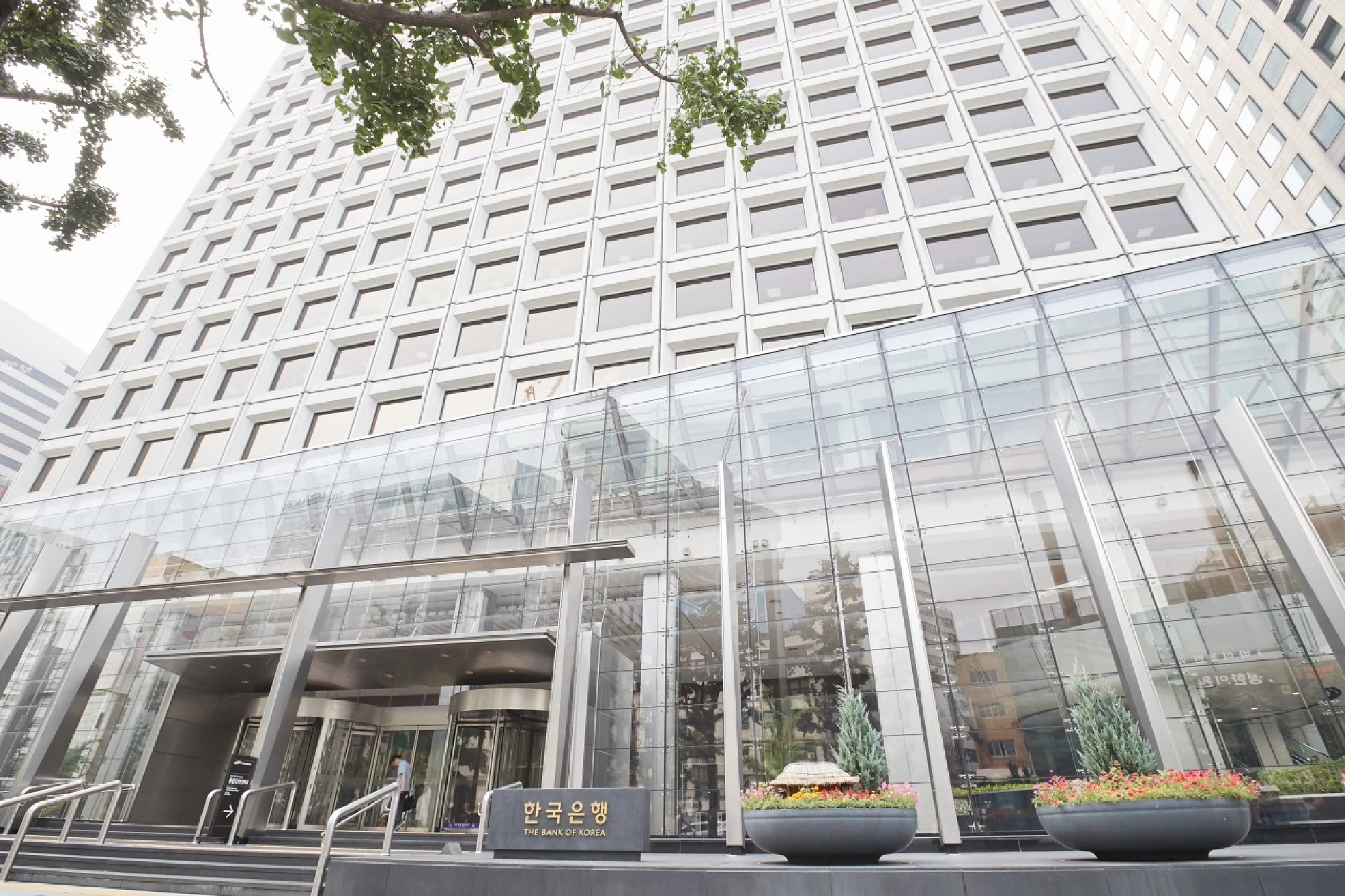
The Bank of Korea will raise its benchmark rate by 50 basis points for the first time next week, as consumer prices in June rose 6 per cent year on year, the highest level since November 1988, when they jumped 6.8 per cent year on year.

South Korea set for rate hike as inflation hits 24-year high

Data from Statistics Korea released on Tuesday found the June consumer price index topped the 5.4 per cent mark in May, in line with the central bank chief’s earlier warning that prices would rise faster in June than in May. The chief, who did not offer a target then, said inflation would peak in the third quarter.

A global surge in commodity prices — the underlying factor behind persistent inflation — led to higher prices of industrial goods and services like oil products and eating out in June. Such price gains accounted for at least 5 per cent of the 6 per cent increase, according to the data.

“Supply-side price pressures are fanning inflation,” said Eo Woon-sun, deputy director-general for short-term economic statistics at Statistics Korea, noting however that demand could be contributing to the surge. Korea scrapped social distancing rules and lifted most of its Covid-19 precautions on April 18.

The senior official added that South Korea could see prices increase 7 per cent annually in months to come, given the current pace of inflation. Such a leap last took place in 1998 during the Asian financial crisis, when Asia’s fourth-largest economy asked the International Monetary Fund for help.

A rise in electricity and gas prices, that took effect on July 1, is set to add to inflationary woes and offset any countermeasures policymakers have in mind, such as oil tax cuts and rate hikes, to tackle persistent inflation. Tax cuts are proving ineffective, while higher borrowing costs threaten to worsen repayment burdens.

The dilemma prompted President Yoon Suk-yeol to publicly vow again on Tuesday that he would “personally look after pressing economic issues” affecting Koreans.

“The economy is not in good shape. … The global economy is taking the biggest hit in terms of inflation since the 1970s amid supply bottlenecks and Covid-19,” Yoon said at a weekly Cabinet meeting.

State-run companies would be the first to face restructuring by liquidating underperforming businesses and setting spending priorities straight, Yoon added, saying money made there would be used to help Koreans seeing major disruptions in their lives as they battle the current crisis.

“I will be out there to listen what our fellow Koreans have to say about the difficulties they face. I will make sure the emergency meeting takes place every week to discuss those problems,” Yoon said.

The Korea Herald

Asia News Network

Asia News Network: The Nation (Thailand), The Korea Herald, The Straits Times (Singapore), China Daily,  Jakarta Post, The Star and Sin Chew Daily (Malaysia), The Statesman (India), Philippine Daily Inquirer, Yomiuri Shimbun and The Japan News, Gogo Mongolia,  Dawn (Pakistan),  The Island (Sri Lanka), Kuensel (Bhutan), Kathmandu Post (Nepal), Daily Star (Bangladesh), Eleven Media (Myanmar), The Phnom Penh Post and Rasmei Kampuchea (Cambodia), The Borneo Bulletin (Brunei), Vietnam News, and Vientiane Times (Laos).

Published : July 05, 2022

By : The Korea Herald

Japanese WWII sword connects Japan, US seven decades later

#SootinClaimon.Com : ขอบคุณแหล่งข้อมูล : หนังสือพิมพ์ The Nation.

https://www.nationthailand.com/international/40017390


A Japanese sword belonging to a soldier of the Imperial Japanese Army was handed over to his surviving family members in Nichinan, Miyazaki Prefecture, on Saturday after being stored in a house in the United States for more than 70 years.

Japanese WWII sword connects Japan, US seven decades later

Kevin Chroust, a 38-year-old journalist, delivered the sword to the soldier’s son. Chroust’s grandfather, Joseph Kasser, 99, obtained the sword while serving as a US Army soldier in Japan.

Chroust had taken over his grandfather’s vow to return the sword and was finally able to find its rightful owner. By handing over the sword, he fulfilled the vow.

According to Chroust, in 1945 just after the end of World War II, Kasser found the sword in a pile of Japanese weapons on a beach on Okinawa’s main island.

On a wooden plate tied to the sword with a string, the owner’s name and the name of a town — Takaharu, Miyazaki Prefecture — were written in English. A message in English, also on the plate, read, “I am very glad to have the honour to ask your favour to send my sword to my home.”

Kasser brought the sword home, determined to seek out the owner and deliver it to him because he believed the sword to be very important to this Japanese soldier.

Chroust had heard about the episode with the sword from his grandfather since his childhood. Last year, Chroust sought the help of a Japanese journalist he became acquainted with through reporting on US Major League baseball.

Authorities in Takaharu were contacted about the sword and they managed to trace the owner.

That owner was Tomesuke Umeki, who died at 74 in 1974. According to his relatives, he was on Jeju Island in South Korea when the war ended. It is not known why the sword was found in Okinawa Prefecture.

On July 2, Chroust visited the home of Takemitsu Umeki, 96, son of Tomesuke, and placed the sword in the room of the house where deceased family members are enshrined.

They also talked online with Kasser, who is in Chicago. Members of the two families shared the joy of the sword’s return.

Japanese WWII sword connects Japan, US seven decades later

Kasser said that previously it was not easy even to communicate between Japan and the United States, and so he was very glad that this moment had been made possible.

Takemitsu said: “It must have been so hard [to store the sword] for such a long time. I feel deep gratitude for his having done so.”

Kasser had hoped to hand over the sword to someone who was no longer an enemy soldier. He had told Chroust that the two just happened to be born “on different sides of the world”.

Chroust said he learned from his grandfather the importance of the view that “history has two sides” and that people need to listen to each other’s opinions, overcoming national borders and personal viewpoints.

Chroust now wants to visit Okinawa Prefecture and other places to gather more information on the sword and the two families for an article he plans to publish in a US magazine.

The Japan News

Asia News Network

Asia News Network: The Nation (Thailand), The Korea Herald, The Straits Times (Singapore), China Daily,  Jakarta Post, The Star and Sin Chew Daily (Malaysia), The Statesman (India), Philippine Daily Inquirer, Yomiuri Shimbun and The Japan News, Gogo Mongolia,  Dawn (Pakistan),  The Island (Sri Lanka), Kuensel (Bhutan), Kathmandu Post (Nepal), Daily Star (Bangladesh), Eleven Media (Myanmar), The Phnom Penh Post and Rasmei Kampuchea (Cambodia), The Borneo Bulletin (Brunei), Vietnam News, and Vientiane Times (Laos).

Published : July 05, 2022

By : Reuters

Singapore president, parliament speaker test positive for Covid-19

#SootinClaimon.Com : ขอบคุณแหล่งข้อมูล : หนังสือพิมพ์ The Nation.

https://www.nationthailand.com/international/40017387


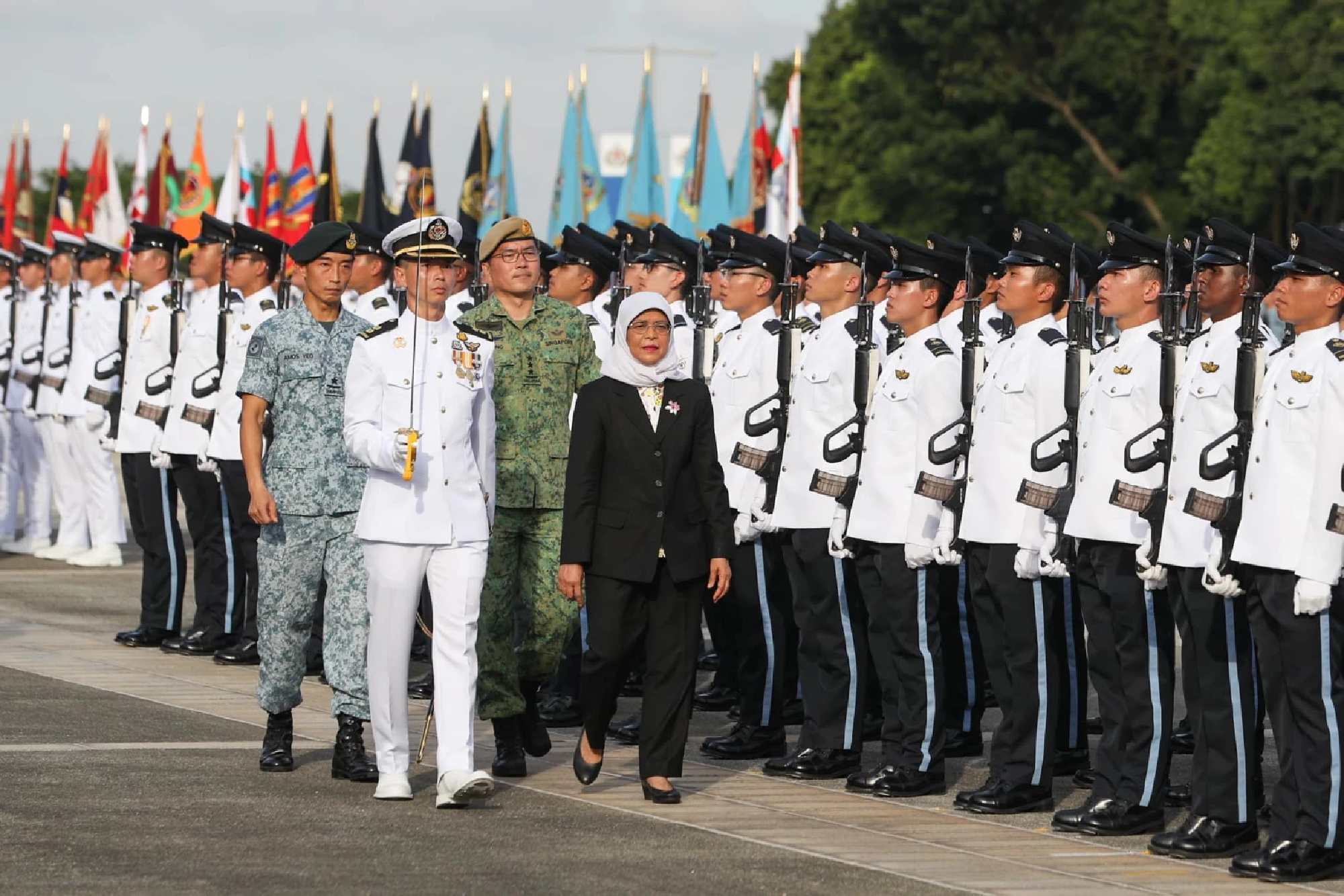
Singapore’s President Halimah Yacob has tested positive for Covid-19, and is down with mild flu-like symptoms. She announced on her Facebook wall.

Singapore president, parliament speaker test positive for Covid-19

Halimah, 67, said in a Facebook post on Monday: “Just tested positive for Covid-19 with mild flu-like symptoms. Thankfully, I have been vaccinated and boosted. I hope to recover soon and am sorry to have to miss the events this week.”

Speaker of Parliament Tan Chuan-Jin also said in a post on Monday that he had tested positive for Covid-19.

“Confirm Tio. All good things must come to an end. My Covid-free days are over,” Tan wrote in his Facebook post.

He took an antigen rapid test before Monday’s parliamentary sitting and was positive, which means he will miss both days of the current Parliament sitting.

It was also revealed in Monday’s Parliament sitting that Minister for Culture, Community and Youth Edwin Tong, 52, was down with Covid-19.

Writing in his post, Speaker Tan, 53, said: “Had felt a little flu-ish, tested negative, and felt that I was on the mend. So far so good. Hope the symptoms would be mild. Continue to remain vigilant. Vaccination helps so do get the boosters when it’s your turn to do so. Please do remind our seniors to take them!”

The Straits Times

Asia News Network

Asia News Network: The Nation (Thailand), The Korea Herald, The Straits Times (Singapore), China Daily,  Jakarta Post, The Star and Sin Chew Daily (Malaysia), The Statesman (India), Philippine Daily Inquirer, Yomiuri Shimbun and The Japan News, Gogo Mongolia,  Dawn (Pakistan),  The Island (Sri Lanka), Kuensel (Bhutan), Kathmandu Post (Nepal), Daily Star (Bangladesh), Eleven Media (Myanmar), The Phnom Penh Post and Rasmei Kampuchea (Cambodia), The Borneo Bulletin (Brunei), Vietnam News, and Vientiane Times (Laos).

Published : July 05, 2022

By : The Straits Times

Gallup poll finds PH workers most stressed in Southeast Asia

#SootinClaimon.Com : ขอบคุณแหล่งข้อมูล : หนังสือพิมพ์ The Nation.

https://www.nationthailand.com/international/40017383


Employees worldwide spend 81,396 hours of their lives at work, but those in the Philippines had been found to have the highest stress levels in Southeast Asia in 2021. Thailand came second on the list.

Gallup poll finds PH workers most stressed in Southeast Asia

While workers everywhere, polled by analytics firm Gallup, said life at work is “not well,” those in the Philippines are among the most stressed out in the world.

This was revealed by Gallup in its “State of the Global Workplace: 2022 Report,” which reached the conclusion that “stress among the world’s workers reached an all-time high—again.”

It found that in 2021, 44 per cent of employees worldwide experienced “a lot of stress the previous day,” higher than 43 per cent in 2020, 38 per cent in 2019, 37 per cent in 2018, and 29 per cent in 2017.

“Those who agreed with this item may not have been stressed about work, but they were certainly stressed at work. Inevitably, the stress workers feel impacts the workplace,” the Gallup report said.

The firm asked 68,000 workers in over 140 countries and half of 1,000 Filipinos 15 years and older who were surveyed for the report said “yes” when asked whether they experienced stress most of the day.

At 50 per cent, worker stress in the Philippines was the highest in Southeast Asia in 2021. While it was three points lower than 53 per cent in 2020, it was still higher than the global average.

Thailand also saw stress taking its toll on its workers, with 41 per cent saying they experienced a lot of stress the previous day. Likewise, in the ranking were Cambodia (38 per cent), Myanmar (37 per cent) and Vietnam (37 per cent).

The State of the Global Workplace Report, released yearly, “represents the collective voice of the global employee” regarding work engagement and even the negative emotions they experienced.

Gallup said that while 2021 saw declines in worry, sadness and anger levels, all these negative emotions, like stress, remained above pre-pandemic levels.

It stressed that 40 per cent of employees worldwide experienced “worry” last year; 23 per cent experienced “sadness,” while 21 per cent experienced “anger.” These were lower than the 41 per cent, 25 per cent, and 24 per cent in 2021.

Gallup said Filipino workers were clearly not spared from these miseries as 32 per cent said “yes” when asked whether they experienced a lot of sadness the previous day, the second-highest in Southeast Asia, next to Cambodia (41 per cent).

Gallup poll finds PH workers most stressed in Southeast Asia

With 24 per cent of its employees saying they experienced a lot of anger the previous day, the Philippines was ranked third when it comes to daily anger, next to Laos (34 per cent) and Myanmar (27 per cent).

The Philippines, meanwhile, was ranked seventh in Southeast Asia when it comes to daily worry. The first on the list was Cambodia (50 per cent), while Singapore (21 per cent) had the least percentage of workers who experienced a lot of worries.

Not totally worse off

While Filipino workers’ experience of negative emotions was high, the Philippines was first in a ranking of Southeast Asian countries when it comes to employee engagement, with 31 per cent of employees saying they are engaged at work.

This, however, was one point lower than 32 per cent in 2020. Worldwide, the average employee engagement rate in 2021 was 21 per cent, while the average life evaluation rate was 33 per cent.

“Engaged employees are highly involved in and enthusiastic about their work and workplace. They are psychological ‘owners,’ drive performance and innovation, and move the organization forward,” Gallup said.

Gallup said 29 per cent of Filipino workers were thriving in 2021, higher than the 27 per cent in 2020. It was next to Singapore (38 per cent), Thailand (36 per cent), Vietnam 35 per cent), and Malaysia (30 per cent).

When asked about the job climate, 63 per cent said “now is a good time” to find a job. The Philippines was next to Laos (71 per cent) and Cambodia (64 per cent). However, the 63 per cent was six points lower than the 70 per cent in 2020.

When it comes to respect, only four per cent of Filipino workers said that they were not treated with respect the previous day last year. Laos (30 per cent) and Myanmar (27 per cent) had the highest percentage of employees who were not treated with respect.

Best region to be an employee

Gallup said that while employees in the United States (US) and Canada were some of the most worried and stressed workers in the world last year, the region had the most engaged employees.

The region was ranked second for well-being, with over half of employees saying that they are “living comfortably” on their household income, compared with 22 per cent globally:

Australia and New Zealand: 55 per cent

US and Canada: 51 per cent

Europe: 42 per cent

Commonwealth of Independent States: 28 per cent

Latin America and the Caribbean: 20 per cent

Middle East and North Africa: 19 per cent

Southeast Asia: 15 per cent

South Asia: 15 per cent

East Asia: 13 per cent

Sub-Saharan Africa: 10 per cent

Likewise, 71 per cent of employees in the US and Canada said “now is a good time” to find a job. East Asia was ranked last, with only 27 per cent. Southeast Asia, with 40 per cent, was ranked seventh.

Gallup said that “only 45 per cent of workers globally said now is a good time to find a job in their country, slightly higher from last year, but less than the record 55 per cent in 2019.”

It stressed that both Europe and South Asia saw a five-point decline in well-being in 2021, with South Asia having the lowest well-being in the world at 11 per cent. Europe had an average of 47 per cent.

“Workers in these regions not only felt like their current life was worse than it had previously been, but their hope in the future also dropped,” Gallup said.

New workplace imperative

For Gallup, employee wellbeing is the new workplace imperative, stressing that well-being and engagement interact in powerful ways.

Employees who are engaged and thriving experience significantly less stress, anger and health problems. However, “globally, employee engagement and wellbeing remain very low, and it’s holding back enormous growth potential.”

Gallup said most employees remain disengaged at work. In fact, low engagement alone costs the global economy $7.8 trillion.

“The relationship between wellbeing and engagement is vital because how people experience work influences their lives outside work, and overall wellbeing influences life at work.”

“Organizations need to think about the whole person, not just the worker. Leaders need to add wellbeing measurements to their executive dashboards [and] prioritize employee wellbeing as part of their employer brand promise,” it said.

“When leaders take responsibility for the wellbeing of their workers, the result is not only productive organizations but thriving individuals, families and communities.”

Published : July 05, 2022

By : Philippine Daily Inquirer

Farming snakes in Cambodia for restaurants in Vietnam

#SootinClaimon.Com : ขอบคุณแหล่งข้อมูล : หนังสือพิมพ์ The Nation.

https://www.nationthailand.com/international/40017378


Within three years of beginning his career in hospitality, Meng Sarath, 34, returned to his hometown in Ka’am Samnor village, Loeuk Dek district, Kandal province. He became interested in raising snakes, as he knew there was a demand for them in the Vietnamese market.

Farming snakes in Cambodia for restaurants in Vietnam

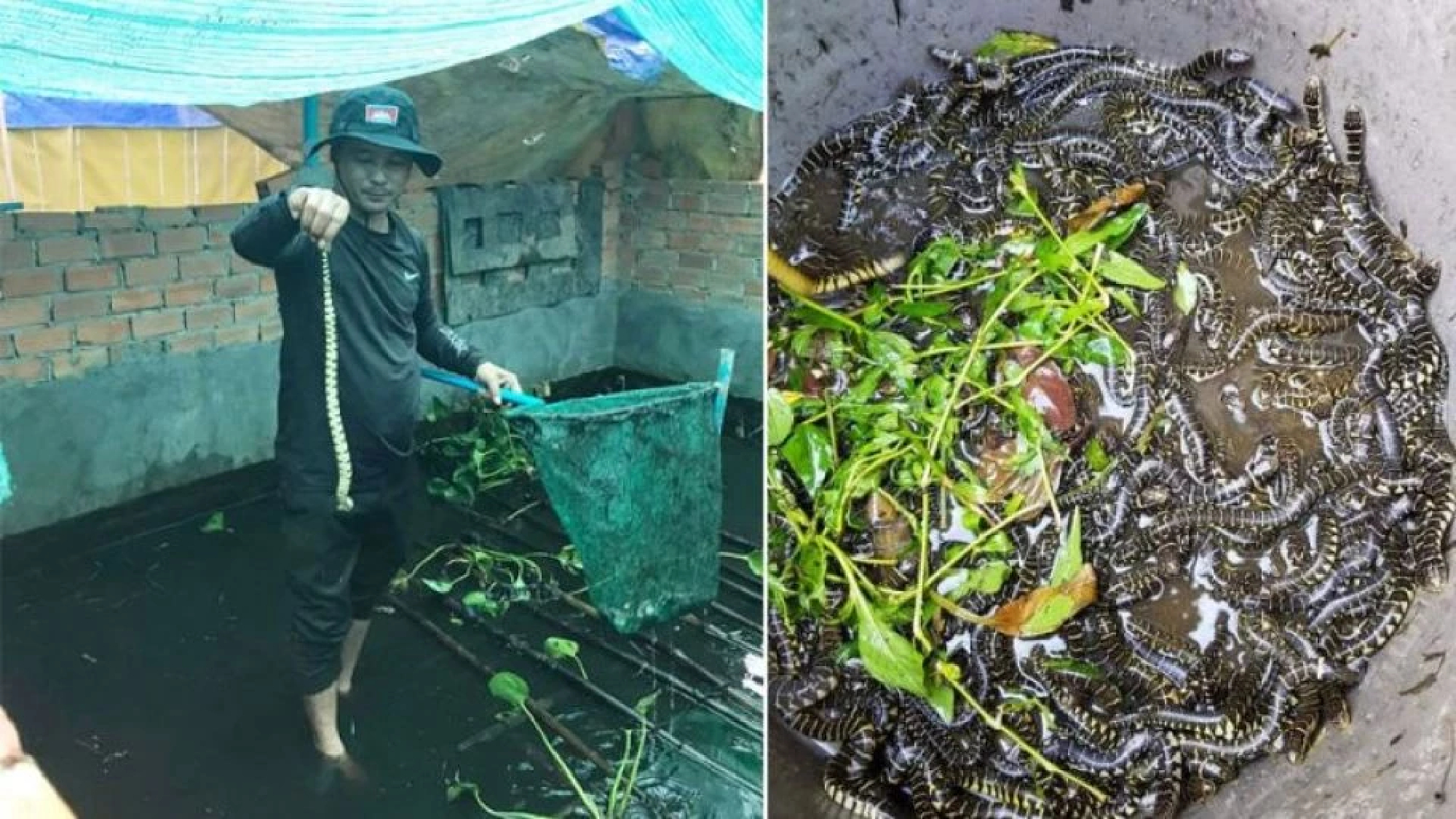
Meng Sarath grabbed a handful of finger-sized zebra striped snakelets that were crawling around the roots of a hyacinth, explaining that they were the key to his livelihood after the Covid-19 crisis ended his job as a hotel cleaner in Sihanoukville.

Sarath is the main Cambodian breeder of Bocourt’s water snake (Subsessor bocourti) – known as chan l’mom in Khmer – for the Vietnamese restaurant market. He also sells them to farmers who want to raise snakes as a family business.

He went to Vietnam and learnt how to raise the snakes and then decided to invest almost two million riel ($500) to buy snakelets and build ponds. He began by raising 400 snakes, which cost about 12,000 riel per head.

“In my district, nobody else is breeding them yet, which was one of the reasons I decided to invest in this industry. In the last two years, I have sold between 3,000 and 4,000 snakes,” he told The Post.

Although snake farming is a legitimate private business, some species are not allowed to be bred without authorisation from the authorities.

Suon Sovann, spokesperson of the Forestry Administration, said that some wildlife species are considered to be rare, according to Prakas No 020 PRK 2007 of the Ministry of Agriculture, Forestry and fisheries, which classifies wildlife species.

“Breeding pythons, flying snakes, lizards, roe deer, monkeys, swallows and so on, require permission from the Forestry Administration,” he told The Post.

Although the chan l’mom is not classified as an endangered species by the administration, Sovann did not specify whether the general public could raise the non-venomous snake without prior permission.

Sarath initially built two brick pools, a four by four-metre pool for keeping his stock of salable snakes, and one of three by four metres to raise new snakes. After some experimentation, he divided each into two parts, adding a section for breeding and one for the smallest snakelets.

The deepest pools are more than a metre deep and are planted with water hyacinth. The breeding and snakelet pools are shallower. The snakes are separated by size, because the largest snakes will eat their smaller brethren, given the chance.

Although he had to invest a lot of initial capital in building the ponds and buying the initial snakes, Sarath insisted that feeding and caring for the snakes was not a difficult task.

“I buy low-quality small fish to feed the snakes. One kg of fish can feed 100 snakes. When the food is finished, I add more. Oh, and I change the water once or twice each month,” he added.

He said snakes usually only eat every two or three days.

Farming snakes in Cambodia for restaurants in Vietnam

Sarath said the chan l’mom is not a dangerous species, but that it can take up to a year for them to reach a salable size. Their current market value is about 80,000 riel per kg.

Generally, a snake is sold when it grows to about 1.2kg, he said, adding that the ones which reach 1.5kg are usually kept as breeders.

“These snakes are a seasonal product, as I only harvest them once per year. Currently, I sell 200 to 300kg a year. As harvest time approaches, Vietnamese traders contact me and say they will take all of the snakes I have,” he said.

“I think if I could produce 1,000kg of snakes, the Vietnamese would buy them all. But of course, I’m not sure how that would affect the market value,” he added.

He does sell some of his products to the local market. He says demand is not high, but he expects it to grow.

Right now, Sarath has partnerships with four domestic restaurants – two in Phnom Penh and two in Preah Sihanouk – and local customers order 3 to 4kg every half month. If domestic demand grows, he thought more people would become interested in breeding.

“Last season, I raised 400 snakelets and sold about 200kg. The rest I kept for breeding,” he said.

He said that of the 200kg of meat he sold, about 150kg went to the Vietnamese market.

“I don’t think it’s because Cambodians don’t like to eat snake meat. Perhaps they haven’t tried it, or are afraid they will be served an endangered or illegal species,” he added.

His personal favourite snake recipe is pickled lime soup, but snakes can be made into many other dishes, such as fried lemongrass snake, he added.

He said although the number of people ordering the meat in restaurants was small, that suited him for now because he could not meet demand if orders grew too much.

He also said that he had sold snakelets to people who were also interested in breeding them. He sold the baby snakes for 10,000 riel each.

“I admit the price of 10,000 riel sounds expensive. But in Vietnam, the price can be as high as 12,000 riel. In fact, I sold a few hundred to Vietnamese breeders,” he added.

Nim Khon, 50, bought 150 snakelets from Sarath. He carried them home to Takhmao town in three jars just over a month ago.

He explained that in addition to farming, he thought he would try raising snakes. As he was unfamiliar with the process, he was unsure how his snakes would fare. Happily, they were now growing nicely, he said.

“They are not difficult to care for, as their food is small fish and eels. I spend about 40,000 riel a month on food,” he told The Post.

Hong Raksmey

The Phnom Penh Post

Asia News Network

Asia News Network: The Nation (Thailand), The Korea Herald, The Straits Times (Singapore), China Daily,  Jakarta Post, The Star and Sin Chew Daily (Malaysia), The Statesman (India), Philippine Daily Inquirer, Yomiuri Shimbun and The Japan News, Gogo Mongolia,  Dawn (Pakistan),  The Island (Sri Lanka), Kuensel (Bhutan), Kathmandu Post (Nepal), Daily Star (Bangladesh), Eleven Media (Myanmar), The Phnom Penh Post and Rasmei Kampuchea (Cambodia), The Borneo Bulletin (Brunei), Vietnam News, and Vientiane Times (Laos).

Published : July 05, 2022

By : The Phnom Penh Post

Angkor ticket sales jump by 1,000% in first half as Cambodia opens

#SootinClaimon.Com : ขอบคุณแหล่งข้อมูล : หนังสือพิมพ์ The Nation.

https://www.nationthailand.com/international/40017362


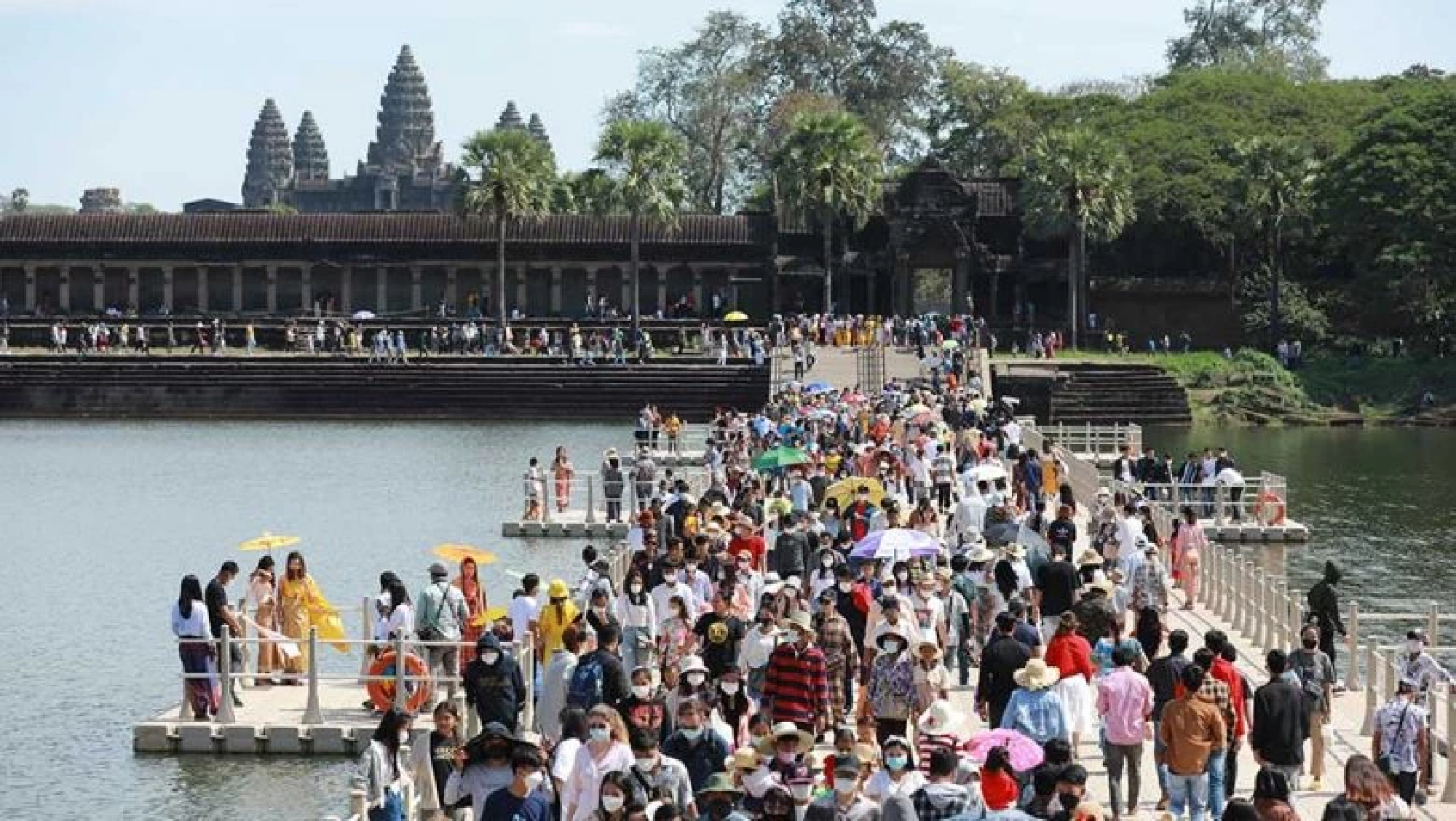
Angkor Archaeological Park netted more than $2.4 million (85.7 million baht) from ticket sales in the first half of 2022, an increase of more than 1,000 per cent year-on-year, Angkor Enterprise reports.

Angkor ticket sales jump by 1,000% in first half as Cambodia opens

According to a July 1 statement issued by Angkor Enterprise, the state-run institution that manages ticket sales for international visitors to the 400sq km Unesco site, a total of 59,983 tickets worth $2,420,081 were sold in January-June, a rise of over 1,000 per cent year-on-year.

The prices of one-day, three-day and seven-day tickets for Angkor currently stand at $37, $62, and $72. Entry is free for Cambodians.

The number of visitors to Angkor and other attractions in Siem Reap province has jumped since the government rolled back Covid-19 entry-exit rules.

Apsara National Authority (ANA) deputy director-general Long Kosal told The Post that although still below pre-Covid levels, the boost in travellers and tourism revenue to the province’s primary tourism zone were “good signs” following a more-than-two-year pandemic hiatus.

He said this illustrates that Angkor was still a draw for national and international visitors, which he hailed as welcome news for the Siem Reap tourism industry.

“The important thing is to instil confidence in those considering visiting, which is crucial in managing the development of the tourism sector. And confidence can be enhanced by providing safer, more enjoyable and unique entertainment, more efficient tour arrangements and transport of tourists from one place to another,” Kosal said.

He added that the ANA is preparing other attractions at Angkor, such as bike paths and boat trips at the North Baray (Jayatataka) reservoir, which has the small Buddhist temple Neak Pean, or “entwined Nagas”, in the middle.

However, tourism activity in Siem Reap remains subdued, due to the still-limited number of international visitors, said Thourn Sinan, chairman of IMCT Co Ltd and Pacific Asia Travel Association Cambodia chapter (PATACC).

“Siem Reap was the worst affected by the Covid-19 crisis since it’s completely dependent on tourists. Nonetheless, we expect that the number of tourists visiting the province, especially the Angkor Archaeological Park, will keep rising,” he said.

According to the local Tourism Department, Siem Reap received just over 1 million (1,027,779) visitors from January-May, marking a 744.87 per cent rise year-on-year.

The Phnom Penh Post

Asia News Network

Asia News Network: The Nation (Thailand), The Korea Herald, The Straits Times (Singapore), China Daily,  Jakarta Post, The Star and Sin Chew Daily (Malaysia), The Statesman (India), Philippine Daily Inquirer, Yomiuri Shimbun and The Japan News, Gogo Mongolia,  Dawn (Pakistan),  The Island (Sri Lanka), Kuensel (Bhutan), Kathmandu Post (Nepal), Daily Star (Bangladesh), Eleven Media (Myanmar), The Phnom Penh Post and Rasmei Kampuchea (Cambodia), The Borneo Bulletin (Brunei), Vietnam News, and Vientiane Times (Laos).

Published : July 04, 2022

By : The Phnom Penh Post

Fly-by-night dental hacks thriving in Malaysia

#SootinClaimon.Com : ขอบคุณแหล่งข้อมูล : หนังสือพิมพ์ The Nation.

https://www.nationthailand.com/international/40017352


Want to be a dentist in Malaysia, complete with know-how and all the necessary equipment? All it takes is about five hours of training and you can install, remove, polish, clean and touch up the dental veneer, and give your patients new teeth.

Fly-by-night dental hacks thriving in Malaysia

Some beauty centres are offering illicit dentistry courses under the guise of beauty treatment.

Scores of would-be dentists are flocking there, with some “trainees” actually running their own “clinics”, providing a handful of dental services after acquiring the worthless “certificates”.

Take “Mimi” for instance. She had zero knowledge and was working as a beautician before she took the one-day “dentistry” course.

“Now, I make good money providing services to my customers and coaching others.

“The class is just a day. It is so easy that I mastered the procedures in those few hours. After attending our class, you, too, can teach others,” she said.

In an investigation that took several months, The Star studied the demand and trends in the fast-growing but poorly regulated beauty industry that allowed just about anyone to openly offer these short dentistry courses.

The study found an abundance of illegal dentists, now operating openly and putting thousands of their customers at great health risk.

The short courses, mostly just a few hours long, include the installation of braces, veneer and denture fittings and teeth-whitening procedures.

With prices ranging between 1,500 and 3,000 ringgit (12,100 to 24,200 baht), the one-day course even provides participants with a starter kit to help kick-start their own business, including mobile dental services.

Those who attended a veneer-fitting course were given, among others, a polishing gadget, veneer composite, LED light, bonding agent, etchant gel, mouth retractor and other instruments, some of which are only sanctioned for use by medical practitioners.

And the teachers are quite brazen about it.

“We will teach you how to install, remove, polish, clean and touch up the veneer, and give you new teeth.

“If you join my class, you will be able to provide neat, beautiful and long-lasting results for your customers,” said a poster shared by a beautician with The Star reporter.

The investigation also found Indonesians offering a five-day course on “behel” – an Indonesian word for braces – for as low as 1,000 ringgit.

When approached by the reporter via WhatsApp, the Indonesian businesswoman running the operation said she was looking for at least five students, preferably Indonesians, with a fixed monthly income so they would not renege on payment.

The course is scheduled to be held in August.

Locals, however, would not be turned away.

“The knowledge you gain is forever and you can turn this into a business of your own, just like I did,” said the woman in her late 20s. She claims to have been trained at a renowned salon in Medan, Indonesia.

Besides the lessons, the woman said she would be able to supply all the equipment necessary for the reporter to start her own dentistry business.

“I can send the equipment from here [Indonesia] because if I were to bring it over myself, I might get into trouble at the airport,” she said.

In addition to promoting courses, many Indonesians living in Malaysia are also aggressively promoting dentistry services for cheap, especially on social media.

Those who undergo the courses even get a certification of participation signed off by either a “professional beautician” or issued by the beauty centre offering the course.

But it is not one to be shown off.

The Star reporter who posed as a keen learner wanting to set up her own clinic was warned by a business operator against publicly displaying the paper.

“We provide the certificate but you should not show it off. Customers don’t really ask about it [qualification].

“It will be issued by our ‘leader’, who is an expert on teeth-related matters,” said one of the beauticians, who was careful enough not to reveal her leader’s identity.

The “leader” remains a secret but the courses are open to anyone as long as they are willing to pay.

And many do pay, given that there are many desperate Malaysians looking for cheap “cosmetic” dental procedures.

But it could be very dangerous, leading to deformities and painful corrective surgeries.

The Star

Asia News Network

Asia News Network: The Nation (Thailand), The Korea Herald, The Straits Times (Singapore), China Daily,  Jakarta Post, The Star and Sin Chew Daily (Malaysia), The Statesman (India), Philippine Daily Inquirer, Yomiuri Shimbun and The Japan News, Gogo Mongolia,  Dawn (Pakistan),  The Island (Sri Lanka), Kuensel (Bhutan), Kathmandu Post (Nepal), Daily Star (Bangladesh), Eleven Media (Myanmar), The Phnom Penh Post and Rasmei Kampuchea (Cambodia), The Borneo Bulletin (Brunei), Vietnam News, and Vientiane Times (Laos).

Published : July 04, 2022

By : The Star