Najib Razak has had many roles over the years, including nine years as prime minister of Malaysia, but recently he tried his hand at something completely different.
In a Facebook post on Saturday, Najib said he had decided to venture into a new role – that of an actor.
“I… switched to a different field. The director said no need to audition and the filming seemed nice.
“I was in character to film for the drama ‘Tunjang’ today,” he said in his Facebook post, along with several pictures of him in costume.
Najib, who has a cameo role in the drama, seemed to be enjoying his new role as seen through the various pictures and status updates he posted on Facebook.
“Hmm.. not bad my OOTD [outfit for the day] wearing this hat. I look like the old James Bond,” he said in a follow-up post.
Meanwhile, former Umno supreme council member Sohaimi Shahadan shared a short video of him interviewing Najib who was getting his wig styled.
Asked by Sohaimi about his experience, Najib said it was a pretty sweet first experience for him especially given that the message this drama seeks to convey is closely related to his father Tun Abdul Razak’s fight for the people.
“This is a new experience and for me, a sweet one, because this is my first time and not only because I am bringing to life a character that is far different from who I am, but because of the message that I get to convey.
“Tunjang tells about Tun Razak’s fight, the establishment of Felda, that is one of Tun Razak’s legacies that we all are proud of,” he said.
Concerns are growing that supply cannot keep up with demand for home appliances such as air conditioners and washing machines, due to the global shortage of semiconductors and Shanghai’s Covid-19 lockdowns, which have hampered manufacturers’ production.
Since mass electronics retailers have already begun running out of stock, some appliance models may become unavailable, limiting consumers’ choices just as the sales competition for summer items gets into full swing.
‘Sold out’ signs
On the air conditioner sales floor of Joshin’s Oji electronics retail store in Kita Ward, Tokyo, “sold-out” signs are appearing on models sold from last fiscal year.
“Although many products are still in stock, we don’t know when some air conditioner models will become available. We recommend that customers buy their air conditioners as soon as possible if they want to have new ones, because supply and demand could become tight when heatwaves come,” a Joshin official said. Washing machines and microwave ovens are also in short supply, causing an unprecedented situation, the official said.
According to sources close to the industry, major disruptions have not occurred yet at large electronics and appliance stores handling many leading manufacturers’ products, as shortages are limited to some items.
However, some local electronics shops, which have weaker procurement connections, are having difficulties securing inventory.
Warnings
The wide availability of air conditioners has become increasingly important for preventing heat stroke in the summer months.
Some manufacturers have already begun issuing warnings in anticipation of shortages.
Sharp Corp. has been urging consumers on its official Twitter account since late April to test-run their air conditioners early in order to ensure there are no problems later.
Sharp warns that if an air conditioner breaks down in the middle of summer, customers may end up not only facing a long waiting time for repairs but could also be in dire straits.
The major electronics maker said air conditioners and washing machines are in short supply because its factory in Shanghai that manufactures them for the Japanese market stopped operations in April and May.
Containers full of finished products also remained unloaded at ports.
Many air conditioner makers produce their products domestically, but need to import some parts from China. Shanghai’s COVID-19 lockdown was lifted June 1, but it is expected to take some time for the supply and transportation chain to get back to normal.
Shipments down 11%
Home appliances other than air conditioners have also been affected by the shortage of semiconductors and the lockdowns.
Mitsubishi Electric Corp. postponed the launch of a new rice cooker scheduled for May due to delays in parts procurement.
In April and May, Panasonic Corp. stopped receiving orders for some of its washing machines, microwave ovens, rice cookers and massage chairs, for which China-made parts and semiconductors are used.
Hitachi Global Life Solutions, Inc., a subsidiary of Hitachi, Ltd., also temporarily suspended receiving orders for 13 washing machine models at the end of April due to stagnant production in Shanghai. The company later resumed accepting orders, since its production facilities began operating in stages on June 1.
The value of domestic home electrical appliance shipments decreased 11.1% in May from the same month a year ago to ¥189.4 billion, marking a second consecutive month of decline, the Japan Electrical Manufacturers’ Association said June 20.
The shipment value of air conditioners declined 14.8%. For washing machines and microwave ovens, the shipment value decreased as much as 37.9% and 24.2%, respectively.
“The declines were not only due to the rebound of strong demand in last year from people staying home amid the COVID-19 pandemic, but also largely affected by Shanghai’s lockdown for some electric appliance manufacturers,” a JEMA official said.
Popularity of second-hand items
Meanwhile, less expensive, second-hand air conditioners are selling well as consumers have become more budget-minded due to recent increases in prices. Sales of second-hand air conditioners rose 30% in May from the same month last year at Tokyo-based Treasure Factory Co., which handles them at about 70 outlets across the nation.
“More and more customers are looking for inexpensive, used air conditioners amid the increase of prices. The best-selling models are those for six- to eight-tatami mat rooms, priced in the ¥20,000 to ¥30,000 range,” a spokesperson for the company said. “Since they are relatively low in stock, we are strengthening our buybacks of used air conditioners, too.”
Yoshitaka Nakashima, associate professor at Takushoku University and an expert on home appliance distribution, said: “It is true that choices have become fewer for consumers, but the situation is different from when masks and toilet paper temporarily ran short. Consumers should always select products with a cool head.”
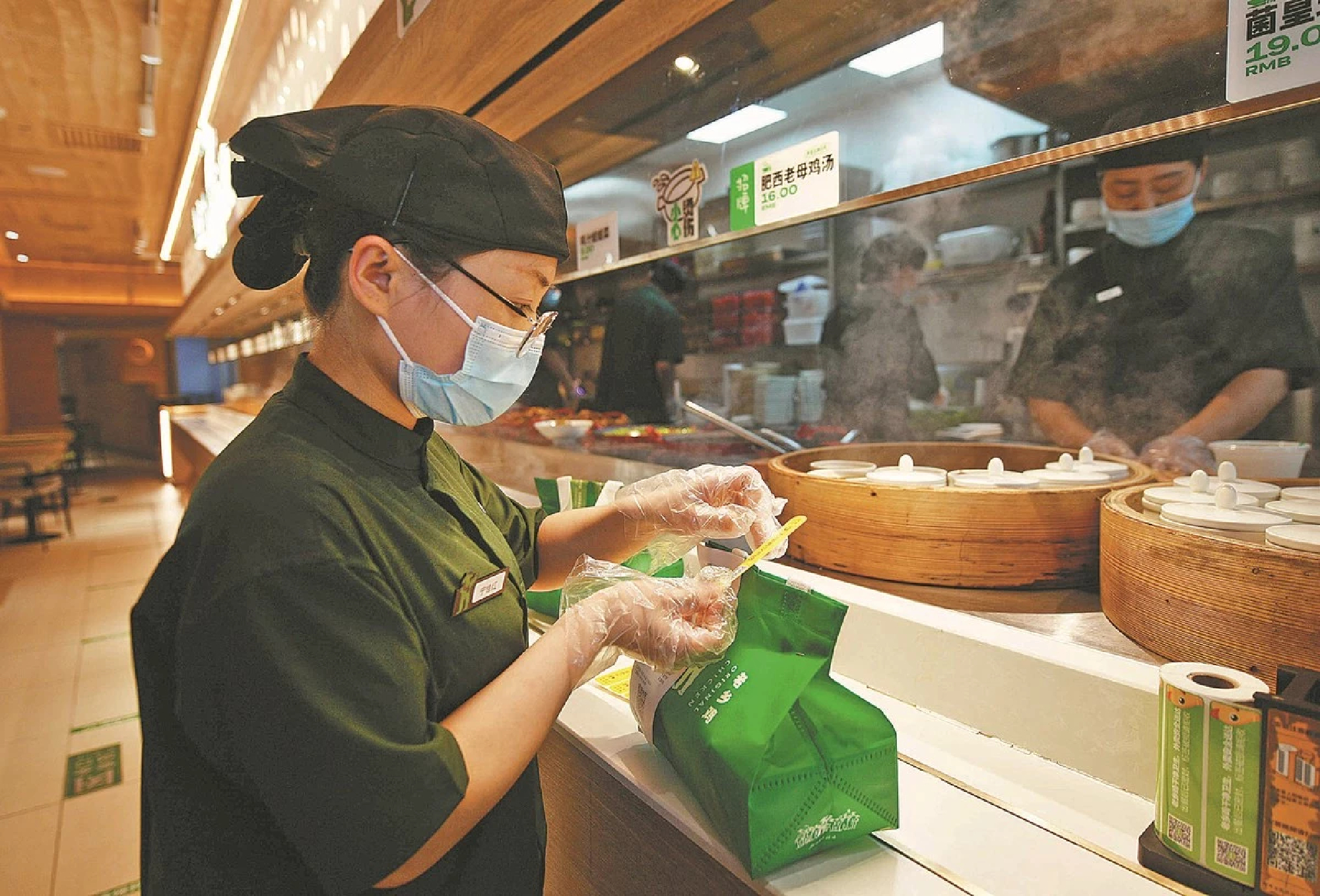
Offering takeouts and livestreaming are now must-have skills for F&B businesses, as Covid-19 continues to affect the city
In front of a rolling camera, Liu Chaoran introduces crayfish dishes while reassuring the viewers of their quality and encourages them to stock up.
Liu is the media director of Beijing’s Huda Restaurant, which is famous for its crayfish. The restaurant has turned to livestreaming to reach consumers remotely as COVID-19 continues to affect the city, according to a report published on the news website people.com.cn.
Huda is among legions of food and beverage businesses that are seeking a new revenue stream by giving themselves a digital boost.
According to a China Hospitality Association survey of 100 F&B companies, 90 percent of the companies saw year-on-year decreases in turnover and 28 percent of them recorded a drop of more than 80 percent from April to mid-May.
Restaurants in Beijing coped with the city’s recent suspension of on-premise dining by adopting methods such as offering takeouts and selling via livestream. These have become must-have skills for today’s restaurants, Zhang Shengtao, director of operations at Huda Restaurant, told people.com.cn.
Hotpot chain Haidilao has connected its branches that are qualified to offer takeout services with people from its WeChat mini program and third-party delivery platforms, according to Li Yu, who is in charge of Haidilao’s operations on the Chinese mainland.
“The plan is that once our restaurants in a city or region are unable to offer dine-in services due to COVID-19, they will be able to move all their operations online. This gives them the flexibility to make swift changes to their operations when necessary,” Li was quoted as saying by people.com.cn.
Xiao Sushi, a sushi chain that owns more than 30 branches in Beijing, is an early adopter of digital solutions for recouping COVID-19-induced losses.
Chen Xiaodong, the founder of the chain, told China Youth Daily that they started to shift operations to focus on takeout sales right after the initial outbreak of COVID-19 in 2020. As a result, the proportion of its online sales increased from 26 percent to 46 percent that year.
Backed by more than two years of experience, Xiao Sushi has grown into a mature takeout provider. “We saw an uptick in our takeout business in May when Beijing suspended dine-in services,” Chen said.
However, selling takeouts has its downsides. One of the biggest drawbacks, according to Chen, is that there is no interaction between diners and restaurant workers.
“We try to solve this problem by actively communicating with consumers via phone and other means to promptly address complaints should they arise,” Chen added.
And as it turns out, offering takeouts is not for every type of restaurant. A staff member of a barbecue restaurant in Beijing’s Chaoyang district told China Youth Daily that the restaurant hasn’t received many orders since it launched a takeout service.
“Most customers would order items like bibimbap. Very few of them would order barbecue dishes,” the staff member said.
To help F&B businesses through such difficulties, the China Hospitality Association hosted a summit and established a committee on the digital transformation of China’s F&B industry in Beijing on June 10.
The committee is made up of representatives of more than 20 companies that provide digital solutions to F&B businesses. They include Meituan, Hualala, and Weimob.
“Digital technology is particularly important at a time when COVID-19 has accelerated the digitalization of the industry,” Chen Xinhua, president of the China Hospitality Association, said at the summit.
“The adoption of new-generation technologies, such as big data, cloud computing, the internet of things, blockchain, and artificial intelligence, can gradually bring down the costs of transaction, production, and organization for F&B businesses,” Chen noted.
“The pandemic has dealt a heavy blow to China’s F&B businesses. But it has also made them recognize the necessity of strengthening their core competencies,” said Wang Dongfeng, an executive of Meituan.
For any F&B company, going digital has become one of the pillars for building its core competencies, Wang noted.
Li Zhenhong, CEO of Candao, a provider of catering management systems headquartered in Guangzhou, Guangdong province, said: “Decision-making in the digital era must be supported by data. Accelerating digital transformation can enhance a company’s ability to deal with crises.”
SINGAPORE – By 2023, Pulau Ubin’s main village could have up to 90 per cent of its energy needs powered by the sun, thanks to an upgraded power grid.
The upgraded grid was among the enhancements to Pulau Ubin that Minister for Culture, Community and Youth Edwin Tong announced on Saturday morning (June 25) at the annual Ubin Day event.
Mr Tong also said that personal alert buttons have been installed in the homes of elderly villagers by the National Parks Board and GovTech, under the trial. This allows seniors to quickly call for assistance in emergency situations.
Fire hydrants and hose reels will be also be installed in the island’s main village, he said, as well as at Kampong Sungei Durian and Ubin Living Lab to strengthen the island’s fire management response.
Previously, all households were given fire extinguishers, as part of a larger initiative to improve facilities on the island.
Mr Tong was joined at the event by National Development Minister Desmond Lee and NParks chief executive Kenneth Er. NParks is the central managing agency of Pulau Ubin.
The Pulau Ubin Micro-grid was launched by the Energy Market Authority (EMA) in 2013 to provide more than 30 of the island’s residents and businesses with a more reliable, cleaner and affordable electricity supply.
Director of EMA’s Industry Development Department Jeanette Lim told The Straits Times that when the grid was launched, about 15 per cent of the daily electricity demand was supplied through solar energy, while the remainder was supplied by diesel-powered generators connected to the grid.
Besides making the grid’s energy supply cleaner, EMA said on Saturday that NParks will be extending the grid’s coverage beyond the island’s main village to Kampong Sungei Durian, where 13 households will benefit.
“This will help address the villagers’ request for a cleaner and more reliable electricity supply and raise their quality of life,” said the authorities.
The grid is operated by EDPR Sunseap APAC. Ms Lim said those who consume energy from the grid pay a fixed rate of $0.80/kWh, which is lower compared with the cost of operating their own diesel generators, which was about $1.20/kWh.
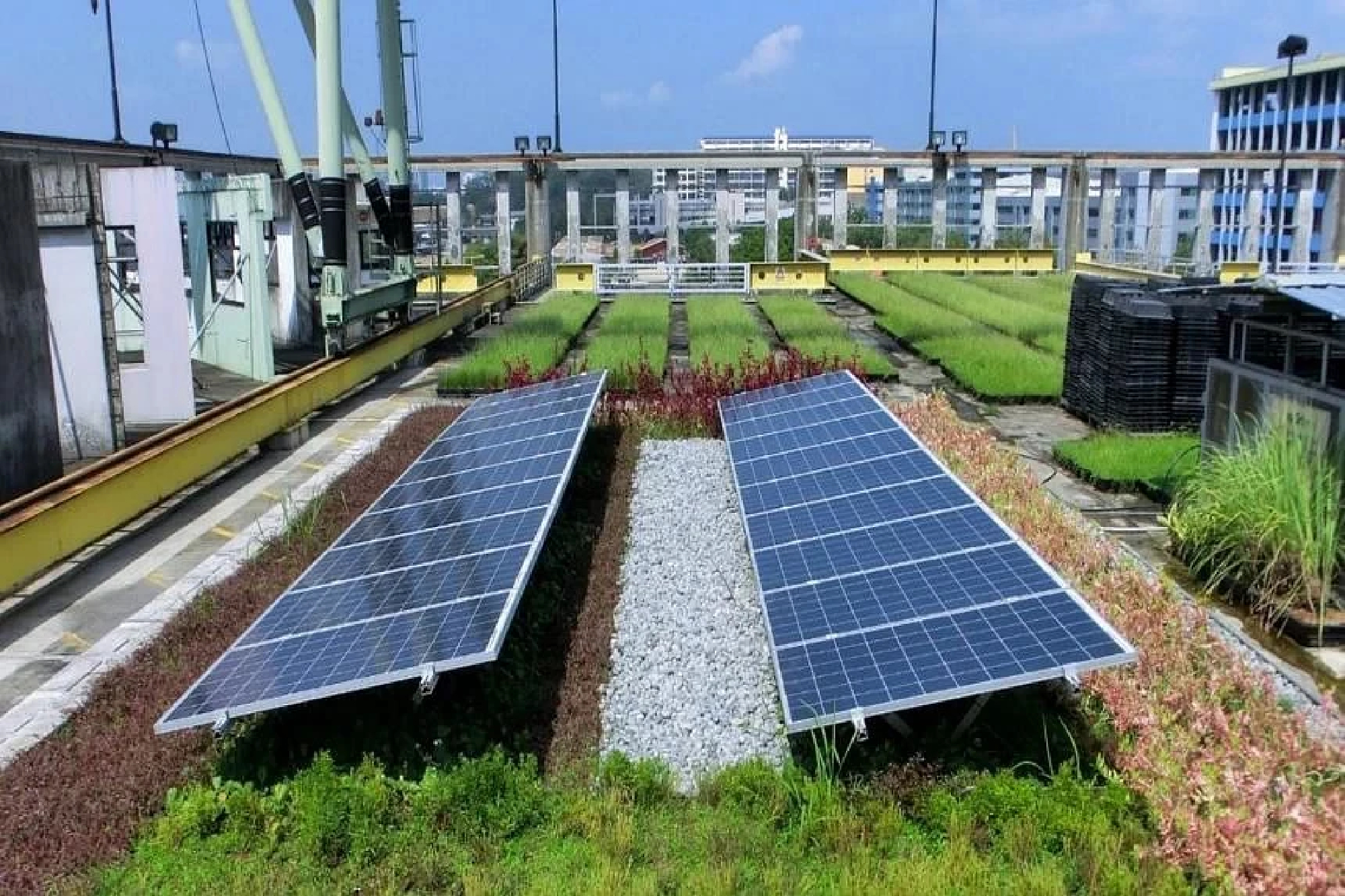
To optimise the grid’s solar photovoltaic (PV) system’s output, its operators will add plants next to solar panels to create a “solar green roof”. This reduces the ambient temperature of solar PV systems by 3 to 8 deg C, increasing its efficiency by 1.5 to 4 per cent.
An energy storage system will also be deployed to help improve the reliability of the grid.
On Saturday, Mr Tong also gave updates about species recovery efforts it has undertaken over past years.
For instance, since the development of nesting sites for the blue-throated bee-eater, a species under NParks Species Recovery Programme, NParks has recorded 21 nesting occurrences.
Monitoring of the current breeding season is still ongoing.
Meanwhile, the enhancement of Pekan Quarry with floating wetlands has successfully increased the area of usable wildlife habitat for birds, leading to more sightings of herons, kingfishers and waterhens in the area.
A first breeding of the lesser whistling duck at Pekan Quarry was also recorded this year. “It was only last year that we first spotted a pair of them using the floating wetlands and floating logs to roost,” said Mr Tong. “Now the two ducks have grown into their own family.”
By Ng Keng Gene
Asia News Network: The Nation (Thailand), The Korea Herald, The Straits Times (Singapore), China Daily, Jakarta Post, The Star and Sin Chew Daily (Malaysia), The Statesman (India), Philippine Daily Inquirer, Yomiuri Shimbun and The Japan News, Gogo Mongolia, Dawn (Pakistan), The Island (Sri Lanka), Kuensel (Bhutan), Kathmandu Post (Nepal), Daily Star (Bangladesh), Eleven Media (Myanmar), the Phnom Penh Post and Rasmei Kampuchea (Cambodia), The Borneo Bulletin (Brunei), Vietnam News, and Vientiane Times (Laos).
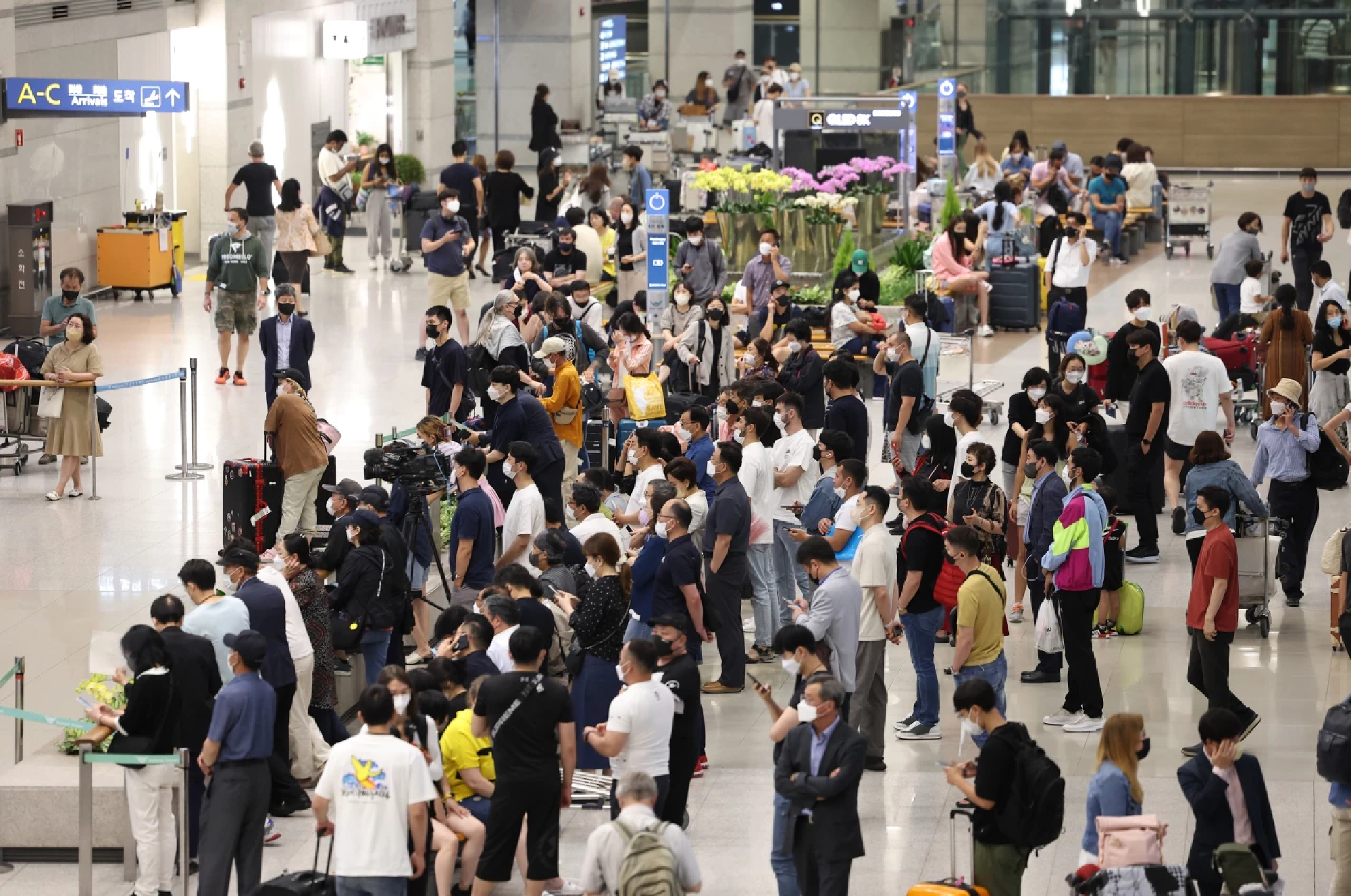
South Korea’s first confirmed monkeypox patient, who entered the country from Germany, was found to have proceeded unchecked through Incheon Airport’s health inspection, according to the Korea Disease Control and Prevention Agency.
The KDCA said the monkeypox patient reported at the airport’s lobby after having passed the airport’s screening Tuesday.
When entering the country, the patient’s symptoms were a low-grade fever of 37 degrees Celsius, sore throat, fatigue and lesions around the body. The patient, however, did not reveal the symptoms at the health screening and passed through.
Another monkeypox patient, who was eventually sorted out as a suspected case after self-reporting, was also able to pass through the airport’s health screening upon reporting no symptoms when entering the country.
That monkeypox patient later said he or she had had a sore throat and lesions around the body since Sunday. But the person was able to pass the health screening as not having a fever.
As monkeypox patients have been able to enter the country without raising flags in the screening process, concerns and criticism against the country’s response measures have risen.
Amid mounting fears over the spread of monkeypox in the country, health authorities said that the risk of community spread of monkeypox is quite low, and the public should not worry too much about it becoming widespread.
The country’s health authorities added that the government would strengthen measures for passengers entering South Korea to report their symptoms more accurately.
Meanwhile, the two monkeypox patients are currently under treatment at Incheon Medical Center. According to the KDCA, the number of people who had been in contact with the monkeypox patients reached 49. Eight of those people had been in close contact with the patients and were classified as being at medium risk for monkeypox.
By Shim Woo-hyun
Asia News Network: The Nation (Thailand), The Korea Herald, The Straits Times (Singapore), China Daily, Jakarta Post, The Star and Sin Chew Daily (Malaysia), The Statesman (India), Philippine Daily Inquirer, Yomiuri Shimbun and The Japan News, Gogo Mongolia, Dawn (Pakistan), The Island (Sri Lanka), Kuensel (Bhutan), Kathmandu Post (Nepal), Daily Star (Bangladesh), Eleven Media (Myanmar), the Phnom Penh Post and Rasmei Kampuchea (Cambodia), The Borneo Bulletin (Brunei), Vietnam News, and Vientiane Times (Laos).
HÀ NỘI — A grand celebration was held at Hà Nội Opera House on Friday to mark the 55th anniversary of Việt Nam-Cambodia’s diplomatic relations (June 24, 1967-2022), with the participation of high-level delegations from both countries led by their respective Deputy Prime Ministers.
Vietnamese Deputy Prime Minister Lê Minh Khái in his address stressed that geographical proximity and historical, and cultural similarities are the solid foundation for the two countries to cultivate one of the oldest relations in Southeast Asia.
He said after the Democratic Republic of Việt Nam and the Kingdom of Cambodia officially set up diplomatic ties 55 years ago, the two had been closely accompanying each other in the fight for national liberation, which eventually came in the spring of 1975.
When Cambodia faced the genocidal threat from the Pol Pot regime, Việt Nam even though still reeling from the consequences of war devastations, provided support for Cambodian revolutionary forces to help defeat the regime on January 7, 1979, bringing a ‘revival’ to the country, Khái said, emphasising the appreciation to the troops and people of the two countries who have made sacrifices for Cambodia’s freedom and peace and for the brotherly relations between Việt Nam and Cambodia.
The bilateral ties had been continually consolidated since then, bringing practical benefits to the two countries, he noted.
Two-way trade in 2021 reached US$9.54 billion, up 79.1 per cent compared to 2020, and in the first five months of 2022 alone, the figure has reached US$5.54 billion, up 18 per cent compared to the same period last year.
After the two countries reopened, Vietnamese tourists to Cambodia in the first three months of 2022 had reached 46,000, the highest number among arrivals to the country.
Deputy PM Khái underlined that as one of the important pillars of the relationship between the two countries, the two sides affirmed that they would not allow any hostile forces to use their territories to threaten the other country’s security.
On the basis of treaties and agreements reached, the two sides were actively coordinating to implement the demarcation and planting of landmarks on the land border, with 84 per cent of the line already completed, and talks on the remaining 16 per cent underway.
Khái said people-to-people exchanges were flourishing, with hundreds of long-term scholarships by Việt Nam granted to Cambodia every year, frequent cultural and arts performances held at the border localities, and a series of medical checkups and medication aid for Cambodian people by Vietnamese volunteer doctors, etc.
Deputy PM Khái congratulated Cambodia on recent achievements such as the successful organisation of the 2022 communal elections, being the first country in the region and the second country in the world to declare eradication of COVID-19, quick reopening and recovery, as well as fulfilling the responsibilities as the chair of ASEAN this year, constantly improving its position in the international arena.
“Việt Nam is glad to see the achievements of Cambodia and firmly believes Cambodia will continue to reap further greater achievements in building a country of peace, stability, and prosperity, and with a greater role in the region and in the world,” he said.
Việt Nam’s consistent policy is to “support an independent, peaceful, neutral and developed Cambodia,” Deputy PM Khái said, adding that the Vietnamese Party, State, and people attach great importance to the good neighbourly relationship, traditional friendship, comprehensive and long-term sustainable cooperation with Cambodia.
Deputy Prime Minister and Vice President of the Cambodian People’s Party Men Sam An said Việt Nam and Cambodia had always been close friends, good and trustworthy neighbours.
After fighting side by side for the national liberation and unification, the two countries had opened up chapters in history, with marked progress on all fronts – especially diplomacy, defence, trade, investment, and tourism, she said.
People at the border areas were getting all the more closer to each other thanks to the visa waiver policy and the multitude of transport methods available – from roads to waterways, and by air – which helped facilitate the maintenance of peace, stability, and economic development as well as poverty reduction in these localities.
Expressing the most sincere and profound respect and gratitude for the assistance from the Party, State, Army, and people of Việt Nam towards the Cambodian people, Deputy PM Cambodia Men Sam An said Việt Nam’s support had contributed to the development of Cambodia.
This anniversary was a testament to the consolidation and cultivation of the friendship, friendship, and good cooperation between the peoples of the two countries, which is forever expanding and holding firm, she said.
Later on Friday, the two Deputy PMs of Việt Nam and Cambodia held official talks in Hà Nội. — VNS
Asia News Network: The Nation (Thailand), The Korea Herald, The Straits Times (Singapore), China Daily, Jakarta Post, The Star and Sin Chew Daily (Malaysia), The Statesman (India), Philippine Daily Inquirer, Yomiuri Shimbun and The Japan News, Gogo Mongolia, Dawn (Pakistan), The Island (Sri Lanka), Kuensel (Bhutan), Kathmandu Post (Nepal), Daily Star (Bangladesh), Eleven Media (Myanmar), the Phnom Penh Post and Rasmei Kampuchea (Cambodia), The Borneo Bulletin (Brunei), Vietnam News, and Vientiane Times (Laos).
The Cabinet Secretariat and the Japan Tourism Agency plan to establish a public-private consultative body to promote working vacations.
The body, which will likely launch by the end of this fiscal year, will communicate the significance and benefits of “workations” and encourage companies to embrace the working style. The initiative also aims to revitalize regional economies, which have been sluggish amid the coronavirus pandemic.
About 30 entities, including local governments, tourism bodies and companies open to the idea, are expected to join the consultative organization. Members will gather case studies from companies that have already introduced workations and regional entities that have hosted significant numbers of “workationers.” The group will work toward normalizing working vacations in Japan such as by serving as an intermediary between companies and regional entities.
Teleworking has become more popular as a result of the pandemic, and workations are attracting increasing attention. For example, an employee might lodge for a time in a nature-rich regional rea, working remotely on weekdays and vacationing on weekends. Some observers say this type of working style boosts work efficiency and helps generate new ideas.
In Japan, demand for travel rises at certain times of the year, such as weekends, extended holidays and the year-end holiday season. But travelers usually rack up shorter consecutive overnight stays than people in Western countries, which is believed to be a factor in the sluggish growth of domestic travel spending.
Workationers, however, usually make longer sojourns that include weekdays, leading to high hopes among people and businesses in regional areas. This has prompted local governments, such as Hyuga, Miyazaki Prefecture, to start building workation hubs.
To date, uptake of the working style has been relatively slow. According to an online survey of 600 companies conducted last year by the tourism agency, only 5.3% of respondents said they had introduced working vacations. Among reasons cited for their lack of introduction, respondents said, “It’s difficult to distinguish between work and a vacation,” and “Their effectiveness can’t be gauged.”
On June 17, the tourism agency began seeking companies and local governments to take part in an experimental project at about 30 locations nationwide. The project will examine whether working vacations improve concentration and reduce stress levels by having employees of participating companies spend time in regional areas and interact with local residents. Experts will provide advice to participating companies and regional entities, and expenses — such as accommodation costs — will be covered by the central government.
Asia News Network: The Nation (Thailand), The Korea Herald, The Straits Times (Singapore), China Daily, Jakarta Post, The Star and Sin Chew Daily (Malaysia), The Statesman (India), Philippine Daily Inquirer, Yomiuri Shimbun and The Japan News, Gogo Mongolia, Dawn (Pakistan), The Island (Sri Lanka), Kuensel (Bhutan), Kathmandu Post (Nepal), Daily Star (Bangladesh), Eleven Media (Myanmar), the Phnom Penh Post and Rasmei Kampuchea (Cambodia), The Borneo Bulletin (Brunei), Vietnam News, and Vientiane Times (Laos).
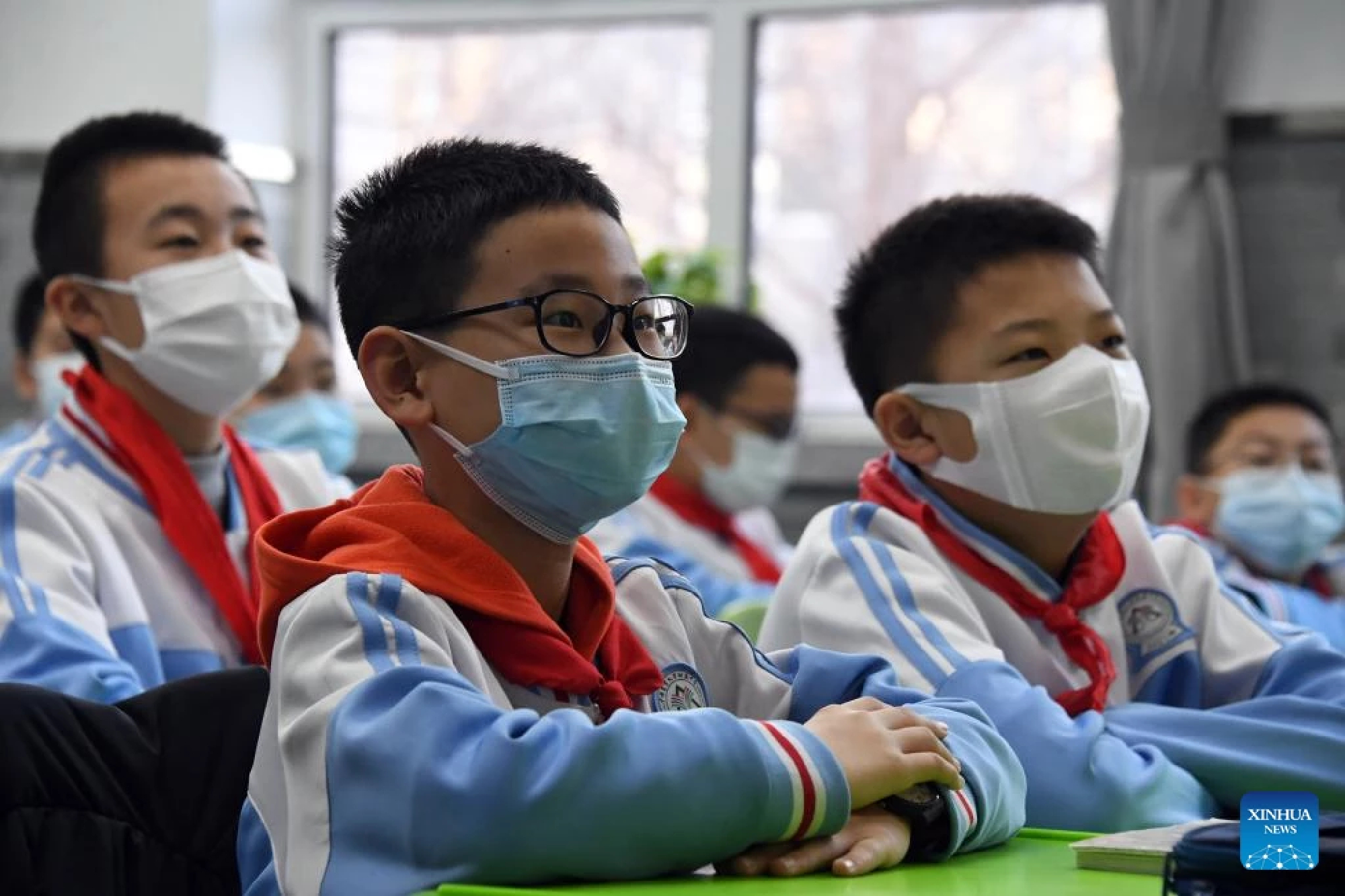
Beijing’s education commission announced on Saturday that students of primary and high schools can go back to campus on Monday, as the city’s COVID-19 epidemic situation has improved in recent days.
According to the announcement, students of all grades of primary schools, students at grade one and grade two of middle and high schools can resume classroom education. Earlier, senior year students at middle and high schools resumed on-campus study and graduation examinations.
Children in kindergartens can go back to school on July 4.
Meanwhile, a city-wide examination for grade two students at middle schools will be held on July 17.
Students in controlled residential communities should continue to study online at home.
In early May, students of kindergartens, primary and middle and high schools in Beijing were asked not to go back to campus after the May Day holiday in order to prevent infection risks since the city was reporting dozens of new locally transmitted cases daily.
Asia News Network: The Nation (Thailand), The Korea Herald, The Straits Times (Singapore), China Daily, Jakarta Post, The Star and Sin Chew Daily (Malaysia), The Statesman (India), Philippine Daily Inquirer, Yomiuri Shimbun and The Japan News, Gogo Mongolia, Dawn (Pakistan), The Island (Sri Lanka), Kuensel (Bhutan), Kathmandu Post (Nepal), Daily Star (Bangladesh), Eleven Media (Myanmar), the Phnom Penh Post and Rasmei Kampuchea (Cambodia), The Borneo Bulletin (Brunei), Vietnam News, and Vientiane Times (Laos).
A robotic finger covered with artificial skin tissue cultured from living cells has been successfully developed by a team of scientists in Japan.
Led by University of Tokyo professor in mechanical engineering, Shoji Takeuchi, the invention enables damaged skin to be regenerated. It is likely to lead to the development of robots whose skin will have a similar texture to that of humans.
The robot finger is about a centimetre in diameter and about 5 centimetres long. Its surface is covered with cells cultured from human skin.
The scientists devised the culture method to produce two different parts that form the skin: the epidermis for the surface and the dermis beneath it.
The cultured skin is 1.5 millimetres thick. It is strong enough that it won’t break even if the finger inside is bent or stretched at any of its three joints. If the surface is cut or damaged, the skin can repair itself by having a collagen sheet stuck to it and being immersed in culture solution.
The skin is not for long-term use at the moment because it has no blood vessels to supply it with nutrition.
“We’d like to upgrade it by adding nerves and blood vessels in the future,” Takeuchi said.
“It’s a daring project,” said Osaka University Prof Hiroshi Ishiguro, a specialist in robotics.
“It is an important step to build a robot that looks and feels like a human. Maybe it can even break through the problems posed by silicon rubber and other materials that have been applied in such projects.”
The Japan News
Asia News Network
Asia News Network: The Nation (Thailand), The Korea Herald, The Straits Times (Singapore), China Daily, Jakarta Post, The Star and Sin Chew Daily (Malaysia), The Statesman (India), Philippine Daily Inquirer, Yomiuri Shimbun and The Japan News, Gogo Mongolia, Dawn (Pakistan), The Island (Sri Lanka), Kuensel (Bhutan), Kathmandu Post (Nepal), Daily Star (Bangladesh), Eleven Media (Myanmar), the Phnom Penh Post and Rasmei Kampuchea (Cambodia), The Borneo Bulletin (Brunei), Vietnam News, and Vientiane Times (Laos).
The Lao government will provide fuel importers with a Letter of Credit worth US$200 million (7.1 billion baht) for the purchase of fuel to meet the nation’s needs for the next two months, Deputy Prime Minister Sonexay Siphandone told the National Assembly on Thursday.
This amount will be enough to purchase 200 million litres of fuel, which would cover demand for July and August at 100 million litres per month, Sonexay said.
The government will continue to provide foreign currency to importers throughout the year in a bid to procure sufficient fuel, he added in response to Assembly members’ questions about the government’s plan to deal with the ongoing fuel shortage.
The government is providing credit despite limited foreign currency reserves. The plunging value of the kip has placed an added burden on importers struggling to source sufficient foreign currency to buy much-needed fuel, all of which must be imported.
Sonexay said the government would source foreign currency from companies that export minerals and agricultural produce, which would be given to fuel importers over the remaining months of this year. The government allocated $60 million for use by fuel importers in June and the Finance Ministry recently provided an additional $10 million.
From June 1-21, $102 million was sourced to pay for imported fuel, which was enough to cover normal needs and included money sourced from commercial banks. This has enabled more petrol stations to open, Sonexay said.
Laos imports all of its fuel – on average 100-120 million litres per month.
Prior to the fuel-price crisis, it cost the country $600-$700 million to import sufficient fuel for one year. But that cost has doubled in line with the spiralling price of fuel on the world market, Sonexay said.
“The demand for foreign currency has also risen sharply, so sourcing sufficient foreign currency to buy fuel is difficult,” he told Assembly members.
Laos currently buys fuel from Vietnam, Thailand, Malaysia and Singapore.
The government is looking at ways to diversify sources of fuel it imports so that disruption to one source would not cause a crisis, the deputy PM said.
In the longer term, the government will consider ways to promote investment in oil refinery plants in Laos where crude oil could be refined to ensure fuel security. There are currently no such plants operational in the country.
Sonexay also vowed action against profiteers who manipulate exchange rates unlawfully, after learning that the disparity between exchange rates offered by commercial banks and some currency exchange units was inappropriately large.
Currency exchange units found to be in breach of the regulations have had their licences revoked, he added.
Vientiane Times
Asia News Network
Asia News Network: The Nation (Thailand), The Korea Herald, The Straits Times (Singapore), China Daily, Jakarta Post, The Star and Sin Chew Daily (Malaysia), The Statesman (India), Philippine Daily Inquirer, Yomiuri Shimbun and The Japan News, Gogo Mongolia, Dawn (Pakistan), The Island (Sri Lanka), Kuensel (Bhutan), Kathmandu Post (Nepal), Daily Star (Bangladesh), Eleven Media (Myanmar), the Phnom Penh Post and Rasmei Kampuchea (Cambodia), The Borneo Bulletin (Brunei), Vietnam News, and Vientiane Times (Laos).






 SootinClaimon.Com