Philippines ends talks for joint oil, gas exploration with China

#SootinClaimon.Com : ขอบคุณแหล่งข้อมูล : หนังสือพิมพ์ The Nation.

https://www.nationthailand.com/international/40016993


Negotiations for planned joint oil exploration between the Philippines and China in the West Philippine Sea (WPS) have been completely terminated upon instructions of President Duterte, Foreign Secretary Teodoro Locsin Jr said on Thursday.

Philippines ends talks for joint oil, gas exploration with China

“The president had spoken. I carried out his instructions to the letter: oil and gas discussions are terminated completely. Nothing is pending; everything is over,” Locsin said in his speech during the 124th founding anniversary celebration of the Department of Foreign Affairs.

“Three years on and we had not achieved our objective of developing oil and gas resources so critical for the Philippines — but not at the price of sovereignty; not even a particle of it,” he added.

According to the country’s top diplomat, just because the two countries “have differences does not mean we have to fight over everything”.

In that spirit, Locsin said he tried for three years to come to an agreement to facilitate exploration for and exploitation of oil and gas in the West Philippine Sea.

“We got as far as it is constitutionally possible to go. One step forward from where we stood on the edge of the abyss is a drop into a constitutional crisis,” he said.

“That explains the sudden pull-back on my part which unravelled three years of sincere hard work on the part of [Chinese Foreign Minister] Wang Yi and me. We had both tried to go as far as we could — without renouncing China’s aspiration on his part; and constitutional limitations on my part. I shut down shop completely,” Locsin said.

He said it remains with the new administration to protect the country’s sovereignty “all the way to the wire”.

“Surrender of any portion of Philippine sovereignty is not an option. Not for love; not for money,” Locsin said.

In April, the Department of Energy ordered the suspension of oil exploration activities in the West Philippine Sea.

The order came a month after Duterte, during a public address, said the country had no choice but to abide by a supposed joint exploration deal with Beijing to avoid conflict, and that someone “from China” had reminded him of this upon learning of other companies’ planned activities in the area.

Duterte added that the same person also warned him that Beijing would send soldiers to the West Philippine Sea should he deploy the military there.

The department order effectively stopped “all exploration activities” for Service Contracts 72 and 75 — two sites off Palawan province earlier identified by the government as possible areas of joint energy exploration with Beijing — pending a go-signal from the Security, Justice and Peace Coordinating Cluster which cited “the political, diplomatic and national security implications of any activity in the West Philippine Sea”.

As a result, PXP Energy Corp and its subsidiary Forum Energy Ltd, which had been hired by the government to conduct exploration activities, had to declare a force majeure, saying the order prevented them from “performing their obligations”.

China has been known to intimidate South China Sea claimants conducting energy exploration activities to pressure them into accepting joint development deals, according to critics.

On negotiations for a code of conduct in the South China Sea, Locsin said the Philippines insisted that “it does not concede Chinese supremacy to the exclusion of other powers on a pacific footing”.

“To be fair, China has never asked for that,” he said.

“If her interest is harnessing the stopping power of water to stall an attack on herself, then littoral states like ours can give her ample forewarning. We have a mutual defence treaty with our only conceivable military ally,” said Locsin, referring to the United States.

“We have no joint aggression pact with any power. To every intrusion we responded with protest; if it comes to it, we will answer with action,” he added.

Locsin said Duterte and Defence Secretary Delfin Lorenzana had given him “the start of a credible retaliatory force and thereby helped me turn our foreign policy into a fist in the iron glove of the armed forces”.

In upholding the rule of law, he said the country held on to the United Nations Convention on the Law of the Sea and the 2016 arbitral award, which he called the “twin anchors” of the Philippine position on the West Philippine Sea and the South China Sea.

“Without the rule of law, none can thrive nor long survive the resulting anarchy. And, no, the game of anarchy does not always go to the strongest. The weaker can strike up an alliance with a yet stronger to keep the bone of contention for itself or deny it to all,” he said.

“But let me say one thing: we have not surrendered a single inch of territory or a drop of our waters. Not by word or deed have we weakened our right to everything in the West Philippine Sea.

“Without inviting pity by asking, we achieved an international consensus that right is with us and might cannot ever take it away. In the 21st century, the first incontestable and most significant victory at sea is Filipino,” Locsin said.

Philippine Daily Inquirer

Asia News Network

Asia News Network: The Nation (Thailand), The Korea Herald, The Straits Times (Singapore), China Daily, Jakarta Post, The Star and Sin Chew Daily (Malaysia), The Statesman (India), Philippine Daily Inquirer, Yomiuri Shimbun and The Japan News, Gogo Mongolia, Dawn (Pakistan), The Island (Sri Lanka), Kuensel (Bhutan), Kathmandu Post (Nepal), Daily Star (Bangladesh), Eleven Media (Myanmar), the Phnom Penh Post and Rasmei Kampuchea (Cambodia), The Borneo Bulletin (Brunei), Vietnam News, and Vientiane Times (Laos).

Published : June 24, 2022

By : Philippine Daily Inquirer

Liveability Index: Dhaka seventh least liveable city in the world

#SootinClaimon.Com : ขอบคุณแหล่งข้อมูล : หนังสือพิมพ์ The Nation.

https://www.nationthailand.com/international/40016981


Dhaka is the seventh least liveable city in the world, according to the Economist Intelligence Unit’s Global Liveability Index for 2022. The annual global survey was published Thursday.

Liveability Index: Dhaka seventh least liveable city in the world

The Global Liveability Index ranked 173 cities and Bangladesh’s capital became 166, with 39.2 points.

The index ranks the cities based on more than 30 qualitative and quantitative factors across five broad categories: stability, healthcare, culture and environment, education, and infrastructure.

In 2021, Dhaka ranked fourth least liveable among 140 cities in the world. It ranked third-worst in 2019 and second-worst in the 2018 index. No report was published in 2020 due to the pandemic.

Vienna of Austria has been ranked the most liveable city in the world with 99.1 points, while Copenhagen of Denmark and Zurich of Switzerland ranked second and third, respectively, with 98 and 96.3 points.

Damascus, the war-torn capital of Syria, remains the least liveable city with 30.7 points, while Lagos of Nigeria ranked second-worst with 32.2 points and Tripoli of Libya ranked third-worst with 32.5 points.

Karachi of Pakistan ranked 168th with 37.5 points.

Adil Mohammad Khan, former general secretary of Bangladesh Institute of Planners (BIP), said there has been no significant development in the city’s quality of life in recent times.

He said the main reason behind Dhaka’s present situation is the lack of growth control, which is crucial for advancing in the ranking.

Adil also mentioned failure to protect the environment, lack of proper management, unchecked number of vehicles, especially motorcycles, entering the city, and encroachment of water bodies as major reasons behind Dhaka’s gradual downfall.

“If there is no control on growth, it will not work even by increasing roads or recovering canals, as when one side of a canal is being recovered the other side is getting occupied again.”

Padma Bridge has already been constructed, and now decentralisation of the city is very important, he said. “If we can reduce Dhaka’s density of population through decentralisation, we will be able to proceed in other indicators gradually.”

The industries, which are one of the main causes behind the low ranking, will have to be shifted gradually, he said. Then it will be possible to make Dhaka liveable, otherwise, the pressure on the capital will continue to increase.

“The government will have to control the city’s growth rate strictly. Also, it should not allow any new industrial and commercial facility for its improvement,” he added.

Daily Star

Asia News Network

Asia News Network: The Nation (Thailand), The Korea Herald, The Straits Times (Singapore), China Daily, Jakarta Post, The Star and Sin Chew Daily (Malaysia), The Statesman (India), Philippine Daily Inquirer, Yomiuri Shimbun and The Japan News, Gogo Mongolia, Dawn (Pakistan), The Island (Sri Lanka), Kuensel (Bhutan), Kathmandu Post (Nepal), Daily Star (Bangladesh), Eleven Media (Myanmar), the Phnom Penh Post and Rasmei Kampuchea (Cambodia), The Borneo Bulletin (Brunei), Vietnam News, and Vientiane Times (Laos).

Published : June 24, 2022

By : The Daily Star

Singapore begins importing renewable energy from Laos via Thailand, Malaysia

#SootinClaimon.Com : ขอบคุณแหล่งข้อมูล : หนังสือพิมพ์ The Nation.

https://www.nationthailand.com/international/40016979


Singapore on Thursday began importing renewable energy from Laos via Thailand and Malaysia – a move that marks the first multilateral cross-border electricity trade involving four Asean countries and the first renewable energy import into Singapore.

Singapore begins importing renewable energy from Laos via Thailand, Malaysia

Up to 100 megawatts (MW) of hydropower from Laos will be brought into Singapore using existing interconnectors under the Lao PDR-Thailand-Malaysia-Singapore Power Integration Project – an intergovernmental project set up in 2014 to study the feasibility of cross-border power trade.

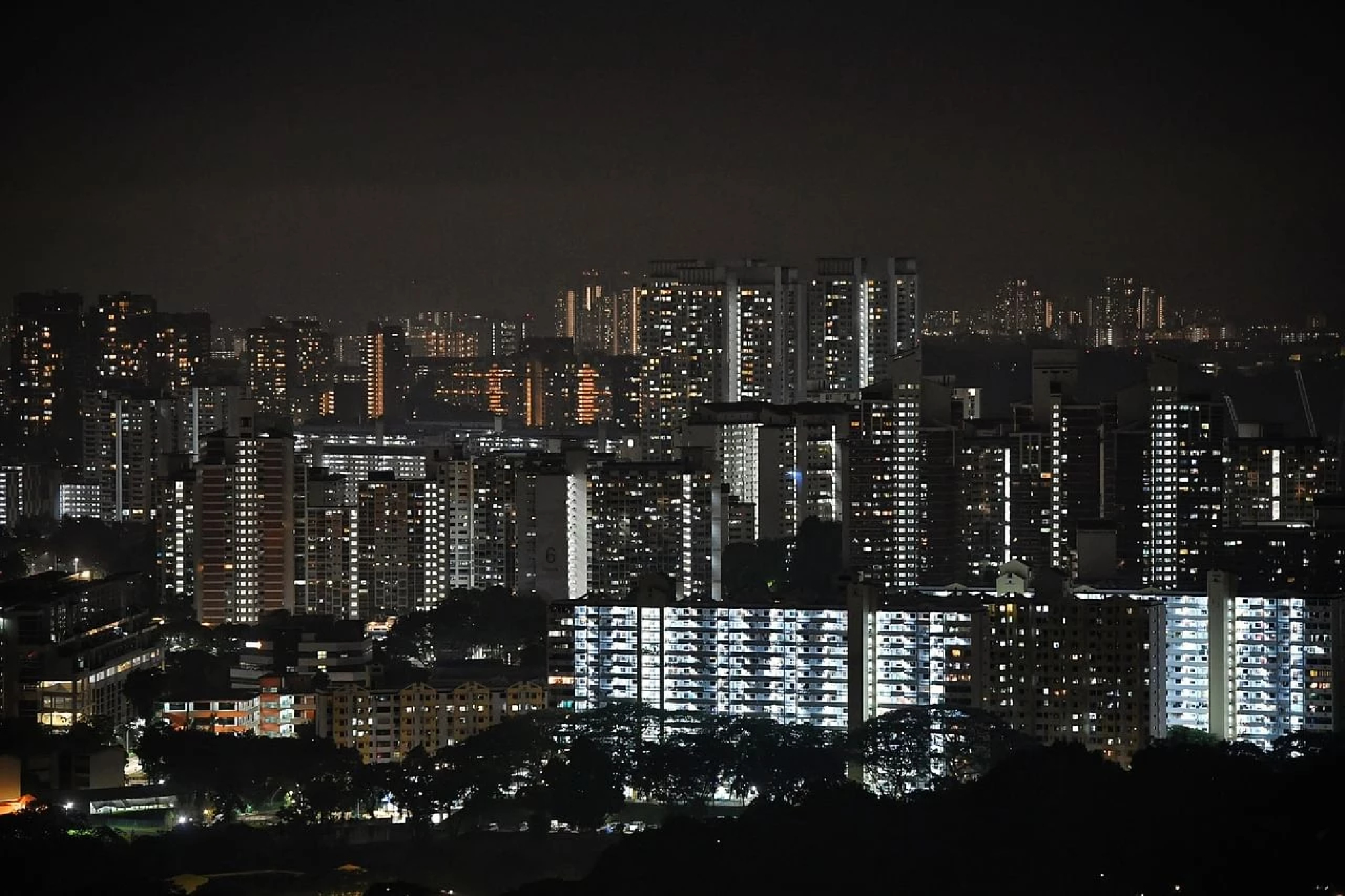
The 100MW account for about 1.5 per cent of Singapore’s peak electricity demand in 2020 and could power around 144,000 four-room Housing Board flats for a year.

The cross-border electricity flow follows an agreement inked in September last year between Keppel Electric – a wholly-owned subsidiary of Keppel Infrastructure Holdings – and Electricite du Laos – the state-owned power supplier of Laos – to import renewable energy into Singapore.

The two organisations have also signed an initial two-year power purchase agreement.

The import will serve to test the technical and regulatory frameworks for importing electricity into Singapore, facilitating larger-scale imports from the region in the future.

The power integration project is a step forward in the development of a broader Asean power grid, said the Energy Market Authority (EMA), the Ministry of Energy and Mines of Laos, Electricite du Laos and Keppel in a joint statement.

“The Asean power grid is a key regional initiative to enhance interconnectivity, energy security and sustainability through existing electricity interconnections,” the joint statement added.

“This provides opportunities to tap on low-carbon and renewable energy sources in the region and contributes towards economic development and improving energy security and stability.”

Daovong Phonekeo, Minister of Energy and Mines of Laos, said his country aims to be a major supporter of renewable energy in the region.

“The country has more than 8,000MW of installed hydropower capacity, which is set to grow in the near future to support its domestic demand and future exports… This project proves that we are on the right track as we promote the development of clean energy resources, including solar and wind power,” he said.

Singapore had in October 2021 announced plans to import around 30 per cent of its electricity from low-carbon sources, such as renewable energy plants, by 2035, to reduce the carbon footprint of its power sector.

At present, more than 95 per cent of Singapore’s electricity is generated by burning natural gas, a fossil fuel. Burning fossil fuels produces planet-warming carbon dioxide, which contributes to climate change.

The power sector is responsible for about 40 per cent of Singapore’s total emissions; however, a recent report commissioned by EMA found it would be feasible for the sector to reach net-zero emissions by 2050.

But land constraints in Singapore hinder the construction of large solar farms, and the country also cannot access alternative forms of renewable energy, such as wind energy or hydropower.

Still, Singapore’s power sector can reach its net-zero target by 2050 by importing – among other things – clean energy generated elsewhere, the report by the Energy 2050 Committee has found.

Other potential solutions include developing infrastructure suitable for clean-burning hydrogen to be used as a fuel, as well as investing in emerging low-carbon technologies that will enable carbon dioxide to be captured from smokestacks before it is released into the atmosphere.

Keppel Electric is the first entity to be issued an electricity importer licence by EMA. But the authority has also announced plans to import electricity from other sources.

Last October, the EMA announced that YTL PowerSeraya – a generation company and electricity retailer in Singapore – would be embarking on a two-year trial project to import 100MW of electricity from Malaysia. This pilot is expected to start this year.

EMA is also working with power generation company PacificLight Power on a pilot to import 100MW from a solar farm in Pulau Bulan, Indonesia.

Electricity will be supplied via a new interconnector that directly connects a solar farm in Pulau Bulan to PacificLight’s power station in Singapore. The pilot is expected to be commissioned by around 2024.

EMA chief executive Ngiam Shih Chun said: “The commencement of electricity imports from Laos marks a significant milestone in our regional energy cooperation… Interconnected power grids can accelerate the deployment of renewable energy, promote supply diversification, and strengthen grid stability for the region as a whole.”

Victor Nian, CEO of independent think-tank Centre for Strategic Energy and Resources, said that the import of 100MW of renewable energy from Laos is unlikely to have an impact on electricity prices here since the imported electricity makes up only a small fraction of the country’s energy mix.

But even if more renewable energy is imported into Singapore in the future, the impact on electricity prices will depend on a number of factors, including the price at which Singapore is buying the imported electricity and the quantity imported.

EMA declined to reveal the cost of imported renewable energy.

Nian said the energy import pilots will have to look into a number of issues to determine the feasibility of scaling up cross-border electricity flow.

A key one, he noted, is how imported electricity will affect the reliability of Singapore’s power grid.

“Right now, because only a small quantity of electricity is imported, any disruptions in the supply would not have an impact on electricity supply in Singapore,” he said. “But in the future, if more electricity is imported, Singapore will have to study how to safeguard electricity reliability in case of any supply disruptions.”

Such disruptions could be caused by the intermittent nature of certain sources of renewable energy – less solar power can be harnessed on a cloudy day, for instance – and due to geopolitical situations, for example, if countries ban the export of renewable energy.

Other issues to consider would be whether cross-border infrastructure could handle the transnational flow of electricity and how electricity imports would affect generation companies in Singapore.

“Would renewable energy imports replace some generation capacity in Singapore? If some generation plants were to be kept as a standby in case of regional disruptions, then the impact on the business models of the generation companies would have to be studied too,” said Nian.

Audrey Tan

The Straits Times

Asia News Network

Asia News Network: The Nation (Thailand), The Korea Herald, The Straits Times (Singapore), China Daily, Jakarta Post, The Star and Sin Chew Daily (Malaysia), The Statesman (India), Philippine Daily Inquirer, Yomiuri Shimbun and The Japan News, Gogo Mongolia, Dawn (Pakistan), The Island (Sri Lanka), Kuensel (Bhutan), Kathmandu Post (Nepal), Daily Star (Bangladesh), Eleven Media (Myanmar), the Phnom Penh Post and Rasmei Kampuchea (Cambodia), The Borneo Bulletin (Brunei), Vietnam News, and Vientiane Times (Laos).

Published : June 24, 2022

By : The Straits Times

New Philippines tax chief intends to collect Marcos estate tax

#SootinClaimon.Com : ขอบคุณแหล่งข้อมูล : หนังสือพิมพ์ The Nation.

https://www.nationthailand.com/international/40016968


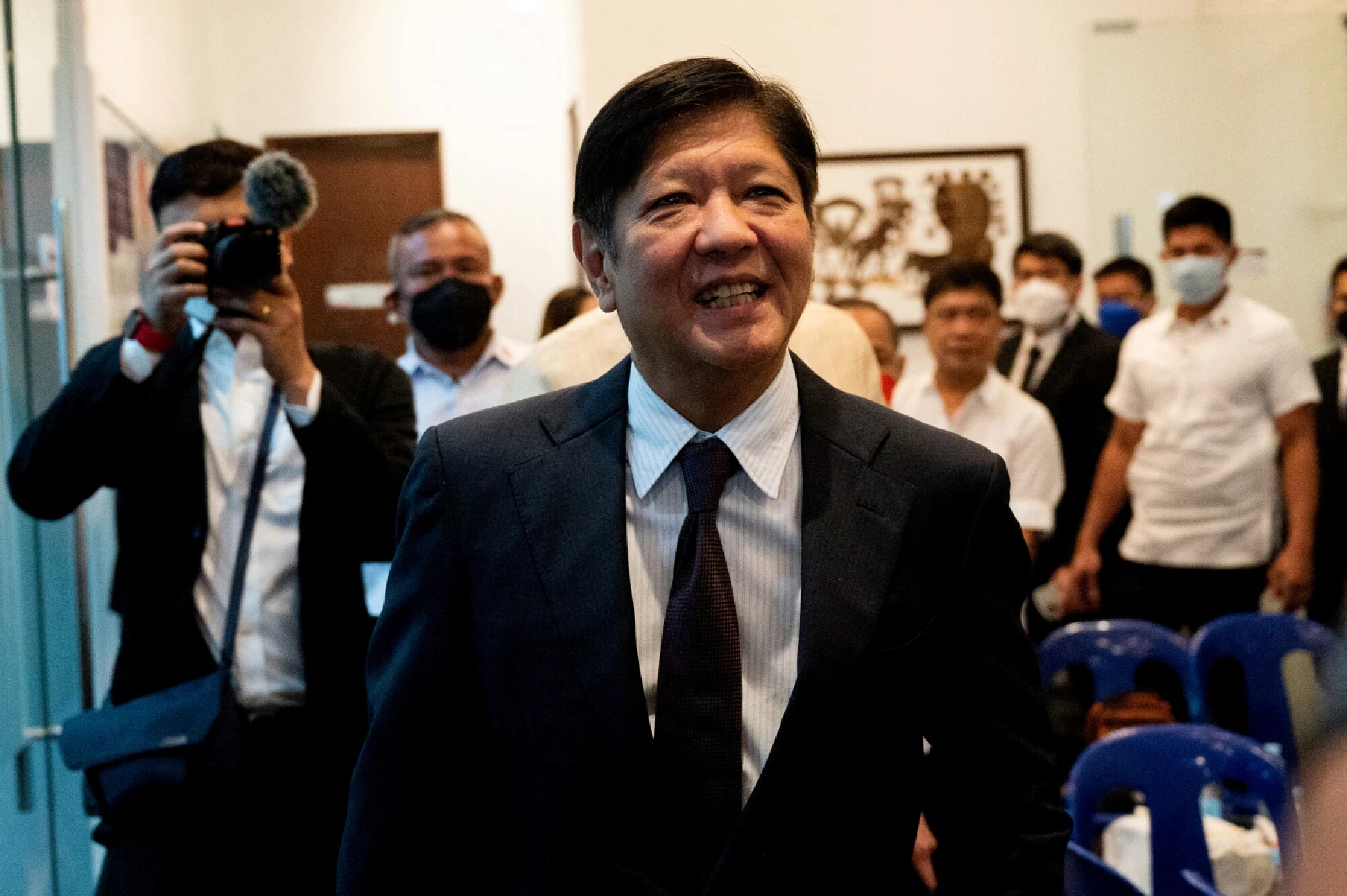
The Philippines’ incoming tax agency chief said on Wednesday that she would collect the estate tax due from the family of president-elect Ferdinand Marcos Jr, taking on an issue that has hounded the next leader.

New Philippines tax chief intends to collect Marcos estate tax

The Bureau of Internal Revenue will carry out its mandate to collect if the amount is “final and executory”, tax chief-designate Lilia Guillermo said in an interview with ABS-CBN news channel.

Guillermo, who was appointed by Marcos to serve in his incoming administration, said there was no doubt that the agency would collect the controversial tax liability.

However, she needs to see the documents first and find out for certain if the amount due is indeed 200 billion pesos (1.30 billion baht).

The Marcos estate taxes were previously assessed at 23 billion pesos, but the liability had since ballooned to over 200 billion pesos due to penalties and taxes, Rappler reported in March.

Marcos’s camp said during his presidential campaign that the issue “is still pending in court”, and that the fair tax base for computing the liability arising from the late dictator’s estate could not be ascertained.

But a Supreme Court document showed the estate tax ruling became final in 1999, ABS-CBN reported.

Guillermo, a central bank assistant governor who previously served in the internal revenue bureau for 30 years, was nominated to head the tax agency on the recommendation of incoming Finance Secretary and outgoing central bank chief Benjamin Diokno.

Before accepting the nomination, she asked Diokno about the pending tax issue and his advice was to “leave it to the court”, she said.

Guillermo will assume her post on June 30.

“Can you be a role model? The Marcoses paid their taxes because they complied with the law. It came from the Supreme Court, and it’s final and executory. That’s what I would tell him. But I should have the correct data,” she said of the incoming president.

Past tax chiefs have tried to collect the liabilities, with the latest written demand sent to the Marcos heirs in December.

Marcos’s incoming government is facing the challenge of raising revenues to pay debt that ballooned to a record during the pandemic.

The tax agency will prioritise digitalisation to boost collection, Guillermo said.

The Straits Times

Asia News Network

Asia News Network: The Nation (Thailand), The Korea Herald, The Straits Times (Singapore), China Daily, Jakarta Post, The Star and Sin Chew Daily (Malaysia), The Statesman (India), Philippine Daily Inquirer, Yomiuri Shimbun and The Japan News, Gogo Mongolia, Dawn (Pakistan), The Island (Sri Lanka), Kuensel (Bhutan), Kathmandu Post (Nepal), Daily Star (Bangladesh), Eleven Media (Myanmar), the Phnom Penh Post and Rasmei Kampuchea (Cambodia), The Borneo Bulletin (Brunei), Vietnam News, and Vientiane Times (Laos).

Published : June 23, 2022

By : The Straits Times

Vietnam’s vice president and Udon Thani governor pledge closer ties

#SootinClaimon.Com : ขอบคุณแหล่งข้อมูล : หนังสือพิมพ์ The Nation.

https://www.nationthailand.com/international/40016961


Udon Thani provincial Governor Sayam Sirimongkol on Wednesday sought more cooperation with Vietnamese localities, particularly in economy and culture, during a meeting with visiting Vietnamese Vice President Vo Thi Anh Xuan.


Vietnam’s vice president and Udon Thani governor pledge closer ties

The Vietnamese vice president is visiting Thailand to attend the Global Summit of Women 2022.

Sayam lauded the strong growth and significant contributions of Thai people of Vietnamese origin in the province and pledged to create favourable conditions for the Vietnamese community to live and preserve their cultural works.


The governor hoped that in the times to come, the two sides would work closely for Udon Thani to send a trade promotion delegation to Vietnam and for Vietnam to join Udon Thani’s flower exhibition and the opening of a direct flight route between them.


Backing the governor’s ideas, Xuan lauded the cooperation between Udon Thani and Vietnamese localities and said it has contributed to boosting the Vietnam-Thailand strategic partnership.

She hoped the local authorities would further support the preservation of Vietnamese sites in Udon Thani, including pagodas, and provide optimal conditions for the Vietnamese community to live, study, work and connect the two nations.

Xuan suggested the provincial administration support the teaching and learning of the Vietnamese language among Thai people of Vietnamese origin, whose population in Udon Thani numbers around 15,000.

The vice president highlighted the need for the two sides to beef up trade and infrastructure connectivity, particularly via the East-West Economic Corridor.

Vietnamese Vice President Vo Thi Anh Xuan presented Vietnamese history textbooks to students in Khanh An language school.Vietnamese Vice President Vo Thi Anh Xuan presented Vietnamese history textbooks to students in Khanh An language school.

On the same day, the vice president visited a relic site dedicated to late Vietnamese President Ho Chi Minh and a monument in commemoration of five Vietnamese revolutionaries in the province.

Earlier on Tuesday, the vice president met the Vietnamese community in Udon Thani, where she said she appreciated the solidarity and mutual support of the Vietnamese expats, their attachment to the homeland and their valuable support to the home country during the resistance war for national independence, as well as for the country’s rebuilding and development.

The Vietnamese community has also made many contributions to their second homeland, Thailand, and most recently to the Covid-19 pandemic prevention and other charitable activities.

The vice president expressed her hope that Vietnamese associations across Thailand will better meet the needs of the people in solidarity and get-together activities, teach and learn Vietnamese, contributing to strengthening the friendship between the states and the people of the two countries.

She also wished that there would be more events connecting overseas Vietnamese businessmen and enterprises with those from the homeland to promote investment and trade as well as create more cooperation opportunities between domestic and Thai businesses.

Earlier the same day, the vice president visited Khanh An, a Vietnamese language school in the locality. She presented Vietnamese historical textbooks to support the teaching and learning of the Vietnamese language in the school.

Vietnam News

Asia News Network

Asia News Network: The Nation (Thailand), The Korea Herald, The Straits Times (Singapore), China Daily, Jakarta Post, The Star and Sin Chew Daily (Malaysia), The Statesman (India), Philippine Daily Inquirer, Yomiuri Shimbun and The Japan News, Gogo Mongolia, Dawn (Pakistan), The Island (Sri Lanka), Kuensel (Bhutan), Kathmandu Post (Nepal), Daily Star (Bangladesh), Eleven Media (Myanmar), the Phnom Penh Post and Rasmei Kampuchea (Cambodia), The Borneo Bulletin (Brunei), Vietnam News, and Vientiane Times (Laos).

Published : June 23, 2022

By : Vietnam News

S Korean joint investigation team to crack down on voice phishing scams

#SootinClaimon.Com : ขอบคุณแหล่งข้อมูล : หนังสือพิมพ์ The Nation.

https://www.nationthailand.com/international/40016960


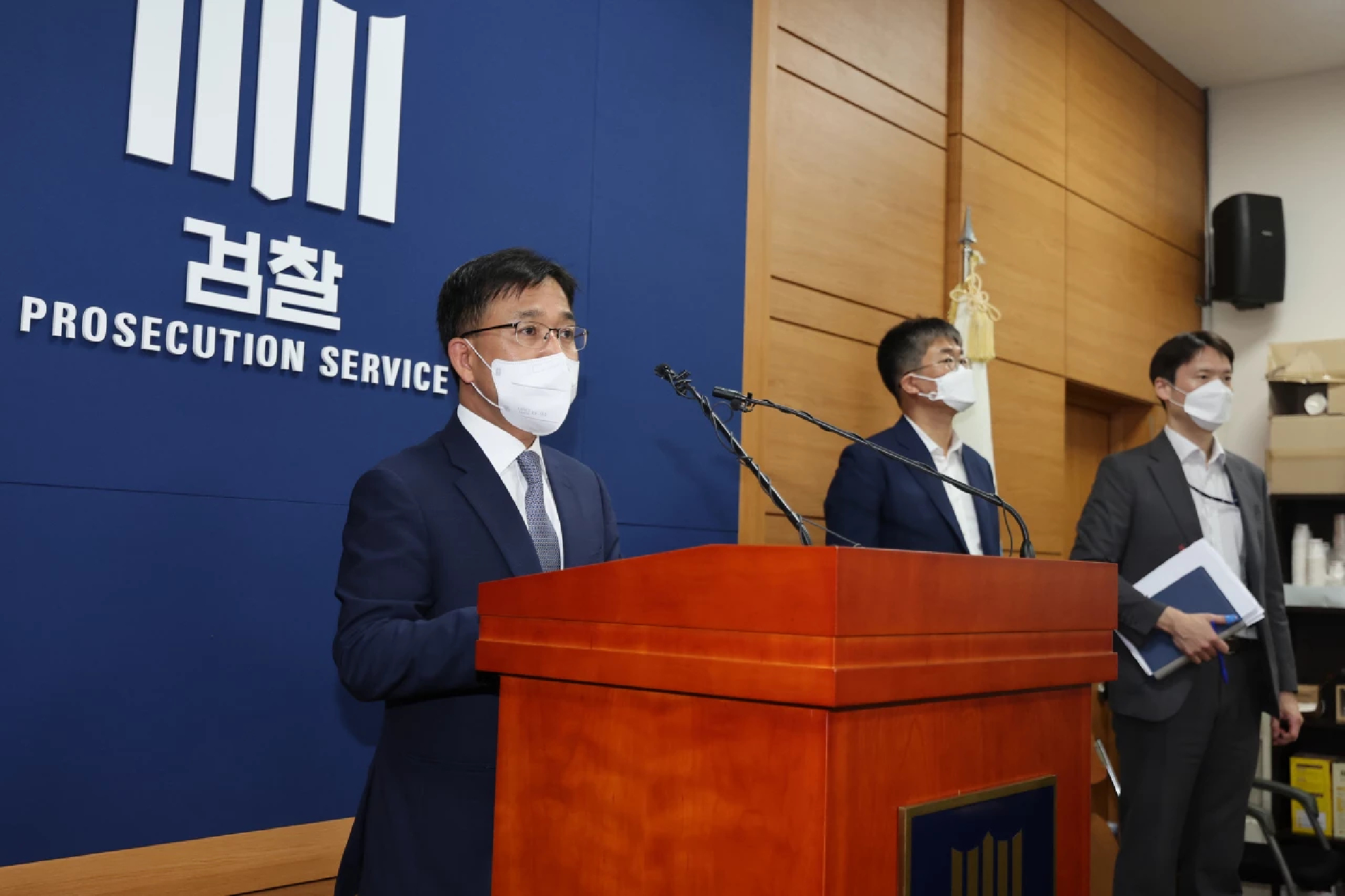
The South Korean government will launch a joint investigation team to eradicate voice phishing crimes that have caused damage worth more than 700 billion won (19 billion baht) annually, the prosecution said on Thursday.

S Korean joint investigation team to crack down on voice phishing scams

The Supreme Prosecutors Office (SPO) announced it will form the joint investigation team with relevant agencies, such as the National Police Agency, Financial Services Commission, Financial Supervisory Service and Korea Communications Commission, to launch a massive crackdown on voice phishing scams.

The team will be installed at the Seoul Eastern District Prosecutors Office, which is a key institution in charge of cybercrime investigations, and will be operated for one year, the SPO said.

Voice phishing refers to electronic fraud, in which individuals are tricked over the phone into revealing critical financial or personal information to scammers. Money transfer scams, in which victims are deceived by scammers mostly impersonating investigators into sending money from their bank accounts, make up the majority of phishing crimes.

Voice phishing was first reported in South Korea in 2006. The amount of damage has since snowballed as the methods of such crimes have become increasingly sophisticated. The amount of phishing damage more than tripled from 247 billion won in 2017 to 774.4 billion won last year.

The number of suspects rounded up nearly doubled from 25,000 in 2017 to 48,000 in 2019, but has since decreased to 39,000 in 2020 and 26,000 last year, as law enforcement capabilities struggle to keep up with the surge in phishing crimes.

“Enterprise type voice phishing organisations involving gangsters have been uncovered, and the crime methods by scammers have become increasingly sophisticated and intelligent, as seen in their document forgeries and distributions of malicious programmes,” the SPO said.

“Now there need to be some extraordinary countermeasures, as some phishing victims have chosen to give up their precious lives beyond property damage,” it said.

The SPO said it will strengthen cooperation with investigative authorities in China, the Philippines and other countries, where overseas voice phishing organisations are believed to be based.

The Korea Herald

Asia News Network

Asia News Network: The Nation (Thailand), The Korea Herald, The Straits Times (Singapore), China Daily, Jakarta Post, The Star and Sin Chew Daily (Malaysia), The Statesman (India), Philippine Daily Inquirer, Yomiuri Shimbun and The Japan News, Gogo Mongolia, Dawn (Pakistan), The Island (Sri Lanka), Kuensel (Bhutan), Kathmandu Post (Nepal), Daily Star (Bangladesh), Eleven Media (Myanmar), the Phnom Penh Post and Rasmei Kampuchea (Cambodia), The Borneo Bulletin (Brunei), Vietnam News, and Vientiane Times (Laos).

Published : June 23, 2022

By : The Korea Herald

34,000 foreign workers approved to be hired in Malaysia’s tourism industry

#SootinClaimon.Com : ขอบคุณแหล่งข้อมูล : หนังสือพิมพ์ The Nation.

https://www.nationthailand.com/international/40016946


A total of 34,000 foreign workers have been approved to enter the tourism industry in order to tackle its labour shortage, says Tourism, Arts and Culture Minister

34,000 foreign workers approved to be hired in Malaysia's tourism industry

Nancy Shukri, Tourism, Arts and Culture Minister said their entry was requested by industry players through the Tourism, Arts and Culture Ministry (Motac), and that the workers would come in between 2022 and 2024.

“Of the total number, 10,000 are allocated for housekeeping, 6,000 for spa workers, 6,000 for massage workers with the remaining 12,000 as caddies.

“At the same time, Motac will also organise job fairs later this year to encourage Malaysians to enter the industry due to its needs,” she said at a press conference after attending the 12th Malaysia Gift Fair networking night on Wednesday.

Nancy, however, noted that it was hard for her to give a specific date for these workers to arrive, as it lay under the purview of the Human Resource Ministry, adding that her Ministry would continue to push to facilitate the tourism industry’s needs.

In May, Nancy said Malaysia’s tourism sector was facing a shortage of about 15,000 to 20,000 workers with the estimate obtained from data from national tourism associations.

She also acknowledged that the problem of labour shortage was not only faced by the tourism sector but also involved all other industries in the country.

The Star

Asia News Network

Asia News Network: The Nation (Thailand), The Korea Herald, The Straits Times (Singapore), China Daily, Jakarta Post, The Star and Sin Chew Daily (Malaysia), The Statesman (India), Philippine Daily Inquirer, Yomiuri Shimbun and The Japan News, Gogo Mongolia, Dawn (Pakistan), The Island (Sri Lanka), Kuensel (Bhutan), Kathmandu Post (Nepal), Daily Star (Bangladesh), Eleven Media (Myanmar), the Phnom Penh Post and Rasmei Kampuchea (Cambodia), The Borneo Bulletin (Brunei), Vietnam News, and Vientiane Times (Laos).

Published : June 23, 2022

By : The Star

Asean defence chiefs adopt co-op declaration at meeting

#SootinClaimon.Com : ขอบคุณแหล่งข้อมูล : หนังสือพิมพ์ The Nation.

https://www.nationthailand.com/international/40016941


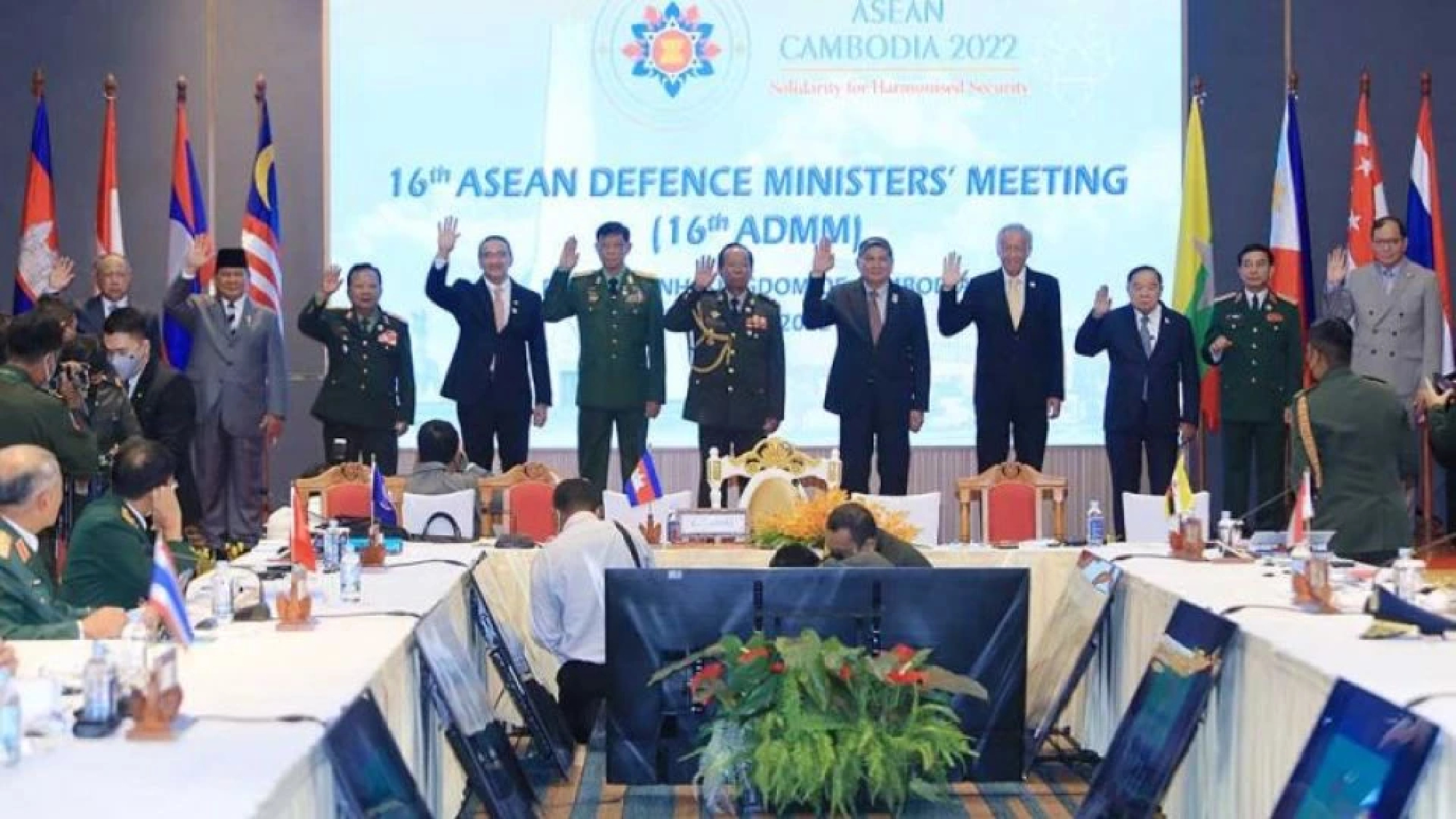
Deputy Prime Minister Tea Banh said the 10 ASEAN defence ministers had adopted a joint declaration on defence cooperation which would strengthen their solidarity towards harmonious security. Cambodia and Japan have also agreed to deepen cooperation in the military sector.

Asean defence chiefs adopt co-op declaration at meeting

The declaration was adopted at the Asean Defence Ministers’ Meeting (ADMM), which was held in person on June 22 in Phnom Penh. Cambodia, as the chair of Asean, hosted the meeting, which was also attended by General Mya Tun Oo, the Myanmar defence minister appointed by the ruling State Administration Council (SAC).

In a press conference immediately after the meeting, General Tea Banh – who chaired the meeting in his capacity as Cambodia’s defence minister – said the Kingdom took great pride in hosting the first face-to-face meeting in two years.

“This helped create the momentum which drove the lively discussions we just had,” he said.

He hoped that the Asean Plus Defence Summit, scheduled for November in Siem Reap province, will also be a great success.

As Minister of Foreign Affairs and International Cooperation Prak Sokhon, who is also the Asean special envoy on Myanmar – plans to pay his second visit to the crisis-hit country later this month, General Tea Banh said what Cambodia is striving for as the chair of the bloc is to fulfil its role as best it can.

Tea Banh noted that the presence of Myanmar’s SAC-appointed defence minister was indicative of the way the Kingdom was determined to play its role without discriminating against or leaving any Asean member behind. Cambodia wanted to maintain the theme of the meeting, “Solidarity for Security and Harmony”.

“We have achieved this solidarity. With the unanimous consent of the Asean members, we were able to include the Myanmar delegation in our face-to-face meeting,” he said.

Turning to the prolonged Russia-Ukraine conflict, General Tea Banh briefly stated that Cambodia would not support any invasion, the use of force or separatism, saying: “We have a certain position, based on lessons from the past.”

He also introduced the win-win policy of Prime Minister Hun Sen, which eventually brought about the comprehensive peace that Cambodia enjoys today, to the Asean defence ministers.

“I spoke about win-win politics. I explained in the meeting how peace was achieved by the Kingdom and remains to this day. The most important foundation for the development of any country is peace, and the most valuable peace is won through win-win policies.”

Thong Meng Davit, a researcher at the Asian Vision Institute’s Mekong Centre for Strategic Studies, said the Cambodian-led meeting reflected the Asean leaders’ commitment to building a peaceful and prosperous region and building mutual trust through information exchange and regional security cooperation.

“The Asean bloc must unite in defending its neutrality and geopolitical competition from the superpowers. Also important was the participation of Myanmar. The fact that Cambodia invited its minister to attend shows the chair’s interest in resolving regional issues,” he said.

Meanwhile, Prime Minister Hun Sen and Japanese Minister of Defence Kishi Nobuo met on June 22 and agreed to strengthen defence cooperation.

The two nations would share information and examine changing perspectives on assessing regional and global developments, according to the premier’s official Facebook post after the meeting.

“The Prime Minister expressed support for existing cooperation and requested that the Cambodia-Japan Bilateral Cooperation Plan be boosted, through officer exchanges and cross-training which would enhance the capacity of the Cambodian Army in humanitarian work, disaster relief, engineering and health services,” it added.

On June 22, Hun Sen also met with the Asean defence ministers, led by Halbi bin Mohammad Yussof, Minister of the Bruneian Prime Minister’s Office, who reported to Hun Sen that the meeting had approved four documents.

According to Hun Sen’s social media post, the documents included a concept paper on enhancing Asean military cooperation in preventing epidemic diseases; one on enhancing support for female peacekeepers; one on the role of national defence institutions in supporting post-Covid-19 recovery; and one on boosting cooperation between Asean military educational institutions.

Ry Sochan

The Phnom Penh Post

Asia News Network

Asia News Network: The Nation (Thailand), The Korea Herald, The Straits Times (Singapore), China Daily, Jakarta Post, The Star and Sin Chew Daily (Malaysia), The Statesman (India), Philippine Daily Inquirer, Yomiuri Shimbun and The Japan News, Gogo Mongolia, Dawn (Pakistan), The Island (Sri Lanka), Kuensel (Bhutan), Kathmandu Post (Nepal), Daily Star (Bangladesh), Eleven Media (Myanmar), the Phnom Penh Post and Rasmei Kampuchea (Cambodia), The Borneo Bulletin (Brunei), Vietnam News, and Vientiane Times (Laos).

Published : June 23, 2022

By : The Phnom Penh Post

Filipino authorities on alert, won’t allow left to disrupt Marcos inauguration

#SootinClaimon.Com : ขอบคุณแหล่งข้อมูล : หนังสือพิมพ์ The Nation.

https://www.nationthailand.com/international/40016910


Authorities are making every effort to make sure the June 30 oath-taking of President-elect Ferdinand Marcos Jr goes without a hitch.

Filipino authorities on alert, won’t allow left to disrupt Marcos inauguration

On Tuesday, the Department of the Interior and Local Government (DILG) said it would not let communist rebels and their affiliate organisations embarrass or discredit the incoming administration.

“We are taking these intelligence reports seriously and we will do what is necessary to thwart any attempt to embarrass or discredit the forthcoming inauguration,” said Jonathan Malaya, undersecretary of the DILG and spokesperson for the National Task Force to End Local Communist Armed Conflict (NTF-Elcac).

During a press briefing organised by the NTF-Elcac on Monday, former rebels identified as Orlando “Ka Warly” Baluyot, now head of the Tinang Samahang Nayon Multi-Purpose Cooperative, and Ka Pong Sibayan, a farmer from Hacienda Tinang in Concepcion, Tarlac, claimed that the radical left had started organising farmers in the province for this purpose.

“They definitely do not want Marcos to sit as the president. They will do anything before [President-elect Marcos Jr] takes his oath on June 30,” Baluyot said.

According to Malaya, it was “not a surprise” that the Communist Party of the Philippines (CPP), and its armed and political wings, the New People’s Army and National Democratic Front of the Philippines were planning to embarrass the incoming administration.

“That’s part of their playbook. Whoever sits in Malacañang is their enemy because ultimately, all they want is to overthrow the government through violent means to be followed by a socialist revolution,” he claimed.

Incoming chief presidential legal counsel Juan Ponce Enrile had also warned of a “credible” plot to embarrass the incoming administration, supposedly by groups in the country and the United States.

The DILG and other agencies have finalised security preparations for the inauguration of Marcos Jr, including the mobilisation of around 6,200 police officers around the National Museum, where he will take his oath.

Malaya said the Philippine National Police would place additional mobile forces on standby should radical leftist groups attempt to disrupt the inauguration.

The Philippine Coast Guard has also been tapped by the DILG. It will dispatch rigid hull inflatable boats, aluminium boats and personal watercraft to provide intensified maritime patrol in the vicinity off Manila Bay and Pasig River.

But in a statement, CPP chief information officer Marco Valbuena called the information from the DILG and Enrile a “communist bogey” to stop people from holding protests on Marcos’ inauguration.

“Such an objective, in fact, is futile because Marcos Jr and the entire Marcos family are beyond embarrassment and shame,” he said.

According to Valbuena, the CPP “does not even have to do anything to discredit Ferdinand Jr because he is already discredited, having rigged the May 9 automated elections”.

Philippine Daily Inquirer

Asia News Network

Asia News Network: The Nation (Thailand), The Korea Herald, The Straits Times (Singapore), China Daily, Jakarta Post, The Star and Sin Chew Daily (Malaysia), The Statesman (India), Philippine Daily Inquirer, Yomiuri Shimbun and The Japan News, Gogo Mongolia, Dawn (Pakistan), The Island (Sri Lanka), Kuensel (Bhutan), Kathmandu Post (Nepal), Daily Star (Bangladesh), Eleven Media (Myanmar), the Phnom Penh Post and Rasmei Kampuchea (Cambodia), The Borneo Bulletin (Brunei), Vietnam News, and Vientiane Times (Laos).

Published : June 22, 2022

By : Philippine Daily Inquirer

State Bank of Pakistan clarifies its foreign exchange reserves have not dried up

#SootinClaimon.Com : ขอบคุณแหล่งข้อมูล : หนังสือพิมพ์ The Nation.

https://www.nationthailand.com/international/40016903


The State Bank of Pakistan (SBP) on Tuesday dismissed reports claiming that its foreign exchange reserves had “dried up”, and clarified that neither the country’s banks had run out of US dollars nor the central bank had stopped import payments.

State Bank of Pakistan clarifies its foreign exchange reserves have not dried up

The statement from the central bank comes amid reports of its reserves falling to an alarmingly low level along with the suspension of import payments.

However, the SBP said its foreign reserves stood at $8.99 billion. “These do not include gold reserves, and are fully usable for all purposes.”

The central bank clarified that it had not stopped import payments and that commercial banks had sufficient dollar liquidity to execute those payments.

“Import payments of around $4.7bn have been executed through the interbank market during the month so far,” the SBP added.

Earlier, a Dawn report said the currency market was gripped by uncertainty and rumours that banks have stopped opening letters of credit (LCs)

“State Bank has not stopped banks from making import payments. Even today, roughly about $200m import payments have been executed,” SBP Chief Spokesman Abid Qamar said earlier in the day.

According to SBP, Pakistan’s reserves have fallen by another $234 million to close just below $15 billion. The central bank’s share in these reserves is just under $9 billion.

A day ago, local financial portal Tresmark said that the rupee’s misery was compounded by the ultra-low levels of forex reserves.

“With almost no free liquidity, it is expected that the central bank does not have the resources to control the market,” it pointed out. “With low levels of inflows and substantial outflows, especially end of June, SBP is dipping in to commercial bank’s share of reserves to square payments, resulting in low or negative swap premiums.”

Keeping this in mind, it went on, there was no stopping the rupee from further losses.

“On average, it (the market) is losing Re1 every day and will only stop when Pakistan receives fresh inflows. If we were to assume that that inflow will be from IMF, then the government should focus all its resources on having IMF on board and jump the queue as we can not afford even another week [like this],” the overview added.

Dawn

Asia News Network

Asia News Network: The Nation (Thailand), The Korea Herald, The Straits Times (Singapore), China Daily, Jakarta Post, The Star and Sin Chew Daily (Malaysia), The Statesman (India), Philippine Daily Inquirer, Yomiuri Shimbun and The Japan News, Gogo Mongolia, Dawn (Pakistan), The Island (Sri Lanka), Kuensel (Bhutan), Kathmandu Post (Nepal), Daily Star (Bangladesh), Eleven Media (Myanmar), the Phnom Penh Post and Rasmei Kampuchea (Cambodia), The Borneo Bulletin (Brunei), Vietnam News, and Vientiane Times (Laos).

Published : June 22, 2022

By : DAWN