Indonesia’s digital economy to double in value by 2024, says study

ศาสตร์เกษตรดินปุ๋ย : ขอบคุณแหล่งข้อมูล : หนังสือพิมพ์ The Nation

https://www.nationthailand.com/ann/30374943

Indonesia’s digital economy to double in value by 2024, says study

Aug 18. 2019
Entrepreneurs work digitally at the EV-Hive co-working space on Sept. 12, 2017 in Jakarta. A recent study has projected that Indonesia's digital economy will double in value by 2024. (Agence France -Presse/Goh Chai Hin)

Entrepreneurs work digitally at the EV-Hive co-working space on Sept. 12, 2017 in Jakarta. A recent study has projected that Indonesia’s digital economy will double in value by 2024. (Agence France -Presse/Goh Chai Hin)
By The Jarkata Post
Asia News Network

204 Viewed

Indonesia’s digital economy is expected to almost double in value from Rp 814 trillion last year to Rp 1.447 quadrillion (US$101 billion) by 2024, a recent study says.

The joint study by the Institute for Development of Economics and Finance (Indef) and non-profit research foundation Laboratorium Data Persada has found that the digital economy generated added value to several sectors, including manufacturing, trade and transportation, and communication.

“The manufacturing sector has benefited the most,” Indef research director Berly Martawardaya said on Wednesday, adding that the digital economy would create Rp 100 trillion value added in the manufacturing industry.

Berly said the government should ensure nationwide internet access in its efforts to spur growth in the digital economy, as well as work with businesspeople to develop digital skills development, logistics and financial access, among other things.

Mira Tayyiba, the economic relations expert staff to the Coordinating Economic Minister, who attended the discussion, said that the government had taken several measures to boost the digital economy, citing education programs and the Palapa Ring nationwide broadband network.

“The government is working together with businesses, such as marketplace, in upgrading local products through education programs,” said Mira. “Insya Allah [God willing], the Palapa Ring project will be completed this year,” she added. (awa)

A city that people leave

ศาสตร์เกษตรดินปุ๋ย : ขอบคุณแหล่งข้อมูล : หนังสือพิมพ์ The Nation

https://www.nationthailand.com/ann/30374930

A city that people leave

Aug 18. 2019
Cosmopolitan heritage: Hussein, a 63-year-old local man who manages the Surtee Sunni Jamae Mosque, a pride of the Surti Muslim community.

Read more at https://www.thestar.com.my/opinion/columnists/ceritalah/2019/08/18/a-city-that-people-leave#VF4t2UtmIC83wLzh.99

Cosmopolitan heritage: Hussein, a 63-year-old local man who manages the Surtee Sunni Jamae Mosque, a pride of the Surti Muslim community. Read more at https://www.thestar.com.my/opinion/columnists/ceritalah/2019/08/18/a-city-that-people-leave#VF4t2UtmIC83wLzh.99
By The Star/Asia News Network

665 Viewed

It’s estimated that some 10-12% of Myanmar’s population live or work overseas – a statistic comparable with the Philippines. MAWLAMYINE (or Moulmein) is one of those Southeast Asian cities like Sandakan, Bacolod and Songkhla; where the past looms large but the present seems faded and unpromising. The kinds of places that young people yearn to leave in search of jobs and money.


The capital of the three million-strong Mon State and having a population of just under 300, 000, the city has a slightly forlorn, neglected air. After all, its glory years were well over one-and-a-half centuries ago, between 1826 and 1852.

Back then, the British transformed a sleepy port city at the confluence of the Salween, Ataran and Gyaing Rivers into the capital of their Burmese possessions on the Tenasserim coast.

Orwell (back row, third from left), who was a colonial police officer in Mawlamyine, wrote ‘Burmese Days’ that captures the hypocrisy, racism and violence of the era.

Orwell (back row, third from left), who was a colonial police officer in Mawlamyine, wrote ‘Burmese Days’ that captures the hypocrisy, racism and violence of the era.

Present-day Mawlamyine is a six-hour overland journey from Yangon. It used to be a much more arduous trip, but improvements in the national highways and several new bridges have brought the two closer.

However, that hasn’t led to a significant increase in industries or jobs. Instead, it seems to have made it easier for people to leave.

Moreover, with the main border crossing at Mae Sot just four hours to the east (along a recently upgraded highway); Thailand, with its higher pay (reportedly some

USD8-10 per day, more than double anything available in Myanmar) has become even more accessible.

The iconic Kyaikthanlan Pagoda reportedly inspired Rudyard Kipling’s ‘Mandalay’ poem.

The iconic Kyaikthanlan Pagoda reportedly inspired Rudyard Kipling’s ‘Mandalay’ poem.

Given the proximity, perhaps it’s unsurprising that almost everyone Team Ceritalah met talked wistfully of the opportunities abroad. Indeed, it’s estimated that some 10-12% of Myanmar’s population live or work overseas – a statistic comparable with the Philippines.

The Mon State is Myanmar’s largest rubber producing state. Back in the boom days, this would have been a major source of income. However, with global prices languishing, the commodity has been anything but lucrative – even for the many traders who work to supply the vast Chinese market to the north.

The picturesque port was similarly sleepy. There was only one ship docked at the jetty for the duration of the Team Ceritalah trip. It’s hard to imagine that the city used to be such an important regional hub, not to mention a major shipbuilding centre drawing on the ample supplies of teak hardwood from the upper reaches of the Salween.


A young ferryman on the Attaran. Better roads have made Mawlamyine a city that many young people leave for better opportunities. — Photos by Team Ceritalah

A young ferryman on the Attaran. Better roads have made Mawlamyine a city that many young people leave for better opportunities. — Photos by Team Ceritalah

Burma was one of the wealthiest and most profitable of Britannia’s colonies. Rich in natural resources, Rangoon (now Yangon) rivalled the Empire’s greatest ports, from Bombay to Singapore and Liverpool.

However, the British weren’t a benign presence.

They were ruthless colonisers – destroying the indigenous elite, logging thousands of acres of virgin jungle and opening vast rice fields that were tended to by immigrant labour from India: especially Bengalis and Tamils. Contemporary Myanmar, its paranoia and pathology, must be read in the context of its turbulent and bloody past.


The First Baptist Church, its grey walls peeled and blackened with age, still serves congregations whose ancestors were converted by Victorian missionaries.

The First Baptist Church, its grey walls peeled and blackened with age, still serves congregations whose ancestors were converted by Victorian missionaries.

One of the most scathing indictments of the British was written by a Mawlamyine resident, Eric Blair (better known as George Orwell) a colonial police officer whose novel Burmese Days captures the hypocrisy, racism and violence of the era.

And yet, it’s the vestiges of the colonial times that remain intriguing. In an overwhelmingly Buddhist polity, there are traces of a more cosmopolitan past with Anglican, Catholic and Baptist churches, as well as a handful of mosques.

Joseph’s family first established themselves in the Ayeyarwady Region after the First Anglo-Burmese War, one of the many Catholic Tamils from southern India to do so in that period.

Joseph’s family first established themselves in the Ayeyarwady Region after the First Anglo-Burmese War, one of the many Catholic Tamils from southern India to do so in that period.

St Patrick’s Catholic Church, with its 19th Century bells intact, and the First Baptist Church, its grey walls peeled and blackened with age, still serve congregations whose ancestors were converted by Victorian missionaries.

“The history of this church is very important to me, ” said Joseph, a priest-in-training at St Patrick’s.

Joseph’s family first established themselves in the Ayeyarwady Region after the First Anglo-Burmese War (1824-1826), one of the many Catholic Tamils from southern India to do so in that period. The community now stands at 50, 000, a drop in Myanmar’s melting pot of 53.5 million.


Improvements in the national highways and several new bridges have brought Yangon and Mawlamyine closer.

Improvements in the national highways and several new bridges have brought Yangon and Mawlamyine closer.

Further north of the church, Team Ceritalah met Hussein, a 63-year-old local man who manages the Surtee Sunni Jamae Mosque. He said with pride that the Surti Muslim community, originally from Gujarat, has owned the mosque since 1846, when it was built by the British for its Muslim civil servants ferried across the Bay of Bengal.

His own grandfather came from what is now Pakistan – this gives him a sense of attachment to the mosque, seeing it as linked to his family’s story.

There’s so much more to the city than just the iconic Kyaikthanlan Pagoda – which reportedly inspired Rudyard Kipling’s “Mandalay” poem – but virtually no promotion of its rich history.

The First Baptist Church had around 50 young members just two years ago but has since lost most of them to greener pastures in Yangon, Singapore, Australia, Thailand, or the US. Only about 15 remain.

Still – and perhaps ironically given their migrant backgrounds – Hussein and Joseph are anchored to the city.

“I want to stay here and take care of the church, ” Joseph said, standing sentinel-like at its warm green, open doors.

“People come here to find God and look at this old building. They should know its history. I want to take care of it and tell people about its story and culture.”

Read more at https://www.thestar.com.my/opinion/columnists/ceritalah/2019/08/18/a-city-that-people-leave#VF4t2UtmIC83wLzh.99

S. Korea voices willingness to talk with Japan over its ‘whitelist’ move

ศาสตร์เกษตรดินปุ๋ย : ขอบคุณแหล่งข้อมูล : หนังสือพิมพ์ The Nation

https://www.nationthailand.com/ann/30374924

S. Korea voices willingness to talk with Japan over its ‘whitelist’ move

Aug 18. 2019
This photo, taken on Aug. 12, 2019, shows Trade Minister Sung Yun-mo speaking at a press briefing in the administrative city of Sejong over South Korea`s move to remove Japan from its list of trusted trading partners. (Yonhap)

This photo, taken on Aug. 12, 2019, shows Trade Minister Sung Yun-mo speaking at a press briefing in the administrative city of Sejong over South Korea`s move to remove Japan from its list of trusted trading partners. (Yonhap)
By The Korea Herald /Asia News Network

119 Viewed

South Korea has notified Japan in advance of its plan to remove Tokyo from its list of trusted trading partners and is willing to talk with Japan further if needed, the trade minister said Saturday.

South Korea decided on Monday to remove Japan from its “whitelist” of countries that receive preferential trade status amid a bilateral trade row sparked by Tokyo’s July export curbs against Seoul and its subsequent removal of the South from a list of trusted buyers.

“The government had notified Japan of its ‘whitelist’ move in advance and explained to Tokyo major details and procedures related to the measure,” Trade Minister Sung Yun-mo wrote on his Facebook page.

“If additional explanation is needed, we could proceed with it by the way that Japan wants — whatever it is, consultation or explanation,” he said

In July, Japan imposed restrictions on exports of three key high-tech materials to South Korea following last year’s Korean court rulings over compensation related to Japan’s wartime forced labor.

Earlier this month, Japan promulgated a move to strip South Korea of its list of countries subject to preferential trade treatment. The move is set to come into effect in late August.

Early this week, South Korea announced its plan to reorganize its export list into three groups of trading partners from the current two, placing Tokyo in the newly established bracket for stricter export control. (Yonhap)

http://m.koreaherald.com/view.php?ud=20190817000030

Over 50,000 landline phones operational in Kashmir, 2G mobile internet back in 5 Jammu districts

ศาสตร์เกษตรดินปุ๋ย : ขอบคุณแหล่งข้อมูล : หนังสือพิมพ์ The Nation

https://www.nationthailand.com/ann/30374923

Over 50,000 landline phones operational in Kashmir, 2G mobile internet back in 5 Jammu districts

Aug 18. 2019
By The Statesman/Asia News Network

245 Viewed

As part of gradual easing of restrictions in a phased manner, more than 50,000 landline phones were made operational on Saturday after services in 17 exchanges of the Kashmir Valley were restored after a period of about 12 days.

Seventeen out of a little over 100 telephone exchanges were made operational. These exchanges are mainly in Civil Lines area, Cantonment area, airport of Srinagar district, officials said.

The officials said 20 more exchanges will be operationalised soon.

Jammu and Kashmir was put under virtual curfew on 5 August when the Modi government scrapped the Article 370 and split the state into two union territories.

https://www.thestatesman.com/india/50000-landline-phones-operational-kashmir-2g-mobile-internet-5-jammu-districts-1502789395.html

OIC asks India to immediately lift Kashmir curfew

ศาสตร์เกษตรดินปุ๋ย : ขอบคุณแหล่งข้อมูล : หนังสือพิมพ์ The Nation

https://www.nationthailand.com/ann/30374922

OIC asks India to immediately lift Kashmir curfew

Aug 18. 2019
File Photo

File Photo
By Dawn/Asia News Network

268 Viewed

ISLAMABAD: The Organisation of Islamic Cooperation (OIC) has asked India to immediately lift the 12-day curfew in occupied Kashmir that has paralysed life across the valley.

Foreign Minister Shah Mehmood Qureshi revealed the OIC decision in a video message. “It is another diplomatic achievement for Pakistan that the OIC has demanded that India immediately lift curfew from occupied Kashmir,” he said.

Mr Qureshi said he had engaged OIC members in the recent past and participated in a meeting of the organisation in Jeddah and discussed the issue with them. “As a result, the OIC also issued a press statement,” he added.

He said the people of occupied Kashmir were facing the shortage of food and medicines and unable to reach hospitals due to curfew. “The demand for lifting the curfew is not coming from Pakistan, but from the entire Muslim world,” he said, hoping that the United Nations Security Council will also pay attention to the voice raised by the OIC.

The OIC General Secretariat has learnt with concern the reports of curtailment of religious freedoms of Muslims in Jammu and Kashmir, including complete lockdown even on the auspicious occasion of Eid, denying congregations and preventing Muslims from observing their religious rituals.

Denial of religious rights constitutes a serious violation of the international human rights law and is an affront to Muslims across the world. Therefore, the OIC has urged the Indian authorities to ensure protection of the rights of Kashmiri Muslims and the exercise of their religious rights without any hindrance.

The OIC has also called upon the international community, including the United Nations and other relevant bodies, to expedite efforts for a negotiated settlement of the Jammu and Kashmir dispute on the basis of relevant UN Security Council resolutions.

On Friday, Prime Minister Imran Khan telephoned US President Donald Trump and discussed with the latter the ongoing tension between Pakistan and India over the Kashmir issue.

Pakistan had observed a black day on India’s independence day on Aug 15 and protest rallies were held across the country and Azad Jammu and Kashmir condemning the Indian aggression and tyranny in the held valley.

Prime Minister Khan also contacted different world leaders and apprised them of India’s recent actions, including revocation of Article 370 of its constitution that changed the status of occupied Kashmir.

Earlier, in his tweets, Mr Khan urged the nation to remain united on the issue of Kashmir, saying Indian Prime Minister Narendra Modi’s regime would fail to achieve its nefarious designs in the occupied valley.

“The fascist, Hindu supremacist Modi government should know that while armies, militant and terrorists can be defeated by superior forces; history tells us that when a nation unites in a freedom struggle and does not fear death, no force can stop it from achieving its goal,” he tweeted.

In another tweet, he said: “That is why Hindutva exclusivist creed of the Modi-led government with its fascist tactics in IOK will fail miserably in its attempt to smother the Kashmiri liberation struggle.”

https://www.dawn.com/news/1499965/oic-asks-india-to-immediately-lift-kashmir-curfew

Hong Kong enjoys rare calm as protests go without clashes

ศาสตร์เกษตรดินปุ๋ย : ขอบคุณแหล่งข้อมูล : หนังสือพิมพ์ The Nation

https://www.nationthailand.com/ann/30374921

Hong Kong enjoys rare calm as protests go without clashes

Aug 18. 2019
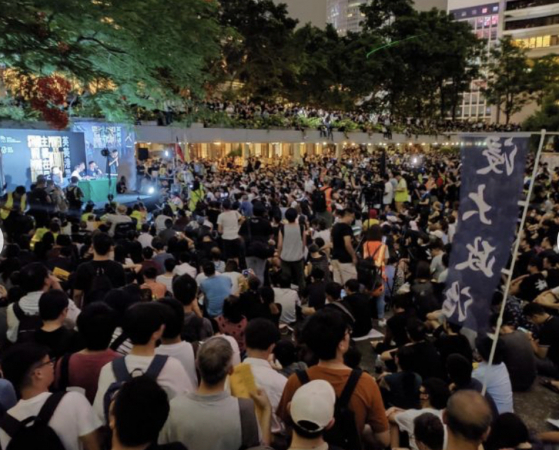
Thousands gather at Chater Park in downtown Hong Kong for a rally calling on the US and the UK to impose sanctions on Hong Kong officials who they said have suppressed rights and freedoms in the territory.ST PHOTO: LIM YAN LIANG

Thousands gather at Chater Park in downtown Hong Kong for a rally calling on the US and the UK to impose sanctions on Hong Kong officials who they said have suppressed rights and freedoms in the territory.ST PHOTO: LIM YAN LIANG
By The Straits Times/Asia News Network

311 Viewed

It is a far cry from recent weeks marked by tear gas and violence

Hong Kong enjoyed a brief respite yesterday, as demonstrations that kicked off an eleventh consecutive weekend of protests were free of violent clashes that have taken a toll on the Chinese city’s economy and drew China’s military presence across the border.

A march in the Kowloon neighbourhood of Hung Hom in the afternoon saw some demonstrators deviate from the approved route, but most cleared out by 8pm with plans to gather for another rally today at Victoria Park.

The majority of Hong Kong enjoyed a brief respite yesterday, as demonstrations that kicked off an eleventh consecutive weekend of protests were free of violent clashes that have taken a toll on the Chinese city’s economy and drew China’s military presence across the border.

A march in the Kowloon neighbourhood of Hung Hom in the afternoon saw some demonstrators deviate from the approved route, but most cleared out by 8pm with plans to gather for another rally today at Victoria Park.

The majority of rallygoers, who numbered in the thousands, stopped at the approved end point at Whampoa MTR station.

“Today has been peaceful so far because there’s been minimal police presence,” said architect Vincent Choi. “I think whenever there are police, people will stay around as there’s safety in numbers.”

But dozens of more radical demonstrators broke off from the main group and headed towards To Kwa Wan, where they threw eggs and spray painted the walls of the workers’ club of pro-Beijing Federation of Trade Unions (FTU).

These protesters lined up pineapples at the entrance of the club in a reference to the FTU’s links to the 1967 leftist riots in which bombs, known locally as pineapples, were thrown by rioters.

Another group veered off to Hok Yuen Street and threw eggs at the office of pro-Beijing Democratic Alliance for the Betterment and Progress of Hong Kong lawmakers Starry Lee and Ann Chiang, while others continued on to Mong Kok, where they briefly surrounded the Mong Kok police station, which put up netting to prevent objects from getting tossed in.

The FTU condemned the radical demonstrators in a statement that expressed “our outrage and strong condemnation of the protesters affecting the normal operation of the club”.

Police said in a statement shortly after 7pm that a large group of protesters had surrounded the station, “aiming laser beams at police officers and hurled miscellaneous objects, posing a serious threat to the safety of police officers at scene”.

Unlike past weekends where marches that started out peacefully descended into violence after protesters massed and attempted to barricade roads – prompting police to respond with tear gas and rubber bullets – black-clad protesters scattered last night without engaging riot police, who also pulled back soon after.

But the simmering tensions forced roughly nine in 10 shops along the Mong Kok stretch of Nathan Road to close early.

Ms Lily Hui, 45, a money changer on Shantung Street, who said business fell by two-thirds yesterday, blamed protesters for driving away tourists. A stallholder at nearby Ladies Market who gave his name as Mr Xie said there was about half as much traffic in the evening than most Saturdays.

A number of other peaceful rallies, including one that supported the Hong Kong government at Tamar Park in Admiralty, took place earlier yesterday.

But observers believe it is too early to say that the protests have calmed after crippling the airport last week and disrupting businesses.

“But I would not be surprised if the clashes become less frequent,” said Associate Professor Dixon Sing of the Hong Kong University of Science and Technology, with protesters more wary of police tactics and wanting to minimise flare-ups.

“The police have sent undercover cops to infiltrate the front-line protesters,” he pointed out.

The protests were triggered by a now-suspended extradition Bill which would have allowed the transfer of fugitives, including dissidents, to China and other jurisdictions.

Last week, images showed what appeared to be armoured personnel carriers and supply trucksparked in a sports stadium in Shenzhen city neighbouring Hong Kong after Beijing said the protests were beginning to show the “sprouts of terrorism”, though state media said it was a military exercise unrelated to the unrest.

Yesterday morning, heavy showers did not stop thousands of teachers and students from showing up for a march that called for the Hong Kong government to address protesters’ demands, including the full withdrawal of the Bill, an independent probe into allegations of police brutality and for more democracy in the territory.

Some Hong Kongers said they hoped but were unsure if the peace would hold on the streets.

Police have allowed a major rally at Victoria Park today but rejected a plan for a march from the park to Chater Garden in Central.

, who numbered in the thousands, stopped at the approved end point at Whampoa MTR station.

“Today has been peaceful so far because there’s been minimal police presence,” said architect Vincent Choi. “I think whenever there are police, people will stay around as there’s safety in numbers.”

But dozens of more radical demonstrators broke off from the main group and headed towards To Kwa Wan, where they threw eggs and spray painted the walls of the workers’ club of pro-Beijing Federation of Trade Unions (FTU).

These protesters lined up pineapples at the entrance of the club in a reference to the FTU’s links to the 1967 leftist riots in which bombs, known locally as pineapples, were thrown by rioters.

Another group veered off to Hok Yuen Street and threw eggs at the office of pro-Beijing Democratic Alliance for the Betterment and Progress of Hong Kong lawmakers Starry Lee and Ann Chiang, while others continued on to Mong Kok, where they briefly surrounded the Mong Kok police station, which put up netting to prevent objects from getting tossed in.

The FTU condemned the radical demonstrators in a statement that expressed “our outrage and strong condemnation of the protesters affecting the normal operation of the club”.

Police said in a statement shortly after 7pm that a large group of protesters had surrounded the station, “aiming laser beams at police officers and hurled miscellaneous objects, posing a serious threat to the safety of police officers at scene”.

Unlike past weekends where marches that started out peacefully descended into violence after protesters massed and attempted to barricade roads – prompting police to respond with tear gas and rubber bullets – black-clad protesters scattered last night without engaging riot police, who also pulled back soon after.

But the simmering tensions forced roughly nine in 10 shops along the Mong Kok stretch of Nathan Road to close early.

Ms Lily Hui, 45, a money changer on Shantung Street, who said business fell by two-thirds yesterday, blamed protesters for driving away tourists. A stallholder at nearby Ladies Market who gave his name as Mr Xie said there was about half as much traffic in the evening than most Saturdays.

A number of other peaceful rallies, including one that supported the Hong Kong government at Tamar Park in Admiralty, took place earlier yesterday.

But observers believe it is too early to say that the protests have calmed after crippling the airport last week and disrupting businesses.

“But I would not be surprised if the clashes become less frequent,” said Associate Professor Dixon Sing of the Hong Kong University of Science and Technology, with protesters more wary of police tactics and wanting to minimise flare-ups.

“The police have sent undercover cops to infiltrate the front-line protesters,” he pointed out.

The protests were triggered by a now-suspended extradition Bill which would have allowed the transfer of fugitives, including dissidents, to China and other jurisdictions.

Last week, images showed what appeared to be armoured personnel carriers and supply trucksparked in a sports stadium in Shenzhen city neighbouring Hong Kong after Beijing said the protests were beginning to show the “sprouts of terrorism”, though state media said it was a military exercise unrelated to the unrest.

Yesterday morning, heavy showers did not stop thousands of teachers and students from showing up for a march that called for the Hong Kong government to address protesters’ demands, including the full withdrawal of the Bill, an independent probe into allegations of police brutality and for more democracy in the territory.

Some Hong Kongers said they hoped but were unsure if the peace would hold on the streets.

Police have allowed a major rally at Victoria Park today but rejected a plan for a march from the park to Chater Garden in Central.

https://www.straitstimes.com/asia/hk-enjoys-rare-calm-as-protests-go-without-clashes
Korean Air shares hit record low after poor Q2 earnings

ศาสตร์เกษตรดินปุ๋ย : ขอบคุณแหล่งข้อมูล : หนังสือพิมพ์ The Nation

https://www.nationthailand.com/ann/30374914

Korean Air shares hit record low after poor Q2 earnings

Aug 17. 2019
By The Korea Herald
Asia News Network

406 Viewed

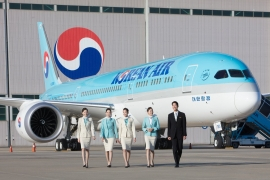
Stocks of the country’s largest full-service carrier, Korean Air, hit another record low on Friday after the company reported poor second-quarter earnings amid a deteriorating business environment and hefty foreign exchange losses.

On Friday, shares of Korean Air fell 0.2 percent to close at 22,850 won ($18.87) per share, recording a new 52-week low, while the benchmark Kospi remained relatively steady.

According to Korean Air, the airline recorded 3.2 trillion won in sales from April to June, which had inched up by 0.2 percent on-year. The company said things had improved slightly, mainly due to increased demand through route diversification and a joint venture with Delta Air Lines.

But it posted an operating loss of 98.6 billion won in Q2, from an operating profit of 66.7 billion won from the previous year. Its net loss recorded 380.8 billion won in Q2.

The air carrier’s operating profit in the first half of 2019 plunged to 46.7 billion won, an 81.9 percent drop from 259.2 billion won for January to June of 2018.

The company expected the second half of this year to be tougher in light of the chilly relations with Japan and ongoing trade tensions between the US and China.

“Despite an unfavorable business environment, we will continue to increase our competitiveness through Delta Air Lines JV, as well as flight modernization,” said Korean Air.

AirAsia announces leadership reorganisation

ศาสตร์เกษตรดินปุ๋ย : ขอบคุณแหล่งข้อมูล : หนังสือพิมพ์ The Nation

https://www.nationthailand.com/ann/30374912

AirAsia announces leadership reorganisation

Aug 17. 2019
New appointments: Aireen has been appointed as AirAsia Group president (RedBeat Ventures) and would head the corporate venture capital arm.

New appointments: Aireen has been appointed as AirAsia Group president (RedBeat Ventures) and would head the corporate venture capital arm.
By The Star
Asia News Network

727 Viewed

SEPANG: AIRASIA Group Bhd has announced a leadership reorganisation in support of its transformation into a travel and financial platform company and to build airasia.com into a lifestyle brand.

Group CEO Tony Fernandes would double up as CEO of airasia.com –- AirAsia’s travel and lifestyle e-commerce platform – with an eye to appointing a new CEO who will report to him in due course.

Joining him are AirAsia chief commercial officer Karen Chan, who would drive all commercial functions as airasia.com’s chief commercial officer, and Spencer Lee, who would take up the role of airasia.com chief operating officer managing the online business portfolio that includes OURSHOP, AirAsia WiFi (ROKKI), hotel partnerships and others.

A chief product officer for airasia.com would also be appointed to head up the product teams, while AirAsia Software Engineering and Technology (AASET) head Elias Vafiadis would continue to lead software engineering, all reporting to Fernandes in the interim.

Bo Lingam has been appointed AirAsia Group president (Airlines) and will also head AirAsia SEA.The Group’s deputy CEO (Airlines) Bo Lingam has been appointed AirAsia Group president (Airlines) and would also head AirAsia SEA (formerly known as AirAsia Global Shared Services), a shared services centre that provides corporate and support services to AirAsia, the company said in a statement to Bursa Malaysia yesterday.

He would continue to run the core airline business and drive customer service improvements and cost efficiencies throughdigitalisation and the One AirAsia initiative.

Aireen Omar has been appointed AirAsia Group president (RedBeat Ventures) and would head the corporate venture capital arm.

In this role, she would focus on seeking out new companies and technologies to power AirAsia’s core business while still overseeing the company’s digital businesses such as BigPay, Teleport and AirAsia BIG Loyalty.

Fernandes said: “We are taking travel to another level by giving our guests a truly integrated and end-to-end experience. Not just flights but hotels, activities, lifestyle, e-commerce and more. Right at the heart of this is airasia.com, which will be a lifestyle brand that offers a frictionless travel experience of discovery, booking, pricing, branding, deals for all our products and partnerships.

“To make this work, we have to have the right structure in place and with today’s changes, I believe we have put in place the right foundations that will allow us to really drive our digital and ancillary business, which I see eventually contributing up to 70% to earnings.”

AirAsia reshuffles leadership as it shows Dr M the future of air travel

ศาสตร์เกษตรดินปุ๋ย : ขอบคุณแหล่งข้อมูล : หนังสือพิมพ์ The Nation

https://www.nationthailand.com/ann/30374913

AirAsia reshuffles leadership as it shows Dr M the future of air travel

Aug 17. 2019
fficial visit: Tun Dr Mahathir Mohamad and Anthony Loke with AirAsia management and the budget airline's AllStars team at AirAsia RedQ in Sepang on Aug 16, 2019. /The Star Photo

fficial visit: Tun Dr Mahathir Mohamad and Anthony Loke with AirAsia management and the budget airline’s AllStars team at AirAsia RedQ in Sepang on Aug 16, 2019. /The Star Photo
By IZWAN IDRIS
The Star/Asia News Network

376 Viewed

Air Asia Group Bhd boss Tan Sri Tony Fernandes said he will lead airasia.com until a new CEO is hired, as he announced the reorganisation of the group’s leadership with the goal to turn the budget airline into a travel and financial platform company.

“We are taking travel to another level by giving our guests a truly integrated and end-to-end experience,” he said in a statement today.

“Right at the heart of this is airasia.com, which will be a lifestyle brand that offers a frictionless travel experience of discovery, booking, pricing, branding, deals for all our products and partnerships,” he added.

Joining him on board the new venture are AirAsia Bhd chief commercial officer Karen Chan, who will drive all commercial functions as airasia.com.

A chief product officer for airasia.com will also be appointed to head up the product teams, while AirAsia software engineering and technology (AASET) head Elias Vafiadis will continue to lead software engineering, all reporting to Fernandes in the interim.

Meanwhile, AirAsia Group deputy CEO (airlines) Bo Lingam has been appointed as AirAsia Group Bhd president (airlines). He will also head up AirAsia SEA (formerly known as AirAsia global shared services), a shared services centre that provides corporate and support services to AirAsia.

Lingam will continue to run the core airline business and drive customer service improvements and cost efficiencies through digitalisation and the One AirAsia initiative.

Aireen Omar has been appointed as AirAsia Group president (RedBeat Ventures) and will head up the corporate venture capital arm.

In this role, she will focus on seeking out new companies and technologies to power AirAsia’s core business while still overseeing the company’s digital businesses such as BigPay, Teleport and AirAsia BIG Loyalty.

“To make this work, we have to have the right structure in place and with today’s changes, I believe we have put in place the right foundations that will allow us to really drive our digital and ancillary business, which I see eventually contributing up to 70% to earnings,” Fernandes said.

Meanwhile, in a separate statement, AirAsia said it welcomed Prime Minister Tun Mahathir Mohamad and Transport Minister Anthony Loke Siew Fook to its headquarters RedQ in Sepang.

The tour kicked off at the Innovation Lab with AirAsia presenting airasia.com, its all-in-one travel platform, followed by a demonstration of a seamless, fully digital airport experience powered by AirAsia’s FACES (Fast Airport Clearance Experience System).

AirAsia also demonstrated how digital engineering solutions such as blockchain technology and Skywise, as well as key components of its future travel blueprint, including e-marketplace OURSHOP, cargo and logistics platform Teleport, fintech venture BigPay, and lifestyle and entertainment affiliates such as Santan and AirAsia Foundation.

Jokowi reveals bearish oil and gas outlook for next year

ศาสตร์เกษตรดินปุ๋ย : ขอบคุณแหล่งข้อมูล : หนังสือพิมพ์ The Nation

https://www.nationthailand.com/ann/30374911

Jokowi reveals bearish oil and gas outlook for next year

Aug 17. 2019
Carbon dioxide appears to be more efficient than water for hydraulic fracturing, or fracking, to extract oil and natural gas, according to a study led by scientists in China. (Shutterstock/FerrizFrames)

Carbon dioxide appears to be more efficient than water for hydraulic fracturing, or fracking, to extract oil and natural gas, according to a study led by scientists in China. (Shutterstock/FerrizFrames)
By The Jakarta Post
Asia News Network

327 Viewed

President Joko “Jokowi” Widodo delivered on Friday in Jakarta the annual financial note speech, which included a bearish outlook on the oil and gas industry in Indonesia next year.

The government expects the Indonesian Crude Price (ICP) to hit around US$65 per barrel next year, lower than the expected $70 per barrel for this year but slightly higher than the $61 per barrel price tag as of June, according to the Energy and Mineral Resources Ministry data.

“With a high sensitivity toward global dynamics, the government continues to monitor the movement of oil prices and global commodities,” said Jokowi in the House of Representatives.

The government also expects crude oil ready-to-use production to hit 734,000 barrels per day (bpd) next year, which is lower than the forecast average of 750,000 bpd for this year.

However, the government revised this year’s crude oil production target to 755,000 bpd and production reached 752,000 bpd as of June, according to the Upstream Oil and Gas Regulatory Special Task Force (SKK Migas).

Meanwhile, natural gas ready-to-use production is expected to reach 1.19 million barrels of oil equivalent per day (boepd) next year, which is lower than the forecast 1.25 million boepd for this year. Production reached 1.05 boepd as of June, according to SKK Migas.