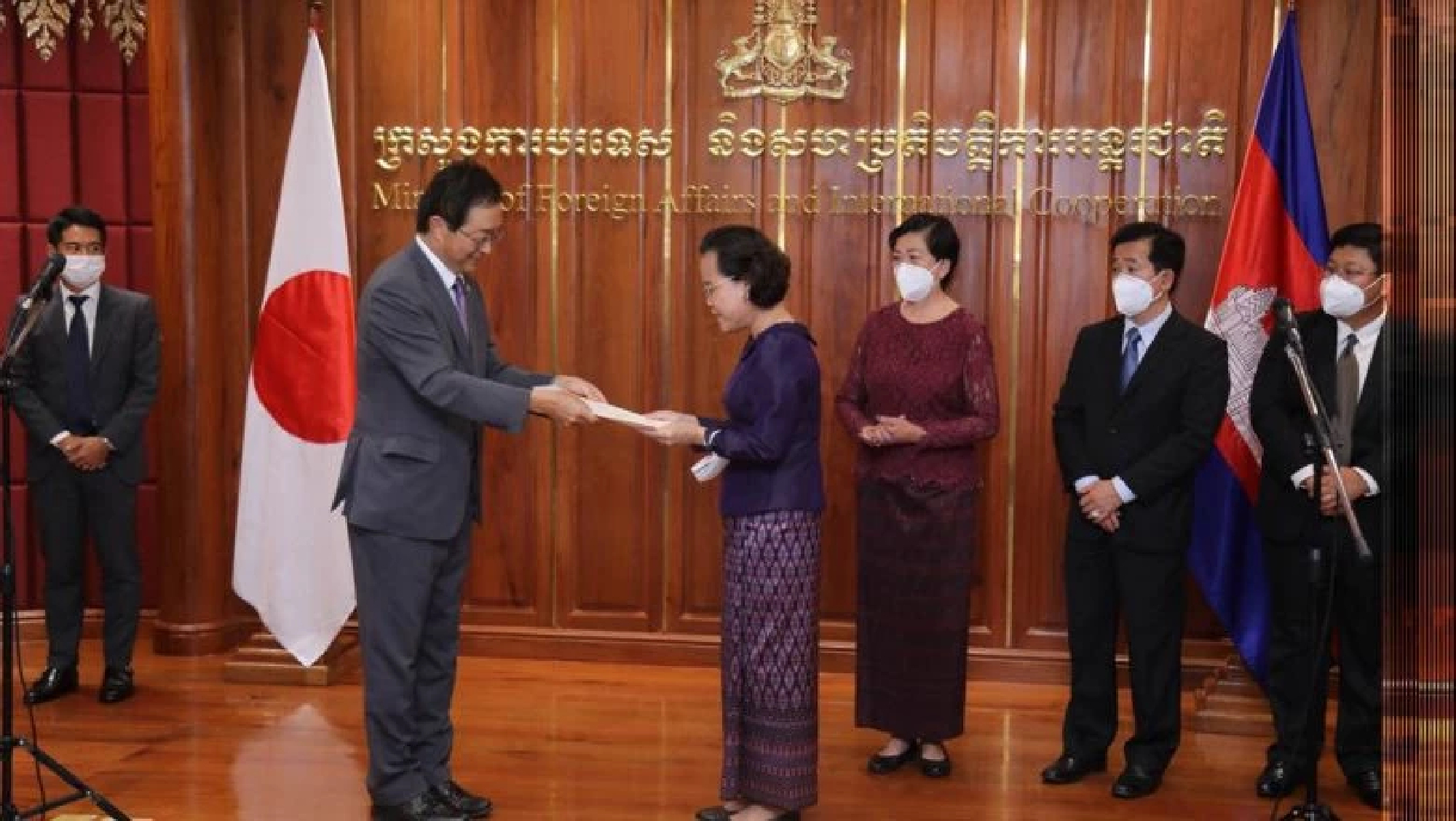
Japanese singer and actress Yoko Minamino’s original song “Rainbow for Tomorrow” was delivered to Cambodia on Monday as a gesture of friendship in a handover ceremony between senior diplomats of the two countries.
Tout Panha, secretary of state at Cambodia’s Ministry of Foreign Affairs and International Cooperation, said at the ceremony that the “beautiful” song had “touched the heart” of Prime Minister Hun Sen when it was played to him at a dinner hosted by his Japanese counterpart Fumio Kishida on April 23 in Kumamoto, Japan, on the sidelines of the 4th Asia-Pacific Water Summit. He said Hun Sen had sent the artist an appreciation letter for writing the song.
According to Panha, Minamino and other right holders authorised the posting of a video clip of the song on the Social Network Service of the Cambodian government, allowing it to be broadcast on television stations registered with the government.
Minamino, a Japanese personality with a large following, has close ties with Cambodia. She first visited the Kingdom in 1989 as part of a television project, and again in 2013.
She said this song “truly reflects the reality of Cambodia in the late 1980s and the gradual transformation of the country”, as well as the close people-to-people connections between the two nations.
“I am confident that many Cambodian people will also be deeply touched by this wonderful song, which will also help promote the long-lasting bond of friendship between the peoples of Cambodia and Japan,” said Panha.
Masahiro Mikami, Japanese ambassador to Cambodia who handed the composition to Panha, said at the ceremony that this song was first performed at the opening ceremony of this year’s Kizuna Festival, an annual cultural event hosted by the embassy every February.
He said Minamino had been “thinking about doing something for many years”, based on her “precious” memories of Cambodia, to promote friendship between the two countries.
“Minamino voluntarily produced this song and delivered it to us. The song ‘Rainbow for Tomorrow’ reminds us of our friendship and how it will continue into the future. I, therefore, hope that many Cambodian people will watch, listen to, and enjoy this song and video,” Mikami said.
He added that next year, Cambodia and Japan will celebrate the 70th anniversary of the establishment of diplomatic relations.
“I believe the history of relations between our two countries is based on people-to-people exchanges and feelings of mutual respect for each other,” he said.
The Phnom Penh Post
Asia News Network
Asia News Network: The Nation (Thailand), The Korea Herald, The Straits Times (Singapore), China Daily, Jakarta Post, The Star and Sin Chew Daily (Malaysia), The Statesman (India), Philippine Daily Inquirer, Yomiuri Shimbun and The Japan News, Gogo Mongolia, Dawn (Pakistan), The Island (Sri Lanka), Kuensel (Bhutan), Kathmandu Post (Nepal), Daily Star (Bangladesh), Eleven Media (Myanmar), the Phnom Penh Post and Rasmei Kampuchea (Cambodia), The Borneo Bulletin (Brunei), Vietnam News, and Vientiane Times (Laos).
The South Korean government has been reviewing the export of artillery shells to Canada in a bid to help the country replenish its depleted weapons stocks sent to Ukraine.
Canada recently asked if South Korea is able to export 100,000 rounds of 155 mm artillery ammunition through a diplomatic channel, a South Korean senior official at the Defense Ministry confirmed to The Korea Herald on Monday.
The South Korean official said the government has not yet formally begun procedures to proceed with the export. But the military has been reviewing whether it is capable of supplying the artillery shells in light of its weapons stocks and readiness posture.
Canada requested to fill up its ammunition stocks which have been exhausted due to its lethal aid to war-torn Ukraine, according to the official.
Since February, the Canadian government has provided military aid packages, including equipment from its armed forces’ existing weapons stocks, on numerous occasions. Several M777 howitzers and its associated155-millimetre shells have been delivered to the Security Forces of Ukraine, Canada announced in late April.
Canada’s Defense Minister Anita Anand on May 24 announced the country’s plan to donate 20,000 artillery rounds of 155 mm NATO standard ammunition to support Ukraine’s defence against the Russian invasion. But the ammunition purchase worth 98 million Canadian dollars ($77 million) from the US suggests the depletion of its weapons stockpiles.
The 155 mm artillery rounds, which can be loaded on South Korea-developed K9 Thunder Self-propelled Howitzer, are produced by South Korea’s Poongsan Corp. The company did not respond to a request for comment from The Korea Herald.
South Korean broadcaster SBS on Sunday reported that the military is considering sending its ammunition stocks to Poongsan Corp. so the firm can supply the artillery shells to Canada, without additional production, at a lower-than-normal price. The company will be paid by the Canadian government and additionally produce 100,000 artillery shells for the South Korean military, the report said, citing a high-level official at the Defense Ministry.
Seoul plans to support both Canada and Ukraine by supplying the ammunition at lower costs, the report added. But the senior military official declined to confirm the media report when asked by The Korea Herald.
South Korea has been cautious about providing lethal weapons to Ukraine despite repeated requests from the war-torn country and the US.
Ukrainian Defense Minister Alexei Reznikoff in April requested his then-South Korean counterpart, Suh Wook, to provide anti-aircraft weapons systems. Ukrainian President Volodymyr Zelenskyy in the same month asked for weapons aid during a virtual address to South Korean lawmakers.
Should the South Korean government decide to supply 100,000 shells of 155 mm calibre, it will have indirectly joined the international community’s move to provide weapons aid to Ukraine against Russia for the first time.
The South Korean military has delivered around 3 billion won ($2.4 million) worth of nonlethal military items including helmets, bulletproof vests and combat rations to Ukraine on two separate occasions.
South Korea’s Defense Ministry on Thursday said it will push the plan to provide gas masks and canisters, which are Nuclear, Biological, and Chemical or NBC protection equipment, to Ukraine. The military said it will coordinate with related countries over the issue to expeditiously offer additional nonlethal military aid to Ukraine.
Vice Defense Minister Shin Beom-chul committed to seeking ways to step up support for Ukraine at a second virtual meeting of the Ukraine Defense Contact Group hosted by US Secretary of Defense Lloyd Austin on May 23.
The Korea Herald
Asia News Network
Asia News Network: The Nation (Thailand), The Korea Herald, The Straits Times (Singapore), China Daily, Jakarta Post, The Star and Sin Chew Daily (Malaysia), The Statesman (India), Philippine Daily Inquirer, Yomiuri Shimbun and The Japan News, Gogo Mongolia, Dawn (Pakistan), The Island (Sri Lanka), Kuensel (Bhutan), Kathmandu Post (Nepal), Daily Star (Bangladesh), Eleven Media (Myanmar), the Phnom Penh Post and Rasmei Kampuchea (Cambodia), The Borneo Bulletin (Brunei), Vietnam News, and Vientiane Times (Laos).
Many cities across the country have begun issuing coupons worth millions of yuan to boost consumption affected by an outbreak of Covid-19 cases on the mainland.
Zhenjiang, Jiangsu province, has worked with many companies to issue coupons worth 60 million yuan ($9 million) since Sunday. The city government itself gave out coupons worth 5 million yuan on that day at the opening ceremony of the 2022 Zhenjiang Gold Mountain Consumer Festival, which will run until September.
Yu Jun, deputy director of the city’s commerce bureau, said the distribution of coupons will encourage consumption worth about 120 million yuan.
“Eight consumer-themed special activities to spur consumption will be held in the city,” said Yu. “Another 100 activities will be held in large shopping malls and supermarkets.”
Suzhou will issue coupons worth 100 million yuan, while the provincial capital, Nanjing, has implemented several measures to spur consumption.
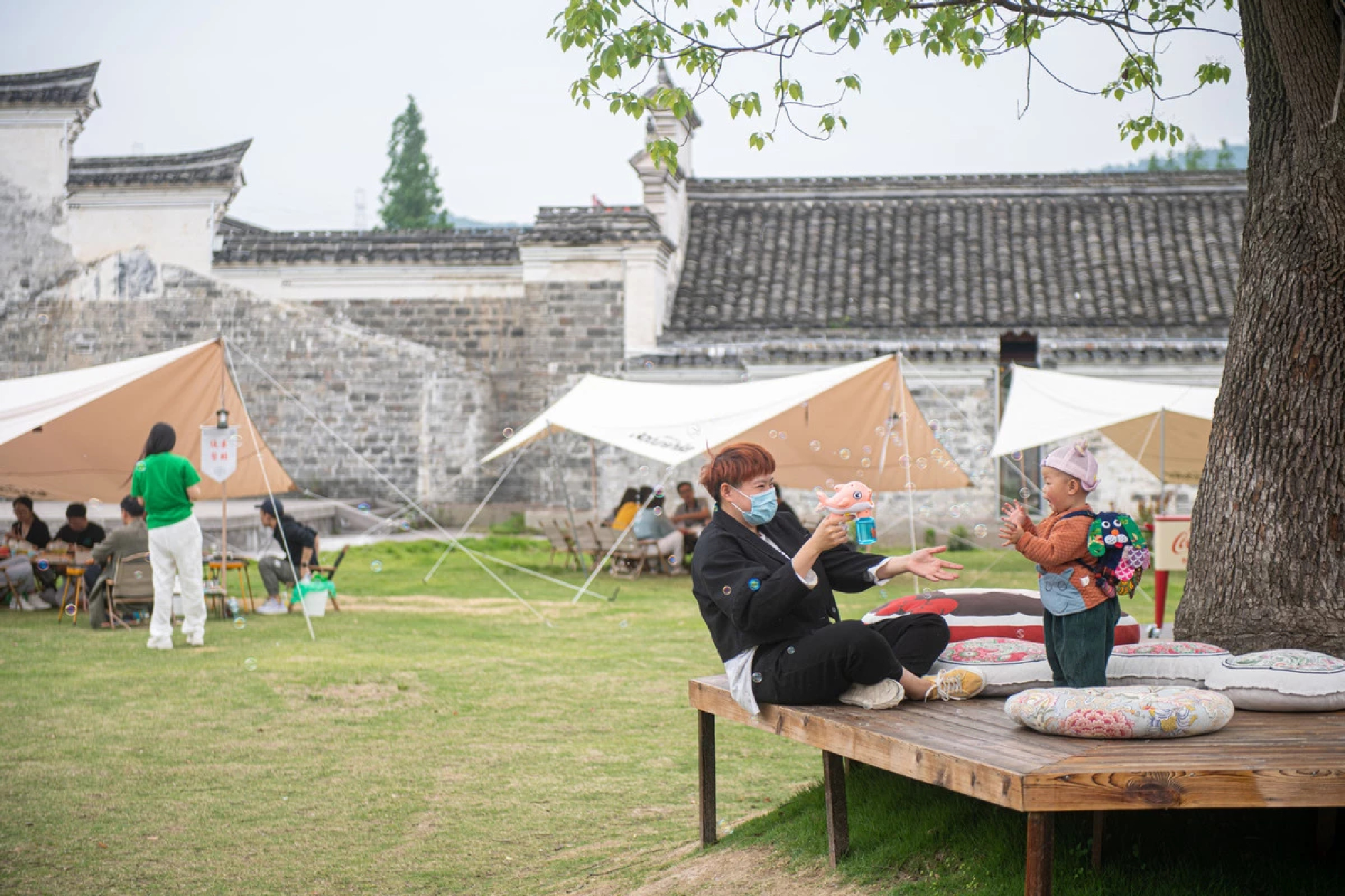
The Hongshan Forest Zoo in Nanjing, for example, has made moves to attract more tourists, who can now sleep in tents near the Tiger Mountain attraction in the area.
The zoo is offering 50 tents at Tiger Mountain and 15 more beside a lake near the north gate. The “camping in the zoo” program has been popular since it was introduced to the public.
“The measures, including distributing coupons, will lure me back to shopping malls,” said Rui Yang, a piano teacher in Nanjing. “Though I’m under some financial burden, having brunch or dinner with friends and family members are important to me.”
As of late May, many provinces across the country, such as Guangdong, Shanxi and Guizhou, had also issued coupons to boost their economies.
Guangzhou, Guangdong province, began issuing its fourth round of shopping coupons on Saturday to encourage consumption. Residents can make appointments online for more than 1 million consumption vouchers worth up to 1,000 yuan each and allocated by lottery before the end of the month, according to a statement issued by the city government over the weekend.
In addition to shopping coupons, coupons have also been issued for a range of services including travel, the statement said. Previously, Guangzhou had rolled out a series of stimulus measures and promotions, including three rounds of government-issued coupons, to help spur consumption and restore business vitality.
More than 4,000 companies in 11 districts of the city organized around 10,000 promotional events in May to promote the city’s commerce, said Lin Guoqiang, deputy director of the Guangzhou commerce bureau.
“Residents can now receive several thousand yuan in government subsidies if they buy a car,” he said, adding that Guangzhou’s retail sales volume would continue to rebound in the coming months. “Major companies are providing better services for consumers to meet their diverse needs.”
Guangzhou is not alone in issuing government shopping coupons in the province.
Earlier this month, the commerce bureau of Foshan, a major household appliance and building materials production base in Guangdong, issued more than 81 million shopping coupons to encourage residents to buy household appliances and building materials.
Shenzhen and Zhongshan have issued special car shopping coupons, while Jiangmen issued special coupons valued at 37 million yuan to help people buy property.
In Southwest China, Guizhou province has distributed coupons totalling 140 million yuan since Monday, which can be used at restaurants, cultural attractions and sports venues.
Taiyuan, Shanxi province, which had issued 120 million yuan of coupons, will issue another 420 million yuan of coupons for catering, home appliances, tourism and cars.
“Spurring consumption is crucial when shopping is limited, fewer people are employed and small and medium-sized enterprises are having trouble in production,” Yi Bin, chief strategist of Western Securities Research Institute, told China News Service.
“Besides regular coupons for catering, tourism, entertainment and department stores, many provinces and municipalities have begun to issue coupons for durable goods, such as cars, home appliances and real estate,” Yi added.
China Daily
Asia News Network
Asia News Network: The Nation (Thailand), The Korea Herald, The Straits Times (Singapore), China Daily, Jakarta Post, The Star and Sin Chew Daily (Malaysia), The Statesman (India), Philippine Daily Inquirer, Yomiuri Shimbun and The Japan News, Gogo Mongolia, Dawn (Pakistan), The Island (Sri Lanka), Kuensel (Bhutan), Kathmandu Post (Nepal), Daily Star (Bangladesh), Eleven Media (Myanmar), the Phnom Penh Post and Rasmei Kampuchea (Cambodia), The Borneo Bulletin (Brunei), Vietnam News, and Vientiane Times (Laos).
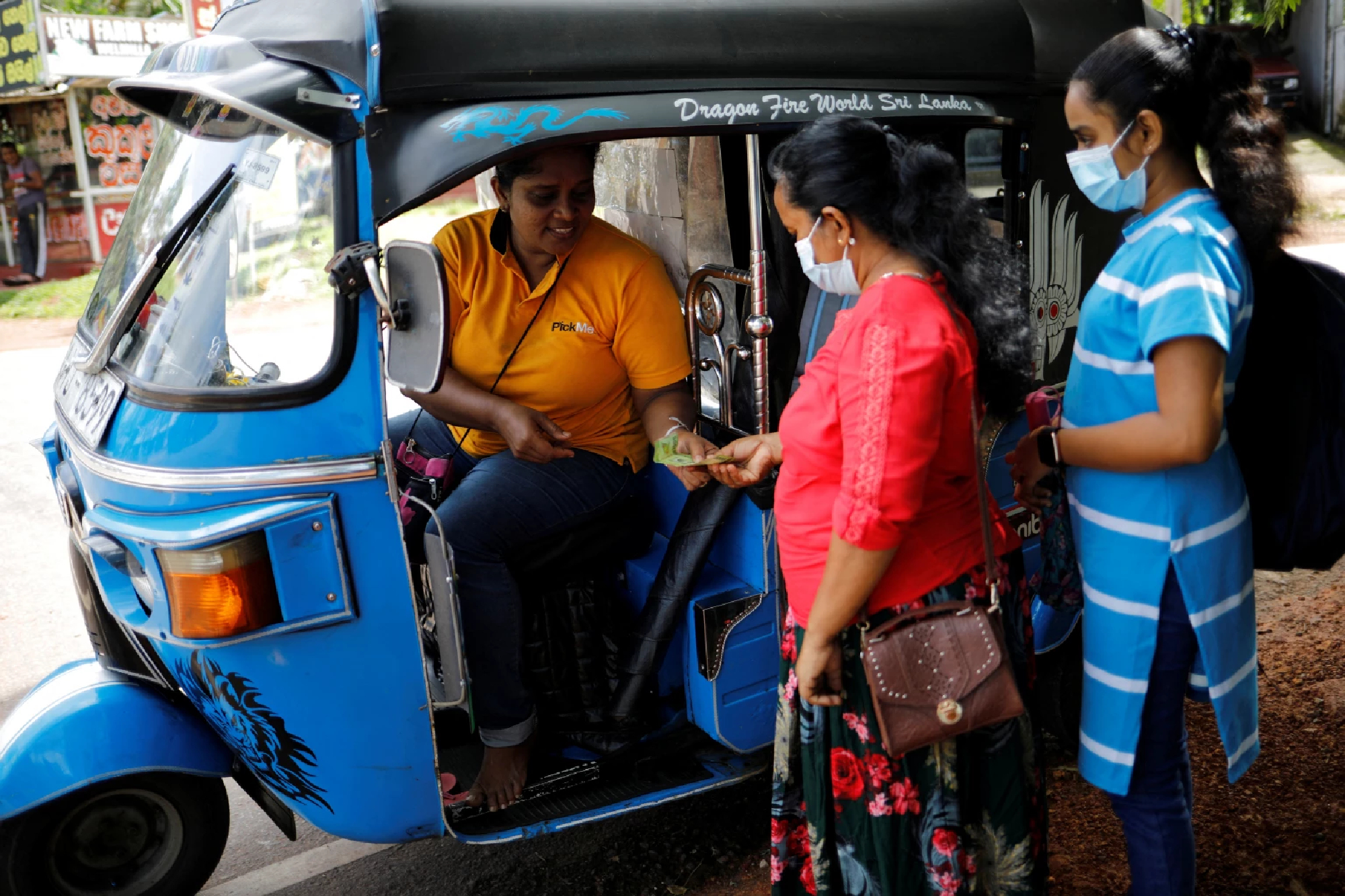
Lasanda Deepthi cleans her “tuk-tuk” outside her home. But most of her day will probably be spent standing in queues outside petrol stations, with Sri Lanka currently facing fuel shortages as it combats a tough and debilitating economic crisis.
Taking a break, she has a sandwich and tea in preparation for a busy day of ferrying passengers, or so she hopes.
Life, in itself, has dealt a couple of tough hands for the 43-year-old.
Her father passed away when she was 14, leaving her to take care of her family. Married at 21, her husband then left her, leaving her to raise their daughter alone.
Deepthi turned to design jewellery to make ends meet. But carrying decorative gold was risky in public transport so she decided to buy a tuk-tuk of her own.
“My daughter and I travelled alone so I was concerned about our safety. When I started taking my daughter by vehicle there was more safety,” the single parent told Reuters at her rented home in Gonapola on the outskirts of Colombo.
“Also, I could take other children to school as hiring passengers and earn more.”
One of the earliest female tuk-tuk drivers in Sri Lanka, Deepthi said it was initially tough to jostle with male drivers for regular customers, but once she signed up with local ride-hailing app PickMe, life became much easier.
However, things have become increasingly tougher ever since an unparalleled economic crisis hit Sri Lanka, triggering acute shortages of fuel, domestic gas, kerosene, medicines, groceries and sending prices soaring in its wake.
Deepthi’s income, which used to be approximately 30,000 Sri Lankan rupees ($83.30) a month, has fallen nearly 50 per cent because of the combined effects of lost time, currency depreciation and soaring prices of fuel, according to her.
“Because of the current crisis, we have to allocate more time,” she said while waiting in a serpentine queue running nearly two kilometres (1.2 miles) from the petrol station.
“Sometimes, I have to sleep inside the tuk-tuk.”
Deepthi was still queueing at the petrol station in the early hours of Thursday (May 26) morning, taking cover in her three-wheeler as the skies opened above her.
Her only wish and hope are for the current crisis to end, and for a sunny picture to return to her beloved country.
Asia News Network: The Nation (Thailand), The Korea Herald, The Straits Times (Singapore), China Daily, Jakarta Post, The Star and Sin Chew Daily (Malaysia), The Statesman (India), Philippine Daily Inquirer, Yomiuri Shimbun and The Japan News, Gogo Mongolia, Dawn (Pakistan), The Island (Sri Lanka), Kuensel (Bhutan), Kathmandu Post (Nepal), Daily Star (Bangladesh), Eleven Media (Myanmar), the Phnom Penh Post and Rasmei Kampuchea (Cambodia), The Borneo Bulletin (Brunei), Vietnam News, and Vientiane Times (Laos).
The Japanese government will help some 1 million people, including non-regular workers, develop skills and find new jobs as part of measures to invest more in human resources. This is based on a draft plan aimed at realising a new form of capitalism advocated by Prime Minister Fumio Kishida.
The draft also states that the government will draw up a plan to double asset income by the end of this year at the earliest, to help direct individual financial assets away from savings and toward investment.
The draft will be presented on Tuesday to a meeting of the council to realise Kishida’s new form of capitalism policy. The government aims to finetune the draft with the ruling parties and have it approved by the Cabinet in early June.
The draft lays out policies to invest heavily in four areas: human resources, science and technology, start-ups, and decarbonisation and digitisation. It also emphasises that the government will raise household income via wage hikes and strive to shift personal financial assets from savings to investment across generations.
According to the draft, “it is necessary to create a virtuous cycle in which households receive the benefits of a sustainable increase in corporate values” by shifting deposits or savings to investment by promoting reform of the Nippon Individual Savings Account small-lot investment system, known as NISA, among other methods.
A new financial aid system for students will also be introduced, according to the draft. Under the envisaged system, the government will cover tuition at universities and other institutions, and students will repay the loans when their post-graduation annual earnings reach a certain threshold.
To promote labour mobility in growth fields, the government will offer workers re-learning opportunities and help with finding new jobs based on a package of measures worth 400 billion yen over three years.
To nurture start-ups, the draft says the government will create a new credit guarantee system that will, for example, eliminate the need for personal guarantees if a start-up has a credit guarantee in place when it first launches.
The Japan News
Asia News Network
Asia News Network: The Nation (Thailand), The Korea Herald, The Straits Times (Singapore), China Daily, Jakarta Post, The Star and Sin Chew Daily (Malaysia), The Statesman (India), Philippine Daily Inquirer, Yomiuri Shimbun and The Japan News, Gogo Mongolia, Dawn (Pakistan), The Island (Sri Lanka), Kuensel (Bhutan), Kathmandu Post (Nepal), Daily Star (Bangladesh), Eleven Media (Myanmar), the Phnom Penh Post and Rasmei Kampuchea (Cambodia), The Borneo Bulletin (Brunei), Vietnam News, and Vientiane Times (Laos).
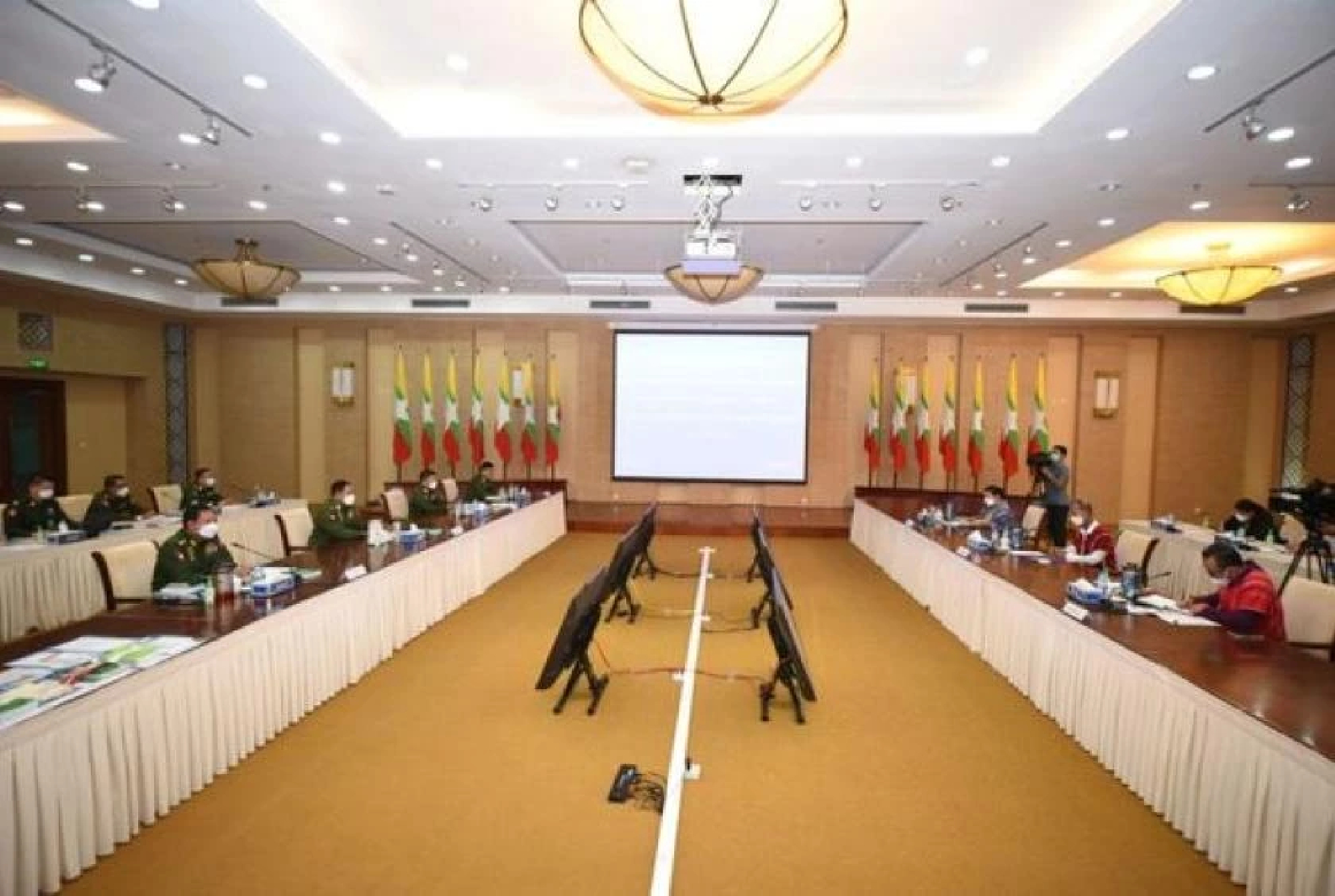
The State Administration Council (SAC)’s peace negotiation team and a delegation led by the chairman of the Karen National Union/the Karen National Liberation Army (KNU/KNLA-PC) held talks and signed agreements following three days of negotiations, the SAC said.
The meeting was held at the National Reconciliation and Peace Centre in Nay Pyi Taw on Saturday.
During the meeting, Lt-General Win Bo Shein, a member of the National Solidarity and Peace-making Negotiation Committee, explained the committee’s findings on the agreements contained in Parts 1, 2 and 3 of the Union Accord, and the remaining issues to be discussed in Part 3.
KNU/KNLA (PC) asked for further information.
They then discussed general issues related to peace and development, and signed agreements following three days of negotiations. KNU/KNLA (PC) chairman Saw Htaw Lay and leader of the peace negotiation team Lt-Gen Yar Pyae delivered the concluding remarks.
Also present were SAC member Lt-General Moe Myint Tun, secretary of the committee Lt-Gen Min Naung, KNU/KNLA (PC) vice-chairman Dr Naw Kapaw Htoo and Central Executive Committee member Saw Maung Maung.
SAC’s Chairman Commander-in-Chief of Defence Services Senior General Min Aung Hlaing first met with the KNU/KNLA (PC) delegation in Nay Pyi Taw on Thursday.
Later, SAC’s peace negotiation team led by Lt-General Yar Pyae also held the peace talks with the delegation on May 27 and 28.
Eleven Media
Asia News Network
Asia News Network: The Nation (Thailand), The Korea Herald, The Straits Times (Singapore), China Daily, Jakarta Post, The Star and Sin Chew Daily (Malaysia), The Statesman (India), Philippine Daily Inquirer, Yomiuri Shimbun and The Japan News, Gogo Mongolia, Dawn (Pakistan), The Island (Sri Lanka), Kuensel (Bhutan), Kathmandu Post (Nepal), Daily Star (Bangladesh), Eleven Media (Myanmar), the Phnom Penh Post and Rasmei Kampuchea (Cambodia), The Borneo Bulletin (Brunei), Vietnam News, and Vientiane Times (Laos).
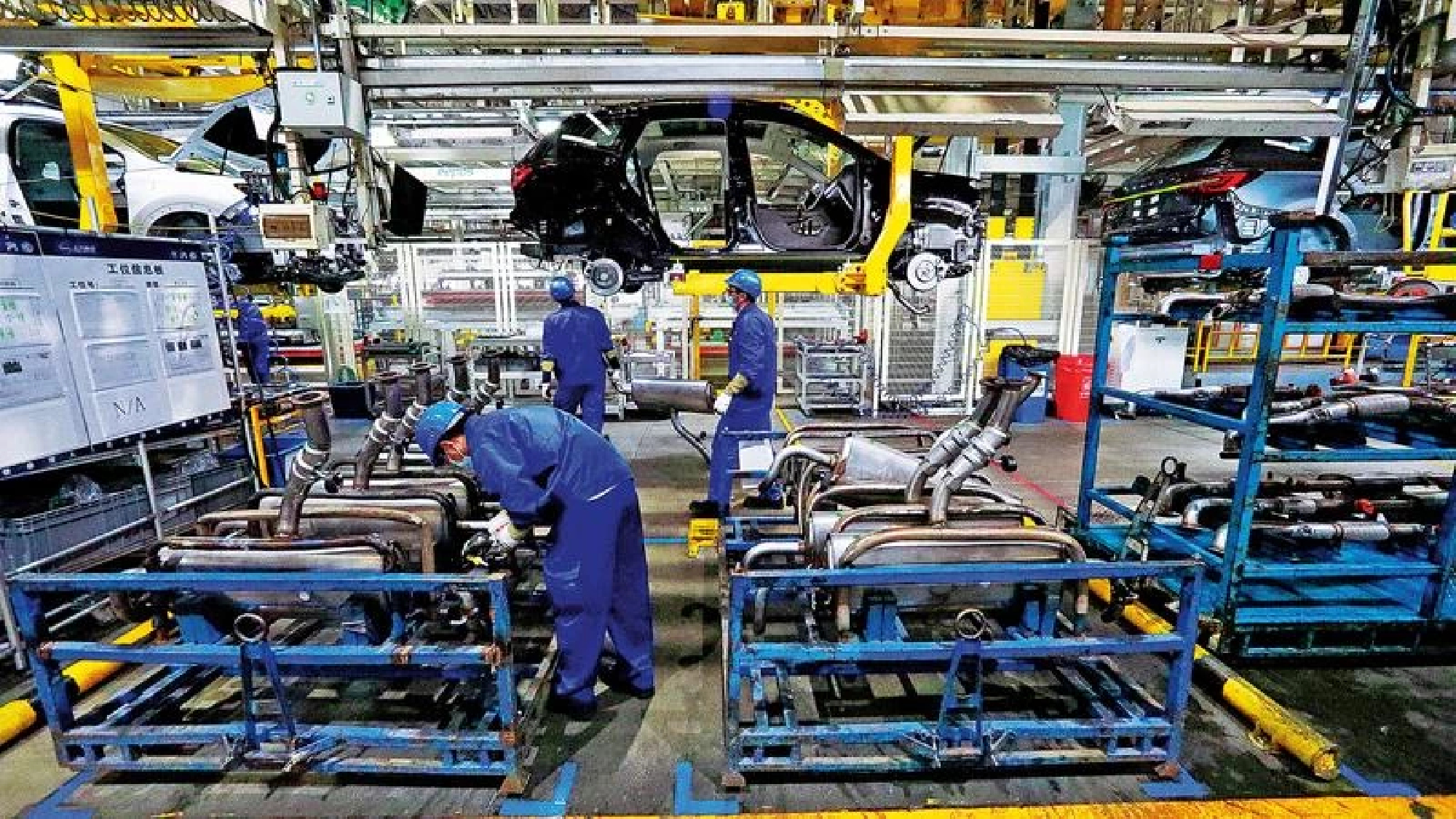
Shanghai’s municipal government on Sunday announced an action plan to speed up economic recovery to go side by side with its Covid-19 control measures.
Under the plan, comprising 50 policies and measures, the city’s approval system for resumption of production would be abandoned starting June 1, Shanghai deputy mayor Wu Qing told a press conference.
At the same time, the city will promote resumption of work in all sectors by expanding the scope of subsidies for enterprises’ epidemic prevention and disinfection, stabilising industrial and supply chains in the Yangtze River Delta, and streamlining domestic and international logistics and transportation channels.
The city will reduce rent, property tax and urban land use tax for qualified enterprises. It will also grant water, electricity and natural gas fee subsidies to non-resident users.
According to the plan, measures will also be adopted to invite foreign capital, encourage consumption, and expand investment.
Shanghai will establish a mechanism to arrange designated personnel to aid work resumption of key foreign-funded enterprises and launch an online service system for major foreign-funded projects.
It will start the application process for special funds to develop the regional headquarters of multinational corporations in Shanghai ahead of schedule in 2022.
The city will gradually reduce the purchase tax on some passenger vehicles as required by national policies. It will also provide subsidies to consumers who replace internal combustion engine cars with electric ones, and support large commercial enterprises and e-commerce platforms in issuing consumption coupons.
The Shanghai municipality has also vowed to promote the reconstruction of some old areas and support the scale expansion of corporate bond issuances to expand investment.
China Daily
Asia News Network
Asia News Network: The Nation (Thailand), The Korea Herald, The Straits Times (Singapore), China Daily, Jakarta Post, The Star and Sin Chew Daily (Malaysia), The Statesman (India), Philippine Daily Inquirer, Yomiuri Shimbun and The Japan News, Gogo Mongolia, Dawn (Pakistan), The Island (Sri Lanka), Kuensel (Bhutan), Kathmandu Post (Nepal), Daily Star (Bangladesh), Eleven Media (Myanmar), the Phnom Penh Post and Rasmei Kampuchea (Cambodia), The Borneo Bulletin (Brunei), Vietnam News, and Vientiane Times (Laos).
Behind South Korea’s industrial growth was a military-like corporate culture that united workforces for a shared goal: The mantra “your company is your family” propelled the tremendous drive toward economic prosperity but also gave validity to tough corporate culture and hierarchy.
The decades-old corporate culture, however, is now being forced to change for a new generation of the workforce who finds daily 9-to-6 office hours, frequent company dinners, and a hierarchical communication system unfit and unproductive. Perhaps most importantly, these younger workers don’t see making personal sacrifices for corporate growth to be worth their time.
With employees born after the 1980s and 1990s becoming a major source of corporate growth, Korea‘s once-unthinkable work-from-home experiment sparked by the COVID-19 pandemic has prevailed even though virus fears have subdued and have given managers every reason to request their staff to return to the office.
A wide spectrum of businesses — from digital-first IT firms to conservative manufacturing companies — are looking at ways to change the way they operate to accommodate employees who no longer find merit in climbing the corporate ladder for the rest of their lives.
Most recently, Naver made an unprecedented decision to give its 4,000 employees the option of working either five days or three days a week from home. Several other Korean businesses are adopting hybrid forms of remote work including allowing their employees to commute to nearby co-working spaces instead of the company headquarters.
“Remote work just makes everything attractive about a company,” a 32-year-old Naver employee surnamed Shin, who has worked for the tech firm for nine years and holds a managerial position, told The Korea Herald on Monday.
“While there are criticisms that remote work hinders performance, I have had no problem with my performance so far,” she added.
When asked whether she was concerned about having her promotion prospects suffer for not having “enough” face-to-face interactions with her boss, Shin replied Naver’s identity as a tech company allows it to be more “performance-based. Remote working has driven its corporate culture further away from the traditional [working culture],“ she explained.
Hyundai Motor Group, a manufacturing giant that has relied on loyal, hardworking employees to power its growth for decades, also decided to allow a hybrid remote work system to continue after social distancing rules were eased. At least 30 per cent of its workforce has worked from home since April, compared with the initial 50 per cent when the COVID-19 outbreak was at its height. Kim Gyu-won, a 26-year-old who has worked for the nation’s top automaker for almost a year, wants her employer to make the remote work policy permanent.
“It takes about an hour and a half to commute to my office and honestly, it’s gruelling,” she said.
“Remote work has allowed me to work with a clearer mind because I get more sleep and live a more balanced life.”
The carmaker has also been toning down the frequency of in-person meetings and its hierarchical office culture, according to Kim.
“We are famous for our late-night gatherings, but nowadays, our bosses don’t force us to attend them nor always hold them at dinner time. It’s mostly been replaced with team lunches.”
Another reason that Kim prefers remote work is that she believes it is fundamental for a company to become “performance-based.”
“I think it’s just right for an employee that performs well at work to get promoted, rather than employers considering other factors.”
Of course, not everyone is happy. The changes have received mixed reactions from employees, employers and experts across different generations.
Some are excited about having flexible work hours, while others are concerned that it will hinder productivity and make Korean companies too “performance-based,” thus losing its “family-like” quality.
“I think it’s a great system for working moms and employees who value some personal time after work,” an employee in his 40s at the nation’s top steelmaker Posco said, asking for anonymity.
Posco is among the Korean firms that took a conservative stance against remote working and ended its policy as early as it could, though it exempted immunocompromised employees, pregnant women and others with underlying health conditions from physically returning to the office.
“But as a manager, I believe is better to manage and communicate face-to-face with other employees,” the employee added.
According to a survey conducted by Gallup Korea in March last year on 1,204 office workers here aged 25 to 54, 30 per cent replied they had remote work experience. Of the 30 per cent, 90 per cent of the respondents aged 25 to 34 said they were satisfied with the remote working and wanted to continue. On the other hand, those aged 35 to 44 and 45 to 54 each had only 66 per cent that liked the same experience.
Gallup Korea explained that the younger generation prefers remote working because they were more familiar with mobile and technologies that can make the remote working experience smoother.
Hierarchy to exist, but differently
So will the adoption of remote work affect South Korea’s hierarchical corporate culture? The answer is yes, according to several experts here.
“Every company needs its hierarchy because managing a business ultimately boils down to decision-making,” Lee Young-myon, a business professor at Dongguk University in Seoul said via e-mail.
“But excessive monitoring and micromanaging, which makes up a part of Korea’s corporate hierarchy, is likely to be diminished with remote working,” Lee explained, adding that hierarchy will continue to exist, just in a different form.
On concerns that remote working will lead to a decline in work productivity, and eventually the economy, Lee disagreed.
“Remote working will spread, but it will not lead to a dip in our economy, because it will mean providing the work environment that young Koreans want and when companies get the results they need, then it will become a win-win situation for both employers and employees,” he said.
Kim Tae-gyu, a business professor at Korea University, called remote working an opportunity for companies to forge new paths.
“Employers allowing employees to act on their own based on trust instead of micromanaging is a proven success case in this industry,” Kim said in one of his recent blog posts.
“I hope Korean businesses will use this as an opportunity to review their trust with employees and make this as a chance to grow.”
Meanwhile, some experts pointed out that forcing remote work upon its employees in an “unprepared environment” will only increase stress for them, giving employers a new task to solve.
“The technology urgently introduced due to the COVID-19 environment is expected to increase so-called technostress,” Noh Hye-young, a business professor at Gachon University said in a recent report.
“We were able to confirm that the smart work introduced to improve performance was causing technostress, and technostress hurt work productivity.”
Kuensel
Asia News Network
Asia News Network: The Nation (Thailand), The Korea Herald, The Straits Times (Singapore), China Daily, Jakarta Post, The Star and Sin Chew Daily (Malaysia), The Statesman (India), Philippine Daily Inquirer, Yomiuri Shimbun and The Japan News, Gogo Mongolia, Dawn (Pakistan), The Island (Sri Lanka), Kuensel (Bhutan), Kathmandu Post (Nepal), Daily Star (Bangladesh), Eleven Media (Myanmar), the Phnom Penh Post and Rasmei Kampuchea (Cambodia), The Borneo Bulletin (Brunei), Vietnam News, and Vientiane Times (Laos).
Without any clear indication of whether India’s restriction on the export of sugar applies to Bhutan or not, industries that require sugar as a key raw material in the country are in dilemma.
India’s Directorate General of Foreign Trade issued a notification on May 24 that the export of sugar will be restricted from June 1 until October 31 this year.
It stated that from October 31, 2022, or until further orders, whichever is earlier, the export of sugar will be allowed only with specific permission from the Directorate of Sugar, Department of Food and Public Distribution (DFPD), Ministry of Consumer Affairs, Food and Public Distribution.”
Sugar includes raw sugar, refined sugar and white sugar.
There are about nine beverages, breweries, and food and agro establishments in the country that use sugar as the primary raw material.
The industries require more than 800 metric tonnes (MT) of sugar in a month.
Officials working in the industries are worried that if India’s restriction applies to Bhutan, they will have no other option than to shut their shops until the export is allowed.
The industries also have about 1,200 employees.
The chief executive officer of a beverage company, Big Cola, in Samtse, Jamyang Choda, said the notification about the restriction is not clear.
“And we are yet to hear from the government,” he said. “But if it applies to us, we don’t have a business. The factory is as good as it is closed.”
Similarly, an official with the Tashi Beverages in Phuentsholing said sugar is one of the primary raw materials and the operations will shut down if the import stops.
“We require about 150 metric tonnes (MT) of sugar in a month. This is the minimum,” he said, adding that stocking up will also block the capital.
“We also need space to stock,” he said.
An official with Drangchu Beverages in Phuentsholing said they are waiting for the government to indicate something as the notification is not clear.
“Going by the notification, it looks like we will have consideration,” he said.
As nothing is clear at the moment, Drangchhu is looking for ways to import before the restriction comes into effect on June 1.
Drangchhu requires about 120MT to 180MT of sugar in a month depending on the seasons.
According to the Indian media outlets, India is taking up this move to maintain domestic availability and price stability of sugar.
“The restriction does not apply to sugar being exported to the EU and USA,” the notification added.
Meanwhile, a shopkeeper in Thimphu, Sonam Tshering said that India may consider Bhutan.
“Although there is nothing from the government yet, I think India will allow export for us,” he said.
Sonam Tshering said that many people came to buy sugar in his shop.
He said he has also ordered more sugar stock as a measure.
In Phuentsholing, a shopkeeper, Sonam, said wholesale dealers in the eastern dzongkhags called and ordered sugar.
“We have also ordered more stock as a measure,” he said.
However, there was no panic buying in Phuentsholing. Economic affairs minister Loknath Sharma said export restrictions will affect the country.
“We don’t produce sugar and depend on India. Even small bakeries including our distilleries and fruit production will be hampered badly,” he said.
“We are optimistic that the government of India will consider our case as we wholly depend on their export,” the minister said.
Meanwhile, the Association of Bhutanese Industries (ABI) has also written to the Department of Industry of the economic affairs ministry.
According to the ABI letter, these industries are “trying their best to import and stock the material as much as possible to lessen the operational burden.”
ABI has requested the department to approach relevant ministries and initiate an urgent dialogue with the Government of India so that Bhutan can still import sugar.
Meanwhile, Indian media outlets have reported that such a step with the export of sugar is being taken for the first time in six years. “It is initiated in the wake of the Ukraine-Russia conflict that has increased food prices in many parts of the world.”
India is the second-largest sugar producer and exporter in the world after Brazil. India recently restricted the export of wheat.
Kuensel
Asia News Network
Asia News Network: The Nation (Thailand), The Korea Herald, The Straits Times (Singapore), China Daily, Jakarta Post, The Star and Sin Chew Daily (Malaysia), The Statesman (India), Philippine Daily Inquirer, Yomiuri Shimbun and The Japan News, Gogo Mongolia, Dawn (Pakistan), The Island (Sri Lanka), Kuensel (Bhutan), Kathmandu Post (Nepal), Daily Star (Bangladesh), Eleven Media (Myanmar), the Phnom Penh Post and Rasmei Kampuchea (Cambodia), The Borneo Bulletin (Brunei), Vietnam News, and Vientiane Times (Laos).






 SootinClaimon.Com