Newly discovered gold mine to bolster productivity in Laos

#SootinClaimon.Com : ขอบคุณแหล่งข้อมูล : หนังสือพิมพ์ The Nation.

https://www.nationthailand.com/international/40015685


A newly discovered underground gold mine that has just begun operations will significantly bolster mineral production by Lane Xang Minerals Limited (LXML) and bring economic and social benefits to the country.

Newly discovered gold mine to bolster productivity in Laos

With resources of 9.5 million tonnes and ore production projected to increase from 400,000 tonnes in 2023 to 1.2 million tonnes per annum thereafter, the “Discovery Deeps Underground Mine” is expected to extend Sepon’s mine life by at least seven years to 2030, LXML, a leading mineral producer in Laos, said in a statement.

The Deputy Minister of Energy and Mines and the Chair of the Sepon Project Management Committee, Mr Thongphat Inthavong, and other government stakeholders visited the LXML Sepon mine in Savannakhet province on Monday to open what the company claimed is the first modern underground mine in Laos.

The discovery and expected increase in production will contribute to poverty reduction and sustainable development in host communities, according to LXML.

“This new development will use the modern underground mining equipment, and advanced mining techniques, to transfer knowledge and skills to Lao employees and contractors – Lao mining professionals – to set new standards for underground mining,” said the LXML General Manager, Paul Harris.

Addressing the opening ceremony, the LXML Managing Director, Mr Saman Aneka, said the LXML community trust fund has contributed to better livelihoods in the three key areas of food security, health and education for future generations.

He said this underground mine is the first underground operation in Laos that is compliant with the Environmental and Social Impact Assessment (ESIA) requirements. To date, LXML has provided US$11 million to the community trust fund and US$49 million in income generation for local business groups.

LXML brought in specialist international expertise and equipment to Laos for this landmark project.

The Lao government’s National Green Growth Strategy recognises the mining industry as a priority sector due to its significant contributions to economic development, and LXML Sepon has consistently been rated A+ by the Lao Ministry of Energy and Mines for maintaining high international standards.

“Underground mining will deliver economic and social benefits at the national, regional, and local levels, and to our stakeholders and host communities,” said Mr Harris.

“Underground mining is more economical for deeper ore deposits, with much less environmental and social impact relative to open-pit mining. At LXML, we are committed to achieving the highest safety and environmental standards and working closely with local communities to share benefits.”

Underground exploration and development will continue at Sepon through to 2023, with production from the underground mine expected in the second half of next year. The underground mine will extend 450 metres below the surface. The decline access tunnel will be more than 1,800 metres long, five metres high and five metres wide, to accommodate modern underground excavation and drilling equipment.

LXML Sepon has been operating an open-pit gold and copper mine in Savannakhet province since 2003. Over the past two decades, LXML has contributed more than US$1.6 billion in direct revenue through taxes and royalties to the Lao government, and hundreds of millions of dollars in indirect benefits through community development, employment and training.

Vientiane Times

Asia News Network: The Nation (Thailand), The Korea Herald, The Straits Times (Singapore), China Daily, Jakarta Post, The Star and Sin Chew Daily (Malaysia), The Statesman (India), Philippine Daily Inquirer, Yomiuri Shimbun and The Japan News, Gogo Mongolia, Dawn (Pakistan), The Island (Sri Lanka), Kuensel (Bhutan), Kathmandu Post (Nepal), Daily Star (Bangladesh), Eleven Media (Myanmar), the Phnom Penh Post and Rasmei Kampuchea (Cambodia), The Borneo Bulletin (Brunei), Vietnam News, and Vientiane Times (Laos).

Published : May 18, 2022

By : Vientiane Times

Vietnam Blockchain Association makes debut in bid to put country on world tech map

#SootinClaimon.Com : ขอบคุณแหล่งข้อมูล : หนังสือพิมพ์ The Nation.

https://www.nationthailand.com/international/40015680


The Vietnam Blockchain Association was launched in the capital city on Tuesday, the first official legal entity specialising in the field of blockchain technology.

Vietnam Blockchain Association makes debut in bid to put country on world tech map

The Vietnam Blockchain Association was launched in the capital on Tuesday, the first official legal entity specialising in the field of blockchain technology as it aims to put the country on the world technology map.

The association aims to promote Vietnam’s digital economy.

Among the association’s tasks are expanding relationships with blockchain organisations and communities around the world and creating favourable conditions for members to share experiences and resources to research, test, apply, deploy and trade blockchain technology in line with Vietnamese law.

Attracting investment for the blockchain industry and focusing on training and developing digital human resources are its other responsibilities.

The Vietnam Blockchain Association is also committed to making contributions to raising community awareness and advising on the development of legal corridors, standards and regulations in the application and development of products and services on the blockchain platform, said association chairman Hoang Van Huay on Monday.

Vietnam has been focusing on researching and applying blockchain, a form of data storage and transmission technology using encryption.

Due to its transparency in data sharing, high confidentiality and trustworthiness, blockchain is being used in many industries such as finance, logistics and retail.

The Vietnamese government has supported the development of blockchain technology applications in socio-economic fields, in which priority is given to businesses deploying feasible blockchain projects, bringing benefits to society.

Vietnam News

Asia News Network: The Nation (Thailand), The Korea Herald, The Straits Times (Singapore), China Daily, Jakarta Post, The Star and Sin Chew Daily (Malaysia), The Statesman (India), Philippine Daily Inquirer, Yomiuri Shimbun and The Japan News, Gogo Mongolia, Dawn (Pakistan), The Island (Sri Lanka), Kuensel (Bhutan), Kathmandu Post (Nepal), Daily Star (Bangladesh), Eleven Media (Myanmar), the Phnom Penh Post and Rasmei Kampuchea (Cambodia), The Borneo Bulletin (Brunei), Vietnam News, and Vientiane Times (Laos).

Published : May 18, 2022

By : Vietnam News

DNeX, Foxconn unit to build and operate wafer fabrication plant in Malaysia

#SootinClaimon.Com : ขอบคุณแหล่งข้อมูล : หนังสือพิมพ์ The Nation.

https://www.nationthailand.com/international/40015678


Dagang Nexchange Bhd (DNeX) and Big Innovation Holdings Limited (BIH), a wholly-owned subsidiary of Hon Hai Precision Industry Co Ltd (Foxconn), plan to set up a joint venture company to build and operate a new 12-inch wafer fabrication plant in Malaysia.

DNeX, Foxconn unit to build and operate wafer fabrication plant in Malaysia

DNeX, in a statement, said it had inked a memorandum of understanding (MoU) to collaborate on establishing and operating the semiconductor fabrication facility in the country.

Under the MoU, DNeX and BIH will work together to decide the location of the new fabrication plant in Malaysia, the financing structure of the project, and the initial management structure and key personnel of the new plant.

The new fabrication plant is expected to produce 40,000 wafers per month, encompassing the manufacturing of 28-nanometer and 40-nanometer technologies.

DNeX group managing director Tan Sri Syed Zainal Abidin Syed Mohamed Tahir said the project would allow the group and the country to leap forward in terms of semiconductor technology advancement as well as offer a multitude of economic spillover effects to the country.

“The new fabrication plant will be the first 12-inch wafer fabrication plant in Malaysia initiated by a bumiputera company. In addition, the new fab will be operating in the 28-nanometer technology node, which is the most advanced technology node in planar transistor technology. This technology node will have a long production life and have the widest range of applications,” he said.

“The building of the new fabrication plant is part of the group’s ongoing strategy to explore new opportunities in the technology field, innovate and grow as a group and address strong global demand for semiconductors,” he added.

The Star

Asia News Network: The Nation (Thailand), The Korea Herald, The Straits Times (Singapore), China Daily, Jakarta Post, The Star and Sin Chew Daily (Malaysia), The Statesman (India), Philippine Daily Inquirer, Yomiuri Shimbun and The Japan News, Gogo Mongolia, Dawn (Pakistan), The Island (Sri Lanka), Kuensel (Bhutan), Kathmandu Post (Nepal), Daily Star (Bangladesh), Eleven Media (Myanmar), the Phnom Penh Post and Rasmei Kampuchea (Cambodia), The Borneo Bulletin (Brunei), Vietnam News, and Vientiane Times (Laos).

Published : May 18, 2022

By : The Star

India’s Reliance to acquire several brands in $6.5 billion consumer goods play

#SootinClaimon.Com : ขอบคุณแหล่งข้อมูล : หนังสือพิมพ์ The Nation.

https://www.nationthailand.com/international/40015670


Reliance, India’s biggest retailer, will acquire dozens of small grocery and non-food brands as it aims to build its own $6.5 billion (THB224.4 billion) consumer goods business to challenge foreign giants such as Unilever and Coca-Cola, according to sources.

India’s Reliance to acquire several brands in $6.5 billion consumer goods play

The company is in the final stages of negotiations with around 30 popular local consumer brands to fully acquire them to form joint venture partnerships, said one source familiar with its business planning.

The total investment planned by the company is not clear, but Reliance had set a goal to achieve $6.5 billion in annual sales from the business within five years.

“Reliance will become a house of brands,” one of the sources said. “With the new business plan, Reliance is seeking to challenge some of the world’s biggest consumer groups, such as Nestle, Unilever, PepsiCo and Coca-Cola, which have been operating for decades in India.”

Asia News Network: The Nation (Thailand), The Korea Herald, The Straits Times (Singapore), China Daily, Jakarta Post, The Star and Sin Chew Daily (Malaysia), The Statesman (India), Philippine Daily Inquirer, Yomiuri Shimbun and The Japan News, Gogo Mongolia, Dawn (Pakistan), The Island (Sri Lanka), Kuensel (Bhutan), Kathmandu Post (Nepal), Daily Star (Bangladesh), Eleven Media (Myanmar), the Phnom Penh Post and Rasmei Kampuchea (Cambodia), The Borneo Bulletin (Brunei), Vietnam News, and Vientiane Times (Laos).

Published : May 18, 2022

By : The Statesman

‘Too late for vaccines to save North Korea’

#SootinClaimon.Com : ขอบคุณแหล่งข้อมูล : หนังสือพิมพ์ The Nation.

https://www.nationthailand.com/international/40015666


The ongoing wave of Omicron infections in North Korea could cause tens of thousands of deaths in the unvaccinated country, according to Dr Oh Myoung-don, who heads the National Medical Centre’s committee for clinical management of emerging infectious diseases.

‘Too late for vaccines to save North Korea’

Speaking at a virtual forum organised by Seoul National University’s Institute for Health and Unification Studies on Monday, Oh estimated that the Omicron death toll in North Korea could reach around 34,000 at the end of the current wave. He said he arrived at the numbers based on his analysis of an April 15 US Centres for Disease Control and Prevention report and other data out of Hong Kong.

The US CDC report, which looked at cases that occurred during Hong Kong’s Omicron outbreak from January 6 to March 21 this year, noted that the high overall mortality there was mainly driven by deaths among unvaccinated people aged 60 and up.

The report said the mortality rate – at 1.72 per cent, or 17,250 deaths per million population – was highest among people in their 80s and older who have never been vaccinated. Among unvaccinated people in their 60s and 70s, the rate was 0.27 per cent and 0.58 per cent, respectively.

North Korea has 2,409,986 people in their 60s and older who make up 9 per cent of its entire population, according to the United Nations’ 2019 statistics, all of whom are probably unvaccinated, Oh pointed out.

“Considering that North Korea does not have the kind of advanced health care system that Hong Kong does, death rates could be even higher there,” he said.

The outbreak in North Korea is growing rapidly, with about 5 per cent of its 26 million population reported having experienced a fever between late April and now. The cumulative estimated count has climbed to 1,483,060 cases and 56 deaths in less than a week since the admission of domestic cases on May 12.

In 24 hours alone, 269,510 cases of “fever” and six associated deaths were newly registered, the North’s official Korean Central News Agency announced on Monday.

South Korean public health authorities say the official estimates of cases and deaths across North Korea are likely to be vastly undercounted.

Lee Sang-won, who is leading the Korea Disease Control and Prevention Agency’s epidemiological analysis team, on Tuesday suggested a possible underreporting of deaths in North Korea.

Speaking to reporters, he said, “Based on announcements so far, North Korea’s rate of deaths per case is lower than that observed in South Korea or elsewhere in the world despite a widespread outbreak that appears to be taking place.”

Health and Welfare Ministry spokesperson Son Young-are pointed out that North Korea’s lack of diagnostics to confirm Covid-19 meant cases without symptoms were going unreported. Citing ministry data, he said, “more than half of younger patients with Omicron do not exhibit any symptoms.”

Son said North Korea’s reliance on the presence of fever to sift out suspected cases also “leaves large loopholes”.

“Only about 1 in 10 Omicron patients develop a fever,” he said.

Son said South Korea’s low case fatality rate of 0.13 per cent was a result of “mass testing and a high vaccine rate, without which even Omicron can prove deadly”.

Oh said that at this point, vaccines “unfortunately, would make little difference to the situation facing North Korea”.

He said the Omicron outbreak in North Korea likely began around April 15, weeks before the official announcement.

“Even if the vaccines were to arrive now, it would take at least a month for both doses to get to the arms of people and for the full protective effects to kick in,” he said. “By that time, Omicron will have already peaked and done its damage.”

Rather, what was more urgently needed was treatment including antiviral and anti-inflammatory drugs to stop people from becoming very sick as well as basic over-the-counter medications such as fever reducers, he said.

The lack of access to essential medicines may force North Koreans to resort to nonmedical alternatives.

North Korea’s state-run daily Rodong Sinmun on Sunday ran a story about home remedies for Covid-19 symptoms, recommending honey for a cough, willow tea leaf for other mild symptoms and ventilating the room for breathlessness.

Dr Paik Soon-young, a virologist at the Catholic University of Korea, agreed that the Omicron outbreak in North Korea has grown past a size containable through vaccination.

“The 300,000-something cases a day now being reported in North Korea is comparable to the 600,000 daily cases logged at the peak of South Korea’s Omicron surge in March, seeing that our population is roughly double theirs,” he told The Korea Herald.

Paik said North Korea would still need the vaccines to fend off possible second and third waves of infection coming their way.

“Easily storable vaccines like Novavax might be better suited for use there than the mRNA types,” he said.

Throughout the pandemic, North Korea has refused international offers of vaccines and other assistance.

In a phone call with The Korea Herald, North Korea-trained physician Dr Choi Jung-hun said North Korea does not have the cold chain supply or the capacity to monitor adverse events that are necessary to carry out a population-wide vaccine campaign.

Similarly, ruling People Power Party Representative Tae Young-ho, a former North Korean senior ambassador to the United Kingdom, said in a series of Facebook posts that Covid-19 support to North Korea should be provided in the form of a “full package” to be of meaningful help.

“This means not only sufficient amount of vaccine doses to inoculate enough of the population but the infrastructure to store and deliver them,” he added.

Kim Arin

The Korea Herald

Asia News Network: The Nation (Thailand), The Korea Herald, The Straits Times (Singapore), China Daily, Jakarta Post, The Star and Sin Chew Daily (Malaysia), The Statesman (India), Philippine Daily Inquirer, Yomiuri Shimbun and The Japan News, Gogo Mongolia, Dawn (Pakistan), The Island (Sri Lanka), Kuensel (Bhutan), Kathmandu Post (Nepal), Daily Star (Bangladesh), Eleven Media (Myanmar), the Phnom Penh Post and Rasmei Kampuchea (Cambodia), The Borneo Bulletin (Brunei), Vietnam News, and Vientiane Times (Laos).

Published : May 18, 2022

By : The Korea Herald

The latest news on what’s happening in the region

#SootinClaimon.Com : ขอบคุณแหล่งข้อมูล : หนังสือพิมพ์ The Nation.

https://www.nationthailand.com/international/40015644


Check out what’s hot in the region on May 17 as The Nation puts together headlines from members of Asia News Network (ANN). Click to read more:

The latest news on what's happening in the region

Crypto S Korea
Creator of Korean-made cryptos under siege after $37b wiped out


Korea Herald
https://www.nationthailand.com/international/40015622

Rice Philippines
Gov’t defends rice import liberalization law 


Inquirer ( Philippines )
https://www.nationthailand.com/international/40015640


Travel
International air travel may return to pre-pandemic levels by 2023, a year earlier than forecast – 

Straits Times ( Singapore )
https://www.nationthailand.com/international/40015624


Myanmar Crisis II
249,500 people remain displaced by conflict and insecurity in southeastern Myanmar: OCHA 


Eleven Media ( Myanmar )
https://www.nationthailand.com/international/40015638


Space Japan
NTT, Sky Perfect JSAT to establish space communication network company 


The Japan News
https://www.nationthailand.com/international/40015634

Asia News Network: The Nation (Thailand), The Korea Herald, The Straits Times (Singapore), China Daily, Jakarta Post, The Star and Sin Chew Daily (Malaysia), The Statesman (India), Philippine Daily Inquirer, Yomiuri Shimbun and The Japan News, Gogo Mongolia, Dawn (Pakistan), The Island (Sri Lanka), Kuensel (Bhutan), Kathmandu Post (Nepal), Daily Star (Bangladesh), Eleven Media (Myanmar), the Phnom Penh Post and Rasmei Kampuchea (Cambodia), The Borneo Bulletin (Brunei), Vietnam News, and Vientiane Times (Laos).

Published : May 17, 2022

Philippine economy chief warns Marcos not to scrap rice import law

#SootinClaimon.Com : ขอบคุณแหล่งข้อมูล : หนังสือพิมพ์ The Nation.

https://www.nationthailand.com/international/40015640


President Rodrigo Duterte’s chief economic manager has warned against repealing the rice tariffication law (RTL), pointing to the big reduction in rice prices for Filipino consumers from allowing imports.

Philippine economy chief warns Marcos not to scrap rice import law

President-elect Ferdinand Marcos Jr has vowed to review the RTL, which lifts restrictions on rice imports.

Rice currently costs about 39 pesos (25.8 baht) per kilo in the Philippines – down from the 46/kilo during the 2018 inflation crisis. The crisis led to RTL’s enactment in 2019, which removed an import quota on rice that for decades protected local producers and raised the debt of the state-run National Food Authority (NFA) to about 165 billion pesos.

“The NFA monopolised rice importations before the [RTL], with a few private traders granted import permits that enabled them to control the price and supply of rice through hoarding and other manipulative practices,” Dominguez said.

The NFA was also granted about 11 billion pesos in tax subsidies yearly from 2005 to 2018, but rice prices did not go down as much.

Dominguez said the retail price of regular-milled rice spiked to 46.04 pesos/kilo in 2018, but since the law it had dropped to 39.13 as of April 2022 – down 6.91 per kilo.

“Freed from local entrenched interests that took advantage of the protectionist policy on rice for decades, this staple food is now more affordable, especially for low-income Filipinos who spend about 16 per cent of their total household budget on rice,” Dominguez said.

He pointed out that rice is no longer a major contributor to inflation.

With the private sector now given a free hand in importation, the government has also been able to raise 46.6 billion pesos in rice import duties since 2019.

As of April this year, the government through the Bureau of Customs collected P46.6 billion from rice import tariffs.

The Department of Finance (DoF) said rice import duties had “assured the government of continuous and sufficient financing support for the 10-billion-peso yearly rice competitiveness enhancement fund (RCEF)” for Filipino farmers hit by cheaper imports.

In particular, the RCEF was being “used exclusively to finance programmes that will sharpen the competitiveness of palay growers by providing them with easy access to fertiliser, farm machinery and equipment, high-yield seeds and cheap credit; and offering them skills training programs on farm mechanisation and modern farming techniques,” it said.

“Tens of thousands of rice farmers, and farmer cooperatives and associations have also attended workshops, technical briefings, and training sessions in 90 newly established and 43 enhanced farm schools all over the country,” the DoF added.

However, presumptive President Ferdinand Marcos Jr has pledged to reduce the rice price to 20-30 pesos/kilo and review the RTL, which he accuses of making life harder for Filipino farmers.

The Federation of Free Farmers (FFF) also refuted the DoF’s claims, arguing that rice prices fell only slightly after the government eased import controls.

Citing data from the Philippine Statistics Authority, FFF said prices of regular milled rice now average 37.60/kilo, lower than 39.02 in 2016 and 39.52 in 2017.

“Although RTL allowed the entry of cheaper imported rice, the savings were mostly captured by importers and traders and were not passed on to consumers. Also, most of the imports were for premium rice grades for sale to well-off consumers, not the more affordable grades that NFA used to import for the poor,” said FFF national manager Raul Montemayor.

“That is why poor consumers today are paying almost the same as in 2016 and 2017. To top it off, the 27-peso/kilo rice that [NFA] used to distribute has disappeared from the market,” he added.

The group claimed that economic managers were primarily responsible for the crisis in 2018, saying “they conspired in the NFA Council to prevent the NFA from replenishing its inventories until its stocks had shrunk to zero”.

The FFF has appealed to the incoming administration to undertake a “serious and factual review of the RTL and to amend the law as deemed necessary”.

Ben O de Vera, Jordeene B Lagare

Philippine Daily Inquirer

Asia News Network: The Nation (Thailand), The Korea Herald, The Straits Times (Singapore), China Daily, Jakarta Post, The Star and Sin Chew Daily (Malaysia), The Statesman (India), Philippine Daily Inquirer, Yomiuri Shimbun and The Japan News, Gogo Mongolia, Dawn (Pakistan), The Island (Sri Lanka), Kuensel (Bhutan), Kathmandu Post (Nepal), Daily Star (Bangladesh), Eleven Media (Myanmar), the Phnom Penh Post and Rasmei Kampuchea (Cambodia), The Borneo Bulletin (Brunei), Vietnam News, and Vientiane Times (Laos).
 

Published : May 17, 2022

Nearly 250,000 people displaced by conflict in southeast Myanmar

#SootinClaimon.Com : ขอบคุณแหล่งข้อมูล : หนังสือพิมพ์ The Nation.

https://www.nationthailand.com/international/40015638


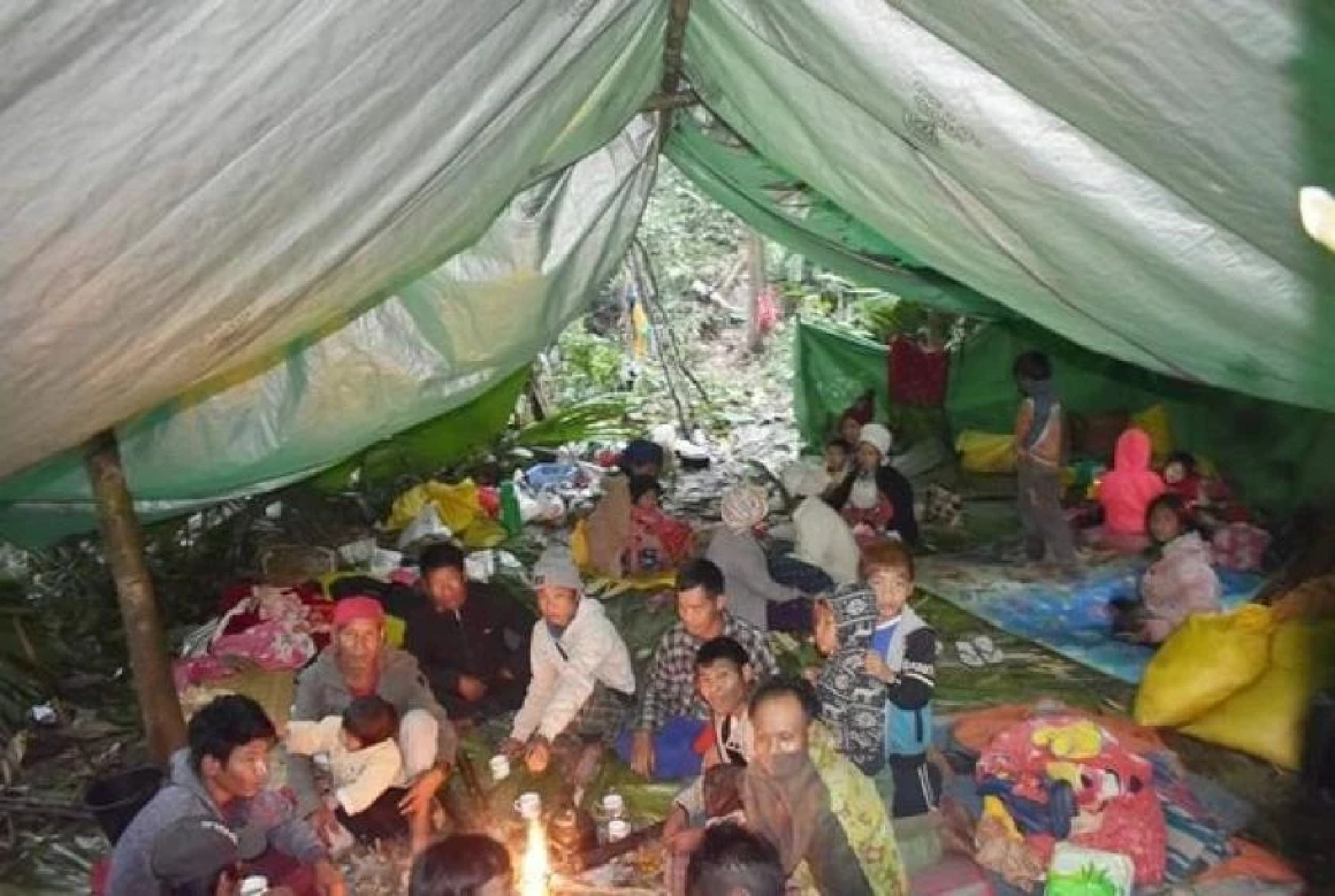
An estimated 249,500 people have been displaced by the conflict and insecurity in the southeast of Myanmar, the UN Office for the Coordination of Humanitarian Affairs (OCHA) Myanmar reported in a statement.

Nearly 250,000 people displaced by conflict in southeast Myanmar

The security situation remains tense across southeast Myanmar, particularly in the states of Kayin and Mon and Tanintharyi Region. 
An escalation of armed clashes has been reported in Kyainseikgyi and Myawaddy townships in Kayin State and Bilin township in Mon State over the past two weeks. As a result, some 8,460 people in Bilin township, 4,750 people in Kyarinseikgyi township and 500 people in Myawaddy township were displaced, according to UN data.

The situation remains dynamic and in parallel, more than 1,000 internally displaced persons have returned to Bilin township over the past week. In Tanintharyi Region also, fighting in Palaw township has resulted in the displacement of 1,000 people who fled to safer areas or into the jungle.

Overall, across the southeast, as of May 2, 249,500 people remain displaced because of the conflict and insecurity since February 2021. 
Nationwide, as of May 2, some 936,700 people have been displaced, including 590,100 who have fled since February 2021. Unhindered humanitarian access to conflict-affected areas is urgently required to deliver critical life-saving assistance, OCHA Myanmar reported.

Eleven Media

Asia News Network: The Nation (Thailand), The Korea Herald, The Straits Times (Singapore), China Daily, Jakarta Post, The Star and Sin Chew Daily (Malaysia), The Statesman (India), Philippine Daily Inquirer, Yomiuri Shimbun and The Japan News, Gogo Mongolia, Dawn (Pakistan), The Island (Sri Lanka), Kuensel (Bhutan), Kathmandu Post (Nepal), Daily Star (Bangladesh), Eleven Media (Myanmar), the Phnom Penh Post and Rasmei Kampuchea (Cambodia), The Borneo Bulletin (Brunei), Vietnam News, and Vientiane Times (Laos).
 

Published : May 17, 2022

By : Eleven Media

Japan’s NTT, Sky Perfect JSAT to set up space communication network

#SootinClaimon.Com : ขอบคุณแหล่งข้อมูล : หนังสือพิมพ์ The Nation.

https://www.nationthailand.com/international/40015634


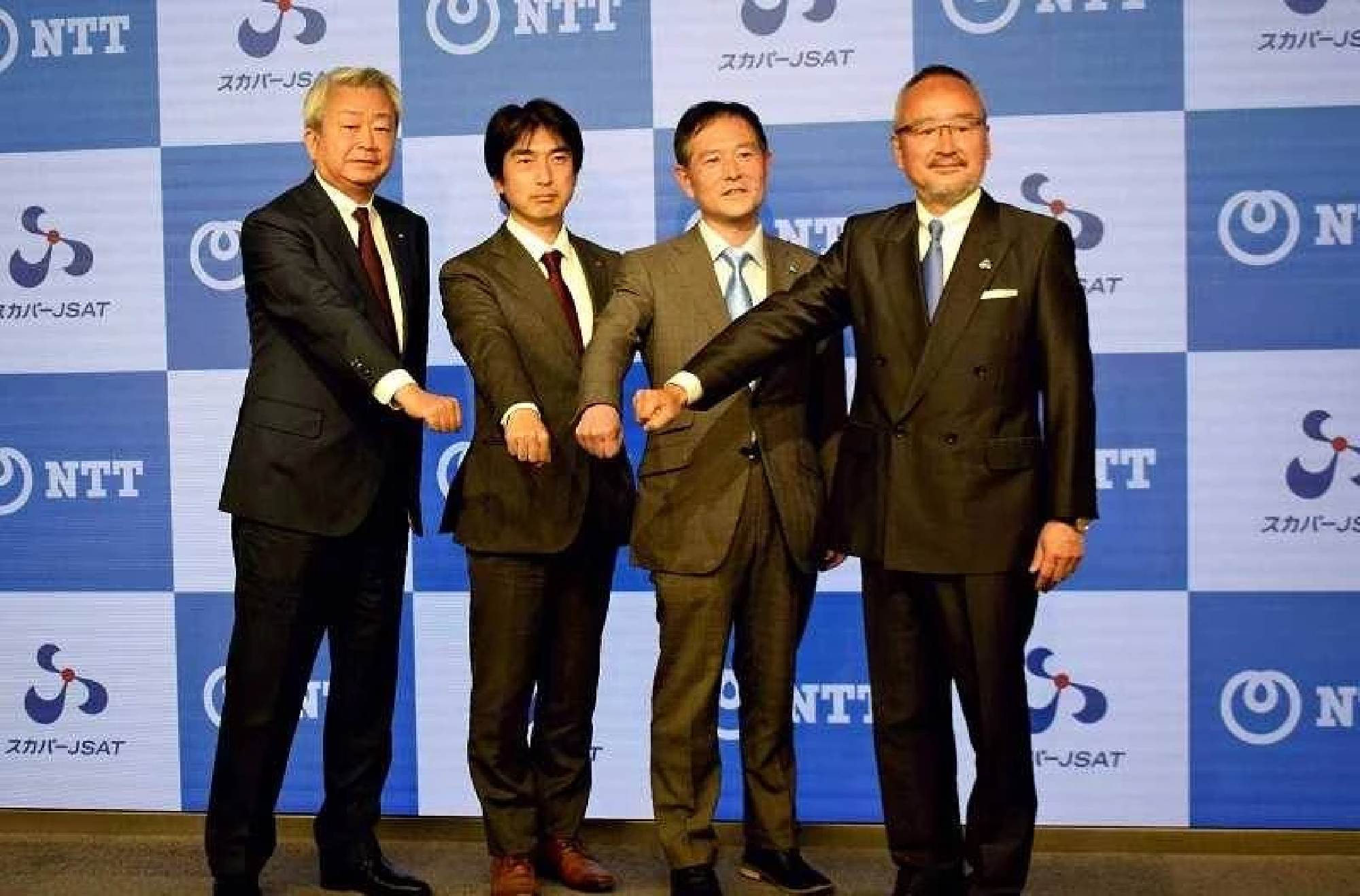
Nippon Telegraph and Telephone Corp. (NTT) and Sky Perfect JSAT Corp have announced that they will establish in July a 50:50 joint venture for a communications network in the stratosphere and beyond.

Japan's NTT, Sky Perfect JSAT to set up space communication network

Space Compass Corp will take on the challenge of building satellite communication networks by using optical communication technology and aims to achieve sales of about 100 billion yen (nearly THB27 billion) in the future.

NTT and Sky Perfect formed an alliance for space-related business in May 2021. In the new venture, NTT will provide communications technology and Sky Perfect will provide space business know-how, including communications satellites.

In fiscal 2024, Space Compass will launch an optical data relay service for high-speed transmissions via a satellite. This will carry a vast amount of diverse data collected in space, such as meteorological information.

In fiscal 2025, it will launch a new mobile phone network using unmanned aircraft that will carry base stations into the stratosphere. By transmitting and receiving radio waves from high above, a communications network would become resistant to disasters on the ground.

NTT President Jun Sawada said in late April that the company hopes to expand its business into the reaches of space.

The Japan News

Asia News Network: The Nation (Thailand), The Korea Herald, The Straits Times (Singapore), China Daily, Jakarta Post, The Star and Sin Chew Daily (Malaysia), The Statesman (India), Philippine Daily Inquirer, Yomiuri Shimbun and The Japan News, Gogo Mongolia, Dawn (Pakistan), The Island (Sri Lanka), Kuensel (Bhutan), Kathmandu Post (Nepal), Daily Star (Bangladesh), Eleven Media (Myanmar), the Phnom Penh Post and Rasmei Kampuchea (Cambodia), The Borneo Bulletin (Brunei), Vietnam News, and Vientiane Times (Laos).
 

Published : May 17, 2022

By : The Japan News

International air travel may return to pre-pandemic levels by 2023

#SootinClaimon.Com : ขอบคุณแหล่งข้อมูล : หนังสือพิมพ์ The Nation.

https://www.nationthailand.com/international/40015624


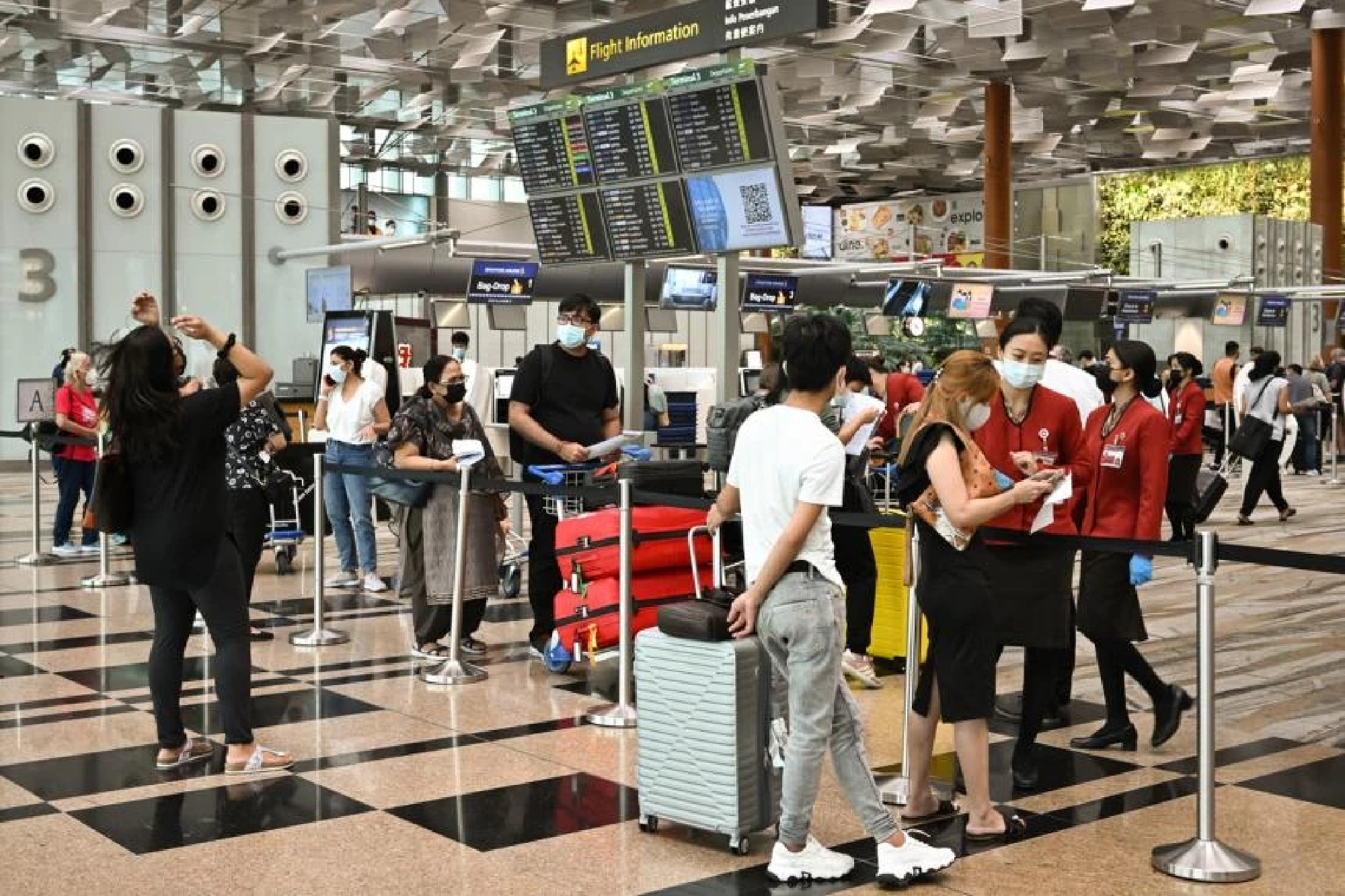
International air travel is likely to return to pre-pandemic levels sooner than expected, with most of Asia opening up quickly and international passenger numbers rebounding to 42 per cent of 2019 levels in the first quarter of this year.

International air travel may return to pre-pandemic levels by 2023

Director-general of the International Air Transport Association (IATA), Willie Walsh, said on Monday that the industry might even hit 2019 levels by 2023, sooner than its previous forecast of 2024.

He said international travel has nearly doubled from the 24.5 per cent last year, and that figures in the first four to five months of this year have exceeded predictions — including by airlines — and are set to keep growing.

This is despite China’s and Hong Kong’s continued Covid-19 restrictions, which he said could lead to shifts in global air network growth towards Southeast Asia and Singapore, allowing Singapore to quickly gain ground on Hong Kong’s pre-pandemic lead.


Walsh was in Singapore ahead of the Changi Aviation Summit, with IATA expected to release a report later this week with revised forecasts.

China’s closure put the brakes on domestic air travel, which only inched up from 72 per cent last year to 76 per cent this year, but this should not be a major concern for airlines, he said.

“Airlines will gradually rebuild in the markets and that’s why I don’t see the Chinese market as a critical issue at this stage. It truly becomes more relevant only as we go through the recovery later. There are a lot of markets that are available to airlines in the region to recover into, where there is strong demand,” Walsh said.

What matters is airlines possibly adopting a more cautious approach to resuming operations in China and Hong Kong than before, he added.

With airlines currently rebuilding their networks, Singapore’s relatively predictable and open travel policies mean it is in a good position to capture any fallout, said the IATA chief.

“People will be concerned about what they witnessed in China: the speed at which borders were closed, the constant change of the regulations in China and what that meant for airlines,” he added.

“Given the weakness in the balance sheet now, there aren’t many airlines that can take the financial risks associated with a wide-scale expansion into markets that may not be profitable. It’s going to have a big influence on how airlines re-establish and look at the future.”

Walsh said: “Singapore is leading the region in terms of recovery from border closures. It is a stable environment and the government has worked hard to reassure people that Singapore wants to open again. It has influenced how other countries have looked at the reopening.”

He said last month that Hong Kong was “effectively off the map” due to its Covid-19 curbs, prompting Hong Kong’s Chief Executive Carrie Lam to defend the region’s policy of temporarily banning flight routes that bring in coronavirus cases.

In 2019, Hong Kong was fourth and Singapore seventh in terms of international passenger traffic, but Singapore now has more than four times the number of flights and is connected to nearly three times as many destinations as its rival, according to May 2022 statistics obtained from aviation data company Cirium.

However, analysts said Hong Kong’s air hub status will not disappear so easily. While Changi Airport and Hong Kong International Airport have similar profiles and have some overlaps in the passengers they cater for, they are not identical.

Sobie Aviation analyst Brendan Sobie said Singapore still relies more on Southeast Asia, Australia and Europe, while Hong Kong traditionally is more connected to mainland China, Taiwan, South Korea and Japan.

Changi Airport and airports in the region have been the beneficiary of some additional capacity by foreign airlines, he added, but Hong Kong, once it is open, should catch up and close the gap.

“Several months ago, one would have said Dubai is recovering while Singapore is not. All hubs are at different stages. The longer the current situation continues, the higher the risk there could be a permanent shift.

“There are other airports that could also benefit from any permanent damage to the Hong Kong hub – traffic that would normally go via Hong Kong isn’t simply being diverted to Singapore,” he said.

Head of Asia for OAG Aviation, Mayur Patel, said Hong Kong has retained its top ranking as the world’s busiest cargo hub due to its geographical advantage over Singapore.

“In the medium term, Southeast Asian hubs will have an advantage, but this will fade once North Asia opens. While some of Singapore’s and Hong Kong’s services can easily be substituted, it would still take a shorter lapse of time for those from the Greater Bay Area catchment area, Thailand, and the Philippines to fly to the United States from Hong Kong than Singapore,” he said.

Clement Yong

Straits Times

Asia News Network: The Nation (Thailand), The Korea Herald, The Straits Times (Singapore), China Daily, Jakarta Post, The Star and Sin Chew Daily (Malaysia), The Statesman (India), Philippine Daily Inquirer, Yomiuri Shimbun and The Japan News, Gogo Mongolia, Dawn (Pakistan), The Island (Sri Lanka), Kuensel (Bhutan), Kathmandu Post (Nepal), Daily Star (Bangladesh), Eleven Media (Myanmar), the Phnom Penh Post and Rasmei Kampuchea (Cambodia), The Borneo Bulletin (Brunei), Vietnam News, and Vientiane Times (Laos).
 

Published : May 17, 2022