Singapore welcomes US’ proposed Indo-Pacific economic plan, says PM Lee

#SootinClaimon.Com : ขอบคุณแหล่งข้อมูล : หนังสือพิมพ์ The Nation.

https://www.nationthailand.com/international/40015506


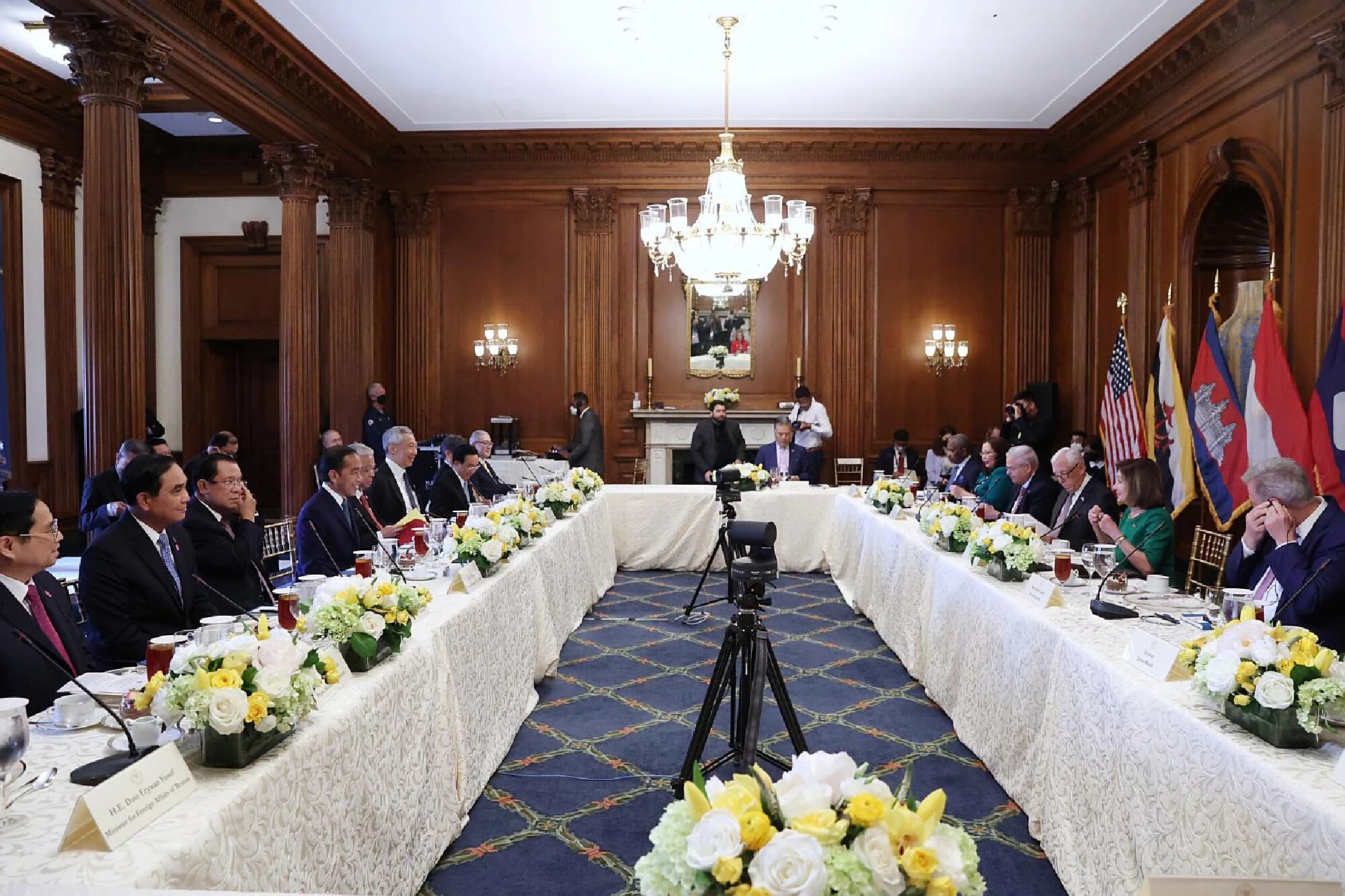
WASHINGTON – Singapore welcomes the United States’ proposed economic plan for the Indo-Pacific and encourages greater Asean participation in it, Prime Minister Lee Hsien Loong told top US officials and American business leaders in Washington on Thursday (May 12).
Singapore welcomes US' proposed Indo-Pacific economic plan, says PM Lee

“It needs to be inclusive, and provide tangible benefits to encourage wider participation and it should cover cooperation in areas like digital and green economies and infrastructure because these issues will resonate strongly in the region,” PM Lee said of the Indo-Pacific Economic Framework (IPEF), America’s upcoming strategy for economic engagement with the region.

“We encourage greater Asean participation in the IPEF and we hope the US will directly invite and engage Asean member states in this endeavour,” he added.

The framework has not been formally launched yet, but is likely to be unveiled around President Joe Biden’s visit to Japan and South Korea later this month, Tokyo’s ambassador to the US said this week.

While few details have been released so far, the Biden administration has signalled that the framework will not be a traditional trade deal and will not include increased market access, a key interest of many Asean economies.

Instead, the IPEF will feature four “pillars” of clean energy, supply chains, anti-corruption, and fair and resilient trade.

On Thursday, PM Lee said he hoped the IPEF would cover the areas of digital trade, trade facilitation and supply chain resilience, and capacity building.

Digital trade can harness Asean’s growing digital potential, for instance, by facilitating cross-border data flows and taking advantage of Asean’s ongoing work on digital trade standards, he said.

Singapore also welcomes cooperation between the US and Asean to build digital capabilities, and to strengthen regional connectivity and logistics infrastructure, PM Lee said.

Singapore also supports regional human capital development, including through the US-Singapore Third Country Training Programme which was renewed in September last year, he added.

Other Asean leaders voiced similar views at the event, which was organised by the US-Asean Business Council and the US Chamber of Commerce, ahead of the Asean-US Special Summit.

The US was represented by Secretary of Commerce Gina Raimondo and US Trade Representative Katherine Tai, who are jointly negotiating the IPEF, as well as by climate envoy John Kerry and other top officials.

Earlier on Thursday, PM Lee and other Asean leaders were hosted to a bipartisan working lunch with congressional leaders by US Speaker of the House Nancy Pelosi.

Both sides exchanged views on global and regional issues, as well as the future of Asean-US cooperation, said PM Lee’s press secretary Chang Li Lin.

“PM Lee encouraged members of Congress to continue supporting the Asean-US agenda, especially on trade and investment in the region, and for Asean and the US to continue exploring collaboration in new and mutually beneficial areas,” Ms Chang said in a statement.

In a show of bipartisan support for the regional bloc, a group of Democrat and Republican lawmakers also introduced a resolution reaffirming the commitment of the US to remain a strong, reliable, and active partner to Asean.

The resolution, introduced on Wednesday in the US House of Representatives, highlights the strength of the political, economic, security, and people-to-people ties between America and Asean.

It also calls on the Biden administration to promptly nominate a qualified individual to serve as the Ambassador to Asean to facilitate diplomatic engagement with Asean countries, and to maintain continued commitment to high-level representation at the East Asia Summit and other Asean forums.

By Charissa Yong

Asia News Network: The Nation (Thailand), The Korea Herald, The Straits Times (Singapore), China Daily,  Jakarta Post, The Star and Sin Chew Daily (Malaysia), The Statesman (India), Philippine Daily Inquirer, Yomiuri Shimbun and The Japan News, Gogo Mongolia,  Dawn (Pakistan),  The Island (Sri Lanka), Kuensel (Bhutan), Kathmandu Post (Nepal), Daily Star (Bangladesh), Eleven Media (Myanmar), the Phnom Penh Post and Rasmei Kampuchea (Cambodia), The Borneo Bulletin (Brunei), Vietnam News, and Vientiane Times (Laos).

Published : May 13, 2022

By : The Straits Times

The latest news on what’s happening in the region

#SootinClaimon.Com : ขอบคุณแหล่งข้อมูล : หนังสือพิมพ์ The Nation.

https://www.nationthailand.com/international/40015495


Check out what’s hot in the region on May 12 as The Nation puts together headlines from members of Asia News Network (ANN). Click to read more:

The latest news on what's happening in the region

Summit US-Asean 
US plans initiatives that will meet needs of South-east Asia 

The Straits Times ( Singapore )
https://www.nationthailand.com/international/40015469

Diplomacy Philippines 
Marcos presidency a boon for China, awkward for US 

Inquirer ( Philippines )
https://www.nationthailand.com/international/40015470


Covid-19 China
Policy controls COVID at low social cost 

China Daily
https://www.nationthailand.com/international/40015471


Covid-19 North Korea
N. Korea confirms first case of omicron variant of COVID-19: state media 

The Korea Herald
https://www.nationthailand.com/international/40015472


Stock Market Vietnam
Vietnam eyes cooperation with US to develop healthy stock market   

Vietnam News
https://www.nationthailand.com/international/40015473

Asia News Network: The Nation (Thailand), The Korea Herald, The Straits Times (Singapore), China Daily, Jakarta Post, The Star and Sin Chew Daily (Malaysia), The Statesman (India), Philippine Daily Inquirer, Yomiuri Shimbun and The Japan News, Gogo Mongolia, Dawn (Pakistan), The Island (Sri Lanka), Kuensel (Bhutan), Kathmandu Post (Nepal), Daily Star (Bangladesh), Eleven Media (Myanmar), the Phnom Penh Post and Rasmei Kampuchea (Cambodia), The Borneo Bulletin (Brunei), Vietnam News, and Vientiane Times (Laos).

The latest news on what's happening in the region

Published : May 12, 2022

40 passengers injured as plane veers off runway in southwest China

#SootinClaimon.Com : ขอบคุณแหล่งข้อมูล : หนังสือพิมพ์ The Nation.

https://www.nationthailand.com/international/40015493


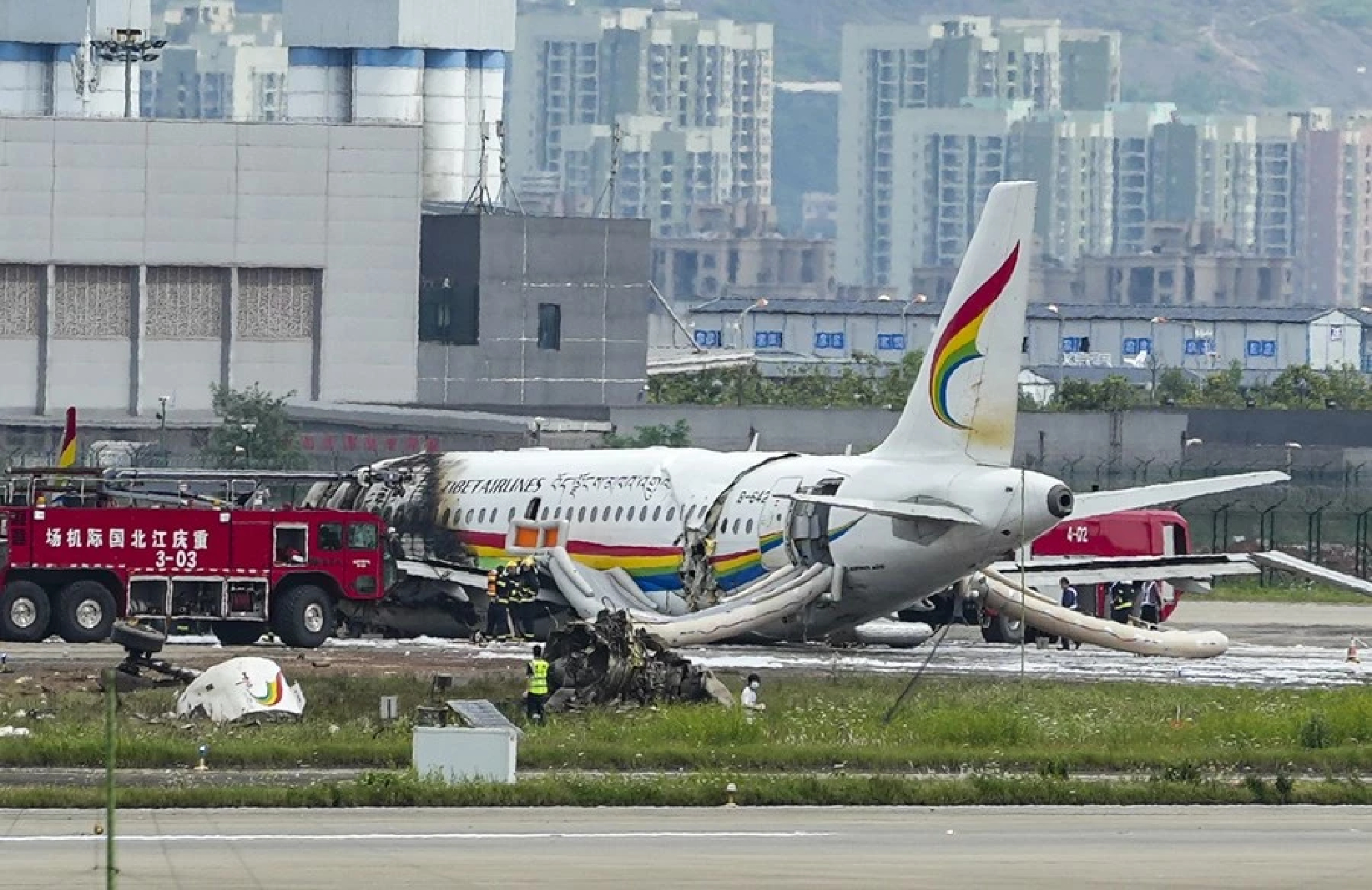
At least 40 passengers were injured when a Tibet Airlines flight caught fire after veering off the runway at Chongqing Jiangbei International Airport on Thursday morning.

40 passengers injured as plane veers off runway in southwest China

Flight TV9833 from Chongqing to Nyingchi, Tibet autonomous region, strayed from the runway while taking off. A statement from Tibet Airlines said the left side of the aircraft’s nose had caught fire.

Following the incident, the airport quickly launched emergency rescue operations — with multiple rescue forces such as public security, fire control and medical treatment being rushed to the site of the accident.

All 113 passengers and nine crew members on board were evacuated. Some 40 passengers were slightly injured and sent to local hospitals for treatment.

Currently, flights at the Chongqing airport have resumed take-off and landing. The cause of the accident is under investigation.

40 passengers injured as plane veers off runway in southwest China

Published : May 12, 2022

By : China Daily

Vietnam eyes cooperation with US to develop healthy stock market

#SootinClaimon.Com : ขอบคุณแหล่งข้อมูล : หนังสือพิมพ์ The Nation.

https://www.nationthailand.com/international/40015473


WASHINGTON DC — Việt Nam expects the US will share its experience in developing the financial market in a healthy, safe and transparent manner, contributing to macro-economic stability, Prime Minister Phạm Minh Chính told the US Secretary of the Treasury Janet Yellen on Wednesday during his visit to the country.

Vietnam eyes cooperation with US to develop healthy stock market

On the basis of the comprehensive partnership between Việt Nam and the US, cooperation between the two countries in economy, trade, finance and currency has made positive progress, PM Chính said at a meeting with Secretary Yellen while he is in the US attending the US-ASEAN summit at the invitation of US President Joe Biden.

He emphasised that Việt Nam wishes to build an independent and self-reliant economy with sustainable development and deep integration, adding that stabilising the macro-economy plays a very important role.

PM Chính thanked the US for cooperation and support in managing and stabilising the foreign exchange market, contributing to Việt Nam’s macro stability.

He also mentioned the complex impacts on economies of global fluctuations such as strategic competition, pandemic, climate change, conflict and economic development and armed conflicts.

In responses to these issues, he noted, it is necessary to uphold internationalism and multilateralism with a balanced and just approach.

PM Chính added that each country needs to build an independent and self-reliant economy derived from its own internal resources and strengths.

The Vietnamese leader proposed that the US Government and US Department of the Treasury closely support and cooperate with Việt Nam in economic development, handling global challenges, including energy transition, and fulfilling commitments at COP26.

He also suggested that the US side cooperate with Việt Nam to build regional economic mechanisms and stabilise trade relations and supply chains.

He said he hoped the US would share its experience in developing the financial market, especially the stock market, and the real estate market in a healthy, safe and transparent manner, contributing to macro-economic stability. 

US Secretary of the Treasury Yelle affirmed that the US is willing to deepen economic-trade-investment relations between the two countries, including cooperation in banking and finance.

She said she highly appreciated Việt Nam’s flexible exchange rate management and its consistency in pursuing the goal of controlling inflation and stabilising the macro-economy.

Secretary Yelle affirmed that, through global and regional financial institutions, the US will coordinate with developed countries to support developing countries, including Việt Nam, in order to develop infrastructure, respond to infectious disease, support the energy transition and commit to combating climate change.

She added that the US is willing to share experiences and support Việt Nam in building capacity and mechanisms to effectively develop capital and real estate markets. — VNS

Asia News Network: The Nation (Thailand), The Korea Herald, The Straits Times (Singapore), China Daily,  Jakarta Post, The Star and Sin Chew Daily (Malaysia), The Statesman (India), Philippine Daily Inquirer, Yomiuri Shimbun and The Japan News, Gogo Mongolia,  Dawn (Pakistan),  The Island (Sri Lanka), Kuensel (Bhutan), Kathmandu Post (Nepal), Daily Star (Bangladesh), Eleven Media (Myanmar), the Phnom Penh Post and Rasmei Kampuchea (Cambodia), The Borneo Bulletin (Brunei), Vietnam News, and Vientiane Times (Laos).

Published : May 12, 2022

By : Vietnam News

N. Korea confirms first case of omicron variant of COVID-19: state media

#SootinClaimon.Com : ขอบคุณแหล่งข้อมูล : หนังสือพิมพ์ The Nation.

https://www.nationthailand.com/international/40015472


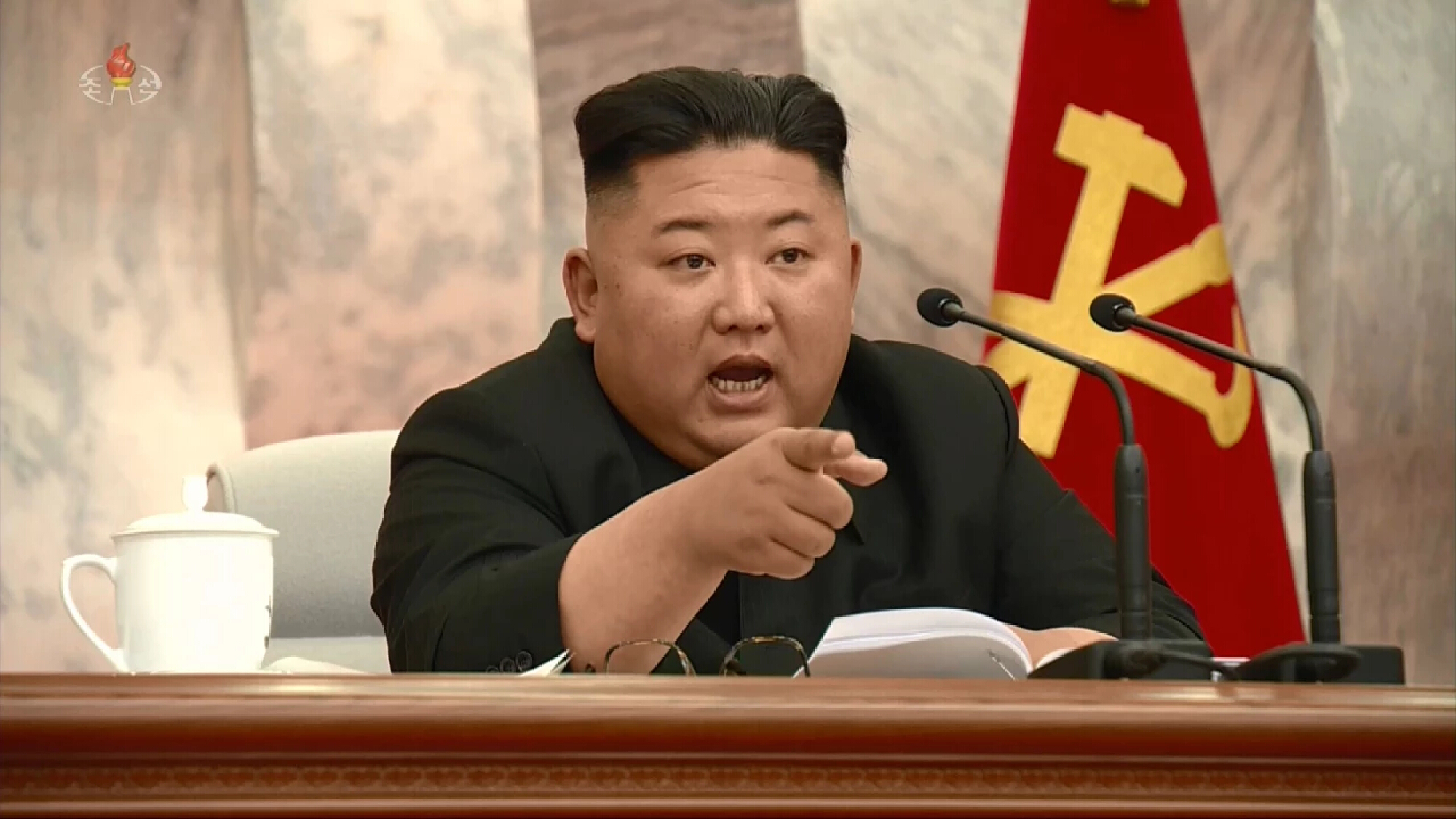
North Korea on Thursday announced its first case of the omicron variant of COVID-19 and declared the implementation of the “maximum emergency” virus control system, putting an end to its longstanding coronavirus-free claim.

N. Korea confirms first case of omicron variant of COVID-19: state media

The North held a politburo meeting in Pyongyang, with leader Kim Jong-un in attendance, to discuss the country’s “most critical emergency” in its antivirus system that had been “firmly maintained” for over two years, according to the North’s official Korean Central News Agency (KCNA).

North Korean authorities concluded that samples collected from fever-ridden patients on Sunday in Pyongyang were identical to omicron, it reported.

During the session, Kim vowed to overcome the “unexpected crisis” and instructed all officials to completely block out all possibility of the spread of the virus.

Kim then called for tighter vigilance on all fronts along the borders, the sea and air to prevent a “safety vacuum” in the country’s national defense.

The North said it aims to stably manage and prevent the spread of the virus, as well as treat confirmed patients to “root out the source of transmission in the shortest period possible.” (Yonhap)

Asia News Network: The Nation (Thailand), The Korea Herald, The Straits Times (Singapore), China Daily,  Jakarta Post, The Star and Sin Chew Daily (Malaysia), The Statesman (India), Philippine Daily Inquirer, Yomiuri Shimbun and The Japan News, Gogo Mongolia,  Dawn (Pakistan),  The Island (Sri Lanka), Kuensel (Bhutan), Kathmandu Post (Nepal), Daily Star (Bangladesh), Eleven Media (Myanmar), the Phnom Penh Post and Rasmei Kampuchea (Cambodia), The Borneo Bulletin (Brunei), Vietnam News, and Vientiane Times (Laos).

Published : May 12, 2022

By : The Korea Herald

Policy controls COVID at low social cost

#SootinClaimon.Com : ขอบคุณแหล่งข้อมูล : หนังสือพิมพ์ The Nation.

https://www.nationthailand.com/international/40015471


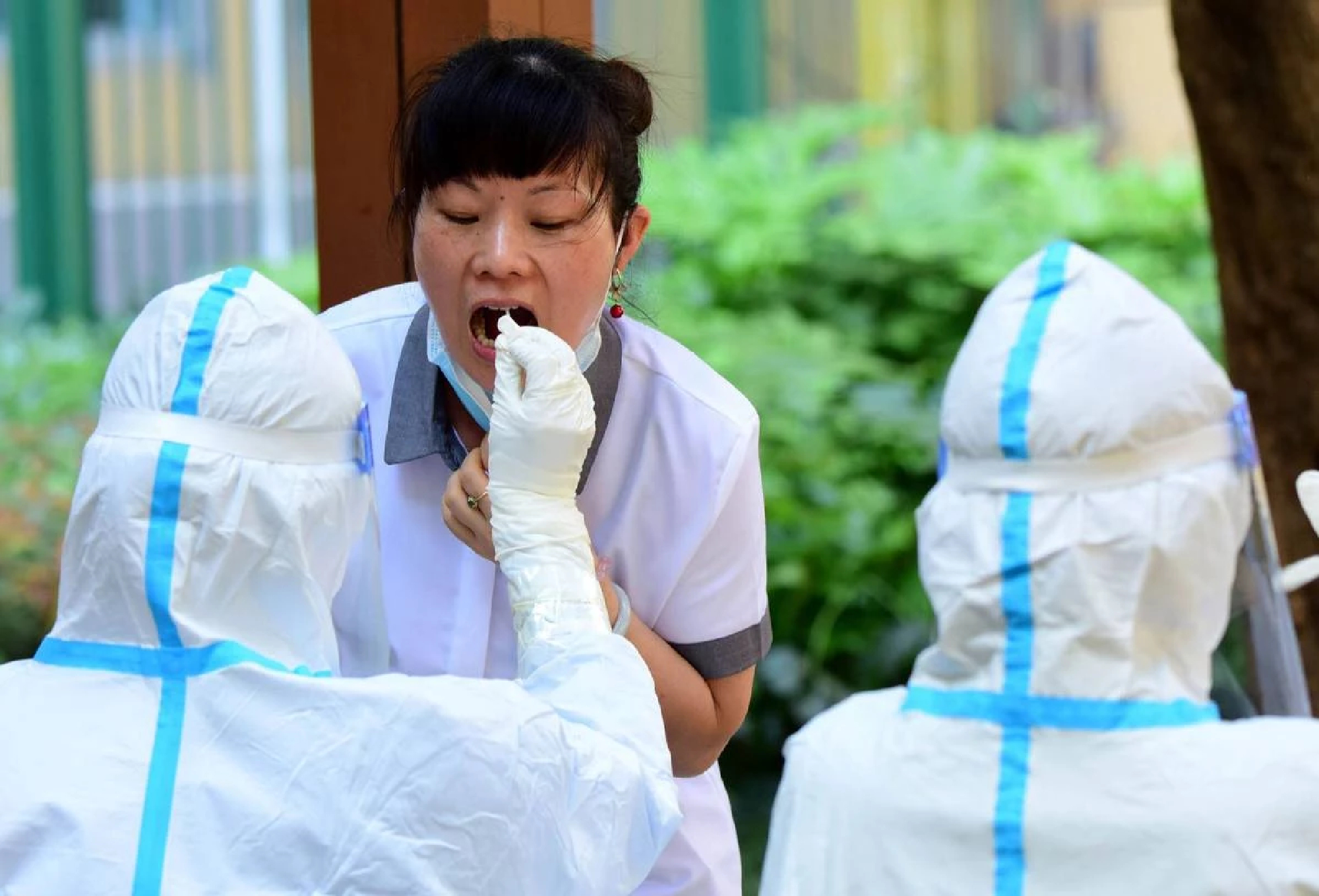
China is completely capable of implementing its dynamic zero-COVID policy, as it is formulated in accordance with the country’s own conditions, Foreign Ministry spokesman Zhao Lijian said on Wednesday after World Health Organization head Tedros Adhanom Ghebreyesus commented on the policy.

Policy controls COVID at low social cost

“China’s dynamic zero-COVID policy is not aimed at realizing zero infection, but rather at bringing the epidemic situation under control with the minimum social cost and in the shortest time possible,” Zhao said at a regular news briefing in Beijing.

He said the one and only purpose of the policy is to effectively protect the health of more than 1.4 billion Chinese to the maximum while securing sustainable and stable socioeconomic development.

“Now the overwhelming majority of the Chinese population in most parts of the country are enjoying normal lives and production. And China’s national infection rate and mortality rate for COVID-19 remain at the lowest level in the world,” he said.

In March, a systematic analysis of COVID-related mortality published in The Lancet estimated that the global all-age rate of mortality due to the COVID pandemic was 120.3 deaths per 100,000 of population.

While the mortality rate due to COVID-19 was 179.3 per 100,000 in the United States, the figure was only 0.6 per 100,000 in China, according to the analysis.

“It is thanks to the dynamic zero-COVID policy that China has withstood the most challenging COVID-19 control test since the anti-epidemic battle of Wuhan in early 2020,” Zhao said. “China is one of the countries with the most successful COVID response in the world. This is a reality witnessed by the international community.”

The spokesman mentioned a new study saying that China faces an Omicron “tsunami” that could overwhelm hospitals and kill more than 1.5 million people if it abandons its dynamic zero-COVID strategy.

China’s huge population also means that relaxing prevention and control measures would inevitably lead to the death of a large number of elderly people, he said.

“China’s dynamic zero-COVID policy has offered effective protection to the elderly and vulnerable groups with underlying health conditions. It is distinctly different from the ‘herd immunity’ and ‘natural immunity’ approaches followed by some countries not long ago,” Zhao said.

A Beijing-based epidemiologist who requested anonymity said that in February, senior WHO experts like Mike Ryan and Maria Van Kerkhove had said at a news briefing that every country should chart its own path out of the pandemic.

“This is exactly what China has been doing. We want to find an alternative to the coexistence strategy that many other countries are adopting, because China cannot live with COVID with its current conditions without paying enormous social and economic costs,” he added.

By MO JINGXI and ZHANG ZHIHAO

Asia News Network: The Nation (Thailand), The Korea Herald, The Straits Times (Singapore), China Daily,  Jakarta Post, The Star and Sin Chew Daily (Malaysia), The Statesman (India), Philippine Daily Inquirer, Yomiuri Shimbun and The Japan News, Gogo Mongolia,  Dawn (Pakistan),  The Island (Sri Lanka), Kuensel (Bhutan), Kathmandu Post (Nepal), Daily Star (Bangladesh), Eleven Media (Myanmar), the Phnom Penh Post and Rasmei Kampuchea (Cambodia), The Borneo Bulletin (Brunei), Vietnam News, and Vientiane Times (Laos).

Published : May 12, 2022

By : China Daily

Marcos presidency a boon for China, awkward for US

#SootinClaimon.Com : ขอบคุณแหล่งข้อมูล : หนังสือพิมพ์ The Nation.

https://www.nationthailand.com/international/40015470


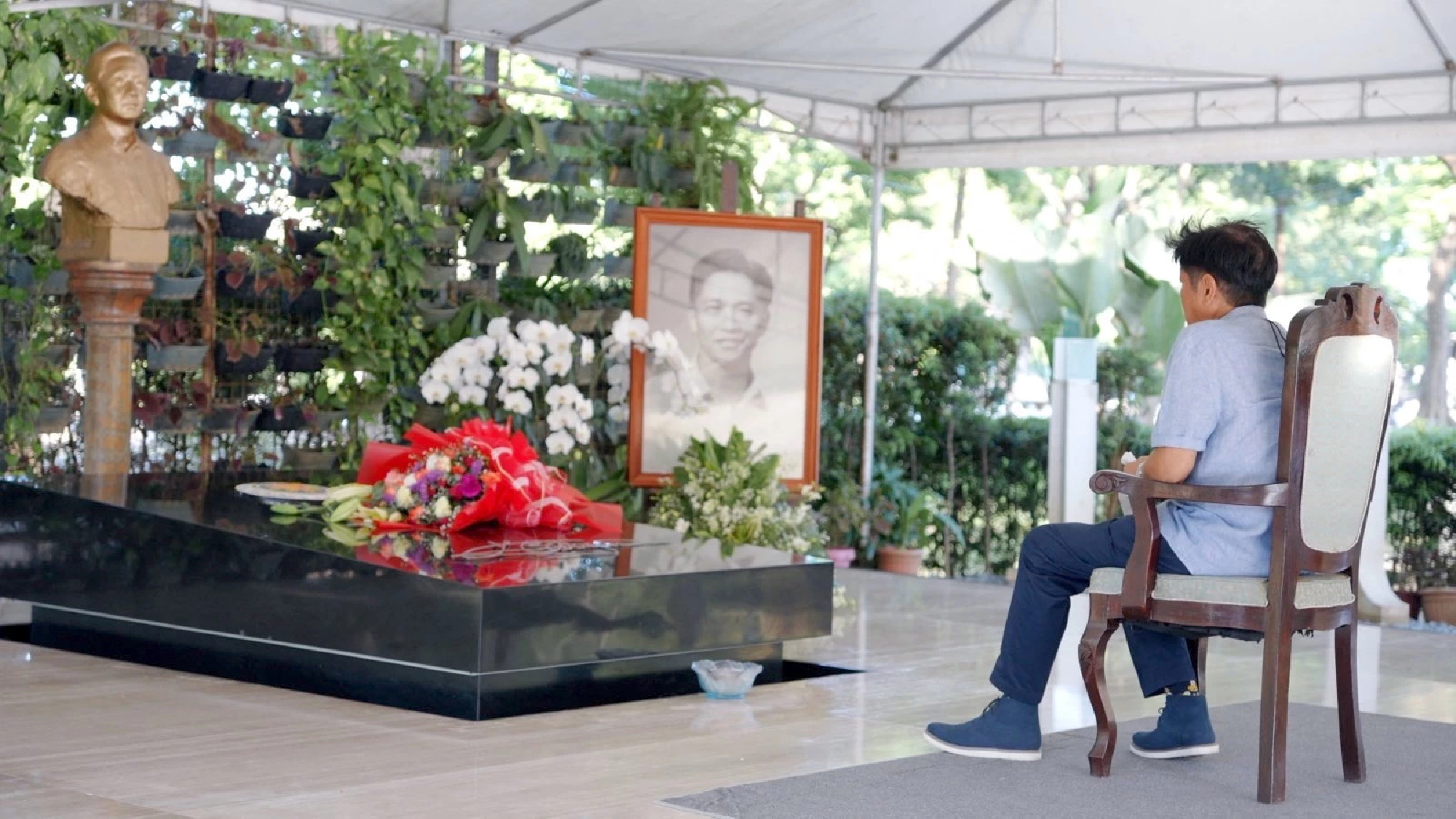
MANILA, Philippines — The decisive victory of former Sen. Ferdinand Marcos Jr. in the presidential election last Monday is expected to reshape the country’s relations with China and the United States as he seeks closer ties with Beijing without ruining an alliance with Washington as what outgoing President Rodrigo Duterte did.

Marcos presidency a boon for China, awkward for US

Marcos, the son and namesake of the country’s former dictator, has long-standing ties with China and is seeking a new deal with Chinese President Xi Jinping over the contested waters of the West Philippine Sea (South China Sea).

His relations with the United States, on the other hand, are complicated by a contempt of court order for his refusal to cooperate with the District Court of Hawaii, which in 1995 ordered the Marcos family to pay $2 billion of plundered wealth to victims of Marcos Sr.’s rule.

Both the United States and China congratulated the Philippines for the successful conduct of the national and local elections last Monday.

The US Department of State on Wednesday said it would renew its “special partnership” with the Philippines and work with the next administration on “key human rights and regional priorities” as it acknowledged that last Monday’s conduct of Philippine elections was in accordance with international standards.

“We’re monitoring the election results… we look forward to working with the president-elect, once that person is officially named, to strengthen the enduring alliance between the United States and the Philippines,” US state department spokesperson Ned Price told reporters in Washington.

No changes

He said the United States does not see any changes in its relations with the Philippines, stressing that “it’s an enduring alliance that is rooted in a long and deeply interwoven history that shares democratic values and interests and strong people-to-people ties between our countries as friends, as partners, as allies.”

The Chinese government also congratulated the “leading candidates” and the country over the “smooth” conduct of elections.

“We hope and believe that various political forces in the Philippines will continue to work in solidarity for national renewal and development,” Chinese Foreign Ministry spokesperson Zhao Lijian said in a briefing in Beijing.

“China and the Philippines, facing each other across the waters, enjoy a long-standing traditional friendship. We are good partners for mutually beneficial cooperation and fellow travelers on the road to common development,” he said.

Zhao said he hoped Beijing and Manila would be able to continue the “flourishing relationship” established by Xi and Mr. Duterte.

“China will continue to work together with the Philippines to stay committed to good-neighborliness and friendship, focus on post-COVID growth, expand win-win cooperation, and bring more tangible benefits to both peoples,” he added.

Geopolitical rivalry

The Philippines is a fulcrum of the geopolitical rivalry between the United States and China, with its maritime territory encompassing part of the South China Sea.

In 2016, an arbitral tribunal constituted under the United Nations Convention on the Law of the Sea (Unclos) ruled in favor of the Philippines over China’s claim.

But in interviews during the election campaign, Marcos Jr. said the ruling was “not effective” because China did not recognize it and that he would seek a bilateral agreement with China to resolve their differences.

“If you let the US come in, you make China your enemy,” he told dzRH radio. “I think we can come to an agreement (with China). As a matter of fact, people from the Chinese Embassy are my friends. We have been talking about that.”

Pragmatic

Rommel Banlaoi, a Manila-based security expert, said Marcos Jr. wanted friendlier ties with China but not at the expense of ceding territory.

“He’s open to direct consultations and bilateral negotiations with China to settle their differences,” he said. “He is willing to explore areas of pragmatic cooperation with China, including the development of natural gas and oil in the West Philippine Sea.”

University of the Philippines political science professor Aries Arugay said the United States is expected to be pragmatic in dealing with Marcos Jr., who is likely to continue his predecessor’s embrace of China.

He said the United States is now more prepared to deal with Marcos Jr., unlike with Mr. Duterte, whose term ends on June 30.

The Philippines and the United States had weathered Mr. Duterte’s temper flares and his rants against the decades-old alliance during his six-year term, including a move that almost abrogated the Visiting Forces Agreement (VFA), a pact that governs the presence of American troops in the country.

Marcos Jr. had indicated in media interviews his intent to retain Mr. Duterte’s policy vis-a-vis China, declaring it was “the right way to go.”

‘Balancing act’

But Arugay said Marcos Jr. has “a space to do a balancing act” between the United States and China that his predecessor did not do.

“Duterte attacked the US right away and he pivoted to China,” he told the Inquirer on the sidelines of a Philippine Navy forum on Wednesday.

This was a lesson learned for Washington, which was unprepared to deal with Duterte at the time, he said.

The United States under the Biden administration is not likely to bring up to Marcos Jr. the human rights abuses and corruption issues of his father right away “because they saw how dangerously close we were in abrogating the VFA and Mutual Defense Treaty,” Arugay said.

He added: “I think the US is going to make sure that it will not reach that point that the next administration will consider it again. The US was really in disbelief that it got so close to that.”

The United States is hosting a special summit of leaders of Southeast Asian countries from May 12 to 13 and Foreign Secretary Teodoro Locsin Jr. left on Tuesday for Washington to represent Mr. Duterte.

Locsin is expected to join Association of Southeast Asian Nations heads of state in a number of events hosted by US President Joe Biden and other US government officials during the two-day Asean-US Special Summit.

By: Frances Mangosing, Tina G. Santos —WITH REPORTS FROM TINA G. SANTOS AND REUTERS

Asia News Network: The Nation (Thailand), The Korea Herald, The Straits Times (Singapore), China Daily,  Jakarta Post, The Star and Sin Chew Daily (Malaysia), The Statesman (India), Philippine Daily Inquirer, Yomiuri Shimbun and The Japan News, Gogo Mongolia,  Dawn (Pakistan),  The Island (Sri Lanka), Kuensel (Bhutan), Kathmandu Post (Nepal), Daily Star (Bangladesh), Eleven Media (Myanmar), the Phnom Penh Post and Rasmei Kampuchea (Cambodia), The Borneo Bulletin (Brunei), Vietnam News, and Vientiane Times (Laos).

Published : May 12, 2022

By : Philippine Daily Inquirer

US plans initiatives that will meet needs of South-east Asia

#SootinClaimon.Com : ขอบคุณแหล่งข้อมูล : หนังสือพิมพ์ The Nation.

https://www.nationthailand.com/international/40015469


WASHINGTON – The United States will be rolling out a series of programmes, from education to climate and infrastructure, to demonstrate its commitment to South-east Asia, said a senior White House official on Wednesday (May 11) ahead of a special summit with US and Asean leaders.

US plans initiatives that will meet needs of South-east Asia

Dr Kurt Campbell, the US coordinator for Indo-Pacific affairs on the National Security Council, said the initiatives underscored that America would be a steady partner to the region, instead of promising commitment and getting distracted – a common critique of its approach in the past.

The programmes were also part of an effort to meet Asean’s needs, rather than being geared towards competition with China, he said at an event hosted by the United States Institute of Peace, a federal institution.

His comments came a day before the Asean-US Special Summit, which takes place on Thursday and Friday in Washington. Eight out of 10 Asean countries will attend the summit, excluding outgoing Philippine President Rodrigo Duterte and Myanmar junta leader Min Aung Hlaing.

Dr Campbell said the Biden administration had learnt from past US approaches to the region, including the Obama administration’s Pivot to Asia foreign policy of which he was an architect, and added that Washington would seek to go beyond military and security cooperation.

“There is a much deeper sense this time around that resources will be critical, and that it will not be just about diplomacy, just about military developments,” he said.

“It has to be about a much deeper set of across-the-government initiatives that signify and signal a determination to have a deeper engagement in the Indo-Pacific.”

He said many of the programmes that linked the US to South-east Asia have “dried up or moved on”, adding that the US was trying to return to educational programmes, such as teaching English as a foreign language and leadership training.

“What we’re trying to do is actually meet Asean where the interests of their people coincide with ours,” he said.

He also cited other issues of concern that included disaster preparedness, maritime domain awareness, investment in green energy and public health.

Dr Campbell said that while the US was in competition with China, President Joe Biden “does not want to descend South-east Asia or Asia into a new Cold War”.

“We recognise quite clearly that any initiative that is simply designed for competition is likely to have difficulty gaining altitude in Asia. It must be based on the needs and the desires of the people of South-east Asia,” he said.

Dr Campbell said the summit would be “two intense days of dialogue and consultation”, adding that topics discussed would include Myanmar, China, cross-Strait relations and how the war in Ukraine impacts the Indo-Pacific.

During the summit, the US will also brief Asean leaders on the Indo-Pacific Economic Framework (IPEF), the Biden administration’s economic strategy for the region, said Dr Campbell without going into further detail.

He added that there was “substantial interest in participating in IPEF across South-east Asia” and that he expected some members of Asean to join the framework.

By Charissa Yong

Asia News Network: The Nation (Thailand), The Korea Herald, The Straits Times (Singapore), China Daily,  Jakarta Post, The Star and Sin Chew Daily (Malaysia), The Statesman (India), Philippine Daily Inquirer, Yomiuri Shimbun and The Japan News, Gogo Mongolia,  Dawn (Pakistan),  The Island (Sri Lanka), Kuensel (Bhutan), Kathmandu Post (Nepal), Daily Star (Bangladesh), Eleven Media (Myanmar), the Phnom Penh Post and Rasmei Kampuchea (Cambodia), The Borneo Bulletin (Brunei), Vietnam News, and Vientiane Times (Laos).

Published : May 12, 2022

By : The Straits Times

The latest news on what’s happening in the region

#SootinClaimon.Com : ขอบคุณแหล่งข้อมูล : หนังสือพิมพ์ The Nation.

https://www.nationthailand.com/international/40015455


Check out what’s hot in the region on May 11 as The Nation puts together headlines from members of Asia News Network (ANN). Click to read more:

The latest news on what's happening in the region

New Presidency Philippines
First 100 Days Investors keen to see Marcos’ agenda in first 100 days 


Inquirer ( Philippines )
https://www.nationthailand.com/international/40015438


Indonesia 
Opinion: After Philippines, Indonesia too is ripe for return to authoritarianism 


Jakarta Post
https://www.nationthailand.com/international/40015453


New President S Korea
With conservative leader taking office, big 4 chaebol groups ready to spend big 


Korea Herald
https://www.nationthailand.com/international/40015439


South China Sea
New construction seen on Chinese man-made island 


Inquirer ( Philippines )
https://www.nationthailand.com/international/40015441


Crypto India
Cryptocurrencies may be taxed at par with lotteries, casinos 


The Statesman ( India )
https://www.nationthailand.com/international/40015445

Asia News Network: The Nation (Thailand), The Korea Herald, The Straits Times (Singapore), China Daily, Jakarta Post, The Star and Sin Chew Daily (Malaysia), The Statesman (India), Philippine Daily Inquirer, Yomiuri Shimbun and The Japan News, Gogo Mongolia, Dawn (Pakistan), The Island (Sri Lanka), Kuensel (Bhutan), Kathmandu Post (Nepal), Daily Star (Bangladesh), Eleven Media (Myanmar), the Phnom Penh Post and Rasmei Kampuchea (Cambodia), The Borneo Bulletin (Brunei), Vietnam News, and Vientiane Times (Laos).

The latest news on what's happening in the region

Published : May 11, 2022

After Philippines, Indonesia too is ripe for return to authoritarianism

#SootinClaimon.Com : ขอบคุณแหล่งข้อมูล : หนังสือพิมพ์ The Nation.

https://www.nationthailand.com/international/40015453


The overwhelming victory for Ferdinand Marcos Jr. in the presidential election in the Philippines signals voters’ growing disillusionment with liberal democracy and a penchant for a strong ruler.

After Philippines, Indonesia too is ripe for return to authoritarianism

We saw this happen in Thailand when it reverted to military rule in 2014, ending its democratic experiment.

There have been allegations of vote-rigging, vote-buying and a massive disinformation campaign, but the overwhelming vote for Marcos Jr. undeniably says that this is what the majority of Filipinos want. It is vox populi though not necessarily vox Dei.

It is almost the same story of dynasty politics at play in Thailand, the difference being that the military seized power in 2014 with popular backing to put an end to the reign of the Thaksin family dynasty. Thaksin Shinawatra served as prime minister from 2001 to 2006, followed by his sister Yingluck Shinawatra, from 2011 to 2014. Both brother and sister were popular but polarizing figures who had little regard for freedom and democracy. Now the Thai military, never a supporter of democracy, is running the country again.

Indonesia joined the Southeast Asia democratic league in 1998, joining the Philippines and Thailand, after it toppled Soeharto, who had ruled for over three decades, with military backing, also using the people’s power. Indonesia subsequently learned a lot from the experiences of these two neighbouring countries when it began a massive political reform to build its democracy post-Soeharto, from reforming the constitution to building free media institutions.

Can Indonesia hold the fort now to give hope and inspiration to its Southeast Asian neighbours that democracy, with the entire freedom package, remains the best form of government, and one that can deliver the goods? Or will it also abandon democracy and revert to authoritarianism?

We should take nothing for granted. Just as we learned from the success of the Philippines and Thailand in putting together our democratic institutions, we can learn from their failure and their abandonment of democracy.

After 24 years of experimenting, Indonesia’s democracy is still largely a work in progress. There have been some achievements, but some trends in the last decade or so indicate setbacks that raise questions about where our democracy is heading. The increasing polarization of society, the rise of identity politics, the return of corruption on a massive scale and the erosion of some of our freedoms should sound the alarm.

Dynasty politics may be stronger in the Philippines than in Indonesia; however, Indonesian family dynasties still work with powerful oligarchs in ruling the nation. The collusion between the political elites and the moneyed people can be just as devastating as political dynasties to our democracy.

For now, we do not have to worry about a military return to power, but the Thai experience tells us we should not easily be dismissive.

We can take heart that voters in the 2014 and 2019 presidential elections shunned Prabowo Subianto, a former Army general who campaigned on the platform of a strong leader, both times in favour of former furniture-exporter Joko “Jokowi” Widodo. Voters also shunned Hutomo Mandala Putra, Soeharto’s youngest son, who has been trying to enter politics by setting up his political party.

The popular meme of Soeharto with the caption Piye kabare, enak jamanku to? (“How you’re doing, my era was better, no?”), which surfaces from time to time, particularly during crisis times, indicates that there are people who long for a return of a strong authoritarian leader and that there are ambitious people who will readily put themselves forward as that person.

As in the Philippines and Thailand, the return to authoritarianism in Indonesia would likely be ushered in through the democratic election processes. We should not let that happen.

We should continue to nurture people’s faith in democracy by making sure that democracy can and will deliver dividends. Failing that, more and more people are willing to consider the alternative forms of government, including the return of the military rule or a strong authoritarian ruler, or even a combination of the two, just as in Soeharto’s time.

By Endy Bayuni 

Published : May 11, 2022

By : The Jakarta Post