The Indian government is considering taxing cryptocurrencies such as Bitcoin on par with casinos, lotteries, betting and racecourses, sources said.
The highest decision-making body on indirect taxes, the Goods and Services Tax (GST) Council, is considering levying 28 per cent GST on cryptocurrencies.
According to a media report, the GST Council is likely to discuss the proposal to tax cryptocurrencies in an upcoming meeting.
The proposed 28 per cent GST will be in addition to the 30 per cent income tax on earnings from crypto-asset transactions.
In the Union Budget 2022-23 Finance Minister Nirmala Sitharaman proposed a 30 per cent tax on income arising from the transfer of virtual digital assets. The new rules came into effect on April 1.
Under these rules, gains from all virtual digital assets including cryptocurrencies will be taxable at 30 per cent.
Gains from virtual digital assets including cryptocurrencies are taxable even if a taxpayer’s total income is below the threshold limit of Rs250,000 (THB111,800).
Asia News Network: The Nation (Thailand), The Korea Herald, The Straits Times (Singapore), China Daily, Jakarta Post, The Star and Sin Chew Daily (Malaysia), The Statesman (India), Philippine Daily Inquirer, Yomiuri Shimbun and The Japan News, Gogo Mongolia, Dawn (Pakistan), The Island (Sri Lanka), Kuensel (Bhutan), Kathmandu Post (Nepal), Daily Star (Bangladesh), Eleven Media (Myanmar), the Phnom Penh Post and Rasmei Kampuchea (Cambodia), The Borneo Bulletin (Brunei), Vietnam News, and Vientiane Times (Laos).
China appeared to be carrying out new construction work on the artificial island it had built on Zamora (Subi) Reef in the West Philippine Sea over the last four months, according to US geospatial company Simularity.
The satellite images taken on May 5 were compared with those from December 15 last year, which showed work in progress at seven sites on the reef.
These areas showed construction equipment, land clearing and significant amounts of sand. One area, in particular, has new walls and parking lots, and new possible temporary structures, Simularity said.
The presence of equipment and additional materials may indicate construction is still in progress.
Another site indicated maintenance, expansion or addition of new features based on the changes observed, it said.
Zamora Reef is one of China’s “big three” man-made islands in the Spratlys chain. It has a three-kilometre runway, hangars, radars, missile shelters and weapons systems. It is about 25 kilometres west of Pag-as (Thitu) Island, the biggest island occupied by the Philippines in the Spratlys and the only one with civilian inhabitants.
China claims the entire South China Sea, including the West Philippine Sea. The Philippines, China, Brunei, Vietnam, Taiwan and Malaysia have overlapping maritime claims in these waters.
An international arbitral tribunal ruled in 2016 to invalidate Beijing’s historical claims within its so-called nine-dash line. Beijing refuses to accept the ruling.
Simularity’s report is part of its South China Sea Rapid Alert service, which tracks the disputed waters daily.
In July last year, Simularity reported that Chinese ships anchored in parts of the West Philippines Sea were dumping “raw sewage every day onto the reefs they are occupying”.
“When the ships don’t move, the poop piles up,” Liz Derr, co-founder and CEO of Simularity, said during a forum hosted by Stratbase ADR Institute on the fifth anniversary of the Philippines’ 2016 court victory against China.
Simularity earlier reported that between May 13 and May 18, 2021, it found a total of 261 Chinese vessels in the West Philippine Sea: 234 at Burgos (Gaven) Reef, 18 near Pag-asa, and nine at McKennan (Hughes) Reef. Of these, at least 120 were within the Philippines’ 370-kilometre exclusive economic zone.
The “swarm” of Chinese vessels in Philippine waters triggered a diplomatic protest from Manila.
By Frances Mangosing
Asia News Network: The Nation (Thailand), The Korea Herald, The Straits Times (Singapore), China Daily, Jakarta Post, The Star and Sin Chew Daily (Malaysia), The Statesman (India), Philippine Daily Inquirer, Yomiuri Shimbun and The Japan News, Gogo Mongolia, Dawn (Pakistan), The Island (Sri Lanka), Kuensel (Bhutan), Kathmandu Post (Nepal), Daily Star (Bangladesh), Eleven Media (Myanmar), the Phnom Penh Post and Rasmei Kampuchea (Cambodia), The Borneo Bulletin (Brunei), Vietnam News, and Vientiane Times (Laos).
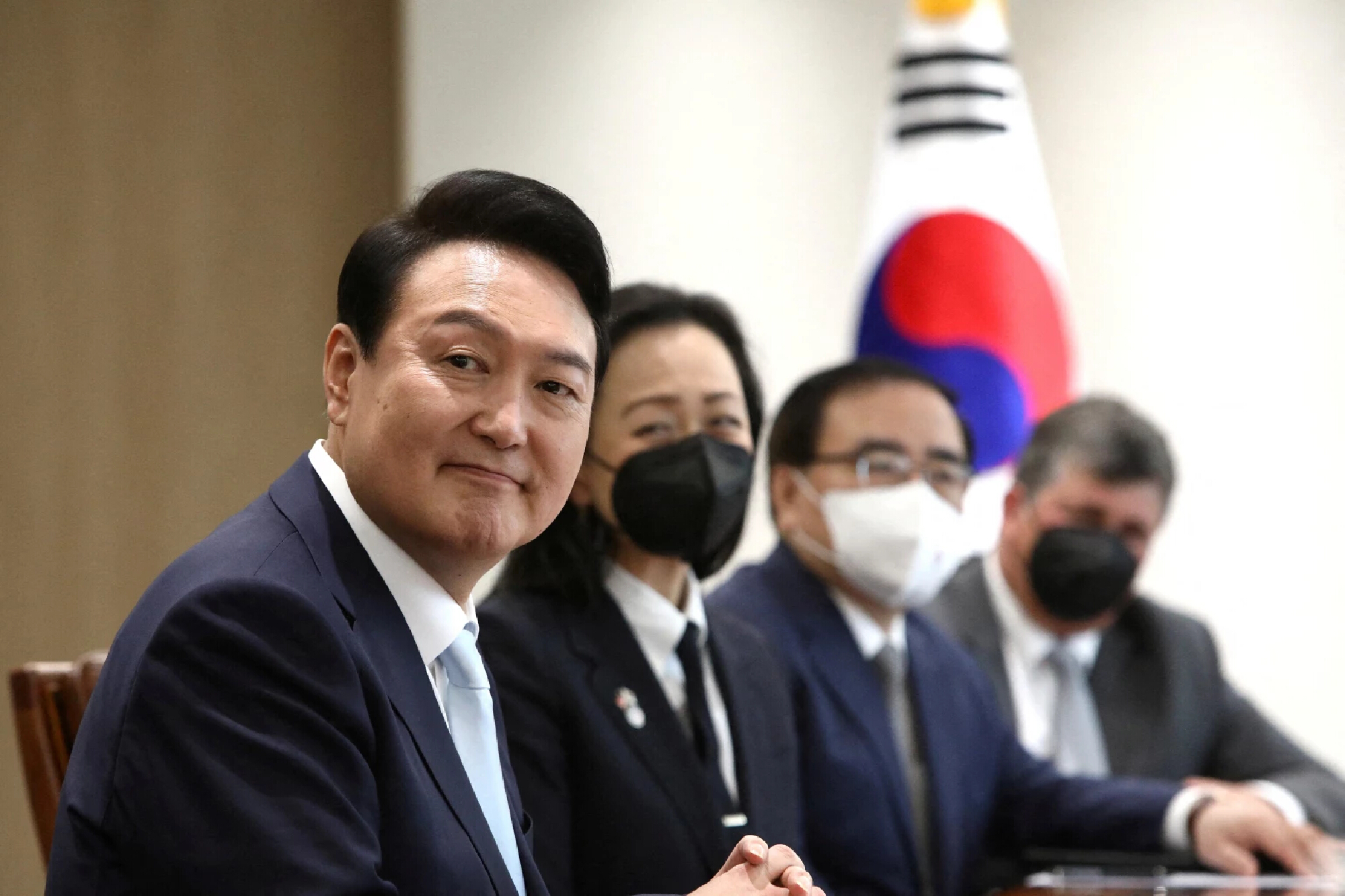
In his inauguration speech on Tuesday, South Korean President Yoon Suk-yeol reaffirmed he would seek a small government and push for growth and a market economy. And South Korea’s top four chaebols – Samsung, SK, Hyundai Motor and LG – seem ready to fuel the momentum.
During his presidential campaign, Yoon vowed to create a business-friendly environment by lifting unnecessary regulations and offering full support across industries.
He especially stressed “super gap” technologies in the burgeoning fields of semiconductors, batteries and artificial intelligence, where Korean companies are top players but face increasing challenges in global markets.
With expectations running high for the new government’s hefty incentive package for the tech industry, the nation’s four largest conglomerates are highly likely to respond with big investment plans.
Samsung, the largest, is expected to play a leading role both in spending and jobs.
Its crown jewel Samsung Electronics, abundant in cash, announced a three-year investment plan worth 240 trillion won (THB6.4 trillion) in August last year, but no major investment has been made other than a $1.7-billion (THB58.7 billion) foundry plant in Taylor, Texas, unveiled in November.
Even though its leader vice chairman Lee Jae-yong faces work restrictions following his prison years on corruption charges, his role will be crucial in speeding up Yoon’s push on chips, which have become a national security issue amid global supply chain disruptions.
Speculation is growing that US President Joe Biden is considering visiting Samsung’s chip complex in Pyeongtaek, Gyeonggi province, during his planned three-day visit to Seoul from May 20 to 22.
It is also likely for Lee to head to the US next month to attend the ground-breaking ceremony of the new Taylor plant. Along with the Pyeongtaek complex at home, the US plant is expected to become a new major chip base for Samsung.
Samsung, the world’s largest memory chipmaker, has pledged to widen gaps with its memory rivals while aiming to become a market leader in more advanced logic chips by 2030.
Other than chips, Samsung has cited robots, artificial intelligence, 6G, biopharmaceutical, and the metaverse as the key growth drivers, hinting at potential mergers and acquisitions.
SK Group, which has recently become the second-largest conglomerate in terms of asset value in 16 years, is also expected to pour resources into the chip, battery and bio sectors.
SK Hynix, the world’s number 2 memory chipmaker, has invested a combined 46 trillion won over the past 10 years since it was acquired by SK Group. The firm plans to invest an additional 120 trillion won in its four plants in Yongin, Gyeonggi province.
SK On, its fast-growing battery-making unit, is spending aggressively to beef up its production of batteries for electric vehicles around the world, to elevate the capacity to 220-gigawatt hours by 2025.
Hyundai Motor Group is expected to speed up its hydrogen push under the new government’s drive for a cut in emissions.
The auto giant aims to replace its new car line-up with EVs and hydrogen-powered vehicles in Europe by 2035. At home, the target year is 2040.
To achieve the ambitious goal of 1.87 million EV sales globally, Hyundai plans to inject 95.9 trillion won by 2030.
Its futuristic businesses such as urban air mobility and robotics are likely to gain momentum as the new government has promised to increase incentives in the fields.
Hyundai is finalising talks on the location of a new EV plant in the US. A news report said Georgia is the potent location, even though the carmaker said nothing has been decided yet.
In recent years, LG Group has focused resources on automotive parts and EV batteries as new growth drivers.
LG Electronics produces key components and solutions ranging from in-car infotainment systems to processor chips. Its rumoured partnership with Apple on the Apple Car project, if proven true, is also expected to offer a boon for business expansion.
LG Energy Solution, the group’s EV battery unit that made a blockbuster stock debut earlier this year, is also making huge investments to secure a production capacity of at least 447-gigawatt hours by 2025. This year alone, the firm plans to inject 7 trillion won into expanding its production network around the world.
“Large-scale investments will be led by individual companies. They are pinning high hopes more on eased regulations and diverse tax cuts,” said an industry official on condition of anonymity.
“The big four groups usually play a leading role in announcing major investment plans to add momentum to a new government,” he added.
By Lee Ji-yoon
Asia News Network: The Nation (Thailand), The Korea Herald, The Straits Times (Singapore), China Daily, Jakarta Post, The Star and Sin Chew Daily (Malaysia), The Statesman (India), Philippine Daily Inquirer, Yomiuri Shimbun and The Japan News, Gogo Mongolia, Dawn (Pakistan), The Island (Sri Lanka), Kuensel (Bhutan), Kathmandu Post (Nepal), Daily Star (Bangladesh), Eleven Media (Myanmar), the Phnom Penh Post and Rasmei Kampuchea (Cambodia), The Borneo Bulletin (Brunei), Vietnam News, and Vientiane Times (Laos).
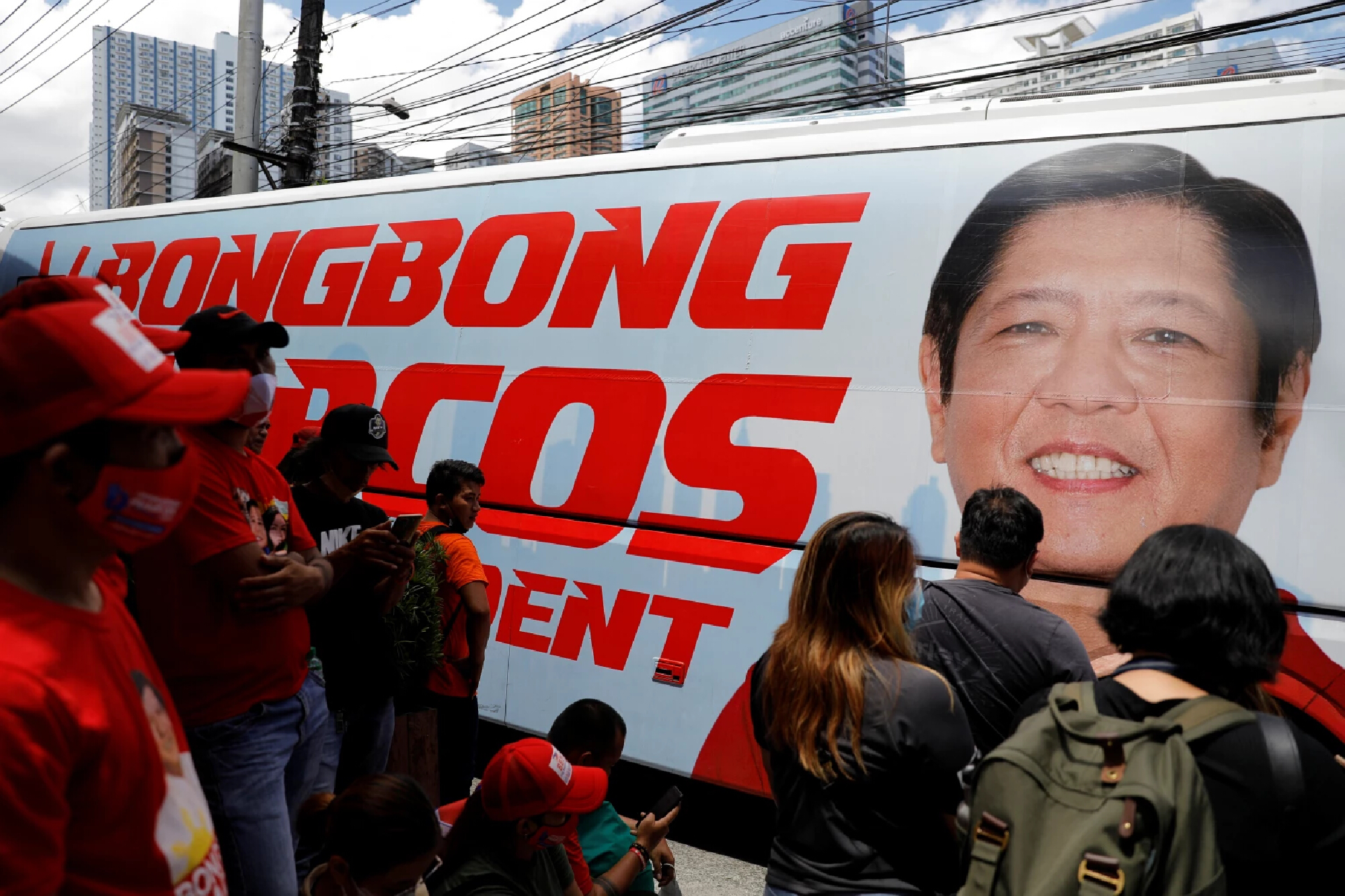
With a campaign lacking in details on how the perceived winner in the May 9 polls intends to manage the Philippines economy, the private sector has shifted into a wait-and-see mode until former senator Ferdinand Marcos Jr outlines his plans and names his economic team.
Investors are eagerly awaiting the line-up of the next administration’s cabinet as they evaluate the prospects under a new leadership, considering the big challenges such as rising inflation and a mountain of debt.
Rizal Commercial Banking Corp chief economist Michael Ricafort said in a commentary that some investors had adopted a wait-and-see attitude “as a matter of prudence” while waiting for details in the coming days and weeks.
Ricafort said, in particular, investors wanted to have an idea of the incoming administration’s policies for the first 100 days.
Among the factors that investors are looking at as key to success for the new president is a credible and competent economic team, as the past two decades have seen, the economist said.
ING senior Philippine economist Nicholas Antonio Mapa said they were hoping the incoming administration would shed light on its plans to grow the economy amid inflationary pressures after two years of the Covid-19 pandemic.
The other factors are policies that promote ESG, or the environment, society and governance, to help attract more investments; efforts to strengthen institutions and the rule of law; a more effective response to the pandemic, and continuation of economic and fiscal reforms.
Ricafort said investors were looking at whether the new administration would focus on economic recovery measures from the pandemic such as the reopening of the economy and the creation of more jobs.
On the domestic front, a key to success is whether the new president would promote greater inclusion and unity among politicians, considering that strong support from lawmakers is needed to pass more reform measures that need legislation.
On Tuesday, Finance Secretary Carlos Dominguez III said transition talks between the outgoing Duterte and incoming Marcos Jr administrations have started, just a day after the presidential elections.
“The briefing has begun,” said Dominguez, President Duterte’s chief economic manager.
“So far, so good,” was his reply when asked how the talks were progressing.
Dominguez declined to identify who would compose the economic team of Marcos Jr, who will assume the presidency on July 1 once he is proclaimed the winner.
Marcos, the son of the Philippines dictator deposed in a 1986 popular uprising, won the presidential election by a huge margin, according to unofficial results, marking a stunning comeback for the country’s most famous political dynasty.
By Ben O. De Vera and Miguel R. Camus
Asia News Network: The Nation (Thailand), The Korea Herald, The Straits Times (Singapore), China Daily, Jakarta Post, The Star and Sin Chew Daily (Malaysia), The Statesman (India), Philippine Daily Inquirer, Yomiuri Shimbun and The Japan News, Gogo Mongolia, Dawn (Pakistan), The Island (Sri Lanka), Kuensel (Bhutan), Kathmandu Post (Nepal), Daily Star (Bangladesh), Eleven Media (Myanmar), the Phnom Penh Post and Rasmei Kampuchea (Cambodia), The Borneo Bulletin (Brunei), Vietnam News, and Vientiane Times (Laos).
Asia News Network: The Nation (Thailand), The Korea Herald, The Straits Times (Singapore), China Daily, Jakarta Post, The Star and Sin Chew Daily (Malaysia), The Statesman (India), Philippine Daily Inquirer, Yomiuri Shimbun and The Japan News, Gogo Mongolia, Dawn (Pakistan), The Island (Sri Lanka), Kuensel (Bhutan), Kathmandu Post (Nepal), Daily Star (Bangladesh), Eleven Media (Myanmar), the Phnom Penh Post and Rasmei Kampuchea (Cambodia), The Borneo Bulletin (Brunei), Vietnam News, and Vientiane Times (Laos).
HÀ NỘI — As the international flight market needs more time to recover from the negative impacts of the COVID-19 pandemic, the Civil Aviation Administration of Việt Nam (CAAV) has called for more Government support for airlines operating in the country.
According to the CAAV, since frequency restrictions were lifted for domestic flights, Vietnamese airlines have re-operated nearly 60 domestic routes with about 700-800 flights daily.
After the country resumed international flights in the middle of February this year, flight routes from Việt Nam to more than 20 countries and territories were reopened including Japan, South Korea, China, Hong Kong (China), Taiwan (China), Singapore, Thailand, Cambodia, Malaysia, Philippines, Laos, Qatar, Turkey, United Arab Emirates (UAE), France, Germany, UK, Russia, Australia, and United States.
Its aviation markets are expected to continue reopening and the number of international flights departing from or arriving in Việt Nam would gradually increase.
The CAAV estimated that this year, airlines could serve 42-47 million passengers, an increase of 170-200 per cent compared to 2021 but a decrease of more than over 40 per cent compared to 2019.
In the domestic flight market alone, the number of passengers transported is estimated at 33-35 million, down six to ten per cent compared to 2019.
Although Việt Nam has been gradually controlling the COVID-19 pandemic, and socio-economic activities have returned to a new normal state, it takes more time for aviation businesses to recover losses and restore business operations.
Deputy Director of the CAAV Phạm Văn Hảo said that by the end of this year, the number of passengers using domestic flights would approach the number of 2019 – the time before the outbreak of COVID-19.
However, the international flight market alone needed more time to recover, Hảo said, adding that the international passenger transport volume this year was estimated at 72-80 per cent lower than that of 2019.
“As the proportion of revenue and profit of airlines mainly comes from the international transportation market, airlines will continue to face difficulties this year,” Hảo said.
In addition, the price of Jet A1 has continued to rise and the economic and political instability in the world caused fuel prices to spike, putting heavy pressure on the costs shouldered by airlines, he said.
At the end of March 2022, although crude oil prices showed signs of slowing down, the price of Jet A1 continued to increase. According to IATA statistical data, the price of Jet A1 in Asia on April 1, 2022 increased to $132.63 per barrel. On April 29, 2022, it continued to increase to $145.67 per barrel. The average price of Jet A1 in 2022 is forecasted to be $129.5 per barrel.
The CAAV official said that currently, the Government was still implementing solutions to help remove difficulties for businesses that are negatively affected by the COVID-19 pandemic, such as policies on tax and fee exemption and reduction, and policies on interest rate support for the 2022-23 period, in which the interest rate support is 2 per cent per year through commercial loans for businesses and co-operatives, and household businesses.
Together with support for businesses in general, specific support for aviation business is needed, according to the CAAV.
The CAAV proposed the Ministry of Transport continue to promulgate the policy exempting half of landing/take-off service prices for domestic flights from January 1, 2022 to the end of December 31, 2022 and allow specialised aviation services on the list of State-prescribed prices to be at a minimum of zero Vietnamese đồng from January 1, 2022 to the end of December 31, 2022.
According to the General Statistics Office, last month, the number of international visitors to Việt Nam reached 101,400, 2.4 times higher than that of the previous month and 5.2 times higher than the same period of last year.
In the first four months of this year, international visitors to the country reached nearly 192,400, an increase of 184.7 per cent over the same period last year.
Visitors arriving by plane accounted for 88.6 per cent of international visitors to the country. — VNS
Asia News Network: The Nation (Thailand), The Korea Herald, The Straits Times (Singapore), China Daily, Jakarta Post, The Star and Sin Chew Daily (Malaysia), The Statesman (India), Philippine Daily Inquirer, Yomiuri Shimbun and The Japan News, Gogo Mongolia, Dawn (Pakistan), The Island (Sri Lanka), Kuensel (Bhutan), Kathmandu Post (Nepal), Daily Star (Bangladesh), Eleven Media (Myanmar), the Phnom Penh Post and Rasmei Kampuchea (Cambodia), The Borneo Bulletin (Brunei), Vietnam News, and Vientiane Times (Laos).
The Karen National Union issued a statement on May 9 saying that it would not be able to attend the peace talk invited by Chairman of the State Administration Council Senior General Min Aung Hlaing as it is not favourable for an inclusive dialogue.
If we are truly willing for a genuine peace for our country, the participation of all stakeholders desiring to build a future federal democratic union is necessary, the KNU said in its statement.
The invitation for peace now, however, is limiting the participation of all stakeholders, and will result only in an unsuccessful endeavor to obtain a genuine peace and effectively ending armed conflict.
The current situation caused widespread combats and attacks across the country, and thus, led to humanitarian crisis. Therefore, upcoming dialogue with the military council, as of now, should be conducted on the basis of allowing humanitarian assistance and emergency relief only.
Building trust, being an essential matter in dialogue for peace, is necessary to prioritize the people, and therefore, stop all the activities such as combating, violent attack, arrest, atrocities, burning villages, shelling and air-bombardment that create the conflict and instability, the statement pointed out.
Through “political will”, the new arrangement for peace and political dialogue should be conducted among dialogue partners and seeking for the solution to end the conflict peacefully, solving the historically deeply rooted political problems, ending military dictatorship, leaving the Tatmadaw’s role from politics and accepting transitional justice, recognizing mutual respect, valuing equality, and willingness to negotiate with equality, farness, truth, and dignity and so on. These shared valued should be prioritized, and moreover, at the different level of dialogues, the role of international involvement as observers, facilitators, witnesses, and the role to provide technical assistance and resources must be allowed.
As our country is inhabited by diverse ethnicities and different religious groups, there are diversity in terms of language, religious belief and customs, and different geography and location, the KNU therefore believe that a just and genuine peace can only be achieved by systematically and practically implementing democratic culture, division of power and freedom and freedom and self-determination, the statement added.
Asia News Network: The Nation (Thailand), The Korea Herald, The Straits Times (Singapore), China Daily, Jakarta Post, The Star and Sin Chew Daily (Malaysia), The Statesman (India), Philippine Daily Inquirer, Yomiuri Shimbun and The Japan News, Gogo Mongolia, Dawn (Pakistan), The Island (Sri Lanka), Kuensel (Bhutan), Kathmandu Post (Nepal), Daily Star (Bangladesh), Eleven Media (Myanmar), the Phnom Penh Post and Rasmei Kampuchea (Cambodia), The Borneo Bulletin (Brunei), Vietnam News, and Vientiane Times (Laos).
Japanese FM expected to bring his prime minister’s personal letter to Yoon
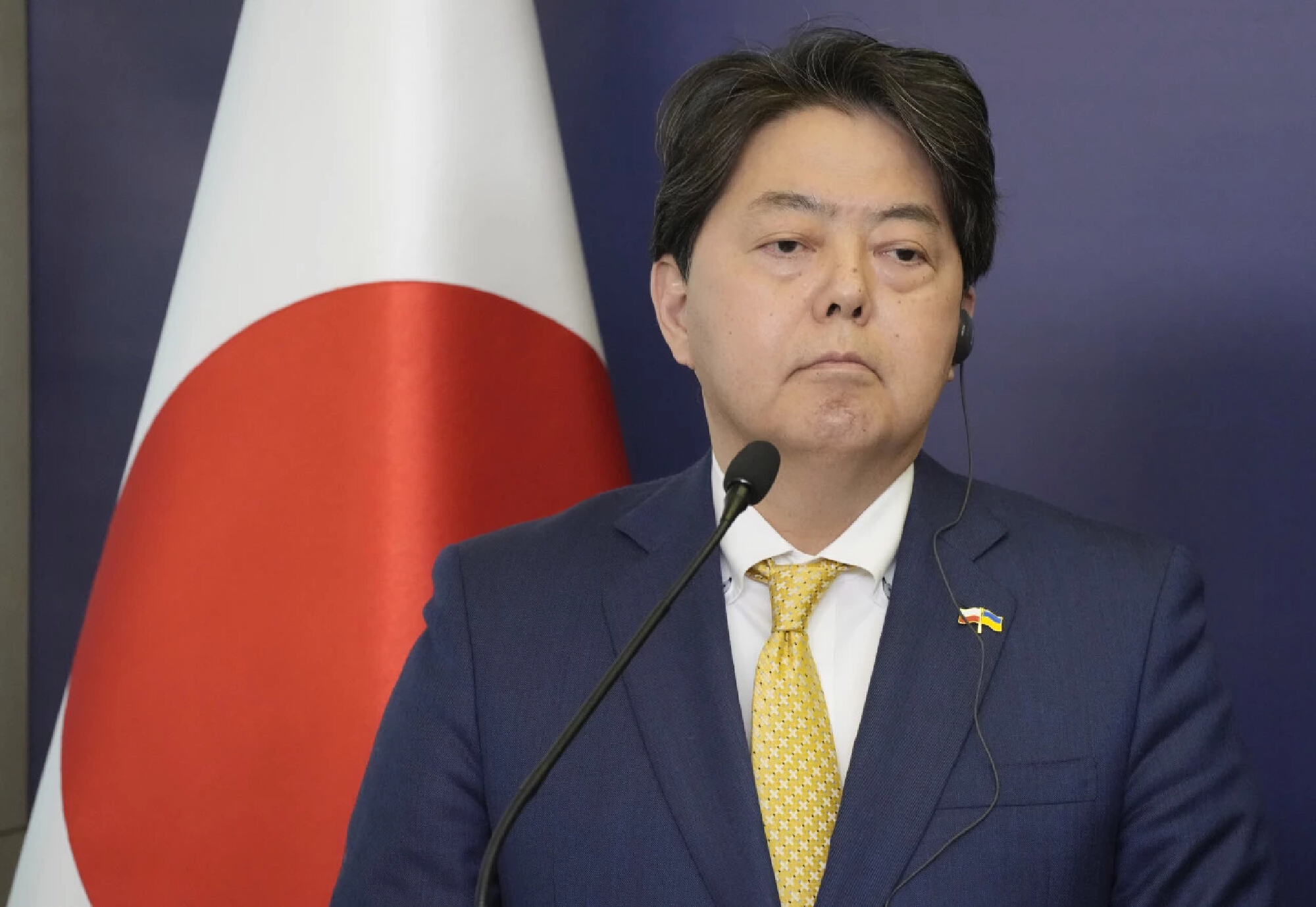
AJapanese foreign minister arrived in South Korea for the first time in four years on Monday ahead of the presidential inauguration ceremony for Yoon Suk-yeol, raising hopes for possible improvements in relations with the incoming conservative administration.
According to Yoon’s office, Japan’s Foreign Minister Yoshimasa Hayashi is traveling to Seoul for two days from Monday, and will attend the inauguration ceremony on behalf of the Japanese government on Tuesday.
On Monday, Hayashi was to meet with the South Korean Foreign Minister nominee Rep. Park Jin for dinner and discuss pending issues between the two countries.
Four-term lawmaker Park has been tapped as the foreign minister for the incoming Yoon Suk-yeol administration, and awaits confirmation from the National Assembly.
Citing local news reports in Japan, Yoon’s office said Hayashi is expected to deliver a personal letter from the Japanese prime minister to Yoon during the trip.
Yoon had also sent a delegation team to Japan and delivered a personal letter to Kishida last month.
This is the first visit by a Japanese foreign minister to Seoul in four years. The last visit was in June 2018, when then-Foreign Minister Taro Kono made the trip to Seoul.
The ties between the neighboring countries have been fraught, as the two stand at odds over several issues related to Japan’s coercion of Koreans into labor and sexual slavery during the colonization period.
A South Korean court’s order to a Japanese company to sell off its assets to provide compensation to Korean victims of wartime forced labor has also come to exacerbate the relationship.
However, the start of a new administration here is raising hopes for improvement.
While delivering his congratulations to Yoon, Japanese Prime Minister Fumio Kishida said the problems the two neighboring countries face should be resolved.
Kishida on Monday emphasized the importance of bilateral and trilateral cooperation between South Korea, Japan and the US “as we face crises that can shake up the roots of international society.”
“South Korea and Japan have difficult problems (that need to be solved), and we cannot just leave them unattended,” Kishida added.
By Jo He-rim
Asia News Network: The Nation (Thailand), The Korea Herald, The Straits Times (Singapore), China Daily, Jakarta Post, The Star and Sin Chew Daily (Malaysia), The Statesman (India), Philippine Daily Inquirer, Yomiuri Shimbun and The Japan News, Gogo Mongolia, Dawn (Pakistan), The Island (Sri Lanka), Kuensel (Bhutan), Kathmandu Post (Nepal), Daily Star (Bangladesh), Eleven Media (Myanmar), the Phnom Penh Post and Rasmei Kampuchea (Cambodia), The Borneo Bulletin (Brunei), Vietnam News, and Vientiane Times (Laos).
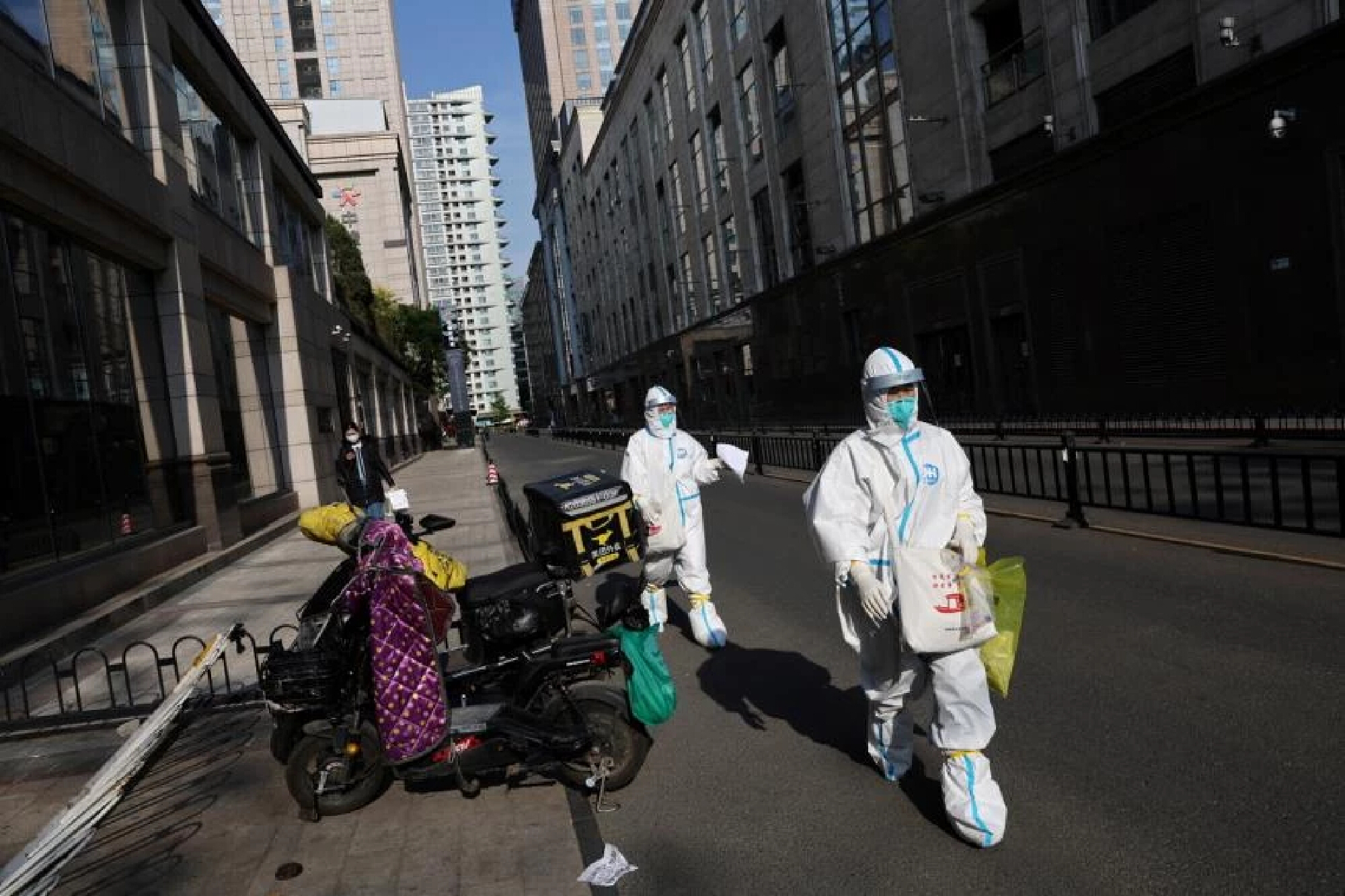
BEIJING – Beijing is tightening curbs across the city, including ordering millions of people to work from home and stay within their districts, in what city residents are saying amounts to a de facto lockdown.
Residents in two of the Chinese capital’s 16 districts were told to “strictly implement working from home” and not to leave their districts unless necessary.
The two districts include Chaoyang, where the Central Business District, many embassies and headquarters of multinational companies are located, and the Shunyi district, which is adjacent to one of Beijing’s airports.
Non-essential businesses such as cinemas, museums and KTV parlours; all schools except universities; and some parks were also ordered to close, as the city tries to snuff out a stubborn Covid-19 outbreak.
These measures add to already existing citywide curbs, including a ban on dining out. Dozens of subway stations and more than 150 bus routes have also been shut down.
The municipal authorities said on Monday (May 9) that emerging community clusters were currently the biggest danger faced by the city – it ordered three rounds of mass tests for streets that have reported a case in the past seven days.
Beijing has been reporting dozens of cases each day, with 915 cases reported since April 22 when a cluster was detected at a Chaoyang district school. The city reported 50 cases in the 24 hours ending 3pm on Monday, with nine cases picked up through community screening.
China is battling its worst outbreak of Covid-19 since the pandemic began in late 2019.
In Shanghai, 25 million people have been confined at home since the start of April. The harsh measures there have left people without reliable access to food and basic necessities, leading to growing unhappiness.
In Beijing’s Chaoyang district, the city has come to a virtual standstill, with office lobbies left dark and empty, and shops and restaurants shut.
The only buzz is usually concentrated around the makeshift Covid-19 booths that have popped up over the past weeks to carry out what have now become almost daily Covid-19 tests for Beijing’s 22 million residents.
Restaurant worker Pan Jianfa, 34, said the measures were not any “different from a lockdown”.
“It’s starting to feel a bit like what is happening in Shanghai. There are so many housing communities that have been locked down, you can’t eat in restaurants, you can’t even sit outside and eat, and now you cannot even go to a park,” said Mr Pan, who works at a popular Italian restaurant in the Sanlitun shopping area in Chaoyang.
Delivery rider Qi Yongli, 35, told The Straits Times that while the measures will reduce the risk of transmission, it has caused many restaurants to close.
“If you don’t allow dining in, how are people going to carry on with business?” Mr Qi asked.
Their comments reflect the cloud of uncertainty hanging over the Chinese capital, with residents expecting measures to tighten further.
Over the weekend, Chinese Premier Li Keqiang warned of a “complicated and grave” employment situation in Beijing and Shanghai.
The financial hub reported 3,947 cases for Sunday, down slightly from 3,975 cases last Saturday, but lockdown measures have been tightened.
There have been reports of a new push to end community infections outside quarantine zones by late May, with residents in some districts being notified that they were no longer able to receive deliveries.
Accounts have also circulated on social media of neighbours of positive cases being forced from their homes into centralised quarantine, with the authorities demanding that their keys be handed over so their homes can be disinfected.
It led to rare public criticism of the government surfacing on Chinese social media.
Professor Tong Zhiwei, who teaches law at the East China University of Political Science and Law, questioned the legality of such acts in an essay and said they should stop.
“Shanghai should set a good example for the whole country on how to carry out Covid-19 prevention work in a scientific and legitimate way,” he wrote.
Mr Hu Xijin, the retired editor-in-chief of the nationalist Global Times tabloid, said on his Weibo account that the central government needs to urgently provide guidelines, legislation and policies to address these questions about the legal basis of these isolation measures.
“The current pandemic fight is very tense, and in some places, there have been clashes on the ground, which have led to disputes online… But the understanding and emotions of (the authorities and the people) should not be in opposition,” he said.
“To reduce this conflict, relying on the efforts of the grassroots officials is not enough… you need support from the national level authorities.”
By Danson Cheong
Asia News Network: The Nation (Thailand), The Korea Herald, The Straits Times (Singapore), China Daily, Jakarta Post, The Star and Sin Chew Daily (Malaysia), The Statesman (India), Philippine Daily Inquirer, Yomiuri Shimbun and The Japan News, Gogo Mongolia, Dawn (Pakistan), The Island (Sri Lanka), Kuensel (Bhutan), Kathmandu Post (Nepal), Daily Star (Bangladesh), Eleven Media (Myanmar), the Phnom Penh Post and Rasmei Kampuchea (Cambodia), The Borneo Bulletin (Brunei), Vietnam News, and Vientiane Times (Laos).
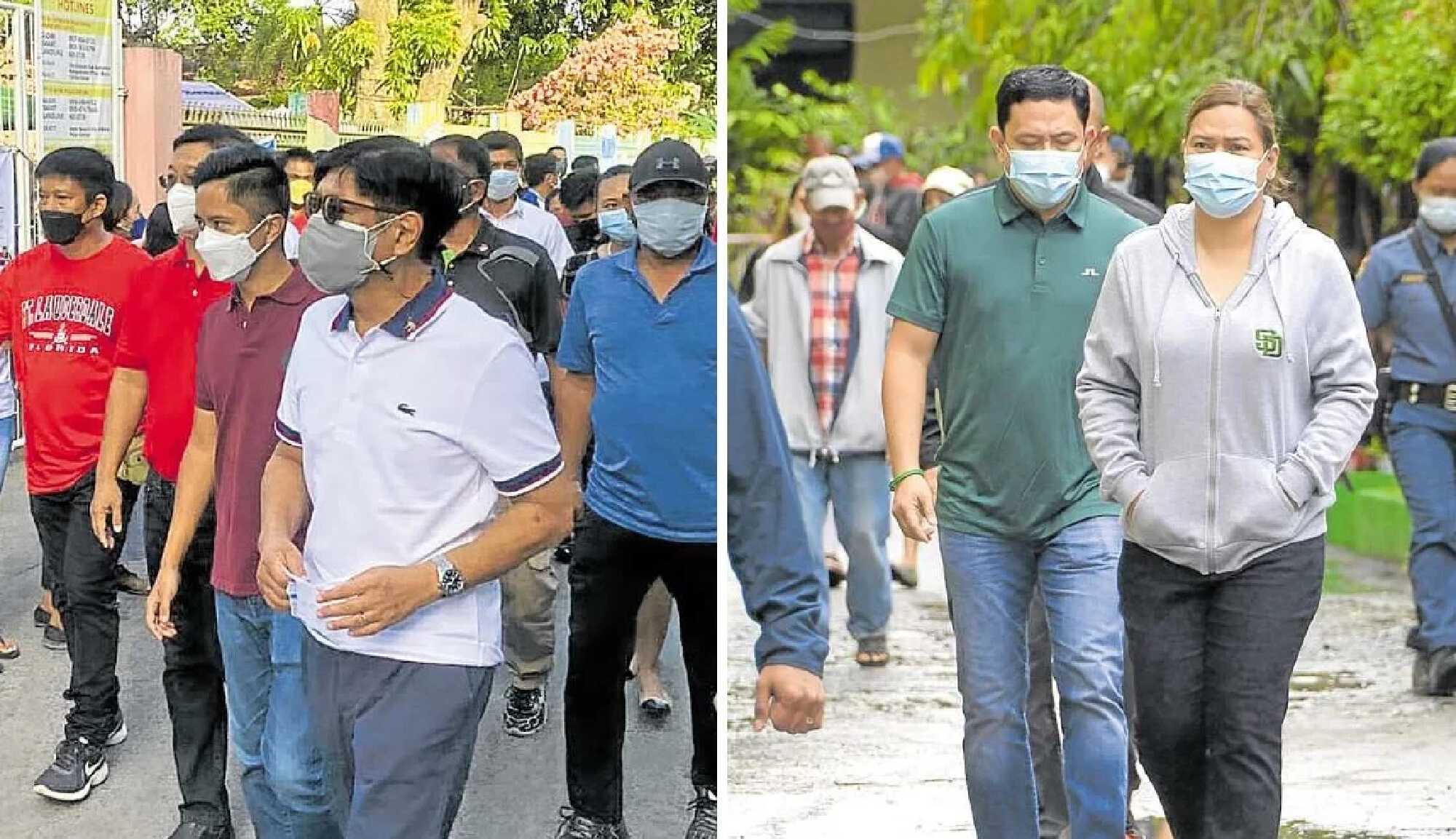
MANILA, Philippines – Former Sen. Ferdinand Marcos Jr. and his running mate, Davao City Mayor and presidential daughter Sara Duterte, took a commanding lead in the partial and unofficial tally of votes cast in Monday’s elections, the numbers reflecting their consistent dominance in the surveys.
The son and namesake of the former dictator on late Monday night told Filipinos that he could no longer contain his gratitude as he leads the unofficial count.
“We know that the count is not yet done, is not yet over, we still need to be vigilant but I want to issue a statement of gratitude to all of those who have been with us in this long and sometimes very difficult journey for the last six months,” Marcos Jr. said in a message at his campaign headquarters in Mandaluyong City.
He thanked his supporters, volunteers, parallel groups, and political leaders who “cast their lot with us.”
He urged his supporters to continue to guard their votes and continue to support him should he win as president.
As of 11:17 p.m., the Commission on Elections (Comelec) Transparency Media Server has tallied 78.88 percent of the nationwide election returns (or 44,603,401 of 67,442,616 registered voters) and showed Marcos with 25,489,420 votes as against the second placer, Vice President Leni Robredo’s 12,145,860.
Duterte had 25,408,391 votes as against the 7,630,661 votes for Robredo’s running mate, Sen. Francis “Kiko” Pangilinan.
Marcos Jr.’s initial tally already surpassed President Duterte’s more than 16 million votes in the 2016 elections.
The votes for Marcos Jr. were equivalent to 57.14 percent of the total counted so far, while Robredo’s represented 27.23 percent, or not far from the results of the last preelection survey conducted by Pulse Asia.
Turnout was expected to be high among the more than 65 million Filipinos eligible to vote on Monday.
“The long lines are magnificent. Filipinos wanted to be heard and heard loudly,” said Comelec Commissioner George Garcia.
Pacquiao at third
Sen. Manny Pacquiao ranked third in the presidential race with 1,766,290 votes, followed by Manila Mayor Francisco “Isko Moreno” Domagoso with 1,330,008 votes, and Sen. Panfilo Lacson with 636,590 votes.
The other presidential candidates—Faisal Mangondato, Ernie Abella, Leody de Guzman, Norberto Gonzales and Jose Montemayor Jr.—were at the tail end with less than 80,000 votes.
In the vice presidential contest, Sen. Vicente Sotto III ranked third with 5,450,787 votes, followed by Willie Ong with 1,347,892 votes.
Lito Atienza, Manny SD Lopez, Walden Bello, Carlos Serapio and Rizalito David got less than 145,000 votes.
Smooth transition
The UK-based think tank Pantheon Macroeconomics on Monday said that the likely election of Marcos Jr. as the Philippine president “shouldn’t spook markets.”
“A smooth transition matters most; gridlock due to a contested result is the worst-case scenario. Any future administration will have to shelve reform, as repairing the COVID-19 damage is far from over,” Pantheon Macroeconomics chief emerging Asia economist Miguel Chanco said in a report.
Chanco noted that while Marcos led the surveys leading to the elections, he had “a lot of political baggage, which risks distracting—or, at worst, destabilizing—a probable Marcos administration.”
“His family is still facing lawsuits for ill-gotten wealth obtained during the dictatorship of his late father, and Mr. Marcos is personally facing allegations of tax evasion,” Chanco noted.
On the flip side, Robredo—“the market’s preferred candidate” as shown by a recent Bloomberg poll among analysts and investors—“boasts a concrete set of specific policy proposals, whereas Marcos is running more on his prior record in the offices he has held, most recently as a senator from 2010 to 2016,” Chanco said. However, as surveys had indicated, Chanco said that “the huge crowds that have turned up at Robredo’s rallies have had little impact on sentiment.”
For Chanco, “a Marcos victory is unlikely to translate directly to a bad day for markets.”
“What arguably matters more is that election day proceeds smoothly and that the transition in government takes place without a hitch. This can’t be taken for granted in the Philippines’ still-young, sometimes-fragile and often volatile politics. A ‘bad’ market outcome is an election that doesn’t produce a clear winner, with the presumptive victor then likely to face allegations of electoral misconduct. Remember that no president in modern Philippine history has secured a majority of the electorate’s support,” Chanco said.
Early prediction
Political analysts early on Monday had predicted an “open race” for Malacañang as they did not rule out a possible upset by Robredo, despite a clear lead of Marcos Jr. in preelection surveys.
In a talk with reporters, University of the Philippines-Diliman political scientists Miriam Coronel-Ferrer and Herman Kraft said President Duterte’s non-endorsement of Marcos Jr. up until the end meant that there was no guarantee that the national government would mobilize itself for him.
They both agree, however, that local governments could be a decisive factor in swinging the votes in favor of Marcos Jr., who claimed that 90 percent of the governors in the Philippines had endorsed him.
Even so, both also believe that the concept of “command votes” might be powerful only at the local government level and not for national positions.
“It will not assure you of victory,” Ferrer said.
An upset for Robredo, Kraft said, would be possible especially if her “silent supporters” come forward.
The youth, who are believed to be underrepresented in recent surveys, are also expected to swing the tide for Robredo, Ferrer added.
By: Jane Bautista, Nestor Corrales
WITH REPORTS FROM KRIXIA SUBINGSUBING, BEN O. DE VERA, AND REUTERS
Asia News Network: The Nation (Thailand), The Korea Herald, The Straits Times (Singapore), China Daily, Jakarta Post, The Star and Sin Chew Daily (Malaysia), The Statesman (India), Philippine Daily Inquirer, Yomiuri Shimbun and The Japan News, Gogo Mongolia, Dawn (Pakistan), The Island (Sri Lanka), Kuensel (Bhutan), Kathmandu Post (Nepal), Daily Star (Bangladesh), Eleven Media (Myanmar), the Phnom Penh Post and Rasmei Kampuchea (Cambodia), The Borneo Bulletin (Brunei), Vietnam News, and Vientiane Times (Laos).





 SootinClaimon.Com