Yoon’s delegation departs for Tokyo, seeks to revive long-strained relationship

#SootinClaimon.Com : ขอบคุณแหล่งข้อมูล : หนังสือพิมพ์ The Nation.

https://www.nationthailand.com/international/40014883


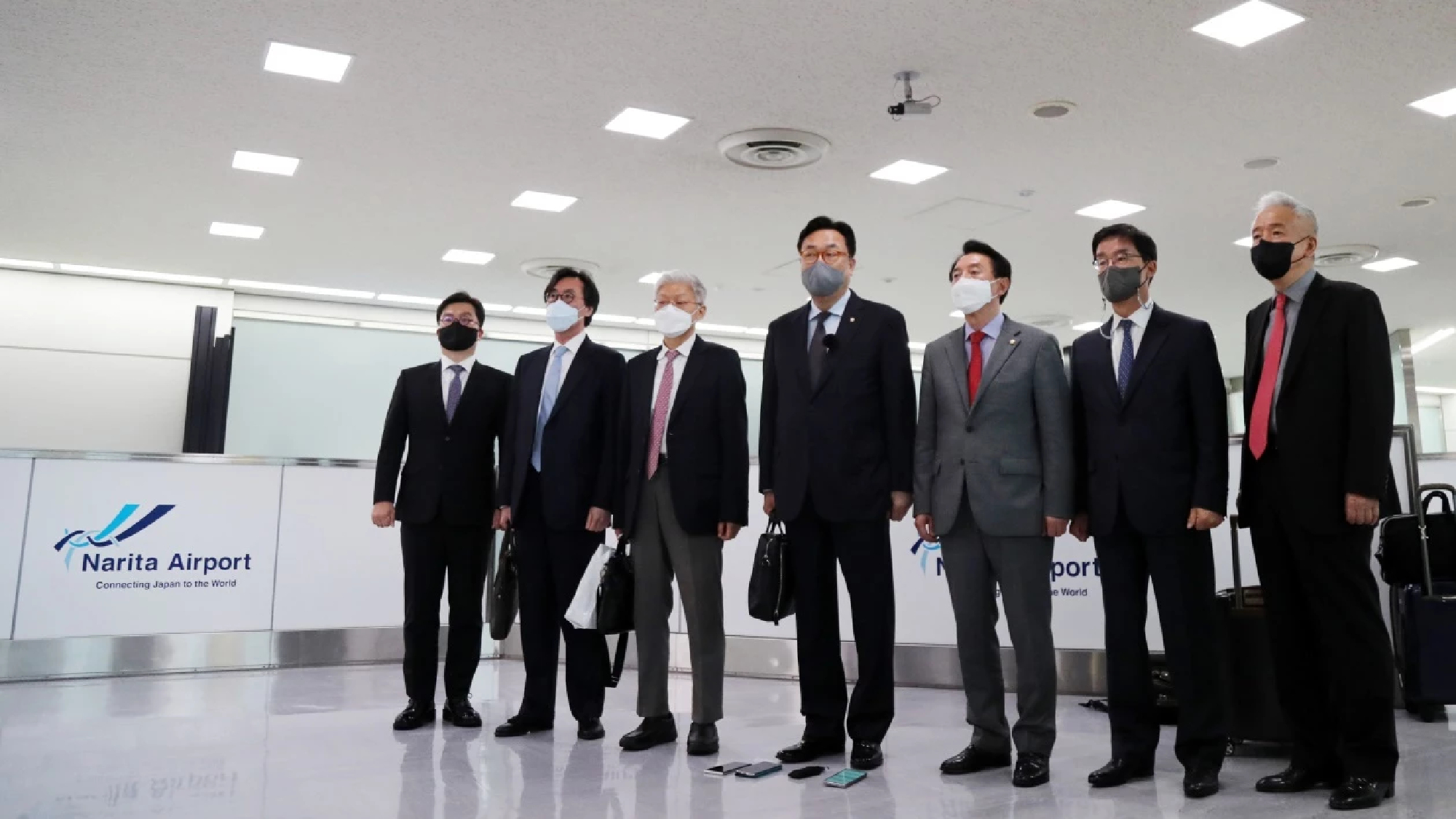
President-elect Yoon Suk-yeol’s policy consultation delegation to Tokyo began its five-day trip Sunday, marking the incoming administration’s first move aimed at improving bilateral relations.
Yoon’s delegation departs for Tokyo, seeks to revive long-strained relationship

During the trip, the seven-person delegation, headed by National Assembly Deputy Speaker Rep. Chung Jin-suk of the People Power Party, will meet with Japanese authorities to discuss and coordinate policies, while seeking to revive the long-strained relationship between the two countries.

Before departing for Tokyo, Chung said the trip is aimed at laying the groundwork for starting anew.

“We are departing on this trip, as to fasten the first button for a new Korea-Japan relationship for the Yoon Suk-yeol administration,” the five-term lawmaker told reporters at Incheon Airport on Sunday.

“We will meet with various authorities of Japan and deliver the president-elect’s message that both sides should make efforts to recover and enhance the (strained) relationship between Korea and Japan that was left unattended for a long time, and for the benefits of both countries.”

The Korean delegation also carries with them a personal letter from Yoon to Japanese Prime Minister Fumio Kishida, according to the president-elect’s spokesperson Bae Hyun-jin.

Details of the delegation’s agenda have not been revealed. Seoul-Tokyo relations have remained frosty, mainly over several thorny issues regarding wartime history and trade.

The delegation chief also said his team would be starting meaningful discussion for the two countries, “recognizing how recovering the conventional alliance of Korea, the United States and Japan will contribute greatly to the peace and prosperity of the Korean Peninsula and the Northeast Asian region, as well as the world amid the continuing provocations of North Korea and the war in Ukraine creating uncertainties and changes in the world order.”

The president-elect thinks it is in Korea’s national interest to normalize the Korea-Japan relationship that was left at its worst condition, Chung added.

The delegation was set to begin its official schedule by paying tribute to Lee Soo-hyun, a Korean exchange student who died trying to save a Japanese man who fell onto a train track in Tokyo in 2001.

The tribute was “to not forget Lee’s noble sacrifice and to support the desire of the deceased, and to take a step forward to thaw the frozen relationship of the two countries,” Yoon’s spokesperson said in a regular press briefing.

According to Yoon’s office, the policy consultation delegation is arranging a meeting with the Japanese prime minister. It is likely to be held on Wednesday, according to local reports here.

If the meeting is arranged, the delegation is also expected to invite Kishida to Yoon’s presidential inaugural ceremony, slated for May 10.

Yoon’s delegation of seven Japan and foreign affairs experts is also expected to meet with Japanese Foreign Minister Yoshimasa Hayashi and the two most recent former prime ministers, Shinzo Abe and Yoshihide Suga.

Rep. Kim Seok-ki, who is the vice chair of the Korea-Japan parliamentary diplomacy forum, is the deputy chief of the delegation. Other members include Yun Duk-min, former chancellor of the Korea National Diplomatic Academy, and Park Cheol-hee, a professor of Japanese politics at Seoul National University’s Graduate School of International Studies who assisted Yoon in forming his foreign policy pledges.

Lee Sang-deok, a former Korean ambassador to Singapore, also joined the delegation. Lee had led working-level negotiations on the controversial agreement on Japanese military’s sexual slavery issue during the Japanese colonial era, when he was serving as the head of Northeast Asian affairs at the Foreign Ministry in 2015. Kishida was serving as Japan’s foreign minister at that time.

It is the president-elect’s second policy consultation delegation sent abroad, following the first to the United States earlier in the month.

Issues that keep Seoul and Tokyo at odds with each other are ongoing, with the latest development taking place just last week.

On Friday, Korea’s Foreign Ministry lodged a strong protest against Japan after it repeated the claim that Korea’s Dokdo islets in the East Sea belong to the country in its first annual report on foreign policy under current Prime Minister Kishida’s administration.

A day before the incident, Japan’s current and former prime ministers showed respect to the Yasukuni Shrine that houses a number of class A war criminals, sparking fury among Koreans.

Seoul also expressed disappointment, saying the Japanese shrine symbolically “glorified (Japan’s) past wars of aggression and enshrined war criminals.”

Another sticking point emerged last month between the neighboring countries when the Japanese government issued approval for high school textbooks distorting facts on its past acts to force Koreans into sex slavery and labor during its colonization of the Korean Peninsula.

Asia News Network: The Nation (Thailand), The Korea Herald, The Straits Times (Singapore), China Daily, Jakarta Post, The Star and Sin Chew Daily (Malaysia), The Statesman (India), Philippine Daily Inquirer, Yomiuri Shimbun and The Japan News, Gogo Mongolia, Dawn (Pakistan), The Island (Sri Lanka), Kuensel (Bhutan), Kathmandu Post (Nepal), Daily Star (Bangladesh), Eleven Media (Myanmar), the Phnom Penh Post and Rasmei Kampuchea (Cambodia), The Borneo Bulletin (Brunei), Vietnam News, and Vientiane Times (Laos).

Published : April 25, 2022

By : The Korea Herald
Indonesia’s G20 presidency to discuss global health architecture

#SootinClaimon.Com : ขอบคุณแหล่งข้อมูล : หนังสือพิมพ์ The Nation.

https://www.nationthailand.com/blogs/international/40014882


Countries are seemingly varied in terms of the level of COVID-19 pandemic recovery, resulting from, among other things, inequal distribution of vaccines, health devices and the lack of funds that poor countries are facing. These reflect the importance of addressing global health architecture issues to ensure there will be no gap left for the coronavirus to harm humans.

Indonesia’s G20 presidency to discuss global health architecture

The significance of a global health architecture was emphasized by President Joko “Jokowi” Widodo when addressing the issues of global economy and health at the 2021 Group of 20 Rome Summit.

President Jokowi urged all countries to reinforce a global health architecture to ensure the global community’s resilience toward any future pandemic. To embody the aspirations, the President explained three points. First, the urgent need to prepare a global health resource-raising mechanism. This covers funds, vaccines, medicines, health equipment and health workers ready to work anytime to help a health crisis-facing country anytime.

“The IMF [International Monetary Fund] has given us an example of how to raise global funds to assist countries that face financial difficulties,” Jokowi added.

International financial support for health and climate change issues means a lot, according to the President.

Second, the need to prepare global health protocol standards associated with cross-border activities, including health protocols for inter-country traveling.

According to the President, the re-governance of global health resilience architecture should be inclusive and consistently adopt the principle of solidarity, transparency and equality.

In alignment with Jokowi’s speech at the 2021 G20, global health architecture will be on the agenda for Indonesia’s G20 presidency.

A government official said the path to global recovery required stronger collective cooperation that ensured the equality of global health standards and closer collaboration to ensure the global community’s resilience toward any future pandemic.

The global impact of the pandemic should be an opportunity for the global community to start join hands.

Through the G20 forum, Indonesia will encourage the strengthening of global health resilience and help make a global health system more inclusive, equitable and responsive to crises.

The discussion of a resilient global health architecture will be the focus of a series of meetings in Indonesia’s G20 presidency.

Addressing pandemic preparedness and advancing transformative infrastructure post-COVID-19 will be discussed through various forums, namely the Health Working Group, Joint Finance and Health Task Force, Development Working Group, Civil 20, Science 20 and many more.

Better global health system

Meanwhile, Health Minister Budi Gunadi Sadikin said it was high time to address a reform of the global health architecture, which aimed to create a better global health system.  

“We play a crucial role in building global health architecture for the sake of future generations. It is very clear that President Jokowi aspires to inherit the reform of global health architecture,” Budi said during the T20 Inception Conference: Realizing Inclusive Recovery From the COVID-19 Pandemic on Feb. 9. 

“We can pass on the better global health system to the younger generation.”

Budi listed three commitments that Indonesia had made with respect to the global health system.

In the first commitment, Indonesia encourages countries to develop global mobilization and supervisory mechanisms and a range of genomic data.

“We will open a platform to respond to global health threats today and in the future from the standpoint of strengthening. We have to enhance the capacity of the prevention, detection and effectively respond to the pandemic in a highly coordinated manner,” Budi explained.

“Second, Indonesia ensures that we can have a global-standard health architecture that is above current standards — faster than before. It is important to ensure comprehensive protocols to save many lives.”

“We have to be aware that modern issues require innovative solutions. Together we can harmonize global health standards, a standard journey in global preference that will enable a fast social and economic recovery, as well as a digital application system of health information jointly recognized across borders.

“Third, Indonesia can broaden and ensure the equal redistribution of global manufacture centers and global resources for a primary prevention, preparedness and response and genome.”

An epidemiologist at Griffith University, Australia, Dicky Budiman, revealed that an existing global health resilience system has been part of the international health regulation (IHR) since 2005. The system has a good basis for facing unforeseen health crises like the COVID-19 pandemic, he said.

“And yet, the problem is the system has yet to be implemented well, and as a consequence, not a single country was ready to face the heath crisis when the pandemic hit the world,” he told Voice of America (VOA) radio station.

According to him, the IHR has loopholes that need improvements.

“For example, points regarding the importance of early detection and how to collaborate between countries, including the issue of limiting air flights between countries, are contained in the IHR but are not implemented,” he said.

Therefore, he said, it would be better to strengthen the existing architecture of global health resilience set in the IHR in the post-COVID pandemic, rather than prepare a new one, which requires the approval of many countries. 

The digital health services industry or e-health has a big opportunity to thrive in the growing digital economy in Indonesia.

Health digital services

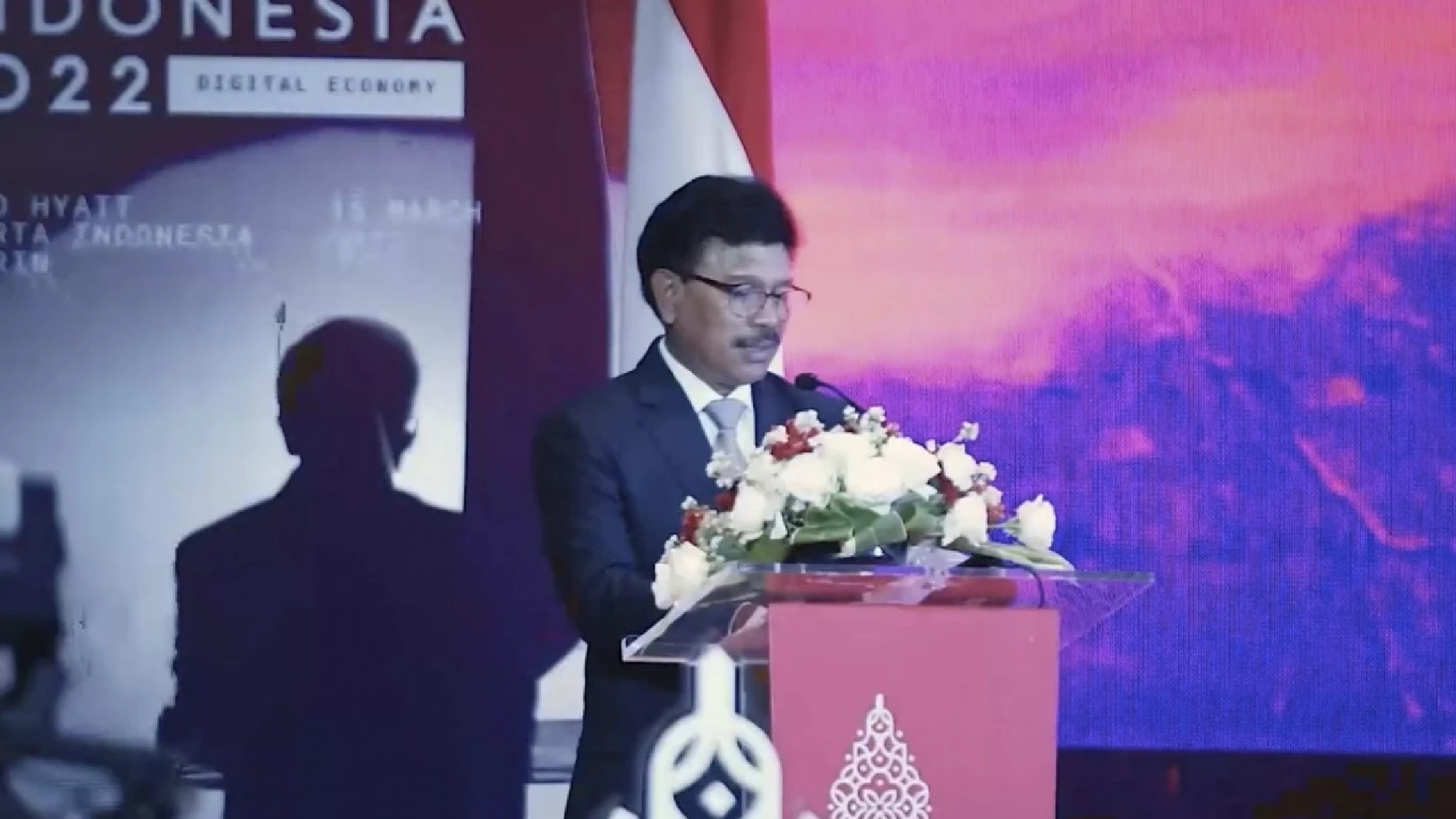
Communications and Informatics Johnny G. Plate asked e-health industrial players to collaborate and take advantage of the opportunities presented by Indonesia’s G20 presidency.

Indonesia’s digital economic growth during the COVID-19 pandemic was inseparable from the presence of digital services.

“During the pandemic, health digital services opened access to more people, making it increasingly inclusive. That’s why I am asking all partners in the health sector to forge collaboration and synergy,” the minister said at the third Digital Economic Forum held in Jakarta on Nov. 11, 2021.

According to the minister, in 2021, the valuation of the digital economy was estimated to reach Rp 1 trillion (US$70 billion). It is projected to grow to $146 billion by 2025.

Health has a huge potential, including electronic health.

“This explains why we need to have meetings to gain input from industries so that the policies that are designed can really take side the development of industries, including the e-health industry, in order to enhance our services to the public,” he noted.

Through the meetings, industrial players would be able to communicate and coordinate with the government, the minister said.

Asia News Network: The Nation (Thailand), The Korea Herald, The Straits Times (Singapore), China Daily, Jakarta Post, The Star and Sin Chew Daily (Malaysia), The Statesman (India), Philippine Daily Inquirer, Yomiuri Shimbun and The Japan News, Gogo Mongolia, Dawn (Pakistan), The Island (Sri Lanka), Kuensel (Bhutan), Kathmandu Post (Nepal), Daily Star (Bangladesh), Eleven Media (Myanmar), the Phnom Penh Post and Rasmei Kampuchea (Cambodia), The Borneo Bulletin (Brunei), Vietnam News, and Vientiane Times (Laos).

Published : April 25, 2022

By : The Jakarta Post

Marcos, Robredo gain big backers in South, show force in Metro Manila

#SootinClaimon.Com : ขอบคุณแหล่งข้อมูล : หนังสือพิมพ์ The Nation.

https://www.nationthailand.com/international/40014874


With just two weeks left before Election Day, It was the first time that the two candidates, Vice President Leni Robredo and front-runner former Sen. Ferdinand Marcos Jr. held simultaneous rallies in Metro Manila on Saturday ( 23 April )

Marcos, Robredo gain big backers in South, show force in Metro Manila

, presidential aspirant and Vice President Leni Robredo’s supporters pulled out all the stops for her on her 57th birthday on Saturday, aiming to boost the momentum of her campaign with a mammoth rally in Pasay City.

Her main rival and survey front-runner former Sen. Ferdinand Marcos Jr. was with thousands of his supporters 9 kilometres away in Manila and close to Malacañang, which was his home for 20 years and where he hopes to return after the May 9 polls.

Many first-time voters and their elders, however, are determined to frustrate the plan of the son of the ousted dictator, remembering the atrocities and abuses during his late father’s one-man rule before the Marcos family fell from power.

“We came here because we want to see our fellow Filipinos make a stand with us,” said a 44-year-old Robredo supporter who identified himself only as Allan. “This is a crucial election because she is up against Marcos’ son.”

Allan, a government employee who joined tens of thousands of others occupying one of the main roads on land reclaimed from Manila Bay, said he could not be neutral because “now is the time to stand up against ‘trapos’ (traditional politicians).”

“We cannot allow Marcos to win,” he said.

Fourth-year engineering student Chester Tuliao, 22, who will vote for the first time, shared Allan’s sentiments.

“We need to choose wisely because this will determine the direction of our government for the next six years,” he said.

Across the metropolis at Plaza Bustillos in Manila’s Sampaloc district, his mostly red-clad supporters greeted Marcos with cheers, chanting “BBM! BBM! BBM!”

In his speech, Marcos did not go into his plans for the country. Instead, he repeated President Duterte’s warning that some groups may disrupt the polls.

“Let us not allow those who want to create chaos because of the elections. The President is on our side, he has warned all those who think of creating chaos in the next election,” he said.

“That is why you should think first before doing it,” Marcos warned the unnamed groups.

It was the first time that the two candidates held simultaneous rallies in Metro Manila where Marcos won more votes than Robredo in the vice presidential race in 2016.

Manila is the second most vote-rich city in the Philippines with 1.133 million voters.

Marcos’ running mate, Davao City Mayor Sara Duterte, joined him at the rally.

Sen. Juan Miguel Zubiri, who is running for reelection in the Marcos-Duterte slate, defended Marcos from his critics. “They say that he will be a dictator if he wins. How can he be a dictator if he is very kind?” Zubiri told the crowd, which included Carmi Ramirez, a high school classmate of Marcos’ wife, Liza Araneta-Marcos.

Ramirez, 61, said Marcos had integrity despite the allegations hurled against him.

“He does not have to prove anything and we can rely on him as a leader of our country,” she said.

Ramirez said she returned to Manila from San Diego, California, to vote for Marcos.

Ramirez also dismissed calls on the former senator to apologize for the atrocities during his father’s martial rule from 1972 to 1986.

“Why will he apologize for something he has not done? Why will he say sorry for something that he has not done?” she said. After the Marcoses were driven out of Malacañang in 1986, succeeding administrations recovered huge amounts of cash and assets illegally amassed by the family, including more than $600 million in secret Swiss bank accounts.

The Manila police estimated that the Marcos crowd in Sampaloc numbered around 14,000 by early evening.

The authorities gave no estimate for the Robredo rally, but photos showed that the crowd that occupied a long stretch of Macapagal Boulevard close to SM Mall of Asia dwarfed the Sampaloc rally. Organizers said the Pasay rally attracted 412,000 people.

Speaking to the massive crowd, which was energized by the appearance of the latest Robredo endorser, superstar and television host Vice Ganda, the Vice President said fake news should not be allowed to spread and must be immediately nipped in the bud.

“Let us not get tired of fighting fake news,” she said. “That was my biggest mistake. Since 2016 I have been the victim of fake news, but I ignored that because I thought I needed to rise above it. I was wrong. When dealing with fake news, it has to be immediately replaced with the truth.”

Robredo said there were stories that she cheated on Marcos in 2016 and she had “many boyfriends.”

“If I was affected by this, you might not even be here to support me,” she said. “I told you before, this is not just a congregation of those in pink, but Filipinos of all colours.”

Vice Ganda said choosing Robredo was the right move.

“Why don’t we take this opportunity to decide on the right thing?” he said. “In this election, we should be the winner.”

On her birthday, Robredo received what may have been the biggest political gifts for her—endorsements from former Muslim rebels who had signed a peace deal with the government, from 1,000 members of the Catholic clergy and the militant Kilusang Mayo Uno (KMU).

It was the first time that members of the Moro Islamic Liberation Front (MILF) had announced support for a presidential candidate since they launched a secessionist movement in the 1970s. It was also the first time for the KMU to support a presidential aspirant and running mate since it was formed in the 1980s.

Marcos, on the other hand, won the support of Sulu Gov. Abdusakur Tan, the fourth governor of the five provinces that comprise the Bangsamoro Autonomous Region in Muslim Mindanao.

Tawi-Tawi Gov. Yshmael Sali, Maguindanao Gov. Mariam Mangudadatu, and Lanao del Sur Gov. Mamintal Alonto Adiong earlier announced their support for Marcos.

Basilan Gov. Hadjiman Hataman-Salliman is not supporting Marcos.

Tan said the former senator would be “a majority president.’’

During a mass meeting of the MILF earlier in the day in Sultan Kudarat, Maguindanao, MILF chief and Bangsamoro interim Chief Minister Murad Ebrahim announced the support for the Vice President by the United Bangsamoro Justice Party (UBJP).

‘She was there for us’ “At certain periods when we needed allies in Congress, and as Vice President of the Philippines, Leni Robredo was there for us. She was there for Marawi. She makes time for the Bangsamoro,” Ebrahim told a gathering at Camp Darapanan.

Robredo was among the main authors of the original Bangsamoro Basic Law when she was Camarines Sur representative in the House.

Ebrahim said she and Manila Mayor Francisco “Isko Moreno” Domagoso “courageously” approached them to offer their commitment to continue the gains of the peace process.

But it was Robredo who stood out as “overwhelmingly compatible” with UBJP’s values, principles and goals, he said.

Ebrahim described Robredo as a “compassionate leader” who “sees eye to eye with the UBJP (and is) considerably familiar with the history, context, struggles and issues of the Bangsamoro.”

The MILF, which broke away from the former mainstream Muslim rebel group, Moro National Liberation Front (MNLF), fought the Marcos regime in the 1970s.

The Muslim insurgency turned Mindanao into a major battlefront where the dictator’s troops became notorious for committing atrocities, including massacres, torture, murder and abductions.

The human rights abuses and the underdevelopment of Muslim communities rooted in the Marcos administration fueled extremism and parts of Mindanao became breeding grounds for Islamic State-related terror groups.

Ebrahim said that the Vice President understood that “peace cannot be availed without serving justice.”

In response, Robredo vowed to hasten the implementation of the remaining commitments in the 2014 peace deal, such as funding for decommissioning and transformation of MILF camps.

She also promised to pursue transitional justice measures, amnesty for MILF combatants, and the completion of Marawi rebuilding.

The UBJP’s endorsement is expected to bring huge vote blocks for Robredo given the MILF’s influence among Bangsamoro communities, especially in Maguindanao and Lanao del Sur provinces.

On Saturday, Maguindanao Rep. Esmael Mangudadatu, who is running for governor against his estranged cousin-in-law, incumbent Gov. Bai Mariam Mangudadatu, raised Robredo’s hand together with Ebrahim.

Mangudadatu used to support Domagoso.

The Robredo campaign has largely relied on volunteers, who help organize her rallies and raise funds.

“Birthday rallies” for the Vice President were also held in Iloilo and Cebu while other volunteers, collectively called Kakampinks, continued their house-to-house campaign for her and her running mate Sen. Francis “Kiko” Pangilinan.

Among those who are leading the grassroots effort are her three daughters, Aika, Tricia, and Jillian in Manila, actress Janine Gutierrez in Caloocan City, and her niece Gail Vitas in Makati City.

Published : April 24, 2022

By : Philippine Daily Inquirer

” No place for force in Indo-Pacific ” – Ambassador of Japan to India

#SootinClaimon.Com : ขอบคุณแหล่งข้อมูล : หนังสือพิมพ์ The Nation.

https://www.nationthailand.com/international/40014869


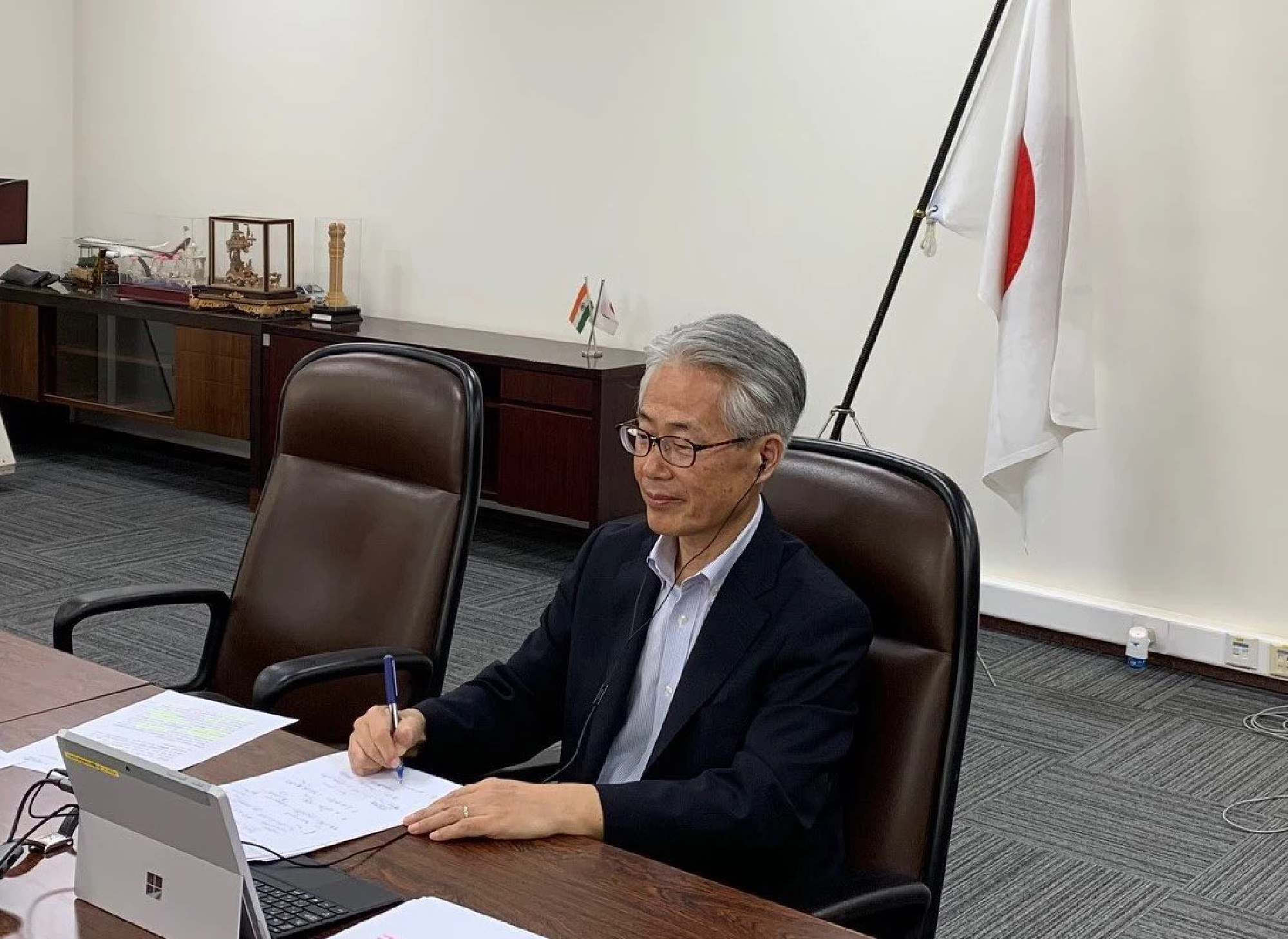
Satoshi Suzuki, Ambassador of Japan to India talked about the takeaways from the recent India-Japan annual Summit and the impact of the Ukraine crisis on the Indo-Pacific, among other issues.

" No place for force in Indo-Pacific " - Ambassador of Japan to India

Satoshi Suzuki has been the Ambassador of Japan to India since October 2019. A post-graduate from the School of Advanced International Studies at the Johns Hop- kins University, he joined Japan’s Ministry of Foreign Affairs in 1984. Since then, Suzuki has served his country in various capacities both in Japan and abroad. He was also the Deputy Minister for Foreign Policy in 2017. 

In an interview with Ashok Tuteja, Suzuki talked about the takeaways from the recent India-Japan annual Summit and the impact of the Ukraine crisis on the Indo-Pacific, among other issues. 

Excerpts: 

Q. Prime Minister Fumio Kishida was in India in March for the 14th India- Japan Summit. What are the major takeaways from the summit? 

A: We have witnessed the very successful official visit of Prime Minister Kishida to India on March 19. It was Mr Kishida’s first bilateral foreign visit since he took office last October, which demonstrates the significance he attaches to the partnership with India. In addition, this year marks the 70th anniversary of the establishment of the diplomatic relationship between Japan and India, making the Summit all the more special. The visit provided an excellent opportunity to review bilateral cooperation in wide-ranging areas, chart the future course of our Special Strategic and Global Partnership and reaffirm our strong commitment to a free and open Indo-Pacific, free from coercion. 

One of the major takeaways of the Summit was the announcement made by our two leaders about setting a target of 5 trillion yen (3.4 trillion rupees) of public and private investment and financing from Japan to India in the next five years. In addition to the Joint Statement signed by Mr Kishida and Mr Modi, which contains details of the bilateral cooperation, the two sides also signed and announced seven JICA loan agreements and amendments to the Implementing Agreement of the Comprehensive Economic Partnership Agreement (CEPA) and its Annex, along with documents on issues of contemporary needs such as industrial competitiveness, clean energy, urban development, decentralised domestic wastewater management and the development of connectivity and resilience in the Northeast. 

As for political and security cooperation, the Memorandum of Cooperation in the Field of Cybersecurity was signed on this occasion to promote collaboration in such areas as information sharing, capacity building as well as research and development. In addition, the Prime Ministers concurred to jointly tackle common issues of economic security, including building safe and secure telecommunication networks and diversification and enhancement of supply chains. These outcomes are good examples of how deep and comprehensive our bilateral relationships are. 

Q. Prime Minister Narendra Modi had great chemistry with former Prime Minister Shinzo Abe. What is the equation between Mr Modi and Mr Kishida? 

A: Even before assuming office as the Prime Minister, Mr Kishida already had many positive interactions with Prime Minister Modi in his various previous capacities including as Foreign Minister. After his inauguration as Prime Minister, he also had a brief conversation with Mr Modi in Glasgow on the sidelines of the COP26 last October, in addition to a couple of virtual calls. 

The Summit gave an excellent opportunity to discuss issues of mutual interest in the person and foster personal connection. Further, the two leaders had a tête-à-tête dinner at the Hyder- abad House. They have built a rapport through cordial discussions that lasted far beyond the scheduled time, which both the leaders enjoyed very much. 

Q. What is your view on the Ukraine crisis and India’s response? 

A: Russia’s invasion of Ukraine shakes the foundation of the international order against which a firm stance is needed. Japan is also deeply concerned about the reference to the possible use of Weapons of Mass Destruction. In addition, we are deeply shocked by the killing of innocent civilians as a result of acts of the Russian forces and vehemently condemn the breach of international humanitarian law.

Japan has been in constant conversation with India regarding this important issue. During the recent Summit, the two leaders emphasised the need for all countries to seek peaceful resolution of disputes by international law without resorting to threats or use of force or any attempt to unilaterally change the status quo. They also expressed their serious concern about the ongoing conflict and humanitarian crisis in Ukraine and emphasised that global order has been built on the UN Charter, international law, respect for sovereignty and territorial integrity of states. The two leaders reiterated their call for an immediate cessation of violence and noted that there was no other choice but the path of dialogue and diplomacy for the resolution of the conflict. 

Q. What is the impact of the Ukraine crisis on the Indo-Pacific and its implication for Quad cooperation? 

A: As the world witnesses the Ukraine crisis, it has never been clearer that any attempt to unilaterally change the status quo by force, such as this time, must not be tolerated in the Indo- Pacific region. This view was shared by the Quad leaders in their virtual meeting on March 3. Further, it is precise because of this situation that it is critical to promote efforts toward the realisation of a “Free and Open Indo-Pacific.” 

With this sense of mission, Japan is going to host a Quad summit in Tokyo in the coming months. The leaders of four countries are expected to review their positive initiatives, including those in the areas of vaccines, climate change, critical and emerging technologies along with many others to bolster security and prosperity in the Indo- Pacific and beyond. 

Q. Chinese Foreign Minister Wang Yi was recently in India to mend fences with India amid the Eastern Ladakh military stand-off. What is Japan’s view on China’s activities in the neighbourhood? 

A: As I mentioned, our principled view is that we shall not accept any attempts to unilaterally change the status quo and this view prevails anywhere in the world. In Japan’s immediate neighbourhood, in the East China Sea, China Coast Guard vessels continue to intrude into the Japanese territorial sea around the Senkaku Islands and the Chinese military has been expanding and increasing its military activities in sea and airspace. Issues about the South China Sea are also important to Japan, as it is crucial for the peace and stability of the region. It is also because Japan depends on sea transport for most of its resources and energy. Not only on seas but anywhere in the world, together with India, Japan is committed to promoting the free, open, rules-based order, respecting international law and undaunted by coercion. 

Q. To respond to the increasingly fluid situation in the Indo-Pacific, how do you think India and Japan can deepen their defence and security cooperation? 

A: Defence and security cooperation between our two countries has flourished in recent years as our strategic convergence grows. The 2+2 meeting of our Foreign and Defense Ministers, the first of which took place in November 2019, demonstrates deep and wide-ranging cooperation in this field. One such example is various bilateral and multi-lateral exercises that India and Japan conducted, including the “Dharma Guardian,” the “Shinyu Maitri” and the “Malabar.” Another significant recent development is the operationalisation of the agreement concerning Recipro- cal Provision of Supplies and Services (RPSS). During the Dharma Guardian 2021 in March of this year, the Indian Navy, under the logistical agreement for RPSS, provided fuel to Japan Air Self-Defense Force aircraft that transported the contingent of Japan Ground Self-Defence Force, thus demonstrating the augmented joint relations between our two countries. Japan and India are also exploring opportunities for collaborations in defence equipment and technology. To further advance overall security cooperation, we are working to hold the second 2+2 meeting at the earliest opportunity. 

Q. Please also elaborate on infrastructure projects taken up by Japan in India’s North-eastern states? 

A: Japan is implementing a wide range of projects to contribute to the enhancement of connectivity and resilience in the North Eastern Region, not only in hard infrastructure development, such as road network connectivity improvement, electricity, water supply and sewage but also in soft areas of cooperation like people-to-people exchanges and Japanese language education. Japan is also implementing social and environmental sustainability projects, such as forest management and community empowerment. As a good example of our cooperation in hard infrastructure, Japan’s assistance in the construction of the Dhubri-Phulbari Bridge will completely change the lives of the people of the North East. This is going to be the longest river bridge in India and is expected to cut short the travel time across the river from more than 8 hours to less than 30 minutes. Furthermore, the bridge will create a corridor stretching from Bhutan, through Assam and Meghalaya, to Bangladesh. 

Japan places special focus on cooperation in the NER as the region is located where Japan’s vision of “Free and Open Indo-Pacific” and India’s “Act East Policy” converge and as the region is important in terms of connectivity with South Asia, Southeast Asia and the BIMSTEC countries.

Published : April 24, 2022

By : The Statesman

Generation Z accounts for 70% of China’s digital readers

#SootinClaimon.Com : ขอบคุณแหล่งข้อมูล : หนังสือพิมพ์ The Nation.

https://www.nationthailand.com/international/40014866


Generation Z, which refers to people born in the mid-1990s and the early 2010s, are now dominating China’s digital reading market, as 70 per cent of the nation’s more than 500 million digital readers is younger than 26 years old, according to a new report.

Generation Z accounts for 70% of China's digital readers

About 45 per cent of digital readers in China are aged between 19 and 25, and about 27 per cent of them are under the age of 18, according to the 2021 China Digital Reading report released by China Audio-video and Digital Publishing Association on Saturday.

In 2021, the overall scale of China’s digital reading industry reached 41.57 billion yuan ($6.39 billion), with a growth rate of 18.23 per cent, said the report, which was released at a digital reading forum held by Migu, a subsidiary of China Mobile, that provides digital content and cultural services.

By the end of last year, China had 506 million digital readers, with a year-on-year growth rate of 2.43 per cent. On average, they read 11.58 e-books per year.

Published : April 24, 2022

By : China Daily

Yoon to commute to office from private home while official residence is renovated

#SootinClaimon.Com : ขอบคุณแหล่งข้อมูล : หนังสือพิมพ์ The Nation.

https://www.nationthailand.com/international/40014865


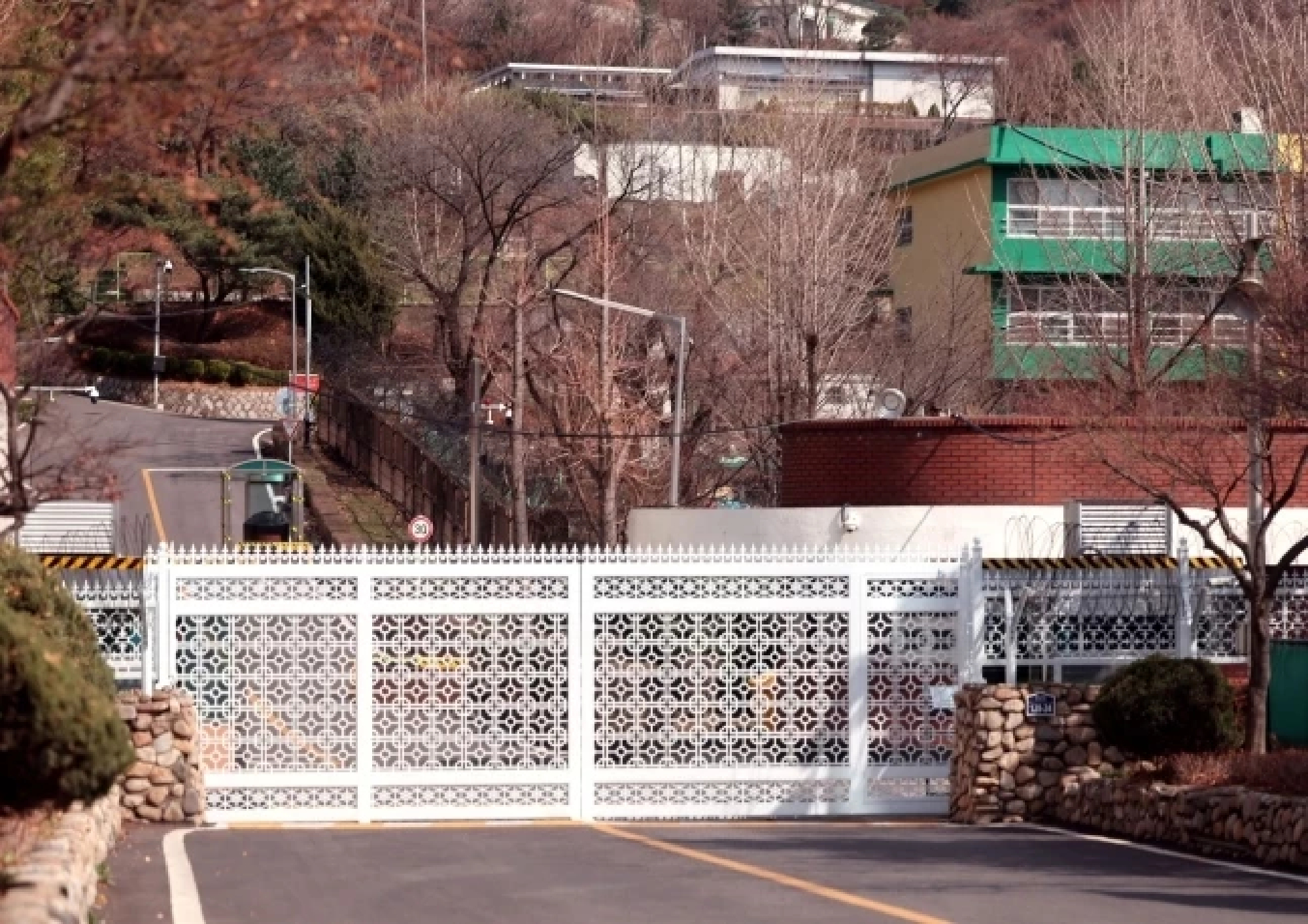
President-elect Yoon Suk-yeol is expected to commute to the new presidential office in central Seoul from his private home for about a month after his inauguration while his official residence is renovated, officials said Sunday.

Yoon to commute to office from private home while official residence is renovated

Yoon has decided to remodel what is now the foreign minister’s residence into his official residence in line with his plan to move the presidential office and residence out of Cheong Wa Dae to connect better with the people.

Renovation work on the foreign minister’s residence in Hannam-dong will begin on Yoon’s inauguration on May 10 and is expected to take around a month, and Yoon plans to commute to his new office from his private home in Seocho-dong in southern Seoul, transition team officials said.

“We will be mainly taking the Banpo Bridge on our commute as it is the closest one to Seocho Ward. … The route could change depending on the situation,” an official told Yonhap News Agency.

Yoon’s commute could worsen traffic congestion because roads are blocked for his motorcade.

Bae Hyun-jin, Yoon’s spokesperson, told a press briefing that his team is working to come up with the best possible measure to prevent traffic during his commute.

“I believe we already said that we are conducting simulation exercises and looking for the best way to avoid causing inconvenience to citizens, considering the morning and evening commute hours,” she said.

The official residence of the Army chief of staff had originally been considered a top candidate for Yoon’s residence, but the foreign minister’s residence emerged as a better option as the Army chief’s home, built in the mid-1970s, requires extensive remodelling.

“We chose the foreign minister’s residence as the new official residence because the remodelling work will take only a short period to finish even if starts May 10, as the previous foreign ministers have consistently renovated the residence during their stays,” the official said. 

Published : April 24, 2022

By : The Korea Herald

The latest news on what’s happening in the region

#SootinClaimon.Com : ขอบคุณแหล่งข้อมูล : หนังสือพิมพ์ The Nation.

https://www.nationthailand.com/international/40014856


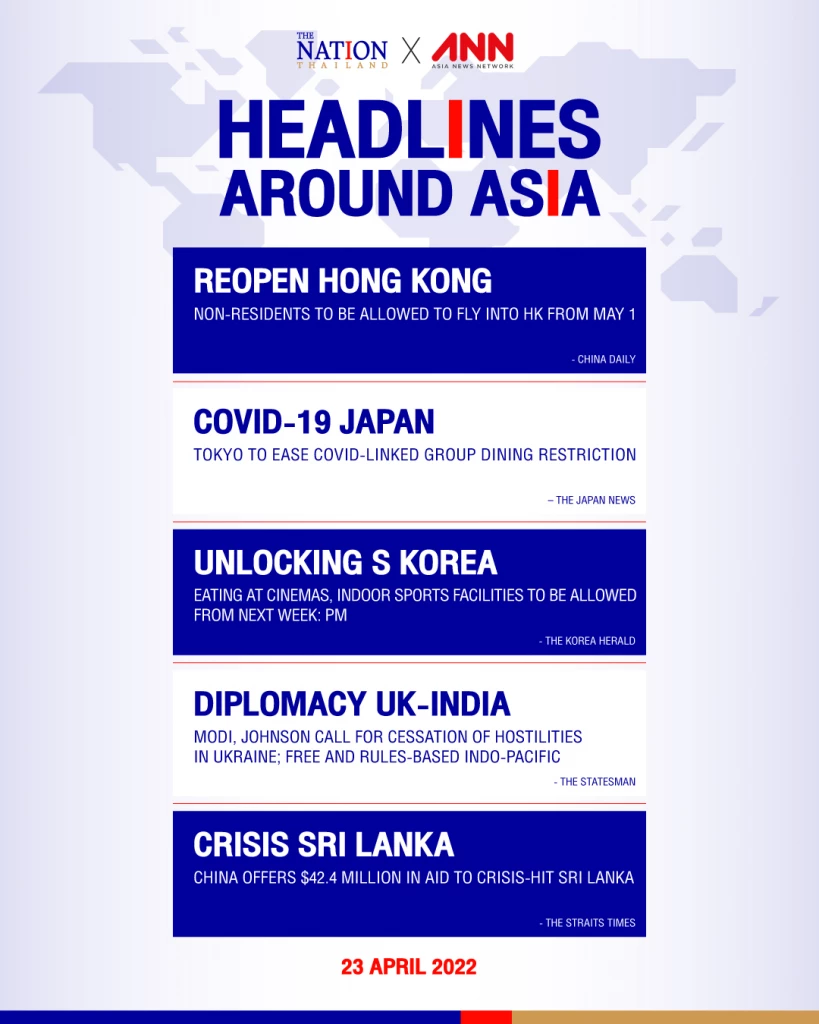
Check out what’s hot in the region on April 23 as The Nation puts together headlines from members of Asia News Network (ANN). Click to read more:

The latest news on what's happening in the region

Reopen Hong Kong
Non-residents to be allowed to fly into HK from May 1 

China Daily
https://www.nationthailand.com/international/40014838

Covid-19 Japan
Tokyo to ease COVID-linked group dining restriction 

The Japan News
https://www.nationthailand.com/international/40014839

Unlocking S Korea
Eating at cinemas, indoor sports facilities to be allowed from next week: PM  

The Korea Herald
https://www.nationthailand.com/international/40014840

Diplomacy UK-India
Modi, Johnson call for cessation of hostilities in Ukraine; free and rules-based Indo-Pacific 

The Statesman (India)
https://www.nationthailand.com/international/40014841
 
Crisis Sri Lanka
China offers $42.4 million in aid to crisis-hit Sri Lanka 

The Straits Times ( Singapore )
https://www.nationthailand.com/international/40014842

Asia News Network: The Nation (Thailand), The Korea Herald, The Straits Times (Singapore), China Daily, Jakarta Post, The Star and Sin Chew Daily (Malaysia), The Statesman (India), Philippine Daily Inquirer, Yomiuri Shimbun and The Japan News, Gogo Mongolia, Dawn (Pakistan), The Island (Sri Lanka), Kuensel (Bhutan), Kathmandu Post (Nepal), Daily Star (Bangladesh), Eleven Media (Myanmar), the Phnom Penh Post and Rasmei Kampuchea (Cambodia), The Borneo Bulletin (Brunei), Vietnam News, and Vientiane Times (Laos).
 

Published : April 23, 2022

China offers $42.4 million in aid to crisis-hit Sri Lanka

#SootinClaimon.Com : ขอบคุณแหล่งข้อมูล : หนังสือพิมพ์ The Nation.

https://www.nationthailand.com/international/40014842


BANGALORE – After months of silence, China has announced an urgent emergency humanitarian aid of around US$31 million (S$42.4 million) to Sri Lanka, which is in the grip of its worst economic crisis.

The aid, extended through the China International Development Cooperation Agency, includes 5,000 tonnes of rice, pharmaceuticals, production materials and other essentials, Sri Lanka’s foreign ministry told reporters on Thursday (April 21).

The announcement came after a meeting between Sri Lankan Foreign Minister G.L. Peiris and the Chinese ambassador in Colombo, Mr Qi Zhenhong.

In March, the envoy told a press conference that Sri Lanka had sought a US$2.5 billion loan and credit line from China. It was not clear if the US$31 million was part of this request. China’s Yunnan province has also announced a donation of 1.5 million yuan (S$315,000) worth of food packages to Sri Lanka.

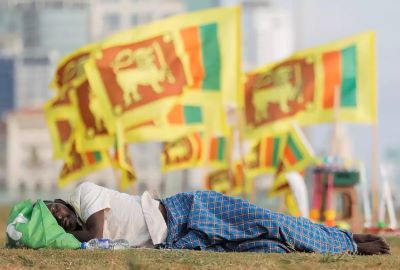
Long blackouts, shortages of food and medicine have triggered nationwide street protests in the island nation.

Citizens are demanding that President Gotabaya Rajapaksa and his brother, who is the Prime Minister, Mr Mahinda Rajapaksa, resign.

Both have shown no sign of doing so. But the Prime Minister on April 18 proposed restoring a law that clips the president’s powers and empowers Parliament as a short-term solution.

Finance Minister Ali Sabry has gone to Washington to negotiate a debt restructuring plan with the International Monetary Fund, a crucial step after the government in Colombo declared last week that it would default on its foreign debts totalling around US$51 billion.

Sri Lanka’s foreign currency reserves are worryingly low at around US$500 million, and it hopes to use the money to import essentials such as rice, fuel and medicine as it looks for loans and grants from friendly nations to shore up reserves.

Beijing has extended $1.3 billion in syndicated loans since the outbreak of the Covid-19 pandemic, and a US$1.58 billion renminbi-denominated currency swap in December but since then has been silent.

As protesters hold the Sri Lankan government accountable for economic mismanagement such as borrowing unsustainably from international markets and taking loans from China for ill-advised and loss-making infrastructure projects, experts say that Beijing was perhaps keeping a low profile.

Mr George Cooke, founder of Colombo-based think-tank Awarelogue Initiative, said: “We have seen a lot of silence on China’s part. I believe it is because Sri Lanka’s foreign ministry has just not been campaigning vigorously enough for assistance from friendly nations like China, Japan and South Korea.

“India has meanwhile been offering proactive help.”

India, Sri Lanka’s northern neighbour, announced US$500 million in financial assistance on April 20 to buy fuel, in addition to US$1.9 billion in loans, credit lines and currency swaps.

It also sent ships with sugar, rice and medicine.

President Rajapaksa has thanked India for its “invaluable assistance”.

New Delhi has been keen for Colombo to diminish its economic relations with Beijing that have grown over the past decade under the Rajapaksas and former prime minister Ranil Wickremesinghe.

Said Mr Umesh Moramudali, who teaches economics at the University of Colombo, and researches Sri Lanka’s public debt dynamics: “There is a clear shift in China’s approach to Sri Lanka, in that it pledged assistance but waited for Sri Lanka to have a clear debt restructuring plan.

“Or maybe it was a reaction to Sri Lanka’s recent close relations with India.”

While India has provided aid with essentials, economists say Sri Lanka’s urgent need for dollars has left it with no option but to seek help from China.

“It’s important to get China’s help, specifically through the kind of term financing facilities it has offered in the past, to strengthen foreign reserves,” said Mr Moramudali.

Credit lines give fuel or food on credit and do not increase currency reserves. Term loan facilities, on the other hand, will give Sri Lanka the dollars it needs to freely spend on imports from any country.

Chinese loans make up around 20 per cent of Sri Lanka’s total foreign debt, including US$1.2 billion in term loan financing from China Development Bank in 2020 and 2021.

Mr Moramudali said: “Western and Indian media claims about the Chinese debt trap being the main cause of Sri Lanka’s economic crisis are exaggerated.”

Sri Lanka’s biggest debt burden comes from sovereign bonds, or borrowings from the international market, which make up 40 per cent of its foreign loans. These bonds also account for half of Sri Lanka’s international debt repayments every year.

Sri Lanka cannot afford to ignore help from any commercial partner to repay maturing bonds and improve currency reserves, Mr Moramudali added.

By Rohini Mohan

Asia News Network: The Nation (Thailand), The Korea Herald, The Straits Times (Singapore), China Daily,  Jakarta Post, The Star and Sin Chew Daily (Malaysia), The Statesman (India), Philippine Daily Inquirer, Yomiuri Shimbun and The Japan News, Gogo Mongolia,  Dawn (Pakistan),  The Island (Sri Lanka), Kuensel (Bhutan), Kathmandu Post (Nepal), Daily Star (Bangladesh), Eleven Media (Myanmar), the Phnom Penh Post and Rasmei Kampuchea (Cambodia), The Borneo Bulletin (Brunei), Vietnam News, and Vientiane Times (Laos).

Published : April 23, 2022

By : The Straits Times

Modi, Johnson call for cessation of hostilities in Ukraine; free and rules-based Indo-Pacific

#SootinClaimon.Com : ขอบคุณแหล่งข้อมูล : หนังสือพิมพ์ The Nation.

https://www.nationthailand.com/international/40014841


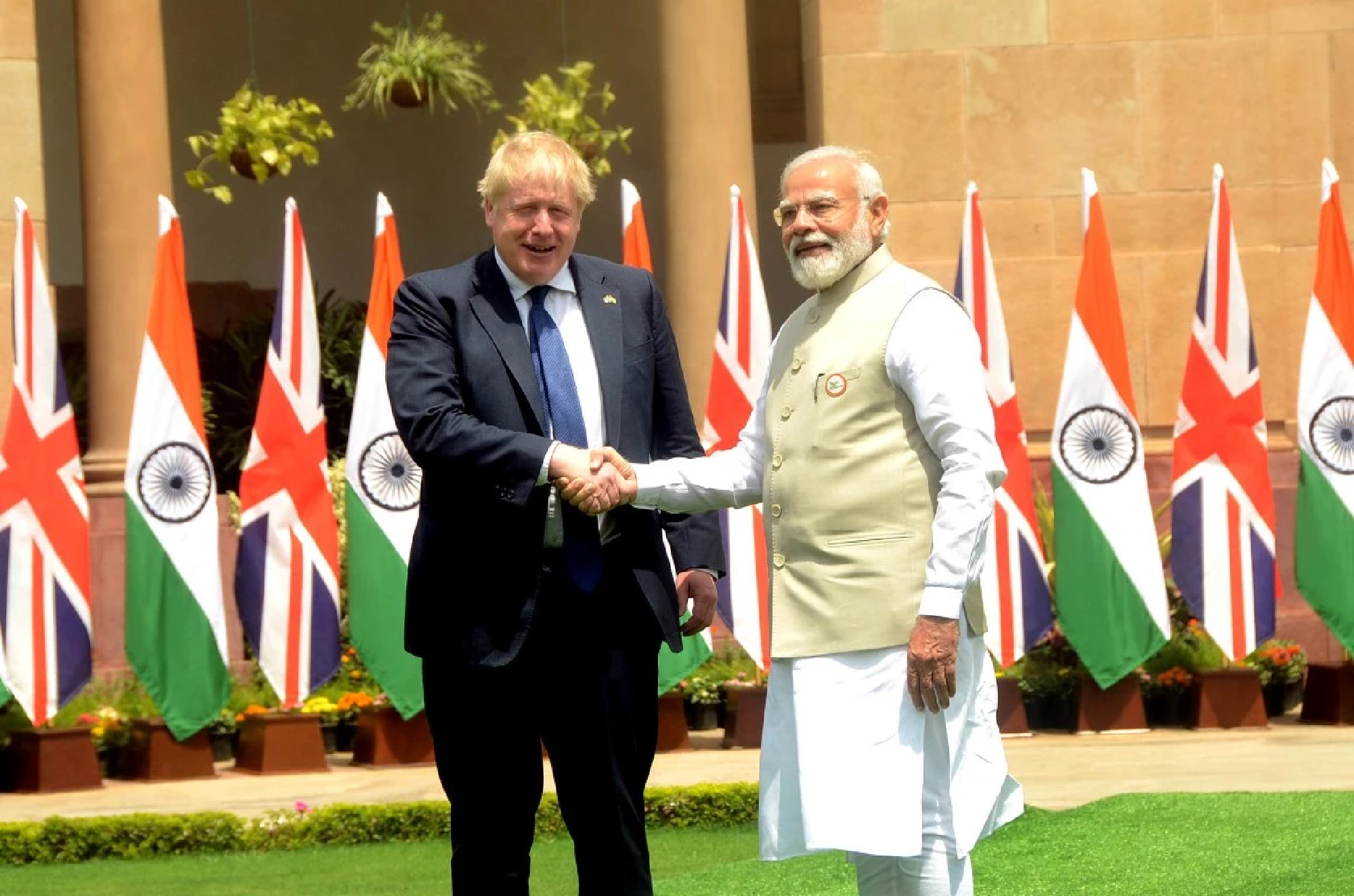
Prime Minister Narendra Modi and UK Prime Minister Boris Johnson today called for an immediate cessation of hostilities in Ukraine and a peaceful resolution of the conflict even as they underlined their shared vision of an open, free, inclusive and rules-based Indo-Pacific region in which countries are free from military, economic and political coercion.

Modi, Johnson call for cessation of hostilities in Ukraine; free and rules-based Indo-Pacific

Ajoint statement issued at the end of talks between them said the two leaders expressed in strongest terms their concern about the ongoing conflict and humanitarian situation in Ukraine. They unequivocally condemned civilian deaths and reiterated the need for a peaceful resolution of the conflict, which was having severe implications across the globe, in particular for developing countries.

Both Modi and Johnson emphasised that the contemporary global order has been built on the UN Charter, international law and respect for sovereignty and territorial integrity of states. They reaffirmed their willingness to provide humanitarian aid for the people of Ukraine.

Briefing reporters on the talks between the two PMs, Foreign Secretary Harsh Vardhan Shringla said the two leaders set a target to conclude the majority of talks on a comprehensive and balanced Free Trade Agreement (FTA) by the end of October 2022 and reaffirmed their commitment to transform defence and security cooperation as a key pillar of the bilateral strategic partnership. The two countries also signed six accords in various fields.

In his remarks at a brief media interaction, Modi welcomed the UK’s support for “self-reliant India” in all areas, manufacturing, technology, design and development in the defence sector.

He said he had discussed with PM Johnson many developments taking place at the regional and global level. ”We emphasised on maintaining the Indo-Pacific region based on a free, open, inclusive and rules-based order. India welcomes the UK’s decision to join the Indo-Pacific Oceans Initiative,” the Indian leader added.

On his part, Johnson described the partnership between India and the UK as ”one of the defining friendships of our times”. Calling Modi his “khas dost” (dear friend), he said the FTA between the two countries could be inked by Diwali this year. “As the next round of talks begins here next week, we’re telling our negotiators to get it done by Diwali…. this could double our trade and investment by the end of the decade,” he said.

Asked if the Indian side sought the extradition of Indian economic offenders who have taken refuge in the UK and also raised the issue of the activities of pro-Khalistan elements, the foreign secretary said Modi did raise these matters during the talks with Johnson. The British leader said he was very sensitive to India’s concerns and would seriously look into the issues.

The two countries also called upon all countries to work together to root out terrorist safe havens and infrastructure, disrupt terrorist networks and their financing channels, and halt cross-border movement of terrorists. They reiterated their condemnation of terrorist attacks in India and the UK, including the Mumbai and Pathankot attacks.

Asia News Network: The Nation (Thailand), The Korea Herald, The Straits Times (Singapore), China Daily,  Jakarta Post, The Star and Sin Chew Daily (Malaysia), The Statesman (India), Philippine Daily Inquirer, Yomiuri Shimbun and The Japan News, Gogo Mongolia,  Dawn (Pakistan),  The Island (Sri Lanka), Kuensel (Bhutan), Kathmandu Post (Nepal), Daily Star (Bangladesh), Eleven Media (Myanmar), the Phnom Penh Post and Rasmei Kampuchea (Cambodia), The Borneo Bulletin (Brunei), Vietnam News, and Vientiane Times (Laos).

Published : April 23, 2022

By : The Statesman

Eating at cinemas, indoor sports facilities to be allowed from next week: PM

#SootinClaimon.Com : ขอบคุณแหล่งข้อมูล : หนังสือพิมพ์ The Nation.

https://www.nationthailand.com/international/40014840


Eating inside movie theaters, indoor gyms and religious facilities will be permitted starting next week, Prime Minister Kim Boo-kyum said Friday, following the government’s lifting of social distancing restrictions earlier this week.

Eating at cinemas, indoor sports facilities to be allowed from next week: PM

Eating on trains and express buses will also be allowed as the government further eased COVID-19 curbs comes as part of efforts to return to normal life.

“The average daily number of virus cases has declined about 40 percent from a week ago, while the downward trend continues in serious cases and deaths,” Kim said during a COVID-19 response meeting. “But removing restrictions does not mean that the risk of infection is gone.”

South Korea on Monday lifted most COVID-19 restrictions, including the cap on gatherings and business hour curfews, except the mask-mandate.

Regarding concerns over the relaxation of social distancing, Kim said the government will decide its response measures after discussing with health authorities and related groups.

Kim also confirmed that the COVID-19 infectious disease level will be lowered by one notch to the second-highest level out of the four-tier system from Monday, which will allow patients to receive treatment at local clinics and hospitals like an endemic disease.

The prime minister also called on senior citizens to actively participate in receiving a fourth shot of the vaccine. (Yonhap)

Asia News Network: The Nation (Thailand), The Korea Herald, The Straits Times (Singapore), China Daily,  Jakarta Post, The Star and Sin Chew Daily (Malaysia), The Statesman (India), Philippine Daily Inquirer, Yomiuri Shimbun and The Japan News, Gogo Mongolia,  Dawn (Pakistan),  The Island (Sri Lanka), Kuensel (Bhutan), Kathmandu Post (Nepal), Daily Star (Bangladesh), Eleven Media (Myanmar), the Phnom Penh Post and Rasmei Kampuchea (Cambodia), The Borneo Bulletin (Brunei), Vietnam News, and Vientiane Times (Laos).

Published : April 23, 2022

By : The Korea Herald