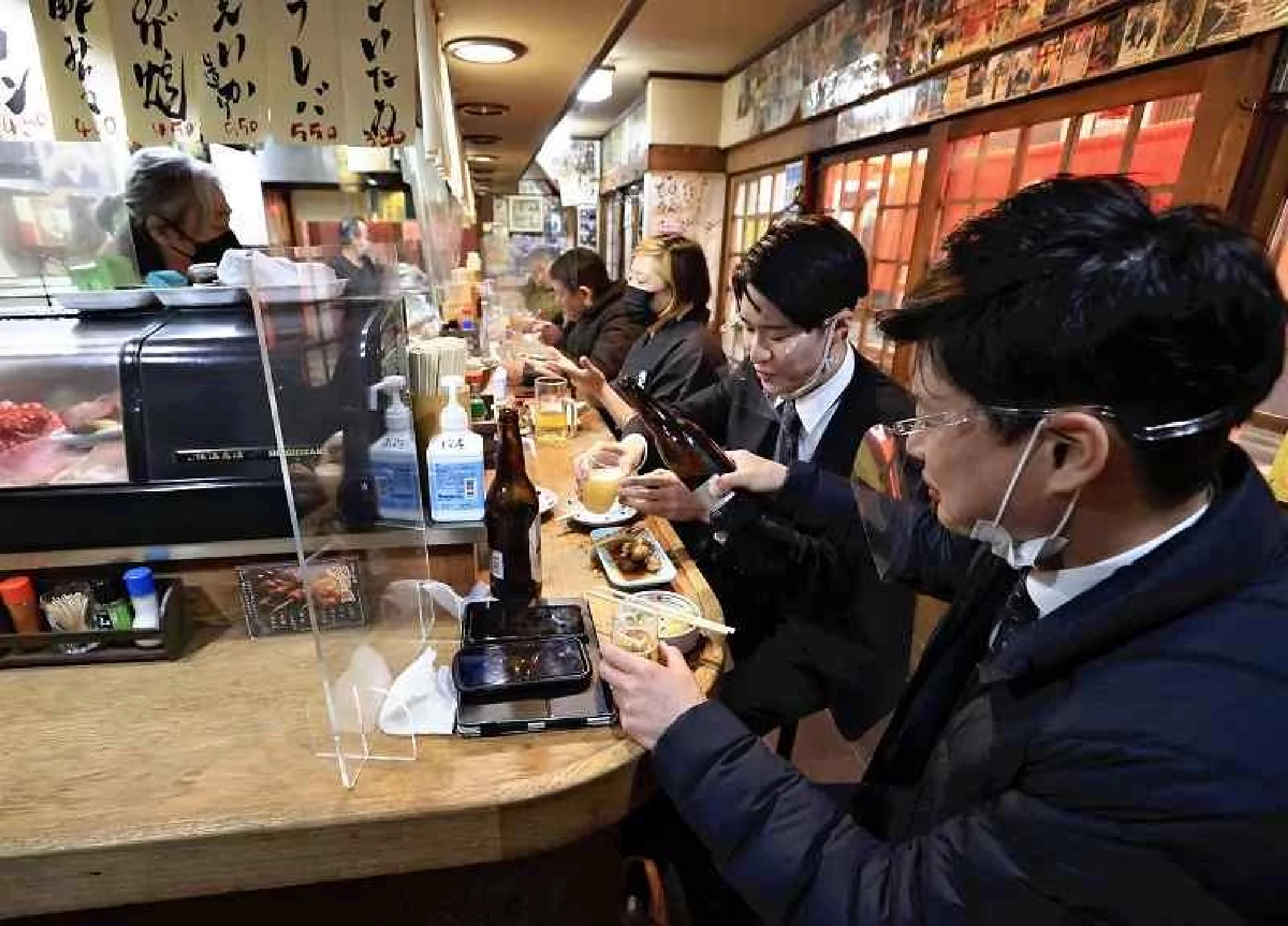
TOKYO (Jiji Press) — The Tokyo metropolitan government decided Thursday to relax a group dining restriction imposed during an alert for a rebound in COVID-19 cases in the Japanese capital.
The metropolitan government will allow group dining of up to eight people per table, against four people at present, at restaurants and bars that are certified as taking thorough novel coronavirus measures.
Also at a meeting of its coronavirus response headquarters, the metropolitan government decided to extend the ongoing alert period for about one month until May 22. The alert was to end on Sunday.
“We aim to definitely prevent a rebound by accelerating COVID-19 vaccinations and thoroughly taking infection prevention measures, including coronavirus tests and ventilation,” Tokyo Gov. Yuriko Koike said.
Asia News Network: The Nation (Thailand), The Korea Herald, The Straits Times (Singapore), China Daily, Jakarta Post, The Star and Sin Chew Daily (Malaysia), The Statesman (India), Philippine Daily Inquirer, Yomiuri Shimbun and The Japan News, Gogo Mongolia, Dawn (Pakistan), The Island (Sri Lanka), Kuensel (Bhutan), Kathmandu Post (Nepal), Daily Star (Bangladesh), Eleven Media (Myanmar), the Phnom Penh Post and Rasmei Kampuchea (Cambodia), The Borneo Bulletin (Brunei), Vietnam News, and Vientiane Times (Laos).
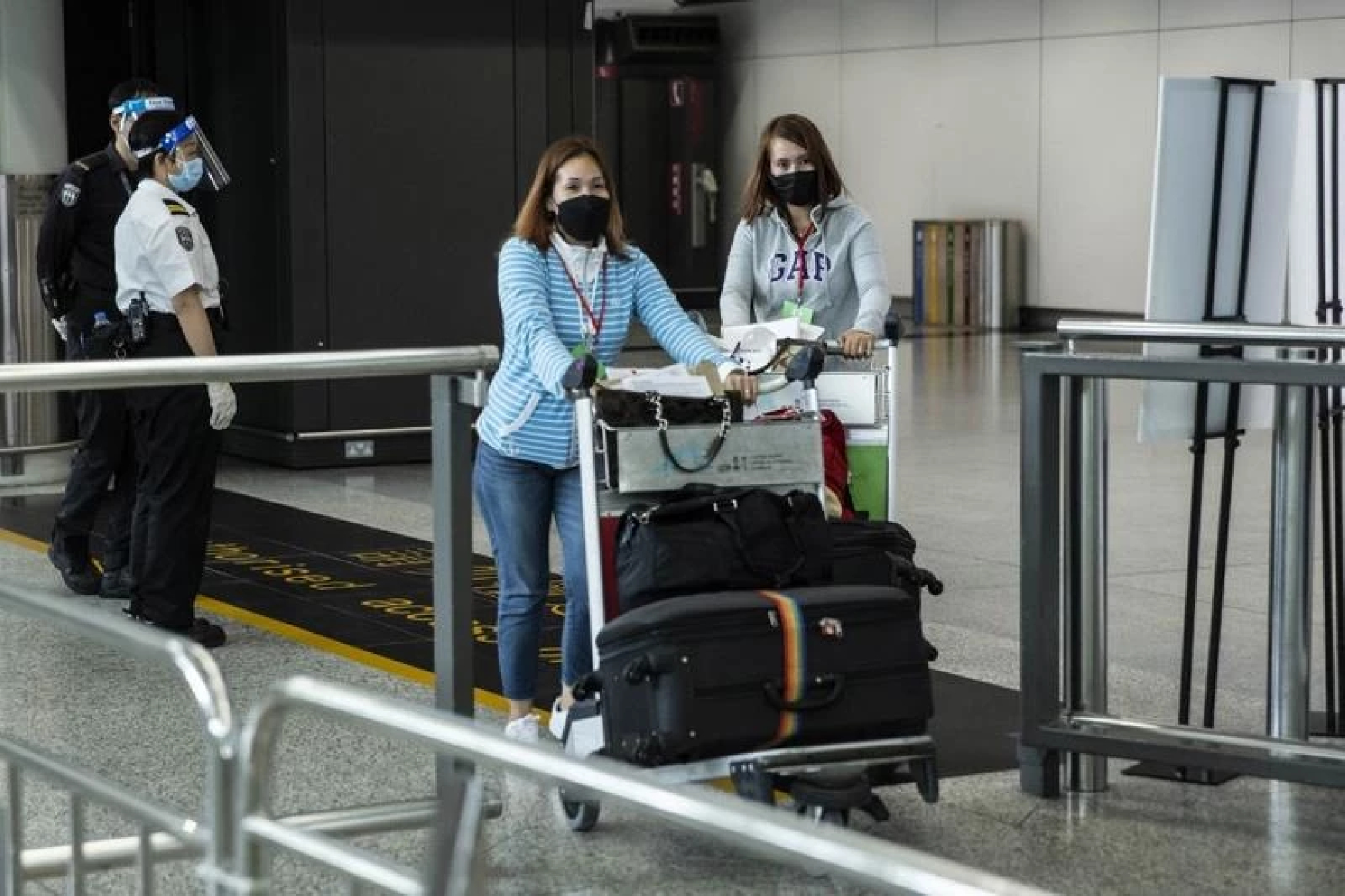
HONG KONG – The government of Hong Kong has decided to allow non-residents from overseas to fly into the city from May 1, ending a restriction that has been in place for more than two years.
The authorities will also relax rules regarding suspension of incoming flights bringing in infected people, also from the start of the next month.
The decision came after the government’s Inter-departmental Steering Committee cum Command Centre reviewed the current pandemic situation in Hong Kong and overseas.
Considering the public health risk associated with non-residents, overall volume of inbound passengers and designated quarantine hotels for them, and stringent inbound control measures, such people will be subject to the same boarding, quarantine and testing arrangements as residents returning to the city, the government said in a press release Friday night.
The authorities will adjust the arrangements for overseas arrivals later based on risk levels as the situation warrants, it added.
To guard against the importation of COVID-19 cases, non-residents will have to follow other rules that apply to returning locals and will need to be vaccinated, have a negative test result before boarding their flights and undergo quarantine at designated hotels upon arrival.
All arrivals at the Hong Kong International Airport will be required to take a rapid antigen test. Those testing negative via RAT can take dedicated transport to go to their hotels for isolation.
Regarding flight suspensions for carrying infected passengers, the government said flights will be banned if they bring in five or more passengers, or 5 percent or more of the total number of passengers on board the same flight, whichever is higher. The existing threshold is three infected persons.
If there are three or more infections on the plane, and one or more passengers are found to have failed to comply with boarding requirements, the specific-route flight suspension will be triggered.
Under the adjusted rules, the length of suspension time will be cut to five days from seven, the government added.
By Wang Zhan
Asia News Network: The Nation (Thailand), The Korea Herald, The Straits Times (Singapore), China Daily, Jakarta Post, The Star and Sin Chew Daily (Malaysia), The Statesman (India), Philippine Daily Inquirer, Yomiuri Shimbun and The Japan News, Gogo Mongolia, Dawn (Pakistan), The Island (Sri Lanka), Kuensel (Bhutan), Kathmandu Post (Nepal), Daily Star (Bangladesh), Eleven Media (Myanmar), the Phnom Penh Post and Rasmei Kampuchea (Cambodia), The Borneo Bulletin (Brunei), Vietnam News, and Vientiane Times (Laos).
Asia News Network: The Nation (Thailand), The Korea Herald, The Straits Times (Singapore), China Daily, Jakarta Post, The Star and Sin Chew Daily (Malaysia), The Statesman (India), Philippine Daily Inquirer, Yomiuri Shimbun and The Japan News, Gogo Mongolia, Dawn (Pakistan), The Island (Sri Lanka), Kuensel (Bhutan), Kathmandu Post (Nepal), Daily Star (Bangladesh), Eleven Media (Myanmar), the Phnom Penh Post and Rasmei Kampuchea (Cambodia), The Borneo Bulletin (Brunei), Vietnam News, and Vientiane Times (Laos).
The Central Bank of Myanmar (CBM) announced on April 20 that it will exempt seven organizations, including MIC-licensed FDI, investments made in special economic zones and state-owned/national-owned international airlines, from dollar to kyat exchange within a day.
According to the Notification No. (12/2022) of the Central Bank of Myanmar announced on April 3, the foreign exchange earnings of the residents in the country must be returned to Myanmar and the foreign exchange accounts opened at the Foreign Exchange (AD) licensed banks must be exchanged for Myanmar kyats within one working day.
According to the decision of the Foreign Exchange Supervision Committee Meeting No. (4/2022), it is not included in the Notification No. (12/2022) of the Central Bank of Myanmar issued by the reference letter.
The exemptions mentioned in the statement include businesses with the foreign direct investment (FDI) with the approval of the Myanmar Investment Commission (MIC).
This includes investment in SEZs.
Foreign diplomats, who have established diplomacy with Myanmar and have embassies in Myanmar, family members and foreign staff members of the embassy at a similar level, are included in the exemption.
This includes UN staff working for the United Nations and its affiliates in Myanmar and Myanmar nationals holding (Laissez Passer) passports.
This includes foreign staff at development agencies that are assisting Myanmar.
International organizations (eg. the Red Cross and the International Labor Organization) and foreign diplomats from INGOs and development agencies (eg TICA / JICA) are included.
Seven individuals, businesses and organizations have been exempted, including state-owned / national-owned international airlines.
The statement said foreign exchange (AD) licensed banks should be carried out only after obtaining the relevant documents from the organizations for foreign currency related activities for organizations and businesses, which are not included in the Notification No. (12/2022), and to make sure Know your Customer (KYC) and Customer Due Diligence (CDD). It is stated that it should be done only if it is correct.
It is necessary to submit the activities to the Central Bank of Myanmar and record them. Failure to do so is the responsibility of the bank, it said.
Asia News Network: The Nation (Thailand), The Korea Herald, The Straits Times (Singapore), China Daily, Jakarta Post, The Star and Sin Chew Daily (Malaysia), The Statesman (India), Philippine Daily Inquirer, Yomiuri Shimbun and The Japan News, Gogo Mongolia, Dawn (Pakistan), The Island (Sri Lanka), Kuensel (Bhutan), Kathmandu Post (Nepal), Daily Star (Bangladesh), Eleven Media (Myanmar), the Phnom Penh Post and Rasmei Kampuchea (Cambodia), The Borneo Bulletin (Brunei), Vietnam News, and Vientiane Times (Laos).
HONG KONG – Locals and business operators across Hong Kong rejoiced on Thursday (April 21) as the city relaxed its strict social distancing measures after more than three months under tight restrictions aimed at bringing the Covid-19 situation in the territory under control.
But it was too late for some businesses that had already gone bust over the past several months.
Among the lunchtime crowd around the city’s Central Business District on Thursday, there was a palpable sense of excitement and greater footfall was noticeable in the malls and along streets near office buildings.
Restaurants and small eateries were more crowded than usual, taking in up to four diners per table, compared with a cap of just two before. Some had lines outside as diners awaited their turn to be seated.
“People are happy that we can now go out (in a group of) four people and that hotel buffets are back,” said an office worker in her 40s, who wanted to be known only as Ms Chong.
Ms Chong said she had made an app booking for lunch with three of her colleagues at the Jade Garden restaurant in Cityplaza mall in Tai Koo Shing ahead of time, “but when we arrived, we still had to wait for 30 other reservations in front of us before we were seated”.
She added: “I have booked a facial appointment as well. I called a few days ahead to ensure that I’m on their priority list.”
Restaurant operators said they expected bigger crowds later in the evening and especially over the upcoming weekend, now that a dine-in ban from 6pm has been moved to 10pm.
But, as night fell, many eateries in the popular Wan Chai area remained fairly empty.
Just three tables were occupied at Filipino fusion restaurant Holy Gaw, less than half its capacity.
“We’ve already seen slightly better business this afternoon and over the past week,” said a wait staff member, shrugging off the lacklustre business.
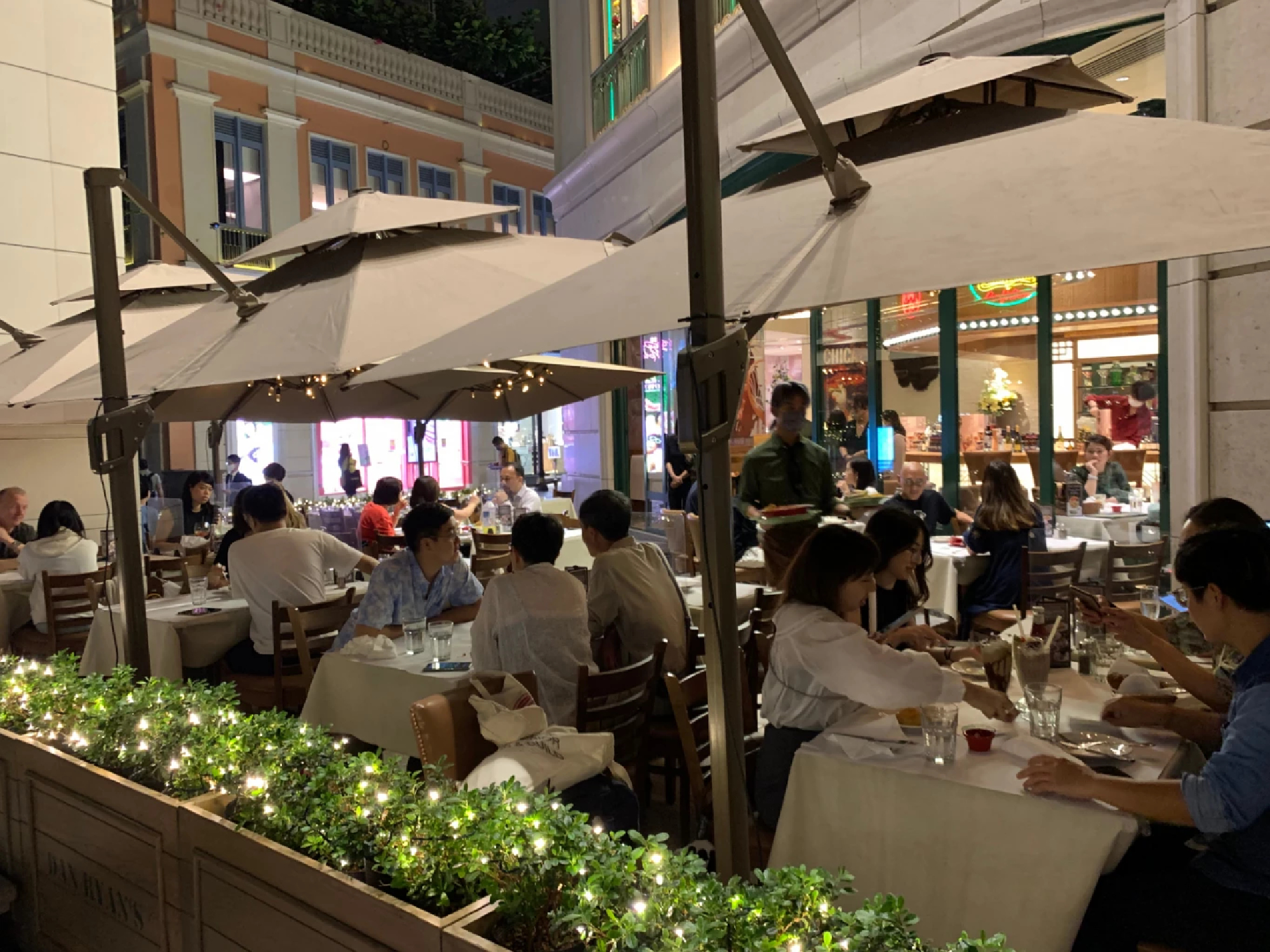
Dan Ryan’s Chicago Grill across the street was doing slightly better, with most of its outdoor dining area occupied.
Many high-end and mid-range dining places said they were already fully booked over the weekend.
The Clipper Lounge, a popular afternoon tea and buffet restaurant at the Mandarin Oriental hotel, said it was all booked out, with its next earliest available dine-in slot on May 1, nearly two weeks later.
Staff at bubble tea shop Cha For Tea at the Admiralty office area said business seemed more brisk compared with previous days. They were glad business was picking up after months in the doldrums, even if it meant they had to be slightly overworked.
Beauty parlours and fitness centres which survived the tough times were also reporting good business.
Beauty salon chain Skin Laundry said its four branches had all been booked up for the day, with only a handful of less popular timings still available for bookings over the next several days.
Gyms, some of which reopened from midnight, were also packed. Prime time slots at Pure Fitness and Pure Yoga – one of the few leading fitness centres still operating in the city – were either fully booked or waitlisted.
About a third of the city’s 300 24-hour gyms have closed for good.
Major chain Fitness First shut all eight of its centres last month after more than two decades of operating in Hong Kong. Goji Studios also closed all eight of its gyms late last year.
Pure shut down its first yoga studio in the city, The Centrium in Central, in March after 20 years in operation.
For Broadway Circuit – a cinema chain with 13 theatres across Hong Kong – bookings for showings of Fantastic Beasts: The Secret Of Dumbledore, one of its most popular movie offerings, were slowly filling up.
Staff at one of its theatres, Movie Movie Pacific Place, said they were not particularly busy yet, but that business would likely improve over the next several days.
Hong Kong Chief Executive Carrie Lam said last week that cinemas across the city had been shut for more than 260 days over the course of the pandemic. Some had already closed down or changed hands, including the Pacific Place branch.
The easing of the Covid-19 rules now allow theatres to reopen at only half their capacity. Most theatres are not permitting food and beverage, although the new rules allow for that provided that all customers and staff have received three doses of a vaccine.
At Hong Kong’s most popular theme parks, Disneyland and Ocean Park, about a hundred or more guests waited at the gates for their reopening at around 10am, local media reported.
The theme parks and other operators have been closed for three months since Hong Kong imposed more stringent restrictions in January, although they were open on and off before that.
Industry leaders expect the city’s battered businesses to experience a boom, especially the catering sector, which could see business surging as much as 20 per cent, according to local media reports.
A government measure to distribute the first half of “consumption vouchers” totalling HK$10,000 (S$1,700) to spur spending has also seen some effect in recent days as people took to the malls in droves even before the rules were eased over the four-day Easter holidays.
Not all will be rushing out to celebrate the loosened restrictions though.
“I certainly won’t be venturing out today,” said Ms Erin Chan, 24, a freelance designer. “Whenever the Covid-19 restrictions ease, Hong Kongers will come out to roam the city like captive animals released from the zoo. I’m planning to lie low for a while first as I’m sure the infection figures will rebound significantly.”
Bank employee Benjamin Tham was taking precautions as well.
“I’m avoiding the gyms since they’ll probably be crowded,” said Mr Tham, in his early 40s, who has a membership with Pure.
“Unlike before, there are no arrangements where it’s mask-free within certain gyms or classes. I really don’t want to attend intensive cardio or yoga classes wearing a mask, so I’d prefer to sit it out for another week to see if the Covid-19 situation explodes.”
So far Hong Kong’s daily Covid-19 figures have yet to show any clear sign of a rebound despite crowds already having headed out in full force over the long holiday weekend.
The city reported 628 Covid-19 infections on Thursday, down 40 cases from the day before, but already a huge drop from the more than a thousand daily cases over the past several weeks. There were 26 new virus-related deaths.
Hong Kong has recorded around two million Covid-19 infections in all, and about 9,000 deaths.
Hong Kong’s adherence to China’s “dynamic zero” Covid-19 policy – which involves eliminating outbreaks through strict mitigation measures – has come at a great cost to its economy.
The city’s unemployment rate rose to 5 per cent in March – its highest level in nine months – from 4.5 per cent the month before, official data showed on Thursday.
Underemployment also edged up by 0.8 percentage points to 3.1 per cent.
The job market worsened in nearly all the major economic sectors, especially in construction, retail, accommodation and food services, the government said.
“Things haven’t really improved that much in most of April and therefore it’s quite likely that a lot of employers may still be rather conservative in terms of employing more people,” Natixis economist Gary Ng told local broadcaster RTHK.
There is little respite for the travel sector for now. Hong Kong’s flagship airline Cathay Pacific is operating at only about 2 per cent its pre-pandemic passenger capacity, as the city’s stringent quarantine rules and flight bans discourage travellers in the once-bustling global financial hub.
Its crew and staff spent more than 73,000 nights – the equivalent of 200 years – in quarantine in 2021 alone, the airline said last month. It has experienced a sustained spike in pilot resignations since late last year.
Cathay has seen record losses since the pandemic began. It has cut thousands of jobs, lowered staff salaries and forced employees to go on unpaid leave.
By Magdalene Fung
Asia News Network: The Nation (Thailand), The Korea Herald, The Straits Times (Singapore), China Daily, Jakarta Post, The Star and Sin Chew Daily (Malaysia), The Statesman (India), Philippine Daily Inquirer, Yomiuri Shimbun and The Japan News, Gogo Mongolia, Dawn (Pakistan), The Island (Sri Lanka), Kuensel (Bhutan), Kathmandu Post (Nepal), Daily Star (Bangladesh), Eleven Media (Myanmar), the Phnom Penh Post and Rasmei Kampuchea (Cambodia), The Borneo Bulletin (Brunei), Vietnam News, and Vientiane Times (Laos).
UN Panel of Experts’ annual report should reflect the ‘central importance of cyber-enabled financial crime,’ says member
North Korean state-sponsored cryptocurrency theft has become a “fundamental part” of the country’s illicit financing activities to fund its nuclear and missile programs, a United Nations independent expert said on Wednesday, urging the international community to reinforce its sanctions framework and regulations to block cyber financial crime.
Eric Penton-Voak, a coordinator at the UN Security Council’s Panel of Experts (PoE) which monitors enforcement of sanctions on North Korea, cited cryptocurrency theft as the key reason for a “marked acceleration” in the country’s missile test launches over the last six months.
Increasingly since around 2017, “a variety of sources of cryptocurrencies has become a fundamental part of (the) DPRK sanctions evasion framework, enabling their WMD programs to continue to develop,” Penton-Voak said during an event hosted by the Washington-based Center for a New American Security.
Penton-Voak underscored that the existing UN sanctions framework focusing on strictly restricting traditional financial services is not sufficient to deter and stop North Korea’s cyber-enabled financial crime.
“It may be no coincidence that the words ‘cyber’ and ‘cryptocurrency’ do not actually appear in the UN sanctions resolutions,” he said.
The UN PoE member emphasized that UNSC sanctions resolutions have not established any provisions that forbid cryptocurrency theft. He called on the international community to come up with ways to prevent North Korea from capitalizing on the weakness of cryptocurrency markets.
“At present, it’s too easy and low risk for Lazarus and others to exploit the cutting edge of new financial technologies in order to steal funds,” Penton-Voak said. The Lazarus hacking group is believed to be controlled by North Korea’s primary intelligence bureau, the Reconnaissance General Bureau and responsible for major cyberattacks, including the 2017 WannaCry ransomware attacks.
“We see that DPRK cyber actors always go to the weakest point. They look at nonregulated areas. They look at really interesting and very gray, new areas of cryptocurrency because actually, A — no one really understands them, and B — they can exploit weakness,” Penton-Voak said.
UN should step up efforts North Korea state-sponsored hackers are very skilled at extorting cryptocurrency, a “very low cost and low risk means of stealing money,” the UN PoE member said.
“They’re right on the cutting edge of cyber techniques, as you may have seen in the most recent hack of the Axie Infinity video game.”
The US Federal Bureau of Investigation last Thursday publicly accused cyber hackers associated with the North Korean government of stealing $620 million worth of cryptocurrency from the nonfungible token-based Axie Infinity video game company in late March.
Following the massive crypto theft, the FBI, the Cybersecurity and Infrastructure Security Agency and the US Treasury Department on Monday issued a joint cybersecurity advisory. The advisory aims to “highlight the cyber threat associated with cryptocurrency thefts and tactics used by a North Korean state-sponsored advanced persistent threat (APT) group since at least 2020.”
Penton-Voak underscored that blockchain analysis will be a central tool in tracking illicit financial flows and remain fundamental to any country’s ability to watch “bad guys.”
But annual reports written by the PoE do not really reflect the central importance of cyber-enabled financial crime despite the gravity of the issue, he said, underlining that the PoE reports “really ought to focus on the most important means of sanctions evasion.”
One of the difficulties in gathering information stems from the reluctance of UN member states to discuss how hacks happened and how extensive they were, he said.
“I do hope and expect that our reports in the future will rather better reflect the central importance of cyber-enabled financial crime to the DPRK,” Penton-Voak said.
Penton-Voak expressed regret at the UN PoE’s sole focus on investigating cyber activities that violate UN sanctions, since they lack a mandate to look at broader cyber espionage or cyber warfare.
“The sooner that DPRK methodologies can be exposed and understood, the sooner action can be taken by the cryptocurrency exchanges,” he said.
N. Korea exploits vulnerabilities of crypto market A US-based expert also pointed out that North Korea has advanced and utilized techniques such as cryptocurrency mixers and decentralized finance (DeFi) platforms particularly to launder funds, while exploiting the gap between technological advancements and regulation mechanisms.
“We’ve noticed that the rate by which cryptocurrency and financial technologies evolve continues to far outpace the rate by which national governments and international institutions are able to regulate and understand them,” Jason Bartlett, a research associate for the Energy, Economics, and Security Program at the Center for a New American Security, said during the event.
“And this is a major vulnerability that the North Korean hackers continue to exploit.”
Bartlett said “North Korea will likely continue to use these new and evolving financial technologies as they remain heavily vulnerable and unregulated compared to more traditional forms of finance.”
Nick Carlsen, an analyst at the US blockchain intelligence company TRM Labs, said that more than 50 percent of major crypto hacks are conducted by North Korean hackers overall.
Carlsen added that the North Korean regime has directly spearheaded cryptocurrency theft, pointing to the speed, efficiency, and “systemized process” in stealing, laundering, and converting cryptocurrency to fiat currency.
“It’s basically the modern-day equivalent of the Barbary pirates. This is a country that is engaged in state-sponsored bank robbery. It’s not traditional espionage,” Carlsen said.
“This is hundreds of millions of dollars that are being used to support weapons programs and destabilizing activities. It’s just a completely unique, singular target.”
By Ji Da-gyum
Asia News Network: The Nation (Thailand), The Korea Herald, The Straits Times (Singapore), China Daily, Jakarta Post, The Star and Sin Chew Daily (Malaysia), The Statesman (India), Philippine Daily Inquirer, Yomiuri Shimbun and The Japan News, Gogo Mongolia, Dawn (Pakistan), The Island (Sri Lanka), Kuensel (Bhutan), Kathmandu Post (Nepal), Daily Star (Bangladesh), Eleven Media (Myanmar), the Phnom Penh Post and Rasmei Kampuchea (Cambodia), The Borneo Bulletin (Brunei), Vietnam News, and Vientiane Times (Laos).
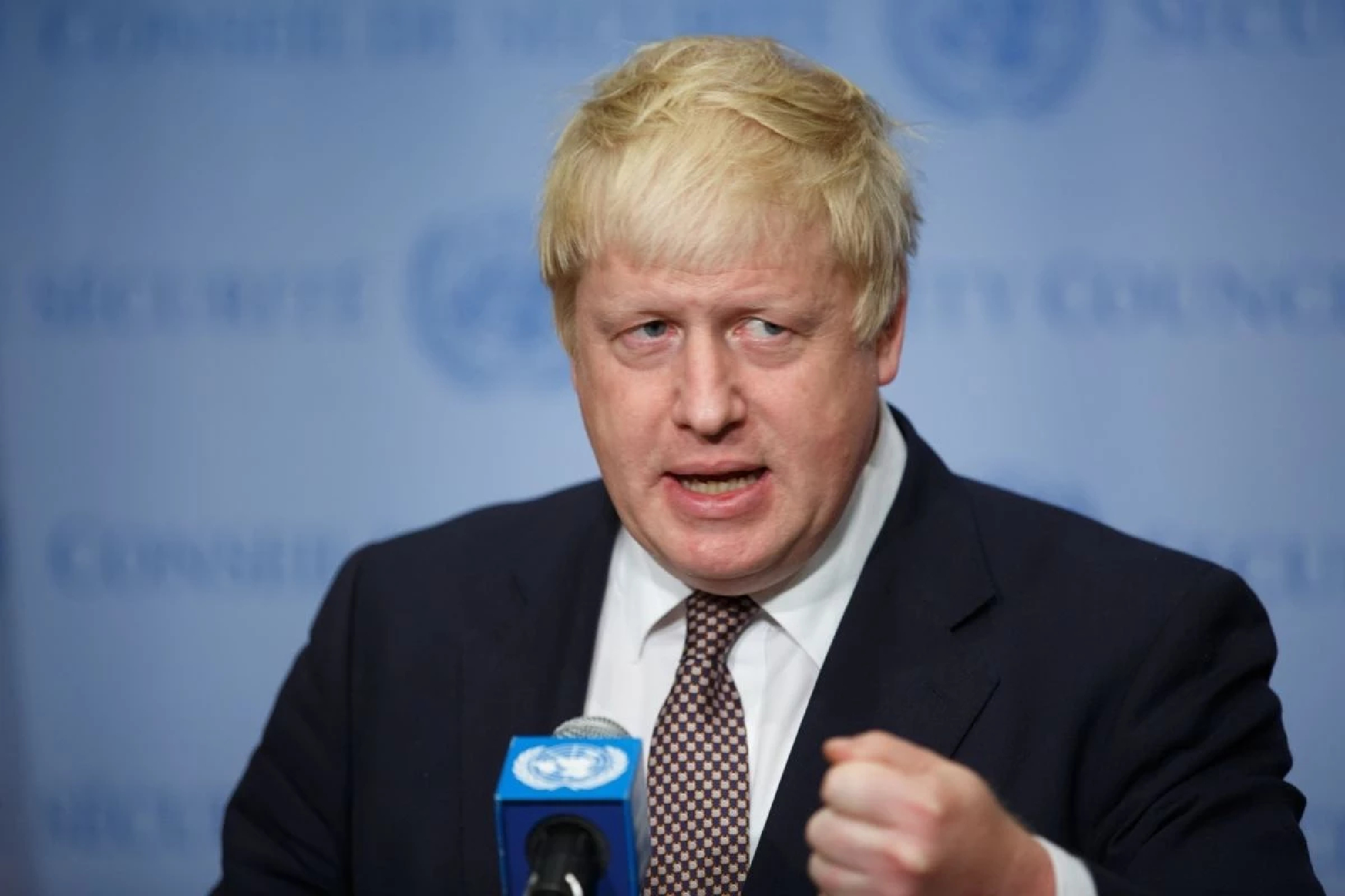
There is an opportunity for us to deepen our security and defence partnership. As the UK is making an Indo-Pacific tilt, Boris Johnson, the prime minister of the UK said on his arrival in India today.
The British Prime Minister arrived in Ahmedabad today on a two-day official visit to India. The visit was slated for January 2021 but did not take place due to the Corona Pandemic.
The UK Prime Minister would be pushing for job-creating investment. He would also try to convince PM Narendra Modi to side with the West against Russia. India abstained last month in the United Nations condemning the Russian invasion of Ukraine. Though India is a member of Quad, it continues to trade with Russia.
British Prime Minister Boris Johnson began his two-day visit to India from Gujarat. The focus of his visit is the strengthening of the bilateral ties in defence, security and trade. Johnson landed in Ahmedabad and received a grand welcome. During his visit to Sabarmati Ashram, Gujarat Chief Minister Bhupesh Patel accompanied him.
Johnson met Adani Group Chairman, Gautam Adani, in Ahmedabad. On Twitter, Adani wrote: “Honoured to host Boris Johnson, the first UK PM to visit Gujarat, at Adani HQ. Delighted to support the climate & sustainability agenda with a focus on renewables, green H2 & new energy. Will also work with UK companies to co-create defence & aerospace technologies.” Johnson also visited a JCB factory with Gujarat Chief Minister Bhupendra Patel.
Johnson said he hoped the UK would finalize another free trade agreement with India by the end of the year. The UK and Indian businesses are set to announce investments and export deals worth over £1 billion, in areas from software engineering to health.
Johnson will visit New Delhi for talks on Friday with Modi, where the two leaders will discuss a new defence partnership and a free trade agreement. This has been on the anvil and the two countries have been discussing it for the past few months. He would also be discussing the security scenario in the Indo-Pacific which is the UK’s major concern in the region.
Boris Johnson has shown willingness to enter joint production of military hardware in line with Modi’s vision of making India a hub for defence manufacturing. He is also likely to announce investments and new collaborations in science, health and technology.
Johnson is likely to lay emphasis on a free trade deal, which Britain is hoping to strike as part of its post-Brexit strategy. Such a trade deal could boost Britain’s total trade by up to £28 billion ($36.5 billion) annually by 2035.
Asia News Network: The Nation (Thailand), The Korea Herald, The Straits Times (Singapore), China Daily, Jakarta Post, The Star and Sin Chew Daily (Malaysia), The Statesman (India), Philippine Daily Inquirer, Yomiuri Shimbun and The Japan News, Gogo Mongolia, Dawn (Pakistan), The Island (Sri Lanka), Kuensel (Bhutan), Kathmandu Post (Nepal), Daily Star (Bangladesh), Eleven Media (Myanmar), the Phnom Penh Post and Rasmei Kampuchea (Cambodia), The Borneo Bulletin (Brunei), Vietnam News, and Vientiane Times (Laos).
Cold War mentality would endanger world’s peace, says China’s top leader
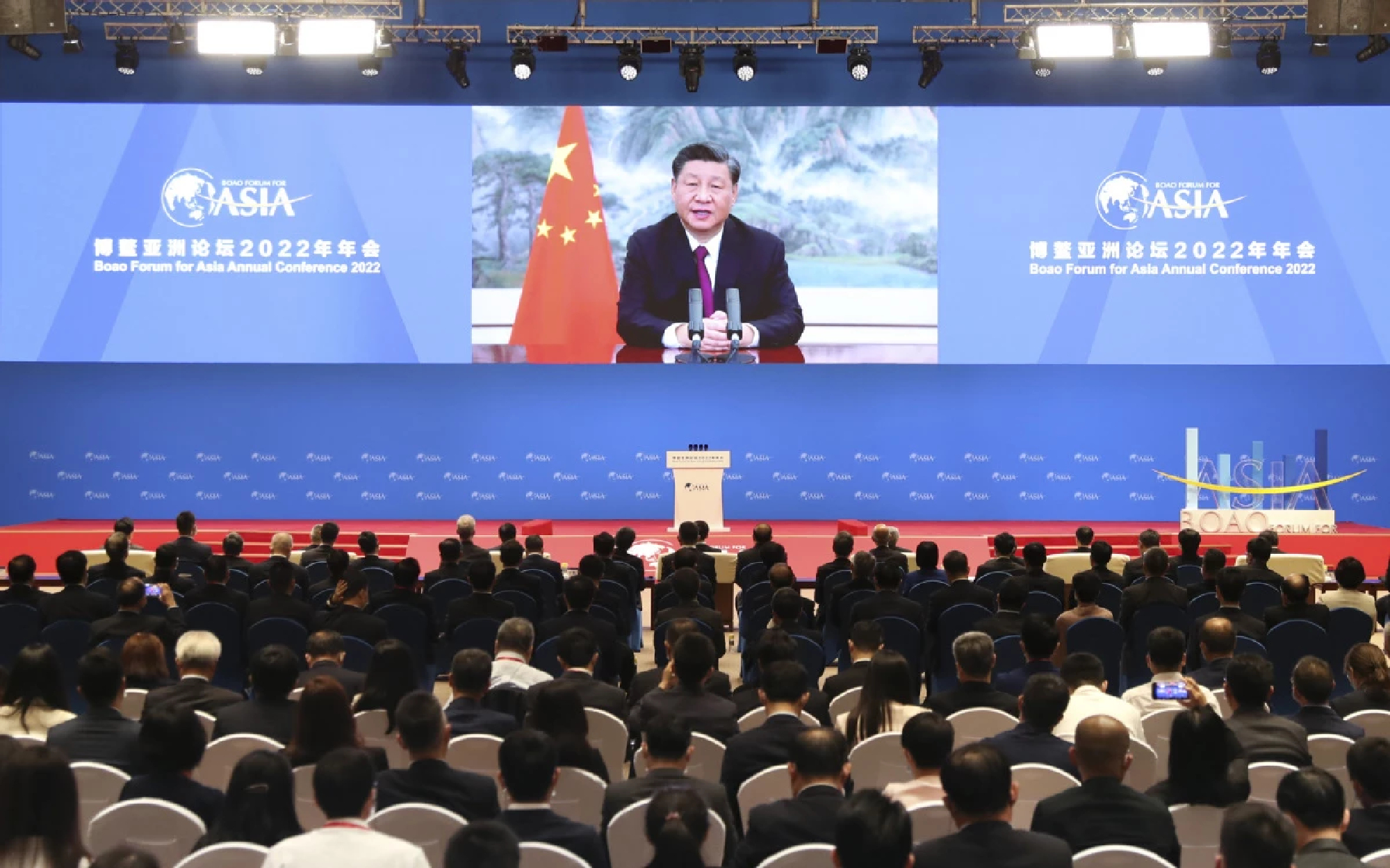
President Xi Jinping proposed a Global Security Initiative on Thursday, calling on the international community to reject a Cold War mentality, oppose unilateralism and say no to group politics and bloc confrontation.
In a speech delivered via video link at the opening ceremony of the Boao Forum for Asia Annual Conference 2022, Xi stressed the importance of upholding a vision of common, comprehensive, cooperative and sustainable security, respecting the sovereignty and territorial integrity of all countries, and adhering to non-interference in internal affairs.
“It has been proven time and again that the Cold War mentality would only wreck the global peace framework, that hegemonism and power politics would only endanger world peace, and that bloc confrontation would only exacerbate security challenges in the 21st century,” he told an audience of world leaders and business executives.
The forum this year brought together leaders including Israeli President Isaac Herzog, Philippine President Rodrigo Duterte and Kristalina Georgieva, managing director of the International Monetary Fund.
In explaining the Global Security Initiative, the president said the legitimate security concerns of all countries must be taken seriously, and a balanced, effective and sustainable security architecture should be built.
He stressed the need to oppose the pursuit of one’s own security at the cost of others’ security, resolve differences and disputes between countries peacefully through dialogue and consultation, and support all efforts conducive to the peaceful settlement of crises.
It is important to reject double standards, oppose the wanton use of unilateral sanctions and long-arm jurisdiction, and maintain security in both traditional and non-traditional domains, he said, adding that the international community should work together on regional disputes and global challenges such as terrorism, climate change, cybersecurity and biosecurity.
The initiative came on the heels of the Global Development Initiative, proposed by Xi at a United Nations event in September, to advance sustained global growth, economic recovery and narrow gaps between different nations.
Xi mentioned challenges including the once-in-a-century pandemic, the emergence of new traditional security risks, the weak and faltering global economic recovery, and a widening development gap in his speech on Thursday.
“Faced with the many challenges, we must not lose confidence, hesitate or flinch. Instead, we must firm up confidence and press ahead against all odds,” Xi said.
He stressed the significance of working together to defend people’s lives and health, saying that countries must support each other, better coordinate their response measures and improve global public health governance.
In promoting economic recovery, Xi underlined the need for greater macro policy coordination and to turn to science and technology for more growth drivers, keep global industrial and supply chains stable, and prevent serious negative spillovers from policy adjustments in some countries.
The international community has evolved so much that it has become a sophisticated and integrated apparatus, he said, adding that acts to remove any single part will cause serious problems to its operation.
The president expressed his disapproval of unilateralism, the excessive pursuit of self-interest, the practices of decoupling, supply disruption and maximum pressure and attempts to forge “small circles” or to stoke conflict and confrontation along ideological lines, stating that such acts are doomed to fail.
“It is particularly important for major countries to lead by example in honoring equality, cooperation, good faith and the rule of law, and act in a way befitting their status,” he said.
Xi called for efforts to strengthen the growth and development of Asia, saying that Asian nations should resolutely safeguard peace in the region, vigorously advance cooperation and jointly promote unity.
He underscored that the fundamentals of the Chinese economy-its strong resilience, enormous potential, vast room for maneuver and long-term sustainability-remain unchanged, and the nation’s faith in and commitment to reform and opening-up will not waver.
Georgieva, the managing director of IMF, said in a prerecorded speech that China’s actions to counter its slowdown and achieve its growth target are vital to global recovery.
“But the solutions for the global economy go beyond any one country. Countering the far-reaching damage of these back-to-back crises, and the risks we face in a more shock prone world, requires stronger international cooperation,” she said.
Asia News Network: The Nation (Thailand), The Korea Herald, The Straits Times (Singapore), China Daily, Jakarta Post, The Star and Sin Chew Daily (Malaysia), The Statesman (India), Philippine Daily Inquirer, Yomiuri Shimbun and The Japan News, Gogo Mongolia, Dawn (Pakistan), The Island (Sri Lanka), Kuensel (Bhutan), Kathmandu Post (Nepal), Daily Star (Bangladesh), Eleven Media (Myanmar), the Phnom Penh Post and Rasmei Kampuchea (Cambodia), The Borneo Bulletin (Brunei), Vietnam News, and Vientiane Times (Laos).
Asia News Network: The Nation (Thailand), The Korea Herald, The Straits Times (Singapore), China Daily, Jakarta Post, The Star and Sin Chew Daily (Malaysia), The Statesman (India), Philippine Daily Inquirer, Yomiuri Shimbun and The Japan News, Gogo Mongolia, Dawn (Pakistan), The Island (Sri Lanka), Kuensel (Bhutan), Kathmandu Post (Nepal), Daily Star (Bangladesh), Eleven Media (Myanmar), the Phnom Penh Post and Rasmei Kampuchea (Cambodia), The Borneo Bulletin (Brunei), Vietnam News, and Vientiane Times (Laos).
Six out of 10 South Koreans support the alternative military service of K-pop sensation BTS, whereas a larger number than that agreed the septet could contribute better by promoting the national prestige through alternative service than by serving active military duty.
According to a survey of 500 adults nationwide by pollster Realmeter, 65.5 percent of the respondents answered that they agreed the members of BTS should serve alternative military service, whereas 30.2 percent were against it and 4.3 percent expressed they weren’t sure.
The poll, conducted on April 14 on some 8,000 people with a response rate of 6.3 percent, has a margin of error of plus and minus 4.4 percentage points and a 95 percent confidence level.
The figures showed that the support rate for BTS’ members alternative military service was high in all age groups but especially among those in their 20s and 50s, in which almost 70 percent supported the idea.
The survey further revealed that 74.9 percent of the respondents believed BTS members would be able to help improve country’s global standing and the cultural enhancement by serving alternative duty. From the figure, the majority (51.1 percent) gave an active response that they would “contribute very largely.” Those who responded negatively took up 20.9 percent while 4.2 percent said they did not know or weren’t sure.
Under the current law, all able-bodied Korean men are obliged to serve in the military for a period a little less than two years. The conscription law allows exemption or alternative duty for those international award-winning athletes and classical musicians at the recommendation of the culture minister.
Last year, a number of South Korean lawmakers proposed a set of bills calling for active duty exemptions to apply to a wider range of artists. This includes pop artists, such as BTS — comprising members Jin, Suga, J-Hope, RM, Jimin, V and Jungkook — who have raised the national reputation in the global music scene by bringing home the nation’s first wins at prestigious music awards, such as the Billboard Music Awards and the American Music Awards, and being nominated to the Grammys twice. The bill is currently pending at the National Assembly.
The related regulation was previously revised in December 2020 to allow leading pop culture artists to postpone service until the age of 30, enabling BTS’ eldest member Jin to postpone his enlistment until Dec. 31.
Meanwhile, Hybe, the agency behind BTS, had recently urged the lawmakers to make a decision on the pending bill. During a press conference conducted during the band’s Las Vegas concert, the company’s chief communication officer Lee Jin-hyeong called for action within this term of the National Assembly.
“If it is passed to the next, this endless discussion will continue, and the uncertainty is weighing on us. Hopefully, the matter is concluded promptly,” Lee had said, adding the seven members are “finding it difficult to deal with the issue” and is currently not meddling with it themselves.
By Choi Ji-won
Asia News Network: The Nation (Thailand), The Korea Herald, The Straits Times (Singapore), China Daily, Jakarta Post, The Star and Sin Chew Daily (Malaysia), The Statesman (India), Philippine Daily Inquirer, Yomiuri Shimbun and The Japan News, Gogo Mongolia, Dawn (Pakistan), The Island (Sri Lanka), Kuensel (Bhutan), Kathmandu Post (Nepal), Daily Star (Bangladesh), Eleven Media (Myanmar), the Phnom Penh Post and Rasmei Kampuchea (Cambodia), The Borneo Bulletin (Brunei), Vietnam News, and Vientiane Times (Laos).





 SootinClaimon.Com