Asia News Network: The Nation (Thailand), The Korea Herald, The Straits Times (Singapore), China Daily, Jakarta Post, The Star and Sin Chew Daily (Malaysia), The Statesman (India), Philippine Daily Inquirer, Yomiuri Shimbun and The Japan News, Gogo Mongolia, Dawn (Pakistan), The Island (Sri Lanka), Kuensel (Bhutan), Kathmandu Post (Nepal), Daily Star (Bangladesh), Eleven Media (Myanmar), the Phnom Penh Post and Rasmei Kampuchea (Cambodia), The Borneo Bulletin (Brunei), Vietnam News, and Vientiane Times (Laos).
Prime Minister Shehbaz Sharif on Monday requested China for support for the planned revival of the Karachi Circular Railway (KCR) project to end the woes of hundreds of thousands of commuters in the metropolis.
During an address at the inauguration of a mass transit bus project from Peshawar Morr to Islamabad International Airport, he said that KCR would be a “gift for the people of Karachi” and bring great dividends.
“I will take up this opportunity to convey my request to Beijing, NDRC (National Development and Reform Commission) and President Xi Jinping to reconsider [supporting] KCR for Karachi,” he said, adding that the project’s completion would lead to great feelings for China among the people of Karachi and the rest of the country.
During his speech, PM Shehbaz expressed gratitude towards China for “strengthening Pakistan’s economy” and supporting it on all international forums.
The Islamabad Metro Bus Service project, which will run on a stretch of 11 kilometres from Peshawar Morr to Islamabad International Airport, is expected to benefit nearly 50,000 commuters every day. The project was supposed to be launched in 2018 but was delayed.
The premier blamed PTI for the delay in the launch of the project and regretted that the route plan for Islamabad was reduced abruptly to cut the cost from Rs16 billion to Rs12bn, which he said, caused immense loss to the project’s materialisation.
PM Shehbaz said that though development funds were available to complete public welfare projects during the PTI’s tenure, what the previous government lacked was the will to serve the masses.
The premier recalled that the PML-N government, during its previous tenure, had launched mass transit projects in Lahore, Rawalpindi and Multan. He claimed that PTI lawyers had made several attempts to halt those projects alleging corruption.
“The Orange Line mass transit train in Lahore faced litigation by PTI that caused its delay by over two years. In the end, other than a few technical points, the court gave a clean chit to the project and ruled that not an ounce of corruption was found,” he said.
PM Shehbaz also promised to ensure quick implementation on all the projects that were of public importance but were delayed or suspended.
He announced that during the month of Ramazan, the metro bus service for passengers would be free of cost.
PM Shehbaz added that a mobile application was being launched for easy access to the buses that would come every five minutes and the shuttle that would arrive at the stop every 25 minutes. The blue line bus will be initiated on the Rawat-Islamabad Airport route, he further said.
Asia News Network: The Nation (Thailand), The Korea Herald, The Straits Times (Singapore), China Daily, Jakarta Post, The Star and Sin Chew Daily (Malaysia), The Statesman (India), Philippine Daily Inquirer, Yomiuri Shimbun and The Japan News, Gogo Mongolia, Dawn (Pakistan), The Island (Sri Lanka), Kuensel (Bhutan), Kathmandu Post (Nepal), Daily Star (Bangladesh), Eleven Media (Myanmar), the Phnom Penh Post and Rasmei Kampuchea (Cambodia), The Borneo Bulletin (Brunei), Vietnam News, and Vientiane Times (Laos).
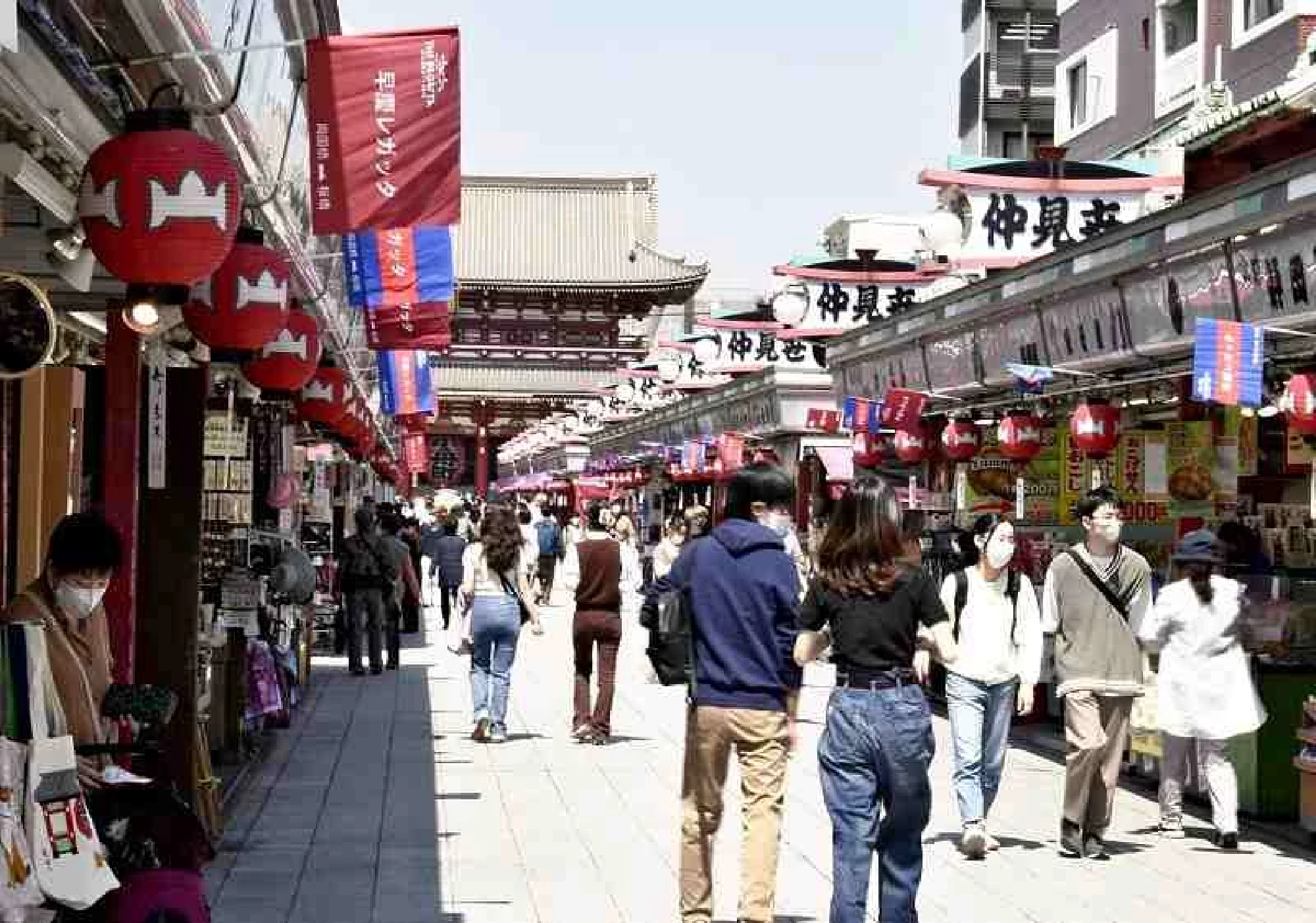
The tourist industry is starting to see the first glimmers of light at the end of the tunnel.
Presently, there are no government measures in place asking people to refrain from going out, marking the first time since the outbreak of the novel coronavirus pandemic that people can move around freely during the Golden Week holidays.
With the full lifting of the government’s quasi-emergency priority measures, expectations are growing that the pickup in tourism demand will continue beyond the holiday-studded period. Yet, concerns remain over a possible seventh wave of infections.
On Thursday, the six JR Group companies announced that around 1.34 million seat reservations had been made for April 28 to May 8 on Shinkansen and conventional railway lines.
Though this figure is about 50% lower than that of the corresponding — pre-pandemic — period in 2018, it nevertheless represents a 1.7-fold increase from the same period last year. The rise in demand is likely because people are free to move around, and the fact that this year, three consecutive public holidays fall in the middle of the week, making it easier for people to take a longer break.
“We hope seat reservation numbers will continue to climb through next week,” West Japan Railway Co. President Kazuaki Hasegawa said at a press conference on Friday.
Private railways also are moving to take advantage of the increase in demand for services. Kintetsu Railway Co. will launch a new sightseeing-focused, super-express service linking Osaka, Nara and Kyoto in about 80 minutes from April 29, the first day of Golden Week. Seibu Railway Co., meanwhile, will increase the number of local trains going to the Chichibu region, which is popular among tourists.
The airline industry, too, is keen to take advantage of the uptick in demand. JAL cut about 6,300 flights in March, but in May it plans to only cut around 730 services. ANA, meanwhile, will operate four security checkpoints at Haneda Airport for the first time in about two years. The firm also plans to boost worker numbers at the travel hub.
JTB Corp. expects around 16 million people to make overnight trips lasting one day or more during this year’s Golden Week, a rise of 68.4% from a year earlier.
Business operators in popular tourist spots have high hopes, too. “The waves of people have returned, but many hail from the local area meaning souvenir sales have remain sluggish,” said an owner of a Japanese-style confectionery store on Nakamise-dori in Asakusa, Tokyo. “I hope people will visit from provincial areas during the holiday season.”
7th-wave concerns
Despite the tourist industry having seemingly turned a corner, concerns remain over the future. The number of people newly infected with coronavirus has begun rising again, and it is thought that the country is already on the cusp of a seventh wave of infections.
The government’s Go To Travel Campaign, has remained mothballed since the end of 2020 and it remains uncertain when it will be relaunched. “[Resumption of the campaign] will be contingent on a stable infection situation,” said Minister of Land, Infrastructure, Transport and Tourism Tetsuo Saito.
Akiko Kohsaka, a chief researcher at Japan Research Institute, Ltd., noted: “Some regions centered around big cities have yet to see an uptick in tourist numbers. It may yet be some time before we see a full-fledged recovery in demand for tourist services.”
Asia News Network: The Nation (Thailand), The Korea Herald, The Straits Times (Singapore), China Daily, Jakarta Post, The Star and Sin Chew Daily (Malaysia), The Statesman (India), Philippine Daily Inquirer, Yomiuri Shimbun and The Japan News, Gogo Mongolia, Dawn (Pakistan), The Island (Sri Lanka), Kuensel (Bhutan), Kathmandu Post (Nepal), Daily Star (Bangladesh), Eleven Media (Myanmar), the Phnom Penh Post and Rasmei Kampuchea (Cambodia), The Borneo Bulletin (Brunei), Vietnam News, and Vientiane Times (Laos).
HÀ NỘI — The Việt Nam Logistics Business Association (VLA) has proposed establishing a container fleet with a total investment of US$1.5 billion to build new ships, purchase old ones, and rent and buy containers.
This aims to serve import and export goods to limit the interference from foreign shipping lines and reduce costs.
According to the VLA, the transportation of import and export goods by sea is facing many difficulties, especially due to congestion at ports and supply chain disruptions, which cause a shortage of ships and containers, which has made container freight rates skyrocket, heavily impacting competitiveness.
Vũ Ngọc Sơn, chairman of Hải An Transport and Stevedoring Company Limited, said almost all shipping capacity and freight for transporting goods by containers to intercontinental routes were in the hands of foreign ship owners so Việt Nam had to spend a huge amount of foreign currency every year.
Having a fleet of container ships would limit the pressure of foreign shipping lines on freight rates and surcharges. It would be a tool to ensure the country’s economic security and take full advantage of FTA agreements in the long term.
Sơn said: “Việt Nam is located on the important maritime transport route of the East-West hemisphere, accounting for more than 80 per cent of the global freight volume while about 90 per cent of local import and export goods are transported by sea.”
The speed of goods through the country’s seaports increases by 10-15 per cent per year on average.
In 2021 under the difficulties of the pandemic, the volume of container cargo through seaports reached 24 million TEUs, up 7 per cent compared to 2020, the association said.
Nguyễn Tương, a senior consultant of VLA, said: “Currently Việt Nam’s shipping fleet is only responsible for transporting about 7 per cent of the market share and mainly operates on domestic routes and short routes in the intra-Asia region, the rest is in the hands of foreign shipping lines.”
As of March 25, 2022, the world’s container fleet has 6,346 ships with a total capacity of 25.5 million TEUs and a total tonnage of 305,902,000 DWT.
Meanwhile, the country’s container fleet has 10 container shipping companies, owning 48 container ships with a total capacity of 39,519 TEUs, and a total tonnage of 548,236 DWT.
There are 13 ships more than 25 years old, three ships more than 20 years old and 15 ships with tonnage from 300 TEU to 600 TEU.
These ships can only run within the country, said the association, adding that the remaining 17 ships with a tonnage of 600 TEU or more, of which there are 14 ships with a tonnage of 1,000 to 1,800 TEU, could operate on routes in inner Asia.
The VLA believes that to develop a container fleet, it is necessary to invest in specialised container ships, container shells and a customer service network, and a fleet of ships at all major ports.
The plan should be divided into two development phases. Phase 1 will be implemented in about 3 to 5 years, focusing on investing in ships suitable to operate on intra-Asia routes such as Japan, South Korea, China, India and the Middle East.
Those areas are where the volume of import and export goods, mostly dry goods, account for more than 60 per cent of the total volume of dry goods for import-export.
The association said that in the first phase, Việt Nam should not only buy ships, containers and open routes in the region but also find partners who have large shipping lines to cooperate with them to exchange docking lots, change containers and use their operating and management software, management and service systems at ports.
VLA said such solutions had been employed by other successful shipping lines in the past few decades, including Taiwan’s Wan Hai (China) shipping lines and Israel’s Zim lines.
In the second phase, which could last about five years, after successfully operating in inner Asia with partners, investment would be needed in larger container ships from Panamax and Post Panamax to participate in transportation on major intercontinental routes of the world such as the Asia – America route, Asia – Europe route, East-West route and beyond.
Together with the proposed routes development direction, the VLA also suggested solutions and preferential policies to develop such a fleet. — VNS
Asia News Network: The Nation (Thailand), The Korea Herald, The Straits Times (Singapore), China Daily, Jakarta Post, The Star and Sin Chew Daily (Malaysia), The Statesman (India), Philippine Daily Inquirer, Yomiuri Shimbun and The Japan News, Gogo Mongolia, Dawn (Pakistan), The Island (Sri Lanka), Kuensel (Bhutan), Kathmandu Post (Nepal), Daily Star (Bangladesh), Eleven Media (Myanmar), the Phnom Penh Post and Rasmei Kampuchea (Cambodia), The Borneo Bulletin (Brunei), Vietnam News, and Vientiane Times (Laos).
City’s long-cherished dream may come true, backed by upcoming government, eased regulations
It was 2003, with South Korea still clinging to the euphoria of the 2002 World Cup, when the official road map to making Seoul Asia’s financial center was first announced. Hope was in the air and it quickly became a key task for current Mayor Oh Se-hoon, who previously served as the city’s mayor from 2006 to 2011.
But the hurdles were too high. Global financial institutions were put off by Korea’s rigid labor market and tight, yet somewhat vague regulations, despite the geopolitical advantage Seoul could offer. They quickly turned their eyes to Singapore, which lured them with lucrative tax benefits and warm weather.
Today, Seoul is more determined than ever to walk the road map and catch the eyes of investors and institutions leaving Hong Kong. The time is ripe, the Seoul Metropolitan Government’s point man on its financial hub project says.
“Hong Kong has been Asia’s leading financial center, but with China tightening its grip on the city, it is dealing with new risks and challenges such as an exodus of investors,” Hwang Bo-youn, Seoul’s deputy mayor for economic policy, told The Korea Herald in an interview on Thursday.
“Seoul is a few steps behind Singapore and Tokyo timewise, but our capital can provide financial institutions and investors with the best environment for the state-of-the-art technological development. It has the full potential to become Asia’s next financial center.“
That includes a commercialized 5G network service — which is already moving onto 6G — alongside customers who are early adapters and strong infrastructure for IT and AI-related technologies in the era of pay apps and digital banking, he added.
A major step toward becoming a leading financial center would require easing regulations and improving tax benefits for businesses, according to Hwang.
At the moment, Seoul’s benefits are restricted to handing out discounted office spaces to international firms seeking to enter Korea. The five-year benefit subsidizes 70 percent of the rent and maintenance fees for select businesses at the International Finance Center located in Yeouido, the nation’s financial hub. This is because Seoul is bound under the Restriction Of Special Taxation Act, making it unable to give tax benefits to businesses due to the authorities’ intention to balance the city’s power with other regions.
This is about to change, says Hwang, with President-elect Yoon Suk-yeol pledging to lift such restrictions on Yeouido, allowing the financial district to entice global businesses with tax benefits.
“The incoming president has vowed to designate Yeouido a special economic zone, which will change everything,” Hwang said.
“We plan to create a virtuous cycle of business for the financial institutions, where tax benefits, housing and education for children can be available in a single package for employers and employees.”
Hwang also addressed the nation’s rigid labor market and laws including the 52-hour workweek introduced in 2018 to reduce long working hours. According to the policymaking Financial Services Commission in 2020, the 52-hour law was a major complaint shared by the CEOs of 17 local branches of global financial institutions to then-chairman of the regulator Eun Sung-soo.
“I support the 52-hour workweek, but the law was revised without consideration of different sectors — it needs to become more flexible,” he said.
The Korean law requires all laborers regardless of their positions and sectors to abide by the 52-hour limit, except fund managers and analysts. On the contrary, Hong Kong doesn’t have such labor restrictions at all, while Singapore makes exemptions depending on the person’s position within the firm or their income.
On the intensifying rivalry with other cities seeking to earn the title of “Asia’s financial hub” such as Busan and Incheon, the deputy mayor expressed concerns.
“The government has been relocating key financial institutions to other areas such as Busan for balance, but the result was that both Seoul and Busan lost their competitiveness as financial hubs.”
Busan is currently in the process of building a mega 140,000-square-meter financial town, while Incheon is trying to attract more clients to its Songdo International Business District.
“Major economies have only one city that works as a financial hub — it’s New York City for the US and London for the UK. To make Korea flourish in the global society, the issue needs to move beyond a local rivalry between our cities.”
Hwang highlighted Seoul’s geopolitical advantage, strong infrastructure and the city environment itself, which was reflected in this year’s Global Financial Centers Index. Seoul ranked a record No. 12 as of March this year on the index, which evaluates competitiveness of financial centers based on surveys and 150 factors, with quantitative measures from the World Bank, the Economist Intelligence Unit, the OECD and United Nations. First published in 2007 from think tank Z/Yen Group in partnership with the China Development Institute, the index named New York the world’s top financial center.
“In this year’s ranking, Beijing is ranked No. 8, with Tokyo and Shenzhen each coming at No. 9 and No. 10 — it means that Seoul came at No. 12 despite the regulations that have worked as a handicap for Seoul from growing as a financial hub,” Hwang explained.
“There is no other city like Seoul. It’s geopolitically close to other capitals in Asia and a cluster of future technology — it can help financial institutions make headway into the future.”
By Jung Min-kyung
Asia News Network: The Nation (Thailand), The Korea Herald, The Straits Times (Singapore), China Daily, Jakarta Post, The Star and Sin Chew Daily (Malaysia), The Statesman (India), Philippine Daily Inquirer, Yomiuri Shimbun and The Japan News, Gogo Mongolia, Dawn (Pakistan), The Island (Sri Lanka), Kuensel (Bhutan), Kathmandu Post (Nepal), Daily Star (Bangladesh), Eleven Media (Myanmar), the Phnom Penh Post and Rasmei Kampuchea (Cambodia), The Borneo Bulletin (Brunei), Vietnam News, and Vientiane Times (Laos).
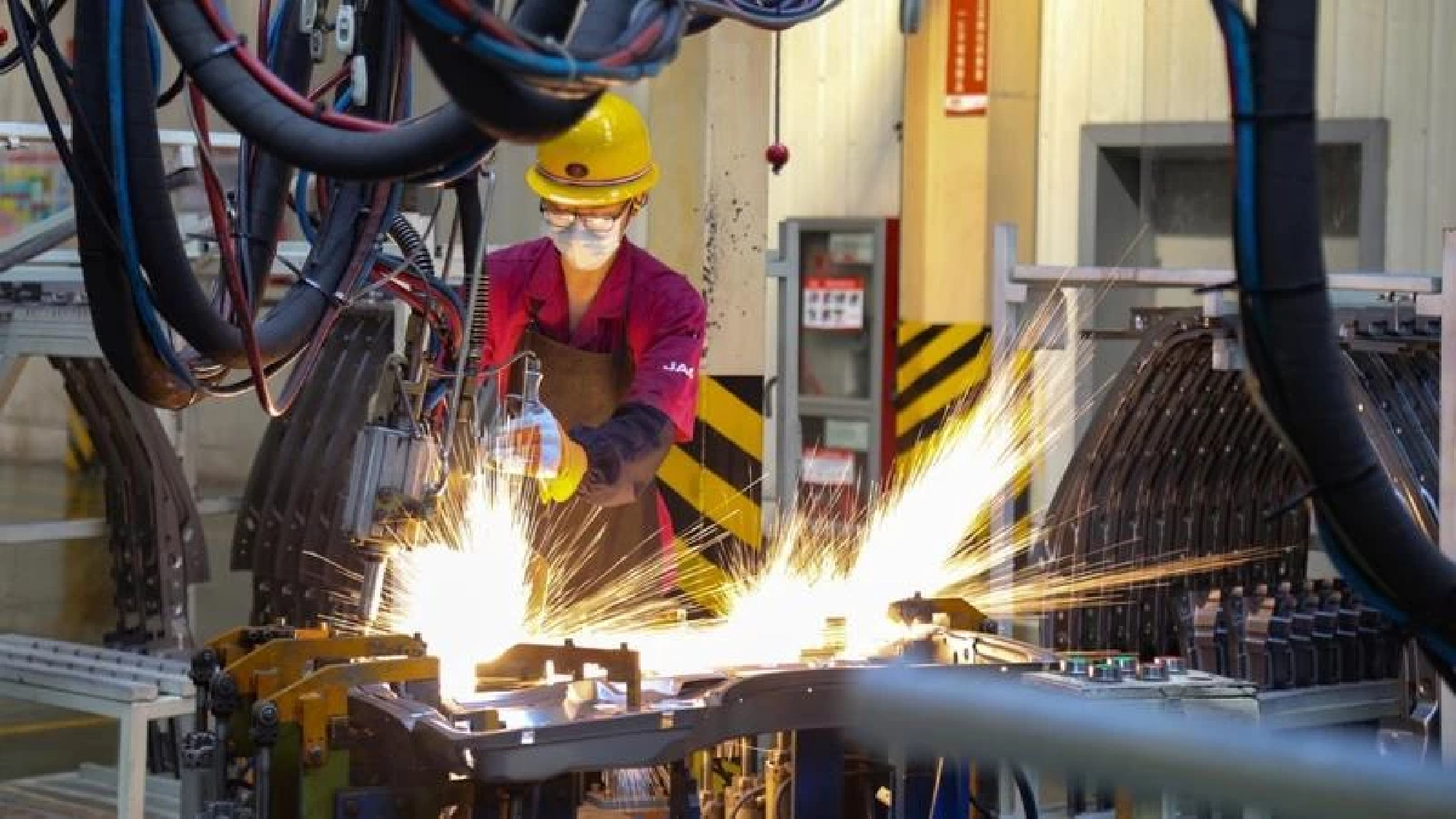
BEIJING – China’s economy got off to a steady start in the first quarter of 2022 despite an increasingly complex international environment and resurgences of COVID-19 cases at home.
The country’s gross domestic product grew 4.8 percent year on year to 27.02 trillion yuan (about $4.24 trillion) in the first three months, picking up pace from a 4-percent increase in the fourth quarter last year, data from the National Bureau of Statistics (NBS) showed Monday.
The economy posted a stable performance with continued recovery as China struck a balance between epidemic control and economic and social development, NBS spokesperson Fu Linghui told a press conference.
After a strong rebound in 2021, China witnessed some unexpected challenges at the beginning of this year, with a volatile global situation and multiple sporadic COVID-19 outbreaks on the domestic front. The downward economic pressure is on the rise and some major indicators have seen slower increases, according to Fu.
“But the long-term economic fundamentals remain sound and the continued momentum of economic recovery has not changed,” Fu said, emphasizing that the country is confident and capable of overcoming these difficulties.
Industrial output up 6.5%
The country’s industrial production reported faster growth in the first quarter of the year, with stellar performance highlighted by the high-tech manufacturing sector, official data showed.
China’s value-added industrial output, an important economic indicator, went up 6.5 percent year-on-year in the first three months, according to data.
In March alone, industrial output rose 5 percent year-on-year and 0.39 percent from the previous month, the NBS said.
During the January-March period, mining output recorded year-on-year growth of 10.7 percent, the fastest among the three major industrial sectors.
The output of the manufacturing sector increased 6.2 percent, while the production and supply of electricity, heat, gas and water rose 6.1 percent, according to the NBS.
The high-tech manufacturing and equipment manufacturing industries saw marked growth by expanding 14.2 percent and 8.1 percent, respectively, both higher than the Q1 industrial output.
In terms of production, the output of new energy vehicles logged a marked increase of 140.8 percent, while that of solar batteries and industrial robots jumped 24.3 percent and 10.2 percent year on year, respectively.In a breakdown by ownership, the output of state-owned enterprises rose 5 percent from a year earlier, while the private sector’s output increased 7.6 percent.
Retail sales top 10.8 trillion yuan
The country’s retail sales of consumer goods, a major indicator of the country’s consumption strength, went up 3.3 percent year-on-year in the first quarter (Q1) of this year, official data showed.
The country’s retail sales of consumer goods totaled around 10.87 trillion yuan (about $1.7 trillion) during this period, according to the NBS.
In March alone, retail sales decreased by 3.5 percent year on year.
Retail sales in urban areas reached 9.43 trillion yuan in Q1, up 3.2 percent year on year, while those in rural areas increased 3.5 percent year on year.
In Q1, retail sales of goods rose 3.6 percent from a year ago to 9.8 trillion yuan, while catering revenue hit 1.07 trillion yuan, an increase of 0.5 percent year-on-year.
Online consumption remained a bright spot, with online retail sales rising 6.6 percent year on year to reach about 3.01 trillion yuan in this period..
Fixed-asset investment up 9.3%
China’s fixed-asset investment saw steady growth in the first quarter, bolstering overall economic growth, official data showed.
Fixed-asset investment jumped 9.3 percent from a year earlier to 10.49 trillion yuan (about $1.65 trillion) in the first three months, the NBS said in a statement.
The growth slowed from a 12.2-percent increase registered in the first two months. In March, fixed-asset investment increased 0.61 percent from a month earlier.
In Q1, fixed-asset investment from the private sector increased 8.4 percent from a year earlier to 5.96 trillion yuan, accounting for more than half of the total.
Investment into the high-tech manufacturing and high-tech services sectors saw notable growth, jumping 32.7 percent and 14.5 percent year-on-year in the first three months.
The healthcare and education sectors also saw above-average growth, the data showed.
Investment has traditionally been a key engine for growth. In the first two months of this year, China’s fixed-asset investment saw a rapid recovery, with manufacturing and infrastructure investment leading the upward momentum.
Urban unemployment at 5.5%
Meanwhile, the country’s surveyed urban unemployment rate stood at 5.5 percent in Q1, official data showed.
The figure edged up 0.1 percentage points from the same period last year, according to data from the NBS.
A total of 2.85 million new urban jobs were created during the period, according to the NBS. While the complex global situation and sporadic domestic COVID-19 resurgences weighed on employment, China’s job market has remained generally stable since the beginning of this year thanks to its employment-first policy and ever-increasing support for struggling businesses, said Fu.
Fu said China’s job market will benefit from the nation’s effective control of COVID-19, policies to bolster market entities, as well as enhanced professional training.
Chinese authorities have pledged measures to channel more unemployment insurance funds to underpin employment and training, and provide job seekers with no fewer than 1 million internship openings this year.
In March, China’s surveyed urban unemployment rate was 5.8 percent, up 0.3 percentage points from February, while the rate among those aged between 25 and 59, the majority of the labor market, stood at 5.2 percent.
Property investment rises 0.7%
China’s investment in property development rose 0.7 percent year on year in the first quarter of 2022, data from the NBS showed.
During the period, property investment stood at around 2.78 trillion yuan (about $435.44 billion). Investment in residential buildings went up 0.7 percent year on year to about 2.08 trillion yuan in the January-March period.
During the period, commercial housing sales dropped 13.8 percent year on year in terms of floor area to 310.46 million square meters.
In terms of value, commercial housing sales went down 22.7 percent to around 2.97 trillion yuan.
China has reiterated its stance of “housing is for living in, not for speculation,” vowing to keep land prices, housing prices and market expectations stable and adopt city-specific measures to facilitate positive circulation and sound development in the real estate sector.
Asia News Network: The Nation (Thailand), The Korea Herald, The Straits Times (Singapore), China Daily, Jakarta Post, The Star and Sin Chew Daily (Malaysia), The Statesman (India), Philippine Daily Inquirer, Yomiuri Shimbun and The Japan News, Gogo Mongolia, Dawn (Pakistan), The Island (Sri Lanka), Kuensel (Bhutan), Kathmandu Post (Nepal), Daily Star (Bangladesh), Eleven Media (Myanmar), the Phnom Penh Post and Rasmei Kampuchea (Cambodia), The Borneo Bulletin (Brunei), Vietnam News, and Vientiane Times (Laos).
Asia News Network: The Nation (Thailand), The Korea Herald, The Straits Times (Singapore), China Daily, Jakarta Post, The Star and Sin Chew Daily (Malaysia), The Statesman (India), Philippine Daily Inquirer, Yomiuri Shimbun and The Japan News, Gogo Mongolia, Dawn (Pakistan), The Island (Sri Lanka), Kuensel (Bhutan), Kathmandu Post (Nepal), Daily Star (Bangladesh), Eleven Media (Myanmar), the Phnom Penh Post and Rasmei Kampuchea (Cambodia), The Borneo Bulletin (Brunei), Vietnam News, and Vientiane Times (Laos).
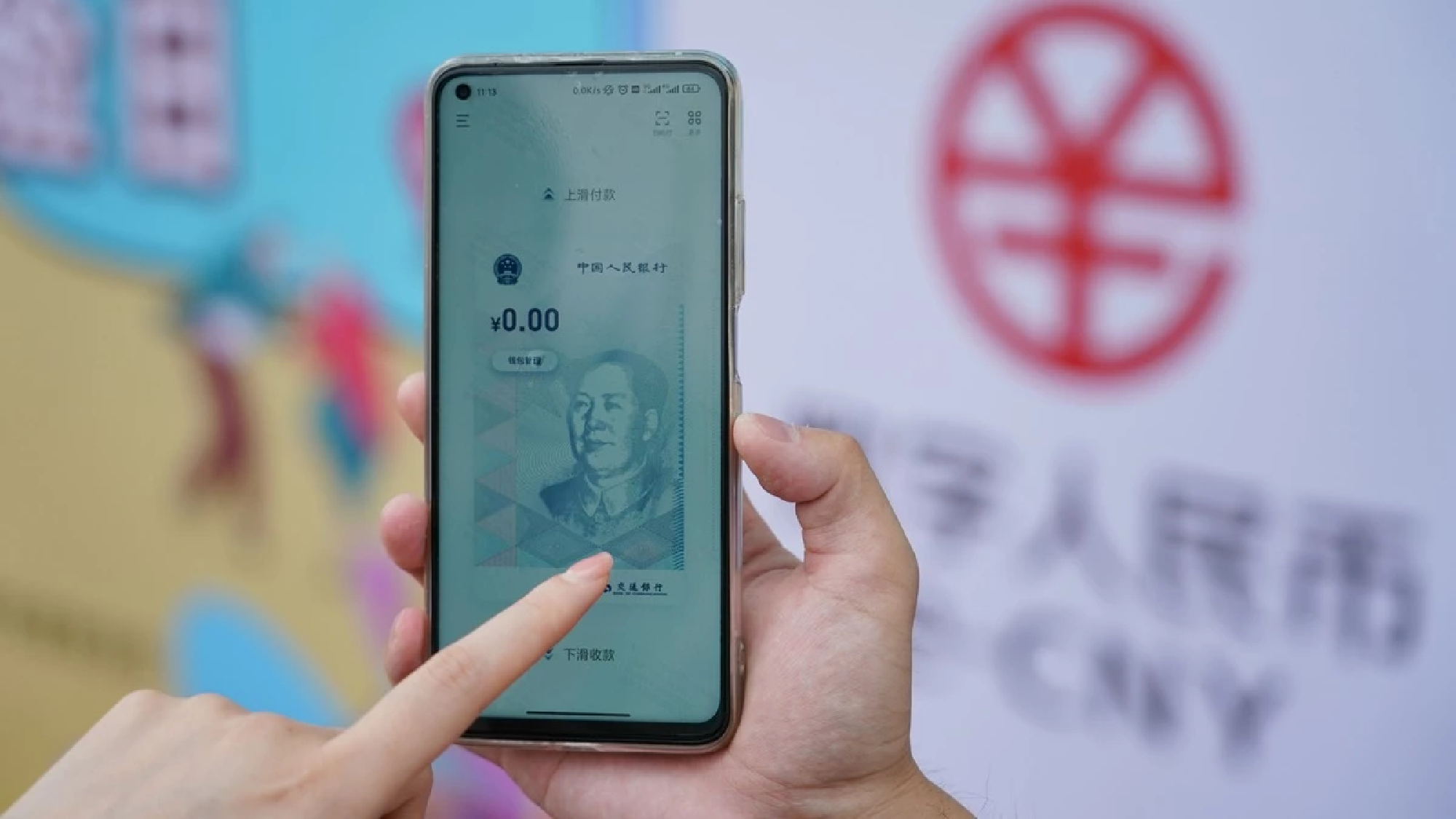
China’s e-CNY, also known as the digital yuan, is designed for retail transactions for the convenience of people and merchants, rather than to replace the US dollar, said Zhou Xiaochuan, president of the China Society for Finance and Banking.
“The People’s Bank of China stressed that it conducted research and development of the e-CNY as a substitute for cash in circulation, showing that the PBOC expects the use of the e-CNY to be primarily focused on retail payments, especially bringing more convenience to people with the help of internet and mobile internet terminals,” said Zhou, who is also former governor of the PBOC, China’s central bank, at the 2022 Tsinghua PBCSF Global Finance Forum on Saturday.
“We don’t exclude the possibility that the e-CNY may be used for cross-border payments in the future but I estimate that it will still focus on retail transactions, such as cross-border retail transactions,” he said, adding that the digital yuan will not be used as a weapon.
At the forum, Zhou reiterated world trade patterns should avoid slipping back to what they were during the Cold War era.
“If global financial payment or messaging systems slip into some kind of a Cold War pattern, it will bring damage to everyone,” he said.
The relevant authorities should take into account that if SWIFT, the world’s leading provider of secure financial messaging services, is heavily used as an instrument to impose sanctions, others can definitely find other financial messaging channels to complete trade, he said.
However, he acknowledged that SWIFT has advantages in terms of efficiency, market size, security, confidentiality and automated processing, with a large number of financial institutions connected to it.
If another financial messaging channel is created to bypass SWIFT, there will be a transitional period and tons of work to do. During the transitional period, the efficiency of trade will be affected, he said.
The PBOC announced on April 2 that its e-CNY pilot program will be expanded to another 11 cities, including Tianjin and six cities in Zhejiang province which will host the Asian Games later this year.
By the end of 2021, China’s digital yuan transactions reached about 87.57 billion yuan ($13.75 billion), with 261 million personal wallets opened, according to the PBOC.
Third-party institutions should move toward high standards if they want to participate in the digital currency pilot program, rather than trying to avoid following these standards in a crafty or dishonest way, Zhou said.
China’s securities regulator said Didi Global Inc’s plan to delist from the New York Stock Exchange is a decision which the Chinese company made on its own and that the move is based on the market and its own assessment of its situation.
Didi’s delisting has nothing to do with other US-listed Chinese stocks or ongoing efforts between Chinese regulators and their US counterparts to resolve an audit dispute regarding US-listed Chinese companies, the China Securities Regulatory Commission said in a statement on Saturday on its official WeChat account.
The comments came after Beijing-based Didi, the country’s largest ride-hailing company, said it will hold an extraordinary general meeting on May 23 to vote on its delisting plans in the US.
CSRC said it has always insisted that overseas listing activities of enterprises should abide by the laws, regulations and supervisory rules of the places where they are listed and where they operate.
It also requires listed companies to effectively protect the legitimate rights and interests of investors, especially small and medium-sized investors.
Didi said in a statement on Saturday it will not apply to list its shares on any other stock exchange before the delisting of its American Depositary Shares from the New York Stock Exchange is complete.
The move is the latest update on Didi’s delisting process. The company said in December it would delist from the NYSE and pursue a listing in Hong Kong.
Shortly after Didi’s $4.4 billion IPO in late June, China’s Cyberspace Security Review Office said it had launched a cybersecurity probe into the company to protect national security and public interest in accordance with the nation’s laws.
Song Haixin, a senior lawyer at law firm Jincheng Tongda & Neal Shanghai, said companies such as ride-hailing platforms need to assess their data assets, and protect user privacy, as efforts intensify around the world to beef up legal frameworks for the digital economy.
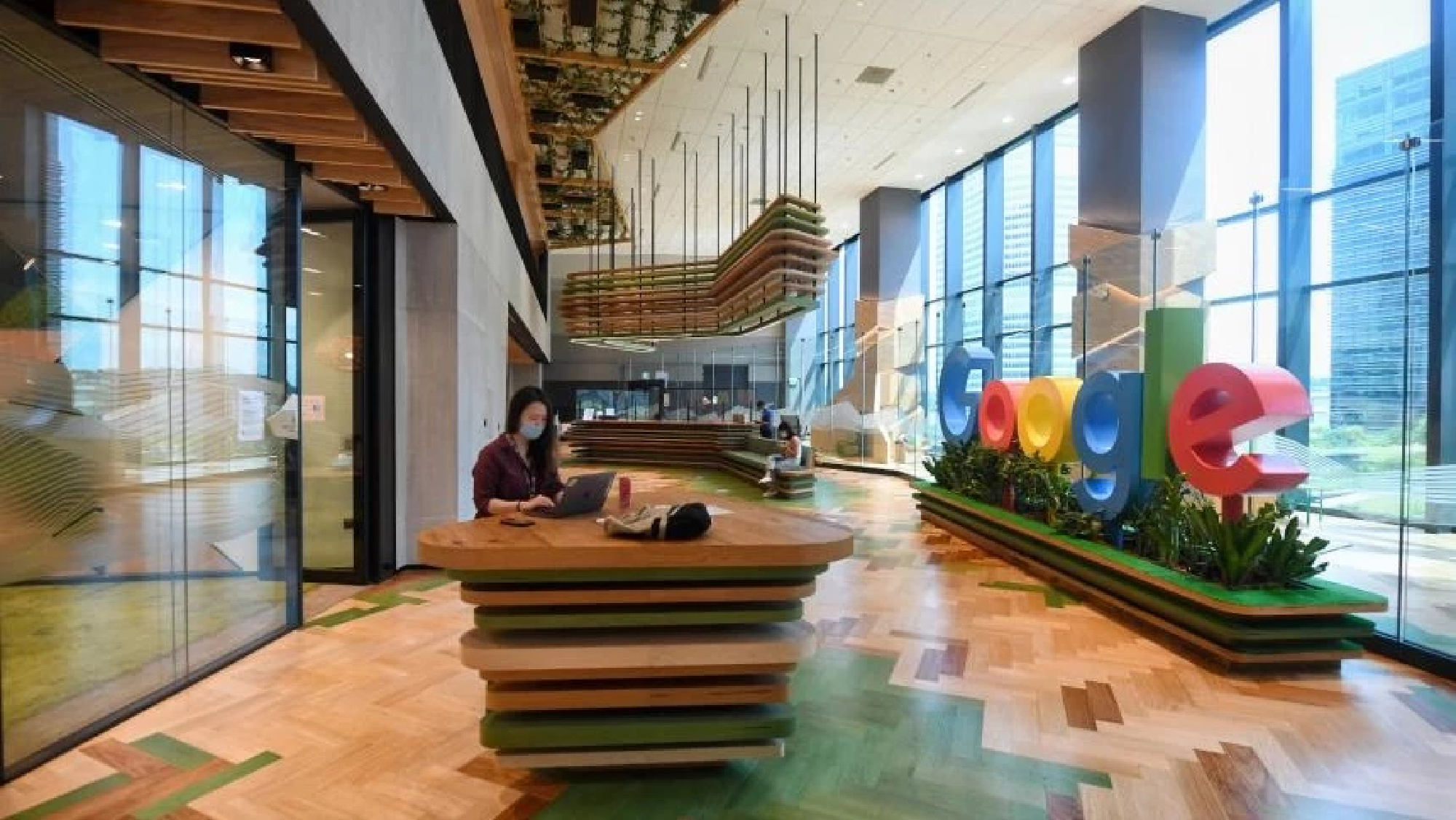
SINGAPORE – Even as competition for talent remains tight, tech giant Google has topped a ranking of Singapore’s best employers for the second year in a row.
The Economic Development Board (EDB) came in second, the first government agency to place in the top 10 in the three years the study has been conducted.
Singapore’s Best Employers 2022, a ranking of the top 200 companies and institutions with at least 200 employees, was released on Monday (April 18) by The Straits Times and global data firm Statista.
Toy retailer The Lego Group, tech giant Apple and fintech firm Wise rounded out the top five, out of more than 1,700 eligible organisations across 27 industries.
The list is the result of an online survey, conducted in August and September last year, which involved more than 17,000 employees.
Employers were given a score based primarily on whether staff would recommend them to a friend or family member. The top score was 9.16 out of a maximum of 10, while the score for 200th place was 7.
ST editor Warren Fernandez, who is also editor-in-chief of SPH Media Trust’s English, Malay and Tamil Media Group, said: “In a tight labour market, workers have options. They will want to give their time, energies and loyalties to employers who treat their people well, develop and seek to retain them.
“Good employers know this, and act to shape their organisations and cultures to meet this desire. Their employees become their ambassadors. This is what we are aiming to identify, showcase and promote with this annual survey.”
Statista analysts Wu Ruoh-Yiang and Taylor Benedict noted that around 70 per cent of the companies on this year’s list also made the list last year.
“Those 200 companies that made it into the list all showed remarkable commitment to their employees, especially during this difficult time,” they said, adding that surveyed employees’ overall satisfaction with their own employers has improved compared with the previous year.
Respondents were also asked to rate their employers based on various aspects of their job, the work environment and the employer’s reputation.
Across six areas considered, atmosphere at work and potential for development contributed the most to employers’ scores, said Ms Wu and Dr Benedict.
The other five aspects were image, working conditions, workplace, salary or wage, and diversity.
The clothing, shoes and sports equipment industry was reportedly at the top in terms of salary and image, as well as atmosphere at work and potential for development.
Meanwhile, the drugs and biotechnology industry had the best working conditions, workplaces and diversity.
Institute for Human Resource Professionals chief executive Mayank Parekh said the survey findings reinforce the increasing importance of workplace culture to attract and retain talent in a tight labour market.
“Companies should keep a finger on the pulse to understand what employees really care about,” he said.
To keep its employees engaged, Google Singapore offered virtual learning and development programmes amid the Covid-19 pandemic, such as manager and leadership training, as well as mentoring sessions where employees could learn from senior leaders across the region.
As companies emerge from the default work-from-home arrangement, Google Singapore country managing director Ben King said the company is moving towards a hybrid work environment where employees spend three days a week in the office and two days wherever they work best.
“We know that nothing replaces the power of human interaction and the chemistry people have when they come together, so we would continue to invest in our tools and spaces, to ensure a connected and equitable experience for all of our employees,” he said.
Other initiatives by employers on this year’s list to better support staff include EDB’s internal support network, started last year, that saw some employees trained as wellness ambassadors to provide support to their colleagues where needed.
EDB also typically designates the last two weeks of June and December as “no internal meetings weeks”, so that staff can rest and recharge from virtual meetings, said its managing director Jacqueline Poh.
At Tanglin Trust School, initiatives such as the “secret friend” scheme (random acts of kindness for staff), gifts at the end of school terms, and bonuses for employees’ hard work and perseverance through the pandemic were rolled out.
The school’s chief executive Craig Considine said that to promote work-life balance, staff have free access to the school’s fitness suite, and are encouraged to leave early when they can so that they can spend quality time with their families.
Methodology
A survey conducted in August and September last year polled more than 17,000 staff to find Singapore’s best employers.
All companies and institutions with at least 200 employees here were in the running.
Online access panels were used to invite participants with diverse socio-demographic backgrounds to complete the survey anonymously, in order to build a representative sample of employees working part- or full-time for large companies.
The survey – this is the third year it has been conducted – could also be accessed through The Straits Times website.
Respondents were asked to name their company and rate their willingness to recommend it to friends and family on a scale of zero to 10. Zero meant “I wouldn’t recommend my employer under any circumstances”, and 10 meant “I would definitely recommend my employer”.
They were also shown a list of other employers in their respective industries and asked which employer they would – or would not – recommend.
The lists were compiled by global data firm Statista based on industry lists, employer databases and desk research.
The results of the two questions were used to calculate a score for each firm, with greater weight given to the direct score participants gave their own employer.
If available, the employer’s score from the previous year was also given a small weight in the calculation.
More than 200,000 recommendations were evaluated by Statista.
The 200 companies with the best scores made it to the list of Singapore’s Best Employers 2022.




![[Vietnam] Logistics firms seek to develop regional container fleet](https://media.nationthailand.com/uploads/images/md/2022/04/k8KjEUr1y4e7USdsw2Ac.webp?x-image-process=style/lg)




 SootinClaimon.Com