Xi talks with Saudi Arabian crown prince over phone

#SootinClaimon.Com : ขอบคุณแหล่งข้อมูล : หนังสือพิมพ์ The Nation.

https://www.nationthailand.com/international/40014589


BEIJING – Chinese President Xi Jinping on Friday morning held a phone conversation with Saudi Arabian Crown Prince Mohammed bin Salman Al Saud.
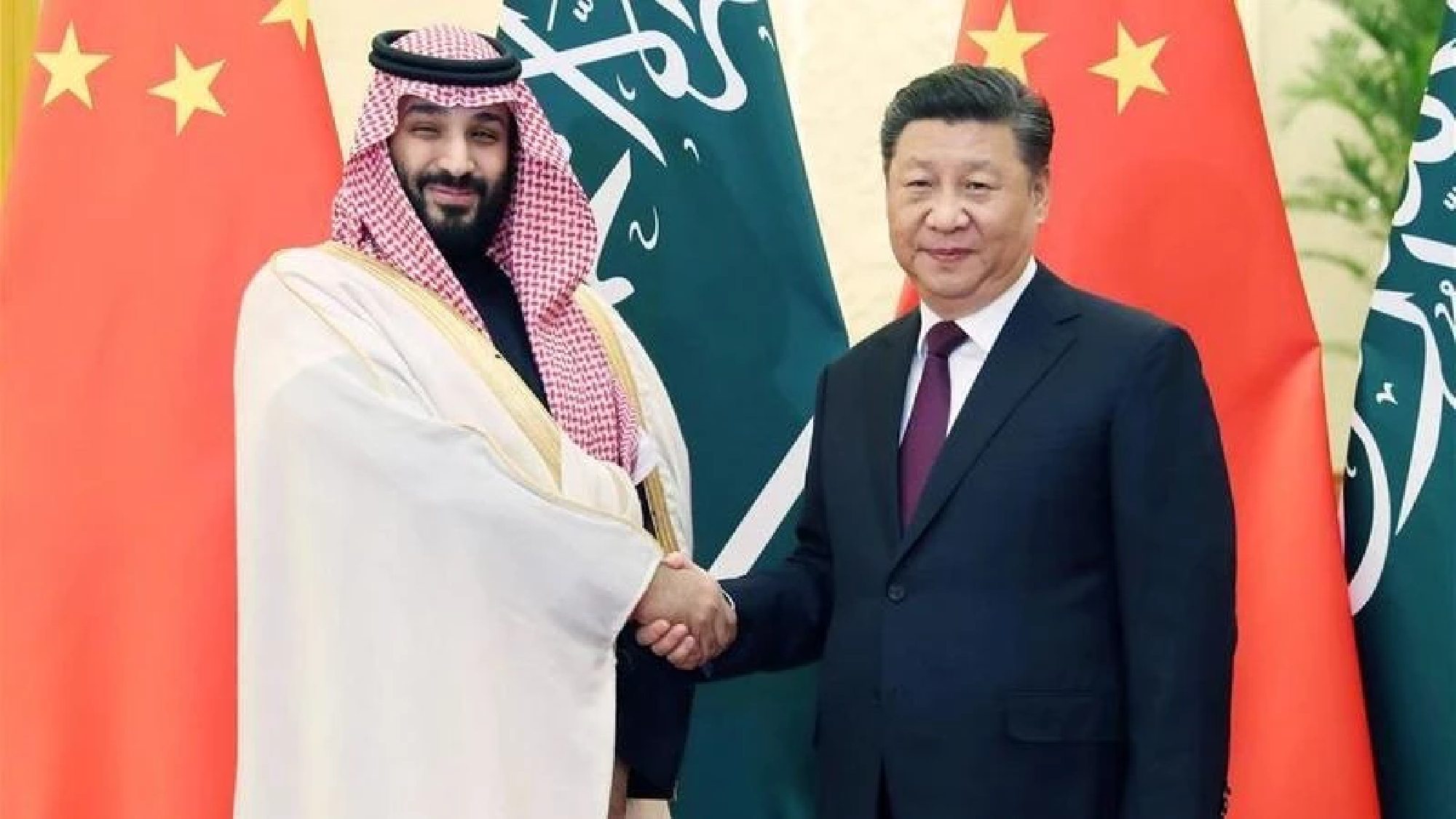
Xi talks with Saudi Arabian crown prince over phone

Xi asked Mohammed to convey his greetings to Saudi King Salman bin Abdulaziz Al Saud, saying that at present, the international and regional situations are undergoing profound and complex changes, further highlighting the strategic and overarching significance of China-Saudi Arabia relations.

He said that over the past year, China and Saudi Arabia have joined their efforts and moved forward together, facilitating new development in bilateral ties.

The Chinese side gives priority to developing relations with Saudi Arabia and stands ready to work with the country to deepen their comprehensive strategic partnership and to bring more benefits to the two countries and their people.

The Chinese side supports Saudi Arabia in safeguarding national sovereignty, security and stability, and in independently exploring a development path suited to its own national conditions, Xi stressed.

China will continue to synergize the Belt and Road Initiative with Saudi Arabia’s Vision 2030 and forge a high-level cooperation pattern between the two sides in such fields as energy, economy and trade as well as high technology, Xi said.

The Chinese side supports Saudi Arabia’s Green Middle East initiative and welcomes Saudi Arabia’s participation in the Global Development Initiative, Xi added.

China and Saudi Arabia should strengthen solidarity, practice true multilateralism, safeguard the international system with the United Nations at its core, the international order based on international law, the basic norms of international relations based on the purposes and principles of the UN Charter, and uphold international fairness and justice as well as the common interests of developing countries, said Xi.

China is ready to work with Saudi Arabia to promote peace and stability in the Middle East, push for an early conclusion of the China-Gulf Cooperation Council free trade area agreement and jointly build a China-Arab community with a shared future for the new era, said Xi. 

Mohammed conveyed King Salman’s greetings to Xi, and once again congratulated China on the success of the Beijing Winter Olympics and Paralympics.

Calling China an important comprehensive strategic partner of Saudi Arabia, the crown prince said that in recent years, Saudi Arabia-China ties have seen great progress in various fields and China has provided a model of economic development and political stability for countries worldwide.

Saudi Arabia attaches great importance to China’s status and to the development of its relations with China, and firmly adheres to the one-China principle, Mohammed said.

He added that his country will continue to staunchly support China’s legitimate position on such issues concerning core interests as Xinjiang, resolutely oppose any interference in China’s internal affairs and firmly safeguard the rights of all countries to choose their own political and human rights paths independently.

The crown prince said that Saudi Arabia is willing to work with China to strengthen high-level exchanges, sign agreements to synergize the Saudi Arabia’s Vision 2030 with the Belt and Road Initiative, and deepen cooperation in such fields as economy, trade, transportation, infrastructure and energy.

Saudi Arabia stands ready to boost communication and coordination with China in international and regional affairs, supports China’s just position on major international and regional issues, and backs the Arab League and the Gulf Cooperation Council to enhance cooperation with China, he added.

The two leaders also exchanged views on the situation in Ukraine. 

Asia News Network: The Nation (Thailand), The Korea Herald, The Straits Times (Singapore), China Daily,  Jakarta Post, The Star and Sin Chew Daily (Malaysia), The Statesman (India), Philippine Daily Inquirer, Yomiuri Shimbun and The Japan News, Gogo Mongolia,  Dawn (Pakistan),  The Island (Sri Lanka), Kuensel (Bhutan), Kathmandu Post (Nepal), Daily Star (Bangladesh), Eleven Media (Myanmar), the Phnom Penh Post and Rasmei Kampuchea (Cambodia), The Borneo Bulletin (Brunei), Vietnam News, and Vientiane Times (Laos).

Published : April 16, 2022

By : China Daily
S. Korea decides to join CPTPP trade agreement

#SootinClaimon.Com : ขอบคุณแหล่งข้อมูล : หนังสือพิมพ์ The Nation.

https://www.nationthailand.com/international/40014588


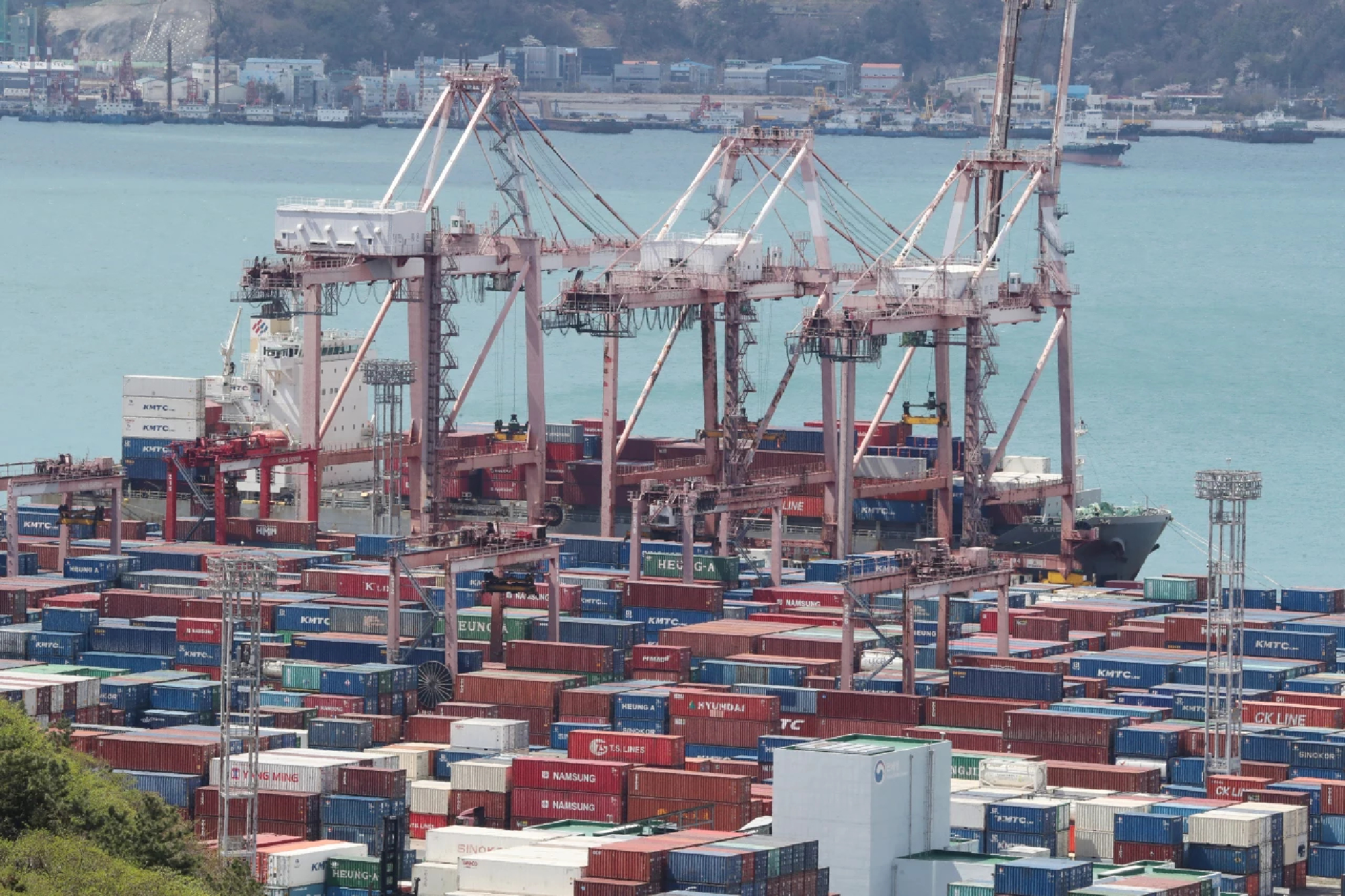
South Korea decided Friday to join a mega free trade agreement involving 11 Asia-Pacific nations as the country seeks to diversify its export portfolio amid heightened economic uncertainty.

S. Korea decides to join CPTPP trade agreement

Late last year, the country launched the process to accede to the Comprehensive and Progressive Agreement for Trans-Pacific Partnership.

The plan to join the CPTPP was approved at an economy-related ministers’ meeting Friday, and the government will submit an official application after completing domestic procedures, including a report to the National Assembly, officials said.

The CPTPP is the renegotiated version of the Trans-Pacific Partnership led by the former US President Barack Obama administration. In 2017, then US President Donald Trump withdrew from the TPP, widely seen as a key counterweight to China’s growing economic clout.

The CPTPP, launched in December 2018, has been signed by 11 countries, including Japan, Australia, Canada, New Zealand and Mexico.

The government has said it plans to submit the CPTPP application before President Moon Jae-in’s five-year term ends on May 9. The incoming government of President-elect Yoon Suk-yeol is expected to take on negotiations for the country’s membership, which is expected to take at least one year.

The CPTPP accession would boost trade and investment for South Korea, increasing its gross domestic product by 0.33-0.35 percent, the state-run Korea Institute for International Economic Policy estimated.

Farmers and fishermen have opposed the move, citing its potential damage to the agricultural and fishery sectors.

The government said it will make efforts to reflect calls by the potentially affected sectors as much as possible in its negotiations for the CPTPP accession and draw up measures to support them, when needed. (Yonhap)

Asia News Network: The Nation (Thailand), The Korea Herald, The Straits Times (Singapore), China Daily,  Jakarta Post, The Star and Sin Chew Daily (Malaysia), The Statesman (India), Philippine Daily Inquirer, Yomiuri Shimbun and The Japan News, Gogo Mongolia,  Dawn (Pakistan),  The Island (Sri Lanka), Kuensel (Bhutan), Kathmandu Post (Nepal), Daily Star (Bangladesh), Eleven Media (Myanmar), the Phnom Penh Post and Rasmei Kampuchea (Cambodia), The Borneo Bulletin (Brunei), Vietnam News, and Vientiane Times (Laos).

Published : April 16, 2022

By : The Korea Herald

The latest news on what’s happening in the region

#SootinClaimon.Com : ขอบคุณแหล่งข้อมูล : หนังสือพิมพ์ The Nation.

https://www.nationthailand.com/international/40014563


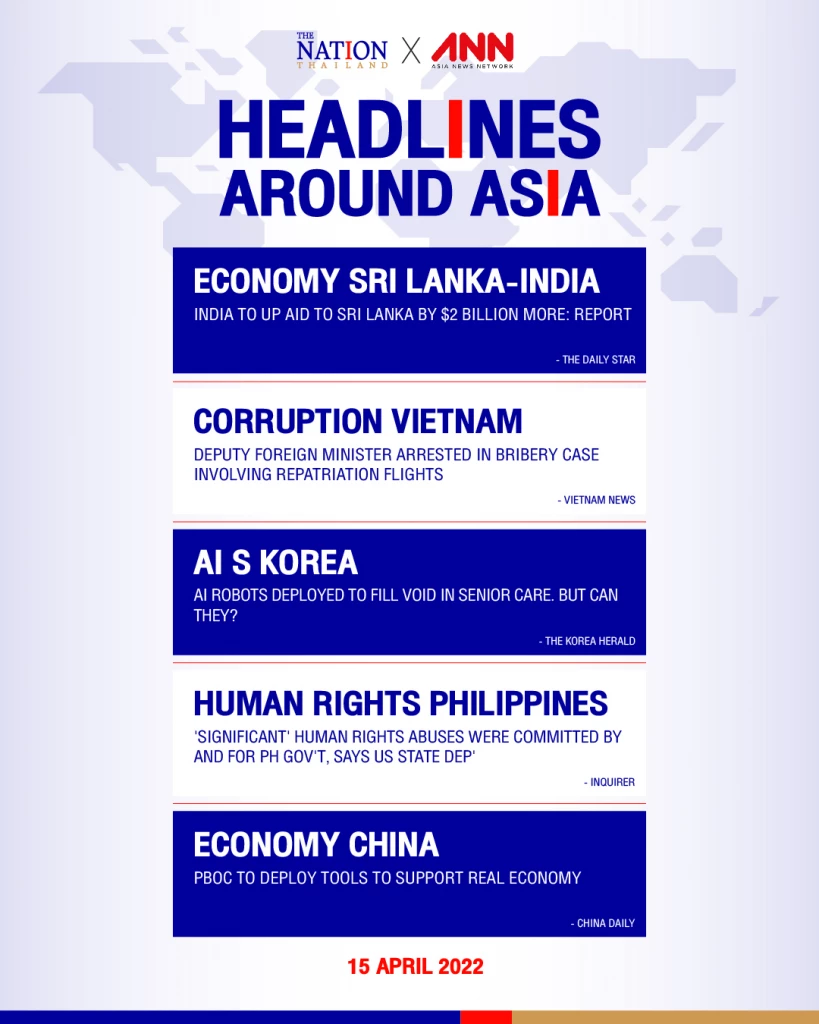
Check out what’s hot in the region on April 15 as The Nation puts together headlines from members of Asia News Network (ANN). Click to read more:

The latest news on what's happening in the region

Economy Sri Lanka-India
India to up aid to Sri Lanka by $2 billion more: Report 

The Daily Star ( ‎Bangladesh )
https://www.nationthailand.com/international/40014552


Corruption Vietnam
Deputy foreign minister arrested in bribery case involving repatriation flights 

Vietnam News
https://www.nationthailand.com/international/40014554

AI S Korea
AI robots are deployed to fill a void in senior care. But can they? 

The Korea Herald
https://www.nationthailand.com/international/40014553

Human rights Philippines
‘Significant’ human rights abuses were committed by and for PH gov’t, says US State Dep’t  

Inquirer ( Philippines )
https://www.nationthailand.com/international/40014555

Economy China
PBOC to deploy tools to support the real economy 
 

China Daily
https://www.nationthailand.com/international/40014556

Asia News Network: The Nation (Thailand), The Korea Herald, The Straits Times (Singapore), China Daily,  Jakarta Post, The Star and Sin Chew Daily (Malaysia), The Statesman (India), Philippine Daily Inquirer, Yomiuri Shimbun and The Japan News, Gogo Mongolia,  Dawn (Pakistan),  The Island (Sri Lanka), Kuensel (Bhutan), Kathmandu Post (Nepal), Daily Star (Bangladesh), Eleven Media (Myanmar), the Phnom Penh Post and Rasmei Kampuchea (Cambodia), The Borneo Bulletin (Brunei), Vietnam News, and Vientiane Times (Laos).

Published : April 15, 2022

PBOC to deploy tools to support real economy

#SootinClaimon.Com : ขอบคุณแหล่งข้อมูล : หนังสือพิมพ์ The Nation.

https://www.nationthailand.com/international/40014556


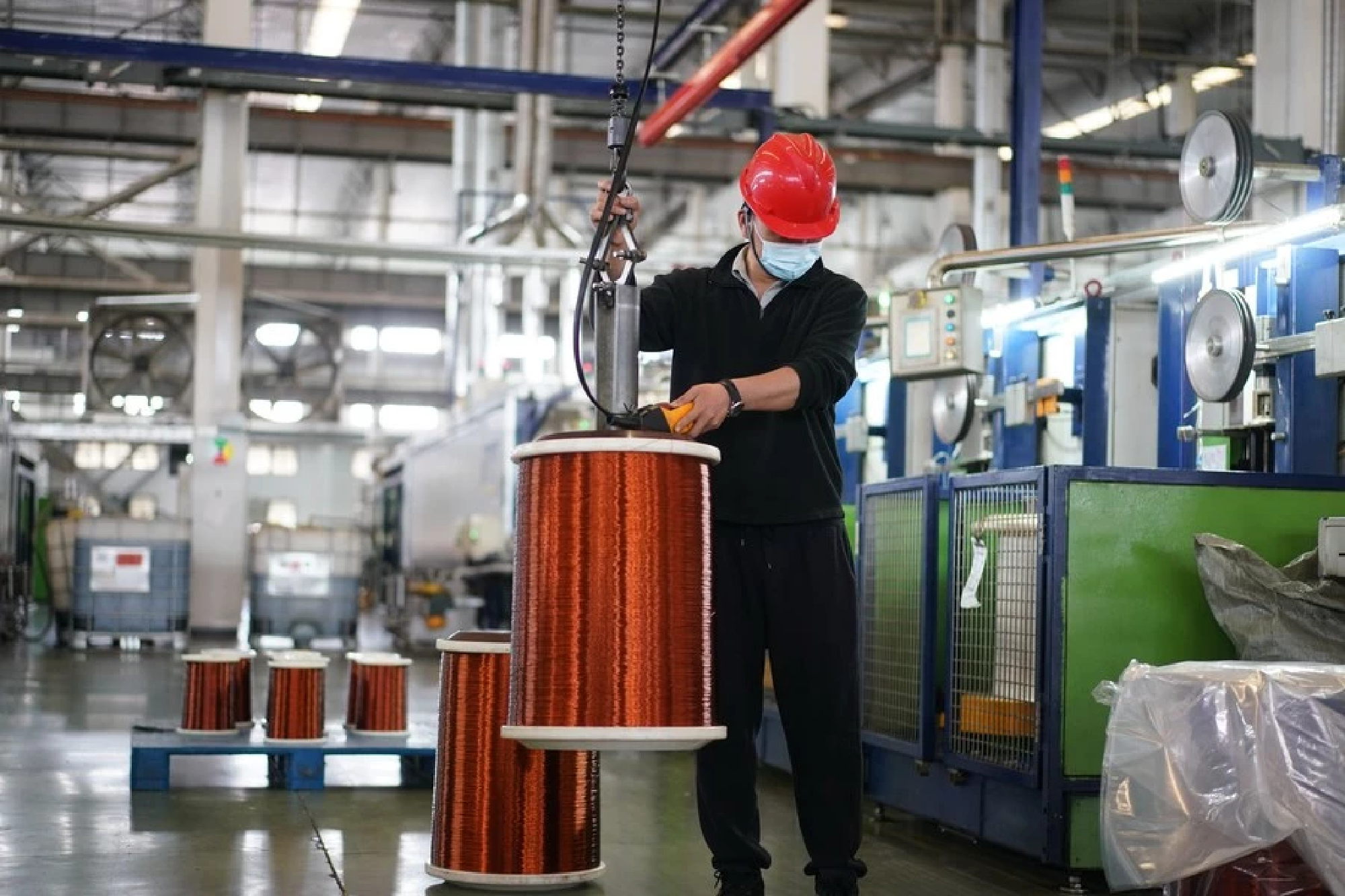
The People’s Bank of China, the country’s central bank, said on Thursday it will use multiple monetary tools to step up support for the real economy and reduce corporate financing costs.

PBOC to deploy tools to support real economy

Economic experts said they expect the PBOC to launch high-profile easing measures, including a cut in the reserve requirement ratio this week at the earliest, while the possibility of a near-term interest rate reduction exists.

“The PBOC will punctually and flexibly use multiple monetary tools, improve the functioning of monetary policy on both the aggregate and structural fronts, and beef up support for the real economy,” said Ruan Jianhong, a spokeswoman for the central bank.

With policy assistance, the country’s credit growth is expected to be steady and facilitate economic recovery, Ruan said, adding that China’s long-term economic fundamentals remain solid despite resurgent cases of COVID-19 and a rise in external uncertainties.

Ruan made the remarks at a news conference on Thursday after the State Council, China’s Cabinet, decided at an executive meeting on Wednesday to lower the reserve requirement ratio at an appropriate time.

The RRR refers to the proportion of money that lenders must hold as reserves. China last cut the RRR in December by 0.5 percentage point, sending the weighted average RRR to 8.4 percent.

Sun Guofeng, head of the PBOC’s monetary policy department, said the RRR cut will be part of the central bank’s stepped-up efforts to reduce financing costs in the real economy and strengthen financial assistance to sectors hit hard by COVID-19, such as small and micro enterprises and self-employed businesses.

Sun added that the PBOC will also launch two targeted re-lending facilities at an early date to boost technological innovation and inclusive elderly care services.

Apart from a near-term RRR cut, the PBOC might also cut the interest rate of its medium lending facility, a key policy interest rate, on Friday, said David Qu, a China economist at Bloomberg Economics.

Such high-level monetary support has become necessary as the recent surge in COVID-19 dealt a blow to economic activity, with Shanghai bearing the brunt of the hit, Qu said.

Wen Bin, chief researcher at China Minsheng Bank, said he now sees a lower possibility of an interest rate cut this month as the PBOC is poised to opt for the high-profile move of an RRR reduction.

The loan prime rate, a benchmark market-based lending rate to be unveiled on April 20, may still fall as an RRR cut would reduce the funding costs of financial institutions, Wen said.

The central bank also said at the news conference it would better meet the reasonable housing demand of homebuyers and help local governments in stabilizing local property markets.

Since the beginning of March, in the face of weakening demand, banks from more than 100 cities have reduced mortgage rates, making market-oriented adjustments adapted to local situations, according to the PBOC.

Qu at Bloomberg Economics said the central government may continue to keep the framework of property sector regulations unchanged but allow local governments to ease local property curbs to maintain property market stability and prevent a marked slowdown in the sector.

Asia News Network: The Nation (Thailand), The Korea Herald, The Straits Times (Singapore), China Daily,  Jakarta Post, The Star and Sin Chew Daily (Malaysia), The Statesman (India), Philippine Daily Inquirer, Yomiuri Shimbun and The Japan News, Gogo Mongolia,  Dawn (Pakistan),  The Island (Sri Lanka), Kuensel (Bhutan), Kathmandu Post (Nepal), Daily Star (Bangladesh), Eleven Media (Myanmar), the Phnom Penh Post and Rasmei Kampuchea (Cambodia), The Borneo Bulletin (Brunei), Vietnam News, and Vientiane Times (Laos).

Published : April 15, 2022

By : China Daily

‘Significant’ human rights abuses were committed by and for PH gov’t, says US State Dep’t

#SootinClaimon.Com : ขอบคุณแหล่งข้อมูล : หนังสือพิมพ์ The Nation.

https://www.nationthailand.com/international/40014555


MANILA, Philippines — The United States has received “credible information” showing that significant human rights abuses, including extrajudicial killings, have been made “by and in behalf” of the Philippine government, and that the Philippine National Police was “largely ineffective” in cleansing its ranks.

‘Significant’ human rights abuses were committed by and for PH gov’t, says US State Dep’t

In its 2021 Country Report on Human Rights Practices, the US Department of State said that it received “credible reports that members of the security forces committed numerous abuses.”

The US said that these significant rights issues included “unlawful or arbitrary killings, including extrajudicial killings, by and on behalf of the government and nonstate actors; reports of forced disappearance by and on behalf of the government and nonstate actors; torture by and on behalf of the government and nonstate actors; harsh and life-threatening prison conditions; (and) arbitrary detention by and on behalf of the government and nonstate actors.”

“The government investigated a limited number of reported human rights abuses, including abuses by its own forces, paramilitary forces, and insurgent and terrorist groups. Concerns about police impunity continued following the increase in killings by police in 2016. Significant concerns also persisted about impunity for other security forces, civilian national and local government officials, and powerful business and commercial figures,” the US stated.

“The national police’s institutional deficiencies and the public perception that corruption in the police was endemic continued,” the US said. “The PNP’s Internal Affairs Service remained largely ineffective.”

The US further cited serious problems with the independence of the judiciary; arbitrary and unlawful interference with privacy; serious abuses in a conflict; serious restrictions on free expression and media, including violence, threats of violence, and unjustified arrests or prosecutions of journalists, censorship, and the use of criminal libel laws to punish journalists; high-level and widespread government corruption; serious government restrictions on or harassment of domestic human rights organizations; and threats and violence against labor activists.

It cited several reports of impunity in the country, specifically in the PNP — one of which was when the Office of the Ombudsman cleared officers from the Manila Police District of its involvement in a 2017 incident in which 12 individuals were found detained in a secret jail hidden behind a wooden bookshelf.

This, despite the Commission on Human Rights (CHR) insistence that the police clearly violated human rights standards, and even the PNP mandate to “serve and protect.”

While US acknowledged the PNP’s efforts in the cleansing program after it reported that its internal cleansing program — which led to 166 persons facing disciplinary sanctions between March and August, 2021; 75 of the 166 were dismissed from service, 48 penalized with one rank demotion, and 43 suspended — it, however, cited another incident in October when the Quezon City Regional Trial Court acquitted 19 police officers charged with killing former Albuera, Leyte Mayor Roland Espinosa inside his cell after President Duterte tagged him as a drug criminal, led by Police Superintendent Marvin Marcos.

Marcos was the former chief of the PNP’s Criminal Investigation and Detection Group Region 8, who was promoted to chief of the 12th PNP Regional Office just 15 months after Espinosa’s killing, and months of senate hearings.

Meanwhile, while the Congressional Committee on Appointments determines whether senior officers selected for promotion have a history of human rights breaches, the US Department of State noted that this merely implies the commission can defer a promotion indefinitely if it uncovers a history of abuse.

“Violations, however, do not preclude promotion,” the report further said.

PNP refutes report

Objecting to the findings of the US state department, the PNP in a statement on Thursday reiterated that it had already dismissed 5,999 “errant” personnels during its internal cleansing program from July 2016 until March 30, 2022 after facing administrative charges due to grave offenses.
.
The PNP said that 714 of these police officers were also involved in drug related cases.

It also showed that 1,129 other officers were demoted, 10,490 were suspended, 848 faced forfeiture of salary, 2,475 were reprimanded, 208 were restricted and privileges were withheld for 286 more personnel.

“These numbers of penalized personnel reflect the PNP’s commitment to cleanse its ranks in order to carry out their mandate in protecting the community,” said the PNP.

Because of this, the PNP said that it opposes the recent report of the US Department of State.

“Although we are not completely disregarding this report, the PNP would like to respond to it with all the significant accomplishments of IAS, as mentioned above,” said PNP.

By: Zacarian Sarao

Asia News Network: The Nation (Thailand), The Korea Herald, The Straits Times (Singapore), China Daily,  Jakarta Post, The Star and Sin Chew Daily (Malaysia), The Statesman (India), Philippine Daily Inquirer, Yomiuri Shimbun and The Japan News, Gogo Mongolia,  Dawn (Pakistan),  The Island (Sri Lanka), Kuensel (Bhutan), Kathmandu Post (Nepal), Daily Star (Bangladesh), Eleven Media (Myanmar), the Phnom Penh Post and Rasmei Kampuchea (Cambodia), The Borneo Bulletin (Brunei), Vietnam News, and Vientiane Times (Laos).

Published : April 15, 2022

By : Philippine Daily Inquirer

[Vietnam] Deputy foreign minister arrested in bribery case involving repatriation flights

#SootinClaimon.Com : ขอบคุณแหล่งข้อมูล : หนังสือพิมพ์ The Nation.

https://www.nationthailand.com/international/40014554


HÀ NỘI — Deputy foreign minister Tô Anh Dũng has been arrested over allegations he received bribes when organising repatriation flights for Vietnamese citizens abroad during the COVID-19 pandemic.

[Vietnam] Deputy foreign minister arrested in bribery case involving repatriation flights

The Investigation Security Agency under the Ministry of Public Security on Thursday launched an investigation into the senior government official.

The arrest is the latest development in the investigation into bribery accusations at the Ministry of Foreign Affairs’ Consular Department and other authorities. 

Two other men were also arrested for their alleged involvement in the case. They are Phạm Trung Kiên, an officer of the Ministry of Health’s Department of Medical Equipment and Projects, and Vũ Anh Tuấn, a former official of the Ministry of Public Security’s Department of Immigration.

In January, the Investigation Security Agency launched an official investigation into the bribery case. It issued documents to start criminal proceedings against and detain four other officials of the Consular Department for “taking bribes” in line with Article 354 of the Penal Code.

They are Nguyễn Thị Hương Lan, head of the Consular Department; Đỗ Hoàng Tùng, deputy head of the department; Lê Tuấn Anh, chief of the department’s office; and Lưu Tuấn Dũng, deputy head of the citizen protection desk at the department.

Further details of their crimes have not yet been made available by police, but since the beginning of the COVID-19 pandemic when Việt Nam enforced stringent border closures and only let in a very limited number of flights, including special repatriation flights (so-called rescue flights) for Vietnamese stranded overseas, many people complained of exorbitant prices and procedure hassles for those few slots back home.

Việt Nam organised nearly 800 flights since the beginning of the pandemic, repatriating more than 200,000 Vietnamese citizens from over 60 countries and territories. — VNS

Asia News Network: The Nation (Thailand), The Korea Herald, The Straits Times (Singapore), China Daily,  Jakarta Post, The Star and Sin Chew Daily (Malaysia), The Statesman (India), Philippine Daily Inquirer, Yomiuri Shimbun and The Japan News, Gogo Mongolia,  Dawn (Pakistan),  The Island (Sri Lanka), Kuensel (Bhutan), Kathmandu Post (Nepal), Daily Star (Bangladesh), Eleven Media (Myanmar), the Phnom Penh Post and Rasmei Kampuchea (Cambodia), The Borneo Bulletin (Brunei), Vietnam News, and Vientiane Times (Laos).

Published : April 15, 2022

By : Vietnam News

AI robots deployed to fill void in senior care. But can they?

#SootinClaimon.Com : ขอบคุณแหล่งข้อมูล : หนังสือพิมพ์ The Nation.

https://www.nationthailand.com/international/40014553


Studies show robots help seniors overcome feelings of boredom, but still in infant stage for two-way communication

AI robots deployed to fill void in senior care. But can they?

The COVID-19 pandemic has been particularly cruel to older people. Digitally estranged, those living alone were virtually cut off from the world as social distancing disrupted operations of senior centers and other community services.

To fill this void in senior care, authorities and institutions have deployed companion robots.

These care machines with artificial intelligence have been billed as an example of the pandemic accelerating the deployment of cutting-edge technology. They are intended to provide emergency monitoring for older adults living alone, and help ease their loneliness, developers say.

Meet Hyodol and others

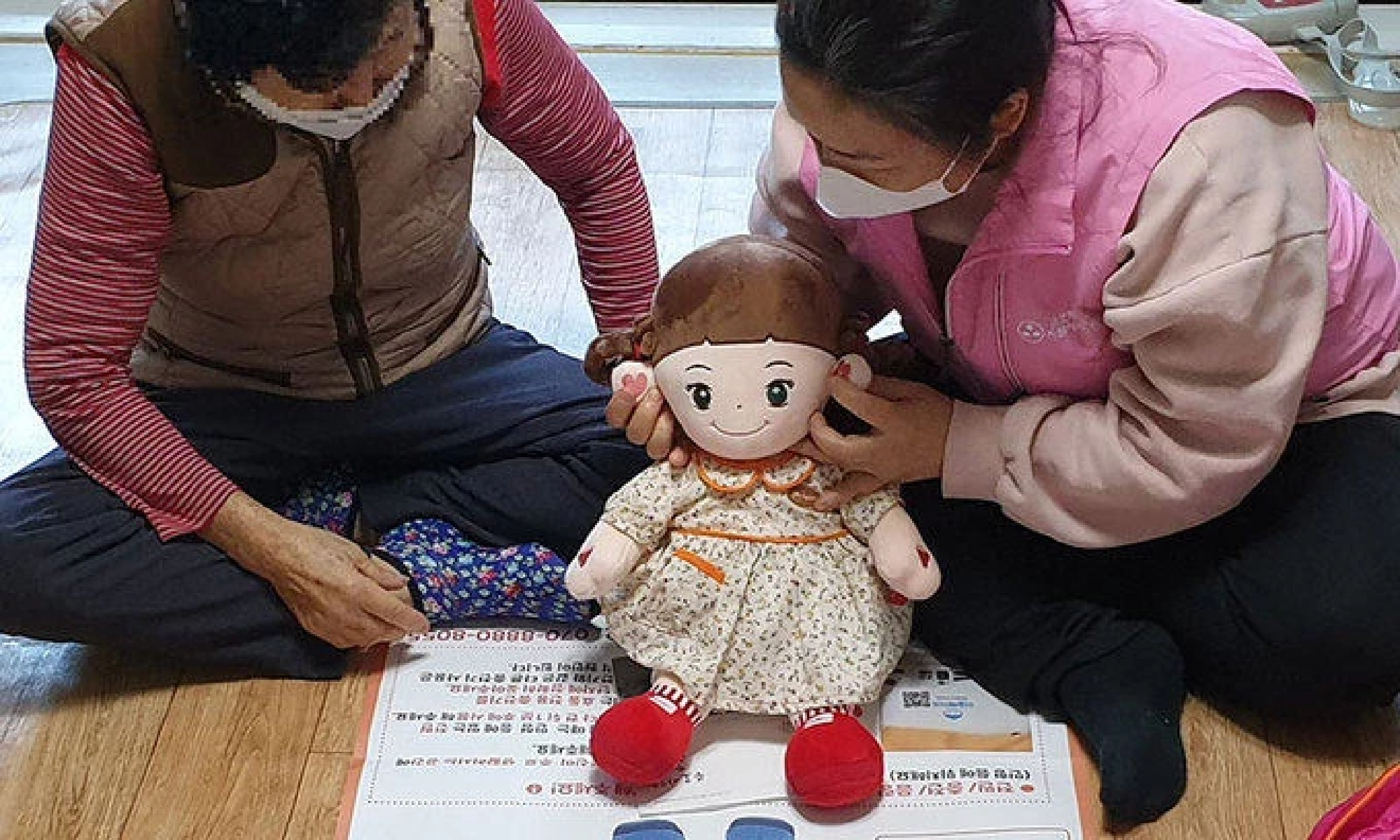
“Hyodol” is one of the most well-known AI companion robots for seniors here, developed by a startup of the same name.

Since its launch in 2018, more than 5,400 units of the AI-powered stuffed toys have been supplied to 114 local governments including Jongno-gu in Seoul and 250 institutions nationwide, according to the Seoul-based company.

With the convergence of sensors, Internet of Things and machine learning technologies, the service robot notifies the guardian of a user when no movement is detected for a certain period of time. It sends emergency text messages and phone calls when a user presses and holds its hand for more than three seconds, a gesture that can be custom set for such situations.

Standing 35 centimeters tall, the doll is also loaded with 9 types of entertainment programs, including sets of quizzes and stories. It can play more than 3,000 songs, with genres ranging from classical to trot — an old Korean pop genre loved by seniors.

Among Hyodol’s features, senior users like the talking alarm function the most, as it reminds them to take medicine, said Lee Yae-seul, a Hyodol official.

The doll is designed to talk when touched by the user and in accordance with customizable time settings such as meal times.

“We want an emotional exchange (between users and Hyodol) so that users feel like they are being cared for and that there is someone by their side,” the Hyodol official said.

Another caregiving companion robot adopted by local governments including Haenam County Office in South Jeolla Province is Dasomi, developed by Wonderful Platform.

Dasomi looks like a barcode reader with a screen, and has functions similar to Hyodol. The screen, which can play dementia prevention gymnastics videos on demand, works as a video conferencing device that connects its users with family members or government officials, allowing them to remotely check on the user.

Seoul-based Mr. Mind also launched its version of fluffy AI companion robots, which the firm says monitors and tracks mental and physical health by storing and analyzing what users say.

How far have the robots come?

A study published in the Journal of the Korean Gerontological Society last year found that users were “moved and strengthened” by the words of encouragement from Hyodol.

The authors, including Lee Eun-kyoung, a professor at the University of North Carolina School of Social Work, concluded that the robot helped research participants — 12 people whose average age is 82 and have used the robot for 18 months on average – improve their daily activity and depression levels.

It also found that the users felt discomfort when Hyodol failed to understand their words, and when their hopes for a two-way communication and building bonds were not met.

Another study conducted by Song Moon-sun, a doctoral student at Ewha Womans University, found that users started to experience a personification process of Hyodol around three months of use.

“In the first encounter, female participants were more likely to perceive Hyodol as a ‘doll,’ while men experienced anthropomorphic disorders as they recognized it as a ‘machine,’ showing dissatisfaction with the low intellectual level of the robot and simplicity of their conversations with it,” Song said.

In another study published by the Society of Digital Policy & Management in February, Suwon Women’s University’s Nursing Professor Kim Yeun-mi found a similar effectiveness in the use of robots for the elderly in one-person households.

“If such non-face-to-face care technology is introduced to the elderly care field in line with ‘living with COVID-19,’ it can be expected to contribute to cognitive function training and reduction of depression among the elderly,” Kim noted in the report. The research was conducted on 38 people, and included an experimental and control group.

Lee Kyoung-jun, a business management professor at Kyung Hee University, was skeptical of an AI companion robot like Hyodol satisfying seniors’ needs.

He said even tech behemoths’ virtual assistant programs, including Apple’s Siri, Google’s Assistant and Samsung’s Bixby, have not reached the point where they can communicate with users like human beings.

“Giving physical care (through a robot) may be easy, but emotional care is much more difficult,” he said.

For similar reasons, Oh Yoon-seon, an assistant professor at the Department of Electronic Engineering at Hanyang University in Seoul, said it is better for senior care technology to focus on medical monitoring, rather than the interaction capabilities.

“Especially for elderly users with mild dementia, it is important that the robot is capable of detecting their activities in the event of a collapse or the user leaving home without a companion,” she said.

Deep learning technology may also be needed to facilitate human-computer communication, as some seniors are unfamiliar with using digital gadgets with complex interfaces, she added.


By Park Han-na

Asia News Network: The Nation (Thailand), The Korea Herald, The Straits Times (Singapore), China Daily,  Jakarta Post, The Star and Sin Chew Daily (Malaysia), The Statesman (India), Philippine Daily Inquirer, Yomiuri Shimbun and The Japan News, Gogo Mongolia,  Dawn (Pakistan),  The Island (Sri Lanka), Kuensel (Bhutan), Kathmandu Post (Nepal), Daily Star (Bangladesh), Eleven Media (Myanmar), the Phnom Penh Post and Rasmei Kampuchea (Cambodia), The Borneo Bulletin (Brunei), Vietnam News, and Vientiane Times (Laos).

Published : April 15, 2022

By : The Korea Herald

India to up aid to Sri Lanka by $2 billion more: Report

#SootinClaimon.Com : ขอบคุณแหล่งข้อมูล : หนังสือพิมพ์ The Nation.

https://www.nationthailand.com/international/40014552


With financial crisis-ridden Sri Lanka having announced a temporary suspension of its debt payment, India is reportedly willing to step in and provide financial assistance of another two billion dollars to the nation.

India to up aid to Sri Lanka by $2 billion more: Report

Sri Lanka’s High Commissioner to India Milinda Moragoda met Indian Finance Minister Nirmala Sitharaman in New Delhi yesterday (April 13) to review the present status of the two nations’ economic cooperation with each other as Sri Lanka enters negotiations with the IMF for an economic adjustment programme, reports our New Delhi correspondent.

Moragoda thanked Sitharaman for the assistance India is extending to Sri Lanka in the form of credits for essential commodities and fuel and also for balance of payment support at these challenging times, the Sri Lankan High Commission said in a statement.

“The Minister and the High Commissioner observed that this assistance could form part of the bridging finance required by Sri Lanka until the economic adjustment programme with the IMF would be negotiated,” it said.

India is the first country to support Sri Lanka to secure bridging finance until the programme takes place.

Earlier, Sri Lanka had announced suspension of debt repayment.

A Reuters report, quoting unnamed Indian government sources, said India is willing to offer more swap lines and loans.

India, according to the Reuter story, can still give them up to two billion dollars in swaps and support.

Another source said Sri Lanka was seeking India’s help to roll over some $2 billion in dues, such as those owed to Asian Clearing Union. The source said the response had been positive from India, according to Reuters.

India has so far committed 1.9 billion dollars to Sri Lanka in loans, credit lines and currency swaps. Sri Lanka has also sought another 500 million dollars in credit for fuel.

India has also rushed sugar, rice and wheat to Sri Lanka ahead of the country’s Sinhala and Tamil New Year today.

Asia News Network: The Nation (Thailand), The Korea Herald, The Straits Times (Singapore), China Daily,  Jakarta Post, The Star and Sin Chew Daily (Malaysia), The Statesman (India), Philippine Daily Inquirer, Yomiuri Shimbun and The Japan News, Gogo Mongolia,  Dawn (Pakistan),  The Island (Sri Lanka), Kuensel (Bhutan), Kathmandu Post (Nepal), Daily Star (Bangladesh), Eleven Media (Myanmar), the Phnom Penh Post and Rasmei Kampuchea (Cambodia), The Borneo Bulletin (Brunei), Vietnam News, and Vientiane Times (Laos).

Published : April 15, 2022

By : The Daily Star

The latest news on what’s happening in the region

#SootinClaimon.Com : ขอบคุณแหล่งข้อมูล : หนังสือพิมพ์ The Nation.

https://www.nationthailand.com/international/40014539


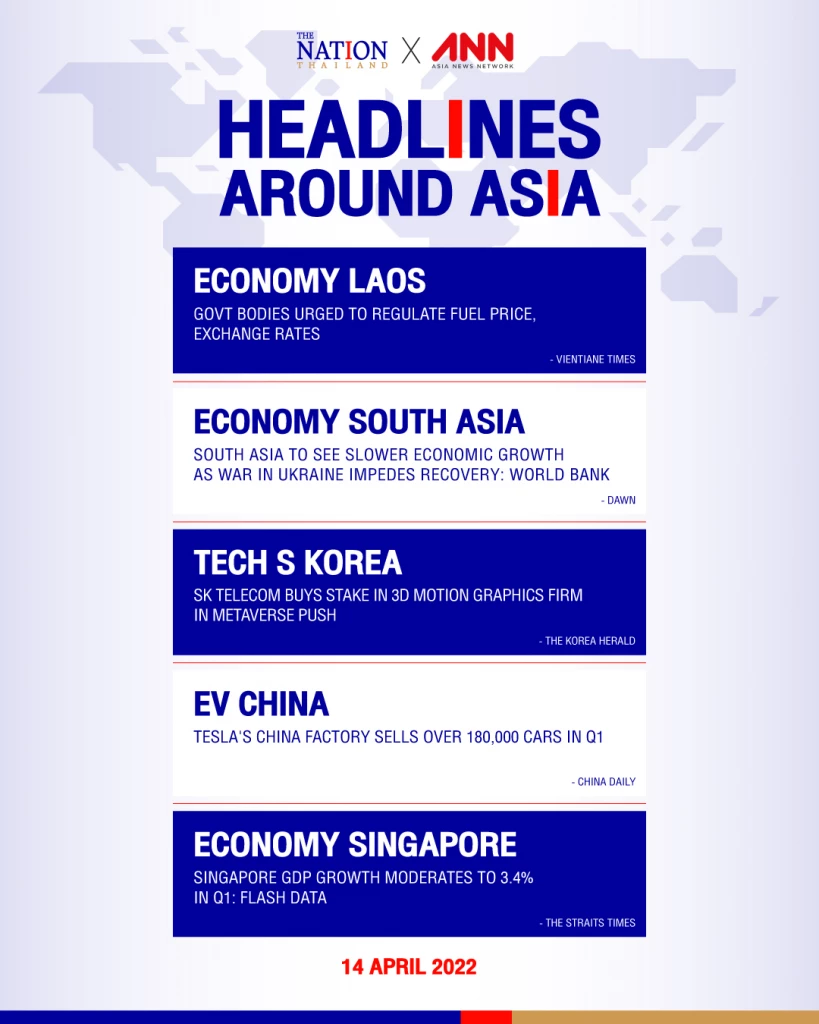
Check out what’s hot in the region on April 14 as The Nation puts together headlines from members of Asia News Network (ANN). Click to read more:

The latest news on what's happening in the region

Economy Laos
Govt bodies urged to regulate fuel prices, exchange rates
 
Vientiane Times
https://www.nationthailand.com/international/40014518

Economy South Asia
South Asia to see slower economic growth as the war in Ukraine impedes recovery: World Bank

DAWN ( Pakistan )
https://www.nationthailand.com/international/40014516

Tech S Korea
SK Telecom buys stake in 3D motion graphics firm in metaverse push 

The Korea Herald
https://www.nationthailand.com/international/40014520


EV China
Tesla’s China factory sells over 180,000 cars in Q1 

China Daily
https://www.nationthailand.com/international/40014519


Economy Singapore 
Singapore GDP growth moderates to 3.4% in Q1: Flash data
 
The Straits Times ( Singapore )
https://www.nationthailand.com/international/40014517

Asia News Network: The Nation (Thailand), The Korea Herald, The Straits Times (Singapore), China Daily,  Jakarta Post, The Star and Sin Chew Daily (Malaysia), The Statesman (India), Philippine Daily Inquirer, Yomiuri Shimbun and The Japan News, Gogo Mongolia,  Dawn (Pakistan),  The Island (Sri Lanka), Kuensel (Bhutan), Kathmandu Post (Nepal), Daily Star (Bangladesh), Eleven Media (Myanmar), the Phnom Penh Post and Rasmei Kampuchea (Cambodia), The Borneo Bulletin (Brunei), Vietnam News, and Vientiane Times (Laos).

Published : April 14, 2022

SK Telecom buys stake in 3D motion graphics firm in metaverse push

#SootinClaimon.Com : ขอบคุณแหล่งข้อมูล : หนังสือพิมพ์ The Nation.

https://www.nationthailand.com/international/40014520


South Korean telecommunications giant SK Telecom said Wednesday it has agreed to buy a stake in Morph Interactive, a Seoul-based three-dimensional motion graphics company, in a move to bolster a strategic partnership for accelerating its metaverse push.

SK Telecom buys stake in 3D motion graphics firm in metaverse push

The deal terms, such as acquisition cost and the amount of Morph Interactive’s stake, was undisclosed upon the consent of the two companies.

Morph Interactive has been dedicated to real-time 3D visual effects on Unity’s game engine, as well as technologies for virtual reality and augmented reality. It has worked with Korean telecom firms SK Telecom and KT.

SK Telecom said the new strategic investment will accelerate the speed of advancing ifland, a fledgling metaverse platform where users and clients can make digital interactions in a virtual world.

By the end of 2022, ifland aims to adopt gamification, issue its own digital asset for crypto economy, and launch a shop that allows users to custom design outfits for their avatars.

Morph Interactive has been a longtime partner and played a critical role in developing ifland metaverse platform at its early stage, SK Telecom added.

The strategic investment will lay a cornerstone for “providing ifland users with more fun factors,” Yang Maeng-seok, head of SK Telecom‘s metaverse business, said in a statement.

Launched in July 2021, ifland is considered one of the two major metaverse platforms in Korea, along with Naver’s Zepeto. The global version of ifland was unveiled in the Mobile World Congress 2022 in Barcelona in March.

By Son Ji-hyoung

Asia News Network: The Nation (Thailand), The Korea Herald, The Straits Times (Singapore), China Daily,  Jakarta Post, The Star and Sin Chew Daily (Malaysia), The Statesman (India), Philippine Daily Inquirer, Yomiuri Shimbun and The Japan News, Gogo Mongolia,  Dawn (Pakistan),  The Island (Sri Lanka), Kuensel (Bhutan), Kathmandu Post (Nepal), Daily Star (Bangladesh), Eleven Media (Myanmar), the Phnom Penh Post and Rasmei Kampuchea (Cambodia), The Borneo Bulletin (Brunei), Vietnam News, and Vientiane Times (Laos).

Published : April 14, 2022

By : The Korea Herald