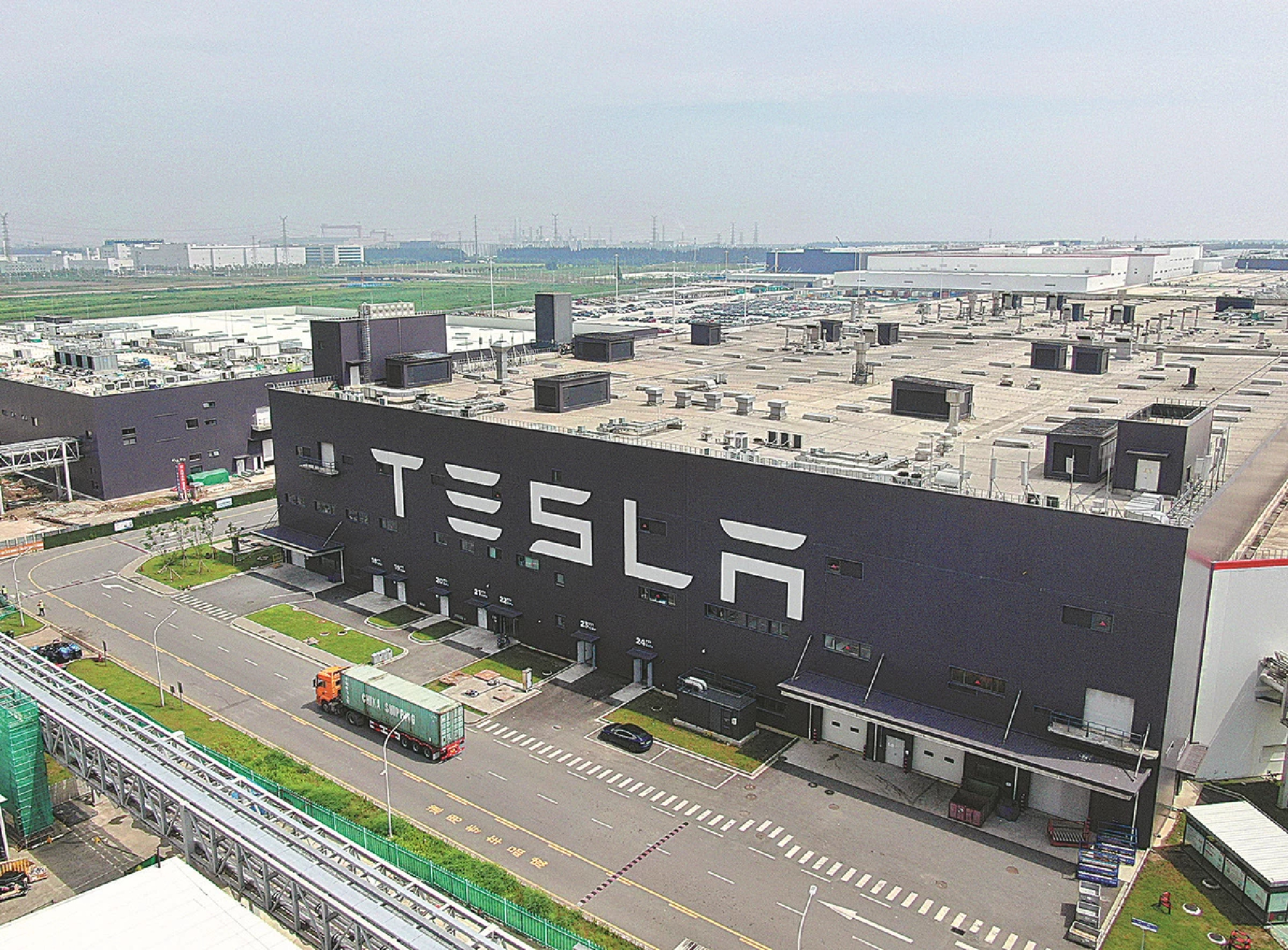
SHANGHAI — Tesla’s factory in China sold over 180,000 vehicles in the first quarter of 2022, the company said Monday.
The company launched “zero contact” self-service car collection services in many parts of China in the face of sporadic COVID-19 resurgences, shortening the delivery process from about 2 hours to some 20 minutes.
Deliveries at the Shanghai Gigafactory stood at 484,130 vehicles last year, an increase of 235 percent from 2020, accounting for 51.7 percent of Tesla’s global production capacity in 2021.
Last year, Tesla’s Shanghai factory delivered more than 160,000 vehicles to overseas markets, meeting the needs of more than 10 countries and regions in Europe and Asia.
Asia News Network: The Nation (Thailand), The Korea Herald, The Straits Times (Singapore), China Daily, Jakarta Post, The Star and Sin Chew Daily (Malaysia), The Statesman (India), Philippine Daily Inquirer, Yomiuri Shimbun and The Japan News, Gogo Mongolia, Dawn (Pakistan), The Island (Sri Lanka), Kuensel (Bhutan), Kathmandu Post (Nepal), Daily Star (Bangladesh), Eleven Media (Myanmar), the Phnom Penh Post and Rasmei Kampuchea (Cambodia), The Borneo Bulletin (Brunei), Vietnam News, and Vientiane Times (Laos).
The government has told the departments concerned to take steps to control the rising price of fuel and consumer goods, and stabilise currency exchange rates, to minimise the impact on the general public.
The instruction was given at an extraordinary meeting of the government held on Tuesday, when the Ministry of Finance and the Ministry of Commerce and Industry were ordered to address issues surrounding skyrocketing fuel prices.
In addition, the commerce ministry was instructed to bring the cost of consumer goods under control, amid price rises in all categories.
The sectors of government responsible were also told to stabilise currency exchange rates by enforcing the regulations so that opportunists are unable to manipulate exchange rates.
In addition, the meeting, chaired by Prime Minister Phankham Viphavanh, instructed government officials to modernise the management of importing businesses to ensure that sufficient foreign currency enters the banking system.
The meeting was attended by deputy prime ministers, the vice president of the National Assembly, and other cabinet members.
Earlier this month, Minister of Finance Bounchom Ubonpaseuth said the government would consider reducing or even waiving excise tax on imported fuel, in a bid to slow rising prices at petrol stations.
If the proposed cut is approved, the excise tax charged on diesel, which is currently 21 percent, would be lowered to 11 percent. The excise tax on regular grade petrol, which is currently 31 percent, would be reduced to 16 percent.
However, no decision on price cuts was made at the monthly government meeting.
Since the start of this year, the government has raised fuel prices eight times, leading to an increase in the price of goods that depend on fuel for their production or transport.
The spiralling cost of fuel is one of the main factors driving inflation, which surged by 8.5 percent year-on-year in March.
The meeting agreed in principle to reopen the country to visitors but assigned the bodies responsible to discuss the details of the scheme.
All sectors of society are urged to expedite economic recovery from the Covid-19 pandemic and strive to fulfil the two national agendas that have been drawn up to address economic and financial difficulties and drug trafficking.
Meanwhile, the Ministry of Agriculture and Forestry was told to boost productivity for export and to ensure food security in Laos.
The government meeting also endorsed three laws, which will be submitted for debate at the upcoming session of the National Assembly.
These include two new draft laws relating to fine arts and dam safety and one amended draft law concerning State property.
By Somsack Pongkhao
Asia News Network: The Nation (Thailand), The Korea Herald, The Straits Times (Singapore), China Daily, Jakarta Post, The Star and Sin Chew Daily (Malaysia), The Statesman (India), Philippine Daily Inquirer, Yomiuri Shimbun and The Japan News, Gogo Mongolia, Dawn (Pakistan), The Island (Sri Lanka), Kuensel (Bhutan), Kathmandu Post (Nepal), Daily Star (Bangladesh), Eleven Media (Myanmar), the Phnom Penh Post and Rasmei Kampuchea (Cambodia), The Borneo Bulletin (Brunei), Vietnam News, and Vientiane Times (Laos).
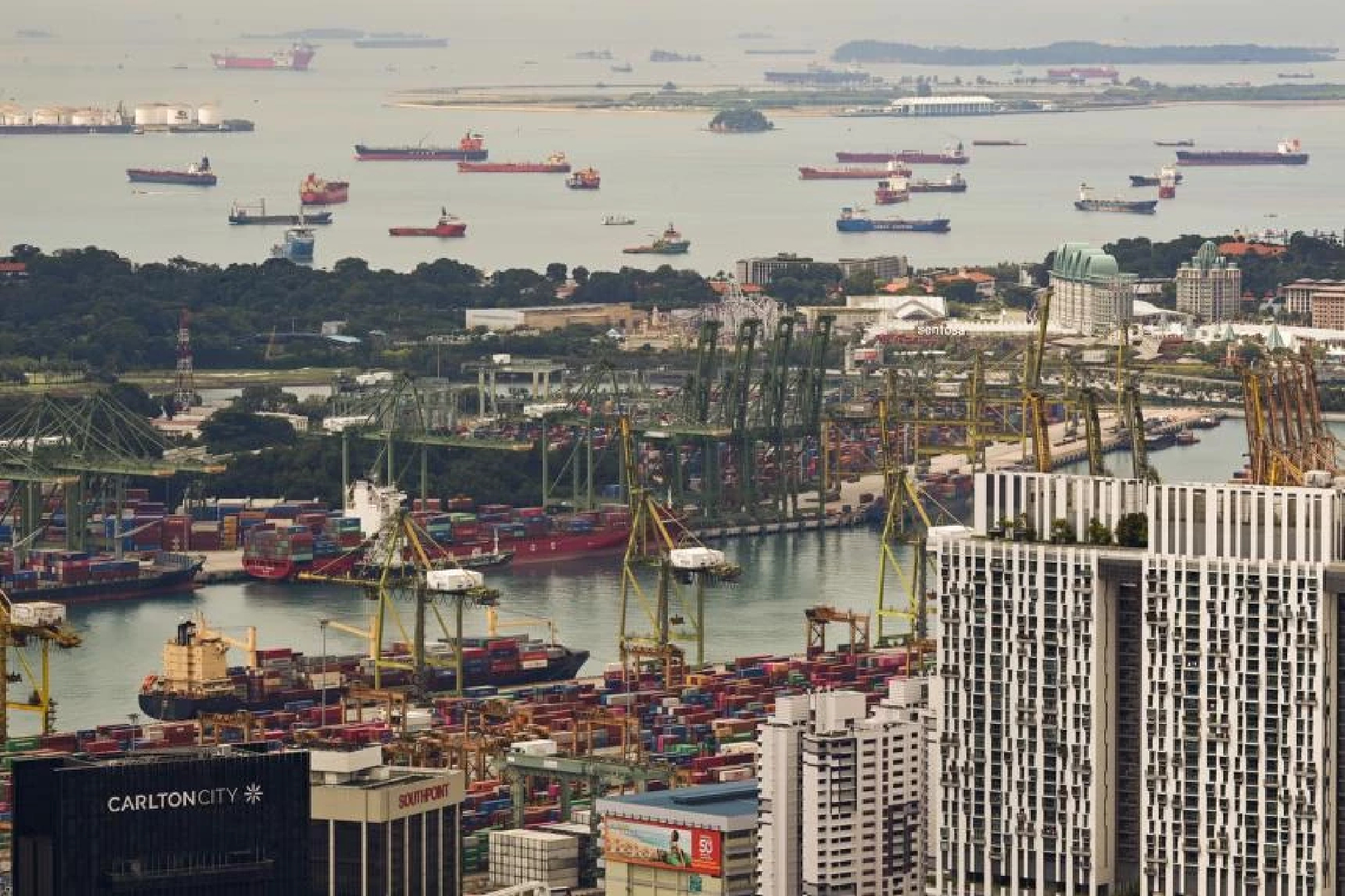
SINGAPORE – Singapore’s economy expanded at a slower pace in the first quarter of 2022, falling slightly short of analysts’ estimates.
Gross domestic product (GDP) grew 3.4 per cent year on year, moderating from the 6.1 per cent expansion seen in the fourth quarter of 2021, according to advance estimates released by the Ministry of Trade and Industry (MTI) on Thursday (April 14).
This was lower than the 3.8 per cent year-on-year growth forecast by economists in a Bloomberg poll.
On a quarter-on-quarter seasonally adjusted basis, the economy expanded 0.4 per cent, slower than the 2.3 per cent growth seen in the previous quarter.
Most sectors saw slower growth in the first quarter on a year-on-year basis.
Growth for the key manufacturing sector normalised to 6 per cent year on year, compared with the 15.5 per cent seen in the fourth quarter of last year.
The electronics and precision engineering clusters continued to record strong output growth, driven by sustained global demand for semiconductors and semiconductor equipment.
On a quarter-on-quarter seasonally adjusted basis, the manufacturing sector contracted by 1.2 per cent in the first quarter, a reversal from the 6.3 per cent growth in the previous quarter.
The construction sector grew 1.8 per cent year on year in the first quarter, slower than the 2.9 per cent posted the previous quarter.
In absolute terms, the value-added of the sector remained 25.3 per cent below its pre-pandemic level, with activity at construction worksites remaining weighed down by labour shortages.
Among the services sectors, the group of sectors comprising the wholesale and retail trade, and transport and storage segments posted a 3.2 per cent increase year on year, extending the growth seen the preceding quarter.
In particular, the wholesale trade sector grew in tandem with the robust performance of Singapore’s merchandise exports.
The value-added of this group of sectors remained 1.2 per cent below its pre-pandemic level in the first quarter.
Meanwhile, the information and communications, finance and insurance and professional services sectors collectively expanded 5.3 per cent year on year in the first quarter, moderating from the 6.6 per cent growth seen in the preceding quarter.
However, on a quarter-on-quarter seasonally adjusted basis, the sectors contracted 2 per cent in the first quarter, reversing the 2.5 per cent increase seen in the fourth quarter.
The remaining group of services sectors saw quicker growth of 3 per cent year on year in the first quarter, compared with the 1.6 per cent expansion in the previous quarter.
All sectors within the group expanded, except for the accommodation and food services sector, which was dampened primarily by a fall in government demand for hotel rooms to serve as quarantine facilities as Singapore transitioned towards living with Covid-19.
For the whole of 2021, Singapore’s economy grew 7.6 per cent, rebounding from the 4.1 per cent contraction seen in the previous year.
Ahead of Russia’s invasion of Ukraine in February, the Ministry of Trade and Industry had projected GDP growth of 3 per cent to 5 per cent for the whole of 2022.
Rising price pressures have been a key concern so far in 2022, with global commodity price shocks and supply chain disruptions adding to domestic cost pressures.
To safeguard against the inflation threat, the Monetary Authority of Singapore further tightened monetary policy in its biannual review on Thursday, building on policy moves made last October and in January this year.
This tighter stance will slow the inflation momentum and help ensure medium-term price stability, the central bank said.
By Choo Yun Ting
Asia News Network: The Nation (Thailand), The Korea Herald, The Straits Times (Singapore), China Daily, Jakarta Post, The Star and Sin Chew Daily (Malaysia), The Statesman (India), Philippine Daily Inquirer, Yomiuri Shimbun and The Japan News, Gogo Mongolia, Dawn (Pakistan), The Island (Sri Lanka), Kuensel (Bhutan), Kathmandu Post (Nepal), Daily Star (Bangladesh), Eleven Media (Myanmar), the Phnom Penh Post and Rasmei Kampuchea (Cambodia), The Borneo Bulletin (Brunei), Vietnam News, and Vientiane Times (Laos).
The World Bank on Wednesday said the South Asian region was now more vulnerable to risks from the volatile external environment due to the impacts of the Ukraine war and persistent economic challenges with slower growth.
In its twice-a-year regional update released on Wednesday, the World Bank said growth in South Asia, already uneven and fragile, would be slower than previously projected. While some countries experienced a solid rebound in GDP growth, it said Afghanistan faced a humanitarian crisis, Pakistan a political crisis and Sri Lanka a balance of payments crisis.
The latest ‘South Asia Economic Focus Reshaping Norms: A New Way Forward’ projected the region to grow by 6.6 per cent in 2022 and by 6.3pc in 2023. The 2022 forecast was revised downward by one percentage point compared to the January projection.
The report said countries in South Asia were already grappling with rising commodity prices, supply bottlenecks, and vulnerabilities in financial sectors. The war in Ukraine would amplify these challenges, further contributing to inflation, increasing fiscal deficits, and deteriorating current account balances.
“South Asia has faced multiple shocks in the past two years, including the scarring effects of the Covid-19 pandemic. High oil and food prices caused by the war in Ukraine will have a strong negative impact on peoples’ real incomes,” said Hartwig Schafer, World Bank Vice President for South Asia.
Observations on energy
The report said energy subsidies as a per cent of GDP were the highest in Pakistan and also the largest in the region, which meant that price increases in international markets potentially posed a tough fiscal challenge.
The war and its impact on fuel prices could provide the region with the much-needed impetus to reduce reliance on fuel imports and transition to a green, resilient and inclusive growth trajectory. The report recommended that countries steer away from inefficient fuel subsidies that tend to benefit wealthier households and deplete public resources.
It said South Asian countries should also move towards a greener economy by gradually introducing taxation that puts tariffs on products that cause environmental damage.
Additional challenges
It added that South Asian economies were emerging from the deep Covid-19 recession, burdened by high inflation, rising current account deficits and deteriorated fiscal balances, which were exacerbated by the impact of the war in Ukraine.
Financial sectors in South Asia, already in relatively weakened positions before Covid-19, were effectively supported during the pandemic but were facing renewed challenges.
It noted that rising interest rates in advanced economies could lead to capital outflows, putting pressure on the currencies in countries grappling with high external indebtedness. This is of particular concern in countries with high levels of foreign currency-denominated debt, such as Sri Lanka, Pakistan and the Maldives.
Indicators of ability to pay, such as the ratio of public external debt service to exports and remittances, were the highest in Pakistan and Sri Lanka.
Another challenge the region faced was the disproportionate economic impact the pandemic had on women. The report included an in-depth analysis of gender disparities in the region and their link with deeply rooted social norms and recommended policies that would support women’s access to economic opportunities, tackle discriminatory norms and improve gender outcomes for inclusive growth.
Asia News Network: The Nation (Thailand), The Korea Herald, The Straits Times (Singapore), China Daily, Jakarta Post, The Star and Sin Chew Daily (Malaysia), The Statesman (India), Philippine Daily Inquirer, Yomiuri Shimbun and The Japan News, Gogo Mongolia, Dawn (Pakistan), The Island (Sri Lanka), Kuensel (Bhutan), Kathmandu Post (Nepal), Daily Star (Bangladesh), Eleven Media (Myanmar), the Phnom Penh Post and Rasmei Kampuchea (Cambodia), The Borneo Bulletin (Brunei), Vietnam News, and Vientiane Times (Laos).
Asia News Network: The Nation (Thailand), The Korea Herald, The Straits Times (Singapore), China Daily, Jakarta Post, The Star and Sin Chew Daily (Malaysia), The Statesman (India), Philippine Daily Inquirer, Yomiuri Shimbun and The Japan News, Gogo Mongolia, Dawn (Pakistan), The Island (Sri Lanka), Kuensel (Bhutan), Kathmandu Post (Nepal), Daily Star (Bangladesh), Eleven Media (Myanmar), the Phnom Penh Post and Rasmei Kampuchea (Cambodia), The Borneo Bulletin (Brunei), Vietnam News, and Vientiane Times (Laos).
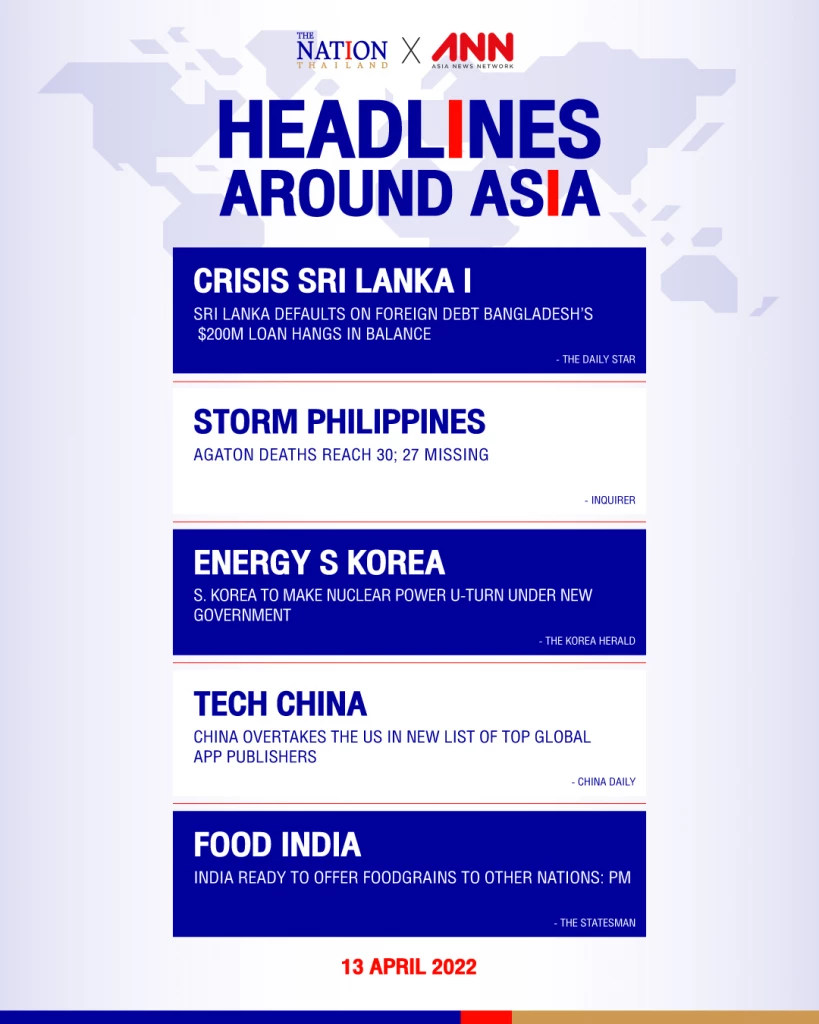
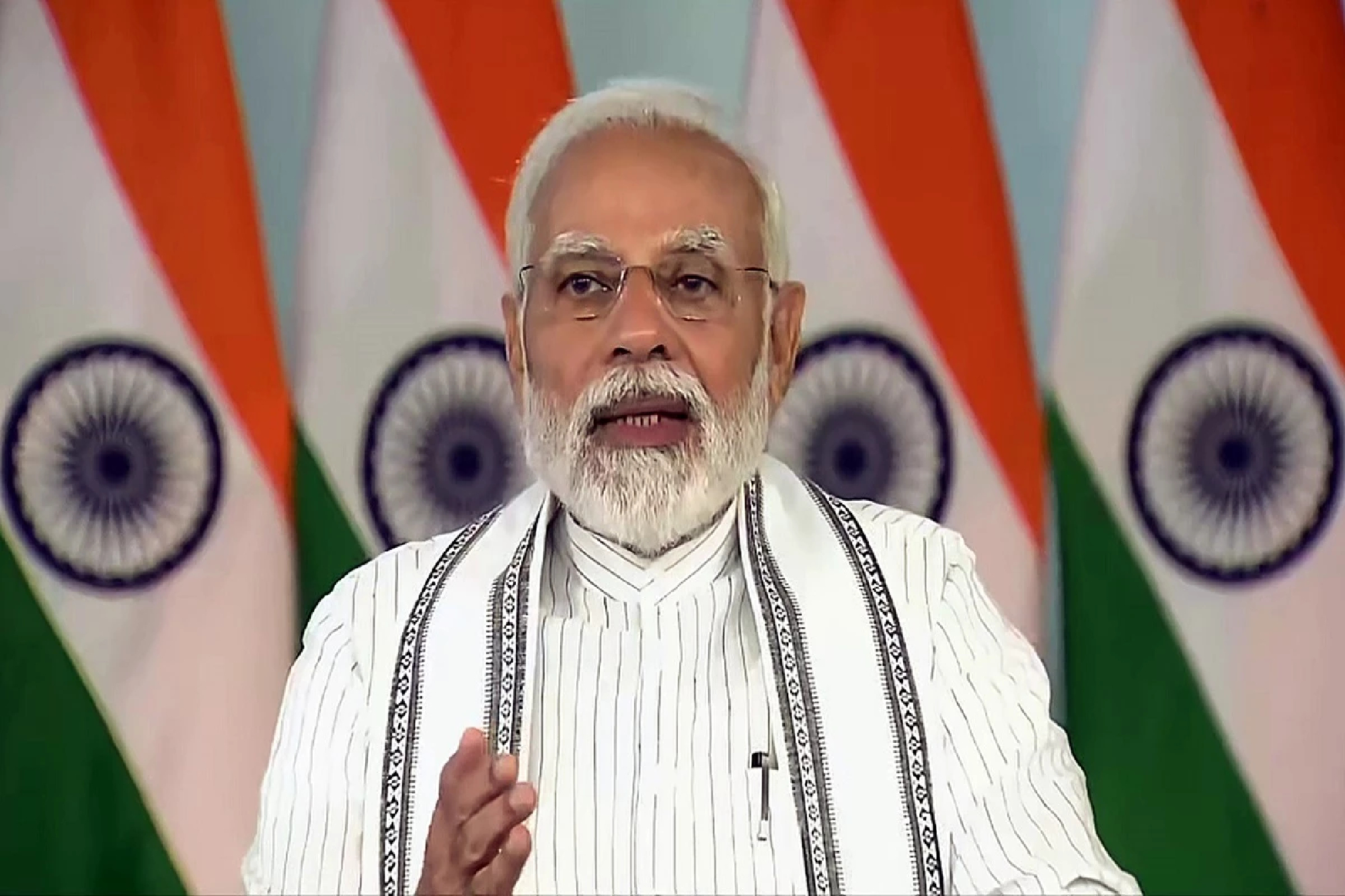
Referring to his talk to the US president Joe Biden last night, Prime Minister Narendra Modi today said he had told the American leader that India can offer foodgrains for sending to other countries if WTO rules are relaxed to permit such a move.
By the grace of Maa Annapoorna, Indian farmers were already taking care of the world in the matter of foodgrains, he said while inaugurating the hostel and education complex of Shri Annapurnadham Trust at Adalaj in Gujarat today via video conferencing. The PM also performed the Bhumipujan of Hiramani ArogyaDham of Jansahayak Trust during the event.
Modi noted that in the country’s culture, food, health and education were always given great importance and today Shri Annapurnadham has expanded these elements.
The new facilities that were coming up will benefit the common people of Gujarat a great deal especially the facility for dialysis of 14 persons at a time, blood bank with a 24-hour blood supply would serve a great need.
The PM praised the vaccination campaign in Gujarat and reiterated the need to promote skill development as per the needs of the latest trends in industrial development.
Noting the adverse impact on the finances of the dialysis patients, the PM emphasised spreading the facility of free dialysis in all the districts of the country.
Asia News Network: The Nation (Thailand), The Korea Herald, The Straits Times (Singapore), China Daily, Jakarta Post, The Star and Sin Chew Daily (Malaysia), The Statesman (India), Philippine Daily Inquirer, Yomiuri Shimbun and The Japan News, Gogo Mongolia, Dawn (Pakistan), The Island (Sri Lanka), Kuensel (Bhutan), Kathmandu Post (Nepal), Daily Star (Bangladesh), Eleven Media (Myanmar), the Phnom Penh Post and Rasmei Kampuchea (Cambodia), The Borneo Bulletin (Brunei), Vietnam News, and Vientiane Times (Laos).
China has overtaken the United States for the first time to dominate a new list of the top 52 app publishers around the globe, with 17 domestic companies earning places on the annual Top 52 Publisher list released on Tuesday by data.ai, a US-headquartered mobile analytics company.
China’s top gaming and social media operator Tencent Holdings Ltd retained its top spot in data.ai’s Top 52 Publishers list, followed by a Chinese leading gaming outfit NetEase remaining second in the ranking. US-headquartered gaming powerhouse Activision Blizzard moved up one position to No 3.
Chinese app publishers such as ByteDance, miHoYo, Lilith, FunPlus, Alibaba Group and Baidu also made an appearance on the list.
Publishers headquartered in the Asia-Pacific dominated the list and make up more than 60 percent of the Top 52.
Jeffery Zheng, data.ai’s director of the Greater China region, highlighted the considerable progress made by Chinese app publishers during the past year, saying China has become the world’s most developed mobile market and Chinese mobile publishers will continue to lead the globe in the future.
Data.ai also released another three lists of the top 30 fast-growing Chinese game publishers, top 30 Chinese game publishers and top 30 non-game Chinese publishers in the overseas markets. It claimed that while gaming companies have made great strides overseas, various non-game Chinese companies are also seeking to expand their presence around the globe.
ByteDance has gained the top spot on the top 30 non-game Chinese publishers by revenues in the overseas market, followed by JOYY and Tencent.
The company said the list is composed of the Top 52 mobile publishers by combined iOS and Google Play revenue estimates in 2021. Rankings do not include revenue earned from in-app advertising, commerce, or payments outside of the app stores.
By Ouyang Shijia
Asia News Network: The Nation (Thailand), The Korea Herald, The Straits Times (Singapore), China Daily, Jakarta Post, The Star and Sin Chew Daily (Malaysia), The Statesman (India), Philippine Daily Inquirer, Yomiuri Shimbun and The Japan News, Gogo Mongolia, Dawn (Pakistan), The Island (Sri Lanka), Kuensel (Bhutan), Kathmandu Post (Nepal), Daily Star (Bangladesh), Eleven Media (Myanmar), the Phnom Penh Post and Rasmei Kampuchea (Cambodia), The Borneo Bulletin (Brunei), Vietnam News, and Vientiane Times (Laos).
The transition committee working for President Yoon Suk-yeol said Tuesday that the incoming government will embrace nuclear power in its decarbonization efforts, signaling a major shift in energy policy the outgoing Moon Jae-in government had said has no place for nuclear power.
Won Hee-ryong, chief policymaker setting out Yoon’s agenda, said Korea had seen more emissions and would see soaring electricity costs because of Moon’s push to phase out nuclear power, which makes up roughly a third of the country’s power.
“We need to put in a right, realistic and prudent plan to achieve carbon neutrality,” he said, suggesting that Moon’s strategy to put behind what critics call one of the most efficient ways to generate energy had essentially backfired.
“So nuclear is back on the table along with every other technological tools that could help us cut carbon emissions. This shift in the energy policy is not to be understood as friction (between Yoon and Moon),” said Kim Sang-hyup Kim, a committee member supporting Won.
Kim – founder of the Coalition for Our Common Future, a foundation fighting climate change – said Moon’s plan to have renewables account for 70 percent of Korea’s power by 2050 poses a risk, as solar and wind power are not as reliable as nuclear power. Kim suggested that 70 percent was overreaching.
“Jeju Island gets about 18 percent of its power from renewables and that was as high as the Jeju governor could go, compared with 4.8 percent on average nationwide,” Kim said referring to chief policymaker Won, who made that happen as the Jeju governor between 2014 and 2021.
President Moon, who has repeatedly backed using renewables to meet Korea’s ambitious climate goal set at a UN climate summit last year, has said he will cut Korea’s emissions 40 percent by 2030, compared with the 2018 levels and achieve net-zero emissions by 2050. Experts widely dispute how realistic the goal is.
The transition committee said the Yoon government will not go back on what South Korea promised the international community. But the country cannot keep fixating on it either, the committee added, saying efforts to deliver on the promise are important.
“Breaking the promise is unthinkable. But nothing is absolute, since the global climate campaign itself could see some change amid a shifting world order,” Won said, referring to the Ukraine war and COVID-19, all of which prompted a global energy crisis.
The transition committee said that the Yoon government, which begins work on May 10, will label nuclear energy “green” in its taxonomy, a list of climate-friendly activities the government approves, as early as August this year. The label change sets the direction of Korea’s energy policy to come.
The Yoon government will also encourage companies to double down on their commitments to environmental, social and governance principles in their operations, the committee added, saying state-run and private companies seeking renewable technology will receive support like tax breaks in return.
“We will bring in the best there is to help us combat climate change – someone bipartisan with international background and who knows what’s at stake from an economic as well as security perspective,” the committee said, referring to a commission advising Moon on green transition.
The 2050 Carbon Neutrality and Green Growth Commission, which Moon launched last year, is an advisory group jointly led by the prime minister and a civilian expert. Critics have called the coalition biased and ineffective, dismissing its role as inconsequential.
By Choi Si-young
Asia News Network: The Nation (Thailand), The Korea Herald, The Straits Times (Singapore), China Daily, Jakarta Post, The Star and Sin Chew Daily (Malaysia), The Statesman (India), Philippine Daily Inquirer, Yomiuri Shimbun and The Japan News, Gogo Mongolia, Dawn (Pakistan), The Island (Sri Lanka), Kuensel (Bhutan), Kathmandu Post (Nepal), Daily Star (Bangladesh), Eleven Media (Myanmar), the Phnom Penh Post and Rasmei Kampuchea (Cambodia), The Borneo Bulletin (Brunei), Vietnam News, and Vientiane Times (Laos).
Rescue teams raced against time in search of people missing or feared dead as Agaton, the first major tropical storm to hit the country this year, unleashed heavy rains and deadly landslides in the southern and eastern regions.
State weather bureau Philippine Atmospheric, Geophysical and Astronomical Services Administration (Pagasa) said Tropical Storm Agaton (international name: Megi) was expected to further weaken into a low pressure area as it remained within the Philippine area of responsibility (PAR).
The weather disturbance was seen interacting with Typhoon “Basyang,” (international name: Malakas) which stayed briefly within the PAR on Tuesday morning before heading out farther 1,390 kilometers east of Central Luzon.
National and local disaster agencies reported 27 missing and five more deaths on Tuesday, raising the death toll to 30 since the storm made landfall in Guiuan, Samar province, on Sunday, with sustained winds of 65 km per hour and gusts of up to 80 kph.
The military said responders from the police, Coast Guard, and Army personnel had retrieved 25 bodies following landslides in the mountainous areas of Baybay City, Leyte, one of the hardest-hit provinces.
Verified drone footage shared on Facebook showed a wide stretch of mud that had swept down a hill of coconut trees and engulfed the village of Bunga in Baybay. At least one person died and 21 people were reported missing in the village, which had been reduced to a few rooftops poking through the mud.
Rescue efforts were also focused on the nearby village of Kantagnos, which an official said had been hit by two landslides.
Some residents managed to escape or were pulled out of the mud alive, but many were still feared trapped.
Return to village
Melani Aboyme, who was able to flee from a landslide on Sunday morning, stayed that night at an evacuation center with some residents.
Aboyme said they returned to their homes in Kantagnos the next morning, thinking that the storm had passed. She remembered hearing “a loud bang,” she said. “Then came a rush of mud [and] water with uprooted trees and boulders coming from the mountain.”
“I didn’t know what exactly happened as my family went out of our house to seek shelter in a house located on higher ground,” said the 37-year-old mother of two teenagers and a 7-year-old child.
Aboyme, her husband, Quirimon, and their children survived that landslide, but she lost her 15-year-old niece Marie Ashley Balicuatro, who she said was found dead covered with mud.
“We were really shocked. We never thought that this would happen to us. So many died in our village,” Aboyme said. “We have lost everything. We have no home to return to.”
Hampered operations
Over radio station dzMM, Baybay City Mayor Jose Carlos Cari said: “We’re looking for many people, there are 210 households there.”
“We race against time to rescue those who are hit by landslide and save lives,” said Col. Noel Vestuir, commander of the Army’s 802nd Infantry Brigade in Leyte.
Baybay City information officer Marissa Cano, who heads the city’s Emergency Response Team, told dzBB on Tuesday that “rescuers did not advance because the ground is still moving; it is dangerous.”
Several localities in Leyte like Ormoc City have deployed rescue groups to Baybay.
In the Western Visayas region, rescue operations continued on Panay Island on Tuesday, particularly in the provinces of Capiz and Iloilo where flash floods hit several municipalities.
According to the Provincial Social Welfare and Development Office of Iloilo, a total of 74,707 people so far were affected by the flooding.
The agency also reported one fatality and one missing in the town of Sara.
In Capiz, a 34-year-old man was found dead after he was swept by strong currents in Pilar town, the Regional Disaster Risk Reduction Management Council reported on Tuesday.
The provincial capital of Roxas City and 16 other municipalities remained underwater, it added.
Devastation in South
The devastation left by Agaton reached as far as Mindanao, with more than 73,000 families displaced by floods in the Bangsamoro communities. There were still no fatalities reported at press time.
Some residents decided to remain in their homes instead of moving to the evacuation centers so they could look after their belongings.
Bai Intan Sumail, who has sought refuge with her children in an improvised shelter in Pagalungan, Maguindanao, said her husband stayed behind “to guard our valuables.”
But floodwaters in their neighborhood are now “knee-deep,” the 40-year-old mother noted with concern. “It’s so hard for us because we are fasting. We are used to floods but [this] is another [situation] because of [the] fasting,” she said, referring to the Muslim practice during the holy month of Ramadan which began on April 2.
Other residents have sought refuge in their motorized bancas, floating on the waters which have flooded their homes.
Damage
Agaton forced dozens of ports to suspend operations and stranded nearly 8,000 people at the start of Holy Week, one of the busiest travel periods of the year.
The storm comes four months after Supertyphoon Odette (international name: Rai) left a large swathe of devastation across the archipelago, killing more than 400 and leaving hundreds of thousands homeless.
Damage to agriculture attributed to Agaton has reached P265.3 million as of Tuesday morning, according to the Department of Agriculture (DA).
Losses have been reported mostly in the Eastern Visayas and Caraga regions, affecting 2,132 farmers. The volume of production loss was estimated at 16,532 metric tons spanning 3,060 hectares of agricultural areas.
“Affected commodities include rice, corn and high-value crops. These values are subject to validation,” said the DA’s Disaster Risk Reduction and Management Operations Center, adding that the bulk of the accounted losses were in the rice sector.
—WITH REPORTS FROM JORDEENE B. LAGARE, FRANCES MANGOSING, NESTOR P. BURGOS JR., EDWIN O. FERNANDEZ, WILLIAMOR A. MAGBANUA, AFP AND REUTERS
Asia News Network: The Nation (Thailand), The Korea Herald, The Straits Times (Singapore), China Daily, Jakarta Post, The Star and Sin Chew Daily (Malaysia), The Statesman (India), Philippine Daily Inquirer, Yomiuri Shimbun and The Japan News, Gogo Mongolia, Dawn (Pakistan), The Island (Sri Lanka), Kuensel (Bhutan), Kathmandu Post (Nepal), Daily Star (Bangladesh), Eleven Media (Myanmar), the Phnom Penh Post and Rasmei Kampuchea (Cambodia), The Borneo Bulletin (Brunei), Vietnam News, and Vientiane Times (Laos).
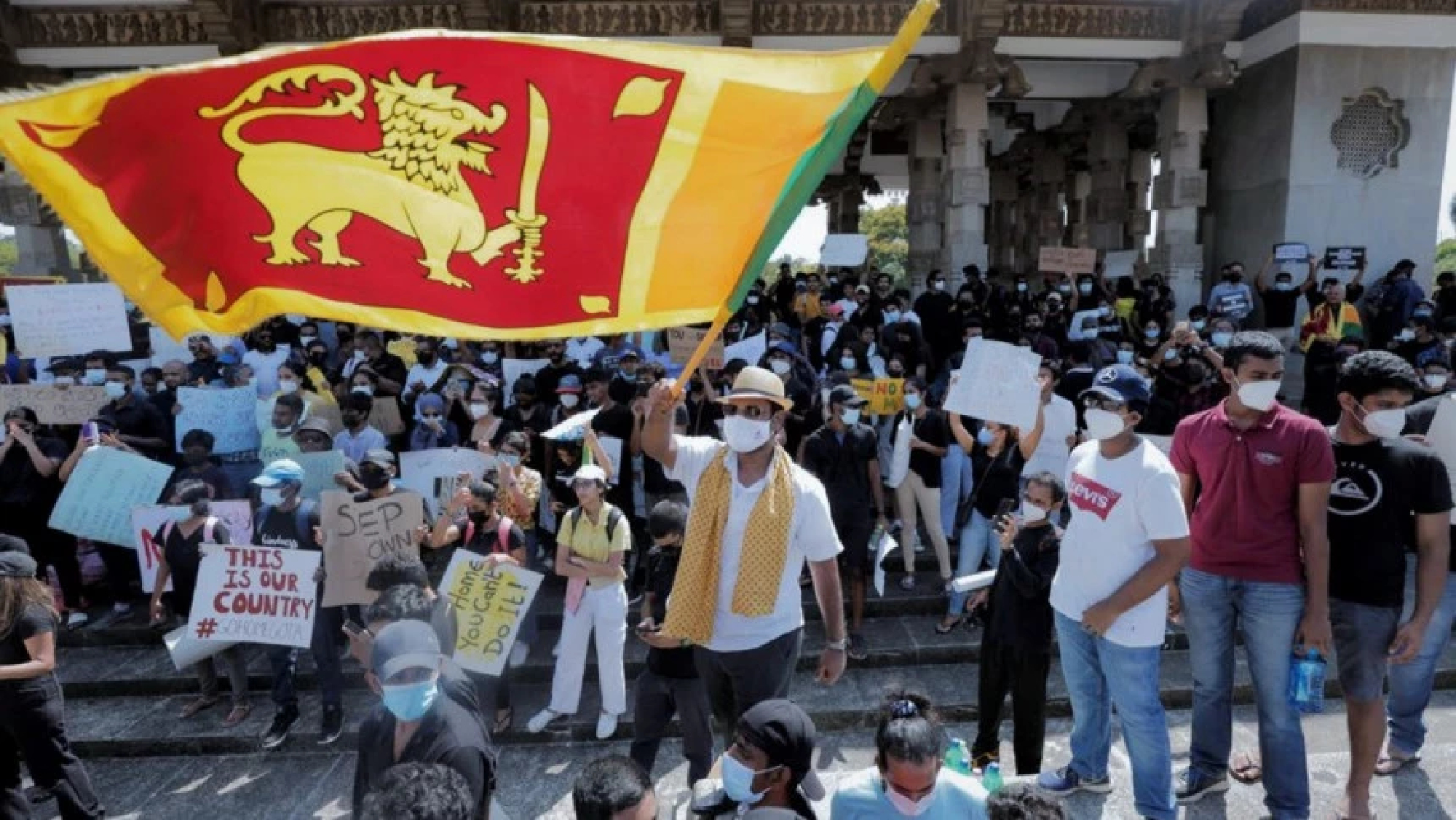
When Bangladesh agreed to provide $250 million to Sri Lanka last year, little did it think that it would become a side character in the horror show that is unfolding in the island nation.
But that is exactly the position Bangladesh finds itself in after Sri Lanka yesterday announced defaulting on its entire $51 billion of external debt — an extraordinary move taken to preserve its scarce foreign currency reserves for essential food, fuel and medicine imports.
In March, Sri Lanka’s foreign currency reserves plummeted to $1.94 billion, just enough to foot a month’s import bill, but analysts estimate the usable amount is about $500 million, reports The Financial Times.
The Sri Lankan government was due to make a $36 million interest payment on a 2023 dollar bond on April 18, as well as $42.2 million on a 2028 note, Bloomberg-compiled data show. A $1 billion sovereign bond is maturing on July 25. Now, payment for all is suspended.
Sri Lanka’s finance ministry said the suspension was a “last resort” as keeping up with repayments had “become impossible”.
In short, the island country with an $80 billion economy is teetering on bankruptcy, thanks to an alchemy of tax cuts, foreign currency-denominated debt pile-up and unforeseeable circumstances like the global coronavirus pandemic and Russia’s invasion of Ukraine.
And its only way out of the economic, financial and political meltdown — which has caused widespread misery for Sri Lanka’s 22 million people and has compelled them to take to the streets in recent weeks — is to get help from the International Monetary Fund, which it was wont to as recently as February.
When formal talks begin on Monday during IMF’s annual spring meetings for a bail-out package, Bangladesh will find a seat at the table as debt restructuring would most definitely be a lynchpin of the programme.
As per the currency swap agreement with Sri Lanka, Bangladesh was supposed to receive an interest payment of LIBOR + 2 percent were the amount returned in three months.
LIBOR, the acronym for London Interbank Offer Rate, is the global reference rate for unsecured short-term borrowing in the interbank market as a benchmark for short-term interest rates. The three-month LIBOR averaged around 0.53 percent in 2021.
Had Sri Lanka paid back in six months, the interest amount would have been LIBOR + 2.5 percent. But it failed to. Subsequently, Sri Lanka, which has a year to repay the loan, has assumed a higher interest rate.
“It would be wise of Bangladesh just to demand the principal amount back at the earliest,” said Zahid Hussain, a former lead economist of the World Bank’s Dhaka office.
Bangladesh was supposed to provide $250 million in exchange for an equivalent amount of Sri Lankan rupees, but it ended up providing $200 million seeing the worsening economic crisis in the South Asian nation.
“If Sri Lanka says that we will give you LIBOR + 4 percent if you take the money after two years, it would be wise to turn down the offer. That would never materialise given Sri Lanka’s financial position,” he said, adding that the IMF is unlikely to provide its own funds to repay loans.
Sri Lanka has previously entered into 16 relief programmes with the IMF and has stayed the course for only half of those.
The country’s foreign debt to GDP ratio is to the north of 60 percent and the total debt to GDP ratio is more than 100 percent.
Not just that, its external debt carries high-interest rates and has short repayment tenure, according to Hussain.
In its statement yesterday, Sri Lanka’s finance ministry said creditors were free to capitalise any interest payments falling due after 5 pm local time at an interest rate not higher than the normal contractual rate applicable to the credit.
Capitalisation is the addition of unpaid interest to the principal balance of a loan. The principal balance then increases and more interest is accrued over the life of the loan.
Or, creditors can choose to receive repayments in Sri Lankan rupees.
The latter option would have been acceptable had the Sri Lankan rupee not plunged to a record low to become the world’s worst-performing currency — worse than the currency of Russia, which is facing a cocktail of economic sanctions from the west.
The Bangladesh Bank though remains unruffled.
“We are not concerned yet — Sri Lanka still has time to pay back,” BB Spokesperson Md. Serajul Islam told The Daily Star yesterday.
Prime Minister Sheikh Hasina though called for caution when it comes to foreign debt even though it is far below risky levels.
Following a presentation yesterday on “offshore tax amnesty” and “a review of Bangladesh’s macroeconomy against the backdrop of Sri Lankan economic crisis” by the National Board of Revenue and the finance division, she directed all concerned to take necessary measures so that Bangladesh could maintain its current position regarding foreign debt.
By Rejaul Karim Byron, Zina Tasreen
Asia News Network: The Nation (Thailand), The Korea Herald, The Straits Times (Singapore), China Daily, Jakarta Post, The Star and Sin Chew Daily (Malaysia), The Statesman (India), Philippine Daily Inquirer, Yomiuri Shimbun and The Japan News, Gogo Mongolia, Dawn (Pakistan), The Island (Sri Lanka), Kuensel (Bhutan), Kathmandu Post (Nepal), Daily Star (Bangladesh), Eleven Media (Myanmar), the Phnom Penh Post and Rasmei Kampuchea (Cambodia), The Borneo Bulletin (Brunei), Vietnam News, and Vientiane Times (Laos).

![[Laos] Govt bodies urged to regulate fuel price, exchange rates](https://media.nationthailand.com/uploads/images/md/2022/04/cIgWSpyc6Ue4YbyFDVCK.webp?x-image-process=style/lg)




![[Philippines] Agaton deaths reach 30; 27 missing](https://media.nationthailand.com/uploads/images/md/2022/04/BUB5ZGGkTU2l3gj4t1mV.webp?x-image-process=style/lg)
 SootinClaimon.Com