S.Korea, US approve directive to rewrite war plan, begin process in earnest

#SootinClaimon.Com : ขอบคุณแหล่งข้อมูล : หนังสือพิมพ์ The Nation.

https://www.nationthailand.com/international/40014044


S.Korean, US, Japanese JCS chiefs discuss security issues including multilateral military training
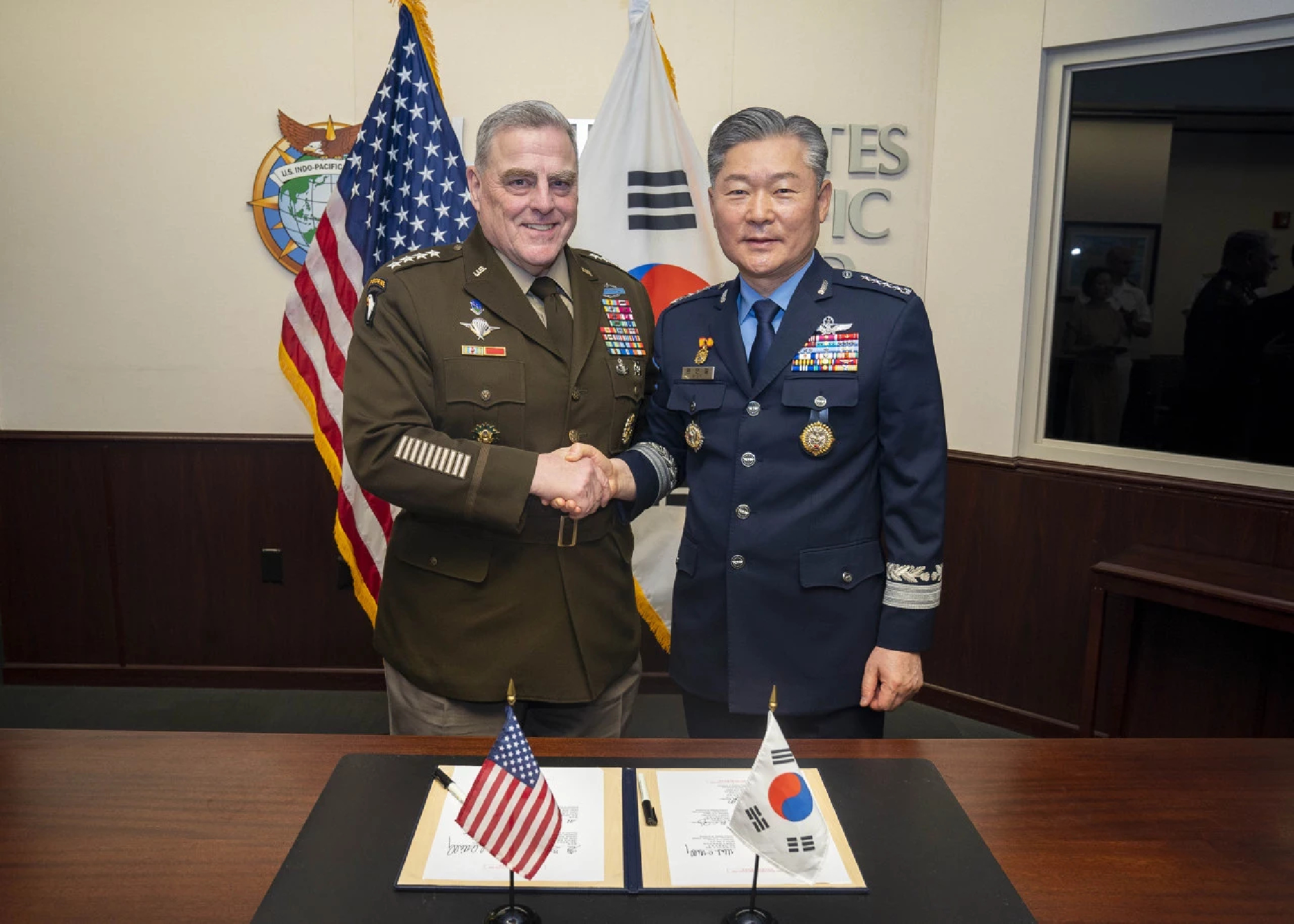
S.Korea, US approve directive to rewrite war plan, begin process in earnest

Seoul and Washington have agreed on a planning directive to develop a new operational war plan to address North Korea’s mounting threats and a changing security environment, allowing their militaries to begin the process in earnest.

Chairman of South Korea’s Joint Chiefs of Staff Gen. Won In-choul and his US counterpart Gen. Mark Milley made the decision during their in-person bilateral meeting held on Wednesday afternoon (local time) at the US Indo-Pacific Command Headquarters, Camp H.M. Smith in Hawaii.

The two approved the Strategic Planning Directive to update the current operation plan or OPLAN 5015 in view of North Korea’s enhancing nuclear and missile capabilities and “changes to the strategic environment,” a South Korean military official, who wished to remain anonymous, said on Thursday.

“The senior military leaders signed the Strategic Planning Directive developed in accordance with the new Strategic Planning Guidance,” a joint statement read.

The announcement came four months after South Korean Defense Minister Suh Wook and US Defense Secretary Lloyd Austin initially saw eye to eye on rewriting the existing OPLAN 5015 at the 53rd Security Consultative Meeting held in December.

In their previous joint statement, Seoul and Washington announced they would write new operational war plans reflecting “changes to the strategic environment,” with the aim to “more effectively deter — and as necessary respond to — DPRK threats to the US-ROK Alliance.“

Seoul and Washington officially signed the OPLAN 5015 in 2015. But the war plan was developed based on the Strategic Planning Guidance approved back in 2010.

The South Korean and US defense chiefs in December gave the green light to a new Strategic Planning Guidance, which is the foundation and the initial step for developing a new operational war plan, on the occasion of the Security Consultative Meeting.

A three-stage process of devising the new OPLAN will take years. But Seoul and Washington have completed the second stage by agreeing on the Strategic Planning Directive devised based on the Strategic Planning Guidance.

The South Korea-US Combined Forces Command will begin writing a new war plan on the basis of the Strategic Planning Directive.

The unnamed South Korean military official said Wednesday’s approval means the “official beginning” of developing a new OPLAN.

The South Korean and the US JCS additionally said Wednesday’s bilateral meeting was held to “strengthen Chairman to Chairman communication by discussing ROK-US Alliance issues, and to further enhance the combined defense posture.”

Both sides also “shared their assessments on the recent security situations, and reaffirmed the robustness of the ROK-US Alliance,” the joint statement said.

Tri-CHOD meeting among S.Korea, US, Japan

South Korea’s JCS chairman also met Gen.Milley and Chief of Staff for Japan’s Joint Staff Gen. Koji Yamazaki for a Tri-CHOD (chief of defense) conference held Wednesday morning at the US Indo-Pacific Command Headquarters.

The agenda topics for the trilateral meeting were the security environment on the Korean Peninsula and in the region, “regional security challenges, and the ironclad commitment of the US to defend” both Japan and South Korea.

“The military leaders shared a common understanding on the significance of enhancing regional security through close trilateral cooperation and coordination,” a trilateral joint statement read.

The three also had an extensive discussion on “multilateral cooperation and training in order to enhance the peace and stability in the Free and Open Indo-Pacific region and to expand the security cooperation,” according to the statement. 

The senior military leaders “agreed to strengthen the trilateral cooperation to achieve these objectives.”

Another South Korean military official, on condition of anonymity, said Thursday that the three countries have “closely discussed ways to respond to North Korea’s missile threat,” adding that there have been ongoing and “sufficient trilateral security cooperation.”

But the official clarified that the three countries “have never discussed trilateral military exercises” against North Korea’s missile threat, which the Moon Jae-in government considers as one step further from the current South Korea-US-Japan security coordination.

The enhanced and expanded trilateral coordination is a key part of the Biden administration’s Indo-Pacific strategy. 

Washington seeks to “cooperate closely through trilateral channels” on North Korea issues and align the three countries’ regional strategies in a trilateral context.

But Seoul, Washington, and Tokyo have not set the date for an in-person trilateral defense ministerial meeting, although they agreed to hold the talks on a mutually determined future date.

By Ji Da-gyum

Asia News Network: The Nation (Thailand), The Korea Herald, The Straits Times (Singapore), China Daily,  Jakarta Post, The Star and Sin Chew Daily (Malaysia), The Statesman (India), Philippine Daily Inquirer, Yomiuri Shimbun and The Japan News, Gogo Mongolia,  Dawn (Pakistan),  The Island (Sri Lanka), Kuensel (Bhutan), Kathmandu Post (Nepal), Daily Star (Bangladesh), Eleven Media (Myanmar), the Phnom Penh Post and Rasmei Kampuchea (Cambodia), The Borneo Bulletin (Brunei), Vietnam News, and Vientiane Times (Laos).

Published : April 01, 2022

By : The Korea Herald
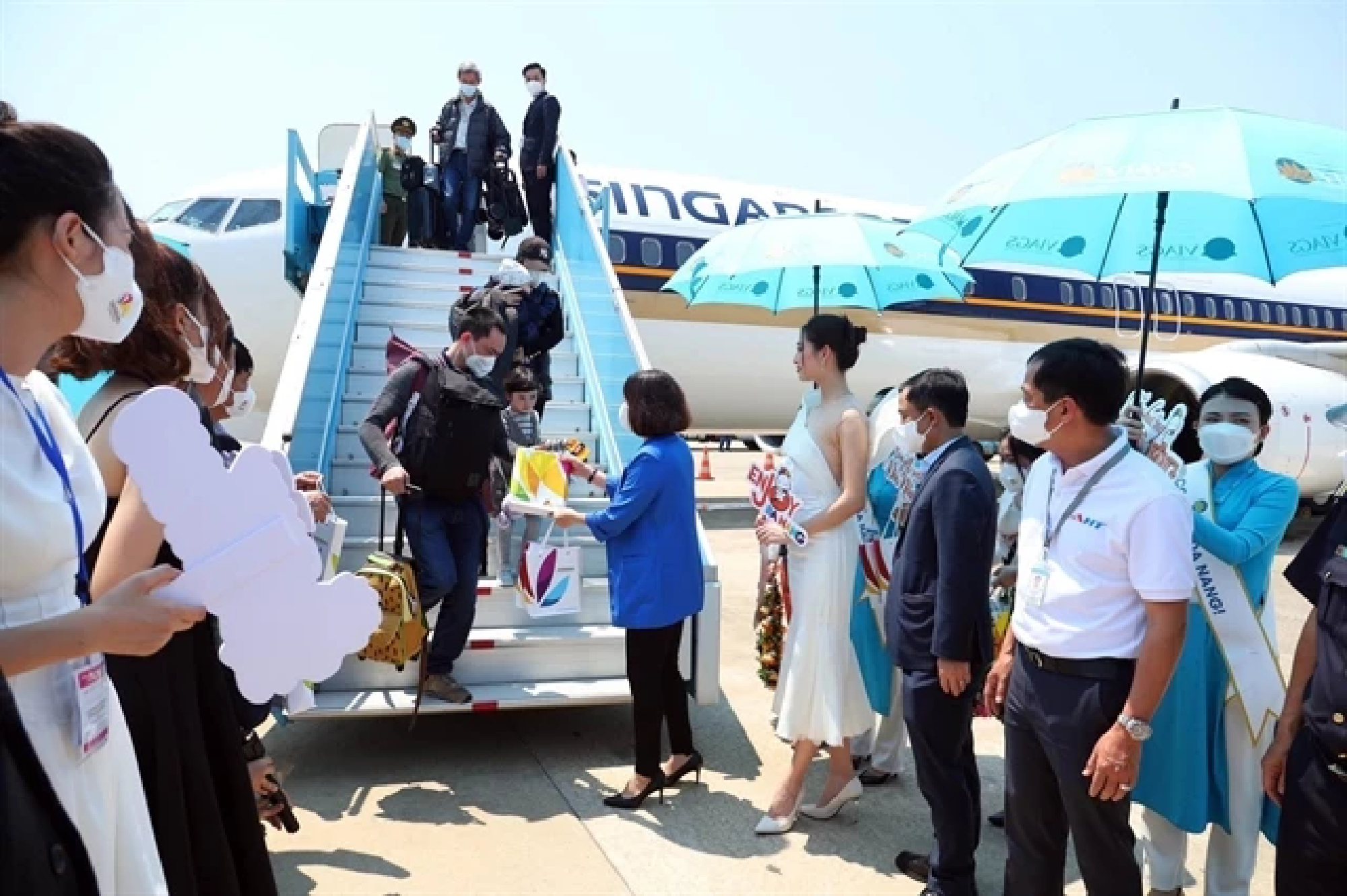
Occupancy rate on international flights increasing

#SootinClaimon.Com : ขอบคุณแหล่งข้อมูล : หนังสือพิมพ์ The Nation.

https://www.nationthailand.com/international/40014042


HÀ NỘI — The seat occupancy on international flights has gradually increased since March 15, when Việt Nam officially resumed all international tourism activities in line with the policy on safe, flexible adaptation to and effective control of the COVID-19 pandemic, according to data released by domestic airlines.

Occupancy rate on international flights increasing

Airlines have recorded a booking rate of between 60 and 80 per cent on international flights to Việt Nam until September. Passengers mainly come from the Republic of Korea and Japan.

Due to the rising travel demand during the Hùng Kings Death Anniversary, National Reunification Day (April 30) and May Day (May 1) holidays, carriers have increased the supply of seats on international and domestic routes.

Vietnam Airlines Group, which comprises Vietnam Airlines, Pacific Airlines and Vietnam Air Services Company (VASCO), will provide nearly 750,000 seats, equivalent to nearly 4,000 flights on domestic and international routes during the holidays. Vietnam Airlines will increase the frequency of flights on all regular international routes, expand the network with new routes such as Hà Nội-Delhi and HCM City-Delhi and flights connecting Singapore with popular beach destinations like Đà Nẵng, Nha Trang and Phú Quốc from April 15.

The budget airline Vietjet Air is expanding the frequency of nearly 40 international routes to meet demand over the two holidays.  

Apart from flights connecting Hà Nội and HCM City with Seoul (the Republic of Korea), Tokyo (Japan), Bangkok (Thailand) and Taipei (Taiwan, China) which were resumed in early 2022, the carrier plans to restore routes linking Hà Nội, HCM City, Đà Nẵng, Hải Phòng and Phú Quốc with Phuket (Thailand), Tainan and Kaohsiung (Taiwan, China), Kuala Lumpur (Malaysia), New Delhi (India), Bali (Indonesia), Busan (the RoK) and Osaka (Japan) between now and April.

A representative from the airline said to help passengers feel secure after staying at home for a long time due to the pandemic, the carrier is offering COVID-19 RT-PCR tests free of charge to passengers on international flights.  

Vietjet Air has also introduced new products and services such as SkyBoss Business tickets, spa products, new dishes and special cultural and art programmes during flights, the representative said.

Visitors to Việt Nam can enjoy quarantine-free travel with just a negative COVID-19 test and do not need COVID-19 vaccine certificates. — VNS

Asia News Network: The Nation (Thailand), The Korea Herald, The Straits Times (Singapore), China Daily,  Jakarta Post, The Star and Sin Chew Daily (Malaysia), The Statesman (India), Philippine Daily Inquirer, Yomiuri Shimbun and The Japan News, Gogo Mongolia,  Dawn (Pakistan),  The Island (Sri Lanka), Kuensel (Bhutan), Kathmandu Post (Nepal), Daily Star (Bangladesh), Eleven Media (Myanmar), the Phnom Penh Post and Rasmei Kampuchea (Cambodia), The Borneo Bulletin (Brunei), Vietnam News, and Vientiane Times (Laos).

Published : April 01, 2022

By : Vietnam News

Thousands cross S’pore-Malaysia land borders after reopening

#SootinClaimon.Com : ขอบคุณแหล่งข้อมูล : หนังสือพิมพ์ The Nation.

https://www.nationthailand.com/international/40014041


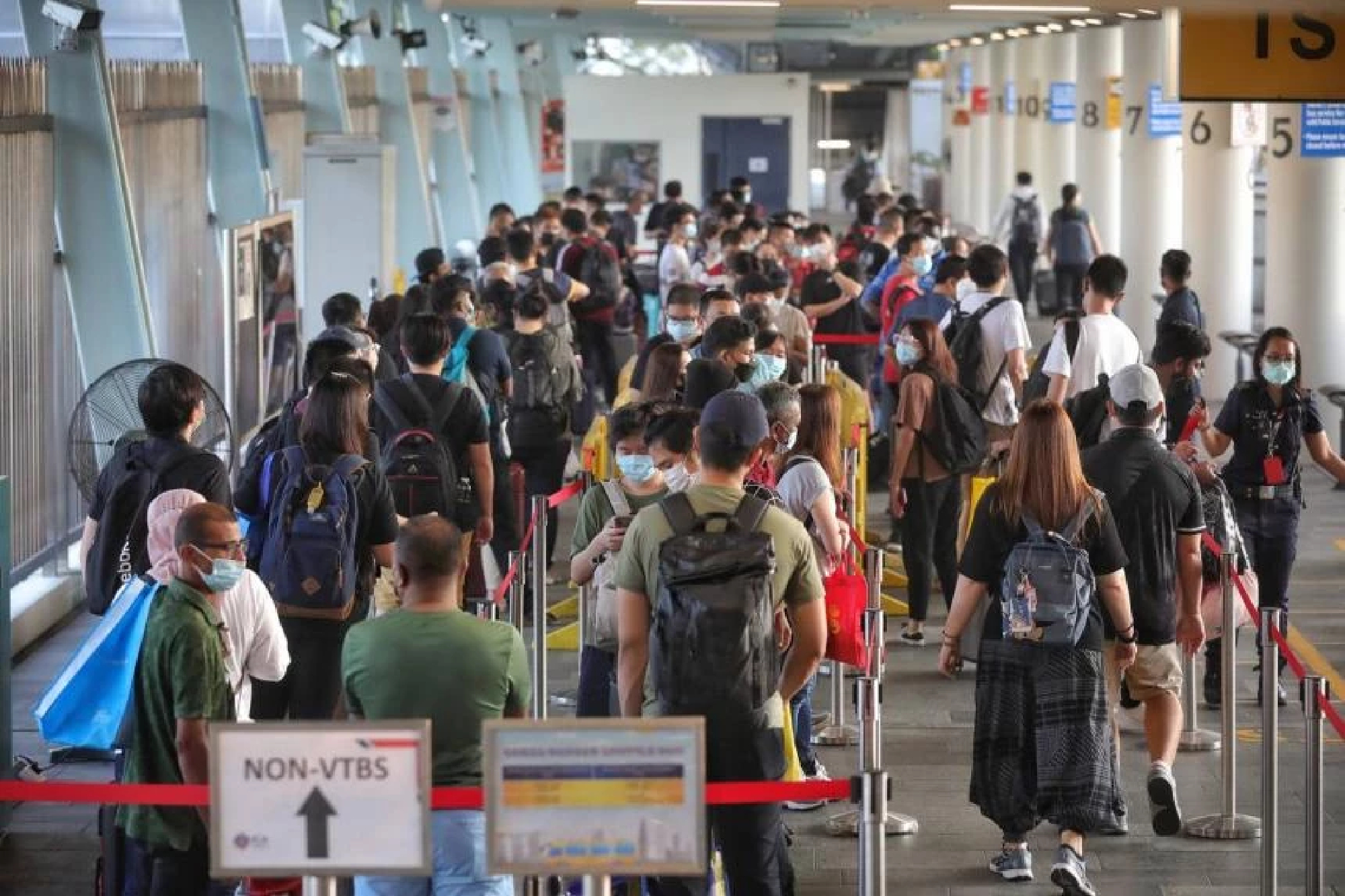
SINGAPORE – Thousands have crossed the land borders between Singapore and Malaysia since these reopened close to midnight on Friday (April 1).

Thousands cross S'pore-Malaysia land borders after reopening

Travellers were also able to take a new shuttle bus service between the checkpoints in Woodlands and Johor Baru run by Malaysian bus operator Causeway Link.

The first bus left at 6am from Malaysia and 6.30am from Woodlands. The last bus from Johor Baru is at 10pm and the last bus from Woodlands will leave at 10.30pm.

At about 7.30am on Friday, there were close to a hundred people in the queue in Woodlands for the bus service, which costs $2 per trip from Singapore and RM2 (65 Singapore cents) from Malaysia.

Causeway Link had said in a Facebook post on Thursday night that the shuttle bus service will run daily at 15-minute intervals between the two checkpoints, depending on traffic and Customs clearance conditions.

It said travellers using the service can pay only in cash and reminded passengers to prepare exact change.

A spokesman for the company told The Straits Times on Thursday night that it has received approval to run the service to cater to the expected crowd.

The firm has prepared six buses to ply the cross-border route and it will add more if there is congestion, the spokesman added.

Johor state assemblyman for Stulang, Mr Andrew Chen Kah Eng, and state assemblywoman for Johor Jaya, Ms Liow Cai Tung, were among those who took the shuttle bus from Johor Baru to Woodlands.

The Democratic Action Party members made the impromptu trip at 7.30am to better understand the cross-border transport arrangements and immigration and customs clearance process, they said.

“Because today is the first day of the border reopening, we came in early in the morning to check whether everything is going smoothly,” Ms Liow told ST.

They intend to head back to Malaysia later in the day.

Said Mr Chen: “(So far), it has been very good, very smooth.”

For many who made the trip on foot or by car or motorbike, it was smooth sailing, although some were turned away at the checkpoints in Woodlands and Tuas because they did not have all the required documents.

After the initial rush, traffic slowed considerably at about 3am.

It was fairly quiet at the two Singapore checkpoints when ST arrived at about 6am.

At the Causeway, travellers were seen arriving in dribs and drabs. At Tuas Second Link, there were fewer than 10 motorcyclists and a few cars at the departure hall between 6am and 6.30am.

Around half of the motorcyclists at Tuas had to turn back, some of them due to expired or invalid vehicle entry permits.

Among those who made the early morning trip was Ms Tupang Isa, 39, for whom the reopening was an emotional experience.

A day after the borders were shut on March 17, 2020, to curb the spread of Covid-19, her mother died and the Malaysian had to miss her last moments, she told ST as she teared up.

“It is my day off today so I’m crossing over to settle some matters in Johor Baru,” said the housekeeper.

Mr Loh Pui Loong, 44, who works as a cleaner at Khoo Teck Puat Hospital, said there were only three or four people at the checkpoint in Johor Baru when he crossed the border at about 5am.

“I decided to start early because I was afraid there would be a lot of people entering Singapore. But there was no one there, so clearing Customs was very quick,” he said in Mandarin.

Mr Vijay Manogaran, 34, walked over from Malaysia to Singapore in the early hours on Friday. 

“It feels like it is back to normal, like how it was two years ago,” he said.

Mr Manpreet Raj Singh, 28, headed straight to the checkpoint after knocking off from work.

The technician said he was planning to surprise his girlfriend of three years, whom he has not seen for two years, and visit his mother.

“I’m very happy. I think I will cry when I see them later,” he said.

Mr Singh, who used to commute between Johor Baru and Singapore daily before the pandemic, hopes he will be able to do so again now that the land borders are fully open.

After midnight, thousands had streamed across the checkpoints in Woodlands and Tuas, based on ST’s observations.

Cars tooted their horns, while people on foot clapped and cheered before the jubilant mood quickly settled into one of business as usual of clearing immigration checks.

The borders had been closed since March 17, 2020.

By Kok Yufeng and Syarafana Shafeeq

Asia News Network: The Nation (Thailand), The Korea Herald, The Straits Times (Singapore), China Daily,  Jakarta Post, The Star and Sin Chew Daily (Malaysia), The Statesman (India), Philippine Daily Inquirer, Yomiuri Shimbun and The Japan News, Gogo Mongolia,  Dawn (Pakistan),  The Island (Sri Lanka), Kuensel (Bhutan), Kathmandu Post (Nepal), Daily Star (Bangladesh), Eleven Media (Myanmar), the Phnom Penh Post and Rasmei Kampuchea (Cambodia), The Borneo Bulletin (Brunei), Vietnam News, and Vientiane Times (Laos).

Published : April 01, 2022

By : The Straits Times

KNU’s general dismisses killing spree, calls for round-table discussion for peace

#SootinClaimon.Com : ขอบคุณแหล่งข้อมูล : หนังสือพิมพ์ The Nation.

https://www.nationthailand.com/international/40014000


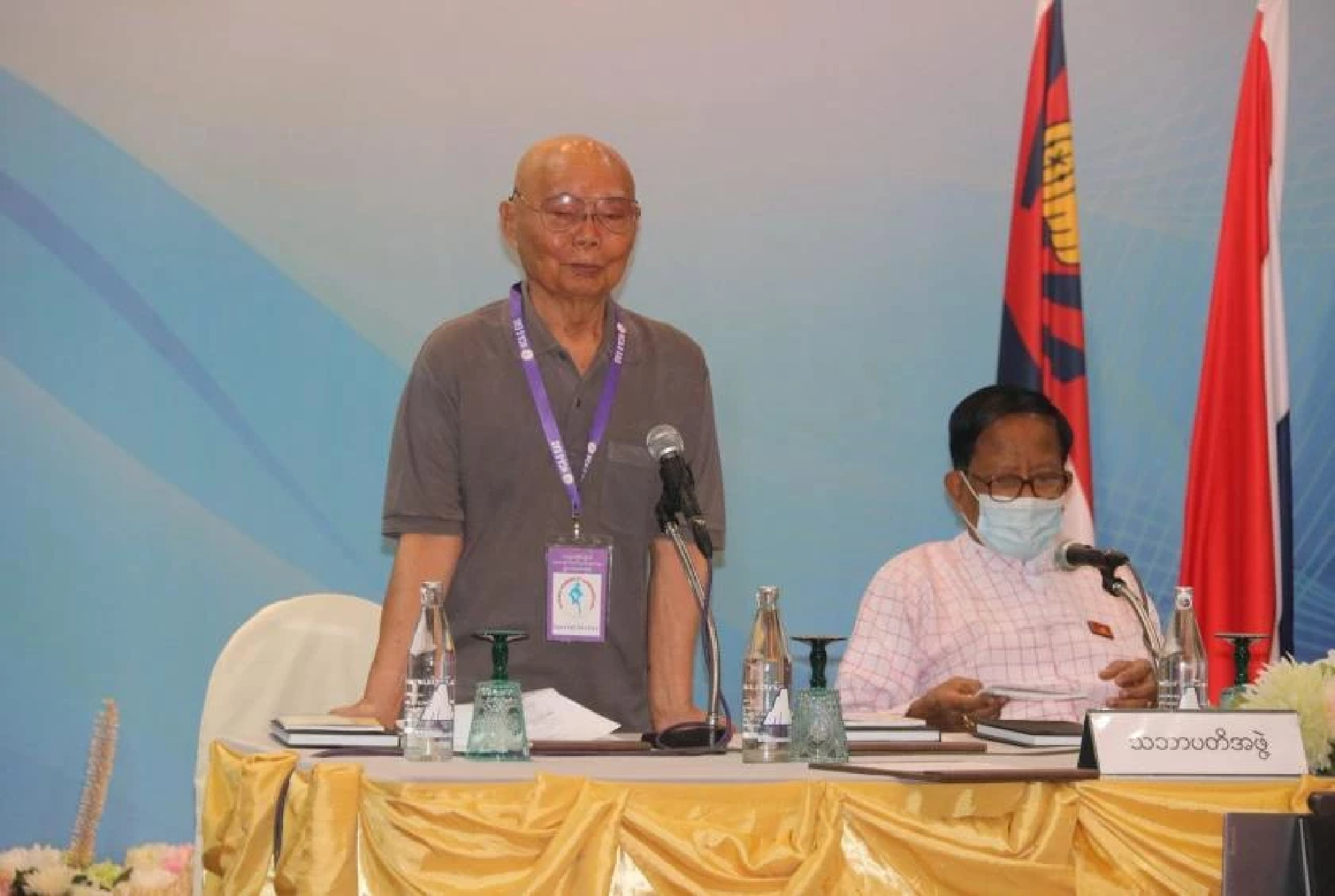
Brutal killings of each other will not help achieve the goal, and if both sides are willing, there must be a round-table discussion, said General Saw Mutu Sae Poe, chairman of the Karen National Union (KNU).

KNU’s general dismisses killing spree, calls for round-table discussion for peace

The KNU chairman made the comment during an opening speech at the fourth conference (second part) of the top leaders of the ethnic armed organizations, signatories to the nationwide ceasefire agreement, that the commenced on March 29 in Chiang Mai, Thailand.  

“As far as I am concerned, the problem facing our country must be solved on a round table. If we are indiscriminately and brutally killing each other, we will not reach our goal. We need a face-to-face debate,” the general said.

If the situation continues like that, the goal of achieving peace and peaceful coexistence among the different ethnic nationalities will not be possible, and the current situation is complicated in which killings are happening, he pointed out.

“The ongoing problem is that we are killing each other. Without stopping this, I would say that the peace cannot be achieved during our lifetime. We will end up different. I said in signing the NCA. Like we killed each other daringly, we have to work bravely when it comes to achieving peace,” he commented.

He expressed his belief that the leaders on the other side would hear what he said. He also expressed his wish for seeing the peace next year.

The only way to resolve the conflict is a round-table discussion, not killing spree, the KNU’s general pointed out.

Asia News Network: The Nation (Thailand), The Korea Herald, The Straits Times (Singapore), China Daily,  Jakarta Post, The Star and Sin Chew Daily (Malaysia), The Statesman (India), Philippine Daily Inquirer, Yomiuri Shimbun and The Japan News, Gogo Mongolia,  Dawn (Pakistan),  The Island (Sri Lanka), Kuensel (Bhutan), Kathmandu Post (Nepal), Daily Star (Bangladesh), Eleven Media (Myanmar), the Phnom Penh Post and Rasmei Kampuchea (Cambodia), The Borneo Bulletin (Brunei), Vietnam News, and Vientiane Times (Laos).

Published : March 31, 2022

By : Eleven Media

S.Korea test-fires first indigenous solid-fuel rocket, pushes to launch spy satellites

#SootinClaimon.Com : ขอบคุณแหล่งข้อมูล : หนังสือพิมพ์ The Nation.

https://www.nationthailand.com/international/40013999


Launch marks ‘important milestone’ in enhancing the military’s space-based ISR capabilities

S.Korea test-fires first indigenous solid-fuel rocket, pushes to launch spy satellites

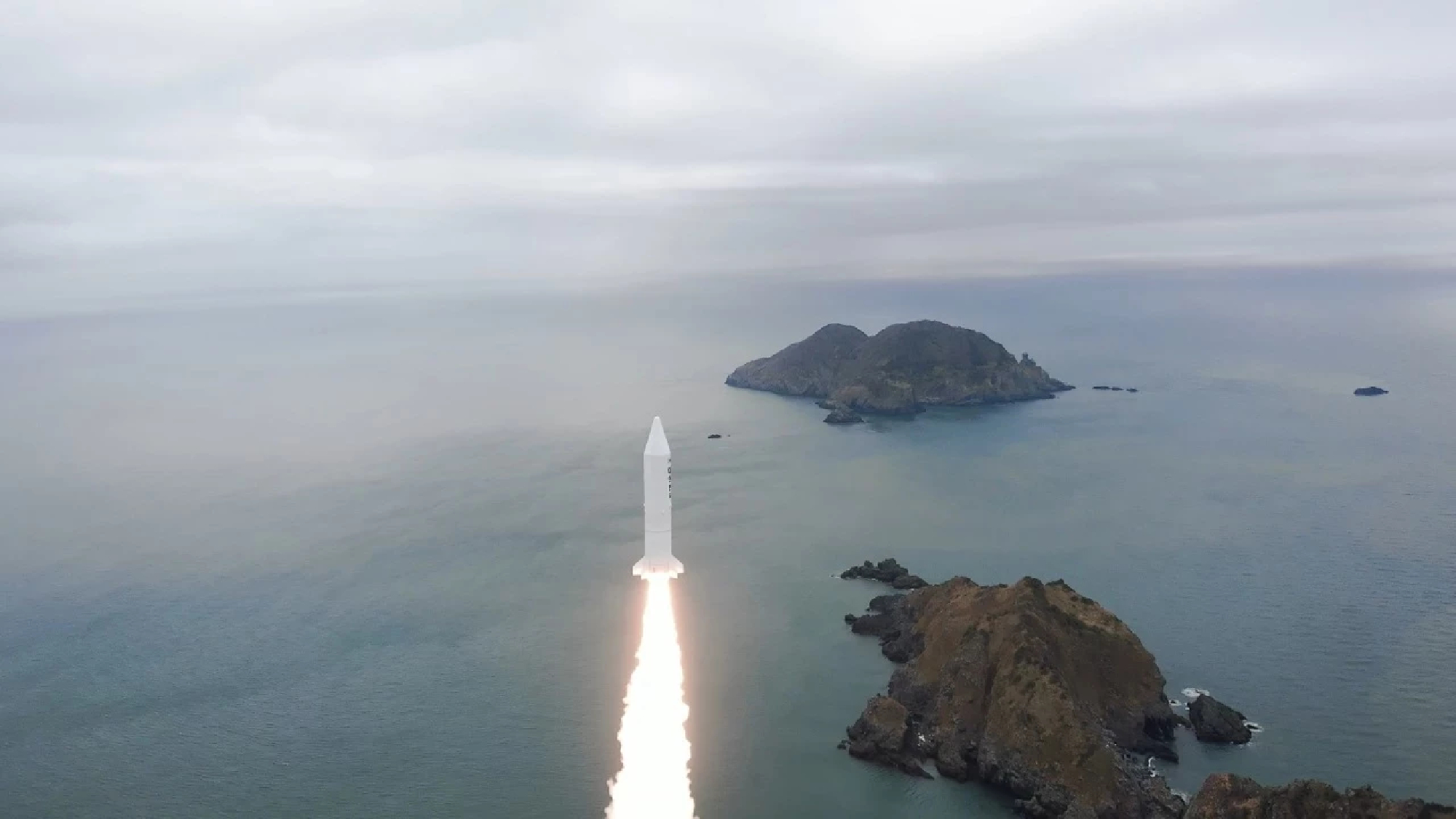
South Korea “successfully” test-launched a homegrown solid-fuel space rocket for the first time, taking one significant step to further develop and launch microsatellites for military surveillance and reconnaissance.

The state-run Agency for Defense Development said it conducted the test-firing to “verify the performance” of the solid-propellant carrier rocket developed with indigenous technologies on Wednesday at its own testing site in Taean, South Chungcheong Province. South Korean Defense Minister Suh Wook and other senior military officials were present.

The test aimed to “verify core technologies for space launch vehicles,” including large-scale rocket propellants, payload fairing and stage separation mechanisms, and upper stage attitude control system, according to the ADD.

South Korea has intensively pushed forward with developing space launch vehicles using solid fuel since South Korea and the US last May agreed to terminate missile guidelines that had put restrictions on the country’s missile development program since 1979.

Wednesday’s initial test launch came around eight months after the country carried out an “ignition test” for a solid-propellant rocket engine last July.

In comparison to liquid-propellant rockets, solid-fuel carrier rockets have the advantages of a simple structure and convenient manufacturing. Solid rockets can be manufactured and developed with lower costs and “launched quickly.”

South Korea in October conducted the first test launch of a homegrown liquid-propellant Nuri rocket, but it has failed to put its payload into the targeted orbit after liftoff.

Path to develop spy satellites

The current development is of paramount significance, given that it is in line with Seoul’s efforts to develop the military’s intelligence, surveillance, and reconnaissance capabilities.

The South Korean military has relied on the US ISR assets as it has not yet independently launched a spy satellite capable of monitoring North Korean activities.

But Seoul has said it will put micro or ultra-microsatellites for military purposes into a low Earth orbit by using a solid carrier rocket and employing relevant technologies.

“A satellite mounted on a solid-propellant space launch vehicle will be launched after completing additional verification,” the state-run arms development agency said in a statement.

“The launch is expected to lead to the development of space launch vehicles that can put microsatellites or ultra-micro satellites into a low Earth orbit.”

South Korea plans to launch a homegrown solid-propellant rocket at the Naro Space Center in Goheung, South Jeolla Province after the ADD verifies and integrates major components.

Two Koreas in arms race

Wednesday’s announcement is noteworthy given that the Moon Jae-in government has largely refrained from making public South Korea’s weapons tests and development.

But this time, the ADD conspicuously highlighted the significance of the solid rocket test-firing which was conducted at a juncture when North Korea has pushed forward its plan to develop technologies for space and missile systems.

North Korea’s two missile launches on Feb. 27 and March 5 involved a new Hwasong-17 intercontinental ballistic missile system. Pyongyang has claimed that it test-fired a Hwasong-17 ICBM on a lofted trajectory on March 24.

This month, North Korean leader Kim Jong-un also said the country will launch “a large number of military reconnaissance satellites” by 2025 to monitor the military activities of the US forces and its allies in the region.

The ADD on Wednesday underscored that the test launch was conducted at a “very critical time when North Korea launched an ICBM contravening the moratorium of its own accord.”

“Therefore, the successful test-firing of a solid-propellant space launch vehicle marks an important milestone in strengthening national defense capabilities,” especially in respect to the South Korean military’s “independent space-based surveillance and reconnaissance” capabilities.

“Our military will expeditiously advance space power, including a solid-propellant rocket, based on cross-service cooperation with the recognition that space is the key domain that has a significant impact on our national security.”

Focus on low-earth-orbit satellites

South Korea’s arms procurement agency on Wednesday announced its plan to “accelerate the space-based surveillance and reconnaissance system” as the battlefield has been expanded to space.

The Defense Acquisition Program Administration said it has established and confirmed its grand strategy and direction to “achieve superiority on the future battlefield” at a first meeting of the Advanced Defense Technology Programs Management Committee held on the same day.

As a key outcome, Seoul has decided to focus on developing and putting low-earth orbit or LEO satellites into an orbit below the altitude of 500 kilometers, which can be operated with low maintenance costs.

“Through the development, our military can acquire quasi-real-time surveillance and reconnaissance capabilities at a low cost and satellite communications capabilities with shorter delay and higher reliability compared to the existing satellites in high Earth orbit,” the DAPA said.

The military also plans to develop technologies that can put micro-satellites into a low Earth orbit by 2024, employing the solid-propellant rocket technologies developed by the ADD.

By Ji Da-gyum

Asia News Network: The Nation (Thailand), The Korea Herald, The Straits Times (Singapore), China Daily,  Jakarta Post, The Star and Sin Chew Daily (Malaysia), The Statesman (India), Philippine Daily Inquirer, Yomiuri Shimbun and The Japan News, Gogo Mongolia,  Dawn (Pakistan),  The Island (Sri Lanka), Kuensel (Bhutan), Kathmandu Post (Nepal), Daily Star (Bangladesh), Eleven Media (Myanmar), the Phnom Penh Post and Rasmei Kampuchea (Cambodia), The Borneo Bulletin (Brunei), Vietnam News, and Vientiane Times (Laos).

Published : March 31, 2022

By : The Korea Herald

Russian FM to visit India amid conflict with Ukraine

#SootinClaimon.Com : ขอบคุณแหล่งข้อมูล : หนังสือพิมพ์ The Nation.

https://www.nationthailand.com/international/40013998


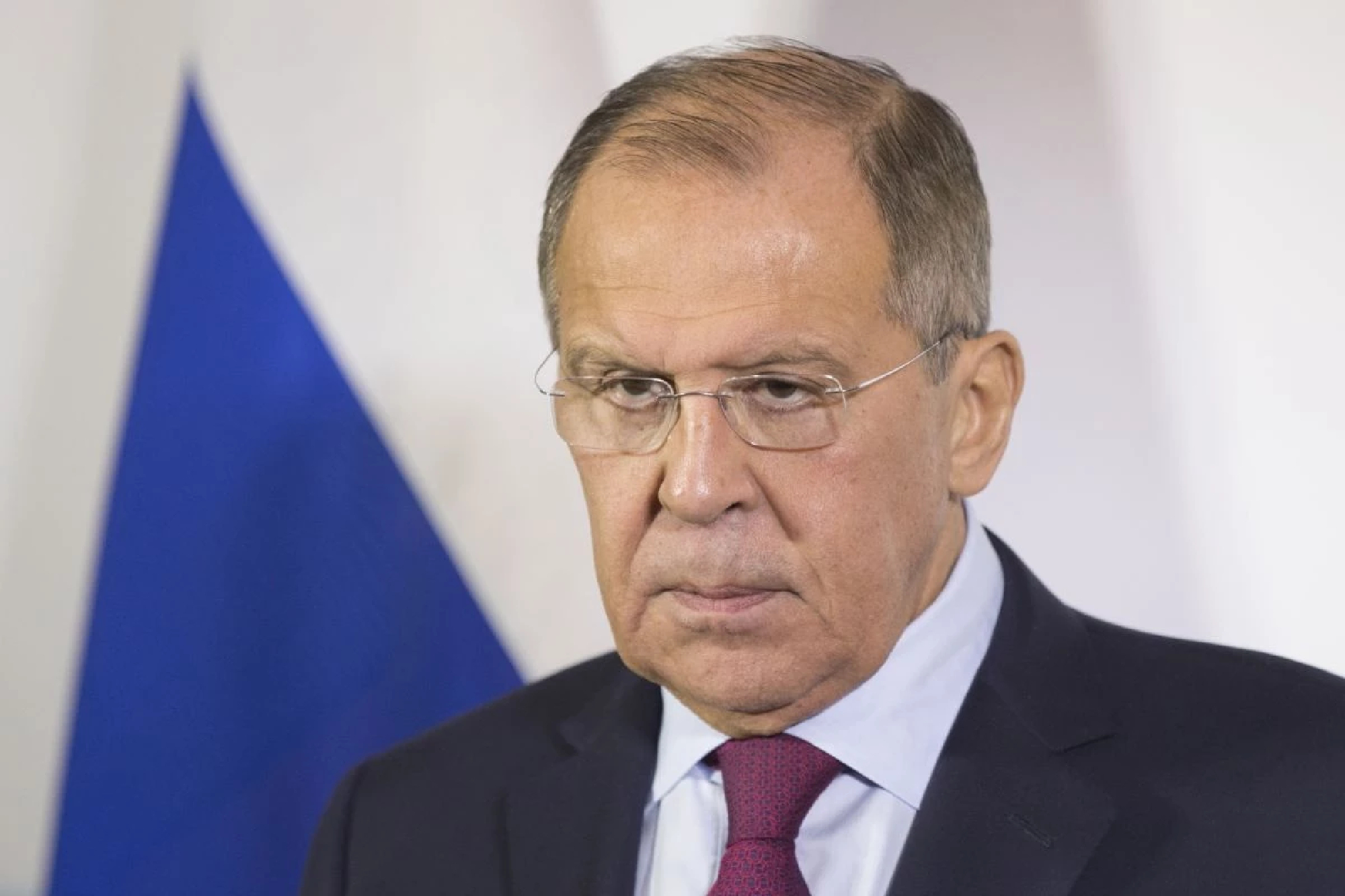
Amid the ongoing Russia-Ukraine conflict, Russian Foreign Minister Sergey Lavrov will pay an official visit to India from 31 March -1 April, an official announcement by the Ministry of External Affairs (MEA) said today.

Russian FM to visit India amid conflict with Ukraine

During the visit, Lavrov is expected to meet External Affairs Minister S Jaishankar and National Security Adviser (NSA) Ajit Doval. It is not clear if he would also call on Prime Minister Narendra Modi.

His talks with the Indian side will focus on the global geopolitical situation in the wake of the Russian invasion of Ukraine.

India has adopted a neutral stand on the ongoing conflict. While abstaining from voting against Russia at the UN, New Delhi has called for diplomatic dialogue and adherence to the UN charter on the sovereignty and territorial integrity of all nations. It has also sent humanitarian assistance to the war-affected people of Ukraine.

For Moscow, the relationship with India is crucial. The Russian side has appreciated the position adopted by the Indian side at the UN.

The two sides are expected to discuss alternative payment mechanisms for defence and other deals to address the impact of sanctions imposed on Russia by the US and its allies in the wake of the Ukraine conflict.

Asia News Network: The Nation (Thailand), The Korea Herald, The Straits Times (Singapore), China Daily,  Jakarta Post, The Star and Sin Chew Daily (Malaysia), The Statesman (India), Philippine Daily Inquirer, Yomiuri Shimbun and The Japan News, Gogo Mongolia,  Dawn (Pakistan),  The Island (Sri Lanka), Kuensel (Bhutan), Kathmandu Post (Nepal), Daily Star (Bangladesh), Eleven Media (Myanmar), the Phnom Penh Post and Rasmei Kampuchea (Cambodia), The Borneo Bulletin (Brunei), Vietnam News, and Vientiane Times (Laos).

Published : March 31, 2022

By : The Statesman

China urges Russia, Ukraine to continue peace talks

#SootinClaimon.Com : ขอบคุณแหล่งข้อมูล : หนังสือพิมพ์ The Nation.

https://www.nationthailand.com/international/40013997


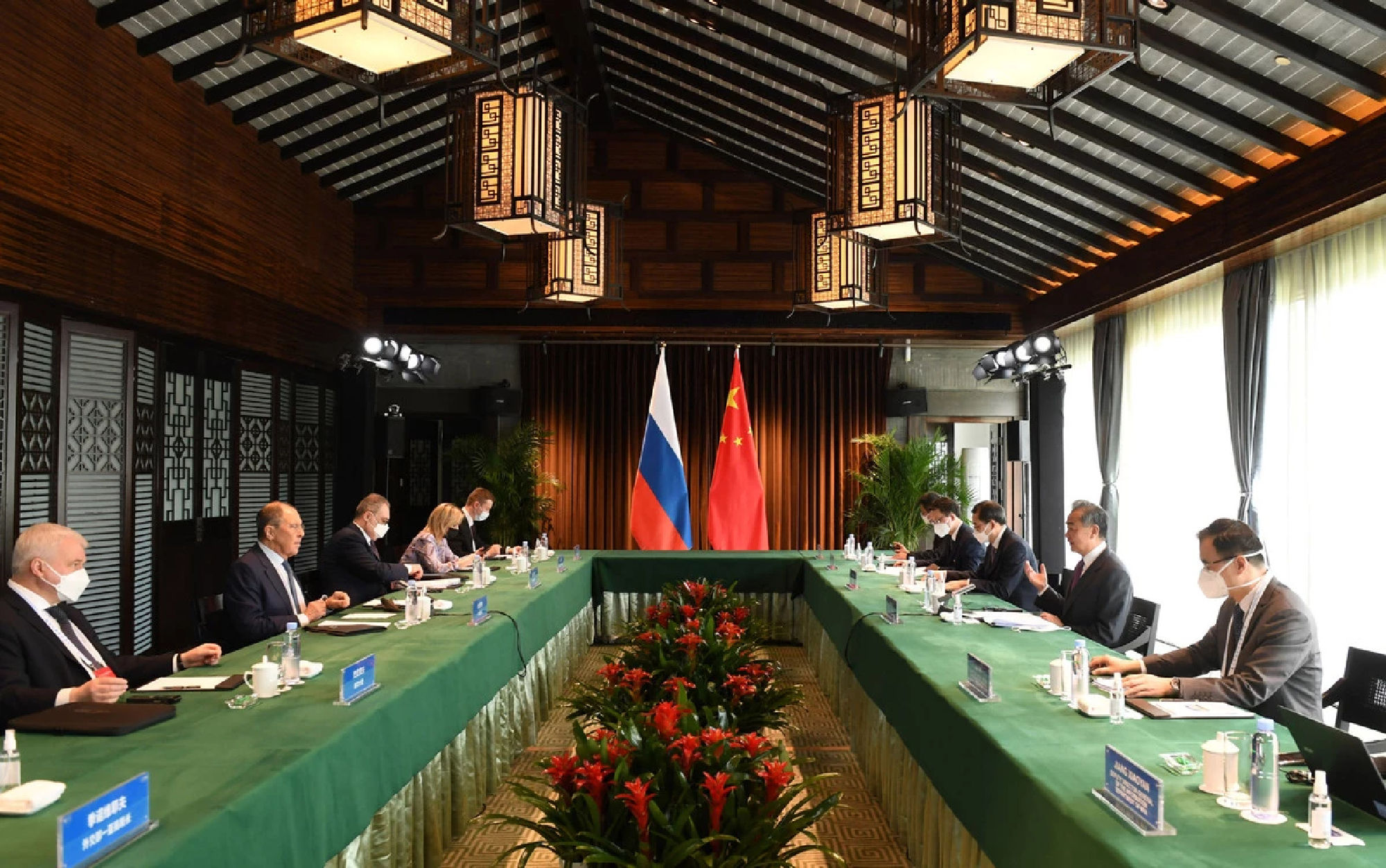
China supports Russia and Ukraine in overcoming their difficulties and continuing peace talks, State Councilor and Foreign Minister Wang Yi said on Wednesday, adding that China is supportive of the positive results achieved so far through negotiations.

China urges Russia, Ukraine to continue peace talks

Wang made the remark during a bilateral meeting with Russian Foreign Minister Sergey Lavrov, who is in Tunxi, Anhui province, to attend a two-day meeting of foreign ministers of countries bordering Afghanistan.

China always upholds objectivity and fairness on international affairs and stands on the right side of history, Wang said.

He noted that the Ukraine issue has special historical complexities, is related to problems and tensions built up over the past years concerning European security, and is also the result of a Cold War mentality and bloc confrontations, he said.

Wang expressed China’s support for an early de-escalation of the current situation in Ukraine and for the efforts made by Russia and all parties to prevent a large-scale humanitarian crisis.

In the long run, he said it is necessary to draw lessons from the Ukraine crisis and respond to the reasonable concerns of all parties under the principles of mutual respect and indivisible security.

A balanced, effective and sustainable European security architecture should be built through dialogue and negotiations in order to realize lasting peace and stability in Europe, Wang said.

Speaking of the China-Russia relationship, Wang said that bilateral ties have withstood the test of international turbulence, kept on the right track and showed resilience in their development.

The two sides are developing their relations with increased willingness and pushing forward cooperation in all fields with more confidence, he said.

China is ready to work with Russia to bring their bilateral ties to a higher level in the new era under the guidance of the important consensuses reached between their heads of state, Wang added.

According to a news release from the Chinese Foreign Ministry, Lavrov briefed Wang about the peace talks between Russia and Ukraine, saying that Russia is committed to cooling down the tensions and will continue with the peace talks and maintain communications with the international community.

He highlighted the important role of strategic communications between the Russia and China in terms of advancing the stable development of China-Russia relations and promoting world multipolarization as the international situation comes to a critical moment.

His country is willing to work with China to implement the heads of states’ consensus, and keep strengthening high-level strategic coordination and deepening mutually beneficial cooperation in all fields, the Russian foreign minister said.

Meanwhile, Russia will work with China to actively advance the multipolarization process on the international and multilateral stages and oppose hegemony and power politics, he added.

The two sides also exchanged views on issues including the Asia-Pacific situation and the Korean Peninsula.

Speaking at a news briefing in Beijing on Wednesday, Foreign Ministry spokesman Wang Wenbin said that there is no limit to China-Russia cooperation, and no limit to their efforts to achieve peace, safeguard security and oppose hegemony.

On Wednesday, Wang Yi also held talks with other foreign ministers attending the meeting in Anhui, including his Pakistani counterpart Shah Mahmood Qureshi.

Asia News Network: The Nation (Thailand), The Korea Herald, The Straits Times (Singapore), China Daily,  Jakarta Post, The Star and Sin Chew Daily (Malaysia), The Statesman (India), Philippine Daily Inquirer, Yomiuri Shimbun and The Japan News, Gogo Mongolia,  Dawn (Pakistan),  The Island (Sri Lanka), Kuensel (Bhutan), Kathmandu Post (Nepal), Daily Star (Bangladesh), Eleven Media (Myanmar), the Phnom Penh Post and Rasmei Kampuchea (Cambodia), The Borneo Bulletin (Brunei), Vietnam News, and Vientiane Times (Laos).

Published : March 31, 2022

By : China Daily

Ukraine war heightens Asia’s security concerns: PM Lee

#SootinClaimon.Com : ขอบคุณแหล่งข้อมูล : หนังสือพิมพ์ The Nation.

https://www.nationthailand.com/international/40013996


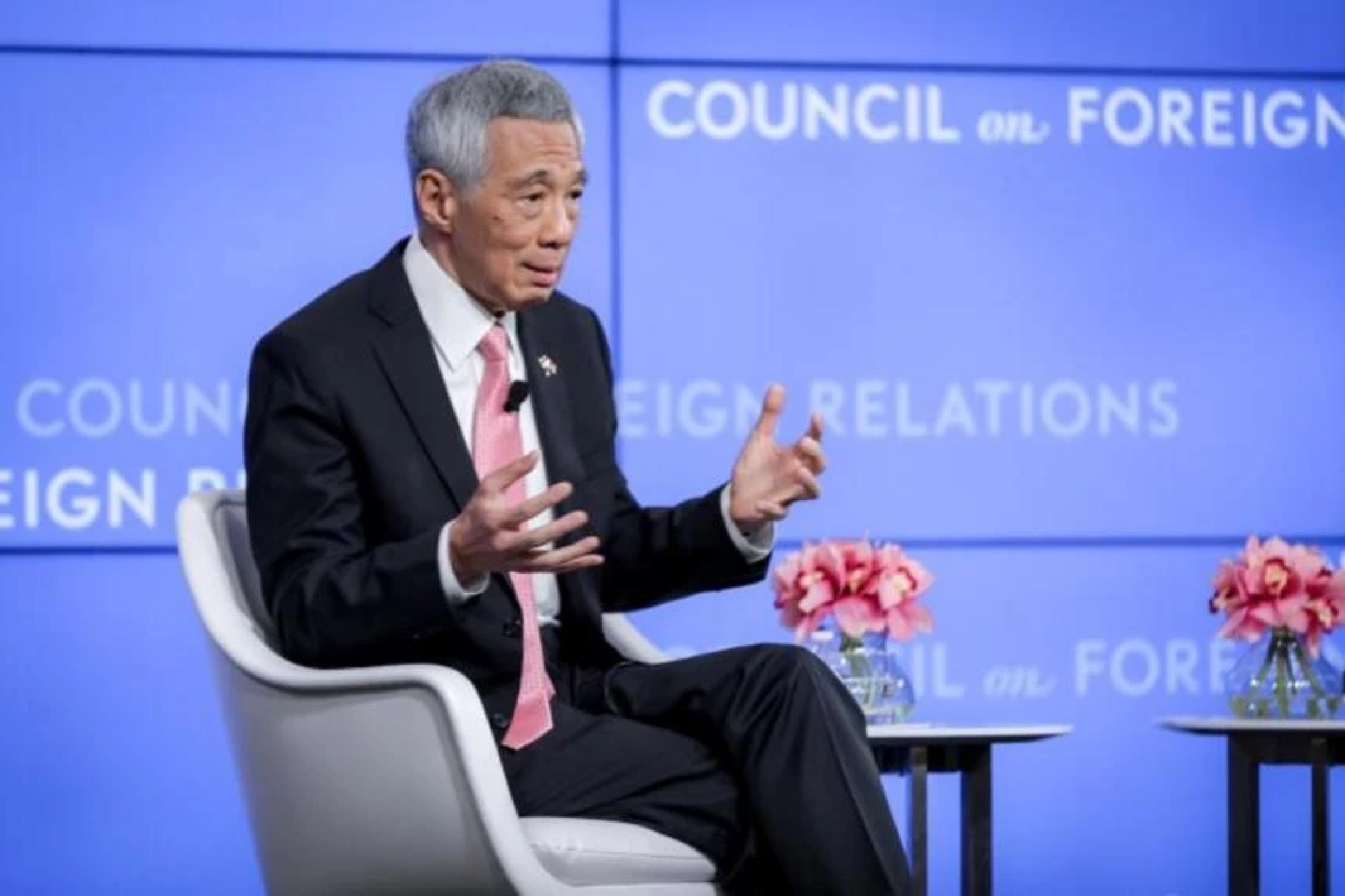
WASHINGTON – The war in Ukraine has negatively impacted Asia and damaged the international framework for law and order and peace, said Prime Minister Lee Hsien Loong on Wednesday (March 30).

Ukraine war heightens Asia's security concerns: PM Lee

The crisis has also impaired the global multilateral system, a worrying development for a small nation like Singapore which depends on globalisation for its livelihood, he added.

At an hour-long dialogue organised by the Washington-based Council on Foreign Relations think-tank, PM Lee laid out how Russia’s invasion of its neighbour affects Asia, including Singapore, a deep concern that he and US President Joe Biden expressed after their meeting on Tuesday.

Much of the wide-ranging dialogue was centred on the Ukraine war and its ripple effects on the world, from climate cooperation to energy security.

PM Lee, who has spent the week meeting America’s top leaders, also gave his take on South-east Asia’s security and economic landscape amid US engagement in the region.

He condemned the Russian invasion as something which endangered the sovereignty of all countries, especially small ones. “If a principle is accepted, that crazy decisions and historical errors are the justification for invading somebody else, I think many of us are going to be feeling very insecure,” he said at the event, attended in person by dozens of industry leaders and officials and streamed online to more.

Moreover, he said, the conflict had rent relations in Europe between developed countries and Russia, making it more difficult for countries to work together on issues from trade to nuclear non-proliferation.

“Now it’s win-lose, you want the other guy to be down, fix him, crash his economy. So how then do most of the countries hang together and cooperate with one another and not fall into disorder, autarky or anarchy?” he said.

What happens in Ukraine will also further strain US-China relations, affecting the rest of the world, said PM Lee.

Governments in the region will also draw from the crisis their own lessons about who they can rely on for defence, he added.

He cited how the crisis has prompted some in Japan to publicly consider whether the country should host US nuclear weapons, even though the government has rejected the idea, and how South Korea opinion polls have of late reflected a public reception to the idea of nuclear capabilities.

“The thought is planted and it will not go away because the implication from Ukraine is that nuclear deterrence is something which can be very valuable,” said PM Lee. “I think we’re heading into very dangerous directions.”

The Taiwanese public has also shown in opinion polls a declining confidence that America will come to their help should they be attacked, he said. “These calculations will be made. It will not change the scene overnight. But all these are significant strategic recalibrations,” said PM Lee.

The crisis has also highlighted the importance of having institutions in the Asia-Pacific that can help avoid conflict and head off a failure of deterrence, he added.

These institutions will have to enable a difficult adjustment – “how to accommodate a China which is going to become more developed, larger… and yet not become overbearing on the rest of the world and acceptable to the US, which currently is the dominant military power worldwide”.

Said PM Lee: “You need to give thought to this and steer things in a direction which does not lead you to a hot conflict.”

The dialogue followed a day of meetings in Washington for PM Lee, including with Vice President Kamala Harris on Tuesday.

They discussed new areas of cooperation, including cybersecurity, space cooperation and infrastructure development.

By Charissa Yong

Asia News Network: The Nation (Thailand), The Korea Herald, The Straits Times (Singapore), China Daily,  Jakarta Post, The Star and Sin Chew Daily (Malaysia), The Statesman (India), Philippine Daily Inquirer, Yomiuri Shimbun and The Japan News, Gogo Mongolia,  Dawn (Pakistan),  The Island (Sri Lanka), Kuensel (Bhutan), Kathmandu Post (Nepal), Daily Star (Bangladesh), Eleven Media (Myanmar), the Phnom Penh Post and Rasmei Kampuchea (Cambodia), The Borneo Bulletin (Brunei), Vietnam News, and Vientiane Times (Laos).

Published : March 31, 2022

By : The Straits Times

Govt plane to bring Ukrainians fleeing conflict to Japan

#SootinClaimon.Com : ขอบคุณแหล่งข้อมูล : หนังสือพิมพ์ The Nation.

https://www.nationthailand.com/international/40013963


The government is working on a plan that would transport Ukrainians who have sought refuge in Poland to Japan aboard a government plane, should they want to do so, government sources said.

Govt plane to bring Ukrainians fleeing conflict to Japan

Alarge number of Ukrainians have escaped to Poland in the wake of Russia’s invasion.

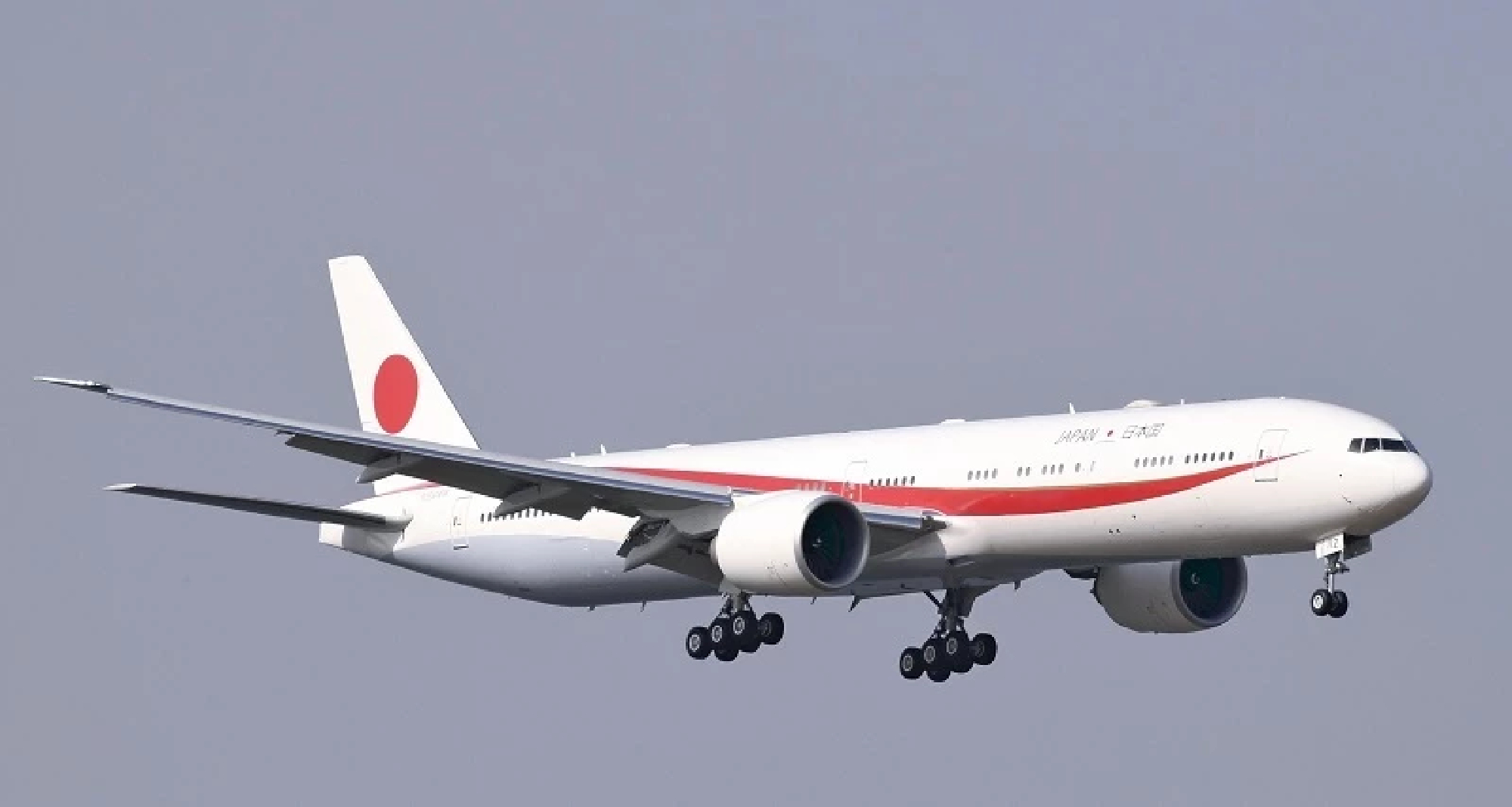
Prime Minister Fumio Kishida plans to dispatch Justice Minister Yoshihisa Furukawa to Poland as a special envoy aboard a government plane as early as Friday.

The government plans to allow Ukrainian refugees to travel to Japan with the justice minister on his return flight.

The Foreign Ministry is assessing the number of Ukrainians in Poland who might want to come to Japan.

Furukawa is expected to visit Poland from April 1 to 3. He plans to meet with high-ranking Polish government officials and examine the circumstances of the country accommodating Ukrainian refugees.

Asia News Network: The Nation (Thailand), The Korea Herald, The Straits Times (Singapore), China Daily,  Jakarta Post, The Star and Sin Chew Daily (Malaysia), The Statesman (India), Philippine Daily Inquirer, Yomiuri Shimbun and The Japan News, Gogo Mongolia,  Dawn (Pakistan),  The Island (Sri Lanka), Kuensel (Bhutan), Kathmandu Post (Nepal), Daily Star (Bangladesh), Eleven Media (Myanmar), the Phnom Penh Post and Rasmei Kampuchea (Cambodia), The Borneo Bulletin (Brunei), Vietnam News, and Vientiane Times (Laos).

Published : March 30, 2022

By : The Japan News

China warns PH against patrolling Panatag Shoal

#SootinClaimon.Com : ขอบคุณแหล่งข้อมูล : หนังสือพิมพ์ The Nation.

https://www.nationthailand.com/international/40013962


MANILA, Philippines — China has warned the Philippines against “interfering” with its patrols at Bajo de Masinloc, saying the shoal and its waters are part of Chinese territory.

China warns PH against patrolling Panatag Shoal

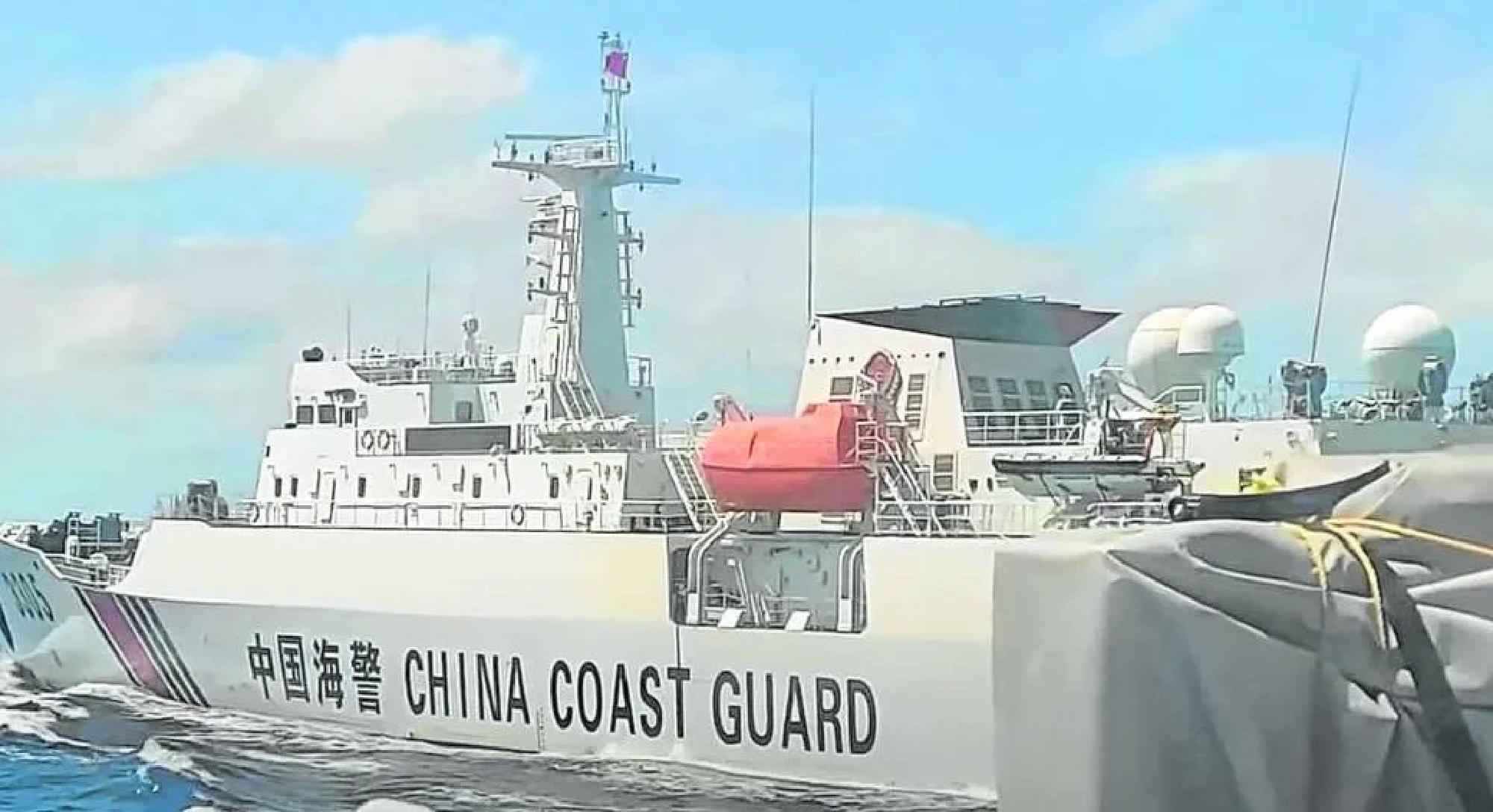
The Philippine Coast Guard (PCG) earlier reported that a China Coast Guard (CCG) vessel came dangerously close to one of its patrol ships near the shoal in a “close distance maneuvering” incident on March 2.

Using the Chinese name for the shoal, also called Panatag (or Scarborough) Shoal, Chinese Foreign Ministry spokesperson Wang Wenbin told reporters in Beijing on Monday that it was China’s “inherent territory.”

“China has sovereignty over Huangyan Dao and its adjacent waters as well as sovereign rights and jurisdiction over relevant waters,” he said.

“We hope that the Philippine ships will earnestly respect China’s sovereignty and rights and interests, abide by China’s domestic law and international law, and avoid interfering with the patrol and law enforcement of the China Coast Guard in the above-mentioned waters,” Wang said.

Malacañang rejected China’s territorial claim.

“The Philippine position is we continue to exercise full sovereignty over Bajo de Masinloc and its territorial sea, as well as sovereign rights and jurisdiction over the surrounding [exclusive economic zone] and continental shelf,” acting presidential spokesperson Martin Andanar said in a statement on Tuesday.

China seized control of the shoal in 2012 after a standoff with the Philippine Navy. This prompted the Philippines to challenge China’s sweeping claims to the South China Sea, including the West Philippine Sea, in the international arbitral tribunal.

In 2016, the tribunal invalidated China’s claims demarcated by its nine-dash line and ruled, among others, that the waters around the shoal were traditional fishing grounds to be shared by several countries, including the Philippines, and that China had interfered with these rights by restricting access to the area.

Beijing has repeatedly refused to recognize the ruling.

Rules-based order

The fishers’ group, Pambansang Lakas ng Kilusang Mamamalakaya ng Pilipinas (Pamalakaya), said Beijing should be compelled to abide by the 2016 ruling.

“Beijing has no right to dictate who can stay and who will be ejected from the seas that they have no legal and political claim,” Pamalakaya said in a statement.

“We assert to China our freedom of navigation, especially our right to fish in our territorial waters,” it said.

The PCG reported on Sunday that CCG 3305 came within 19 meters of the BRP Malabrigo.

It said that it was the fourth close encounter off the shoal since last year and was a “clear violation” of international regulations to prevent collisions at sea.

Commenting on the incident, the Japanese ambassador to the Philippines, Koshikawa Kazuhiko, reiterated his government’s position “that any actions by force or coercion are utterly unacceptable.”

“The rules-based international order is more important than ever for every country, regardless of its size,” Koshikawa said in a Twitter post on Monday.

Japan has its own maritime row with China in the East China Sea, where China insists it owns the Japanese-administered Senkakus, which are five uninhabited islands.

The Department of Foreign Affairs (DFA) has yet to make a statement on the CCG vessel’s risky maneuver.

Tensions between Beijing and Manila spiked in 2021 after hundreds of Chinese vessels were detected at Julian Felipe (Whitsun) Reef in the resource-rich Spratlys archipelago.

In November last year, CCG vessels blocked and “water cannoned” Philippine boats on a resupply mission to BRP Sierra Madre, the Philippine military outpost at Ayungin (Second Thomas) Shoal west of Palawan.

No one was hurt in the incident, which forced the boats to abort their mission, prompting Foreign Secretary Teodoro Locsin Jr. to condemn and protest against the Chinese action, and reminding China that a public vessel is covered by the Philippines-US Mutual Defense Treaty.

Blinken adviser’s visit

The DFA recently summoned China’s ambassador over the presence in the Sulu Sea of a Chinese reconnaissance ship, which the Philippine military said was eavesdropping on an ongoing joint Philippines-US military exercise early this year.

On Tuesday, the US Department of State said a senior policy adviser to Secretary of State Antony Blinken will visit Manila to “reaffirm our unwavering commitment to the US-Philippines alliance.”

Counselor Derek Chollet will consult with Philippine officials on joint efforts to support the rule of law and ensure freedom of navigation in the South China Sea, it said in a statement.

His visit is part of a trip to the Philippines, Vietnam, and Japan from March 28 to April 2.

“Counselor Chollet will reaffirm the US commitment to our Indo-Pacific allies and partners, and engage with key stakeholders on bilateral and regional issues, including efforts to seek a peaceful return to democracy in Burma (Myanmar),” the state department said.

The US official is also expected to discuss democracy and human rights as well as regional issues, Washington’s relations with the Association of Southeast Asian Nations (Asean) and the impact of Russia’s invasion of Ukraine.

The Chinese Foreign Ministry spokesperson also said Locsin and three other foreign ministers from Asean would be visiting Beijing separately for talks from March 31 to April 3.

The others are Foreign Minister Retno L. P. Marsudi of Indonesia, Deputy Prime Minister and Minister of Foreign Affairs Don Pramudwinai of Thailand, and Union Minister for Foreign Affairs U Wunna Maung Lwin of Myanmar.

According to Wang, Beijing hopes to have “in-depth exchanges of views” with the four countries on the current regional and international situation.

He said Indonesia, Thailand, the Philippines, and Myanmar were “China’s friendly neighbors and important partners” in Beijing’s Belt and Road Initiative (BRI), an ambitious $1-trillion cross border infrastructure program that includes maritime, rail, and road projects in Asia, Africa, and Europe.

BRI is also intended to expand Beijing’s global economic and political power and influence.

—WITH REPORTS FROM LEILA B. SALAVERRIA AND FRANCES MANGOSING

Asia News Network: The Nation (Thailand), The Korea Herald, The Straits Times (Singapore), China Daily,  Jakarta Post, The Star and Sin Chew Daily (Malaysia), The Statesman (India), Philippine Daily Inquirer, Yomiuri Shimbun and The Japan News, Gogo Mongolia,  Dawn (Pakistan),  The Island (Sri Lanka), Kuensel (Bhutan), Kathmandu Post (Nepal), Daily Star (Bangladesh), Eleven Media (Myanmar), the Phnom Penh Post and Rasmei Kampuchea (Cambodia), The Borneo Bulletin (Brunei), Vietnam News, and Vientiane Times (Laos).

Published : March 30, 2022

By : Philippine Daily Inquirer