Singapore explores tapping nuclear energy by 2050

#SootinClaimon.Com : ขอบคุณแหล่งข้อมูล : หนังสือพิมพ์ The Nation.

https://www.nationthailand.com/international/40013704


SINGAPORE – Nuclear energy, once deemed unsuitable for Singapore, has been identified as a potential power source for the country by 2050 in a new report published on Tuesday (March 22).
Singapore explores tapping nuclear energy by 2050

The report, commissioned by the Energy Market Authority (EMA), concluded that nuclear energy could by 2050 supply about 10 per cent of the country’s needs, with advancements in nuclear technology making it safer and more reliable.

The potential use of nuclear energy in Singapore’s power mix had been identified in one of three scenarios in the Energy 2050 Committee report.

The three different scenarios account for uncertainties in geopolitics – such as if countries band together to tackle climate change – and how fast clean energy technologies come online.

Nuclear energy had been cited as contributing to Singapore’s power mix in the scenario where the world is fragmented geopolitically, but if technological advancements accelerate in later decades.

A fragmented world makes it tougher for countries to work together to achieve their climate targets, which means that the share of electricity imports in Singapore’s energy mix would be limited due to slow development of the regional grid, the report said.

In the other two scenarios, electricity imports are key contributors to Singapore’s energy mix. One posits countries banding together to advance climate action and technologies coming online quickly, and another is where countries collaborate even as technological advancements stall due to a protracted recovery from the Covid-19 pandemic.

The report noted that a pre-feasibility study done by the Government concluded in 2012 that nuclear technologies available then were not fit for deployment here.

But nuclear technology has improved since then, the report added, pointing to newer nuclear power plant designs being developed and tested in major countries that have the potential to be much safer than many of the plants that are in operation today.

Such nuclear plants can be found in countries such as China, France, the United States and Russia.

Given that Singapore has limited options to decarbonise its power sector, the report recommends that the EMA actively monitors developments in nuclear fission small modular reactors and nuclear fusion technology to allow Singapore to adopt these technologies, deemed safer than traditional nuclear fission technology, when viable.

Responding to questions on whether the global energy crunch has shifted the Government’s stand on using nuclear energy, Second Minister for Trade and Industry Tan See Leng told Parliament in January that his ministry has been monitoring advanced nuclear reactor technologies and designs.

These include small modular reactors, which can be built quickly and placed in locations not possible for larger nuclear plants, as well as fusion reactors, which harness the fusion reaction that powers the sun and other stars.

Many of these are still in research and development phase, and have yet to begin commercial operations, he said then.

In 2014, Singapore set aside $63 million to launch a programme for research and education in nuclear safety, science and engineering.

The Energy 2050 Committee report projected that several commercial small modular reactor designs and units will be developed abroad and available worldwide from the late 2030s.

By the 2040s, it added, the developments will likely enable Singapore to determine that nuclear energy is viable and to start developing domestic generation capacity in this global landscape.

While nuclear fusion energy production holds promise for unlocking low-carbon, low-radiation energy, there is still much work to be done.

In December last year, scientists at the Joint European Torus facility in Britain broke the world record for generating nuclear fusion energy by creating 59 megajoules of sustained energy over five seconds during an experiment. This is enough to power 35,000 homes for five seconds, or boil about 60 kettles of water. It is more than double the previous record set by the reactor in 1997.

Unlike nuclear fission in atomic power plants, the nuclear fusion technology cannot be weaponised and its waste remains radioactive for a shorter period of time. According to the International Atomic Energy Agency, the United Nations’ atomic watchdog, nuclear fusion does not cause accidents like nuclear fission technology because it is not based on a chain reaction.

This means that any shift or change in the working configuration of a nuclear fusion reactor will cause the process of energy production to stop, with no effects taking place on the outside.

To prepare Singapore for adopting nuclear technology when it becomes viable, the report recommends that the nation chart out required capabilities, regulations, resources and a timeline for Singapore to become a fast adopter of these technologies.

In the past five years, the Singapore Nuclear Research and Safety Initiative (SNRSI) has awarded 24 scholarships for postgraduate studies in areas related to nuclear energy.

Through the Analytical Laboratories for the Measurement of Environmental Radioactivity network, SNRSI has also developed the ability to detect the identity and quantity of radioactive material in the environment to the precision and accuracy expected of member labs.

This comes as some countries around the world are betting on nuclear energy in their push for carbon neutrality by 2050.

Last month, French President Emmanuel Macron pledged to build at least six new nuclear reactors in the next few decades.

Published : March 23, 2022

By : The Straits Times
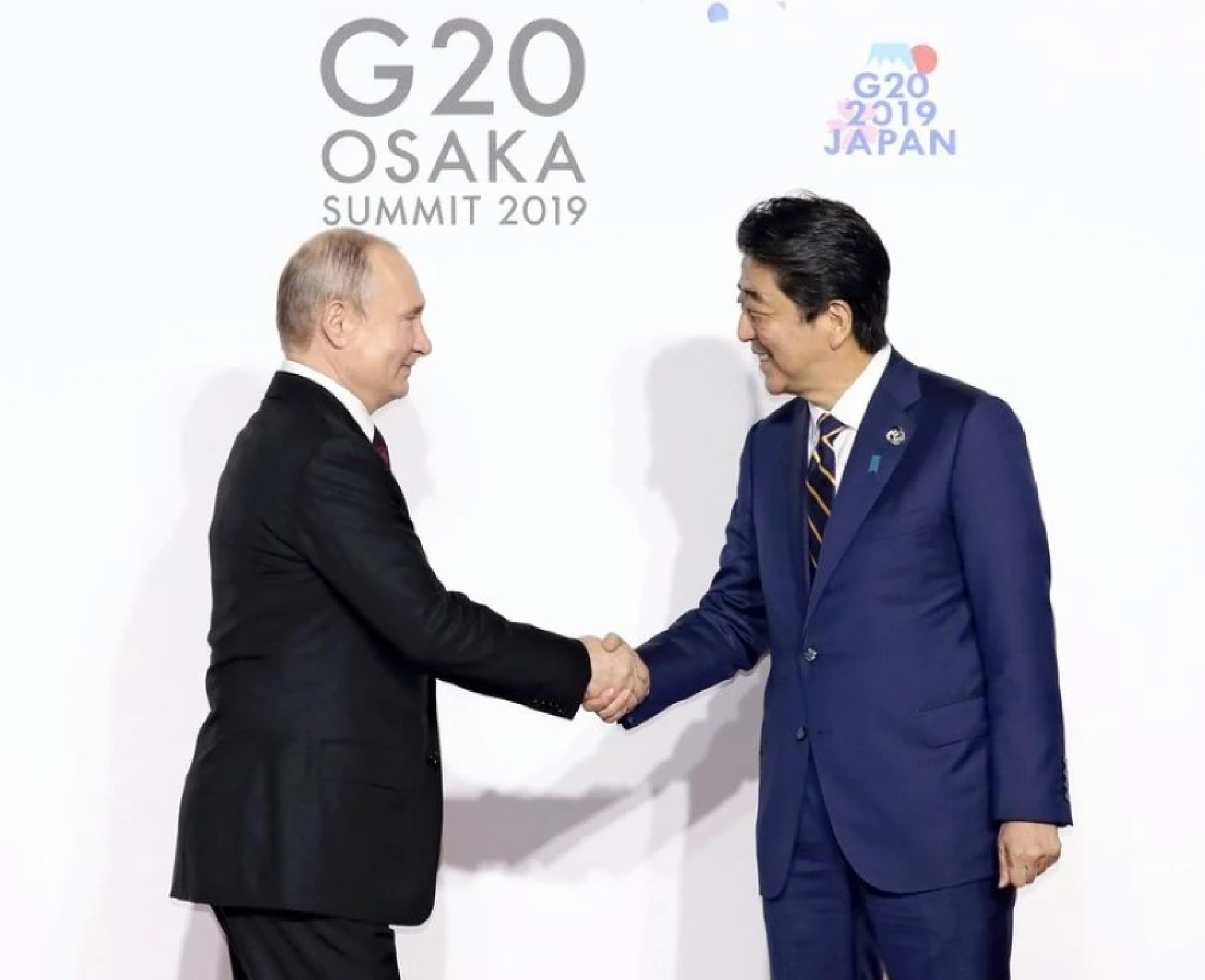
Russia halts peace treaty talks with Japan over Ukraine sanctions

#SootinClaimon.Com : ขอบคุณแหล่งข้อมูล : หนังสือพิมพ์ The Nation.

https://www.nationthailand.com/international/40013703


Russia’s Foreign Ministry said Monday it has no intention of continuing peace treaty talks with Japan, an apparent reprisal against sanctions Tokyo has imposed on Moscow over the Ukraine invasion.

Russia halts peace treaty talks with Japan over Ukraine sanctions

In response, Prime Minister Fumio Kishida said Tuesday that Russia’s action was, “Absolutely unacceptable.”

Chief Cabinet Secretary Hirokazu Matsuno said at a press conference on Tuesday morning that Senior Deputy Foreign Minister Shigeo Yamada made a protest to Russian Ambassador Mikhail Galuzin.

During a Budget Committee meeting of the House of Councillors on Tuesday morning, Kishida said: “The current situation has been completely caused by Russia’s invasion of Ukraine. For Russia to deal with this by redirecting its frustrations onto Japan-Russian relations is preposterous.”

The statement released by Russia’s Foreign Ministry said, “In the current situation … it is impossible to discuss the signing of a fundamental treaty in bilateral relations with a country that takes an outspokenly unfriendly stance and tries to cause harm to the interests of our country.”

Russia also intends to suspend a program to allow visa-free exchanges between Japanese people and residents of the northern territories off Hokkaido, as well as the simplified procedures for former Japanese residents to visit graves on the four islands. Both programs started in the 1990s.

Moscow also plans to withdraw from negotiations to start joint economic activities on the northern territories, agreed to in 2016 during a meeting between then Prime Minister Shinzo Abe and Russian President Vladimir Putin.

“All responsibility for harm to bilateral relations and to the interests of Japan itself rests upon Tokyo, which has consciously made its choice in favor of an anti-Russian policy,” the Russian Foreign Ministry said.

By unilaterally declaring the halt of peace treaty talks, which is the largest pending issue between the two countries, in the hopes of agitating Tokyo, Russia is believed to be trying to drive a wedge into the unity displayed by Western nations and Japan.

During a 2018 Abe-Putin summit, the leaders agreed to base peace treaty talks on the 1956 Japan-Soviet Joint Declaration that stipulates the return of two islands — the Habomai islets and Shikotan Island— to Japan, shelving the idea of the return of all four islands.

In 2020, however, amendments to Russia’s Constitution included a clause banning the ceding of Russian territory. Moscow also has taken a tougher stance against Japan’s interests on the northern territories through such measures as enacting a law on March 9 on establishing tax-free special zones to attract companies from other countries.

Published : March 23, 2022

By : The Japan News

S. Korea’s daily coronavirus cases spike to near 500,000; total caseload surpasses 10m

#SootinClaimon.Com : ขอบคุณแหล่งข้อมูล : หนังสือพิมพ์ The Nation.

https://www.nationthailand.com/international/40013702


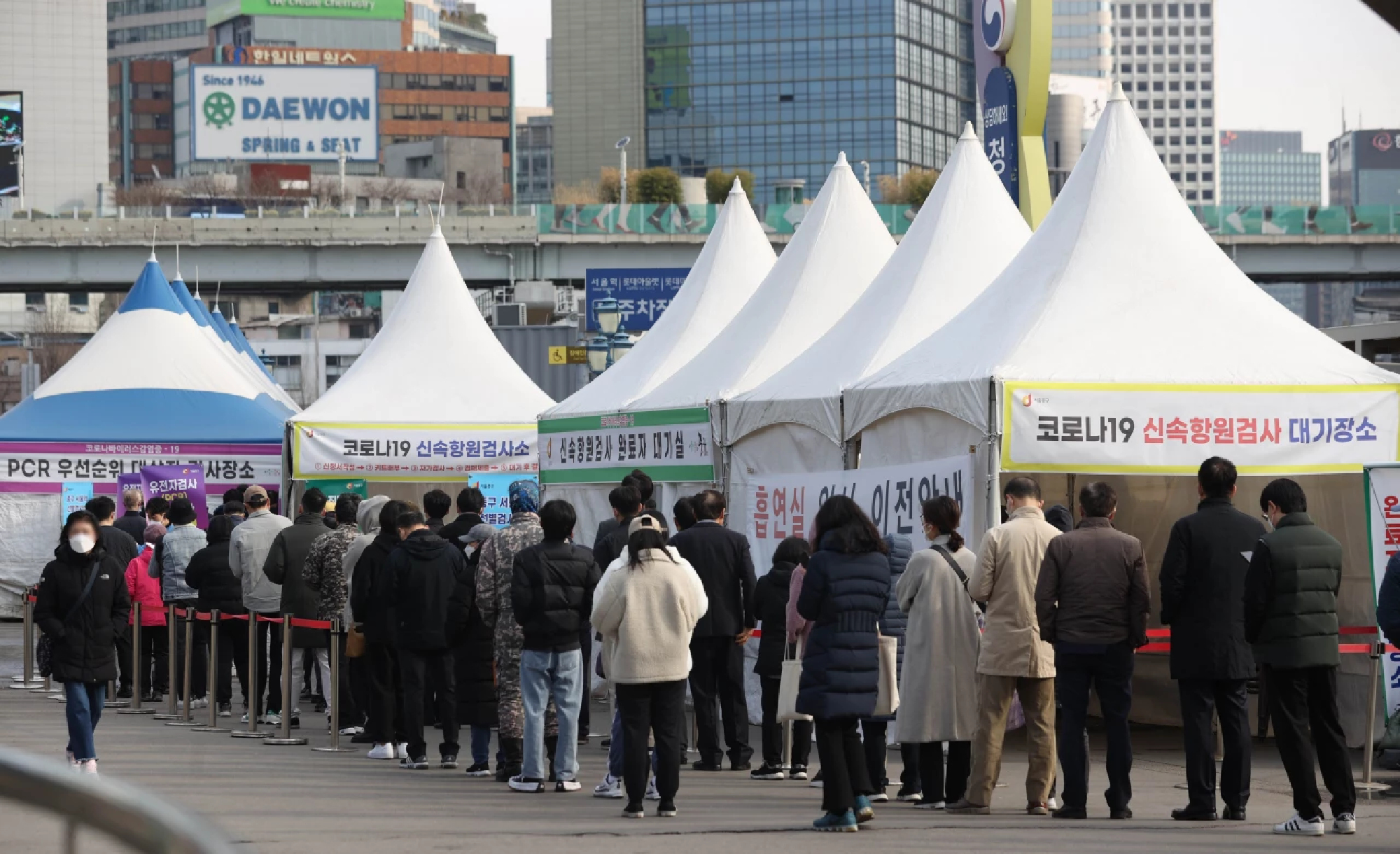
South Korea’s new COVID-19 cases spiked to near 500,000 on Wednesday, adding to concerns that infections continue to spike again as the accumulated caseload surpassed 10 million.

S. Korea's daily coronavirus cases spike to near 500,000; total caseload surpasses 10m

The country had reported 490,881 new COVID-19 infections as of midnight, raising the total caseload to 10,427,247, the Korea Disease Control and Prevention Agency (KDCA) said.

Wednesday’s tally is the second-highest, after 621,205 new cases reported last Thursday.

The total caseload breached the grim milestone of the 10 million mark Tuesday, meaning 1 out of 5 South Koreans has been infected with COVID-19.

The death toll from COVID-19 came to 13,432, up 291 from Tuesday, the KDCA said. The fatality rate came to 0.13 percent.

The number of critically ill patients stood at 1,084, down 20 from the previous day.

The daily tally has remained over 1,000 for 16 days straight.

Despite an earlier estimate that the current pandemic could peak this week, health authorities cited the possibility of the current outbreak continuing due to the fast spread of the so-called stealth omicron, which has a 30 percent higher transmission rate than the original omicron.

They also cautioned against predictions that COVID-19 infections could be at their peak when 20 percent of the country’s population is infected.

The hospital bed occupancy rate for seriously ill COVID-19 patients came to 64.4 percent Wednesday, down 3.4 percentage points from a day earlier. The rate still remains manageable within the country’s medical response capacity.

The number of people receiving at-home treatment stood at 1,827,031 on Wednesday, the KDCA said.

Of the domestic cases, Seoul reported 101,133 new infections, with the surrounding Gyeonggi Province logging 136,912. The western port city of Incheon reported 24,941.

As of midnight Monday, 32.45 million people out of the 52 million population, or 63.2 percent, had received booster shots. Fully vaccinated people came to 44.46 million, representing 86.6 percent, the KDCA said. (Yonhap)

Published : March 23, 2022

By : The Korea Herald

Laos fragrance brand scents success in hugely competitive market

#SootinClaimon.Com : ขอบคุณแหล่งข้อมูล : หนังสือพิมพ์ The Nation.

https://www.nationthailand.com/international/40013697


Laos’ first perfume brand HSMM Fragrance launched two new scents – “Lady of Lao” and “Black Intense” – at the 2021 Outstanding Entrepreneurs “Made in Laos” Award ceremony held in Vientiane last Friday.

Laos fragrance brand scents success in hugely competitive market

Launched in January 2021, the brand has won an impressive response and now has seven Eau de Parfums under its belt, including Dok Cham Pa and Sok Dee as premium offerings.

Chairman Soukthavy Chowdhury said he was delighted by the performance of his products in the perfume market, which is already dominated by many well-known foreign brands.

“When this ‘made in Laos’ brand was launched, it had its own challenges because we didn’t know what kind of response we would get from the market. However, I’m very happy to say the response has been very good. We are achieving good brand awareness and the market has been very supportive of the brand,” he said.

Laos fragrance brand scents success in hugely competitive market

HSMM Fragrance took the spotlight at the award ceremony with the CEO receiving the “Outstanding Entrepreneur” award from the Prime Minister’s Office Minister Alounxay Sounnalath.

The brand will be very soon opening its stores at Vientiane’s Wattay International Airport and Luang Prabang Airport. The CEO said buyers in Dubai and Kuwait have also shown interest in the brand.

Vientiane Times

Published : March 22, 2022

India-US ties will face test if conflict in Ukraine continues to intensify

#SootinClaimon.Com : ขอบคุณแหล่งข้อมูล : หนังสือพิมพ์ The Nation.

https://www.nationthailand.com/international/40013678


Ties between the United States and India, which have grown closer in recent years, have come under the spotlight, particularly in Washington, because of New Delhi’s stance on the crisis in Ukraine.

India-US ties will face test if conflict in Ukraine continues to intensify

NEW DELHI – The Biden administration has held back from criticising India’s refusal to condemn Russia for invading its neighbour, acknowledging New Delhi’s “distinct” relationship with Moscow but expressing a desire for the former to distance itself from a close defence partner.

The US Congress is not expected to be as understanding, particularly if the crisis continues to intensify, with lawmakers, both Republican and Democrat, criticising India’s decision to abstain four times at the United Nations Security Council on resolutions against Russia.

“There is a lot of concern among the think tanks and the US Congress on India which was seen as an emerging strong ally. So I think there is a lot of surprise about India’s four abstentions.

The US government and agencies know the extraordinary Indian exposure to Russia and the arms dependence. They also know India has got a huge conflict with China on the border.

“At this point, India simply can’t alienate Russia and must keep supply lines on its weapons open. The government statements have been fairly moderate,” said Dr C. Raja Mohan, a senior fellow at the Delhi-based Asia Society Policy Institute.

“India has some work to do to explain the difficult situation (to US legislators) that Russia is a legacy of the past. Overall the weight of India’s engagement is now closer to the West,” he added.

The relationship between India and the US has been shaped by mutual concern on the rise of China.

In 2020, a major border clash erupted between India and China resulting in troop deaths on both sides, further heightening concerns in New Delhi about China’s intentions.

The US, which has called India the main driver of the Quadrilateral Security Dialogue (Quad), views India as a key partner in containing the rise of China and both countries are part of the Quad, which includes Australia and Japan.

Quad leaders held a meeting on Feb 12 that analysts said was aimed at ensuring a greater convergence of views on Russia amid the Ukraine crisis. The leaders agreed that what was happening in Ukraine should not be allowed in the Indo-Pacific region, said Japanese Prime Minister Fumio Kishida.

US President Joe Biden spoke of “sovereignty and territorial integrity around the world, including in the Indo-Pacific”.

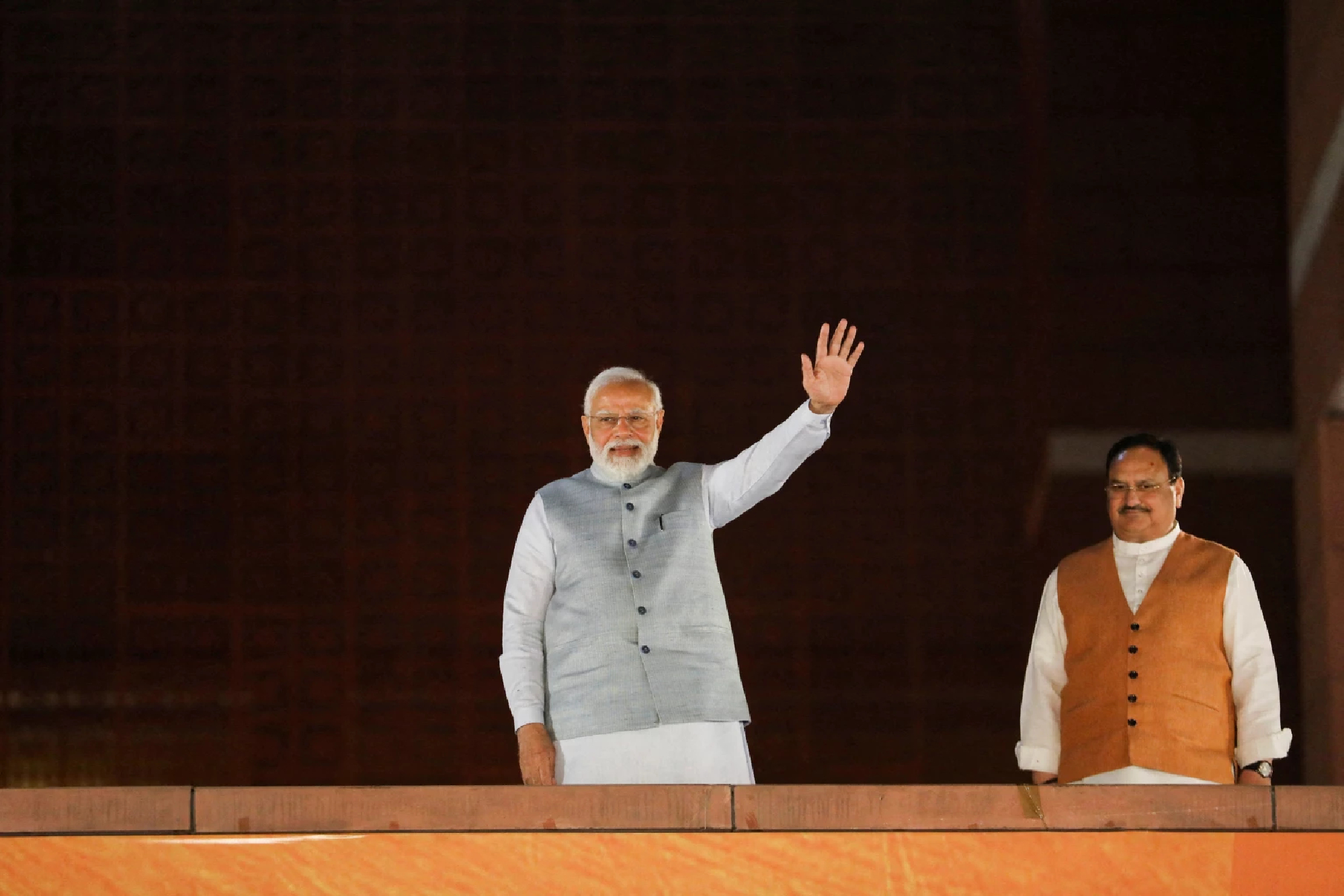
Indian Prime Minister Narendra Modi focused on “peace, stability” in the Indo-Pacific region in his comments.

A key test of how the Ukraine crisis could impact India-US ties will be whether Washington will impose sanctions under the Countering America’s Adversaries Through Sanctions Act over the ongoing S-400 Triumf air defence system deal between India and Russia.

“It’s unlikely that sanctions would be resorted to by the US in India’s case or India would be targeted directly but certainly many in the US Congress would start publicly questioning India as a partner in the future. The US Congress might be more difficult to handle if tensions continue to rise,” said Professor Harsh V. Pant, who is director of studies and head of the Strategic Studies Programme at Observer Research Foundation.

He noted that India would have to articulate its position clearly otherwise “the danger of being looked at through the prism of Russia rises and that is not something Indian foreign policy can afford”.

“At this point, I think the main strategic challenge is China and, in managing China, India needs both Russia and the US.”

Still, some analysts in India are already working out the worst-case scenario for India, which wants nothing more than the US to refocus on the Indo-Pacific and China.

One scenario sees the China-Russia partnership deepening following the Ukraine crisis which could leave India with an even bigger problem closer to home.

India’s former foreign secretary Shyam Saran said in an interview with The Wire, an Indian news portal, that the worst-case scenario would be if the US thought the greater threat was Russia, not China, and conceded “Chinese dominance in Asia while safeguarding its European flank”.

But Dr Raja Mohan believed Washington would continue to view China as a threat. “At least for now the Americans are signalling that the Indo-Pacific remains important through the Quad summit, which was held on short notice,” he said.

“A large section of the US establishment thinks China is the bigger challenge. There is also a view in Delhi that if the US can get Europe, with Nato being activated and Germany spending more on defence, to assume a larger responsibility to deal with the Russian threat, the US may be freer to do more things in the Indo-Pacific.”

Nirmala Ganapathy

India Bureau Chief

The Straits Times

Published : March 22, 2022

The role ‘white supremacists’ are playing in the Russia-Ukraine war

#SootinClaimon.Com : ขอบคุณแหล่งข้อมูล : หนังสือพิมพ์ The Nation.

https://www.nationthailand.com/international/40013677


On March 19, 2019, Brenton Tarrant, a 28-year-old man from Australia killed 51 Muslim worshippers in what is known as the Christchurch mosque massacre.

The role ‘white supremacists’ are playing in the Russia-Ukraine war

ISLAMABAD – Brenton was an avowed white supremacist who had previously expressed support for the Serbian military and militias responsible for carrying out atrocities against Bosnian Muslims.

The weapons he used to commit this atrocity were painted with white supremacist slogans, symbols and historical references that resonate with the far-right in Europe: ‘Vienna 1683’ referred to the Ottoman defeat at Kahlenburg, while ‘Acre 1189’ harks to the Crusades, an event of mythic importance for European racists.

The name of Charles Martel, the Frankish King who defeated the Arabs at the Battle of Tours was there, along with that of Pavlo Lapshyn, a Ukrainian extremist who killed Muhammad Saleem in Birmingham because he hated ‘non-whites’.

The number 14, a reference to an American far-right mantra was also present, and Tarrant’s backpack sported a circular Norse rune known as the ‘sonnenrad’, or ‘black sun’.

This symbol, one of many ancient European symbols appropriated by the Nazis, features prominently in contemporary neo-Nazi and far-right lore. It is also popping up regularly in Ukraine.

Recently, a picture uploaded by Nato’s official Twitter account on International Women’s Day showed a woman in combat gear sporting a sonnenrad symbol.

The same symbol was seen on the uniform of a Ukrainian ‘serviceman’ in a picture uploaded by Getty’s images.

Nexta TV, a Belarussian media outlet, that often finds itself on the wrong side of the country’s pro-Russian regime, posted pictures of members of the Ukrainian Azov regiment receiving advanced grenade launchers and training from “instructors from Nato countries”.

All these fighters sported the logo of the Azov battalion. This logo, known as the ‘Wolfangel’, is another ancient Norse rune that was appropriated by Nazi Germany and appeared on the insignia of several Waffen-SS regiments.

How it came to be adopted by the far-right, ultra-nationalist Azov regiment — currently one of the best trained and armed groups fighting Russia in Ukraine — involves a primer on Ukraine’s history.

When Germany invaded the USSR in World War II, they received considerable support from elements in western Ukraine who initially saw the Germans as liberators who would help Ukraine throw off the yoke of Soviet rule.

Prominent among these was Stepan Bandera, who pledged allegiance to Nazi Germany but later turned against their policies when it became clear that the Germans were less interested in liberating Ukraine than in turning that fertile land into a breadbasket for Germany, operated by Ukrainian serfs.

However, even when Bandera himself was in a Nazi concentration camp, his Order of Ukrainian Nationalists continued to carry out massacres of Poles and Jews while also targeting political opponents.

Bandera may be a divisive figure in Ukraine today, but to the Azov regiment he is a hero; After all, Bandera was a proponent of selective breeding to create a ‘pure’ Ukrainian race and the founder of the Azov regiment.

Andriy Biletsky is on record as saying in 2010 that Ukraine’s destiny was to “lead the white races of the world in a final crusade … against Semite-led Untermenschen [inferior races]”.

The Azov battalion began as a volunteer militia in 2014, fighting pro-Russian separatists in Donetsk in eastern Ukraine. Since then, they have been adopted by Ukraine’s armed forces and have become more politically active, while also forging closer links with far-right groups and militias across the Western world.

This is where things start to get dangerous; it is a fact that adherents of far-right and neo-Nazi ideologies in the West seek out former and serving police and military personnel to join their networks.

With a flood of ‘volunteers’ from across the West joining the fight in Ukraine sometimes with active encouragement from their governments, it is a certainty that militant neo-Nazis are also heeding the call and travelling to Ukraine not just to forge deeper links with transnational white supremacist movements but to also gain battlefield experience which can then be used to prosecute their domestic wars against minorities and political opponents.

In the murky online world of these radicals, not only are ideas and tactics exchanged but active efforts are being made on forums and chat groups to coordinate travel and border crossings to make it easier for latter-day Nazis keen on joining the battle to get to Ukraine.

If this sounds familiar, that’s because what is unfolding in Ukraine today bears close parallels to the influx of fighters in the Afghan wars and also in the Syrian civil war.

If the Ukraine war drags on into insurgency and urban warfare, we may well find that it was to international Nazis what the Afghan and Syrian conflicts were to international jihadis.

Zarrar Khuhro

Journalist, Dawn

Published : March 22, 2022

By : DAWN

Hiring outlook in S’pore most favourable in almost 11 years: Survey

#SootinClaimon.Com : ขอบคุณแหล่งข้อมูล : หนังสือพิมพ์ The Nation.

https://www.nationthailand.com/international/40013657


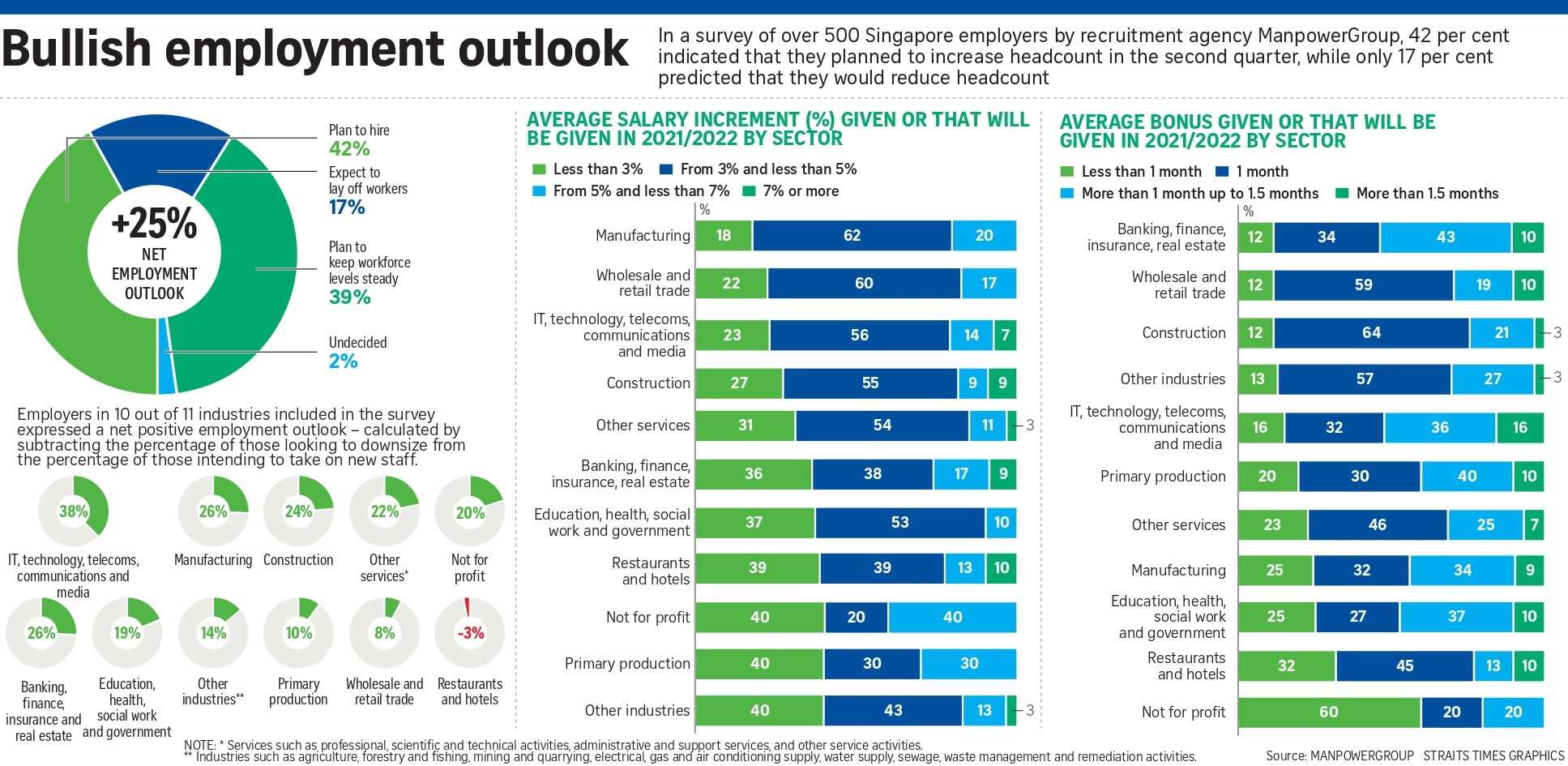
SINGAPORE – Employers in Singapore have expressed the most favourable hiring outlook in almost 11 years for the second quarter of this year.

Hiring outlook in S'pore most favourable in almost 11 years: Survey

They reported a net employment outlook of 25 per cent, an increase of 11 percentage points from the outlook for the first quarter of this year, according to a survey of more than 500 employers by recruitment agency ManpowerGroup.

This is the highest net employment outlook, defined as the percentage of companies surveyed that intend to take on new staff minus the percentage that intend to downsize, since the fourth quarter of 2011, noted the agency.

Of the 11 sectors included in the survey, companies in the IT, technology, telecommunications, communications and media sector reported the strongest employment outlook at 38 per cent.

Strong showings were also posted by the manufacturing, and the banking, finance, insurance and real estate sectors (both 26 per cent), as well as in the construction industry (24 per cent).

The weakest hiring climate is forecast in the restaurants and hotels sector (minus three per cent), the only sector with more employers looking to downsize than hire.

The survey found that the manufacturing, retail and IT sectors are planning, or have given, the most generous average increments.

More than eight in 10 manufacturing companies surveyed plan to, or have given their staff, an average increment of 3 per cent or more, for instance.

Meanwhile, the finance, and wholesale and retail trade sectors are expecting to give the largest bonuses on average.

One in two employers in the finance industry are lining up to give an average bonus of more than a month to staff.

The survey also found that medium-sized companies with 50 to 249 employees had the weakest outlook, though still positive, compared to both smaller and larger companies.

Mr Paul Heng, managing director of NeXT Career Consulting Group, said the overall bullish outlook reflects pent-up demand by companies in anticipation of a return to normalcy.

“Market sentiments are that ‘I’d rather choose to chiong (Hokkien for rush)’, as employers are sick and tired of the (Covid-19) pandemic and the measures that come with it,” said Mr Heng of employers pressing ahead with hiring, instead of waiting for the situation to revert to an even keel.

Nonetheless, a lack of skilled, qualified workers despite a rise in employment last quarter is a reason to temper the optimism, said Mr Tonny Loh, partner at the Singapore office of human resources consultancy Heidrick and Struggles.

Mr Loh added: “This is evident as more than a quarter of job vacancies in Singapore have been left unfilled for six months or more.”

Mr Heng said the positive outlook in the IT and retail sectors reflects a dearth in talent and employers in these sectors have to compete to attract or retain talent.

“Changes associated with granting of employment visas also pose a real challenge.”

As for the hiring outlook for hotels and restaurants, Mr Loh said it may be dampened by the uncertain recovery of international travel, as well as local consumers favouring spending on necessities amid high inflation.

On the negative outlook for restaurants, Mr Heng said: “My guess is that restaurants are still being cautious – (they) don’t want to bite off more than what they can chew.

“Changes to the maximum number of people (who can dine in together) is something that was fluid and… (changes) may happen again.”

Hiring outlook in S'pore most favourable in almost 11 years: Survey

Published : March 22, 2022

By : The Straits Times
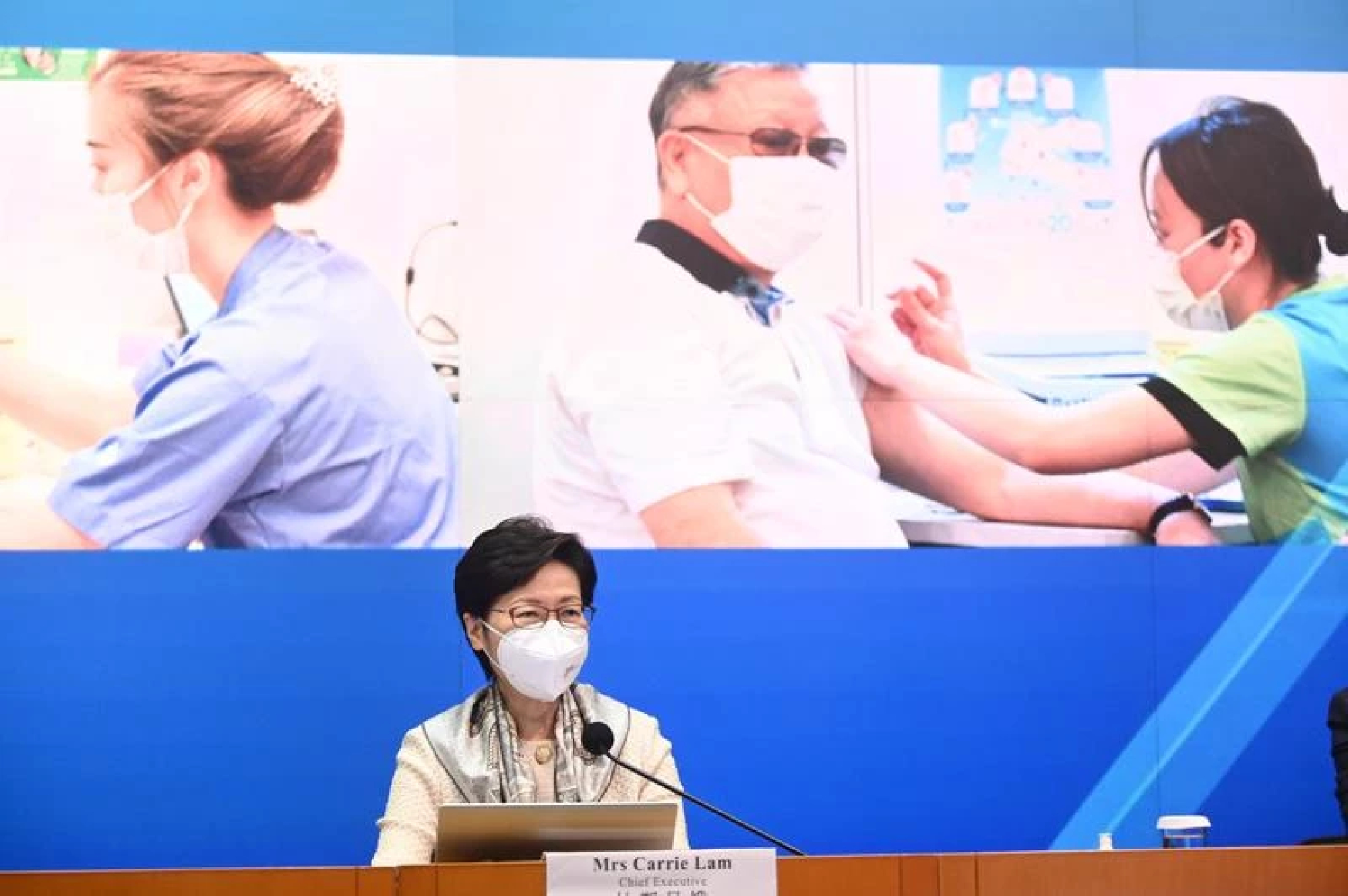
Security alert issued against NK threat, Russia-Ukraine cyberwar

#SootinClaimon.Com : ขอบคุณแหล่งข้อมูล : หนังสือพิมพ์ The Nation.

https://www.nationthailand.com/international/40013656


Spy agency warns about hacking campaign targeting incoming Yoon government

Security alert issued against NK threat, Russia-Ukraine cyberwar

The South Korean government has issued a cybersecurity alert against North Korea’s growing cyber threat, hacking attempts during the presidential transitional period, and escalating cyberwarfare after Russia’s invasion of Ukraine.

South Korea’s Defense Ministry announced that it has increased the Cyber Protection Condition or CPCON level by one notch higher as of 9:00 a.m. on Monday as part of widespread government-level efforts.

Under the raised warning, the South Korean military will shore up cybersecurity readiness and defenses against potential cyberattacks.

It comes as there are mounting concerns that the North Korean threat, which has heightened in the wake of a recent spate of ballistic missile launches, “can be expanded into cyberspace,” according to the Defense Ministry. The “ongoing conflict in cyberspace in relation to the war between Russia and Ukraine” is assessed as another key threat factor.

The state of CPCON has been raised from Level 4 (attention) to 3 (caution) for the first time since last August to “take a readiness posture preemptively against cyber threats.”

In August 2021, the South Korean military elevated CPCON from Level 5 to 4 to prepare for North Korean cyberattacks, including potential hacking targeting the country’s defense contractors.

CPCON, which was formerly known as information operations condition or INFOCON, is divided into five levels, with the lowest tier being normal readiness procedures.

INFOCON was previously raised multiple times mainly against the North Korean cyber threat in the aftermath of cyberattacks believed to be conducted by Pyongyang such as the WannaCry ransomware attack in 2017.

A South Korean military official, who wished to remain anonymous, on Monday said Seoul sees a need to take a “proactive measure” given that “cybersecurity risks are expected to considerably grow.” But the official added that the military has not yet seen “any rapid surge” in cyberattacks.

“With the state of CPCON raised, the Defense Ministry will further strengthen cooperation between the private, public and military, including sharing information on cyber threats,” the statement read. 

“We will maintain a state of full readiness by preemptively and actively monitoring and inspecting the military’s cyber assets.”

Cyber threat rising in transition period


The military’s announcement was in line with the South Korean spy agency’s decision to “raise the cyber crisis alert for the public sector” from Level 4 (attention) to 3 (caution), which is the second-lowest in the four-tier system, as of 9:00 a.m. Monday.

A director of the National Intelligence Service has the authority to issue a cybersecurity alert in view of the “ripple effects and the scale of damage to systematically respond to and prepare for cyberattacks and threats against central administrative agencies” and others, according to the relevant presidential decree.

The South Korean spy agency notably pointed out that it is imperative to boost cyber defense during the presidential transition period.

The NIS elucidated that the “preemptive measures have been taken as cybersecurity threats have been on the rise, including concerns about hacking attempts with the intent to obtain the new government’s policy materials in the government transition period.”

Other significant cybersecurity risk factors include the “escalation of cyberwarfare in relation to the Russia-Ukraine war and concerns about cyber retaliation against countries which have imposed sanctions on Russia.”

As the NIS has raised the country’s cyber threat warning level, government ministries, local governments and public institutions are required to “strengthen their cyber readiness,” including putting together an emergency response team and implementation of technical and administrative security measures.

South Korea’s Ministry of Science and ICT on the same day issued a “cyber crisis alert for the private sector.”

The cyber threat alert level has been upgraded by one notch to the third highest in the five-level system amid heightened risks of cyberattacks against South Korean companies and unfolding cyberwarfare in the wake of the Russia-Ukraine war.

By Ji Da-gyum

Published : March 22, 2022

By : The Korea Herald

Russia halts peace treaty talks with Japan over Ukraine

#SootinClaimon.Com : ขอบคุณแหล่งข้อมูล : หนังสือพิมพ์ The Nation.

https://www.nationthailand.com/international/40013655


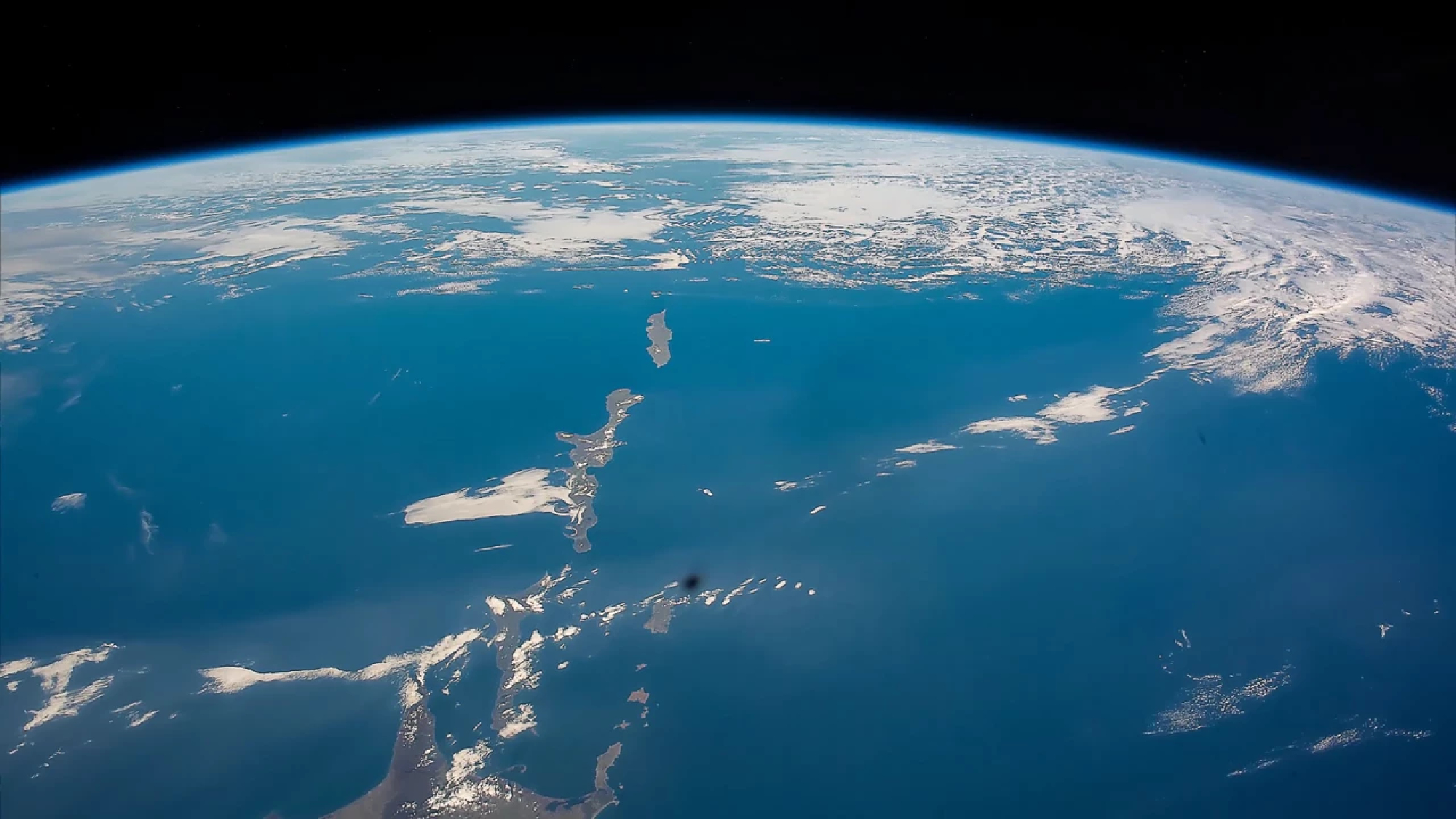
TOKYO (Jiji Press) — Russia currently does not intend to continue negotiations with Japan to resolve the two countries’ territorial dispute and conclude a World War II peace treaty, the Russian Foreign Ministry said Monday.

Russia halts peace treaty talks with Japan over Ukraine

Criticizing Japan’s sanctions against Russia over its invasion of Ukraine, the ministry said Moscow intends to suspend a program to allow visa-free visits by Japanese people to four Russian-held northwestern Pacific islands, known in Japan as the northern territories, and pull out of talks on joint economic activities there.

The Russian Foreign Ministry issued a statement on these moves, saying that they are countermeasures against the Japanese government’s decision. The ministry explained that Russia took action in view of the fact that unilateral restrictions imposed by Japan on Russia in relation to the situation in Ukraine were apparently hostile.

On the peace treaty talks, the ministry said it is impossible for Russia to discuss the core document on bilateral relations with a country that has taken an openly hostile position and is striving to cause harm to the interests of Russia.

The ministry also said all the responsibility lies with Japan, which consciously chose an anti-Russian course instead of mutually beneficial cooperation or good-neighborly relations.

After Russia’s invasion of Ukraine, the Japanese government imposed a freeze on assets of high-ranking Russian officials, including President Vladimir Putin, as well as Russia’s central bank.

The disputed islands were seized by the former Soviet Union from Japan at the end of World War II. Tokyo and Moscow have been unable to conclude a peace treaty to formally end their wartime hostilities due to the territorial row.

Published : March 22, 2022

By : The Japan News

HK suspends mass testing plan, lifts flight ban

#SootinClaimon.Com : ขอบคุณแหล่งข้อมูล : หนังสือพิมพ์ The Nation.

https://www.nationthailand.com/international/40013654


Hong Kong will shelve its compulsory mass testing program plan upon consensus by mainland and local medical experts that it is not suitable to conduct such testing at this stage, the city’s leader said on Monday.

HK suspends mass testing plan, lifts flight ban

The announcement came as Chief Executive Carrie Lam Cheng Yuet-ngor outlined a roadmap for a gradual resumption of normal life in the city following a gradual decrease in number of COVID-19 cases in the Omicron variant-fueled fifth wave of outbreak. 

Following the passing of the peak, the government decided to bring into effect a raft of changes to its pandemic control measures from next month, including lifting of flight bans on nine countries and cutting quarantine period for arrivals in the city. 

Although a great deal of preparatory work for the mass testing has been done, experts suggest that the operation should be conducted in the early or late stages of the outbreak, not the current stage when the pandemic is still at a high level, the CE told an anti-pandemic news conference in the morning. 

Stressing that timing is key for such an exercise, she said: “Hong Kong’s epidemic situation has now been alleviated, but it remains at a high level. Experts have said it is not suitable to do universal testing at this stage.”  

As the scale of the operation will be unprecedentedly large, involving restriction on people’s movement, mainland experts held that it may be beyond the organizing capacity of local communities, and the city may fail to achieve the goal of universal screening. 

She stressed that the suspension does not mean the city plans to co-exist with the virus. “When the time is suitable and conditions are appropriate, we will consider whether to use compulsory universal testing,” she added. 

At the same briefing on the government’s “mid-term review”, the CE also announced to lift the flight ban on nine countries starting from April 1. After that, vaccinated Hong Kong residents from the countries can return to the city by flights.

In light of the pandemic development, the flight ban is no longer suitable. The infection risk in some of the nine countries is even lower than Hong Kong, according to Lam. 

The current 14-day mandatory quarantine requirement for most passengers would be reduced to seven days, as if their test results showed negative on the sixth and seventh days of the isolation period, she said. 

She said she had asked officials to designate more hotels as quarantine facilities for travelers. 

Lam also announced that primary schools, international schools and kindergartens can resume face-to-face classes on April 19 at the earliest.  

Secondary schools however will also follow suit after the Diploma of Secondary Education Examination, which is still scheduled to begin on April 22, she added.

Published : March 22, 2022

By : China Daily