Flight carrying 132 crashes in Guangxi

#SootinClaimon.Com : ขอบคุณแหล่งข้อมูล : หนังสือพิมพ์ The Nation.

https://www.nationthailand.com/international/40013653


President urges all-out search and rescue efforts after aircraft goes down in Guangxi
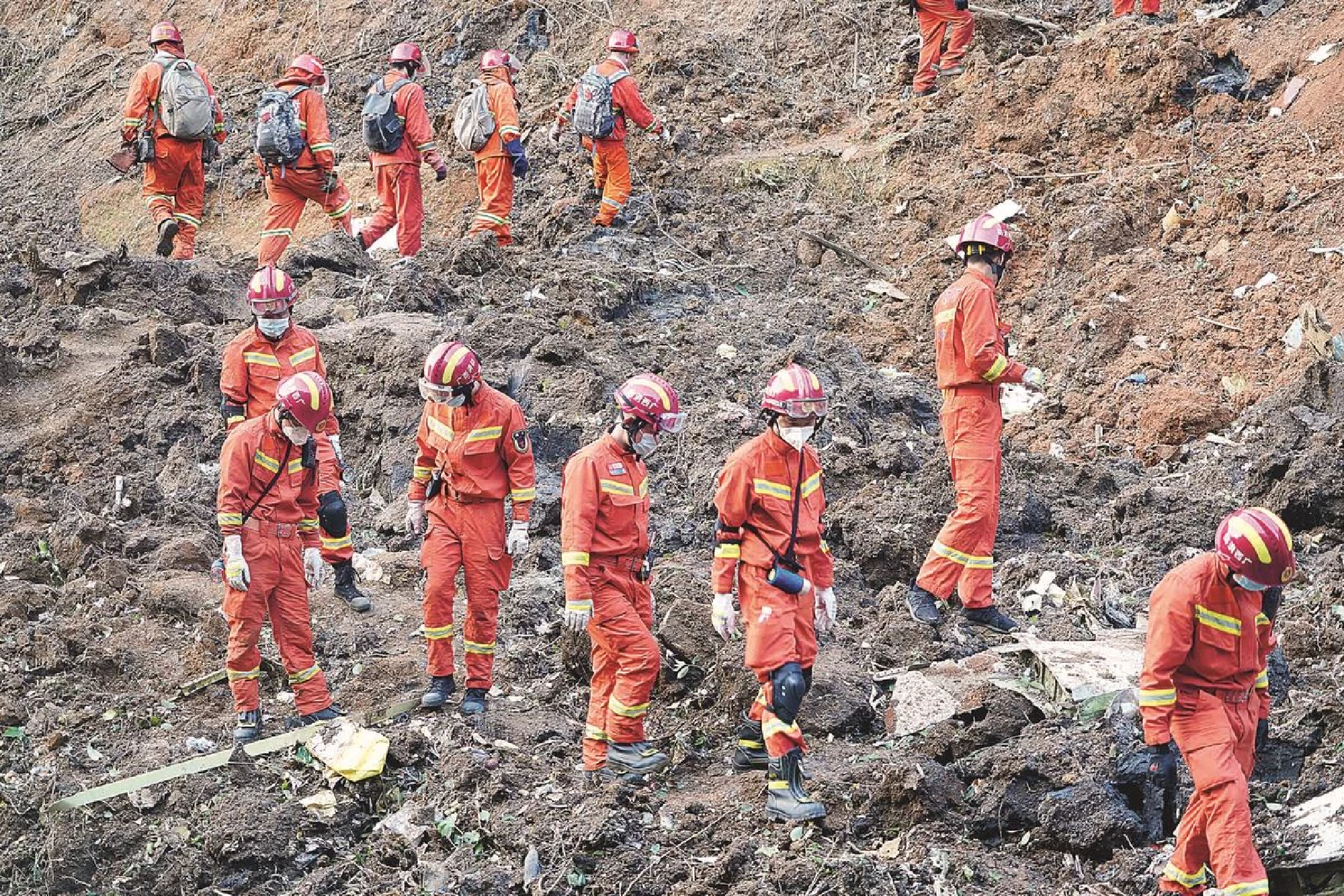
Flight carrying 132 crashes in Guangxi

All-out search and rescue efforts were underway on Monday after a China Eastern Airlines aircraft carrying 132 people crashed in South China’s Guangxi Zhuang autonomous region in the afternoon-ending China’s 12-year air safety record.

Flight MU5735 left Kunming, capital of Yunnan province, at 1:11 pm and was scheduled to arrive in Guangzhou, Guangdong province, at 3:05 pm. Air traffic controllers lost track of the plane over Wuzhou, Guangxi. The flight was carrying 123 passengers and nine crew members.

No report on casualties was available as of press time.

In an instruction issued shortly after the crash, President Xi Jinping, also general secretary of the Communist Party of China Central Committee and chairman of the Central Military Commission, said he was shocked to learn about the accident and asked for the immediate launch of an emergency response.

He also asked authorities to organize all-out search and rescue work and to appropriately deal with the aftermath of the accident.

Xi stressed swift action be taken to identify the cause of the crash and strengthen and overhaul the safety of the civil aviation sector to ensure the absolute safety of the sector and people’s lives.

Premier Li Keqiang also made an instruction on Monday, urging that utmost efforts be made to search for survivors and treat the injured. He also stressed that efforts be made to comfort the victims’ families and provide them with necessary help.

Li asked authorities to release relevant information in a timely, accurate and evidence-based manner, find the cause of the accident and take measures to strengthen civil aviation safety management.

The crash site is in forest near Tengxian county’s Molang village. In the afternoon, fire and rescue teams discovered aircraft debris scattered in the forest. No remains of passengers had been found, according to the Guangxi Regional Emergency Management Bureau’s fire and rescue department.

A forest fire caused by the plane crash has been put out, Ou Ling, political commissar of the Wuzhou Fire and Rescue Brigade, told CCTV.

“A total of 622 firefighters have arrived at the scene, which is surrounded by mountains on three sides. There is only a narrow road that leads to the site, so heavy vehicles and machinery still can’t get in,” Ou said.

“Also, it’s difficult to carry out search and rescue work at night when the electricity supply isn’t stable . … We are drawing up a practical plan to ensure that the search and rescue work can be carried out efficiently.”

More than 640 firefighters from nearby Yunnan and Guangdong provinces were dispatched to the crash site. Police officers and members of the People’s Armed Police Force were also sent to the crash scene for search and rescue work, according to local authorities.

The Civil Aviation Administration of China and the Ministry of Emergency Management have sent task forces to the site to help with the rescue efforts.

Heavy rainfall was forecast for Monday night and Tuesday, according to the provincial meteorological department, which may hinder search and rescue work.

China has had a good air safety record over the past 4,227 days. The country’s last major plane accident was in August 2010 in Heilongjiang province, when a flight from Harbin crashed in Yichun, killing 44 people.

China Eastern has grayed out its logo on its Weibo account and also changed its website to black and white-a sign of mourning after the crash was confirmed.

The airline’s work group was also dispatched to the scene. A hotline has been opened for relatives of the passengers, while a gathering area for them was set up at Guangzhou Baiyun International Airport.

Li Yingqing in Kunming and Shi Ruipeng in Nanning contributed to this story.

Published : March 22, 2022

By : China Daily
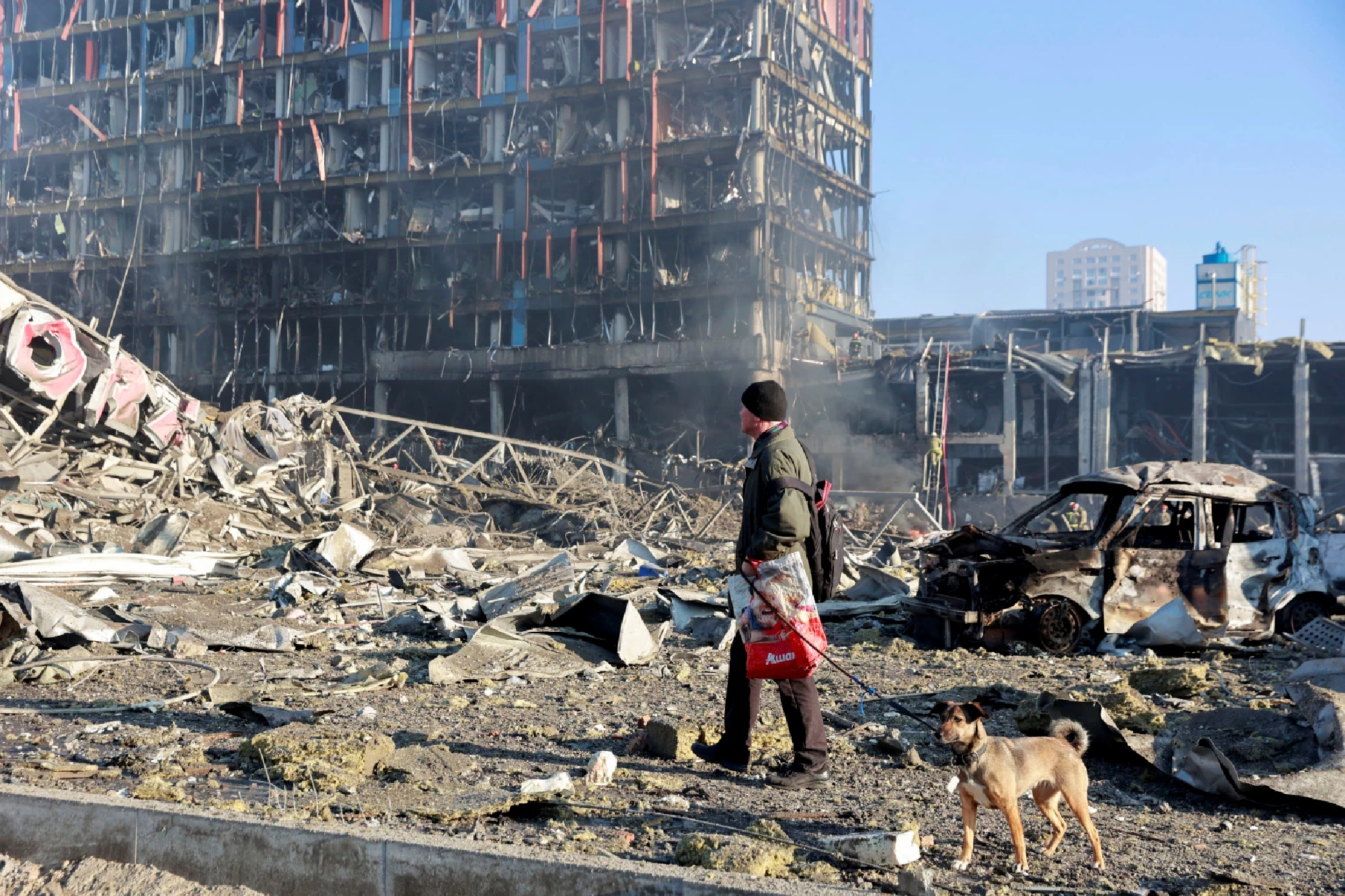
Will the invasion of Ukraine herald a new era of imperialism?

#SootinClaimon.Com : ขอบคุณแหล่งข้อมูล : หนังสือพิมพ์ The Nation.

https://www.nationthailand.com/international/40013643


On 24 February, President Vladimir Putin announced that his country was under threat from Ukraine. Following this, Russia launched an all-out invasion of Ukraine. This is the first time since the end of World War II that a nation has tried to expand its borders through military conquest.

Will the invasion of Ukraine herald a new era of imperialism?

NEW DELHI – In his ‘Invasion of Ukraine’ speech, Putin questioned Ukraine’s statehood and asserted that it
had always been an integral part of Russia’s ‘history, culture and spiritual space’. He drew references from imperial Russia under the Tsars and blamed the Bolsheviks and their leader, Lenin, for creating Ukraine as a separate country.

His speech echoed Hitler’s March 1938 ‘Anschluss Österreich’, where Austria was annexed into Nazi Germany because it had a German-speaking population. That invasion had pushed the world into World War II, which cost more than 50 million lives.

After the end of WWII, the world has seen proxy wars where two ideologies have collided often: US-led democracies vs non-democratic regimes. The Korean war (1950-1953), the Vietnam war (1955-1975) and the Iran-Iraq war (1980-1988) were examples of these proxies where two ideologies had collided.

But when Saddam Hussein tried to annex Kuwait in 1990, the United Nations and North Atlantic Treaty Organization (NATO) members took firm action, dissuading other nations from using military power to expand their borders.

Russia’s veto against its invasion in the UNSC and the abstention of the world’s two largest populations – India and China to condone this war crime, has left the world sceptical of the effectiveness of the United Nations as an arbiter in international conflicts.

Surrounding Ukraine is Western-affiliated states, namely Germany, Poland, Romania, Lithuania, Latvia and Estonia, who are voicing their discontent over this event but doing little to help the nation under attack.

India is fighting the expansionist ambitions of China under Xi Jinping – at Arunachal Pradesh and Ladakh.

Just like Putin, Xi has been advocating the redrawing of borders with frequent reference to the ‘Chin dynasty. But still, India abstained from condemning Russia’s invasion of Ukraine at the UN.

The lack of solidarity with Ukraine can be understood through the strong strategic position Russia holds: India is one of the largest purchasers of military hardware from Russia. In addition, sixty-five per cent of Germany’s gas and 40 per cent of the EU’s gas comes from Russia’s hydrocarbon reserves in the Caspian and Volga basins.

Half of India’s overall military assets are of Russian origin. Ninety per cent of India’s tanks are from Russia. India’s air force consists primarily of Russian-made planes. India depends on Putin’s Russia to maintain and operate its military machine. This effectively illustrates why India chose to sideline human rights concerns in Ukraine in favour of its own security.

In major wars, Russia or the USSR was India’s ally. At the time of Bangladesh’s independence in 1971, when Nixon’s USA was ready to send its fleet to defend Pakistan, USSR was the only support India had in the UN Security Council. Thus, India is reluctant to sideline its long alliance with Moscow.

The failure of US interventions in Afghanistan and previously in Vietnam have raised doubts about the extent of the country’s commitment to protecting other democracies. The current dilemma is even bleaker.

The US’s apparent unwillingness to help Ukraine, and the reluctance of EU powers to act with hard power, seem to question the current role of the US and EU in global geopolitics. If international agencies do not take a strong stance soon on the Russia-Ukraine issue, the situation can spiral out of control and prove institutions like NATO and UN to be ineffective. The world may not be able to maintain its hard-earned peace, as military giants will begin a game of control, to satiate their imperial ambitions.

Abhiroop Chowdhury and Armin Rosencranz

Contributors, The Statesman

The writers are, respectively, Associate Professor and Dean at Jindal School of Environment
and Sustainability, O.P. Jindal Global University, Sonipat, Haryana.

Published : March 21, 2022

By : The Statesman

Looming risk of cyber warfare from Ukraine conflict spilling over to Asia

#SootinClaimon.Com : ขอบคุณแหล่งข้อมูล : หนังสือพิมพ์ The Nation.

https://www.nationthailand.com/international/40013639


Hours before Russian forces invaded Ukraine on Feb 24, warning signals were flashing several thousand kilometres away at Microsoft’s Threat Intelligence Centre, north of Seattle in Washington state in the United States.

Looming risk of cyber warfare from Ukraine conflict spilling over to Asia

SINGAPORE – These drew attention to a new round of offensive and destructive cyberattacks in Ukraine,
targeting the country’s digital infrastructure.

Microsoft officials immediately notified both the Ukrainian authorities as well as US cybersecurity officials of the offensive, as well as their detection of a new malware – which was named FoxBlade – that could “wipe” data on computers in a network.

Within three hours of the discovery, Microsoft had helped to block the new threat, according to a blog by the company’s president and vice-chair Brad Smith.

But with this being the latest in a series of cyberattacks in Ukraine this year, there is mounting concern over the possibility of a spillover of the ongoing cyber warfare.

Should there be one, Asia is unlikely to be spared given inadequate investment and attention in the region on cyber defence, according to experts.

They say some governments have stepped up efforts to bolster cyber security but it would make a lot of sense for all countries to have contingency plans in place.

Dr Greg Austin, who leads the Cyber, Space and Future Conflict Programme of the International Institute for Strategic Studies (IISS), told a media briefing last month that cyberattacks thus far had been “low-level harassment-type attacks”.

“In a sense, we see that what the Russians were doing was experimental… they haven’t unleashed the full destructive potential they were planning to,” he said.

The West has assessed Russia to be its “most capable hostile adversary in cyberspace”, according to an IISS report titled Great Power Offensive Cyber Campaigns, which was shared at the briefing.

While Russia has good knowledge foundations for both cyber sabotage and cyber influence operations, it has been constrained by resource availability, the report said.

Still, Moscow has undertaken cyber campaigns with higher frequency and intensity than the US, although more as a disruptor than a destroyer, it added.

“The age of cyber warfare is just beginning,” said Professor Stuart Madnick, from the MIT Sloan School of Management, in the Harvard Business Review.

“For Russia, the war with Ukraine has been likely serving as a live testing ground for its next generation of cyberweapons.

“Countries and companies watching this latest chapter unfold should remember this: The online front of the war can – and has – jumped borders,” he added

Five years ago, Ukraine’s largest airport, national bank as well as energy authority suffered devastating cyberattacks, in what was believed to have been a campaign launched by Russia.

At the heart of the attacks was the NotPetya virus that wiped data from computers.

It was not intended to spread beyond Ukraine but it did – across the globe. Total losses worldwide were estimated to have been more than US$10 billion (S$13.7 billion).

The malware hit hospitals in the US state of Pennsylvania, a chocolate factory in the Australian state of Tasmania as well as the digital systems of a number of large global companies including shipping firm Maersk and pharmaceutical giant Merck.

India topped the list of countries hit by NotPetya in the Asia-Pacific. The country’s largest container port in Mumbai was targeted.

Singapore escaped unscathed from the virus.

Wiper malware bearing similarities to the NotPetya wiper was found on Ukrainian systems in a January attack, according to the US-based think-tank Council on Foreign Relations.

“The wiper was designed to look like ransomware and offered victims what appeared to be a way to decrypt their data for a fee, although in reality, the malware wiped the system. The wiper was found on systems throughout Ukraine, including the Foreign Ministry and networks used by the Ukrainian cabinet,” it said last Friday (March 11).

Threats to cyber security have been particularly worrying for countries that have decided to initiate sanctions against Russia for its invasion of Ukraine.

The alert has gone out in a number of countries including the US, European Union, United Kingdom and Japan.

Japan’s Economy, Trade and Industry Ministry, for instance, sent out a notice urging companies to step up vigilance against cyber-attacks, The Japan News reported on Feb 28.


Files attached to e-mails should not be opened carelessly, the notice said. Data should be backed up to avoid its loss, it added.

Experts also called on people to be careful at home as well, warning that cyber attackers can sometimes manipulate household devices with weak security and use them to transmit data.

The Singapore Computer Emergency Response Team also issued an advisory note after the Russian invasion in Ukraine urging companies to strengthen their cyber-security systems and take measures to safeguard their data against cyber attacks.

“Asia is highly vulnerable,” said Dr Austin, with many nations still investing suitably in building their capabilities and because the intensity of the threat has increased.

“Singapore may be the exception,” he told The Straits Times.

A June 2021 report by the IISS assessing the cyber power of 15 countries placed only The United States in Tier 1, given its world-leading strength in several categories including, among others, strategy and doctrine, governance, command and control and cyber security and resilience.

China was the only Asian country to figure in Tier 2, together with Australia, Canada, France, Israel, Russia and the United Kingdom.

Several Asian countries – among them India, Indonesia, Japan, Malaysia, North Korea and Vietnam figured as Tier 3 countries. These countries had potential strengths in some of the categories but significant weaknesses in others.

The report said that Indonesia, for instance, had identified high-priority assets that needed the strongest protection but basic cyber defences and incident-response capability was still not highly developed.

Malaysia, on the other hand, ranks higher on cyber security but questions remained on its ability to detect and report cyber attacks as well as the level of coordination between different cyber-security actors, it said.

Mr Jeremy Jurgens, managing director and head of the World Economic Forum’s Centre for the Fourth Industrial Revolution said it was incumbent on every organisation and institution to maintain robust cyberinfrastructure.

“This should be 24/7. Attacks can happen anytime. The first step is to make sure senior leadership is aware. Companies should have backup plans, identify points of exposure. Roles and responsibilities should be very clear,” he told Straits Times.

“It is difficult to predict how the cyber conflict will evolve. But it is important to be prepared,” he added.

Shefali Rekhi

Editor & Director, Asia News Network
& ANN editor, The Straits Times

Published : March 21, 2022

Việt Nam, Cambodia enhance military relations

#SootinClaimon.Com : ขอบคุณแหล่งข้อมูล : หนังสือพิมพ์ The Nation.

https://www.nationthailand.com/international/40013610


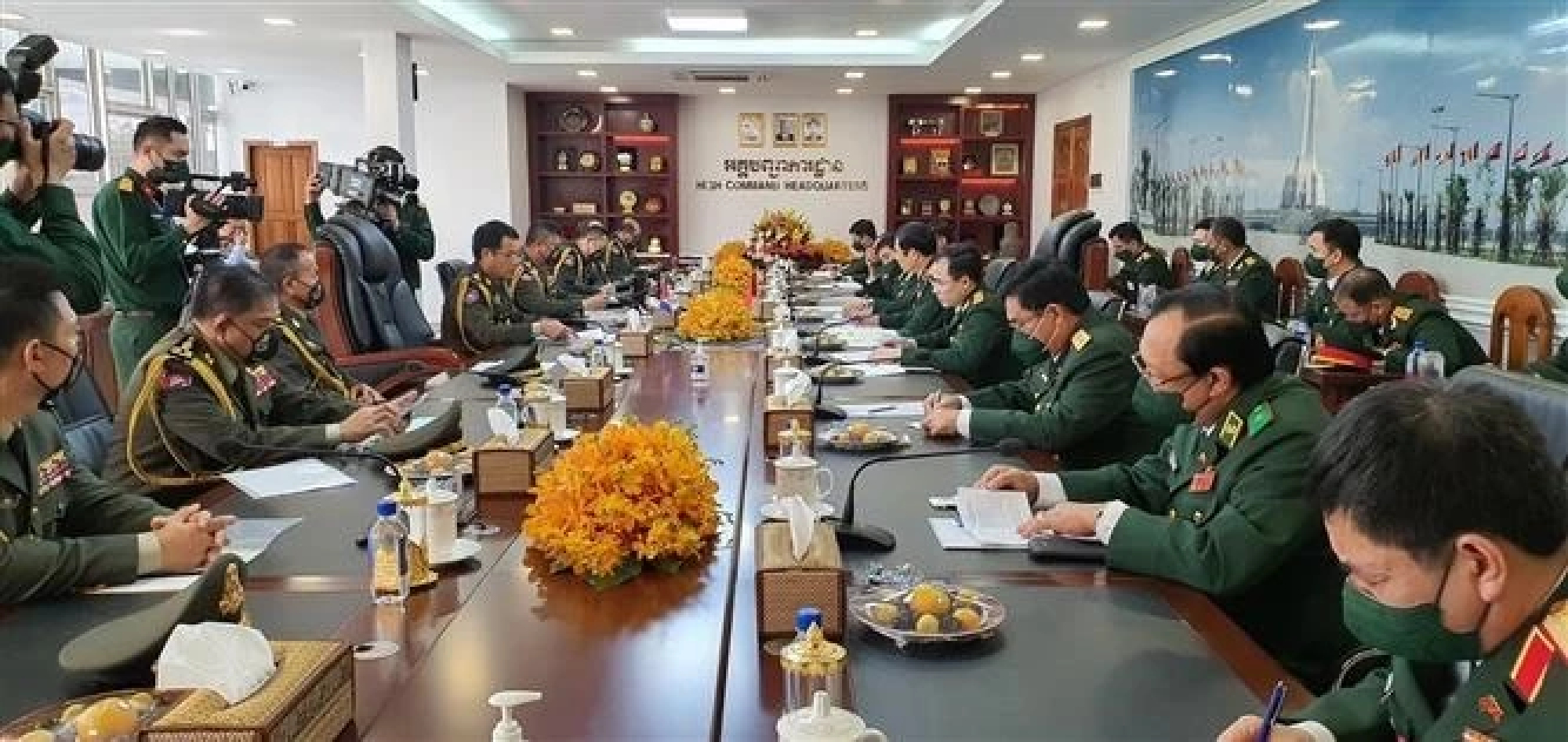
HÀ NỘI — High-level military talks took place in Phnom Penh on Friday as the heads of the Vietnamese and Cambodian armed forces met in person.

Việt Nam, Cambodia enhance military relations

Chief of the General Staff of the Việt Nam People’s Army (VPA) and Deputy Minister of National Defence Sen. Lieut. Gen. Nguyễn Tấn Cương, who is in Cambodia for the 19th ASEAN Chiefs of Defence Forces’ Meeting (ACDFM-19), sat down with Commander-in-Chief of the Royal Cambodian Armed Forces General Vong Pisen. 

The meeting took place after Cương attended ACDFM-19.

Gen. Vong Pisen said that the visit has contributed to deepening the friendship and cooperation between the two armies, and he appreciates the effective support of the VPA as well as the Vietnamese Party and State for his country.

According to him, this is reflected through the active contribution of the Vietnamese delegation to the success of the ACDFM-19, the annual exchange of delegations, the border demarcation and joint efforts to fight cross-border crime even during the COVID-19 pandemic.

He stated that in the context of rapid changes and complicated developments of the international and regional situations, the Cambodian Government always advocates maintaining cooperation and upholding the principle of non-interference into the internal affairs of other countries.

In order to strengthen the bilateral military cooperation, the general suggested the Vietnamese side continue to support the training of human resources for Cambodia, coordinate in the implementation of the two countries’ defence protocol, and joint border patrols, and carry out rescue drills. The Cambodian side also proposed setting up a hotline between the two sides to promptly deal with urgent issues.

The Vietnamese officer congratulated General Vong Pisen on successfully chairing the first in-person ACDFM, after a two-year hiatus due to the COVID-19 pandemic, affirming Việt Nam’s commitment to supporting Cambodia in its ASEAN Chairmanship Year.

He said that ACDFM will contribute to strengthening Vietnamese-Cambodian good neighbourliness, time-tested friendship, and sustainable and comprehensive cooperation, especially as the two are about to celebrate the 55th anniversary of the establishment of their diplomatic relations (June 24, 1967 – 2022).

Earlier the same day, Sen. Lieut. Gen. Nguyễn Tấn Cương paid a courtesy visit to Cambodian Defence Minister Tea Banh, and laid flowers at the Việt Nam – Cambodia Friendship Monument to commemorate the heroes and martyrs who died for independence, freedom and peace of the two peoples. — VNS

Published : March 21, 2022

By : Vietnam News

Hyundai Motor Group’s key overseas units turn profit in 2021

#SootinClaimon.Com : ขอบคุณแหล่งข้อมูล : หนังสือพิมพ์ The Nation.

https://www.nationthailand.com/international/40013609


Major overseas units of South Korean automaking titan Hyundai Motor Group were profitable in 2021 on brisk sales of eco-friendly vehicles and increased capacity utilization, company data showed Monday.

Hyundai Motor Group's key overseas units turn profit in 2021

Hyundai Motor Co., the group’s flagship, said its US production unit swung to a net profit of 237 billion won ($195 million) from a net loss of slightly over 1 trillion won the previous year.

It represented the subsidiary’s first black ink in three years. Its net loss came to 228.2 billion won in 2019.

Hyundai Motor’s subsidiary in Brazil also switched to a net profit of 41 billion won after losing money for the second consecutive year.

Hyundai Motor’s sales subsidiary in America registered the largest net income of 1.03 trillion won last year, followed by its Indian unit with 437.4 billion won and its Czech plant with 417.5 billion won.

Hyundai Motor said major overseas units turned a profit last year thanks to strong sales of eco-friendly vehicles and greater capacity utilization, despite a global shortage of auto chips.

Hyundai Motor’s US plants operated at 78.8 percent of capacity in 2021, up from 72.6 percent from a year earlier, with the operating rate of its Brazilian plant surging to 89.2 percent from 71.1 percent.

Kia Corp., Hyundai Motor’s smaller affiliate, also saw its major overseas subsidiary make money thanks to rising green car sales and an increased plant operating rate.

Kia’s US plant posted a net profit of 116.5 billion won last year, a sharp turnaround from a 615.7 billion-won loss and marking the first black ink in four years.

Kia’s US sales unit chalked up a net income of 855.4 billion won, with its subsidiaries in Slovakia, Russia, India and Mexico also turning a profit.

Yet, Hyundai Motor Group’s joint ventures in China remained in the red in 2021 due to the impact of a Seoul-Beijing row over the deployment of an advanced US missile defense system in South Korea in 2017, but their net losses narrowed.

Beijing Hyundai Motor, Hyundai’s joint venture with China’s Beijing BAIC Motor, registered a net loss of 1.01 trillion won, smaller than the 1.15 billion-won deficit a year earlier.

The net losses of Dengfeng Yueda Kia, Kia’s joint venture with Dongfeng Motor Corp., narrowed to 783.2 billion won last year from 835.5 billion won a year earlier, according to the data. (Yonhap)

Published : March 21, 2022

By : The Korea Herald

Myanmar’s humanitarian needs increase as conflict continues, says United Nations

#SootinClaimon.Com : ขอบคุณแหล่งข้อมูล : หนังสือพิมพ์ The Nation.

https://www.nationthailand.com/international/40013608


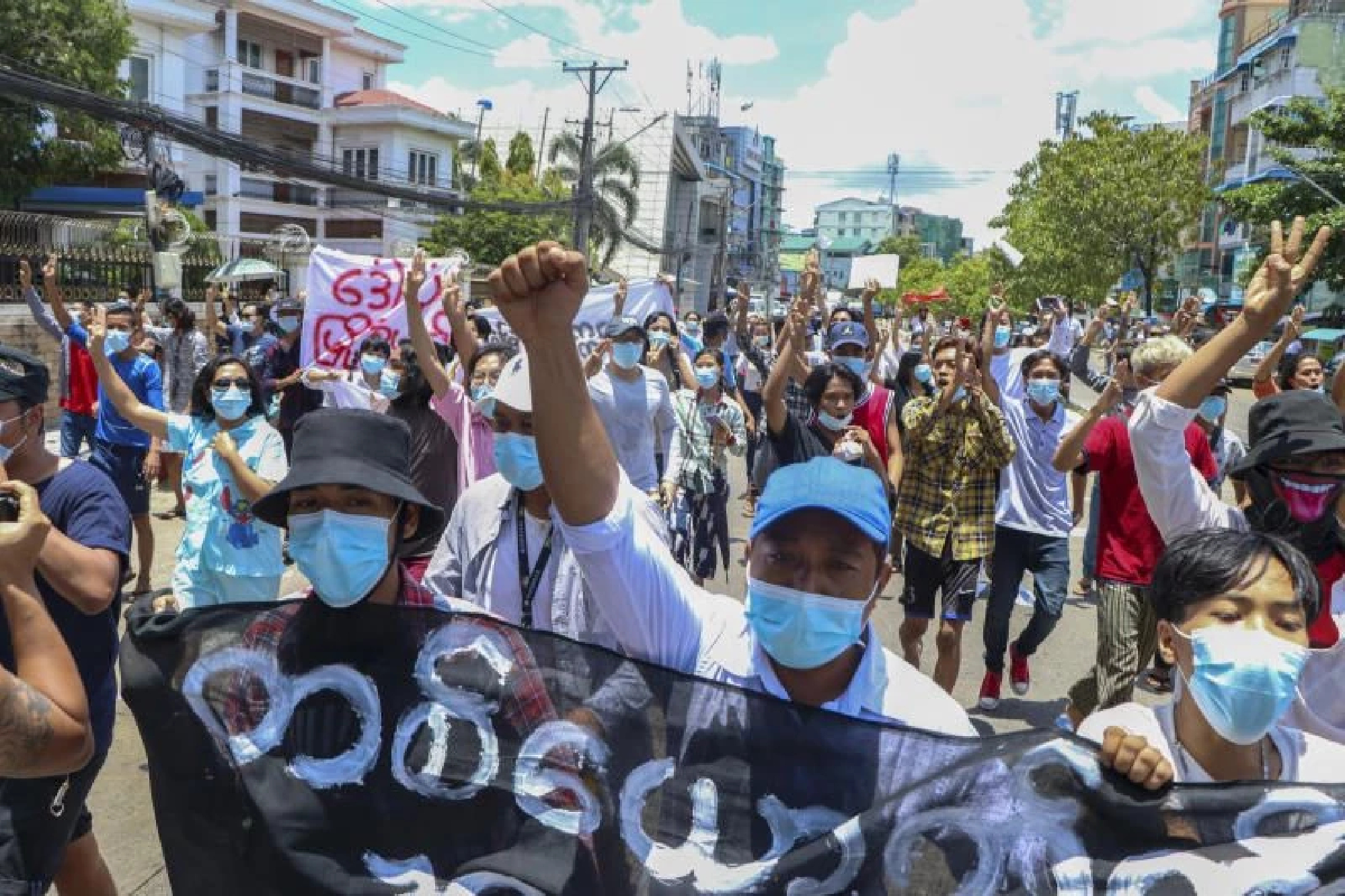
UNITED NATIONS, March 20 (Xinhua): Humanitarian needs in Myanmar grow as fighting continues, particularly in the southeast and northwest, a UN spokesman has announced.

Myanmar's humanitarian needs increase as conflict continues, says United Nations

There are 889,900 displaced people, including 370,000 already displaced before the military takeover a little more than one year ago, said Stephane Dujarric, the chief spokesman for UN Secretary-General Antonio Guterres.

Humanitarian needs are growing. But access to people in need remains limited, hampering the planned scale-up of humanitarian assistance in 2022, Dujarric said.

“Clashes, road blockages and military checkpoints limit our access to areas where needs are critical.”

The demand for support to people in need exceeds the capacity to respond. But the United Nations and partners are continuing to provide food, water, warm clothes, blankets, and mosquito nets, as well as hygiene kits and Covid-19 prevention items.

The United Nations and partners also provide protection services to displaced people and communities in conflict areas across the country.

He urged all parties to respect international humanitarian law to protect civilians and ensure people in need have access to humanitarian aid.

The United Nations’ 2022 humanitarian response plan for Myanmar, which seeks 826 million U.S. dollars, is only 6 percent funded, Dujarric said.

“We urge donors to give generously in solidarity with the people of Myanmar.” – Xinhua

Published : March 21, 2022

By : The Star

PH urges nations to ensure no use of chemical weapons

#SootinClaimon.Com : ขอบคุณแหล่งข้อมูล : หนังสือพิมพ์ The Nation.

https://www.nationthailand.com/international/40013607


MANILA, Philippines — The Philippines is urging fellow nations to ensure that no chemical weapons and other weapons of mass destruction are ever used and civilians are unharmed and protected especially in conflict areas.

PH urges nations to ensure no use of chemical weapons

Philippine Permanent Representative to the Organisation for the Prohibition of Chemical Weapons (OPCW) Ambassador Eduardo Malaya called for the observance of international humanitarian law amid “recent grim developments” during the 99th Session of the Executive Council of the OPCW held at the Hague.

“As we monitor recent grim developments, we need to remain vigilant and ensure that civilians are unharmed and protected and international humanitarian law observed. We should further ensure that no chemical weapons and other weapons of mass destruction are ever used,” Malaya said.

With reference to the evolving developments in Ukraine, Malaya reiterated the call of Foreign Secretary Teodoro Locsin Jr. for the international community “to reaffirm by more than words its commitment to the peaceful settlement of disputes,” along the lines of the Manila Declaration on the Peaceful Settlement of International Disputes, which provides the legal framework for recourse to diplomacy, dialogue, and rule of law.

Malaya further urged the participating delegations to “rededicate ourselves to the ideals of the UN Charter, notably the cornerstone principles of no threat or use of force and the peaceful settlement of international disputes.”

“Let us keep in mind what brought us together as signatories of the Chemical Weapons Convention and other disarmament treaties, and work earnestly to realize the noble aspiration best expressed by the Greek Aeschylus—to ‘tame the savageness of man and make gentle the life of this world,’” he added.

The Convention on the Prohibition of Chemical Weapons entered into force in 1997 and has 193 member states to date.

The OPCW Executive Council, on the other hand, is composed of 41 elected member states, including the Philippines, and holds three regular sessions annually.

By: Tina G. Santos

Published : March 21, 2022

By : Philippine Daily Inquirer

Wang: China stands on the right side of history on Ukraine issue

#SootinClaimon.Com : ขอบคุณแหล่งข้อมูล : หนังสือพิมพ์ The Nation.

https://www.nationthailand.com/international/40013606


HEFEI – China’s position on the Ukraine issue is objective and fair, and time will prove that it is on the right side of history, Chinese State Councilor and Foreign Minister Wang Yi said Saturday.

Wang: China stands on the right side of history on Ukraine issue

Wang made the remarks when briefing journalists on the exchange of views between the heads of China and the United States on the Ukraine issue during a video call that took place on March 18.

Noting that China has clearly and comprehensively expounded its position on the Ukraine issue, Wang said the most important point is that China is always a force to safeguard world peace.

He added that China has always advocated for peace and opposed war, which is not only a tradition rooted in the country’s history and culture but has also been its foreign policy.

China will continue to make its judgment independently and in an objective and fair manner based on the merits of the matter, said Wang, adding that China will never accept any external coercion and pressure, and opposes all groundless accusations and suspicions against China.

Wang noted that during the recent video call, China had proposed a Chinese solution to the Ukraine crisis, which mainly includes two aspects.

The priority, he said, is that all sides must push for dialogue and negotiation between the immediate parties, cease hostilities as soon as possible, avoid civilian casualties, and prevent a humanitarian crisis.

An enduring solution lies in the rejection of the Cold War mentality, refraining from bloc confrontation, and building a balanced, effective and sustainable regional security architecture to realize long-term peace in Europe, Wang added.  

Published : March 21, 2022

By : China Daily

Beijing is keeping its distance in the conflict

#SootinClaimon.Com : ขอบคุณแหล่งข้อมูล : หนังสือพิมพ์ The Nation.

https://www.nationthailand.com/international/40013604


The Russia-Ukraine crisis is exposing the deep-rooted hypocrisy and the self-centeredness of the West led by the United States.

Beijing is keeping its distance in the conflict

BEIJING – Lots of “fake”, “false” and fictional propaganda of the Western media and rotary of their politicians tried to distort the basic facts about the conflict.

The United States has launched a campaign to use the Ukraine crisis to snub Russia and implicate China with habitual slogans and sanctions coupled with tons and tons of US arms downloaded on Ukraine soil.

Meantime, they are skillfully crafting a campaign and a narrative that suits US geo-political and geo-economic agenda.

The Western elite use media to spread their message and their media outlets have been showing enthusiasm to act on behalf of them.

Simultaneously, Russian media outlets and news agencies are being banned to kill any chance of difference of opinion the Western countries say they will protect so that the US and some of its allies can manipulate their citizens according to their preferences.

In reality, the campaign is an absolute illusion because the actions of the US-led NATO do not support it. The US-led West itself committed many atrocities if not crimes convicted internationally, starting from colonization to modern days’ inhuman economic sanctioning.

NATO followed US directives many times in attacking countries such as Yugoslavia, Afghanistan, Iraq, and Libya, and killed hundreds of thousands of innocent people and looted their resources.

The most obscure part of the campaign on the Russia-Ukraine crisis is that the US and its some Anglosphere allies are targeting China for nothing but ulterior motives.

As is understood China is not part of this European conflict and is trying to diffuse the situation, in sharp contrast with the United States which has kept fanning up the flame of tension and division. Unfortunately, Western countries are not ready to accept this fact and are busy building a smear campaign against China.

The situation triggered consensus among the larger community of independent experts that the real purpose of the US is to keep its hegemony alive and lasting, at the cost of all interests of others. So, the United States is trying to use the Russian-Ukraine crisis to kill two birds with one stone.

On the one hand, the US has moved swiftly to isolate Russia, destroy its economy and sink its global status. On the other, the White House and its Anglo-Saxon allies are trying to frame China as an ally of Russia built a narrative against it, ignoring the Chinese diplomatic tradition of non-alignment. This kind of Western trick is not new to China, as China is a victim of
Western harsh behavior since its independence.

First, the US-led Western countries took many years to establish diplomatic relations with China.

Second, the US is continuously violating the sovereignty of China by sending warships to

Taiwan Straits and selling arms to Taiwan, a part of China since ancient times which was once robbed by imperial Japan.

Only recently the White House sent a delegation of former officials and defense generals to bolster pro-independence politicians in Taipei, neither respecting the sovereignty of China over the Taiwan Island nor adhering to their pledged policy of One China only.

Now the US-led West is making trouble again for China by wrongfully equating the situation of Ukraine with Taiwan, which has no rationale, as nearly all countries in the world recognize Taiwan as an integral part of China since ancient times.

In this context, it can be inferred the campaign against China is begotten with thin air. China, as an independent and sovereign country, has full right to adopt any policy which can help diffuse tension and bring peace back, and Beijing has endeavored for reunification with Taiwan with all possible peaceful means.

Regrettably, the US has constantly taken provocative moves to undermine Beijing’s efforts.

The reasons are obvious. The US and some of its Anglo-Saxon allies aspire to check the peaceful rise of China by erecting hurdles whenever possible.

It is well-known that the US-led West does not like the rise of China, especially the Chinese model of development. China is developing and growing strong by sheer hard work and sticking to the
global norms, which is the opposite to the Western model of expansion, which was based on colonization, slave smuggling, committing genocides of American aboriginals, and financially robbing other countries to seize resources.

So, by creating hurdles or framing China with Russia, the US and some of its allies hope to create a bad image of China and engage it in the conflict so that China could be struck as well with economic and other sanctions.

Fortunately, China is not falling into the trap. Beijing is keeping a distance from the conflict and insisting on asking the parties to solve the issues through dialogue and consultations.

Wang Yi, the foreign minister of China, also echoed the same sentiments in his phone calls to foreign ministers of Ukraine and other European countries and senior officials of the European Union.

China’s approach is in line with the philosophy of China on international relations, which hinges on engagement, consultation, and sharing of prosperity for sustainable peace, in sharp the difference with competition, rivalry, and confrontation often initiated by the Western countries.

As Confucius said, “The best way to enhance international engagement and influence is to share prosperity”. The US and its allies should learn some lessons of the kind in helping to end the Russia-Ukraine conflict.

Shakeel Ahmad Ramay

Contributor, China Daily

The author is CEO of the Asian Institute of Eco-civilization Research and Development in
Pakistan.

Published : March 20, 2022

China carefully calibrates its position on Ukraine with an eye on the US

#SootinClaimon.Com : ขอบคุณแหล่งข้อมูล : หนังสือพิมพ์ The Nation.

https://www.nationthailand.com/international/40013603


A truism often cited in China is that every crisis or weiji presents both danger and opportunity and the characters for the two separate words come together to make up the Chinese term for the crisis.

China carefully calibrates its position on Ukraine with an eye on the US

BEIJING – In the current crisis in Ukraine, prominent Chinese scholar and government adviser Zheng Yongnian see what he calls a “total collapse” of the current US-led world order and an opportunity for China to play a bigger role in its remaking.

It has been almost a week since Russia launched a full-scale invasion of Ukraine and many countries, including Singapore, have imposed sanctions on Moscow, but Beijing has come under the spotlight for what is seen as its ambiguous stance on Russian aggression.

But Chinese scholars say Beijing has been carefully calibrating its position on the unfolding crisis according to its interests: It is trying to balance its strategic partnership with Russia – which it sees as critical in its confrontation with the West – with its relations with the US and Europe.

In an essay published on Saturday (Feb 26), Professor Zheng provided a glimpse into China’s thinking and where its interests lie in the unfolding crisis.

On the one hand, the war in Ukraine would delay the shift of “US strategic energy from Europe to the Indo-Pacific” to counter China, wrote Prof Zheng, who is director of the Advanced Institute of Global and Contemporary China Studies at the Chinese University of Hong Kong in Shenzhen.

“This means that as long as we do not make subversive strategic mistakes, not only will China’s modernisation process not be interrupted, but China will also have the ability and will to play a more important role in the building of a new international order,” he said.

The emergence of this war also showed that the current US-led world order cannot be maintained and that the geopolitical balance was tilting towards China, he added.

“The reason why great powers are great powers or are regarded as a great power lies not in its ability to challenge the old order, much less in its ability to wage war, but in its responsibility and ability to promote and maintain international peace,” he said.

During a phone call with his Chinese counterpart Wang Yi on Tuesday, Ukrainian Foreign Minister Dmytro Kuleba urged Beijing to step in and mediate a ceasefire with Russia.

Mr. Wang’s response was not apparent from the Chinese statement on the call and the Chinese experts mostly dismissed the possibility of Beijing playing the role of mediator.

Instead, the Chinese statement showed that Beijing was “pulling away slightly” from Russia, said international relations expert Shi Yinhong of Renmin University in Beijing.

“Since Russia launched a full-scale invasion of Ukraine, many countries around the world have condemned Russia, China has also noticed this,” said Professor Shi.

But, at the end of the day, Beijing has the bigger picture in mind – its biggest threat is still The US.

“In the face of all-round confrontation by Western allies led by the US, the strategic partnership between Russia and China is extremely important, this is the reason for China’s support to Russia,” said Prof Shi.

In his view, Beijing would continue to provide financial and economic help to Russia “as long as it is within its means and interests”.

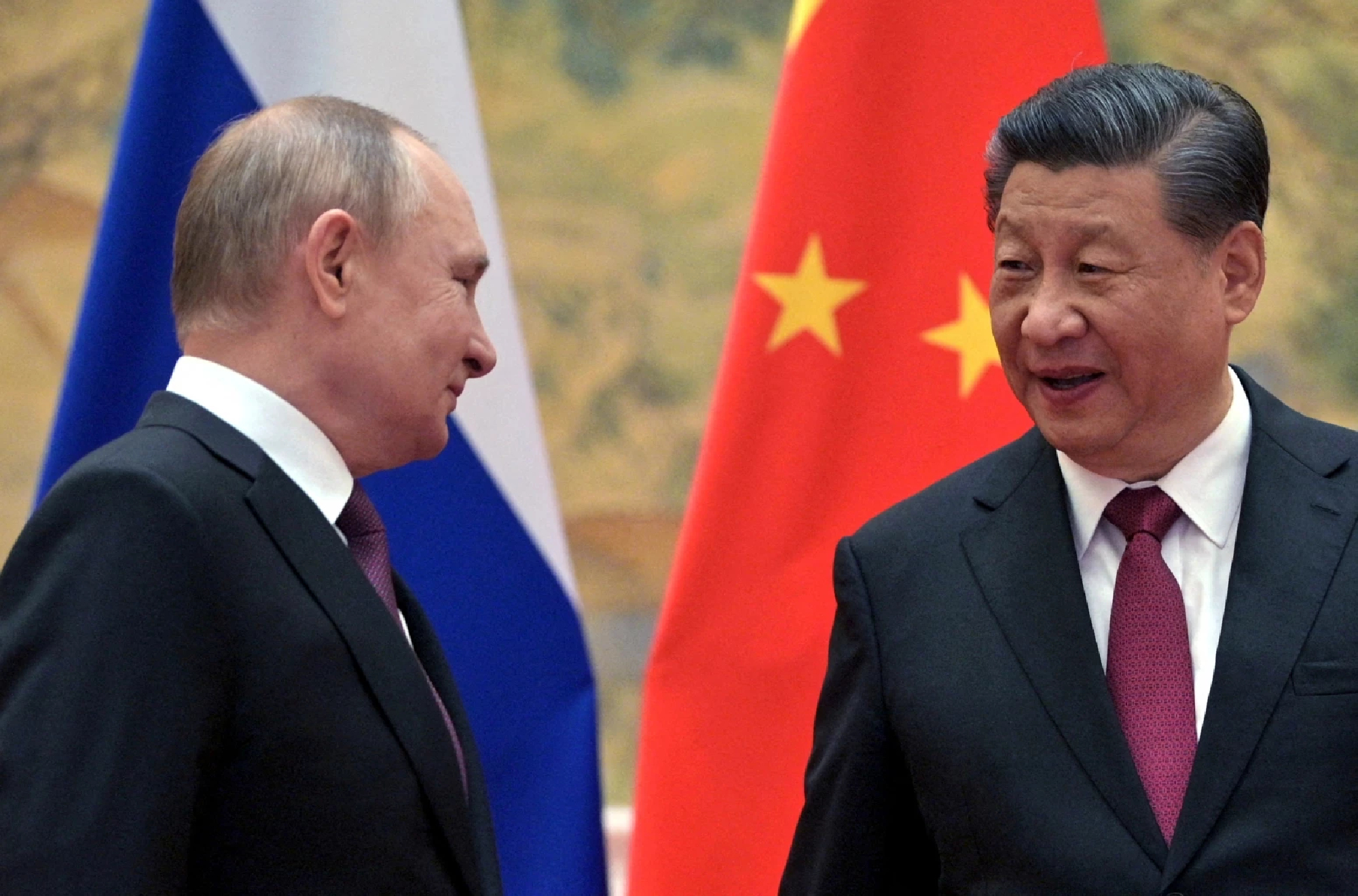
Both China and Russia declared a “no limits” strategic partnership last month after Chines President Xi Jinping met his Russian counterpart, Vladimir Putin.

Both sides said they would work together – and against the US – to build a new international order based on their interpretations of human rights and democracy.

Dr. Mikko Huotari, executive director of the German think-tank Mercator Institute for China Studies in Berlin said Beijing and Moscow had a common cause in opposing the US, Nato, and the expansion of Western-centric alliances and security partnerships such as the recent Aukus the pact, which comprises Australia, the UK, and the US.

“I think Xi and Putin see this as a historical struggle for an international order that is much more aligned with their principles and interests,” said Dr. Huotari.

In the current crisis, China has repeatedly acknowledged what it describes as Russia’s “legitimate security concerns” while calling for restraint and a resolution through negotiations.

It has also been said that the “sovereignty and territorial integrity of all countries should be respected and protected”.

One cornerstone of Beijing’s foreign policy is respect for “national sovereignty” and, in Prof Shi’s view, China had already signaled through its statements, albeit indirectly, that this also includes Ukraine’s sovereignty.

The calls for restraint, while not singling out Russia, also includes Moscow.

The lack of outright condemnation of the Russian invasion has led Western analysts to criticise Beijing’s stand as contradictory but, to experts like Prof Shi, China’s position was one with “internal complexities”.

Beijing’s reputation will no doubt take a hit because of China’s stance, and the reported remarks between Mr. Wang and his Ukrainian counterpart were probably a calculated move to take some of the heat off.

In the end, Beijing appears willing to take the hit.

Said S. Rajaratnam School of International Studies Associate Professor Hoo Tiang Boon: “Those reputational costs will be marginal from a relative point of view.

“China’s reputation in the US and the West had already been severely damaged in recent years, even without the Ukraine crisis.”

Danson Cheong
China Correspondent, The Straits Times

Published : March 20, 2022

By : The Straits Times