Navigating between principles and interests

#SootinClaimon.Com : ขอบคุณแหล่งข้อมูล : หนังสือพิมพ์ The Nation.

https://www.nationthailand.com/international/40013602


Sound bites are as unkind to invasions as prime time broadcasts are to invaders. Unless, of course, the news is reported from the invader’s side.
Navigating between principles and interests

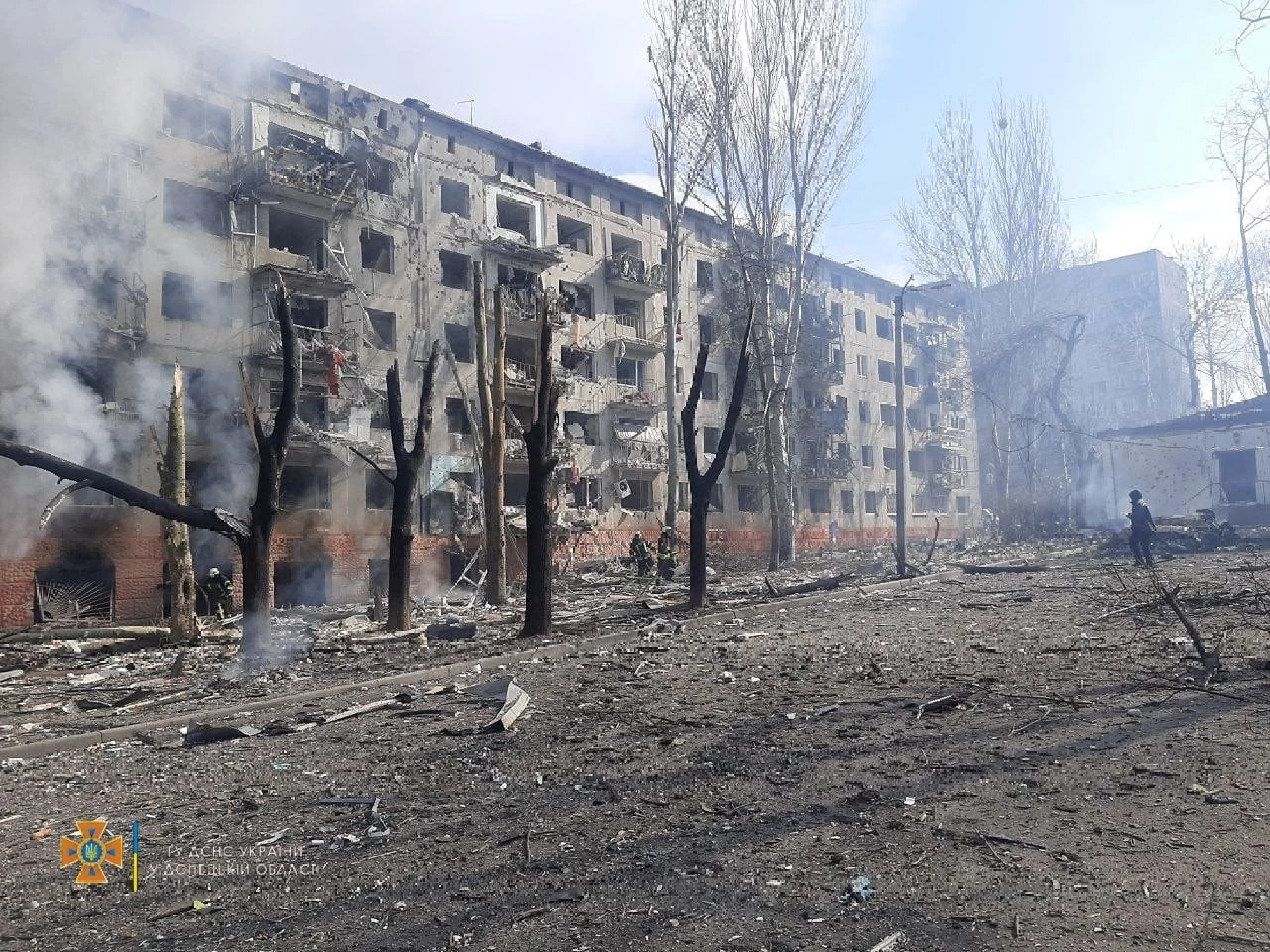
KUALA LUMPUR – US media triumphantly reported the invasion of Afghanistan as liberation. US reporters “embedded” in Bush’s Iraq invasion force enlightened the world only from one side.

When Putin sent his army on “special operations” in Ukraine, he had no such luck. Global mainstream media is overwhelmingly Western, so Russia could not win the PR war.

Broadcast media format focuses on the event of military action to the near-total exclusion of the issues behind it. The result is the simplistic perception of the Kamala Harris type: invasion bad, Russia bad; Ukraine pitiful, West good.

Satellite pictures of a 64km Russian military convoy heading for Kyiv promoted anti-Russia outrage. Sympathy for Ukrainian evacuees added to the partisan sentiment.

Much can be learned from an invasion, its lead-up, the aftermath – and the opportunistic posturing of big powers.

The West thinks if Russia gets away with this invasion, China will be encouraged to invade Taiwan. But Taiwanese President Tsai Ing-wen and China’s Foreign Minister Wang Yi both reject such silly comparisons.

Every situation is different and baseless assumptions only confuse. Ukraine and Taiwan have little in common beyond bipartisan US support.

The West believes China’s assertiveness over Taiwan and the South China Sea could mirror Russia’s strike. Instead, Beijing’s years-old moves resemble Nato’s “salami tactics” of phased encroachment.

Still, Western diplomats want the world to condemn Russia without considering many contexts.

Those are two items on their wish list, not one.

In seeking international endorsement, they say it is not just a “white man’s problem.” When self-interests replace historical context, any problem can be everyone’s problem.

They say such invasions had ended with WWII, but the developing world still suffers them – often by Western design. The Third World’s problems are not a white man’s problem.

Ukraine is the West’s latest proxy and the first European hostage in a Cold War that Nato never ended. Welcome to the Third World, Kyiv.

Principles are important for peaceful and stable world order. Non-aligned nations have their principles as much as major powers have extra-territorial interests.

The West suspects Russia duped China into a “no limits” partnership weeks before the invasion.

But in the days prior Russia repeatedly asked the US for written security guarantees, only to be snubbed.

Those guarantees could have avoided the invasion, but to retain the strategic initiative Nato stubbornly refused. It meant Nato could grant Ukraine membership whenever it chose and Russia should have no say whatsoever.

Putin promptly retrieved the initiative by placing Russia’s nuclear forces on high alert. That need not mean going nuclear, only that escalation by nuclear-armed Nato would see Russian retaliation – so Nato rejected a no-fly zone and Polish MiG-29s for Ukraine.

Russia may learn that invading Ukraine is not the best possible option. Overtly attacking a neighbour is seldom the best way to ensure one’s long-term security.

Even if Zelensky’s government is removed, more Ukrainians may now clamour for Nato membership. That would raise the stakes to a more alarming level.

Ukraine may learn it should have declared formal neutrality earlier, pre-empting Nato’s encroachment onto Russia’s doorstep. Seeking Nato membership earlier would not have helped when Nato expansion had already alarmed Moscow.

Russia could learn of more cost-effective ways to tame Zelensky’s Ukraine, already a basket case poised to disintegrate into a failed state with the right economic pressures.

Moscow could cripple Kyiv without dramatic images of mayhem and destruction – prime-time news cannot fully capture the impact of an economic implosion. No Nato member, post-pandemic, is inclined to throw Ukraine a sizeable economic lifeline in perpetuity.

That economic route could have provided China a bloodless lesson on Taiwan policy. Taiwan is no basket case, but its economic success also means greater dependence on continued growth and stability amid deepening integration with mainland development.

Nato may learn a lesson from the recent US pullout from Kabul, leaving prized weapons in the Taliban’s hands. Nato’s arms transfers to Ukraine may see the same fate when Kyiv falls.

Similarly, US arms sales to Taiwan may have the same result when reunification with the mainland happens sometime, somehow. Such inadvertent transfers of military technology are immediate when they occur.

Taipei may want to check if the US Taiwan Relations Act means anything more than buying US arms. Last December Defence Secretary Lloyd Austin linked it to “Taiwan’s ability to defend itself.”

By early March, Western experts were amazed to find much of Ukraine’s airpower intact. They immediately credited Ukraine’s resilience and staying power.

Russia may just be limiting damage to Ukraine’s military assets for its use and study.

Zelensky has appealed to Washington for fighter aircraft and Stinger missiles while Europe is already supplying Javelin missiles and others.

Has the West learned to avoid provoking conflicts by curbing strategic expansion eastwards?

That seems unlikely as the Quad alliance seeks new partnerships in the notional “Indo-Pacific”.

East Asia is a richly nuanced region that Western powers seldom appreciate and rarely understand. ASEAN has already signaled indifference to the Indo-Pacific concept while Asian Quad members India and Japan have non-Western interpretations of it.

ASEAN may not condemn Russia any more than it did the US when it invaded Afghanistan and Iraq at greater cost and lesser provocation. Like Non-Aligned Movement stalwart India, ASEAN countries can disapprove of invasions in general without taking sides.

ASEAN has weathered tougher challenges without compromising its neutrality. If Western powers have their nuances, those now look like inconsistency and incoherence.

The US wants Russian exports banned, expecting non-Western countries to do it. But US extra-territorial demands are not UN sanctions and lack a multilateral mandate.

Germany will continue importing Russian oil and gas. Britain will also keep buying Russian energy for now without letting Russian cargo ships dock.

China has clarified its position in maintaining good relations with both Ukraine and Russia. The

West and Russia should clarify their interests, without demands or provocations.


Bunn Nagara
 
Columnist, The Star

The writer is a global policy analyst and Honorary Research Fellow of the Perak Academy.
 

Published : March 20, 2022
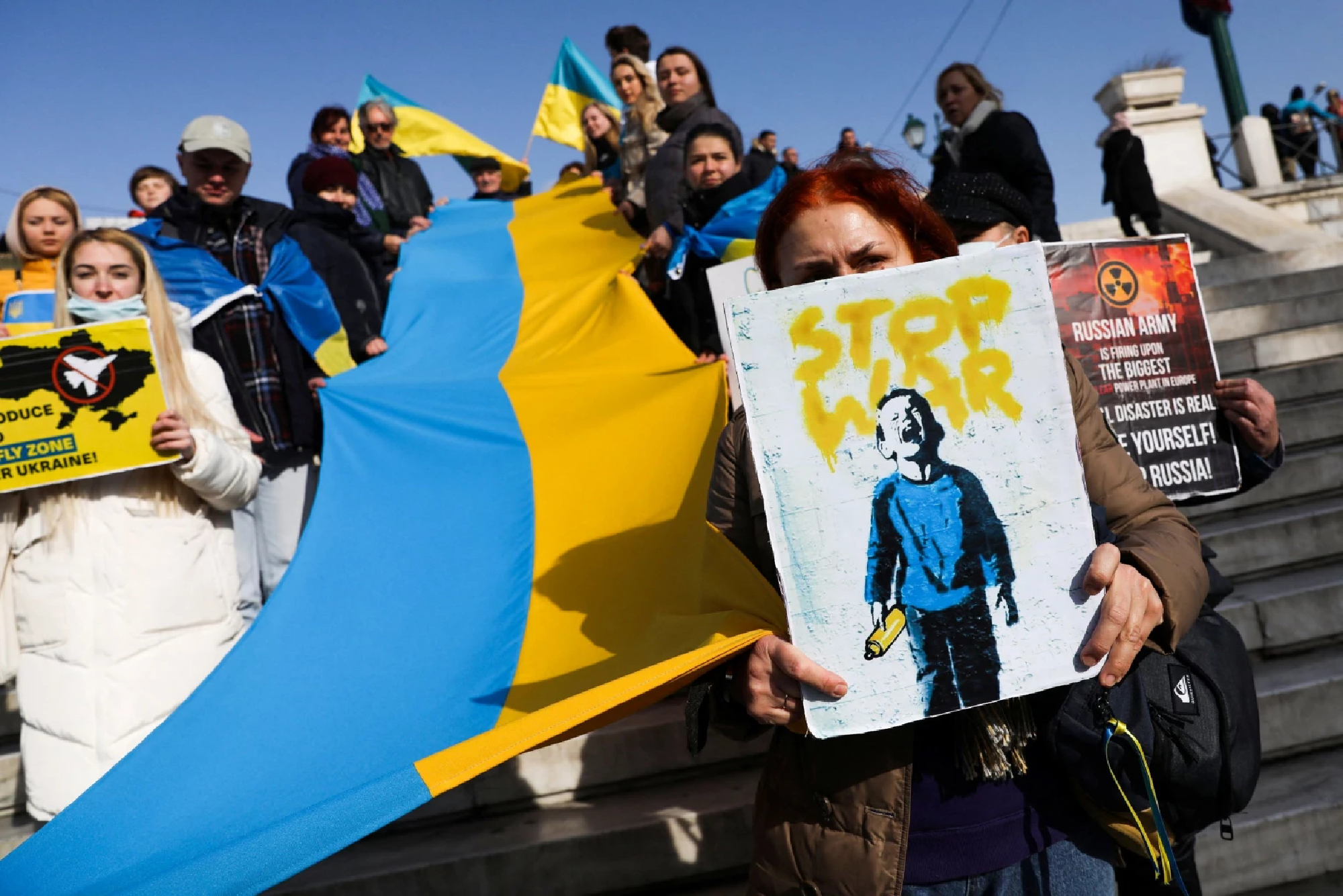
Lessons from Ukraine crisis . And what does it all mean for Asia?

#SootinClaimon.Com : ขอบคุณแหล่งข้อมูล : หนังสือพิมพ์ The Nation.

https://www.nationthailand.com/international/40013596


Beyond the alarm, indignation, and outrage over Russia’s aggression against Ukraine comes the sobering thought: Has, not the international community failed to prevent the much-anticipated attack? Could something similar take place here?

Lessons from Ukraine crisis . And what does it all mean for Asia?

At a purely superficial level, the events unfolding in Europe and the situation in Asia are not exactly similar.

Europe is witnessing the struggle of a declining power attempting to claw back some of its erstwhile influence and glory while being nagged by massive insecurities about encirclement.

In Asia, the issue is all about contending with a rising power that willy-nilly seems to brush against every door frame it seeks to enter and not always deliberately.

Europe has settled boundaries. Twenty-seven nations – including its biggest economies – are grouped as the European Union. Separately, 30 countries, including the United States, make up the North Atlantic Treaty Organisation that underwrites the security of most of these states.

Asia, in comparison, is wracked by territorial issues on land and water. It has modest structures in comparison and the most important of them all, ASEAN, is a toothless body, an intergovernmental organisation that often has difficulty agreeing on a joint statement.

Now, as the joint statement that followed last month’s summit meeting in Beijing between Russian President Vladimir Putin and Chinese President Xi Jinping underscored, the world views of the declining and ascending powers are converging.

Both are joined by their insecurities of being encircled and demand their strategic spaces. And each is faced with adversaries they perceive as going all out to deny them what is their legitimate due.

To meet this common challenge, they have announced they are ready to cooperate in heretofore unimaginable areas.

Those who believe the entente is an empty one should take note that China has unequivocally backed Russian demands for an end to Nato’s eastward expansion and that Mr. Putin, in turn, waited until the Beijing Olympic Winter Games ended before attacking Ukraine.

So what happens in Europe is not something that will leave Asia unaffected. Indeed, more and more, the security challenges may well converge.

What then are the options for key Asian states that are on the front line of aggression, real or imagined?

First, it is becoming clear with startling clarity that there is little alternative to being individually able to protect one’s interests.

That means maintaining a credible armed force, possibly even seeking a deterrent. Germany’s decision over the weekend to drop its long-held reluctance to militarise, and announce the raising of defence spending by at least a third, is a lesson that will not be lost on Asia. It will be particularly noted in Japan, which, after all, was the other side of the same coin during World War II.

Second, it is clear that even those with substantial militaries – India, Indonesia, Japan and South Korea included – will not be able to go it alone and will need strong alliances to buttress them.

Just as Ukraine’s plight is forcing nations like Finland and Sweden to consider taking cover in Nato, it is a fair bet that fence sitters in Asia will now be forced to reconsider their positions.

Indeed, this has already happened on the periphery; Australia’s initiative in stitching together Aukus – the alliance that groups it with the US and Britain – is a clear example of that.

At the same time, the West’s proclivity to swing back to Europe and its suspicions of Russia almost by default must surely give pause to Asian strategists and military planners who bank on that support to stiffen their own backs.

Many Europeans, who were alarmed by what seemed like a US turn to Asia at Europe’s cost, are gratified that Mr Putin has pulled the US back into Europe.

Whether the distraction is temporary, or more lasting, will only be known in the months to come.

For now, Washington has tried to stay on message about its commitment to the Indo-Pacific by inviting Asean leaders to a summit in Washington to be held on March 28-29.

There is an even bigger lesson for sia from the Ukraine crisis that has not been talked about enough.

It is that while defending their sovereign right to make their individual choices, it is critically important for all countries to stretch diplomatic levers to the utmost to assuage the insecurities and nervousness of key neighbours, especially if they are significantly bigger than you.

Sri Lanka, once mentioned as a possible rival to Singapore thanks to its strategic location along key sea lanes and the quality of its talent, continues to pay an enormous price for not paying enough attention to Indian strategic concerns when it opened its economy in the early 1980s, took a decidedly pro-West line and even permitted a Voice of America transmitter to be installed on its northern tip that could beam into India.

Under the late Indira Gandhi, India was significantly closer to the Soviet Union at the time and suspicious of the West, particularly the US. With an unsettled border with China to the east and a forever-tense boundary with Pakistan to the west, New Delhi was loath to open a third front on its southern flank.

This led to its fuelling of a Tamil-led insurgency in Sri Lanka that lasted a quarter century and cost all sides greatly.

Then Sri Lankan President J.R. Jayewardene was fully within his rights to do what he wished with his economy. It is an open question if the fate of the two nations and even Mrs Gandhi’s family – her son and successor Rajiv would subsequently be assassinated by the Tamil Tigers – would have been different had he cared to take Mrs Gandhi into confidence, and assure her that he had no ill intentions.

Mr Putin’s actions in Ukraine therefore mirror what Mrs Gandhi did four decades ago, only that they are unimaginably more crude.

There is a final lesson from the Russia-Ukraine crisis and it is the importance of securing solid, written guarantees in negotiations.

Mr Putin is not entirely wrong in saying that the West went back on its promise to then Soviet leader Mikhail Gorbachev that Nato would not expand eastward towards Russia.

Declassified US national security doc ments suggest that then Secretary of State James Baker offered guarantees that Nato’s eastward movement would not take place – “not an inch”. Similar assurances were also possibly offered by then West German Foreign Minister Hans-Dietrich Genscher.

Still, it could be argued that even the most solemn signed commitments can run aground against a volatile leader who decides on his own course of action regardless of consequences.

After all, in the Budapest Memorandum of 1994, Russia agreed to respect the independence, sovereignty and the existing borders of Ukraine, and to refrain from the threat or use of force against the country.

This is why it is important for Asians – whether it is Asean negotiating a Code of Conduct for the South China Sea or India attempting to settle border disputes – to demand binding commitments.
Memories fade and mere promises are easily broken.

Ravi Velloor

Associate Editor, The Straits Times

Published : March 20, 2022

By : The Straits Times

Why India is right not to take sides on Ukraine

#SootinClaimon.Com : ขอบคุณแหล่งข้อมูล : หนังสือพิมพ์ The Nation.

https://www.nationthailand.com/international/40013589


Critics from either side of the foreign policy matrix may have issues with India charting an independent and balanced course on Russia’s invasion of Ukraine as against Nato allies and European Union opposition to this intrusion.

Why India is right not to take sides on Ukraine

NEW DELHI – Pro-Nato and European think tanks have made out that India missed the bus in playing a decisive role in world affairs yet again by staying away from the conflict. Soviet-era Russia backers have hailed India’s ‘sensible’ decision not to go whole hog with the Nato alliance given her varied offensive and defensive interests.

However, the Modi government hardly had many options in changing the course of events leading to military aggression on Ukraine by Russia while both Nato and the European Union went ahead with severe sanctions against Moscow.

Prime Minister Narendra Modi’s telephonic conversation with President Vladimir Putin is a significant step to convey India’s message and concerns to the Russians. Since Indian students studying medicine in Ukraine are caught in the crossfire, the government has expressed its concerns that Indians be allowed to return home safely.

India’s appeals for peace and getting back to diplomatic dialogue on outstanding issues relating to Ukraine cannot be ignored by the world community. 

Russia’s ‘military operation’ in Ukraine has virtually sealed the possibility of rapprochement with Europe that continued to hang in balance during the last 30 years. India’s external affairs minister S. Jaishankar rightly assessed the genesis of the Ukrainian issue to lie in the complexities of ‘Post Soviet Politics, expansion of Nato and relationship between Russia and Europe.’

In the last three decades, Russia concluded numerous arms-reduction treaties with Western countries including the 1997 Russia-Nato Act, Budapest Memorandum, Treaty on Conventional Armed Forces in Europe (1990), Intermediate-Range Nuclear Forces Treaty (1987), and Open Skies Treaty that put an end to the cold war in Europe and opened avenues for cooperation between Russia and Europe. 

Within Russian circles there is a genuine belief that they did not reap the benefit of the cooperation with Europe, the point of affliction being the grant of Nato membership to Ukraine that brings Europe’s sphere of influence to Russia’s doorstep. In this context, President Putin’s statement that Russia wants demilitarization of Ukraine and it ‘does not intend to occupy’ the country implies that the conflict goes beyond bilateral relations and points to the involvement of greater Western powers.

In the larger struggle for supremacy, one country has been asked to pick sides in India.

As an emerging market economy, credible, and substantial international power, India has largely seen herself as a stabilizing factor that pushes seriously for peace and prosperity. Such is the case especially after India became an equivalent member of Quad after shunning ‘hesitations of history’ that defined non-alignment.

The Indian position has come into greater focus due to its close relations with Russia, the US, and the European Union. Its membership and current chairmanship at UNSC have only accentuated India’s stake given that she has been a longtime votary of an independent foreign policy and plurilateral world order.

Since India has had close civilizational links with both sides, it is pragmatic and logical to abstain from voting on the Ukraine issue at UNSC. India’s representative at the UN, T N Tirumurti spelled out India’s stand and asked countries to find peaceful, diplomatic solutions through the Minsk mechanism.

Also, it should be kept in mind that being a member of Quad does not make it imperative for India to jump into a European crisis. S. Jaishankar has poignantly said that during the Galwan crisis Europe did not support India right off the bat, they took their strategic calculations into account.

In return, as an independent country, India has the right to decide its course based on its strategic calculations.

At the same time, it is rather impractical to expect India to sever its relations with Russia which has been her single largest defense partner with a 60 per cent share in India’s defense inventory.

On the other hand, India has also nurtured progressive relations with the US as well as Europe for over 20 years, since the Vajpayee-Clinton era.

India as a fast-developing country has its own pressing needs with over 1.4 billion to feed.

Therefore, expectations on either side for India to align may not fit into New Delhi’s scheme of things. Her compulsions to lift a vast majority out of poverty and put herself on the growth trajectory are what drive India’s foreign policy.

These imperatives pushed India’s position, striking a fine line between Russia and the West at large.

However, instability on the eastern flank of Europe brings home the acute need to develop an in-house inventory of defense mechanisms and systems without depending on imports.

Self-reliance is the key to great power status. ‘Make in India’ initiative in the defense sector is a significant component of the policy choice made by the Indian government.

Russia’s invasion of Ukraine is bound to create ripple effects already being felt in India though New Delhi has stayed away from swinging either way. Crude prices touching $105 per barrel in spot markets would translate to a larger fuel import bill thereby upsetting budget numbers outlined by Finance Minister Nirmala Sitharaman.

As Russia, apart from OPEC, has been a large exporter of hydrocarbons in particular to Europe, the crisis will increase fuel prices and shortages in almost all of Europe. For instance, Finland imports most of its crude while Hungary gets 83 per cent, Austria – 62 per cent, and Germany imports 46 per cent of its natural gas directly from Russia.

Russia’s output had kept fuel prices competitive while curbing the Gulf’s dominance; its engagement otherwise will give space for the Gulf monopoly that is bound to distort market prices, distribution as well as access. Most importantly, it will create crude-induced inflationary pressures in countries such as India where over 80 per cent of fuel demand is met through imports.

The World Bank report, Global Economic Prospects, 2022 argues that the world is walking towards a global slowdown as the financial support in the wake of the coronavirus pandemic wanes, increase in debts and inequalities would kick in across the world. It will be a blow to the precarious growth of the world economy going through post-Covid impact.

There is no denying that Europe and the world at large are treading choppy waters. Though the ongoing invasion may not go the cold war way, it will certainly wreak havoc on the lives of innocent people caught in the crossfire.

The human cost involved in the war should act as a deterrent and the countries involved should focus on progressive de-escalation measures. At the same time, there is a need for recognizing bullies that do not allow a sustainable global order to emerge. As Gandhi said, an eye for eye attitude will make all of humanity blind!

Amritpal Kaur

Contributor, The Statesman

The writer is a doctoral scholar at Jawaharlal Nehru University and contributing fellow, Centre for Integrated and Holistic Studies, New Delhi.

Published : March 20, 2022

By : The Statesman

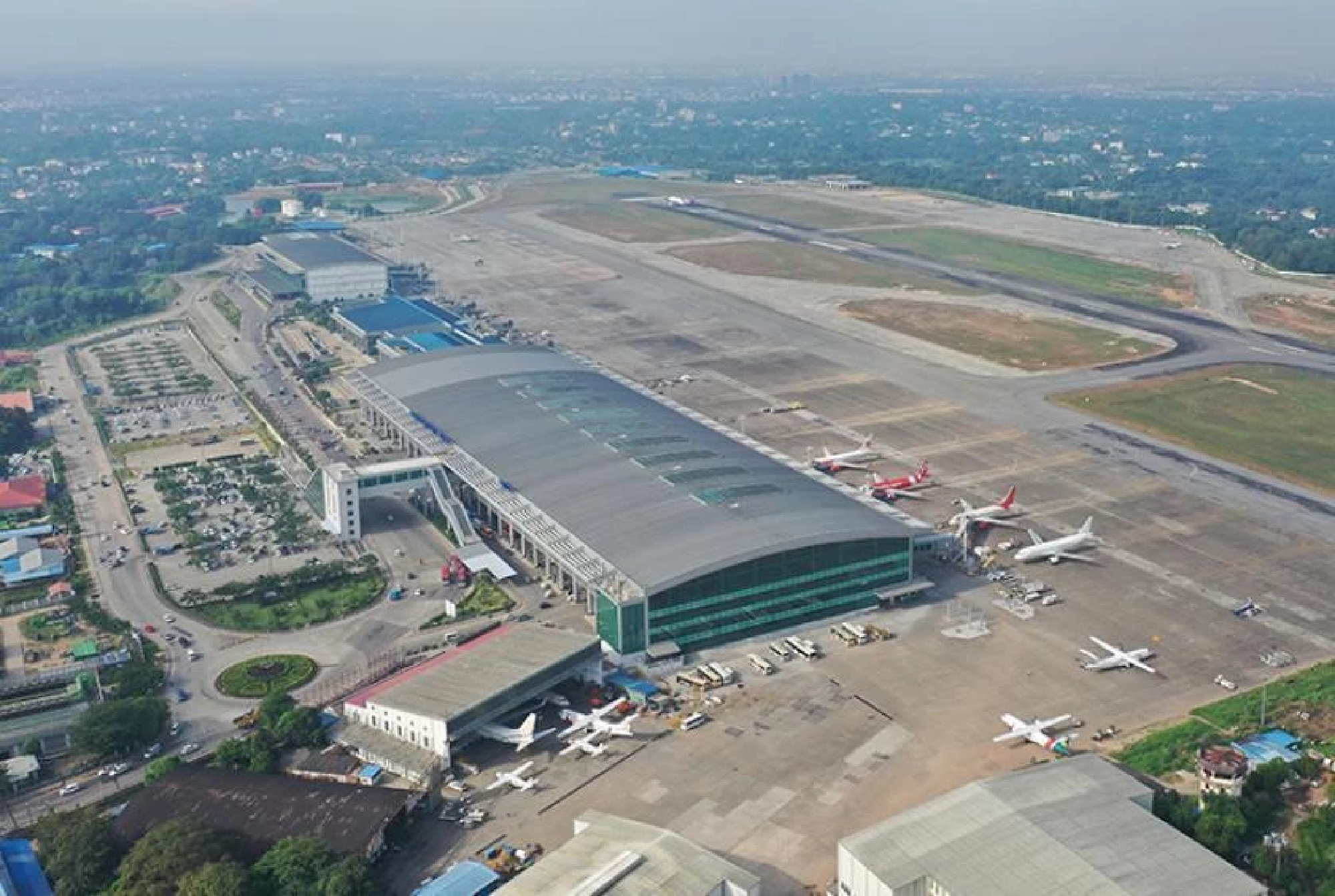
After 2 years Myanmar to resume international flights on April 17th

#SootinClaimon.Com : ขอบคุณแหล่งข้อมูล : หนังสือพิมพ์ The Nation.

https://www.nationthailand.com/international/40013587


Myanmar will be allowing international flights to resume operations on April 17th in accordance with the health and safety guidelines, according to the Central Committee on Prevention, Control and Treatment of COVID-19 released on March 18th.

After 2 years Myanmar to resume international flights on April 17th

With the aim to control the spread of COVID-19 outbreak, the Ministry of Foreign Affairs and Ministry of Transports and Communications had announced that temporary directives on landing international flights to Myanmar had been lifted since the beginning of March 29th of 2020 to March 31st of 2022.

Now, Myanmar reports significant drop in COVID-19 new cases and deaths.

To boost the international tourism industry and to facilitate easy entry for foreigners, the government will be allowing international commercial flights to resume operations on April 17th by the COVID-19 guidelines.

Eleven Media

Published : March 20, 2022

Hun Sen has called for Cambodia and Saudi Arabia to step up cooperation

#SootinClaimon.Com : ขอบคุณแหล่งข้อมูล : หนังสือพิมพ์ The Nation.

https://www.nationthailand.com/international/40013584


Prime Minister Hun Sen has called for Cambodia and Saudi Arabia to step up cooperation in economic sectors and other areas in the Southeast Asian Kingdom with lucrative prospects.

Hun Sen has called for Cambodia and Saudi Arabia to step up cooperation

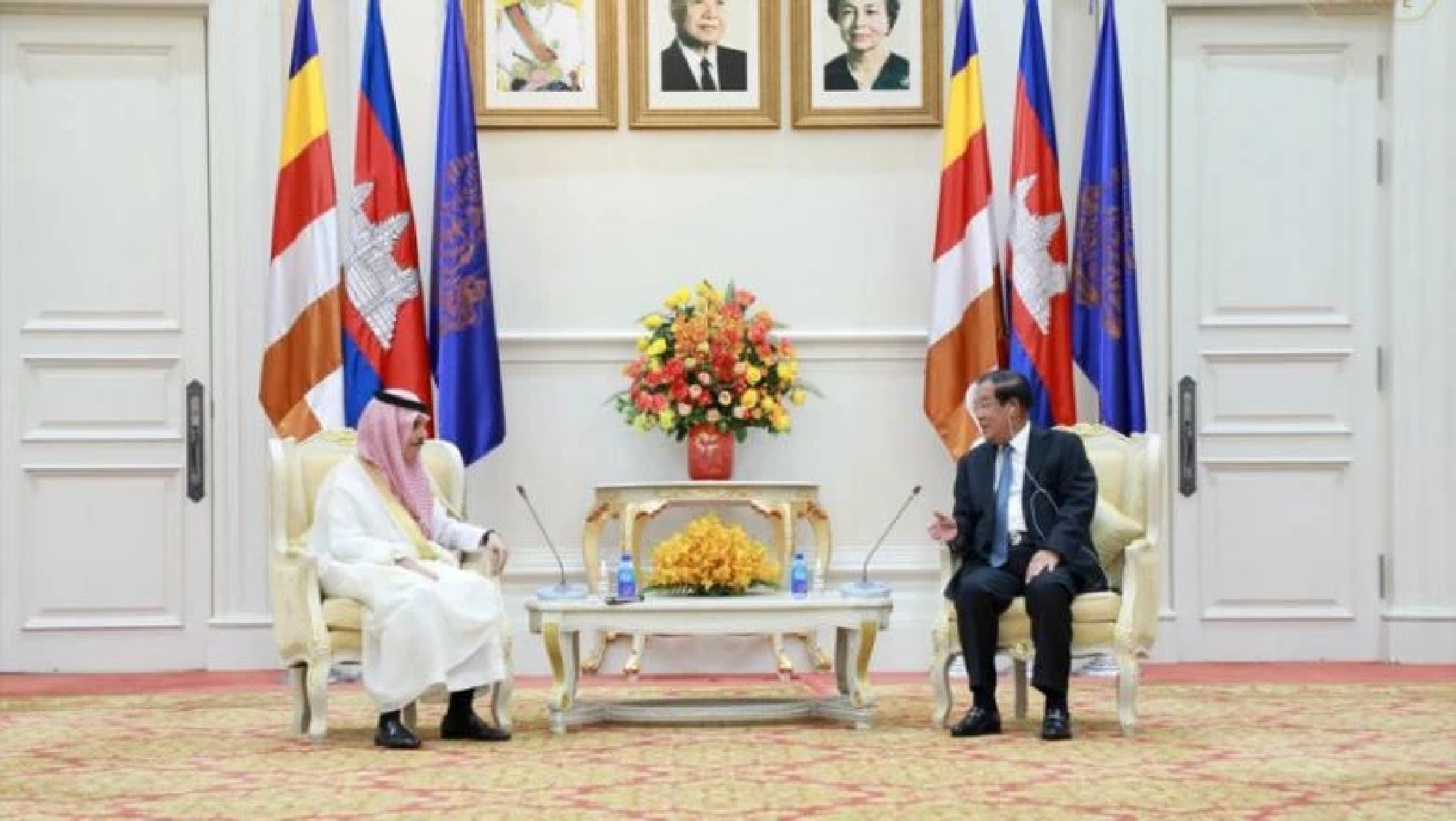
Hun Sen made the remark at a meeting with Saudi foreign minister Prince Faisal bin Farhan al-Saud on March 18 during the latter’s official visit to Cambodia, according to a statement posted on the premier’s Facebook page.

Prince Faisal told the prime minister that his latest visit to Cambodia was meant to strengthen bilateral ties and cooperation, primarily through talks with his counterpart Prak Sokhonn, the statement noted.

The top Saudi diplomat highlighted that tourism, technology, energy, education, culture and agriculture have significant room for bilateral cooperation, and asked Hun Sen for support for partnerships in these areas.

The prime minister agreed, saying he would welcome and encourage more cooperation in all areas with perceived potential – especially tourism, agriculture, and trade.

Prince Faisal also met with his counterpart on March 18, the Cambodian Ministry of Foreign Affairs and International Cooperation said in a separate statement.

“The two foreign ministers agreed that both countries have not yet explored all of their existing cooperation potentials and had the common commitment to further strengthen and broaden the scope of their bilateral cooperation,” it said.

Sokhonn underscored to his Saudi counterpart that Cambodia has promising economic opportunities, underpinned by a “favourable” new investment law, as well as “several” free trade agreements (FTA) that the country has entered into, notably the Regional Comprehensive Economic Partnership (RCEP) that came into effect on January 1.

He asked Prince Faisal to encourage Saudi businesspeople to invest in Cambodia in several “key areas”, listing agriculture, tourism, and renewable energy as examples.

“He also expressed interest in Saudi Arabia’s experience and expertise in oil and gas production and asked for scholarships on oil and gas engineering training,” the statement said.

Sokhonn suggested Riyadh consider buying Cambodian agricultural goods and share their experiences and insights on the production process of halal food or food permissible under Islamic Law as defined in the religion’s holy book, the Quran.

For context, annual bilateral trade between the two countries has been very limited albeit with a tilt in Saudi Arabia’s favour, edging ever closer to $20 million and rising over a fifth between 2019 and 2020, according to Trading Economics. Cambodian exports to and imports from Saudi Arabia in 2020 were to the tune of $3.1 million and $15.92 million, respectively.

The latest figures on the statistics website indicate that in 2020, “cereals” accounted for $2.05 million or about two-thirds of Cambodia’s exports, while “plastics” made up $14.24 million or nearly nine-tenths of the Kingdom’s imports.

Sokhonn also weighed in on education cooperation and “the exchange of diplomatic skills between the institutes of diplomacy of both countries”.

He encouraged Riyadh to consider signing a Memorandum of Understanding (MoU) on Tourism Cooperation with Cambodia and to promptly make a decision on a bilateral MoU on Scientific and Educational Cooperation.

The top diplomats “shared the same views on the establishment of a mechanism for bilateral cooperation”, especially regular consultations between the two foreign ministries, the statement said.

Published : March 20, 2022

By : The Phnom Penh Post

Nepal, China may sign deal on feasibility study for cross–border railway

#SootinClaimon.Com : ขอบคุณแหล่งข้อมูล : หนังสือพิมพ์ The Nation.

https://www.nationthailand.com/international/40013583


Nepal’s Government expects to announce the Chinese foreign minister’s visit date next week. The Ministry of Foreign Affairs has expedited consultations to set the agenda for the upcoming visit by Chinese Foreign Minister and State Councilor Wang Yi to Kathmandu.

Nepal, China may sign deal on feasibility study for cross–border railway

Wang is expected to arrive on March 26 although no official announcement has been made yet.

On Friday, Foreign Minister Narayan Khadka held the first round of consultations with various government secretaries to discuss key issues and set the agenda for the visit, according to government officials.

Over a dozen and a half secretaries from various ministries participated in the meeting held to work out the agenda for the meetings to be held with Chinese officials during the visit. Several government secretaries suggested that Nepal this time should discuss expediting past agreements signed during Chinese President Xi Jinping’s Nepal visit in 2019 instead of pitching new projects.

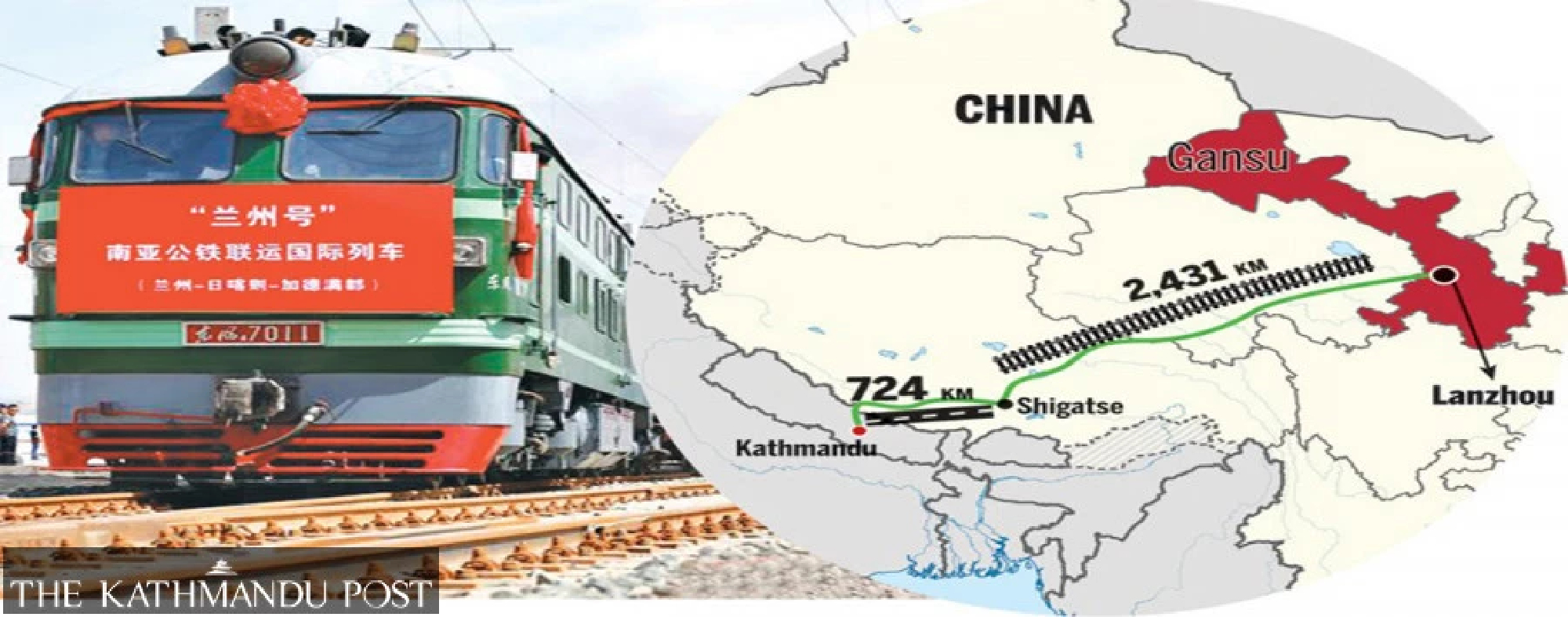
According to several sources, Nepal and China during the Chinese foreign minister’s visit will sign, among other things, a memorandum of understanding for conducting the feasibility study for the proposed Kerung-Kathmandu railway project.

“We have received a draft MoU for a feasibility study of the Kerung-Kathmandu railway,” said Rabindra Shrestha, secretary at the Ministry of Infrastructure and Transport. “Nepal is looking for an additional grant from China besides the amount promised earlier, to carry out the feasibility study. If the two sides consent, an MoU will be signed.”

The draft MoU describes and interprets the agreements and understandings reached during various bilateral meetings and visits in the past and consolidates them in a single agreement, and also includes technical aspects of the projects.

During Xi’s visit in 2019, Nepal and China had agreed to carry out a feasibility study of the multi-billion dollar railway project through Chinese funding. But merely two months after Xi’s visit, the Covid pandemic started leaving the agreements in limbo. As the world has yet to break free of the pandemic, the feasibility study of the Kerung-Kathmandu railway could not start.

In the first week of January, secretary Shreshta held virtual talks with senior officials of the China Railway Administration where the Chinese side had stated that it will take at least 42 months to complete the feasibility study of the railway project. A pre-feasibility study of the railway conducted in 2016 by China had stated that complicated geological terrain and laborious engineering workload will become the most significant obstacles to building the cross-border railroad.

The total investment needed for the project would be known once the feasibility study is completed, but the pre-feasibility study had estimated the cost of the railway, whose 72.25 km section will fall on the Nepali side, at $2.75 billion.

As per the pre-feasibility study report, around 98.5 percent of the railway would either be bridges or tunnels, and construction cost would be Rs3.55 billion per kilometre.

During Friday’s consultations, secretaries from various ministries gave briefings on the status of various Chinese-funded projects in Nepal. The representative of the Ministry of Physical Infrastructure and Transport had presented a long list of projects that remain pending.

Finance Secretary Madhu Marasini asked about the status of the Rs56 billion Chinese grant announced during Xi’s 2019 visit.

“We are not looking for new projects but want to implement and expedite the already agreed projects,” said Shrestha, adding that the second phase of the Ring Road widening project; feasibility study of Tokha-Chahare tunnel; construction of the Syafrubeshi-Rasuwagadhi road section; expansion of the Araniko Highway, Kimathanka-Khadbari-Biratnagar; and Hilsa-Simikot-Surkhet road projects remain suspended owing to the Covid pandemic.

The finalization of the project implementation plan of the Belt and Road Initiative (BRI) will also be on the agenda of the meetings during Wang’s visit. Nepal had signed a framework agreement on the BRI in 2017.

During Friday’s consultations, the representative of the Ministry of Commerce, and Supplies suggested that Nepal request China for a full-fledged reopening of the two major trading points, Tatopani and Rasuwagadhi, where China has tightened cargo flow for the past two years citing the Covid pandemic.

Also on the agenda will be the problems faced by Nepali medical students enrolled in Chinese universities who were forced to abandon their studies midway due to the pandemic; cooperation in energy, infrastructure, trade and commerce; exports of Nepali goods to China; resumption of border talks; and implementation of the trade and transit agreement signed in 2016 in the wake of the Indian blockade.

“We have just begun discussions and probably by Monday or Tuesday, we will be able to announce the date of the visit,” a senior official at the Foreign Ministry said.

Foreign Minister Khadka, meanwhile, said that the government is trying its best to make the visit successful and therefore all stakeholders should have a common voice on Nepal-China matters. 

Kathmandu Post

Published : March 20, 2022

Japan PM pledges investment of 5 trillion yen ($42bn) over 5 years in India

#SootinClaimon.Com : ขอบคุณแหล่งข้อมูล : หนังสือพิมพ์ The Nation.

https://www.nationthailand.com/international/40013582


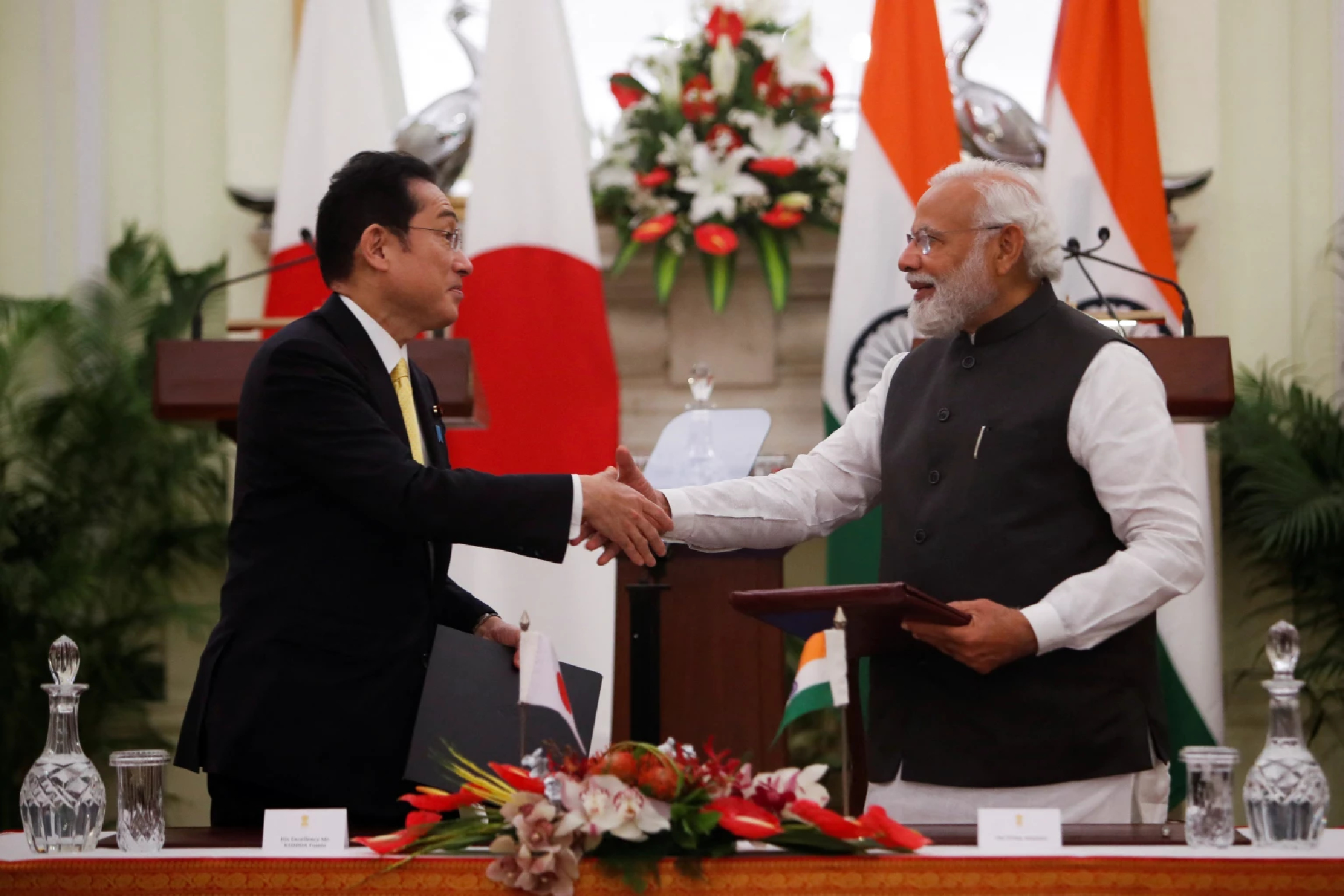
Japanese Prime Minister Fumio Kishida pledged on March 19 an investment of five trillion yen ($42bn) in India over five years in a summit-level meeting with Prime Minister Narendra Modi.

Japan PM pledges investment of 5 trillion yen ($42bn) over 5 years in India

The Japanese Prime Minister is on a two-day official visit to India on an invitation from Prime Minister Modi. Five MOUs were signed during the high-level summit in which Prime Minister Modi and Prime Minister Fumio Kishida along with the high-level officials were present.

On this occasion, an MOU was signed between Suzuki Corporation and the government of Gujarat for setting up an electric car manufacturing unit there.

In a press statement, the Japanese prime minister said that India and Japan’s diplomatic relations are now seventy-year strong and that the two countries share close ties and have the same values of democracy and rule of law. He said that he had a very fruitful meeting with Prime Minister Modi and discussed several bilateral as well as regional and international issues.

Commenting on the world’s present state he said that the Russian attack on Ukraine has shaken the roots of the world order and it is high time that India and Japan work together to make the United Nations security council more effective and ensure a nuclear-weapon-free world.

“We would never endorse any attempt by anybody to change the state boundaries forcibly.” He said. “The two countries would ensure that the region was a peaceful one,” he added.

On the economic front, the Japanese PM reiterated his support to the mega projects underway in India and that Japan was committed to the economic development of India, especially in the Northeast.

The Japanese PM also hoped that Indo-Japan cooperation would further increase in the fields of cyber security and clean energy. On a lighter note, Kishida said that now Japanese apples would be available in India and Japanese people would be able to enjoy Indian Mangoes. He wished for more people-to-people interaction, especially among the youth. He also invited Prime Minister Modi to the Quad Summit.

Prime Minister Modi in his address thanked Japanese PM Kishida and said that he is an old friend of India and that Japan is one of the biggest investors in India. Japan, he said, has invested heavily in India’s flagship infrastructure projects like the Mumbai Ahmedabad Bullet train which is the testimony of strong India Japan relations.

Prime Minister of Japan Fumio Kishida is visiting New Delhi at Modi’s invitation for the 14th India-Japan annual summit. Several bilateral issues as well as global developments, particularly the Russia-Ukraine conflict were discussed by the two leaders during the summit. This was the Japanese PM’s first meeting with Modi in his new role. He had met the Indian leader when he was Japan’s foreign minister.

“I am heading out on a visit to India and then Cambodia. Russia’s aggression against Ukraine is an outrage that undermines the very foundation of the order of the international community, including Asia,” Kishida said before embarking on his visit to India.

The Japanese PM added, “With Prime Minister Modi of India, I plan to confirm our intention to work towards the success of the Quad summit meeting among the leaders of Japan, India, Australia, and the United States to be held in Tokyo within the next few months, as well as our cooperation.”

Earlier the Ministry of External Affairs (MEA) said both sides were looking to deepen the partnership. “India and Japan have multifaceted cooperation within the ambit of their ‘Special Strategic and Global Partnership’. The summit will provide an opportunity for both sides to review and strengthen the bilateral cooperation in diverse areas as well as exchange views on regional and global issues of mutual interest to advance their partnership for peace, stability, and prosperity in the Indo-Pacific region and beyond,” it said.

The last India-Japan summit took place in Tokyo in October 2018. The planned December 2019 visit to India by then-Japanese leader Shinzo Abe was shelved owing to massive protests in Guwahati, the venue of the summit, over the citizenship law. After that, the annual summit mechanism was disrupted due to the COVID-19 pandemic.

Published : March 20, 2022

By : The Statesman

Japan, Europe should rework energy strategy to move away from Russia

#SootinClaimon.Com : ขอบคุณแหล่งข้อมูล : หนังสือพิมพ์ The Nation.

https://www.nationthailand.com/international/40013577


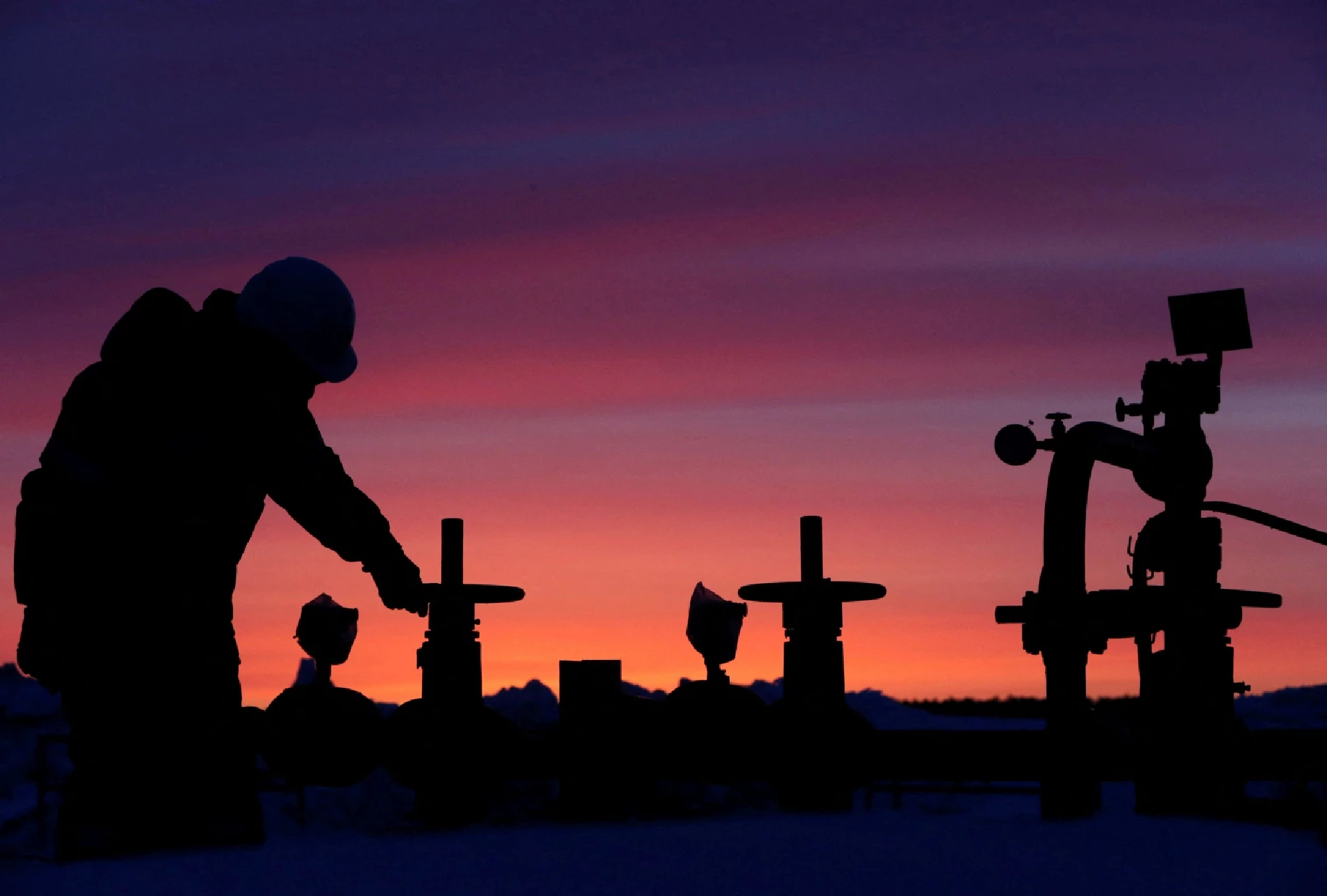
The price of crude oil has been soaring due to the belief that economic sanctions against Russia will disrupt supply. Japan and Europe should rework their strategies so as to break away from their dependence on Russia for energy.

Japan, Europe should rework energy strategy to move away from Russia

TOKYO – On the New York crude oil futures market on Thursday, the benchmark futures price temporarily exceeded US$116 per barrel. This is the highest price in about 13½ years, since September 2008, when resource prices were soaring.

The price rose by more than $20 a barrel in about a week from the start of Russia’s aggression against Ukraine. Since the beginning of the year, the price has risen about US$40.

The International Energy Agency (IEA), which comprises major oil-consuming nations, announced on Tuesday that member counties had agreed to a coordinated release of a total of
60 million barrels from oil reserves. However, the amount is less than one day’s worth of global consumption and will have only a limited effect on pushing down prices.

Consuming countries must take all possible measures to stabilize prices.

OPEC+, consisting of the members of the Organization of Petroleum Exporting Countries and non-OPEC oil-producing countries such as Russia, decided on Wednesday not to increase oil output further.

Even though there are circumstances that make it difficult to reach a consensus on increasing output, major oil-producing countries such as Saudi Arabia voted in favour of a resolution calling for the immediate withdrawal of Russian troops at a special emergency session of the U.N. General Assembly.

It will negatively affect the oil-producing countries if Russia’s aggression deals a serious blow to the global economy through a sharp rise in oil prices. Japan and other oil-consuming countries need to strongly urge producing countries to increase their output.

There is a growing movement away from Russia among private energy companies.

Among the development projects in the Russian far east region of Sakhalin, in which the Japanese government and companies are participating, Exxon Mobil Corp. of the United States has decided to withdraw from Sakhalin-1, whose main operations involve crude oil, and Britain’s
Shell PLC has decided to pull out of Sakhalin-2, whose main operations involve liquefied natural gas.


These are important sites for Japan, accounting for about 1 per cent of Japan’s crude oil imports and 7 per cent of its LNG imports. If Russia continues its aggression, the government as well as trading and other companies that have invested in the projects will have to consider withdrawing from them.

There is an urgent need for advanced nations to join forces to establish a system for flexible LNG supply in response to fluctuations in demand in each country, and then increase the number of alternative suppliers, such as Australia and the Middle East.

The rush to decarbonization, mainly in Europe, initially led to the excessive emphasis being placed on renewable energy, which hindered investment in crude oil and natural gas development and caused prices to soar. During the transitional period to decarbonization, it is important to continue making investments in gas fields.

The role of nuclear power, which can provide a stable supply of electricity, will also become important. It is essential for the government to thoroughly implement safety measures and give full-scale support to the restart of nuclear reactors.

Editorial

The Japan News
 

Published : March 19, 2022

South Korea’s trade security in a fracturing world

#SootinClaimon.Com : ขอบคุณแหล่งข้อมูล : หนังสือพิมพ์ The Nation.

https://www.nationthailand.com/international/40013576


The Russian invasion of Ukraine caught almost everyone by surprise. US President Biden had repeatedly warned the world that Russian President Vladimir Putin would move on to Ukraine, but few people thought he would launch a massive invasion.

South Korea’s trade security in a fracturing world

SEOUL – Fewer still thought that he would intimate at the possible use of nuclear weapons.

In the two weeks since the full invasion began, Ukrainian forces have mounted fierce resistance and have thwarted Russian attempts to capture Kyiv, the capital, and overthrow the government.

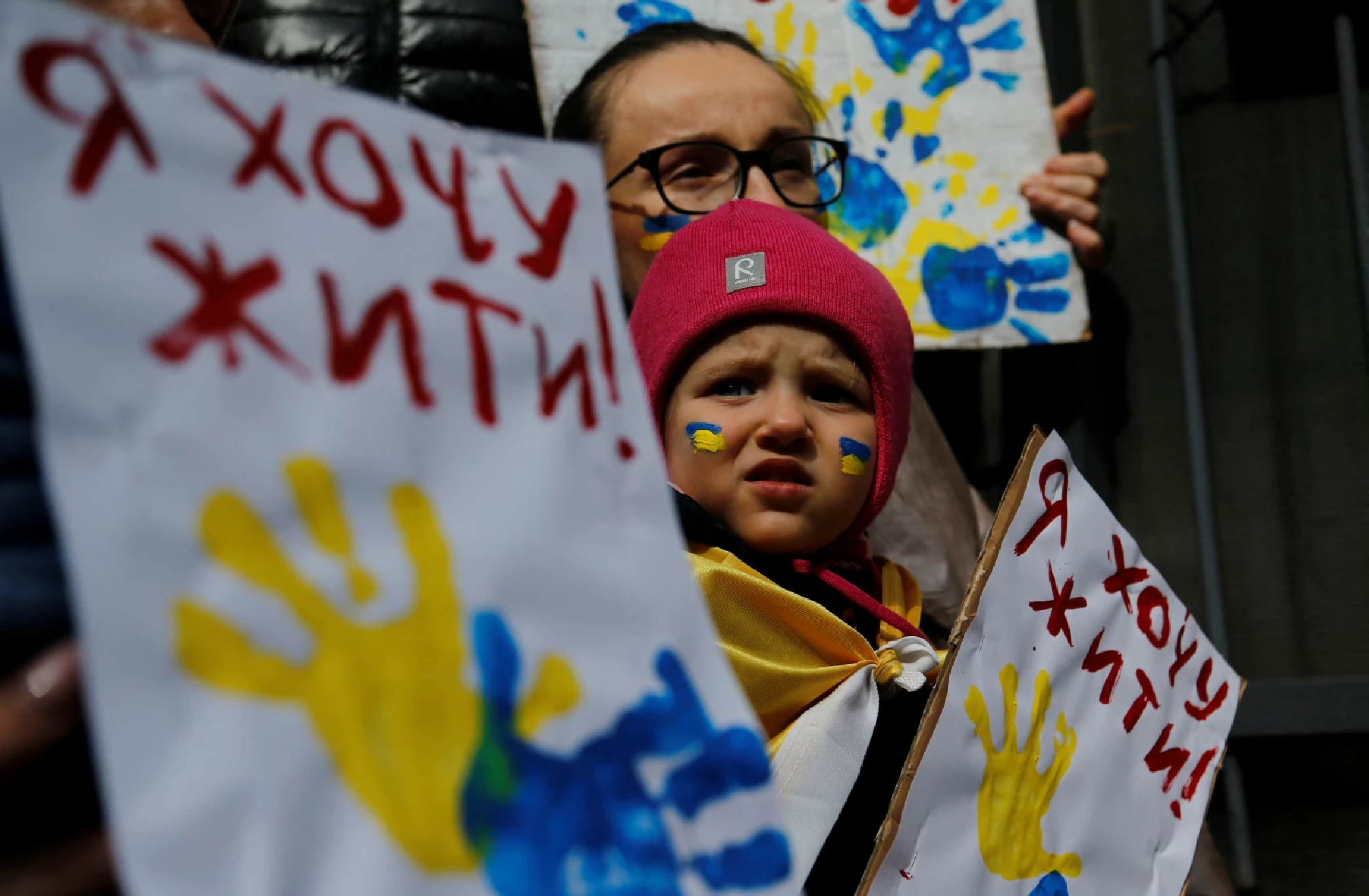
Thousands of soldiers and civilians have been injured and killed and 2 million Ukrainians have fled the country; another million are homeless inside the country. Russian attacks have pounded Ukrainian cities, leaving millions more vulnerable.

In the days following the invasion, the US and its European allies announced a series of economic sanctions, growing in intensity with each announcement. Nations in other parts of the world soon joined in announcing tough sanctions. Most recently, the US and other nations have announced bans on oil and gas imports from Russia. European nations, particularly Germany, announced sharp increases in defense spending to counter the Russian threat. The unity of the West has been impressive considering how damaged relations had become during the presidency of Donald Trump.

As governments and their leaders announced sanctions, non-state actors, including many of the largest global corporations, began announcing withdrawals from Russia. The announcements gathered force and, in combination with government-imposed sanctions, have largely shut Russia off from much of the global economy.

So, what does all this mean for South Korea? Like almost everywhere else, the sudden turn of events has caught South Korea by surprise. At first, the country was slow to announce sanctions, but it has since done so, as President Biden noted in his State of the Union address on March 1.

The delay has come under criticism in South Korea, but it was short and unlikely to be taken as a sign of lack of commitment.

The bigger problem for South Korea is the weakening commitment to free trade. Sanctions and country boycotts, however justified, restrict free trade. These things have a negligible effect on global trade if used against a few small nations but become a drag if they are used against an ever-growing list of countries.

Economic policy that promotes domestic products over imports may have popular appeal but affects trade and growth negatively.

The trade-to-GDP ratio illustrates the potential problem for South Korea. The ratio compares imports, exports, and total trade to GDP, which indicates how dependent on trade a nation is. At the top are small countries such as Luxembourg and Singapore.

For these countries, trade is several hundred times GDP. In large countries with large populations, such as Nigeria, Brazil, Pakistan, the US, and Japan, trade makes up less than 25 percent of GDP.

And South Korea? With a ratio of 80 percent, the country is highly dependent on trade. The average for nations of the world is 56 percent. Exports make up 43 percent of South Korea’s GDP compared to a world average of 28 percent. Exports make up only 10 percent of US GDP and only about 19 percent of GDP in China and India.

South Korea is not the only large economy with a high dependency on exports. Exports make up 47 percent of GDP in Germany, and around 30 percent in France, Italy, and the UK.

The difference between South Korea and the European nations is the size of the market. The European Union is a common market and, though no longer a member, the UK maintains free trade with the EU.

In the end, the fracturing of free trade hurts everybody, but it is especially dangerous for South Korea. It does not have a large domestic market to fall back on, which makes it more difficult to mitigate declines in trade.

The bigger problem is China, the destination for 26 percent of South Korea’s exports. Relations between China and Russia have become closer in recent years, and Russia will turn to China for economic support as sanctions bite.

If China agrees, the West could decide to target trade with China in the hope of pressuring it to cut Russia off. In that case, South Korea could come under intense pressure to join, risking amicable trade relations with China.

China could, however, decide that propping up Russia is too risky and turn away from it. That would help South Korea but leave questions about its long-term trade security unanswered.

Finding answers to those questions will keep the new president busy for the next five years.


Robert J. Fouser

Contributor, The Korea Herald

The writer is a former associate professor of Korean language education at Seoul National
University and writes on S. Korea from Providence, Rhode Island.

Published : March 19, 2022

Ukraine crisis exposes ASEAN credibility gap

#SootinClaimon.Com : ขอบคุณแหล่งข้อมูล : หนังสือพิมพ์ The Nation.

https://www.nationthailand.com/international/40013575


With what is going on in Ukraine today, no one would be more relieved right now than the Myanmar junta’s military generals in Naypyidaw.

Ukraine crisis exposes ASEAN credibility gap

JAKARTA – With the war in Ukraine, a once-in-a-century military conflict that many said could lead to World War III, the eyes of the world will certainly be directed away from the atrocities within Myanmar itself.

And for obvious reasons, ASEAN countries now find themselves being preoccupied with the possible spillover of the conflict to the region.

Many analysts have begun their hand-wringing about the possible effects of the conflagration within the Indo-Pacific region and the impact on the stability of the region, which could be adversely affected by the conflict in the eastern part of Europe.

Only two weeks before the invasion, the news about a Russian anti-submarine destroyer chasing off a US submarine near the Kuril islands, near Russia, certainly added to the foreboding sense of gloom in the region.

Another concern is that the invasion of Ukraine by a revanchist power like Russia could inspire China to do the same in Taiwan, something which could create a diplomatic, if not a geopolitical headache for ASEAN countries, forcing them to deal with a fresh tension in their backyard.

These are all grave concerns, but military generals in Naypyidaw are certainly happier from the fact that ASEAN countries have bungled their response towards the Ukrainian crisis and in the process, the regional group has lost some of its credibility.

And with much-diminished credibility, it will likely be very hard for ASEAN to deal with the Myanmar issue in the coming months.

With the exception of Singapore—which has slapped a number of sanctions against Russia, with the latest being an export ban on electronics, computers, and military items, no country in ASEAN has made a tough stance against Russia.

Malaysia has tried to make a point by denying the entry of Russia-flagged tanker sanctioned by the United States, but this gesture would only amount to a pinprick against Russia.

Early in the conflict between Russia and Ukraine, shortly after Russia began its invasion, ASEAN did issue a statement with the group’s foreign ministers calling for an immediate ceasefire to what they called military hostilities in Ukraine.

The ASEAN ministers also said, “that they were deeply troubled by the intensifying gravity of the situation in Ukraine.”

The ASEAN ministers believed there was still room for a peaceful dialogue. Yet, there was no mention of Russia.

This stance is all the more baffling, given that ASEAN countries would only lose a little, if any, should they decide to deliver a stronger statement against the Russian invasion of Ukraine.

Russian Foreign Minister Sergei Lavrov himself had said that the economic ties with Southeast Asian countries ran only a “skin-deep”.

So again, if ASEAN countries decide to stand against Russia, there’s not a lot to lose, given Russia’s shallow trade and investment exposure in the region.

And if the primary consideration for not condemning Russia was the prospect of not getting any access to its military equipment, that too is questionable.

Indonesia, for instance, in recent years has diversified the source of its military weapons and its purchase of a couple of dozens of Dassault-made Rafale jet fighters from France.

If anything, soon after the French and Indonesian governments announced the planned delivery of the Rafale jet fighters, the United States gave a green light for a US$13.9 billion arms sale to Indonesia, which includes up to 36 F-15 fighter jets.

Also, no one in ASEAN is seriously considering getting the shipment of COVID-19 Sputnik vaccine from Russia, as most of the vaccines used in the region come from manufacturers in Western nations or from China.

Again, there’s no other explanation for ASEAN countries’ reluctance to make a strong stance against Russia’s occupation of Ukraine, than their fear of confronting a superpower country.

With a weak statement that amounts to no less than a slap on the wrist, military generals in Myanmar can certainly be forgiven for thinking that there are two different rules governing ASEAN, one for a small nation like them and another for major powers.

Already in Indonesia, where the government issued a condemnation towards the aggression but omitted the name of the aggressor, cynics have begun to point out that the government was being tough towards a smaller nation like Myanmar, but had reservations about making any judgment when it comes to Russia.

But this should not surprise us.

Even on the issue of Myanmar, ASEAN is far from united.

The past year, ever since tanks started rolling in on the streets of Yangon and Naypyidaw, has shown us that when it comes to upholding some basic principles of democracy and human rights in the region, only a handful of countries were willing to put in the work.

Indonesia, Singapore, and Malaysia, ASEAN’s ‘coalition of the willing’ have been united in wanting ASEAN to have a strong position on Myanmar, while others were comfortable sitting on the fence and gave the generals a free pass.

The crisis in Ukraine again reminds us about the reality, that at the end of today very little has changed in how ASEAN member countries go about doing their business, that realpolitik, pragmatism, and short-term calculation would trump basic norms and decency.

Sadly enough for ASEAN watchers like us, only a few weeks before the Ukraine invasion we had the illusion that Jakarta, Singapore, or Kuala Lumpur were guided by high moral principles when they went after the junta government in Myanmar.

The illusion is now gone and the generals in Naypyidaw are certainly paying attention.

From now on, statements coming from ASEAN leaders calling for accountability in Myanmar would ring hollow. These generals have noticed that in the Ukrainian crisis we certainly did not practice what we preach.

It is also easy to see that Western powers like the United States and European Union, which were put off by ASEAN’s timidity in the Ukraine crisis, would recalibrate their position on some regional issues, including on the issue of Myanmar.

It’s a lose-lose position for ASEAN.

M. Taufiqurrahman

Editor-in-chief

The Jakarta Post, Indonesia

Published : March 19, 2022