Seoul Fashion Week kicks off with in-person catwalk shows

#SootinClaimon.Com : ขอบคุณแหล่งข้อมูล : หนังสือพิมพ์ The Nation.

https://www.nationthailand.com/international/40013558


Seoul Fashion Week, South Korea’s biggest fashion event held every March and October, kicked off Friday with physical catwalk shows and offline events for the first time in three years.
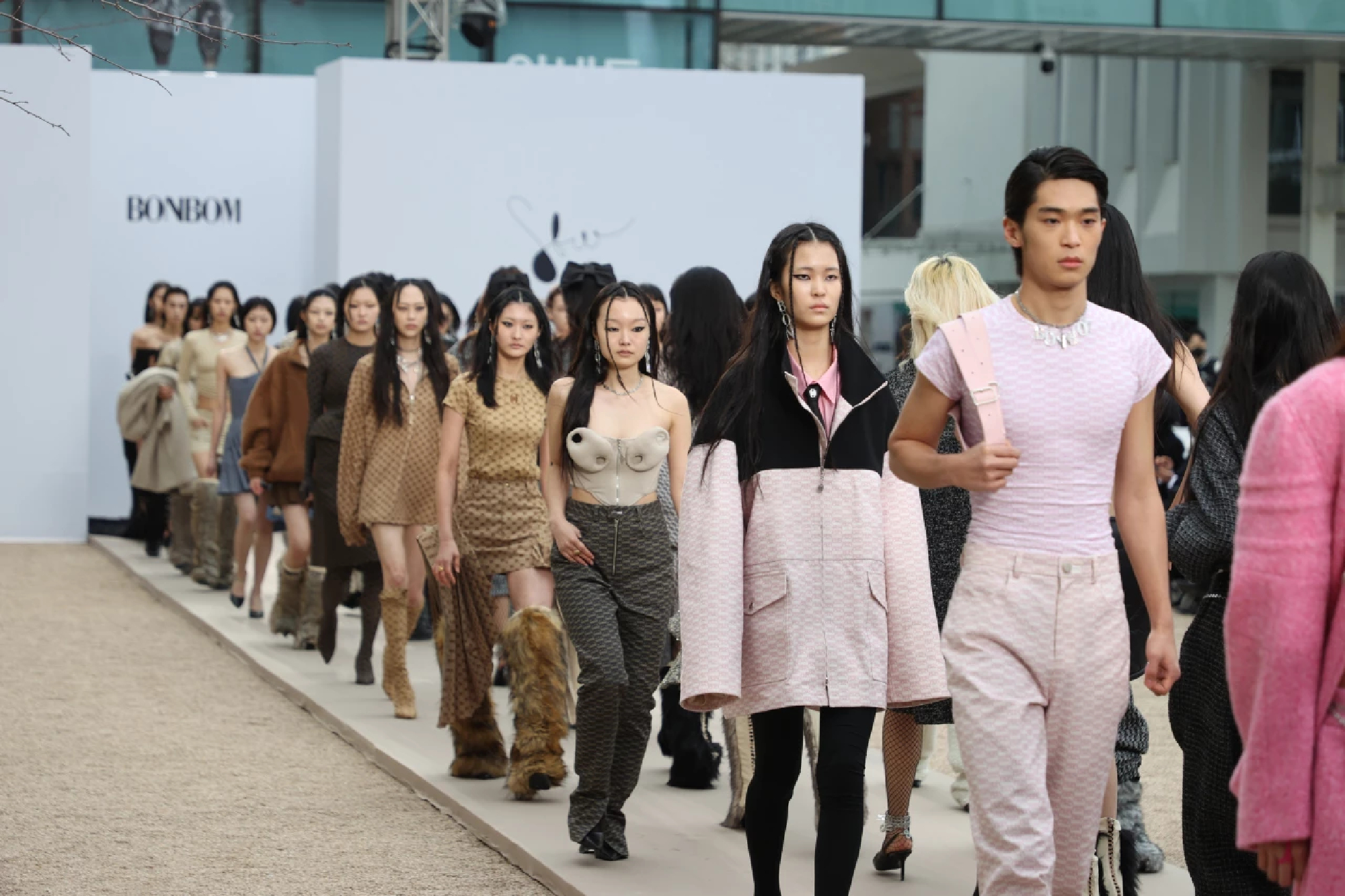
Seoul Fashion Week kicks off with in-person catwalk shows

The opening ceremony of 2022 fall-winter Seoul Fashion Week took place at the Seoul Museum of Craft Art in central Seoul and about 150 people — including Seoul Mayor Oh Se-hoon, big-name celebrities and buyers – were in attendance.

The six-day fashion extravaganza marked opened up with a performance from girl group Kep1er. Model Shin Hyun-ji hosted the event and Seoul mayor Oh delivered opening remarks, saying “Long-awaited in-person runways have finally returned this year.”

“I hope, K-fashion, which has already been introduced in London and Paris, continues to make a foray into New York and Milan Fashion Weeks and I hope Seoul becomes one of the top five fashion cities in the near future,” Oh said. “We believe K-fashion will play a reliable role along with K-pop, K-drama, K-food and K-style to help Seoul achieve its position as the benchmarked city of global lifestyle.“

Of the many big names in attendance, actor Lee Jung-jae of Netflix’s smash hit ”Squid Game“ shined as the event’s global ambassador.

Other celebrities that sat along the catwalk were girl group IVE’s Leeseo and Rei, boy band The Boyz, TVXQ‘s Changmin and dancers Jo Na-in and Noh Won, who were featured on Mnet’s hit dance competition show “Street Dance Girls Fighter” in the fall of last year. Dozens of fans flocked to the venue to take photos of the stars despite the chilly weather.

Designer brand Bonbom was the first of three labels to present its collection. The collection, titled “This is the Way That We Love Like It’s Forever,” marked the brand’s Seoul Fashion Week debut. 

Bonbom’s winter collection was inspired by the zoot suit, a popular style trend in the US in the 1930s, and Japanese sukeban fashion from the 1970s. The brand reinterpreted rebellion and freedom into a futuristic and sensual teenage school look.

It was followed by C-Zann E’s runway show titled “Movement & Freedom,” which was inspired by “Dancing Boy” from Korean folk painting master Kim Hong-do from the Joseon era (1392-1910).

C-Zann E’s collection delivered the message of timeless freedom through its Korean avant-garde designs to reveal authenticity of Korean beauty.

A live performance of taepyeongso, the Korean double-reed wind instrument in the shawm or oboe family, and energetic gestures of dancers who highlighted their long-sleeved clothes made the show even fuller.

The final collection to take the runway was from the brand Beyond Closet. The show was titled “My Palette.” Inspired by the documentary film “The Price of Everything,” it focused on mixing different colors, materials and details. It highlighted novelty that is familiar and comfortable but still very new.

In addition to the three collections that were showed live, prerecorded shows from three brands — Seokwoon Yoon, Painters and Eenk — were also streamed online through YouTube, Naver TV and TikTok on the same day.

The Seokwoon Yoon show, which took place during London Fashion Week, introduced this year’s A/W collection under the theme of “Approaching a New Species.” Rookie womenswear brand Painters showed experimental visuals through its collection, hoping it to be accepted in the commercial market. Eenk presented its “V for Vintage” collection filled with powerful elegance and majestic glam inspired by the issues of Vogue magazine from the 1980’s. The brand was invited to Paris Fashion Week earlier this year.

The 2022 F/W Seoul Fashion Week runs through Wednesday in an online-offline hybrid format. A total of 35 fashion brands — 23 established designer brands for the Seoul Collection shows and 12 rookie designer brands for the Generation Next shows – will present their new collections.

The biannual fashion event will also hold an on-site exhibition where visitors will be able to try on some of the items from designer brands that are being showcased in the runway shows and buy them at discounted prices. The exhibition runs through the end of May at Han Collection in central Seoul.

By Jie Ye-eun 

Published : March 19, 2022

By : The Korea Herald

Russia to propose 10-yr ban on foreign firms which don’t return by May 1

#SootinClaimon.Com : ขอบคุณแหล่งข้อมูล : หนังสือพิมพ์ The Nation.

https://www.nationthailand.com/international/40013557


Russian State Duma Deputy Yevgeny Fedorov has proposed a 10-year ban on the work of foreign companies that will not return to the country’s market until May 1.

Russia to propose 10-yr ban on foreign firms which don’t return by May 1

Acopy of the letter addressed to the head of the Ministry of Economic Development Maxim Reshetnikov was reported by RT.

The deputy recalled that a number of foreign companies have suspended their work in Russia, the provision of services to Russians and investments.

According to him, they plunged tens of thousands of citizens into a state of uncertainty about their future work and well-being.

“I ask you to evaluate the feasibility of determining the conditions for the return of these companies: to allow them to promptly restore their activities until May 1, 2022, or to impose a ban on commercial activities for a period of 10 years for those enterprises that do not wish to restore work in Russia before the proposed date,” stated in the appeal.

Earlier, President Vladimir Putin supported the government’s idea of introducing external management for foreign companies leaving Russia.

According to him, the authorities have enough legal market tools for this.

Experts have said the appointment of a temporary administration at foreign enterprises is a more compromise option than the direct nationalisation of business.

Published : March 19, 2022

By : The Statesman

Govt. announces power cut plan in some industrial zones in Yangon

#SootinClaimon.Com : ขอบคุณแหล่งข้อมูล : หนังสือพิมพ์ The Nation.

https://www.nationthailand.com/international/40013556


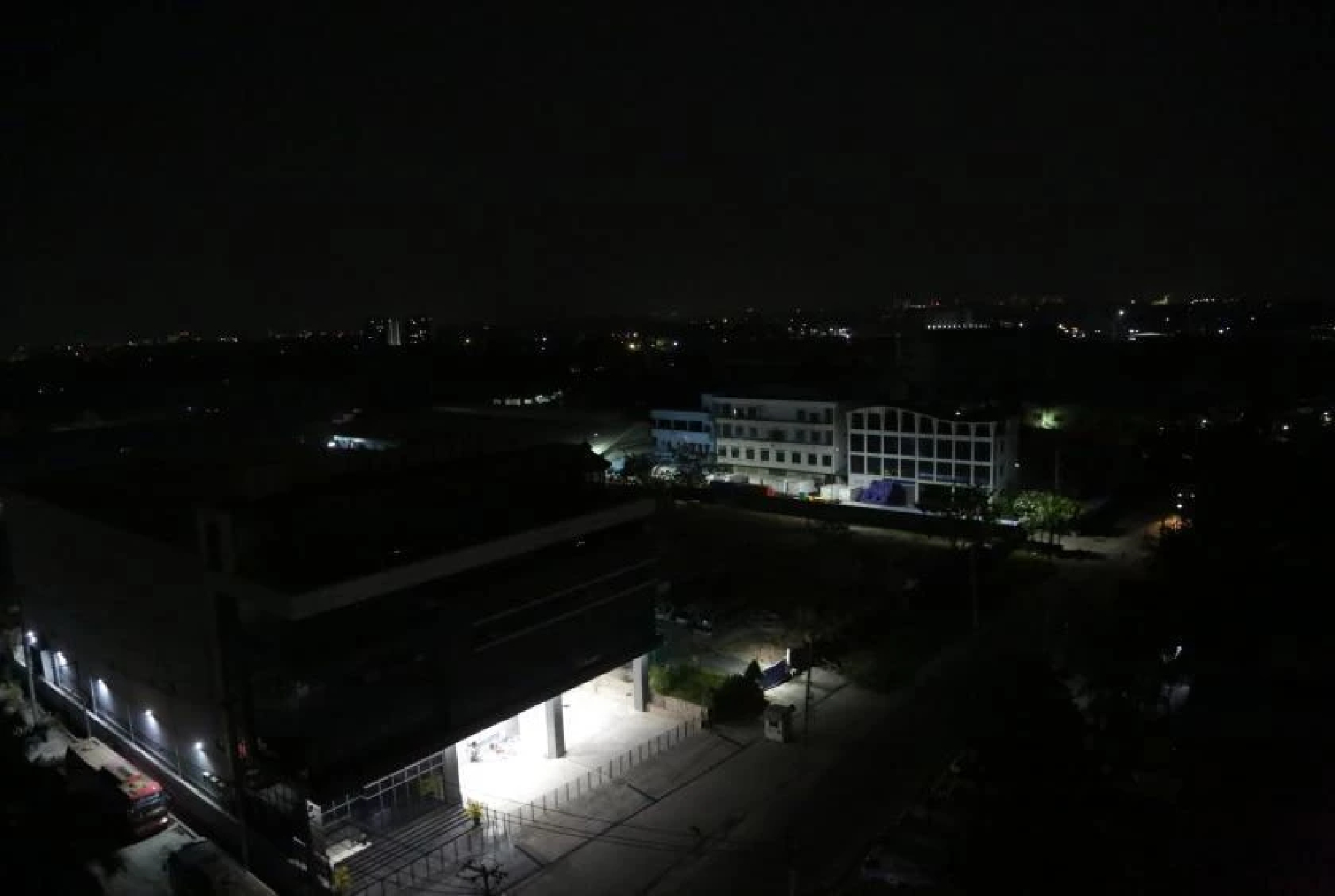
Some industrial zones in Yangon Region will only have electricity from 9 am to 5 pm and there will be power outages at night, according to the industrial zone committees.

Govt. announces power cut plan in some industrial zones in Yangon

An official from the Shwelinban Industrial Zone Committee said that the factories will have electricity from 9 am to 5 pm daily and power supply may be cut off from 5 pm to 9 am.

“We have been informed like that. The electricity will be provided regularly from 9 am to 5 pm and will be cut off from 5 pm to 9 am the next day. There will be no power outages between 9 am and 5 pm. There is no power outage tonight. I think the power cut plan will start from tomorrow,” said an official from the Shwelinban Industrial Zone Committee.

An official from the Hlaingthayar Industrial Zone said that they will have electricity from 9 am to 5 pm and it was not yet known whether the power cut plan will be between 5 pm and 9 am.

An official from a company in Thaketa Industrial Zone said the township electricity office notified the company that the power outage will occur from 5 pm to 9 am the next day.

“The electricity will be cut off from 5 pm to 9 am the next day. They can only provide electricity from 9 am to 5 pm only. So I asked him whether they can provide electricity in those hours, and he said he was not sure,” said the official from the company.

At present, most of the townships in Yangon have more power outages. Irregular power cut plan and rising fuel prices have led to higher fuel costs in most factories in industrial zones and reduced overtime for workers.

Yangon Region has 29 industrial zones such as Hlaingthayar Industrial Zone, Shwe Lin Ban Industrial Zone, Shwe Thanlwin Industrial Zone, Shwe Pyi Thar Industrial Zone, Shwe Paukkan Industrial Zone, South Dagon Industrial Zone 1, 2 and 3, South Okkalapa Industrial Zone, North Okkalapa Industrial Zone and Thaketa Industrial Zone.

Published : March 19, 2022

By : Eleven Media

US tightens Russia clamp in trade move

#SootinClaimon.Com : ขอบคุณแหล่งข้อมูล : หนังสือพิมพ์ The Nation.

https://www.nationthailand.com/international/40013555


House vote paves way for higher tariffs; China envoy stresses humanitarian need

US tightens Russia clamp in trade move

The US House of Representatives passed a bill on Thursday to suspend normal trade relations with Russia, moving to further penalize the country’s economy by paving the way to higher tariffs on Russian goods.

The vote came after President Joe Biden announced this month that the United States and its European allies would take new steps to isolate Russia from the global trading system.

The bill, which will next be headed to the Senate, suspends normal trade relations with Belarus in addition to Russia.

The bill’s approval would allow the US to impose higher tariffs on Russian goods, and includes a ban on Russian oil and gas products and a $13.6 billion military and humanitarian aid package.

The bill came as Russian troops continued their military activities in Ukraine’s western city of Lviv.

Russia launched six missiles toward Lviv on Friday, according to the Ukrainian armed forces.

The projectiles were most likely cruise missiles fired from warplanes over the Black Sea, while two of the missiles were intercepted by air defense systems, the Ukrainian forces said in a statement on Facebook.

Several missiles hit an aircraft repair plant in the city on Friday, destroying the building, said Lviv Mayor Andriy Sadovy, adding that there were no casualties from the strike.

An explosion was also heard and smoke was seen in the northern part of the Ukrainian capital Kyiv on Friday morning. There is no official information from the Russian military about the attacks contained in Ukraine’s statement.

In another development, the Russian embassy in Washington on Friday requested that the US disclose information about its military biological activity in laboratories in Ukraine.

The US spent $32 million on the projects, the embassy said.

The embassy’s statement echoed the chief of Russia’s radiation, chemical and biological protection force Igor Kirillov, who said in a briefing on Thursday that the Russian army has obtained documentary evidence confirming the Pentagon was financing military-biological projects in Ukraine.

Meanwhile, China’s ambassador to the United Nations on Thursday reiterated that Beijing remains committed to promoting peace through negotiations and called on the UN and all concerned parties to help ease the humanitarian situation in Ukraine.

Zhang Jun, China’s permanent representative to the UN, told a Security Council briefing on the refugee issue in Ukraine that China is deeply worried about the worsening humanitarian situation in Ukraine and saddened by the reported increase in civilian casualties and refugees.

“The pressing task now is to call for maximum restraint from all parties and to ensure the safety and security of all civilians, including women and children, and meet their basic humanitarian needs, so as to prevent the occurrence of a larger scale humanitarian crisis,”Zhang said.

“China supports the work by the relevant parties in maintaining communication, ensuring safe and unimpeded humanitarian corridors and further facilitating personnel evacuation and humanitarian assistance.”

Zhang said that the Red Cross Society of China has provided Ukraine with three batches of humanitarian supplies, with the third one containing milk powder and quilts for children, specifically helping the Red Cross Society of Ukraine assist displaced children affected by the conflict.

Zhang noticed that in the recent past, some people of African or Middle East descent encountered difficulties during evacuations.

“This should be taken seriously and addressed properly. All refugees, regardless of color, race or religion, shall be accorded the necessary protection under international refugee law.”

The ambassador stressed that the Security Council bears the primary responsibility for maintaining international peace and security and should therefore “play a positive role in easing the humanitarian situation in Ukraine”.

The international community shares the common wish for a ceasefire at an early date to alleviate the situation on the ground and prevent civilian casualties, he said. “This is also the expectation of China,”Zhang said.

“We support the UN and the parties concerned in vigorously carrying out good offices. We also hope that all parties will do more to facilitate peace talks and not add fuel to the fire. Facts have proved that wanton use of sanctions will not solve any problem, but will instead create new problems.”

By REN QI in Moscow and MINLU ZHANG in New York

Published : March 19, 2022

By : China Daily

Tohoku Shinkansen possibly derailed by quake’s 2nd jolt

#SootinClaimon.Com : ขอบคุณแหล่งข้อมูล : หนังสือพิมพ์ The Nation.

https://www.nationthailand.com/international/40013554


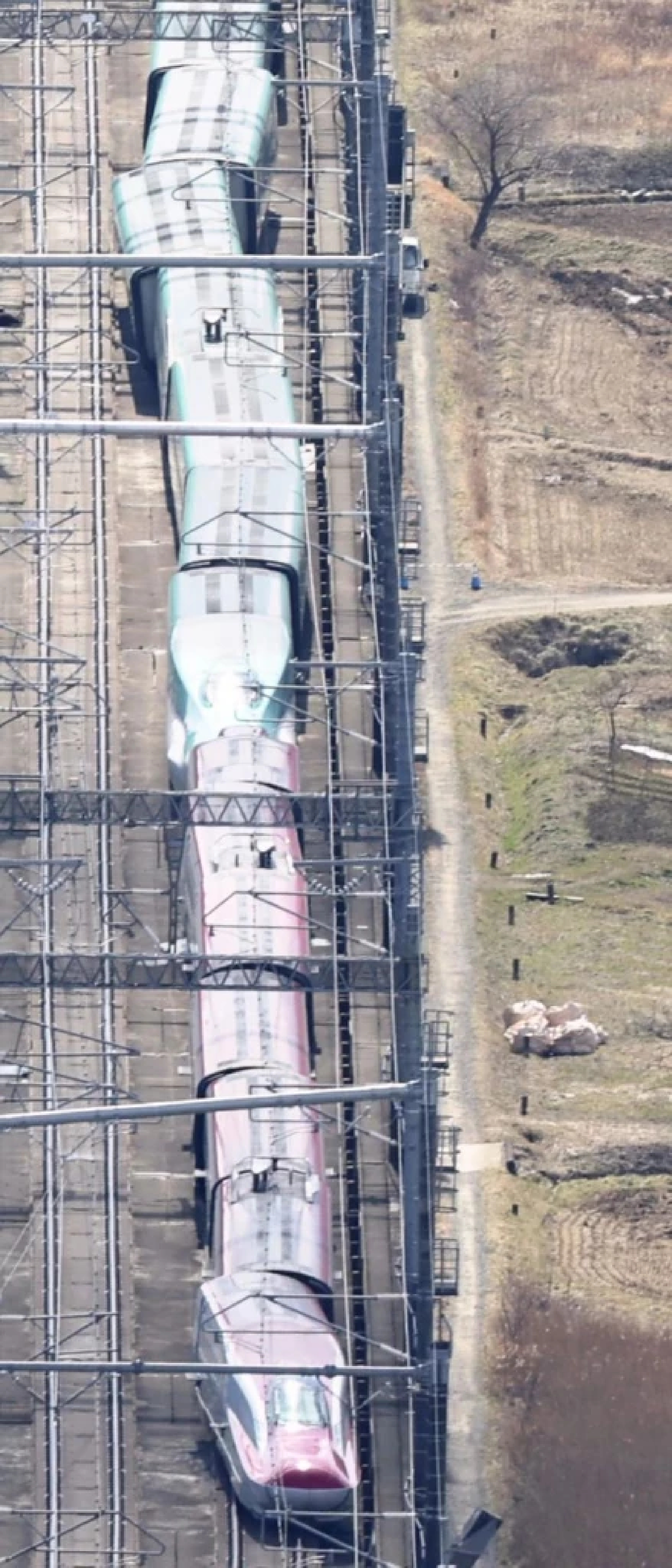
A Tohoku Shinkansen bullet train that derailed in Miyagi Prefecture during the powerful earthquake that struck off Japan’s northeast coast Wednesday night may have been knocked from the rails by the second jolt of the quake, according to the transport safety board.

Tohoku Shinkansen possibly derailed by quake’s 2nd jolt

It was the second time in railroad history that a Shinkansen train was derailed while in operation, following a similar accident that occurred in the 2004 Niigata Prefecture Chuetsu Earthquake.

Emergency brakes are expected to automatically activate on Shinkansen trains of East Japan Railway Co. (JR East) when seismographs detect a large tremor.

That mechanism did not prevent the train from derailing this time, which will likely prompt JR East to reexamine its emergency braking system.

Of 17 cars of the Yamabiko 223 bullet train on the Tohoku Shinkansen line, all except for car No. 13 came off the tracks; 14 of the cars had all of their wheels come off the rails.

It is believed that the train derailed just before or after it had stopped, an investigator from the Japan Transport Safety Board of the Land, Infrastructure, Transport and Tourism Ministry told media after the field investigation Thursday evening.

Given that large jolts occurred in succession this time, “the train may have been stopped by its brakes after the first jolt, and then derailed due to the second tremor,” the investigator said.

“It is quite challenging to completely prevent a derailment,” JR East Vice President Totaro Ichikawa stated on Thursday, referring to the difficulties involved in safety measures against earthquakes.

After the Chuetsu Earthquake, JR East introduced L-shaped guides on train wheel hubs and anchoring devices on rails as part of efforts to prevent the body of a train from hitting trackside walls or other structures, thereby reducing the risk of injury to passengers. But the devices are not intended to prevent derailments.

The L-shaped guides are to prevent train cars from moving too far from the tracks as the guides catch on the rails if a train car derails. The anchoring devices are to prevent the rails themselves from overturning when they are struck by the L-shaped guides.

Some JR East officials believe that the devices served as a fail-safe, with no passenger casualties being reported with regard to the derailment this time. However, it cannot be denied that casualties could have occurred depending on the circumstances.

Ichikawa indicated that the firm would examine how it can respond to the issue based on the safety board’s investigation. “If there were any shortfalls, we must address them,” he said.

Delays in improving the earthquake resistance of facilities has also emerged as an issue.

After an earthquake hit off the coast of Fukushima prefecture last year, with a seismic intensity of upper 6 on the Japan scale measured in some areas, it took 11 days to fully restore service on the Tohoku Shinkansen lines because of damage to utility poles and overhead power transmission lines.

For the same reason, it is expected to take a long time to restore the entire line this time.

JR East has been promoting earthquake reinforcement based on lessons learned from the Great East Japan Earthquake of 2011. Of about 20,000 concrete utility poles on the Tohoku and Joetsu Shinkansen lines, however, only about 10% have been seismically reinforced as of fiscal 2020.

JR East revised its earthquake resistance plan in response to last year’s earthquake, but it has yet to indicate a timetable for the completion of seismic reinforcement of all utility poles.

“In some respects, JR East’s preparations [against a quake] have worked this time, but it needs to reexamine its measures for future disasters,” said Toyama University Prof. Yoichi Kanayama, who specializes in transportation policy.

Published : March 19, 2022

By : The Japan News

Why Ukraine will end up in ruins in war with Russia

#SootinClaimon.Com : ขอบคุณแหล่งข้อมูล : หนังสือพิมพ์ The Nation.

https://www.nationthailand.com/international/40013553


Before Ukraine was invaded, it received strong assurances from the US and the UK that they would stand beside the country if it was attacked. Europe in its entirety, too, had vowed to stand with Ukraine.

Why Ukraine will end up in ruins in war with Russia

DHAKA –  Ukraine has been invaded.

Last month, Russia launched a land assault from three different fronts, as well as an airstrike
and missile attack. Europe and the US are now busy imposing sanctions on Russia.

The more they threaten sanctions, the more aggressive Putin’s attacks become. US and Nato
have confirmed they won’t send troops to Ukraine.
European superpowers Germany and France, on the other hand, have started sending weapons to Ukraine as a show of companionship.

But there’s no comparison between Ukraine’s military prowess and Russia’s might. Ukraine, a former Soviet Union colony was once the world’s third-largest nuclear power, but thanks to the The US, the UK, Russia, and Europe, it is now denuclearised country.

It was forced to hand over some of its nuclear weapons to Russia after failing to pay off its debt for gas. Some it had to destroy.

Now, Ukraine is helpless as Russian President Vladimir Putin’s aggression lays waste to the country.

Russia has already claimed to have destroyed Ukraine’s anti-aircraft defence system and a the number of military establishments.

US President Joe Biden proposed to rescue Ukrainian President Volodymyr Zelenskiy, but declining the offer, Zelenskiy asked for firearms instead, which the US and Europe are supplying.

But will Ukraine be able to continue resisting the Russian advance with these weapons? How would doling out these weapons to the general population help its cause?

Within a couple of days of the invasion, Ukraine realised that their 200,000-strong military force wouldn’t be able to withstand Russia’s aggression.

What chances does a regular citizen, sans any training, have against the Russian military, then? Guerrilla warfare by enlisted civilians could cause Russia some trouble—but to what extent?

Before supplying these weapons, the so-called compatriots kept on bellowing that Russia would have to pay a heavy price for invading Ukraine, threatening to slap the country with the toughest economic sanctions ever.

Let’s assume that all these sanctions would put Russia in a troublesome situation, which it wouldn’t be able to recover from even with full support from China, an economic superpower.

In that case, Russia will face economic devastation, and the Western powers stand to benefit from Russia getting weaker. But what does Ukraine stand to gain in that scenario?

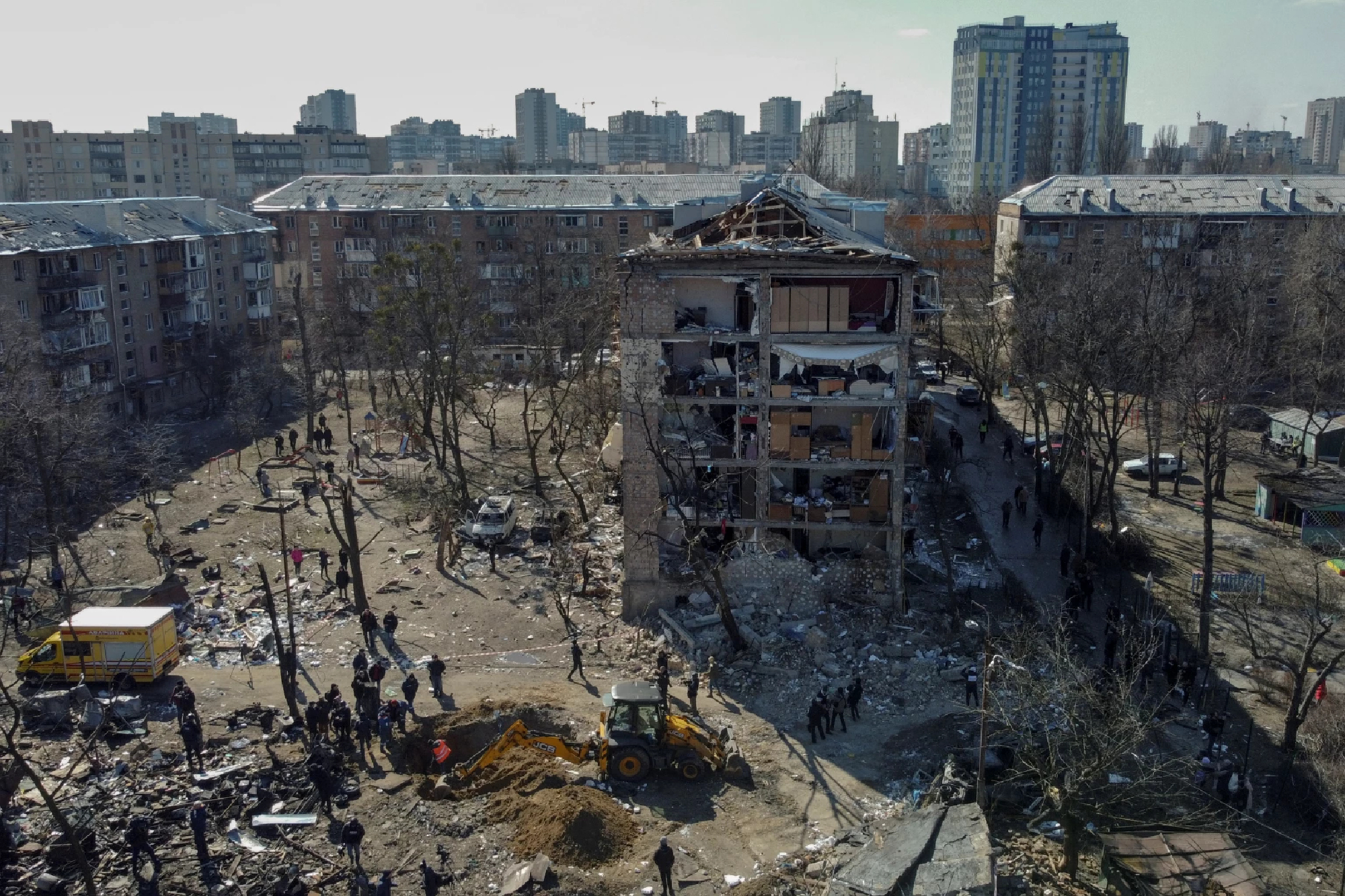
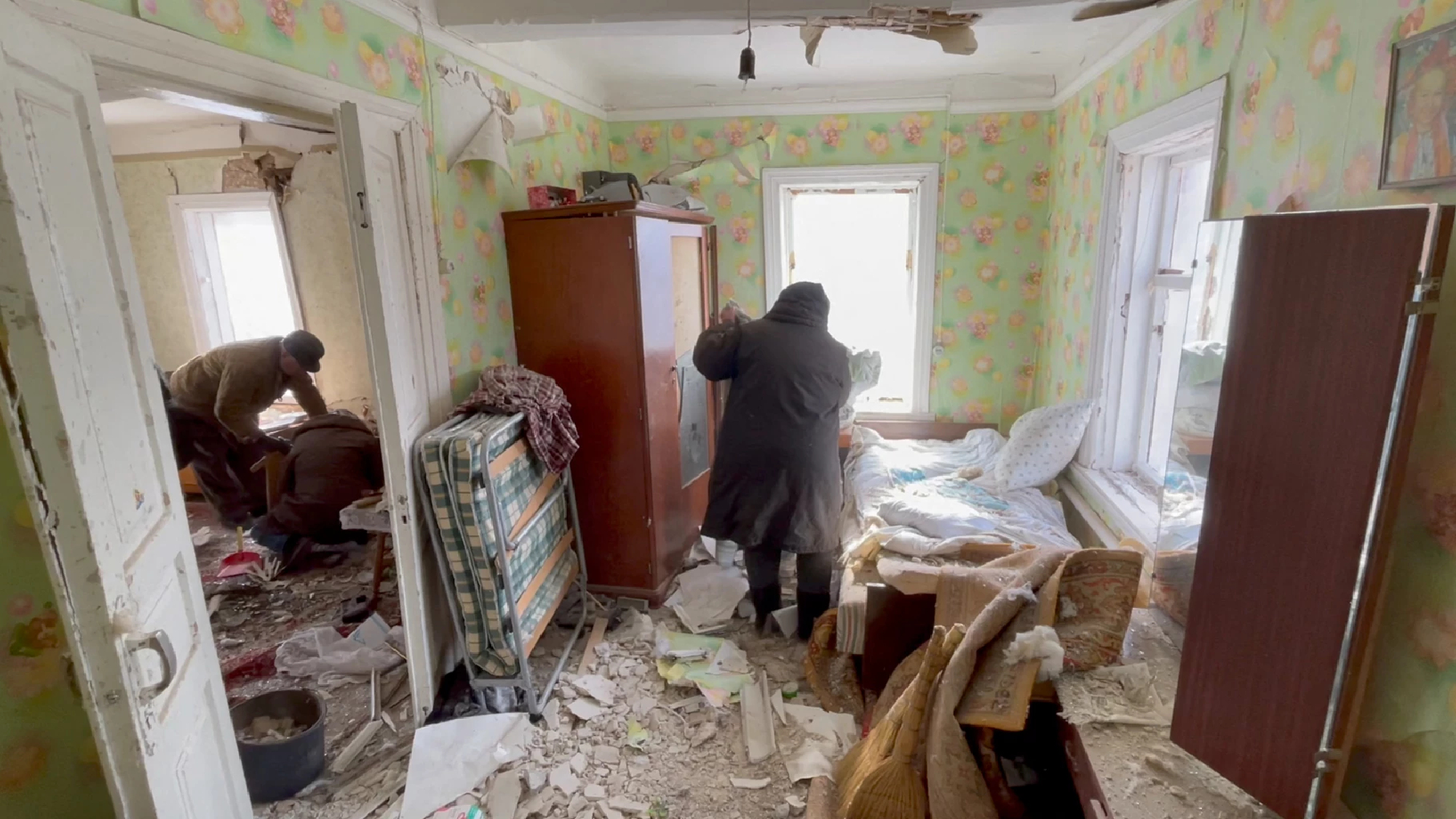
Two regions of Ukraine have declared independence. Russia’s bombs and gunfire will not only demolish Ukraine’s physical infrastructure—they will also destroy its economy.

A large part of the population will be displaced to Poland and other European countries as refugees. It is difficult to predict whether the death toll amounts to thousands or hundreds of thousands.

What was the point of the promise to “stand with” Ukraine, then?

The US and Europe aren’t trying to bring Ukraine into Nato’s fold out of the goodness of their hearts; they have their interests. It is impossible to station US or Nato troops near Russian territory, and the US knows that—so does Ukraine—because Russia has always been vocal about its displeasure in this regard.

But the US’ empty promises misled Ukraine.

Despite knowing that Putin would go aggressive,the US-led Ukraine to take the risky route of trying to join Nato.

Will Putin emerge as the winner of the conflict with Ukraine? History tells us otherwise. The ever-powerful Soviet Union had to bow out of Afghanistan after suffering a humiliating defeat.

The same happened with the US and its allies decades later. No big power has been able to claim victory by invading a smaller country. But then what happens to those smaller countries?

The Taliban took over Afghanistan, and Assad managed to retain his throne in Syria, but did they win? It’s not about winning or losing here. Those nations were destroyed in the conflicts between big powers.

Putin may install a government of his choice in Ukraine, or the huge economic sanctions may seal the fate of this modern-day dictator.

The current rulers of Ukraine are likely to get killed or seek political asylum in other European nations. But what about the Ukrainian people?

If the war continues for an extended period, Ukraine will collapse. Even if Russia retreats from Ukraine within a short period, the internal wars in Ukraine will not cease to exist.

Everyone for or against Russia will stay armed.

Now the anti-Russian groups are getting weapons from the West.

Russia will give more weapons to the pro-Russian population. The armed conflict within Ukraine may intensify and culminate into a civil war.

There’s also the possibility of Russia further breaking the country down into smaller, independent nations.

The devious US strategy is responsible for the proliferation of arms among Ukrainian civilians. The US and European media are widely publishing heavily glorified tales of recently married couples, lawmakers, and former presidents of the nation taking up arms to defend their homeland.

On the other hand, Russia is slowly but surely capturing Ukraine. As history tells us, the worst fate awaits the common people of Ukraine.

Already, Million people have sought refuge in Poland. The West will make them political scapegoats, instead of repatriating them.

The armed Ukrainian factions will fight each other. The US will keep on supplying more weapons to the groups they favour. Their opponents will get supplies from Russia.

War—or to be more precise, civil war—will be a permanent feature of life in Ukraine. It doesn’t matter whether Putin will win, lose, or get toppled—Ukraine, a country rich in mineral resources will fall into ruin.

Golam Mortoza
Journalist, The Daily Star
 

Published : March 18, 2022

A Filipino view of the conflict between Russia and Ukraine

#SootinClaimon.Com : ขอบคุณแหล่งข้อมูล : หนังสือพิมพ์ The Nation.

https://www.nationthailand.com/international/40013548


In trying to understand momentous political events like the current crisis in Ukraine, it is always good to bear in mind that the situation on the ground and the perspective of ordinary people tend to be far more complex than the way such events are rendered in the news and in official narratives.

A Filipino view of the conflict between Russia and Ukraine

MANILA – What we often read or see or hear are the posturing and the rhetoric of the key personalities,
which are meant for public and global consumption. Usually omitted are the nuances and diversity that typically characterize the subjective experience of ordinary citizens.

This is true not only of Ukraine but, indeed, of countries like ours that have gone through political upheavals such as the 1986 Edsa People Power Revolution, Edsa Dos of January 2001, and Edsa Tres of May 2001.

The meanings and motives behind these political convulsions continue to be disputed, long after former leaders have fled or landed in jail and new constitutions and governments have been successfully installed.

Ukraine has had its own Edsa moments.

The first was dubbed the “Orange Revolution” of 2004-2005, a series of protest actions (civil disobedience, sit-ins, and general strikes) aimed at reversing the results of what was perceived as a fraudulent and rigged election. The questioned results were invalidated, and a new runoff election was ordered, which ended with a new leader being installed. We might liken it to our Edsa 1.

The second was named the “Maidan Revolution,” after the public square in the capital city of Kyiv where protest groups assembled in November 2013-February 2014, to demand an end to the abuse of power and corruption, and the ouster of the duly elected Russian-leaning government of Viktor Yanukovych. This would be more or less the equivalent of our Edsa Dos, which ousted Joseph Estrada from the presidency in January 2001, barely three years after his election to office, and installed Gloria Macapagal Arroyo.

Ukraine’s political transitions, however, have been a lot more complicated than ours — largely because of its long historic relationship with its gigantic neighbour Russia with whom it shares a border.

Particularly problematic in this relationship are the disputed regions of Donetsk and Luhansk on the eastern side, and the Crimean Peninsula in the south. These border regions or provinces are largely populated by Russian-speaking people. The former has established themselves as autonomous republics in response to separatist aspirations, while Crimea was annexed by Russia in 2014.

Keeping these developments in mind may make it easy for us to understand why “Maidan” also became a pejorative term to refer to domination by western Ukrainians over their eastern compatriots, and worse to the political, economic, military, and cultural absorption of the entire country into Western Europe.

Russia’s military assault on multiple targets inside Ukraine precisely aims, at the minimum, to stop Ukraine’s all-encompassing integration into Western Europe. Putin calls it a “special military operation” with limited “peace-keeping” objectives, but it is hard to imagine it to be anything other than the naked invasion of a basically defenceless country, with open-ended goals.

The United States, whose actions in the recent past have left no doubt about its intent to remove Ukraine from the Russian sphere of influence, has long warned against Putin’s malevolent plan to reestablish Russian dominance in the countries that once constituted the Soviet Union. But, for a host of reasons, its response to Russian aggression has been muted.

While threatening to impose the most crippling economic sanctions against Russia, America has made it clear from the start that it would not intervene militarily. So anxious is it about being drawn into another foreign war that it quickly withdrew its military advisers in Ukraine lest the death of an American official would compel it to deploy US forces inside the country.

Putin appears to have carefully calculated the risks that his decision to invade may bring. It is not likely that he intends to go beyond replacing the current Ukrainian government with one that is friendly to Russia.

Against the backdrop of the disastrous Soviet occupation of Afghanistan from 1979 to 1989, occupying or annexing Ukraine at this time would be a most foolish adventure.

Putin would be confronted by a protracted Ukrainian war of resistance that would not only be bloody and costly but could also trigger a political upheaval within Russia itself. In this volatile atmosphere, anything can happen. What the world dreads most is the escalation of the war to a level that makes nuclear confrontation a close possibility. Nothing better ensures that this does not happen than for the United States and Russia to agree to leave the Ukrainian people to solve their own problems with the assistance of the United Nations and its affiliate agencies.

It was difficult enough for the Ukrainians to locate their bearings when they found themselves — after so many years — suddenly released from the iron grip of the Soviet Union. In the last 31 years, they have also had to contend with the challenges posed by a multiethnic and multilingual population, not to mention a young generation of digitally connected Ukrainians who seek an active role in the redesign of their society.

The Ukrainians have had, in short, to reimagine themselves as a nation while struggling to defend their country, whereas we Filipinos have “only” needed to strengthen our institutions and find good leaders.


Randy David
Columnist, Philippine Daily Inquirer

Published : March 18, 2022

Remote Bhutan also affected by Russia-Ukraine war

#SootinClaimon.Com : ขอบคุณแหล่งข้อมูล : หนังสือพิมพ์ The Nation.

https://www.nationthailand.com/international/40013543


It is not a new experience for Bhutanese as we watch live events unfolding in Ukraine and the impact it is going to have on the world, including Bhutan.

Remote Bhutan also affected by Russia-Ukraine war

THIMPHU –  The events may be taking place halfway around the world, but the conflict that is now in its
second week is going to influence even what we consume at home. The world is a global village and like most countries, Bhutan will not escape the effects of the war. In fact, we are already feeling it.

Not many would have thought that the price of cooking oil in Zhemgang or Thimphu could be determined by what happens in Ukraine. Bhutan imports almost all its cooking oil from India.

India in turn imports 90 per cent of its sunflower from Ukraine and Russia. The disruption in trade and speculation of shortage is driving prices higher. We should brace for more impact.

The fuel price has soared to new heights and without an end in sight and new developments, it is going to be worse. After the OPEC countries, Russia is the largest exporter of oil. OPEC experts are saying that they have no capacity to replace Russia’s 70 million barrels of oil supply a day.

The result is an increase in price as supply drops.

As an import driven country, people will now pay more for goods. As a landlocked country, we have only one means of transport. The cost of transporting goods is determined by the cost of diesel. This comes at a time when the pandemic has already sent the price of goods and essentials sky-high.

Higher fuel prices and their ripple effect will have more impact on the middle and lower-income groups, who will have to spend more on transportation and food. According to a United Nations report published recently, food prices have already reached the highest because of the impact of pandemics on supply chains. The fuel price hike will aggravate it.

Important projects like the hydropower projects will see price escalation. This will add to the cost of delays. We have no control over the fuel price. The uncertainties brought about by conflicts, however, is a good reminder of our priorities, that is in our hands.

We had long recognised improving public transport and switching to clean energy. While efforts have been made to make public transport service cheap and efficient, we can do more.

Many office goers, wanting to switch to public transport could not because of route and timing issues. If driving becomes expensive and public transport convenient, many would choose the bus to the office.

The plan to switch to electric cars has hit speed bumps both because of the pandemic and our attitude. Many cannot afford electric cars, those who can, cannot look beyond the fuel guzzlers. The current situation teaches us to take up our electric vehicles project with more urgency and sincerity.

It is said that we cannot let a crisis go to waste. We have learnt enough from the pandemic.

We should brace for the impacts of a war fought on the other side of the world.

It is strange that one country can try to invade another in the 21st century. But the lesson is that anything is possible and nobody is spared by the impact.

Editorial, Kuensel

Published : March 18, 2022

Pakistan’s Foreign policy is becoming a casualty of politics

#SootinClaimon.Com : ขอบคุณแหล่งข้อมูล : หนังสือพิมพ์ The Nation.

https://www.nationthailand.com/international/40013540


If truth is the first casualty of war, Pakistan’s foreign policy seems to have become the casualty of a raging political war at home.

Pakistan's Foreign policy is becoming a casualty of politics

ISLAMABAD –  Prime Minister Imran Khan’s speech at a public rally in Mailsi and subsequent remarks certainly suggest this.

At the rally a week ago, he accused the EU of trying to pressurise him on the Ukraine crisis and asked whether the EU thought Pakistan was its slave.

He also repeated, for the umpteenth time, that he had opposed America’s war on terror and asked whether Nato had ever thanked Pakistan for its role in that war.

Criticism of the US wasn’t exactly ‘breaking news’ as the PM has frequently assailed Washington for its military intervention in Afghanistan. But his wider attack on the West struck an angry and belligerent note.

This was classic populist rhetoric and campaign oratory aimed to galvanise his support base.

But it also played on a theme that his ministers and media apologists are now regularly churning out — of a leader heroically standing up to the West.

In fact, his increasing criticism of the West has come in the backdrop of growing political pressure on him from the opposition’s no-confidence move.

The more this pressure has mounted and public discontent intensified over inflation, the greater the ruling party’s resort to disingenuous narratives about an international conspiracy.

The PM himself was reported as saying that “multiple foreign hands” were behind the opposition’s campaign to oust him. A government spokesman repeatedly tweeted that the no-confidence move was being hatched by “international powers” with the opposition merely acting as hired “brokers”.

Other ministers echoed this. The education minister tweeted a cartoon portraying Western support for opposition leaders.

Are these conspiracy theories setting up an alibi to project the prime minister as a martyr if he loses power? Is this an effort to find external scapegoats for domestic trouble? It certainly seems that way. But other aspects of the PM’s utterances and his government’s statements also merit consideration.

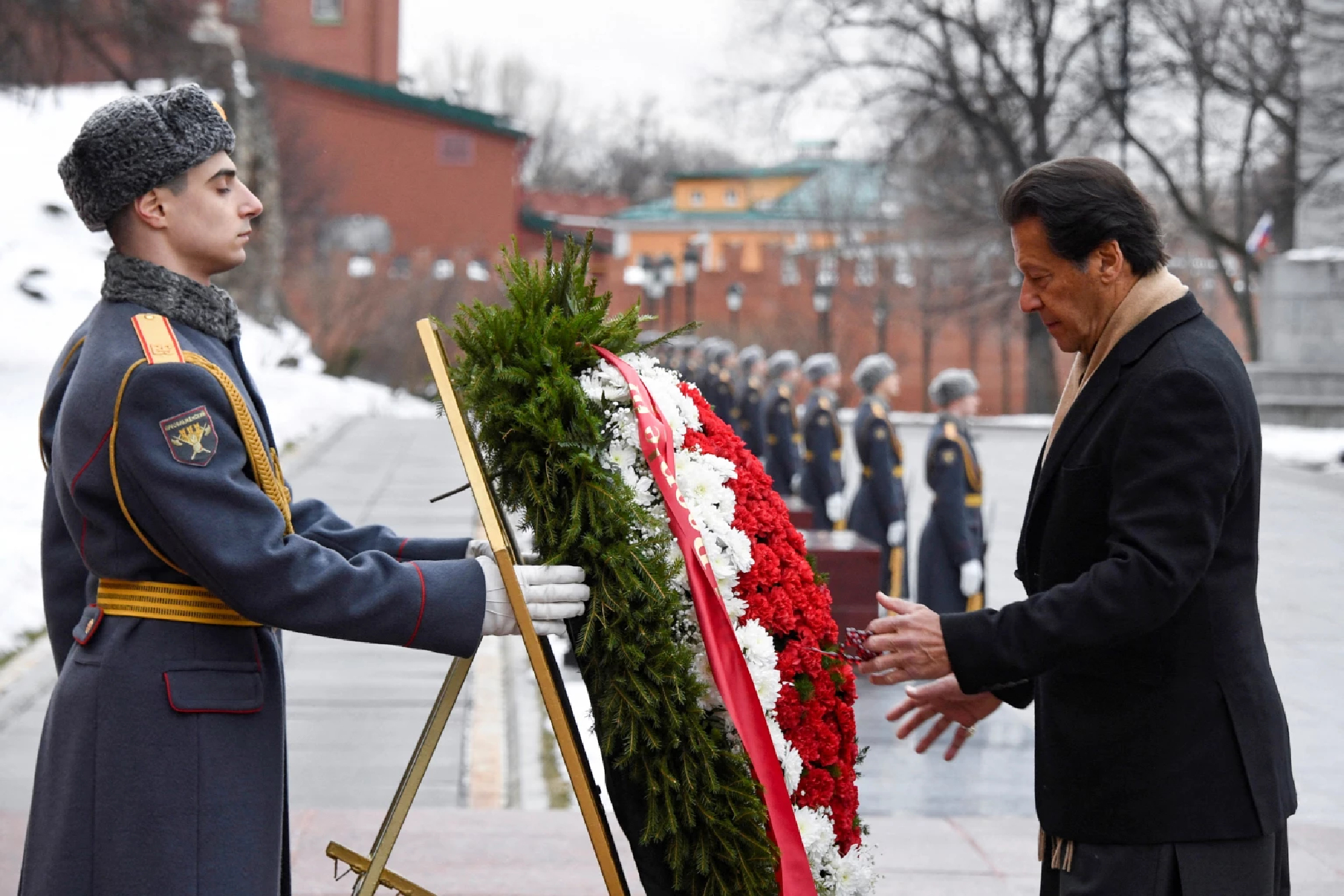
Since his Moscow trip and meeting with President Vladimir Putin the day Russia invaded Ukraine, the government has sought to blunt criticism of the visit’s timing by casting this as an effort to stake out an ‘independent’ foreign policy.

This ostensible ‘independent’ policy prevented the government from taking a principled stand on the invasion of a sovereign state that clearly violated international law. Officials claimed Pakistan was neutral in the Russia-Ukraine conflict, but anodyne statements by the foreign ministry fuelled an impression of a soft stance towards Moscow.

For example, official statements called on both sides of the conflict to “de-escalate”, raising the question of how a country that had been invaded was expected to de-escalate.

Foreign policy is falling victim to political confrontation and populist rhetoric.

Why did the PM lash out at EU countries and was it wise to do so? The Islamabad-based envoys of 22 mostly European countries, including others, issued a joint press release urging Pakistan to back the UN General Assembly resolution and condemn Russia’s actions in Ukraine.

This public appeal was certainly unusual for which the foreign ministry privately and publicly admonished the envoys calling their action “unacceptable” and “contrary to diplomatic norms.”

The matter should have ended there — both sides have had their say and disagreed. Instead, the PM chose to publicly slam these countries.

Calling out the West for their double standards and hypocrisy is of course hugely popular with the public but it does not behove the prime minister to engage in this. Western countries have much to answer for as many have acted unilaterally on several occasions, intervened militarily in other countries and shown disregard for international norms and law. But that doesn’t make the Russian action beyond criticism.

Two wrongs don’t make a right. In any case, interstate relations should be handled strategically, not emotionally by those in power. Disagreement is one thing, but mounting the hustings and pouring scorn at countries that are Pakistan’s important trade and development partners does little to advance the country’s interests.

Beyond this avoidable diplomatic spat what is hard to comprehend is the unnecessary length to which the government has gone to avoid taking a clear position on Ukraine’s crisis as if Islamabad’s relations with Russia trumps all its other interests.

It was crucial after the Moscow visit and Russia’s invasion to balance between a new-found but as yet undefined relationship with Russia and Western countries that have long-standing, substantive ties with Pakistan.

Foreign policy after all is about deftly balancing interests to enlarge options not narrow them, and that too for the sake of a relationship with no strategic content and whose destination remains unclear.

Some might argue that the government’s stance has as much to do with its disappointment with the US and the scant attention it has received from the Biden administration than with any significant stake in ties with Russia.

In other words, past grievances with the West and a jilted lover syndrome with the US may have been a factor for its stance rather than any grand strategy. This of course is arguable. But if true, it would mean subordinating the country’s foreign policy to injured ego and not basing it on a rational calculation of interests.

Grievances shouldn’t determine policy, only the country’s interests should.

Meanwhile, the claim pressed by the PM and his ministers that Pakistan’s foreign policy has acquired ‘independence’ on his watch also bears scrutiny.

No one has explained what this means other than serving as a slogan or gimmick for a beleaguered government.

A single visit to Moscow is hardly evidence of an independent foreign policy. In fact, foreign policy under Khan has been marked by continuity, not departures from the past.

Moreover, an independent foreign policy has to rest on the country’s economic independence
and inherent economic strength.

Chronic dependence on bailouts, loans and economic largesse from abroad for which governments have to seek perpetual help from other countries is hardly consistent with an independent foreign policy.

Thus, the government’s claim of an independent foreign policy is just as hollow as its cry of ‘conspiracy’.

Maleeha Lodhi
Dawn

The writer is Pakistan’s former ambassador to the US, UK & UN.

Published : March 18, 2022

Ukraine crisis is an internal war of Europe not the largest after World War II

#SootinClaimon.Com : ขอบคุณแหล่งข้อมูล : หนังสือพิมพ์ The Nation.

https://www.nationthailand.com/international/40013539


The West led by the United States has described the Ukraine crisis as the largest war in Europe after World War II. Even though the causes of the conflict are complicated, they are the inevitable product of the Western-dominated international order as well as the US’ anti-Russia manoeuvres.

Ukraine crisis is an internal war of Europe not the largest after World War II

BEIJING – To begin with, from the perspective of the geographic regions, this is an internal war of Europe.
No matter how one interprets European civilization, one thing is indisputable: Europe is a region within which wars broke out very frequently in the course of human history. Even after paying an immense price, the continent is yet to resolve the issue of war and peace and remain the powder keg of the world.

From the view of civilization, it is an internal war of the white Christian world, instead of a war between different civilizations and races. From this point, the paradigm of “clash of civilizations” that was raised by American political scientist Samuel Huntington is wrong.

What truly threatens world peace is not the conflict between and among different civilizations, but an internal war of the white Christian world. The history of Christianity shows that it lacks tolerance, which is demonstrated not only through its atrocities against so-called heretics but also through the infighting between and among the different sects within a religion.

The most serious religious war in Europe was between Protestantism and Catholicism.  Lying behind today’s Russo-Ukrainian conflict is Orthodoxy and Catholicism.

Third, no matter how Western civilization evolves, the contemporary world is still a jungle society that lacks justice. Even in the case of a powerful country like Russia, it has been repeatedly humiliated and suppressed by the West during its decline. In its nature, the action launched by Russia counts as the reckoning of all the acts of the West after the Cold War. It has just chosen a target formerly under its wing but is now endorsed by the West.

The West attacks Russia by claiming that it had violated the UN Charter. Nonetheless, not long ago the West just did everything that Russia has done: they rushed to recognize the independence of breakaway republics which led to the dismemberment of Yugoslavia; NATO’s launch of the Kosovo War and the United States’ initiating wars in Afghanistan and Iraq all serve as precedents.

It is just that the West has the means to speak louder. For example, in 2019, Ukraine introduced a law “on ensuring the functioning of Ukrainian as the state language”, which stipulates that all local self-governing bodies must use Ukrainian rather than Russian. If this kind of thing had happened in China, the label of “cultural extinction” would have been posted long ago. But the West has said nothing to Ukraine.

Fourth, under the current international system, a country’s security serves as its highest national interest and strategy, but the pursuit of security by Western countries often is a zero-sum game.

The eastward expansion of NATO maximizes its own interest, which results in Russia, for the sake of its own security, choosing to send troops to Ukraine.

This also indicates that, if there is no major reform to existent mechanisms of the international order, it is hard for each member to gain a long-lasting sense of security.

Looking back at history, a world dominated by the West can neither eliminate wars nor bring long-lasting peace. Instead, the East Asian order led by China can achieve sustainable peace.

The Chinese civilization lays stress on stability and harmony with diversity, which requires peace and order.

No doubt the lessons of Ukraine are thought-provoking.

First, it did not focus on the economy and people’s livelihood. When the Soviet Union collapsed, Ukraine, then the second-largest state in Europe, was filled with hopes for the future. What none could have imagined, however, was that after its democratization, Ukraine’s economy had a disastrous performance, with its people’s living standards plummeting. A region that was once very prosperous has a per capita GDP of just over three thousand US dollars, belonging to the Third World.


Second, the Ukrainian political elite has not been able to clearly comprehend the West’s stand, and thought that it can really join the European Union or NATO, failing to understand that Ukraine will hardly ever be able to meet the conditions — it is required to complete draconian reforms pertaining to elections, justice and its Constitution, to adapt to more than 200 EU directives and nearly 150 rules.


In 2013, the Ukrainian parliament overruled some bills that were aimed at helping meet the EU’s demands, due to their high economic costs.

This triggered massive protests and the then government of former president Viktor Yanukovych was toppled, directly leading to the Crimea incident.

An outsider can see that the West, led by the US, only uses Ukraine as a tool to deal with Russia, and it is in the interest of the West to let Russia consume its energy on Ukraine, destroy its own image, and even have chaos in the neighbouring state.

Third, there is the bitter price of “democratization”. Ukraine’s political system was established overnight by transplanting the so-called democratic system of the West. Historically speaking, whether gradual or radical, the transition to democratization has had to go through upheavals and pay a heavy price.

Ukraine is no exception. Due to historical factors, Ukraine has pro-Russian and pro-Western factions. When Yanukovych decided to turn to Russia, the pro-Western faction immediately protested, and some western regions simply declared independence. And when pro-Western forces forcibly seized power, the pro-Russian regions, too, declared independence.

Clearly, in establishing a Western democratic system in a place where there is no consensus on the future of the country, such an ending was bound to happen. To put it another way, democracy simply cannot resolve the major divisions within the country.

From the point of view of geopolitics, Ukraine is sandwiched between Russia and the West. Each side fully penetrates through Ukraine’s system, supporting its own political forces that align with their wish. This is why after democratization Ukraine began to see continuous “colour revolutions”.

Ukraine’s internal contradictions today appear indissoluble, and its external gaming is also a zero-sum game. Sadly, Western democracy has magnified these two factors to the maximum.


Song Luzheng
Contributor, China Daily


The author is a Chinese political scientist based in France and a researcher at the China Institute, Fudan University in Shanghai.

Published : March 18, 2022