Moon sends message to the North to resume dialogue
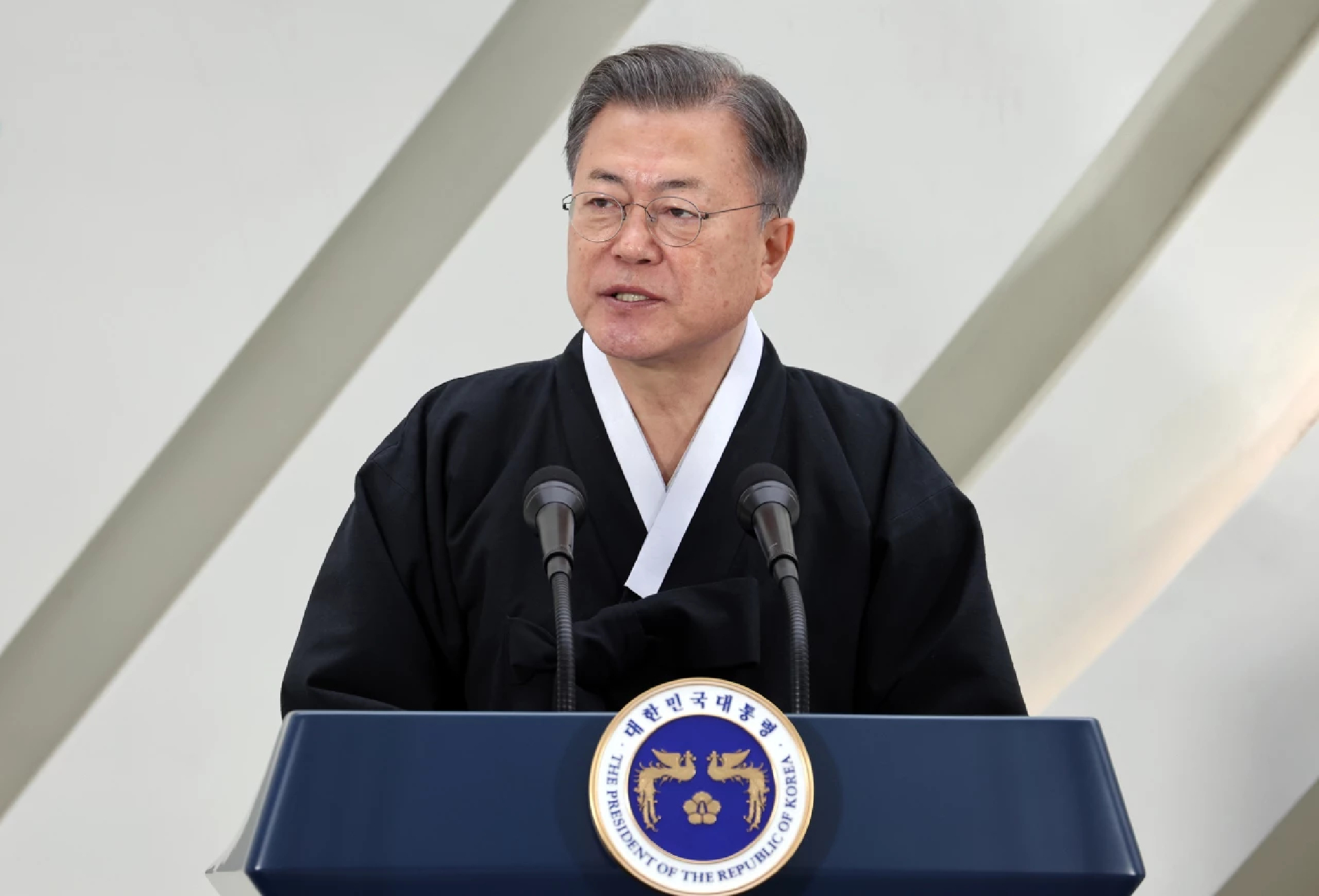
President Moon Jae-in on Tuesday urged Japan to face history and sympathize with the wounds of its neighboring countries in a ceremony to mark the March 1st Movement on Tuesday.
Moon and his wife Kim Jung-sook attended the 103rd anniversary ceremony of the March 1st Movement at the National Memorial of the Korean Provisional Government in Seodaemun-gu, Seoul. The memorial hall, which was created as part of Moon’s presidential pledge, opened for the first time on the day.
“Cooperation between Korea and Japan is the responsibility of the present generation for future generations,” Moon said at the ceremony.
He said Korean ancestors suggested that Japan overcome “old resentment” and “temporary emotions” and work together for peace in Asia in the March 1st Independence Movement Declaration. “We feel the same now.”
Moon urged Japan to change its lukewarm attitude toward resolving the problems of the past and hoped Japan would take leadership as an advanced country.
“Japan must face history and be humble before it,” Moon said. “Japan will become a trusted country when it can sympathize with the wounds of the people of neighboring countries that are sometimes exacerbated by the once unhappy past.”
He said the Korean government would always open the door to dialogue to respond to global tasks, including peace and prosperity in the region and the pandemic, climate crisis, supply chain crisis, and new economic order.
President Moon also sent a message that peace through dialogue is essential to North Korea, which has been continuing eight missile provocations this year.
He said the Korean government was able to achieve peace through dramatic dialogue at its inception amid the North Korean nuclear crisis.
“But our peace is vulnerable,” Moon said. “It’s because the conversation halted. Dialogue efforts to sustain peace must continue.”
Due to the constant provocations from the North, the declaration of an end to the war has been nearly impossible during Moon’s tenure. He did not directly mention it in the speech.
The ceremony was attended by about 50 figures, including key government officials, descendants of independence activities, liberation associations and religious circles, considering the pandemic.
The March 1st Movement, which occurred on March 1, 1919, was a protest movement by Korean people and students calling for independence from Japan. Over 1,000 demonstrations took place nationwide, with an estimated 7,500 killed and 16,000 wounded and 46,000 arrested.
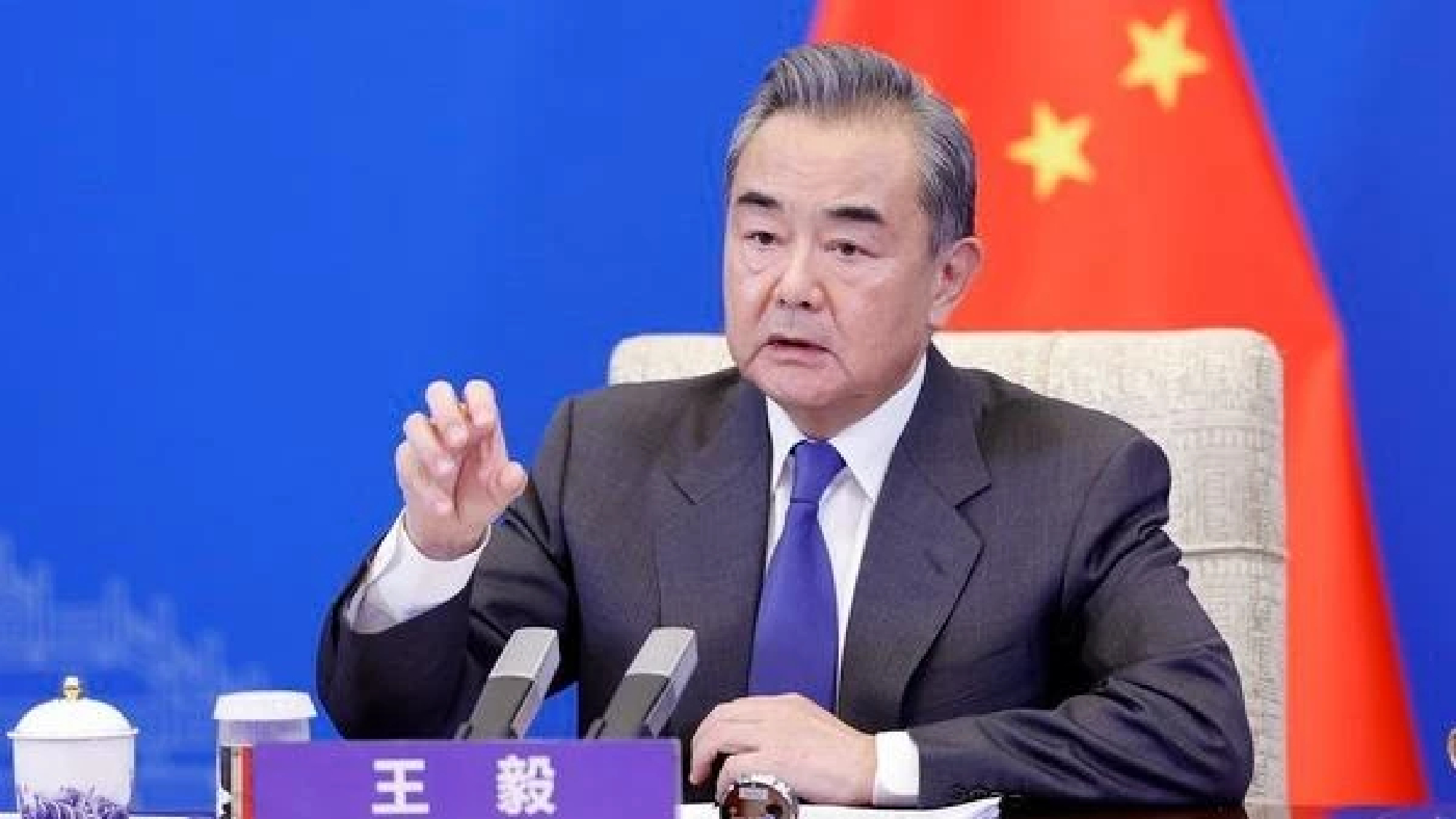
China’s fundamental position on the Ukraine issue is open, transparent and consistent, as the country always maintains that the sovereignty and territorial integrity of all countries should be respected, State Councilor and Foreign Minister Wang Yi said on Tuesday in a phone conversation with Ukrainian Foreign Minister Dmytro Kuleba.
Wang said China called for Russia and Ukraine to find solutions to the problem through negotiations and supports all constructive international efforts conducive to the political settlement of the current crisis.
Wang said China deeply regrets that a conflict has broken out between Ukraine and Russia, and is extremely concerned about the harm to civilians, adding that the immediate priority is to try the utmost to defuse the situation and prevent the conflict from escalating or even getting out of control.
He emphasized the urgent need to prevent harm to civilians and the emergence of humanitarian crises and to ensure the safe and timely access of humanitarian aid.
Wang urged Ukraine to shoulder its due international responsibilities with regard to protecting the safety of Chinese citizens in Ukraine.
He said he hoped that Ukraine would take all necessary measures to ensure the safety of Chinese citizens in the country and continue to provide protection and convenience for the evacuation of Chinese citizens.
Kuleba briefed Wang on the first round of talks between Ukraine and Russia, saying that Ukraine is open to a negotiated solution to the conflict and would remain calm and continue the negotiations.
Noting that China has played a constructive role on the Ukraine issue, Kuleba said Ukraine is willing to strengthen communication with China and looks forward to China’s mediation in the realization of the cease-fire.
Kuleba also said Ukraine attaches great importance to China’s concerns and is assisting the smooth evacuation of Chinese citizens, including students.
In another development, Russia’s TASS news agency reported on Tuesday that the second round of Russia-Ukraine talks is planned for Wednesday, quoting a source on the Russian side.
The first round of Russia-Ukraine talks aimed at ending their conflict concluded with no immediate agreement on Monday. The talks, which lasted nearly five hours, took place in the Gomel region of Belarus, near the border with Ukraine.
Russian Defense Minister Sergey Shoigu said on Tuesday that Russia will continue the special military operation in Ukraine until the achievement of its set purpose.
Interfax News Agency reported on Tuesday that Russia is planning to move troops from its Far East region closer to Europe.
The news agency quoted Russia’s eastern military district as saying that Russian troops based in the country’s Far East region will hold drills in Astrakhan province, which lies on the border between the European and Asian parts of Russia.
Meanwhile, a huge Russian military convoy was massing on the outskirts of Kyiv on Tuesday morning.
Satellite images showed the convoy of armored vehicles, tanks, towed artillery and other vehicles. The convoy is more than 65 kilometers long, stretching from near Antonov airport outside Kyiv to the town of Prybirsk.
Russian troops will carry out an attack on what they said was the infrastructure of Ukraine’s intelligence services in Kyiv and urged residents living nearby to leave, the Russian Defense Ministry said on Tuesday.
Blasts were heard in the Ukrainian capital hours after the talks ended on Monday. A mushroom cloud erupted over eastern Kyiv as air raid sirens were sounded early on Tuesday.
Explosions were also reported in and around Brovary, on the outskirts of the capital.
Ukrainians set up checkpoints and blocked streets with piles of sandbags and tires as they waited to take on Russian soldiers.
In Ukraine’s second-largest city Kharkiv, a government building was shelled by the Russian military on Tuesday morning.
Kharkiv’s Mayor Igor Terekhov, quoted by Ukrainian media, said that Russian armored vehicles and tanks are “everywhere around the city”.
Following Russia’s invasion of Ukraine, the government is on alert for provocations in East Asia by China, Russia and North Korea, which it believes might attempt to take advantage of the turmoil in international affairs.
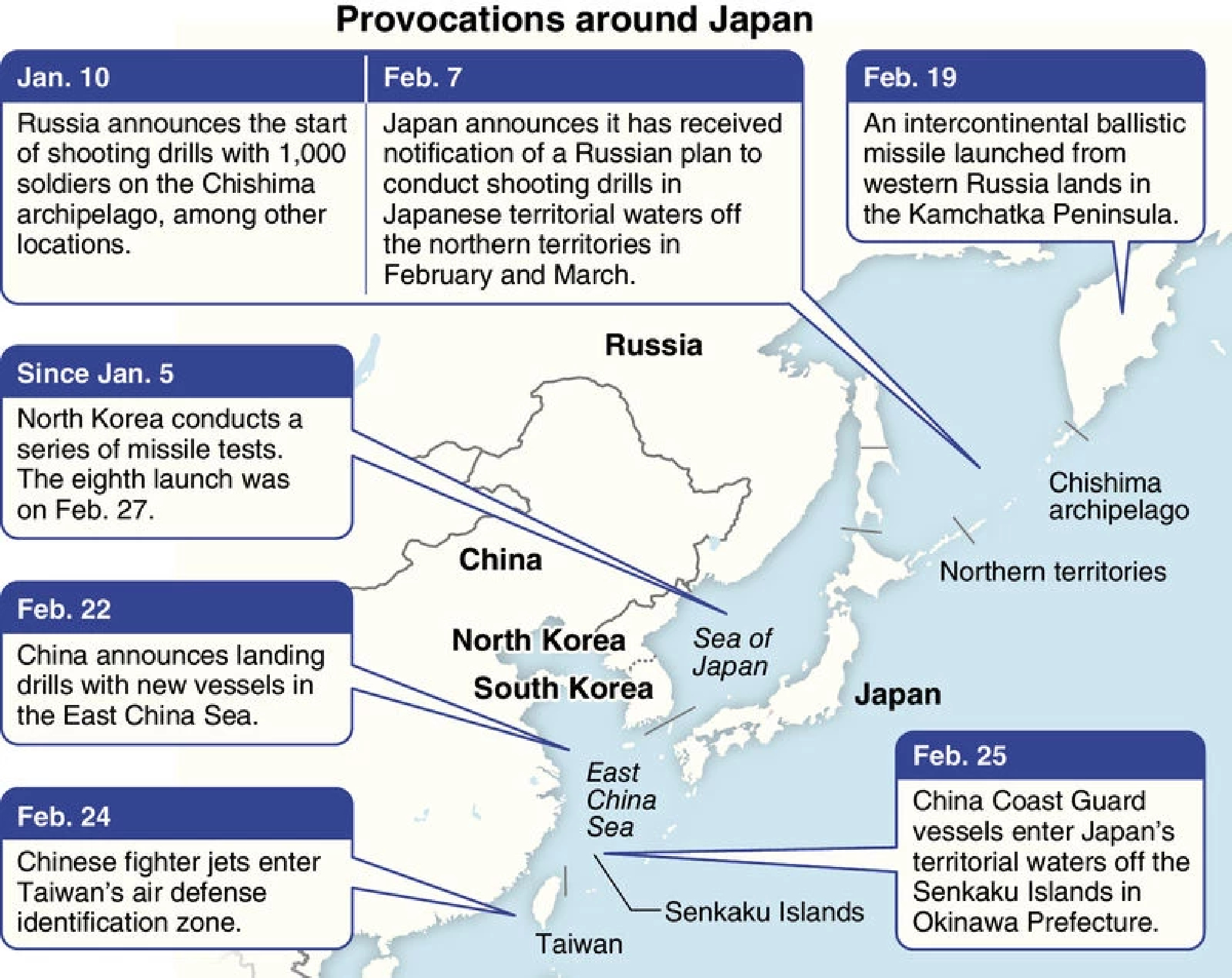
In addition to North Korea’s launch of a ballistic missile into the Sea of Japan on Sunday, military exercises by China and Russia have become more active in the waters and airspace around Japan since the beginning of this year, prompting the Japanese government to step up intelligence gathering and surveillance activities.
Chief Cabinet Secretary Hirokazu Matsuno condemned North Korea’s latest ballistic missile launch at a press conference Monday.
“The launch came when the international community was responding to Russia’s invasion of Ukraine. It is utterly unacceptable,” Matsuno said. “We will drastically strengthen our defense capabilities with a sense of urgency.”
According to the Defense Ministry, the missile had a lofted trajectory, which would make it difficult to intercept.
It was Pyongyang’s eighth missile launch this year.
Defense ministry officials widely believe North Korea will continue to provoke the United States, which will likely be too distracted with the situation in Ukraine to respond to the provocations.
On Feb. 22, the Chinese military announced it was conducting landing drills with new vessels in the East China Sea. It is thought that the drills are intended to deter the United States by showing off the strength of China’s naval forces in eastern areas including Taiwan and the East China Sea.
When the Russian invasion of Ukraine began on Thursday, China sent fighter jets into Taiwan’s air defense identification zone.
Russia has also been stepping up military activities in the Far East, a key area in its conflict with the United States.
In January, the Russian military conducted shooting drills in Japan’s northern territories and the Chishima archipelago, called the Kuril Islands in Russia. On Feb. 12, Russia announced that its fleet had spotted a U.S. attack submarine entering Russian waters, but the U.S. side denied the claim.
Japan and the United States are trying to avoid a power vacuum in East Asia to prevent China, Russia and North Korea from further provocations and unilateral attempts to change the status quo by force.
The U.S. and Thai militaries have been conducting one of the largest multilateral military exercises in Asia in Thailand and other countries since Feb. 18.
The so-called Cobra Gold exercises involve about 3,500 personnel, including members of the Japanese Self-Defense Forces.
The exercises, which include drills using amphibious armored vehicles with a Taiwan contingency in mind, are aimed at maintaining the presence of the U.S. military.
However, since the United States has decided not to intervene in the defense of Ukraine at this time, some members of the ruling Liberal Democratic Party are concerned about whether the U.S. military will act in the event of a similar crisis in Taiwan.
The United States’ Taiwan Relations Act stipulates the provision of arms to Taiwan, but does not stipulate obligations to defend the island.
Former Prime Minister Shinzo Abe said in a TV program on Sunday: “The United States is adopting an ambiguous strategy toward Taiwan. The U.S. should abandon its ambiguity.”
SINGAPORE – South-east Asia is among the regions of the world hardest hit by climate change, and is especially at risk of losing settlements and infrastructure to sea-level rise, a major new report published on Monday (Feb 28) has shown.
“With ongoing global warming, today’s children in South and South-east Asia will witness increased losses in coastal settlements and infrastructure due to flooding caused by unavoidable sea-level rise, with very high losses in East Asian cities,” said the Intergovernmental Panel on Climate Change (IPCC) report.
The report also concluded that if global warming exceeds 1.5 deg C above pre-industrial times, the impacts of climate change could be more severe, and some will be irreversible.
“Risks for society will increase, including to infrastructure and low-lying coastal settlements,” said the IPCC report.
But limiting global warming to the 1.5 deg C threshold will help the world avoid harsher climate impact, scientists say.
Sea-level rise expert Benjamin Horton from the Nanyang Technological University’s Earth Observatory of Singapore said the greatest effects of sea-level rise will be felt in Asia, due to the number of people living in the continent’s low-lying areas.
For example, mainland China, Bangladesh, India, Vietnam, Indonesia and Thailand are home to the most people on land that is projected to be below average annual coastal flood levels by 2050, Professor Horton said.
“Together, those six nations account for roughly 75 per cent of the 300 million people on land facing the same vulnerability at mid-century,” he added.
The IPCC report also found that risks to coastal cities and settlements are projected to increase by “at least one order of magnitude” by 2100, if there are no significant plans to deal with the crisis.
Sea-level rise is not the only threat confronting South-east Asia.
Climate scientist Winston Chow from the Singapore Management University, one of the authors involved in the IPCC report, said Asean has already been exposed to many climate change-related impacts, such as floods, droughts, urban heat as well as biodiversity and habitat losses.
“These current impacts are projected to worsen in the future, especially when global surface temperatures exceed the 1.5 deg C threshold,” said Dr Chow.
The world has already warmed by 1.1 deg C since pre-industrial times.
At this level of warming, some climate impacts are already locked in and considered close to irreversible in some natural ecosystems, such as the long-term decline of coral reefs in the South China Sea, said Dr Chow.
He added that a warmer Earth could mean that parts of Asean dependent on water from glacial melt – such as cities along the upper Mekong – will likely have reduced freshwater resources, due to the loss of ice there.
Crop yield could also be reduced if the world gets warmer, and other climate-driven events such as floods, droughts and tropical cyclones could further affect yield,” said Dr Chow.
If cities and countries want to reduce such climate risks, then adaptation is essential to minimise future loss and damages, he added.
Adaptation refers to measures that countries can take to reduce the impacts of climate-driven events on societies, while loss and damage is a term used in climate change discussions that refers to climate impacts that societies are currently suffering which cannot be, or have not been, reduced by adaptation efforts.
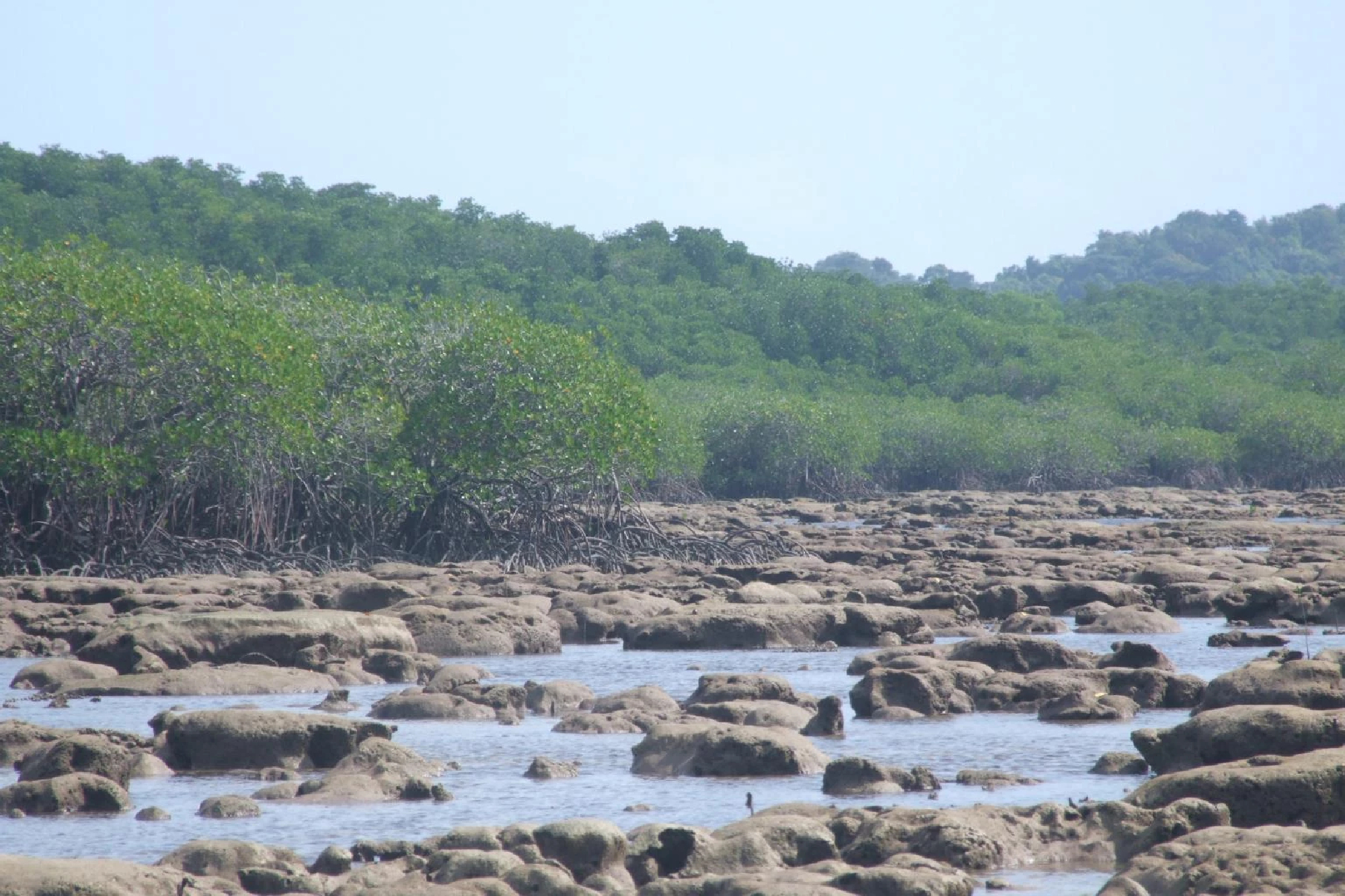
For sea-level rise, for example, adaptation measures could include building sea walls or restoring mangroves, since these ecosystems have tangled root systems that can keep pace with sea-level rise to an extent.
Or to reduce flooding in urban areas, an adaptation strategy could include having land-use planning policies that discourage buildings in areas exposed to floods or cyclones, said Dr Chow.
But the latest IPCC report – which focuses on the impacts of climate change on human societies – had identified large gaps between adaptation action taken and what is needed to deal with the increasing risks.
These gaps are largest among lower-income populations, it said.
In Asia, obstacles to greater climate adaptation include fragmented, reactive governance, lack of finances, and inadequate evidence on which actions to prioritise and how to sequence them, said the IPCC.
Dr Chow pointed to how unplanned development still occurs in parts of urban Thailand and the Philippines along its rapidly urbanising coastlines. This increases the risks of loss and damages to vulnerable populations, he said.
Despite the challenges, the IPCC said that early adaptation is crucial to help vulnerable communities cope with climate impacts.
This is because with every degree of warming, climate change impacts get more severe, while the effectiveness of available adaptation options decreases, it said.
The focus on adaptation in the latest IPCC report adds to global discussions on the issue.
A report published by the United Nations (UN) Environment Programme in November last year found that while there is an increasing number of plans for climate change adaptation, financing and implementation of these initiatives are still lagging.
That report also estimated that adaptation costs in developing countries are five to 10 times greater than public funds currently available for the programmes.
Adaptation financing was also a key point of contention between countries during the annual UN climate change meetings, with developing nations calling on richer countries to provide more funding to help them implement climate adaptation plans.
But the IPCC stressed in its latest report that to reduce impacts of climate change on societies, adaptation must go hand in hand with efforts to reduce greenhouse gas emissions, the main cause of the crisis.
“Successful adaptation requires urgent, more ambitious and accelerated action and, at the same time, rapid and deep cuts in greenhouse gas emissions. The quicker and farther emissions fall, the more scope there is for people and nature to adapt,” said the report.
Japanese companies are on alert for possible cyber-attacks following the government’s decision to impose economic sanctions on Russia.
Ukraine suffered massive cyber-attacks prior to Russia’s military invasion of that country, and the Russian government is believed to have been involved. According to an analysis released Thursday by information security company Trend Micro Inc., the cyber-attacks that targeted Ukraine affected the websites of about 70 government organizations, including the Ukrainian foreign ministry, on Jan. 13-14.
On Feb. 1, attacks were confirmed in which individuals and organizations received emails containing computer viruses.
The attacks are believed to have been conducted by Gamaredon, a hacker group thought to be connected with Russia, Trend Micro said.
On Feb. 15 and 23, websites of the Ukrainian military and Ukrainian banks suffered distributed denial of service (DDoS) attacks in which massive amounts of data are transmitted in order to cripple servers.
Following the Japanese government’s announcement Wednesday that it would impose economic sanctions on Russia, the Economy, Trade and Industry Ministry sent a notice to companies urging them to take measures against possible cyber-attacks.
Files attached to emails should not be opened carelessly, the notice said, and data should be backed up to avoid its loss.
“We’ll work closely with our overseas offices to monitor the cybercrime situation and take firm measures,” an official of Mizuho Bank, Ltd. said.
Tokyo Electric Power Company Holdings, Inc. and Japan Airlines Co. said that they would continue to heighten their cybersecurity efforts.
“Ukraine is physically far away, but distance is not relevant on the internet,” said Katsuyuki Okamoto of Trend Micro. “Japanese companies could well be targeted.”
People also need to be careful at home, so they do not unintentionally aid cyber-attacks, according to tech company Internet Initiative Japan. DDoS attackers sometimes manipulate household devices with weak security and use them to transmit data.
“Devices at Japanese homes may have been used in attacks without their owners knowing it. It’s necessary to update security software and take other protective measures,” a system engineer at Internet Initiative Japan said.
■ Police increase vigilance
The National Police Agency instructed prefectural police and other investigative bodies on Wednesday to increase their vigilance against suspicious communications, which could be a sign of future attacks.
“We’re ready to respond immediately in the event of cyber-attacks,” a senior agency official said.
The government said in its Cybersecurity Strategy, which was approved by the Cabinet in September, that Russia is believed to be launching cyber-attacks to achieve its military and political objectives.
There have been cases in which the Russian government’s involvement is suspected. In April, the United States expelled 10 Russian diplomats after its government and operators of critical infrastructure suffered cyber-attacks, determining that a hacker group with ties to the SVR, a Russian foreign intelligence service, was behind them.
State Councilor and Foreign Minister Wang Yi said that China disapproves of using sanctions as a means to solve problems and rejects unilateral sanctions that are not based on international law.
Experience has shown that sanctions do not solve problems, but create new ones. They not only result in “lose-lose” or “all-lose” economic situations but also interfere with the process of a political settlement, Wang said on Saturday in a phone conversation with German Foreign Minister Annalena Baerbock.
Wang also explained why China prevented the invoking of references to Chapter 7 of the United Nations Charter-which authorizes the use of force and sanctions-in a draft resolution on Ukraine, and vowed China would continue to play a constructive role in seeking and realizing peace.
China abstained from a vote on a draft resolution on Ukraine, proposed by the United States and other countries at the UN Security Council on Friday.
If the Security Council takes action, it should contribute to a political settlement of the current crisis rather than incite new confrontations, Wang said, adding that China supports all efforts that are conducive to de-escalation and a political settlement of the Ukraine issue.
He said China, being a permanent member of the UN Security Council, has always fulfilled its responsibilities of safeguarding international peace and security.
On the issue of European security, the legitimate concerns of all countries should be taken seriously, Wang said, adding that following five consecutive rounds of NATO’s eastward expansion, Russia’s legitimate security concerns should be solved in a proper way.
Given that the Cold War has been over for a long time, Wang said it is necessary for NATO to reconsider its position and responsibilities. China believes the Cold War mentality based on bloc confrontation should be completely abandoned.
China supports NATO, the European Union and Russia resuming dialogue and seeking to build a balanced, effective and sustainable European security mechanism so as to achieve lasting peace and stability on the continent, he said.
The phone call over the weekend is China’s latest move in a series of intensive diplomatic interactions to facilitate peace talks in its own way, and help defuse the Ukraine situation.
On Friday, President Xi Jinping spoke with Russian President Vladimir Putin on the phone. Wang also held phone talks on the same day with senior diplomats from the United Kingdom, the EU and France, expounding China’s basic position on the Ukraine issue.
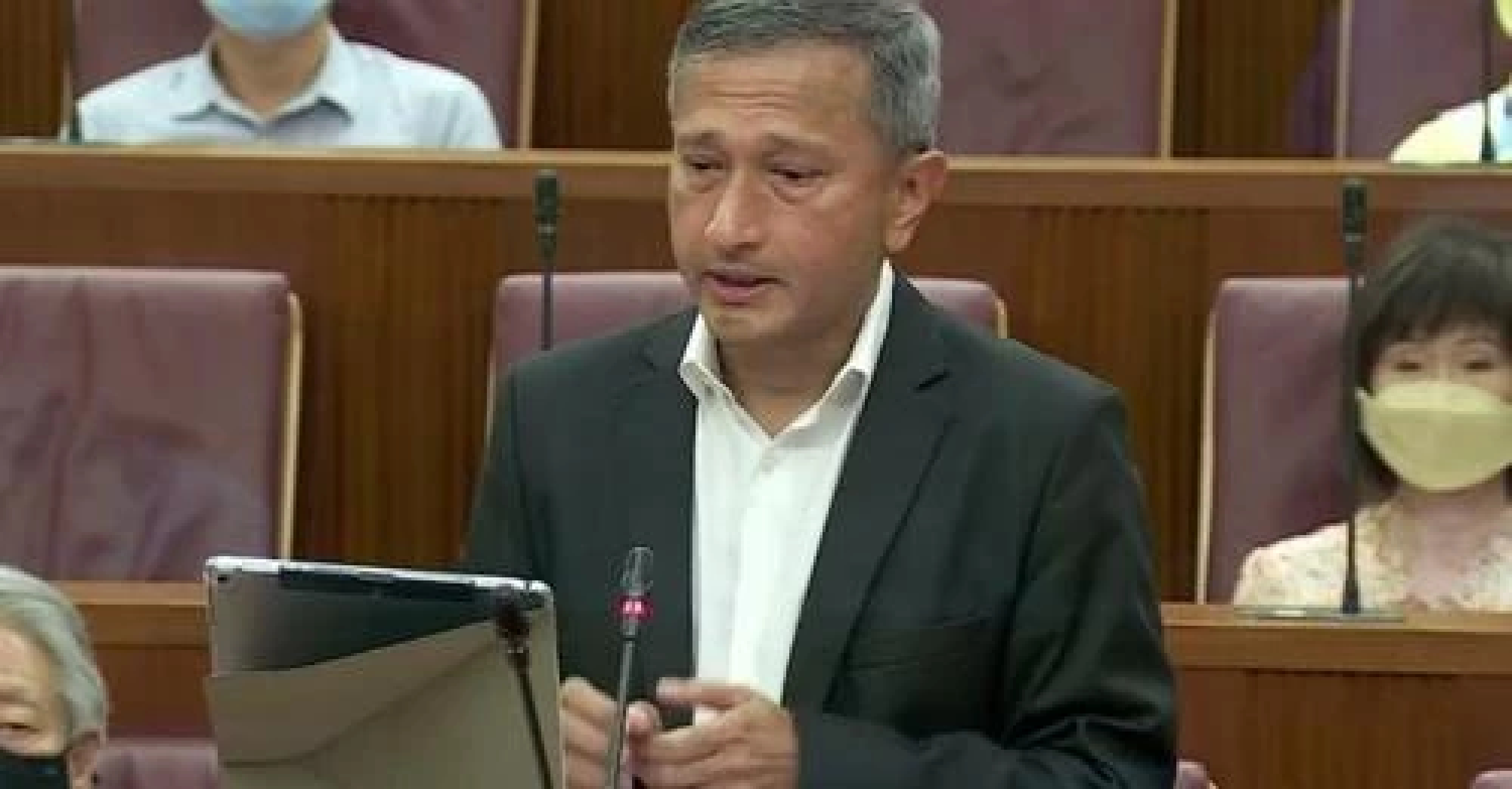
SINGAPORE – Singapore will impose export controls on items that can be used directly as weapons in Ukraine to inflict harm or to subjugate the Ukrainians, Foreign Minister Vivian Balakrishnan told Parliament on Monday (Feb 28).
It will also block certain Russian banks and financial transactions connected to Russia, he added in a ministerial statement on the Russian invasion of Ukraine.
Specific measures are being worked out, and these sanctions will be announced shortly, the minister added.
“We continue to value our good relations with Russia and the Russian people. However, we cannot accept such violations of sovereignty and territorial integrity of another sovereign state,” Dr Balakrishnan said.
“We will continue to work with our Asean and international partners to take a strong stance against the invasion of Ukraine and to end further violence and bloodshed, and to de-escalate tensions.”
Russia invaded neighbouring Ukraine on Feb 24 after months of tensions at the border – amassing troops and conducting military exercises. Its actions have been widely condemned by countries around the world.
Dr Balakrishnan noted that Singapore was one of 82 co-sponsors of a recent United Nations Security Council resolution condemning Russia’s aggression against Ukraine. The resolution was not passed as Russia – a permanent member of the council – vetoed it.
The resolution was supported by 11 of the 15 council members, with China, India and the United Arab Emirates abstaining.
A similar resolution will be debated by the UN General Assembly later on Monday (Feb 28).
“Singapore has always complied fully with sanctions and decisions of the United Nations Security Council. But we have rarely acted to impose sanctions on other countries in the absence of binding Security Council decisions or directions,” said Dr Balakrishnan.
“However, given the unprecedented gravity of the Russian attack on Ukraine, and the unsurprising veto by Russia of a draft Security Council resolution, Singapore intends to act in concert with many other like-minded countries to impose appropriate sanctions and restrictions against Russia.”
Dr Balakrishnan added: “We must expect that our measures will come at some cost and implications on our businesses, citizens and, indeed, to Singapore. However, unless we as a country stand up for principles that are the very foundation for the independence and sovereignty of smaller nations, our own right to exist and prosper as a nation may similarly be called into question one day.”
After the minister’s speech, Mr Gerald Giam (Aljunied GRC) asked how Singapore can maintain its interests with all parties involved, from the United States to Ukraine, Russia and other countries in Europe, given recent events.
Dr Balakrishnan reiterated that Singapore does not take sides, but upholds principles. “And in this case, the principles at stake are independence, sovereignty, territorial integrity.”
The Republic’s foreign policy is consistent, coherent, and “almost always predictable”, he added, noting that since he became foreign minister seven years ago, he has had to say no on occasion to every superpower.
“But it has not stopped us from being able to sit at the table, look at each other’s eyes, shake hands, explain where and why we differ, and at the same time, pursue areas of cooperation where our interests align and where our principles are shared,” Dr Balakrishnan said.
“This is not a new posture. This, in fact, is a posture that we have adopted for every single year since we’ve been independent, and I am maintaining that tradition.”
Ms Denise Phua (Jalan Besar GRC) asked whether the Government would review ongoing projects and initiatives with the Russian government.
Dr Balakrishnan said details of the sanctions are still being worked out, but added that Singapore has “no quarrel” with the Russian people.
Noting that Ms Phua was indirectly alluding to the Russian Cultural Centre here, which would also house a Russian Orthodox Church, he said: “I would imagine that this is a project which, in my own view, should continue, because this goes beyond the politics and the conflict which is going on right now.”
South Korea decided to prohibit exports of strategic materials to Russia, joining the US and other countries in imposing tough restrictions following the invasion of Ukraine, the Ministry of Foreign Affairs said Monday.
The government has notified the US of its related decisions via a diplomatic channel, the ministry said.
Seoul announced its first set of economic measures targeting Russia in the wake of the ongoing crisis in Ukraine. The government will strengthen export control review, which will effectively ban the export of strategic materials. They include items such as conventional weapons, goods and technologies that could make weapons of mass destruction and missiles, among others. These are materials that are listed under multilateral export control regimes, including the Missile Technology Control Regime, Wassenaar Arrangement, Nuclear Suppliers Group and Australia Group.
As for sanctioning what are classified as “non-strategic materials,” the government will make a decision soon following evaluation by related ministries. These materials include 57 items that the US unilaterally sanctioned last week, including semiconductors, computers, telecommunications, information security systems, lasers and sensors, among others.
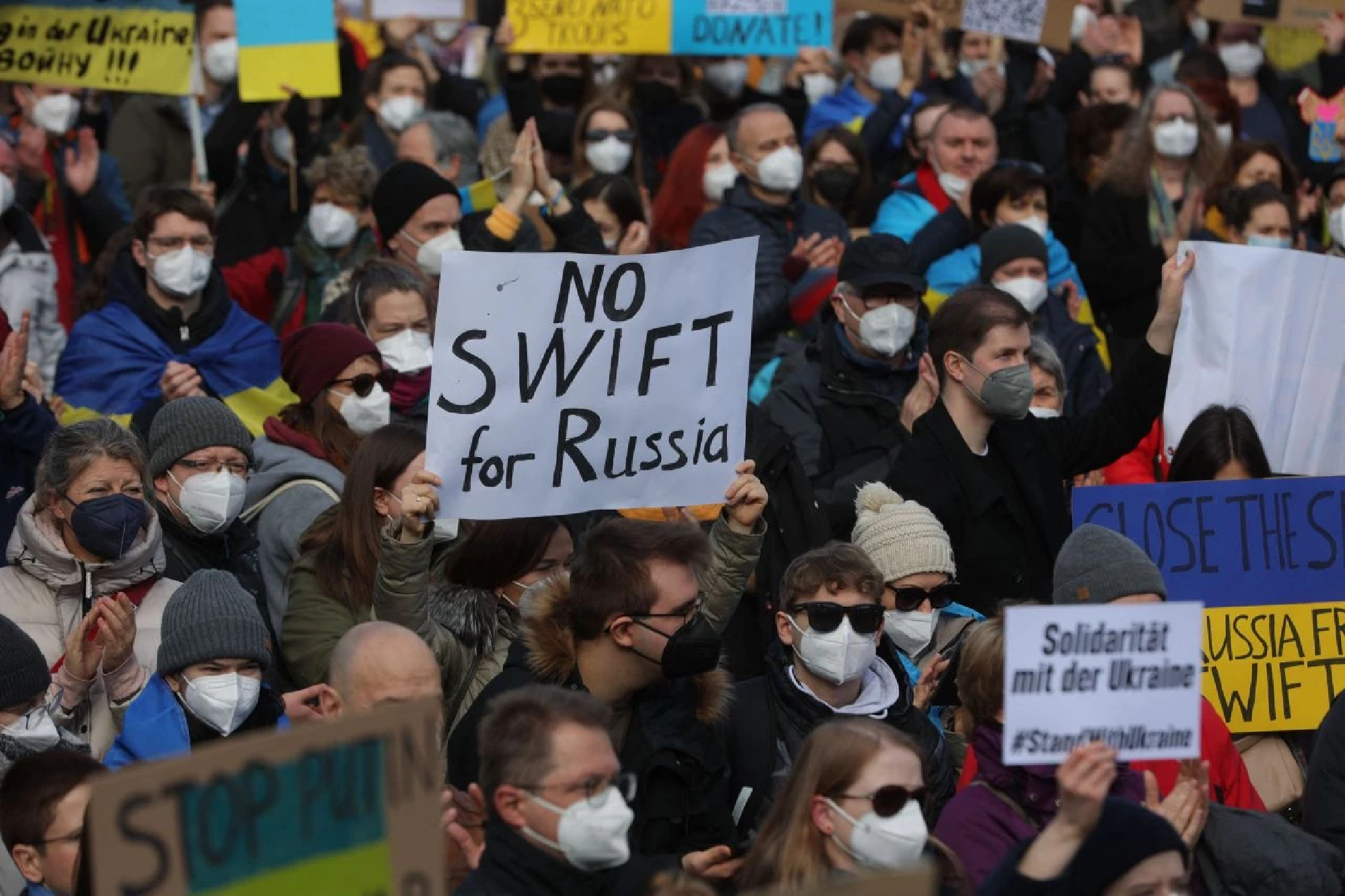
The ministry said it also decided to join the US and other allies in disconnecting key Russian banks’ access to the Society for Worldwide Interbank Financial Telecommunication, an international payment system used by thousands of financial institutions globally. Russia’s exclusion from SWIFT is seen as a move aimed at severing the country from much of the global financial system.
South Korean President Moon Jae-in announced last week that Seoul would join international sanctions on Russia.
On Monday, Moon told officials that the government needs to come up with contingency measures to tackle the impact of sanctions on Russia, according to Cheong Wa Dae spokesperson Park Kyung-mee.
He was also briefed that there would be little impact on global supply chains in regards to energy and grain for a short-term supply, but the impact could become gradually apparent. Moon urged the government to establish a hotline with companies to monitor supply chain issues and stabilize supply through import from other countries, and expand inventory.
The president also told officials to devise a plan for providing humanitarian aid for Ukraine.
KUCHING: Sarawak Energy Bhd (SEB) is working with its Indonesian counterpart on the development of a hydroelectric dam project in northern Kalimantan.
The project will be undertaken via a joint-venture company, according to SEB group chief executive officer Datuk Sharbini Suhaili.
If implemented, it would be SEB’s first international project and a significant milestone for it to become a regional powerhouse in South-East Asia, he said.
“Our experience and expertise in renewable hydropower development were crucial to our first international venture,” he added at an SEB event to mark its 100-year of powering Sarawak, here last week.
Sarawak Chief Minister Datuk Patinggi Abang Johari Tun Openg graced the event.
Sharbini said SEB has raised its installation power generation capacity by 3.8 times to 5,233MW in the last decade, with large hydropower contributing 3,452MW to the total capacity. SEB owns the 2,400MW Bakun, 944MW Murum and 108MW Batang Ai hydro power plants.
The state utility body is currently constructing the 1,285MW Baleh hydro dam in upper Rajang Basin (where Bakun and Murum dams are located) which is expected to come onstream by 2027.
Sharbini said in advancing its regional powerhouse ambition, SEB took the first step in 2016 in driving a transboundry Borneo Grid with the commission of Sarawak’s first interconnection to west Kalimantan.
SEB is exporting electricity to west Kalimantan via a 275Kv interconnection.
“This successful implementation led to the identification and possible implementation of other similar bilateral interconnections projects, laying the foundation for an interconnected Borneo and eventually Asean.
“Last year, we signed power exchange and interconnection agreements with Sabah Electricity Sdn Bhd. We will export 30MW to 50MW to Sabah after the completion of transmission infrastructure in the next few years.
“Sarawak Energy is also progressing talks with Burnei and Singapore. With the strong support of the government of Sarawak, we believe we can ensure that Sarawak becomes the ‘battery of Asean’ with interconnection from Borneo to elsewhere in the region.”
Sharbini said renewable hydropower will continue to be an important capital for a sustainable energy future and SEB aims to increasing the share of renewable and alternative energy in its generation mix.
He said SEB is embarking on its first floating solar farm at the Batang Ai hydropower plant in southern Sarawak, by leveraging on the reservoir’s existing body of water to do so.
“Once commissioned, the 50MW solar farm will offset around 52 kilotonnes of carbon emissions annually, further decarbonising Sarawak’s power system,” he added.
By 2030,SEB plans to add about 5% solar energy into its generation mix.
Sharbini said with renewable energy identified as a key enabler of its decarbonising strategy, SEB’s efforts are focussed on maintaining 60% renewable energy capacity mix by 2030, reducing carbon dioxide emissions by 600,000 tonnes per annum through electric vehicles and achieving more than 15% income from foreign markets in line with its South-East Asia renewable energy powerhouse ambitions.
He said these targets are supported by five initiatives,namely:
> Increasing private sector participation in solar, mini hydro,oil palm and biomass projects;
> Stimulating Sarawak’s hydrogen economy via exports, with Sarawak serving as the hub for hydrogen value chain;
> Promoting net metering for domestic,commercial and industrial energy generation;
> Enhancing power export to increase interconnectivity within the region, and
> Encouraging electric vehicle usage to reduce carbon emissions and decarbonise the transport sector.
SEB, which has been tasked by the state governrnent to sprearhead Sarawak’s green hydrogen agenda, has commissioned South-East Asia’s first integrated hydrogen production plant and refuelling station here.
Commenting on the growth that SEB has achieved especially in the last decade, Sharbini said it has increased its annual revenue by 3.6 times to hit the RM5bil mark and has doubled its workforce to 5,400 from 2,500.
SEB has increased Sarawak’s rural electrification rate from 56% in 2009 to 96.5% in 2021.
“We are Malaysia’s largest renewable energy developer.
“As of last year, we have 1,800 bumiputra vendors and contractors who are offering various services to Sarawak Energy.” he added.
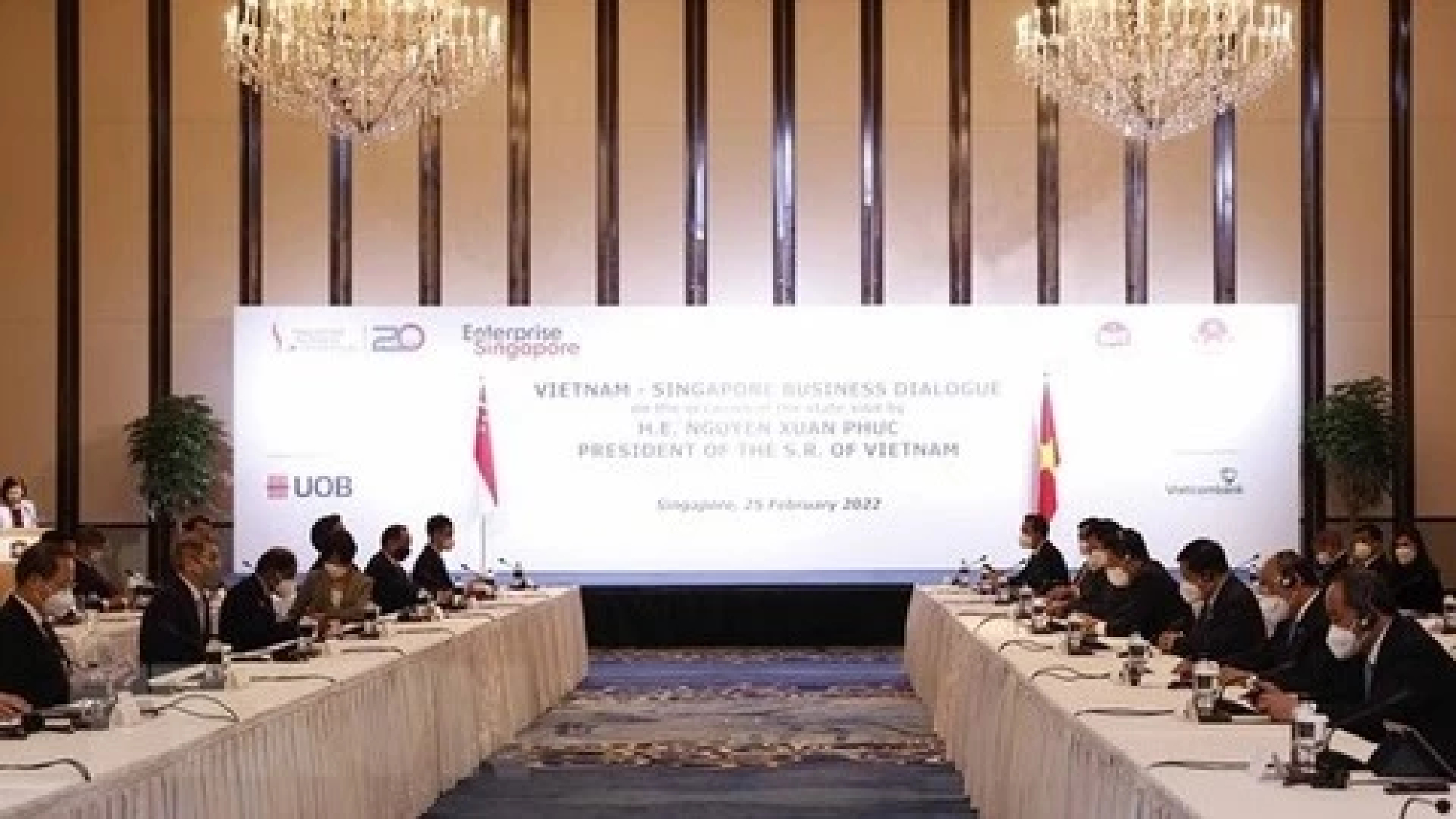
Vietnamese and Singaporean businesses signed cooperation deals worth nearly US$11 billion at the Vietnam-Singapore business dialogue on February 25, which was attended by President Nguyen Xuan Phuc.
Speaking at the event, which drew more than 100 businesses in different sectors of the two countries, President Phuc said he hoped the deals would be realised early, and urged both Vietnamese and Singaporean enterprises to take practical actions to contribute to the growth of bilateral relations, especially when the two sides celebrate their 50th diplomatic ties and 10 years of strategic partnership in 2023.
Underlining the role of businesses in implementing the two countries’ cooperation strategies, President Phuc pledged that Viet Nam would always create optimal conditions for enterprises of both sides to develop their partnership by improving its business environment, increasing transparency and dealing with problems in logistics, land and human resources.
The State leader said that Viet Nam was rolling out measures to speed up economic recovery with the targets of 7 per cent of economic growth in 2022 and an inflation rate of under 5 per cent. From now to 2025, the country aimed for an average GDP growth of 6.5-7 per cent per year, with the digital economy accounting for 20 per cent of the GDP, he said, stating that this would be a good chance for Singaporean firms to increase investment in Viet Nam.
Viet Nam would prioritise FDI projects that use high technology, help Vietnamese firms to engage deeper into the value chains and contribute to promoting the digital economy as well as sustainable growth of Viet Nam, he said.
Phuc advised Vietnamese and Singaporean firms to focus on collaborating in prioritised areas such as high technology, digital transformation and innovation, while fostering economic connectivity within the ASEAN and in the region, and making the best use of the Comprehensive and Progressive Agreement for Trans-Pacific Partnership (CPTPP) and the Regional Comprehensive Economic Partnership (RCEP).
The President said that Viet Nam and Singapore encouraged the connection of the two economies through digital platforms, which had been reflected in the signing of cooperation deals between ministries and sectors of both sides during his ongoing Singaporean visit.
He added that he hoped more Vietnam-Singapore Industrial Parks (VISIP) would be built across Viet Nam.
Singapore’s Minister for Manpower Tan See Leng said that Singaporean firms were growing strongly in Ha Noi and Ho Chi Minh City and expanding their business in other localities such as Vinh Phuc, Quang Ninh and Binh Duong.
He said that he and Vietnamese Minister of Industry and Trade Nguyen Hong Dien had agreed on cooperation orientations in various fields, including digital economy, energy, digital certification in food production, and agriculture.
At the event, SOVICO Group and Keppel Group, and their subsidiaries of Keppel Land, Keppel Urban Solutions exchanged documents on their cooperation agreement worth US$1.5 billion in developing sustainable energy and urbanisation solutions. SOVICO and Keppel Energy Ventures also exchanged documents for a US$1.5 billion deal on developing comprehensively sustainable energy solutions for transition to a green economy and reduction of carbon emissions.
Besides, SOVICO, Vietjet Air and Changi Group reached a US$1.5 billion deal on providing aviation services in Vietnamese airports. Vietjet Air and ST Engineering of Singapore also inked a contract on the supply of technical services and airplane equipment worth US$150 million.
The Ho Chi Minh City Development Joint Stock Commercial Bank (HD Bank) and Thought Machine exchanged a deal on the integration of advanced technologies into digital banking services in Viet Nam.
Meanwhile, T&T Group signed an MoU with YCH Group of Singapore on studying a logistics project in Can Giuoc District of Long An Province.
At the same time, TH Group and HAO Mart, the leading supermarket chain in Singapore, also inked an MoU on strategic cooperation in selling and promoting clean milk and farm produce of TH in Singapore. – VNA/VNS


 SootinClaimon.Com