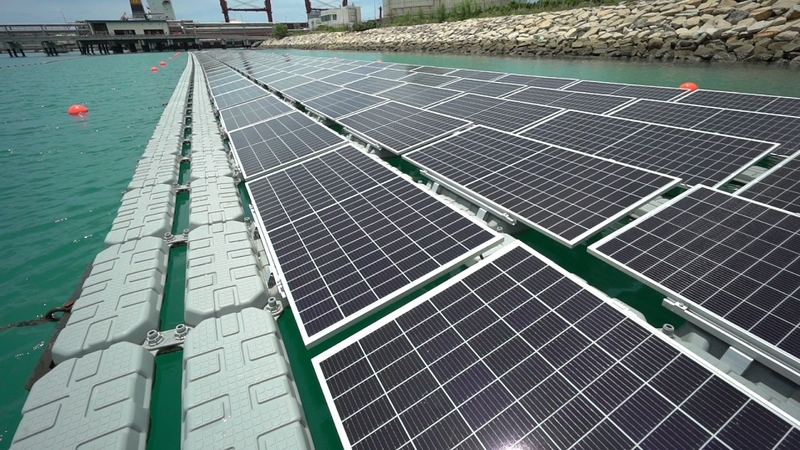
PTT Group has piloted the installation of a floating solar panel in the sea with a total capacity of 100 kilowatts at PTT Tank Terminal in Rayong as part of its campaign to promote renewable energy, a PTT press release said on Tuesday.
PTT Tank’s managing director ML Peekthong Thongyai said this system will help the company save Bt390,000 in electricity bills every year and cut down on the emission of carbon dioxide by 36 tonnes yearly.
The floating panel is made of special-grade plastic produced by PTT Global Chemical, while Global Power Synergy’s subsidiary Combined Heat and Power Producing Co Ltd designed and installed the system.
Tech firm links up with Oracle to provide cloud services to customers
Oct 05. 2020
By The Nation
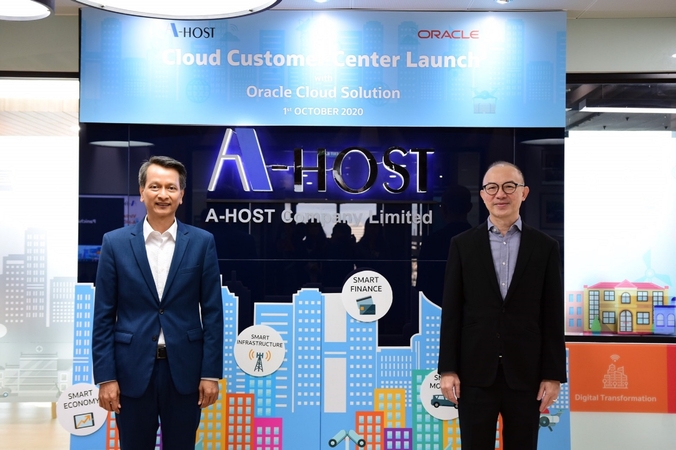
A-HOST, a member of the Oracle Partner Network (OPN), has opened the A-HOST & Oracle Cloud Customer Centre in Bangkok to serve the needs of businesses wanting to adopt cloud services.
At the centre, A-HOST staff help customers get in touch with a team of Oracle Cloud experts to help solve their business and IT challenges.
The centre, located on the 21st floor of SM Tower in Phaholyothin Road, provides knowledge and services in all areas of the Oracle Cloud (IaaS, PaaS, SaaS) with a focus on Oracle Cloud services.
The 150-square metre facility boasts state-of-the-art design and comprises a training room, workshop and co-working space where design thinking sessions can be held.
Thai Vietjet offers special domestic rates for companies, govt agencies
Oct 05. 2020
By The Nation
Thai Vietjet has launched “corporate and government tickets” for companies and government agencies, offering special packages, including fixed fares with flexible dates.
The offer is not applicable on public holidays.
Passengers will have access to two fare options – Eco and Skyboss – which come with different benefits such as baggage allowance, seat selection and priority services.
The deal is available at all Thai Vietjet travel agencies and can be applied to flights from Suvarnabhumi to Chiang Mai, Chiang Rai, Phuket, Krabi, Udon Thani, Hat Yai , Khon Kaen, Nakhon Si Thammarat, Ubon Ratchathani and Surat Thani from November 4. The deal will be applicable to Phuket-Chiang Rai, Udon Thani-Chiang Rai and Chiang Rai-Hat Yai flights from November 1.
IP Key SEA has revealed that counterfeit pharmaceuticals pose the greatest potential harm to the health of consumers
Oct 02. 2020
By The Nation
Research shows that counterfeit medicine cannot cure illnesses and can cause more harm to your health. Counterfeit medicines have been in the market for a long time, and without sufficient awareness, consumption of these substances can lead to unexpected symptoms, permanent disabilities, and even loss of life.
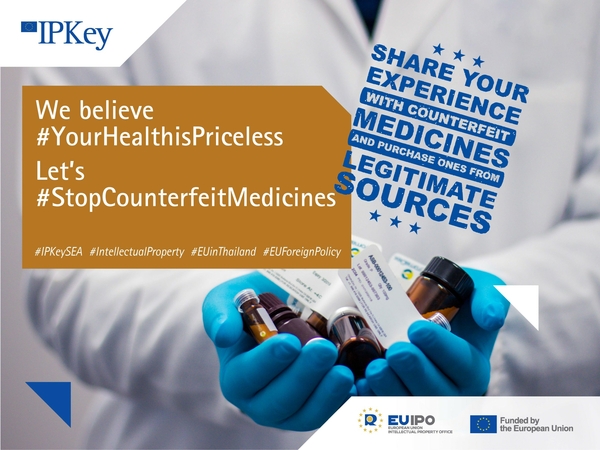
The EU-funded project IP Key South-East Asia (SEA) believes that #YourHealthisPriceless. So today, we are launching an online campaign to raise awareness of the harms that counterfeit pharmaceutical and healthcare products can cause. The campaign is also a call for the public to share their experiences with counterfeit medicines on social media.
“#YourHealthIsPriceless campaign emphasizes the EU mission through IP Key SEA project in raising awareness on IP rights on social media. We also believe that the stories shared will help envisage the current situation and encourage customers to be fully aware of the product’s authenticity and buy from legitimate sources,” said Tiago Guerreiro, IP Key SEA Project Leader.
The threat to national public health
Counterfeit medicines are medicines that do not comply with intellectual property law. In the vast majority of cases (90%), they can be harmful to a patient’s health according to a study recently released by the European Union Intellectual Property Office (EUIPO) and the Organisation for Economic Cooperation and Development (OECD) on ‘Trade in Counterfeit Pharmaceutical Products’. The World Health Organization (WHO) also reported in the 2017 report ‘WHO Global Surveillance and Monitoring System for Substandard and Falsified Medical Products’ that an estimated number of children may die from pneumonia each year after consuming counterfeit medicines is between 72,000 and 169,000.
The products in the sector include antibiotics, painkillers, and medicines for diabetes, central nervous system, heart disease, cancer malaria, and HIV/AIDS, among others. The sector also covers lifestyle drugs and medicines for an esthetical purpose, ranging from beauty injections to skincare, although some of these products are classified as food supplements or cosmetics in some countries. Consumers can be tricked by logo and packaging of counterfeit products designed to imitate authentic ones, promotions and lower prices offered by unauthorized sellers, or popularity of certain products among peers. They may become vulnerable to the adverse effects that medicines from illegitimate sources bring to their health and the possible failure to treat or prevent diseases.
Although a global problem, the proliferation of counterfeit medicines in South-East Asia is a particularly serious concern. A 2019 study by the United Nations Office on Drugs and Crime (UNODC) on Transnational Organized Crime in South-East Asia identifies a number of SEA countries, including Thailand, where counterfeit pharmaceutical and healthcare products originate from. The country has also been identified as a significant transit point for such products, and a country usually linked to counterfeiting or diversion of medicines alongside the Philippines, Indonesia, and Vietnam during 2013-2017.
“The harmful effects of counterfeit pharmaceutical products bring intellectual property (IP) closer than ever to the course of our daily lives. They show that the strong enforcement of IP rights protection–including the protection of trade mark, patent, and industrial design–can greatly contribute to consumers’ well-being and public health”, shared Tiago Guerreiro.
The threat to international trade and legal supply chains
Cross-border trafficking of counterfeit pharmaceutical products occurs with more ease in the digital age, where e-commerce and logistics have increased access to. Globalization makes it possible for second-tier distributors to sell their fake products globally; that is, they do not have to be produced in the market of distribution as they can be shipped from anywhere.
Global trade in counterfeit pharmaceutical products accounts for EUR 11.87 billion, representing more than 3.3% of total global trade in the pharmaceutical sector, according to the 2016 OECD study. It remains to be a challenge for IP and government officials to detect fake products and enforce IPRs protection measures, hence the need for local consumers to be careful when being approached by unauthorized sellers.
“The EU is supporting Thailand and ASEAN regional approach and initiatives for combatting substandard and falsified medicines. Harmonized pan-ASEAN safety and control measures allowing easier identification of counterfeit medicines, and improving verification and controls at borders, as well as a system enabling patients to identify legally operating online pharmacies, would certainly help limiting the commerce of these dangerous products”, stated Laurent Laurdais, Counsellor at the EU Delegation to Thailand.
Purchase genuine products from verified or verified and legitimate distributors and join the campaign by sharing your experiences with counterfeit pharmaceutical products alongside a description, photo, or video, include the hashtag #YourHealthIsPriceless and mention @IPKey_EU Twitter account or IP Key Facebook page.
ABOUT IP KEY SOUTH-EAST ASIA:
#YourHealthisPriceless campaign is an initiative of the IP Key South-East Asia (IP Key SEA), a four-year EUR 7 million programme funded by the European Union and implemented by the EUIPO aimed at supporting IP rights protection and enforcement across Southeast Asia, with a view to creating the appropriate legal and economic environment conducive to trade and investment in the region. By contributing to the enhancement of IP frameworks and implementation of best practices, IP Key SEA aims to ensure a level playing field for both local enterprises and EU stakeholders. IP Key SEA is one of three EU-funded programmes dedicated to IP that are being implemented by the EUIPO, together with IP Key China and IP Key Latin America.
ABOUT THE EUIPO:
The European Union Intellectual Property Office (EUIPO) is an agency of the EU, based in Alicante, Spain. It manages the registration of the European Union trade mark (EUTM) and the Registered Community Design (RCD), both of which provide protection in all 28 EU member states, as well as carrying out cooperation activities with the national and regional intellectual property offices of the EU. Under the goals of its Strategic Plan 2020, the EUIPO, in cooperation with national and regional EU IP offices, aims to promote global cooperation on IP between EU partners, third countries and multilateral organisations.
KE Group teams with Alibaba Cloud to launch ‘first-in-Asia’ SKY OS platform for retail and real estate sector
Oct 01. 2020
By The Nation
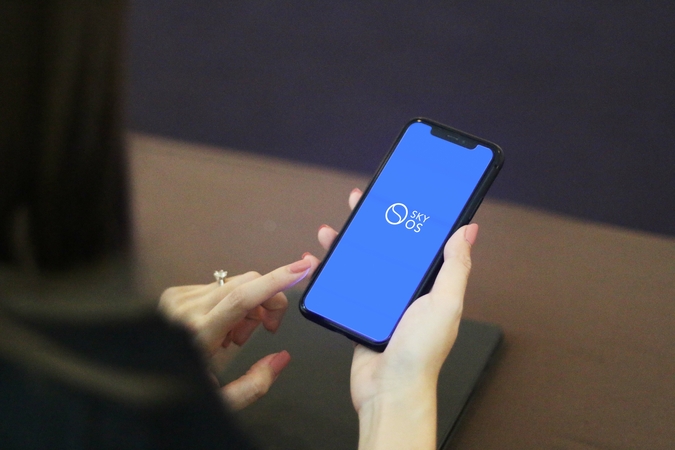
Luxury real-estate-developer KE Group and global tech leader Alibaba Cloud have teamed up to create SKY OS – a platform offering new sales channels backed by big data to malls, shops, restaurants, hotels, offices and more.
A payment gateway and e-wallet are also included to complete the SKY OS loop.
The “SKY” application of the platform integrates different applications from its partners to provide a connected system for clients’ sales and operation management.
SKY OS has five elements:
1. A Loyalty and Campaign module enabling businesses to cultivate big data from their customer database, create the right promotions, build and maintain relationships with members, and optimise results from marketing.
2. O2O (Offline-to-Online) model for businesses to join offline and online channels through integration of sales and marketing operations.
3. Seamless integration via what Alibaba Cloud calls its world-class engine and infrastructure.
4. A massive data analytical engine provided by Alibaba Cloud to give businesses access to big data so they can target customers precisely.
5. Cashless system of e-wallet, e-voucher, e-coupon, and points collection and redemptions that serve most retail businesses’ needs.
KE Group said the platform is open to all, but will be available by the end of this year to tenants of SET-registered Bualuang K E Retail, including CDC Shopping Center, the Crystal Ekamai-Ramindra, Ratchapruek, Chaiyapruek, The Scene, Plearnary Mall, Amorini, Summakorn Place Ratchapruek, Ramkamhang, Rangsit and I’M Park Chula.
KE Group said building a SKY OS platform will cost small and medium-sized businesses between Bt300,000 and Bt1 million, compared to the Bt800,000-Bt5 million it would cost to build their own application.
Ikea to stop selling non-rechargeable alkaline batteries by Oct 2021
Oct 01. 2020
By The Nation
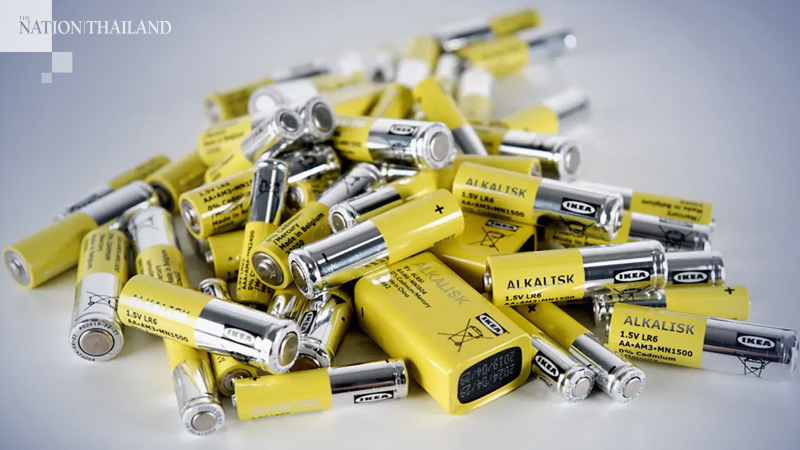
Ikea announced it will remove non-rechargeable alkaline batteries from its global home furnishing range by October 2021, hoping customers who use batteries frequently will make the switch to rechargeable solutions, saving money while also reducing waste over time.
“We are pleased to be phasing out Alkalisk alkaline batteries from our range globally and increasing the focus on our rechargeable batteries,” said Lars Svensson, sustainability director for Ikea Southeast Asia and Mexico. “We hope this enables many in Southeast Asia to opt for an affordable and convenient rechargeable battery, prolonging the life of products and materials while also reducing waste and saving money.”
The nickel metal hydride (NiMH) range of Ladda batteries can be charged up to 500 times. Several current studies show that rechargeable NiMH batteries have a lower environmental impact than alkaline batteries when used in high-energy-consuming devices that are charged on a regular basis, such as toys, flashlights, portable speakers and cameras, Ikea said.
After 10 charges, a rechargeable Ladda battery sold in Ikea’s stores emits lower greenhouse gas than alkaline batteries when obtaining the same amount of energy.
Ikea sold about 300 million alkaline batteries last year around the globe. Customers at its stores in Thailand, Singapore and Malaysia bought some 3.4 million packs of non-rechargeable Alkalisk batteries.
Hypothetically speaking, if all Ikea customers switch from alkaline batteries to rechargeable ones for high-draining devices (and charge these just 50 times), global waste can be reduced by as much as 5,000 tonnes a year, the store said.
At this stage, the lithium-ion button cell battery called Plattboj will be kept in the range as some applications currently being sold by Ikea require a button cell battery to function, it added.
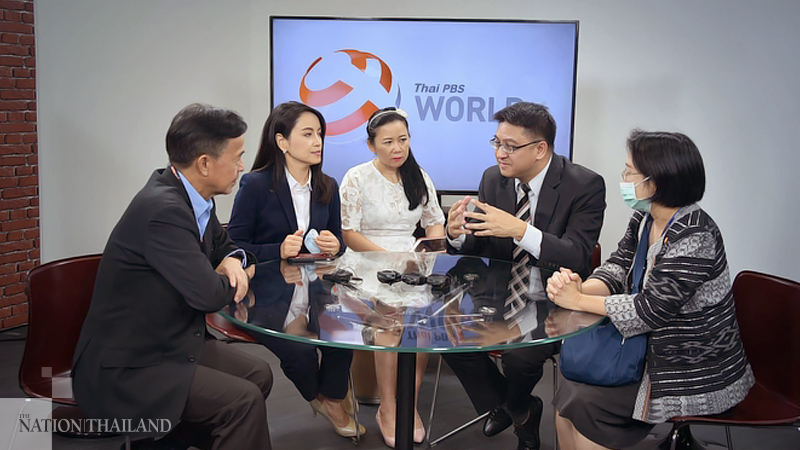
Natapanu Nopakun, fourth from left, deputy director general of the Department of Information, discusses new media with ThaiPBS television station’s managing director Thepchai Yong, far left, and other media personalities.
New Michelin awards train spotlight on young talent, service and sustainability
Sep 29. 2020
By THE NATION
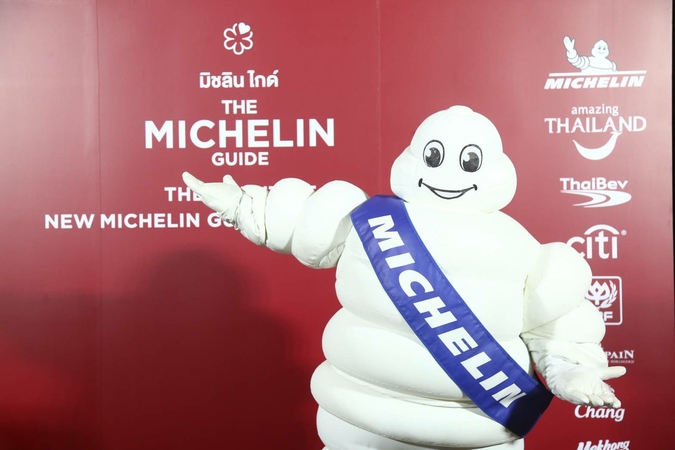
Michelin Guide has launched two new awards — for young chef and service — and a new distinction, the Michelin green star.
The additions will be made to the 2021 Michelin Guide Thailand’s portfolio of accolades. The new accolades are aimed at helping elevate the standards of Thailand’s culinary industry on all fronts and levels, and – during these tough times – boost the morale of restaurant professionals, and encourage consumer patronage of local dining establishments, Michelin Guides said.
Gwendal Poullennec, international director of Michelin Guides, said: “Launching these two new awards and a new distinction shows that our recognition goes beyond the search for the best quality of food. Our inspectors are more than eager to train the spotlight on the talent and commitment of restaurant teams, who put all their passion and knowhow to create unforgettable gastronomic experiences.”
The Young Chef Award will be given to a young starred chef with exceptional talent and great potential; the Service Award will be given to a restaurant personality who has a genuine passion for service, in making all customers feel special and enjoy a truly wonderful dining experience; and the green star will be given to one or more restaurants that “outstandingly embody and embrace sustainability in its day-to-day operations – such as recycling, food waste reduction, or promotion of local and seasonal ingredient sourcing”.
The winners of these awards are selected based on research and data collected from the Michelin Guide inspectors’ fieldwork.
Yuthasak Supasorn, governor of the Tourism Authority of Thailand, said: “The new Michelin Guide awards serve not only as an inspiration for chefs, restaurant professionals and entrepreneurs, to be dedicated in developing themselves and operating with environmental sustainability in mind, but also as a morale booster for them to overcome challenges along the road to their goal and success,” he said.
“Driven by the Michelin Guide awards, Thailand’s culinary and restaurant industry is moving towards excellence that is imbued with true Thai identity and authenticity – the uniqueness that will lead Thailand towards the ultimate goal of becoming a world-class sustainable tourism destination.”
The 2021 Michelin Guide for Thailand is scheduled to be released at the end of 2020, in a bilingual edition (Thai and English) and will be available in both print and digital versions.
Otsuka Group donates scholarships and educational equipment to school for the blind
Sep 29. 2020
By THE NATION
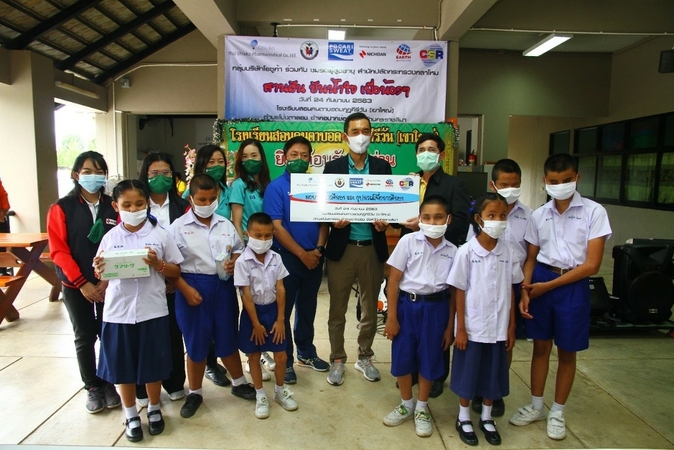
Otsuka Group, led by Mr. Shinsuke Yuasa, President of Thai Otsuka Co., Ltd., in conjunction with the elderly club at Office of the Permanent Secretary, Ministry of Defense organized an activity “Sarn Fun, Pun Num Jai, Pear Nong” to give scholarships and educational equipment as well as lunch for the students of Makudkiriwan (Khao Yai) School for the Blind, Nakhon Ratchasima province. This activity has been organized for 10 years by Thai Otsuka Co., Ltd.
SET, Egat sign MoU to study Thailand’s potential in wholesale of electricity
Sep 29. 2020
By The Nation
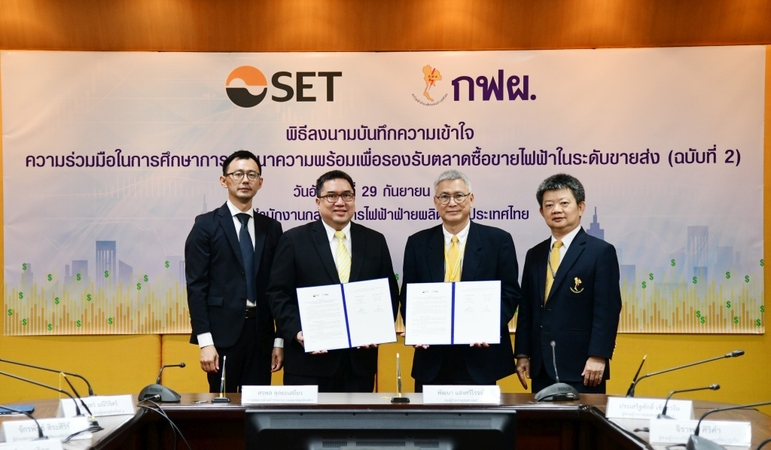
The Stock Exchange of Thailand (SET) and the Electricity Generating Authority of Thailand (Egat) signed a second memorandum of understanding (MoU) on Tuesday to jointly study Thailand’s potential to establish a wholesale electricity market.
The study, which will take six months, will focus on the trend of electricity business, appropriate format of electricity trading market in Thailand and the role financial markets play in the electricity business.
Patana Sangsriroujana, Egat deputy governor for strategy, said the agency saw an opportunity in the wholesale electricity market, and that initially, it will set up a day-ahead market and an intraday market.
Egat will also draw up electricity trading rules for markets, while SEC will advise it on the development of a trading system.


 SootinClaimon.Com