‘Thailand Platform’ necessary to woo Thais back from foreign digital offerings #SootinClaimon.Com

#SootinClaimon.Com : ขอบคุณแหล่งข้อมูล : หนังสือพิมพ์ The Nation.

https://www.nationthailand.com/pr-news/perspective/40007592


Representatives from public and private sectors related to digital media got together to share their ideas on the virtual forum “Thailand Platform – A Pipe Dream or Reality” hosted by Spring News on Friday.

The event was organised in collaboration with the Digital Economy and Society (DES) Ministry’s Electronic Transactions Development Agency (ETDA) and the Digital Government Development Agency (DGA).

‘Thailand Platform’ necessary to woo Thais back from foreign digital offerings‘Thailand Platform’ necessary to woo Thais back from foreign digital offerings

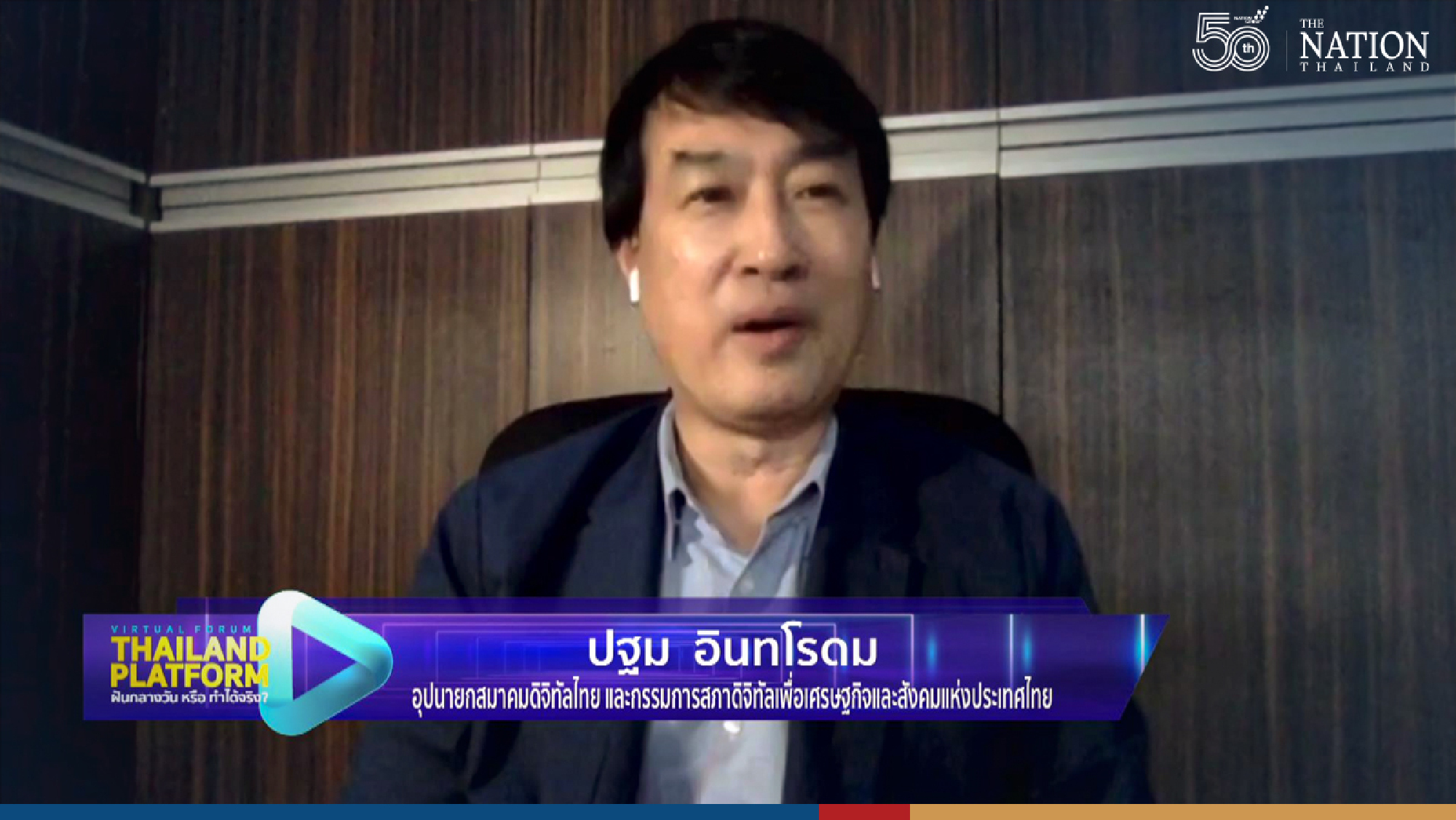
Pathom Intharodom, president of the Thai Digital Trade Association (TDTA) and director of Thailand’s Digital Council, said the Covid-19 outbreak has changed consumer behaviour and now Thais are spending more time on international digital platforms like Netflix and Spotify.

“Establishing the ‘Thailand Platform’ will promote the creation of local digital content that can compete with foreign alternatives,” he said. “The government should play the role of facilitator or regulator to ensure the private sector has what it needs and can compete fairly.”
‘Thailand Platform’ necessary to woo Thais back from foreign digital offerings‘Thailand Platform’ necessary to woo Thais back from foreign digital offerings

Pawin Phurijitpanya, a film director with the GDH studio, added that promoting locally made films will not only add more content to the Thailand Platform but can also be distributed via big streaming services like Netflix or Disney Plus. He said this will help expose Thai films to global audiences.

‘Thailand Platform’ necessary to woo Thais back from foreign digital offerings‘Thailand Platform’ necessary to woo Thais back from foreign digital offerings

“Content is key to attracting customers to a platform, not the subscription rate,” he said. “We must ensure that the content on Thailand Platform is of high quality that is constantly updated to keep audiences interested.”

Tharaphut Jaruwatthana, president of Media Agency Association, added that most OTT (over-the-top) platforms in Thailand have generated about 2 billion baht in advertising revenue scattered across several services.

“If we can combine these media into one centralised platform, then they can potentially generate up to 100 billion baht in advertising revenue yearly,” he said.

‘Thailand Platform’ necessary to woo Thais back from foreign digital offerings‘Thailand Platform’ necessary to woo Thais back from foreign digital offerings

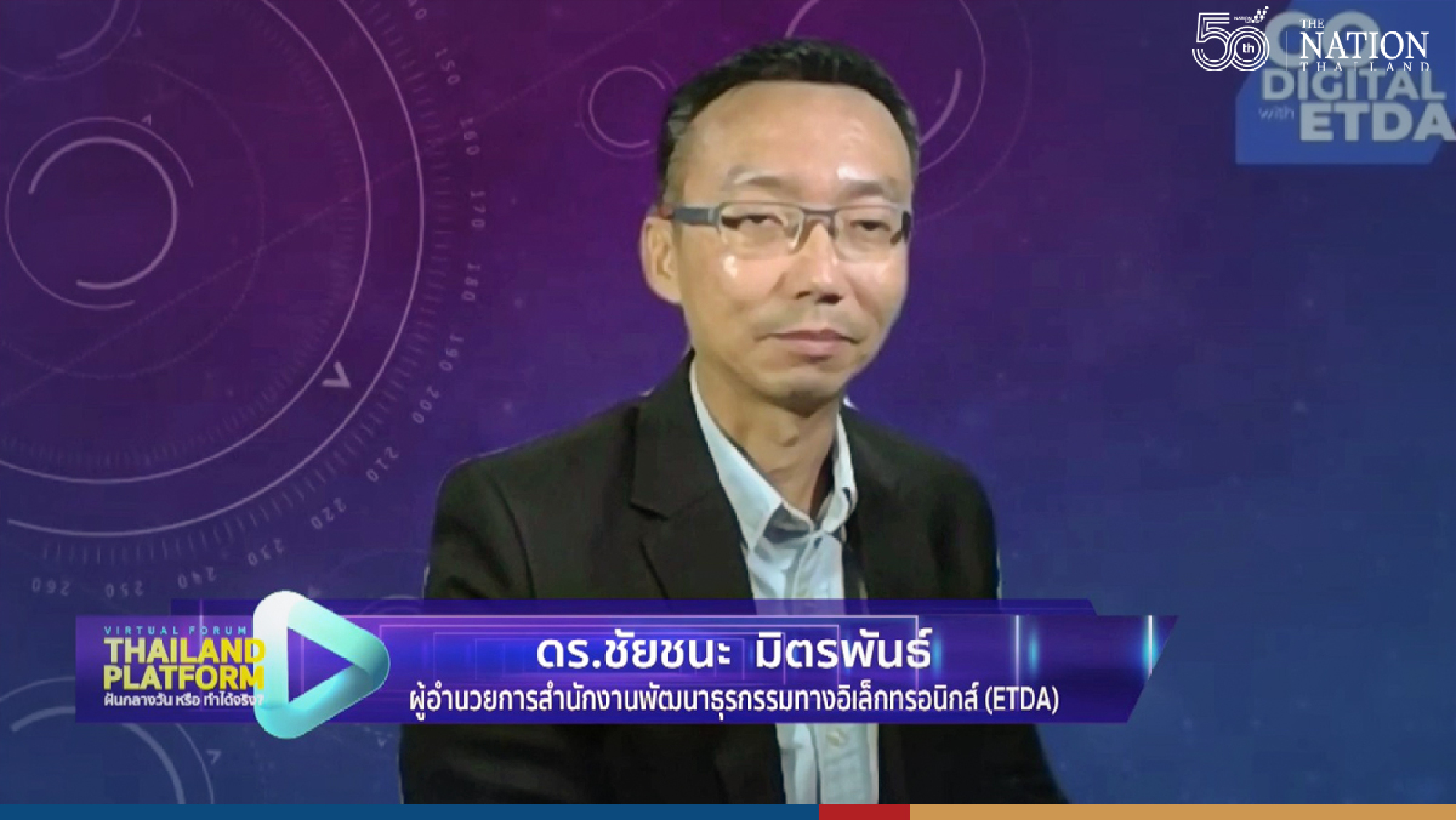
Meanwhile, Chaichana Mittraphan, president of ETDA, said that Thailand having its own digital platform will make the handling of regulations and complaints easier.
‘Thailand Platform’ necessary to woo Thais back from foreign digital offerings‘Thailand Platform’ necessary to woo Thais back from foreign digital offerings

“More than 40,000 complaints are filed every year concerning digital platforms, but the ETDA cannot tackle all of them because most of these platforms do not have an office in Thailand and hence do not fall under Thai law,” he said. “ETDA is drafting a law to regulate all digital platforms available in Thailand, regardless of their country of origin, to ensure a fair competition between service providers.”
‘Thailand Platform’ necessary to woo Thais back from foreign digital offerings‘Thailand Platform’ necessary to woo Thais back from foreign digital offerings

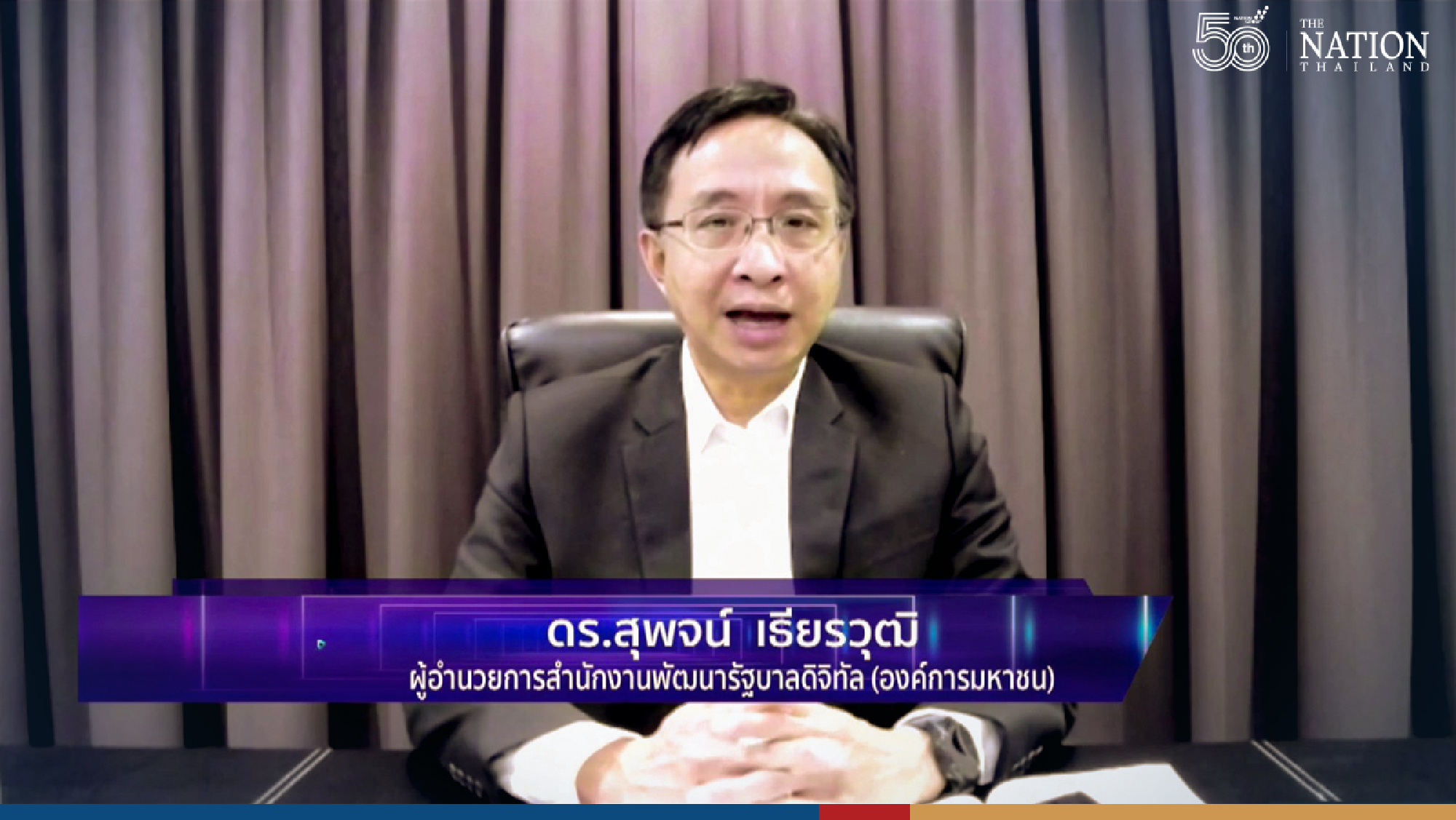
Lastly, DGA director Suphoj Thianwut said the agency has launched a mobile application “Tang Rat” (The State’s Path) as a portal for all government digital services to serve people’s needs in the new normal.

“Private entrepreneurs are welcome to join Tang Rat to integrate their services with those of government,” he said. “The DGA supports the idea of building a ‘Thailand Platform’ and believes the government must remove regulations that obstruct the private sector from joining the platform.

“The ‘Thailand Platform’ cannot be built alone by a single agency. It will require cooperation from all related public and private organisations who can pool their resources and expertise in respective fields to make the platform a reality,” he added.

Related Stories

New application gives public quick access to government services

Internet usage soars as pandemic compels change in lifestyle: survey

Netflixs intensely popular Squid Game is worth the hype – and much deeper than its chilling violence

Published : October 16, 2021

By : THE NATION

Multidimensional poverty reduces worldwide while COVID-19 exposes existing vulnerabilities #SootinClaimon.Com

#SootinClaimon.Com : ขอบคุณแหล่งข้อมูล : หนังสือพิมพ์ The Nation.

https://www.nationthailand.com/pr-news/perspective/40007348


Thailand has achieved the lowest multidimensional poverty score in ASEAN

Bangkok, 11 October 2021 – 70 countries revealed significant reduction in multiple dimensions of poverty and Thailand has the lowest multidimensional poverty level in ASEAN, yet existing systemic vulnerabilities are exposed by COVID-19, according to UNDP’s new analysis.

The Multidimensional Poverty Index (MPI), released by the United Nations Development Programme (UNDP) and the Oxford Poverty and Human Development Initiative (OPHI), is a measure that looks beyond income to include 10 indicators that capture the education, health, and standard of living dimensions, where a lower score implies a lower poverty ranking.  

The 2021 MPI covers 109 developing countries, which are home to 5.9 billion people. The report shows that 70 countries studied, covering roughly 5 billion people, experienced a statistically significant reduction in their multidimensional poverty levels at least one period during the two decades before the COVID-19.  

According to the report, Thailand’s multidimensional poverty index is 0.002, the lowest among the Association of Southeast Asian Nations (ASEAN) countries that are included in the study, such as Myanmar (0.176), Cambodia (0.170), Lao People’s Democratic Republic (0.108), Philippines (0.024), Viet Nam (0.019), and Indonesia (0.014). Thailand’s score is also lower than that of the East Asia and the Pacific (0.023) region.
Nevertheless,1.3 billion people—about 92 percent of the population in developing countries—remain multidimensionally poor. 
 

COVID-19 and multidimensional poverty around the world

ADVERTISEMENT

While complete data on COVID-19’s impacts on the MPI are not yet available, the pandemic has exposed cracks in social protections systems, education, and workers’ vulnerability around the world. These cracks, the report shows, are deepest in countries with higher levels of multidimensional poverty. 

The severity of the COVID-19 crisis in the world’s poorest countries has been underestimated because limited direct mortality has kept them outside the international spotlight. Analysis shows that people in the poorest countries are being impacted in far reaching ways with consequences that remain to be seen.
“The COVID-19 pandemic has eroded development progress around the world, and we are still grappling to understand its full impacts,” says Achim Steiner, UNDP Administrator. “This year’s Multidimensional Poverty Index (MPI) reminds us of the need for a complete picture of how people are being affected by poverty, who they are and where they live, if we are to build forward better from this crisis and design effective responses that leave no one behind.”

This year’s report shines light on how poverty is exacerbated by existing inequalities, for example, across ethnic groups and among women.  Analyses of multidimensional poverty and ethnicity are vital. Disparities across ethnic and racial groups should be prioritized by policy makers to achieve fair inclusive development post COVID-19. 
 

Thailand’s MPI had improved before COVID-19. The current MPI score of 0.002 is based on the 2019 survey, while in 2015/2016 and 2012, the index was 0.003 and 0.005 respectively.  From the latest survey, 176 thousand people moved out of poverty because of better access to basic infrastructure such as sanitation, drinking water, electricity, and housing. Nevertheless, access to education, especially years of schooling, as well as access to nutrition remain major sources of deprivation.  These aspects require particular attention, as the pandemic has hit the most vulnerable population the hardest.

Adopting a multidimensional approach to poverty analysis highlights the importance of looking at poverty beyond income.  Thailand’s incidence of multidimensional poverty is 0.5 percentage points higher than the incidence of monetary poverty, implying that individuals, despite living above the monetary poverty line, may still suffer deprivations in health, education and/or standard of living. 

Addressing multidimensional poverty is challenging, as the pathway to ending such poverty is not always linear and the changes in different dimensions vary across periods. There is no one-size-fits-all approach. Mixtures of approaches, beyond those for improving income, must be explored and implemented to ensure fair and inclusive development. Further, detailed antipoverty policies and actionable guide have to be more targeted to address differences in intensity and composition of the poverty. This is the time for reshaping policies and rethinking development pathways for a fair, equitable recovery post COVID-19.  

Access full data and publication: https://ophi.org.uk/global-mpi-2021/ 
 

Published : October 11, 2021

By : THE NATION

COVID-19 pandemic continues to drive poor mental health among children and young people #SootinClaimon.Com

#SootinClaimon.Com : ขอบคุณแหล่งข้อมูล : หนังสือพิมพ์ The Nation.

https://www.nationthailand.com/pr-news/perspective/40007222


UNICEF and Department of Mental Health caution on World Mental Health Day

BANGKOK October 8, 2021 – Marking the World Mental Health Day on 10 October, UNICEF and Department of Mental Health (DMH) expressed concerns over the continued negative impact of COVID-19 on children and young people’s mental health in Thailand as significant numbers of adolescents face stress, anxiety and depression.

A recent mental health assessment among adolescents in Thailand found that 28 per cent of adolescents experience high levels of stress, while 32 per cent are at risk of depression and 22 per cent are at risk of committing suicide, according to DMH’s Mental Health Check-in, an online mental health evaluation platform which collected data from 183,974 adolescents during the 18-month of COVID-19 pandemic from 1 January 2020 – 30 September 2021.

In a separate UNICEF-led survey last year, 7 in 10 children and young people reported poorer mental health due to the impact of COVID-19 on their lives. Most of them were concerned about family household incomes, their studies, and future education and employment.

“Increasing numbers of children and adolescents in Thailand and around the world are facing mental health conditions and disorders, and we believe this is just the tip of the iceberg,” said Kyungsun Kim, UNICEF Representative for Thailand. “Although the impact of poor mental health among children and young people is significant with the potential to result in lifelong consequences, mental health remains largely neglected and under-estimated, often times even hidden due to the stigma and shame surrounding the issue. This is something all of us must address, to destigmatize mental health conditions, encourage conversation around it, and make services and support easily available for those who need it.”

Earlier this week, UNICEF released a global flagship report The State of the World’s Children 2021; On My Mind: promoting, protecting and caring for children’s mental health which points out that at least 1 in 7 children around the world has been directly affected by lockdowns, while more than 1.6 billion children have suffered some loss of education. The report also warns that children and young people could suffer from the impact of COVID-19 on their mental health and well-being for many years to come.

ADVERTISEMENT

Even before the pandemic, children and young people have carried the burden of mental health conditions without significant investment in addressing them, the report added. According to the latest available estimates, more than 1 in 7 adolescents aged 10–19 is estimated to live with a diagnosed mental disorder globally. Almost 46,000 adolescents die from suicide each year, among the top five causes of death for their age group.

In Thailand, suicide is the leading cause of death among adolescents. In 2019, about 800 adolescents and young people aged 10-29 years old committed suicide, according to DMH. The 2019 data from the DMH’s Child and Adolescent Mental Health Rajanagarindra Institute (CAMRI) also shows that more than 10,000 children aged 10-19 called to seek mental health support via Hotline 1323, with top three issues reported during the calls being related to stress and anxiety, romantic relationship, and depression. 

COVID-19 pandemic continues to drive poor mental health among children and young peopleCOVID-19 pandemic continues to drive poor mental health among children and young people

Dr. Amporn Benjapolpitak, Director-General of DMH, said the pandemic has significantly affected children, young people and parents. For children who are not adjusting to the new learning environment, their education and development may be affected in the long run. Many parents are not able to balance work and taking care of their children. COVID-19 restrictions, including physical distancing and fewer outdoor activities, have not only affected family bonds but also caused stress among children. Many have become less sociable and more addicted to devices. This also leads to more incidences of family conflicts and domestic violence, resulting in mental health challenges or even suicide. DMH is working with related agencies and UNICEF to monitor children and young people’s mental health more closely.

A lack of knowledge and awareness on mental health, associated stigma and a lack of mental health resources and funding are preventing too many children and adolescents from experiencing positive mental health or accessing the support and services they need. According to CAMRI, Thailand has only 200 psychiatrists specialized on children and adolescent mental health for 15 million adolescent population.

UNICEF and DMH are working with partners to promote access to quality and timely mental health support and services for children and young people. The partnership also aims to break the silence surrounding mental health conditions through encouraging dialogue, addressing stigma, and promoting better understanding of mental health among children and adolescents, parents and society as a whole.

In 2020, UNICEF, DMH and JOOX Thailand implemented The Sound of Happiness campaign to encourage children and adolescents to speak up about their mental health and well-being and seek support. Through podcasts and songs, the campaign aimed at addressing negative perceptions around mental health and encouraging young people to talk about mental health challenges with their friends and family or someone they trust.

“UNICEF is committed to working with DMH, the education authorities, and other partners to ensure that children are growing and learning in a safe, loving and protective environment that supports their mental well-being. We want to make sure that children and adolescents can always access friendly, timely and quality professional mental health services whenever they need them.” Kim added. 

Published : October 08, 2021

By : THE NATION

Discussion on startups and post-Covid business world #SootinClaimon.Com

#SootinClaimon.Com : ขอบคุณแหล่งข้อมูล : หนังสือพิมพ์ The Nation.

https://www.nationthailand.com/perspective/40006935


Small startups bring innovations that change the world and serve as a mechanism to drive the economy now and in the future.

Discussion on startups and post-Covid business world

Small startups bring innovations that change the world and serve as a mechanism to drive the economy now and in the future. 
How does a business survive and become successful during this Covid-19 era?

October 29, 2021
2PM to 4PM

Register: www.nationthailand.com/seminar/startup2022
Call (02) 338 3000 – 1 for more information.
 

Published : October 02, 2021

PDI’s shareholders greenlight moving forward with hospitality business by increasing ownership in Four Seasons Hotel Bangkok and Capella Bangkok to 100%, #SootinClaimon.Com

#SootinClaimon.Com : ขอบคุณแหล่งข้อมูล : หนังสือพิมพ์ The Nation.

https://www.nationthailand.com/perspective/40006686


PDI’s shareholders greenlight moving forward with hospitality business by increasing ownership in Four Seasons Hotel Bangkok and Capella Bangkok to 100%, divesting the remaining solar energy business, and announcing a plan to rebrand to “Bound and Beyond” (BEYOND)

At Padaeng Industry Public Company Limited (PDI)’s Extraordinary General Meeting (EGM) No. 2/2021 on September 23, 2021, shareholders approved the additional acquisition of 49% of the investment in the Four Seasons Hotel Bangkok and Capella Bangkok, the disposition of the solar energy business in Japan, and the change of the Company name from Padaeng Industry Public Company Limited to “Bound and Beyond Public Company Limited” with a new trading symbol of “BEYOND” in order to craft a new transformative image that is consistent with the company’s latest corporate strategy.

Four Season Hotel BangkokFour Season Hotel Bangkok

ADVERTISEMENT

Mr. Tommy Taechaubol, Managing Director, stated on behalf of the Board of Directors and managements, “I would like to express gratitude to fellow shareholders for their support in approving all agenda items and embracing the Company’s transformative vision and bold direction, particularly the additional acquisition of 49% in Urban Resort Hotel Company Limited (URH) and Waterfront Company Limited (WFH) from Landmark Holdings Company Limited (LH) to own 100% in one of Bangkok’s most prestigious luxury hotels, Four Seasons Hotel Bangkok and Capella Bangkok. These are brand-new ultra-luxury hotels situated along the Chao Phraya River with stunning facilities and managed by world-renowned hotel management companies, Four Seasons and Capella, and have received several accolades from reputable organizations. In the recent Travel + Leisure 2021 World’s Best Awards, Capella Bangkok was named the world’s fourth best hotel”

Capella Hotel BangkokCapella Hotel Bangkok

Additionally, shareholders have approved the Company’s name change to “Bound and Beyond Public Company Limited” with a new trading symbol of “BEYOND” to reflect the Company’s imminent business strategies and innovative direction, as well as the Company’s goal of becoming a leading international hotel owner and manager.

“This is a significant milestone in the Company’s transition from commodity and energy business to hotel operator under the new name “BEYOND”, which started off with a significant successful investment in the Four Seasons Hotel Bangkok and Capella Bangkok that paves the way for the Company to become one of the leading hospitality players in Thailand. BEYOND also plans to launch a new flagship hotel under its own brand and management in the near future with a strategic prime location in the CBD area on Sathorn road, the investment cost is estimated to be around THB 1,500 million. Thailand’s tourism and hotel industries are significant part driving Thailand’s economy and are well recognized by international travelers worldwide. The Company believes this is a once-in-a-generation opportunity for a strategic acquisition at a discount value. With travel activities also showing signs of improvement, led by domestic travel, the Company believes that the tourism and hospitality industries will experience rapid growth once the current crisis has fully recovered” Mr. Taechaubol added.

Shareholders also approved the disposition of PDI Energy Company Limited (PDIE) to BAFS Clean Energy Corporation Limited (BC), a subsidiary of Bangkok Aviation Fuel Services Public Company Limited (BAFS), for approximately THB 768 million. PDIE owns the investment in two Japan solar energy plants with a combined capacity of 13 Megawatts. On March 1, 2021, the Company sold all solar energy plants in Thailand with a capacity of 36.4 Megawatts to BC, receiving THB 1,704.67 million. The proceeds from the sale of Japan’s solar energy plants are planned to redeem the existing debenture that is approaching its maturity and to fund future hotel investments.

Published : September 27, 2021

6 Asian Pacific countries in top 10 to be the next rival to Silicon Valley #SootinClaimon.Com

#SootinClaimon.Com : ขอบคุณแหล่งข้อมูล : หนังสือพิมพ์ The Nation.

https://www.nationthailand.com/perspective/40005403

6 Asian Pacific countries in top 10 to be the next rival to Silicon Valley


COVID-19 has rapidly accelerated new ways of working, but the world’s ‘technology hubs’ are here to stay, according to new research from KPMG, although they may not be in Silicon Valley.

When many offices and downtown areas locked down early in 2020, entire workforces shifted to remote-working, with some employees leaving major cities to find more space at a lower cost, among other factors. But tech leaders believe the industry’s future success will rely on a balance between physical workspace and greater flexibility.

More than 800 industry leaders were surveyed for the latest KPMG Technology Industry Survey. 39% believe ‘hub’ cities including London, Singapore, and Tel Aviv will continue to play a vital role, enabling talent to coalesce and collaborate in communities with a solid digital infrastructure. Only 22% believe hubs are no longer important. The findings echo earlier research from the 2021 KPMG CEO Outlook pulse survey, which revealed 78% of tech leaders have no plans to downsize their physical footprint and only a quarter (26%) expect to hire predominantly remote talent in the future.

ADVERTISEMENTx

Alex Holt, Global Head of Technology, Media and Telecommunications at KPMG, said:

“The success of the technology sector has outpaced most other industries during COVID-19, with many companies growing significantly since the start of the pandemic. This has advanced the perception that creativity and innovation can now happen literally anywhere as collaboration has gone more virtual and more global. However, a company still needs to be able to innovate, and the KPMG Technology Innovation Hub reveals that physical workplaces and innovation hubs remain a key component of technology companies’ strategies, although they may not be located around Silicon Valley.

“Engineering talent and intellectual property are the lifeblood of the tech industry, and retaining top talent is a strategic imperative. Employers know this and are striving towards flexible work arrangements, including permanent hybrid workforce models. As the workforce disperses geographically, new hotbeds of technically skilled workers will emerge.”

Industry insiders were also asked to rank cities around the world, outside of Silicon Valley, that they believe will flourish as technology innovation hubs in the next four years. The cities making the top 10 all had strong ecosystems in place before the pandemic, enabling them to emerge stronger – and potentially provide a real challenge to Silicon Valley – as the world prepares for a post-COVID recovery.

There are a few movers to note in the top ten from last year’s survey. Seoul, ranked eight last year, dropped out of the top ten to tie for fourteenth this year while, Austin and Seattle, ranked eleventh and twenty-fourth respectively last year, moved up to share tenth spot in 2021.

Interestingly, six of the top ten cities in the ranking are from the Asia Pacific region. Darren Yong, Asia Pacific Head of Technology, Media and Telecommunications at KPMG, commented:

“We are seeing Asia take a leading position in innovation across the world and as highlighted in this report, more than 50 percent of these top innovation hubs are based in this region. Asian cities will continue to be a hotbed of creativity and we expect even more activity as organizations invested in Asia look to further disrupt business models to capture the world’s largest consumer population.”

While Silicon Valley is known as the dominant region in global technology, only one third of leaders feel strongly that it will maintain its long-term innovation leadership position with an equal number believing it won’t.

Alex Holt added:

“To the respondents that previously answered that physical hubs are very important, KPMG asked what the likelihood is that the technology innovation center of the world will move away from Silicon Valley to another location in the next four years. One-third (32 percent) feel strongly that Silicon Valley will maintain its leadership position over the next four years but interestingly, the same number also strongly believe it won’t. Companies of different size have slightly divergent views on this. Thirty-eight percent of large technology enterprises think Silicon Valley will keep its leadership position but only 27 percent of small/start-up companies feel this way. Mid-market companies are in the middle at 32 percent.

“What’s apparent from our research is that tech leaders are listening to their people and shaping policies and views on their future strategies based on the needs and aspirations of their workforce and the benefits and challenges different working models create. The industry has a reputation for being at the forefront of new ways of working, and it’s my view that COVID-19 has simply accelerated that sense of innovation and progressive change. There is no one-size-fits-all approach and we’re already seeing some industry divergence. While there are some big unanswered questions about long-term workforce models, the sector seems to be embracing the opportunity to build a truly hybrid structure, combining the thriving ecosystems of tech hubs with the agility, balance and access-to-talent that remote working offers.”

*Top 10 cities seen as leading technology innovation hubs over the next four years (outside Silicon Valley/San Francisco)

Published : August 28, 2021

AstraZeneca vaccine over 80% effective against severe disease, death after first dose, study shows #SootinClaimon.Com

#SootinClaimon.Com : ขอบคุณแหล่งข้อมูล : หนังสือพิมพ์ The Nation.

https://www.nationthailand.com/perspective/40004236

AstraZeneca vaccine over 80% effective against severe disease, death after first dose, study shows


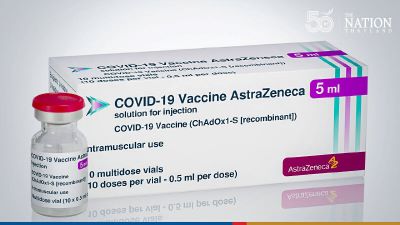
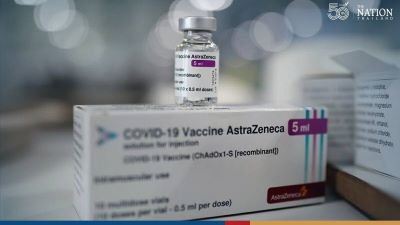
The AstraZeneca/Oxford University vaccine against Covid-19, Vaxzevria, has been found to be effective against severe disease or hospitalisation caused by the Beta and Delta variants.

Real-world data from Canada shows 82 per cent and 87 per cent effectiveness after one dose of the vaccine against hospitalisation or death caused by the Beta/Gamma and Delta variants respectively.

The effectiveness of the AstraZeneca jab after one dose against hospitalisation or death was similar to that of other vaccines tested in the study. The follow-up time was not enough to report on its effectiveness after two doses, though other studies have shown increased effectiveness after two doses.

Vaxzevria was also found to be effective against milder symptomatic infection, though data was collected after the first dose. Vaccine effectiveness against any symptomatic disease was 50 per cent against Beta/Gamma variants and 70 per cent and 72 per cent against the Delta and Alpha variants respectively.

Trials carried out by the University of Oxford in the UK and the University of the Witwatersrand in South Africa in January showed limited efficacy against mild disease primarily due to the Beta variant. The study was unable to properly ascertain vaccine efficacy against severe disease, including hospitalisation and death, given that the subjects were predominantly young, healthy adults who only experienced mild symptoms.

Mene Pangalos, executive vice president of research and development at BioPharmaceuticals, said: “With different variants threatening to disrupt our route out of the pandemic, this real-world evidence shows that Vaxzevria, along with other vaccines used in Canada, provides a high level of protection against the most serious forms of the disease, even after just one shot. It is essential that we continue to protect as many people as possible in all corners of the world in order to get ahead of this deadly virus.”

The analysis included 69,533 individuals who tested positive for Covid-19 between December 2020 and May this year in Ontario, Canada. Of the subjects, 28,705 (6.8 per cent) tested positive for non-variants of concern and 40,828 (9.7 per cent) were positive for a variant of concern.

Vaxzevria, formerly AZD1222, was co-invented by the University of Oxford and its spin-out company, Vaccitech. It uses a replication-deficient chimpanzee viral vector based on a weakened version of a common cold virus (adenovirus) that causes infections in chimpanzees and contains the genetic material of the Covid-19 virus spike protein. After vaccination, the surface spike protein is produced, priming the immune system to attack the SARS-CoV-2 virus if it later infects the body.

The vaccine has been granted a conditional marketing authorisation or emergency use in more than 80 countries across six continents. More than 700 million doses of the vaccine have been supplied to 170 countries worldwide, including more than 100 countries through the Covax facility.

Published : August 05, 2021

By : THE NATION

Nation Multimedia Group steps up with free Moderna jabs for employees #SootinClaimon.Com

#SootinClaimon.Com : ขอบคุณแหล่งข้อมูล : หนังสือพิมพ์ The Nation.

https://www.nationthailand.com/perspective/40003871

Nation Multimedia Group steps up with free Moderna jabs for employees


Shine Bunnag, chairman of Nation Multimedia Group (NMG)s executive committee, has announced that 1,200 doses of Moderna mRNA vaccine will be provided for free immunisation of all NMG employees, under a budget of about 2 million baht.

The vaccine doses will be procured through Prince Suvarnabhumi Hospital, while NMG will bear all expenses. The company considers it has a social responsibility to provide the free shots, which it said will help strengthen immune systems in the fight against the Covid-19 crisis.

NMG has also launched continuous relief missions for people suffering under the impact of the pandemic. Among them are the “Nation Kitchen” project to set up a kitchen to prepare food boxes for affected people, the “Nation Sharing Kindness” activity to donate survival bags and, most recently, the “Bringing Hearts to Home” project to deliver boxes of relief supplies directly to households.

Published : July 28, 2021

By : The Nation

An open letter from AstraZeneca #SootinClaimon.Com

#SootinClaimon.Com : ขอบคุณแหล่งข้อมูล : หนังสือพิมพ์ The Nation.

https://www.nationthailand.com/perspective/40003689

An open letter from AstraZeneca


An open letter to the people of Thailand

Dear friends in Thailand,

As AstraZeneca’s representative here, I see the challenges that all of us across the country face in the battle against COVID-19 and want to explain what we are doing to help.

The rising number of confirmed COVID-19 delta cases in Thailand concerns all of us at AstraZeneca. We are in constant contact with the Department for Disease Control on the virus’ evolving impact and on how we can help the national vaccination programme.

I want to assure you that for us, there is no higher priority than manufacturing vaccines that can protect you and your loved ones, as fast as possible.

We will leave no stone unturned.

Our vaccine is a ‘biologic’ product that starts with growing ‘living’ ingredients. Its manufacturing is complicated. The number of doses in each ‘harvested’ batch is never completely certain, especially in the early stages of a new supply chain. Even with that context, our projections show that in months with uninterrupted manufacturing we can supply five to six million doses in Thailand.

By the end of July, we will have delivered 11.3 million doses, as part of our overall commitment to deliver 61 million to Thailand. As of now, we have delivered nine million doses, with 2.3 million to be supplied to the Ministry of Public Health next week.

We are delivering in the fastest possible timeframe, however, given the gravity of the delta variant, we are leaving no stone unturned to accelerate supply further still. Together with our manufacturing partner, Siam Bioscience, we have initiated efforts to optimise the manufacturing process and we believe that in months with good ‘harvests’, we will be able to deliver more.

We are also scouring the 20+ supply chains in our worldwide manufacturing network to find additional vaccines for Southeast Asia, including Thailand. A global supply crunch for COVID-19 vaccines and shortages of the materials and components required to produce the vaccine, make it difficult to provide certainty today, but we are hopeful of importing additional doses in the months ahead.

An open letter from AstraZenecaAn open letter from AstraZeneca

COVID-19 is the biggest public health crisis of our generation. We at AstraZeneca see it as our duty to help, and thousands of our employees, and those of our partners, have devoted their lives this past year to do so. We do this at no profit during the pandemic because we believe that’s the right thing to do. The immediate needs of the pandemic are too large for us to take on alone, but we will not rest until you are vaccinated.

ADVERTISEMENTx

Our battle against COVID-19 is shared.

Since the start of the pandemic, you have shown the true heart and strength of Thailand. Polling suggests that over one third of the people in Thailand have donated money, food or supplies to support one another. We have witnessed remarkable solidarity within the community and across provincial borders. The battle against COVID-19 has been a marathon, but the one thing that will bring us closer to the finish line is running this race together, not just in Thailand but also internationally.

We in Thailand face an upsurge in cases today. Our brothers and sisters across ASEAN experience new lockdowns and rising fatalities also. New data from Canada shows that one dose of our vaccine is 87% effective against hospitalisation or death caused by the delta variant. The vaccines made in Thailand are of critical importance to our neighbours as much as they are to us here.

We share the same goal. To end the pandemic, we need to manage virus levels everywhere. As the virus ignores borders, the acceleration of COVID-19 in neighbouring countries is a threat to us in Thailand. This fight can only be won if we act together.

Yours sincerely,

James Teague

Managing Director, AstraZeneca Thailand

Published : July 24, 2021

By : THE NATION

Taiwanese businesses raise THB2.5m to help victims of chemical inferno #SootinClaimon.Com

#SootinClaimon.Com : ขอบคุณแหล่งข้อมูล : หนังสือพิมพ์ The Nation.

https://www.nationthailand.com/perspective/40002953

The Taiwanese business community in Thailand raised 2.5 million baht to help those who have suffered from the factory blast and ensuing chemical fire in Samut Prakan’s Bang Phli district.

The fire, which was sparked in the early hours of Monday in the Taiwanese-owned Ming Dih Chemical factory, damaged many houses in the vicinity, injured several people and killed a 19-year-old firefighter.

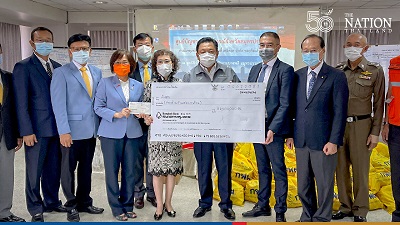
The Taiwan Business Association on Wednesday handed over the cash, 12,000 N95 masks, 48,000 medical masks and12,000 bottles of drinking water to Samut Prakan governor Wanchai Kongkasem and provincial police chief Pol Maj-General Chumphon Phumpuang.

Herbert Hsu, deputy director-general of the Taipei Economic and Cultural Office in Thailand, said the Taiwanese business community wanted to express condolences and salute the bravery of Kornsit Laophan, who lost his life helping others.

Of the 2.5-million-baht donation, 300,000 baht will be given to the family of Kornsit, 10,000 baht each to the 30 people who sustained serious injuries and 5,000 baht each to the 30 people who sustained minor injuries. The remaining 1.75 million baht and other necessities will be distributed among migrant workers living in the vicinity.

In a statement issued on Tuesday, Ming Dih Chemical Co said it will be responsible for all reimbursements based on the result of an investigation and the company’s headquarters will also send staff to Thailand to follow up on the situation.

Published : July 07, 2021

By : The Nation