The fourth phase of the co-shopping subsidy campaign “Khon La Khrueng” (Let’s Go Halves), which kicked off on Tuesday at 6am, saw spending of more than 500 million baht, Finance Minister Arkhom Termpittayapaisith said on Wednesday.
“More than 2.4 million people exercised their rights on the first day of Let’s Go Halves phase 4 thanks to the Chinese New Year festival, while total registrants under phase 4 have been recorded at 16.93 million people,” he said.
“On the first day we saw total spending of 501.24 million baht, 253.43 million of which was spent by registrants and 247.81 million by the government.”
Under the campaign, the government covers 50 per cent of bills for food, drinks and basic necessities of up to 150 baht per day when registrants pay via the Pao Tang application at shops participating in the scheme.
The fourth phase caps a total subsidy at 1,200 baht per person.
Arkhom said shops and restaurants have reportedly seen increasing customers again one month since the third phase ended last year. “However, there are some shops that had registered in previous phases but decided not to join this latest 4th phase,” he said.
“The reason behind this is mostly because the campaign will track their incomes, and businesses that have earned more than 1.8 million baht annually will be taxed.”
The Finance Ministry’s Fiscal Policy Office reported on Tuesday that as of February 1, the three campaigns that the ministry had launched this year to stimulate the economy and promote domestic consumption have generated total spending of more than 1.13 billion baht by 5.44 million users.
The two other campaigns grant funds via the Pao Tang application to holders of state welfare cards and people in vulnerable groups who can make purchases at participating shops.
Precisely 2.89 million state welfare card holders have spent 573.54 million baht, while 147,000 people in vulnerable groups have spent 57.66 million baht.
Linking international streaming services like Netflix, WeTV, iQiyi and VIU with the Thai film industry has earned the country more than 815 million baht, the Department of International Trade Promotion (DITP) said on Tuesday.
This link-up is part of Commerce Minister Jurin Laksanawisit’s policy to promote Thai digital content internationally, DITP deputy director Ekachat Seetavorarat said on Tuesday.
DITP led a discussion on January 27 with representatives of international streaming services and 15 Thai content creators to further strengthen the tie-up.
“Apart from introducing local digital content creators to the international market, this project will also help boost the development of other industries like food, tourism and culture,” he said.
He added that Thai TV series, films and animation have caught the attention of international streaming agencies, and “this proves that our digital content industry has the potential to expand further”.
However, he said, the most important factor at this point is to make locally produced digital content more internationally acceptable and change local consumer behaviour so more digital content is consumed.
Ekachat added that the Commerce Ministry is providing the industry additional support by expanding opportunities both locally and overseas via exhibitions and seminars to promote knowledge exchange and create a network among creators.
Meanwhile, Worarit Ninklom, CEO of 9Naa Production, said this project encouraged Thai digital content creators to upgrade their products to international standards.
Wanchalerm Chootragool, CEO of Art Combo Studio, concurred saying this project gave local content creators a chance to have their creations consumed internationally via global streaming.
The Revenue Department on Monday issued guidelines on cryptocurrency taxes following discussions with the public and private sectors.
The guidelines were revealed as frequently asked questions, covering income types, capital calculation, and cryptocurrencies/tokens valuation.
Q: What is the origin of cryptocurrency taxes and why must the Revenue Department collect this tax?
A: Earlier, income from selling cryptocurrency was included in income under Section 40 (8) of the Revenue Code. However, a change in the Revenue Code at the end of 2018 changed the income type from under Section 40 (8) to Section 40 (4), as income from cryptocurrency is a consequence of investments.
The department decided to publicise this for taxpayers to avoid being slapped with penalties.
Q: How does the Revenue Department categorise each digital asset?
Q: Who must file income tax for cryptocurrency trading?
A: All taxpayers with income from such transactions must file their returns.
Q: How many types of income accrue from cryptocurrencies?
A: There are three types of income:
From selling cryptocurrencies secured from mining. It will be income under Section 40 (8). Taxpayers can deduct the capital from the income.
Profit from selling or transferring cryptocurrencies. It will be income under Section 40 (4), which will be calculated on only the profit (selling price minus cost);
Payoff from utilising cryptocurrencies also will be deemed income under Section 40 (8).
Q: How does one calculate the capital of cryptocurrencies?
A: It could be calculated by the moving average cost, first-in, first-out, or other methods. Whatever method a taxpayer chooses, they will have to use this method to calculate the capital for the entire tax year.
Q: If taxpayers want to change the calculating method of cryptocurrencies/digital tokens, do they have to be approved by the department’s director-general or the person that he/she assigns?
A: They do not have to be approved if they want to change the method in the next tax year.
Q: Do cryptocurrencies or digital tokens have to be exchanged to baht before calculating taxes?
A: For personal income tax, the tax will be collected only when taxpayers earn more than what they have invested. If they only possess them without transferring, they will not be considered as having an income.
Where cryptocurrencies have been exchanged to baht, the tax will be collected only when earnings are more than the invested amount.
For example, if a person bought one coin of a cryptocurrency for 100 baht and the person exchanged it for 150 baht, it means they earned 50 baht income.
Q: Do taxpayers have to pay taxes for exchanging cryptocurrencies from one currency to another?
A: If they earn an income from their investment, it will be considered as income under Section 40 (4). They will also have to pay taxes from cashing in and out with the baht.
Q: How can investors who buy/sell cryptocurrencies or digital tokens in foreign countries file their taxes?
A: First, they have to check where their wallet (Thailand or foreign countries) is used for exchanging.
Second, they will have to pay taxes if it is income in the country. However, if they earn from other countries, taxpayers will have to pay taxes only if they stay in Thailand for more than 180 days and bring the income to the country in the same tax year.
Q: How do taxpayers calculate taxes if they exchange cryptocurrencies/digital tokens with other currencies?
A: They can use one of the following methods to calculate the exchange rate to baht
The daily exchange rate according to commercial banks (buying and selling rate)
The daily exchange rate according to the Bank of Thailand (the average buying and selling rate according to Section 9)
Q: How does one calculate income from investing in cryptocurrencies/digital tokens?
A: The income will be calculated from the profit earned from buying and selling, from which they could deduct their losses.
Q: Will a taxpayer be considered as having income if they sell their cryptocurrencies/digital tokens but do not withdraw from their accounts?
A: Yes, they will be considered as having an income even if they do not withdraw, and they have to file PND90.
Q: Could the cost from mining (electricity, deposit, maintenance) be deducted from the profit?
A: Income from mining is under Section 40 (8). The cost could be deducted as long as it is necessary and appropriate.
Q: If income from mining is under Section 40 (8), does it mean that taxpayers have to file tax returns two times and separate the account book from mining and exchanging? How to decide which is their income type if they use the same wallet?
A: Taxpayers have to maintain a separate account for their costs according to sources. They could choose the sources of their income (selling or mining).
Q: Who is responsible for withholding tax?
A: If taxpayers (individuals) sell or exchange cryptocurrency with buyers, they will have to pay taxes at 15 per cent of their income.
Taxpayers could submit withholding tax certificates if they have already paid.
Q: How do people engaged in trading in digital assets file their tax returns?
A: For mining and pay-offs
Mid-year tax: Taxpayers have to calculate the tax by deducting the income from the capital.
Annual tax: Taxpayers have to calculate the tax by deducting the income from the capital.
Taxpayers could use the document of mid-year tax as the credit for the annual tax.
Taxpayers could also file their taxes with an e-filing system.
For selling or transferring, taxpayers will have to take the total income and deduct it from the capital and exemptions. Only profit will be calculated.
Q: Can taxpayers carry forward a loss from the previous tax year for deductions in the next tax year?
A: No, they cannot seek deductions for a loss from the previous year.
Q: How do taxpayers prepare documents to submit PND90?
A: Taxpayers have to calculate the profit from trading and prepare documents to prove the amount of capital from trading, which are:
The amount of buying or selling
The value of cryptocurrencies or digital tokens at the transaction date
The exchange rate of the currency
Information of buyers or sellers (if you have)
Tax invoice or receipt of expenses
Withholding tax certificate (if you have)
Q: What is the penalty if taxpayers do not submit their tax returns?
A: They will have to pay an additional 1.5 per cent per month in case of late payment.
If the official sends a tax summons and taxpayers have not completely submitted the tax returns, they will also have to pay a fine up to one or two times according to the case.
They will be fined up to 2,000 baht in case they do not submit the PND90, PND91, and PND94 in time.
If taxpayers submit faulty information, engage in fraudulence, artifice or other similar behaviour to evade or attempt to evade tax, they shall be subjected to imprisonment from three months to seven years and penalty from 2,000 baht to 200,000 baht.
If taxpayers do not submit their returns to evade tax, they will be subject to imprisonment up to one year and a penalty up to 200,000 baht, or both.
The department suggested that taxpayers collect evidence from every source to prove their source of income and calculate taxes.
The department added that there is no law for cryptocurrency exchanges to send information to the department. However, investors could ask transaction information from them to calculate taxes.
The Foreign Trade Department has made preparations to help Thai exporters enjoy tax privileges for exporting to South Korea after its RCEP membership takes effect on Tuesday.
Pitak Udomwichaiwat, director-general of the department, said that South Korea has ratified the Regional Comprehensive Economic Partnership (RCEP) agreement with effect from February 1.
The move will allow Thai exporters to enjoy the benefits of a free-trade agreement when they export to South Korea, Pitak said.
He said the department has expanded its system for certifying the country of origin of Thai goods for export to South Korea. They include verifying the country of origin, issuing an RCEP Form of the country of origin, and a system for licensed exporters to register and issue self-certifications.
The expanded system would allow Thai exporters to enjoy RCEP tax benefits immediately when they export to South Korea, Pitak said.
Pitak added that Malaysia’s ratification of RCEP agreement will take effect on March 18 and the department is expanding its system to cover this country as well.
Apart from South Korea, the RCEP agreement has taken effect for 10 countries, which are: Brunei, Cambodia, Laos, Singapore, Thailand, Vietnam, Australia, China, Japan, and New Zealand.
Indonesia, the Philippines, and Myanmar have yet to ratify for the agreement to take full effect.
The baht opened at 33.20 to the US dollar on Tuesday, strengthening from Monday’s closing rate of 33.29.
The Thai currency is likely to move between 33.10 and 33.30 during the day, Krungthai Bank market strategist Poon Panichpibool said.
Poon put the fluctuation down to current market sentiments. He said if the market is in a risk-on state, then interest in the dollar will fall and strengthen the baht.
However, there are some risk factors to speculation, such as the Russia-Ukraine conflict, which may affect the currency market in the short term.
Poon added that the baht will swing sideways and not strengthen much because the basic economic factors have not fully recovered. However, he said, things may improve now that the government is opening the country again.
The key support level for the Thai currency will be at 33.10 – a level that importers are waiting for so they can purchase dollars. Meanwhile, the baht’s key resistance level will stand at 33.50 – a level eyed by exporters so they can offload their dollars, he added.
Thailand became the world’s third-largest rice exporter by shipping 6.12 million tonnes of rice last year, up 6.7 per cent year on year, Charoen Laothamatas, president of the Thai Rice Exporters Association, said on Monday.
“Though the export volume has increased, the total value of exported rice in 2021 dropped 7.1 per cent from the previous year, or from $3.7 billion [THB116.04 billion] to $3.4 billion [THB107.75 billion],” he said.
Meanwhile, India still remains the top rice exporter for four consecutive years with 19.5 million tonnes of rice exported in 2021, up 33.9 per cent year on year. Vietnam came in second with 6.24 million tonnes exported last year, dropping 5.2 per cent year on year. Pakistan and the United States, meanwhile, are in fourth and fifth places, with 3.93 million tonnes and 2.85 million tonnes of rice exported in 2021, respectively.
The Thai Rice Exporters Association also reported that in December 2021, Thailand exported 729.12 tonnes of rice valued at THB12.5 billion, down 3.5 per cent and 1.9 per cent respectively from the same period in the previous year.
“Rice export dropped towards the end of last year in both quantity and value because buyers tend to slow down after they have built up a stock of rice,” Charoen said.
Thailand’s biggest rice buyers in 2021 include China, Japan, United Arab Emirates, the Philippines, Congo, Syria, Benin and Angola.
“We expect rice export in January to be around 700,000 tonnes, while the target for 2022 is set at 7 million tonnes,” said Charoen. “Positive factors for rice export this year include the recovery of the global economy, increasing demand in Africa, Asia and the Middle East, and our estimate that the baht will stay steady at THB33 per US dollar, which will make our price competitive against other exporters.”
Thailand saw total foreign investment of 82.501 billion baht last year, creating 5,450 jobs for Thais, the Commerce Ministry announced on Monday.
Japan remained the Kingdom’s highest foreign investor, topping the rankings with 23.260 billion baht or 28.6 per cent of total investment.
The United States was second with 5.948 billion baht (15.4 per cent) and Singapore third with 10.530 billion baht (15.1 per cent).
Most of the 570 foreign businesses handed licences in 2021 were related to new or S-Curve industries. The government is seeking to attract S-Curve businesses with investment promotions in a bid to drive economic development.
Foreign investment is expected to expand this year amid signs that domestic and international demand have begun to recover.
The trend of investing in joint ventures with Thai companies in order to receive incentives from the Board of Investment should aid recovery of the domestic economy, said Sinit.
Top 10 territories for foreign investment in Thailand last year:
1. Japan: 28.6% (Bt23.260 billion) via 163 businesses.
2. United States: 15.4% (Bt5.948 billion) via 88 businesses.
3. Singapore:15.1% (Bt10.530 billion) via 86 businesses.
4. Hong Kong: 7.2% (Bt19.555 billion) via 41 businesses.
5. China: 5.1% (Bt3.748 billion) via 29 businesses.
6. The Netherlands: 3.2% (Bt3.063 billion) via 18 businesses.
7. France: 2.6% (Bt1.127 billion) via 15 businesses.
8. South Korea: 2.5% (Bt847 million) via 14 businesses.
9. Germany: 2% (Bt695 million) via 16 businesses.
10. United Kingdom: 1.5% (636 million baht) via 9 businesses.
Other countries accounted for 16 per cent of foreign investment (13.093 billion baht) via 91 businesses.
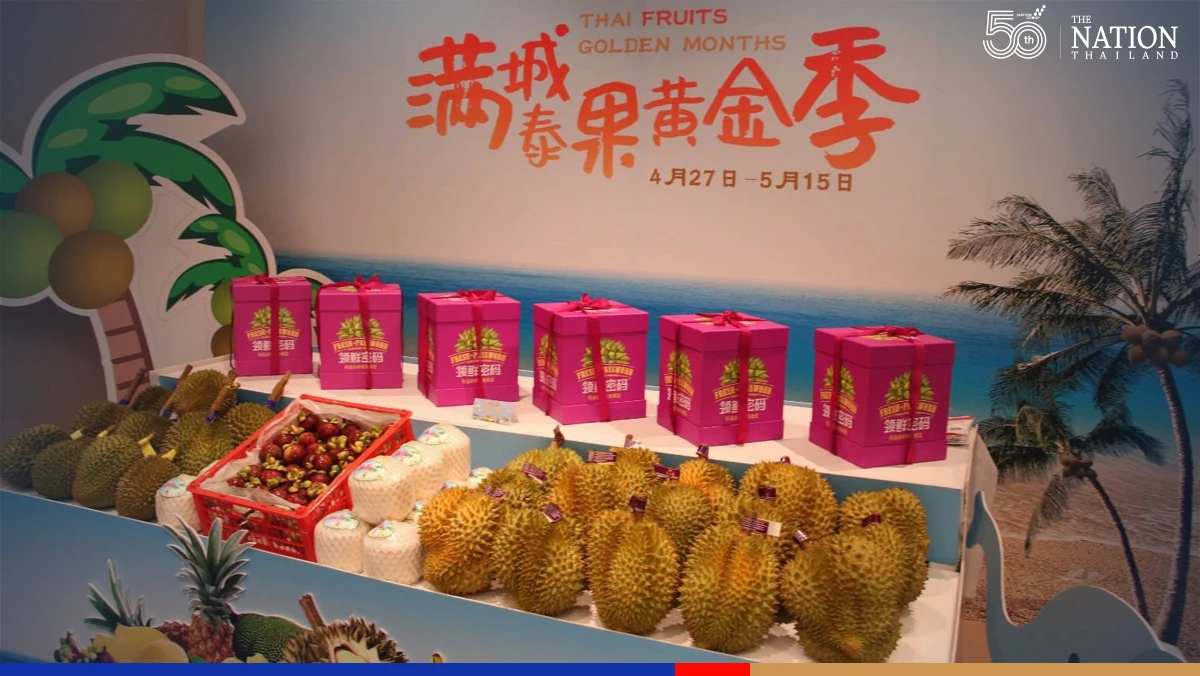
Monthong Durian from Thailand is dominating the Chinese fruit market, but there is also enormous scope for exporting plant-based food to other countries around the world, a senior government official said.
Mallika Boonmeetrakool Mahasook, an adviser to the Minister of Commerce, revealed that fresh durian was China’s highest-imported fruit since 2020, with an import volume of 0.575 million tons worth $2.3 billion. It marks a 44 per cent year-on-year increase, accounting for 22.4 per cent of China’s total fruit imports.
At present, China allows the import of fresh durian only from Thailand, especially the Monthong variety. It also imports whole frozen durian from Malaysia, but the quantity is still low, Mallika said. Imports from Malaysia account for less than 10 per cent of the total market volume, while Thailand has a near monopoly with over 90 per cent share.
The majority of consumers — nearly 88 percent — are female, and are among those with high purchasing power, especially those between the ages of 24 and 30, through fruit shops and e-commerce platforms, the adviser said.
Entrepreneurs wishing to export Thai durian to the Chinese market may need to analyse factors related to the demand from such main consumer groups, Mallika said.
In addition, plant-based foods are also in high demand all over the world, especially in developed countries such as the United States, Spain, the United Kingdom, etc, Mallika said.
Two years ago, Spain’s sales of the product were worth 448 million euros (Bt16.6 billion), an increase of 48 per cent, with plant-based milk being the most popular product, followed by plant meat products and plant-based yoghurt. Among milk products from plants, oat milk was the top seller, followed by soy milk and almond milk, the adviser said.
In the UK in 2021, plant-based milk sales increased by 28.3 per cent from the previous year, and potato milk is expected to be popular in 2022.
KFC in the United States has responded to the trend by announcing the addition of artificial chicken dishes to its menu. In 2020, the US vegetable-based food market had a retail value of approximately $7 billion, growing 27 per cent year on year, and the market is expected to more than double to around $13.5 billion by 2027.
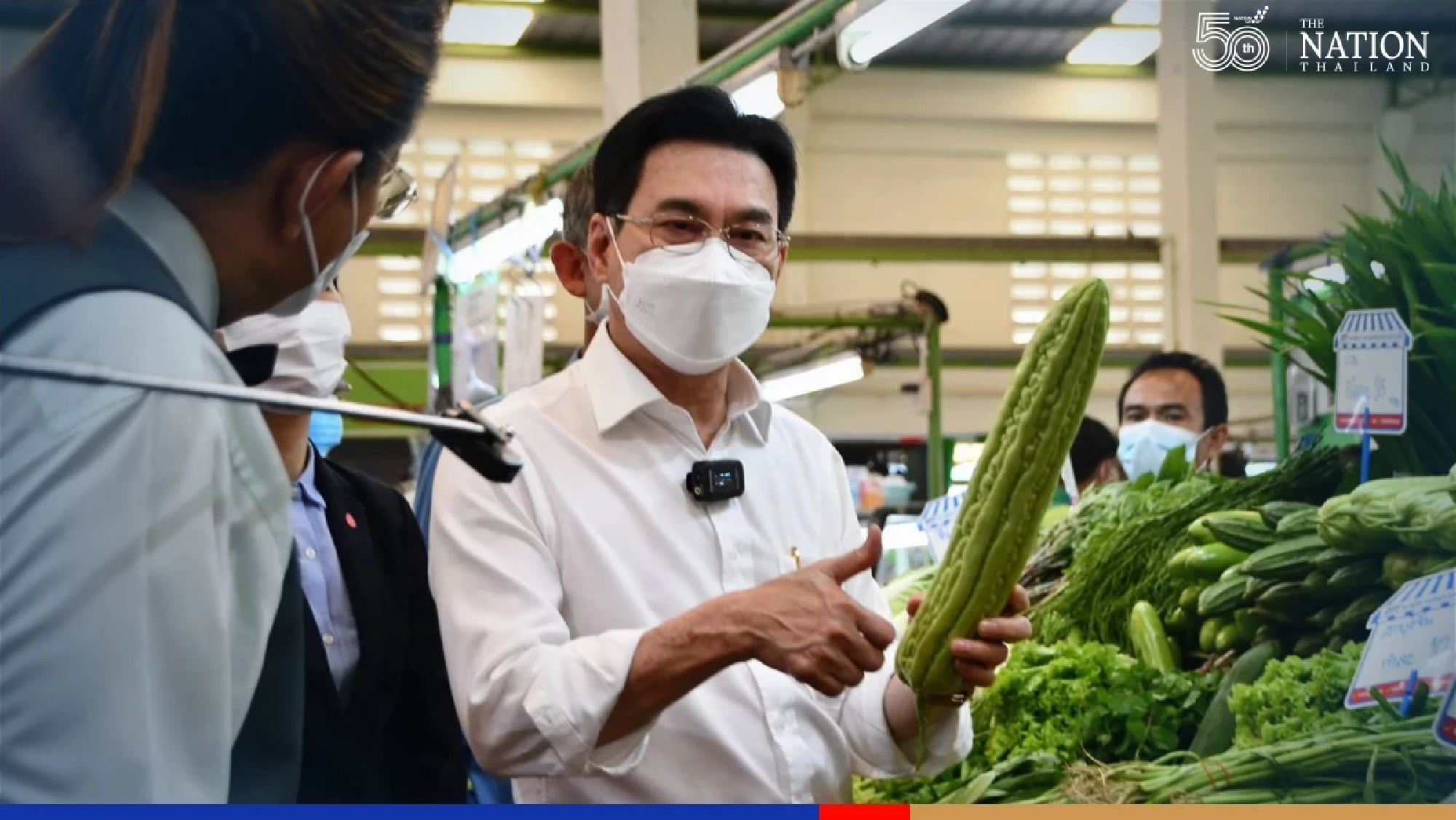
Commerce Minister Jurin Laksanawisit is confident that food prices will continue to fall gradually after a seasonal rise during Chinese New Year celebrations this week.
He cited the price of eggs (size 3), which the ministry has capped at 3.50 baht. The average price of size 3 eggs is now 7 per cent lower at 3.39 baht, according to ministry figures.
The Commerce Ministry monitors prices of seven major product categories: electrical appliances, soft drinks, instant noodles, seasonings and sauces, milk and dairy products, canned foods, and fresh food.
Meanwhile the pork price has been set at 100-110 baht per kilo. The price of medium-standard red meat pork is 11 per cent lower at of 187.19 baht, having dropped from a high of 205-210 baht this month, said the ministry.
The price of chicken, which usually jumps during Chinese New Year, is currently at normal levels, it added.
Seafood prices are also falling, with the cost of Tilapia dropping 11 per cent to 55-65 baht per kilo and red Tilapia falling 3 per cent, according to the ministry. However, the price of catfish is up 3 per cent.
The Commerce Ministry said it will contact producers of certain household necessities in a bid to hold down prices for as long as possible to relieve burdens on consumers.
The government is working on ways to build and strengthen trade relations with Saudi Arabia, Mallika Boonmeetrakool Mahasook, adviser to the Minister of Commerce, said.
An analysis and report from the Office of Overseas Trade Promotion in Jeddah said that Thai Prime Minister Prayut Chan-o-cha’s meeting with Saudi Crown Prince Mohammed bin Salman last week has provided an opportunity to restore bilateral relations, which will enable flexibility in many aspects, such as travel between the two countries, trade, and job opportunities for Thai people.
Mallika said that Commerce Minister Jurin Laksanawisit has a seven-point plan to stimulate trade and relationship with Saudi Arabia. They are:
1. Organising seminars to educate Thai businesses about marketing and consumer behaviour in the open-cultural era of Saudi Arabia under the Saudi Vision 2030 strategy;
2. Organising a trade delegation of businessmen from Thailand to visit Saudi Arabia and from Saudi Arabia to Thailand to strengthen relationships and build networks between them;
3. Organising promotional activities for Thai products with leading supermarkets in Saudi Arabia, such as rice, halal food and fruit, etc, in order to make the products more known among consumers;
4. Invite Thai entrepreneurs to participate in trade shows in Saudi Arabia, such as food and halal products exhibition;
5. Publicise the image of halal food products through online channels;
6. Invite Saudi leaders to join online trade negotiations or online business matching;
7. Invite leaders from Saudi Arabia to join Thai international trade, whether through regular, hybrid, or online format.
Saudi Arabia is a trading market with potential for growth, Mallika said, adding that Jurin has focused on thi
s market from the beginning. In addition to trading with Saudi Arabia, it is also a trade gateway to many other countries in the region, she said.
“They want to restructure the economy by expanding the tourism sector, the service sector, and the joint venture sector, resulting in a large demand for imported products and production capacity. That’s an opportunity for Thailand,” Malika said.
Businessmen from both countries are eyeing joint ventures, coupled with the new Saudi Vision 2030 policy, which aims to increase investment.
Saudi Arabia needs investment expertise from Thailand in the fields of farming, with focus on shrimp, fish and chicken raising, hospital operations, hotels, restaurants, franchise businesses. At the same time, Saudi businessmen are also interested in investing in Thailand in the fields of food, energy and mineral products.
Trade between Thailand and Saudi in 2021 was US$7.301 billion, an increase of 31.8 per cent, comprising $1.638 billion of Thai exports and $5.662 billion of imports.
Thailand’s main exports were automobiles, equipment and components, wood and wood products, air-conditioning, rubber products, canned and processed seafood, etc.






 Pitak added that Malaysia’s ratification of RCEP agreement will take effect on March 18 and the department is expanding its system to cover this country as well.