Target headline inflation in Thailand set at 1-3% for 2023
TUESDAY, DECEMBER 27, 2022
The Cabinet has okayed targeted headline inflation in the range of 1-3% for 2023, the same as it did for this year.
A Government House source said on Tuesday that the Cabinet had been informed by a central bank representative that though the actual headline inflation this year was higher than targeted, it was temporary due to rising energy prices.
The source quoted the central bank’s representative as saying that global energy prices had risen due to the Russia-Ukraine war and the global economic fallout of the Covid-19 pandemic.
The Bank of Thailand representative also assured the Cabinet that the situation will improve next year, prompting the decision to set the targeted inflation rate at 1-3%.
The central bank has reported that the headline inflation for November stood at 5.55%. In October, the Commerce Ministry announced that the 12-month average headline inflation from October 2021 to September 2022 was 5.23%.
Headline inflation is a measure of total inflation in an economy, including the price of commodities like food and energy, which are more volatile and prone to inflationary spikes.
Thai exporters warned new EU deforestation edict could lead to bans
TUESDAY, DECEMBER 27, 2022
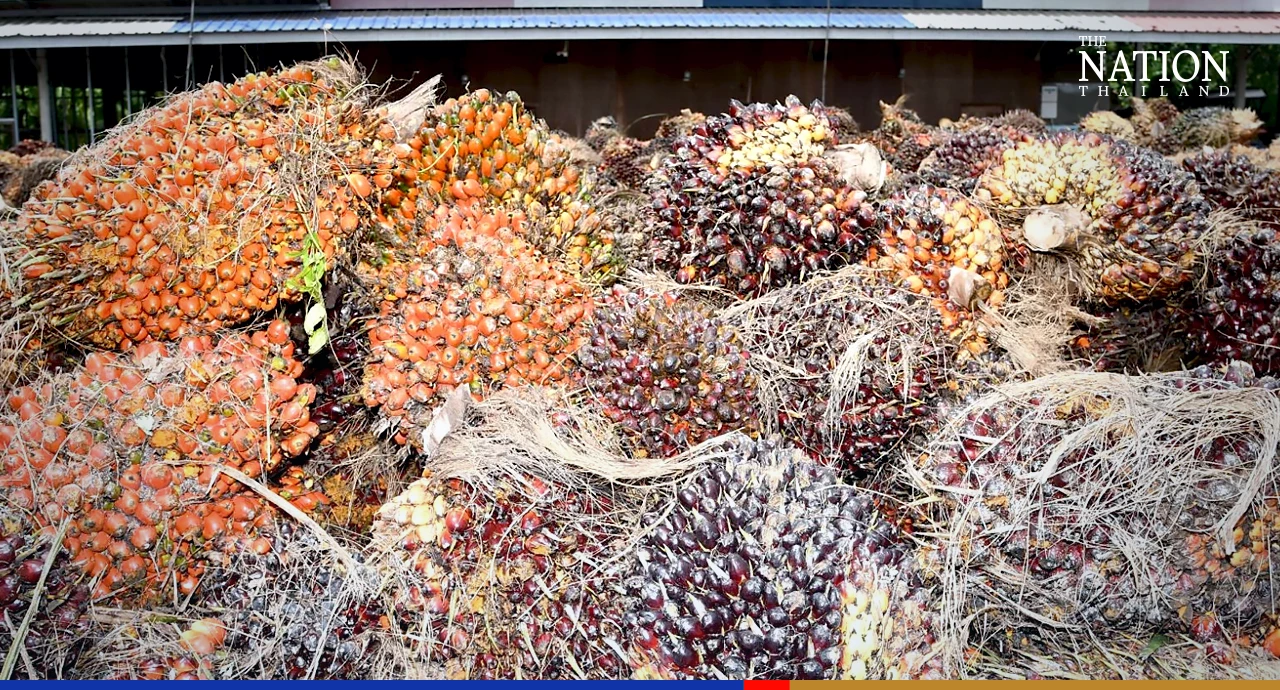
Thai exports in seven categories could be affected by the European Union’s new law on deforestation-free products, the Department of Trade Negotiations (DTN) warns.
Talks between the European Commission, the European Parliament and the EU Council took place on December 6 to finalise details of the deforestation policy, DTN director-general Auramon Supthaweethum said on Monday.
The DTN expects the new regulations to take effect from June next year, when Thai exports in seven categories could be banned if the EU finds they have contributed to deforestation. Thai exports under the deforestation spotlight are beef, paper for printing, palm oil, soy, coffee, cocoa and rubber.
Auramon said the new regulation will be imposed on EU trade partners at different levels depending on their deforestation risk. The European Union is currently revising its definition of deforestation and classifying trade partners according to three risk levels: high, medium and low, she said.
The regulation will also require EU importers to carry out comprehensive, effective and continuous due diligence to prove that their products are not linked to deforestation or forest degradation.
Auramon advised Thai exporters to follow progress of the regulation closely so they can adjust their practices to avoid impacts on their business.
Last year, Thai rubber exports to the EU were worth US$1.69 billion, or 8% of total rubber exports, while Thai wood exports to the EU were worth $22.6 million, or 9% of the total. Thai export volume of other products on the list – beef, soy, cocoa and palm oil, is relatively low at less than 1% of total exports in each category.
New study finds 8.1 million people in Thailand poor, 4.4 million below poverty line
MONDAY, DECEMBER 26, 2022
As many as 8.1 million Thais are poor and 4.4 million of them are living below the poverty line, the latest National Economic and Social Development Council (NESDC) report shows.
The report on Thailand’s poverty situation in 2021, which was released this year, said that the number of people living below the poverty line had dropped from 4.7 million in 2020 to 4.4 million last year.
“This is all thanks to the government’s economic stimulus measures to ease the financial burden on poor people, such as measures to increase purchasing power and utility bill cuts,” NESDC said.
However, NESDC found that poverty from other dimensions other than just income in Thailand is far more severe.
Citing its Multidimensional Poverty Index (MPI) which identifies four dimensions of poverty, namely education, health, quality of living and financial stability, it said 8.1 million Thais are suffering from poverty.
“As many as 36.9% of them are the elderly, while 51.5% are those who do not contribute to the economy, like children, the mentally ill, the ill or the unemployed,” NESDC said.
In the education sector, it said, more children have dropped out of school, especially those who are not living with their parents.
More than 280,000 students have been recorded as having dropped out of school last year due to poverty, the report said.
In terms of health, it said poor people suffer from the lack of access to clean water and nutrition, adding that people’s access to basic utilities is still limited, especially in remote areas.
When it comes to quality of living, it said 2.8 million people do not have access to the internet as signals do not reach all locations and many people are not able to pay internet fees.
When it comes to financial security, the report said many workers do not have access to social security and their earnings are not enough to make ends meet.
This has resulted in rising debts and problems with saving money, it said.
To solve these issues, NESDC has advised the government to improve information systems and launch policies to boost people’s quality of life.
“Government agencies should come up with policy packages that solve multidimensional poverty, such as improving financial literacy among people,” it added.
Baht steady against dollar but expert warns of year-end volatility
MONDAY, DECEMBER 26, 2022
The baht opened at 34.76 to the US dollar on Monday, weakening slightly from Friday’s close of 34.73.
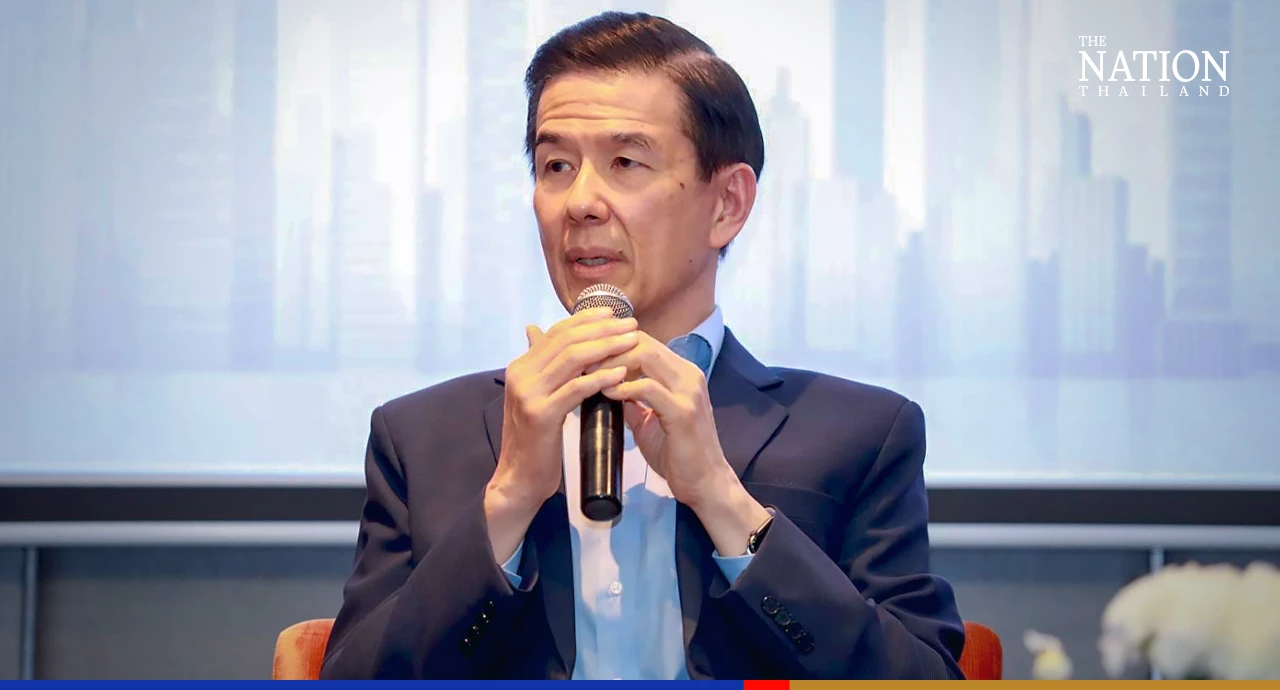
The currency will likely move between 34.65 and 34.85 against the greenback during the day and between 34.50 and 35.20 during the week, Krungthai market strategist Poon Panichpibool said.
Poon said that the baht could swing sideways and weaken in the short term due to the strengthening dollar and sales of risky assets.
However, he doubts the Thai currency will breach its resistance level since exporters are waiting to sell the dollar and foreign investors are reluctant to short the baht amid expectations it will strengthen.
Poon cautioned, however, that the low level of year-end transactions in the currency market could see the baht fluctuate heavily or in a wide range.
Meanwhile, lower-than-expected US jobless claims should ease market worries of another US Federal Reserve interest rate hike that would support further dollar strengthening, Poon said.
But he forecast the dollar would be buoyed if investors’ worries over the Covid-19 situation in China eased.
He also advised investors to use hedging tools such as options to manage risks in a highly volatile currency mark.
In last-ditch effort to delay power rate hike, business leaders turn to PM
FRIDAY, DECEMBER 23, 2022
Nongluck Ajanapanya
In a last-ditch effort to postpone a rise in electricity rates on January 1, business leaders on Friday urged Prime Minister Prayut Chan-o-cha to intervene and postpone the planned fuel tariff (Ft) rate hike until 2024.
Raising the Ft rate now will force businesses into the red and undermine their competitiveness at a time when they are heavily in debt and still recovering from the pandemic, they told a press conference they described as “urgent” on Friday.
The government plans to increase the rate on January 1 by 93.42 satang, up from its current 4.72 baht to 5.69 baht per unit.
The press conference was organised by the Joint Standing Committee on Commerce, Industry, and Banking – a business lobby group. It wants the Ft rate rise postponed until the second half of 2023 but some business leaders want it delayed until 2024. Sources said the standing committee’s chair, Sanan Angubolkul, was expecting to hear from the prime minister tonight.
Press conference speakers comprised Federation of Thai Industries renewable energy advisor Suwat Kamolpanus, Thai Retailers Association president Yol Phokasub, Thai Hotels Association president MarisaSukosol Nunbhakdi and the chair of the board of directors of Siam Cement, Roongrote Rangsiyopash.
Yol Phokasub
Yol said the retail and service sectors are overburdened due to high wages, interest rates, and other costs, while revenues are low.
“Electricity costs range from 20% to 50% [of all costs] in the retail and service sectors … Electricity costs will rise by more than 20% .. if the Ft is adjusted,” he said. “I’m concerned this will result in negative income and undermine the competitiveness of entrepreneurs.”
Rising electricity costs will damage the hotel industry, Marisa said.
Marisa Sukosol Nunbhakdi
The tourism industry is showing signs of recovery, but not every hotel, particularly medium and small-sized hotels, has recovered to pre-pandemic levels, she said.
The cost of electricity is usually equivalent to 5% of total costs and revenues, but it is now about 11% of total costs and 6-8% of revenue, Marisa added.
“COVID-19 has had the greatest impact on us. Tourist numbers are currently far below what they were. As a result, we require more time and supportive measures to recover. The increase in the Ft fee will cost us more money, which we will be unable to pass on to our customers,” she explained.
Roongrote Rangsiyopash
Roongrote said that if the government insisted on increasing the Ft fee, it would force large manufacturers to relocate their production bases, especially those who use large amounts of electricity like cement, ceramic, metal, and glass-making makers. Mid-sized businesses will take a bigger hit, he said
“Most manufacturers are medium-sized businesses and they might be wiped away [by the Ft rate hike],” he said.
Suwat Kamolpanus
Renewable energy advisor Suwat urged the government to review assumptions made in the new Power Development Plan by reducing the proportion of natural gas, particularly liquefied natural gas (LNG), in order to avoid high electricity costs.
LNG will be imported so controlling its costs will be extremely difficult, Suwat said. However, if the government can reduce the use of LNG by encouraging greater use of renewable energy this problem will be solved in the long run and Thailand will achieve energy security, he said.
Rice Department will upgrade machinery to boost seed production
FRIDAY, DECEMBER 23, 2022
The Rice Department will invest more than 1.2 billion baht to increase the production of rice seeds so it can meet demand for 150.000 tonnes per year, its director-general, Natthakit Khongthip, said on Thursday.
The department has developed a plan to increase production of the seeds from the current 95,000 tonnes to 150,000 tonnes a year, Natthakit said.
The main hurdles to increased production are lack of funds and infrastructure, he said, explaining that rice research centres are inefficient because their machinery and tools are broken or are so old that they are no longer compatible with new technology.
The department will increase manufacturing capacity at 16 rice research centres nationwide, Natthakit said.
It will invest 1.256 billion baht for 31 machines to increase the production of breeding and foundation seeds, which will ensure it meets demand for seeds and also improve food security, Natthakit said.
The January-April increase in FT will drive up the cost of electricity to 5.69 baht per unit, the JSCCIB said.
Federation of Thai Industries (FTI) chairman Kriengkrai Thiennukul said the committee estimates that businesses with high power demands such as petrochemical, iron and cement manufacturers will need to hike their product prices by 9-12%, while medium power users like automotive, electronics, sugar, and rubber manufacturers will raise prices 6-8%. Low-power industries such as pharmaceuticals, printed materials and clothing will be able to keep their price hikes to 5% or less, he said.
The FT hike would leave Thailand with the highest electricity costs in the Asean region, Kriengkrai said.
“This could drive multinational corporations to shift their manufacturing bases to neighbours with cheaper power bills, such as Vietnam, which charges only 2.88 baht per unit.”
The committee urged the government to delay the FT hike until the second half of next year, citing the Energy Regulatory Commission’s forecast that Gulf of Thailand natural gas output will rise in the second half of 2023, bringing down the cost of electricity generation.
“With these measures, we estimate that Egat can cover electricity-generation costa [without ft adjustment] for more than two years,” Kriengkrai said.
He also urged the government to decelerate investment in private-power-producer (PPP) projects. He said PPP projects were now far exceeding electricity demand, but the government still has to buy power from them as per the contracts.
The committee estimates the government has to pay PPPs 30.6 billion baht from September to December this year, and around 32.4 billion baht from January to April next year.
“This money could have been used to subsidise power bills for industrial users,” the FTI chief said.
Baht weakens against dollar as expert warns of volatility from US inflation data
FRIDAY, DECEMBER 23, 2022
The baht opened at 34.85 to the US dollar on Friday, weakening from Thursday’s close of 34.69.
The currency will likely move between 34.70 and 35.00 against the greenback during the day, Krungthai market strategist Poon Panichpibool said.
Poon cautioned the baht could fluctuate in a wide range after it weakened against the strengthening dollar and gold purchases. The baht will continue to weaken if the currency market remains in a risk-off state and foreign outflows from the Thai stock market persist, he added.
However, the baht is unlikely to breach its resistance level of 35-35.20 easily because investors including exporters are waiting to sell the dollar when the baht weakens while foreign investors may short the currency in expectation of baht strengthening, Poon said.
He warned to beware of currency market volatility before and after the US personal consumption expenditures (PCE) report, the US Fed’s preferred measure of inflation, is released on Friday (US time). Higher-than-expected PCE figures will put pressure on the dollar. Poon said the baht may strengthen as a result, but he was sceptical it would exceed its support level of 34.5 to 35.6.
He also advised investors to use hedging tools such as options to manage risks in a highly volatile currency market.
Consumer spending expected to hit 17-year high during New Year period
THURSDAY, DECEMBER 22, 2022
Bolstered by the government’s stimulus measures, Thailand’s consumer spending is predicted to hit a 17-year high, reaching 103.04 billion baht, according to the University of the Thai Chamber of Commerce (UTCC).
The president of the UTCC and adviser to the Centre for Economic and Business Forecasting, Thanavath Phonvichai, revealed during the conference on “Consumer behaviour and spending during 2023 New Year festival” that the New Year period is expected to generate over 103.04 billion baht (US$2.9 billion) in consumer spending, leading to a 20.1% expansion of the economy.
“It would be the first time that consumer spending would be exceeding 100 billion baht since 2007,” Thanavath said, adding that it would benefit the economy in the post-Covid-19 era.
With the support of the government’s stimulus measures, such as “Shop Dee Mee Kuen” (Shop and Payback) and “Rao Tiew Duay Kan” (We Travel Together) schemes during the first quarter of next year, the country’s economy is expected to grow by 0.1–1%, said Thanavath.
The adviser to UTCC’s council, Saowanee Thairungroj, said that the survey regarding consumer spending behaviour during the New Year festival, conducted between December 9-16 with a sample size of 1,345 participants across the country, showed that 69.8% of respondents are likely to spend money on travelling and party through the New Year period.
The survey also illustrated that consumers tend to buy more luxurious goods, with a basket of healthy products the most popular New Year gift.
“The North of the country seems to be the most popular region for tourists, followed by the Northeast, especially from December 29 this year to January 2 next year,” she said.
She said 54.4% of participants said the current economic situation affects their spending during the New Year festival, while 80.4% said that Covid-19 has no effect on their spending. Plus, 55.6% said that they think about their debt when using money, she added.
“Some 48.3% of respondents thought that this New Year festival would be more bustling than the previous year,” she said.
Meanwhile, Kasikorn Research Centre (KResearch) expects spending by Bangkokians during the New Year festival to be around 30.9 billion baht (US$0.89 billion), up 10.5% year on year following recovery in economic activities and tourism in the post-Covid-19 era.
However, most people would set aside their budget only for the four-day-long New Year holidays (December 30, 2022, to January 2, 2023) due to uncertainty over rising product prices, KResearch said.
Thailand opens rice DNA testing centre after Hom Mali loses world crown
THURSDAY, DECEMBER 22, 2022
Thailand has opened a genetic testing centre to improve its rice after the country’s famed Hom Mali (jasmine) grain was dethroned by a Cambodia strain at the World Rice Conference.
The DNA testing service will help rice farmers, millers and traders ensure the authenticity of their product via rapid genetic tests at low cost.
The service aims to strengthen the international reputation of Thai rice and create an advantage amid fierce competition, he added.
Judges at last month’s World Rice Conference complained that Thai Hom Mali had lost its famous fragrance, and crowned Cambodia’s Phka Rumduol jasmine variety as the globe’s best.
Thai Hom Mali exports rose 27% to 1.28 million tonnes in the first 10 months of 2022 from a year earlier, Ronnarong reported.
Monthly rice export volume is likely to increase as the economies of trading partners recover from the Covid-19 pandemic, he said.
The easing of China’s zero-Covid policy is also expected to boost demand for Thai rice.







 Yol Phokasub
 Marisa Sukosol Nunbhakdi
 Roongrote Rangsiyopash
 Suwat Kamolpanus


 SootinClaimon.Com