New, expanded markets may see Thai rice exports cross 2022 target
FRIDAY, DECEMBER 16, 2022
Thailand will likely achieve its goal of exporting 7.5 million tonnes of rice this year, and may even go beyond the target, the Department of Foreign Trade (DFT) said.
Ronnarong Phoolpipat, the department’s director-general, said on Friday that exporters have sought to ship out up to 8.58 million tonnes of rice this year, adding that the baht’s exchange rate has made prices very competitive.
Also, he said Iraq’s import of 1.3 million tonnes of rice in the first 10 months of this year has helped rice exports grow by 500% year-on-year.
Export of rice to the US and the Philippines – both of which are Thailand’s key markets – has grown by 25% and 44% respectively.
Ronnaraong said he expects rice exports to rise further in 2023 thanks to the exchange rate and the easing of Covid-19 measures.
He also said Indonesia and Bangladesh have expressed interest in importing rice from Thailand because their harvests are not large enough to cover domestic demand.
He said DFT will meet key rice exporters next month to set an export target for 2023.
The department also plans to hold a Thailand Rice Convention next year, as well as participate in international fairs like Germany’s BioFach, UAE’s Gulfood 2023, Foodex 2023 in Japan, the China-Asean Expo 2023 and Fine Food 2023 in Australia to promote Thai rice.
Foreign investment jumps 74% to THB112 billion, with largest share from Japan
FRIDAY, DECEMBER 16, 2022
Thailand saw foreign investment worth over 112 billion baht in the first 11 months this year, up 74% from the same period last year, Deputy Commerce Minister Sinit Lertkrai said on Friday.
He said the biggest investor was Japan, with 39 billion baht from 137 entities. Japan also accounted for 26% of the total 530 foreign investors registered between January and November.
China was the second-largest foreign investor at 22.6 billion baht – despite having the fewest number of investors among the top five countries/territories with 25 (5%).
Singapore ranked third with 11.9 billion baht from 85 investors, said Sinit, citing data from the Department of Business Development.
Hong Kong was fourth with 8.4 billion baht from 38 investors while the US was fifth with 3.3 billion baht from 70 investors.
Foreign investment projects in the first 11 months are expected to create 5,008 new jobs in Thailand, Sinit said.
The number of investors rose from 500 last year to 530 this year – a 6% increase.
Most of the foreign investment was in projects related to infrastructure development and supporting industries, according to the deputy commerce minister. They included subcontractors for an electricity plant for U-Tapao Airport, upgrading Map Ta Phut Industrial Port, design and development of electric vehicle charging stations, international goods distribution centres, and software and digital data services.
Thailand refutes US determination of solar panel ‘dumping’
FRIDAY, DECEMBER 16, 2022
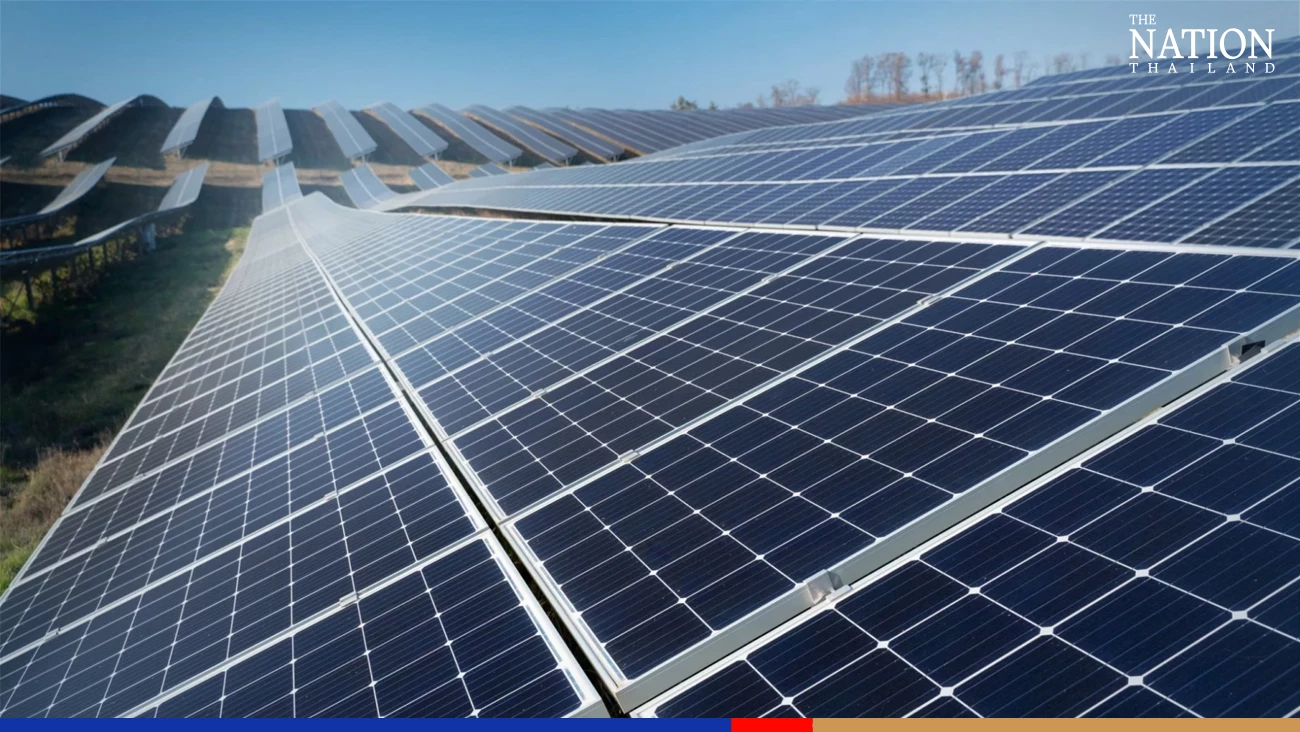
The Commerce Ministry has refuted the United States’ preliminary determination that solar panels imported from Thailand are evading US anti-dumping measures.
US authorities published a determination on December 8 that solar cells and modules imported from manufacturers in Thailand, Vietnam, Malaysia and Cambodia are using parts from China. This shows an intention to evade US anti-dumping and countervailing duty measures against China, the determination said.
“In this preliminary determination, the US has chosen only two Thai exporters to question about the origin of their materials. These two are only a fraction of all exporters of solar panels in Thailand,” said Ronnarong Phoolpipat, director-general of the ministry’s Foreign Trade Department.
Ronnarong added that US representatives will visit Thailand to investigate solar panel businesses before completing the final determination on anti-dumping practices on May 1, 2023. He urged the businesses to cooperate with US representatives by providing full details of products and materials, adding that the Foreign Trade Department will help prepare Thai businesses for the inspection.
In the meantime, Thai manufacturers can still export solar panels to the US tariff-free under a presidential order that exempts import tax on solar products from the four countries until June 9, 2024.
In the first 10 months of 2022, Thailand exported solar panels worth over US$940 million (32.9 billion baht), up 3% year on year. Thailand’s other major markets for solar panels are Vietnam, India, Taiwan, Turkey and China.
Thailand’s economy to grow by 3.6% in 2023, riding on tourism recovery: UTCC
FRIDAY, DECEMBER 16, 2022
The country is likely to see 3.6% economic growth in 2023 thanks to the performance of the tourism sector, despite the nation’s export growth slowing down, according to University of the Thai Chamber of Commerce (UTCC).
The president of the UTCC and adviser to the university’s Centre for Economic and Business Forecasting, Thanavath Phonvichai, said the number of tourists visiting Thailand is expected to increase from 11 million this year to 22 million people in 2023, while the nation’s exports are slowing down due to a decline in trade partners’ purchasing power.
“Exports are expected to recover by the third quarter of next year,” he said. “In addition, investment from the public sector is also a factor that will bolster Thailand’s economy as production bases are shifted to several Asean countries, including Thailand.”
He said the nation’s economy was predicted to grow by 3.3% this year, driven by the tourism sector after Covid restrictions were eased, which has brought an influx of tourists to the country, while exports continue to thrive.
UTCC has forecast that in 2023, Thailand’s export and import growth will be 1.2% and 2.2% respectively while investment from the public sector will expand by 3.2%.
He said inflation in the country would increase by 3% if the global and national economy follow these conditions: global trade volume rises by 2.5%, the global economy grows by 2.7%, 22-24 million people visit Thailand, currency rate stays at 35.95 baht to the US. dollar, crude oil from Dubai remains at US$92.50 per barrel, and the policy interest rate stays at 1.25-2%.
“The relief in the Covid-19 situation in the country, the return of tourists, improvement in the agricultural sector, and especially the election scheduled to take place next year will all help generate revenue for the country,” he said.
However, he said there is uncertainty about the conflict between Russia and Ukraine, rising energy and commodity prices, central banks’ interest rate hike to deal with inflation, volatility in financial markets and global economic recession, which could pressure Thailand’s economic growth.
Thai economy will buck the global trend and fully recover next year: seminar
THURSDAY, DECEMBER 15, 2022
Nongluck Ajanapanya
Economists and business leaders are optimistic that Thailand’s economy will fully recover next year, thanks to foreign tourist inflows, but more transformation is required for the kingdom to achieve resurrection rather than just survive the recession.
They were speaking at the “Go Thailand: Recession or Resurrection” seminar on Wednesday, which was sponsored by Nation Group’s Thansettakij.
The opening speech was delivered by Fabrizio Zarcone, World Bank country manager for Thailand. The outlooks for the global economy and Thailand are moving in opposite directions, he said.
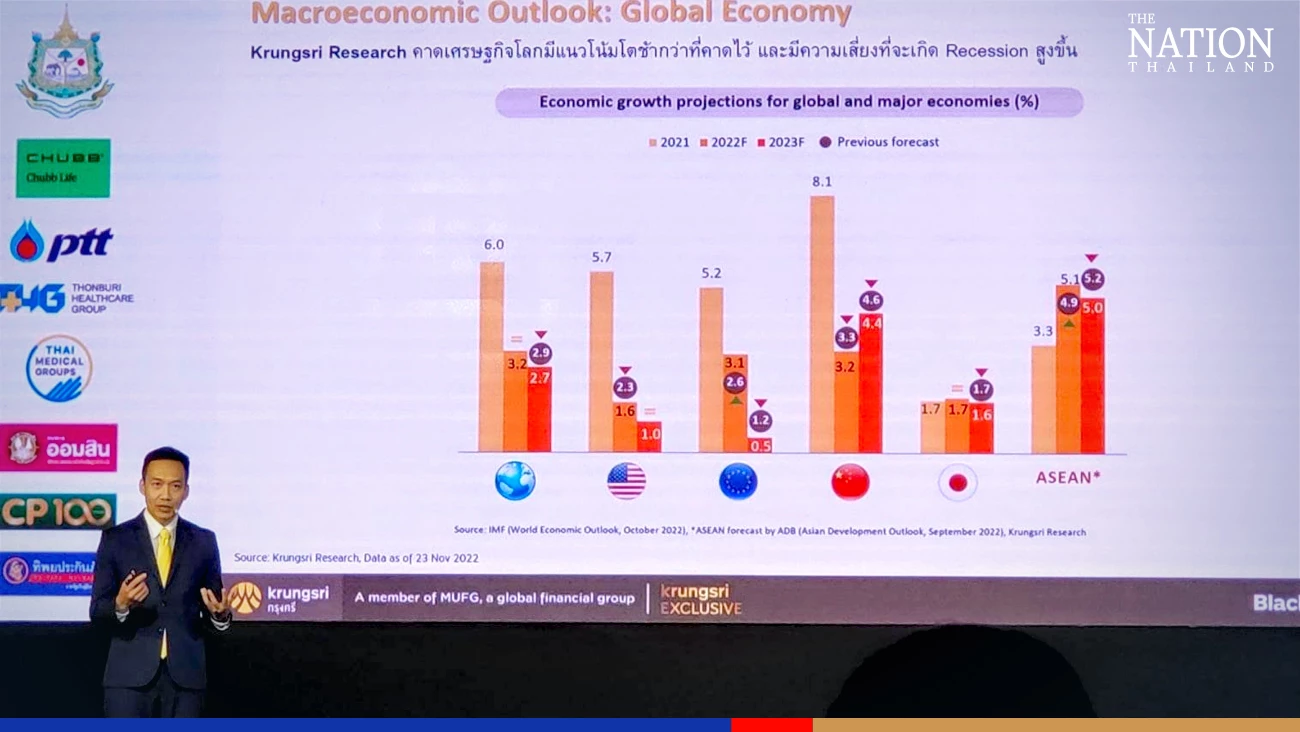
The global economy is expected to enter a recession next year, particularly in major economies such as the United States, Europe, and Japan, but East Asia and the Pacific, including Thailand, are showing signs of recovery.
The recovery of Thailand’s tourism sector and strong private spending are driving this expansion, Zarcone said.
In order to sustain the country’s growth and resilience, Zarcone said four initiatives are necessary: fiscal consolidation, increasing social assistance to the most vulnerable groups, investing in human capital, and making the tax collection system fairer and more efficient.
Win Phromphaet, Krungsri executive vice president and head of the high net-worth division at Bank of Ayudhya, agreed with the World Bank’s forecast for the global economy.
Win Phromphaet
Win advised Thai retail investors to diversify their investments across multiple assets. Bonds and debt instruments should account for more than half of the investment portfolio, with a small portion allocated to alternative assets such as gold and real estate, he said.
Equities still have a chance to profit, but investors must study them carefully before investing, Win added.
Meanwhile, high inflation, household debt, and domestic politics will be major concerns in the coming year.
Somchai Lertsutiwong
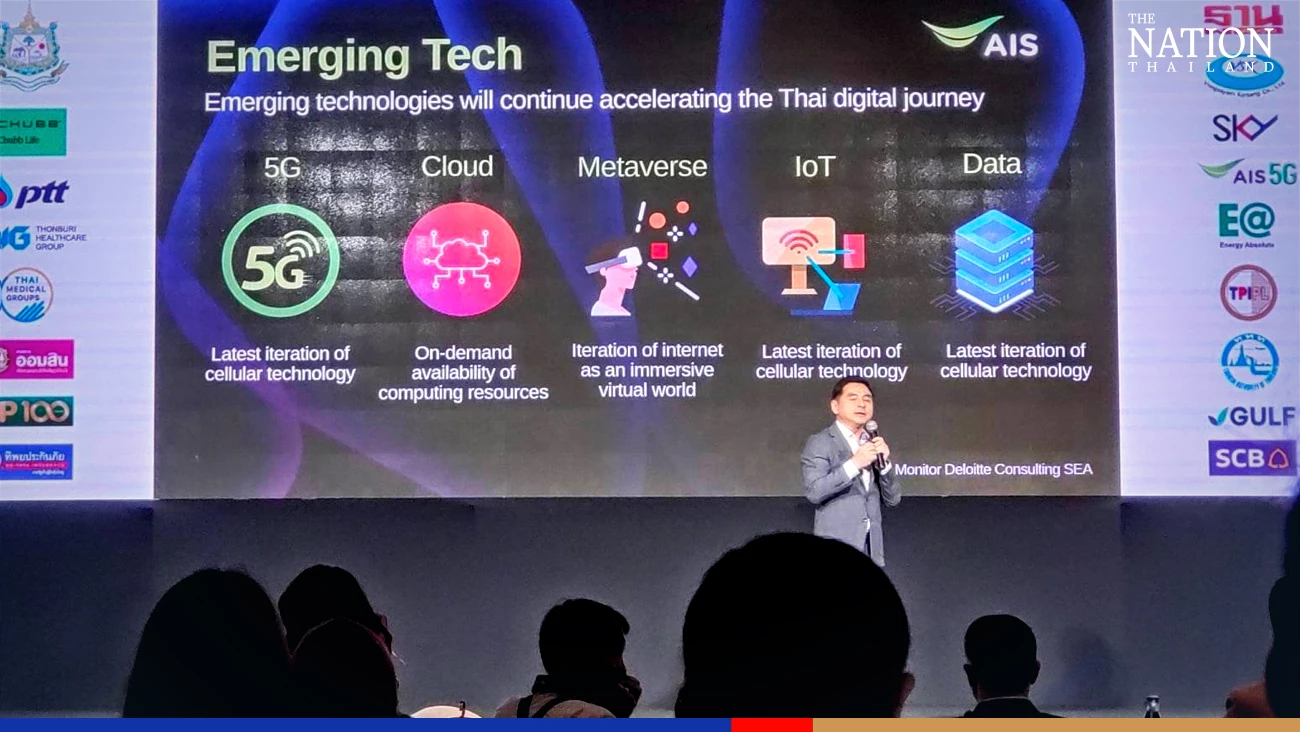
Somchai Lertsutiwong, executive vice president and marketing at Advanced Info Service, encouraged businesses of all sizes to undergo digital transformation.
Digital and advanced technology will add more value and efficiency to the country’s products and services and help Thailand remain globally competitive, Somchai said.
Yuthasak Supasorn
Yuthasak Supasorn, governor of the Tourism Authority of Thailand, said the tourism industry would be the country’s hero for the foreseeable future.
However, Thailand’s tourism industry will no longer prioritise quantity. As a result, all industry participants must upgrade their services and products by incorporating new technology and implementing the Bio-Circular-Green economic model.
“Our target tourists will be high quality and high spending,” Yuthasak said.
Wallaya Chirathivat
Wallaya Chirathivat, deputy chief executive officer of Central Pattana, listed three factors that will propel retail businesses: business transformation, urbanisation, and sustainability.
She defined transformation as keeping businesses up to date on consumer trends so that they can meet the needs of all customer segments. The goal of urbanisation is to achieve equitable income distribution and to improve employee skills. Sustainability, she said, is showing kindness to local communities and the environment.
Thanathip Supapradit
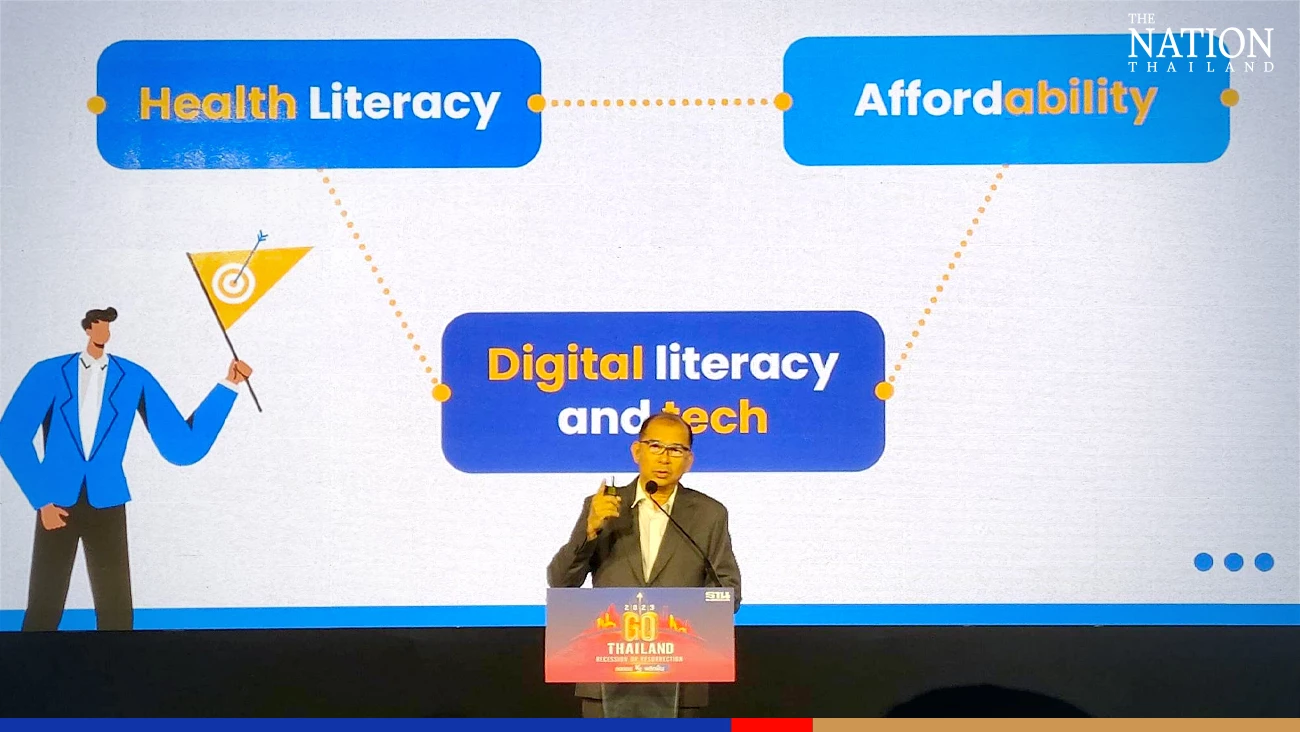
Thanathip Supapradit, CEO of Thonburi Healthcare Group, stated that a good strategy for doing business in the healthcare sector is to plan for expansion in growing markets while supporting people in slowing markets.
He noted that doing so not only helps to sustain its business and employees, but also wins the hearts and brand loyalty of patients.
Although he is confident that Thailand will remain the top healthcare hub in Southeast Asia and one of the top in the Asia-Pacific region, the country’s healthcare sector faces a lack of skilled workers.
He called for more investment in human capital and digital technology.
Somporn Suebthawilkul
Somporn Suebthawilkul, managing director at Dhipaya Insurance, said that global uncertainty was encouraging more businesses to see the importance of both life and non-life insurance.
The insurance industry will have a good year next year, he said.
Farm output set to accelerate its rise next year: Office of Agricultural Economics
THURSDAY, DECEMBER 15, 2022
Thailand’s gross domestic product of the agriculture industry expanded 0.8% this year over last year and will rise another 2-3 percent next year, according to the Office of Agricultural Economics.
It cited favourable weather, an increase in rain, as two major factors driving growth this year. Rising prices for crops also encouraged farmers to plant more, the office said.
It said government efforts – such as using technology to reduce production costs, improving agriculture products to meet standards and expanding offline and online marketing channels – increased production and sales of farmer goods.
Government stimulus measures helped increase consumption of agricultural products, while the easing of restrictions and subsequent economic recovery are leading to an increase of exports of Thai agricultural products, the office said.
The industry has faced some headwinds. The Office of Agricultural Economics said it was severely affected by the La Nina weather phenomenon and storms in the second half of this year, especially tropical storm “Noru” which triggered flooding in the North, Northeast and Central regions.
“Meanwhile, rising product prices, such as fuel, fertiliser, pesticide and animal feed, caused the production cost of the agricultural sector to increase,” the office said.
Uncertainty over animal disease outbreaks, the Russia-Ukraine war, China’s Zero-Covid policy and a global economic slowdown also affected the country’s export of agricultural products.
The office expects Thailand’s agriculture GDP to expand by 2-3% next year due to ample water resources, government support and economic expansion.
“However, it is necessary to follow various factors that would affect the country’s agriculture sector, such as climate change, rising production cost, animal disease outbreak, economic slowdown, currency exchange volatility, geopolitical conflicts and new Covid-19 waves,” the office added.
Digital firm outlines three top cybersecurity threats for businesses next year
THURSDAY, DECEMBER 15, 2022
Ransomware, data breach, and supply-chain attacks are the top cybersecurity threats for businesses around the world and they are likely to cause damage of 8 trillion US dollars (280 trillion baht), warns Bluebik Group, a business advisory firm with digital expertise.
Pochara Arayakarnkul, chief executive of Bluebik, said that the digital transformation of businesses over recent years has made them more vulnerable to cybersecurity threats.
“Cybersecurity has become one of the top concerns for corporate leaders around the world,” he said.
Digital transformation allows businesses to benefit from the latest technologies involving cloud computing, artificial intelligence, blockchain, and the Internet of Things. However, the new ecosystem’s complexity leaves loopholes for cybercriminals to exploit.
The finance, healthcare, hospital, retail and hotel sectors have become more vulnerable to cyber attacks, the Bluebik CEO said. Malware known as “ransomware-as-a-service” has become the top cybersecurity threat as it spreads fast and is readily available in the online black market, according to Pochara.
In the third quarter of this year, more than 58% of organisations in the Americas reported that they became victims of such malware and had to pay an average ransom of US$250,000 (8.7 million baht), according to Bluebik, citing reports from cybersecurity agencies in North America.
Supply-chain attacks are also expected to be a top cybersecurity threat next year. Hackers target organisations with strong systems against cyber threats that may have some weaknesses in their “back office” system for customers.
Over the past year, more than 54% of organisations surveyed said they experienced third-party attacks, according to the Ponemon Institute, which studies information security and privacy issues. Data breach has also become a top cybersecurity threat as cyber criminals steal confidential information, trade secrets and personal data online.
IBM estimated that each data breach cost Southeast Asian businesses damage estimated at $2.8 million (98 million baht) this year. More than 83% of the organisations surveyed became a victim of data breach more than once.
Meanwhile, Polnsutee Thanesniratsai, director of Bluebik Titans Co Ltd, said that businesses have to take measures to prevent cyber attacks that could damage not only their finances but also their reputation. He suggested a “cyber resilience” approach to deal with the issue. It comprises five measures:
– Managing cybersecurity as an enterprise risk,
– Executives play a key role in governance and fostering a culture of cybersecurity vigilance,
– Executives closely oversee cybersecurity efforts, – Maintaining compliance with cybersecurity laws and regulations, and
Thailand’s job creation recovers in Q3, but Gen Y’s NPLs a cause for worry: NESDC
THURSDAY, DECEMBER 15, 2022
Thailand’s job creation in the third quarter improved, but Gen Y people, who are the main work force, still contributed to a high rate of non-performing loans (NPLs), the Office of the National Economic and Social Development Council reported.
In its report on Thai employment and society, the NESDC Office said on Wednesday that about 39.6 million people were employed in the third quarter, an increase of 2.1% from the same period of last year.
The NESDC said most of the employment — 27.2 million jobs — were in the agricultural sector, which saw a 4.3% increase in employment.
The retail sector saw a 4.5% increase in employment, hotels and restaurants 8.3%, and production a 1.4% increase.
The NESDC Office said the third quarter saw employees of all sectors on average work 42.5 hours per week while employees of the private sector worked 46.7 hours per week. About 6.8 million workers work overtime while the number of those who are virtually unemployed or work fewer than four hours a week, dropped to 1.9 million, similar to the pre-Covid situation.
The third quarter saw 490,000 workers unemployed, or 1.23% of the whole workforce, while real unemployment fell to 1.99%, which was a reduction for both workers who used to work and those who have never been employed, the NESDC Office added.
The office noted that while the employment rate rose in the third quarter, the real salary rates of both the private sector and all sectors contracted by 1.7% and 3.1% compared to the same quarter of last year.
The NESDC Office said there are 25 million debtors in the loan system monitored by the Credit Bureau during the third quarter. The debtors are divided by types of loans as:
– Credit card debt (529 billion baht)
– Personal loans (2.5 trillion baht)
– Auto loans (2.5 trillion baht)
– Housing loans (4.7 trillion baht)
– Agricultural loans (1 trillion baht).
The NESDC Office said overall NPLs amounted to 1.09 trillion, or 8.4 %, a drop from 8.6% (1.1 trillion baht) during the same period of last year.
The NESDC Office said auto loans and personal loans were most worrying.
It said about 1.08 million accounts of auto loans were approved during the past nine months and 53% of them are Gen Y people, who have either defaulted on the loans or had late payments of debt.
The NESDC Office said the auto loans saw 6.5% of NPLs, similar to the same rate of the previous quarter and the Gen Y debtors, who are between 25-42 years old, became the biggest group of NPLs debtors amounting to 340 billion baht of NPLs, or 92,000 NPL accounts.
The NESDC Office noted that the Gen Y workers, who are 25 to 42 years old, are the main workforce of the country. The NPLs of this group indicated rising cost and rising interest rates so the NESDC has recommended that the government implement more economic stimulus measures to increase the income of this group.
Thai pet food firms urged to sniff out ‘big opportunity’ in China
THURSDAY, DECEMBER 15, 2022
Thai pet food companies have been urged to tap China’s growing trend of pet ownership.
“Thailand has a chance to expand its pet food market share in China, thanks to Chinese people’s rising demand for pets,” said Department of International Trade Promotion (DITP) director-general Phusit Ratanakul Sereroengrit on Thursday.
The value of China’s pet food market has surged from 105.80 billion yuan in 2019 to 140.10 billion yuan (700 billion baht) this year, Phusit said, citing a report from the Office of International Trade Promotion in Qingdao.
He said the majority of China’s pet food market is currently controlled by foreign companies, but domestic firms are developing pet food production facilities to take back market share. However, there are still big opportunities in China’s market for Thai pet food manufacturers, he added. He recommended e-commerce platforms, trade promotions, short video clips, and partnering with local celebrities as ways for Thai businesses to tap market opportunities. He said Thai pet foods are already available on Chinese e-commerce platforms such as JD.com and Taobao.
He also advised Thai businesses to study Chinese consumer behaviour and develop pet foods to meet their demands.
China consumers are increasingly keen on healthy pet foods made from natural or organic ingredients, he added.
Thailand must boost competitiveness via law change to unleash business: Wissanu
THURSDAY, DECEMBER 15, 2022
Thailand must boost its competitiveness by amending laws and regulations to promote ease of doing business, Deputy Prime Minister Wissanu Krea-ngam said on Wednesday.
Wissanu, the government’s legal expert, was speaking during his keynote address on “How unlocking laws and regulations can boost the country’s competitiveness” at the 2022 Sampao-Navathong awards.
The annual awards are organised by the Thai Chamber of Commerce (TCC) and Board of Trade to honour government agencies that ease difficulties in business operations.
Wissanu said good laws and regulations are essential to create a supportive ecosystem for business activities covering labour, tax, facilities, environment and anti-corruption issues.
“Hence, acts, royal decrees, regulations, ministry announcements and orders need to be amended and reformed,” he said.
The government has spent years amending laws, but some legal changes to facilitate business were still incomplete due to the lengthy amendment process, Wissanu said.
Parliament’s dissolution and government agencies’ attitude had added to delays.
Wissanu said the current government’s reform plan covered the scrapping of outdated laws, updating laws with amendments and creating new laws.
He said government and private sector had improved almost 1,000 business processes, but laws and royal decrees took a lot of time to improve. He cited the Electronic-means Administrative Functions Act BE 2565 for digitalisation of government.
Wissanu said the attitude of government agencies towards facilitating business must change to enable faster amendment of laws that would boost Thailand’s competitiveness.
TCC chairman Sanan Angubolkul said the chamber and related agencies have improved 938 operations so far. This had reduced operating costs for businesses by 100 billion baht per year, which had also created opportunities for Thailand, he said.
The country now needed to accelerate foreign investment, said Sanan, adding that the Eastern Economic Corridor was ready to support investment from foreigners worldwide.
“Attracting investment is key to generating revenue for the country as domestic investment from the government and private sectors may not be enough for recovery,” he said.
Foreign investment brings the added benefit of knowledge exchange on new technologies, he said, urging the government and private sector to build an ecosystem to support foreign business and investment in Thailand.








 Win Phromphaet
 Somchai Lertsutiwong
 Yuthasak Supasorn
 Thanathip Supapradit
 Somporn Suebthawilkul







 SootinClaimon.Com