Transport Ministry has revealed its plan of handling mega projects in fiscal year 2022 in a seminar “Thailand Opportunity for Sustainable Economic Growth” organized virtually on Thursday (October 28).
“The Ministry is planning to start and continue 40 projects in 2022 with combined investment value of Bt1.4 trillion,” said Transport Minister Saksayam Chidchob. “Of these, Bt516 billion worth of investment will be in projects that we already signed the contracts, while Bt974 billion will be an investment in new projects.”
Saksayam further added that among the 13 projects that already signed the contract, one will involve building road infrastructure (worth Bt32.22 billion), one is about land transport (Bt2.86 billion), seven will be of rail transport (Bt476.15 billion), and four will involve air travel (Bt5.71 billion).
Of the 27 new projects to be started in 2022, twelve will involve building road infrastructure (Bt281.2 billion), one is about land transport (Bt1.36 billion), five will be of rail transport (Bt624.87 billion), five will involve sea transport (Bt7.56 billion), and four will involve air travel (Bt59.48 billion).
“The National Economic and Social Development Council (NESDC) has predicted Thailand’s economic growth of this year at 0.7 to 1.2 per cent, following the trend of global economy that is gradually recovering from the impact of Covid-19 outbreak,” said Saksayam. “Meanwhile, the International Monetary Fund (IMF) estimated that the global economy will expand 6 per cent this year and 4.4 per cent in 2022.”
“To continue stimulating the economy, Thailand must increase government spending in new projects, which will subsequentially drive forward other economic aspects such as tourism, export, domestic consumption and private investments,” he added.
Krungsri Securities forecast the Stock Exchange of Thailand (SET) Index on Friday (October 29) would fall to between 1,615 and 1,620 points.
set
It said the index gained positive sentiment from the European Central Bank’s decision to maintain the interest rate at 0 per cent and continue on quantitative easing programme until March next year.
“However, investors would continue delaying investment to follow the US Federal Open Market Committee meeting next week as it is expected that the committee would taper its quantitative easing programme,” Krungsri Securities said.
“Meanwhile, mass sell-offs of shares in line with market technical signs would pressure the index.”
It also recommended buying of the following companies’ shares as an investment strategy:
▪︎ GULF, BGRIM, CHG, BCH, BDMS, KCE and JMT, whose third-quarter profit is expected to grow.
▪︎ HMPRO, CPALL, TNP and KK, which benefit from the government’s economic stimulus measures.
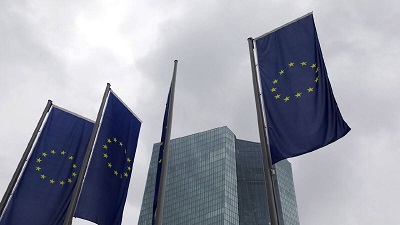
European Central Bank President Christine Lagardes bid to drive home a commitment to ultra-loose monetary policy fell short on Thursday as investors kept alive bets for interest-rate hikes as soon as next year.
After presenting an economic assessment that no longer labeled surging inflation as “temporary” and acknowledged it will last longer than originally anticipated before fading, she then read out a prepared remark apparently intended to push back on expectations of tightening before the end of 2022.
“Our analysis certainly does not support that the conditions of our forward guidance are satisfied at the time of liftoff as expected by markets, nor any time soon thereafter,” she told reporters during a virtual press conference in Frankfurt, before later adding: “are markets ahead of themselves? Not for me to say.”
Investors held onto bets that the ECB will have raised interest rates at least once come next September, a move that would amount to a dramatic switch in stance from the ultra-loose emergency settings that policy makers have pledged to keep in place until March.
“It was hard for Lagarde to give a credible pushback against market pricing after saying the sole focus of this meeting was inflation,” said Antoine Bouvet, a strategist at ING Groep. “She also hesitated when given another opportunity. Taken together, it is not enough to put markets off questioning the ECB’s forward guidance.”
Lagarde’s encounter with reporters was within hours of investors doubling down on bets of hiking. While that may reflect a global environment where central banks from the U.K. to New Zealand are pivoting fast toward tightening, the ECB president said such comparisons were “odious.”
“The outlook is different, the level of inflation that they have is different, some of them are either at or above target already,” she said.
While the decision on Thursday was slated as a quiet prelude to December’s showdown over the future of emergency stimulus, Lagarde suddenly found herself in the spotlight of market attention with a flurry of rate bets that seemed to question the ECB’s commitment to ultra-low interest rates.
Money markets trimmed rate-hike bets only slightly after she spoke, betting on 17 basis points of tightening by the end of next year compared with 21 basis points during the press conference.
Government bonds extended their decline, with the yield on Italian 10-year securities rising 12 basis points to 1.06%. The euro erased losses, trading 0.7% higher against the dollar at 1.1680.
“She was probably too timid on her push back of market pricing, but ultimately it is inconsistent with the ECB’s forward guidance,” said Imogen Bachra, a rates strategist at Natwest Markets. “Clearly inflation is less transitory than they first thought, but she was still dovish in emphasizing that higher price pressures now could risk the recovery.”
Lagarde spoke after the publication of data showing inflation accelerated to 5.5% in Spain, a faster-than-anticipated 4.6% in Germany, and a survey showing price expectations in the euro-zone have reached the highest since 1993.
On Friday, more statistics will be released including the euro-zone report, which economists expect to show an outcome of 3.7%, the fastest in 13 years.
The ECB attributes half of the acceleration to energy prices, but says that the region’s post-pandemic is also playing a part.
“Recovering demand related to the reopening of the economy is outpacing supply,” Lagarde said. “While the current phase of higher inflation will last longer than originally expected, we expect it to decline in the course of next year.”
Policy makers opted to keep in place their current pace of emergency bond purchases, in a decision that is just a prelude to December, when they must determine the future of stimulus after their 1.85 trillion-euro program, known as PEPP.
“At this point in time, I expect PEPP to end at the end of March,” Lagarde said. “Whether we will use the full envelope or not is to be seen.”
U.S. stocks rallied to another all-time high as fresh signs that Corporate America is delivering on lofty earnings expectations propel major indexes toward the best month in a year. Treasuries continued to gyrate, with some portions of the yield curve inverting.
The real estate, industrial and consumer discretionary industry groups led the S&P 500 to a record, putting the benchmark index on pace for a more than 6% gain in October. The Dow Jones industrial average also rebounded from Wednesday’s losses. Amazon.com Inc. and Tesla Inc. helped lift the Nasdaq 100 to another record. The Treasury yield curve inverted between 20 and 30 years on Thursday for the first time since the U.S. government reintroduced a two-decade maturity in 2020.
“We have a market powered by strong earnings, generally good economic news and a calming down of the bond market, and so the path of least resistance is higher and equities remain the asset class of choice with low return potential on other asset classes,” said David Donabedian, chief investment officer of CIBC Private Wealth Management.
Investors are digesting earnings from some of America’s bellwether companies. Industrial bellwether Caterpillar Inc. rose after an earnings beat. Ford soared after lifting forecasts and resuming dividends. EBay Inc. dropped after reporting disappointing results late Wednesday. Amazon.com and Apple Inc. report results after the close of regular trading.
Excluding financial firms, companies in the S&P 500 that announced results have boosted net-profit margins by 40 basis points to 12.4% from the previous quarter, according to data compiled by Bank of America Corp. The improvement has spread across major industries, with all but energy and consumer staples posting better margins.
Earlier, a report showed that the U.S. economy expanded at an annual rate of 2% in the three months through September, lower than the 2.6% median estimate in a Bloomberg survey, as consumer spending slowed. The GDP price index also slowed from the last quarter, though it still rose more than analysts’ expectations. A separate report showed that weekly jobless claims fell to a pandemic low.
When 20-year Treasury issuance began in May 2020, yields in the sector were about 25 basis points lower than 30-year yields. While expectations for Federal Reserve rate increases beginning next year have flattened the curve generally, demand for the 20-year point appears to be more muted than for longer-tenor securities.
The euro gained and European bonds fell after European Central Bank President Christine Lagarde said higher inflation might be around for longer than expected, though the monetary authority expects prices to start moderating next year. The ECB earlier left borrowing costs unchanged and said bond-buying would continue at a moderately lower pace. The Stoxx Europe 600 Index rose.
Global stocks are still near all-time peaks, supported by a robust corporate earnings season so far, with profit margins widening on average despite cost pressures. The risk is sentiment could weaken if investors lose confidence in the ability of policymakers to contain inflation while nurturing the economic rebound.
“As long as the economy is not going through recession or anything disastrous, but if things are delayed, if we’re going on the right path, but at a slower pace — which means the policy support persists for longer — still positive for markets,” said Lee Ferridge, head of North America multi-asset strategy at State Street, on Bloomberg TV and Radio’s “Surveillance.”
These are the main moves in markets:
Stocks
– The S&P 500 rose 1% as of 4:01 p.m. EDT
– The Nasdaq 100 rose 1.2%
– The Dow Jones industrial average rose 0.7%
– The MSCI World index rose 0.7%
Currencies
– The Bloomberg Dollar Spot Index fell 0.4%
– The euro rose 0.7% to $1.1679
– The British pound rose 0.3% to $1.3789
– The Japanese yen rose 0.2% to 113.58 per dollar
Bonds
– The yield on 10-year Treasurys advanced three basis points to 1.57%
– Germany’s 10-year yield advanced four basis points to -0.14%
– Britain’s 10-year yield advanced two basis points to 1.01%
Commodities
– West Texas Intermediate crude rose 0.6% to $83.12 a barrel
WASHINGTON – The U.S. economy grew at a disappointing 2.0% annual rate in the third quarter as the delta variant peaked, but promising signs suggest 2021 is on track to notch the fastest full-year growth in almost four decades.
The coronavirus tore through unvaccinated communities during much of the July-through-September period measured in Thursday’s gross domestic product report, eviscerating economists’ expectations from earlier in the year of continued rapid growth near the 6.3% and 6.7% seen in the first two quarters of 2021.
The White House, top lawmakers and economists are debating whether the weak GDP report reflects a blip on the way to a boom, or something more, especially as Democrats close in on a deal on President Joe Biden’s $1.75 trillion budget plan overhauling health care, education and climate and tax laws.
Much will depend on the path of the virus, and whether higher prices, persistent supply chain issues and a wobbly job market dampens consumer spending going into the holiday season.
Thursday’s report from the Bureau of Labor Statistics is a backward-looking glimpse at the economy’s worst quarter since the recovery began. But looking ahead, economists say the numbers hid myriad reasons for optimism in the fourth quarter and beyond.
New coronavirus infections in the United States have dropped nearly 60% since the September spike brought on by the delta variant. Some of the biggest covid-era distortions in Americans’ buying habits – like the car-buying boom that goosed inflation and ravaged supply chains – also started to normalize. And indicators from consumer confidence to unemployment claims have improved in October.
As positive trends pile up – and assuming no major stumbles in the final three months of the year – the economy should grow more than 5% over all of 2021. That would be its strongest year since 1984, when GDP grew more than 7% in a rebound from a double-dip recession.
Jason Furman, former President Barack Obama’s top White House economist, listed the reasons he expects more growth to come. The economy is still below its potential had there never been a pandemic, so there’s more room for “catch up” growth. Workers will return to work over time. covid cases are declining, and businesses have ordered up equipment that will eventually show up as investment in GDP.
“The economy has a lot of challenges,” said Furman, a nonresident senior fellow at the Peterson Institute for International Economics. “It is unlikely to have the torrid pace of growth it had in the first half of the year, but there is a lot of room to move up.”
Throughout the year, whipsawing demand and supply distorted consumer spending. The astonishing boost in income and spending fueled by federal aid in the first half of the year dried up in the third quarter just as other head winds intensified.
Sales of automobiles and parts, for example, skyrocketed almost 40% from the beginning of the pandemic through the second quarter, boosting GDP to new highs. But an 18% plunge followed in the third quarter, slashing 2.4 percentage points off GDP growth as chip shortages and persistent supply chain issues hampered the car market.
A separate drop in residential investment, which includes new home construction and renovations, also shaved 0.4 percentage points off economic growth, due to shortages of construction materials from wood frames to appliances.
But spending on services continued to rise, as consumers spent more on experiences and the economy continues to reopen, stoking economists’ optimism about the final stretch of 2021. Already, consumer confidence is rebounding – it increased 3.6% in October after falling all three months of the third quarter, according to a Tuesday release from the Conference Board. Consumer spending is expected to ramp up around the holiday season. And, jobless claims have been ticking down for about a month, dropping to a new pandemic low last week, according to a separate report from the Department of Labor.
Still, there’s never been a playbook for this recovery, apart from one constant: where the pandemic goes, so goes the economy. Officials in the White House and the Federal Reserve stress the importance of looking at many months or quarters of data – good or bad – to assess the economy’s health.
The GDP report captured the three-month span when the economy went from revving up to tripping up. In July, the economy added a whopping 943,000 jobs, reinforcing hopes that people would pour back into the labor force going into the fall. But as the delta variant spread, the economy added only 235,000 jobs in August, and consumer confidence nosedived. Job growth in September (194,000 jobs) was the lowest since January, with hiring staying low in bars, restaurants and hotels.
Meanwhile, many of the supply-chain issues that pushed inflation to a 13-year high appear, in some cases, to have intensified. Policymakers at the Fed and the White House have started to acknowledge that inflation is turning out to be lasting longer, and rising higher, than initially expected, saying that prices won’t come down until supply chains have time to clear up.
Businesses, for their part, are betting again on future growth. Joe Brusuelas, chief economist at RSM, pointed to a “silver lining inside this otherwise dour report” – an 11.7% increase in gross private investment, underscored by an increase in intellectual property. That helps signal businesses are making investments now that could pay off and make them more productive later.
“The forward-looking components of GDP look a bit better than the covid components,” Brusuelas wrote in an analyst note.
Another cause for optimism: businesses were able to build up their inventories – or at least slow the supply-chain bleeding– ahead of the holiday season, despite continued logistical snarls. People may have to be flexible on the exact gifts they pick out for friends and family. But they’ll likely have options.
“We built up inventories, which is a really good thing, because while the matching of goods provided and [the goods] demanded is unlikely to be perfect this holiday season, it suggests there will be some things on the shelves to buy in the fourth quarter,” Hunter, of KPMG, said.
Chad Moutray, chief economist of the National Association of Manufacturers said he expects the economy to grow 4% in the fourth quarter and 5.5% for all of 2021 as demand remains “super strong.”
“You still have supply chain issues – those are not going to get solved in the fourth quarter. You still have labor shortages,” Moutray said. “But in general, you talk to most manufacturers and they’re going to tell you sales are pretty strong.”
Overall, the report showed strong signs of an economy returning to 2019-style spending patterns, with more spending on services and experiences like hair salons and travel, and fewer purchases of goods such as new cars, outdoor fire pits and washing machines.
When the coronavirus hit, consumers slashed about half of their spending on transportation services, such air travel, ride-share and trains, but the sector is now well on the way to recovery. Almost half of the respondents to a recent Conference Board survey said they planned to travel in the coming six months – the highest level since the pandemic began.
Spending on services like Southwest Airlines, Lyft and Amtrak soared 9% in the quarter, even as people ended their pandemic-era spending binge on transportation-related goods such as motor vehicles and parts.
In Chicago, Sophie Limo Black Car Services fought to stay in business in 2020 as phones rang off the hook with cancellations. Cristian Chifor, one of the company’s account managers, said bookings have picked back up over the past few months, mostly with people booking rides for a social night out.
But there’s a long way to go: Corporate accounts haven’t come back. Chifor said the delta variant of the coronavirus held back some business travel that might otherwise have returned. He is also pinched on the other end, as he barely has enough drivers to meet the modest demand, since so many workers left the industry or have yet to return to their old jobs.
“Hopefully things will get better, meaning that some of the drivers will come back, because we cannot survive like this either,” Chifor said. “There’s a lot of angry customers because prices are going up, and we have to limit our business to how much we can do, literally.”
The economy for fiscal year 2021 is expected to grow just 1 per cent because of Covid-19 in the third quarter, Finance Ministry spokesman Pornchai Thiravej told a press conference on Thursday.
He said the economy was expected to slow down in the second half of 2021 due to disease-control measures and weak economic activity.
However, the epidemic situation is gradually improving and the reopening of the country from November 1 will result in intensified economic activity, especially in the tourism, retail, wholesale, transportation and entertainment sectors, Pornchai said.
Private consumption is expected to grow 0.8 per cent per year and private investment 4 per cent, he said.
However, the problem of supply-chain disruption still needs to be monitored, which may affect exports.
It is expected that the value of exports in 2021 will grow 16.3 per cent, the spokesman said.
As for 2022, the ministry expects the economy to grow at 4 per cent, supported by recovery of the tourism sector amid an improving Covid-19 situation and moves to ease restrictions on international travel.
Seven million foreign tourists are expected to visit Thailand in 2022, while exports are likely to grow 3.8 per cent, the ministry said, adding that this would be a key factor in the recovery of the business sector, employment and domestic consumption.
The Stock Exchange of Thailand (SET) Index closed at 1,624.31 on Thursday, down 3.30 points or 0.20 per cent. Transactions totalled 74.09 billion baht with an index high of 1,632.30 and a low of 1,622.56.
The index dropped for the second day running after falling by 8.36 points or 0.51 per cent on Wednesday.
In the morning session, Krungsri Securities forecast the SET Index on Thursday would fall to between 1,615 and 1,620 points.
It said negative sentiment of falling oil price after the US oil storage had risen by 4.3 million barrels, plus mass sell-offs of shares amid worries over the European Central Bank would taper its quantitative easing (QE) programme during the meeting, would pressure the index.
“However, mass buy-ups of shares whose third-quarter profit is expected to grow would help the index to rebound,” Krungsri Securities said.
The 10 stocks with the highest trade value today were BANPU, GULF, PTT, PTTEP, CBG, KBANK, SCC, PTTGC, IVL and GPSC.
Other Asian indices were on the fall:
Japan’s Nikkei Index closed at 28,820.09, down 278.15 points or 0.96 per cent.
China’s Shanghai SE Composite closed at 3,518.42, down 43.89 points or 1.23 per cent, while the Shenzhen SE Component closed at 14,244.82, down 148.69 points or 1.03 per cent.
Hong Kong’s Hang Seng Index closed at 25,555.73, down 73.01 points or 0.28 per cent.
South Korea’s KOSPI Index closed at 3,009.55, down 15.94 points or 0.53 per cent.
Taiwan’s TAIEX Index closed at 17,041.63, down 32.92 points or 0.19 per cent.
The price of gold rose sharply by THB150 in morning trade on Thursday.
AGold Traders Association report at 9.25am said the buying price of a gold bar was THB28,250 per baht weight and selling price THB28,350, while the buying and selling price of gold ornaments is THB27,742.80 and THB28,850, respectively.
At close on Wednesday, the buying price of a gold bar was THB28,100 per baht weight and selling price THB28,200, while gold ornaments were THB27,591.20 and THB28,700, respectively.
The spot gold price on Thursday morning hovered around US$1,800 (THB59,895) per ounce after Comex gold at close on Wednesday rose by $5.4 to $1,798.8 per ounce due to support from the depreciation of the US dollar and the decline in US bond yields, including the weak US economic data disclosure.
Krungsri Securities forecast the Stock Exchange of Thailand (SET) Index on Thursday (October 28) would fall to between 1,615 and 1,620 points.
It said negative sentiment of falling oil price after the US oil storage had risen by 4.3 million barrels, plus mass sell-offs of shares amid worries over the European Central Bank would taper its quantitative easing (QE) programme during the meeting today, would pressure the index.
“However, mass buy-ups of shares whose third-quarter profit is expected to grow would help the index to rebound,” Krungsri Securities said.
It also recommended buying of the following companies’ shares as an investment strategy:
▪︎ GULF, CHG, BCH, BDMS, KCE and JMT, whose third-quarter profit is expected to grow.
▪︎ HMPRO, CPALL, TNP and KK, which benefit from the government’s economic stimulus measures.