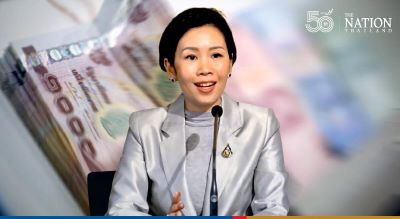
The Cabinet will keep financial institutions’ annual fees paid to the government low for another year, deputy government spokesperson Ratchada Thanadirek said on Tuesday.
The payment rate will be maintained at 0.23 per cent from 0.46 per cent until the end of 2022 as proposed by the Finance Ministry. The move aims to ease the financial burden on commercial financial institutions, so they can support businesses and people affected by the pandemic more effectively.
The Stock Exchange of Thailand (SET) Index closed at 1,630.39 on Tuesday, down 13.53 points or 0.82 per cent. Transactions totalled 96.54 billion baht with an index high of 1,649.66 and a low of 1,627.12.
The index fell sharply after rising by 5.58 points or 0.34 per cent on Monday.
In the morning session, Krungsri Securities forecast the SET Index on Tuesday would fluctuate between 1,635 and 1,655 points.
It said the index still gained positive sentiment from rising oil price and hopes over Thailand economic recovery after the country reopening on November 1.
“However, uncertainty over inflation, the US Federal Reserve’s plan to taper its quantitative easing programme this year and signs of stock downward trend would pressure the index,” Krungsri Securities said.
The 10 stocks with the highest trade value today were HENG, KBANK, SCC, AOT, BANPU, TRUE, PTT, CPALL, ADVANC and GULF.
Japan’s Nikkei Index closed at 29,215.52, up 190.06 points or 0.65 per cent.
China’s Shanghai SE Composite closed at 3,593.15, up 25.02 points or 0.70 per cent, while the Shenzhen SE Component closed at 14,499.77, up 149.75 points or 1.04 per cent.
Hong Kong’s Hang Seng Index closed at 25,787.21, up 377.46 points or 1.49 per cent.
South Korea’s KOSPI Index closed at 3,029.04, up 22.36 points or 0.74 per cent.
Taiwan’s TAIEX Index closed at 16,900.67, up 195.21 points or 1.17 per cent.
5G infrastructure and related applications will help Thailand become a digital hub in Asean, Huawei Technologies (Thailand) CEO Abel Deng said at the online seminar “Eastern Economic Corridor (EEC) Future: 5G… Enhancing Thailand’s World Competitiveness” on Monday.
Apart from turning Thailand into a digital hub, he said 5G technology will also boost the country’s competitiveness and attract foreign investors.
Citing an analysis, he said the added value of 5G-driven economies will push the global economy up by 6 per cent to US$12 trillion by 2030.
In Thailand, he said, the value of industries that adopt 5G will rise to between 2.3 trillion and 5 trillion baht or 10.12 per cent of the country’s GDP by 2035.
“If Thailand adopts 5G technology, its IT infrastructure and applications will improve significantly in the next five years,” he said.
Deng added that after Thailand released licences for the 5G spectrum, Huawei set up more than 20,000 5G stations across the country, with 2,500 of them located in EEC.
Huawei is also promoting the use of 5G2B, which integrates 5G, Cloud and AI technologies, he said, adding that the company was also establishing the Huawei Asean Academy to boost potential and promote digital transformation of the EEC.
“5G technology plays an important role in our daily lives as there are more than 10,000 projects related to the adoption of 5G2B and 50 per cent of these projects are in China,” he said.
“5G technology has been widely adopted in many industries, including manufacturing, logistics, healthcare and agriculture.”
The baht opened at 33.46 to the US dollar on Tuesday, strengthening from Monday’s closing rate of 33.48.
The Thai currency is likely to move between 33.30 and 33.50 during the day, Krungthai Bank market strategist Poon Panichpibool predicted.
Poon said that the baht would fluctuate in the short term. The market was in a risk-on state caused the dollar to weaken while the baht strengthens. The baht is also strengthening because foreign investors are investing in Thai stocks especially stocks relating to country opening.
However, the gold price pressured the baht to weaken. Some gold investors bought gold after the price went down near the key support level. The baht was also pressured by domestic risk factors such as floods and the Covid-19 situation.
The key resistance level for the baht would be from 33.50 to 33.60 to the dollar, which is the level at which exporters might sell the US currency.
The baht’s key support level would be from 33.10 to 33.20, the level some importers are waiting for so they can buy dollars, he added.
Poon said that it will be hard for baht to strengthen heavily in the short term such as the 32.50 to the dollar level because the basic factors are not fully recovered.
Poon said that the baht is highly volatile and could suddenly change direction. He recommended that investors use various hedging tools such as options or Foreign Currency Deposit (FCD) accounts with a currency forward.
The price of gold rose by THB50 in the morning trade on Tuesday.
A9.22am report from the Gold Traders Association showed the buying price of gold bar at THB27,900 per baht weight and selling price at THB28,000, while the buying and selling price of gold ornaments is THB27,394.12 and THB28,500, respectively.
At close on Monday, the buying price of gold bar was THB27,850 per baht weight and selling price THB27,950, while gold ornaments were THB27,348.64 and THB28,450, respectively.
The spot gold price on Tuesday morning was hovering around US$1,772 (THB59,096) per ounce after Comex gold at close on Monday dropped by $2.6 to $1,765.7 per ounce due to pressure from the appreciation of the US dollar and the rise in US government bond yields.
Krungsri Securities forecast the Stock Exchange of Thailand (SET) Index on Tuesday would fluctuate between 1,635 and 1,655 points.
It said the index still gained positive sentiment from rising oil price and hopes over Thailand economic recovery after the country reopening on November 1.
“However, uncertainty over inflation, the US Federal Reserve’s plan to taper its quantitative easing programme this year and signs of stock downward trend would pressure the index,” Krungsri Securities said.
It also recommended buying of the following companies’ shares as an investment strategy: ▪︎ AOT, AAV, BA, MINT, KBANK, SCB, CPN, CRC, HMPRO, CPALL, AMATA, WHA, MAJOR, BTS and BEM, which benefit from the country reopening. ▪︎ PTT, PTTEP, TOP, PTTGC, SPRC and BCP, which benefit from rising oil price and gross refining margin.
The SET Index rose by 0.57 points or 0.03 per cent to 1,644.49 on Tuesday morning, witnessing a high of 1,649.66 and a low of 1,644.30 in opening trade.
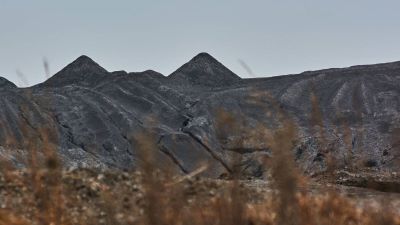
The worlds richest countries are courting South Africa as a model of how to transition to a more climate-friendly future from a dependency on coal.
While $5 billion of cheap loans and grants are on offer as a first step, transforming Africa’s most industrialized economy demands more than cash. It needs to win over power brokers like Gwede Mantashe, a former coal unionist who is now energy minister and chairman of the ruling African National Congress, to weaken the nation’s reliance on the black rock.
A leading member of the South African Communist Party who also completed his MBA this year, Mantashe has made it clear saving the planet isn’t his highest priority.
Envoys from nations including the U.S., Britain and Germany met government ministers in Pretoria last month with the $5 billion package to hammer out a deal that could be announced at the upcoming COP26 global climate conference on ending the use of coal. But Mantashe didn’t turn up. The 66-year-old was hundreds of miles away, addressing a mining investment conference and arguing against attempts to curb use of the country’s massive coal resources. Instead, he called for investing in experimental technologies to cut emissions from coal.
He’s hardly an outlier. Coal, mainly mined in the eastern province of Mpumalanga, has underwritten the system of political patronage and Black economic empowerment that has kept the ANC in power since the end of apartheid.
“We industrialized on the back of coal,” said Jesse Burton, a Cape Town-based senior associate at climate-research group E3G. “Coal is the backbone of our economy,” she said, while noting it’s no longer the cheapest form of energy.
The fuel supplies 82% of South Africa’s power, and businesses that rely on energy sourced from coal account for 45% of employment and 70% of exports, according to Roger Baxter, CEO of Minerals Council South Africa, which represents most mining companies. Coal-trucking firms alone, many of them Black-owned, employ 5,000 people. Black shareholders now own a third of the companies that supply coal to state-owned power monopoly Eskom Holdings SOC.
Which helps explain why the politics are so potentially explosive.
President Cyril Ramaphosa, who co-founded the National Union of Mineworkers in the 1980s, has set up a powerful commission to guide the country toward lower emissions and more renewable energy. But he also relies on Mantashe, a bulwark against his rivals in the six-member group that runs the ANC.
“He is Ramaphosa’s only ally in the top six. The rest have all got knives out,” said Burton. “If the dependency of the ANC on coal mining rents is as great as everyone believes it to be, you need someone like Mantashe to manage it.”
That means maintaining support of the unions. Eskom employs more than 42,000 people, many of them at its 15 coal-fired plants; coal mines provide jobs for almost 90,000.
The unions backed Ramaphosa in his ascendancy to the top of the ANC and remain on his side, which gives Mantashe even more leverage.
“He knows the levers he controls,” said Ralph Mathekga, an independent political analyst and author of books about the ANC. “That’s why he has the audacity to press his agenda. Look at how one man’s energy view is holding back the president’s agenda on energy.”
Mantashe challenges such a characterization, saying he shares climate activists’ ultimate objective.
“In South Africa, there is no one who argues against moving from high-carbon emissions to low-carbon emissions, including coal companies,” Mantashe said in an interview. “Where there is a debate, is navigating through the transition. We must navigate it carefully without hurting ourselves.”
As for skipping the Sept. 28 meeting with climate envoys, Mantashe said it didn’t directly involve his portfolio. “It was not a beauty contest among ministers,” he said.
Mantashe said he backs technology that can mitigate coal emissions and is pushing for the development of the nation’s gas fields.
Tyrone Seale, acting spokesman for Ramaphosa, cited the president’s views in the Oct. 11 edition of a weekly letter to the nation. He spoke of the dangers of climate change and the need to cut emissions and win aid. He warned that if South Africa’s doesn’t reduce its reliance on fossil fuels, it may face difficulties exporting its products.
Weaning South Africa off coal is seen as critical, as is providing a model to other developing nations as the urgency of transitioning to greener energy mounts.
Remodeling South Africa’s power industry would be cheaper than in other coal-dependent nations since many of the country’s coal-fired plants are nearing the end of their life. Civil-society groups and the government have also been researching how to cushion the impact of those closures on coal-dependent communities for a number of years and opposition to coal on environmental grounds has been growing.
“Because the closures are coming already, that provides an opening and a space to have this conversation, to think about planning, what you can do,” said Burton.
Wherever it goes, the energy transition would likely get tangled up in the web of patronage and political influence that dominated the era of so-called state capture under ex-President Jacob Zuma, who was ousted in 2018.
A probe by the government’s Special Investigating Unit into Eskom’s coal-buying practices showed that a coal shortage that started in 2007 was self-inflicted and led to a proliferation of small supply deals. The result: Coal costs rose, quality fell and tender procedures were flouted, it said.
In 2015, Hitachi agreed to pay $19 million to settle U.S. Securities and Exchange Commission charges that it made “improper payments” to South Africa’s ruling party to help it win contracts in the construction of coal-fired power plants. That same year, then Energy Minister Mosebenzi Zwane intervened to secure the sale of coal mines that supplied Eskom to a company controlled by the politically linked Gupta family and Zuma’s son Duduzane.
Eskom said law-enforcement agencies are investigating its coal contracts and one has been canceled as a result.
While not all the coal deals are tainted by corruption, the industry is nevertheless deeply entwined with politics.
Mike Teke, CEO of Seriti Resources Holdings, which supplies 32% of Eskom’s coal, said he gave Ramaphosa’s 2017 campaign for the ANC presidency $40,000 (600,000 rand) as he, and other business leaders, supported the president against a rival backed by Zuma.
One of Seriti’s biggest shareholders, Thebe Investment Corp., was established in 1992 by a company whose chairman was Nelson Mandela. Former ANC Finance Minister Nhlanhla Nene sits on its board.
“Many of the companies associated with the coal-mining industry in South Africa have significant influence within the ANC,” Shridaran Pillay, Africa director at risk advisory service Eurasia Group. “The downstream industries supported by mining play a role supporting regional political elites.”
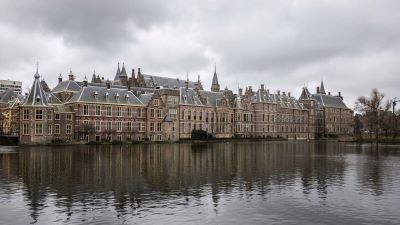
The main political parties in the Netherlands are discussing a new approach to climate-related investments that would mean they dont count toward the countrys headline budget deficit.
Prime Minister Mark Rutte and his potential allies are in negotiations to form a new coalition government and the official steering those talks, Johan Remkes, included the proposal in a program submitted to parliament earlier this month. The idea was put forward by Rutte’s People’s Party for consideration by the other groups involved in the process, according to a spokesperson for Remkes.
The proposal would place climate-related investments “outside of the regular budget so that the Economic and Monetary Union deficit isn’t directly affected,” according to the program. The document goes on to say that debt levels should return to the prescribed levels in the “medium term.” An official from Rutte’s party declined to comment on the plans.
A shift toward a looser fiscal regime in the Netherlands would set an important precedent for the rest of the euro-area where member states will this week begin discussions on how to update the budget rules for the whole bloc.
The rules were suspended last year to allow the massive stimulus efforts that kept economies afloat during the pandemic. Finance ministers are now looking at ways to update a framework, known as the Stability and Growth Pact, drawn up more than two decades ago in a world of much higher borrowing costs.
Italian Prime Minister Mario Draghi has said that the SGP is obsolete, and the European Commission, the bloc’s executive arm, is pushing for a full revamp.
The commission is expected to come up with new guidelines in spring as member states prepare budget plans for 2023, when the fiscal rules are due to be reinstated.
Some countries have been pushing for a similar exemption for green investments in the euro-area rules but they have met with opposition from the traditionally hawkish governments in the North of the bloc. The Netherlands is usually an influential member of that group so signs of a more flexible approach in The Hague could mark a potential shift in the broader debate.
In September, the Dutch joined seven other euro members in arguing against a loosening of the budget rules.
“Sound public finances are a central pillar of EU membership,” finance ministers from those countries said in a paper. “Fiscal sustainability combined with reforms which support economic growth must continue.”
After governing with the budget hardliners from the Christian Democrats during his previous term, Rutte’s next administration is likely to see a more prominent role for the pro-European D66, which may support a looser approach to budget policy.
In Germany, Angela Merkel’s Christian Democratic Union is set to be replaced by a center-left-led coalition following September’s election in another shift that could favor a somewhat more flexible approach to budget rules.
“A green golden rule would incentivise the necessary public investments in climate,” according to a paper by the Brussels-based think tank Bruegel. “Without the possibility of deficit funding, the EU will fail to achieve its goal of climate neutrality, and budget consolidation will come at the expense of investment because of political economy constraints.”
U.S. stocks extended a rebound on Monday as a whipsaw in energy prices relieved some pressure on the market.
The S&P 500 added 0.3% and the Nasdaq 100 gained 1% in a continuation of last week’s gains when solid corporate earnings and economic reports were enough to outweigh concerns about energy shortages and supply-chain disruptions.
Earlier on Monday OPEC+ failed to meet output targets and Russia opted against sending more natural gas to Europe, pushing commodity prices higher. However, oil’s decline from a session high eased some fears of inflation and policy tightening. The S&P 500 has now pared back losses from an all-time high to about 1.1%.
“The issues that caused the pullback have quieted over the past two weeks, which has rightly allowed stocks to bounce,” wrote Tom Essaye, a former Merrill Lynch trader who founded “The Sevens Report” newsletter. “But these issues are not resolved by any stretch of the imagination.”
The yield on the 10-year Treasury note climbed to 1.59% while U.K. yields surged after the Bank of England warned on the need to respond to price pressures. Rate-hike bets have now also picked up in Australia and New Zealand, where inflation accelerated to the fastest pace in 10 years. The dollar was little changed.
“Rising commodity prices — particularly oil prices, which only appear to go in one direction at the moment — are boosting expectations of high inflation becoming more entrenched and a sooner move by the Fed to raise interest rates,” said Fiona Cincotta, senior financial markets analyst at City Index.
On top of that, there are fears the central bank will not be nimble enough to respond to a miscalculation, said Michael Darda, chief economist and market strategist at MKM Holdings. “That’s where we could end up with recessionary risks down the line,” he warned.
Speakers from the Federal Reserve this week are expected to try to calm market jitters about future tightening. Additionally, another week of corporate earnings will offer traders more insight into the health of major corporations.
“We have used most of the superlatives we know to describe corporate America’s stunning performances over the past two earnings seasons,” said Jeff Buchbinder, equity strategist for LPL Financial. “We expect solid earnings gains during the upcoming third-quarter earnings season, but upside surprises will be smaller.”
“Unfortunately, we won’t need as many superlatives,” he added.
Stocks in Europe fell while those in Asia were mixed after data China’s economy slowed in the third quarter. Bitcoin rose to $61,320 ahead of the launch of the first futures exchange-traded fund. Gold fell 0.2%.
Here are some of the main moves in markets:
Stocks
– The S&P 500 rose 0.3% as of 4:02 p.m. EDT
– The Nasdaq 100 rose 1%
– The Dow Jones industrial average fell 0.1%
– The MSCI World index rose 0.1%
Currencies
– The Bloomberg Dollar Spot Index was little changed
– The euro was little changed at $1.1610
– The British pound fell 0.2% to $1.3730
– The Japanese yen was little changed at 114.32 per dollar
Bonds
– The yield on 10-year Treasurys advanced two basis points to 1.59%
– Germany’s 10-year yield advanced two basis points to -0.15%
– Britain’s 10-year yield advanced three basis points to 1.14%
Commodities
– West Texas Intermediate crude was little changed
The Stock Exchange of Thailand (SET) Index closed at 1,643.92 on Monday, up 5.58 points or 0.34 per cent. Transactions totalled 80.25 billion baht with an index high of 1,648.00 and a low of 1,639.92.
The index rose after dropping by 2.63 points or 0.16 per cent on Friday last week.
In the morning session, Krungsri Securities forecast the index would fluctuate between 1,630 and 1,650 points despite the government’s plan to ease lockdown measures and reopen the country to foreign travellers.
It added that the index also gained positive sentiment from rising oil price of over US$80 per barrel.
“However, investors should beware of uncertainty over the US Federal Reserve’s plan to taper its quantitative easing programme by this year as it would pressure the index,” Krungsri Securities warned.
The 10 stocks with the highest trade value today were KBANK, PTTGC, DELTA, HANA, BANPU, PTT, CPALL, IRPC, KCE and 7UP.
Other Asian indices were down with one exception: Japan’s Nikkei Index closed at 29,025.46, down 43.17 points or 0.15 per cent. China’s Shanghai SE Composite closed at 3,568.14, down 4.23 points or 0.12 per cent, while the Shenzhen SE Component closed at 14,350.02, down 65.97 points or 0.46 per cent. Hong Kong’s Hang Seng Index closed at 25,409.75, up 78.79 points or 0.31 per cent. South Korea’s KOSPI Index closed at 3,006.68, down 8.38 points or 0.28 per cent. Taiwan’s TAIEX Index closed at 16,705.46, down 75.73 points or 0.45 per cent.