Thailand’s automobile market this year is not expected to meet its sales target of 800,000 units, since only 520,000 vehicles have been sold over the past nine months.
The sale season at the end of this year is not looking very bright as people’s purchasing power has shrunk, coupled with flooding and tougher financing regulations.
From January to September, 520,000 units were sold, marking a 1 per cent drop compared to the same period last year.
In the first quarter of 2021, automobile sales dropped by 3 per cent, though it picked up by 13.6 per cent in the second quarter compared to the same periods in 2020.
Automakers were optimistic at the beginning of this year, setting the total sales target at 850,000 units. The target was later reduced to 800,000 units after the third wave of Covid-19 infections was sparked in April.
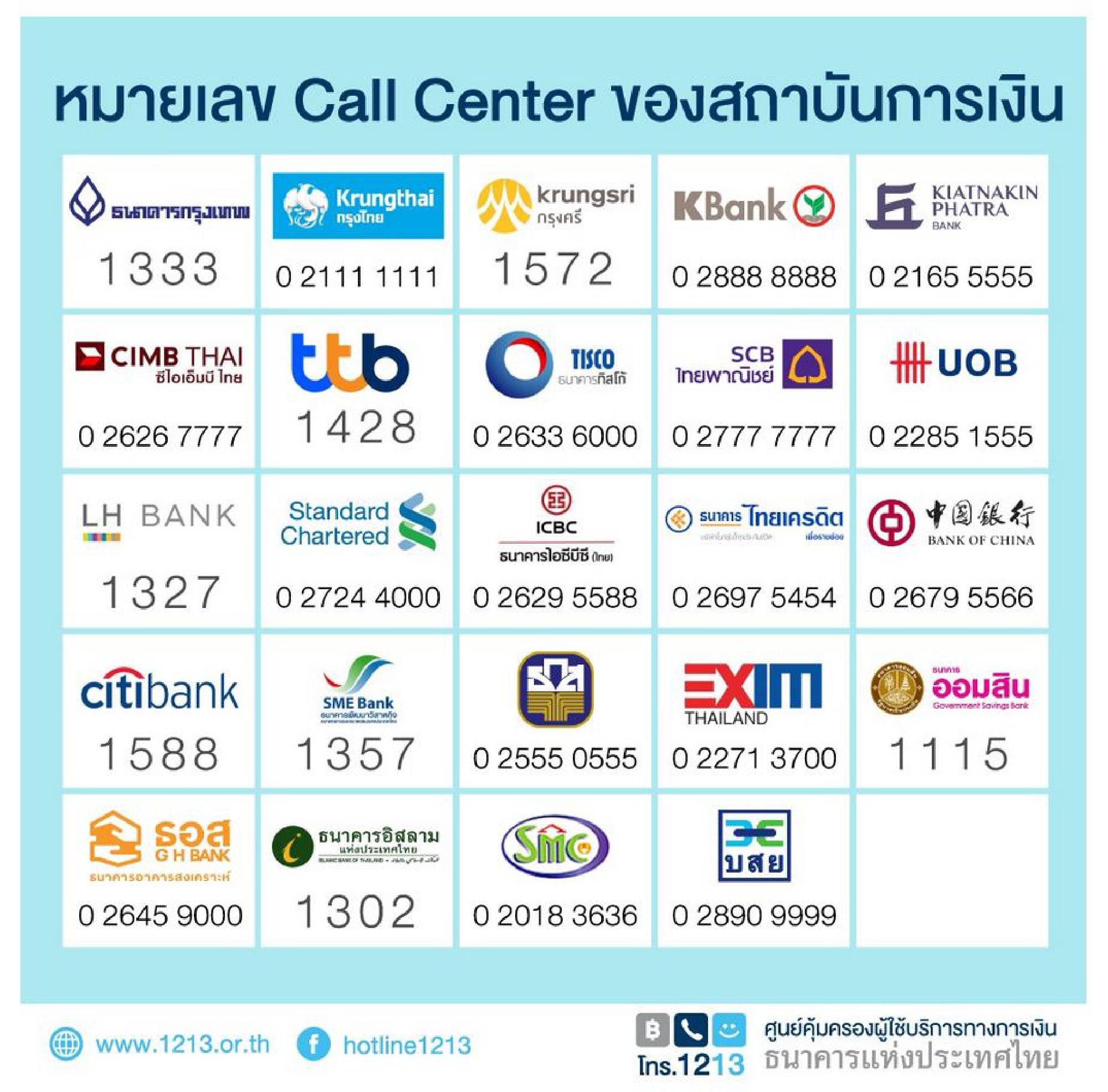
The Bank of Thailand and Thai Bankers’ Association issued a joint statement on Sunday clarifying the incident where many credit and debit cardholders found an inexplicable deduction from their account.
“Initial investigation shows that these transactions were to pay for products and services of businesses registered overseas,” the statement said. “These transactions were not caused by the leakage of private information from banks, nor by scammers siphoning money from users’ accounts as some people have feared.
“To verify these transactions, immediately contact call centres or branches of financial institutions that have issued the cards. All financial institutions have been instructed to resolve this issue promptly and return the money to cardholders in case the transaction was not initiated by them,” the statement said.
“The Bank of Thailand and Thai Bankers’ Association’s top priority is to ensure all financial transactions are secure, and customers’ personal information is protected. If any irregularity is found, banks should contact their customers immediately and take responsibility for any mistakes made,” it added.
Card issuers must be responsible for ‘inexplicable’ deduction, says central bank
The baht opened at 33.42 to the US dollar on Monday, weakening from the previous closing rate of 33.32.
The Thai currency is likely to move between 33.10 and 33.60 during the day and between 33.30 and 33.50, Krungthai Bank market strategist Poon Panichpibool predicted.
Poon said that the baht might strengthen with the investment from foreign investors while the dollar weakens. However, investors should be aware of domestic risk factors such as floods and the Covid-19 situation. The volatility of the gold price could also affect the baht.
Meanwhile, Poon said that the market is in a risk-on state this week, which might pressure the dollar to weaken. The dollar will not weaken much if the US Federal Reserve support the quantitive easing in next month and the US economic data is better than others.
Moreover, the baht weakening might slow down in the short term as a bearish divergence occurs.
The key resistance level for the baht would be at 33.50 to the dollar, which is the level at which exporters might sell the US currency.
The baht’s key support level would be from 33.00 to 33.10, the level some importers are waiting for so they can buy dollars, he added.
Poon said that the currency market opened for more risks last week because investors eased their worries about inflation. Moreover, companies financial results were better than expected.
Moreover, Poon added that the market is waiting for companies financial results in the third quarter and the statement of Fed officials this week.
ROJNA is investing 51% in Herb Treasure for the hemp business. Herb Treasure is well equipped to serve entire hemp value chain from upstream to downstream involving breeding, cultivation, extraction and distribution. The project starts with an initial 250 million baht investment to construct 300 greenhouses across 100 Rai (160,000 square meters), aiming to extract more than 9 tons of CBD per year, which will generate approximately 1 billion Baht revenue per annum.
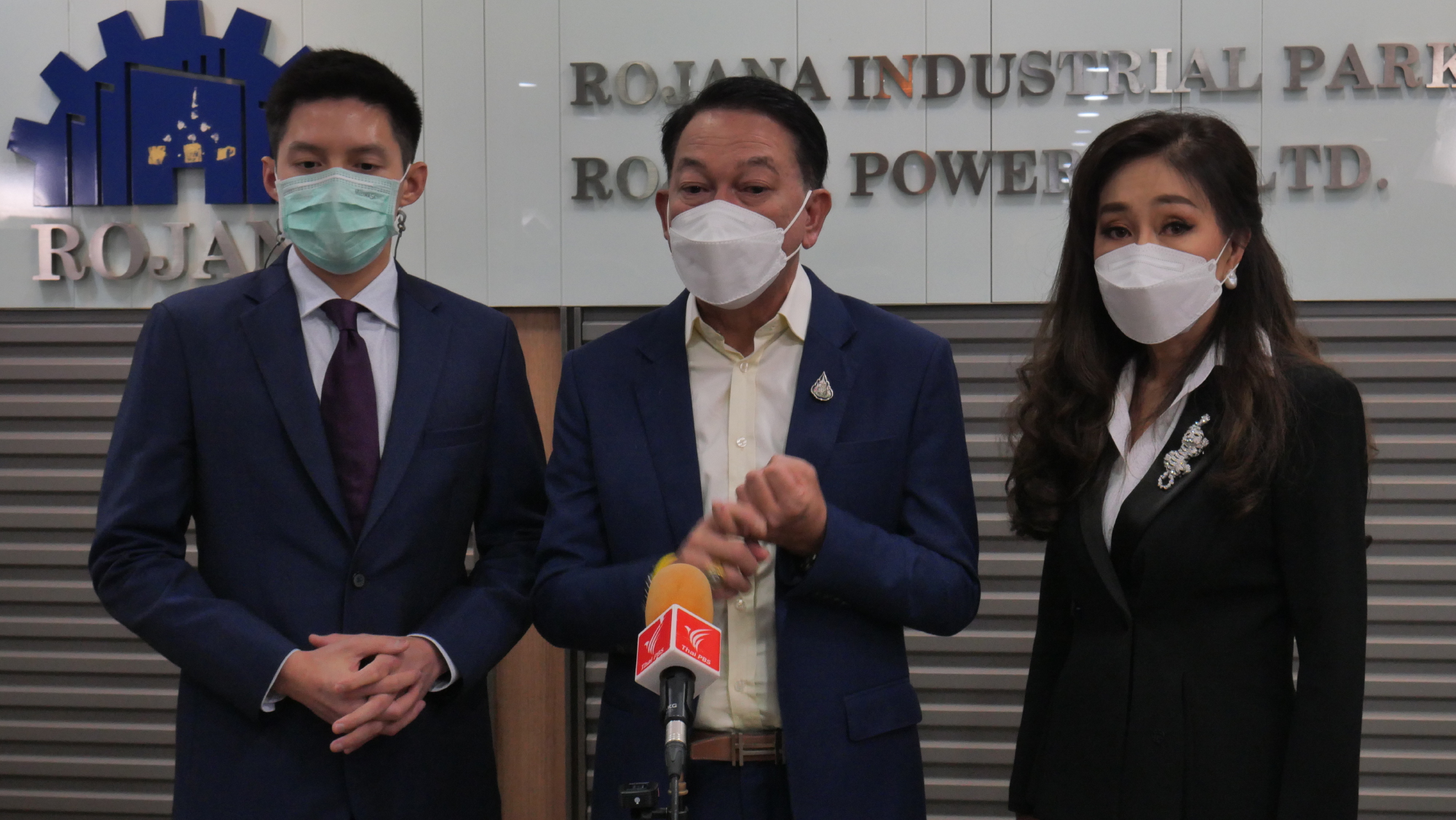
Rojana Industrial Park Company Limited (ROJNA), led by Chai Vinichbutr (Vice President) and Kanawat Chantaralawan (Deputy Managing Director), established a joint venture with Herb Treasure Co., Ltd., headed by Romchalee Chanprasit (CEO) and Arisa Chitsena (Director) . Witnesses include Panuphol Rattanakanjanapatra, Chairman of Advisory Board of Tobacco Authority of Thailand, and Kittitas Phathong, Chairman of Tobacco Cures Planter and Seller Trade Association.
According to Kanawat Chantaralawan (Deputy Managing Director), three major reasons for this collaboration are: 1) Herb Treasure already secured the required licenses i.e., seed importing, cultivation and the only company who received export license 2) Herb Treasure already had customers both local and overseas 3) Herb Treasure has highly efficient, professional and experienced management team, and both companies share the same business vision. ROJNA also has extensive foreign customers both in Asia and Europe, which can extend the customer base in the future. They also intend to turn CBD into varieties of products, including food, supplements, beverages, cosmetics and especially medical products pending on the Government regulations. ROJNA’s board of directors approved 250 million baht in the first phase and plan to expand investment further to serve the increasing demand of the market.
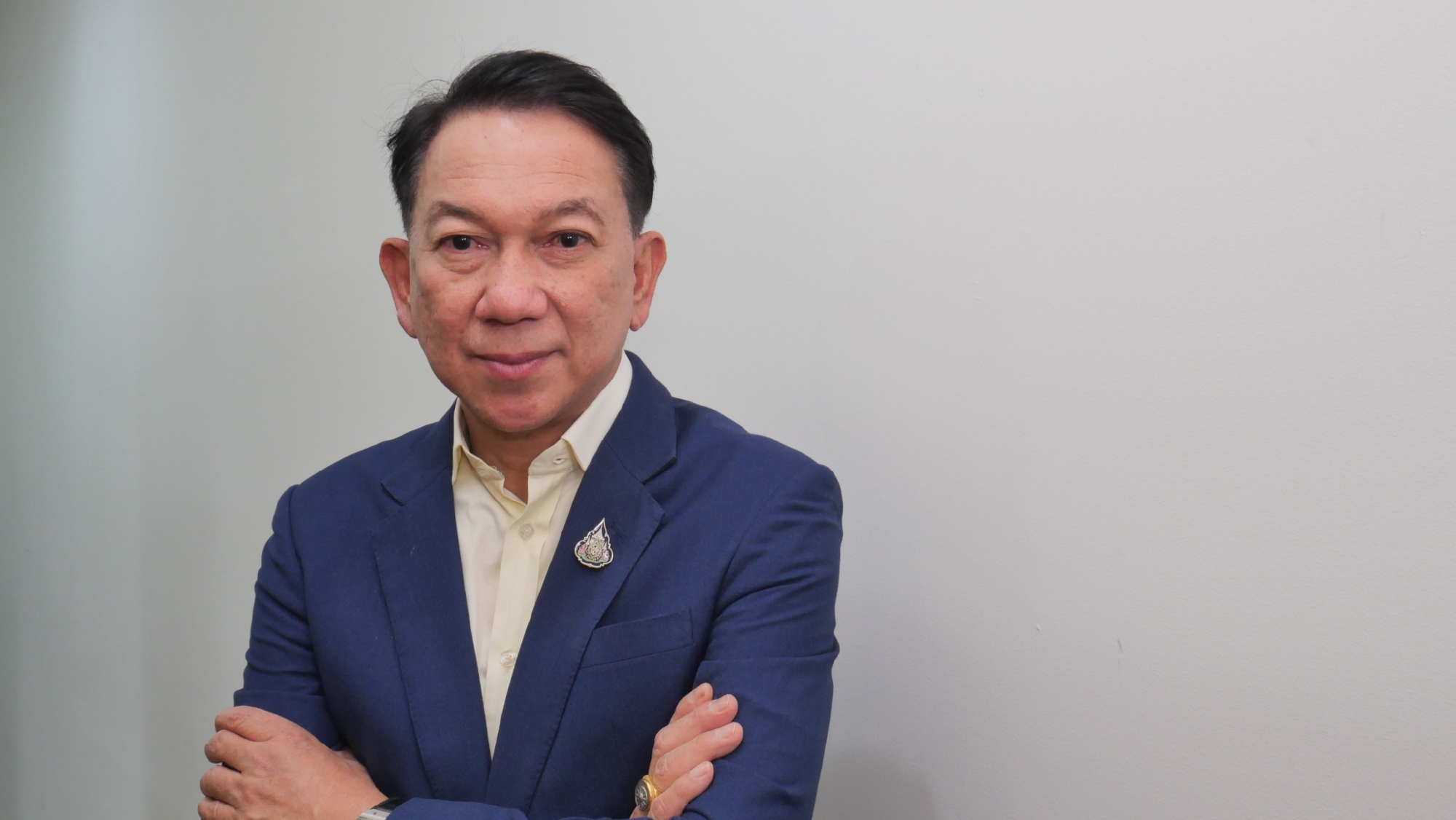
ROJNA and Herb Treasure in a joint venture for Hemp business with an initial investment of 250 million baht, and expected annual revenue of 1 billion Baht
According to Romchalee Chanprasit, CEO of Herb Treasure, the company also plan to assist the contract farming including SME and farmers by developing commercial hemp strains to create the opportunity for the farmers, who are the backbone of the country, to have sustainable revenue. Earlier, Herb Treasure had signed MOU with Tobacco Authority of Thailand to coordinate and help the farmers under their network. This will in turn create even more opportunities in the value chain.
This is a significant cooperative venture, according to Panuphol Rattanakanjanapatra, Chairman of Advisory Board of Tobacco Authority of Thailand. He believes that this corporation will create a benefit for their business as well as for the farmers. More than 1,000 tobacco farmers have shown their interest to participate in this initiative project.
ROJNA and Herb Treasure in a joint venture for Hemp business with an initial investment of 250 million baht, and expected annual revenue of 1 billion BahtROJNA and Herb Treasure in a joint venture for Hemp business with an initial investment of 250 million baht, and expected annual revenue of 1 billion Baht
The price of gold in Thailand on Monday morning was unchanged from Saturday close.
AGold Traders Association report at 9.23am said the buying price of a gold bar was THB27,950 per baht weight and selling price THB28,050, while the buying and selling price of gold ornaments is THB27,439.60 and THB28,550, respectively.
The spot gold price on Monday morning hovered around US$1,795 (THB60,060) per ounce after Comex gold at close on Friday dropped by $29.6 to $1,768.3 per ounce due to pressure from the rise in US government bond yields, including selling gold as a safe-haven asset after the US released strong economic data.
Krungsri Securities expected the Stock Exchange of Thailand (SET) Index on Monday would fluctuate to between 1,630 and 1,650 points despite the governments plan to ease lockdown measures and reopen the country to foreign travellers.
It added that the index also gained positive sentiment from rising oil price of over US$80 per barrel.
“However, investors should beware of uncertainty over the US Federal Reserve’s plan to taper its quantitative easing programme by this year as it would pressure the index,” Krungsri Securities warned.
It also recommended buying of the following companies’ shares as an investment strategy:
▪︎ AOT, AAV, BA, MINT, KBANK, SCB, CPN, CRC, HMPRO, CPALL, AMATA, WHA, MAJOR, BTS and BEM, which benefit from the country reopening.
▪︎ PTT, PTTEP, TOP, PTTGC, SPRC and BCP, which benefit from rising oil price and gross refining margin.
The SET Index rose by 2.47 points or 0.15 per cent to 1,640.81 on Monday morning, witnessing a high of 1,645.32 and a low of 1,640.53 in opening trade.
Jordan Lemos, a writer for video games, has lived in three different cities over the past five years. He moved from Los Angeles to Quebec to Seattle, working on blockbusters such as Assassins Creed Odyssey and Ghost of Tsushima, because the jobs required it.
So when he was looking for a new gig last year, he told prospective employers he wasn’t going to do it again. He would only work remotely.
Several big game companies were quick to say no once they heard his ultimatum. But Aspyr Media Inc., the Austin, Texas-based developer behind the highly anticipated Star Wars Knights of the Old Republic remake, was fine with the arrangement, offering a contract that will let Lemos work from his apartment in Seattle even after the pandemic ends.
“Personally, any negatives that may exist from remote work are negligible to the massive amount of positives,” Lemos said. Game studios that refuse to be flexible will have to “see how much great talent they’re missing out on by forcing people to completely uproot their lives,” he said.
Like many industries, especially in the creative and entertainment fields, game production had an entrenched office culture pre-pandemic, where artists, writers and engineers collaborated in person to produce visually stunning content. The hours were often long and the lifestyle grueling. People complained, but not much changed.
Then Covid-induced lockdowns forced a rethink in the video game business, which is slowly conceding that a way of life long considered sacrosanct could see some advantages with change. The pandemic initially significantly hampered the production of video games as developers struggled to get accustomed to inferior equipment and lagging VPNs at home, leading to widespread delays in releases.
But companies adapted, buying new computers and improving their infrastructure so creatives and programmers could transfer large files more quickly. Now many video game makers say they’re just as productive as they were before the global shutdown in March 2020, even those who have not yet returned to their offices. Studies have shown that once companies can properly support their production pipelines, remote work makes people even more efficient.
Armed with evidence of success, and the release of several high-profile games this year, employees accustomed to the comfort of their own homes are now demanding that their companies rethink traditional stances. Some say that remote work has boosted morale and led to a healthier work-life balance, which has pushed game studios to be more flexible. A survey this summer by the International Game Developers Association showed that more than half of developers said their employers will continue offering some sort of work-from-home option, a reality that seemed unthinkable just two years ago.
The video game industry is unique in that it has no central hub like Hollywood or Silicon Valley. Big game companies are spread out across the globe, from Canada to Japan to France, which has forced many developers like Lemos to relocate each time they are laid off or their contracts with one studio expire. A 2019 survey showed that gaming workers had an average of 2.2 employers in five years. The cycle has led to burnout, with many developers becoming sick of packing up boxes and pulling their kids out of school every time they get a new job.
“There are only so many moves you can do before you reach your limit,” Lemos said. “Keeping senior-level folks in this industry is already difficult enough due to things like crunch and burnout. The last thing we need is more reasons for people to leave it.”
Many game companies are still finalizing their plans for remote work post-pandemic. Some, like France’s Ubisoft Entertainment, have adopted hybrid schedules, in which the majority of employees must still go to the office at least some of the time, but are allowed to work from home two or three days a week, a routine that’s likely to persist after the pandemic. But an increasing number of big game studios are doing what was once seen as impossible: hiring people anywhere, with no expectation that they’ll regularly commute to an office again.
One of the biggest developers to make such a change is Sony Group Corp.’s Insomniac Games, based in Burbank, California, which has hired dozens of remote employees and is allowing most staff to work from almost any state, according to two people familiar with operations at the studio who asked not to be identified discussing private company information. Mary Kenney, a writer at Insomniac, received approval to work remotely and moved to Chicago earlier this year. She wrote on Twitter that the video game industry would be able to attract and retain so much more talent “if people didn’t have to uproot their lives and families for every new project/studio.” Sony declined to comment.
Other companies, such as Los Angeles-based Respawn Entertainment, are telling each of their game teams to decide what fits their approach best, according to two people familiar with the studio. Some staff at Respawn, which is owned by Electronic Arts Inc., plan on permanently working from home. Others have already moved to new cities, such as Ryan Rigney, the director of communications who said earlier this year that he had received “full work remote approval” and moved from L.A. to Texas. EA didn’t respond to a request for comment.
The French game company Dontnod Entertainment, which also has offices in Canada, said last month that it was offering permanent remote work to all of its 250 employees. In an interview, Chief Executive Officer Oskar Guilbert said the company learned positive lessons from the pandemic that prompted it to change its posture on office work. “We were able to ship two games during the pandemic,” Guilbert said. “So we thought, ‘OK, it works. Let’s try to continue like this. It seems like it’s a good balance for people’s personal and professional lives.'”
Guilbert said that 65% of Dontnod’s employees are choosing to work remotely moving forward and that even those who remain mostly in the office will be able to work from home one or two days a week. “It makes, I think, employees really happier,” he said. “This is really important. If someone’s happier, they’re really efficient.”
Owlchemy Labs, a small, Google-owned studio that makes virtual reality games such as Vacation Simulator, also recently announced that it was shifting to permanent remote work. Chief Operating Officer Andrew Eiche said employees had benefited from not having to always come into the office and that “our results and quality of work remained really high.”Another advantage is that as the company grows, “going fully remote allows us to find new and exciting talent across the United States and Canada,” he wrote in an email.
But not everyone wants to work from home. Some game developers said they feel less productive while working from their bedrooms or kitchens, especially while surrounded by distractions such as pets and children. Others said they miss the social and creative benefits that come from in-person collaboration. Tina Sanchez, lead producer at the new Los Angeles-based independent studio Gravity Well, said she enjoys going into the office one or two days a week to meet up with her co-workers. “There are moments when I want to collaborate with my colleagues and we plan on being in the office at the same time,” she said. “What’s great is we schedule meeting up around how good L.A. traffic is.”
Renee Gittins, executive director of the International Game Developers Association, said some companies won’t be shifting to remote work any time soon. She said she recently spoke to the leadership of one big game studio who said it’s requiring office attendance for most creative and executive roles and that it “hoped having a strong in-office presence after the end of the pandemic would be a draw to potential employees.” She declined to identify the studio.
Game developers who have joined companies remotely “often do not feel completely connected with their teams,” Gittins said. But the benefits, such as eliminating commute time and allowing people to relocate to less expensive cities, have been tangible for many workers, she added.
“There are benefits and drawbacks to both remote work and requiring in-office support,” Gittens said. “I suspect that we will see a large number of studios provide support for remote work opportunities and many smaller studios transition to fully remote work to save on office space costs.”
Some game companies are taking a wait-and-see approach, such as hiring developers in other cities and leaving it ambiguous as to whether they will eventually have to relocate. And sometimes government oversight complicates the plans. In Quebec, which has attracted thousands of game developers by offering generous tax credits to companies that hire employees in the province, that means publishers like Ubisoft must hit certain staffing thresholds in order to continue receiving the perks. But remote workers wouldn’t count toward those totals, making it more difficult for Montreal-based game studios to be quite as flexible.
Activision Blizzard Inc., the biggest U.S. video game publisher, is allowing its individual divisions to make decisions on a case-by-case basis. A spokesman said the company will offer either a full-time in-office arrangement, a full-time remote arrangement or a hybrid approach, depending on the employee and team. “We are offering a range of options that we believe gives our employees flexibility,” the spokesman said.
The company may be presenting a plethora of choices, but it also makes its preference clear. Activision recently sent an email to employees surveying their vaccination status and saying it hopes to “fully return to our offices by January 3, 2022.”
Demand for labour in Phuket is expected to jump now that the province has eased travel restrictions to draw more tourists during the high season, the Labour Ministry said on Sunday.
Citing the Department of Employment’s survey, Labour Minister Suchart Chomklin said some 15,000 jobs are available in Phuket and at least 10,000 job seekers are expected to apply.
“The demand for labour in Phuket has risen after the province’s sandbox scheme kicked off on July 1,” Suchart said.
“Phuket is set to ease more restrictions to stimulate the economy and welcome both local and foreign tourists.”
Pairoj Chotikasathien, director-general of the Department of Employment, said businesses with the highest demand for labour include convenience stores, souvenir shops, construction sites, hotels and restaurants.
“We have to admit that the Phuket Sandbox scheme has helped create jobs for people to generate income,” Pairoj said.
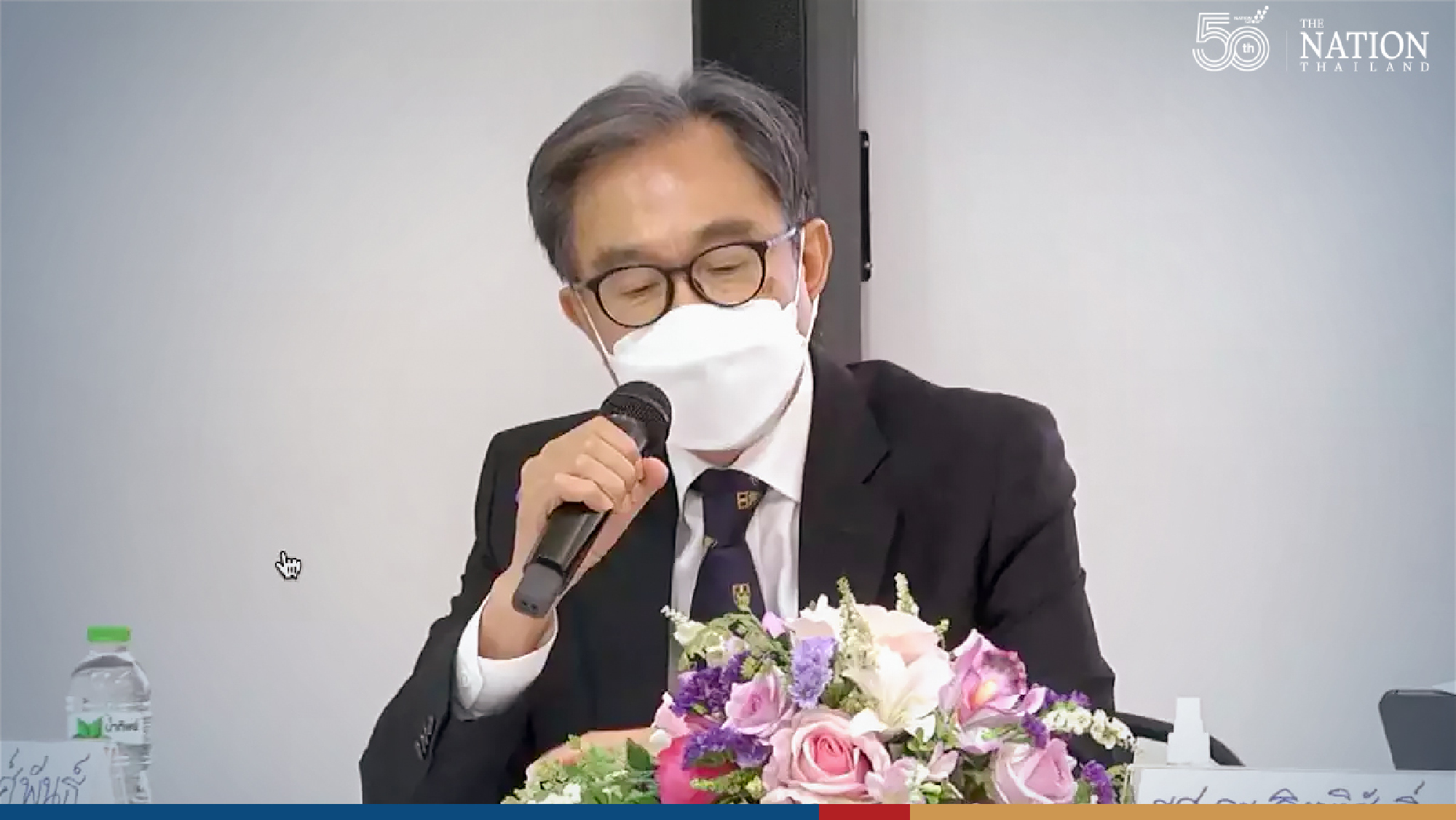
The pros and cons of allowing foreigners to own land in Thailand were discussed at the “Foreign Ownership of Land and Real Estate” forum held on Saturday by Thammasat University’s law association.
Participating were Senator Dr Sathit Limpongpan and president of the Thai Chamber of Commerce’s Housing Business Association Issara Boonyang.
On September 14, the Cabinet mulled ideas to attract high-potential foreigners to Thailand in a bid to boost the economy, and the option of letting non-Thais own land was brought up.
Many people have voiced concern that letting foreigners own land may leave little for Thai nationals. Others, however, point out that attracting high-potential foreigners by allowing them to own land will bring more foreign currency into the country. For instance, to be eligible foreigners must invest between US$250,000 and $500,000 in government bonds or have a minimum monthly income of $80,000.
Thammasat forum ponders idea of letting foreigners own land in Thailand
Dr Sathit said that he agreed with the idea of letting foreigners own land in Thailand but added that this may bring the prices up drastically and make owning land impossible for future generations.
However, Issara pointed out that many foreigners already own land in Thailand illegally through Thai nominees.
Thammasat forum ponders idea of letting foreigners own land in Thailand
He also pointed out that many big economies like Germany, UK and Switzerland are letting foreigners buy land and cashing in on tax and foreign investment.
Currently, foreigners can buy condominium units in Thailand under the condition that 51 per cent of the total units in the development are held by Thais. Though foreigners can own horizontal properties, they can only take the land on a maximum of a 99-year lease. This law has been applied by many companies in the Eastern Economic Corridor.
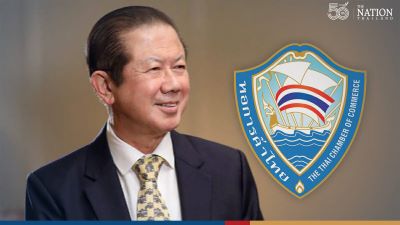
Thailand is planning to kick off free-trade negotiations with China and India in a bid to attract high-worth investors, the Thai Chamber of Commerce (TCC) said.
Sanan Angubolkul, chair of TCC and the Board of Trade, said Thailand has lost many economic opportunities due to the Covid-19 pandemic. In comparison, he said, other countries in the region like Singapore, Indonesia and especially Vietnam have adapted quickly and caught the attention of investors.
He said Thailand should target high-potential investors from China and India as both countries are huge markets. He said TCC has been discussing the potential of attracting investment from China under a coordination scheme called “Team Thailand Plus China”.
As for India, Sanan said TCC has discussed the subject with the Indian ambassador. Saudi Arabia is another country the TCC is eyeing to boost business.
“A framework for cooperation with other countries will make Thailand more interesting to foreign investors. The more trade partners we have, the more advantage we gain,” the TCC chairman said.
Sanan also urged the government to expedite action on joining the Comprehensive and Progressive Agreement for Trans-Pacific Partnership (CPTPP). He said that if the country continues delaying the signing of the pact, it will lose trade opportunities to Vietnam, Malaysia and Singapore. (Related report: Thailand urged to join CPTPP trade pact soon)



 Card issuers must be responsible for ‘inexplicable’ deduction, says central bank

 ROJNA and Herb Treasure in a joint venture for Hemp business with an initial investment of 250 million baht, and expected annual revenue of 1 billion Baht
 ROJNA and Herb Treasure in a joint venture for Hemp business with an initial investment of 250 million baht, and expected annual revenue of 1 billion Baht
 ROJNA and Herb Treasure in a joint venture for Hemp business with an initial investment of 250 million baht, and expected annual revenue of 1 billion Baht




 Thammasat forum ponders idea of letting foreigners own land in Thailand
 Thammasat forum ponders idea of letting foreigners own land in Thailand