China is forcing fashion to mute itself over dirty cotton #SootinClaimon.Com

#SootinClaimon.Com : ขอบคุณแหล่งข้อมูล : หนังสือพิมพ์ The Nation.

https://www.nationthailand.com/business/40007615


When a fashion industry sustainability group called out China over its treatment of Uyghur Muslims, the idea was to nudge Beijing toward human-rights reforms while cleaning up a troubled corner of the $60 billion global cotton business. Western brands have learned the hard way that things dont work that way in China.
In the 12 months since the Better Cotton Initiative, whose members range from Uniqlo owner Fast Retailing Co. to Nike Inc. to Walmart Inc., published a statement on allegations of forced labor in the cotton-growing Xinjiang region, several brands have suffered major setbacks in China, one of the world’s biggest producers and consumers of the fabric.

The organization missed production targets last year and companies including Levi Strauss & Co. and Chinese sneaker maker Anta Sports Products Ltd. have scaled back their involvement. Others have gone quiet, pulling statements of concern about the situation in Xinjiang from their websites. Hennes & Mauritz AB’s revenue in China, once its fourth-largest market, fell 40% in the most recent quarter.

Although the BCI statement has long vanished from the group’s website, there’s little sign of a truce. Instead, China, which says claims of human-rights violations are unfounded, is escalating its response. In late September it launched a recruitment drive for a sustainability certification program that would undercut the BCI, with the first applications to join due by Friday.

The escalating conflict shows how difficult it can be for brands to satisfy demands from western consumers and human-rights groups for greater sustainability without risking open war with China, which has become more willing to wield its clout to defend its policies. It’s also a potential setback for the broader ESG movement that’s rallying institutional investors around the banner of improved environmental, social and governance targets.

“It’s really terrible if companies start feeling they can’t speak out against atrocities because of a fear of backlash,” said Therese Kieve, stewardship analyst at Sarasin & Partners, which holds shares of Asos Plc and Associated British Foods Plc, owner of the Primark chain. “Then nothing’s going to change.”

The Geneva-based BCI declined to comment on China for this article.

Comfort, convenience and relatively low cost have made cotton the world’s most widely used textile fiber. More than 26 million tons is plucked from shrubs annually and spun into yarn. That’s enough to provide at least two dozen T-shirts for everyone on the planet. Prices of the commodity have been rising sharply, hovering near the highest levels in a decade this month, amid surging demand from China and poor prospects for the U.S. harvest now underway.

But there’s an ugly side to that success. Growing cotton can often require vast amounts of water and pesticides. Labor practices are hard to police in the remote fields where much of it is grown.

The Better Cotton Initiative was created in 2009, pooling industry efforts to clean up the supply chain. The group tries to help farmers transition to greener methods, while making sure cotton remains affordably priced. The organization also says it refuses to operate in regions where forced labor is “orchestrated by the government.”

The confrontation that erupted last October followed the U.S. government’s decision to ban some imports from Xinjiang, where it says Chinese authorities are detaining more than 1 million Uyghurs and other ethnic and religious minorities in “re-education” camps in what constitutes an ongoing genocide. China has repeatedly denied these claims.

While the BCI didn’t withdraw altogether from China, it said it would focus on other regions of the country. Beijing responded with fierce criticism of western fashion brands, prompting calls for boycotts. Landlords closed some H&M stores in retaliation for an undated statement on its website that expressed concern about reports of forced labor in Xinjiang.

Dozens of Chinese celebrities ended their contracts with BCI member firms including H&M, Adidas and Nike, with former Burberry Group brand ambassador and actress Zhou Dongyu saying the trenchcoat maker had not “clearly and publicly” stated its stance on cotton from Xinjiang.

The flap highlighted a quandary for the foreign labels, said Veronica Bates Kassatly, independent analyst of sustainability claims in the global apparel sector and a former World Bank economist.

“They cannot afford to upset Chinese consumers and they cannot afford to upset Chinese manufacturers, either,” she said.

The BCI has expanded so quickly – it now has more than 2,100 members – and become so prevalent that its production represents almost a quarter of global cotton output. 2.4 million farmers are licensed to sell cotton certified by the organization, which is funded through membership dues and a levy on sales.

There’s also an incentive to becoming a member, as BCI-certified cotton helps fashion giants burnish their sustainability credentials. New members continue to join — nearly 190 in the first half. Among them is Boohoo Group, the British online fast-fashion retailer seeking to clean up its own supply chain.

Few big brands will talk openly about their discussions with the BCI on how to police Xinjiang cotton. Burberry, for example, scrubbed references to the group in its annual report published in June, after citing the organization a year earlier. BCI lists Burberry as a member on its website. The company declined to comment for this story.

“Companies are doing everything they can to avoid these types of public conversations,” Bertille Knuckey, co-head of ESG Research at Sycomore Asset Management. “Now they are just avoiding really engaging on the topic.”

Once the BCI published the statement on alleged human-rights violations, some members expressed frustration that it had gone beyond its primary mission of environmental sustainability and strayed into areas where it did not have adequate knowledge or expertise, people familiar with the situation said.

Levi Strauss’s new chief sustainability officer, Jeff Hogue, who joined last year, decided not to take up a seat on the BCI council even though the retailer, which backed the formation of the program, was due to hold that position until 2022. Levi’s, which remains a member of the BCI, said Hogue is currently focused on the upcoming release of the company’s first sustainability report and ESG disclosure.

At the height of the boycott crisis, BCI said the decision to suspend licensing would prevent almost 500,000 tons of Xinjiang cotton from entering the global supply chain.

The provenance of cotton is hard to trace because of the many stages in the production process. It starts with raw cotton produced in remote villages in countries such as China, India or Mozambique. Seeds are extracted, bolls are removed and the fiber is spun into yards. They’re transported to mills that produce and dye the fabric – often with toxic products and little environmental oversight. The textiles are sold to clothing manufacturers, which ship finished products to stores worldwide.

The fashion and apparel industry was shaken to its core in 2013 when a garment factory collapsed in Bangladesh. The tragedy resulted in more than 1,000 deaths, putting the spotlight on an industry that long pushed profit at the expense of the wellbeing of those at the bottom of the production chain.

Following the incident, brands vowed to improve labor standards, including an increase in the number of labels and certifications meant to show that the industry is tackling abusive working practices.

Authorities from France to the U.S. are carrying out investigations that may shed more light on what is happening in Xinjiang.

Several French campaign groups lodged a legal complaint in April against two BCI members: Japan’s Uniqlo and Spain’s Inditex, the parent of Zara. Also named were French fashion group SMCP, which owns brands like Maje and Sandro, as well as Skechers USA Inc. The complaint accused the four companies of profiting from forced labor of China’s Uyghur minority as well as crimes against humanity. French prosecutors started an investigation in June.

SMCP and Inditex both strongly denied the accusations and said they will fully cooperate with the probe. Inditex said traceability controls are carried out “rigorously” on its clothing. Fast Retailing said there’s no forced labor in its supply chain and it intends to cooperate with authorities if contacted. Skechers declined to comment on pending litigation, but said previous supplier audits found no use of forced labor.

A criminal complaint was filed last month against the C&A fashion chain and other retailers by the European Center for Constitutional and Human Rights, accusing them of “directly or indirectly abetting and profiting from alleged forced labor of the Uyghurs in Xinjiang,” and being “involved in crimes against humanity.” C&A, a BCI member, says it doesn’t have supplier contracts in the region and doesn’t tolerate forced labor or unauthorized subcontracting in its supply chain.

The association uses so-called “mass balance,” a widely employed volume tracking system, that allows farmers and manufacturers to mix Better Cotton with conventionally grown fabric while benefiting from the label. The system has allowed the BCI to dramatically increase the volume of Better Cotton sold worldwide. But the lack of transparency and full traceability has raised concerns.

“Due to the mass balance approach, there is a potential risk that cotton from the Xinjiang region may be included within BCI cotton,” a spokesperson for British apparel chain Next Plc said. To try to avoid that, the company has explicitly banned the use of cotton from the area.

The BCI has said it’s moving toward a better traceability program in the coming months. C&A is calling for changes in the program.

“It is also time to open up the debate about what are the steps needed to increase the traceability of cotton and what are the opportunities that will arise from it,” said Betty Kiess, a spokeswoman. C&A will continue to collaborate with the organization, she said.

Incremental progress on environmental goals is better than nothing, some brand owners say. Tendam, the Spanish owner of the Women’secret lingerie label, joined the BCI this summer. The initiative is encouraging growers to adopt “better behaviors,” including reduced water usage, said Ignacio Sierra, corporate general manager at Tendam.

Whether global brands embrace China’s own sustainable cotton certification program is an open question. They may need to if they wish to keep selling in that market, and some clothes could even be manufactured solely for the Chinese market based on this label, according to a person familiar with the BCI’s work.

“The standards of BCI are too general and may not be suitable for cotton grown in China,” Wang Wenkui, an executive at the China Cotton Industry Alliance, told the Global Times. The Chinese guidelines will set out specific growing practices, including temperature and regulation of pesticides.

“I’m quite confident that our cotton growing standards will replace the BCI standards in the future,” Wang said.

Published : October 17, 2021

By : Bloomberg

SET falls for the second day amid worries over QE tapering #SootinClaimon.Com

#SootinClaimon.Com : ขอบคุณแหล่งข้อมูล : หนังสือพิมพ์ The Nation.

https://www.nationthailand.com/business/40007562


The Stock Exchange of Thailand (SET) Index closed at 1,638.34 on Friday, down 2.63 points or 0.16 per cent. Transactions totalled 84.75 billion baht with an index high of 1,651.41 and a low of 1,635.14.

The index fell for the second day running after dropping by 2.67 points or 0.16 per cent on Thursday.

In the morning session, Krungsri Securities expected the Stock Exchange of Thailand (SET) Index on Friday would rise to between 1,645 and 1,650 points before falling.

It said the index gained positive sentiment from rising oil price in line with tight oil supplies, as well as mass buy-ups of stocks that benefit from the country reopening after the government planned to ease lockdown measures and allow foreign travellers to enter the country on November 1.

“However, the index would be under pressure as some investors would sell their stocks to cope with risk of US Federal Reserve signalling it would taper its quantitative easing programme this year,” Krungsri Securities said.

Related stories:

The 10 stocks with the highest trade value today were KBANK, BANPU, U, PTT, IRPC, AOT, SCB, CPALL, 7UP and GULF.

Other Asian indices were up:

Japan’s Nikkei Index closed at 29,068.63, up 517.70 points or 1.81 per cent.

China’s Shanghai SE Composite closed at 3,572.37, up 14.09 points or 0.40 per cent, while the Shenzhen SE Component closed at 14,415.99, up 74.62 points or 0.52 per cent.

Hong Kong’s Hang Seng Index closed at 25,330.96, up 368.37 points or 1.48 per cent.

South Korea’s KOSPI Index closed at 3,015.06, up 26.42 points or 0.88 per cent.

Taiwan’s TAIEX Index closed at 16,781.19, up 393.91 points or 2.40 per cent.

Published : October 15, 2021

By : THE NATION

Baht unchanged as investors buy up stocks linked to Thailand’s reopening #SootinClaimon.Com

#SootinClaimon.Com : ขอบคุณแหล่งข้อมูล : หนังสือพิมพ์ The Nation.

https://www.nationthailand.com/business/40007550


The baht opened at 33.18 to the US dollar on Friday, unchanged from Thursday’s closing rate.

The Thai currency is likely to move between 33.10 and 33.30 during the day, Krungthai Bank market strategist Poon Panichpibool predicted.

Poon said that the baht is strengthening because foreign investors are investing in Thai stocks especially stocks relating to country opening.

Meanwhile, investors sold gold after the price increased caused the baht to strengthen in the short term. However, Poon said that the baht will not strengthen much soon as the Covid-19 situation is still worrying and the basic factor was not fully recovered.

The key resistance level for the baht would be from 33.35 to 33.50, which is the level at which exporters might sell the US currency. The baht’s key support level would be at 33.

Poon said that the baht is highly volatile and could suddenly change direction.  He recommended that investors use various hedging tools such as options or Foreign Currency Deposit (FCD) accounts with a currency forward.

Related News

Baht strengthens after investors buy stocks, gold price rise

Baht strengthens as Thailand prepares to reopen

Worse-than-expected NFP pulls down Thai baht

Published : October 15, 2021

By : THE NATION

Trade commission logs about 100 complaints of unfair practices since 2017 #SootinClaimon.Com

#SootinClaimon.Com : ขอบคุณแหล่งข้อมูล : หนังสือพิมพ์ The Nation.

https://www.nationthailand.com/business/40007549


The Office of Trade Competition Commission (OTCC) recently reported that it has received 97 complaints about unfair trade practices since the Trade Commission Act was implemented in 2017.

The law was enacted on October 5, 2017, to prevent and penalise those behind unfair trade practices, those abusing dominant positions, working under cartels, rigging bids, signing unreasonable agreements with foreign firms and unfair mergers and acquisitions. Violators may face a maximum fine of up to 10 per cent of the revenue earned in the year the offence was committed.

“Two complaints were filed in 2017, 11 in 2018, 20 in 2019 and 30 in 2020,” said OTCC spokesman Santichai Satthawanphaet. “This year we have received 34 complaints so far, most of which came from retail, franchise and e-commerce businesses.”

So far, the largest number of complaints or 66 were related to unfair practices, 13 about the abuse of dominant position, six related to cartels and bid-rigging and the rest to other violations.

Santichai said OTCC has, so far, issued guidelines for four types of businesses to comply with, namely retailers and wholesalers, franchise businesses, fruit buying businesses and food delivery outfits.

“We will issue another set of guidelines on the credit terms for small and medium enterprises on December 16,” he said. “Operators of these businesses must follow the guidelines or face punishment under the Trade Competition Act.”

Call (02) 199 5444 or visit www.otcc.or.th to lodge complaints about unfair trade practices.

Related Stories

OTCC moves to regulate franchise business

TCC warns Lhongs of any practices that may be deemed an offense, and action that will be taken if complaints regarding farmer exploitation are proven true.

Government closely monitoring retail pricing of antigen test kits

Published : October 15, 2021

By : THE NATION

IEA revises up oil demand forecasts for 2021, 2022 #SootinClaimon.Com

#SootinClaimon.Com : ขอบคุณแหล่งข้อมูล : หนังสือพิมพ์ The Nation.

https://www.nationthailand.com/business/40007547


Record coal and gas prices, rolling black-outs have prompted a switch to oil. IEA forecasts global oil demand to rise by 5.5 million barrels per day (mb/d) in 2021 and 3.3 mb/d in 2022.

The International Energy Agency (IEA) has revised up global oil demand forecasts for 2021 and 2022.

The ongoing energy crisis has prompted a switch to oil, and therefore global oil demand is set to rise by 5.5 million barrels per day (mb/d) in 2021 and 3.3 mb/d in 2022, IEA said in its monthly Oil Market Report published Thursday.

Global oil demand is expected to reach 96.3 mb/d in 2021 and 99.6 mb/d in 2022, IEA’s revised estimate shows.

Photo taken on Oct. 8, 2021 shows a gas station in Frankfurt, Germany. (Xinhua/Lu Yang)Photo taken on Oct. 8, 2021 shows a gas station in Frankfurt, Germany. (Xinhua/Lu Yang)


Related Stories

Record coal and gas prices, as well as rolling black-outs are prompting the power sector and energy-intensive industries to turn to oil, which has pushed up global oil demand, the IEA explained.

As for world oil supply, the IEA projected a sharp rise in October, with the United States’ output set to bounce back from Hurricane Ida, and the Organization of the Petroleum Exporting Countries Plus (OPEC+) ready to boost output by 400,000 barrels per day for November this year.

Higher energy prices could lead to lower industrial activity and a slowdown in economic recovery from the COVID-19 pandemic, the IEA warned. 

Aerial photo shows the sunset view of Daqing Oilfield in Daqing, northeast ChinaAerial photo shows the sunset view of Daqing Oilfield in Daqing, northeast China

Published : October 15, 2021

By : Xinhua

Thai gold price stays steady #SootinClaimon.Com

#SootinClaimon.Com : ขอบคุณแหล่งข้อมูล : หนังสือพิมพ์ The Nation.

https://www.nationthailand.com/business/40007542


The price of gold in Thailand on Friday morning was unchanged from Thursday close.

A9.26am report from the Gold Traders Association showed the buying price of gold bar at THB28,150 per baht weight and selling price at THB28,250, while the buying and selling price of gold ornaments is THB27,636.68 and THB28,750, respectively.

The spot gold price on Friday morning was hovering around US$1,795 (THB59,682) per ounce after Comex gold at close on Thursday rose by $3.2 to $1,797.9 per ounce due to support from the appreciation of the US dollar and the fall in US government bond yields.

Related news:

Published : October 15, 2021

By : THE NATION

SET expected to rise on hopes over the country reopening before falling #SootinClaimon.Com

#SootinClaimon.Com : ขอบคุณแหล่งข้อมูล : หนังสือพิมพ์ The Nation.

https://www.nationthailand.com/business/40007541


Krungsri Securities expected the Stock Exchange of Thailand (SET) Index on Friday would rise to between 1,645 and 1,650 points before falling.

It said the index gained positive sentiment from rising oil price in line with tight oil supplies, as well as mass buy-ups of stocks that benefit from the country reopening after the government planned to ease lockdown measures and allow foreign travellers to enter the country on November 1.

“However, the index would be under pressure as some investors would sell their stocks to cope with risk of US Federal Reserve signalling it would taper its quantitative easing programme this year,” Krungsri Securities said.

It also recommended buying of the following companies’ shares as an investment strategy:

▪︎ AOT, AAV, BA, MINT, KBANK, SCB, CPN, CRC, HMPRO, CPALL, AMATA, WHA, MAJOR, BTS and BEM, which benefit from the country reopening.

▪︎ PTT, PTTEP, TOP, PTTGC, SPRC and BCP, which benefit from rising oil price and gross refining margin.

Related stories:

The SET Index rose by 9.04 points or 0.55 per cent to 1,650.01 on Friday morning, witnessing a high of 1,650.47 and a low of 1,645.17 in opening trade.

Published : October 15, 2021

By : THE NATION

29 foreign companies allowed to invest in Thailand in September #SootinClaimon.Com

#SootinClaimon.Com : ขอบคุณแหล่งข้อมูล : หนังสือพิมพ์ The Nation.

https://www.nationthailand.com/business/40007539


29 foreign companies have been allowed to conduct businesses in Thailand under the Foreign Business Act by Commerce Ministrys foreign business committee in September, said Sinit Lertkrai, deputy commerce minister on Thursday.

“These foreign companies have invested over 559 million baht in Thailand and generated up to 742 jobs for local people,” he said. “Most of these companies are from Japan, Singapore and South Korea respectively.”

“Allowing more foreign companies to invest in Thailand will help promote knowledge and technology transfers especially in the areas of diesel fuel desulfurization using hydrogen, carrier gas attraction, IT system for hospital, and laboratory statistics analysis,” he added. 
 

Sinit further added that in the nine months of 2021, the committee have allowed a total of 161 companies to conduct businesses in Thailand, with total investment value of over 9.94 billion baht. 


“Most of the allowed businesses are those that comply with government’s investment promotion policy and support the country’s target industries,” he said. “The Commerce Ministry expected that more foreign companies will apply for investment in Thailand in the last quarter of 2021 due to improving Covid-19 situation and strong disease control measures that will help restoring the confidence among foreign investors.”
 

Related Stories

Commerce minister mulls opening service sector to foreign investment

Foreign investment soars in nine months of 2021

More than Bt1bn foreign investment approved in Sept

Published : October 15, 2021

By : THE NATION

How the global supply chain crisis is posing a political problem for President Biden #SootinClaimon.Com

#SootinClaimon.Com : ขอบคุณแหล่งข้อมูล : หนังสือพิมพ์ The Nation.

https://www.nationthailand.com/business/40007530


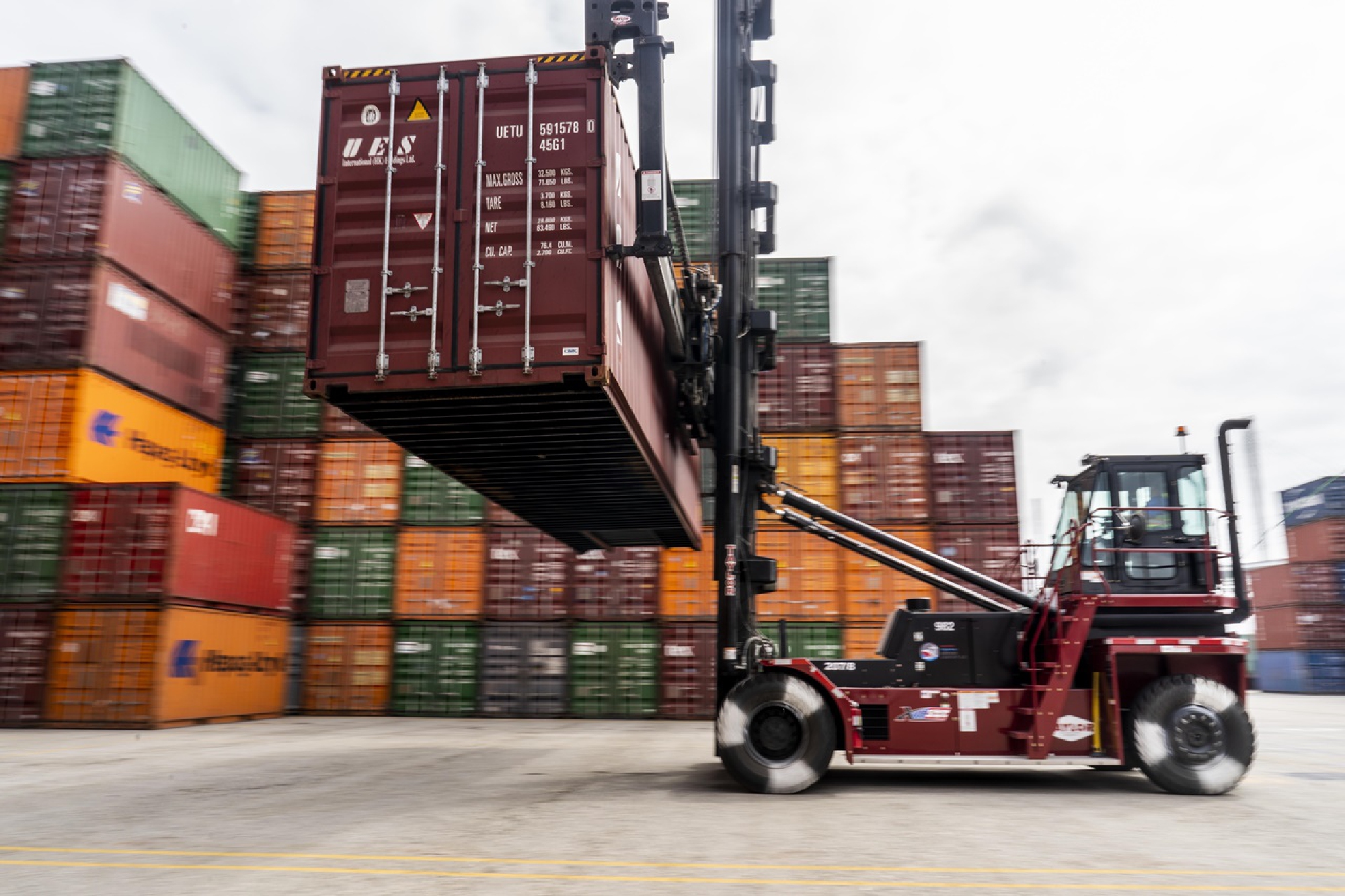
Stuck at home – and now, accustomed to being stuck at home – Americans are buying too much stuff. But factories are still struggling to produce and deliver amid the pandemic: There arent enough people and parts to make stuff, enough ships to get it across the seas, enough port workers to unload it, enough space in ports to store it, enough truck drivers and railroad workers to transport it, enough warehouse workers taking jobs to sort it – and no one really knows how long this backup will last or how to fix it.

That’s the very complex global-supply-chain problem, in a paragraph. It means the world is facing a backlog of goods never seen before in the modern economy, right before the holiday season. That is manifesting in months-long delays, empty shelves and higher prices.

The nexus of the global economy and American politics has become clearer: If people don’t get their gifts in time, voters could blame President Joe Biden and his party for it.

Let’s take a look.

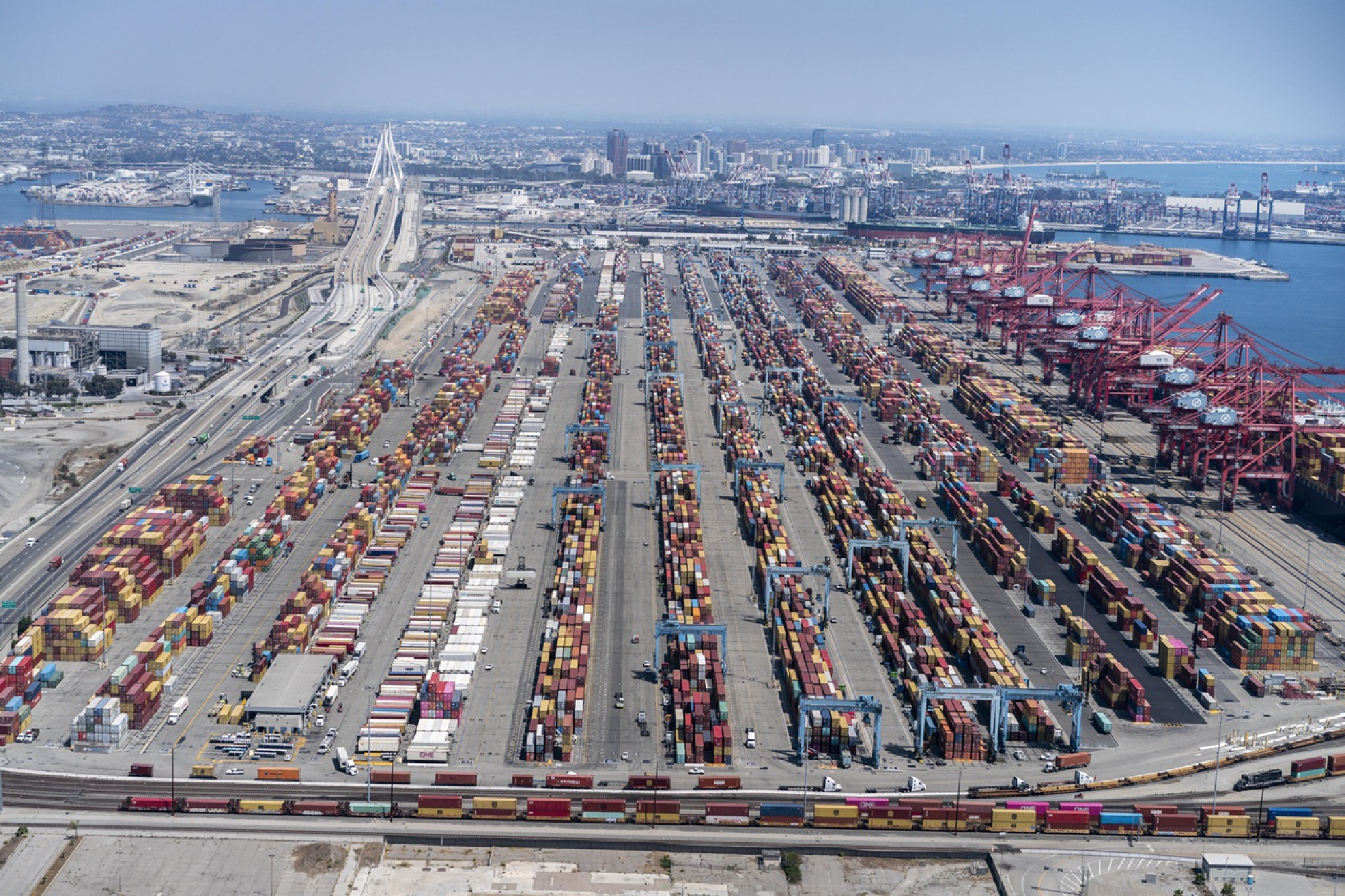
A hectic and overcrowded Port of Los Angeles in September. PHOTO CREDIT: Washington Post photo by Melina MaraA hectic and overcrowded Port of Los Angeles in September. PHOTO CREDIT: Washington Post photo by Melina Mara
A little more about what’s going on

Most economists agree that the pandemic is the driving force behind all this. The world is nowhere near being fully vaccinated against the coronavirus, and that means factories in, say, Vietnam are still having trouble keeping up with demand as workers keep getting sick, or ports in China are having to shut down because of infections. In addition, there’s a worker shortage in the United States.

“We are opening up a global economy all at once,” said economist Diane Swonk. “You’re going to get problems. It is much easier to turn the lights off in a factory than turn them back on again.”

That’s created a backlog in manufacturing and shipping goods, and economists we talked to don’t think it’s going away any time soon. An added problem is that there just aren’t enough containers in the world right now to get things back to normal.

“This backlog really reflects the fact that we have a lot more volatility in the world,” said Betsey Stevenson, an economist who advised President Barack Obama. “You might be at a factory in another country, somebody gets covid, and it shuts down for two weeks. That puts all your orders behind. Now, does the container ship it’s supposed to go on wait for your orders? And then we see container ships stuck in the wrong ports. . . . There is a giant logistics crisis going on.”

The United States is helping drive this problem as the largest economy in the world. Amid all the delivery woes, Americans’ product demands are shifting – bye-bye, skinny jeans and plastic toys; hello, home gyms – and manufacturers have to pivot.

Containers are moved around at the Port of Los Angeles recently. PHOTO CREDIT: Washington Post photo by Melina MaraContainers are moved around at the Port of Los Angeles recently. PHOTO CREDIT: Washington Post photo by Melina Mara

How this supply chain backlog is causing economic problems for Americans

The Federal Reserve says this is all contributing to inflation lasting longer than it otherwise would, and some prominent economists have lowered their forecast for growth in the United States – right as the delta variant is subsiding and public health experts are cautiously hopeful the worst is over, report The Washington Post’s David Lynch and Rachel Siegel.

And that means two things Americans hate: longer waits for products and higher prices once they finally arrive in stores.

– – –

How the supply chain backlog is causing political problems for Biden

Voters blame presidents for all sorts of pocketbook problems that presidents can’t fix, like high gasoline prices (which are also happening right now).

Biden is trying to get out in front of it all. He appointed a port envoy. He held a meeting Wednesday with labor and business groups and announced that the Port of Los Angeles will start operating 24 hours a day to get goods out of containers and into trucks on highways.

He knows this is going to matter for the midterm elections, Stevenson said. Americans rate the economy as an important issue, right up there with the coronavirus, according to an August NBC News poll, which also showed that Americans were largely pessimistic about the economy – even before these supply chain issues really started getting attention.

“People don’t like volatility and they definitely don’t like not being able to get what they want,” she said. “So I do think it is a political problem, and I do think Biden has to solve it.”

Republicans are trying to pin this on Biden, too. Talking about the backlogs ties in nicely with their arguments that Democrats in Congress are big spenders and thus causing prices to go up.

– – –

But Biden doesn’t have much control over the global supply chain

There are much bigger economic forces at work than one president can wrangle, said Phil Levy, an economist who advised George W. Bush.

Many economists favor lifting the Trump-era tariffs on China to ease international trade, a move Biden has so far resisted. But overall, this is a private-sector problem, and as Lynch points out in his extensive reporting on this, no one knows how to unclog it.

Biden is trying to pressure American companies to at least fix the short-term backlog. On Wednesday, he lauded Walmart and other major retailers, as well as FedEx and UPS, for their efforts to start moving goods overnight, at their own expense.

“For the positive impact to be felt all across the country and by all of you at home,” Biden said, “we need major retailers who ordered the goods and the freight movers who take the goods from the ships to factories to the stores to step up as well.”

Long-term, Congress has appropriated billions to expand ports in the bipartisan infrastructure bill. But that bill is being held up by liberal Democrats as leverage for another bill.

Biden also needs to be careful how he talks about this. While White House officials want to set expectations that Americans may not get all their Christmas gifts on time, they don’t want to cause them go out and panic-buy everything.

“That will create its own supply problem,” Stevenson said, “because there really will be empty shelves. One of the things Biden has to do is convince people that everything is under control, and we will have enough toilet paper and turkeys, and you will be able to buy what you want this holiday season.”

Published : October 15, 2021

By : The Washington Post

Markets wrap: Stocks roar back as earnings season kicks off #SootinClaimon.Com

#SootinClaimon.Com : ขอบคุณแหล่งข้อมูล : หนังสือพิมพ์ The Nation.

https://www.nationthailand.com/business/40007529


The stock market had its best day since March as better-than-estimated corporate earnings and economic reports outweighed fears that inflation pressures and supply-chain snarls could crimp growth.

All major groups in the S&P 500 advanced. The KBW Bank index – which has surged almost 40% in 2021 – pushed higher as results from some of the largest financial institutions beat Wall Street’s estimates. UnitedHealth Group Inc. led gains in the Dow Jones Industrial Average as the health-care giant raised its outlook for the year, while chipmakers climbed on a bullish forecast from Taiwan Semiconductor Manufacturing Co.

Corporate profits have been a boon for the equity market throughout the pandemic. Since March 2020, the S&P 500 has risen each quarter, advancing 4% on average over the six-week stretch. Pent-up demand should drive revenue growth, while pricing power and operating leverage should help offset inflationary pressures, according to Mark Haefele, chief investment officer at UBS Global Wealth Management.

“Even though there are cost pressures and supply concerns, the other side of this is that business is strong,” said Kevin Caron, senior portfolio manager at Washington Crossing Advisors. “To the extent that producers can pass on to consumers higher prices — which it seems like they’re able to do — we’re seeing stronger profits, which is helping to give a boost to stocks.”

Applications for U.S. state unemployment benefits fell to the lowest since March 2020, showing employers are hanging onto their workers in a tight labor market. Prices paid to American producers rose at the slowest pace of the year amid cooling costs of services.

Some corporate highlights:

– Bank of America Corp. beat earnings projections as fees climbed at its dealmaking unit. Wells Fargo & Co.’s profit topped estimates, but expenses were higher than anticipated and loans fell. Morgan Stanley’s investment bankers scored their best quarter ever amid a torrid pace of dealmaking. Citigroup Inc.’s stock-trading revenue surged 40%.

– Walgreens Boots Alliance Inc.’s earnings and sales beat estimates as the pandemic and the immunization campaign continued to have a powerful effect on the drugstore giant’s results.

– Jana Partners, which has pushed for Macy’s Inc. to spin off its online operations, has taken a stake in the department-store operator, according to a news report.

Here are a few events to watch this week:

– Goldman Sachs Group Inc. reports earnings on Friday

– U.S. business inventories, University of Michigan consumer sentiment, retail sales on Friday

Some of the main moves in markets:

– – –

– The S&P 500 rose 1.7% as of 4 p.m. New York time

– The Nasdaq 100 rose 1.9%

– The Dow Jones industrial average rose 1.6%

– The MSCI World index rose 1.4%

– – –

– The Bloomberg Dollar Spot index was little changed

– The euro was little changed at $1.1596

– The British pound rose 0.1% to $1.3673

– The Japanese yen fell 0.4% to 113.67 per dollar

– – –

– The yield on 10-year Treasuries declined two basis points to 1.51%

– Germany’s 10-year yield declined six basis points to -0.19%

– Britain’s 10-year yield declined five basis points to 1.04%

– – –

– West Texas Intermediate crude rose 1.2% to $81.40 a barrel

– Gold futures rose 0.2% to $1,798.10 an ounce

Published : October 15, 2021

By : Bloomberg