The selloff in risk assets accelerated amid mounting concern over the debt-ceiling impasse in Washington, with stocks suffering their worst rout since May.
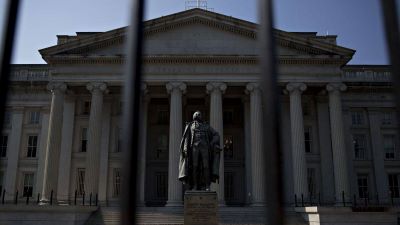
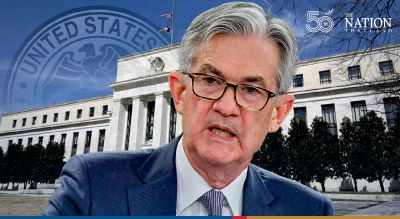
During a Senate hearing Tuesday, Federal Reserve Chair Jerome Powell and Treasury Secretary Janet Yellen both warned that a U.S. default due to a failure to raise the debt ceiling would have catastrophic consequences. Republicans blocked a Democratic move in the Senate to raise the debt limit for the second time in as many days — escalating tensions less than three weeks before the U.S. Treasury potentially runs out of capacity to avert a federal payments default.
“We would expect a deal to get done, but it appears as though both sides are a bit more entrenched compared to previous periods,” said Brian Price, head of investment management at Commonwealth Financial Network. “A government shutdown is a risk factor that we’ll be watching in the coming days and weeks.”
ADVERTISEMENT
Yellen warned that her department will effectively run out of cash around Oct. 18 unless legislative action is taken to suspend or increase the debt limit. Heated remarks from Senator Elizabeth Warren also weighed on markets. After slamming Powell on his track record over financial regulation, Warren said he’s a “dangerous man to head up the Fed” and that’s why she’ll oppose his renomination.
The S&P 500 extended its September selloff, with technology shares underperforming economically sensitive companies. The Nasdaq 100 dropped the most since March. The yield on Treasury 30-year bonds climbed more than 10 basis points earlier Tuesday. The dollar rallied.
The world economy is facing a buildup in stagflationary forces as surging energy prices boost inflation and slow the recovery from the pandemic recession. Brent oil hovered near the key, psychological level of $80 a barrel, while natural gas surged.
U.S. consumer confidence dropped in September for a third straight month, suggesting concerns over the delta variant and higher prices continue to dampen sentiment. Home prices surged 19.7% in July — once again posting the biggest jump in more than 30 years.
Here are some events to watch this week:
– Japan’s ruling party votes to elect leader, Wednesday
– Central bank chiefs Andrew Bailey (BOE), Haruhiko Kuroda (BOJ), Christine Lagarde (ECB) and Jerome Powell (Fed) participate in an ECB Forum panel, Wednesday
– House Financial Services Committee hearing on the Fed, Treasury’s pandemic response, Thursday
– China Caixin manufacturing PMI, non-manufacturing PMI, Thursday
– Univ. of Michigan sentiment, ISM manufacturing, U.S. construction spending, spending/personal income, Friday
Some of the main moves in markets:
– – –
– The S&P 500 fell 2% as of 4 p.m. New York time
– The Nasdaq 100 fell 2.9%
– The Dow Jones industrial average fell 1.6%
– The MSCI World index fell 1.8%
– The Russell 2000 Index fell 2.2%
– – –
– The Bloomberg Dollar Spot index rose 0.5%
– The euro was little changed at $1.1687
– The British pound fell 1.1% to $1.3542
– The Japanese yen fell 0.4% to 111.46 per dollar
– – –
– The yield on 10-year Treasuries advanced six basis points to 1.54%
– Germany’s 10-year yield advanced two basis points to -0.20%
– Britain’s 10-year yield advanced four basis points to 0.99%
– – –
– West Texas Intermediate crude fell 0.8% to $74.82 a barrel
WASHINGTON – The Federal Reserve is under mounting pressure as it grapples with a slowing economic recovery, the abrupt departures of two regional banking presidents related to their stock-trading behavior, and a new call from a top Senate Democrat to replace Jerome Powell as chair.
On Tuesday, Sen. Elizabeth Warren, D-Mass., said she would oppose Powell getting a second term as chair, calling him a “dangerous man” and raising the political stakes of the White House’s nomination decisions. On Monday, two of the Fed’s regional bank presidents – Eric Rosengren and Robert Kaplan – retired amid scrutiny over their stock trading during the covid crisis, actions that spurred an unusual Fed review of trading rules for officials.
In the background, the Fed is contending with a surge in coronavirus cases and its heavier than expected economic fallout, which has exacerbated worker shortages, supply chain problems and inflation. Fed policymakers last week downgraded their year-end expectations for the labor market and economic growth, while also raising their estimates for inflation. All the while, central bankers must decide whether the economy will continue making progress and put the Fed in position to start easing, or “tapering,” its vast support for the markets.
ADVERTISEMENT
“The Fed is clearly in damage-control mode given the issues around Rosengren and Kaplan’s resignations,” said Joe Brusuelas, chief economist at RSM. “Adding to that degree of difficulty is that Powell has to navigate the onset of tapering and his own renomination challenge that was vividly on display during today’s hearing.”
The series of events also risks damaging the public’s perception of the Federal Reserve. On Tuesday, Powell fielded questions from lawmakers on the Fed’s ethics and transparency in the wake of the revelations about Rosengren and Kaplan’s financial activities. Powell told members of the Senate Banking Committee that while trades by Rosengren and Kaplan fell in line with Fed guidelines, “the appearance is just obviously unacceptable.”
“That just tells you that the problem is that the rules, the practices and the disclosure needs to be improved,” he said. “We will rise to this moment.”
When it comes to inflation, prices for cars, food and other everyday goods are still rising, straining pocketbooks for households nationwide. The Fed has maintained that such high inflation is a temporary feature of the economic recovery and is largely tied to supply chains that need more time to clear.
But at Tuesday’s hearing, Powell said inflation is both broader and more structural than it appeared earlier in the year. He said the bottlenecks “have not only not gotten better, they’ve actually gotten worse,” pointing to traffic at the Port of Los Angeles.
A shortage of workers continues to weigh on some sectors, especially restaurants and other jobs with a lot of person-to-person contact, even though Fed officials and other economists previously said they expected the recovery would speed up this fall, with kids back in school and the expiration of enhanced federal unemployment benefits drawing more workers to the labor force. But rising coronavirus cases drastically slowed job growth in August, with the retail and restaurant sectors shedding workers. Fears of the virus also shook consumer confidence.
At their September policy meeting, Fed leaders tempered their expectations for the unemployment rate, projecting it to fall to 4.8% by the end of 2021, compared with a previous estimate of 4.5%. Officials also lowered estimates for the economy’s overall growth, projecting it at 5.9% by the end of the year, following a June forecast of 7%.
“What happened was, delta happened,” Powell said last week.
Many Fed officials say prices won’t fall significantly until supply chains clear up. Lael Brainard, a Fed governor, pointed in a Monday speech to builders who can’t get enough construction materials and to North American auto production, which was paused by shutdowns in Malaysia and Vietnam.
“One clear lesson is that we need to be humble about our ability to correctly anticipate future economic conditions given the unpredictability of the virus,” Brainard said. “We had expected a smooth rotation from goods spending to services spending during a complete reopening this fall, but delta has slowed this process.”
That reality contrasts with the way Fed leaders described their impressions of the delta variant in the summer. In his August speech in Jackson Hole, Wyo., Powell said that “while the delta variant presents a near-term risk, the prospects are good for continued progress toward maximum employment.”
In July, Powell said the delta variant could have fewer implications for the economy if it followed the pattern of previous covid surges. He said that with much of the country vaccinated and less of a likelihood for shutdowns, “it seems like a good, going-in estimate would be that the effects will probably be less.”
“We’ve kind of learned to live with it,” Powell said at the time.
Granted, Fed watchers and economists say delta’s toll – for public health and the economy – is still coming into full view. Earlier this month, as the variant led to a surge of more than 150,000 new cases a day, mostly among unvaccinated Americans, the Biden administration announced new vaccine and testing rules for businesses with more than 100 employees.
Claudia Sahm, a former Fed economist and now a senior fellow at the Jain Family Institute, said that even if the delta variant is having a larger economic effect than initially expected, “what Powell said earlier is still true: The recovery is still happening.”
“It is entirely appropriate for them to be emphasizing risks now that weren’t getting the same degree of emphasis in the summer,” Sahm said. “The Fed is data driven. And so if the world changes, they need to change their narrative.”
Meanwhile, the Fed is also facing questions about its leadership. Powell’s term is up in February, and the White House has not signaled whether it will nominate him for a second term as chair. The Biden administration can fill up to four openings at the Fed in the coming months, and there is a growing expectation that the White House will unveil a slate of nominations at the same time.
During Tuesday’s Senate hearing, Warren became the first senator to oppose Powell’s nomination, pointing to the Fed’s moves to ease rules on the banking system put in place after the Great Recession. It’s not clear whether her remarks will have much sway over the White House’s decision-making. Treasury Secretary Janet Yellen has indicated she would support Powell’s nomination.
Warren did not specifically endorse other candidates. But she has praised Brainard, the Fed board’s lone Democrat who consistently voted against its moves to soften banking regulation, and has warned that less oversight of Wall Street, even in a healthy economy, is perilous.
“Your record gives me grave concern,” Warren told Powell. “And that makes you a dangerous man to head up the Fed, and it’s why I will oppose your renomination.”
Google is on a collision course with advertisers and publishers who fired off a fresh antitrust complaint with the European Union in the run up to the U.S. tech giants court fight over a record $5 billion antitrust fine.
Movement for an Open Web, an industry group, asked the European Union to rein in how Google tweaks its search engine, after the company imposed ad-tracking changes that threaten to hit advertisers’ and publishers’ revenue streams.
A previous complaint fueled a U.K. probe and the group’s members now want their evidence to bolster the European Commission’s wide-ranging investigation into Google’s advertising technology.
ADVERTISEMENT
Google, a unit of Alphabet Inc., has been embroiled in various antitrust battles in Europe for more than a decade. Its lawyers are currently challenging a record $5 billion EU fine at a five-day court hearing in Luxembourg. The EU earlier this year said it would investigate Google’s privacy changes and how the search giant may favor its own online display advertising technologies over rivals.
Officials are increasingly scrutinizing the black-box of online advertising where Google automatically calculates and offers ad space and prices to advertisers and publishers as a user clicks on a web page.
The EU is still defending past rulings against Google, including the 2018 finding that the company cemented its position over mobile search and advertising with restrictive contracts that pushed its apps on to phones.
“These interlocking restrictions helped Google to ensure that its competitors would not achieve a critical mass needed to challenge Google’s dominant position,” EU lawyer Carlos Urraca Caviedes told the EU’s General Court in Luxembourg, which may take as long as a year to issue a judgment.
Google’s vast business and power mean that a move to restrict tracking by phasing out third-party cookies — part of a wider privacy push — can have a wide impact on the advertising market. Advertisers filed the new complaint to ask that Google should have to check with the EU or others before making future changes.
The commission said it received the complaint and “will assess it under the standard procedures.”
The complaint argues that Google’s curb on advertisers’ ability to gather information on web users will hurt revenue for publishers because they won’t be able to offer more valuable targeted ads. The advertisers want to see want to see more regulatory oversight of Google, going beyond a potential settlement that the company has offered U.K. authorities to end their probe into the company’s so-called privacy sandbox.
“Google is placing itself in the position to decide what data can be shared on the web and with whom,” the group said in an emailed statement. “Such power can only be wielded by regulators and threatens the open web.”
Representatives for Mountain View, California-based Google referred to a previous statement in which it said it was working on “new proposals to underpin a healthy, ad-supported web without third-party cookies.”
“Creating a more private web, while also enabling the publishers and advertisers who support the free and open internet, requires the industry to make major changes to the way digital advertising works,” Google said.
Airlines are cautiously adding capacity between the U.S. and Europe over winter, as carriers try to capitalize on looser travel restrictions without over-stretching during the seasonally slower months.
The number of flights from Western Europe to North America is poised to jump by 7.5% between late October and early November, when the U.S. ban lifts on visits from most European countries, based on data from BloombergNEF. Traffic will then head for a peak in late December.
While European carriers have built up forward schedules throughout the coronavirus pandemic, only to consolidate when demand fails to materialize, “we’ve seen far fewer cancellations in recent weeks,” said David Doherty, a BloombergNEF analyst. That “shows that airlines are increasingly confident about load factors.”
ADVERTISEMENT
Colder countries such as the U.K. and Germany are set to capture the lion’s share of any winter bump, as airlines pare back summer schedules between the U.S. and warmer nations.
U.S. capacity to the U.K. is set to surge 79% between September and December based on current schedules, according to flight tracker OAG. For Germany, the increase is 21%, while seats offered for Spain and Italy decline. OAG expects some of the flights to the U.K. and Germany to be cut as airlines adjust their schedules.
Last week’s decision by the U.S. to allow in vaccinated visitors — ending a ban on most European travelers since March 2020 — sent airline stocks soaring.
The restrictions have hit big European network carriers like Deutsche Lufthansa AG and British Airways especially hard, as they are more dependent on the North Atlantic corridor — the most lucrative corner of the global airline market. U.S. counterparts like United Airlines and Delta Air Lines have vast domestic operations that held up better during the pandemic.
Lufthansa said Tuesday that demand on some routes to the U.S. had reached pre-crisis levels, with sales of premium seats on flights to New York and Florida exceeding 2019 levels. The German airline group, which owns the former national carriers of Switzerland, Austria and Belgium, said it stands ready to increase capacity at short notice.
British Airways, whose route from London Heathrow to New York’s John F. Kennedy International generated in excess of $1 billion in annual revenue before the pandemic, reported a jump in searches after the U.S. move but hasn’t commented on sales.
European booking horizons remain short, with demand focused on leisure destinations and strengthening in December, said Hugh Aitken, vice president of flights at Skyscanner.net, which tracks airline demand.
“According to our analysis, New York sees the most demand, followed by the likes of Miami and other leisure destinations such as Orlando, Los Angeles and San Francisco,” he said.
Winter is likely to remain challenging for airlines, said John Grant, chief analyst at OAG. While carriers typically alter capacity in increments of 10%, demand may not move so much at one time. This leaves carriers guessing.
“On one hand, you need to demonstrate to your shareholders that you’re gearing up to generate cash,” he said. “At the same time, you don’t want to add too much capacity that you miss out on profitable flying.”
European energy prices surge to records as supply crisis spreads
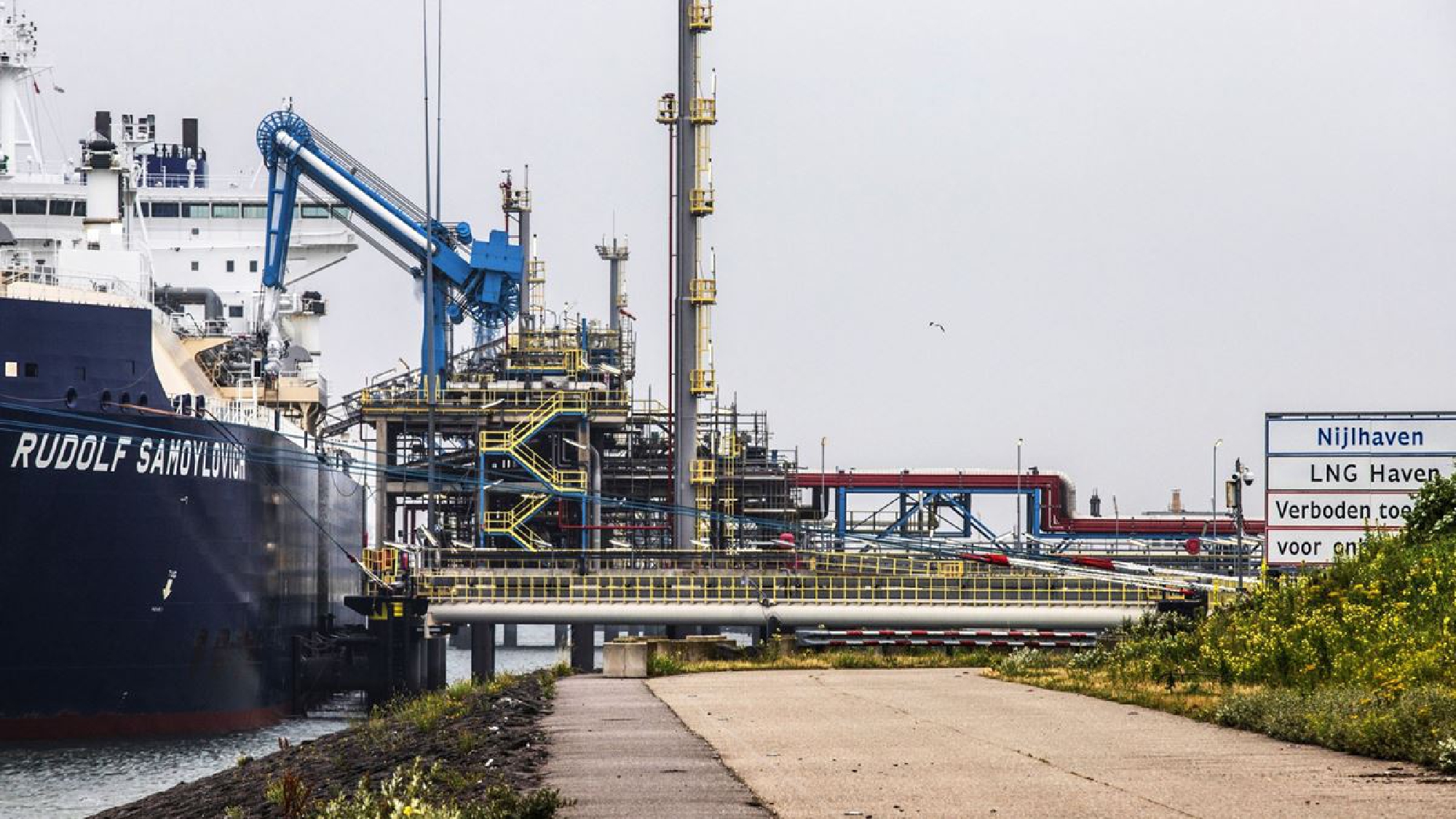
European energy markets from natural gas to carbon permits jumped to records, signaling the supply shortage will get worse just as the winter season starts.
Stockpiles of everything from gas to coal and Norwegian water for electricity production are dwindling and there are few signs the situation will improve anytime soon as demand continues to roar back from a pandemic-driven lull.
“Europe’s supply-demand balance will remain unusually tight heading into the winter, adding further price pressure to a market already at record highs,” BloombergNEF analysts wrote in a report published Tuesday.
ADVERTISEMENT
Many of the U.K.’s smaller energy suppliers have collapsed, while some French electricity retailers are struggling to supply clients and are also at risk of folding. Meanwhile, Europe’s miners have warned that the unprecedented prices could disrupt their shift away from fossil fuels.
Dutch front-month natural gas futures surged as much as 12% and the equivalent contract in the U.K. jumped at the same rate. German electricity for next year also climbed to new highs, while carbon futures eased after earlier jumping to a record high. Brent crude, the international benchmark, rose above $80 a barrel for the first time since October 2018 and northwest European coal prices were at their highest since the 2008 financial crisis.
The surge in energy prices will be taken up by European leaders themselves, when they meet in Brussels for a summit on Oct. 21-22, according to a draft of the meeting’s agenda seen by Bloomberg.
“This is the first innings of a multiyear, potentially decade-long commodity supercycle,” Jeff Currie, global head of commodities research at Goldman Sachs, said in an interview with Bloomberg TV. “It’s driven by the war on climate change, the war on income inequality. All of these dynamics lead to a structural rise in commodity demand against this whole idea of the revenge of the old economy.”
The latest warning that the power crunch is spreading across Europe comes from the Norwegian grid operator Statnett, which said electricity supplies in the southwest of the country are “pressed” because of low inflows and falling stockpiles.
The shortage could crimp exports to other markets since that part of the country is a hub for power shipments abroad. The U.K., which is grappling with a supply crisis of its own, plus Germany and Denmark are all connected to the Norwegian grid via long cables on the seabed.
“There is now a very low amount of water, for this time of year, in many of the reservoirs here,” Statnett said.
Europe has the world’s most ambitious climate plan, but political will is being tested by soaring energy costs. As countries take steps to ease the blow on consumers, Spain warned the European Union that measures to reduce emissions “may not stand a sustained period of abusive electricity prices,” according to a Sept. 20 letter.
Much of the rally in prices stems from the gas shortage, after a colder and longer winter depleted stockpiles. Inventories are now at their lowest in more than a decade for this time of the year. Under BNEF’s cold winter scenario, Europe’s storage levels at the end of March would be 2.5 billion cubic meters, or just 3.8% of full capacity, the researcher said. Low wind speeds have also meant that more of the fuel has been used to generate power.
Russian gas flows through a major transit route more than halved early Tuesday. While Gazprom has been focusing on refilling gas storage within Russia, the company says all its export-supply obligations have been met. The current drop in deliveries through the Yamal-Europe link is a “temporary situation” due to a client request, it said.
More expensive gas is making coal more attractive for power generation, said Tom Lord, head of trading and risk management at Redshaw Advisors in London.
The German clean-dark spread for November, a measure of coal-plant profitability, jumped as high as 49.43 euros ($57.73) per megawatt-hour and is driving demand for carbon permits.
As the region’s official heating season starts on Friday, traders are watching for signs of cold weather, which would push demand higher. There will also be a key gas auction in Ukraine on Oct. 18 to see how much fuel will come from Russia. Any signal from Gazprom on when significant gas flows will start on the controversial Nord Stream 2 pipeline to Germany will also likely impact the rally.
“It’s very difficult to make forecasts. Currently the gas market is extremely tight,” said Marco Saalfrank, head of continental Europe merchant trading at Swiss utility Axpo Holding . “It depends very much on what the winter will be like, if it’s a cold winter then we will probably see the gas price continue to spike.”
Published : September 29, 2021
European energy markets from natural gas to carbon permits jumped to records, signaling the supply shortage will get worse just as the winter season starts.
Stockpiles of everything from gas to coal and Norwegian water for electricity production are dwindling and there are few signs the situation will improve anytime soon as demand continues to roar back from a pandemic-driven lull.
“Europe’s supply-demand balance will remain unusually tight heading into the winter, adding further price pressure to a market already at record highs,” BloombergNEF analysts wrote in a report published Tuesday.
ADVERTISEMENT
Many of the U.K.’s smaller energy suppliers have collapsed, while some French electricity retailers are struggling to supply clients and are also at risk of folding. Meanwhile, Europe’s miners have warned that the unprecedented prices could disrupt their shift away from fossil fuels.
Dutch front-month natural gas futures surged as much as 12% and the equivalent contract in the U.K. jumped at the same rate. German electricity for next year also climbed to new highs, while carbon futures eased after earlier jumping to a record high. Brent crude, the international benchmark, rose above $80 a barrel for the first time since October 2018 and northwest European coal prices were at their highest since the 2008 financial crisis.
The surge in energy prices will be taken up by European leaders themselves, when they meet in Brussels for a summit on Oct. 21-22, according to a draft of the meeting’s agenda seen by Bloomberg.
“This is the first innings of a multiyear, potentially decade-long commodity supercycle,” Jeff Currie, global head of commodities research at Goldman Sachs, said in an interview with Bloomberg TV. “It’s driven by the war on climate change, the war on income inequality. All of these dynamics lead to a structural rise in commodity demand against this whole idea of the revenge of the old economy.”
The latest warning that the power crunch is spreading across Europe comes from the Norwegian grid operator Statnett, which said electricity supplies in the southwest of the country are “pressed” because of low inflows and falling stockpiles.
The shortage could crimp exports to other markets since that part of the country is a hub for power shipments abroad. The U.K., which is grappling with a supply crisis of its own, plus Germany and Denmark are all connected to the Norwegian grid via long cables on the seabed.
“There is now a very low amount of water, for this time of year, in many of the reservoirs here,” Statnett said.
Europe has the world’s most ambitious climate plan, but political will is being tested by soaring energy costs. As countries take steps to ease the blow on consumers, Spain warned the European Union that measures to reduce emissions “may not stand a sustained period of abusive electricity prices,” according to a Sept. 20 letter.
Much of the rally in prices stems from the gas shortage, after a colder and longer winter depleted stockpiles. Inventories are now at their lowest in more than a decade for this time of the year. Under BNEF’s cold winter scenario, Europe’s storage levels at the end of March would be 2.5 billion cubic meters, or just 3.8% of full capacity, the researcher said. Low wind speeds have also meant that more of the fuel has been used to generate power.
Russian gas flows through a major transit route more than halved early Tuesday. While Gazprom has been focusing on refilling gas storage within Russia, the company says all its export-supply obligations have been met. The current drop in deliveries through the Yamal-Europe link is a “temporary situation” due to a client request, it said.
More expensive gas is making coal more attractive for power generation, said Tom Lord, head of trading and risk management at Redshaw Advisors in London.
The German clean-dark spread for November, a measure of coal-plant profitability, jumped as high as 49.43 euros ($57.73) per megawatt-hour and is driving demand for carbon permits.
As the region’s official heating season starts on Friday, traders are watching for signs of cold weather, which would push demand higher. There will also be a key gas auction in Ukraine on Oct. 18 to see how much fuel will come from Russia. Any signal from Gazprom on when significant gas flows will start on the controversial Nord Stream 2 pipeline to Germany will also likely impact the rally.
“It’s very difficult to make forecasts. Currently the gas market is extremely tight,” said Marco Saalfrank, head of continental Europe merchant trading at Swiss utility Axpo Holding . “It depends very much on what the winter will be like, if it’s a cold winter then we will probably see the gas price continue to spike.”
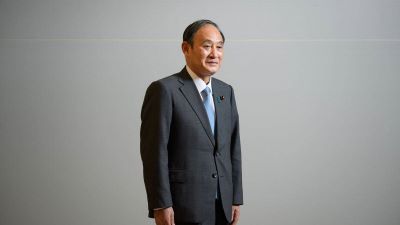
Japan famously does much of its political wrangling behind closed doors, often making leadership contests drab affairs. Wednesdays vote to choose the next head of the Liberal Democratic Party, who is set to become prime minister, is shaping up as a rare exception.
Traders will need to stay glued to the race throughout the day as party members select one of four candidates who are in the running to replace Yoshihide Suga in an unusually open election.
Here’s what to look out for.
ADVERTISEMENT
– The Timeline
Unlike 2020’s truncated vote that saw Suga fill the gap left by Shinzo Abe stepping down, more than 1 million rank-and-file members of the LDP will join lawmakers in this election.
Each group has 382 votes, though that number can change if there are abstentions. The rank-and-file finish casting their ballots on Tuesday while the lawmakers follow on Wednesday, when the results of both are announced.
(All times are estimates and in JST)
ADVERTISEMENT
1 p.m.: Party lawmaker voting begins
2:20 p.m.: Results are announced
— If any candidate gets a clear majority of votes — an unlikely outcome — they are declared the winner
– If not, a run-off vote between the top-two candidates begins immediately. In this vote, lawmakers retain their 382 votes, but just 47 go to the prefectural chapters of the rank-and-file members
3:40 p.m.: Winner of the run-off vote is announced
ADVERTISEMENT
The winner will speak to the press later in the day, and is set to be elected as prime minister when parliament convenes on Oct. 4.
– The Scenarios
It looks unlikely that any candidate will secure enough votes for a first-round majority.
Public favorite Taro Kono “is likely to lead in the first round, but fall short of securing a majority,” Goldman Sachs Group economists wrote in a Sept. 27 note. Attention then turns to how many lawmaker votes go to the second-place candidate, likely to be Fumio Kishida or Sanae Takaichi.
SMBC Nikko Chief Economist Junichi Makino is among those who sees Kishida as having the advantage in a run-off, but sees a path for Kono if LDP Secretary-General Toshihiro Nikai seeks to block Kishida. If Nikai and Finance Minister Taro Aso’s factions vote Takaichi into the run-off, then “a victory for Kono becomes possible,” he wrote.
– Last Time
It’s been nearly a decade since the LDP had an open battle for leader. In a similar race to what’s expected Wednesday, Shigeru Ishiba finished first in that vote, but failed to secure a majority, with Abe coming second. In the run-off vote, Ishiba was handily defeated, and Abe elected.
While that day the run-off result came before the 3 p.m. stock market close, reaction was muted — the Abenomics surge didn’t happen until later that year as elections approached, with the LDP still in opposition at the time.
– Watch Media
With party member voting ending Tuesday, watch local media, who will be exhaustively polling to try to identify the winner. In 2012, the Sankei declared the morning of the vote that Abe was favorite to win a run-off, correctly predicting Ishiba would win the first round but that Abe would dominate the second phase.
The Cabinet on Tuesday approved fresh borrowing of 1.344 trillion baht for the new fiscal year, which starts next month.
The new borrowing comes under the Cabinet-approved debt management plan. The plan includes 1.5 trillion baht already borrowed by the government plus a 2022 repayment plan totalling 339.29 billion baht, said a government spokesperson.
Under the plan, the country’s public debt is expected to reach 62.69 per cent of GDP by the end of fiscal year 2022, up from 55.59 per cent as of this July.
ADVERTISEMENT
Earlier this month, the government lifted the debt ceiling from 60 to 70 per cent of GDP to boost fiscal flexibility in combating the Covid-19 crisis.
The Stock Exchange of Thailand (SET) Index closed at 1,616.50 on Tuesday, down 3.52 points or 0.22 per cent. Transactions totalled 98.94 billion baht with an index high of 1,626.55 and a low of 1,614.31.
The index fell for the second day running after dropping 0.68 per cent on Monday.
In the morning session, Krungsri Securities forecast the index on Tuesday would move between 1,610 and 1,630 points despite rising oil and coal prices in line with global economic recovery.
ADVERTISEMENT
It said the index also gained positive sentiment from Thailand’s move to lift Covid-19 restrictions on more businesses to get the economy running.
“However, uncertainty over the domestic floods and a weakening baht would trigger outflows of foreign funds, resulting in pressure on the index,” Krungsri Securities added.
The 10 stocks with the highest trade value today were KBANK, PTT, PTTGC, PTTEP, SCB, TRUE, BANPU, BBL, TOP and SCC.
Other Asian indices were mixed:
Japan’s Nikkei Index closed at 30,183.96, down 56.10 points or 0.19 per cent.
China’s Shanghai SE Composite Index closed at 3,602.22, up 19.39 points or 0.54 per cent, while the Shenzhen SE Component Index closed at 14,313.82, down 30.46 points or 0.21 per cent.
Hong Kong’s Hang Seng Index closed at 24,500.39, up 291.61 points or 1.20 per cent.
South Korea’s KOSPI closed at 3,097.92, down 35.72 points or 1.14 per cent.
Taiwan’s TAIEX closed at 17,181.44, down 132.33 points or 0.76 per cent.
Thai Chamber of Commerce chairman Sanan Angubolkul said on Monday that the easing up of lockdown measures and reopening of more businesses from October 1 will improve the confidence of the business sector and increase people’s spending in October.
The Centre for Covid-19 Situation Administration announced on Monday that child development centres, libraries, museums, art galleries, nail salons, tattoo shops, spas and massage shops, and cinemas in dark red provinces will be allowed to open under certain conditions from October 1.
The curfew in dark red zones will also be reduced to 10pm-4am from October 1, while complexes, convenience stores and sports areas – indoor and outdoor – can stay open an hour longer until 9pm.
“We estimate that the easing up of lockdown measures will help create more economic activities and increase total economic spending in October to Bt10-12 billion per day,” he said. “If this trend goes on until the year-end, we could see total economic expansion of 2021 back in the positive realm.”
Sanan added that the continued vaccination drive throughout the country, the arrival of more vaccines and increased affordability of antigen test kits will boost the confidence of businesses and general public in the government’s administration of Covid-19 situation, and in return they will be more willing to comply to disease control measures to curb the spreading.
The chamber, however, expressed concern over the flood situation in several provinces, which is estimated to cost the economy Bt5-10 billion, while urging related agencies to help affected entrepreneurs get back on their feet as soon as possible to minimise the economic impact.
The baht opened at 33.59 to the US dollar on Tuesday, weakening from Wednesday’s closing rate of 33.50.
The Thai currency is likely to move between 33.45 and 33.65 during the day, Krungthai Bank market strategist Poon Panichpibool predicted.
Poon said that the baht might continue to weaken in the short term if it weakens over the key resistance level of 33.50 to the US dollar. He expected that the baht could weaken from 33.80 to 33.85.
The flood situation pressured investors to sell Thai stocks as they were afraid that it could be as bad as the 2011 floods. Meanwhile, the Asian market was in a risk-off state due to the Evergrande crisis.
The baht might also be pressured by importers buying the dollar in the short term or at the end of the month. Gold investors might buy on dips when gold price is US$1,750 per ounce. The baht might not strengthen and its key support level is from 33.20 to 33.30, Poon said.
Investors, especially in the US, are in a risk-off state after US Federal Reserve officials signalled a decrease un quantitive easing soon as the economy was recovering and the inflation was at a high level longer than expected. He said Fed officials did not signal increases in interest rate.
He added that the market was pressured by the Evergrande crisis as the company did not pay interest to investors on September 23. The market is keeping an eye on the end of this month and the beginning of next month when the company will have to pay interest of US$193.3 million.