Companies in four sectors to gain from revival of Thailand-Saudi Arabia ties

#SootinClaimon.Com : ขอบคุณแหล่งข้อมูล : หนังสือพิมพ์ The Nation.

https://www.nationthailand.com/thailand/economy/40022844

Companies in four sectors to gain from revival of Thailand-Saudi Arabia ties

Companies in four sectors to gain from revival of Thailand-Saudi Arabia ties

WEDNESDAY, DECEMBER 07, 2022

The restoration of bilateral relations between Thailand and Saudi Arabia would benefit four business sectors, according to analysts at news agency Bangkokbiz.

Saudi Arabia restored its relationship with Thailand this year after 32 years of coldness, and this offers an opportunity for several businesses.

Saudi Arabia’s economy weathered even the Covid-19 crisis, recording GDP growth of 6.8% in 2021, its best performance since 2012, due to the global energy demand.

Bangkokbiz analysts evaluated the potential of the relationship and zoomed in on four business sectors in Thailand that could benefit the most.

Food export and food processing

The Saudi Food and Drug Authority has permitted import of chicken from 11 Thai factories including CP, GFPT, and Thai Foods Group (TFG).

Saudi Arabia was the fifth biggest chicken-importing country at 590,000 tonnes per year — 70% from Brazil and 30% from Ukraine and Russia.

In 2021, Thailand exported 912,900 tonnes of chicken worldwide while the export value of chilled, frozen, and processed chicken was 102.529 billion baht, the Bangkokbiz analysts said.

Tourism

Saudi national airline Saudia is now flying three times a week to Thailand from Riyadh and Jeddah, which is beneficial for the SET-listed Airports of Thailand.

According to statistics, Saudi tourists had generated a lot of revenue for Thailand:

  • 2017 – 33,517 tourists; 3.51 billion baht
  • 2018 – 28,334 tourists; 2.615 billion baht
  • 2019 – 30,002 tourists; 2.716 billion baht
  • 2020 – 4,125 tourists
  • 2021 – 467 tourists

Medical

Medical tourism is also popular with Saudi tourists. There is enormous potential for Thailand as the Saudi government aims to improve healthcare for its people.

Meanwhile, the Cabinet has approved an extended 30-day visa on arrival for Saudi visitors, which will be beneficial to Bumrungrad Hospital (BH) and Bangkok Dusit Medical Services (BDMS), the analysts said.

Eastern Economic Corridor (EEC)

The EEC recently revealed that the Saudi government and private sectors are preparing to invest 300 billion baht in Thailand in fiscal year 2023 in several industries including tourism, medical care, and petrochemicals.

Capital Nomura Securities viewed the number as significantly higher than the foreign investment in the first nine months of 2022 with only 2.86 billion baht.

Investment in 2019 — before the Covid-19 pandemic — was 4.64 billion baht and 4.58 billion baht in 2020.

The company expected average foreign direct investment per year to double, which will be beneficial to AMATA Corporation and WHA Corporation.

Related stories

Thai cement producers urged to eye Philippines as tax on imports ends

#SootinClaimon.Com : ขอบคุณแหล่งข้อมูล : หนังสือพิมพ์ The Nation.

https://www.nationthailand.com/thailand/economy/40022839

Thai cement producers urged to eye Philippines as tax on imports ends

Thai cement producers urged to eye Philippines as tax on imports ends

WEDNESDAY, DECEMBER 07, 2022

Thai cement producers can turn to the Philippines as a potential market now that the Philippine government has decided not to extend a tax on imports of cement to protect domestic producers, a senior Thai trade official said on Wednesday.

Ronnarong Phoolpipat, director-general of the Foreign Trade Department, said the Philippine Department of Trade and Industry (DTI), announced its decision to end the tax on November 10 following a probe into the issue.

The DTI decided not to continue the import tax on cement after it expired on October 21.

The Philippines imposed the levy on imported cement on October 22, 2019 for three years. In the first year, the tax was 250 pesos (US$4.5) per tonne. The duty fell to 245 pesos and 200 pesos per tonne in the second and third years, respectively.

On February 24 this year, the Philippine Tariff Commission began an inquiry to decide whether to continue duty on. By World Trade Organisation’s rules, it could continue the safeguard measure for seven more years.

However, Ronnarong said his department appealed against the measure, arguing that a safeguard should only be used to protect a damaged industry. The department also noted that cement production had risen in the Philippines.

Ronnarong said the appeal prompted the Philippines to decide not to continue imposing the tax.

During the first nine months of this year, Thailand produced about 20.56 million tonnes of cement. Most, 18.39 million tonnes, was for the domestic market. The rest, 1.67 million tonnes, was exported.

Myanmar, Laos and Cambodia are the major export markets for Thai cement, Ronnarong said, adding that Thai producers rarely exported to the Philippines because of the tax.

He said the Philippines imported about 4 million tonnes of cement a year, with about 90 per cent of that from Vietnam.

The Foreign Trade Department expects the Philippines to import more cement next year as its property market and overall economy continue growing.

Now that the tax on imported cement is gone, the Philippines is a high-potential market for Thai cement exporters, Ronnarong said.

Thailand’s headline inflation edges downward for third successive month

#SootinClaimon.Com : ขอบคุณแหล่งข้อมูล : หนังสือพิมพ์ The Nation.

https://www.nationthailand.com/thailand/economy/40022837

Thailand’s headline inflation edges downward for third successive month

Thailand’s headline inflation edges downward for third successive month

WEDNESDAY, DECEMBER 07, 2022

Thailand’s headline inflation in November eased for the third consecutive month, but the consumer price index (CPI) was up year on year, data showed on Wednesday.

The director of Trade Policy and Strategy Office (TPSO), Poonpong Naiyanapakorn, said Thailand’s consumer price index (CPI) in November stood at 107.92 points compared to 102.25 points in the same month last year, pushing headline inflation up to 5.55%.

But the rate of increase in headline inflation in November continued to drop for the third month. Headline inflation was 6.41% in September and 5.98% in October, the TPSO chief added.

He said the lower inflation was due to lower food prices, especially fresh vegetables and fruits, meat and food seasoning because their production had increased month on month.

Poonpong said Thailand’s headline inflation was better than several countries, including the United States, the United Kingdom, Italy, Mexico, India, Laos, the Philippines and Singapore.

According to Poonpong, the price index of foods and non-alcoholic drinks rose by 8.40% in November, compared to a 9.58% increase in October because the prices of fresh vegetables dropped significantly.

Poonpong said the prices of other goods rose by 3.59% because of the rising prices of oil, electricity and cooking gas as well as cost of public transportation, while the prices of cleaning products such as detergents and softeners saw a slight increase.

He said core inflation, after deduction of price indices of fresh foods and energy, rose to 3.22%, compared to 3.17% in October.

He said the CPI this month dropped by 0.13 compared to October due to the drop in food prices.

Poonpong noted that the average CPI from January to November rose 6.10% year on year in line with the forecast of the Commerce Ministry.

He said the ministry expected headline inflation in December to be at a similar rate as this month and headline inflation for the year would be between 5.5% and 6.5%.

No diesel price cut despite falling oil: Energy minister

#SootinClaimon.Com : ขอบคุณแหล่งข้อมูล : หนังสือพิมพ์ The Nation.

https://www.nationthailand.com/thailand/economy/40022834

No diesel price cut despite falling oil: Energy minister

No diesel price cut despite falling oil: Energy minister

WEDNESDAY, DECEMBER 07, 2022

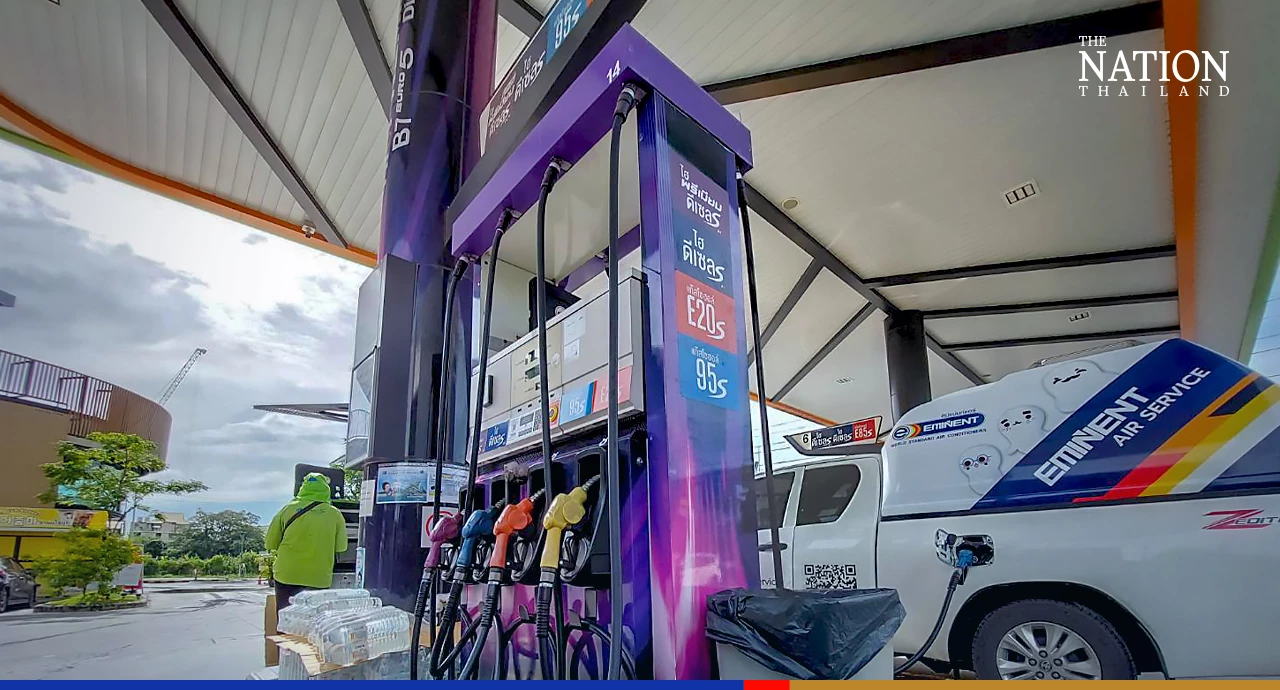
Energy Minister Supattanapong Punmeechaow said on Wednesday it is too early to lower the diesel price in Thailand despite the falling price of oil in the global market.

Supattanapong said the diesel price will be maintained at 35 baht per litre even though the Oil Fuel Fund should save around 3 baht per litre as the global oil price drops.

He added that diesel excise tax cut of 5 baht per litre would remain in place as compensation.

“We believe that Thailand’s retail price of diesel at 34.94 baht per litre is not very high compared to neighbouring countries,” he said.

He added that the ministry is collecting data to consider “New Year gifts” for the public.

As of Sunday (December 4), the Oil Fuel Fund was 129.42 billion baht in debt – 87.23 billion baht from subsidising fuel and 44.18 billion baht from subsidising liquefied petroleum gas (LPG).

Supattanapong said the ministry and Oil Fuel Fund are monitoring the global crude oil price closely after Opec+ maintained its production capacity at 2 million barrels per day, while the price of LNG remains high at around US$30 per barrel due to rising global demand in winter.

No diesel price cut despite falling oil: Energy minister

Moving to electricity bills, he said the ministry would consider the fuel tariff (FT) for January to April next year after talks between the Energy Regulatory Commission (ERC), Electricity Generating Authority of Thailand (EGAT) and PTT.

He said he expects the ERC to clarify the January-April FT soon to ensure it comes into effect on January 1.

The ministry and related agencies are making efforts to lower electricity production costs and find cheaper alternatives to LNG, he added.

“We expect the ERC to announce the FT soon, so the ministry can gather data to launch measures to relieve expense burdens among the public, while industry can seek ways to mitigate FT impacts as much as possible.”

Related stories:

SCB first to raise interest rates after Bank of Thailand rate hike

#SootinClaimon.Com : ขอบคุณแหล่งข้อมูล : หนังสือพิมพ์ The Nation.

https://www.nationthailand.com/thailand/economy/40022824

SCB first to raise interest rates after Bank of Thailand rate hike

SCB first to raise interest rates after Bank of Thailand rate hike

WEDNESDAY, DECEMBER 07, 2022

Siam Commercial Bank (SCB) on Wednesday raised its interest rates for both deposits and loans, the first bank to do so following the Bank of Thailand (BOT)’s latest policy rate hike.

BOT’s Monetary Policy Committee (MPC) on November 30 raised the policy rate 0.25 points to 1.25% amid an inflation outlook that is declining but still higher than the BOT’s target.

SCB announced it was raising its deposit interest rate to 0.25-1.4% per year and loan interest rate to 0.125%-0.25%, effective today (December 7).

Meanwhile, SCB’s minimum retail rate (MRR) will be raised from 5.995% to 6.12% per year, and the minimum loan rate (MLR) will go up from 5.5% to 5.75%. Finally, the minimum overdraft rate (MOR) will go up from 6.095% to 6.345% annually.

“SCB has always realised that the recovery of Thailand’s economy will happen gradually and not in all sectors at once. Therefore, we will continue to offer special measures to minimise the burden from the loan interest rate on our customers as much as we can,” said the bank’s CEO Kris Chantanotoke.

Related Stories

SCB Julius Baer welcomes executives from Julius Baer Group and Siam Commercial Bank, reaffirming ambition to expand Thailand wealth management business

SCB revises up Thailand’s economic growth forecast to 3.2% in 2022

SCB 10X launches Web3 collaboration hub in Bangkok to nurture startups

Thai rubber industry has 2 years to meet international standards

#SootinClaimon.Com : ขอบคุณแหล่งข้อมูล : หนังสือพิมพ์ The Nation.

https://www.nationthailand.com/thailand/economy/40022811

Thai rubber industry has 2 years to meet international standards

Thai rubber industry has 2 years to meet international standards

TUESDAY, DECEMBER 06, 2022

Rubber produced in Thailand may be rejected by foreign buyers if plantations do not meet international management standards in the next two years.

Nakorn Takwiraphat, governor of the Rubber Authority of Thailand (RAOT), said on Tuesday that French tyre manufacturer Michelin raised this issue recently with Agriculture Minister Chalermchai Sreeon.

“There is a risk that many international companies like Michelin and Swedish-Dutch furniture conglomerate Ikea, will not buy our rubber if the plantations do not meet international standards in two years,” Nakorn said.

He added that Michelin’s warning came after the United Nations and the international rubber industry decided that all plantations should follow sustainable principles and be transparent in their management.

Exporters failing to meet these standards will face the risk of their products being rejected, he added.

“Hence, RAOT will urge rubber farmers to make changes so they can command high prices in the international market,” he said.

International standards in the rubber industry include certification from the Forest Stewardship Council (FSC) and the Programme for the Endorsement of Forest Certification (PEFC), he added.

“Rubber farmers who meet these standards will be able to sell their products at prices up to 40% more than normal,” he said.

Some 100,000 rai (16,000 hectares) of about 20 million rai of rubber plantations in Thailand have already met FSC standards.

He added that RAOT has summoned rubber farmers, institutions and exporters to discuss global demands and new regulations.

He added that RAOT aims to ensure at least 50% of Thai rubber plantations meet FSC standards to ensure the country can meet international demands.

Related stories:

Inflation, supply chain constraints to squeeze Thai exports in Q4

#SootinClaimon.Com : ขอบคุณแหล่งข้อมูล : หนังสือพิมพ์ The Nation.

https://www.nationthailand.com/thailand/economy/40022804

Inflation, supply chain constraints to squeeze Thai exports in Q4

Inflation, supply chain constraints to squeeze Thai exports in Q4

TUESDAY, DECEMBER 06, 2022

Thailand’s exports will contract by 1-3 per cent in the fourth quarter compared to last year due to global inflation and raw material shortage, the Thai National Shippers’ Council (TNSC) forecast on Tuesday.

The council estimates that total exports in 2023 will grow marginally by 2-3%.

“Despite several monetary policies having been implemented by the US Federal Reserve, overall inflation is still high worldwide,” said TNSC chairman Chaichan Chareonsuk. “Meanwhile, major manufacturers are suffering from materials shortage, including semiconductors, wheat, soybean, corn, sunflower seeds and fertiliser.”

The TNSC estimated that total exports in November and December would come in at US$23.5 billion and $25 billion, respectively, growing from $21.7 billion in October.

Chaichan said the ongoing stagnation in the global economy will continue until the end of 2023, slowing Thailand’s export sector growth to 2-3%, or an average of $25 billion per month.

The TNSC chief urged the Bank of Thailand to help exporters by maintaining the baht’s stability, and keeping the policy rate at a suitable level to avoid adding to the manufacturing costs in 2023.

He also asked the government to consider adjusting the FT, or fuel adjustment cost for electricity generation, in gradual steps for both household and manufacturing sectors to cushion the impact from rising power bills.

“Next year we want to see more free trade agreements with international partners to maximise opportunities for Thai exporters, such as the European Union, United Kingdom, Turkey, RCEP [Regional Comprehensive Economic Partnership] members and other Asia-Pacific countries,” he added.

Chaichan pointed out that next year exporters should focus on new markets instead of current ones that are becoming saturated. These new potential markets include the Middle East, India and CLMV (Cambodia-Laos-Myanmar-Vietnam).

Related Stories

Global factors could slow Thai export growth in second half of 2023

Thai exports grow substantially, but imports still surging ahead

Thai food exports to China expanded 50 per cent in 2021

Thailand’s improved business registration law to go into effect from Feb 7

#SootinClaimon.Com : ขอบคุณแหล่งข้อมูล : หนังสือพิมพ์ The Nation.

https://www.nationthailand.com/thailand/economy/40022798

Thailand’s improved business registration law to go into effect from Feb 7

Thailand’s improved business registration law to go into effect from Feb 7

TUESDAY, DECEMBER 06, 2022

The amendments to the business registration law, which will make it easier for entrepreneurs and support the digital economy, will go into effect from February 7.

“These amendments aim to boost business flexibility and competitiveness, as well as support the digital economy and society,” Deputy Commerce Minister Sinit Lertkrai said on Tuesday. “Most importantly, they will help reduce expenses and operation costs among entrepreneurs in line with the government’s policy.”

Some key amendments are:

• The required number of company founders will be reduced from three to two;

• Merger process will become more flexible with business owners deciding whether the merger will result in a new company or hold its old identity;

• Businesses will not be required to publish meeting invitation letters in the newspaper unless they have many shareholders.

He added that the amendments also include other points, like a business will have to be registered within three years or its memorandum of association will expire, all share certificates will require a company’s seal and companies can use technology to hold board meetings.

Sinit said the amendments were announced in the Royal Gazette on November 8 and will go into effect from February 7.

Related stories:

Baht plummets against dollar on Tuesday

#SootinClaimon.Com : ขอบคุณแหล่งข้อมูล : หนังสือพิมพ์ The Nation.

https://www.nationthailand.com/thailand/economy/40022791

Baht plummets against dollar on Tuesday

Baht plummets against dollar on Tuesday

TUESDAY, DECEMBER 06, 2022

The baht opened at 35.03 to the US dollar on Tuesday, plummeting from Friday’s close of 34.75 after the Father’s Day holiday on Monday.

The currency will likely move between 34.90 and 35.10 against the greenback during the day and between 34.50 and 35.20 during the week, Krungthai market strategist Poon Panichpibool said.
 

Poon said the baht could weaken further as the dollar strengthens and cautioned investors to keep a close watch on Asian assets and currency sales in the short term.

He said the market has reverted to a risk-off state, and purchases of gold if the price falls would pressure the baht to weaken further.

Poon said the dollar is likely to strengthen if the market remains in a risk-off state as investors are concerned that the US Federal Reserve could increase the interest rate, especially if the US producer price index shows inflation is not slowing much.

The dollar could also be supported if China’s Covid-19 situation worsens and Beijing is unable to relax more disease control measures.

Poon also advised investors to use hedging tools such as options to manage risks in a highly volatile currency market.

Related stories

90% of durians imported by China come from Thailand: Agriculture Dept

#SootinClaimon.Com : ขอบคุณแหล่งข้อมูล : หนังสือพิมพ์ The Nation.

https://www.nationthailand.com/thailand/economy/40022767

90% of durians imported by China come from Thailand: Agriculture Dept

90% of durians imported by China come from Thailand: Agriculture Dept

MONDAY, DECEMBER 05, 2022

Ninety per cent of durian imported by China now comes from Thailand, according to data released by the Department of Agriculture.

Thailand fed China’s huge appetite for the pungent spiky fruit by exporting 779,206 tonnes between February 1 and November 24 this year, generating 82.8 billion baht in revenue, government spokesperson Anucha Burapachaisri said on Monday.

“All thanks to Thailand’s success in fruit export development,” he said.

Prime Minister Prayut Chan-o-cha had also urged agencies and producers to help boost foreigners’ confidence in the quality of Thai durian, Anucha said.

The PM’s intervention comes after controversy over reportedly unripe and substandard durian being sent for export by Thailand.

Anucha advised to growers to check for three signs of ripeness:

1. The durian’s stem must be dark brown, swollen and rough.

2. The spikes should be spread out and springy when squeezed together, with dark brown, dry and brittle tips.

3. The interior fruit lobes or segmentation must be clearly visible.

Meanwhile, Covid-19 is also a concern after China briefly banned Thai durian shipments earlier this year following the discovery of virus-contaminated fruit.

Anucha hailed Thailand’s durian exports as yet another success for the Kingdom’s fruit quality, standards and export management.

These were part of Thailand’s five-year (2022-2027) fruit development plan covering production, transport and exports, he added.

“The plan also focuses on sharing information between related agencies to further develop and manage the Thai fruit trade in the future,” he said.

Related stories: