The price of gold rose by THB100 in morning trade on Thursday.
AGold Traders Association report at 9.25am said the buying price of a gold bar was THB27,750 per baht weight and selling price THB27,850, while gold ornaments cost THB27,257.68 and THB28,350, respectively.
At close on Wednesday, the buying price of a gold bar was THB27,650 per baht weight and selling price THB27,750, while gold ornaments cost THB27,151.56 and THB28,250, respectively.
The spot gold price on Thursday morning was moving around US$1,814 (THB58,854) per ounce after Comex gold dropped by $2.10 to $1,816 per ounce at close on Wednesday. The price moved in a narrow range throughout the day due to a slowdown in trading before the US reveals employment data on Friday.
The Hong Kong gold price meanwhile rose by HK$40 to $16,840 (THB70,254) per tael, the Chinese Gold and Silver Exchange Society reported.
SET buoyant but faces pressure over foreign fund flow decline, overbought stocks
The Stock Exchange of Thailand (SET) Index rose by 2.33 points or 0.14 per cent to 1,636.81 on Thursday morning, witnessing a high of 1,639.38 and a low of 1,633.79 in opening trade.
Krungsri Securities predicted the day’s index would fluctuate between 1,625 and 1,645 points due to a lack of fresh positive sentiment.
It said the index was upbeat from signals that the US Federal Reserve would not rush to raise the interest rate, and Thailand’s falling Covid-19 infection numbers.
“However, a decline in foreign fund flows and signs of overbought stocks would trigger mass sell-offs of shares, resulting in pressure on the index,” Krungsri Securities said.
It recommended purchases of the following companies’ shares as an investment strategy:
▪︎ AOT, KBank, BBL, CPN, CRC, HMPro, AAV, BA, Mint, Amata and WHA, which benefit from the country reopening.
▪︎ CKP, Banpu, GPSC, Gulf, BCPG, BCH, CHG and BDMS, whose third-quarter profit is expected to rise.
The SET Index closed at 1,634.48 on Wednesday, down 4.27 points or 0.26 per cent. Transactions totalled THB117.67 billion with an index high of 1,646.07 and a low of 1,628.16 as the index broke an eight-day run of rises.
Lockdown easing, hopes of economic recovery likely to bolster baht
The baht opened at 32.30 to the US dollar on Thursday, strengthening from Wednesday’s closing rate of 32.35.
The Thai currency is likely to move between 32.15 and 33.35 during the day, Krungthai Bank market strategist Poon Panichpibool said.
Poon predicted the baht would drift sideways, near 32.20 to the US dollar. Investors are keeping an eye on US employment data results due out tomorrow, which would show the pace of economic recovery and might make the dollar itself move sideways.
The baht was likely to strengthen due to a hopeful economic recovery following an easing of the lockdown, which prompted foreigners to invest in Thai assets last week, he said.
Poon is however still concerned about the Covid-19 situation in Thailand, as he is not sure if the present pandemic wave has been contained because “not enough proactive testing is being carried out”.
Investors, especially importers, might close risks when the baht strengthens. He recommended investors use various hedging tools if they feel uncertain about which direction the currency is heading in.
Labor market to be increasingly critical in U.S. economic outlook as stimulus fades: economist
“As the economy moves forward into the later months of 2021, federal aid will taper off and there will be an important focus on the ability of the labor market to generate ongoing strength in wages and salaries to support spending,” economist Jack Kleinhenz said.
The labor market will play an “increasingly critical role” in U.S. economic outlook going forward, as the stimulus effect of federal aid fades away, National Retail Federation (NRF) Chief Economist Jack Kleinhenz said Wednesday.
“As the economy moves forward into the later months of 2021, federal aid will taper off and there will be an important focus on the ability of the labor market to generate ongoing strength in wages and salaries to support spending,” Kleinhenz said in a newly published article.
“U.S. consumers remain in the mood to spend, but the labor market and job creation will play an increasing role in their ability to do so,” said Kleinhenz, who has served as a member of the Bureau of Labor Statistics Data Users Advisory Committee.
Kleinhenz noted that official data shows that non-farm job openings rose to 10.07 million in June, a new record high, and that there were 9.48 million unemployed Americans, which speaks to the “tightness” of the labor market, with more job openings than people looking for work.
In retail, for example, there were 1.15 million job openings, but merchants were able to fill only 1.12 million of the positions, he said.
A waiter serves food at the Langer
The NRF chief economist also noted that businesses across the economy are reporting that it is difficult to find the workers they need and have responded by raising pay, which “raises concerns” about inflationary pressures starting to build.
“The bulk of the recent upturn in U.S. inflation has been driven primarily by supply chain bottlenecks and low levels of inventories, but higher labor costs are often passed on to consumers and are considered a precursor of broader inflation,” he said.
Looking forward, Kleinhenz said continued momentum in the job market will provide the income needed to support household spending.
“Meanwhile, the delta variant is on the rise and could impact spending for restaurants, travel and accommodations, delaying job recovery in those industries,” he said, adding that early reports on consumer sentiment have underscored that there are rising concerns.
Latest data from The Conference Board released Tuesday showed that Consumer Confidence Index fell to 113.8 in August amid a Delta variant-fueled COVID-19 surge, hitting the lowest level since February.
The Institute for Supply Management (ISM) reported Wednesday that U.S. manufacturing sector expanded at a faster pace in August despite a Delta variant-fueled COVID-19 surge, while highlighting persistent supply-chain constraints and hiring difficulty.
The new surges of COVID-19 are adding to pandemic-related issues — worker absenteeism, short-term shutdowns due to parts shortages, difficulties in filling open positions and overseas supply chain problems, which continue to limit manufacturing-growth potential, according to the ISM.
Noting that COVID-19 cases and hospitalizations represent a downside risk to the economic outlook, Kleinhenz said at this point, some disruption to retail sales is anticipated but at a “relatively modest level.”
Pedestrians rest by a jewelry store in Washington, D.C., the United States, June 17, 2021.
Deltas rapid spread weighs on Asias factories as PMIs drop
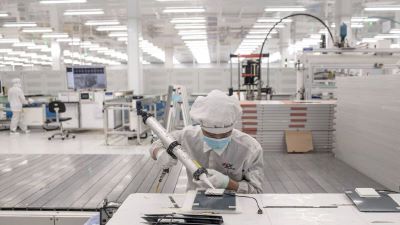
Manufacturing managers across Southeast Asia reported a heavy blow in August from one of the worlds worst Covid-19 outbreaks, while producers in North Asia continued to enjoy robust output.
Manufacturing purchasing managers’ indexes for Indonesia, Vietnam, Thailand, Philippines and Malaysia all remained deep in negative territory in August, reflecting the disruption from lockdowns that forced factories to halt or slow production.
Vietnam’s IHS Markit PMI fell to 40.2 from 45.1 in July, its third consecutive month of contraction and the lowest reading since April 2020. Thailand’s PMI fell to 48.3 from 48.7 — its seventh contraction in the past eight months — while the Philippines’ fell to 46.4 from 50.4, its lowest reading since May 2020. Malaysia’s reading ticked up to 43.4 from 40.1 in July, and Indonesia’s rose to 43.7 from 40.1, though both remained well below the 50 point level that separates contraction from expansion.
Data from IHS Markit showed India’s manufacturing PMI fell to 52.3 from 55.3, making it an exception from the south to still post expansion, albeit a softer one.
Southeast Asia’s under-vaccinated economies have been fighting record levels of infections and deaths, including in Thailand, Malaysia and Vietnam. Of 53 countries in Bloomberg’s latest Covid Resilience Ranking, the bottom five are all in Southeast Asia.
Worldwide goods trade, which had been a pillar of the global economy earlier in the pandemic, is now under threat from the delta-induced interruptions, on top of still-soaring shipping costs. It’s all coming at a particularly sensitive time for global trade, as overseas buyers rush to ensure their shelves will be stocked in time for the year-end holiday shopping season.
In North East Asia the manufacturing picture is holding up, though it’s showing hints of moderation as delta spreads.
Taiwan’s PMI fell to 58.5 from 59.7 and new orders fell. South Korea’s PMI slipped to 51.2 from 53, its lowest reading since October 2020. In Japan, the au Jibun Bank and IHS Markit PMI fell to 52.7 from 53.
China also has battled renewed threats to production as it struggles to dampen a rise in infections, including incidents at some of the busiest ports in the world. In a hint of that impact, the Caixin Media and IHS Markit PMI fell to 49.2 from 50.3 — its lowest reading since February 2020 — and new orders also fell.
Data on Tuesday showed China’s official PMI declined to 50.1 from 50.4 in July. The new export orders sub-index declined to 46.7 in August from 47.7 in July, even as some companies put in earlier orders for the holiday shopping season in anticipation of delays.
Still, the ultimate bellwether for global trade – South Korean exports — remains strong. Shipments hit a monthly record for August, increasing 34.9% from a year earlier, the trade ministry said Wednesday, slightly better than economist forecasts and stronger than July’s 29.6% gain. Sales to China rose 26.8% and semiconductor exports increased 43%.
OPEC+ sticks to agreed schedule for oil-production increases
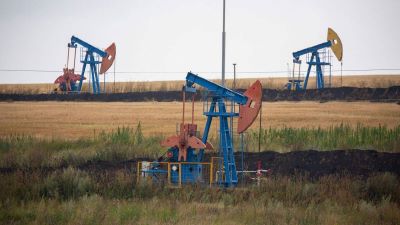
OPEC and its allies agreed to stick to their existing plan for gradual monthly oil-production increases after a brief video conference.
Ministers ratified the 400,000 barrel-a-day supply hike scheduled for October after less than an hour of talks, one of the quickest meetings in recent memory and a stark contrast to the drawn-out negotiations seen in July.
“OPEC have proven once again that they can meet and do things seamlessly,” Christyan Malek, head of oil and gas and JPMorgan Chase, said on Bloomberg TV. “It’s likely that harmony is going to be utilized” to respond flexibly to any further shifts in the market over the coming year, he said.
While conditions may appear favorable for cartel right now, there are uncertainties on the horizon. Even as demand recovers, it has been buffeted by the emergence of new coronavirus variants. The question of whether Iran and the U.S. will do a deal to lift sanctions on the Islamic Republic’s oil exports — currently looking less likely — also hangs over the market.
West Texas Intermediate pared earlier losses, trading 0.9% lower at $67.87 a barrel at 11:53 a.m. in New York.
The Organization of Petroleum Exporting Countries and allies including Russia are in the process of rolling back the unprecedented output cuts implemented at the depths of the Covid-19 crisis last year. About 45% of the idle supply has already been revived, and in July the group laid out a plan for gradually returning the remainder through to September 2022.
With crude prices mostly recovered from their mid-August slump and the supply outlook relatively tight for the rest of the year, the 23-nation coalition had little reason to change the established schedule of gradual monthly supply hikes, despite a request from the White House to revive output faster.
There had been some doubts about the plan when oil markets wobbled over the summer as the resurgent virus threatened demand. But fuel use proved resilient, with total oil products supplied in the U.S. rising to a record in late August.
“While the effects of the Covid-19 pandemic continue to cast some uncertainty, market fundamentals have strengthened and OECD stocks continue to fall as the recovery accelerates,” OPEC+ said in a statement. The group will meet again on Oct. 4.
Data presented to ministers reveal a fresh challenge for Saudi Arabia and its partners in 2022. Markets were projected to tip back into surplus next year, with an average oversupply of 1.6 million barrels a day. However, the projections assume the group will restore all of the almost 6 million barrels a day of output that remains offline — an unlikely feat as many countries may struggle to reach their full targets.
The amount of crude production that OPEC+ theoretically holds offline is based on questionable figures. Russia has an inflated baseline that’s significantly higher than pre-pandemic output. Some other members have outdated capacity numbers, with countries including Angola and Nigeria already struggling to make the supply increases permitted under the deal.
The broader stock market almost wiped out its gains, while megacap companies rallied to a record as traders turned to defensive shares after economic data suggested a slowdown in the labor-market recovery.
The NYSE FANG+ Index of pandemic darlings such as Apple Inc. and Amazon.com Inc. climbed about 1.5%. Real estate, utility and staples firms in the S&P 500 rose, while energy and financial stocks fell. The benchmark gauge of American equities was little changed, while the Dow Jones industrial average retreated.
U.S. companies added fewer jobs than expected in August, ADP Research Institute data showed. While manufacturing expanded at a stronger-than-estimated pace, supply-chain bottlenecks were accompanied by labor constraints. Those figures came before Friday’s payrolls data, with economists expecting a deceleration from the rapid gain in the prior month and a drop in the unemployment rate.
“The private payrolls numbers have been all over the map during the pandemic, and often not the strongest indicator of how the rest of the jobs report will play out,” said Mike Loewengart, managing director of investment strategy at E*Trade Financial. “With so much pressure on improvement on the labor-market front coming from the Fed, this could send a signal that jobs growth is stagnating. That’s likely a good thing for the markets though, as it means easy-money policy continues.”
For Linda Duessel, senior equity strategist at Federated Hermes, it’s still too early to get bearish on the market. While more Wall Street voices are predicting a pullback soon, she told Bloomberg TV Wednesday that the “unbelievable” landscape of strong earnings and fiscal stimulus means stocks can run higher for longer.
Meantime, Citigroup Inc.’s Tobias Levkovich is sticking to his bearish call. The bank’s chief U.S. equity strategist predicts the index will end the year at 4,000 before reaching 4,350 by June 2022. Both levels sit below its last close of 4,522.68. Underpinning his view are stretched valuations and a planned tax rise that will hurt corporate profits.
Some corporate highlights:
– Netflix Inc. rallied after saying the sitcom “Seinfeld” would begin streaming on Oct. 1.
– Chinese stocks listed in the U.S. rose for a third straight day, rebounding from a sell-off fueled by Beijing’s sweeping regulatory crackdown.
– Workhorse Group Inc. tumbled after a news report that the U.S. Securities and Exchange Commission has opened an investigation into the electric-truck start-up.
The Treasury 10-year note’s yield has scope to rise to 1.90% in the coming months, a level it hasn’t exceeded since January 2020, according to JPMorgan Chase & Co. technical strategist Jason Hunter. He cited the “aggressive rally that created extreme overbought conditions” as one of the reasons for his prediction. The benchmark bond rate is currently around 1.3%.
Some of the main moves in markets:
Stocks
– The S&P 500 was little changed as of 4 p.m. EDT
– The Nasdaq 100 rose 0.2%
– The Dow Jones industrial average fell 0.1%
– The MSCI World index rose 0.3%
Currencies
– The Bloomberg Dollar Spot Index fell 0.2%
– The euro rose 0.2% to $1.1838
– The British pound was little changed at $1.3768
– The Japanese yen was unchanged at 110.02 per dollar
Bonds
– The yield on 10-year Treasurys was little changed at 1.30%
– Germany’s 10-year yield advanced one basis point to -0.37%
– Britain’s 10-year yield declined two basis points to 0.69%
Commodities
– West Texas Intermediate crude fell 0.4% to $68.20 a barrel
Only 150,000 more foreign tourists expected this year: KResearch
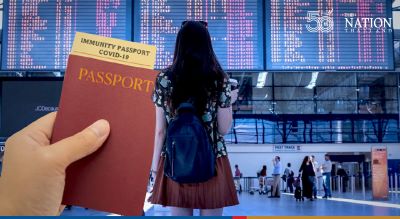
Kasikorn Research Centre has slashed its forecast for foreign arrivals before the end of this year to just 150,000, from its previous forecast of 250,000-650,000.
KResearch warned that arrivals could drop as low as 100,000 as outbreaks of the Delta variant both in Thailand and abroad dampen the global tourism industry.
It expects international tourism in 2021 to shrink 45 per cent and forecast recovery to pre-Covid levels would take until at least 2025.
Thailand’s tourism market is facing challenges from domestic controls as well as travel advice from other countries warning their citizens against visiting the Kingdom, the research house added.
Thai tourism is also at risk from domestic political tensions, it said.
However, KResearch predicted gradual recovery for the industry in the fourth quarter if Thailand can control infection rates in tourism destinations such as Phuket, Krabi and Surat Thani.
The Stock Exchange of Thailand (SET) Index closed at 1,634.48 on Wednesday, down 4.27 points or 0.26 per cent. Transactions totalled THB117.67 billion with an index high of 1,646.07 and a low of 1,628.16 as the index broke an eight-day run of rises.
In the morning session, Krungsri Securities expected Wednesday’s index to rise to between 1,643 and 1,650 points before falling back.
It said the SET gained positive sentiment from the US Federal Reserve signalling it would not rush to raise the interest rate, and the first day of lockdown easing in Thailand amid a falling domestic infection rate.
“However, the index would be under pressure from short term mass sell-offs and signs of overbought stocks,” Krungsri Securities said.
The 10 stocks with the highest trade value today were MAKRO, CPALL, DELTA, PTT, U, KBANK, BBL, GULF, KCE and B.
Other Asian indices were mixed:
Japan’s Nikkei Index closed at 28,451.02, up 361.48 points or 1.29 per cent.
China’s Shanghai SE Composite Index closed at 3,567.10, up 23.16 points or 0.65 per cent, while the Shenzhen SE Component Index closed at 14,314.09, down 14.30 points or 0.100 per cent.
Hong Kong’s Hang Seng Index closed at 26,028.29, up 149.30 points or 0.58 per cent.
South Korea’s KOSPI Index closed at 3,207.02, up 7.75 points or 0.24 per cent.
Taiwan’s TAIEX Index closed at 17,473.99, down 16.30 points or 0.093 per cent.
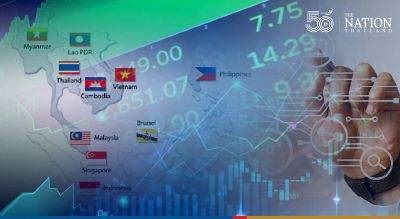
The Cabinet on Tuesday gave the go-ahead to the Asean Investment Facilitation Framework (AIFF) proposed by the Board of Investment (BoI).
It also appointed Deputy PM Supattanapong Punmeechaow, who oversees issues related to the economy and investment, as the Thai representative at the Asean Economics Ministers’ meeting on September 8.
The AIFF, meanwhile, aims to help Asean countries recover from the fallout of Covid-19 by focusing on investment and promoting the region as an important supply source.
The framework covers investment facilitation from several aspects, including immigration, workers, capital, business partners as well as support via the latest technology such as electronic documents and digital platforms.
Nonarit Bisonyabut, a senior researcher at Thailand Development Research Institute, said Asean had the potential to become a key global supply source thanks to its large population.
He added that the countries expected to recover quickly are Singapore, Malaysia, Thailand, Indonesia and the Philippines.
He also said that Asean’s many economic pacts, such as the Regional Comprehensive Economic Partnership, the Comprehensive and Progressive Agreement of Trans-Pacific Partnership and the Greater Mekong Subregion Economic Cooperation Program, will help speed up recovery.


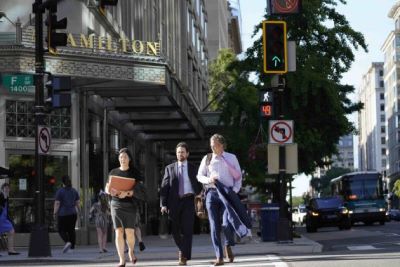
 Pedestrians rest by a jewelry store in Washington, D.C., the United States, June 17, 2021.