The Stock Exchange of Thailand (SET) Index closed at 1,650.33 on Friday, up 2.58 points or 0.16 per cent. Transactions totalled THB78.70 billion with an index high of 1,657.79 and a low of 1,644.12.
In the morning session, Krungsri Securities expected the index on Friday to rise to between 1,655 and 1,660 points after Opec+ raised its 2022 oil demand forecast and US jobless claims fell.
However, it advised investors to beware of mass sell-offs of shares in response to signs of overbought stocks pressuring the index.
The 10 stocks with the highest trade value today were GULF, DELTA, CPALL, MAKRO, KBANK, PTT, BANPU, GPSC, BBL and SUPER.
Japan’s Nikkei Index closed at 29,128.11, up 584.60 points or 2.05 per cent.
China’s Shanghai SE Composite Index closed at 3,581.73, down 15.31 points or 0.43 per cent, while the Shenzhen SE Component Index closed at 14,179.86, down 97.47 points or 0.68 per cent.
Hong Kong’s Hang Seng Index closed at 25,901.99, down 188.44 points or 0.72 per cent.
South Korea’s KOSPI closed at 3,201.06, up 25.21 points or 0.79 per cent.
Taiwan’s TAIEX closed at 17,516.92, up 197.16 points or 1.14 per cent.
SET maintains upward trajectory buoyed by oil demand forecast, foreign funds flow
The Stock Exchange of Thailand (SET) Index rose by 2.77 points, or 0.17 per cent, to 1,650.52 on Friday morning, witnessing a high of 1,657.79 and a low of 1,649.54 in opening trade.
The SET Index closed at 1,647.75 on Thursday, up 13.27 points or 0.81 per cent. Transactions totalled THB101.41 billion with an index high of 1,652.03 and a low of 1,633.12.
Krungsri Securities expected the index on Friday to rise to between 1,655 and 1,660 points on positive sentiment of Opec+ raising oil demand forecast next year, a decline in US jobless claims in 17 months and foreign funds inflow.
However, it advised investors to beware of mass sell-offs of shares in response to signs of overbought stocks, as it would pressure the index.
It also recommended buying the following companies’ shares as an investment strategy:
▪︎ PTT, PTTEP, TOP and PTTGC, which benefit from rising oil price.
▪︎ AOT, KBANK, BBL, CPN, CRC, HMPRO, AAV, BA, MINT, AMATA and WHA, which benefit from the country’s reopening.
▪︎ BANPU, CKP, GPSC, GULF, BCPG, BCH, CHG, BDMS, KCE, TU and EPG , whose third-quarter profit is expected to rise.
The baht opened at 32.44 to the US dollar on Friday, strengthening from Thursday’s closing rate of 32.48.
The Thai currency is likely to move between 32.35 and 32.50 during the day, Krungthai Bank market strategist Poon Panichpibool said.
Poon said the baht was likely to fluctuate with the dollar if investors adjusted their dollar holdings before getting the US non-farm payrolls report.
Meanwhile, foreign investors might decrease their investments in Thai stocks as they were near the resistance level.
Foreign investors are keeping an eye on the Covid-19 situation in the country after the easing of lockdown measures, before deciding on increasing or decreasing their possession of Thai assets.
Poon is still concerned about the Covid-19 situation in Thailand, as he is not sure if the present pandemic wave has been contained because “not enough proactive testing is being carried out”.
Investors, especially importers, might close risks when the baht strengthens. He recommended that investors use various hedging tools if they feel uncertain about the direction the currency is heading in.
Gold stays firm as market awaits US non-farm payroll figures
The price of gold on Friday morning was unchanged from Thursday’s closing rate.
AGold Traders Association report at 9.22am said the buying price of a gold bar was THB27,800 per baht weight and selling price THB27,900, while gold ornaments were priced at THB27,303.16 and THB28,400, respectively.
Spot gold price on Friday morning was moving at around US$1,814 (THB59,025) per ounce after Comex gold dropped by $4.50 to $1,811.50 per ounce at close on Thursday. This was the second straight day of declines amid a sluggish market, as investors delayed trading before the US release of non-farm payroll numbers Friday night (Thailand time).
Hong Kong gold price, meanwhile, dropped by HK$50 to $16,780 (THB70,273) per tael, the Chinese Gold and Silver Exchange Society reported.
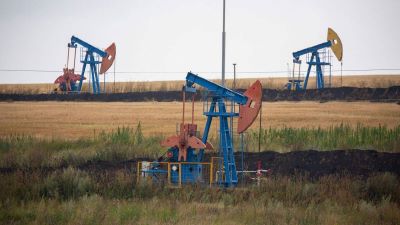
OPEC boosted output last month even as some members left behind
OPEC boosted crude production last month as it continued the revival of supplies halted during the pandemic, but some members struggled to keep up.
The Organization of Petroleum Exporting Countries lifted output by 290,000 barrels a day, slightly more than stipulated by its road map for restoring output, according to a Bloomberg survey. Saudi Arabia and Iraq were the main drivers of the increase.
Despite the gains, the group is actually pumping about 10% below its overall quota as some members — notably Angola and Nigeria — suffer from deteriorating production capacity and technical disruptions.
OPEC and its partners agreed on Wednesday to continue with their plan for restoring the unprecedented volumes they took offline when the pandemic crushed fuel demand last year. The coalition’s gradual drip-feed of barrels back to the market is steadying oil prices near $70 a barrel, high enough to salve their economies while largely avoiding the kind of rally that would aggravate inflation.
Output from OPEC’s 13 members averaged 27.11 million barrels a day in August, according to the survey. Saudi Arabia increased by 200,000 barrels a day to 9.63 million, while Iraq ramped up by 110,000 a day to 4.08 million. Both countries were roughly in line with their new, higher targets.
The survey is based on ship-tracking data, information from officials and estimates from consultants including Rystad Energy and JBC Energy.
The vast production cutbacks by the OPEC+ coalition last April helped rescue the global oil industry, turning round prices after they briefly dipped below zero during the demand meltdown.
As the market recovered, many market observers expected — based on the group’s history — that OPEC’s discipline would soon unravel and members would pump in excess of their quotas. The opposite appears to be happening, as some countries suffer from a buildup of technical problems resulting from years of investment constraints.
Nigeria’s production dropped again in August, by 90,000 barrels a day to a five-year low of 1.43 million a day. Royal Dutch Shell has announced a disruption at the country’s key Forcados loading facility following signs of a leak.
Angola, which was able to keep output steady last month at 1.11 million barrels a day, is producing several hundred thousand barrels below its permitted amount. The country is reckoning with an exodus of foreign investment, and declines in capacity at deep-water oil fields.
In the broader OPEC+ coalition, Russia also encountered production difficulties last month. Its total oil output — consisting of crude and a light oil called condensate — fell about 0.5% to 10.43 million barrels a day after a fire at a Gazprom PJSC processing plant in West Siberia, according to data from the Energy Ministry.
OPEC+ technical experts forecast on Tuesday that global oil markets will remain in deficit this year even if the alliance fully implements scheduled monthly increases of 400,000 barrels a day.
If the travails of members like Angola and Nigeria — or even Russia — limit the overall gain, then others holding spare production capacity — such as Saudi Arabia, Iraq and the United Arab Emirates — may be encouraged to fill the gap.
Bitcoin broached the $50,000 level once again as the wider cryptocurrency market continued its rally.
The largest cryptocurrency rose as high as $50,362 on Thursday, having briefly surpassed $50,000 on Aug. 23 as well — a level it hadn’t hit since mid-May. Ether, the second-largest crypto, rose as much as 3% to $3,843, continuing a strong run after its London upgrade early last month.
Other coins also gained, with the overall crypto market cap jumping 5% to $2.3 trillion, according to CoinGecko.com pricing. Number-three crypto Cardano is nearing a $100 billion market value amid optimism about smart contracts, and Solana and Polkadot are up about 60% and 22%, respectively, in the past seven days, CoinGecko showed.
“Two fundamental factors that are likely behind Bitcoin’s push: Twitter’s potential integration of the coin as a Tip Jar payment option, and the official launch of bitcoin as a legal tender in El Salvador come Sept. 7,” Petr Kozyakov, co-founder and chief executive officer of global-payment network Mercuryo, said in an email. “While we are expecting the $50,000 price point to hold, Bitcoin buyers are exercising more optimism for even a bigger price gain by year-end.”
Cryptocurrencies have surged this year amid increased institutional interest and acceleration of development in areas like decentralized finance (DeFi) and non-fungible tokens (NFTs). In addition, Twitter Inc. may be laying the groundwork to allow for Bitcoin tips in its Tip Jar feature, according to a recent report from MacRumors. Meanwhile, El Salvador’s Bitcoin law takes effect Sept. 7.
To be sure, not everyone sees the moves in altcoins as entirely beneficial.
“The previous phase of retail investors’ ‘mania’ into cryptocurrency markets was between the beginning of January and mid-May when the share of altcoins had risen from 13% to 37.6%,” said JPMorgan Chase & Co. strategist Nikolaos Panigirtzoglou in a note Wednesday. “While far from the record high of 55% seen in January 2018, at 32.6% the share of altcoins looks rather elevated by historical standards and in our opinion it is more likely to be a reflection of froth and retail investor ‘mania’ rather than a reflection of a structural uptrend.”
How a single Covid case rocked Toyota, the world biggest carmaker
Early last month at a sprawling factory on the highway connecting Hanoi to the Vietnamese port city of Haiphong, a single worker tested positive for Covid-19. The delta variant was spreading swiftly through the Southeast Asian nation at the time, and on Aug. 4, provincial officials suspended work at the plant, run by an auto-parts manufacturer.
An ocean away, Toyota Chief Purchasing Group Officer Kazunari Kumakura was watching intently. The factory is operated by a key Toyota supplier and is one of Vietnam’s biggest assemblers of wire harnesses — a basic but essential yoke for cables that holds the inner workings of an automobile together. As the infection at the facility disrupted operations, Toyota’s inventories grew thin. Since July, the Japanese automaker had been examining its suppliers in the region, which has become a Covid hotspot, on a daily basis to assess how dire things were getting.
Eventually, unable to secure a number of parts, including the wire harnesses from Vietnam and chips from Malaysia, Toyota succumbed. The world’s No. 1 automaker shocked the market by announcing it would slash its output of cars in September by 40% compared to previous production plans.
“The big thing was whether operations could continue in Southeast Asia,” Kumakura said in a late afternoon address to reporters on Aug. 19. But lockdowns, growing Covid clusters and government-imposed restrictions on production made it clear that auto suppliers, particularly in Malaysia and Vietnam, wouldn’t be able to continue operations, he said. It “tangled up our parts” and “happened rapidly.”
Toyota is now faced with the challenge of securing substitute parts and recovering lost output in time to meet an inventory-depleting level of global demand for cars. But more broadly, the snarls that finally toppled one of the world’s best-maintained supply chains have sparked deeper questions about whether the auto industry’s strategies to prioritize efficiency and maintain minimal inventory will endure in the post-pandemic world.
Carmakers globally have lost revenue because shortages have slammed output. India’s largest automaker by deliveries, Maruti Suzuki India, said volume would likely drop to about 40% of normal this month and Tata Motors on Wednesday blamed “the recent lockdowns in east Asia” for worsening the supply situation. China’s Nio Inc. has struggled with partners in Malaysia. Also in Japan, Suzuki Motor Corp. will cut vehicle production by 20% in September while in Europe, Renault plans to halt assembly plants in Spain for as long as 61 days before the end of the year.
The car sector is accustomed to much thinner profit margins than those enjoyed by big technology companies, even after decades of trying to drive down costs, said Howard Yu, a professor of management at the Switzerland-based Institute for Management Development. Automakers strive to be lean, reducing redundancies and working out of regional hubs because it’s more efficient, he said. “But to be resilient, you need a bit of redundancy. The delta outbreak is exposing that this system is really vulnerable to external shocks.”
Over the past decade, Japanese automakers have invested heavily in Southeast Asia, looking to the region as a source of cheap labor and to supplement their China operations amid trade tensions with the U.S. Thailand is a major production hub for Toyota, Mitsubishi Motors Corp., Honda and Nissan. Those automakers make up about half Thailand’s vehicle production capacity and source a number of parts from neighboring countries. Toyota alone works with suppliers that have more than 400 plants located in Malaysia and Vietnam, data compiled by Bloomberg show.
That concentrated approach worked, until it didn’t. Midway through this year, Southeast Asia began to grapple with one of the world’s deadliest virus resurgences. Governments declared lockdowns and restricted business activities, at times halting entire plant operations upon the discovery of just a handful of confirmed cases.
Vietnam is Japan’s biggest source of wire harnesses. Several Japanese parts makers operate plants in the country. The Hai Duong factory that shut in early August belongs to Sumitomo Electric Industries, which declined to comment on individual site operations. Another major wire-harness maker and Toyota supplier in the region, Furukawa Electric Co., has been forced to limit operations due to Covid restrictions, according to a company spokesperson.
Similarly, Malaysia has emerged in recent years as a major center for end-stage chip packaging — the smallest and least-profitable component of the semiconductor manufacturing process. Rising Covid cases have forced key auto suppliers STMicroelectronics and Infineon Technologies to close facilities, worsening a shortage of chips that’s been hammering automakers for months. Bloomberg’s supply chain analysis data show Toyota sources from both of those companies.
For now, automotive suppliers in the nations are showing signs of getting on a path to recovery. Most staff at Sumitomo Electric’s Hai Duong wire-harness plant returned to work by around the second week of August, according to the province’s official television station. As of last week, Malaysia’s chipmakers were essentially back to normal levels of operation and Toyota has said it expects to begin to recover lost production in October.
The question remaining is whether this supply chain disruption will spark a long-term shift at Toyota and other manufacturers’ operations. Toyota was a pioneer of the so-called just-in-time system, a manufacturing workflow methodology aimed at reducing flow times and costs by keeping inventories super lean.
If the delta outbreak in Southeast Asia proves to be relatively short-lived, it may not make much sense to uproot supply chains, Bloomberg Intelligence analyst Tatsuo Yoshida said. Greater economies of scale are possible with single sourcing and diversifying supply chains requires significant time and money. Hubs have formed in Southeast Asia for a reason — labor-intensive processes can be performed cheaply there, he said.
At the same time, if Toyota’s relatively strong performance amid the pandemic and supply chain mess thus far says anything, it’s that the automaker is willing to take action after breakdowns. The company’s methods of maintaining high visibility into its supply chain and strategy of keeping stock of riskier parts like semiconductors are legacies of 2011, when an earthquake and tsunami knocked its suppliers’ plants offline, disrupting Toyota’s operations for a full half year.
Kumakura acknowledged last month that because production of certain widely used parts is concentrated in Southeast Asia, a disturbance in the region has the potential to ripple across a much wider geography. In the future, Toyota “will look at how to allocate production and diversify risks so as to not concentrate on one specific area,” he said. “We’ll reflect and draw on this knowledge to further strengthen ourselves.”
In the end, it comes down to striking a balance between efficiency and resilience, said Yu, the management professor. Certain parts don’t seem critical until they “blow up production systems” because there are limited suppliers concentrated in a particular region. In a good quarter, dipping into profit to invest in rainy-day resilience is “what long-term perspective is about,” he said. “And this isn’t just a story of Toyota.”
Stocks rose ahead of Fridays jobs data that will shape bets on the path of interest rates and the Federal Reserves massive bond-buying program. The dollar retreated.
The S&P 500 traded at a fresh record, with gains in commodity and industrial shares offsetting technology losses. The U.S. probably added 725,000 jobs in August — a more moderate pace compared to each of the prior two months, but stronger than gains seen early this year. Atlanta Federal Reserve President Raphael Bostic said “we’re going to let the economy continue to run until we see signs of inflation,” before stepping in on rates.
Treasury yields have barely budged since Fed Chair Jerome Powell last week said the central bank could begin tapering its asset purchases this year. But that calm faces a test with the jobs data. The potential for volatility comes from the fact that when officials gather this month, they will release fresh projections for the fed funds rate. And with the labor market pivotal for policy now, Friday’s report is seen as laying the foundation for these forecasts.
“Most market watchers aren’t expecting the U.S. central bank to announce its taper plans until its November meeting at the earliest, a full three non-farm payroll (NFP) reports from now,” Matt Weller, global head of research at Forex.com and City Index, wrote in a note to clients. “Nonetheless, traders will still key in on Friday’s big jobs report to see if the labor market is recovering as expected.”
Investors’ concerns about economic growth are overdone, opening the way for potential gains in cyclical assets in the near future, according to Goldman Sachs Group Inc. While economically sensitive sectors dominated the leader board for the first half of 2021, they’ve lagged in recent months as the delta coronavirus variant prompted concerns about the pace of the recovery.
“The market is worrying too much about global cyclical risks from Delta outbreaks and China’s slowdown, and our Fed forecast is still more dovish than the market’s,” Goldman strategists led by Zach Pandl said in a note. “So we think some further relief in cyclical assets — higher equities and higher bond yields — is likely over the near term.”
Meantime, Bill Gross, who co-founded Pacific Investment Management Co. in the 1970s and retired in 2019, said longer-term Treasury yields are so low that the funds that buy them belong in the “investment garbage can.” Ten-year yields are likely to climb to 2% over the next 12 months, he wrote. The benchmark bond rate is currently around 1.3%.
Some corporate highlights:
– Virgin Galactic Holdings Inc. tumbled as the U.S. Federal Aviation Administration won’t allow the company to fly its space plane until an investigation is complete into whether a July 11 flight deviation threatens public safety.
– Cryptocurrency-exposed stocks rose, with Bitcoin trading near the closely watched $50,000 level.
– Netflix Inc. rallied after Citigroup Inc. raised its price target for the video-streaming company.
– Electric-car maker Tesla Inc. temporarily halted some operations at its factory in Shanghai last month, according to people familiar with the matter, amid the global shortage of semiconductors.
Some of the main moves in markets:
Stocks
The S&P 500 rose 0.3% as of 4 p.m. EDT
The Nasdaq 100 was little changed
The Dow Jones industrial average rose 0.4%
The MSCI World index rose 0.3%
Currencies
The Bloomberg Dollar Spot Index fell 0.3%
The euro rose 0.3% to $1.1874
The British pound rose 0.5% to $1.3836
The Japanese yen was little changed at 109.94 per dollar
Bonds
The yield on 10-year Treasurys declined one basis point to 1.28%
Germany’s 10-year yield declined one basis point to -0.38%
Britain’s 10-year yield declined one basis point to 0.68%
Commodities
West Texas Intermediate crude rose 1.6% to $69.72 a barrel
Thailand offers to become strategic CLMVT, Asean hub for China, GBA
Thailand offered to become a hub connecting Asean countries with Hong Kong and China at the 6th Belt and Road Summit held via teleconferencing on September 1 and 2.
Vice Commerce Minister Dr Sansern Samalapa said Thailand’s Eastern Economic Corridor can easily serve as a link for Guangdong-Hong Kong-Macau Greater Bay Area (GBA) and China’s Belt and Road Initiative (BRI) as well as become a strategic hub for CLMVT and Asean countries.
CLMVT comprises Cambodia, Laos, Myanmar, Vietnam and Thailand, which are also part of the Asean grouping.
Seamless links in both infrastructure and digital technology along BRI will lead to mutual economic benefits and attract investment in EEC’s target industries such as automotive, aviation and logistics.
He said this cooperation will also be economically beneficial for Thailand, especially after the completion of BRI projects like the Thai-Laos-China high-speed railway. This railway will cut down the cost of transport – both goods and people – and help regional economies recover quickly from the Covid-19 crisis.
In addition, China’s foreign trade and investment policies will give Thai businesses greater access to the mainland’s huge market.
The Stock Exchange of Thailand (SET) Index closed at 1,647.75 on Thursday, up 13.27 points or 0.81 per cent. Transactions totalled THB101.41 billion with an index high of 1,652.03 and a low of 1,633.12.
In the morning session, Krungsri Securities forecast the day’s index would fluctuate between 1,625 and 1,645 points due to a lack of fresh positive sentiment.
It said the index was buoyed by the US Federal Reserve signalling it would not rush to raise the interest rate, and Thailand’s falling Covid-19 infection numbers.
“However, a decline in foreign fund flows and signs of overbought stocks will trigger mass sell-offs of shares,” Krungsri Securities said.
The 10 stocks with the highest trade value today were DELTA, CPALL, CV, GULF, ADVANC, MAKRO, U, KBANK, RPC and PTT.
Other Asian indices were mixed:
Japan’s Nikkei Index closed at 28,543.51, up 92.49 points or 0.33 per cent.
China’s Shanghai SE Composite Index closed at 3,597.04, up 29.94 points or 0.84 per cent, while the Shenzhen SE Component Index closed at 14,277.34, down 36.75 points or 0.26 per cent.
Hong Kong’s Hang Seng Index closed at 26,090.43, up 62.14 points or 0.24 per cent.
South Korea’s KOSPI closed at 3,175.85, down 31.17 points or 0.97 per cent.
Taiwan’s TAIEX Index closed at 17,319.76, down 154.23 points or 0.88 per cent.