Gasoline jumps, oil falls as Ida landfall seen sparing rigs
U.S. gasoline futures jumped after Hurricane Ida barreled ashore in Louisiana, disrupting processing facilities. Oil reversed early gains as local rigs may have escaped significant damage and the OPEC+ producers cartel is expected on Wednesday to endorse a supply increase.
Gasoline for October spiked more than 4% in New York before paring its advance, while West Texas Intermediate crude fell around 1%. Last week, WTI rallied 10% as investors wagered global demand would recover from the setback posed by the spread of the delta coronavirus variant.
Both crude oil and gasoline have been hit by volatile trading this month as investors weighed the challenge to consumption posed by the resurgence of the pandemic in parts of Asia, the U.S. and Europe. This week, traders will focus on the fallout from Ida, as well as the likelihood that the Organization of Petroleum Exporting Countries and its allies will go ahead with an increase in output when they meet.
“The market will be looking at the product stocks and the risks of onshore damage from Ida,” said Matt Stanley, a senior broker at Star Fuels in Dubai. “Now that the storm has made landfall it looks like the worst is past for the offshore platforms and over the next couple of days operators can look at getting those back up.”
Gulf of Mexico producers shut in more than 1.7 million barrels a day of crude output — about 15% of the total for the U.S. — ahead of the storm. The focus for crude markets is now shifting back to the virus and OPEC+, Stanley said.
Refiners including Valero Energy Corp. shut about 12% of U.S. oil-processing capacity as a precaution ahead of the Category 4 storm, which has stronger winds than Katrina in 2005. Colonial Pipeline Co., the operator of the largest fuel-distribution system from the refining centers in Texas and Louisiana to customers across the eastern U.S., idled its main network.
Gasoline prices in the southeast U.S. could climb heading into the end of summer if refineries suffer extensive damage or can’t get power and are forced to stay shut for an extended period, adding to the price inflation hitting Americans. Traders in Europe have already been preparing to fill any gap in supplies at New York Harbor, provisionally chartering tankers. Still, those would take as much as two weeks to cross the Atlantic.
“For a Category 4, you could be looking at four to six weeks or more of downtime for the refineries,” said Andy Lipow, president of Lipow Oil Associates LLC in Houston.
Ida, which came ashore about 60 miles (97 kilometers) south of New Orleans, drove up ocean levels as much as 16 feet (4.9 meters). The hurricane’s 150-mph winds tie Louisiana’s record set by Laura in 2020 and a 19th-century storm.
Best emerging currencies lose steam as rate-hike bets wane
Some of this years best-performing emerging-market currencies are falling out of favor as traders trim back bets on further interest-rate hikes.
The Brazilian real and the Russian ruble, which outpaced most of their peers in the first half amid policy tightening, have now gone into reverse. The real has slumped about 4.5% since the end of June, more than any other major currency tracked by Bloomberg.
The tightening cycle was in full force in emerging markets long before the Federal Reserve started laying out a timeline for scaling back its bond-buying program, which Chair Jerome Powell said on Friday could begin as soon as this year. The early hikes in Russia and Brazil have helped stem flows from emerging markets, though policymakers are still balancing the need to battle inflation with the desire to support economies battered by covid-19.
Poland and Colombia may be next to lift rates. That offers some upside potential for lagging currencies such as the Polish zloty, protecting their relative yield advantage against accelerating prices and the prospect of rising U.S. rates.
“Early hikers, where the speed of tightening has been in line with or in some cases faster than historical hiking cycles, are likely to slow the pace of hikes or pause in the months ahead,” Goldman Sachs Group Inc. strategists led by London-based Kamakshya Trivedi wrote in a note this month. “The second half of the emerging-market hiking cycle is likely to be even broader, with more central banks commencing some form of normalization.”
Brazil’s central bank has already increased its key rate by 325 basis points this year, more than most peers, and forward-market bets are pricing in slowing rate hikes after September’s meeting. In Russia, traders predict the central bank will increase its benchmark by about 50 basis points over the next three months, down from more than 130 points in early July.
This evolving rate environment presents a crucial opportunity for traders to take advantage of variations in the next phase of the emerging-market tightening cycle, according to Goldman Sachs.
South Korea became the first major Asian country to raise interest rates this year Thursday, with more hikes in the pipeline as the focus pivoted from propping up the economy to curbing a debt-driven asset bubble.
The won rose before relinquishing its gains after Korea’s central bank governor remained ambiguous on the timing of the next move. The currency should strengthen on a hawkish “Bank of Korea, economic resilience and a technically oversold won,” said Mitul Kotecha, chief emerging markets Asia & Europe strategist at TD Securities in Singapore.
“Markets will likely continue to chase yield, meaning those countries, with relatively aggressive monetary stances and higher real yields will benefit most,” he said.
It’s a delicate balancing act for policymakers who have to battle rising prices without stifling growth as the threat of covid-19 variants continues to loom over the global economy. Poland for one has signaled it wants to keep monetary policy loose until the economic rebound is well underway despite surging inflation.
Still, the eastern European country may be the next in line after the economy expanded at its fastest-ever annual pace in the second quarter, with Deutsche Bank AG predicting hikes in October and November. The zloty this year has underperformed the currencies of Hungary and the Czech Republic, which have embarked on aggressive monetary-tightening campaigns to keep inflation under control.
Poland stands out as an emerging market that has been “behind the curve when it comes to raising rates,” said Oliver Harvey, a London-based strategist at Deutsche Bank. Its dovish policy stance has weighed on the currency, which the bank says is about 10% undervalued based on its models. If the central bank were to turn more hawkish later this year, the zloty could be a catch-up trade, he said.
Fresh hawkish sentiment is also emerging in Colombia, where the central bank has signaled it may soon join the regional trend for higher interest rates as inflation quickens. Policymakers see the economy expanding at 7.5% this year. Economists see policymakers increasing the key rate by 75 basis points this year, from a record low of 1.75%.
“We expect policymakers in Asia and Eastern Europe to tighten very gradually, with timing of hikes dependent on decisions by the Fed” and European Central Bank, said Lewis Jones, an emerging-market debt portfolio manager at William Blair Investment Management LLC in New York. “Central Banks in Latin America and among the higher-yielding countries elsewhere are acting more aggressively to stave off medium-term inflation outlook concerns, while the overall hiking cycle is likely to be relatively short.”
In the coming week, investors will also watch rate decisions from Chile and Zambia.
Confidence in euro-area economy drops on supply squeeze, virus
Confidence in the euro-area economy slipped for the first time this year, suggesting that supply disruptions and the resurgent pandemic risk damping the recovery.
Sentiment eased in services, industry and among consumers, with a European Commission gauge falling to 117.5 in August from an all-time high the previous month. At the same time, an increase in selling-price expectations suggests inflation pressures are building across the bloc.
The region’s economic outlook has clouded in recent weeks. A shortage of raw materials, quickly climbing costs and transportation bottlenecks are disrupting manufacturing, while quickly rising coronavirus infections threaten new restrictions on services, which took over as a growth driver this month.
Industry order books deteriorated in August, according to the survey, and services managers were less positive on future demand. Consumers expressed concerns about the general economic situation and were less willing to make major purchases.
The Bundesbank, Germany’s central bank, has already warned that economic growth this year may be somewhat lower than the 3.7% it had forecast in June, and companies are worried that the recovery will stall before it really took off.
Volkswagen AG restarted its Wolfsburg plant, the world’s biggest employing some 60,000 people, with only one shift this month. Audi, the group’s biggest profit contributor, was forced to extend its summer break by one week at two factories in Germany amid “volatile and tense” semiconductor supply.
The European Central Bank is optimistic that its projections will hold after tourism-reliant economies such as Italy and Spain saw strong rebounds in the second quarter. Chief economist Philip Lane said in a recent interview the region is “broadly not too far away” from the 4.6% expansion it currently predicts for the year.
A gauge of employment expectations climbed in August to highest level in nearly three years.
E-commerce plan to boost online trade by THB1.3 trillion in 2022
The Cabinet has approved a plan to boost e-commerce trade to 5.35 trillion baht in 2022, the Commerce Ministry announced on Monday.
The ministry’s National Electronic Commerce Development Action Plan aims to lift the value of online trade from 4.03 trillion baht in 2019 to 5.35 trillion baht next year – an increase of 1.32 trillion baht.
The plan, which was drawn up by the Electronic Commerce Committee of government and private sector representatives, will increase both domestic and international marketing channels for Thai entrepreneurs, including farmers. It also aims to boost efficiency of doing business by reducing costs and offering access to low-interest funding sources.
Phase 1 of the plan (2021-2022) consists of four strategies: e-Marketplace enhancement and promotion, ecosystem and enabling factors, trust and sustainability, and competency building amid the new normal.
More than 10,000 businesses are expected to register under the plan with the Department of Business Development. Meanwhile, at least 10 government projects will stimulate the e-commerce ecosystem.
The Stock Exchange of Thailand (SET) Index closed at 1,633.77 on Monday, up 22.57 points or 1.40 per cent. Transactions totalled THB117.38 billion with an index high of 1,634.92 and a low of 1,621.42 as the SET rose for a seventh successive day.
In the morning session, Krungsri Securities expected the index on Monday to rise to between 1,620 and 1,625 on hopes of foreign inflows after the US Federal Reserve signalled it was not in a hurry to raise its interest rate.
Positive sentiment was also generated by the government’s move to ease lockdown measures as domestic infections fall, it added.
However, investors should beware of mass sell-offs due to ongoing domestic political tension, as well as sell-offs of shares affected by floods at Bangpoo Industrial Estate in Samut Prakan province, Krungsri Securities said.
The 10 stocks with the highest trade value today were KBANK, GULF, PTT, CPALL, BBL, AOT, PTTEP, PTTGC, TOP and GPSC.
Other Asian indices were up with one exception:
Japan’s Nikkei Index closed at 27,789.29, up 148.15 points or 0.54 per cent.
China’s Shanghai SE Composite Index closed at 3,528.15, up 5.99 points or 0.17 per cent, while the Shenzhen SE Component Index closed at 14,423.37, down 13.53 points or 0.094 per cent.
Hong Kong’s Hang Seng Index closed at 25,539.54, up 131.65 points or 0.52 per cent.
South Korea’s KOSPI Index closed at 3,144.19, up 10.29 points or 0.33 per cent.
Taiwan’s TAIEX Index closed at 17,396.52, up 186.59 points or 1.08 per cent.
Gold leaps as US Fed signals no immediate plan to cut interest rate
The price of gold rose sharply by THB200 on Monday morning.
AGold Traders Association report at 9.26am said the buying price of a gold bar was THB27,900 per baht weight and selling price THB28,000, while gold ornaments were priced at THB27,394.12 and THB28,500, respectively.
At close on Friday, the buying price of a gold bar was THB27,700 per baht weight and selling price THB27,800, while gold ornaments were THB27,197.04 and THB28,300, respectively.
Spot gold price on Monday morning was moving at around US$1,797 (THB58,403) per ounce after Comex gold rose sharply by $24.30 to $1,819.50 per ounce at close on Friday, due to the depreciation of the US dollar after US Federal Reserve chairman Jerome Powell signalled that the Fed will not rush to raise its interest rate, despite limit reduction of the bond purchase programme under the quantitative easing measure.
ADVERTISEMENTx
Hong Kong gold price, meanwhile, peaked by HK$220 to $16,910 (THB70,599) per tael, the Chinese Gold and Silver Exchange Society reported.
With more funds inflows expected, SET continues to fly high
The Stock Exchange of Thailand (SET) Index rose by 15.25 points, or 0.95 per cent, to 1,626.45 on Monday morning.
The SET Index closed at 1,611.20 on Friday, up 9.29 points or 0.58 per cent. Transactions totalled THB95.44 billion with an index high of 1,615.22 and a low of 1,600.00 as the Thai stock market rose for the sixth day in succession.
Krungsri Securities expected the index on Monday to rise to between 1,620 and 1,625 on hopes of funds inflows after the US Federal Reserve signalled it was not in a hurry to raise the interest rate.
Krungsri Securities added that the index also gained positive sentiment from the government’s move to ease lockdown measures as domestic infections are declining.
“However, investors should beware of mass sell-offs of shares due to ongoing domestic political issues, as well as mass sell-offs of shares that were affected by the news of floods at Bangpoo Industrial Estate [in Samut Prakan province],” Krungsri Securities said.
ADVERTISEMENTx
It recommended selective buying as an investment strategy:
▪︎ AOT, KBANK, BBL, CPN, CRC, HMPRO, AAV, BA, MINT, AMATA and WHA, which would benefit from the country’s reopening.
▪︎ PSL, TTA and RCL, which would benefit from a rise in the freight rate.
▪︎ PTT, PTTEP, TOP, PTTGC and BANPU, which benefit from rising oil price.
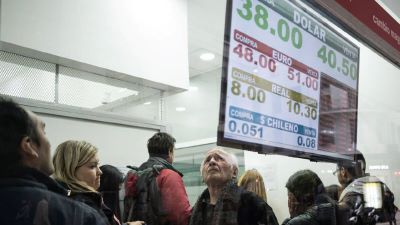
Baht hits strongest level in two months as easing of lockdown seen boosting economy
The baht opened at 32.53 to the US dollar on Monday, strengthening from last week’s closing rate of 32.64, the strongest in almost two months.
The Thai currency is likely to move between 32.40 and 32.60 during the day and between 32.30 and 32.80 this week, Krungthai Bank market strategist Poon Panichpibool said.
Poon said the dollar weakened heavily in the last week after the Jackson Hole Economic Symposium, where US Federal Reserve chair Jerome Powell did not give as much information about easing quantitative easing as was expected.
The baht was likely to strengthen due to economic recovery from the easing of lockdown. The demand for Thai assets from foreign investors and the risk-on situation might pressure the dollar to weaken.
He added that the US dollar index is likely to contract and move sideways. The Fed might decrease QE to support the dollar’s momentum if employment increases more than expected, such as 800,000 to 900,000 people.
ADVERTISEMENT
The Bank of Thailand might help the baht to move sideways around its support level from 32.30 to 32.40 to the US currency, the price range importers are waiting for to buy dollars, he said.
The hybrid work revolution is already transforming economies
Even in the 19th century, workers were beginning to resent the grind of office life.
“You don’t know how wearisome it is to breathe the air of four pent walls without relief, day after day,” British essayist Charles Lamb wrote in a letter to poet William Wordsworth back in 1822, railing against his toil in the East India Company’s office in Leadenhall Street, London.
For the last 17 months, however, Lamb’s modern successors have mostly worked from home, liberated from what he termed “official confinement.” Today’s white-collar staff are living through a radical transformation of professional life, one economists say is already beginning to jump-start economic productivity and accelerate innovation.
ADVERTISEMENTx
The pandemic has weakened the gravitational pull of city centers, with new forces now reshaping knowledge-based economies. Public transport journeys into cities are down, as are coffee shop sales, while demand for real estate in leafy suburbs is up. Americans spent more time on leisure and household activities in 2020, replacing commuter life with real life.
While a more permanent transformation of working life will have painful consequences for many inner-city businesses, economists see a recalibration underway that can revitalize smaller towns and suburbs. New digital tools mean that retail and hospitality – as well as knowledge-intensive industries – are already undergoing far-reaching change.
Working from home around one day a week will boost productivity by 4.8% as the post-Covid economy takes shape, according to a recent study of more than 30,000 U.S. employees co-authored by José María Barrero of Instituto Tecnológico Autónomo de México and others. Much of that one-off increase is projected to come from reduced commuting time, a factor not usually captured by economists.
The transformation will deliver enduring benefits, according to Steven J. Davis of the University of Chicago, who studies the evolving workplace and was one of the authors of the productivity study. The “positive consequences will be there indefinitely,” Davis said.
In remarks on Aug. 17, Federal Reserve Chair Jerome Powell alluded to a fundamental shift: “I think we know that we’re not simply going back to the economy we had before the pandemic, but it will take time to see exactly what the changes will be.”
“It seems a near-certainty that there will be substantially more remote work going forward. So that’s going to change the nature of work, and the way work gets done,” Powell said.
The clues were there before Covid-19 struck. In 2013, a landmark study by Stanford University’s Nicholas Bloom found that working from home boosted productivity by 13%. A University of Oxford research paper in 2019 revealed that happy staff closed more sales.
Countries with stagnant productivity records will be paying close attention. In 2019, Britain lagged 15% below its pre-crisis trend for total factor productivity, according to Bloomberg Economics. It’s a slump without parallel since Charles Lamb’s time, exacerbated by Brexit, an aging population and the pandemic. European peers have struggled, while the U.S. has found it hard to break away from the pack.
For all the optimism surrounding these tectonic shifts, some economists strike a note of caution. While recent research from the Federal Reserve Bank of San Francisco acknowledges that sweeping changes to the way people do business could boost efficiency, it warns against reading recent gains in productivity numbers as due to more home-working, citing data distortions.
Even the Bank of England accepts that hybrid meetings “may be more challenging.” A majority of managers worry about the impact of home-working on collaboration, company culture and wellbeing, according to the OECD, which also cited employers’ concerns about their diminished ability to observe employees at work.
A study led by the University of Chicago’s Michael Gibbs found workers worked longer hours at home to perform the same task, as focused time was broken up by domestic distractions like childcare and online meetings. The report also noted that people working from home may exaggerate their productivity in surveys to encourage adoption of the practice.
Former U.K. government advisor Giles Wilkes is more bullish. “The ability to deliver products in different places, make more efficient uses of property, and so forth, that is productivity driving innovation,” said Wilkes, who recently published a report on Britain’s productivity woes.
“Hybrid working represents a change in the patterns of both demand and supply in a way that moves the economy forward.”
Yuri Suzuki does not miss his twice-daily 70-minute commutes. Suzuki, a partner at international design company Pentagram, used to travel on the “toxic” Central Line, a subway route bisecting London.
“After I came back home, I felt just exhausted – I couldn’t really think or create anything,” Suzuki said on a Zoom call from his home in the seaside town of Margate, Kent, where he has lived since the pandemic began.
Freed from the grind of travel, Suzuki finds he is able to “invest” time in creative thinking long after formal working hours. That has boosted productivity, with his team taking on double the number of projects than it did before the pandemic. To socialize with his team, Suzuki plans to return to the office around once a week.
At this point, with the delta variant spreading rapidly around the world, many corporate return-to-office plans are being put on hold. But evidence from almost 18 months of the pandemic is helping to inform C-suite decisions.
A glut of companies, new and old, want to marry the benefits of remote work with the efficiency of face-to-face meetings. Google will let employees spend two days “wherever they work best.” Lazard Ltd., a 171-year-old financial advisory firm, is following suit for some staff. Asset manager State Street Corp. will close its two Manhattan offices, it said on Aug. 16. Even banking titans will allow some flexibility: Morgan Stanley’s Chief Executive Officer James Gorman sees office-working at “not 100% but not zero percent” of total hours.
“Both workers and managers tend to say that two to three days a week of working from home is ideal,” said Chiara Criscuolo, who researches productivity for the OECD. Communication and professional relationships can suffer after that, she says.
While hybrid work is taking root among educated, well-paid employees, less than half the workforce has that option, according to the McKinsey Global Institute. In the U.K. just 36% of people did some work from home during 2020, even during lockdowns.
Still, as more work happens away from traditional offices, workers will infuse a wider range of communities with their wealth and business knowledge, distributing economic gains more equitably, according to Abigail Adams-Prassl, an economist at the University of Oxford.
That will have some painful consequences. City center cafes, shops and hairdressers catering to professionals are most exposed, with Bloom, Davis and Barrero calculating that a shift to partial working from home will hit annual spending in major U.S. city centers relative to pre-pandemic levels. Manhattan alone would see a drop of 13%, they projected.
Wilkes concedes that “a lot of people” will be hurt by the process of change. Nevertheless, he says that “the changes that we’ve been forced into are going to be beneficial on the whole.”
Hybrid working also has the potential to encourage a more diverse range of people into the workforce, Davis believes, reducing longstanding productivity issues “by making use of the skills of people who were otherwise not working or not working very much.” That includes mothers and people living outside major cities. The flexibility to work from home could also encourage older workers to stay in the labor force for longer, the U.K.’s Office for National Statistics said. That’s a priority for economies confronting ageing populations.
The U.S. arm of consultancy PricewaterhouseCoopers began ramping up some aspects of hybrid work – including flexibility on where and when to work and training on remote-work technology – back in 2017, says Chief People Officer Michael Fenlon. In 2018 the University of Southern California found that teams worked better and retention improved. The focus has sharpened since Covid-19 hit.
“Pre-pandemic we learned that a culture of trust was essential for well-being and flexibility. Teams that adopted this were reporting stronger relationships, stronger collaboration, better teamwork and stronger relationships with clients,” Fenlon said. “We’ve used the pandemic to become even more intentional and explicit.”
Employers the world over are now grappling with that shift as they try to balance productivity growth with keeping staff creative and happy.
It’s a conundrum that comes 199 years late for Charles Lamb. “My theory is to enjoy life, but my practice is against it,” he wrote to Wordsworth in 1822, lamenting his years spent in smoke-filled offices.
Lamb’s desk-bound successors – and their managers – will soon find out whether they can put their own theories into practice.
SET rises for 6th straight day as Covid controls eased
The Stock Exchange of Thailand (SET) Index closed at 1,611.20 on Friday, up 9.29 points or 0.58 per cent. Transactions totalled THB95.44 billion with an index high of 1,615.22 and a low of 1,600.00 as the Thai stock market rose for the sixth day in succession.
In the morning session, Krungsri Securities forecast the index on Friday would fall to between 1,590 and 1,595 points despite the government’s move to ease Covid-19 restrictions amid declining domestic infections.
It predicted the index would be under pressure from mass sell-offs of stocks following the US Federal Reserve’s signal it would taper quantitative easing before the end of this year.
“Meanwhile, ongoing political issues would pressure the index,” Krungsri Securities added, referring to anti-government protests.
The 10 stocks with the highest trade value today were KBANK, INTUCH, EA, CPALL, PTT, PSL, GUNKUL, KCE, ADVANC and BBL.
ADVERTISEMENTx
Other Asian indices were mixed:
Japan’s Nikkei Index closed at 27,641.14, down 101.15 points or 0.36 per cent.
China’s Shanghai SE Composite Index closed at 3,522.16, up 20.49 points or 0.59 per cent, while the Shenzhen SE Component Index closed at 14,436.90, up 21.44 points or 0.15 per cent.
Hong Kong’s Hang Seng Index closed at 25,407.89, down 7.80 points or 0.031 per cent.
South Korea’s KOSPI closed at 3,133.90, up 5.37 points or 0.17 per cent.
Taiwan’s TAIEX closed at 17,209.93, up 142.97 points or 0.84 per cent.