Semiconductor shortage hammering automakers, costing billions in lost production and sales #SootinClaimon.Com

#SootinClaimon.Com : ขอบคุณแหล่งข้อมูล : หนังสือพิมพ์ The Nation.

https://www.nationthailand.com/business/40003875

Semiconductor shortage hammering automakers, costing billions in lost production and sales


The global shortage of computer chips continues to hammer automakers, forcing factory shutdowns and sapping sales and profits, with mixed views on when relief might arrive.
Seventeen auto factories in North America and Europe have halted or reduced production in recent weeks over the scarcity of the tiny components, according to Seraph Consulting, which is advising automakers on the shortages. The shutdowns have affected plants in Michigan, Kentucky, Kansas, Mexico, Canada and Germany.

Ford, General Motors, Tesla, BMW and Daimler are among the companies that have reported continuing difficulties in recent days. On Wednesday, Ford CEO Jim Farley said that while the company is seeing some signs of improvement in chip supply, the situation “remains fluid,” with continuing delays from a semiconductor factory in Japan that is recovering from a fire.

“We do see the chip issue running through this year, and we could see it bleeding into the first part of next year,” John Lawler, Ford’s chief financial officer, told investors on a conference call.

Overall, the global auto industry will produce nearly 4 million fewer vehicles than planned this year because of the shortages, losing about $110 billion in sales, according to the consulting firm AlixPartners.

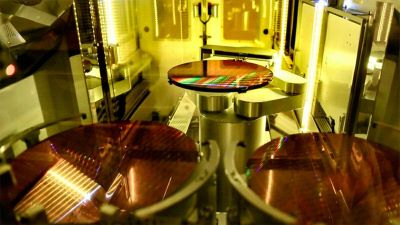
Global demand for computer chips is far outstripping supply, as an increasing number of electronic products require chips to function. While demand soars, supply is limited by a lack of semiconductor factories and by the months-long process needed to make chips.

Chip factories can cost $10 billion or more to construct because of their highly specialized machinery, an expense that few companies are willing to bear.

Estimates vary for when the semiconductor shortage will ease. Some say additional production of automotive chips from semiconductor makers including GlobalFoundries and Bosch is starting to help. Dan Hearsch, managing director of AlixPartners, said the picture for automakers could start to improve in eight to 10 weeks, allowing them to return to more normal production schedules.

“But that’s dependent on a lot of things continuing to go right, and covid variants have already had a bit of an impact on Malaysia,” causing slowdowns at factories there that conduct the final testing and assembly of chips, Hearsch said.

ADVERTISEMENTx

Pat Gelsinger, chief executive of chip-manufacturing giant Intel, has estimated the shortages could stretch beyond 2022.

Automakers and other manufacturers are also grappling with scarcity of other materials, including steel and plastics, as the coronavirus pandemic continues to cause gyrations in global supply and demand. Difficulty hiring enough workers is another obstacle for manufacturers, analysts say.

In some cases, the lack of computer chips and workers are related problems. When auto-parts makers couldn’t get enough semiconductors, some furloughed employees and then had a hard time getting them back amid booming demand for manufacturing workers, said Ambrose Conroy, founder of Seraph Consulting.

“You lay off people or you let people go home for a week, and then they don’t come back, the machines sit too long,” he said. “You lost your maintenance technicians, you lost your logistics people, you lost some quality people.”

In April, Ford predicted the chip shortage would cost it about half its planned production in the second quarter. On a conference call with investors on Wednesday, Farley said that worst-case scenario had not come to pass, though he didn’t say what the final production loss in the quarter had been.

ADVERTISEMENT

General Motors this week reported continuing production cutbacks, saying it has reduced or idled production at 10 factories in North America this month. The downtime is set to continue into August at several of the plants.

German automakers Daimler and BMW this month warned that chips would remain scarce through the end of the year.

In the past two weeks, BMW has had production interruptions at several factories in Germany and Austria and at one in Britain, either cutting shifts or ceasing production for up to a week, spokeswoman Martina Hatzel said by email.

“In the last week alone, we have not been able to build more than 10,000 vehicles,” Hatzel said.

“We ordered the required volumes [of semiconductors] for 2021 at the appropriate time and expect our suppliers to fulfill these orders as stipulated by the contract,” she added.

ADVERTISEMENT

Tesla, too, reported chip troubles this week, saying a lack of semiconductors is forcing it to choose between making cars or its Powerwall battery, which is used for home energy storage.

“We have a massive backlog in Powerwall demand,” chief executive Elon Musk said during an earnings call this week. “We use a lot of the same chips in the Powerwall as you do in a car. So it’s like, which one do you want to make? Cars or Powerwalls? So we need to make cars, so therefore, Powerwall production has been reduced.”

Published : July 29, 2021

By : The Washington Post · Jeanne Whalen

Border trade in June up 41.68% from last year #SootinClaimon.Com

#SootinClaimon.Com : ขอบคุณแหล่งข้อมูล : หนังสือพิมพ์ The Nation.

https://www.nationthailand.com/business/40003873

Border trade in June up 41.68% from last year


Thailand’s border and transit trade in June surged 41.68 per cent from same period last year, the Commerce Ministry reported on Wednesday. Total border-transit trade last month was worth 146.094 billion baht.

Trade with four neighbouring countries was topped by Malaysia with a rise of 15.33 per cent to 24.849 billion baht. Next came Laos (up 18.40% to 17.894 billion baht), Myanmar (31.79% to 17.139 billion) and Cambodia (20.99% to 13.494 billion).

China topped the list for transit trade with a rise of 86.56 per cent to 35.740 billion baht, followed by Singapore (81.65% to 10.158 billion) and Vietnam (16.91% to 6.082 billion).

The ministry expects border and transit trade to expand 3-6 per cent this year as it opens more checkpoints to speed the flow of trade. Forty-four border checkpoints were open in June, with another 11 set to open soon, starting with the Ban Pak Sang checkpoint linking Ubon Ratchathani province with Laos.

Total trade in the first half of 2021 has surpassed 800 billion baht, up 31.21 per cent.

Published : July 28, 2021

By : The Nation

Private spending slowed in June under impact from virus: FPO #SootinClaimon.Com

#SootinClaimon.Com : ขอบคุณแหล่งข้อมูล : หนังสือพิมพ์ The Nation.

https://www.nationthailand.com/business/40003872

Private spending slowed in June under impact from virus: FPO


The Thai economy in June continued to feel the impact of Covid-19, Fiscal Policy Office (FPO) revealed on Wednesday.

The impact was reflected in the slowdown in private spending, especially private investment. However, exports continued to expand at a high rate, the FPO added.

Private consumption indicators in June continued to expand from the same period last year, with car sales and newly registered motorcycles rising 20.6 per cent and 24.5 per cent respectively.

Meanwhile, VAT collection expanded at a slower rate of 5 per cent per year, and the Consumer Confidence Index dropped to 43.1 from 44.7 in the previous month as consumers worried about the unresolved virus crisis.

Exports in June recorded the highest yearly growth in 11 years, rising 43.8 per cent to US$23.699 billion.

The supply side of the Thai economy, including agriculture, also showed signs of expansion from the same period last year.

The Agricultural Production Index in June rose 3.9 per cent year on year and 4.5 per cent from the previous month after eliminating seasonal effects from rubber, oil palm, cassava and livestock production.

In the tourism sector, 5,694 foreign visitors arrived on Special Tourist Visas (STV) in June, including Thailand Privilege cardholders and business travellers. Most were from the United States, United Kingdom and Asean countries. The Phuket Sandbox scheme attracted 11,585 foreign tourists to Thailand from July 1-25.

Meanwhile, the Industrial Confidence Index for June dropped to 80.7 from 82.3 in May as operators worried over Covid-19 outbreaks in the manufacturing sector.

However, economic stability remained sound, the FPO said. This was reflected by a headline inflation rate of 1.2 per cent and core inflation of 0.5 per cent. The ratio of public debt to GDP at the end of May stood at 55.4 per cent, still below the 60 per cent financial safety threshold.

External stability remains stable and can accommodate risks from global economic volatility, the FPO stated.

This was reflected in international reserves which stood at a high level of $246.5 billion at the end of June.

Published : July 28, 2021

By : The Nation

Thailand sees 23% rise in new businesses in first half #SootinClaimon.Com

#SootinClaimon.Com : ขอบคุณแหล่งข้อมูล : หนังสือพิมพ์ The Nation.

https://www.nationthailand.com/business/40003834

Thailand sees 23% rise in new businesses in first half


Despite the Covid-19 pandemic, the first half of 2021 saw 41,022 new businesses established, or 23 per cent more than the same period last year. In comparison, only 4,930 businesses shut down or 21 per cent fewer than last year.

The top three sectors that attracted entrepreneurs this year were construction (3,539 companies), followed by 1,844 real-estate businesses and 1,132 ventures in the logistics sector.

Of the 41,022 new businesses, 31,380 ventures had an investment of no more than a million baht, followed by 8,976 companies investing between 1-million- and 5-million-baht, 592 investing between 5 million-plus and 100 million baht, while 74 firms went beyond the 100-million-baht range.

This growth in new businesses can be attributed to several factors such as an increase in exports thanks to the recovery of the global economy and government stimulus measures.

The Bank of Thailand’s Business Confidence Index in June stood at 46.5, slightly higher than the previous month but still below 50 – an indication that most businesses are the pandemic may last longer or worsen.

Published : July 27, 2021

By : The Nation

SET down as virus crisis grips Thailand #SootinClaimon.Com

#SootinClaimon.Com : ขอบคุณแหล่งข้อมูล : หนังสือพิมพ์ The Nation.

https://www.nationthailand.com/business/40003831

SET down as virus crisis grips Thailand


The Stock Exchange of Thailand (SET) Index closed at 1,537.63 on Tuesday, down 7.47 points or 0.48 per cent. Transactions totalled THB70.26 billion with an index high of 1,551.43 and a low of 1,531.81.

In the morning session, Krungsri Securities predicted the index on Tuesday would fluctuate between 1,535 and 1,555 points after the oil price rose above US$71 per barrel.

Uncertainty over the surge in domestic Covid-19 cases would pressure the index, while investors would delay trades to follow the US Fed’s Open Market Committee meeting on July 27-28, it added.

ADVERTISEMENTx

The 10 stocks with the highest trade value today were KBANK, RCL, CPF, 7UP, EA, PSL, PTTGC, SCB, PTT and KCE.

Other Asian indices were mixed:

Japan’s Nikkei Index closed at 27,970.22, up 136.93 points or 0.49 per cent.

China’s Shanghai SE Composite Index closed at 3,381.18, down 86.26 points or 2.49 per cent, while the Shenzhen SE Component Index closed at 14,093.64, down 537.21 points or 3.67 per cent.

Hong Kong’s Hang Seng Index closed at 25,086.43, down 1,105.89 points or 4.22 per cent.

South Korea’s KOSPI closed at 3,232.53, up 7.58 points or 0.24 per cent.

Taiwan’s TAIEX closed at 17,269.87, down 133.69 points or 0.77 per cent.

Published : July 27, 2021

By : The Nation

SET in wait and watch for domestic Covid situation, Fed meeting #SootinClaimon.Com

#SootinClaimon.Com : ขอบคุณแหล่งข้อมูล : หนังสือพิมพ์ The Nation.

https://www.nationthailand.com/business/40003807

SET in wait and watch for domestic Covid situation, Fed meeting


The Stock Exchange of Thailand (SET) Index rose by 0.62 points, or 0.04 per cent, to 1,545.72 on Tuesday morning.

The SET Index closed at 1,545.10 on Friday, down 7.26 points or 0.47 per cent. Transactions totalled THB59.50 billion with an index high of 1,553.25 and a low of 1,540.35.

The index on Monday was closed for substitution for Asalha Puja Day.

Krungsri Securities predicted the index on Tuesday would fluctuate between 1,535 and 1,555 points despite the rise in regional indices after oil price has risen to over US$71 per barrel.

It forecast uncertainty that higher domestic Covid-19 cases would pressure economic recovery and the index, while investors would delay their investment to follow the Federal Open Market Committee session on July 27-28.

ADVERTISEMENTx

It recommended that investors buy:

▪︎ HANA, KCE, TU, CPF, ASIAN and EPG, which benefit from the weakening baht.

▪︎ BCH, CHG, BDMS, HMPRO, GLOBAL, DOHOME, BEM, CKP, CBG, OSP, ICHI, GPSC, BEC, GUNKUL, JWD, WICE, SONIC and NER, whose second-quarter business turnover is expected to improve.

Published : July 27, 2021

By : The Nation

Covid situation and US Fed move could decide bahts direction #SootinClaimon.Com

#SootinClaimon.Com : ขอบคุณแหล่งข้อมูล : หนังสือพิมพ์ The Nation.

https://www.nationthailand.com/business/40003805

Covid situation and US Fed move could decide bahts direction


The baht opened at 32.90 to the US dollar on Tuesday, strengthening from last week’s closing rate of 32.92.

The Thai currency is likely to move between 32.85 and 33.00 during the day and between 32.70 and 33.20 this week, Krungthai Bank market strategist Poon Panichpibool said.

Poon explained that there were two factors affecting the baht — the dollar’s direction and the Covid-19 situation all over the world, especially in Thailand.

The baht could weaken if the US Federal Reserve relaxed monetary policy. 

Poon explained that the dollar would strengthen if the Fed signalled it was confident about the US economic recovery and decided to decrease quantitative easing.

ADVERTISEMENTx

The baht could fall to 33 to the US dollar if the Covid-19 situation worsened. However, Poon expected the Bank of Thailand to help decrease the baht’s volatility and reduce risks for the business sector.

He recommended that investors use various hedging tools such as options.

Published : July 27, 2021

By : The Nation

Gold price falls as all eyes on US Fed meeting #SootinClaimon.Com

#SootinClaimon.Com : ขอบคุณแหล่งข้อมูล : หนังสือพิมพ์ The Nation.

https://www.nationthailand.com/business/40003804

Gold price falls as all eyes on US Fed meeting


The price of gold in Thailand dropped by THB200 per baht weight on Tuesday morning.

The Gold Traders Association report at 9.24am showed buying price of a gold bar at THB27,900 per baht weight and selling price at THB28,000, while gold ornaments were priced at THB27,394.12 and THB28,500, respectively.

At close on Monday, tye buying price of a gold bar was THB28,100 per baht weight and selling price THB28,200, while gold ornaments were priced at THB27,591.20 and THB28,700, respectively.

ADVERTISEMENTx

Spot gold on Tuesday was US$1,797 (THB59,081) per ounce after Comex gold on Monday dropped by $2.6 to $1,799.2 per ounce as investors are holding back to follow the Federal Open Market Committee session on July 27-28.

Hong Kong gold price, meanwhile, dropped by HK$110 to $16,670 (THB70,471) per tael, the Chinese Gold and Silver Exchange Society reported.

Published : July 27, 2021

By : The Nation

Coffee surges to 7-year highs with more cold headed for Brazil #SootinClaimon.Com

#SootinClaimon.Com : ขอบคุณแหล่งข้อมูล : หนังสือพิมพ์ The Nation.

https://www.nationthailand.com/business/40003795

Coffee surges to 7-year highs with more cold headed for Brazil


Arabica coffee futures are hitting fresh highs and extending a dramatic rally with more crop-destroying cold temperatures heading to Brazil, the worlds top grower.

Prices for the high-end beans favored by Starbucks Corp. and other cafe chains have surged more than 30% in a week, and will eventually top $3 a pound, according to Judy Ganes, a consultant with decades of experience in the industry. The last time prices topped $3 was in 2011.

Those sky-high prices are because coffee trees in Brazil were weakened by a drought and then pummeled by two frosts in less than a month. Freezing temperatures last week especially hurt young trees, which will need to be trimmed or replanted. That could affect output for years to come, including slashing next year’s harvest by as much as 5.2 million bags, according to an Ecom Research report seen by Bloomberg. A bag weighs 60 kilograms, or 132 pounds.

Other major growers are going to reap less coffee than expected, too, like Indonesia, which is also seeing a light crop.

“Where is the coffee going to come from” if not from Brazil, which accounts for 40% of world output, Ganes said.

Futures rallied as much as 14% to $2.152 a pound, the highest since October 2014.

ADVERTISEMENTx

Forecasters expect more low temperatures in coming days, potentially damaging crops. The chance of frost has increased for Sao Paulo and south of Minas Gerais during a cold spell expected July 29, Somar Meteorologia said in a report.

The surge in arabica is translating into higher prices for consumers at supermarkets and coffee shops. This adds to global food inflation worries, exacerbated by surging shipping costs and supply chain disruptions as economies reopen.

“It looks like we’re set for another explosive week ahead, with cold weather coming back into coffee-growing regions from midweek onwards,” Alex Boughton, a broker at Sucden, said in a note.

Frost is expected across southern Minas Gerais through central Sao Paulo, and east central and southern Parana, from Wednesday to Friday, according to Maxar meteorologist Donald Keeney.

“Cool temperatures will continue early in the 6-10 day period as well, so there will be additional frost threats in the same areas over the next weekend,” Keeney said.

Prices were also supported by a move from the ICE exchange to almost double initial margin requirements for arabica futures, encouraging traders to cover their short bets, Boughton said.

Published : July 27, 2021

By : Syndication Washington Post, Bloomberg · Marvin G. Perez, Fabiana Batista

Blue Origin offers to waive $2 billion in NASA payments in bid for moon landing contract #SootinClaimon.Com

#SootinClaimon.Com : ขอบคุณแหล่งข้อมูล : หนังสือพิมพ์ The Nation.

https://www.nationthailand.com/business/40003792

Blue Origin offers to waive $2 billion in NASA payments in bid for moon landing contract


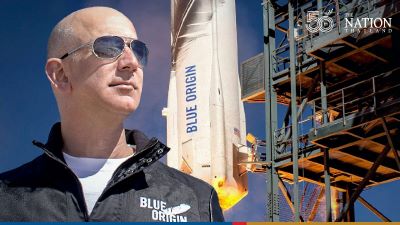
Jeff Bezoss Blue Origin spaceflight company has publicly offered to cover up to $2 billion in NASA contract fees so it can remain involved in the U.S. governments effort to return astronauts to the moon.

The long-shot bid to persuade the space agency to change course comes after Elon Musk’s SpaceX was selected in April as the primary contractor to build the moon lander and given a $2.9 billion contract for the work.

Blue Origin countered Monday with a highly unusual open letter signed by Bezos, who owns The Washington Post. In it, he criticized NASA’s decision to rely on a single company for the moon lander, an approach he said would “put an end to meaningful competition for years to come” by locking the government into SpaceX’s rocket technology.

He offered to pour billions of dollars in company funding into the effort in exchange for a seat at the table.

“Without competition, NASA’s short-term and long-term lunar ambitions will be delayed, will ultimately cost more, and won’t serve the national interest,” Bezos wrote in the letter.

It’s unclear whether and how NASA will respond. As of late afternoon, NASA had not commented on how it might proceed. A NASA spokeswoman said the agency was aware of Bezos’s letter but declined further comment, citing pending litigation.

The open offer from Bezos marks a significant departure from the normal pace of government procurement, which usually happens behind closed doors through a scripted, bureaucratic process. It is rare for the details of contract negotiations to spill into the public domain, and rarer still for interested bidders to throw out offers and counteroffers in pointed corporate blog posts.

The $2 billion olive branch is also abnormal. Although it’s common for aerospace companies to invest corporate funds in technologies they intend to sell to the government, they typically prefer the government to underwrite as much of the development expenses as possible.

“I’m not sure there’s any precedent for this,” said Alan Chvotkin, a partner with the government contracts law firm Nichols Liu who is not affiliated with either Blue Origin or SpaceX. “It’s of a magnitude that we rarely see . . . they’re essentially putting $2 billion on the line.”

NASA is in a unique position because both SpaceX and Blue Origin are deep-pocketed commercial spaceflight companies that are comfortable with paying to develop their own technology. And Blue Origin can argue that NASA strayed from its original vision by going with a single contract.

The “human landing system” was initially supposed to involve two manufacturers, something that would let the government benefit from redundancy across systems and also give it leverage in any future negotiations. But the agency said it did not have enough room in its budget to issue more than one contract. The $2.9 billion contract given to SpaceX fit within the agency’s budget only because SpaceX agreed to modify its payment schedule, according to a NASA document obtained by The Post.

Blue Origin already has formally challenged the award to Space X.

In a solution offered “for [NASA’s] consideration” on Monday, Bezos said Blue Origin would effectively pay for the first two fiscal years of technology development itself by waiving up to $2 billion in fees, while “government appropriation actions catch up.” Bezos also offered to cover the costs of an un-crewed test mission to prove its lunar lander is safe. In exchange, Blue Origin would get a contract with a fixed price and cover any cost overruns, according to the letter.

“NASA veered from its original dual-source acquisition strategy due to perceived near-term budgetary issues, and this offer removes that obstacle,” Bezos wrote.

ADVERTISEMENTx

Two procurement experts contacted by The Post said NASA probably could issue a contract under the terms spelled out in Bezos’s letter. The Federal Acquisition Regulation, which governs most large purchases made by government agencies, does provide a framework for building procurements around “unsolicited proposals.” And the specific structure of the moon lander contract, carried out through a “broad agency announcement” rather than a typical request for proposals, might provide the government leeway.

But it would be highly abnormal for a government agency to suddenly change course in response to a public pronouncement from someone interested in selling something to the government. Such an action could become fodder for future bid protests.

Franklin Turner, a government contracts attorney with the law firm McCarter & English who is not affiliated with either Blue Origin or SpaceX, said it would be highly unusual for NASA to reshape its plan after receiving a public request from a prospective bidder.

“It is entirely up to the agency as to how it’s going to define its own requirements,” Turner said. “But I would be very surprised to see NASA turn a dime in response to a proposal like this one.”

Published : July 27, 2021

By : The Washington Post · Aaron Gregg