Stocks climb to record with earnings, Fed in focus
U.S. equities extended their run to all-time highs on Monday, with with megacap technology companies leading the way higher as investors weighed the outlook for growth at the start of a busy week of earnings and policy updates.
Tesla, which was set to releases its results after the close of trading, was among those providing the biggest boost to the S&P 500. Gains in other heavyweights set to report earnings later this week including Apple, Amazon.com, Alphabet and Facebook also propelled the benchmark index.
While a positive start to the earnings season has helped push stocks to their best five-day streak of gains since March, volatility returned to the market on Monday as some investors remain worried about the pace of economic growth and inflation. Concern also has been mounting that the Covid-19 delta variant will derail the recovery. The real yield on U.S. 10-year debt touched a record low ahead of this week’s Federal Reserve meeting, at which officials will likely discuss the outlook for stimulus.
“We’re heading into a very eventful week with big tech earnings and a Fed meeting,” said Chris Zaccarelli, chief investment officer at Independent Advisor Alliance. “The market showed how resilient it was last week, with the impressive bounce-back from the sustained selling on Monday, but we expect more caution as all eyes (and ears) turn to the Fed.”
The Nasdaq 100 and Dow Jones Industrial Average also ended Monday’s session at record highs. Seven of the main 11 S&P 500 industry groups advanced. Energy stocks climbed the most, despite weakness in crude prices. Royal Dutch Shell kicks off second-quarter earnings for oil majors on Thursday. The earnings season is expected to show higher profits, falling debt and better returns in the sector.
Trade tension is on the radar too. China lashed out at U.S. policies in a tense start to high-level talks in Tianjin, declaring the relationship between the world’s two largest economies in a “stalemate.”
Elsewhere, Bitcoin surpassed $40,000, extending recent gains amid speculation that Amazon may be considering accepting the digital currency as a method of payment. Cryptocurrency-linked stocks including MicroStrategy Inc. and Coinbase Global Inc. also rallied.
ADVERTISEMENTx
Here are some key events to watch this week:
–Tesla, Alphabet, Apple, Facebook, Amazon report earnings this week
More trees being offered by entrepreneurs as collateral for loans
More people are offering large trees as collateral for loans, as encouraged by a 2018 goverment regulation, Mallika Boonmeetrakul Mahasuk, adviser to the Minister of Commerce, said.
The Business Security Act BE 2558 (2015) was passed to allow easier raising of funds by entrepreneurs by pledging trees.
The ministry had issued a ministerial regulation declaring large trees as assets that can be used as collateral, announced in the Government Gazette on November 5, 2018.
All types of large trees can be used as collateral for loans. It is up to the parties to agree on the collateral.
The Department of Business Development has registered 125,911 large trees since the launch of the project as collateral, amounting to THB134.829 million. Most of the trees slare rubber, teak, tamarind, wild olive, neem, ebony, etc.
Since the outbreak of the coronavirus, 32,133 trees were registered as collateral for THB4.559 million.
Thai exports continue robust growth as global economic activity shows recovery
Thailands exports in June hit their highest levels in 11 years, the Commerce Ministry reported.
Exports in June jumped by 43.82 per cent year on year, valued at US$23.699, or THB738.135 billion.
It was the second successive month of 40 per cent-plus growth. May had seen a 41.59 per cent growth, valued at $23.057 billion.
The main factor contributing to the continued growth of Thai exports is the ongoing implementation of the ministry’s export promotion plan as well as the expansion of the global manufacturing sector, the ministry said.
The global manufacturing purchasing managers index has hovered above 50 for 12 months straight. Productivity, orders and employment in many countries are all increasing, especially in key trading partners such as the US and Europe.
In addition, the baht has been depreciating, which has become a factor in boosting the Thai export sector, the ministry said.
Within Asean, Thailand’s exports ranked second after Indonesia, which grew 54.46 per cent, while Vietnam, Thailand’s main competitor, and Singapore grew 20.40 per cent and 27.77 per cent respectively.
Phusit Ratanakul Sereroengrit, director-general of Trade Policy and Strategy Office, said on Saturday that the main reason for the Asean market continuing to expand amid the severe Covid-19 pandemic was the expansion of industrial product exports, especially cars, equipment and components by 140 per cent, refined oil 154 per cent, computers 82 per cent, plastic beads 87 per cent, and chemicals 86 per cent.
The export outlook for the second half of the year is bright as a result of exports of industrial products for the sixth straight month, indicating a recovery in economic activity. Energy prices too rose as demand increased in several countries with the easing of lockdown measures, a positive factor for oil-related exports especially in the Asean market, Phusit said.
Stock bulls look toward $17 trillion burning a hole in pockets
In the stock market, the refusal of retail investors to back down from every macro threat has become the only story. When will it end? Judging by the size of all the pools of cash lying around, it could be a while.
Among all the economic stories of the pandemic, the one about money piling up in people’s accounts has been the most significant in the stock market, where the S&P 500 just notched its seventh gain in nine weeks. Money market accounts, viewed in some circles as a “dry powder” reserve for equity deployment, sit at just under $4.5 trillion. A more obscure balance, the Federal Reserve’s count of money on deposit with commercial banks, has risen 33% from 2019 to $17 trillion.
While none of the money is completely unencumbered and professionals tend to hate the concept of “cash on the sidelines,” something is arming the day-trader cadres who seem bent on letting no market selloff last more than 24 hours. Take Monday, for example, when fears the delta variant would upend progress sent the S&P 500 down as much as 2.2%. Dip buyers ran to the rescue then and the rest of the week, sending the S&P 500 higher by almost 2% through Friday, despite virus cases still spiking.
“We have investors who are eager to deploy cash,” said Sara Rajo-Miller, investment advisor at Miracle Mile Advisors. “People sometimes forget how much power retail investors can have over the market, and we’ve seen that play out clearly. That momentum can really push stocks higher.”
How powerful is the retail cannon? On Monday alone, they bought a record $2.2 billion worth of equities, with the biggest exchange-traded fund tracking the S&P 500, ticker SPY, alone notching an all-time high of $482 million in retail purchases, according to Vanda Research. An analysis from DataTrek Research showed that Google searches in the U.S. that day for the phrase “dow jones” — the term most associated with stock market investing, according to the firm — spiked when stocks declined quickly, peaking at 1 p.m. in New York.
“It’s almost like investors are seasoned to say, stocks are down, it’s got to be a buying opportunity,” said Gene Goldman, chief investment officer at Cetera Financial Group. “Part of that is because there’s no other game in town right now. You look at bond yields so low, cryptocurrencies struggling, other parts of the market are not that great.”
ADVERTISEMENTx
The unending appetite for stocks led equity ETFs to break their annual record in April, and the pace hasn’t slowed since. In July, the products have already taken in more than $15 billion, helping fuel total ETF inflows to the brink of a full-year record, with more than five months to go.
Still, other measures of retail prowess show a mixed picture. Data from Charles Schwab shows that the percentage of cash in their clients’ brokerages accounts in June fell to 10.5%, the lowest since 2018.
“That probably suggests that the dry powder has been put to work over the course of the year, but maybe it’s not entirely out of fuel for further investment,” said Jeffrey Kleintop, chief global investment strategist for Charles Schwab & Co. “There’s still a good bit of momentum and desire to put money to work and look for alternatives to the bond market which remains relatively unattractive.”
Retail money fund balances still have $1 trillion versus $643 billion in 2015, according to DataTrek, with analysts calculating that there’s $400 billion in “buy the dip” cash ready for the next drawdown. Plus, retail-favorite Robinhood has 13 million more funded accounts than it did before the pandemic.
“The buy-the-dip mentality is the one the Fed has taught institutional and retail investors to follow, and the Fed remains hyper easy,” said Jim Smigiel, chief investment officer of SEI. “The biggest positive out there is that the easy stance from the Fed is in place and every other central bank and is going to be in place for quite some time.”
Published : July 25, 2021
By : Syndication Washington Post, Bloomberg · Claire Ballentine
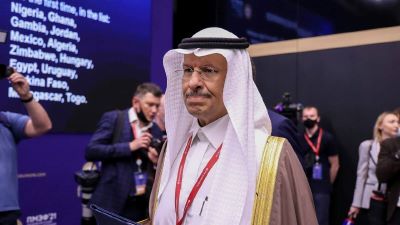
The Saudi prince of oil prices vows to drill every last molecule
The Boeing 767 banked over the Red Sea, turning east into Saudi Arabia. A commercial version of the plane can carry about 260 passengers. Inside this one, Saudi Energy Minister Prince Abdulaziz bin Salman and a dozen or so aides were heading home from a tumultuous meeting at OPECs headquarters in Vienna the day before.
For most of the journey, the jetliner had followed its expected route over Eastern Europe, the Mediterranean, and Egypt. It was a path that Abdulaziz had flown scores of times. As oil minister since 2019 and a royal understudy before that, he’d attended almost every OPEC meeting over the past 35 years.
But this flight, on March 7, 2020, wasn’t typical. What occurred afterward wasn’t, either.
The decisions Abdulaziz took over the next 24 hours exposed a new Saudi oil policy-bolder, less constrained by Washington, defiant of a growing global consensus on climate change, and more centrally controlled by the royal family, including one of his half-brothers, Crown Prince Mohammed bin Salman.
They also reflected what Abdulaziz sees as his destiny: to ensure that the last barrel of oil on the face of the Earth comes from a Saudi well. As he said in June during a private event organized by Bank of America Corp., according to a person familiar with the meeting, “We are still going to be the last man standing, and every molecule of hydrocarbon will come out.”
All of this has huge implications for the world’s energy markets at a time when, in erecting a fortress to safeguard oil, Abdulaziz and Saudi Arabia seem to be on the wrong side of history. Abdulaziz, the first member of the royal family to be the kingdom’s energy minister, is the most important single person in the oil market today. As influential in global economic terms as some central bankers, he has repeatedly taken bold, successful steps to control the markets, manage the flow of oil supplies, and shore up prices.
But a rancorous OPEC+ meeting in July showed just how difficult it’s going to be for Abdulaziz to consistently get his way in an era when oil-producing nations-their self-interests often in conflict-are contemplating a future of declining oil consumption. By the time OPEC+ ministers convened over videoconference, resurgent demand had already pushed crude prices up 50% this year. When the talks collapsed, oil prices jumped to the highest level in more than six years.
It took Abdulaziz two weeks of behind-the-scenes diplomacy to resolve the impasse, ultimately clinching a deal that followed a classic blueprint of his: Everyone involved saved face, even if some of the targets for future production stretched credulity. “Consensus-building is an art,” he told reporters after the meeting, coyly declining to elaborate. “Why should I divulge it? This is an art, and we keep it between ourselves. We call it a state secret.”
– – –
Abdulaziz’s time as energy minister since his appointment in September 2019 has been perhaps the most convulsive and consequential period in the history of the Saudi oil industry, overshadowed only by the first and second oil crises in the 1970s. Abdulaziz didn’t agree to an on-the-record interview for this article. Bloomberg Markets reconstructed his tenure as minister-and his rise to get there-through interviews with diplomats, consultants, traders, and current and former Saudi, OPEC+, and U.S. officials.
After the OPEC+ meeting in Vienna in March last year, Abdulaziz and his retinue boarded their waiting jet-registration number N767A emblazoned on its tail-and took off. An oil world geek monitoring the plane’s radar signature on a real-time aircraft tracking website would have known something was amiss. The plane didn’t land at Riyadh, the capital, where the energy ministry and Abdulaziz’s residence are located. It continued flying over the Saudi desert, the bleakness occasionally broken by gas flares down on the oil fields, and then on toward the Persian Gulf coastline.
At 3:35 p.m. that Saturday, the jet landed at King Abdulaziz Air Base, a military complex near Dhahran in the heart of the kingdom’s petroleum industry. Abdulaziz headed straight to the headquarters of Saudi Aramco, the national oil company.
The surprise detour to Dhahran was prompted by what had happened the day before in Vienna. At a special OPEC+ meeting, Saudi Arabia and Russia (the +, as it isn’t an OPEC member) clashed over how to respond to the coronavirus pandemic that was beginning to spread across the globe.
Moscow, anxious to avoid reducing output, preferred a wait-and-see approach. Riyadh wanted to slash production-immediately. Through their association with refineries around the world, the Saudis had recognized early on that the Covid-19 outbreak was going to cause economic havoc, and they wanted to prevent a crash in oil prices.
The meeting ended without agreement. Ominously, Alexander Novak, then the Russian oil minister, said to reporters afterward, “Given today’s decision, all OPEC+ countries from April 1 have no obligations to cut output.” Now all eyes were on Abdulaziz. Asked if Saudi Arabia would follow Russia’s lead, he told reporters, “I’ll keep you wondering.”
Not for long. The drive from the airfield to the Aramco campus takes about 15 minutes. Abdulaziz’s entourage would have gone past Dammam No. 7, known as the “Prosperity Well,” because the day it struck oil in March 1938 marked the commercial discovery of petroleum in Saudi Arabia.
Over the years, the Saudis had come to believe they must always act in concert with other oil producers and not unilaterally. Now, Abdulaziz had decided to suspend that rule, if only for a short time, to make a point-we’re in charge of managing the oil market-and to teach a lesson to Russia and its president, Vladimir Putin, whose power depends in part on his country’s oil revenue.
Once inside Aramco’s main administration building, Abdulaziz did something shocking and counterintuitive for someone who’d indicated in Vienna that he favored production curbs: He ordered the world’s biggest energy company to ramp up production to maximum levels. The next day, with the oil market closed for the weekend, Saudi Arabia launched an all-out price war. It announced it would begin pumping 12 million barrels a day, an increase of more than 20% over the month before.
For the energy markets, this was the equivalent of a nuclear first strike. To push such huge volumes onto the market, Aramco slashed the price of its oil, offering refiners the largest discounts ever. The price cuts were particularly big for European oil refineries, hitting Russia’s traditional market the hardest.
When the oil market reopened on Sunday evening, Brent crude, the global benchmark, plunged almost 25% within seconds-the biggest one-day fall since January 1991, during the Persian Gulf War. The carnage extended beyond the oil market. The MSCI World Energy Sector Index-a basket of leading petroleum companies, including Exxon Mobil, Chevron, Royal Dutch Shell, Total, and BP-plummeted almost 19%, its biggest-ever one-day drop, erasing $330 billion in share value. Over the next week, the index lost $400 billion more.
ADVERTISEMENTx
Panic gripped the White House. Breaking with decades of close cooperation, Saudi Arabia hadn’t informed Washington of its production bombshell, which caught the CIA and U.S. diplomats in Riyadh by surprise, according to Victoria Coates, a White House deputy national security adviser at the time. The administration of President Donald Trump, which saw the U.S. oil industry as a strategic and political asset, was in shock. “It was uncharted territory,” says Coates.
The oil industry and the countries that depended on it were staring into an abyss of collapsing prices. That, of course, included the Saudis, who’d just shown they were ready to shoot themselves in the foot to get production and prices back to what they deemed sustainable levels. The scenario, as risky and cynical as it was, was unfolding just as Abdulaziz intended: Create enough pain to get everyone around the negotiating table-quickly.
Enter Trump. During the first week in April, he gathered top U.S. oil executives at the White House. “We’ll work this out, and we’ll get our energy business back,” he said. “I’m with you 1,000%.” Trump orchestrated a series of phone calls, including a critical conversation with Putin and Saudi Arabia’s King Salman-bringing together three countries that produced more than 40% of the world’s oil at the time.
– – –
On April 12, after 36 days of hostilities, Riyadh and Moscow agreed to the deepest oil production cuts in history, calming the markets and torpedoing Russia’s refusal to curb output a month earlier.
ADVERTISEMENT
Trump’s intervention was a gift to the Saudis. As a presidential candidate, he’d sometimes criticized the regime, which he said treated women as “slaves” and “kills gays.” But as president, he’d fostered cozy relations with the world’s biggest purchaser of U.S. arms. Riyadh was the first stop on his first foreign trip as president. He supported the kingdom’s war in Yemen. He sided with Saudi Arabia after his own intelligence community said Crown Prince Mohammed was complicit in the murder of Saudi-born U.S. resident and journalist Jamal Khashoggi in 2018.
And now Trump had facilitated the oil deal the Saudis wanted. “What happened in April is helping us,” Abdulaziz said of the pact via video link at the annual Robin Hood Investors Conference last October, according to a person familiar with what was said. The price war, Abdulaziz said, “is a good example [of] what free markets would do if the commodity market is not attended to.” The deal had brought order to the disarray that followed the OPEC+ breakdown in Vienna.
Abdulaziz spent the past year trying to keep things that way, but July’s OPEC+ bust-up laid bare the obstacles in front of him. At the meeting, Abdulaziz found Saudi dominance under attack again. This time the obstreperous member was Saudi Arabia’s neighbor, the United Arab Emirates.
Backed by most OPEC+ members, including Russia, Abdulaziz wanted the group to agree to graduated production increases not only over the next few months but also, for the sake of stability, until the end of 2022. “The extension puts lots of people in their comfort zone,” Abdulaziz told Bloomberg TV on July 4. But UAE Energy Minister Suhail Al Mazrouei opposed the longer extension as “unnecessary to take now.”
Resurgent demand had already pushed up crude prices this year by the time OPEC+ convened. When the talks collapsed, blocking a supply increase, the standoff threatened to turn into a conflict as damaging as last year’s price war. West Texas Intermediate crude reached $76.98 a barrel, the highest price since November 2014. With his diplomatic maneuvering, Abdulaziz managed to avert a worsening spiral-for the time being.
ADVERTISEMENT
In his Bloomberg TV interview, Abdulaziz had said, “If I’m going to be called something, I would like to be ‘volatility buster.’ ” And yet once again, representing OPEC+’s largest producer, here he was, fighting to retain Saudi control of the market and preserve the “volatility buster” reputation he’d tried to craft for himself.
In January 2020, Abdulaziz was making his way through a bustling corridor at the World Economic Forum in Davos, Switzerland, when a television reporter and camera crew caught up with him. He had just wrapped up an appearance on a panel discussion titled “The Future of Fossil Fuels.” The journalist, Joel Hills of London-based ITV News, wasn’t interested in asking the oil minister about oil. He wanted to talk to Abdulaziz about a report that morning in the Guardian newspaper that claimed Crown Prince Mohammed had authorized the hacking of a mobile phone belonging to Amazon.com founder Jeff Bezos.
Abdulaziz had no intention of being drawn into any of the many controversies surrounding his half-brother. Hills persisted. Dapper in a chocolate-colored three-piece suit and silk pocket square, the minister, usually unflappable and unfailingly courteous, said the question was “a mockery and a joke” and called Hills “stupid.” As the reporter followed him, Abdulaziz grabbed the microphone. Judging from the video footage, he seemed about to hand the mic to an aide but thought better of his actions and handed it back to Hills, saying, “I don’t have to explain to you.”
In public, Abdulaziz has never commented on accusations of human-rights abuses lodged against Mohammed bin Salman since his half-brother was anointed crown prince by King Salman in 2017. He anchors his public persona strictly within the confines of his oil portfolio. As he said at the outset of his confrontation with Hills, “No, don’t ask that. I am the minister of energy.”
– – –
In Saudi Arabia, now more than ever before, oil is a family business. Two years after the king turned the day-to-day running of Saudi affairs over to the crown prince in 2017, he turned the energy empire over to Abdulaziz. For the first time, the oil portfolio was in the hands of a member of the royal family and not a technocratic outsider.
Abdulaziz bin Salman Al Saud was not just any member of the House of Saud, which comprises about 15,000 people. He’s the fourth-oldest son of King Salman. At 61, he’s considerably older than his powerful half-brother the crown prince, who turns 36 in August. He’s also a half-brother of Prince Khalid bin Salman, who’s deputy defense minister and a younger full brother of Mohammed.
Given the veil of secrecy that keeps prying eyes away from the House of Saud, it’s difficult for an outsider to know if Abdulaziz hatched the price war idea himself in 2020. Recent history suggests that very little happens in Saudi Arabia without the direction or input of Crown Prince Mohammed. Whatever the truth, Abdulaziz embraced the tactic as his own.
“He’s the ultimate inside man,” says Helima Croft, global head of commodity strategy at RBC Capital Markets. Croft, a former Central Intelligence Agency analyst, has known Abdulaziz for many years. “He understands power better than anyone else,” she says. “And oil is about power.”
Saudi Arabia’s power-and therefore Abdulaziz’s-are under threat as the world seeks to move away from oil and other fossil fuels. Beneath the kingdom’s desert there are about 265 billion barrels of oil, worth almost $20 trillion at this summer’s prices. It’s a massive prize, but one that may be worthless someday if the global economy figures out how to keep churning without oil.
“Saudi Arabia is not in a comfortable position,” says Karen Young, a senior fellow at the Washington-based Middle East Institute and director of its Program on Economics and Energy. “There will be customers for oil in 10 and 20 years from now. But [every oil producer] is going to be competing for a smaller and smaller number of buyers.”
– – –
One day in June 1987, Abdulaziz, then 27, was ensconced in Room 332 of the Vienna Marriott Hotel, getting ready to attend his first OPEC meeting. His decades-long ascent in the Saudi oil hierarchy had begun.
Abdulaziz was a very junior member of the Saudi delegation headed by Oil Minister Hisham Nazer, a nonroyal technocrat who’d been educated as an undergraduate and graduate at the University of California at Los Angeles. The official record of the meeting put Abdulaziz at No. 8 in the delegation’s hierarchy.
His early days were instructive. In 1987, Saudi Arabia was ending a price war. From 1980 to 1986, Riyadh had cut production to keep oil prices high even as other OPEC members kept pumping away. Ultimately, with Saudi production plunging so much that it couldn’t meet domestic consumption, Riyadh reversed course, flooding the market and crashing prices.
As was the case with the price war that Abdulaziz would preside over in 2020, the effects of the 1980s campaign were felt around the globe: from Texas and Oklahoma, where economies slumped, to Moscow, where the damage played a role in accelerating the demise of the Soviet Union, whose hard currency needs relied on high oil prices.
The lessons weren’t lost on Abdulaziz. “The Saudis determined never again to cut production alone,” says David Rundell, a U.S. diplomat who spent 15 years in Saudi Arabia, including a stint as chief of mission at the embassy in Riyadh. “And this has been their guiding principle ever since.”
Were Abdulaziz not a royal, say many of his critics and admirers alike, he’d be like any other extremely well-turned-out technocrat. As a young Saudi prince, he soon found an interest in academia and oil. From Riyadh he moved to Dhahran, where he studied at the King Fahd University of Petroleum & Minerals, the elite school that’s educated most of the engineers who today run Aramco.
After leaving in 1985 with an undergraduate degree in industrial management and a master’s in business administration, he ran an economic think tank associated with the university for a while. Shortly after marrying Sara bint Khalid bin Musa’ad, he decided to join the government, against the initial advice of his father.
In 1995, Nazer, the oil minister he had accompanied to Vienna in 1987, was replaced by Ali al-Naimi. Abdulaziz, aided by his royal imprimatur, effectively became al-Naimi’s deputy and then performed much the same role for the next oil minister, Khalid Al-Falih, from 2016 until he landed the top job himself.
These days, Abdulaziz’s 35 years of experience set him apart from his peers who come and go at OPEC headquarters in Vienna. “He knows markets inside out,” says Jeff Currie, head of commodities research at Goldman Sachs Group Inc. “He’s like none of the other oil ministers.”
“I come with baggage” is how Abdulaziz put it jocularly when he spoke to JPMorgan Chase clients earlier this year via a video link, according to a person familiar with what was said. “I have a lengthy career, and I have seen it all.”
– – –
It was a tense gathering. In September last year, Abdulaziz was chairing the energy ministers’ meeting of the Group of 20. Environmentalist groups have long accused Saudi Arabia of obstructing global efforts to reduce carbon emissions. Over the past couple of decades, the Saudis have moved from climate change denial to supporting the historic 2016 Paris Agreement-but never forfeiting the protection of their valuable resource. The G-20 forum was a chance for Riyadh to get a grip on the diplomatic maneuvering ahead of this year’s most important climate change conference, the COP26 gathering in Glasgow, Scotland, in November.
Hours of talks over video link went by, but the ministers were unable to come to an agreement on what their communiqué would say. European ministers wanted a greener statement; Saudi Arabia didn’t. Finally, Abdulaziz got his way, arguing in effect that if they ended the meeting with no statement at all, they’d all look bad.
The communiqué that emerged endorsed several of Saudi Arabia’s pet fixes to the climate crisis. One is to employ carbon sequestration, even though the technology hasn’t proved to be commercially viable. Another, with no targets or timelines attached to it, is what the Saudis call “the circular carbon economy,” built around “the four Rs”-the reduction, reuse, removal, and recycling of carbon to cut emissions.
What these measures have in common is that they make sure oil will live to die another day. “We are sitting on a huge amount of hydrocarbon resources,” Abdulaziz said at the meeting, “and we want to bring it to better use.”
The Middle East Institute’s Young says that Riyadh is moving too slowly into renewable energy, where the kingdom has a natural advantage in solar power thanks to its sun-scorched desert. “Nothing happens overnight,” she says. “[But] when you look at the results so far, it’s tiny.”
One of Abdulaziz’s predecessors as oil minister, the late Sheikh Ahmed Zaki Yamani, issued an oft-quoted warning: “The Stone Age didn’t end for lack of stone, and the Oil Age will end long before the world runs out of oil.” But he sounded this alarm more than 40 years ago, and the world remains as dependent on oil now as it was then.
Yamani-like gloomy prognoses are anathema to Abdulaziz, whose custodianship of his country’s reserves suggests he’s counting on the vaunted global energy transition to take a long, long time.
A few years ago, the International Energy Agency came out with one of its regular bulletins about how the growth in oil demand is slowing. “If I had to be concerned with IEA projections,” Abdulaziz said in Abu Dhabi during a public forum at the 24th World Energy Congress in September 2019, “I probably [would] be [on] Prozac all the time.”
More recently, the IEA released a report calling for the cessation of all new investment in fossil fuels as a means of avoiding global warming. Speaking to journalists at an OPEC+ news conference in June, Abdulaziz described the document as “a sequel of the La La Land movie.”
Where Abdulaziz saw fantasy, the climate activist Greta Thunberg saw the Saudis in retreat. “Wow,” she said on Twitter on June 1. “We’re clearly witnessing the beginning of the end of the fossil fuel era. They’re starting to panic. Let’s speed up the process.”
At some point, the demand for petroleum will reach a tipping point. The signs are everywhere, from the explosion of renewables and the increased adoption of electric vehicles to the readmittance of the U.S. to the Paris Agreement under President Joe Biden and the growing number of fossil fuel-shy investors staying away from oil companies.That’s one school of thought. The Saudis are convinced that peak demand is further out than green campaigners, a growing number of governments, and even some oil majors forecast. The Saudi view got a boost over the past year and a half. After energy demand plunged in 2020 during the pandemic, some forecasters thought oil consumption was fading fast. Yet the opposite appears to be true: Demand is rising fast, and the IEA says it will reach an all-time high by late 2022.
Even so, Abdulaziz knows from personal experience that some things are out of his control. Less than a week after he became oil minister, a drone attack on the oil processing center at Abqaiq in eastern Saudi Arabia shut down half of the country’s crude supplies for a few days. (The Saudi and U.S. governments blamed the attack on Iran, the kingdom’s great regional rival. Tehran denied any involvement.) Then, within months, came the price war with Russia and, this year, the collapse in OPEC+ talks.
Under pressure from shareholders to comply with climate change targets, international oil companies such as Exxon Mobil and Royal Dutch Shell are being forced to cut spending on new exploration projects. The Saudis, who are able to benefit from some of the lowest production costs in the industry, believe there’s an opening for them: Invest now, when everyone else isn’t, and capture market share.
“Ironically, funnily enough, the more people refrain from investing elsewhere, the more our possibility improves to increase our production,” Abdulaziz said via video link during the June event organized by Bank of America, according to a person familiar with what was said.
Saudi Arabia’s future as an oil superpower is all about control. What Abdulaziz did to Russia in the 2020 price war was a demonstration of that. It worked, if only temporarily: The Russians came relatively tamely back to the OPEC+ table even though the terms-on production, on price-weren’t what they wanted. But Abdulaziz’s 2020 power play did little to prevent the producer dispute in July.
One of Abdulaziz’s strategies to cement Saudi control, as he’s expressed it in private meetings with analysts and investors, is to mold OPEC into a kind of central bank, regulating the oil supply in much the same way the Federal Reserve regulates the money supply. Of his thinking, he told the JPMorgan clients, “I have copied and pasted what central bankers have done.”In this scenario, Abdulaziz isn’t just a regulator of one commodity’s supply; he’s an oil industry sheriff slapping down speculators messing with his territory. “I want the guys in the trading floors to be as jumpy as possible,” he said at an OPEC+ news conference in September 2020. “I’m going to make sure whoever gambles on this market will be ouching like hell.”
He put it even more colorfully the month before at a closed-door event organized by the Oxford Institute for Energy Studies. “I don’t like the market or the speculators or the media to take us for granted; that’s why I keep so many rabbits under my taqiyah,” he said, referring to the traditional skullcap worn by Saudi men. “If you are less predictable, you become more in command.”
Over the past year, Abdulaziz has had considerable success in his role. The price of U.S. oil has risen above $75 a barrel for the first time in more than six years, and OPEC+ has been able to boost production. Oil-consuming nations are once again begging the cartel to open the taps.
And yet Abdulaziz’s complacent claims of dominance may come back to haunt him. His turbulent two years as energy minister-from the drone attack on Abqaiq through the 2020 price war to the devastating OPEC+ breakdown in July-demonstrate that, for all the oil it’s sitting on, Saudi Arabia can’t always count on the commodity it most strives for: total control.
Published : July 25, 2021
By : Syndication Washington Post, Bloomberg · Javier Blas
The Stock Exchange of Thailand (SET) Index closed at 1,545.10 on Friday, down 7.26 points or 0.47 per cent. Transactions totalled THB59.50 billion with an index high of 1,553.25 and a low of 1,540.35.
In the morning session, Krungsri Securities predicted the index on Friday would fluctuate between 1,540 and 1,560 points amid the rise in oil price in response to a drop in US oil storage.
It forecast that uncertainty over the Covid-19 outbreak, both domestic and overseas, would pressure the index. Thailand logged another daily high of 14,575 new infections on Friday.
“Hence, we advise investors to focus on stocks with positive sentiment, such as shares in exporters and companies whose second-quarter turnover is expected to improve,” Krungsri Securities said.
ADVERTISEMENTx
The 10 stocks with the highest trade value today were STECH, KBANK, PTT, BANPU, PSL, 7UP, SNNP, RCL, TSTH and BBL.
Other Asian indices were mixed:
China’s Shanghai SE Composite Index closed at 3,550.40, down 24.34 points or 0.68 per cent, while the Shenzhen SE Component Index closed at 15,028.57, down 233.62 points or 1.53 per cent.
Hong Kong’s Hang Seng Index closed at 27,321.98, down 401.86 points or 1.45 per cent.
South Korea’s KOSPI closed at 3,254.42, up 4.21 points or 0.13 per cent.
Taiwan’s TAIEX closed at 17,572.92, up 0.59 points or 0.0034 per cent.
Japan’s Nikkei Index was closed for Health and Sports Day.
BOT sees no need to revise GDP forecast for the year as of now
The Covid-19 lockdown will result in a 0.8 per cent contraction in economic activities in a best-case scenario where the new infection rate goes down by 40 per cent within August, said Chayawadee Chai-Anant, senior director at the Bank of Thailand’s Macroeconomic Department on Thursday.
“In the worst-case scenario that the infection rate goes down by less than 20 per cent, up to 2 per cent of economic activities will be lost as fear of the outbreak will force people to remain in self-imposed lockdown even after the government-imposed lockdown ends,” she added.
Chayawadee added that the projected loss of economic activities could not be used to directly subtract from the projected GDP, as the government could still use monetary and fiscal measures to mitigate the economic impact, while other factors, such as export and new investments, could also improve the economic outcome through the rest of the year.
Chayawadee said that herd immunity against Covid-19 would not happen in 2022 due to three factors. First is the mutated strains of the virus will result in increased requirement to achieve herd immunity from 70 per cent inoculation rate to 90 per cent. Second is the delay in vaccine procurement and delivery due to high demand at the global level. Third is people’s behaviour, such as those who are not willing to get a jab, or those who let their guard down after getting the jab and do not adhere to disease control measures.
The central bank has advised the government to focus on procuring and distributing effective vaccines to people comprehensively instead of imposing strict lockdown measures.
“Lockdowns maybe necessary in dealing with short-term problems, but it will eventually hinder economic recovery,” she said.
“As for long-term policy, the government must prepare adequate tools and measures, both monetary and fiscal, to help individuals and businesses who have been affected by the outbreak. These tools and measures must be in a form that are suitable for the current situation, such as having more online availability.”
SET still under shadow of worsening Covid situation
The Stock Exchange of Thailand (SET) Index fell by 2.86 points, or 0.18 per cent, to 1,549.50 on Friday morning.
The SET Index closed at 1,552.36 on Thursday, up 11.48 points or 0.74 per cent. Transactions totalled THB69.68 billion with an index high of 1,554.65 and a low of 1,546.26.
Krungsri Securities predicted the index on Friday would fluctuate between 1,540 and 1,560 points despite the rise in oil price in response to the fall in US oil storage.
It forecast that uncertainty over the Covid-19 outbreak, both domestic and overseas, would pressure the index.
“Hence, we advise investors to pay attention to stocks which gain positive sentiment, such as shares of exporters and shares whose second-quarter business turnover is expected to improve,” Krungsri Securities said.
ADVERTISEMENTx
It recommended that investors buy:
▪︎ HANA, KCE, TU, CPF, ASIAN and EPG, which will benefit from the weakening baht.
▪︎ BCH, CHG, BDMS, HMPRO, GLOBAL, DOHOME, BEM, CKP, CBG, OSP, ICHI, GPSC, BEC, GUNKUL, JWD, WICE, SONIC and NER, whose second-quarter business turnover is expected to improve.
IMF executive board approves policy reforms to better support low-income countries
The centerpiece of the policy reforms that were approved by the IMF executive board last week is a 45 percent increase in the normal limits on access to concessional financing, coupled with the elimination of hard limits on access for the poorest countries, according to the IMF.
The executive board of the International Monetary Fund (IMF) has approved a set of policy reforms to the concessional lending facilities to better support the recovery of low-income countries (LICs) from the COVID-19 pandemic.
“These reforms are set to ensure that the Fund has the capacity to respond flexibly to LICs’ needs over the medium term while continuing to provide concessional loans at zero interest rates,” the IMF said Thursday in a statement.
The centerpiece of the policy reforms that were approved by the IMF executive board last week is a 45 percent increase in the normal limits on access to concessional financing, coupled with the elimination of hard limits on access for the poorest countries, according to the IMF.
ADVERTISEMENTx
“The decision to raise access limits is not a directive to lend more across all IMF programs,” Sean Nolan, deputy director of the IMF’s strategy policy and review department, told reporters.
“It provides the flexibility to provide more zero interest financing for countries with strong economic programs to handle the pandemic and the path to full recovery,” Nolan said.
The IMF executive board also approved a two-stage funding strategy to cover the cost of pandemic-related concessional lending and support the sustainability of the Poverty Reduction and Growth Trust (PRGT), which is tailored to the diverse needs of low-income countries.
In the first stage, the IMF will seek to secure about 4 billion U.S. dollars in subsidy resources needed to finance zero interest lending from the PRGT. Meanwhile, the IMF will seek to mobilize about 18 billion dollars in new PRGT loan resources from PRGT lenders.
The move came as the demand from low-income countries for IMF financial support is expected to remain high over the next few years.
The IMF has provided financial support to 53 of 69 eligible low-income countries in 2020 and in the first half of 2021, with about 14 billion dollars disbursed as zero percent interest rate loans from the PRGT.
Worsening Covid situation in Thailand expected to maintain pressure on baht
The baht opened at 32.88 to the US dollar on Friday, weakening from Thursday’s closing rate of 32.86.
The Thai currency is likely to move between 32.80 and 32.95 during the day, Krungthai Bank market strategist Poon Panichpibool said.
Poon said the baht was unlikely to strengthen anytime soon due to the worsening Covid-19 situation in the country. The situation is not grim, but foreign investors have already offloaded their assets, such as stocks in Thailand, leading to a weakening of the baht.
In the short term, the performance of registered companies will tend to surpass observers’ expectations, if the market feels relaxed about the Covid-19 situation around the world. This scenario would also weaken the dollar, since investors need not hold the currency in order to cushion against fluctuations in the market, Poon said. And if the dollar weakens, the baht could escape falling to 33 to the US currency, he added.