Fed is taking on a racist legacy in the field of economics #SootinClaimon.Com

#SootinClaimon.Com : ขอบคุณแหล่งข้อมูล : หนังสือพิมพ์ The Nation.

https://www.nationthailand.com/business/30404862

Fed is taking on a racist legacy in the field of economics

EconApr 14. 2021A vehicle passes the Marriner S. Eccles Federal Reserve building in Washington, D.C. MUST CREDIT: Bloomberg photo by Stefani ReynoldsA vehicle passes the Marriner S. Eccles Federal Reserve building in Washington, D.C. MUST CREDIT: Bloomberg photo by Stefani Reynolds

By Syndication Washington Post, Bloomberg · Catarina Saraiva

As the pandemic slammed the Black community and amplified the conversation around racism in America, the economics profession grappled with an uncomfortable truth: that its historical roots and practices today are mired in systemic racial bias.

Last summer, the shock of George Floyd’s death and other instances of police brutality ignited a national debate about inequality. Topics like the racial wealth gap became part of everyday discourse.

But at the heart of the problem is not just the prosperity separating White Americans from minorities — often the Black Americans whose ancestors helped build the economy through enslaved labor — but also that the very discipline that is a key conduit for improvement remains rife with racial bias.

“My view of how economics has to inherently address structural racism starts with economics recognizing the role of institutions and power and politics in shaping economic outcomes,” said Joelle Gamble, special assistant to President Joe Biden for economic policy. “We are trying to practice this differently and say ‘how are we actually driving towards economic growth in a way that is helping more and more people who have been permanently left out?'”

Part of the challenge is that few Black Americans have joined the profession: Just 13 received a doctorate in economics in 2019 among the 464 awarded to U.S. citizens, according to a report published in December by the American Economic Association. Of those, four were Black women.

In a sign of the heightened focus on the issue at the highest ranks in the field, the Federal Reserve — the nation’s foremost economic institution and the largest employer of doctorate-level economists — is hosting a conference on racism in economics on Tuesday.

Two weeks after Floyd’s death, economist William Spriggs published an open letter to his peers, explaining how many economists perpetuate inequality by ignoring race, and the impact of racism, in their research. Spriggs, a professor of economics at the historically Black Howard University and the chief economist of the AFL-CIO labor federation, will participate in the Fed’s Tuesday conference.

The U.S. economy’s problems today are monumental. Some 22 million jobs were lost at the onset of the pandemic, and while a good amount of them have been recovered, the Black unemployment rate remains at 9.6%, almost double the White rate.

Undoing a crisis whose burden has fallen heaviest on minorities while striving for a more equal economy — as Biden has said he wants to do — will be challenging and will likely require new ideas.

Modern-day economics in America was founded in the Progressive Era — a period at the turn of the 20th century that overhauled the role of government in public life, according to Thomas Leonard, an economist and historian at Princeton University. Progressive lawmakers created the administrative state we know today, including the Fed, the Department of Labor, and other institutions that shape the economy through policy and regulation.

This was a time in U.S. history, some 30 years after the end of the Civil War, when racism and eugenics were commonplace.

Many of the earliest economists, including Irving Fisher, one of the most celebrated of the profession, were staunchly racist and backers of eugenics, the theory that some races are superior to others.

“They not only founded economics as a professional, scientific discipline, they founded it as an academic discipline and they made it a politically influential discipline,” Leonard said. “They kind of invented this idea of the economist as a scientific expert who advises governments, politicians, regulators, on what to do.”

But Leonard says the economics profession has made a lot of progress in the past century. While outright racism might no longer be acceptable, and eugenics has been completely discredited, some say economics retains subtler, yet acute biases.

At the root of many economists’ issues with the failures of modern-day economics is the profession’s sometimes fervent reliance on neoclassical theory. Neoclassical economics was established by Progressive-Era economists and asserts that supply and demand are the driving forces behind things like the pricing of goods.

So when looking at something like the racial income gap — in America, Black workers make 60% of their White counterparts’ wages — a strict adherent to neoclassical theory might blame the gap on things like disparate education or skills levels, ignoring the impact of race-based discrimination, according to Nina Banks, an associate professor of economics at Bucknell University.

– – –

“The empirical research that demonstrates that racial and ethnic discrimination explains economic outcomes is often overlooked or dismissed within the profession,” Banks said. “Even when we have a profession that is more inclusive of historically excluded groups, it’s not going to resolve the problem of racial biases in economics because the problems of racial bias, those problems are really embedded within our economic theory.”

Banks calls stratification economics, which explores inequality by how different groups experience things, one of the most important developments in economics in the past few decades.

Jala Abner, a research assistant at the Chicago Fed, is one of the newer entrants to the field.

“As a Black woman I always wondered why there were these differences, and can we necessarily pinpoint the intersections of someone’s identity for the reason why they have lower wealth, lower income, things like that,” Abner said. “Just to see that there’s proof within these data sets that there’s something clearly wrong. It just reaffirms that we have a lot more work to do in general, whether it’s the Fed or society as a whole.”

Abner graduated from Spelman University last year with a Bachelor’s degree in economics. She is considering pursuing a graduate degree in the discipline and may focus her research in stratification economics.

Abner is among the few Black economists within the Federal Reserve system. The Board of Governors in Washington, which employs about 400 doctorate-level economists (the 12 reserve banks together employ another 400 or so) had just two Black PhD holders at the end of last year.

While the Biden administration has put Black women in some of the most prominent economic positions — Cecilia Rouse heads the Council of Economic Advisers and Janelle Jones is the chief economist at the Labor Department — the profession overall is still starkly male and White.

Other science professions do slightly better. About 4% of doctorate degrees given in science, technology, engineering and math subjects went to Black Americans, who make up about 13% of the U.S. population. About 11.7% went to minorities overall.

The Fed has been trying to alter this for the past few years. The Board has changed hiring practices so that interviewers ask job candidates a standard set of questions and evaluate them based on specific criteria. It is working with historically Black colleges and universities to recruit more of their graduates, and created a program at Howard University in 2016 where Fed economists teach students.

To try and improve the pipeline of diverse students into economics, the Fed also sends economists to high schools to give presentations about the discipline and brings students to the Board in Washington to meet with the governors.

Beyond its work to improve diversity within its own ranks, the Fed last year changed the strategy behind how it carries out monetary policy. It will now seek to limit shortfalls from maximum employment, defined as a “broad-based and inclusive goal.” That means it won’t raise rates preemptively to head off inflation as unemployment falls, bringing more people from marginalized communities into the workforce.


SET dives 1.6% as fresh outbreak hits Thai stocks #SootinClaimon.Com

#SootinClaimon.Com : ขอบคุณแหล่งข้อมูล : หนังสือพิมพ์ The Nation.

https://www.nationthailand.com/business/30404816

SET dives 1.6% as fresh outbreak hits Thai stocks

EconApr 12. 2021

By The Nation

The Stock Exchange of Thailand (SET) Index closed at 1,541.12 on Monday, down 25.22 points or 1.61 per cent. Total transactions amounted to Bt78 billion with an index high of 1,562.07 and a low of 1,539.24.

In the morning session, Krungsri Securities forecast the day’s index would fall to between 1,555 and 1,560 points after Thailand’s daily Covid-19 count rose by almost 1,000 cases on Sunday, triggering uncertainty over the economic recovery, especially in tourism.

“Also, finance-related stocks will be under pressure due to negative news on the interest rate adjustment and calculation method, while investors will sell stocks to reduce risk over the Songkran holiday,” said a Krungsri Securities analyst.

The 10 stocks with the highest trade value today were KBANK, CPALL, BDMS, STGT, DELTA, SAWAD, BBL, BCH, PTT and AOT.

Other Asian indices were mixed:

Japan’s Nikkei Index closed at 29,538.73, down 229.33 points or 0.77 per cent.

China’s Shang Hai SE Composite Index closed at 3,412.95, down 37.73 points or 1.09 per cent, while Shenzhen SE Component Index closed at 13,495.72, down 317.59 points or 2.30 per cent.

Hong Kong’s Hang Seng Index closed at 28,453.28, down 245.52 points or 0.86 per cent.

South Korea’s KOSPI closed at 3,135.59, up 3.71 points or 0.12 per cent.

Taiwan’s TAIEX Index closed at 16,859.70, up 5.60 points or 0.033 per cent.

SET hit by negative sentiment as new Covid-19 cases soar #SootinClaimon.Com

#SootinClaimon.Com : ขอบคุณแหล่งข้อมูล : หนังสือพิมพ์ The Nation.

https://www.nationthailand.com/business/30404805

SET hit by negative sentiment as new Covid-19 cases soar

EconApr 12. 2021

By The Nation

The Stock Exchange of Thailand (SET) Index fell by 7.83 points, or 0.50 per cent, to 1,558.51 in the morning session on Monday.

A Krungsri Securities analyst forecast that the SET would fall to between 1,555 and 1,560 points after Covid-19 cases in Thailand rose by almost 1,000 cases on Sunday, resulting in uncertainty over the country’s economic recovery, especially that of the tourism sector.

“Besides, stocks related to finance would be under pressure due to the negative news of interest rate adjustment and calculation method, while investors would sell their stocks to prevent risks during the Songkran holidays,” he said.

He suggested that investors buy:

▪︎ TQM, STGT, COM7, SYNEX, BDMS, BCH, CHG and BH, which benefit from the Covid-19 outbreak.

▪︎ HANA, KCE, TU, and CPF, which benefit from the weakening baht.

The SET Index closed at 1,566.34 on Friday, up 7.51 points or 0.48 per cent. The volume of total transactions was Bt82 billion with an index high of 1,572.13 and a low of 1,561.76.

Gold stays steady despite decline in spot price #SootinClaimon.Com

#SootinClaimon.Com : ขอบคุณแหล่งข้อมูล : หนังสือพิมพ์ The Nation.

https://www.nationthailand.com/business/30404801

Gold stays steady despite decline in spot price

EconApr 12. 2021

By The Nation

The price of gold was unchanged in morning trade on Monday from Saturday’s close, the Gold Traders Association reported.

As of 9.26am, the buying price of a gold bar was Bt25,850 per baht weight and selling price Bt25,950, while gold ornaments were priced at Bt25,337.84 and Bt26,450, respectively. The price had risen by Bt400 per baht weight last week.

Spot gold price on Friday dropped by $13.4 to $1,744.8 (Bt55,035) per ounce due to the strengthening dollar, rising US bond yield and strong economic data.

Hong Kong gold price dropped by HK$30 to $16,160 (Bt65,528) per tael, the Chinese Gold and Silver Exchange Society reported.

Reopening economy too quickly could cause new coronavirus spike, Powell says #SootinClaimon.Com

#SootinClaimon.Com : ขอบคุณแหล่งข้อมูล : หนังสือพิมพ์ The Nation.

https://www.nationthailand.com/business/30404786

Reopening economy too quickly could cause new coronavirus spike, Powell says

EconApr 12. 2021

By The Washington Post · Rachel Siegel

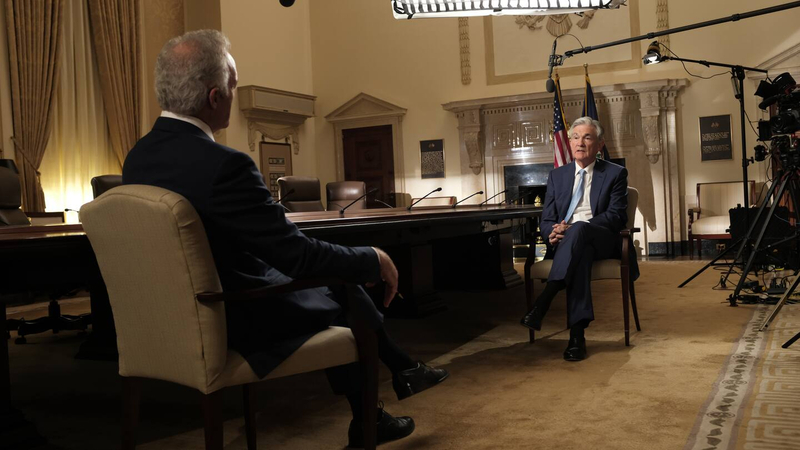
Federal Reserve Chair Jerome Powell warned in an interview broadcast Sunday that reopening the economy too quickly could lead to another worrisome jump in coronavirus cases, saying that the United States has not completely turned the corner and that the pandemic continues to pose major risks to any recovery.

Powell, speaking in a “60 Minutes” interview, also said that the coronavirus pandemic had exacerbated economic disparities in the United States and that this could take time to address during an uneven recovery.

In the interview, Powell described an economy that was at “an inflection point,” showing signs of acceleration but still facing numerous risks. By many measures, the economy is rebounding strongly, with the hopes that increased vaccinations and recent stimulus packages charting a year of strong growth. The Dow Jones industrial average is at record levels, and more than 900,000 jobs were added last month.

Yet at the same time, coronavirus cases are rising. And with at least 8.5 million Americans still out of the workforce, the scars of long-term unemployment, especially for workers of color and women, compound by the day.

“There really are risks out there,” Powell told CBS News’ Scott Pelley. “And the principal one just is that we will reopen too quickly, people will too quickly return to their old practices, and we’ll see another spike in cases.”

Powell said previous waves of coronavirus cases hampered the recovery, and he urged caution as people get vaccinated and attempt to return to their normal routines.

He said the central bank was watching all these economic forces closely as it maps its path forward.

When it comes to monetary policy, the Fed has signaled that it will not raise interest rates from near zero until it sees substantial progress in the labor market. It could come under pressure from Wall Street and lawmakers to reconsider its stance if inflation picks up and the expected economic rebound gains steam.

But Powell said the Fed should not pare back its support for the economy based on inflation expectations. The unemployment rate for the bottom 25% of wage earners is about 20%. Many low-wage service-sector jobs disproportionately employed women and people of color. Those jobs could be some of the last to return because they depend heavily on person-to-person contact.

Then there is the challenge of whether many jobs that vanished in 2020 will return at all. Powell said the “economy that we’re going back to is going to be different from the one that we had,” making it harder for people to regain a foothold in the labor force.

“I think we need to keep in mind, we’re not going to forget those people who were left on the beach really without jobs as this expansion continues,” Powell said. “We’re going to continue to support the economy until recovery is really complete.”

The economy is a long way from healed. But Powell said the depths of the recession could have been much worse. He credited Congress’s swift action through the Cares Act as being “a big feature of the landscape when people look back.”

Powell declined to answer whether he’d push for another round of stimulus. Last month, President Joe Biden signed a massive $1.9 trillion coronavirus spending plan. The administration now has its eyes on a major jobs and infrastructure package.

Powell also would not say whether corporate and personal tax increases would slow growth. The White House is proposing tax increases could pay for much of its next legislative push.

The Fed chair, whose term expires next year, also declined to say whether he’d want to be reappointed. The central bank has one open seat on its board of governors, and the Biden White House could have major influence on the makeup of the central bank over the next four years.

For now, Powell’s message was one of growing optimism, without losing sight of how far there is still to go.

“We’ve got to remember there’s in the range of 10 million people who were working in February of 2020 and lost their jobs because of covid-19,” Powell said. “And they’re still not working. So, for them, it’s not over. And we’re going to keep those people in mind.”

SET shrugs off Covid outbreak to gain 0.48% #SootinClaimon.Com

#SootinClaimon.Com : ขอบคุณแหล่งข้อมูล : หนังสือพิมพ์ The Nation.

https://www.nationthailand.com/business/30404722

SET shrugs off Covid outbreak to gain 0.48%

EconApr 09. 2021

By The Nation

The Stock Exchange of Thailand (SET) Index closed at 1,566.34 on Friday, up 7.51 points or 0.48 per cent. The volume of total transactions was Bt82 billion with an index high of 1,572.13 and a low of 1,561.76.

In the morning session, Krungsri Securities forecast that day’s SET would fluctuate between 1,550 and 1,570 points despite falling US Treasury bond yield and expectations the US Federal Reserve would maintain a low interest rate after a jump in US jobless claims.

“Uncertainty over Thailand’s new wave of Covid-19 is expected to continue to pressure the index,” said Krungsri Securities.

The 10 stocks with the highest trade value today were SCC, BDMS, STGT, DELTA, PTT, BCH, SAWAD, COM7, OR and HANA.

Other Asian indices were mixed:

Japan’s Nikkei Index closed at 29,768.06, up 59.08 points or 0.20 per cent.

China’s Shang Hai SE Composite Index closed at 3,450.68, down 31.88 points or 0.92 per cent, while Shenzhen SE Component Index closed at 13,813.31, down 176.63 points or 1.26 per cent.

Hong Kong’s Hang Seng Index closed at 28,698.80, down 309.27 points or 1.07 per cent.

South Korea’s KOSPI Index closed at 3,131.88, down 11.38 points or 0.36 per cent.

Taiwan’s TAIEX Index closed at 16,854.10, down 72.34 points or 0.43 per cent.

Study impact of new Covid wave, SET chief advises investors #SootinClaimon.Com

#SootinClaimon.Com : ขอบคุณแหล่งข้อมูล : หนังสือพิมพ์ The Nation.

https://www.nationthailand.com/business/30404715

Study impact of new Covid wave, SET chief advises investors

EconApr 09. 2021

By The Nation

Though the new wave of Covid-19 infections will not have a severe impact on listed companies, investors should still evaluate the impact the virus may have on each industry, Stock Exchange of Thailand (SET) president Pakorn Peetathawatchai said on Friday.

“We believe Thai businesses have already prepared themselves for the Covid-19 fallout,” he said. “Some businesses, like packaging, will gain from the outbreak.”

He also said that he expects the economy to start recovering once more people are inoculated.

Meanwhile, SET rose by 6 per cent in March thanks to progress in the anti-Covid vaccination drive and many countries’ efforts to stimulate their economy, SET’s executive vice president Soraphol Tulayasathien said.

He added that SET also gained from institutional investors’ moves to adjust their investments from growth stocks to value stocks. He added that foreign investors’ net sales in March dropped to Bt87 million compared to Bt18 billion in February.

“The Thai stock market is still attractive because it has a lot of value stocks, while many SET-listed firms were listed in global sustainability indices, such as the Dow Jones Sustainability Index,” he said.

Thai Large Banks Have Ratings Headroom Despite Weak Recovery #SootinClaimon.Com

#SootinClaimon.Com : ขอบคุณแหล่งข้อมูล : หนังสือพิมพ์ The Nation.

https://www.nationthailand.com/business/30404708

Thai Large Banks Have Ratings Headroom Despite Weak Recovery

EconApr 09. 2021

By The Nation (sponsored news)

Fitch Ratings-Bangkok-08 April 2021: The Viability Ratings (VR) of Thailand’s five largest banks are driven by their domestic franchises, which support through-the-cycle earnings generation and the build-up of sound capital buffers, Fitch Ratings says in a peer review report.

The five banks have strong and sustainable market shares, and a diverse presence across products and client segments. The VRs also take into account their relatively weak asset quality and profitability ratios compared to Fitch’s financial benchmarks, which are exacerbated by the coronavirus pandemic. That said, we do not think such weakness is likely to trigger a downgrade in the near future given the banks’ other loss-absorption buffers, including capital levels and loan-loss allowances.

The ‘BBB’ Support Rating Floors (SRF) of Bangkok Bank Public Company Limited (BBL, BBB/Stable/bbb), KASIKORNBANK Public Company Limited (KBank, BBB/Stable/bbb), The Siam Commercial Bank Public Company Limited (SCB, BBB/Stable/bbb), and Krung Thai Bank Public Company Limited (KTB, BBB/Stable/bbb-) reflect the banks’ high systemic importance. The SRFs of BBL, KBank and SCB are at the same level as their VRs, which limits the risk of a downgrade of the banks’ Long-Term Issuer Default Ratings (IDR) in the event of a VR downgrade. The Long-Term IDR of KTB is driven by its SRF.

The Long-Term IDR of Bank of Ayudhya Public Company Limited (BAY, BBB+/Stable/bbb) is driven by institutional support from its parent MUFG Bank, Ltd. (A-/Stable).

SET up in morning session but expected to be pressured by Covid-19 situation #SootinClaimon.Com

#SootinClaimon.Com : ขอบคุณแหล่งข้อมูล : หนังสือพิมพ์ The Nation.

https://www.nationthailand.com/business/30404705

SET up in morning session but expected to be pressured by Covid-19 situation

EconApr 09. 2021

By The Nation

The Stock Exchange of Thailand (SET) Index rose by 7.31 points, or 0.47 per cent, to 1,566.14 in the morning session on Friday.

A Krungsri Securities analyst forecast that the SET would fluctuate between 1,550 and 1,570 points despite the expectation that the US Federal Reserve would maintain interest rate at low level after US jobless claims jumped, as well as the falling US Treasury yield.

“Uncertainty over Thailand’s new wave of Covid-19 outbreak is expected to continue to pressure the index,” he said.

He recommended investors buy:

▪︎ TQM, STGT, COM7, SYNEX, PTL, AJ, BDMS and CHG, which benefit from the Covid-19 outbreak.

The SET Index closed at 1,558.83 on Thursday, up 2.27 points or 0.15 per cent. Total transactions were Bt83 billion with an index high of 1,564.65 and a low of 1,552.18.

The SET rebounded after falling 1.46 per cent on Wednesday.

Weakening dollar, falling US bond yield boost gold price #SootinClaimon.Com

#SootinClaimon.Com : ขอบคุณแหล่งข้อมูล : หนังสือพิมพ์ The Nation.

https://www.nationthailand.com/business/30404703

Weakening dollar, falling US bond yield boost gold price

EconApr 09. 2021

By The Nation

The price of gold surged by Bt150 per baht weight in morning trade on Friday, the Gold Traders Association reported.

As of 9.30am, the buying price of a gold bar was Bt26,000 per baht weight and selling price Bt26,100, while gold ornaments were priced at Bt25,529.44 and Bt26,600, respectively.

At close on Thursday, the buying price of a gold bar was Bt25,850 per baht weight and selling price Bt25,950, while gold ornaments were Bt25,377.84 and Bt26,450, respectively.

Spot gold price on Thursday surged by $16.6 to $1,758.2 (Bt55,261) per ounce, the highest in a month and a half, thanks to the weakening dollar and falling US bond yield after the US Federal Reserve signalled it would maintain interest rate at a low level.

Hong Kong gold price rose by HK$80 to $16,280 (Bt65,780) per tael, the Chinese Gold and Silver Exchange Society reported.