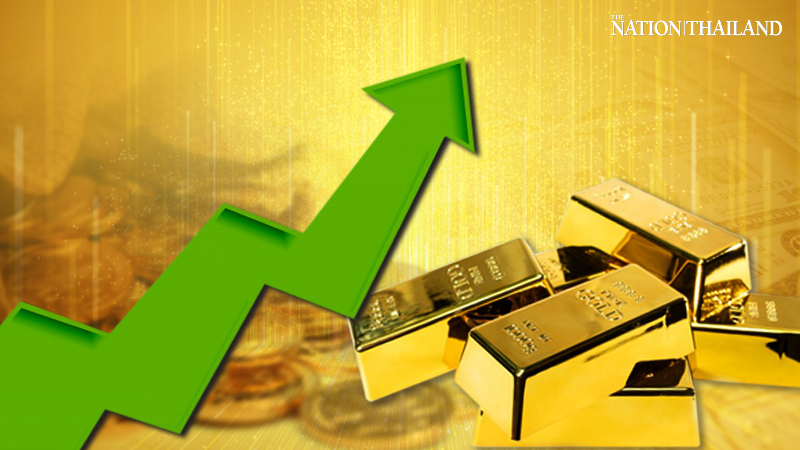
The Stock Exchange of Thailand (SET) Index rose by 3.13 points, or 0.20 per cent, to 1,574.17 in the morning session on Friday.
A Krungsri Securities analyst expected the index to fluctuate between 1,560 and 1,580 despite positive sentiment that US jobless claims had fallen to the lowest level during the Covid-19 pandemic.
He said the falling oil price amid uncertainty over the new Covid-19 wave in Europe and India, plus volatility in funds flows would pressure the index.
He recommended that investors buy:
▪︎ EA and GPSC, which will benefit from news that Thailand will stop sales of fossil fuel vehicles by 2035 and go solely for electric vehicles.
▪︎ HANA, KCE, TU and CPF, which benefit from the weakening baht.
▪︎ ICHI, SAPPE, RBF, DOD, IP, TACC, GUNKUL, KISS, ZIGA and PTG, which benefit from positive news on hemp production and its general use.
▪︎ ADVANC, INTUCH and DTAC, which pay high dividends.
The SET Index closed at 1,571.04 on Thursday, up 0.21 points or 0.01 per cent. Total transactions amounted to Bt93 billion with an index high of 1,580.17 and a low of 1,571.04.
The price of gold was unchanged in morning trade on Friday from Thursday’s close, the Gold Traders Association reported.
As of 9.32am, the buying price of a gold bar was Bt25,450 per baht weight and selling price Bt25,550, while gold ornaments were priced at Bt24,998.84 and Bt26,050, respectively. The price had risen by Bt50 per baht weight compared to opening trade on Thursday.
Spot gold price rose to US$1,727 (Bt53,821) per ounce after falling by $8.1 to $1,725.1 on Thursday due to the strengthening dollar and mass sell-offs of safe-haven assets in response to strong US labour statistics.
Hong Kong gold price dropped by HK$30 to $16,020 (Bt64,267) per tael, the Chinese Gold and Silver Exchange Society reported.
By Syndication Washington Post, Bloomberg · Claire Ballentine
U.S. equities gained as investors weighed the outlook for vaccinations, economic growth and inflation. Oil tumbled after a rally spurred by the blockage of the Suez Canal.
Banks and transportation companies led gains on the S&P 500 Index, and Boeing Co.’s plan to resume delivery of its 787 Dreamliners this week lifted the plane maker. An index of small-cap shares gained more than 1% as President Joe Biden announced a new goal of administering 200 million coronavirus vaccine doses in his first 100 days in office. Nike Inc. fell on concern it risked a boycott in China.
U.S. 10-year yields held steady after an auction of seven-year notes. Poor demand at last month’s sale helped trigger a global sell-off in government debt and interest-rate sensitive stocks.
U.S. equities are churning just below record highs as investors assess the latest progress and setbacks in the fight against covid-19 amid concerns that a surge in economic growth could fuel inflation. Data Thursday showed a bigger-than-forecast drop in weekly jobless claims.
“The markets are stuck in a lull where they are still taking some direction from the move in interest rates,” said Megan Horneman, director of portfolio strategy at Verdence Capital Advisors. “At this point we’re trying to get some more news globally that will be the next catalyst.”
In Europe, stocks edged lower, with concern over lockdown extensions and vaccine hiccups keeping cyclical shares on the back foot. The Polish zloty slumped to its weakest level since 2009 on growing concern that a worsening pandemic will delay this year’s economic recovery and put a strain on the budget.
West Texas Intermediate crude fell below $60 a barrel, after adding almost 6% Wednesday. Tugs and diggers are trying to dislodge the ship stuck for a third day in the Suez Canal, a critical waterway for trade.
Elsewhere, Bitcoin fell as much as 6.7%, reaching the lowest intraday price since March 15.
These are some of the main moves in financial markets:
Stocks
The S&P 500 Index rose 0.5% as of 4 p.m. EDT.
The Stoxx Europe 600 Index fell 0.1%.
The MSCI Asia Pacific Index fell 0.1%.
The MSCI Emerging Market Index declined 0.8%.
Currencies
The Bloomberg Dollar Spot Index rose 0.1%.
The euro slipped 0.3% to $1.1774.
The British pound gained 0.4% to $1.374.
The Japanese yen weakened 0.4% to 109.12 per dollar.
Bonds
The yield on 10-year Treasurys rose one basis point to 1.62%.
Germany’s 10-year yield fell three basis points to -0.39%.
Britain’s 10-year yield sank three basis points to 0.73%.
Commodities
West Texas Intermediate crude fell 4.5% to $58.44 a barrel.
The Stock Exchange of Thailand (SET) Index closed at 1,571.04 on Thursday, up 0.21 points or 0.01 per cent. Total transactions amounted to Bt93 billion with an index high of 1,580.17 and a low of 1,571.04.
In the morning session, a Krungsri Securities analyst predicted the SET Index would fluctuate between 1,560 and 1,580 points despite positive sentiment over a rising oil price.
The index would be under pressure from the fresh outbreak of Covid-19 in European countries and volatility in fund flows, he predicted.
The 10 stocks with the highest trade value today were OR, GPSC, EA, ADVANC, SAWAD, TRUE, KBANK, PTT, SCC and DELTA.
Other Asian indices were mixed:
Japan’s Nikkei Index closed at 28,729.88, up 324.36 points or 1.14 per cent.
China’s Shang Hai SE Composite Index closed at 3,363.59, down 3.47 points or 0.10 per cent, while Shenzhen SE Component Index closed at 13,421.16, up 13.82 points or 0.10 per cent.
Hong Kong’s Hang Seng Index closed at 27,899.61, down 18.53 points or 0.066 per cent.
South Korea’s KOSPI closed at 3,008.33, up 11.98 points or 0.40 per cent.
Taiwan’s TAIEX Index closed at 16,060.14, up 28.02 points or 0.17 per cent.
With the arrival of the digital era, many businesses have stopped depending on mainstream media like television, radio or newspapers to publicise their products.
Last year, the already affected advertising industry was hit even harder by the arrival of Covid-19. With the economy in a bad shape, many brands stopped placing ads in traditional media altogether in 2020.
Digital advertising, however, remained unaffected.
A recent report from the Digital Advertising Association (Thailand) or DAAT shows that businesses spent Bt21.16 billion on online advertising last year, marking an 8 per cent growth year on year.
Chanchai Pongsanan, head of digital investment at Dentsu Aegis Network in Thailand, however, said growth in online advertising was limited because businesses have not just been hit by the fallout of Covid-19 but also the massive slump in tourism.
Rajsak Asawasupachai, a business director at IPG Mediabrands Thailand, said digital advertising has done well in Thailand because the outbreak was brought under control early. Since the number of Covid-19 cases has not shot through the roof in Thailand, brands are still spending money, especially those in the automobile, food and beverage and retail industries.
Also, he said, the food delivery business contributed greatly to the growth.
Online shopping has seen up to Bt1.02 billion circulate in the system, up by 13 per cent from 2019, after retailers like supermarkets, convenience stores, hypermarts and even speciality stores began launching online promotions.
The highest online ad revenue last year came from the automobile industry, which spent 3 per cent less at Bt2.71 billion; non-alcoholic beverages, which spent 36 per cent more at Bt1.99 billion; telecommunications, up by 25 per cent at Bt1.98 billion; skincare products, up by 7 per cent at Bt1.92 billion; and dairy products, up by 41 per cent at Bt1.72 billion.
DAAT predicts spending on online ads will rise this year, with the automotive industry expected to spend 7 per cent more or Bt2.91 billion; non-alcoholic beverages Bt2.21 billion up by 10 per cent; skincare products Bt2.15 billion, up by 11 per cent; telecommunications Bt2.14 billion up by 7 per cent; and Bt1.85 billion for dairy products, up by 7 per cent.
Last year, the sectors that fell from the list of top 10 big spenders online were banking and real-estate.
Platforms that made the most from advertising last year were Facebook, YouTube and shared ads launched by creative companies. However, creative companies are expected to lose out to other social media platforms when it comes to advertising revenue this year.
The price of electric vehicle (EV) battery manufacturer stocks skyrocketed on Thursday after the National Electric Vehicle Policy Committee set a target of more than 1 million EVs on the roads by 2025.
In the morning session, the price of Energy Absolute (EA) shares rose by 6.38 per cent to Bt62.75 per share, Global Power Synergy (GPSC) rose by 3.70 per cent to Bt77.00, Banpu rose by 1.65 per cent to Bt12.30 and Banpu Power (BPP) rose by 3.68 per cent to Bt19.70.
A research analyst at Asia Plus Securities said shares in EV battery makers were buoyed by the committee’s target of 1,055,000 EVs by 2025 because the manufacturers can generate more profit thanks to government support.
He said GPSC shares at Bt82 were good value as the price had potential to rise further based on the company’s fundamentals.
“Even if GPSC’s battery business doesn’t generate significant profit in the short term, the company’s power plant business can generate sustainable profits in the long term,” he said.
He added that investors can speculate for short-term profit from EA at a fair value of Bt54 per share, Banpu at Bt10.50, BPP at Bt16, and BCPG at Bt13.
The Stock Exchange of Thailand (SET) Index rose by 4.56 points or 0.29 per cent to 1,575.39 in the morning session on Thursday.
A Krungsri Securities analyst predicted the SET Index would fluctuate between 1,560 and 1,580 points despite positive sentiment over a rising oil price.
The index would be under pressure due to a fresh Covid-19 outbreak in European countries and volatility in fund flows, he also predicted.
He recommended investors buy:
▪︎ EA and GPSC, which will benefit from news that Thailand will stop sales of conventional motor vehicles by 2035 and go in solely for electric vehicles.
▪︎ Hana, KCE, TU and CPF, which benefit from the weakening baht.
▪︎ Ichi, Sappe, RBF, DOD, IP, TACC, Gunkul, Kiss and Ziga, which benefit from positive news on hemp production and its general use.
The SET Index closed at 1,570.83 on Wednesday, up 6.58 points or 0.42 per cent. Total transactions amounted to Bt85 billion with an index high of 1,570.84 points and a low of 1,555.72.
The price of gold rose by Bt50 per baht weight in morning trade on Thursday, the Gold Traders Association reported.
As of 9.33am, the buying price of a gold bar was Bt25,400 per baht weight and selling price Bt25,500 while gold ornaments cost Bt24,938.20 and Bt26,000, respectively.
At close on Wednesday, the buying price of a gold bar was Bt25,350 per baht weight and selling price Bt25,450 while gold ornaments cost Bt24,892.72 and Bt25,950, respectively.
The spot gold price climbed to US$1,735 (Bt53,887) per ounce after rising by $8.10 to $1,733.20 on Wednesday, thanks to mass buy-ups of safe-haven assets amid uncertainty as some European countries went into stricter lockdown to curb a fresh wave of Covid-19.
The Hong Kong gold price dropped by HK$40 to $16,060 (Bt64,208) per tael, the Chinese Gold and Silver Exchange Society reported.
By Syndication Washington Post, Bloomberg · Vildana Hajric
Tech companies led declines in U.S. equities as investors rotated away from the stocks that thrived during the pandemic. Oil jumped after the Suez Canal was blocked by a giant container ship.
Zoom Video Communications Inc., Peloton Interactive Inc. and DocuSign Inc. were among the worst performers on the Nasdaq 100. Energy producers, banks and transportation companies fared better as traders bought up cyclical stocks. The dollar strengthened.
Demand increased at an auction of five-year Treasury notes, boosting the bid-to-cover ratio from the previous sale, a relief after last month’s disastrous seven-year auction sparked a global sell-off in bonds. Investors are also wagering on which sectors of the stock market are poised to fare the best as growth picks up.
“As long as we continue to exceed expectations on the economic front, which I think we will, the cyclical trade is still going to have legs,” Brian Nick, chief investment strategist at Nuveen, told Bloomberg Television.
European stocks eked out a gain. A gauge of Asia-Pacific shares fell the most in almost three weeks. Hong Kong equities dropped to a 10% correction amid the city’s decision to temporarily suspend BioNTech SE vaccines.
West Texas Intermediate crude added more than 5% after a container ship ran aground in the Suez Canal and blocked traffic in both directions on one of the world’s busiest maritime trade routes.
These are some of the main moves in financial markets:
Stocks
The S&P 500 Index fell 0.5% as of 4 p.m. EDT.
The Stoxx Europe 600 Index rose less than 0.1%.
The MSCI Asia Pacific Index dropped 2%.
The MSCI Emerging Market Index dipped 2%.
Currencies
The Bloomberg Dollar Spot Index rose 0.3%.
The euro fell 0.3% to $1.1814.
The British pound sank 0.5% to $1.3688.
The Japanese yen weakened 0.1% to 108.68 per dollar.
Bonds
The yield on 10-year Treasurys fell two basis points to 1.6%.
Germany’s 10-year yield fell one basis point to -0.36%.
Britain’s 10-year yield was little changed at 0.76%.
Commodities
West Texas Intermediate crude gained 5.2% to $60.74 a barrel.
The Stock Exchange of Thailand (SET) Index closed at 1,570.83 on Wednesday, up 6.58 points or 0.42 per cent. Total transactions amounted to Bt85 billion with an index high of 1,570.84 and a low of 1,555.72.
The rise exceeded a forecast by Krungsri Securities, which said the day’s index would fall to between 1,555 and 1,560 points due to a new wave of Covid-19 in Europe and the falling oil price.
Instead, trade was buoyed after the Bank of Thailand’s Monetary Policy Committee voted unanimously to maintain the benchmark interest rate at 0.50 per cent to support the fragile economic recovery.
“Meanwhile, the index will be under pressure from uncertainty over the US move to increase corporate tax, and volatility in fund flows,” said Krungsri Securities.
The 10 stocks with the highest trade value today were OR, SCC, SAWAD, KBANK, SCGP, PTT, TASCO, PTTGC, DELTA and PTTEP.
Other Asian indices were on the slide:
Japan’s Nikkei Index closed at 28,405.52, down 590.40 points or 2.04 per cent.
China’s Shang Hai SE Composite Index closed at 3,367.06, down 44.45 points or 1.30 per cent, while Shenzhen SE Component Index closed at 13,407.35, down 199.92 points or 1.47 per cent.
Hong Kong’s Hang Seng Index closed at 27,918.14, down 579.24 points or 2.03 per cent.
South Korea’s KOSPI closed at 2,996.35, down 8.39 points or 0.28 per cent.
Taiwan’s TAIEX Index closed at 16,032.12, down 145.47 points or 0.90 per cent.