Why GameStop shares are on a wild, Reddit-driven run #SootinClaimon.Com

#SootinClaimon.Com : ขอบคุณแหล่งข้อมูล : หนังสือพิมพ์ The Nation.

Why GameStop shares are on a wild, Reddit-driven run

EconJan 26. 2021

By The Washington Post · Hamza Shaban

GameStop shares spiked more than 140% Monday, forcing several trading pauses and extending a staggering rally sparked by the passions of retail investors on social media betting against the institutional wisdom of Wall Street.

But that frenzied optimism flipped, sending the stock briefly into negative territory late in the morning before it did another U-turn. It finished the day up 18%, around $77 a share.

The video game retailer’s stock has soared more than 300% since the beginning of the year, charting an epic run for a brick-and-mortar business that, like other retailers, has seen its customers migrate online, forcing the company to shutter hundreds of stores last year. But unlike many other stocks that have flourished because of the disruptions of the coronavirus pandemic, GameStop’s mind-boggling run has been fueled by a confluence of trading dynamics, pushing the stock price to dizzying heights, largely divorced from the fundamentals of the business.

Short sellers, or investors who had planned to profit from GameStop’s fall, are now paying a hefty price, as the stock has not retreated as they had anticipated, compelling them to purchase GameStop shares at inflated prices to avoid even greater losses.

Here’s what you need to know about GameStop’s stock surge.

The start of GameStop’s January rally can be traced back to August 2020, when Ryan Cohen, the co-founder of the online pet supply company Chewy, disclosed that he held a major stake in the company through his investment firm, RC Ventures. With a successful track record in e-commerce, Cohen has since pushed GameStop to move away from emphasizing its physical stores and reorient the business around digital sales, esports, streaming and mobile gaming.

Before Cohen’s arrival, GameStop was seen by many on Wall Street as a relic of an earlier era, defined by a massive retail footprint and late-night lines for Black Friday and blockbuster game releases. With longer hardware life cycles, and the explosion of online and mobile games that transcend the older console model, the company struggled to adapt, drawing analogies to the fate of the record store. Last month, GameStop said net sales fell 30% in the third quarter compared with the same period in 2019.

In January, however, GameStop appointed Cohen and two other former Chewy executives to its board of directors, tasked with accelerating the company’s transformation into a tech-centric e-commerce power house. Shares nearly doubled the week after the announcement.

Touting the optimistic case for GameStop’s future, and the huge opportunity for gains in a company that many institutional investors had bet against, day traders on Reddit and other online communities snapped up the retailer’s shares. Through its meteoric climb, people claiming to have purchased GameStop shares have framed their efforts as a collective, financial rebellion of sorts, delivering payback to wealthy short sellers that grew complacent and overextended themselves.

Part of GameStop’s tremendous climb is tied to those who believe its shares will sink. At the start of the year, GameStop was among the most highly targeted companies by short sellers – investors who bet against a company and who stand to make money when a stock price falls. To short a company, a seller typically borrows a stock and then sells it, with the intention of buying the stock back at a later date, once the price drops. The seller then returns the shares to the entity from which it borrowed, and pockets the difference in price.

But in cases where the pessimistic bet fails to pan out, and the stock price rises, short sellers still have to cover their borrowed shares and are forced to buy the stock back at the higher price. This is known as a “short squeeze.” In this situation, short sellers move to cut their losses and purchase shares that they expected to fall in value but in fact have risen. This money-losing “squeeze” can fuel a cycle of even higher prices, as short sellers buy more shares and drive costs upward.

“The ‘short squeeze’ story is that shorts think it’s worth $20 or less, so at $25, they pressed, and when the stock went to $30, they covered, driving it to $35, where they shorted again. It’s a vicious (or virtuous) cycle,” said Michael Pachter, an analyst with Wedbush Securities. Pachter noted that roughly one-third of the company’s 65 million outstanding shares are owned by company insiders and activist investors, and that when one of them sells, the “bubble may burst.”

From its lows last April, when GameStop traded at $2.80, shares have risen more than 2,600%. Stock traders experienced wider volatility on Monday, as other companies targeted by short sellers rose and fell in dramatic bursts, including AMC and Nordstrom.

“The sudden, sharp surge in GameStop’s share price and valuation likely has been fueled by a short squeeze, given the high short interest, and, to a lesser degree, speculation by retail investors on forecasts for the new gaming cycle and the involvement of activist RC Ventures,” said Joseph Feldman, an analyst at Telsey Advisory Group, in a note on Monday.

“We believe the current share price and valuation levels are not sustainable, and we expect the shares to return to a more normal/fair valuation driven by the fundamentals.”

Telsey also downgraded its rating on GameStop to underperform.

For now, GameStop enthusiasts haven’t shown signs of wavering. Across consecutive sessions on Friday and Monday, trading was halted more than 10 times, as investors drove the price up by double digits.
Australia laments Thailand’s high wine tax as excise dept delivers bitter news #SootinClaimon.Com

#SootinClaimon.Com : ขอบคุณแหล่งข้อมูล : หนังสือพิมพ์ The Nation.

Australia laments Thailand’s high wine tax as excise dept delivers bitter news 

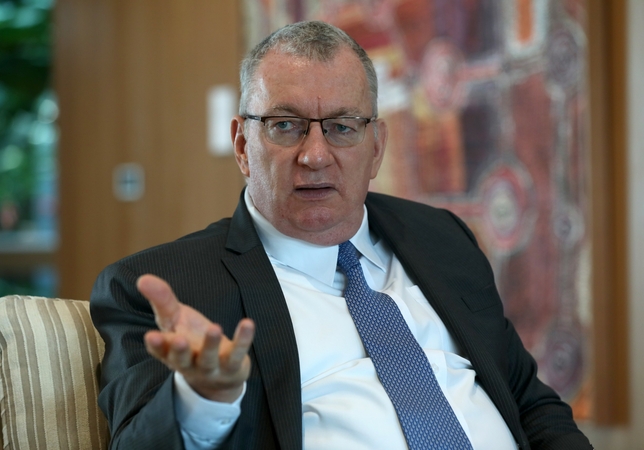
EconJan 26. 2021Australia’s ambassador to Thailand Allan McKinnonAustralia’s ambassador to Thailand Allan McKinnon

By Wichit Chaitrong
The Nation

In potentially bad news for Thailand’s wine drinkers, tax rules are being tightened even as Australia complains of a high excise rate on wine.

Australia’s ambassador to Thailand Allan McKinnon said despite Covid-19, his country remains optimistic on trade and investment with Thailand thanks to agreements in place.

Although Australia is the world’s leading food exporter, Thailand enjoys a food trade surplus with Australia, he told the Nation Group during an exclusive interview.

Thai supermarket shelves remain packed with Australian products like wine, beef and lamb – attesting to Australia’s efforts to ensure sufficient freight flights during the pandemic to sustain its market share here, said McKinnon.

He also credited the Thai-Australian free trade agreement and the recently signed Regional Comprehensive Economic Partnership (RCEP) with boosting trade and investment between the two countries. Zero or low tariffs on Australian products had made many Aussie food products available on Thais’ doorsteps, he added.

However, McKinnon complained about Thailand’s high excise tax rate that sees a bottle of wine worth US$10 in Australia selling at three to four times that price here.

Australia’s total wine exports grew 4 per cent last year to over US$2.14 billion, but now face pressure from a brewing trade war with China. 

Thailand imposes excise tax on both domestic and foreign producers. But high excise tax singles out wine over other alcoholic drinks, said the ambassador.

The Thai Excise Department says it imposes zero excise on wine priced less than Bt1,000 per bottle – but Bt1,500 per litre of alcohol it contains. If the retail price is higher than Bt1,000, the rate rises from zero to 10 per cent.

Excise on beer is 22 per cent rate, plus Bt430 per litre of alcohol.

White liquor carries a tariff of just 2 per cent, plus a meagre Bt155 per litre of alcohol.

In a separate interview, Lavaron Sangsnit, director general of the Excise Department, told the Nation his department is reviewing tax collection on wine.

“We think we could collect more tax revenue on wine, but importers declare their prices much lower than they should, which results in lower tax collection,” he said.

Thailand currently collects about Bt1 billion in tax on wine per year, but the potential tax revenue is much higher, he said.

Lavaron said the department will create a database of wine prices so that their real market value could be checked if the price declared is unusually low.

Wine prices are complicated by the number of brands available (over 10,000) and the quality of grapes from one harvest to the next, he said.

“The department may take four to five months to build the price database, then look at appropriate tax rates later,” he said.

He also revealed the tax rate on white liquor is under debate.

In force since 2017, alcohol taxes are meant in part to protect health by increasing the rate according to alcohol content. However, high-alcohol white liquor is subject to a low tax rate.

Questioned about the liquor rate, Lavaron said his department will look at tax on wine first before moving on to other items.

Ambassador McKinnon expects trade and investment with Thailand to grow rapidly in years to come.

Australian government figures show its exports to Thailand were worth A$6.2 billion (Bt143.5 billion) against imports of A$14.6 billion in fiscal 2018-2019, resulting in a large trade deficit with Thailand.

However, Australia’s exports to Thailand rose 15.6 per cent year on year while imports from Thailand dropped 2.9 per cent.

Meanwhile Australia’s investment in Thailand totalled A$3.9 billion including foreign direct investment (FDI) worth A$1.4 billion. Thailand’s investment in Australia totalled A$6.9 billion including FDI worth A$5.8 billion. FDI does not include financial portfolios and real estate investments.

McKinnon expects the new US administration of President Joe Biden will be fully engaged in the Southeast Asia region. The US is expected to take a strong role in Mekong development and also security and stability in the South China Sea, he said.

He also predicts the US government will restore the multilateral trade system under the World Trade Organisation (WTO) after Donald Trump’s administration blocked the appointment of judges on the WTO’s dispute settlement body.

On the brewing trade war with China, he said Canberra was open to talks but Beijing had not reciprocated, so Australia had taken the issues to the WTO.

Govt to issue Bt60bn in savings bonds to fund pandemic recovery #SootinClaimon.Com

#SootinClaimon.Com : ขอบคุณแหล่งข้อมูล : หนังสือพิมพ์ The Nation.

Govt to issue Bt60bn in savings bonds to fund pandemic recovery

EconJan 26. 2021Patricia Mongkhonvanit, director- general at Public Debt Management Office Patricia Mongkhonvanit, director- general at Public Debt Management Office

By The Nation

The Finance Ministry will issue Bt60 billion in savings bonds to raise funds for the government’s Covid-19 remedial packages and economic recovery, the Public Debt Management Office (PDMO) said on Monday.

The PDMO’s wallet app will be used to distribute Bt5 billion in five-year step-up bonds carrying an average coupon rate of  2 per cent  per annum. Retail investors can invest from Bt100 to Bt5 million.

The PDMO will open for subscription from February 1 to 19.

Meanwhile Bt55 billion in 5-, 10-, and 15-year savings bonds will be distributed via Bangkok Bank, Kasikornbank, Krungthai Bank and Siam Commercial Bank. Subscription will open from February 5 to 15. The step-up bonds carry an average coupon rate of 2 per cent annually for five-year and 2.5 per cent for 10-year bonds. The 15-year maturity bond will offer a fixed coupon rate of 1.8 per cent annually.

Non-profit organisations can subscribe for the bonds from February 16-19. 

PDMO head Patricia Mongkhonvanit insisted public debt was still manageable despite its upward trend.

Thai public debt is projected to be 56 per cent of GDP by the end of this year, up from 50.46 per cent (Bt7.9 trillion) last November.

Thai stock market rebounds past 1,500 points #SootinClaimon.Com

#SootinClaimon.Com : ขอบคุณแหล่งข้อมูล : หนังสือพิมพ์ The Nation.

Thai stock market rebounds past 1,500 points

EconJan 25. 2021

By The Nation

The Stock Exchange of Thailand (SET) Index closed at 1,501.62 on Monday, up 3.74 points or 0.25 per cent. Total transactions amounted to Bt82.77 billion with an index high of 1,505.47 and a low of 1,491.63.

In the morning session, an analyst at Krungsri Securities forecast the SET would fall to between 1,485 and 1,490 after the US stimulus plan hit trouble in the Senate and the price of oil price fell on increased US oil storage.

The decline in foreign inflows would also pressure the index, he said.

The 10 stocks with the highest trade value today were PTT, HANA, KBANK, STGT, CBG, SCGP, EA, KTC, GPSC and ADVANC.

As of 4.30pm, the price of oil rose by US$0.42 or 0.80 per cent to $52.69 per barrel, while gold dropped by $5.40 or 0.29 per cent to $1,850.80 per ounce.

Other Asian indices were mixed:

Japan’s Nikkei Index closed at 28,822.29, up 190.84 points or 0.67 per cent.

China’s Shang Hai SE Composite Index closed at 3,624.24, up 17.49 points or 0.48 per cent, while Shenzhen SE Component Index closed at 15,710.19, up 81.46 points or 0.52 per cent.

Hong Kong’s Hang Seng Index closed at 30,159.01, up 711.16 points or 2.41 per cent.

South Korea’s KOSPI Index closed at 3,208.99, up 68.36 points or 2.18 per cent.

Taiwan’s TAIEX Index closed at 15,946.54, down 72.49 points or 0.45 per cent.

Investing in bitcoin now may be a bit risky, experts warn #SootinClaimon.Com

#SootinClaimon.Com : ขอบคุณแหล่งข้อมูล : หนังสือพิมพ์ The Nation.

Investing in bitcoin now may be a bit risky, experts warn

EconJan 25. 2021

By The Nation

Experts are advising investors to avoid buying bitcoins as their price is likely to drop to US$20,000.

Poramin Insom, chief executive officer of Satang Corporation, said the digital currency’s value is likely to drop to between $20,000 and $25,000 in the first quarter of this year because its price has soared far too quickly.

However, he said, the bitcoin could rise to $40,000 in the next phase if the demand is still high.

“We expect the price of the bitcoin to rise this year as US President Joe Biden’s policies on controlling the trading of digital assets are still unclear,” he said.

However, he said, investors should not rush to buy the bitcoin yet.

UOB Kay Hian strategist Kitpon Pripisankit said the price of the bitcoin would fluctuate between $23,000 and $27,000 and is advising investors to buy for short-term speculation when its price drops to $27,000.

“However, we do not advise people to invest in the bitcoin when speculation is high because it will face long-term correction,” he said.

Arnat Leemakdej, director of Thammasat University’s Centre of Intellectual Property and Business Incubator, said if large funds continue trading in the bitcoin when speculation is high, its price will gradually drop to $20,000.

“This is not the best time to invest in bitcoin because it still has risks,” he said.

SET slides on opposition to US stimulus plan in Senate #SootinClaimon.Com

#SootinClaimon.Com : ขอบคุณแหล่งข้อมูล : หนังสือพิมพ์ The Nation.

SET slides on opposition to US stimulus plan in Senate

EconJan 25. 2021

By The Nation

The Stock Exchange of Thailand (SET) Index fell by 0.97 points, or 0.06 per cent, to 1,496.91 in the morning session on Monday.

An analyst at Krungsri Securities predicted the SET to fall to between 1,485 and 1,490 due to the news of the US Senate’s move to oppose a fresh economic stimulus plan, together with falling oil price due to increase in US oil storage.

Besides, the decline in foreign funds flow would pressure the index, he said.

He recommended that investors buy:

▪︎ PTTGC, TOP, IVL, EPG, VNT, SCGP, CBG, ROJNA, TVO, STGT, CPF, RCL, PSL, SYNEX, COM7, XO, WICE, JMT, MTC, SAWAD and KCE whose fourth-quarter turnover is expected to improve.

▪︎ ADVANC, INTUCH, AP, SIRI and WHAUP, which pay high dividends.

The SET Index closed at 1,497.88 on Friday, down 15.63 points or 1.03 per cent. Total transactions amounted to Bt96.69 billion with an index high of 1,518.05 and a low of 1,494.45.

Gold unchanged despite drop in Comex due to stronger dollar #SootinClaimon.Com

#SootinClaimon.Com : ขอบคุณแหล่งข้อมูล : หนังสือพิมพ์ The Nation.

Gold unchanged despite drop in Comex due to stronger dollar

EconJan 25. 2021

By The Nation

The price of gold was unchanged in morning trade on Monday after falling by Bt100 per baht weight at close on Saturday, the Gold Traders Association reported.

As of 9.24am, the buying price of a gold bar was Bt26,250 per baht weight and selling price Bt26,350, while gold ornaments were priced at Bt25,772 and Bt26,850, respectively.

Comex (Commodity Exchange) gold price to be delivered in February dropped by US$9.7, or 0.52 per cent, closing at $1,856.2 (Bt59,702) per ounce on Friday due to the strengthening dollar which made the metal price high for investors holding other currencies.

However, the gold price had risen by 1.4 per cent last week.

PTG Energy to roll out EV charging stations from February #SootinClaimon.Com

#SootinClaimon.Com : ขอบคุณแหล่งข้อมูล : หนังสือพิมพ์ The Nation.

PTG Energy to roll out EV charging stations from February

EconJan 25. 2021

By The Nation

Filling station operator PTG Energy Plc will roll out charging points for electric vehicles as part of its business plan this year, said vice president Rangsun Puangprang.

The first phase of the quick-charge service is set to launch early next month at five PT filling stations in major provinces, before expanding to 30 stations by the end of this year.

PTG said it will also partner with other companies to launch “ultra-charging” stations to serve large EVs such as trucks and buses.

Each ultra-charging station requires investment of Bt40 million-Bt50 million, as a plot of 5-10 rai is needed.

The company is in talks with two or three potential partners for installation of the ultra-charging systems and wants to launch the service this year.

Meanwhile PTG also plans to develop an ethanol plant with a partner at a cost of Bt100 million-Bt200 million. The plan will be clarified in the next quarter, said Rangsun.

The company currently needs about 500,000 litres of ethanol per day but forecasts it will require 800,000-1 million litres daily in the next five years.

PTG is also in talks with two partners on plans to develop the second phase of its palm-oil complex, aiming to double production of B100 biodiesel from the current 500,000 litres per day.

The second phase is expected to take 12-14 months to get off the ground.

Banks’ systems crash as investors rush to subscribe to PTT firm’s IPO #SootinClaimon.Com

#SootinClaimon.Com : ขอบคุณแหล่งข้อมูล : หนังสือพิมพ์ The Nation.

Banks’ systems crash as investors rush to subscribe to PTT firm’s IPO

EconJan 24. 2021

By The Nation

Kasikornbank and Krungthai Bank have advised investors not to rush with their subscription to PTT Oil and Retail Business (OR) shares as it is open until February 2.

They made the statement after the subscription system of three banks, namely Kasikornbank, Krungthai Bank and Bangkok Bank, crashed at 9am on Sunday due to high user traffic.

OR has set the price of its 3-billion initial public offering (including 390 million overallotment shares) at between Bt16 and Bt18 per share, including 595.7 million shares being offered to individual investors from January 24 to February 2.

OR is using the small lot first method to ensure that individual investors would be able to receive the company’s shares. The subscription amount has been set at Bt18 per share. OR will refund the difference to subscribers if the final offering price is different from the subscription price.

The refund will be made by February 17 (in case of cash payment) or February 22 (in case of cheque payment) if shares are not allotted to subscribers.

According to the Securities and Exchange Commission, the fundraising aims to support OR’s five-year expansion plan, such as increasing the number of PTT stations, fuel distribution centres, retail stores and overseas business. The company will use the funds to repay loans and invest in new businesses.

Chocolate war leaves world’s top cocoa producer stuck with beans #SootinClaimon.Com

#SootinClaimon.Com : ขอบคุณแหล่งข้อมูล : หนังสือพิมพ์ The Nation.

Chocolate war leaves world’s top cocoa producer stuck with beans

EconJan 24. 2021Chocolate pours into a bowl while being processed at the Auro Chocolate production facility in Calamba, Laguna province, Philippines, on Feb. 11, 2019. MUST CREDIT: Bloomberg photo by Hannah Reyes Morales.Chocolate pours into a bowl while being processed at the Auro Chocolate production facility in Calamba, Laguna province, Philippines, on Feb. 11, 2019. MUST CREDIT: Bloomberg photo by Hannah Reyes Morales.

By Syndication Washington Post, Bloomberg · Isis Almeida, Leanne de Bassompierre

Nobody is suffering more from a global chocolate standoff than the Ivory Coast cocoa farmer.

Less than two years after the top cocoa producer teamed up with neighboring Ghana to force companies from Hershey to Nestle to pay more for their beans, the attempt to exert control over prices is backfiring. Buyers are refusing to pay up, beans are piling in warehouses upcountry and farmers are so desperate that some even slept outside the offices of Ivory Coast’s cocoa regulator demanding action.

“We have suffered with our cocoa piling up,” said Baba Kampe, a 45-year-old farmer with 8 hectares (20 acres) in Daloa who was among those sleeping outside the regulator’s offices Monday. “It has been difficult to feed our children.”

The cooperation to charge the $100 billion chocolate industry a premium of $400 per metric ton was intended to boost income for some of the world’s poorest growers, the West African nations said. But for many cocoa traders, processors and chocolate makers, it was an OPEC-style attempt to boost prices that lacked the supply-and-demand economics key to that cartel’s success.

Farmers now are paying the price. Ivory Coast and Ghana, which account for almost 70% of world supplies, expanded output just as the pandemic locked down cities from Paris to Los Angeles, hurting demand. Growers can’t sell their crop and don’t have a way to store it. Middlemen are paying less than the government’s minimum price, and Ivory Coast had to offer deep discounts to offload this season’s crop.

“The farmers are very fed up with the whole thing because they were promised this Utopian existence that wasn’t based on sound economics,” said Jonathan Parkman, deputy head of agriculture at Marex Spectron Group, who has followed cocoa for 30 years. “That doesn’t help farmers, it hinders them.”

The average West African grower farms no more than 3.5 hectares and supports six to eight family members, according to the World Cocoa Foundation industry group. More than half of Ivory Coast’s growers live below the poverty line. With no access to irrigation or modern farming techniques, they rely on the weather. But not even that matters anymore.

“What good is it to follow the weather closely and have a good harvest when there are no buyers,” said Kouadio Moussa, a 45-year-old farmer of 3.5 hectares in Anoumaba.

Chocolate is a luxury product that benefits from gifting and impulse buying. With many shopping online during the pandemic, consumers aren’t picking up that last-minute bar before reaching the cashier. Nor are they buying the assorted boxes typically given at Christmas and Valentine’s Day.

That created a global surplus and left Ivory Coast struggling to sell what’s now the world’s most expensive cocoa. Ghana is in a better position since many European chocolatiers need its high-quality beans for their premium bars. Still, European processing dropped to a four-year low in the fourth quarter.

Cocoa is the third-highest export earner for Ghana and accounts for 8% of Ivory Coast’s economy. The situation is so dire that Ivorian regulator Le Conseil du Cafe Cacao, or CCC, is mulling such drastic steps as purchasing 50,000 tons and delaying the commercialization of two-thirds of the unsold beans — or about 200,000 tons — to the smaller of two annual harvests that starts in April.

That’s bringing back memories of 1987, when Ivorian President Felix Houphouet-Boigny, faced with a bumper crop, imposed a sales embargo and struck deals with traders to store at least a quarter of the country’s output with the sole objective of pushing up prices. The strategy, recounted in the book “La Guerre du Cacao,” or “The Cocoa War,” backfired, and prices more than halved during the 18-month ban.

“Nobody in this world can guarantee a higher price for more cocoa, especially when demand is falling,” said Derek Chambers, a retired cocoa trader and a protagonist in those events. “There is brave talk of putting cocoa in store, which history tells us is a destruction of value.”

Farmers protested Monday outside CCC offices in the towns of Soubre, Daloa and Yamoussoukro. Growers are stuck with 200,000 tons of beans, and middlemen are offering to buy cocoa at 800-850 CFA francs ($1.48-$1.57) a kilogram, lower than the 1,000 CFA francs the government promised.

The chocolate industry has been under pressure for its failure to fight child labor and its role in perpetuating poverty in West Africa. Growers need to receive about $3,100 a ton, compared with $1,800 now, said Antonie Fountain, managing director at the Voice Network.

“We need regulation,” he said. “For the last two decades, we’ve been focusing on getting farmers to solve the problems that they are faced with, but the fact is that the farmer isn’t the problem, the system is the problem.”

Yves Kone, the CCC’s managing director, took to national TV last week to warn against “unscrupulous buyers” taking advantage of the situation to pay farmers less. He blamed the pandemic and difficulties in securing shipping containers for the industry woes.

“The pandemic is hitting the economy as a whole,” Kone said. “Cocoa is no exception.”

Chocolate makers and cocoa processors have been trying to cut costs. Hershey last year sourced a large amount of beans through the New York futures market, where beans were cheaper than in the physical market. The company denied it was skirting the West African premium, called the Living Income Differential.

Ivory Coast has recently sold cocoa at deep discounts, according to traders with direct knowledge of the matter. While the LID remained in place, a premium paid for the quality was replaced with a discount of as much as 150 pounds ($205) a ton — a figure Kone denies.

“You could almost argue the LID is already dead,” Marex’s Parkman said.

Even before the coronavirus upended global markets, industry experts warned that Ivory Coast and Ghana’s approach was doomed because higher prices were going to result in overproduction.

“The way this will end? Ivory Coast will realize they can’t sell all the cocoa they produce at a premium of $400 a ton,” said Chambers, who spent 50 years trading before retiring from Paris-based Sucres et Denrees in 2018. “It’s unfortunate that they tried to do this at this point, but it was always going to fail.”