BOI frames new 5-year investment promotion strategy to pave way for new economy

#SootinClaimon.Com : ขอบคุณแหล่งข้อมูล : หนังสือพิมพ์ The Nation.

https://www.nationthailand.com/thailand/economy/40021104

BOI frames new 5-year investment promotion strategy to pave way for new economy

BOI frames new 5-year investment promotion strategy to pave way for new economy

MONDAY, OCTOBER 17, 2022

Thailand’s Board of Investment (BOI) last week approved the framework of its new investment promotion strategy for the next five years, which will focus on entering the new economy era.

The strategy involves encouraging technological advancement, a transition to green and smart Industries, talent development, as well as creativity and innovation, to strengthen the country’s status as a regional hub for business, trade and logistics.

The new investment promotion strategy (2023-27) aims to promote investment to restructure the country’s economy around three core concepts: innovation, technology, and creativity; competitiveness and the ability to adapt quickly; and, inclusiveness, taking into account environmental and social sustainability.

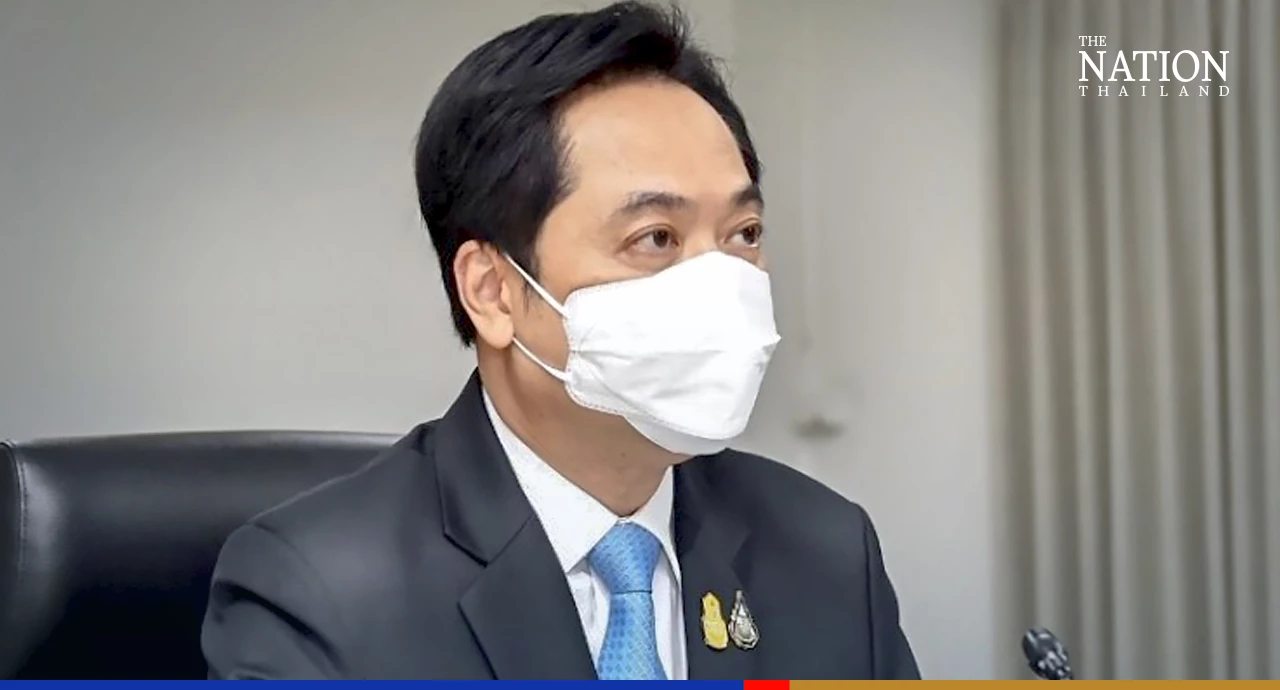
“In view of the challenging, volatile and highly competitive global environment, the BOI will stay ahead of changes and keep promoting investment in a way that achieves concrete results, helping to lead Thailand into the new economy,” Narit Therdsteerasukdi told reporters during his first press conference since taking over as secretary-general of the BOI on October 3.


”To reach that objective, the BOI will broaden its role from that of a ‘promoter’ providing tax and non-tax benefits, to focus on becoming an ‘integrator’ of investment support tools, a ‘facilitator’ providing services, and a ‘connector’ linking industries to create more business opportunities.”

To implement the strategy and its vision of the new economy, the BOI will articulate its investment promotion policies around seven pillars:

● Upgrade existing industries, in parallel with the building of new industries in which Thailand has high potential, and an overall strengthening of the supply chain

● Acceleration of industrial transition to green and smart industries through investments in automation, digital adoption and decarbonisation

● Promotion of Thailand as a business centre, and an international trade and investment gateway for the region

● Strengthening SMEs and startups, ensuring they are connected to the global market and supply chain

● Promotion of investments in the different regions of Thailand that fits the potential of each area and enables inclusive growth

● Promotion of investments that will promote community and society development

● Promotion of Thailand’s overseas investment to expand business opportunities for Thai companies

BOI frames new 5-year investment promotion strategy to pave way for new economy

Further details of the policies and sector-specific incentive packages will be presented to the board and announced in coming weeks, Narit said.

During the first nine months of 2022, foreign and local investors filed with the BOI a total of 1,247 applications for investment promotion, worth a combined 439.1 billion baht (US$11.6 billion), Narit said.

While the number of applications rose 8.5 per cent when compared to the 1,149 projects seen in the first nine months of 2021, the combined value fell 14.1 per cent, from 511 billion baht, reflecting a smaller average project size.

Thailand’s Eastern Economic Corridor (EEC) area saw 376 projects applying for promotion, representing a combined investment value of 246.7 billion baht, or 56 per cent of the total value of applications in the first nine months, Narit said. Most are investments in Rayong and Chonburi provinces.

Foreign direct investment (FDI) applications decreased 25 per cent year on year to 275.6 billion baht

The main source of FDI applications in the first nine months was China with 45 billion baht, followed by Taiwan (39.3 billion baht), Japan (37.6 billion baht), the US (34.3 billion baht), and Hong Kong (26.3 billion baht).

During the first nine months, FDI applications data for China, Hong Kong and Taiwan all included investments in the manufacturing of new electric vehicles (EV) and parts. Major EV investments announced in Thailand this year involve plants by BYD, whose investment is coming through its Hong Kong-based unit, and Foxconn.

Over the nine months to September, the BOI issued promotion certificates to 1,101 projects, an increase of 17 per cent year on year. The combined investment value of the certificates amounted to 357.6 billion baht, an increase of 57 per cent, Narit said.

“The promotion certificate statistics, the closest data we have to actual investment, are sending a clear signal that over the next one to two years, there will be a significant increase in actual investment flows,” Narit said.

Government considering extending shopping subsidy scheme to lift economy in last quarter

#SootinClaimon.Com : ขอบคุณแหล่งข้อมูล : หนังสือพิมพ์ The Nation.

https://www.nationthailand.com/thailand/economy/40021097

Government considering extending shopping subsidy scheme to lift economy in last quarter

Government considering extending shopping subsidy scheme to lift economy in last quarter

MONDAY, OCTOBER 17, 2022

THE NATION

The Finance Ministry is looking at reviving the “Shop Dee Mee Kuen” (Shop and Payback) scheme to stimulate the economy towards the year-end.
 There is no word yet on whether the “Khon La Khrueng” (Let’s Go Halves) co-shopping subsidy campaign, which expires this month, would be extended.

The Fiscal Policy Office (FPO) said on Monday that it is finalising the details for the new phase of the Shop Dee Mee Kuen scheme, with some adjustments made to the original criteria when it was first introduced in 2020.

Under the original Shop Dee Mee Kuen, people who shopped for specified products, such as those with VAT (excluding alcoholic beverages, tobacco, accommodation, or flight tickets), OTOP, or books, will receive a tax discount in line with the scheme’s rules.

However, FPO director and Finance Ministry spokesman Pornchai Theerawet said a decision is yet to be made on extending the Khon La Khrueng to its sixth phase. Under the scheme, the government covers 50 per cent of bills for food, drinks and basic necessities up to 150 baht per day when paying via Pao Tang application at participating shops. The fifth phase will end on October 31.

Pornchai said the fifth phase, which capped the spending at 800 baht per person, has recorded total spending of 34.3 billion baht, from 24.02 million people, as of Sunday. He said 8.75 million people, or 36 per cent of all registrants, had already maxed out their 800-baht limit.

Pornchai added the FPO estimates that measures stimulating domestic spending would help boost the country’s economy towards the year-end, and hoped to see gross domestic product (GDP) in 2022 expand by 3.0 to 3.5 per cent.

He said the Fiscal Policy Office estimated next year’s GDP growth at least 4 per cent, with tourism sector a major contributor thanks to the increasing number of foreign visitors.

The Finance Ministry will release by the end of October its updated forecast on economic expansion this year and in 2023.

The International Monetary Fund in August predicted 2.8 per cent GDP growth for Thailand in 2022.

THE NATION

Thailand on track for economic revival to pre-Covid level by 2023, says BOT

#SootinClaimon.Com : ขอบคุณแหล่งข้อมูล : หนังสือพิมพ์ The Nation.

https://www.nationthailand.com/thailand/economy/40021094

Thailand on track for economic revival to pre-Covid level by 2023, says BOT

Thailand on track for economic revival to pre-Covid level by 2023, says BOT

MONDAY, OCTOBER 17, 2022

The central bank believes Thailand’s economy will return to pre-Covid levels by the end of this year or early next year.

Government spokesman Anucha Burapachaisri said on Monday that this forecast was included in the Bank of Thailand (BOT)’s latest economic report.

In the report, BOT forecast economic growth of 3.3 per cent this year and 3.8 per cent next year, with tourism and private sector spending being the main driving forces.

The central bank said with tourism picking up, the recovery is extending to other sectors as well.

Meanwhile, BOT believes that though the global economy is slowing down faster than expected, this slowdown should only affect the export sector, not the economy’s general recovery.

Thailand on track for economic revival to pre-Covid level by 2023, says BOTThe central bank also pointed out that the Thai financial system was stable and commercial banks had healthy levels of reserves. In addition, it said, the private sector and households were also improving their ability to repay debts.

However, despite these positive factors, the central bank recommended that the government implement the following three measures to ensure sustainable growth.

Firstly, it said, the government should find a way to lower household debts. Secondly, the financial sector should support “green” companies to ensure sustainable growth, and thirdly, speed up the development of the digital payment infrastructure.

Anucha explained that the bank’s Monetary Policy Committee had increased the key policy rate by a quarter point to 1 per cent on September 28 to keep inflation in check and ensure the country can continue enjoying economic growth.

He also said Prime Minister Prayut Chan-o-cha has instructed all relevant agencies to come up with monetary measures that help all vulnerable groups, such as providing soft loans and restructuring debt.

The premier is also upbeat about the country’s recovery, especially after the International Monetary Fund predicted that Thailand’s GDP would expand by 2.8 per cent this year. The IMF has also indicated a 4 per cent surge next year thanks to a recovery in export and tourism.

Help small businesses, low-income earners, Arkhom tells G20 ministers

#SootinClaimon.Com : ขอบคุณแหล่งข้อมูล : หนังสือพิมพ์ The Nation.

https://www.nationthailand.com/thailand/economy/40021059

Help small businesses, low-income earners, Arkhom tells G20 ministers

Help small businesses, low-income earners, Arkhom tells G20 ministers

SATURDAY, OCTOBER 15, 2022

At this week’s G20 meeting, Finance Minister Arkhom Termpittayapaisith suggested that governments introduce financial measures to help small businesses and low-income earners in the face of a global economic recession.

The meeting brought together finance ministers and central bank governors from the Group of 20 (G20) countries.

Arkhom told them that rising prices of consumer goods and energy have become a huge challenge, with high inflation threatening to lead to economic recession.

Finance Ministry spokesman Pornchai Theeravet said on Saturday that Arkhom made the remarks while attending the two-day meeting in Washington DC at the invitation of Indonesia’s Finance Ministry, which hosted this year’s gathering on Wednesday and Thursday.

The meeting was attended by representatives from the European Union, eight industrial countries — United Kingdom, Canada, France, Italy, Japan, Germany, United States and Australia — as well as 11 large economies, namely Argentina, Brazil, China, India, Indonesia, Mexico, Russia, Saudi Arabia, South Africa, South Korea, and Turkey.

The G20 countries account for 80 per cent of the global economy and two-thirds of the world’s population.

This year’s G20 summit of finance ministers and central bank governors, held along the theme “Recover Together, Recover Stronger”, discussed six topics — global economy, international financial architecture, financial sector regulation, infrastructure investment, sustainable finance and sustainable taxation.

The meeting agreed to consider all tools necessary to address food and energy insecurity as well as the rising cost of living in many countries. It also highlighted the importance of cooperation to ensure a coordinated global response to tackle food insecurity.

The meeting reaffirmed G20’s commitment to the implementation of an international tax package while looking toward the implementation of the Asia Initiative Declaration on International Taxation, which calls for improved transparency and exchange of information for tax purposes.

On Thursday, Arkhom also met with senior executives from the financial institutions HSBC and Mitsubishi UFJ Financial Group, said Pornchai, who doubles as director of the Finance Ministry’s Fiscal Policy Office.

The executives of the two financial institutions voiced their confidence in the Thai economy and the government’s policies on investment for long-term development, the spokesman said.

436 foreign firms bring 100 billion baht, 4,000-plus jobs to Thailand this year

#SootinClaimon.Com : ขอบคุณแหล่งข้อมูล : หนังสือพิมพ์ The Nation.

https://www.nationthailand.com/thailand/economy/40021032

436 foreign firms bring 100 billion baht, 4,000-plus jobs to Thailand this year

436 foreign firms bring 100 billion baht, 4,000-plus jobs to Thailand this year

FRIDAY, OCTOBER 14, 2022

As many as 436 foreign companies armed with an investment of just under 100 billion baht have set up operations in Thailand in the first nine months of 2022.

These companies have been allowed to start conducting business in the country under the Foreign Business Act, Deputy Commerce Minister Sinit Lertkrai said.

“These companies have invested about 99.36 billion baht in Thailand and generated up to 4,041 jobs for local people,” he said, adding that the total investment value has jumped 82 per cent from about 45 billion during the same period last year.

The countries that have brought the most funds to Thailand are Japan (110 firms, 34.97 billion baht), Singapore (71, 11.42 billion baht), the US (61, 3.3 billion baht), Hong Kong (28, 7.78 billion baht), and China (21, 20.75 billion baht).

Sinit said opening the door to foreign companies will help promote knowledge and technology transfer, especially in the areas of preserving energy, generating power for airports, exploring for oil in the Gulf of Thailand, reclaiming land in coastal areas, developing deep sea ports and setting up charging stations for electric vehicles.

He added that of the 436 foreign companies, 80 are investing in the Eastern Economic Corridor (EEC) and have brought 40.55 billion baht to the area. Most of these companies are from Japan, Singapore and the United States.

Businesses in the EEC that have received significant foreign investment include public telecommunication services, reselling of mobile phone services, engineering and machinery services, cloud computing and sensor technology.

The Commerce Ministry expects more foreign firms to enter the country before yearend thanks to the country’s full reopening and measures offered to promote investment, including tax incentives.

Thailand determined to push BCG economic model at Apec Summit

#SootinClaimon.Com : ขอบคุณแหล่งข้อมูล : หนังสือพิมพ์ The Nation.

https://www.nationthailand.com/thailand/economy/40021004

Thailand determined to push BCG economic model at Apec Summit

Thailand determined to push BCG economic model at Apec Summit

THURSDAY, OCTOBER 13, 2022

Nongluck Ajanapanya

Thailand aims to inspire the 21 Asia Pacific Economic Cooperation (Apec) members with a new business code of conduct, embracing the Bio-Circular-Green (BCG) economy model that is environmentally friendly and responsible, a senior Foreign Ministry official said during an exclusive interview with media representatives from The Nation Group.

Cherdchai Chaivaivid, director-general of the Department of International Economic Affairs and Thailand’s Apec senior official, Foreign Affairs Ministy, noted that the upcoming Apec Summit in 2022 would take place in the midst of a global economic recession and serious geopolitical tensions.

Thailand, as a host country, wants everything to go smoothly. However, politics always determines the direction of international relationships that affect trade and economics, so anything can happen at the Apec Summit in 2022, he cautioned.

Thailand determined to push BCG economic model at Apec SummitDespite these unfavourable possibilities, Cherdchai stated that Thailand is committed to achieving the Bangkok Goal Declaration on the BCG economy.
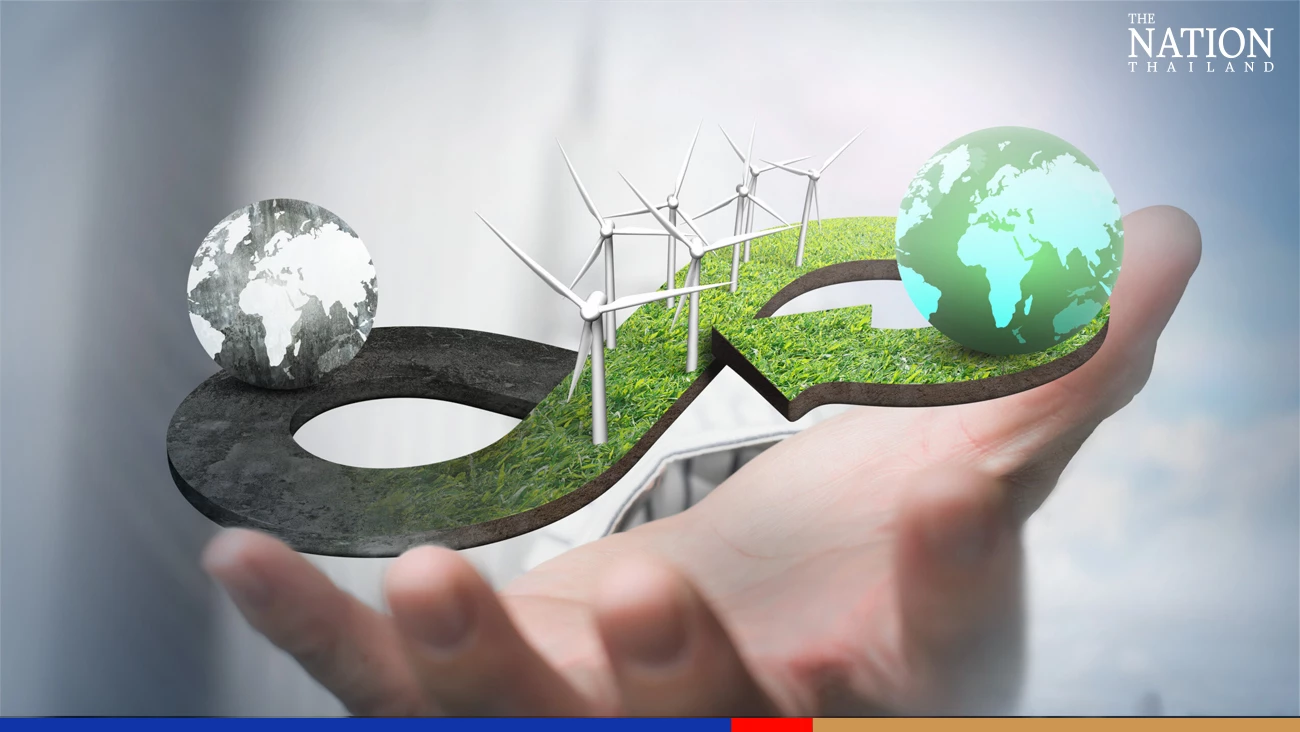
He stated that the focus of this declaration would be the BCG economy model. It will serve as the business code of conduct for the 21 Apec members in terms of trade and investment.

Thailand determined to push BCG economic model at Apec SummitHe explained that the Bangkok Goal Declation on the BCG economy would be highlighted in four agenda items: One deals with the consequences of climate change, the second step is to be environmentally responsible in order to ensure long-term sustainability, the third is serious conservation of natural resources and their efficient use, and the fourth is business management with little or zero waste.

 

“From now on, our collaboration would be focused on the Bangkok Goal Declaration on BCG. It would be Apec’s signal to the world that if your business is not environmentally and socially responsible, it would be rejected,” Cherdchai elaborated.

The declaration will be officially launched on November 19, 2022.

Thailand determined to push BCG economic model at Apec SummitHe is confident that Apec leaders will accept the idea because environmental and climate change are currently the most pressing global issues. He hoped that the summit would inspire the way the world trades and invests in the same way that it had inspired the World Trade Organization (WTO) on tax tariff exemption to encourage free trade zones.

Although the declaration will not be legally binding, Thailand is confident that the BCG economy concept will be carried forward to the next Apec Summit.

“It is the end of doing business in order to maximise profits. It is time to consider how to run a sustainable business while also living in harmony with the community and the environment. We must find a way to balance business growth with environmental sensitivity,” Cherdchai noted.
 

He also spoke on the list of leaders and delegates expected to attend the summit, stating that the list would not be finalised until at least two weeks before the event.

The remark came in response to a new report that Russia’s president would attend the Apec Summit while the US president would not. He emphasised that a country leader not attending the summit and delegating someone to replace them is not unusual. Hence, whether or not they attend has no bearing on Thailand’s image.

Nongluck Ajanapanya

Tourism and sustainable growth high on agenda of Thailand Privilege Card, says chief

#SootinClaimon.Com : ขอบคุณแหล่งข้อมูล : หนังสือพิมพ์ The Nation.

https://www.nationthailand.com/thailand/economy/40021001

Tourism and sustainable growth high on agenda of Thailand Privilege Card, says chief

Tourism and sustainable growth high on agenda of Thailand Privilege Card, says chief

THURSDAY, OCTOBER 13, 2022

Thailand Privilege Card (TPC), a state enterprise under the Tourism Authority of Thailand (TAT), is working with partners on developing the country’s economy and tourism to attract more high-quality visitors.

TPC acting president Apichai Chatchalermkit said the company has implemented a strategy to boost tourism growth along with enhancing the potential of communities and maintaining the environment.

He added that this strategy is in line with Environmental, Social and Governance (ESG) principles and Bio-Circular-Green (BCG) economy model, which focus on sustainable development.

He said the TPC has cooperated with partners on tourism development and sustainable growth promotion, such as Huk Muang Nan Foundation in the “Kla Dee” project to create awareness on importance of natural resources among locals.

He added that the TPC has also launched many corporate social responsibility activities, such as TPC Community Care 2022 in Phetchaburi province’s Tham Rong community, and TPC Impact Day 2022 in Ayutthaya province’s Sai Noi community.

“These cooperation activities will help strengthen communities along with developing Thailand’s economy and tourism to attract more high quality visitors,” he said.

More than 5.6 million tourists visited Thailand over the past nine months this year (January-September), generating more than 200 billion baht for the country.

Thailand proves a hot competitor with AC exports worth a cool THB203 bn

#SootinClaimon.Com : ขอบคุณแหล่งข้อมูล : หนังสือพิมพ์ The Nation.

https://www.nationthailand.com/thailand/economy/40020994

Thailand proves a hot competitor with AC exports worth a cool THB203 bn

Thailand proves a hot competitor with AC exports worth a cool THB203 bn

THURSDAY, OCTOBER 13, 2022

Thailand was the second largest exporter of air conditioners in 2021 after only China, shipping more than 203 billion baht worth of air conditioners and parts last year during the heat of the Covid crisis.

The figure increased by 25 per cent from 2020.

This year, Thailand exported more than 164 billion baht worth of air conditioners in the first eight months, an increase of 21 per cent from the same period last year.

The growth in exports reflects how the industry can cope as manufacturers face several problems.

In an interview with business news agency Thansettakij, Supanee Chantasasawat, president of the FTI’s Air-Conditioning and Refrigeration Club, said the export market is likely to grow now that the Covid-19 situation has eased and demand is recovering, especially from countries such as Vietnam and Indonesia.

Thailand proves a hot competitor with AC exports worth a cool THB203 bn

At the height of the Covid crisis, domestic sales decreased but orders from foreign countries were continuous, so the industry was affected only slightly, Supanee said.

She expects more air conditioners will be manufactured in 2022 compared to the previous year as domestic demand rises, but high fuel and natural gas prices as well as chip shortages are affecting manufacturing costs.

Supanee believes hotter, longer summers around the world, especially in cold climate countries, will provide Thailand with increasing opportunities to export air conditioners and parts.

Furthermore, trade barriers between the US and China and the expansion of middle classes in hot nations including neighbouring countries and Asean might be a supporting factor for Thai exports, she felt.

According to Supanee, the industry is developing better products and parts that utilise smart technology, save energy and are environmentally friendly, so this would be an advantage when competing with other exporters in quality and price.

The top five countries Thailand exported air conditioners and parts to in the first eight months of 2022 were the United States, Australia, Vietnam, Taiwan and Japan, respectively.

China is still Thailand’s main competitor, but Vietnam is an up-and-coming rival with cheaper wages and more available workers, so foreign manufacturers such as Japan have invested in Vietnam since 2018, she pointed out.

In 2023, the Ukraine-Russia war, volatile currencies, high manufacturing costs, chip shortages and trade barriers will pose challenges, Supanee warned.

Thailand still needs to import parts and materials from foreign countries so it might lose its competitive edge, she explained.

She wanted the government to support material and parts manufacturers in technology to compete in global markets amid the current Covid-19 situation and currency problems, expecting political tension and currency woes to take “around 1-2 years to ease”.

The industry must prepare for changes in the future as it relies mainly on exports, she added.

Egat, Egco join hands to build 5MW hydrogen fuel power plant, targeting reduction of CO2 emissions

#SootinClaimon.Com : ขอบคุณแหล่งข้อมูล : หนังสือพิมพ์ The Nation.

https://www.nationthailand.com/thailand/economy/40020991

Egat, Egco join hands to build 5MW hydrogen fuel power plant, targeting reduction of CO2 emissions

Egat, Egco join hands to build 5MW hydrogen fuel power plant, targeting reduction of CO2 emissions

THURSDAY, OCTOBER 13, 2022

The Electricity Generating Authority of Thailand (Egat) will join two partners to develop a hydrogen-fuelled power plant late this year in line with the government’s policy to reduce carbon emissions, one of the partners said.

Thepparat Theppitak, president of Electricity Generating Co Plc (Egco), said that Egco is developing a hydrogen-fuelled power plant with Egat and Bloom Energy Co Ltd.

Thepparat said the first hydrogen power plant of the three partners would be built as a pilot project in the compound of the Klong Luang power plant in Pathum Thani province late this year or early next year at the latest.

In the first stage, the hydrogen power plant would generate 5 megawatts of electricity and its capacity would later increase to 25MW.

Meanwhile, Kulit Sombatsiri, permanent secretary at the Energy Ministry, said that Egat has been developing technologies to produce electricity from clean energy to help the government reach its carbon emissions target.

Kulit said solar and wind would become renewable energy with high-use ratio for producing electricity, and hydrogen would play a key role in the near future.

He said Egat is now experimenting on a wind-hydrogen hybrid power plant that can make 300 kilowatts of power. The hybrid system can use the excess electrical energy to decompose water in an electrolyser to produce and store the energy as hydrogen for use when wind energy dies down.

Kulit said Egat is also experimenting with a project to use ammonia, which has nitrogen and hydrogen, as fuel together with coal to generate electricity.

Kulit said the energy sector in Thailand is releasing about 333 million tonnes of carbon dioxide a year and the new national energy plan to be used next year is aimed at reducing 160 million tonnes of carbon emissions within 2030.

Thailand is among nations that has pledged to achieve carbon neutrality by 2050 and net zero emissions by 2065.

PTT Plc has also pledged its support to help the government achieve the goals.

PTT president and CEO Auttapol Rerkpiboon said PTT Global Chemical is now studying how to use hydrogen obtained during the refining process for operating turbines of electricity generators.

He said the Global Power Synergy Plc is now studying with Avaada Energy Pte Ltd in India on the use of hydrogen and ammonia for generating electricity.

To support the use of clean energy, Auttapol said PTT has signed a memorandum of understanding with AET of Singapore to develop and build two zero-emission Aframax oil tankers with 120,000 metric tonnes capacity.

Auttapol said the oil tankers would be able to use both bunker oil and hydrogen as fuel. The first oil tanker will be delivered to PTT for leasing in the fourth quarter of 2025 and the second in the first quarter of 2026.

Thailand’s Bio-Circular-Green plan: feed grassroots to create sustainable economy

#SootinClaimon.Com : ขอบคุณแหล่งข้อมูล : หนังสือพิมพ์ The Nation.

https://www.nationthailand.com/thailand/economy/40020977

Thailand’s Bio-Circular-Green plan: feed grassroots to create sustainable economy

Thailand’s Bio-Circular-Green plan: feed grassroots to create sustainable economy

THURSDAY, OCTOBER 13, 2022

The Bio-Circular-Green (BCG) economy model is the key driver on Thailand’s path to sustainability and environmental preservation, the National Science and Technology Development Agency (NSTDA) said on Monday.

“The BCG economy model will have a significant impact on the economy, especially the grassroots economy,” NSTDA president Sukit Limpijumnong said.

Thailand will promote BCG for post-Covid economic recovery when it hosts next month’s Asia-Pacific Economic Cooperation (Apec) summit.

BCG focuses on using technology to boost product value, reducing production losses and conserving the environment.

Sukit explained that BCG model consists of three elements:

– Bio Economy: producing renewable biological resources and converting them into value-added products.

– Circular Economy: reusing and recycling resources.

– Green Economy: keeping the economy, society and environment in balance for sustainable development.

He said these elements would enhance Thailand’s food and agriculture, medical and wellness, energy material and biochemical, and tourism and creative economy sectors.

“All elements must go together to drive Thailand towards sustainability and environmental preservation.”

He said BCG planning was part of the 20-Year National Strategy aimed at forging a developed country with security, prosperity and sustainability. BCG would also drive Thailand’s pledge to meet the United Nations’ Sustainable Development Goals. Sukit added that Thailand is working with domestic and international agencies on various projects related to the model, including the Eastern Economic Corridor of Innovation in Rayong’s Wangchan Valley.