Finance Ministry lifts growth forecast to -7.7% after signs of recovery
EconOct 30. 2020Adviser to the Fiscal Policy Office Pornchai Threeravej, centre, says the recovering Thai economy will grow by 4.5 per cent next year.
By The Nation
Seeing signs of recovery, the Finance Ministry has revised its economic forecast for this year, predicting a contraction of 7.7 per cent rather than the previous 8.5 per cent.
The move came after economic indicators for September released by the Fiscal Policy Office on Thursday showed improvement from the month before.
The economy is recovering in the second half of the year as Thailand’s major trading partners start to rebound from the Covid-19 crisis, while government spending shores up the local economy, said Pornchai Theeravej, adviser to the Fiscal Policy Office.
Optimism at the Finance Ministry is matched by the Bank of Thailand, which recently revised its forecast for the economy this year from -8.1 per cent to -7.8 per cent, he said.
Pornchai added he expects to see economic growth of 4.5 per cent next year.
This year, Thai exports are expected to fall by 7.8 per cent, better than the previous forecast of an 11 per cent drop. Private consumption and private investment are expected to contract by 3 per cent and 9.8 per cent respectively. Meanwhile, government consumption and investment are expected to expand 4 per cent and 10.5 per cent.
The current account surplus is projected at $14.1 billion, equivalent to 2.8 per cent of GDP, which would contribute to economic stability, he said.
September saw VAT revenue – an indicator of consumption – increase 0.1 per cent year on year and 3.3 per cent month on month after seasonal adjustment.
Also rising from August were car sales (32.6 per cent) and newly registered motorcycles (0.7 per cent), though they fell 12.2 per cent and 0.2 per cent from the same period last year. Consumer confidence, however, fell slightly to 50.2 from August due to political protests in September.
Among private investment indicators, sales of commercial cars rose 13.5 per cent year on year and 5 per cent from August. Imports of capital goods grew 4.4 per cent from August and contracted at a decelerating rate at 7.5 per cent year on year, suggesting rising private investment activity. Exports contracted at a slowing rate, at 3.9 per cent.
Sales of cement rose 0.9 per cent year on year. Tax revenue collected on property transactions rose 4.7 per cent from August with contraction decelerating, at 13 per cent year on year.
Looking ahead, downside risks are surging from a leap in Covid-19 infection rates in many countries, the US presidential election on November 3 and the Brexit deal.
Meanwhile, Fitch Ratings has reaffirmed Thailand’s sovereign credit rating at BBB+ with a stable outlook.
However, Fitch said it was closely monitoring Thailand’s rising household debt and political unrest for signs it may adversely impact effective policy implementation and economy growth in the mid-term.
The Stock Exchange of Thailand (SET) Index closed at 1,201.64 on Thursday, down 6.30 points or 0.52 per cent. Total transactions amounted to Bt50.83 billion with an index high of 1,206.84 and a low of 1,195.99.
In the morning session, an analyst at Krungsri Securities expected the day’s index to fall to between 1,190 and 1,200 points due to an economic slowdown after Germany and France imposed lockdowns to contain the spread of Covid-19.
“Meanwhile, the falling oil price and domestic political unrest will pressure investment,” he predicted.
The 10 stocks with the highest trade value today were STGT, SCGP, STA, AOT, PTT, KBANK, CPALL, BBL, SCB and NER.
As of 4.30pm, the price of oil dropped by US$0.86 or 2.30 per cent to $36.53 per barrel, while gold rose by $0.80 or 0.04 per cent, to $1,880 per ounce.
Other Asian indices were down, except in China:
Japan’s Nikkei Index closed at 23,331.94, down 86.57 points or 0.37 per cent.
China’s Shang Hai SE Composite Index closed at 3,272.73, up 3.49 points or 0.11 per cent, while the Shenzhen SE Component Index closed at 13,519.66, up 131.56 points or 0.98 per cent.
Hong Kong’s Hang Seng Index closed at 24,586.60, down 122.20 points or 0.49 per cent.
South Korea’s KOSPI Index closed at 2,326.67, down 18.59 points or 0.79 per cent.
Taiwan’s TAIEX Index closed at 12,662.91, down 130.84 points or 1.02 per cent.
The Stock Exchange of Thailand (SET) Index fell by 10.76 points, or 0.89 per cent, to 1,197.18 in the morning session on Thursday.
An analyst at Krungsri Securities expected the day’s index to fall to between 1,190 and 1,200 points due to an economic slowdown after Germany and France imposed lockdowns to contain the spread of Covid-19.
“Meanwhile, the falling oil price and domestic political unrest would pressure investment,” he predicted.
The analyst said the Dow Jones Index fell by 943 points for the fourth consecutive day due to an increase in Covid-19 cases worldwide, especially in the US and Europe, a delay in the rollout of fresh US economic stimulus measures, and mass sell-offs in stocks to mitigate risks before the US presidential election on November 3.
He recommended investors buy TU, STGT, STA, CBG, SCC, IVL, Com7, Synex, Asian, Hana, SVI and TVO, whose third-quarter performance was expected to improve.
The SET Index closed at 1,207.94 on Wednesday, down 1.01 points, or 0.08 per cent. Total transactions amounted to Bt55 billion, with an index high of 1,217.88 points and a low of 1,205.88.
The price of gold dropped by Bt300 per baht weight in morning trade on Thursday, the Gold Traders Association reported.
As of 9.20am, the buying price of a gold bar was Bt27,700 per baht weight and selling price Bt27,800, while gold ornaments cost Bt27,197.04 and Bt28,300, respectively.
At close on Wednesday, the buying price of a gold bar was Bt28,000 per baht weight and selling price Bt28,100, while gold ornaments cost Bt27,500.24 and Bt28,600, respectively.
The spot gold price moved to US$1,877 (Bt58,672) per ounce in the morning after the price dropped by US$32.70 to $1,879.20 per ounce at close on Wednesday in response to a strengthening dollar as investors bought the currency as a safe-haven asset due to the Covid-19 crisis in both the United States and Europe.
The Hong Kong gold price meanwhile dropped by HK$230 to $17,360 (Bt69,993) per tael, the Chinese Gold and Silver Exchange Society reported.
EconOct 29. 2020A person rests on a post in front of the New York Stock Exchange in New York on Oct. 2, 2020. MUST CREDIT: Bloomberg photo by Michael Nagle.
By Syndication Washington Post, Bloomberg · Sarah Ponczek, Claire Ballentine · BUSINESS, US-GLOBAL-MARKETS Stocks tumbled in the U.S. and Europe as rising coronavirus infections and tougher lockdowns added to worries about the economic hit from the pandemic.
The S&P 500 Index fell 3.5%, the biggest drop since June, amid a surge in covid-19 hospitalizations, especially in the Midwest. Energy shares sank with oil prices, and technology stocks were also among the worst performers, with Microsoft Corp. down after a disappointing forecast. The VIX Index, a measure of expected U.S. equity volatility, climbed to the highest level since June.
The U.S. and European stock benchmarks are both down more than 5% this week as virus cases surge and after American lawmakers failed to agree on an economic aid package before the Nov. 3 election. Analysts are also warning about increased volatility ahead of the presidential vote and in its aftermath, with some saying that a contested outcome is still a worrisome possibility.
“We’ve obviously got the election hanging over our heads. Then obviously covid accelerating to the degree that it has both here in the U.S. as well as in Europe,” said Lori Heinel, deputy global chief investment officer at State Street Global Advisors. “And then you’ve got the lack of stimulus, which in our estimation is still necessary to get us through this period until we get an ultimate medical solution. It’s the triple whammy right now.”
The Stoxx Europe 600 Index fell to a five-month low, losing 3% as German Chancellor Angela Merkel reached a deal for a one-month partial lockdown to curb the spread of the virus. After the market closed, France imposed a new nationwide lockdown.
Elsewhere, oil fell sharply on concern raging infections will sap demand. The dollar jumped and gold slumped. An exchange-traded fund tracking junk-rated corporate bonds fell to a one-month low. Bitcoin headed to its biggest drop in a month.
In Asia, stocks fared better. The MSCI Asia Pacific Index edged lower, and markets in South Korea and Shanghai posted modest gains. In China, indicators tracked by Bloomberg showed the recovery continued to display mixed signals while remaining broadly steady in October.
Here are the main moves in markets:
Stocks
– The S&P 500 Index dropped 2.8% as of 4 p.m. EDT.
– The Stoxx Europe 600 Index decreased 3%.
– The MSCI Asia Pacific Index fell 0.5%.
Currencies
– The Bloomberg Dollar Spot Index increased 0.6%.
– The British pound declined 0.5% to $1.2981.
– The Japanese yen gained 0.1% to 104.35 per dollar.
Bonds
– The yield on 10-year Treasurys was little changed at 0.77%.
– Germany’s 10-year yield fell one basis point to -0.63%.
– Britain’s 10-year yield decreased two basis points to 0.21%.
Commodities
– West Texas Intermediate crude sank 5.6% to $37.36 a barrel.
By The Washington Post · Hamza Shaban · NATIONAL, BUSINESS, US-GLOBAL-MARKETS
U.S. and global markets shuddered Wednesday as an alarming rise in coronavirus infections rattled investors and threatened a fledgling economic recovery.
The Dow Jones industrial average skidded 943 points, or 3.4%, to close at 26,519.95, extending a turbulent week of selling that sent the blue-chip index deeper into negative territory for the month. The S&P 500 tumbled more than 119 points, or 3.5%, to end at 3,271.03, and the Nasdaq 100 gave up 426 points, or 3.7%, to settle at 11,004.87.
European markets staggered too as France and Germany signaled plans to implement new social restrictions to contain a surge of covid-19 cases. The German DAX fell 4.1%, France’s CAC slid 3.4%, and the Pan-European Stoxx gave up nearly 3%, all three plunging to levels not seen since late May.
Investors have signaled increasing concerns as the pandemic enters this newest phase, which coincides with flu season. The rolling seven-day average of new daily case counts in the United States hit a record 70,000 on Tuesday, and coronavirus-related hospitalizations shot up nearly 10% in the last week. Another 73,627 cases were reported in the United States on Tuesday.
“Although statistically the start of one of the strongest periods for markets, covid-19 once again flips the narrative,” said Jamie Cox, managing partner for Harris Financial Group. “The country is under significant stress, and the markets continue to reflect that reality. Thankfully, November has the potential to settle some big, outstanding issues.”
Failed efforts to advance a coronavirus aid package also weighed on investors. Though House Speaker Nancy Pelosi, D-Calif., suggested last week the possibility of a breakthrough on an estimated $2 trillion deal, the Republican-controlled Senate has since adjourned until Nov. 9. The recess ensures that a deal to pump hundreds of billions of dollars into the economy, with aid delivered to struggling households and floundering small businesses, would not arrive before the election.
Uncertainty over the timing of coronavirus relief is further complicated by the election, which may change the power dynamics in Washington. Senate Republicans have rejected provisions for a larger stimulus package even as President Donald Trump has publicly called for greater spending.
The House passed a $3.4 trillion bill called the Heroes Act in May, but Senate Republicans and the White House dismissed it as overly costly, objecting to nearly $1 trillion for state and local governments. Pelosi subsequently scaled back the bill to $2.2 trillion, largely by shortening the time frame of the initiatives, reducing the state and local aid portion to $436 billion. Republicans still say it’s too high, but the House passed the $2.2 trillion version earlier this month, over GOP opposition.
Heavy stock market losses connected to the virus are also muddling Trump’s closing argument to voters. The president has often linked Wall Street’s performance to his own leadership and has framed an economic comeback as central to his re-election. But worries of a prolonged downturn reflected in retreating stock prices challenge the president’s message to the electorate.
In two crucial Midwest battleground states, former vice president Joe Biden continues to hold a lead over Trump, according to a new pair of Washington Post-ABC News polls. In Michigan, Biden is ahead among likely voters by 51% to 44%. In Wisconsin, Biden claims a bigger advantage, with likely voters favoring him 57% to 40%. Registered voters in both states say they trust Biden more to handle the novel coronavirus by double-digit margins.
Rising case numbers and hospitalizations have prompted fears not just tied to public health but of the follow-on economic repercussions if local governments are compelled to reinstitute business closures and stay-at-home measures. During the spring months, 42 states and territories in the U.S. issued mandatory orders restricting movement, according to the Centers for Disease Control and Prevention, affecting 73% of all the counties in the country.
Entire segments of the economy have been battered as people curtailed travel and leisure spending, and many have restricted their day-to-day routines to protect themselves and others from possible infection. Hotels and airlines have absorbed heavy losses. Boeing, the aerospace giant, said Wednesday it will cut an additional 7,000 jobs by the end of the year to cope with weak demand in air travel and the ongoing fallout from the 737 Max jet crisis. Share prices of cruise lines including Royal Caribbean and Carnival have been drastically cut from the start of the year and have not recovered.
Oil prices also sank, with brent crude, the international oil benchmark, plunged 5.4% to $39.36 a barrel. The pandemic has crushed demand for gasoline, as fewer Americans drive their cars and heavily restrict commercial travel.
Other companies have emerged as clear “winners” during the pandemic, owing to their technology offerings that helped people adapt to pandemic conditions and to surging consumer demand. Shares of Zoom, the online communications company, have increased by seven times their value from the beginning of the year; Peloton, the maker of the high-end exercise bike, has swelled more than four times its January value.
Across the Atlantic, German Chancellor Angela Merkel announced a month-long partial lockdown, with bars, restaurants and theaters closing, and new limits on public gatherings. Neighboring Switzerland imposed new restrictions as well. And in an evening address Wednesday, French President President Emmanuel Macro is expected to announce similar public health measures.
In the coming days, investors will parse financial results from the largest companies in technology, including Facebook, Amazon, Apple and Alphabet, which report earnings on Thursday, and will offer Wall Street the latest indication of how their businesses have fared during the pandemic. (Amazon founder Jeff Bezos owns The Washington Post.)
The tech giants have fueled much of the market’s relentless growth this summer. As households and businesses transitioned to extended periods of remote work and school, the mega-platforms further entrenched their positions while smaller rivals stumbled. A strong earnings showing from big tech could highlight their resilience to the turbulence unleashed by the virus. But a weaker performance might underscore the fragility of the economic recovery and the uncertainty facing even the best positioned U.S. businesses.
The Trade Competition Commission (TCC) will meet today to decide whether Charoen Pokphand (CP)’s acquisition of Tesco’s Thailand business could lead to a monopoly or unfair market dominance. CP already operates the 7-Eleven franchise in Thailand.
CP, through its subsidiary CP Retail Development Co, is buying an 86.9 per cent stake in Tesco Stores Thailand and 100 per cent in Tesco Stores Malaysia.
TCC chairman Sakon Waranyuwattana said the deadline for the 90-day consideration is the end of October, but it could be extended by up to 15 days if any commissioner wanted to present additional details.
“Regardless of the outcome of the consideration, there will be people who agree and disagree. But the committee will be impartial in its judgement, not favouring anyone,” Sakon said.
Somchai Pornratanacharoen, president of the Thai Wholesale and Retailing Association, said the TCC had held public hearings where concerns were raised that the CP-Tesco deal would put mom-and-pop stores out of business.
“Personally, I believe the TCC will allow mergers and acquisitions since they cannot stop the operations of large-scale national businesses. But we have to look at how this merger will affect small shops and how we can all live together. The country’s economy is deteriorating, purchasing power is falling and shoppers are moving online. Regardless of the TCC ruling, society must be given good reasons for this merger, “said Somchai.
CP informed the Stock Exchange of Thailand in March that it had acquired shares in Tesco Stores (Thailand) and Tesco Stores (Malaysia).
The share purchases, which allow CP to acquire assets worth Bt338.445 billion, must be approved by the TCC and the Malaysia’s Domestic Trade and Consumers Affairs Ministry, respectively.
Tesco’s business in Thailand consists of 214 hypermarkets, 179 Tesco-Lotus stores, 1,574 Tesco Express branches, and leasing space in 191 shopping centres.
Tesco’s Malaysia business consists of 46 hypermarkets, 13 supermarkets, 9 small shops, and space leasing in 56 shopping centres.
The Department of Business Development approved foreign investment worth a total Bt1.074 billion in September. The investment came from 22 foreign entities who would employ a total of 138 Thai workers, said director-general Tossapon Tangsubut.
Most of the foreign investors are from Japan, Singapore and the Netherlands.
The department’s foreign investment committee has granted permits to 201 foreign investors in the first nine months of this year (January-September), with total investment of Bt8.083 billion.
EconOct 28. 2020A United Parcel Service driver unloads packages from a delivery truck in Chicago on July 22, 2019. MUST CREDIT: Bloomberg photo by Christopher Dilts
By Syndication Washington Post, Bloomberg · Alex Longley, Jeffrey Bair, Javier Blas · BUSINESS Look across the street from your home-office window: chances are you will see a delivery van.
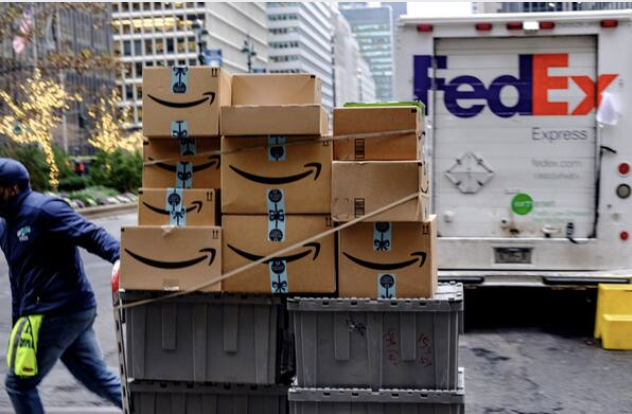
A worker pushes Amazon.com packages in front of a FedEx delivery truck in New York on Nov. 26, 2018. MUST CREDIT: Bloomberg photo by Christopher Lee
Trucks from Amazon.com Inc. and other e-commerce companies have become ubiquitous during the pandemic. In much of the industrialized world, an ever-growing number of vans, trucks, trains and ships are hauling everything from desks to smartphones as consumers turn to online shopping and companies restock their supply chains after months of disruption.
For the oil market, it is a potential fillip: In a world ravaged by coronavirus, freight is again growing, in some areas rapidly. And that means diesel.
“Truck traffic is up substantially,” said Gary Ross, a veteran oil market watcher and chief executive officer of Black Gold Investors LLC. “People have money and they’re not spending it on going out to the theater, they’re buying goods.”
Official statistics reflect what many can see from their window. In the U.S., for example, large trucks have driven 5% more miles over the last four weeks than they did a year before, according to data from the U.S. Federal Highway Administration.
Freight companies also confirm the revival. James Foote, chief executive of CSX Corp., one of the largest railway companies in the U.S., says volumes ended the third quarter above pre-covid levels. U.S. trucking companies, facing a shortage of drivers and high demand, are rejecting about 25% of requests for their business, compared with just 6% on average in 2019, according to Zach Strickland, head of market intelligence for FreightWaves.
“We’ve had a surge of business, and no one really saw it coming,” he said.
The trend matters for the oil market because trucking accounts for about 16% of global oil consumption and almost half of all diesel demand, according to 2019 data from the International Energy Agency.
The surge is expected to intensify in the shopping frenzy before Christmas. Delivery company DHL, owned by Germany’s Deutsche Post AG, expects its peak shipment quantities to be 50% higher than the same time last year.
There’s also a boost in freight from companies restoring inventories in supply chains that were disrupted by the pandemic — from car parts to children’s toys.
“As we talk to our customers, most specifically our overseas customers, they’re still seeing an opportunity for restocking,” said Keith Reardon, senior vice president of product and supply chain growth at Canadian National Railway Co.
The diesel market has struggled since the coronavirus pandemic began as the collapse in air travel forced refiners to push unwanted jet fuel into the production of diesel. That, in turn, swelled diesel inventories, sending prices down. As a result, profits from producing the fuel remain close to $3 a barrel, the lowest for this time of year in at least a decade.
While the freight rebound is helping oil prices, crude is still languishing at about $40 a barrel. Demand in the broader market is being crimped by the resurgence of the virus, and the outlook is fragile.
There’s also a risk the restocking surge could result in a vacuum of activity down the line, Drewry Shipping Consultants Ltd. wrote in a report. That would mean at least some of the additional demand tapers off by the start of next year.
But for now, thousands of miles of sprawling highways are full of trucks delivering goods. In the U.K., weekly figures show the use of heavy goods outpaces the recovery in any other vehicle type. It’s a similar picture on German roads, where large-truck miles have been at pre-pandemic levels since May.
Lithuania-based Girteka Logistics, one of Europe’s biggest truck owners, has added 500 trucks to the 7,000 it already had, as it rides the wave of housebound consumerism, according to Kristian Kaas Mortensen, director of strategic partnerships.
“People have to feel good, they have a need to spend.”
By The Washington Post · Jeff Stein · NATIONAL, BUSINESS, POLITICS, WHITEHOUSE, US-GLOBAL-MARKETS A sudden drop in the stock market threatens to muddle President Donald Trump’s campaign message about America’s economic recovery just days before the Nov. 3 election.
Trump has touted a partial economic rebound and rising stock market as central to his 2020 reelection bid, frequently pointing to Americans’ 401(K) accounts and investment portfolios. The president has insisted that both the market and the economy would nosedive should he lose to Joe Biden, at one point claiming the Democratic presidential nominee would cause a “super depression.”
But a sharp market drop this week — which follows a sharp rise in coronavirus cases and continued gridlock over a stimulus deal in Washington — may complicate the president’s boasts of overseeing a rapid economic recovery. Trump will likely see a boost from a positive report on America’s economic growth on Thursday, but investors fear a prolonged downturn in the stock market given that the virus is raging with increasing ferocity across much of the country.
The Dow Jones Industrial Average fell by more than 600 points on Monday, an approximately 2.3 percent drop, one of the largest single-day declines on the year. After a smaller dip on Tuesday, the Dow Jones Industrial Average opened down more than 700 points on Wednesday.
The Dow Jones is down nearly 2400 points since Sept. 2, a roughly 8% decline.
“This election is a choice between a Trump super recovery and a Biden – in my opinion, this is going to happen; I hate to say it – depression,” Trump told a crowd in Ohio earlier this week. “You’re going to have a depression. And your 401(k)s. Does anybody have a 401(k)? Throw them away. They’re not going to be worth – It’s a choice between a boom and a lockdown.”
The stock market dip comes amid wider signs of potential economic headwinds at the end of the president’s first-term.
Multiple federal relief measures approved by Congress expired months ago, depriving millions of small businesses and jobless Americans of emergency financial lifelines. Treasury Secretary Steven Mnuchin and House Speaker Nancy Pelosi, D-Calif., are formally continuing talks, but another stimulus package is not expected to be passed before the election.
The spread of the pandemic threatens to wreak further havoc on the recovery. The nation faces a coronavirus outbreak more widespread than those in the summer or spring, with hospitalizations increasing in 38 states and deaths beginning to tick up. The rise in covid cases raises the prospect of another wave of lockdowns that can cripple the economy. El Paso, Texas, and Newark, N.J., have both introduced curfews to curb their spike in covid cases.
The federal jobless rate has come down substantially to 7.8%. White House officials frequently point out that several key sectors — including housing; automobiles; and manufacturing — show signs of rapid growth that could power the U.S. economic recovery. Analysts expect Thursday could show a quarterly jump of more than a 25% increase in America’s Gross Domestic Product after the economy sharply contracted in the spring.
Joseph LaVorgna, chief economist of the White House National Economic Council, said after Monday’s dip that the stock market decline was unremarkable and that the underlying American economy remains fundamentally strong. Weekly unemployment claims have begun coming down and retail sales are now above their prior peak, LaVorgna said.
“I don’t think this is anything fundamentally amiss with the economy,” LaVorgna said in an interview. “The economy looks pretty darn healthy — and that’s what’s going to eventually steady stocks. I’m not worried. I think the markets are very much sending a message of growth and rebound.”
Still, even some of the president’s allies acknowledge the challenge posed by the market decline, arguing Trump must continue to blame Pelosi for holding up the stimulus.
“It’s a big, big decline,” said Stephen Moore, an outside economic adviser to the White House. “Trump has to keep saying: ‘Pelosi blocked the plan because she wanted the blue state bailout.'”
Wall Street has had mixed assessments of which presidential candidate would be best for growth. JP Morgan analysts said in a report on Monday that an “orderly” Trump victory represents “the most favorable outcome” for the market. The stock market is still up roughly 40% since Trump was elected in 2016. Historically, the market typically increases by about 7% every year, meaning Trump’s term in office is better than the median president, but not spectacularly so.
Moody’s Analytics estimated stronger GDP growth under Biden’s economic plans than Trump’s. Other financial analysts have pointed out that Trump’s term in office has been punctuated by erratic swings in the market, dropping dramatically during the 2018 government showdown and again when trade tensions flared in the summer of 2019. About half of all Americans own no stock at all, including retirement accounts such as 401(k) plans.
“We got a big gain but, boy, were we subjected to extreme volatility to get it, and not everyone got to enjoy the ride up,” said Chris Rupkey, chief financial economist at MUFG Union Bank.
Ed Yardeni, president and chief investment strategist of Yardeni Research, said on Monday that the early sell-off may well represent “garden variety volatility” rather than a new crisis. Manufacturing indexes last week, Yardeni pointed out, still suggest a “v-shape” recovery and wider strength in the broader U.S. economy. It’s still possible that stocks make a healthy recovery in time for Election Day.
“It’s not a correction yet. This is just more of the same,” Yardeni said. “The market could be up big tomorrow. Or it could be back to worrying about covid.”

 Adviser to the Fiscal Policy Office Pornchai Threeravej, centre, says the recovering Thai economy will grow by 4.5 per cent next year.

 A person rests on a post in front of the New York Stock Exchange in New York on Oct. 2, 2020. MUST CREDIT: Bloomberg photo by Michael Nagle.


 A United Parcel Service driver unloads packages from a delivery truck in Chicago on July 22, 2019. MUST CREDIT: Bloomberg photo by Christopher Dilts