Five Apec members confirm their attendance at summit in Bangkok in November
TUESDAY, SEPTEMBER 27, 2022
THE NATION
Leaders of at least five members have agreed to attend the Asia-Pacific Economic Cooperation (Apec) Economic Leaders’ Meeting on November 18-19, Thailand’s Foreign Ministry said on Tuesday.
Tanee Sangrat, director of the Information Department and spokesman of the Foreign Ministry, said leaders of some other members had not yet officially confirmed, but they had conveyed their intention to participate to the Thai ambassador to the United Nations.
“We don’t want to give details of the names of these members yet due to security reasons,” Tanee said.
On Monday, acting government spokesman Anucha Burapachaisir said Thailand was now ready to host the annual Apec Summit and other meetings.
The meeting will be held at the Queen Sirikit National Convention Centre while the gala dinner in honour of the Apec economic leaders and their spouses will be held at the Royal Thai Navy Convention Hall.
World Bank raises Thailand growth forecast to 3.1% amid signs of economic recovery
TUESDAY, SEPTEMBER 27, 2022
THE NATION
The World Bank on Tuesday raised its forecast for Thailand’s gross domestic product (GDP) this year from 2.9 per cent to 3.1 per cent following recovery in consumption and exports.
However, the bank also reduced Thailand’s growth forecast for next year from 4.3 per cent to 4.1 per cent.
“Despite the economic slowdown’s impact on Thailand’s exports, easing of Covid-19 restrictions will help support the country’s tourism,” it said.
The World Bank expects growth in the East Asia and Pacific region this year to drop sharply to 3.2 per cent due to the impact of China’s strict Covid-19 restrictions on industrial manufacturing, domestic sales and exports.
The bank also expects 8-10 million foreign tourists to visit Southeast Asian countries this year.
The Thai government forecasts a 3-3.5 per cent expansion for the country’s economy this year as tourism recovers.
Songkhla touted as southern Thailand’s hub for medical tourism, MICE activities
TUESDAY, SEPTEMBER 27, 2022
THE NATION
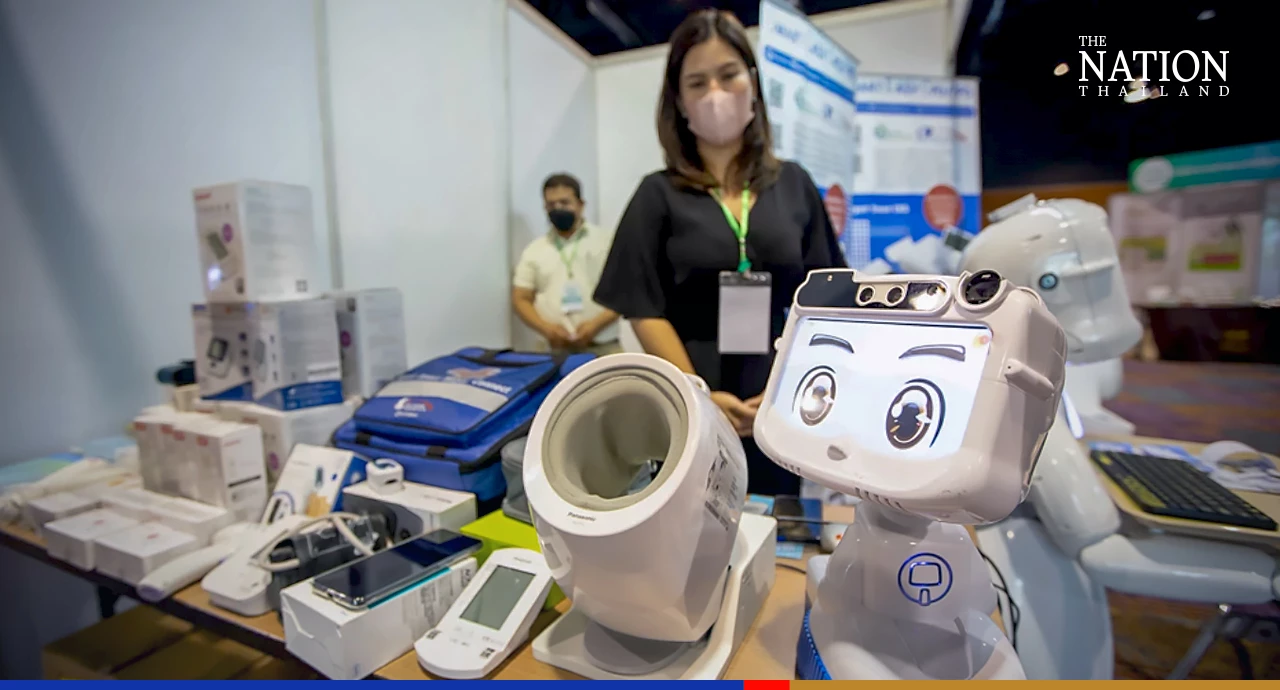
Thailand’s southern province of Songkhla should be considered for its potential as a medical and wellness hub as well as a MICE destination, Prince of Songkhla University (PSU) president said.
PSU chief Niwat Keawpradub said on Monday that the province has all the resources necessary to hold MICE (meetings, incentive travel, conventions, exhibitions) activities as well as provide the latest medical services.
He said promoting Songkhla as a medical hub would also go hand in hand with the government’s policy to boost medical tourism.
“Songkhla is fully prepared with top medical supplies and equipment and has some of the best government and private hospitals,” he said.
Niwat added that boosting Songkhla’s potential as a MICE as well as medical and wellness hub will also contribute to the country’s economy.
He pointed out that Songkhla’s potential was proven by the 300 million baht revenue generated at the “Healthy Living & Innovation Expo 2022” held in Hat Yai from September 8 to 11.
“This reflects the success achieved by the government and private sector in promoting Thailand as an international medical hub,” he said.
The expo was organised by PSU, Medical Science Research and Innovation Institute, and the Songkhla Convention and Exhibition Bureau.
Thailand’s exports in August expanded by 7.5 per cent year on year to 861.16 billion baht, the Commerce Ministry reported on Monday.
Meanwhile, trade value in the first eight months rose 11 per cent from the same period last year to 6.63 trillion baht.
In August, however, Thai export of agricultural products dropped 10.3 per cent to 77.08 billion baht.
The export of agro-industrial and industrial products expanded by 27.6 per cent and 9.9 per cent to 71.01 billion baht and 680.47 billion baht, respectively.
The Commerce Ministry expected Thailand’s exports to gain positive sentiment, especially the demand for foods which is expected to rise in the remainder of this year despite rising food prices.
“In addition, the weakening baht in response to many trade partner countries’ move to raise their policy interest rate also has helped Thailand maintain export competitiveness,” the ministry added.
India’s control on rice exports, new orders from Iraq a boon for Thai rice industry
MONDAY, SEPTEMBER 26, 2022
THE NATION
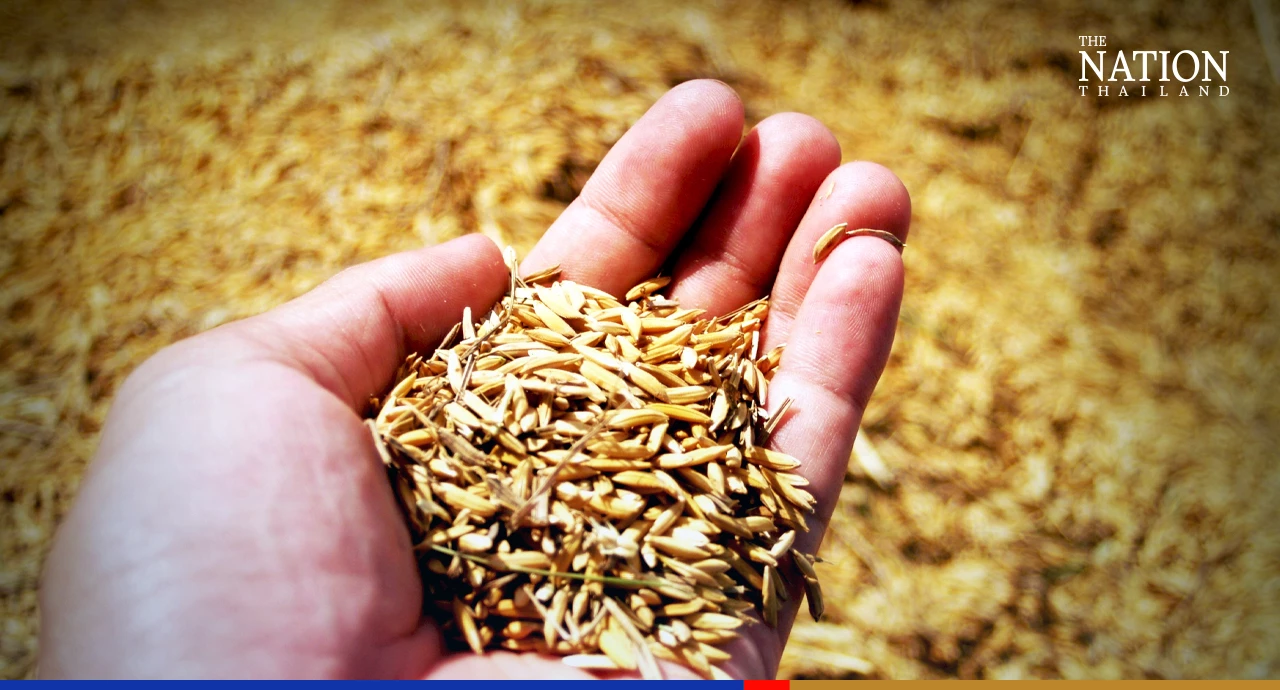
India’s ban on broken rice export and increased tax on rice shipments, as well as the resumption of orders from Iraq have been a blessing for Thailand’s rice industry.
The Thai Rice Exporters Association said on Sunday that thanks to these developments, Thailand’s total rice exports could reach 8 million tonnes.
Chukiat Opaswong, the association’s honorary chairman, said India’s recent ban on the export of broken rice and imposition of a 20 per cent duty on shipments of white and brown rice could benefit Thailand as it would bring the price of Indian rice close to that of Thai rice.
“This will encourage customers to switch to Thai rice due to superior quality and on-time delivery,” he said.
Chukiat added that Indian white rice, which went for US$340 per tonne, now costs $390-$400 per tonne, while Thai white rice is priced at $420 per tonne.
He said India has imposed these measures to curb exports because rice harvests in the country have plummeted due to a severe drought and there may not be enough rice for domestic consumption.
The association had initially estimated Thailand’s total rice export this year at 7.5 million tonnes, up from 6.1 million tonnes in 2021.
“With India’s new measures in effect, we expect their rice export to drop to 17 million tonnes from 21 million tonnes recorded last year. This missing ratio will go to other exporters like Vietnam, Myanmar and Thailand,” he said.
“This could bring our rice exports this year up to 8 million tonnes worth approximately 150 billion baht.”
Chukiat said another factor contributing to the surge in rice export this year is that Iraq has resumed buying rice from Thailand since late last year. Iraq had banned the import of Thai rice for nearly nine years because it failed to meet standards.
“Thanks to the Commerce Ministry’s negotiations and continued marketing campaigns, Iraq is now importing as much as 100,000 tonnes of Thai rice monthly and will therefore contribute 1.2 million tonnes of total rice export this year,” Chukiat added.
As of August 20, Thailand has exported 5.35 million tonnes of rice worth 9.57 billion baht, up 46.46 per cent and 40.11 per cent year on year respectively.
Thailand launching innovation incubator to train up ‘generation of Elon Musks’
FRIDAY, SEPTEMBER 23, 2022
The National Innovation Agency (NIA) on Friday launched an ambitious plan to produce the next generation of innovators to boost Thailand’s development.
The STEAM4Innovator Centre is a collaboration with Rajamangala University of Technology Lanna, King Mongkut’s University of Technology North Bangkok, Prince of Songkhla University, Yala Rajabhat University, and the Department of Vocational Education (DVE), which oversees vocational colleges across the country.
STEAM stands for Science, Technology, Engineering, Art and Mathematics.
NIA executive director Pun-Arj Chairatana said his agency is on a mission to produce young innovators with creative ideas that can be developed for commercial potential.
He said the NIA focuses on the 3Gs – grooming, grants and growth – to forge a network of “innovation creators” and “innovation coaches”.
The agency has worked with the four universities and the DVE to train 394 teachers for the network through the Steam4Innovator Trainers’ Lab.
Next year, participating unis and colleges will apply Steam4Innovator principles in their general education courses for first-year students.
In 2023, the NIA will equip more than 15,000 youngsters with the knowledge and skills to create innovations, and many more in the following years.
Any academic institution interested in housing a STEAM4Innovator Centre can contact the four universities, the DVE or the NIA. Further information about the project is available on the STEAM4Innovator website.
Weaker baht a boon for export, tourism, but curse for industries relying on imports
FRIDAY, SEPTEMBER 23, 2022
THE NATION
The weakening of the baht will benefit the export sector but not importers, the Thai National Shippers’ Council (TNSC) said, while advising exporters to insure themselves against currency risk.
TNSC chairman Chaichan Charoensuk said on Thursday that the baht is currently at around 37 to the US dollar after the US Federal Reserve hiked the interest rate by 0.75 points on Wednesday for the third time this year to fight inflation.
“This has affected not just the baht, but all currencies are getting weaker against the dollar,” he said.
Chaichan added that a weaker baht will bring profits to exporters, but industries that rely on imported raw materials, like pharmaceuticals, will suffer from surging costs.
“Over the past few months, businesses did not stock up on raw materials due to high fluctuation, so now they have to buy materials again at a higher price until the baht gets stronger again,” he said.
However, he believes the weakening of the baht will only last for a short period and it will soon return to around 36 to 36.5 baht to the dollar before yearend.
“The Bank of Thailand will not allow the baht to become too weak and will issue new measures to ensure its stability,” he said.
The TNSC chairman has advised exporters to keep a close eye on the currency and acquire insurance against risks from currency fluctuation. He said nobody can accurately predict which direction the baht will move and by how much.
Chaichan added that a weaker baht will also affect the import of fuel for power generation, eventually resulting in higher electricity bills and costs. He urged the government to use measures to slow down the hike in electricity prices and do it in steps to soften the impact on businesses, especially small and medium-sized ones.
Wisit Limleucha, vice president of the Thai Chamber of Commerce, said another sector that could benefit from the weakening of the baht is tourism. “To make the fullest use of the situation, tourism operators must focus on selling locally made products instead of on brands imported from overseas, which will suffer a surge in price due to the weaker baht,” he said.
Wisit said he believes that with proper support from the government, inflation in Thailand will not be as bad as in other countries as Thailand can still produce its own food instead of having to import it.
Korn warns against setting predetermined rate for baht against US dollar
THURSDAY, SEPTEMBER 22, 2022
THE NATION
Former finance minister Korn Chatikavanij on Thursday advised the government against setting a target for pegging the baht against the US dollar, warning that doing so could cause a financial crisis.
Korn said the current slide of the baht, caused by a wider gap in policy rates of Thailand and the US, was a problem but not a crisis yet.
On Thursday morning, the baht slid further from 37 to 37.2 to the US dollar and continued to drop to 37.31 in the afternoon.
In his Facebook post, Korn said the US Federal Reserve (Fed) had steeply raised its policy rate by another 75 basis points on Wednesday to 3.0-3.25 per cent.
Korn said the US policy rate was the highest since the “Hamburger Crisis” in 2008, widening the gap between Thailand’s policy rate and that of the US to almost 3 per cent.
Korn said the US dollar had appreciated against the baht and other currencies because the market expected the Fed to raise the policy rate by another percentage point within this year.
“This is a problem, but not a crisis,” Korn wrote.
“A crisis will happen if we declare that we will defend the baht by setting an exchange rate target against the real market situation, such as 35 baht per dollar or any target.”
Korn wrote the post a day after acting Prime Minister General Prawit Wongsuwan confirmed on Wednesday he had made a suggestion during the weekly Cabinet meeting on Tuesday that the baht should be valued at 35 baht per dollar.
Korn said the gap in Thai and US interest rates would unavoidably affect the baht’s value until the US economy slows down.
Korn said he expected the US economy to slow down next year at the earliest.
“Once the US economy slows down, we will be benefited from declining prices of oil and consumer goods. By that time, the baht will appreciate automatically – especially if our current account improves to positive territory and if our revenue from tourism rises,” Korn said.
“Don’t cause panic by saying that the baht must be valued at this or that. Although the baht is valued at 37 per dollar, it will not cause a crisis like the Tom Yam Koong crisis because we have high foreign exchange reserves and we can handle public debt.”
Korn added that the government should not be worried about the baht’s value for now but should focus on helping economically vulnerable groups who have to shoulder high cost of living, and should help prevent debtors from being blacklisted or else they would have no chance even when the country’s economic situation improves.
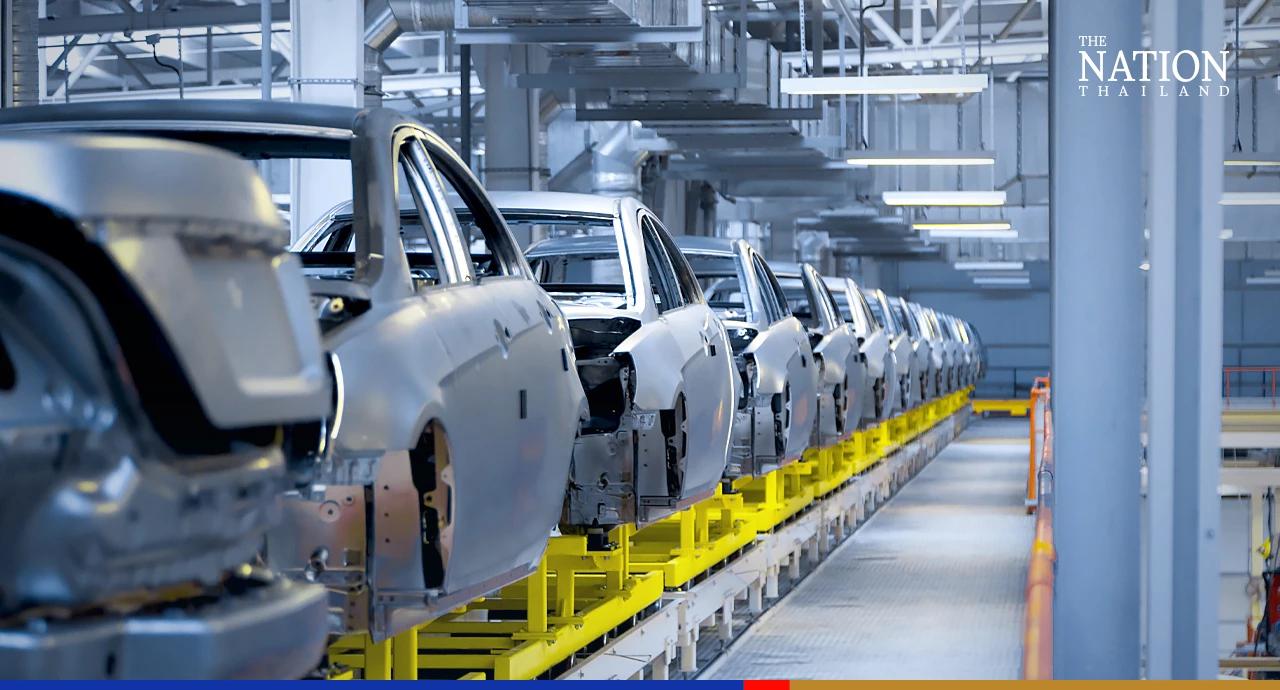
Thailand’s automotive manufacturing output rose 10.5 per cent year on year to 1.18 million vehicles during the January-August period, the Federation of Thai Industries’ (FTI) Automotive Industry Club announced on Thursday.
Club vice president and spokesman Surapong Pisitpattanapong said August production alone reached 171,731 units, jumping 64.9 per cent year on year, thanks to rising demand for cars and pickup trucks in both domestic and overseas markets.
The eight months of 2022 saw domestic sales of 559,537 vehicles, increasing 19.6 per cent year on year, with sales in August alone being 68,208 units, up 61.7 per cent year on year.
“Automotive sales are rising due to new models and a gradually improving economy after Thailand fully reopened the country to foreign tourists and investors,” Surapong noted.
Meanwhile, 606,055 vehicles were exported in the eight months, valued at 368 billion baht – an increase of 0.4 per cent and 5.18 per cent year on year, respectively. Some 73,325 vehicles were exported in August, valued at 49.36 billion baht, rising 23.09 and 38.12 per cent year on year, respectively.
The automotive industry saw 600.62 billion baht worth of exports (vehicles, parts and components) in the eight months, increasing 2.96 per cent year on year. Total exports in August were 78.3 billion baht, a 23.9 per cent increase year on year.
Surapong said the automotive industry’s current performance is on track to meet the club’s target of 850,000 vehicles sold domestically and 900,000 exported units by the end of the year.
The club is keeping an eye on external factors that could affect sales and prices of vehicles overseas, including the Russia-Ukraine war, tension in the Taiwan Strait, the US central bank hiking the interest rate, and global inflation, he said, adding that his club would evaluate the situation every two months and adjust its estimations/targets accordingly.
Several internal factors could continue to accelerate domestic vehicle sales through the year, such as the government’s domestic tourism promotion campaigns and price guarantee schemes for agricultural products that would increase the need for transport, Surapong said.
Government revenue exceeds target, pointing to economic expansion
THURSDAY, SEPTEMBER 22, 2022
THE NATION
Revenue collection in 11 months of fiscal year 2022 has exceeded the government’s target by 117 billion baht, or 5.5 per cent, the Finance Ministry said on Thursday.
In 11 months of the fiscal year — from October 2021 to August 2022 — revenue reached 2.25 trillion baht, the ministry said.
“Compared to last year, revenue collection increased 6.8 per cent due to expansion of the economy, which boosted domestic consumption and imports,” Pornchai Theeravet, director of the Fiscal Policy Office (FPO) and the ministry’s spokesperson, said.
The Revenue Department collected 1.86 trillion baht in the past 11 months, increasing by 248 billion baht, or 15.3 per cent, year on year. The department exceeded the target by 14.6 per cent, or 238 billion baht. Most of the increased revenue came from value-added tax and corporate income tax.
The Excise Department, meanwhile, has collected 465 billion baht, down 5.8 per cent year on year, dropping by 28.7 billion baht. The department missed its target by 15 per cent, or 82.2 billion baht. Pornchai attributed the drop to the diesel tax cut in a bid to reduce people’s cost of living.
The Customs Department’s collection of 100 billion baht, was a 7.8 per cent increase year on year, up by 7.03 billion baht. The department exceeded the target by 9.5 per cent, or 8.79 billion baht.
Revenues contributed by state enterprises in 11 months of the fiscal year also exceeded the target by 11 billion baht. Revenue from other government agencies, however, missed the target by 17.1 billion baht, added Pornchai.
The government has set a revenue target of 2.49 trillion baht for fiscal 2023, which begins next month.









 SootinClaimon.Com