Japan Clears Eight Thai Plants For Chicken Meat Export
BY LINE : THE NATION
FRI, SEPTEMBER 09, 2022
Eight Thai Meat-Processing Plants Have Secured Approval From Japan To Export Cooked Chicken Meat, The Department Of Livestock Development Said On Friday.
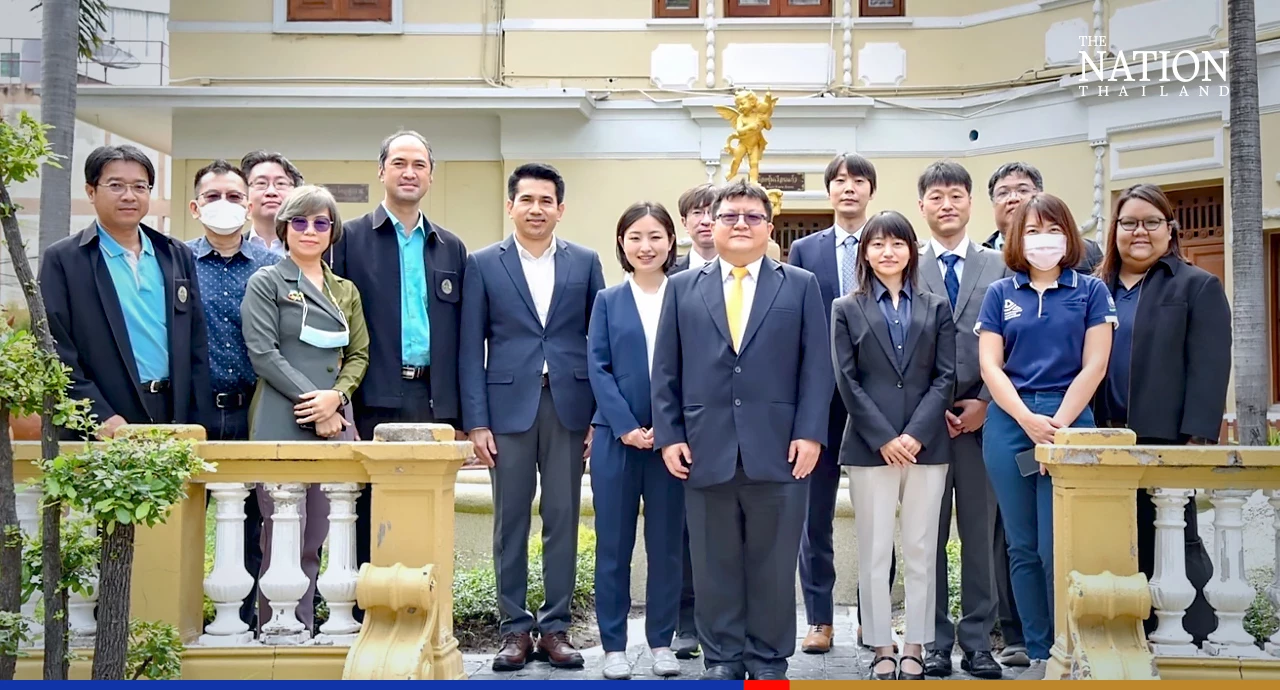
The department’s deputy director-general, Sophat Chawalkul, said Japan’s Ministry of Agriculture, Forestry and Fisheries had sent five officials to inspect eight plants in Thailand since September 4. At the end of the inspection, all eight factories met Japan’s quality standards for cooked chicken meat. Two of them are existing exporters whose approvals have been extended, while six plants are newly certified.
“The department thanks all parties for their efforts in improving the standard of Thailand’s meat products in terms of quality and safety. We will take all suggestions made by the Japanese inspectors into consideration to further improve the country’s meat production and processing industry,” said Sophat.
The department expects eight more factories to be certified by Japan. Total export of meat products to Japan will exceed last year’s figures in both volume and value, he said.
In 2021, Thailand exported 461.2 million tonnes of meat products to Japan, valued at 58.76 billion baht. In the seven months of 2022, more than 267.65 million tonnes have already been shipped to Japan, valued at 37.7 billion baht.
BEM Quotation Beats ITD In Bid To Operate And Build Orange Line
THU, SEPTEMBER 08, 2022
Bangkok Expressway And Metro (BEM) Has Offered Higher Benefits And The Lowest Price Of The Two Remaining Bidders For The Orange Line Mass Transit Project, It Was Disclosed On Thursday.
BEM quoted 78.2 billion baht compared to 102.6 billion baht by Italian-Thai Development Group (ITD).
The quoted prices and construction costs would be subsidised by the Mass Rapid Transit Authority of Thailand (MRTA).
The MRTA on Wednesday opened the sealed envelopes containing proposals regarding investments and benefits offered by the bidders.
Bidding for the Orange Line project is going ahead despite an ongoing legal battle involving Skytrain operator Bangkok Mass Transit System (BTSC) and the MRTA, which had cancelled the first round of bidding.
BTSC had participated in the first round but opted out of the second round of bidding.
BTSC filed a lawsuit against the cancellation of the first round of bidding and won the case. It also filed a lawsuit against the second round, but the Administrative Court has yet to make a ruling. The court recently rejected BTSC’s request for an injunction to suspend the second round.
The 35.9km-long Orange Line is divided into eastern and western sections. Construction of the 22.5km-long eastern section from Thailand Cultural Centre to Minburi, with 10 underground stations and seven elevated stations, is 90 per cent complete.
The western section stretches from Thailand Cultural Centre to Bang Khunnon – a length of 13.4km, with 11 underground stations.
The bid winner would be required to sign a private-public partnership contract to operate the entire route after building the western section.
NBTC Under Fire For Dragging Its Feet On DTAC-True Merger
THU, SEPTEMBER 08, 2022
The Telecom Watchdog Could Be Accused Of Dereliction Of Duty For Failing To Intervene In A Mega-Merger Between Thailand’s Second- And Third-Largest Mobile Network Operators, A Legal Expert Has Warned.
Prinya Thaewanarumitkul, a law professor at Thammasat University, said the National Broadcasting and Telecommunications Commission (NBTC) should perform its legal duty as the regulatory agency.
He said the NBTC has the duty to prevent a monopoly in the market and therefore it should take action when the telecom market would have only two players following the planned merger between DTAC and True.
Prinya said he was puzzled that the NBTC had recently consulted the Council of State, the government’s legal advisory agency, regarding the matter.
“The NBTC has the authority to decide whether to approve a merger that would control more than 50 per cent of the market,” the law professor said.
He was speaking at a panel discussion at Thammasat University’s Tha Phrachan campus jointly organised by the Law Faculty and Thailand’s Consumers Council on Wednesday.
Assoc Prof Narongdech Srukhosit, from Chulalongkorn University’s Faculty of Law, said at the event that the NBTC should take into account public interest when making its decision regarding the planned mega-merger, as telecom frequencies are a limited national resource.
“The NBTC has to think of the public interest, particularly the fact that there would be only two telecom service providers after this merger,” he said.
Meanwhile, Chatra Kamsaeng, director of 101 PUB, which describes itself as a “public policy think tank”, said he wondered why the NBTC was seeking advice from the Council of State even after the Administrative Court had ruled that it has the legal power to decide on the matter.
“There must be some reason that the law would be interpreted to benefit certain groups of people at the cost of public interest,” he said.
Sirikanya Tansakun, an MP from the opposition Move Forward Party, told the panel discussion that the NBTC appeared to have no confidence in its legal authority and no courage in exercising its power.
“Thai society has to realise why the NBTC’s executive board still seeks advice from the Council of State even after the Administrative Court had ruled that it has legal power to make an order about business mergers,” Sirikanya said.
She sits on the House tasked with studying impacts of telecom business mergers.
Clean Energy, Digital Tech Will Fuel Economic Recovery: Energy Minister
BY LINE : THE NATION
THU, SEPTEMBER 08, 2022
Developments In Green Energy And Digital Technologies Will Play A Crucial Role In Thailand’s Economic Recovery, Energy Minister Supattanapong Punmeechaow Said On Thursday.
He was speaking at a Thai News Network seminar titled “Recovery and Moving on of Thai Economics – the Great Reset”.
Supattanapong said the economy was gradually improving after being hit by recession because of three years of the Covid-19 pandemic, which has been aggravated by the war in Ukraine.
The pandemic and the conflict have led to increasing food and energy prices, resulting in rising inflation, but the Thai economy was now on the path to recovery, he said, citing the number of non-performing loans in banks that have “dropped from some 12-14 million to just 3 million”.
Supattanapong said revenue figures were also improving along with other economic indicators.
According to him, international agencies have given Thailand a credit rating that is the same as before the Covid pandemic, while Thai banks are still enjoying stability.
“So, I would like to assure the people that the situation is improving and the government will handle the remaining issues of the crisis,” the energy minister promised.
He said the economic situation might not go back to pre-Covid levels soon, but Thailand’s situation was at least much better than those of neighbouring countries.
Supattanapong also said Thailand had been developing green energy technologies after General Prayut Chan-o-cha announced at the 2021 United Nations Climate Change Conference that Thailand would become carbon neutral – a balance between emitting carbon and absorbing carbon from the atmosphere – by 2050.
With Prayut’s commitment, Supattnapong said, Thailand became the only Asean nation that started working toward the carbon-neutrality goal.
According to the minister, Thailand has become the only Asean country to promote the use of battery electric vehicles (BEVs), so manufacturers could use Thailand as a hub for making BEVs.
“We are not helping importers of BEVs, as several critics claim. The importers must build factories to manufacture BEVs to be eligible for government subsidies, Supattanapong made it clear.
He said the programme would ensure that at least five brands manufacture BEVs in Thailand.
This could lead to development of digital technologies and would create new types of SMEs, he said hopefully.
There would also be investments and developments of other technologies related to carbon neutrality, including the goal to turn Thailand into a hub for making hydrogen energy, Supattanapong said.
Thais have also become a digital society by using various apps, such as Krung Thai Bank’s Paotang app to buy digital lottery, he pointed out.
Furthermore, new SMEs based on digital platforms will be created, the energy minister said, adding that leading foreign investors are now interested in investments in cloud computing services, cloud servers, artificial intelligence, and data centres.
He said foreign investors, who are keen to invest in these digital technologies, will soon apply to the Board of Investment for tax incentives.
The country also possesses logistics infrastructure ready to serve investors, and many want to transfer their manufacturing bases to Thailand in a move to use the kingdom as a gateway for their products, Supattanapong said.
He cited the figure of 900 billion baht of investments in the Eastern Economic Corridor as proof, saying foreign investors have taken note of Thailand as a country ripe for investment under a Bio-Circular Green Economy.
“The government has been doing its best and I would like the public to have confidence that even when we are in crisis, success can be achieved with cooperation from all,” Supattanapong concluded.
The Baht Opened At 36.52 To The US Dollar On Thursday, Strengthening From Wednesday’s Close Of 36.70.
The currency is expected to move between 36.40 and 36.70 during the day, Krungthai Bank market strategist Poon Panichpibool predicted.
He said the baht was likely to be highly volatile, especially during forthcoming results of a key European Central Bank (ECB) meeting, which comes at the same time as the US Federal Reserve chairman’s press conference.
However, Poon said the market had already acknowledged the likelihood that the Fed would increase the interest rate again, so the market will be mainly affected only by results of the ECB meeting.
If the ECB chooses not to increase the interest rate as expected and voices concern for the economy, it might pressure the euro to weaken and provide support for the dollar to strengthen.
If the baht weakens as a result, Poon expects it would test its resistance level of 36.80 to the dollar, while the support level would be around 36.30-36.40, the level importers are waiting for to purchase the dollar.
The market strategist advised investors to use hedging tools such as options to manage risks in a highly volatile currency market.
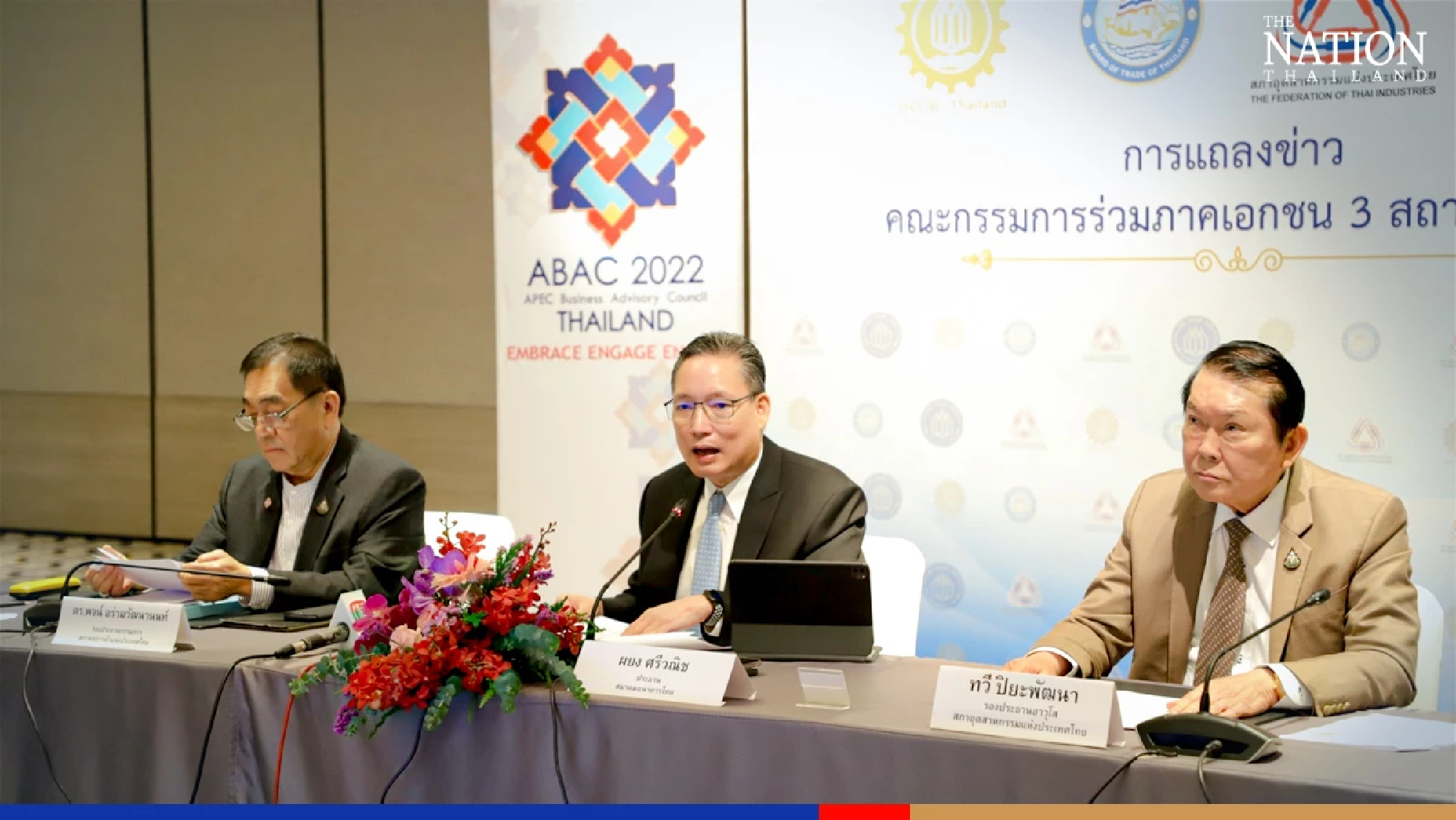
The Joint Standing Committee on Commerce, Industry, and Banking (JSCCIB) on Wednesday pleaded with the Thai government to raise electricity bills, wages and interest rates gradually in order to mitigate the negative impact of the Covid-19 pandemic on businesses.
Upping all costs at once in October will do nothing but harm the country’s still fragile economy, said Payong Srivanich, chairman of the Thai Bankers’ Association and chairman of the JSCCIB.
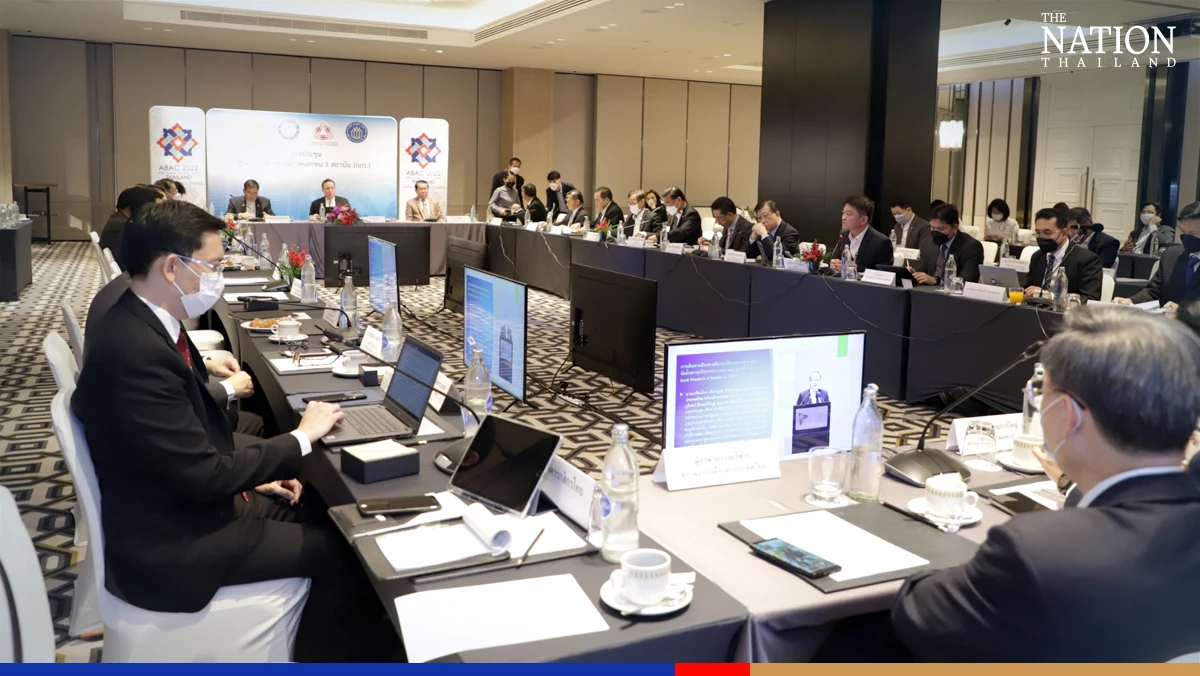
His comments came following a monthly meeting with business representatives from across the country on Wednesday in Bangkok. The attendees all agreed that it would be difficult to avoid price increases in this period of high inflation.
They are concerned, however, that the government’s proposed method will only result in a vicious cycle of high inflation.
Payong noted that the current economic scenario is fraught with uncertainties, including tensions between Russia and Ukraine, rising global central bank rates, inflation and the risk of recession, the ongoing pandemic, and China’s slowdown.
These circumstances, he explained, have an impact on global logistics and energy prices.
Thailand’s businesses will have to incur this rising cost. Hence, it would be preferable for the government to gradually raise the prices so that the country’s economy and the consumers’ purchasing power can catch up with the hike.
Payong said that electricity bills were of utmost concern now.
“We propose that the government carefully and cautiously consider increasing electricity prices by separating it into two phases rather than a one-time hike,” said Payong.
Thailand’s Energy Regulatory Commission has approved an 18 per cent rise in the price of electricity for September-October, to a record-high 4.72 baht per unit.
The JSCCIB stated that the change will affect the cost of living and business operations because it accounts for 30 per cent of the total cost of producing goods and services.
Other JSCCIB concerns include interest rate and wage increases, said Payong. He revealed that the Thai Bankers’ Association has continued to consult with the Bank of Thailand, particularly regarding the rising fee for the Financial Institutions Development Fund (FDIF).
“Commercial banks must support both the country’s economic recovery and their customers, so rate increases may not be implemented immediately. We must devise a strategy to protect our vulnerable customer groups from the negative consequences of the FDIF increase,” Payong stated.
Poj Aramwattananont, vice chairman of the Thai Chamber of Commerce, said the wage increase is necessary, and all business operators have agreed to comply, but they want other measures to support them, such as allowing goods price hikes or low-interest rate business reform loans.
Meanwhile, there are more pressing labour issues to address than wage increases, such as a shortage of labour, particularly in the services sector. He stated that the hotel representative had requested the Ministry of Labour to relax more regulations so that they could hire foreign labourers.
The JSCCIB has maintained its GDP growth projection for the year in the range of 2.75 to 3.5 per cent, while export growth will remain at 6-8 per cent and inflation was as predicted previously at 5.5 to 7 per cent.
The baht opened at 36.72 to the US dollar on Wednesday, weakening from Tuesday’s close of 36.48.
The currency is expected to move between 36.65 and 36.85 during the day, Krungthai Bank market strategist Poon Panichpibool predicted.
He said the baht might become highly volatile and weaken near its resistance level of 36.80-36.90 to the dollar amid concerns over Europe’s energy crisis, the Covid-19 situation in China and signs the US Federal Reserve may increase the interest rate.
However, Poon does not expect investors to “adjust” their possession of assets until the results of a key European Central Bank meeting on Thursday,
Poon said the baht could weaken during the day if the market is still in a risk-off state and investors offload more Thai stocks.
However, he expects stock sales to slow down as some investors are waiting for the index to drop and the baht to weaken before they purchase more shares.
The strategist advised investors to use hedging tools such as options to manage risks in a highly volatile currency market.
The Cabinet on Tuesday gave the green light to the Electricity Generating Authority of Thailand (Egat) to boost its liquidity by borrowing 85 billion baht, as Egat has had to shoulder the burden of power tariff subsidies for maintaining the current power rates.
Deputy Prime Minister and Energy Minister Supattanapong Punmeechaow said the Cabinet meeting, chaired by acting Prime Minister Prawit Wongsuwan, agreed to let Egat take the loan with the Finance Ministry being its guarantor.
Supattanapong said Egat needed the loan to boost its liquidity after the Cabinet asked it to repeatedly postpone hiking its FT or float time rate. The FT covers floating costs beyond the control of Egat, including rising oil prices, rising inflation and exchange rates. It is used to calculate monthly power bills.
He added that the Cabinet would next week consider measures proposed by Energy Policy Administration Committee for providing subsidies to low-income people.
Next week, the Cabinet would also be asked to consider a proposal of the committee to continue to subsidise the cost of rising FT rates for two vulnerable groups. If approved, the subsidy would be enforced in time for the September power bill, the minister added.
He said the ministry would also promote installation of solar rooftops for households and industries, which would allow people and businesses to save on power bills.
Supattanapong said his ministry, Egat, the Provincial Electricity Authority, and the Metropolitan Electricity Authority would cooperate to speed up approval of licences for solar rooftops.
Thailand’s total rice exports in 2022 should meet the target of 7.5 million tonnes after successful negotiations with Singapore to increase its imports from Thailand in the rest of the year, the Department of Foreign Trade said on Tuesday.
Department director-general Pitak Udomwichaiwat said recent negotiations between the department, the Singapore General Rice Importers Association, and the Rice Exporters Association of Thailand held in Singapore had been successful and Singapore had agreed to import more rice from Thailand in the rest of the year.
Pitak said Singapore’s demand for rice is starting to climb up after the country’s reopening due to the improving Covid-19 situation, as can be seen from a 2 per cent bump in July’s rice imports compared to the same period last year.
“Singapore also imports rice from other countries, and they tend to use price as a factor in choosing the exporter,” he said. “Fortunately, this year Thailand has seen increased rice output due to abundant rainfall, which has resulted in a lower price, making our product more competitive than some rice producers. Furthermore, Singaporean consumers already have a long-established confidence in the quality of Thai rice.”
The department reported that from January 1 to August 31 this year, Thailand exported 4.92 million tonnes of rice, valued at US$2.53 billion (86.06 billion baht), up 51.37 and 30.47 per cent year on year, respectively. The department estimated that total rice exports this year would reach 7.5 million tonnes.
The department also said that currently the price of Thai rice has a tendency to drop following the weakening of baht, although it is still more expensive than rice from other countries. As of August 31, the price of Thai white rice with 5 per cent humidity was $428 per tonne, while the same rice from Vietnam cost $397, $382 from Pakistan and $342 from India.
Thailand’s steamed rice is sold at $442 per tonne, while Pakistan and India are selling theirs at $402 and $382 US dollar per tonne, respectively.
Labour Minister Suchart Chomklin on Monday met Thailand’s ambassador to Finland and sought his help in finding job opportunities for Thai workers in the northern European nation.
Suchart and his delegation met ambassador Chavanart Thangsumphant at the Thai embassy in Helsinki to discuss job opportunities for Thai workers in Finland.
Suchart’s delegation included Surachai Trakulthong, assistant to the labour minister, Labour Ministry spokeswoman Thianrat Nawamawat, Wannarat Srisuksai, deputy permanent secretary at the Labour Ministry, Pairoj Chotikasathien, director-general of the Department of Employment.
Among other things, Suchart said he discussed with the ambassador opportunities for unskilled workers from Thailand as berry-pickers with proper contracts and with all rights, perks and protection under Finnish law.
Suchart said he and his delegation also discussed with the ambassador about coordination between the Labour Ministry and the Thai embassy in Helsinki through a working group.
Suchart said the ministry hoped that the coordination would help Thai skilled and unskilled workers in Finland receive protection and welfare in accordance with the law.
He added that the ministry also aimed to have the working group find more labour markets for Thai workers in Finland.
During the meeting, Suchart thanked the ambassador for taking good care of Thai workers in Finland.
Suchart also had a chance to meet and discuss with executives of Helsinki Partners, which is a city marketing, investment and talent attraction company owned by the City of Helsinki.
Suchart said he discussed with the executives about exporting Thai workers to work in fields where Finland has a shortage of workforce.
The minister added that the embassy would lead representatives of private firms in Finland to visit Thailand in October to explore opportunities to hire workers.
The labour minister said Thailand has the potential to export workers to Finland. In 2021 and 2022, the Labour Ministry sent 7,902 workers to the country. Most of the labourers worked in the agricultural sector, while the second largest group worked as Thai cuisine chefs, Suchart said. Thai workers sent back about 700 million baht a year in remittances, he added.
Helsinki Partners CEO Clarisse Berggårdh told Suchart that Finland is facing a severe shortage of labour force, because the country is becoming an ageing society.
He said Finland needed a lot of employees in the fields of IT, computer programming and smart technologies, as well as staff to take care of the elderly.





 Among other things, Suchart said he discussed with the ambassador opportunities for unskilled workers from Thailand as berry-pickers with proper contracts and with all rights, perks and protection under Finnish law.
 SootinClaimon.Com