The pandemic has everyone ditching coal quicker – except Asia #ศาสตร์เกษตรดินปุ๋ย

#ศาสตร์เกษตรดินปุ๋ย : ขอบคุณแหล่งข้อมูล : หนังสือพิมพ์ The Nation.

The pandemic has everyone ditching coal quicker – except Asia

Econ

Jun 14. 2020A man tends to vegetables in a field as emissions rise from nearby cooling towers of a coal-fired power station in Tongling, China, on Jan. 16, 2019. MUST CREDIT: Bloomberg photo by Qilai Shen.
Location: Tongling, ChinaA man tends to vegetables in a field as emissions rise from nearby cooling towers of a coal-fired power station in Tongling, China, on Jan. 16, 2019. MUST CREDIT: Bloomberg photo by Qilai Shen. Location: Tongling, China

By Syndication The Washington Post, Bloomberg · Will Wade, Jeremy Hodges, Stephen Stapczynski 

While the coronavirus pandemic is accelerating the death of coal in developed nations, the dirtiest fossil fuel is alive and kicking in Asia.

Demand for electricity plunged — and with it the need for coal — as factories around the world sat dormant and people spent months at home. In the U.S. and Europe, that’s expected to accelerate the shift away from the fuel. But in Asia, which makes up three-fourths of global consumption, the appetite for coal is roaring back and expected to continue growing after briefly being tripped up by the virus.

Coal is caught between conflicting geographies — one where its demise is celebrated in favor of cleaner options, and another where the cheap fuel powers rapidly developing economies. At stake is a $200 billion industry at the crux of the global fight to rein in carbon emissions that are driving climate change.

“The future of coal depends on Asian demand, which is still growing, and is offsetting the decline from the rest of the world over the next decade,” said Shirley Zhang, an analyst at Wood Mackenzie Ltd.

The U.S. coal industry has been hit hardest. As power demand slumped, American utilities shut coal plants first, crimping domestic consumption of the fuel. While exports have propped up miners’ earnings in past years, falling global prices have made international shipments less profitable, for both thermal coal for power plants and the metallurgical variety used to make steel.

The U.S. is expected to burn about 454 million tons of coal this year, the U.S. Energy Information Administration said in May, lowering the forecast 15% from its January outlook. The agency has revised down its target for exports by 24% to 63 million tons.

“Coal has really taken it on the chin,” said Benjamin Nelson, an analyst with Moody’s Investors Service. He’s not expecting a rebound next year, and instead expects to see a slow recovery that prompts utilities to shift further away from the fuel. “The longer the economic malaise, the more likely it is that coal plants will get shut down.”

The story is similar in Europe, where the green transition is more advanced and coal prices in May slumped to the lowest level since 2016, when the industry was beset by a wave of bankruptcies. The U.K. hasn’t burned coal for power since April 9, the longest coal-free period since the country opened the world’s first coal-fired public power station in 1882.

The economics elsewhere in Europe don’t stack up either. Planned coal expansions have been scrapped in Poland and the Czech Republic, while Austria and Sweden have closed their last plants during the pandemic. Even in Germany, where the fuel remains entrenched, coal supplied about 20% of the power mix in the first five months of the year, compared to 31% in 2019.

Utilities in the U.S. and Europe may accelerate some plant retirements because of lower demand from Covid-19, according to Carlos Fernandez Alvarez, senior energy analyst at the Paris-based International Energy Agency. “But overall, in the medium term, I don’t see a big impact. When demand recovers, a great part of this will come back,” he said by phone.

Asia, however, is another story. The continent remains coal’s stronghold and is slated to buoy global demand for the next decade as consumption drops elsewhere. Asia’s share in total global coal demand will expand from about 77% now to around 81% by 2030, according to IHS Markit.

While global consumption by 2030 is forecast to rise slightly to 3.68 billion tons of oil equivalent, according to IHS Market, Asia’s share of that total will expand from about 77% now to around 81% over new decade.

For China, which burns and mines about half the world’s coal, the fuel is key to economic health. Coal mining and washing employs about 3.5 million people and provides abundant fuel for the world’s top energy consumer and second-biggest economy.

China may add as much as 130 gigawatts of coal-fired generating capacity over the next five years to reach a peak of about 1,200 gigawatts and will dominate the nation’s generation mix, Woodmac analyst Frank Yu said in a May 22 report.

Economic growth and stimulus is the government’s current priority, and with coal accounting for about 65% of the generation mix, it’s critical to keeping China’s electricity prices low, Yu said. The pandemic may even slow the country’s efforts to move away from the fuel, according to Kevin Tu, a non-resident fellow at Columbia University’s Center on Global Energy Policy.

“Against the backdrop of rising anxieties over economic growth and energy security among Chinese decision makers, upgrading China’s climate ambitions will be politically challenging,” Tu wrote in a June 4 report. “Diminishing coal’s role in China’s energy mix will be more difficult, with potential long-term detrimental impacts on global carbon emissions and prospects for China’s renewable development.”

In India, the government of Prime Minister Narendra Modi last month reinforced its commitment to coal as part of broader Covid-19 stimulus measures, including more than $6 billion on coal transport infrastructure and offering 50 mining blocks for auction. Meanwhile, the annual output target for state-owned Coal India Ltd., the world’s biggest miner of the fuel, was boosted 18% to 710 million tons, an ambitious target fueled by government expectations that power demand will rebound. And its 1 billion-ton target by 2024 remains intact.

Southeast Asian nations including Indonesia, Vietnam and the Philippines are also poised to boost global coal demand over the medium term, according to IEA’s Fernandez Alvarez.

While Covid-19 means that Asian demand for coal is likely to fall year-over-year in 2020, that won’t become a new trend, according to IHS Markit analyst James Stevenson.

“We had been expecting Asian growth in the long term, and we still expect that,” Stevenson said by phone. “It will just be building off a lower base for 2020 because of Covid-19. We will return to growth”

The Asian growth isn’t necessarily going to be replicated in Africa where abundant renewable resources have gone largely gone untapped. In Sub-Saharan Africa total power generation will almost double by the start of the next decade to feed the rapid economic and population growth, particularly in major cities.

Coal generation made up over 57% of the region’s power needs in 2019, that number will shrink to 30% by 2030 as countries in the region add more renewable technologies at a faster rate than they ever have, according to BloombergNEF forecasts.
Ministry to seek Cabinet nod for Bt20-bn domestic tourism promotion plans #ศาสตร์เกษตรดินปุ๋ย

#ศาสตร์เกษตรดินปุ๋ย : ขอบคุณแหล่งข้อมูล : หนังสือพิมพ์ The Nation.

Ministry to seek Cabinet nod for Bt20-bn domestic tourism promotion plans

Econ

Jun 13. 2020

By THE NATION

The Tourism and Sports Ministry will table before the Cabinet on June 16 plans requiring a budget of Bt20 billion to boost the domestic tourism sector.

Minister Phiphat Ratchakitprakarn said that the proposals involve three tourism packages, which will be offered during July-October.

The packages aim to help three groups of businesses: tour guides, hoteliers and the airlines.

The first package is for medical personnel numbering some 1.2 million, as they are on the frontline in dealing with Covid-19 outbreak, such as village public health volunteers. They will be given the budget for study tours or seminars to be arranged by local tour guide operators. It entails a cost of Bt2.4 billion.

The second package is to help hotels totalling 5 million rooms.

Initially the government might subsidise 40 per cent of room tariff for travellers. Applicants must be aged 20 and above to be eligible for the subsidy. They will have to register via a mobile application to download the e-voucher to enjoy the room rate discount.

The third package aims at helping low-cost airlines.

The government will subsidise 40 per cent of airfare for travellers who will pay the balance 60 per cent.

U.K. economy’s 20% record plunge adds pressure for more aid #ศาสตร์เกษตรดินปุ๋ย

#ศาสตร์เกษตรดินปุ๋ย : ขอบคุณแหล่งข้อมูล : หนังสือพิมพ์ The Nation.

U.K. economy’s 20% record plunge adds pressure for more aid

Econ

Jun 13. 2020

By Bloomberg · David Goodman, Andrew Atkinson · WORLD, EUROPE 

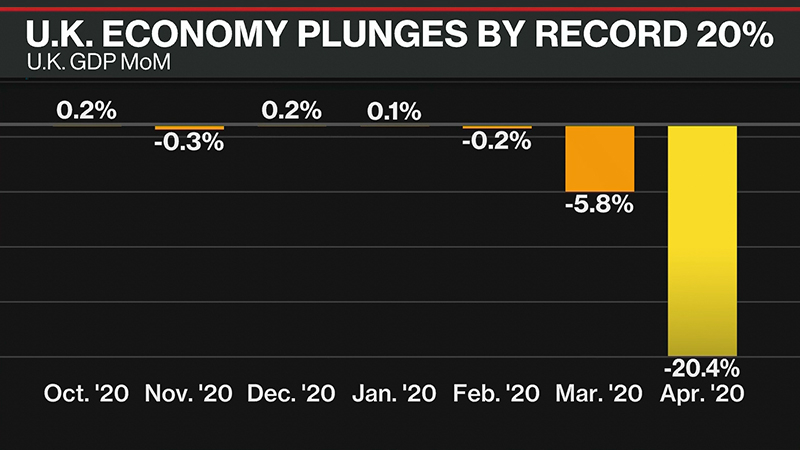
The U.K. economy shrank a record 20.4% in April as businesses and workers reeled under the lockdown designed to control the coronavirus pandemic.

The contraction means the nation has effectively seen almost 18 years of growth wiped out in two months. While a rebound is likely as businesses start to reopen, the grim figures will increase the pressure on the government and Bank of England to do more to support the recovery.

The hit to the economy rounds off a difficult week for Prime Minister Boris Johnson, who is facing mounting criticism from politicians and scientific advisers after they blamed his Conservative administration for making a series of grave mistakes since the beginning of the outbreak.

In addition to registering the highest death toll in Europe, the U.K. has also paid an heavy economic price. The OECD says the country could see one of the developed world’s deepest recessions in 2020, with output slumping more than 11% — the most for more than 300 years.

“April was the first month to be fully encompassed by the lockdown. But these figures are nevertheless shocking, and it goes without saying that this kind of fall in activity is virtually unprecedented, either in scale or speed,” James Smith, an economist at ING, wrote in a report.

Social-distancing rules and the prospect of a no-deal Brexit “all pose challenges to the U.K. economic recovery,” and will keep the pressure on the BOE to increase its bond-buying program when it meets next week, he said.

That view is shared by most economists, who expect purchases to be stepped up by at least 100 billion pounds. Bank of America Merrill Lynch economists said Friday they expect a package of measures in August, including cutting interest rates to 0%, making the terms of a lending program more generous and possibly implementing a weak form of yield curve control, which would keep bond-market rates around a certain, low, level.

More support is seen as vital as the U.K.’s outlook darkens. Unemployment is widely expected to reach rates not seen since the mid-1990s, with more than 7,500 job cuts being announced on Thursday alone as the lockdown hammers businesses from chemical manufacturers to airports. That’s despite massive government support that has left the taxpayer paying the wages of over 11 million people at a cost of 27 billion pounds ($34 billion) so far.

“We’ve always been in no doubt this was going to be a very serious public health crisis but also have big, big economic knock-on effects,” Prime Minister Boris Johnson said in a TV interview Friday. “We have been very badly hit by this.”

The damage in April was done by a 19% drop in the dominant services industry, where sectors such as air transport, travel agents and restaurants lost around 90% of their output. Manufacturing fell 24.3%, while construction plunged 40.1%. It means the economy was around 25% smaller in April than it was in February.

What Bloomberg Economists’ Say

“The U.K.’s death toll is one of the highest in the world and that could mean spending remains subdued, even as the lockdown is eased further. Thought of another way, it could be that demand acts as the ceiling on activity as the economy starts to recover, not supply,” Bloomberg senior U.K. economist Dan Hanson wrote.

“Unemployment, rising debt and business insolvencies will weigh on the recovery,” Ian Stewart, chief economist at Deloitte, said. “The economy is unlikely to return to pre-Covid levels of activity until 2022.”

Still, the pound was largely unperturbed by the plunge in output, which was expected by investors. It was up 0.1% at $1.2619 as of 12:00 p.m. London time on Friday.

Separate figures showed the trade deficit excluding volatile non-monetary gold and precious metals narrowed in April, with both exports and imports falling sharply as the pandemic disrupted shipment of cars, fuels, works of art and clothing.

Dow rebounds but chalks up worst week since March #ศาสตร์เกษตรดินปุ๋ย

#ศาสตร์เกษตรดินปุ๋ย : ขอบคุณแหล่งข้อมูล : หนังสือพิมพ์ The Nation.

Dow rebounds but chalks up worst week since March

EconJun 13. 2020

By The Washington Post · Thomas Heath, Taylor Telford · BUSINESS, US-GLOBAL-MARKETS Stocks staged a bold finish on Friday, but it wasn’t enough to rescue markets from their worst weekly loss since March.

The three major U.S. indexes rose at least 1% to end a tumultuous week marked by new public health worries and dashed hopes for a swift economic recovery.

The Dow Jones industrial average bounced all over Friday, rising as much as 837 points before briefly sliding into negative territory. A late-session rally pushed it 477 points, or 1.9%, higher and settle at 25,605.54. The blue chips finished the week down 6.4% and off 11% for the year.

“It was a roller coaster of a week for the stock market,” said Kristina Hooper, chief global market strategist at Invesco. “The week began with stocks continuing their strong rally on excitement over reopening in the U.S.”

The Standard & Poor’s 500 index had an equally wild week, barely edging into positive territory for 2020 at Monday’s close. But the next three days were ugly, with steep losses in the broad market. The S&P 500 finished Friday at 3,041.31, a 39-point, or 1.3%, advance. The S&P lost 5% on the week and is down 6% for 2020.

The tech-heavy Nasdaq Composite jumped 1%, 96 points, on Friday to close at 9,588.81. The technology giants – Amazon, Facebook, Microsoft, Google-parent Alphabet and Apple – have kept Nasdaq above water for the year, elevating it 6.6%. It set three consecutive record highs this week and closed above 10,000 for the first time. The index is down 2.5% for the week. (Amazon founder and chief executive Jeff Bezos owns The Washington Post.)

Boeing, Dow Chemical and Raytheon Technologies paced the Dow upward on Friday. Nine of 11 stock market sectors were positive, with financial and real estate the big winners.

The week got off to a good start on momentum from a better-than-expected jobs report days earlier. The Dow, which had peaked at 29,551 in mid-February before going on to lose nearly a third of its value within weeks, had been on a steady climb. But by Thursday there was a sense the stock market had come back too far, too fast.

A spike in covid-19 cases and a sobering economic outlook from the Federal Reserve – which predicts unemployment will still be at 9.3% by year’s end – sparked a massive sell-off that sent the Standard & Poor’s 500 index skidding 5.9% and the tech-heavy Nasdaq Composite tumbling 5.3%. The Dow’s 1,861-point drubbing capped a three-day losing streak that erased 9% of its value.

“Stocks fell when Fed Chair Jay Powell threw cold water on optimism about a fast recovery for the American economy,” Hooper said. “The sell-off then picked up speed on concerns about a resurgence in infections. By the end of the week stocks rose modestly, sensing buying opportunities and recognizing that the Fed remains extremely accommodative.” 

Even as much of the nation has reopened, the pandemic’s grip remains strong: the country surpassed 2 million coronavirus cases on Thursday, a staggering tally that far exceeds the number of infections reported in any other country. Eleven states reached their highest seven-day rolling averages of new cases on Thursday, according to data tracked by The Washington Post, suggesting a second wave could already be in motion.

The seven-day moving average of deaths has fallen steadily from its peak in April, but it has not halted as some White House officials had predicted.

President Donald Trump and his top economic aides fanned out Thursday to try to beat back the growing concern. They assailed the Fed’s projection that unemployment will remain elevated well into next year. The Trump administration also pushed back on the idea that it would allow the economy to shut down again in the face of rising cases, but Treasury Secretary Steven Mnuchin told reporters the administration is seriously considering a second round of stimulus payments.

Grim economic data poured in from around the globe this week, illustrating the depths of economic damage and indicating that the road to recovery will likely be rockier than many hoped. The United Kingdom reported its gross domestic product declined 20.4% in April – the largest drop on record; the Organization for Economic Development and Cooperation has warned the U.K. its economy will likely to be among the hardest hit, along with Spain and Italy.

Germany’s industrial production took its biggest hit ever in April, prompting some economists to call it the country’s worst month ever for the economy. The World Bank said the pandemic has created the biggest global recession since World War II and predicted GDP will contract 5.2% this year.

The past three months have been “a dizzying Space Mountain-like roller coaster for investors,” Wedbush Securities tech analyst Dan Ives said in comments emailed to The Post. “Yet, the stock market has come roaring back in a V shaped recovery.” 

Consumer confidence also improved in May as many Americans got back to work, according to the survey results released Friday by the University of Michigan.

“The economy won’t come back on its own with just consumers emerging from the country’s three-month coronavirus pandemic lockdown,” Chris Rupkey, chief financial economist, wrote Friday in comments email to The Post. “The hope is that business confidence will return as well and investment spending will rebound to help power the economy forward once companies see that the consumer is back and is buying the goods and services they offer.” 

The yield on the 10-year U.S. Treasury note ticked upward after a major drop Thursday as investors moved toward riskier ground. Bond yields rise as prices fall.

Oil prices saw their worst week in two months, with prices dropping on a report from the U.S. Energy Information Administration that demand may be slowing. Brent crude, the international benchmark, closed at $38.98 per barrel on Friday. West Texas Intermediate futures sold at $36.48.

BOT insists its Bt6 trillion liability will not turn into public debt, but history says otherwise #ศาสตร์เกษตรดินปุ๋ย

#ศาสตร์เกษตรดินปุ๋ย : ขอบคุณแหล่งข้อมูล : หนังสือพิมพ์ The Nation.

BOT insists its Bt6 trillion liability will not turn into public debt, but history says otherwise

EconJun 13. 2020Chantawan Sutcharitkul, BOT’s assistant governor.Chantawan Sutcharitkul, BOT’s assistant governor.

By The Nation

The Bank of Thailand (BOT)’s obligation worth Bt6 trillion will not translate into public debt as feared by many, the central bank insists, though the explanation it has offered is far from clear.

Chantawan Sutcharitkul, BOT’s assistant governor, said on Friday (June 12) that many people misunderstood the central bank’s balance sheet, which shows it has liabilities worth Bt6 trillion. 

The central bank’s debts come from its normal market operations – when there is liquidity flooding into the market, the central bank issues bonds to manage the financial market and when the market faces tight liquidity, the central bank reduces the issuing of bonds in order to inject liquidity back into the market, she said. 

“The central bank also buys foreign currency when there is a large capital inflow into the Kingdom, so while the bank has obligations, it also has large assets in the form of foreign currencies,” she added. 

“Debts that appear in the central bank’s financial statement cannot be counted as public debts. It is standard practice by central banks across the world,” she said reassuringly. 

However, she did not explain how things are different this time compared to the past, when the central bank wrongly defended the baht, resulting in a financial crisis and a currency debacle in 1997-1998. 

At that time, the central bank depleted international reserves as part of a currency war, when speculators began selling out the baht heavily, forcing the central bank to abandon its fixed exchange rate and the country to borrow emergency funds from the International Monetary Fund. The consequence of the huge damages stemming from the central bank’s foreign exchange fiasco and subsequent efforts to rescue financial institutions later turned into public debts. 

U.S. consumer sentiment jumps most since 2016 on gain in jobs #ศาสตร์เกษตรดินปุ๋ย

#ศาสตร์เกษตรดินปุ๋ย : ขอบคุณแหล่งข้อมูล : หนังสือพิมพ์ The Nation.

U.S. consumer sentiment jumps most since 2016 on gain in jobs

EconJun 12. 2020Shoppers wearing protective masks browse clothing at a store in Long Beach, N.Y., on June 11 2020. MUST CREDIT: Bloomberg photo by Johnny Milano.Shoppers wearing protective masks browse clothing at a store in Long Beach, N.Y., on June 11 2020. MUST CREDIT: Bloomberg photo by Johnny Milano.

By Syndication Washington Post, Bloomberg · Olivia Rockeman · BUSINESS, US-GLOBAL-MARKETS, RETAIL U.S. consumer sentiment climbed in early June by the most since 2016 as more states began to reopen their economies and employers restored jobs.

The University of Michigan’s preliminary sentiment index increased 6.6 points to 78.9, according to data Friday. The median projection in a Bloomberg survey of economists called for a gain to 75. Even with the improvement, the gauge remains well below pre-pandemic levels.

The gauge of current conditions advanced 5.5 points to 87.8 this month, while a measure of expectations jumped 7.2 points to 73.1.

The increase in sentiment highlights optimism that the reopening of the U.S. economy will restore jobs and help spur the spending needed to dig out of a deep recession. Still, two-thirds of respondents anticipated unfavorable economic conditions in the year ahead because of concerns about a resurgence in the coronavirus as well as lingering weakness in the job market.

“Despite the expected economic gains, few consumers anticipate the reestablishment of favorable economic conditions anytime soon,” Richard Curtin, director of the survey, said in a statement.

The university’s sentiment data are consistent with a weekly Bloomberg measure. The index of consumer comfort advanced in the first week of June to a six-week high as higher stock prices and the return to work for Americans continued to lift attitudes about personal finances, a report showed Thursday.

The Michigan survey’s inflation expectations data continued to show a disconnect with government price figures indicating scant inflation in the economy. Consumers expect 3% inflation in the coming year, the sentiment report showed.

“It is likely that the recent rise in inflation expectations reflects a shift in consumer purchases from the full range included in the CPI to be more heavily focused on food purchases, which posted an annual gain of 4.8% in May,” Curtin said.

The data also showed a growing political divide, with the increase in consumer sentiment concentrated among Republicans and independent voters. At the same time, overall confidence in government economic policies declined, with the share judging policies as poor at the highest level since President Donald Trump was elected.

The Michigan survey was conducted May 27 to June 10. The Labor Department reported last week that 2.5 million jobs were added in May as reopenings generated more economic activity. Even so, Federal Reserve Chair Jerome Powell cautioned on Wednesday that longer-term unemployment challenges may linger as a result of the pandemic.

The share of respondents who reported they expect their finances to improve in the next year rose to 42% from 32%, the university said. The gain was due to rising income, with an expected annual improvement of 1.3%, up from 0.5%.

Dow pops nearly 700 points following worst sell-off since March #ศาสตร์เกษตรดินปุ๋ย

#ศาสตร์เกษตรดินปุ๋ย : ขอบคุณแหล่งข้อมูล : หนังสือพิมพ์ The Nation.

Dow pops nearly 700 points following worst sell-off since March

EconJun 12. 2020

By  The Washington Post · Taylor Telford · BUSINESS, US-GLOBAL-MARKETS 
Wall Street is back in buying mode, with the Dow Jones industrial average jumping nearly 700 points at the open, after a reality-check sell-off lopped 6.9% from the blue-chip index.

A steady rise in covid-19 cases and a sobering economic outlook from the Federal Reserve – which predicts unemployment will still be at 9.3% by year’s end – sparked a massive sell-off Thursday that sent the Standard & Poor’s 500 skidding 5.9% and the tech-heavy Nasdaq tumbling 5.3%. The drubbing capped a three-day losing streak that erased 9% from the Dow.

The Dow jumped 680 points, or 2.7%, on Friday before retreating slightly. The Standard & Poor’s 500 and Nasdaq Composite indexes each climbed more than 2.3%.

“Forecasts haven’t worried investors for now and we’ll need to see dramatically bigger spikes in new cases for states to even consider tightening lockdown measures again,” Craig Erlam, an analyst with OANDA, wrote in comments emailed Friday to The Washington Post. “This feels like more of an excuse to take some profit in a market that has bounced back remarkably to the point that there’s a huge disconnect between stock markets and economic reality.” 

The United States surpassed 2 million coronavirus cases on Thursday, a sobering tally that far exceeds the number of infections reported in any other country. Eleven states reached their highest seven-day rolling averages of new cases on Thursday, according to data tracked by The Post, suggesting a second wave could already be in motion.

President Donald Trump and his top economic aides fanned out Thursday to try to beat back the growing concern. They assailed the Fed’s projection that unemployment will remain elevated well into next year. The Trump administration also pushed back on the idea that it would allow the economy to shut down again in the face of rising cases, but Treasury Secretary Steven Mnuchin told reporters the administration is seriously considering a second round of stimulus payments.

Grim economic data poured in from around the globe this week, illustrating the depths of economic damage and indicating that the road to recovery will likely be rockier than many hoped. The United Kingdom reported its gross domestic product declined 20.4% in April – the largest drop on record; the Organization for Economic Development and Cooperation has warned the U.K. its economy will likely to be among the hardest hit, along with Spain and Italy. Germany’s industrial production took its biggest hit ever in April, prompting some economists to call it the country’s worst month ever for the economy. The World Bank said the pandemic has created the biggest global recession since World War II and predicted GDP will contract 5.2% this year.

Yet in early trading Friday, companies that have been walloped by the pandemic saw their stocks rise: both Carnival Corp. and United Airlines climbed more than 11%. American Airlines rose more than 12% after it reported seeing positive net bookings since mid-May. Aerospace giant Boeing rebounded more than 7% after shedding more than 10% Thursday.

The past three months have been “a dizzying Space Mountain-like rollercoaster for investors,” Wedbush Securities tech analyst Dan Ives said in comments emailed to The Post. “Yet, the stock market has come roaring back in a V shaped recovery.” 

The yield on the 10-year U.S. Treasury note ticked upward after a major drop Thursday as investors moved toward riskier ground. Bond yields rise as prices fall.

Oil markets also erased some of their losses after plummeting 8% Thursday as economic fears collided with a report from the U.S. Energy Information Administration indicating demand recovery may have stalled. Brent crude, the international oil benchmark, inched up .86% to trade at $38.88 a barrel. West Texas Intermediate crude, the U.S. oil benchmark, climbed .6% to $36.56.

SET plunges after second-wave of Covid-19 infections hits several countries #ศาสตร์เกษตรดินปุ๋ย

#ศาสตร์เกษตรดินปุ๋ย : ขอบคุณแหล่งข้อมูล : หนังสือพิมพ์ The Nation.

SET plunges after second-wave of Covid-19 infections hits several countries

EconJun 12. 2020

By The Nation

The Stock Exchange of Thailand (SET) Index fell 14.21 points or 1.02 per cent, closing at 1,382.56 today (June 12). Total transactions amounted to Bt85.786 billion with an index high of 1,386.22 and a low of 1,353.51.

During the morning session, a stock analyst from Krungsri Securities said he expected the index to fall to between 1,350 and 1,365 due to uncertainty caused by a second wave of Covid-19 infections after several countries eased lockdown measures.

“Investors are also worried about the US economy after the US Federal Reserve forecast that the country’s gross domestic product this year would contract by 6.5 per cent and the unemployment rate would be 9.3 per cent,” the analyst said.

“In addition, energy stocks came under pressure after the price of crude oil dropped sharply due to uncertainty following a drop in demand for petrol with expectations of a second wave of Covid-19 emerging.”

The top 10 stocks with the highest trade value today were SUPER, BAM, PTT, MINT, CPF, PTTEP, AOT, STA, PTTGC and KBANK.

As of 4.30pm, the price of crude oil rose by US$0.07 or 0.19 per cent to $36.41 per barrel, while gold rose by $2.70 or 0.16 per cent, to $1,742.50 per ounce.

Asian indices mostly fell:

Japan’s Nikkei Index closed at 22,305.48, down 167.43 points, or 0.75 per cent.

China’s Shanghai SE Composite Index closed at 2,919.74, down 1.16 points, or 0.040 per cent, while Shenzhen SE Component Index closed at 11,251.71, up 8.09 points, or 0.072 per cent.

Hong Kong’s Hang Seng Index closed at 24,301.38, down 178.77 points, or 0.73 per cent.

South Korea’s KOSPI Index closed at 2,132.30, down 44.48 points, or 2.04 per cent.

Taiwan’s TAIEX Index closed at 11,429.94, down 105.83 points, or 0.92 per cent.

FTAs help Thailand become world’s top exporter of rice-flour snacks #ศาสตร์เกษตรดินปุ๋ย

#ศาสตร์เกษตรดินปุ๋ย : ขอบคุณแหล่งข้อมูล : หนังสือพิมพ์ The Nation.

FTAs help Thailand become world’s top exporter of rice-flour snacks

EconJun 12. 2020

By The Nation

Thailand has become the world’s top exporter of rice-flour snacks after shipping out more than 13 billion tonnes worth US$41 million (Bt1.3 billion) in the first four months of this year, the Department of Trade Negotiations said.

The biggest buyers of the processed food were Asean countries.

Auramon Supthaweethum, director general of the department under Commerce Ministry, said snacks made from rice flour, such as crackers, biscuits and cookies, in Thailand are fast becoming popular thanks to the innovative processing method used and high-quality raw materials.

Thailand is now the top exporter of rice-flour snacks followed by Germany and Sweden.

In 2019, Thailand exported more than 42 billion tonnes of these snacks worth $129 million, and demand has risen because consumers have developed a preference for products made from natural ingredients.

From January to April this year, Thailand exported more than 13 billion tonnes of rice-flour snacks worth $41 million, up 9 per cent from the same period last year.

This boost in trade has been put down to free-trade agreements (FTA) that the Kingdom has signed with 17 countries, including nine Asean members, as well as with China, South Korea, Australia, New Zealand, India, Hong Kong, Chile and Peru.

Thailand’s FTA with Japan will go into effect from May 2022.

Sharp fall in NYSE pushes up gold price #ศาสตร์เกษตรดินปุ๋ย

#ศาสตร์เกษตรดินปุ๋ย : ขอบคุณแหล่งข้อมูล : หนังสือพิมพ์ The Nation.

Sharp fall in NYSE pushes up gold price

EconJun 12. 2020

By The NationThe price of gold rose by Bt50 per baht weight in morning trade on Friday (June 12), the Gold Traders Association reported.

As of 9.36am, buying price of a gold bar was Bt25,350 per baht weight and selling price Bt25,450, while gold ornaments were priced at Bt24,892.72 and Bt25,950, respectively.

At close on Thursday (June 11), the buying price of a gold bar was Bt25,300 per baht weight and selling price Bt25,400, while gold ornaments were priced at Bt24,847.24 and Bt25,900, respectively.

Gold contracts in COMEX (Commodity Exchange) to be delivered in August rose by US$19.1 or 1.11 per cent, closing at $1,739.8 per ounce on Thursday.

Investors were buying gold as a safe haven asset after the New York Stock Exchange Index fell sharply due to uncertainty following the second wave of Covid-19 outbreak in the US.